Winter meets Autumn head on

Eight days ago:  lunch outside in thin tee shirts: a garden umbrella protected us from the bright hot sun.

Seven, six, five, four, three, two, days ago.  Rain.  Rain.  More rain.  Heavy, chilly gusts choking the streets and drains with fallen leaves.  More rain.

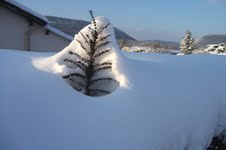
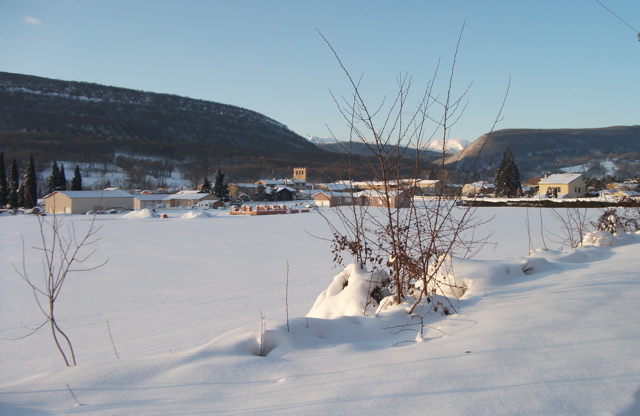
One day ago.  Snow.  The first snow – and in advance of the first winter frost too.  Not a lot, but enough to rest heavily on fading garden plants, weighing down leaves and bowing stems.

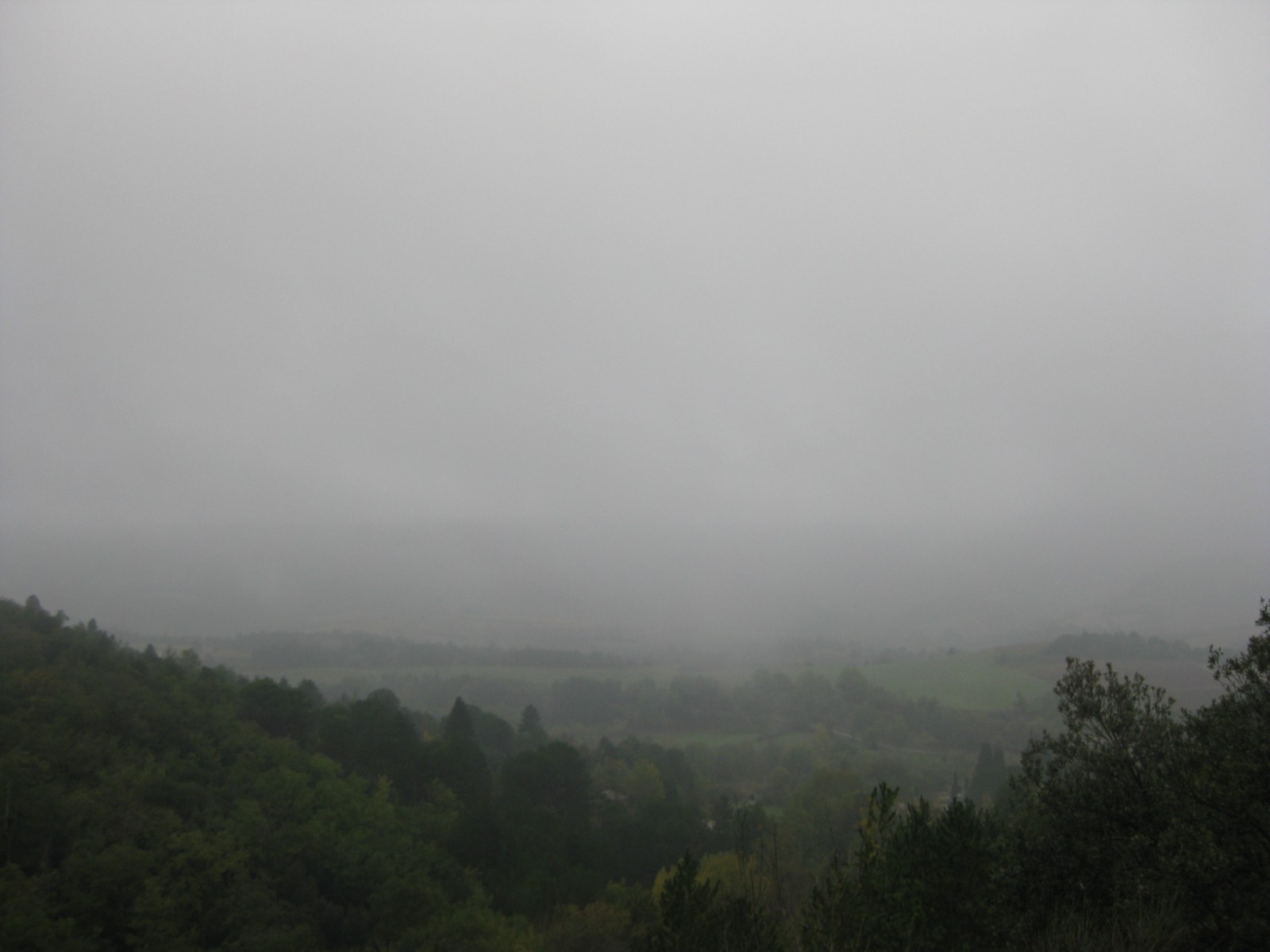
This morning, we knew we’d need to get out early to beat the rain, which was threatening yet again.  I didn’t take my camera because I thought the mountains would be shrouded in foggy mist.  They weren’t.  The lower peaks, and even the much lower hills of the Plantaurel peeked through a thin layer of snow that dusted trees and painted the rocky and grassy slopes a severe white.  I dashed back for my camera.  Five minutes? Ten?  Long enough for the misty clouds to drop down and dump themselves on the snowy hilltops like squashy berets, hiding them from view.

And then, straight away, the rain again.  That’s what we’ve had all day, streaming along the gutters, making splashy garden puddles, dripping incessantly from the trees and down our necks as we walk underneath.  I continued my early morning walk regardless though, and caught what may be the last few days of Autumn colour, though little enough of the snow, which is there somewhere, under those bonnets of mist and cloud.

Something old, something new

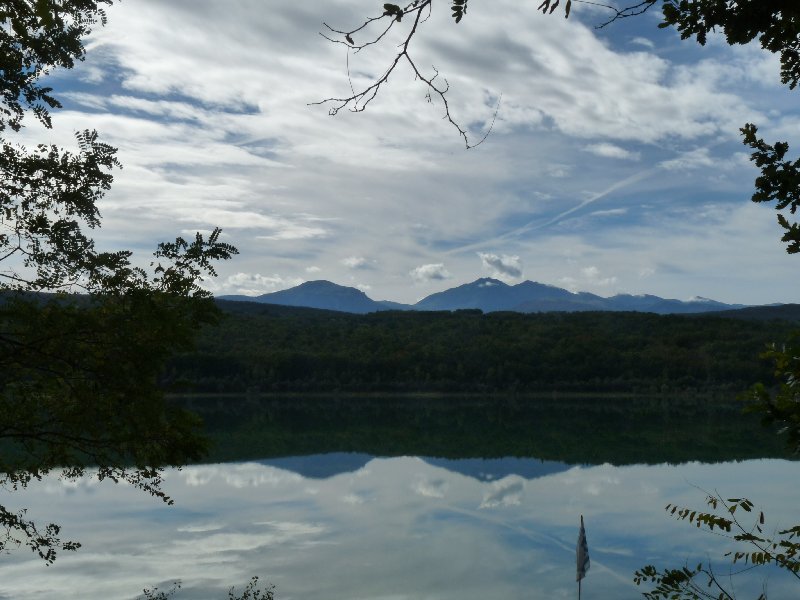
Lac de Montbel from La Régate

Our new friend Jenny-from-Bilbao came for a flying visit late last week, so we did a quick Cook’s Tour of some of our favourite spots.  Roquefixade, of course, Montségur: and then on a bright Autumnal Saturday morning, we finished off by a quick look at our local lake, Montbel.  It’s a man-made reservoir, actually, but it looks as though it’s been there forever, and fish, herons and humans all appreciate its cool expanse of water as a change from all those hills, mountains, rivers and streams.

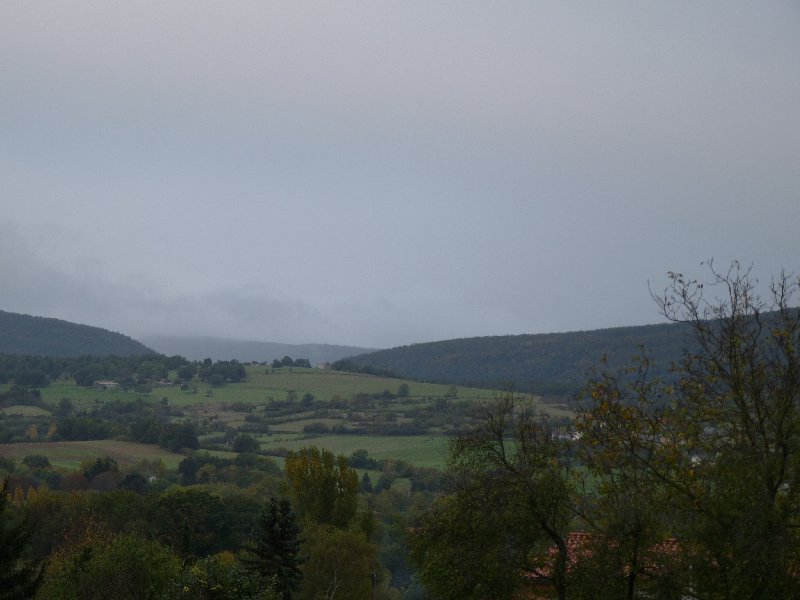
What a difference a day makes.  Sunday sulked.  It rained in the night, it rained in the morning, grudgingly cleared up, then spent the rest of the day teasing us with odd showers which never quite decided whether to go for a full-blown drenching, or merely hang around as damp atmosphere, cloaking the landscape with fog.

So our planned walk from Croquié, with its promise of stunning views as our reward for a stiff climb was abandoned.  Instead we met at 1.00, we hardy types, and Jean-Charles proposed what I thought was little more than a walk round the block.  ‘Just up to Tabre, along the ridge and back’ he said.  Well, Tabre is the next village along, Mirepoix direction, so that sounded easy enough.  So off we went, along a bosky path, through Tabre, up a hilly climb to great views back to Laroque.  A long and often muddy forest track took us past further views, over the Douctouyre valley, and circled us over and past the next village along from Tabre, Aigues-Vives.  Down we climbed again, and took paths through fields back to Laroque.  A fabulous walk, all 15 km or so of it, and almost every step of it previously unknown to us.  And we pride ourselves on having got to know our patch pretty well.  Thank goodness for local friends who carry on helping us to discover even more.

The path home from Tabre

A walk gone wrong

This slideshow requires JavaScript.

Yesterday was gorgeous.  Hot and sunny until long into the evening.  We ate outside and stayed on the roof terrace till 10 o’clock.  Today seemed to promise more of the same.  We should know better.  This year, getting even two days on the trot where the weather is hot and clear all day is asking a bit much.

And so it proved.  Today, our walking group met to share lifts to where our walk was to begin.  We set off in the sunshine, watching our in-car thermometers climb steadily to 27 degrees as we drove ever upwards, beyond Villeneuve d’Olmes, beyond Montferrier, up a road which became narrower and less well maintained, to Frémis, a tiny hamlet.  We parked there, in a flower-spangled meadow offered by a local farmer.  We peeled off our fleeces, applied suncream and set off towards the peak, Coulobre. Sometimes the upward-going was tough and quite a scramble, but we were encouraged by looking across to the still snow-capped tops, and the thought that we’d be having our picnic at the top there,  the Ariège spread below us with views, views and more views.  We met a herd of black Mérens horses sheltering in a copse from the already-hot sun.   A donkey befriended us.  And still we climbed.

Towards midday, walking through the forest, we suddenly realised things were changing.  Didn’t it suddenly feel cooler?  And weren’t those little scraps of mist swirling round those peaks?  Apparently yes.  The mist descended.  The ‘cool’ became ‘chilly’.  With 20 minutes to go to arrive at our lunch spot, Micheline, who had developed a gammy knee, announced she could go no further.  It didn’t take much for us to decide that it was not only friendly to remain with her and have our lunch, it made sense.  The mist was swirling around us, the views up there wouldn’t be up to much, and it was obvious that rain or worse was on its way.

We found logs to sit on, got our fleeces out again, ate our lunch with little ceremony, and scuttled down.  The climb up had taken nearly three hours. Scurrying down took not much more than an hour.  And as we reached Frémis, the rain started.  It’s not stopped since.  And those in-car thermometers on the way home? 15 degrees.

Rain, rain…….

The banner headline on this morning’s regional paper, La Dépêche du Midi, told us what we already knew.  There’s been twice as much rain this month as is usual.  Of snow, we’ve seen hardly a flake.

Driving back from Foix yesterday, we saw meadows that have become mini- lakes.  Even more fields glistened with water as the water table has risen to the very surface of the soil. It’s made the month a somewhat gloomy one, even though the days have been pretty mild.  The mountain peaks are snow-capped, as expected, but the white stuff barely creeps down the mountainside and with all the low cloud and zilch visibility, it’s sometimes hard to know where the Pyrenees have disappeared off to.

Our regular yomps into the countryside have been a bit curtailed.  Walk after walk has been rained off, and when we do go, we choose our routes with care.  If we don’t, we’ll be lugging kilos and kilos of glutinous heavy clay with us as it clings to our boots and the bottom of our trousers.
 

Boots - with added mud
Boots – with added mud

Roll on the 2nd of February, Chandeleur (Candlemas), the day when Winter decides whether to stick around or push off.  Last year, it was icily cold, and Winter stayed and made his presence felt with several weeks of constant snow, ice and bitter cold.  This year, he‘s looking much more half-hearted about it all.  We blame ourselves. We invested in snow-tyres and snow chains for the car.  We clothed our olive tree and a few other plants in white dresses of horticultural fleece.

Our olive tree all wrapped up for winter

So Winter laughed in our face.  We daren’t change the tyres or undress the tree though.  We all know what will happen if we do.

There's snow on them there 'ills: but not a lot.  As seen from our roof terrace
There’s snow on them there ‘ills: but not a lot. As seen from our roof terrace

A very English Sunday walk

If you go on a walk near Limoux in the Aude at this time of year, you’re entitled to scenery like this:

Vineyards near Villar -St-Anselme

In our walking group here in Laroque we all take turns to organise the weekly outings.  And this week, it was the two of us, the only English, who were in charge. We decided on an autumn walk among the vines round Saint Polycarpe, near Limoux.  The weather forecast wasn’t great, but the rain promised to hold off till 3 o’clock.  But no.  English leaders, English weather. Think of us plodding through the mud as the rain increased in intensity, long long before 3 o’clock arrived.  Everyone blamed us, of course.  They think this is the only kind of weather we know, back in England.

It all began so well….

Above Saint Polycarpe, 10.00 this morning.

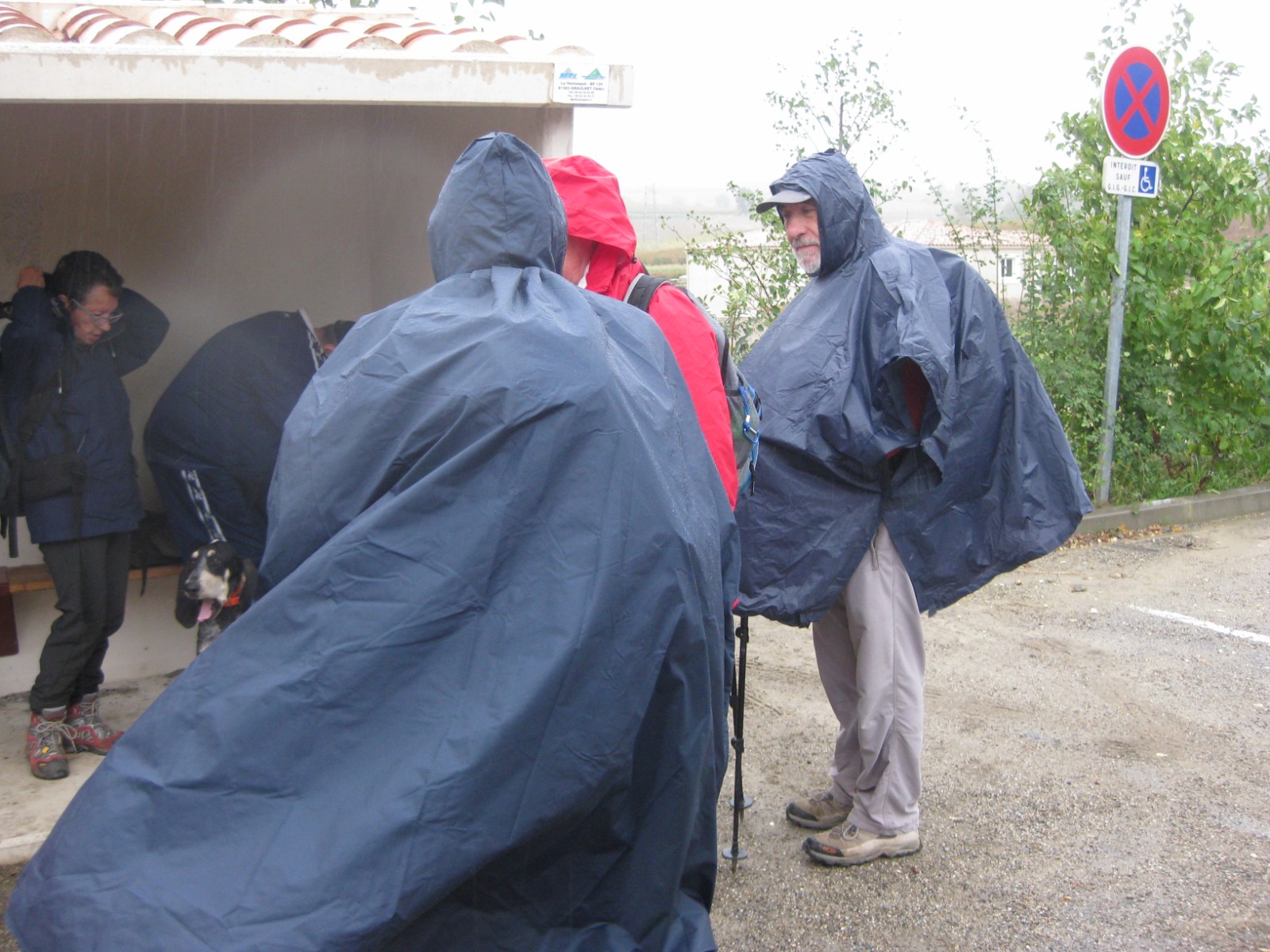
Lunch was early, at Gardie, but we didn’t beat the rain.  We had our break in the bus shelter, for goodness sake, and got togged up like this immediately after.

The clouds descend…..

And the gloom.

Can’t see much.

Saint Polycarpe’s down there somewhere…

Still, nobody complained.  We got our fresh air and exercise, and our friends had a thoroughly good time holding us responsible for the rain and mud.

PS.  Dangermouse update.  We caught him last week.  He is no more.  He was a rat.  Eurghhhhh.

The tragic and savage history of l’étang d’Izourt

The drive to the start of the walk was dramatic enough.  Forested and craggy, our narrow road out of Auzat switch-backed steeply up the slopes in a seemingly endless series of hairpin bends.

And our walk began, an 1800 foot climb, upwards through forest then out onto the stony, rocky path towards the man-made étang d’Izourt, one of the many reservoirs in the area maintained by EDF to provide power. Once, a helicopter flew over.  Since there are no roads up there,  it was delivering either men or supplies to a team we could see labouring on a more distant slope.

The walk changed for me as I learnt the story of what had happened back in 1939 when the reservoir was being built.  Most of the members of the construction team at that time were economic migrants, Italians from the Veneto, and whilst working there, they lived in huts on site.

The weather conditions had already been atrocious for days when on March 24th 1939, a fierce blizzard struck.  There was no option for the workers but to hole up in their huts.  The storm was so fierce that huts B and C were destroyed from the weight of snow above, and the roof from hut A blew off.  The desperate men sought both to escape and to try to help their work mates, many of whom had died or been gravely injured by the tumbling buildings.  A nearby avalanche brought down the cable car linking the site with the works below.  The only way up was on foot, and rescue attempts were pretty much futile, though bodies and the injured were recovered as management attempted to evacuate the entire area.  On 28th March, a team of army skiers managed to get through and working into the night, brought down the remaining bodies and wounded.  31 men, 29 Italians and 2 French, were buried at the cemetery in Vicdessos on 31st March.  There they remain, as the families in Italy were too poor to manage the expense of repatriating the corpses.  The memorials at the lakeside are still the site of pilgrimage, thanks to the efforts of the ‘Ricordate-Izourt’ Association: locals and Italians who honour the memory of those lost workers.

We ourselves had started our walk in bright sunlight.   Spots of rain began.  Then the wind.  By the time we reached the lake, there were times when the gusts felt almost horizontal, and we struggled to find protection from the rocks to eat our lunch.  The more modern huts now on site have their roofs held on by strong metal cables, and we could understand why.

The sky turned the colour of lead, and we rejected the idea of exploring the lake in favour of hurrying down the way we had come.  We knew we’d be OK, but we also know to treat the mountains seriously and with respect – conditions can change very quickly.  We were fine of course, but that fierce wind on a warm October day gave us the smallest hint of what things could be like if you were trapped there in much nastier conditions.  Even now, the most efficient way of supporting the workers still on site from time to time is to get them and their supplies there by helicopter.  A noisy chopper whirled up and down the mountainside several times as we walked down, our journey cheered by a rainbow linking our mountain with the one next door.  Though we were sorry the weather had chased us home, we were grateful  not to have been exposed to  the dangers the mountains can offer from time to time.

This slideshow requires JavaScript.

Four seasons for the price of one

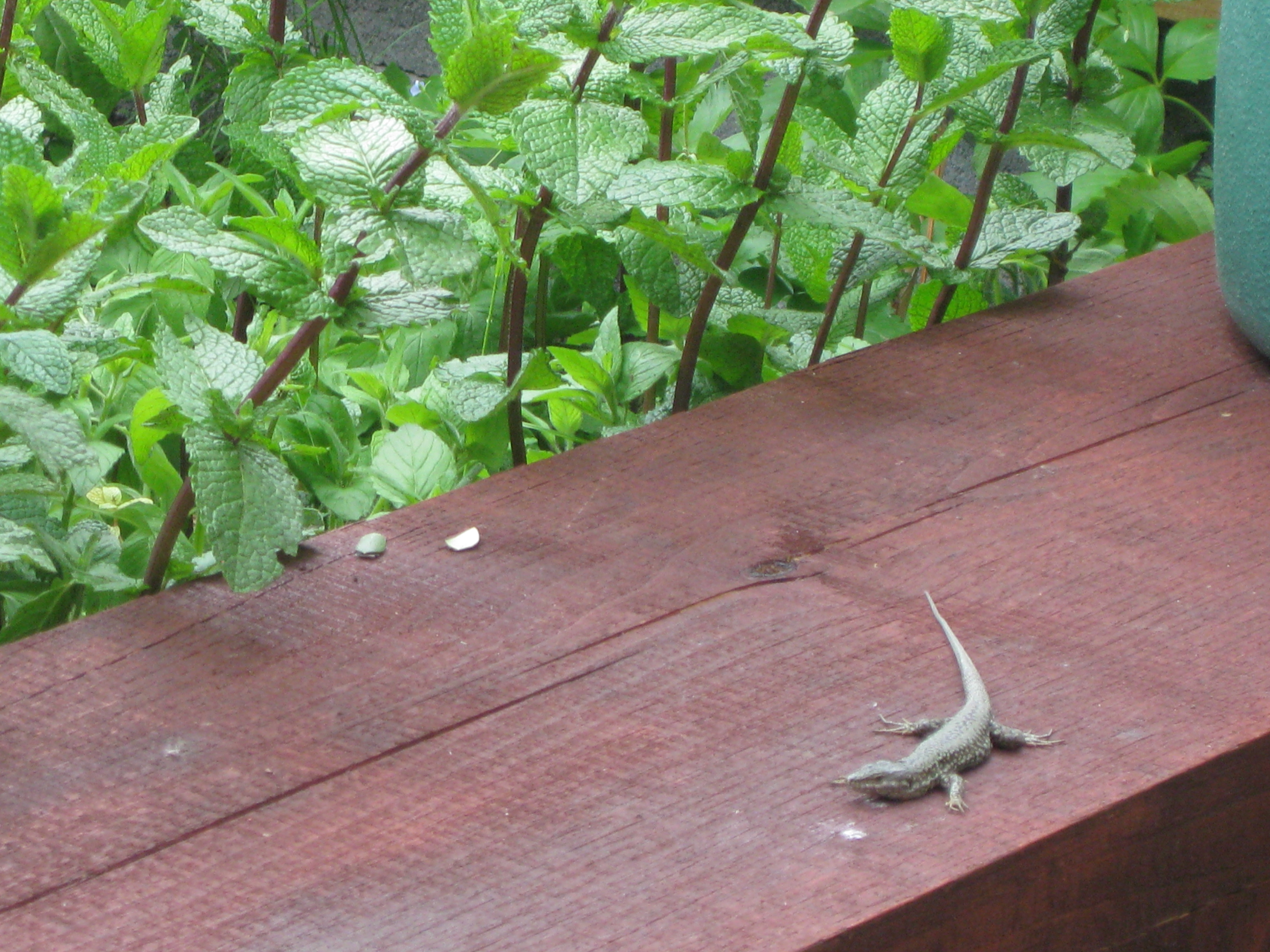
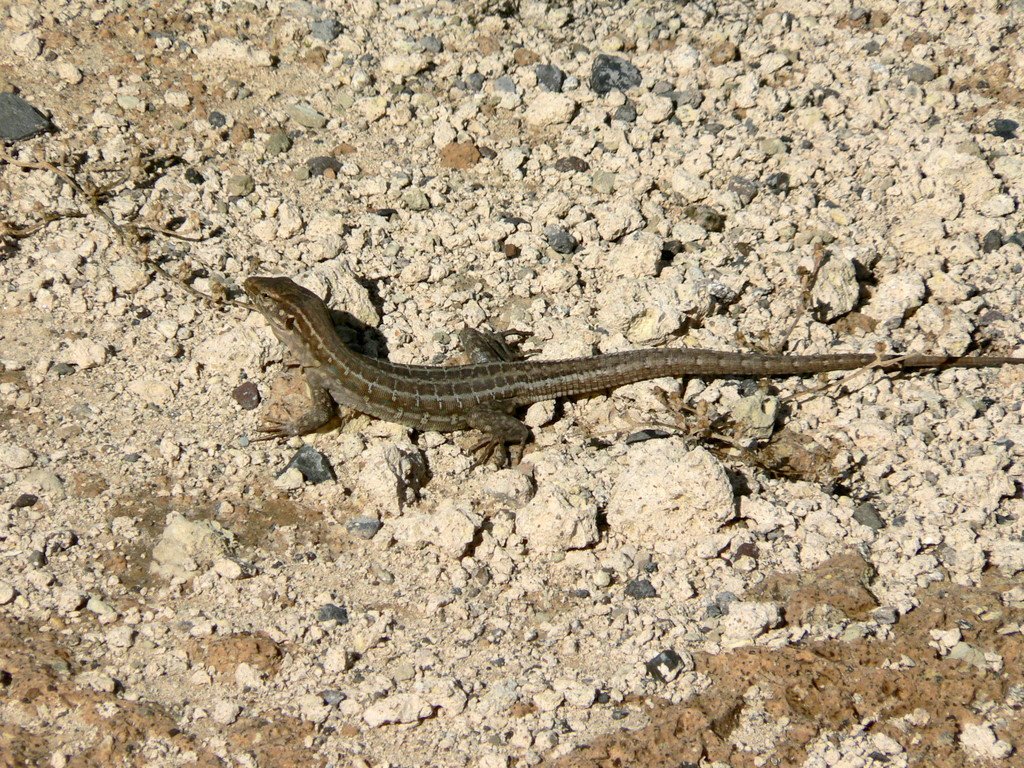
A lizard hopes summer’s on its way

I’m writing this in Laroque.  I have the feeling that whether you’re reading this in France, England, elsewhere in Europe or even in more far-flung places you’ll be sharing something of the same experience.

Get up in the morning and peek though the shutters.  Perhaps it’s raining.  Perhaps not.  But whatever: it won’t last.  We’re getting used to having all 4 seasons – several times – in the course of a single day.
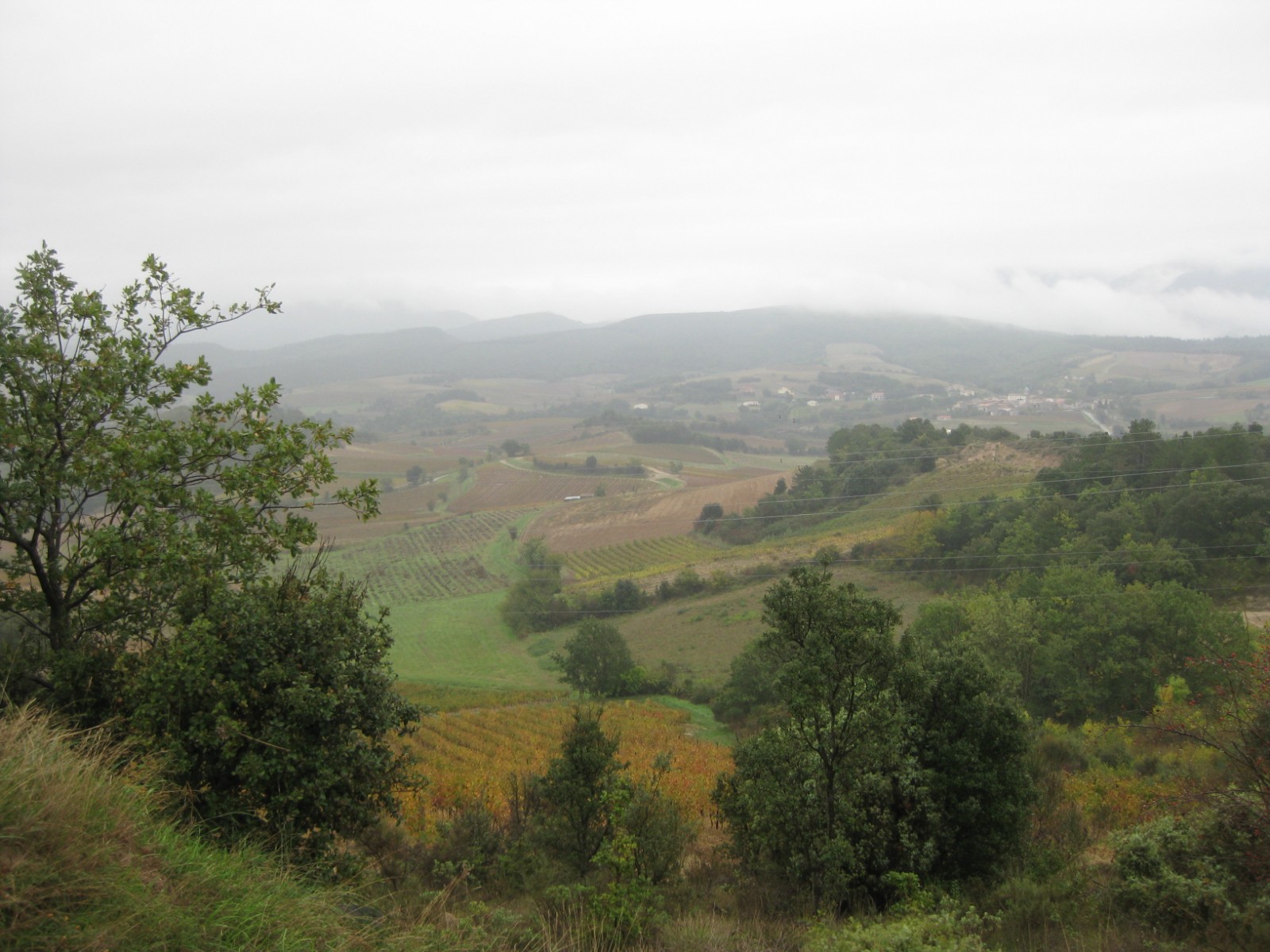
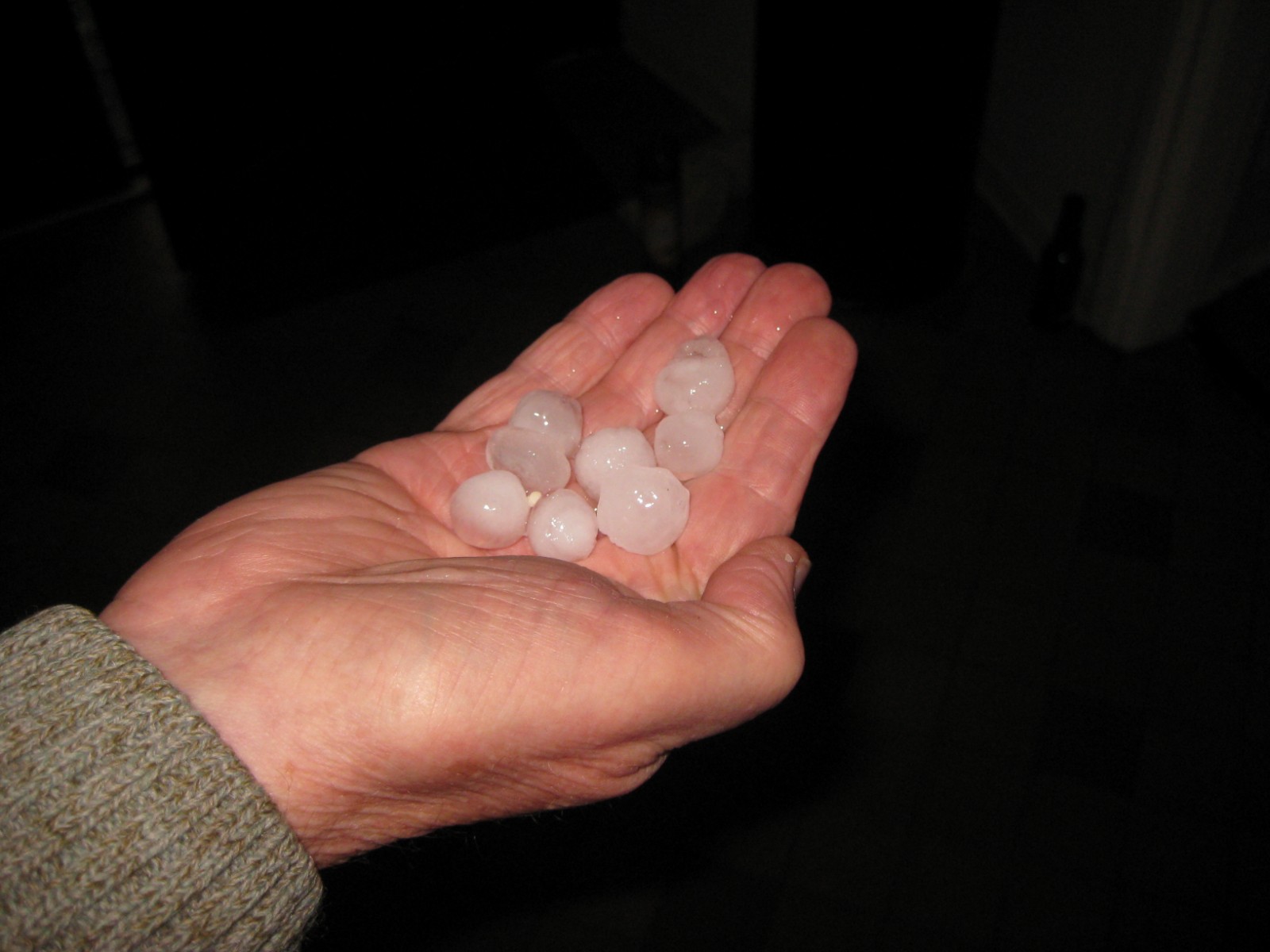
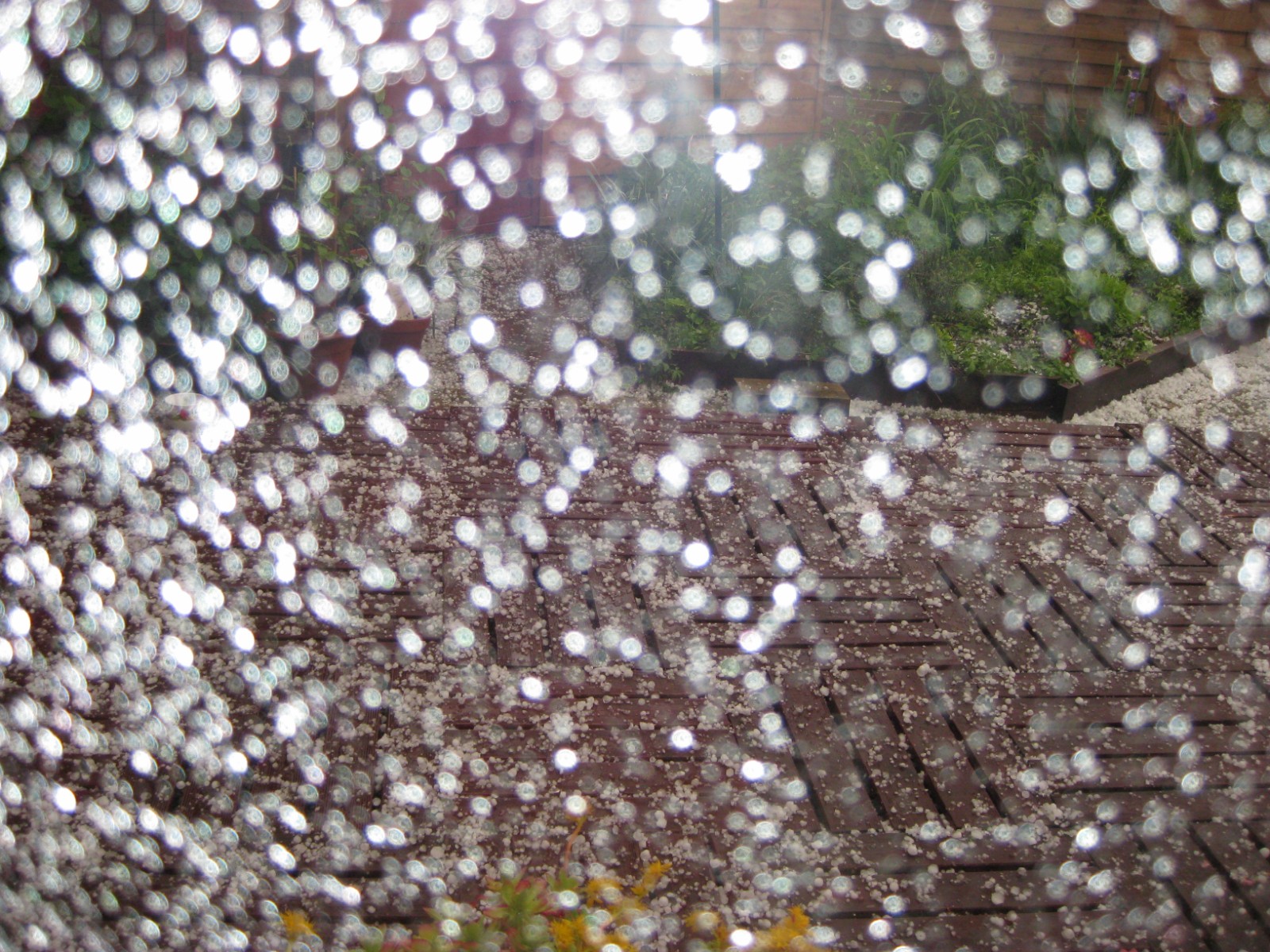
The other day, blazing sunshine and a brilliantly clear blue sky brought the lizards out and had us stripping down to our T shirts.  Minutes later we were reaching for fleece jackets and shortly after that we had to scurry indoors….a hail storm.  And what a storm! Hail stones as big as Maltesers flung themselves noisily against the shutters and scythed down young leaves and shoots in the garden.

May hailstorm

At other moments puffy white cumulus meandered across the sky and minutes later angry violent gusts of wind tugged sullen heavy grey clouds into view.  But this time two years ago, we had snow in May, lots of it.  Let’s hope summer will arrive soon, as it did that year.

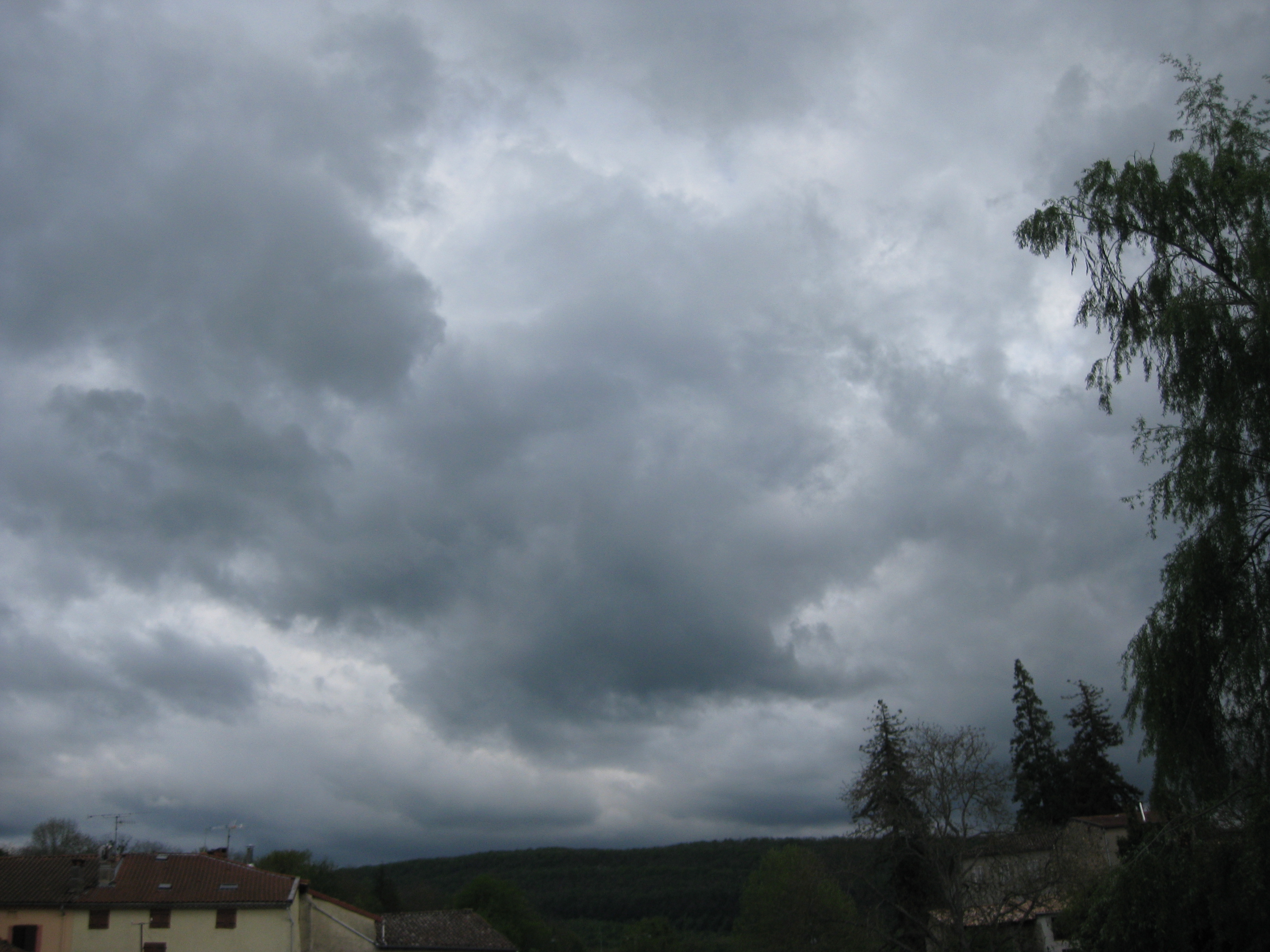
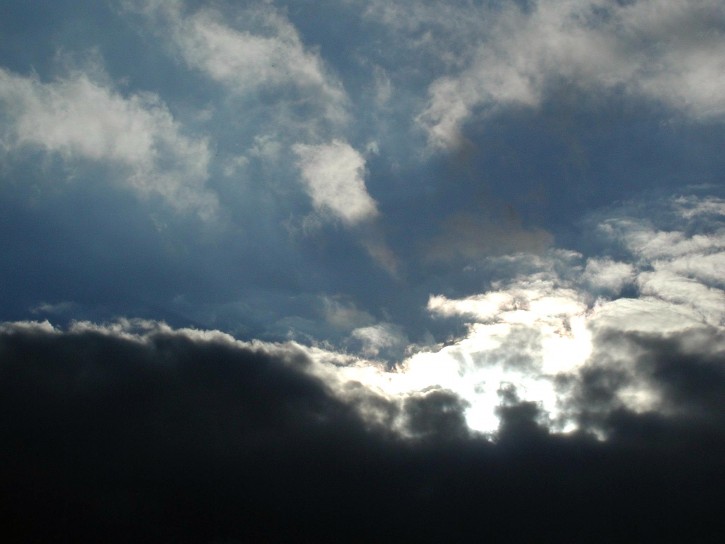
Laroque cloudscape, looking southwards
Laroque cloudscape, looking northwards

We’ll Weather the Weather, Whatever the Weather

Over at the BBC, they do things differently. The weather forecast, that is.  It’s a big operation, the weather: 24 broadcasters– Daniel Corbett, Helen Willetts et al, and between them, they cover all the bulletins broadcast on BBC radio and television – even World service. On the radio, it’s the word picture you might expect, while on TV, the graphics are ever more sophisticated

Here in France, it’s different.  Switch on France Inter for the weather forecast, and what you’ll get is the slightly southern, slightly nasal, but warm and measured tones of Joël Collado.  Forecast after forecast.  Day after day. Year after year  He is allowed days off: he’s even allowed holidays sometimes, and when those occur, we’ll have Jacques Kessler or sometimes Jean-Michel Golynski. Just those three.

It’s quite comforting really.  The French obviously think so. Watch a French film or television drama, and Collado’s reassuring, slightly soothing voice may well be murmuring in the background of those early establishing shots.  The good old British forecast wouldn’t send out such a message of timeless normality, I don’t think.  A young French social care assistant wrote what almost amounted to a declaration of love to Joël Collado on her blog Pause Café, (‘You’re my ray of sunshine, even when you’re forecasting rain and cold’). Facebook apparently has The Joël Collado and Jacques Kessler Appreciation Society – which I’ve not been able to read, as I think I am the next-to-last person in this web-aware world not to have a Facebook account. The last is Malcolm

Those three radio forecasters though, don’t present on TV. There are other teams for that job, depending on the station. We’re always amused that female presenters, who in this house go under the generic name Pixie-frou-frou, seem to have been hired specifically for the shortness of their skirts and the archness of their radiant smiles.

Then there are the papers, and the internet.  Our local paper, La Dépêche du Midi, is famously wrong much of the time, and I gave up on the internet when the site I was reading assured me that at that very moment, it was snowing in Laroque d’Olmes.  It wasn’t.  It was sunny.  I saw not one snowflake all that day.  As in England, so in France, those who forecast the weather are only talked about when they are wrong

The Big Snow: Chapter 3

Extraordinary.

Sunday, March 7th. Malcolm and I go for a walk in the Aude, near Limoux.  The day is full of the promise of spring, bright and sunny.  The almond blossom is out.  We spot baby lizards darting along stone walls, and enjoy watching more lizards sunning themselves on the rocky ledge where we have our midday picnic.

Monday, March 8th. We wake up to snow.  And more snow.  It was snowing as we got up, and it continues to snow, hour after hour.  We watch the flowerpots in the yard as their hats of snow become taller and taller.  By mid-afternoon, they’re 24 cm. high, and by 7 o’clock, as it begins to get dark, they’re about 28 cm. high. Up on the roof, the icicles become stouter and as long as the snow is deep. The trees stand stiff and silent under their heavy bonnets of snow.  The snow continues to fall as we close the shutters at nightfall. TV news reminds us that we’ve has it easy – look at the deep drifts, and hundreds of stranded lorries backed up in the Pyrénées Orientales!

Today, Tuesday March 9th – no more snow falling- but it’s not ready to melt either.  The wind snatches the snow from the trees, and when we leave the house, slaps our faces with flurries of flakes whipped from the rooftops.  The birds are constantly busy at our ‘Resto du Coeur’, and we replenish their feeders several times.  Gym?  Cancelled.  Choir?  Cancelled

As I still haven’t got my camera, the snowy photos on this blog come to you courtesy of my friend Marianne, who’s been busy with her camera as she and Réglisse, her dog, slip and skate round the chilly streets of le Peyrat, just down the road from Laroque.  Thanks, Marianne!

Suddenly, earlier today, I remembered this ditty the children and I used to chant when they were small:

Whether the weather be cold,

Or whether the weather be hot

We’ll weather the weather

Whatever the weather

Whether we like it or not