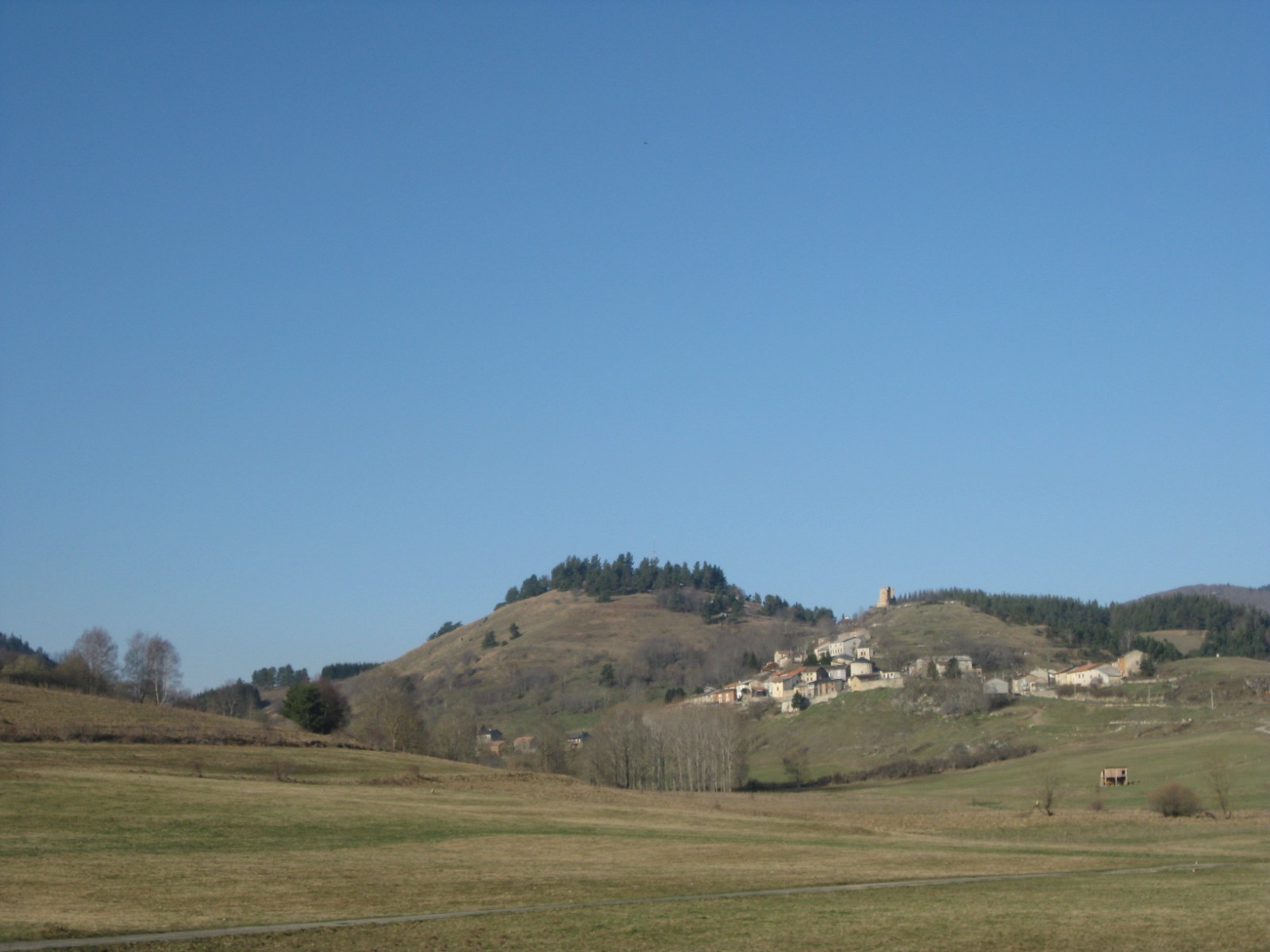
Yesterday we walked through Montaillou. It might seem a tiny and unremarkable village now, but it’s the place that’s maybe done most to contribute to our understanding of turn-of-the-14th century village life in the Languedoc when religious strife between the Catholics and the Cathars was at its height. This is a big subject: it deserves more than passing mention: a future blog maybe.
I’d read le Roy Ladurie’s book on Montaillou more than 30 years ago,and never dreamed that I might one day live in what the tourist offices are pleased to call ‘Cathar Country’. So it was the shepherds of Montaillou I was thinking of as we began our Sunday walk. They would come to the annual fair at Laroque d’Olmes, a good 40 km from where they lived. They would drive their flocks long distances for good pasture, and as national boundaries meant little in these mountain zones, their fellow shepherds whom they met in their travels would sometimes be Spanish.
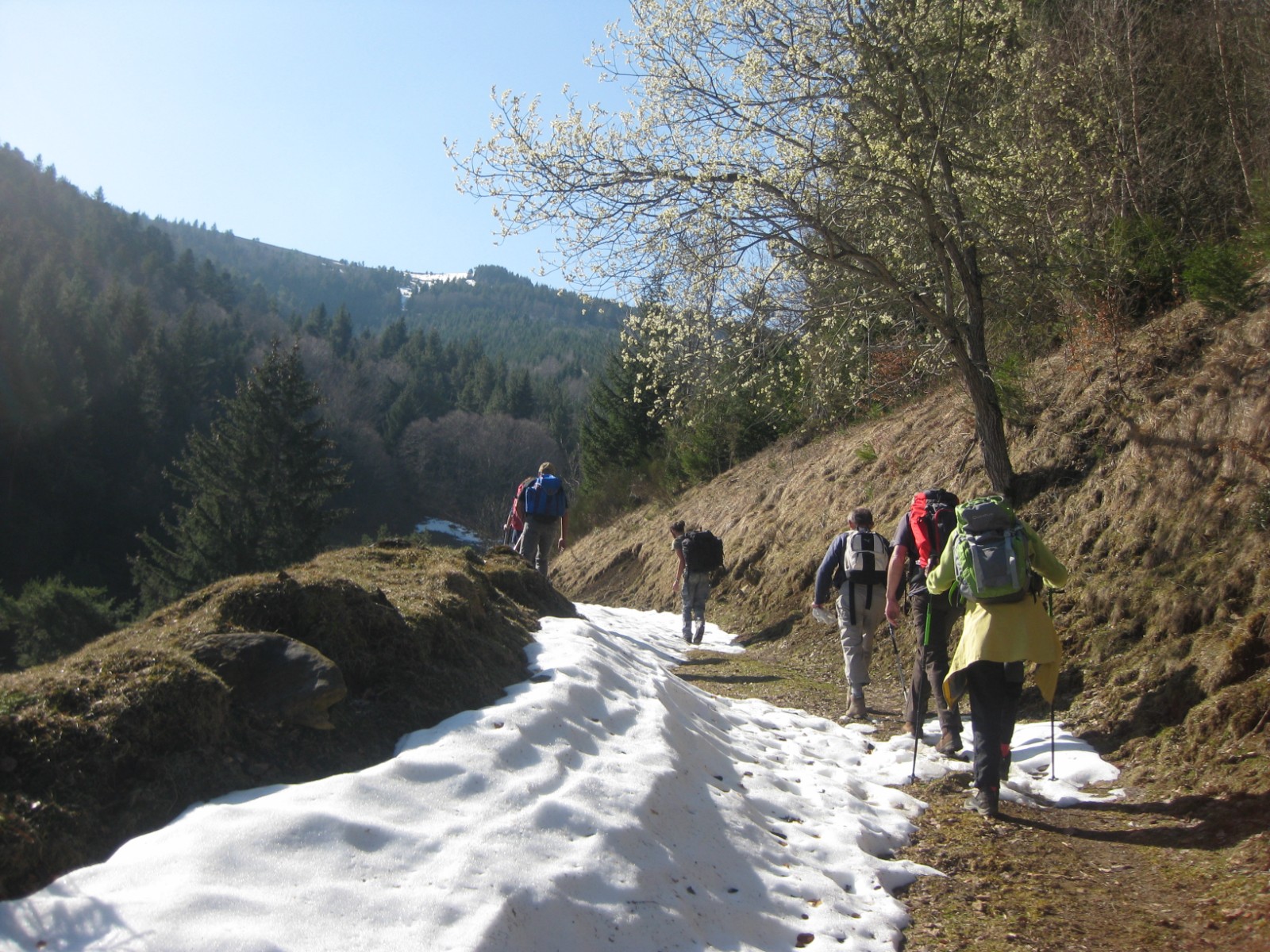
Blossom and snow
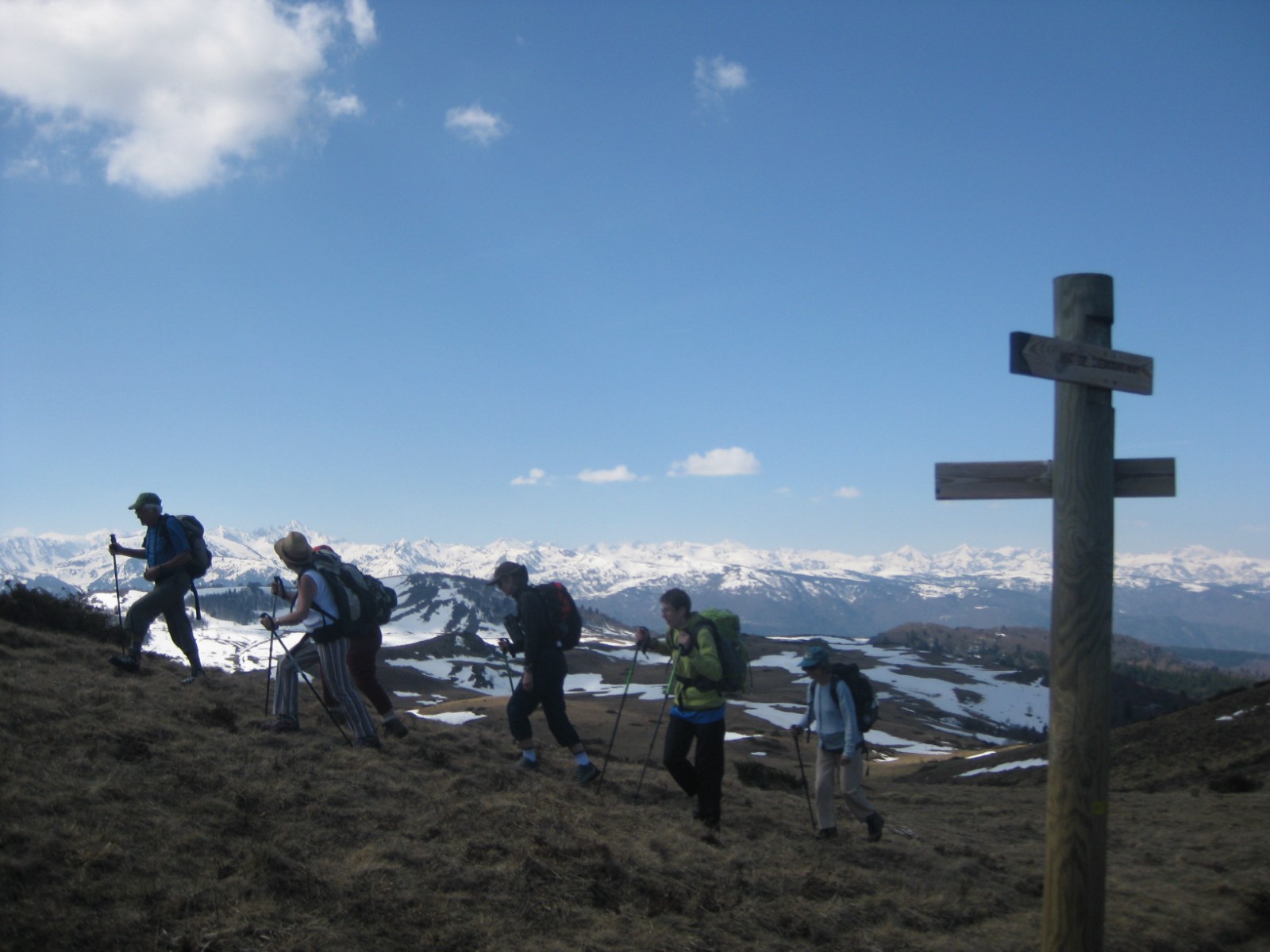
We too were climbing out of Montaillou. The paths seemed unchanged through the centuries – short springy turf with early spring flowers pushing through. Pale pink and white blossoms busting open. Narrow streams cutting deep channels through the turf. Thick forest climbing the slopes. Patches of snow made the going a bit tough from time to time. It was warm and sunny, the slopes were steep and sometimes hard-going
Those peaks appear
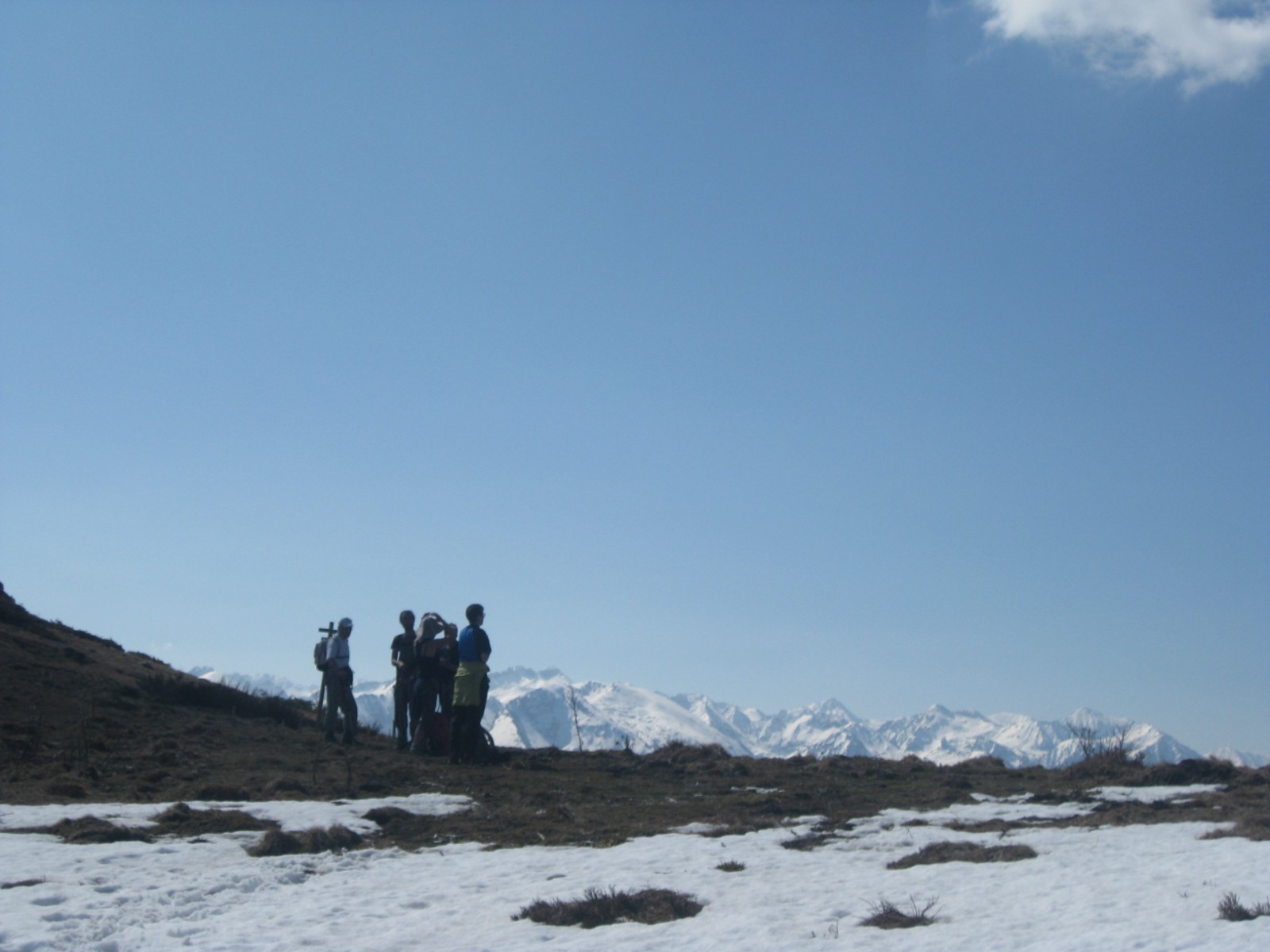
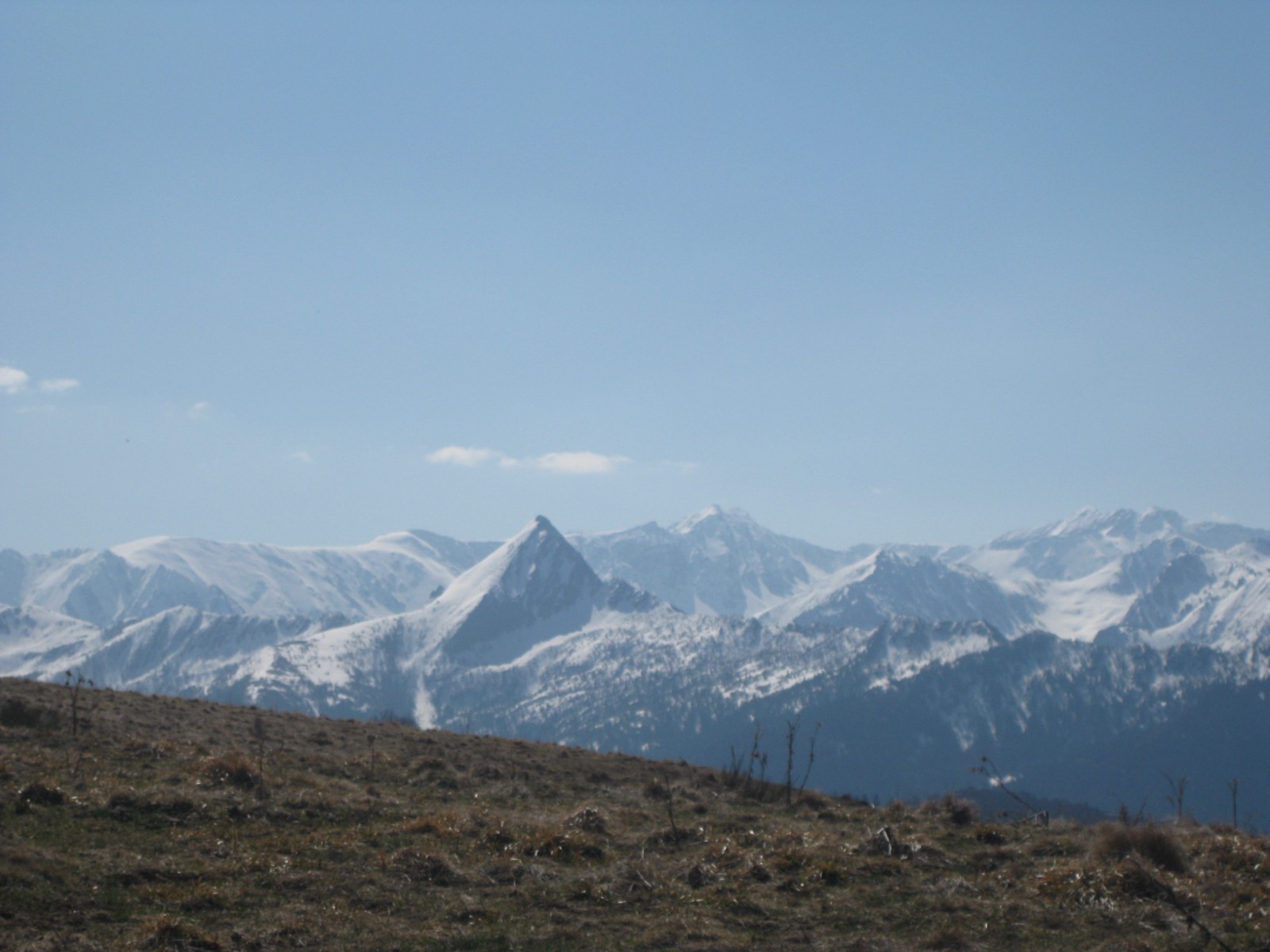
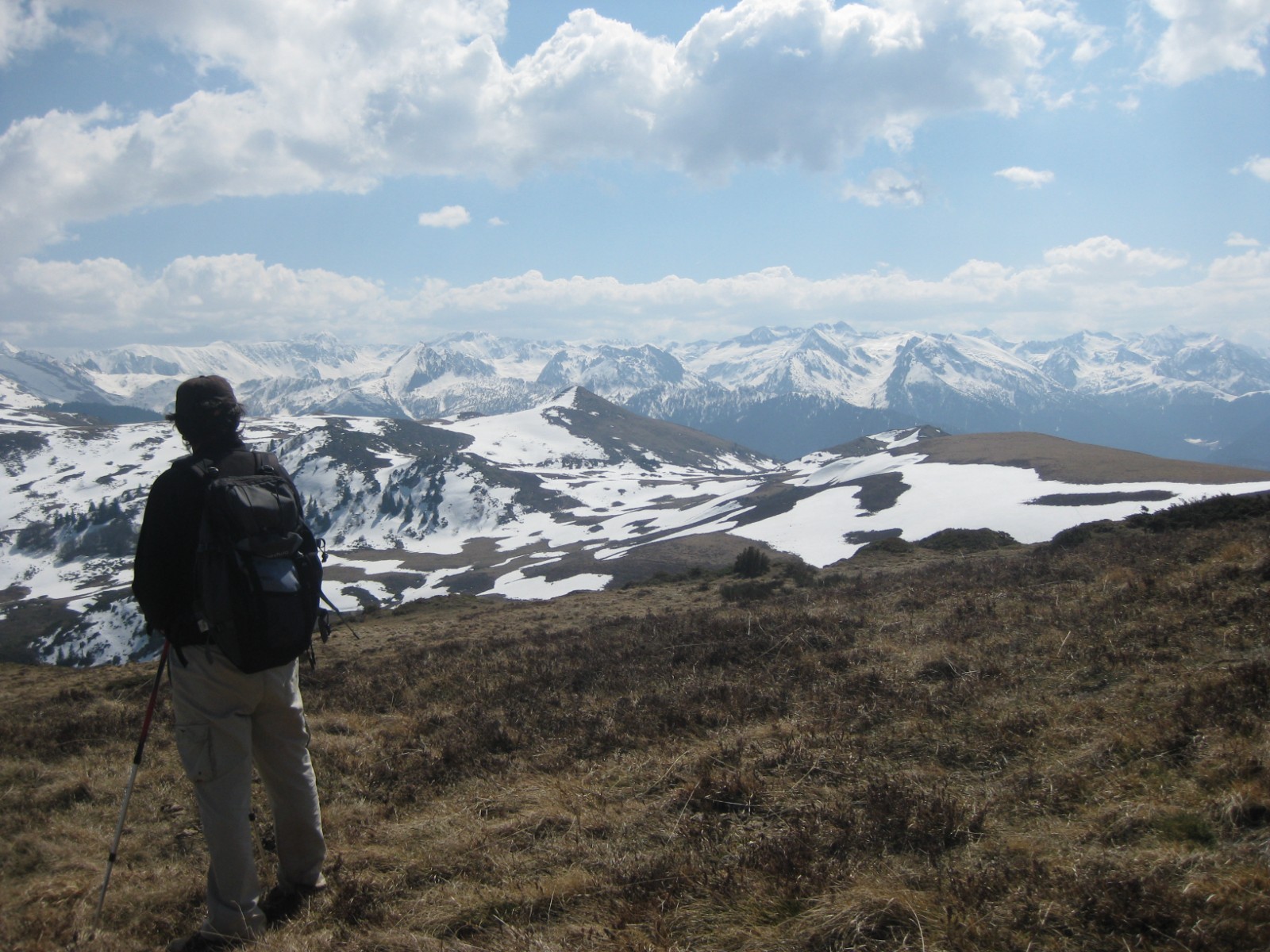
Then suddenly…suddenly, and so unexpectedly, we reached the top of our first climb. Around us, to east, south and west were the snow-covered peaks of the Pyrenees, glistening white against the blue sky. Above us, skylarks called and swooped. Later, Danielle remarked that she felt as if at that moment she’d received a special gift: that perfect view, the clean clear air, the singing birds which were the only sounds. She voiced, I think, what we all felt.
A few of those unending peaksWe keep walkingMore distant peaks
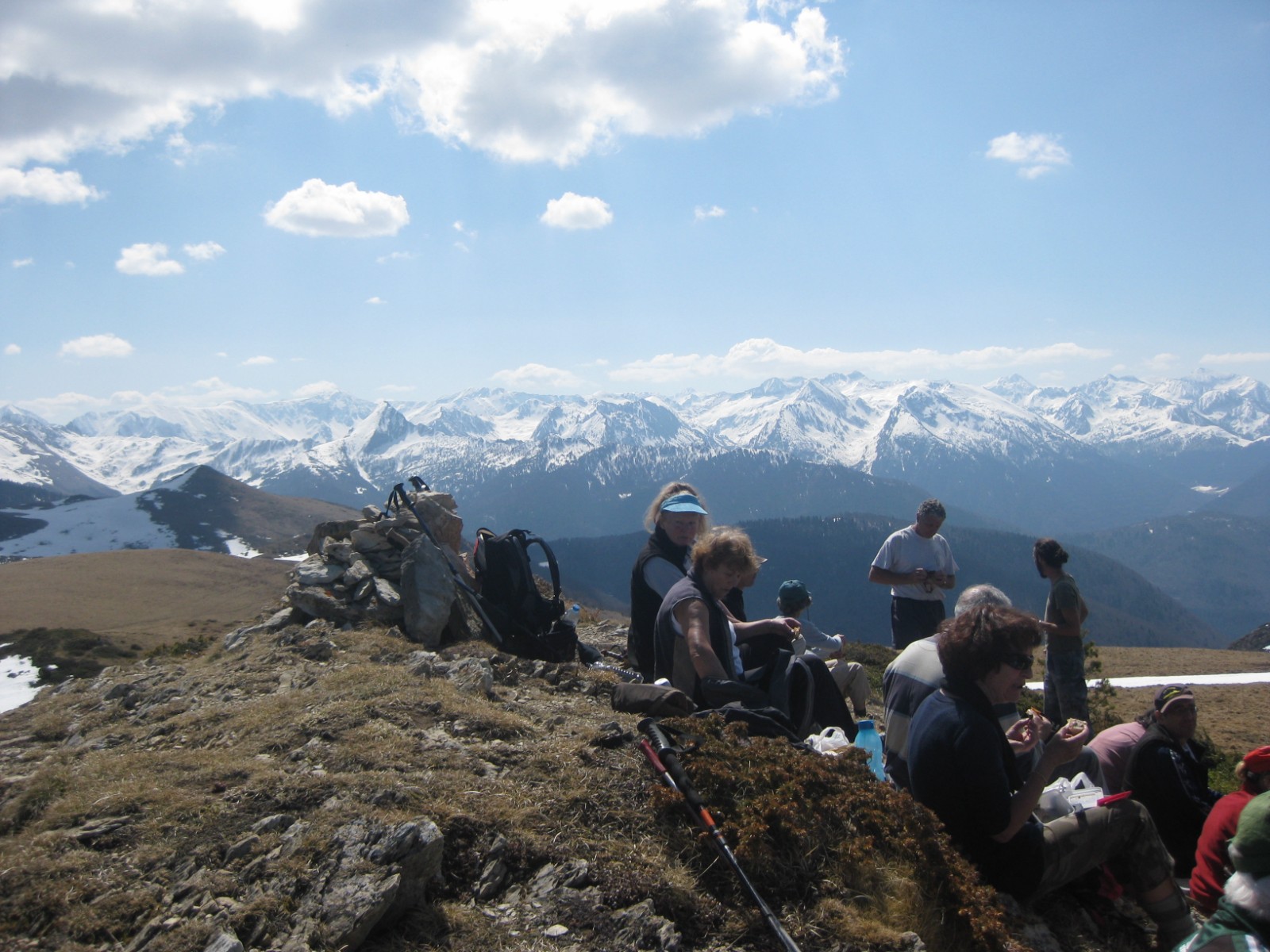
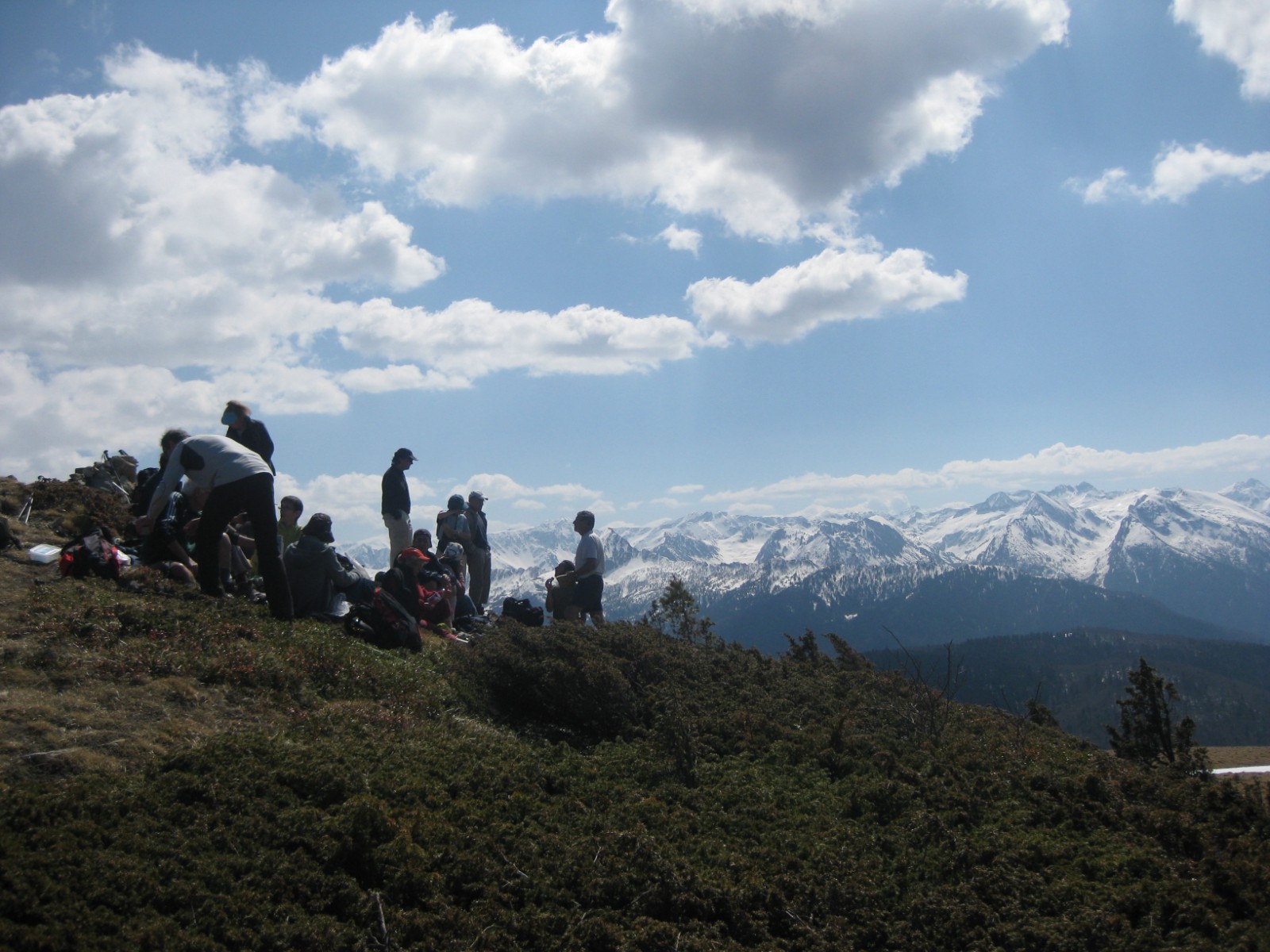
We hadn’t reached our highest point: we climbed onwards, always with those snow capped mountains at our side. And then we were on top: handy rocks provided seats and shelves and we unwrapped and shared our lunches, lingering in the sun, drinking in the views for well over an hour.
Picnic spot
The afternoon walk begins
Soon after lunch, we turned our back on the snowy mountains. As we faced the hotter, drier Pyrénées Orientales, the equally high peaks there weren’t covered in white. Our path was downwards now, and soon we had to pass the ski station above Camurac. Built long after those years when snow could be relied upon throughout the winter, it was an area of scalped earth, snow machines and all-but-redundant chair lifts. My Montaillou shepherds certainly wouldn’t have recognised it.
The walk draws to a close
But then it was forested paths again, open pasture and spring flowers. We finished the walk passing a collection of horses, Thelwell style ponies, and appropriately for Palm Sunday, a couple of friendly donkeys. A good day.
Down here in the foothills of the Pyrénées, nobody’s interested in how far you walk as you stride up the mountainside. It’s all about the DNV (dénivelé, or number of metres you’ve climbed – and remember a hillside can go down as well as up: coming up again after a descent starts the DNV counter all over again). On Thursday, we did 791 metres. That’s 2959 feet in real money. Our mileage was less impressive: 19 km. or 11.8 miles – in the circumstances pretty damn’ good.
But we didn’t know the statistics till we’d finished. We were far too busy having a very special walk.
To reach our departure point, you leave Belésta via a switchback forested road, over the Col de la Croix des Morts, and emerge onto a high and slightly bleak plateau. This is the Plateau de Sault, home of the region’s potato growers. We stopped at an insignificant track signposted Langrail and parked the cars. As we got our boots on, we met another walker on a brief holiday from his home in Durban for a good long solitary hike (‘Durban? Where do you suppose he meant? Durban-sur-Arize in the Ariège? The one in the Aude? South Africa even?’). He was the last person we met all day.
It was the 14th March. There were large patches of snow all along our route. Yet we wore tee shirts all day and became lightly bronzed in the hot sun as we crunched through that still hard-crusted snow. Through the forests we could see the peaks of our more local mountains: Maguy, born and bred round here taught us how to recognise each one.
Then, quite unexpectedly, we emerged into a splendid expanse of pasture interspersed with areas of snow. In every direction, there was a distant fringe of mountains: our day-to day familiar slopes, the more distant and higher peaks of the Hautes Pyrénées,and behind us, bereft of snow, those of the Aude and Pyrénées Orientales. It was a really special pleasure to tramp across this apparently unending pasture, enjoying views of our constant neighbour Montségur, as well as the towns and villages where we all live, and much further away, the Montagne Noir, with the sky clear and blue above us.
It kept us happy till lunchtime. We’d arrived at a refuge by then, thoughtfully provided with a table and benches in the sunshine. After the picnic, we left our rucksacks with Gilbert, the honorary man in the group and went off to investigate the Belvédère, the local viewpoint. Craggily folded rocks plunged down deep towards the Gorges de la Frau and still we had our views of Montségur. We were impressed.
Our route for the day was a simple there-and-back. But the views were quite different, looking towards more eastern slopes so we didn’t feel at all short changed that we were repeating our route. And most of the return was downwards too. Which was helpful. When you’ve climbed 2000 feet or more, it can get quite tiring as the day nears its end. Lucky that there was cake and tea to look forward to.
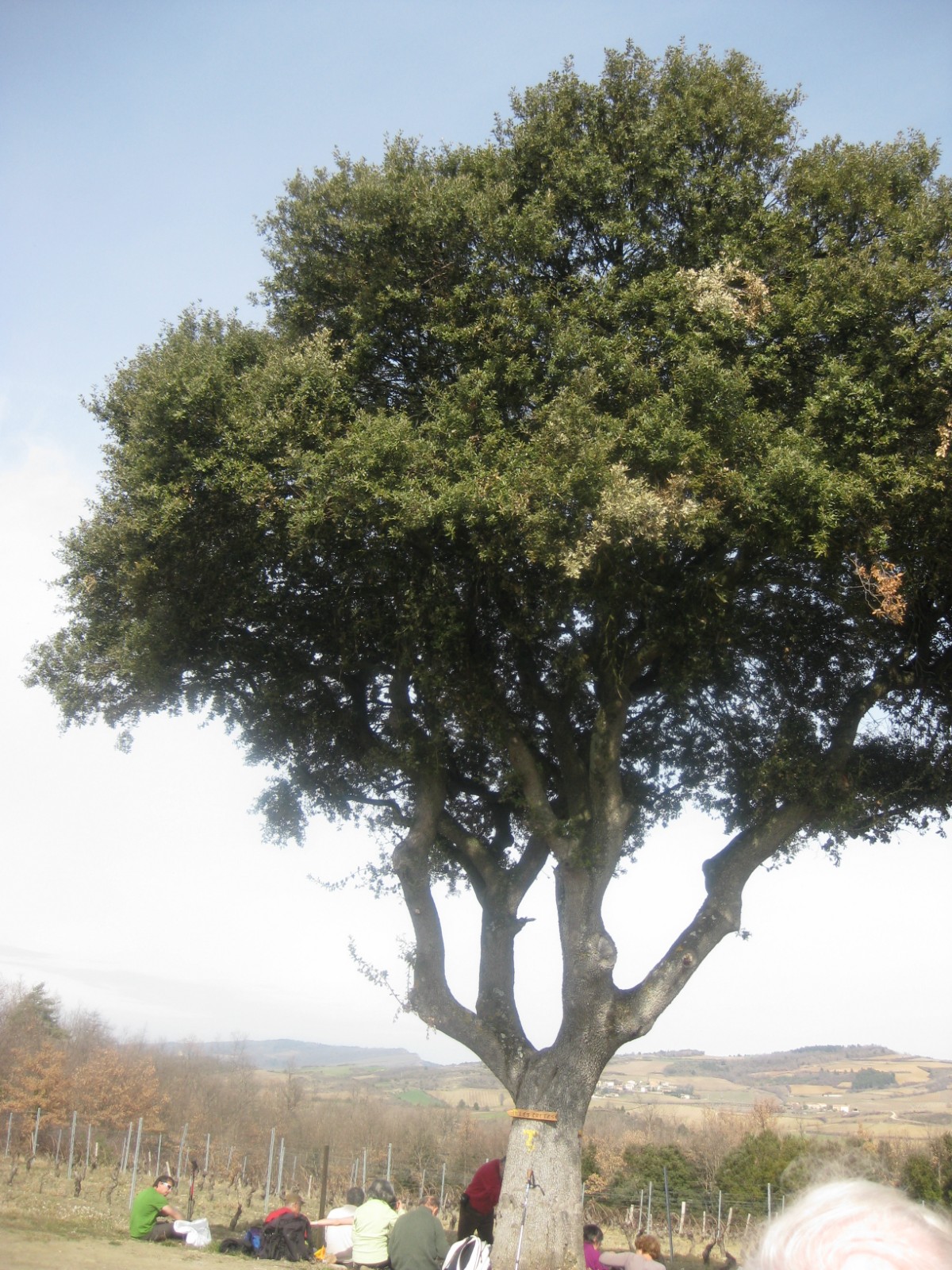
It was a walking day again yesterday – Malcolm too this time – this time with the new hiking group at Laroque. The walk, again amongst vines, but in the more Spanish style garrigue around Esperaza, was relaxing and fun, but the highlight of the day was lunch. We sat by a vineyard, either in the sun, or shaded by a shapely and statuesque holm oak tree, and unpacked our rucksacks.
Under the spreading holm oak tree we laid our picnics out.
For a picnic on a walk, most people put together a chunk or two of cheese and sausage, a bit of fruit, and stop at the boulangerie on the way to pick up some bread. We all did that….but…. there was food to share too.
Phillippe, Sylvie and Jean-Charles opened wine.
Jean-Charles offered peanuts.
Michel produced home made charcuterie (dry cured sausage).
So did Phillippe and Sylvie (boudin blanc) – theirs was home made too.
They brought some of their daughter’s home made goats’ and sheeps’ milk cheese.
I made a drenched lemon cake.
Yvette made crisp chocolate biscuits.
Jean Charles brought an ‘artisanale’ fruit cake.
Then he came round with coffee.
And finally, Yvette offered plum eau de vie made by her grandfather in 1985. A little dripped onto a sugar lump and scrunched is the perfect end to a perfect picnic.
Then we all lay around in the sun for half an hour while we digested that little lot.
That’s the way to do it, eh? And as everyone said, as we finally decided we ought to have a go at walking off all those calories, “Vaut mieux le vin d’ici que l’eau de là” : it’s better to have a drink among friends than to be no more for this world.
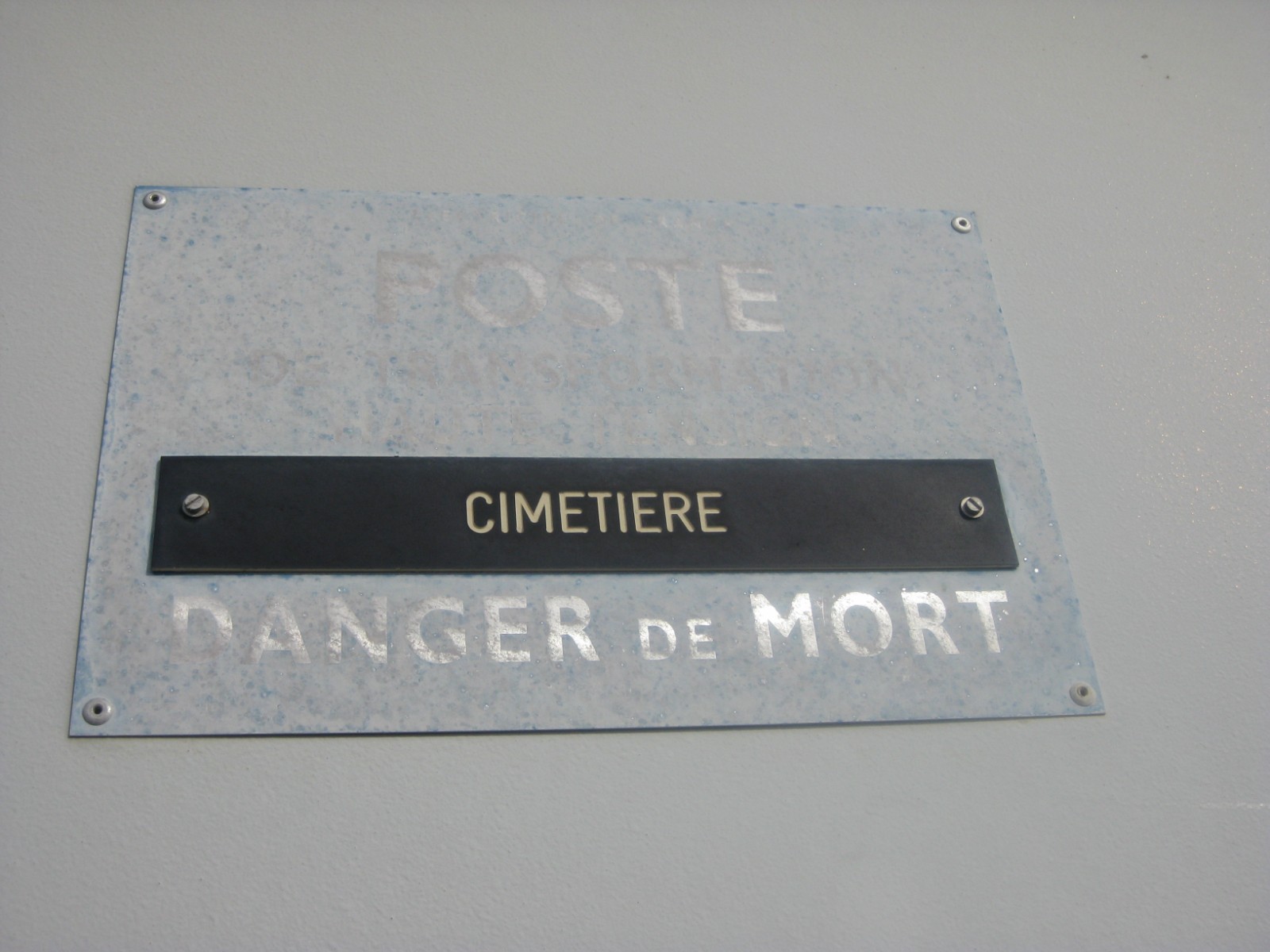
As we ended our walk, we found an electricity substation, handy for the graveyard, that reminded us that death is an ever-present threat. Definitely a good thing to have shared that food and wine at lunchtime.
Thursdays, I walk. I do these days anyway. A few weeks ago I was invited to join a small informal group from round these parts, went once, and had a great time. Then The Great Snows came, and that was that for a while.
Yesterday, though, we went to Cépie, near Limoux. Cépie is a village that Malcolm and I happened to be driving through several years ago in high summer, and where we spotted a fruit producer, selling peaches and nectarines. Those peaches we saw that day have become the standard against which all others are measured. Dripping with perfumed sweet juices, the tray we bought scented the car with its decadent fragrance, and all but intoxicated us as we drove home. So I was keen to go again, lack of peaches notwithstanding.
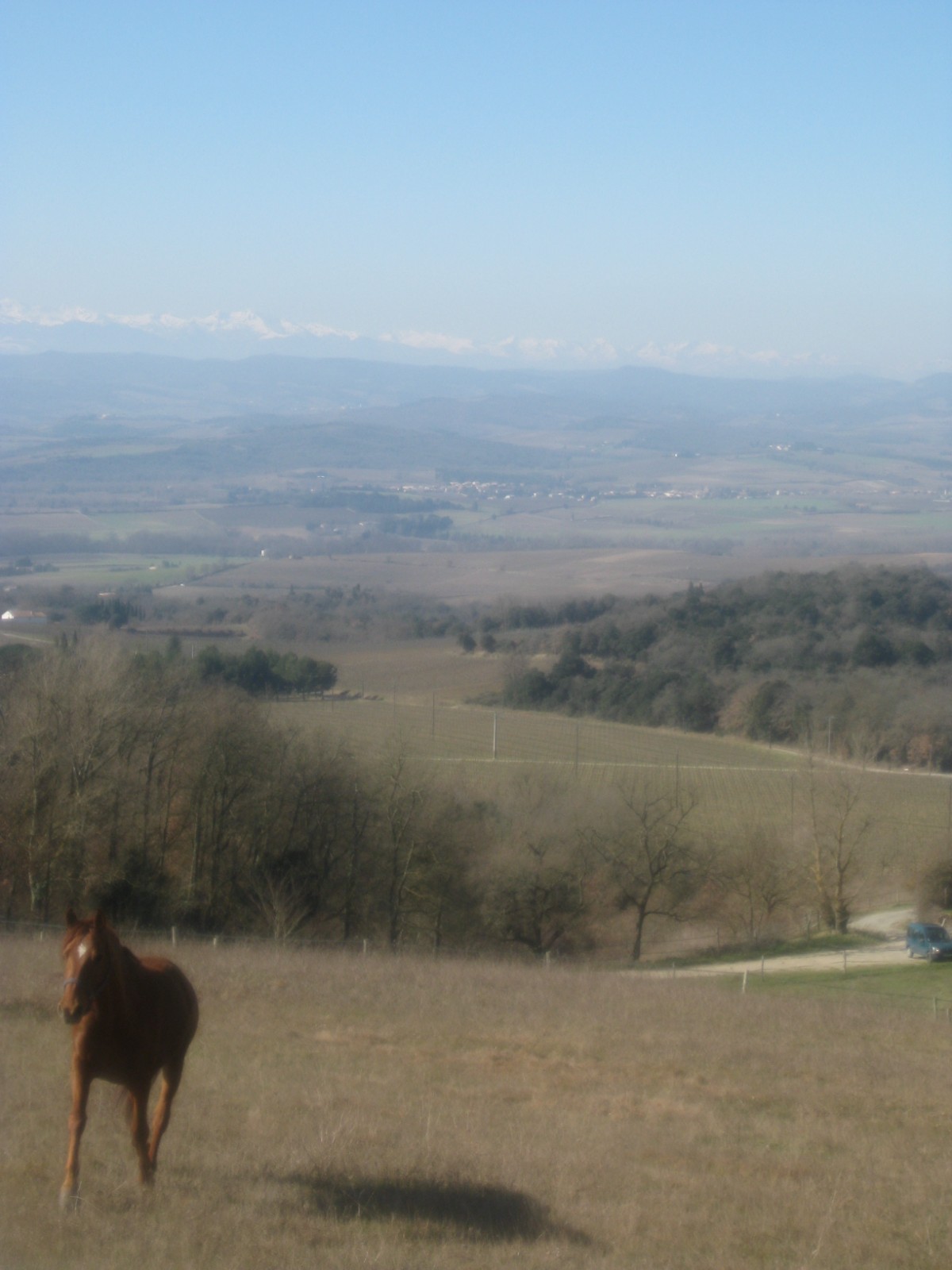
You'll struggle to see the snowy Pyrenees as the backdrop to this picture. They are there. Keep looking
Instead of peaches, there were views. The Pyrenees are more distant here, but that means we got horizon-filling views of the gleaming snowy mountains as they rise and sink in a line of angular peaks, marching right across the skyline from east to west. Because of the haziness of the day, the photos give no idea of the panoramas which we quite simply had to stop and gaze at, time after time.
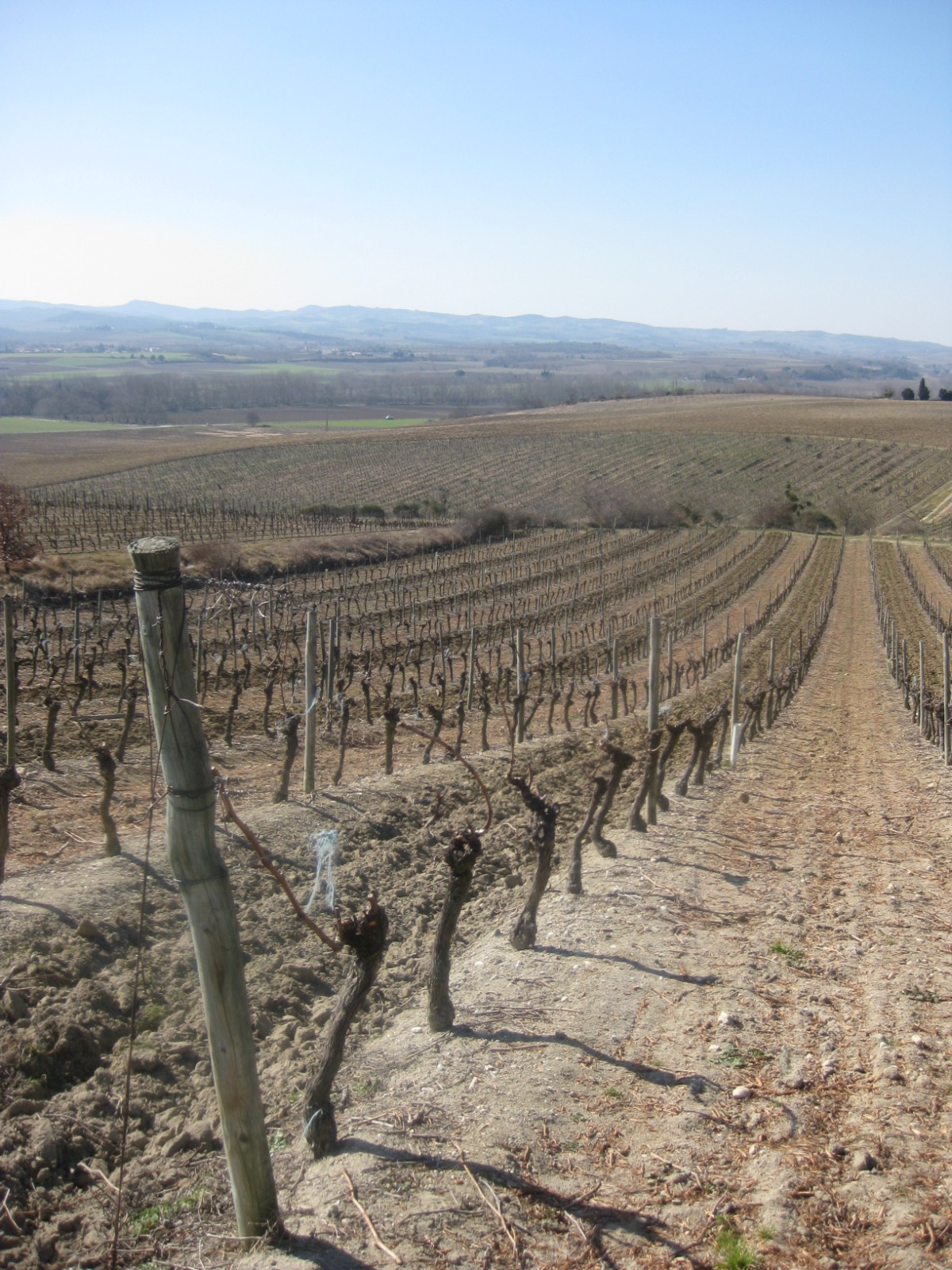
This area is Tuscan style Aude – rolling hills with distant domains and lines of cypresses, covered for acre after acre with mathematically precise lines of vines. I used to find these vineyards rather dull in winter.
Notre Dame du Razès, protégez nous et protégez nos récoltes
Now, as the workers get busy in the fields, pruning away all the growth from the previous year to leave little more than a two or three foot high trunk, I enjoy the way these organised lines echo and follow the contours of the landscape.
Vineyards march across the landscape
Our walk took us in a figure of eight through sandy, stony wooded paths, passing near domaines and hamlets whose reason for being is those vineyards. Towards the end, we paused in the tiny village of Saint Martin de Villereglan and enjoyed looking at the school-cum-town hall, the views down to the church, and generally pausing for breath before the final yomp up, then down the hill that divided us from Cépie.
A nice touch with these walks is that every week, one member of the group makes a special cake to share at the end of the day. A lovely moment of sharing (in this case with a couple of passing villagers who got chatting), it gives a much needed calorie rush. We’d only done about 16 km, but the local temperatures rose to more than 23 degrees, and we felt we deserved our gâteau aux noix.
All over Europe it seems, people are shedding their woolly pullies and revelling in the balmy air, as plants unfurl new leaves and flowers, and animals mate and give birth.
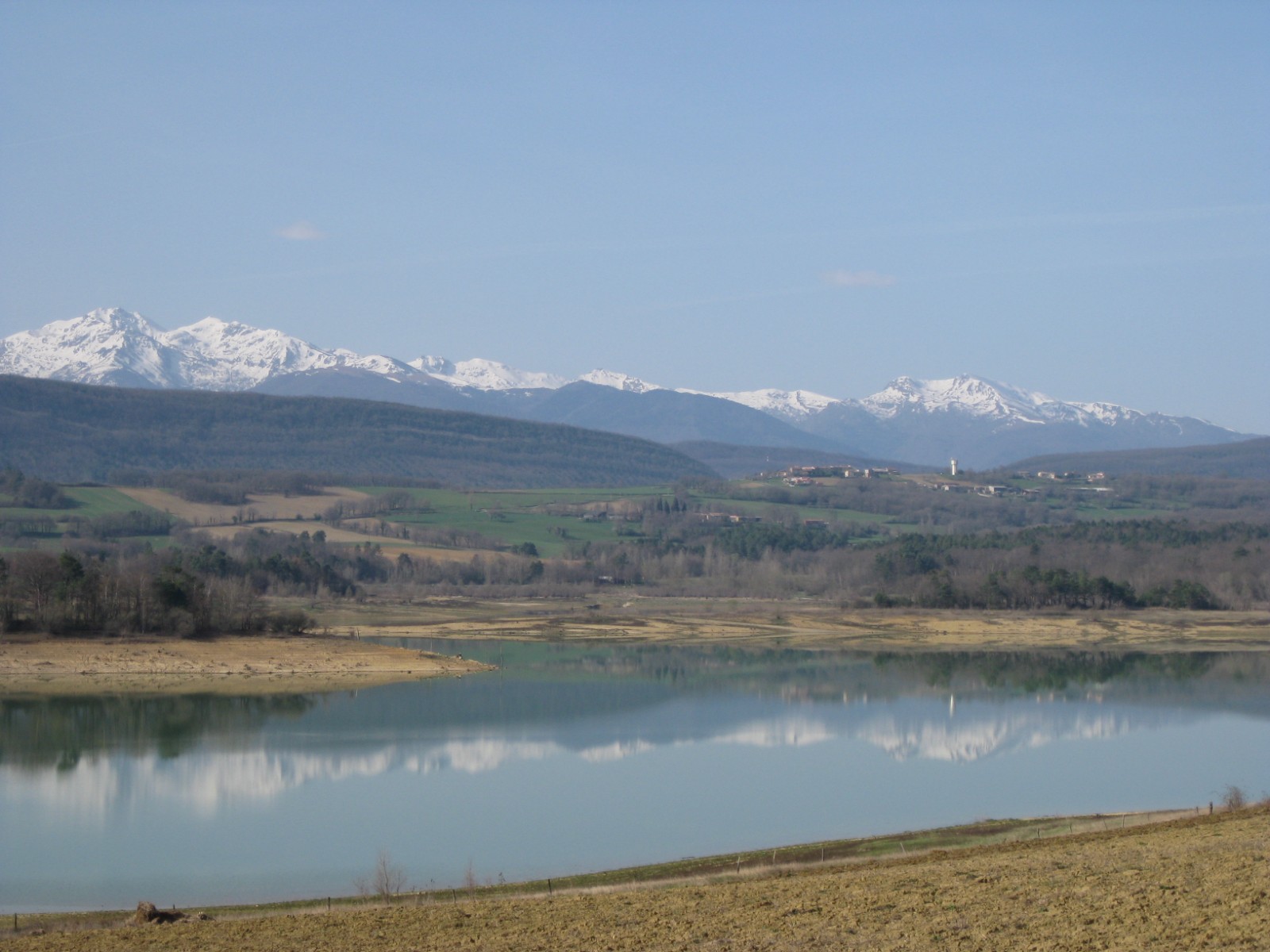
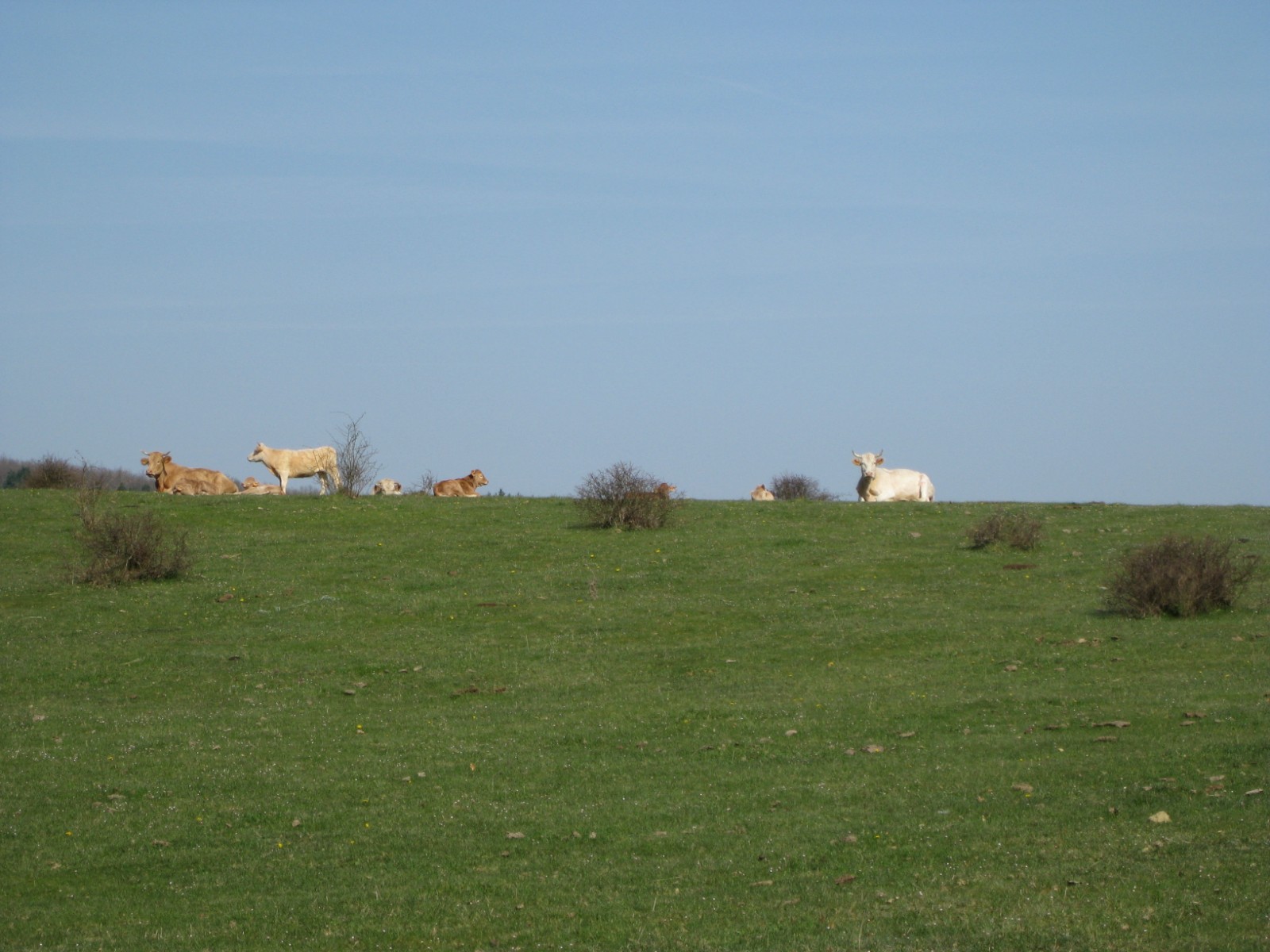
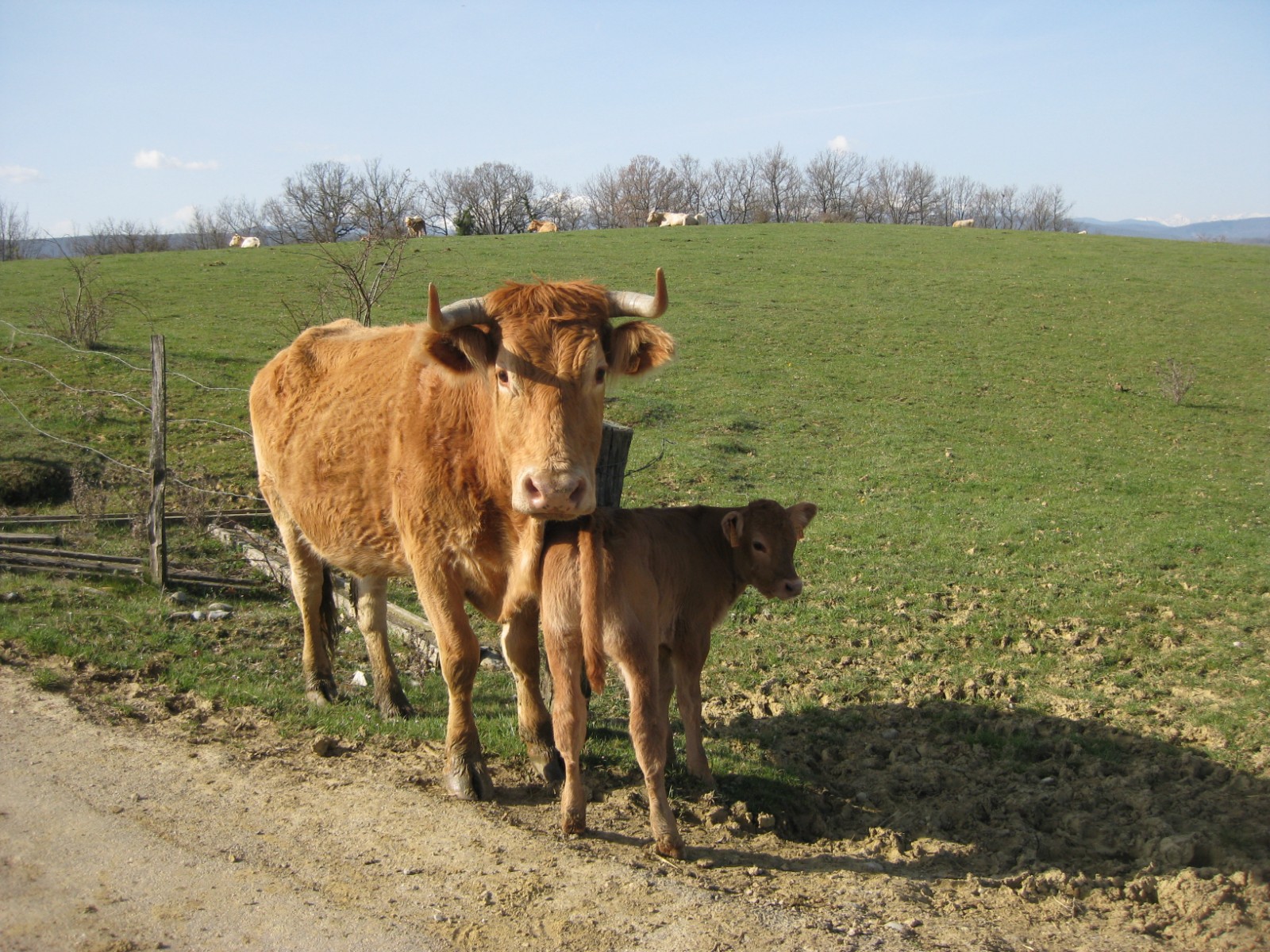
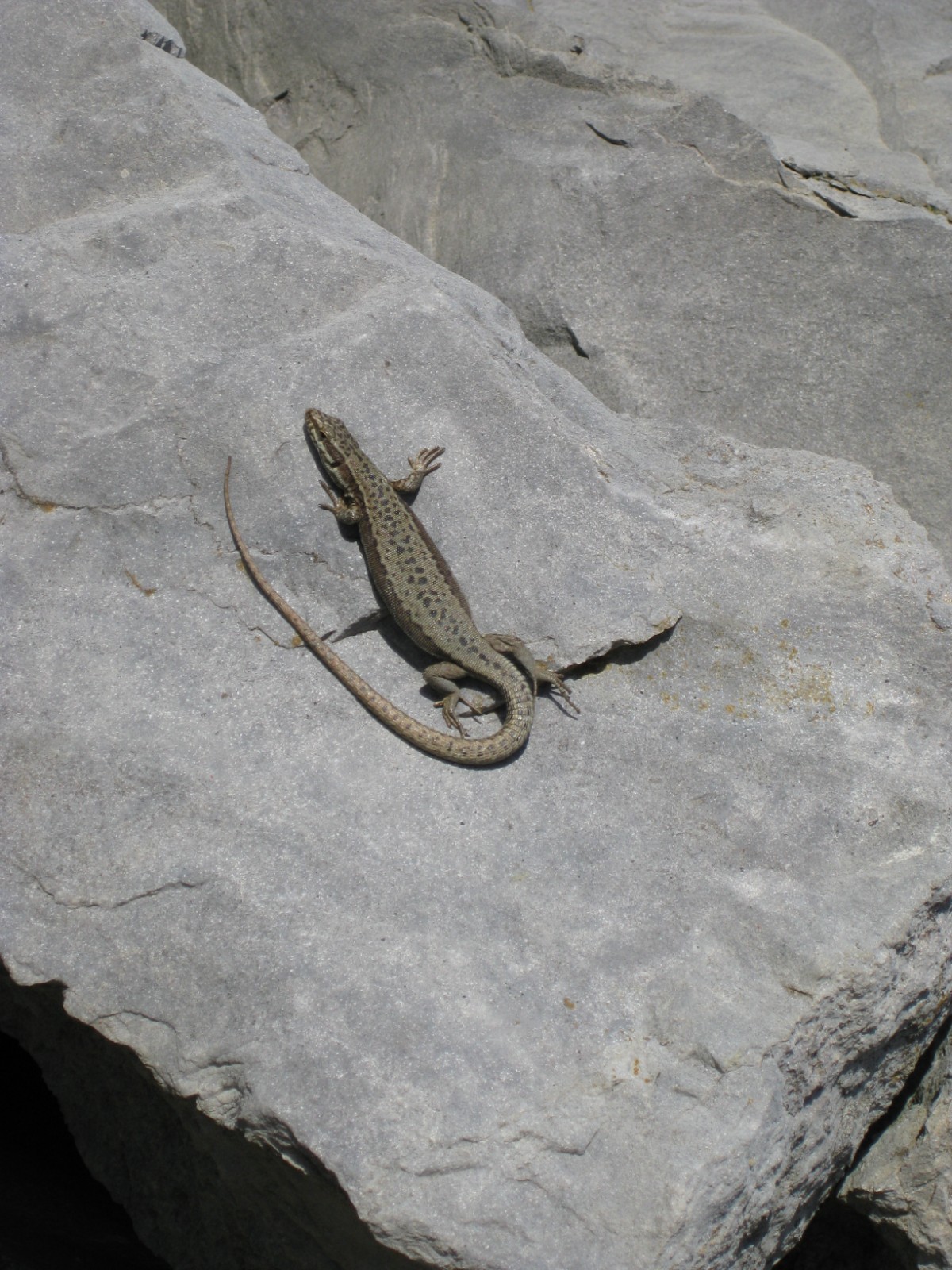
This was the lac de Montbel at the very end of last week.We enjoyed the views. The cows enjoyed the views.Though this mother preferred to keep her calf safe at her side.Dozens of lizards sunbathed on the newly warmed rocks. Here’s one.And here’s some sloe blossom. I’ll be back in the Autumn for the mouth-puckeringly sour fruits to make sloe gin or vodka.There’s only one problem. The warm weather has brought out all the biting insects. They soon found me.
At this time of year, with spring nudging the crocuses, violets and celandine into flower, and encouraging buds on trees to fatten and swell before bursting into flower, it’s time to be busy outside.
My single patch of white violets among all the purple
Our garden’s a minute or two’s walk from the house, and out of sight can mean out of mind. So once there (‘I’ll only be 10 minutes’….), I’ll find all kind of things to do. The grass needs strimming already. The vegetable patch is a disgrace. The fruit trees need attention: they suffered horribly in last May’s heavy snow, and they should really have had careful pruning much earlier this month. The compost heap needs a bit of TLC. Time passes while I prune our ‘vineyard’ – 6 vines. (‘Oh, sorry, have I really been two hours?’)
The pear tree: lots of character, not many pears
So I’ve taken a big decision. No vegetable patch this year. That way, the trees may get the extra attention they need: the ivy and brambles may not get the upper hand quite so readily, though I wouldn’t bet on it.
I’m not going to do it on my own though. From Easter, we’re planning new recruits to the garden: a gang of hens, whose job it will be to peck away at all the grubs, and keep the grass trimmed, whilst offering the occasional egg for breakfast.
The hens next door running free
Quite a few friends in England have re-homed ex-battery hens, and I’d love to do this too. I’ve written emails, joined internet discussions, asked around, but it doesn’t look as if I’m going to be able to find any here in France. But the search goes on as we plan the next project: build a hen house.
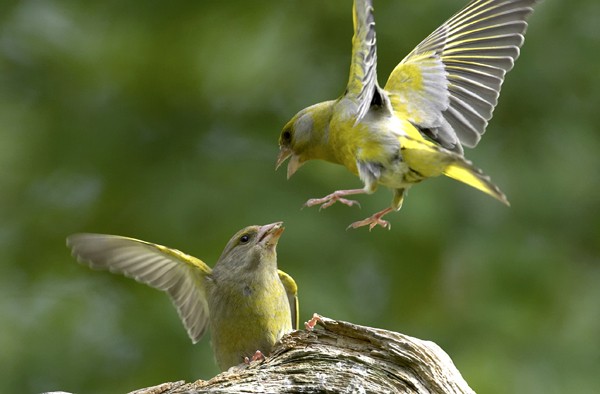
Although it’s often a lot of hard work, this garden’s a really special place for me (and I do mean me. Malcolm’s excused gardening duties so long as I’m excused DIY duties). From it, I can see Montségur, the thickly wooded long chain of hills called the Plantaurel, and the snowy peaks of the Pyrénées behind . So near to town, and away from the house, it’s where I come to get away from it all, and have a healthy workout as I dig, hack, uproot and generally try to keep Nature at bay.By the way: greenfinch update. Enough already! They’ve shown themselves to be belligerent, selfish dogs-in-the-manger, who dive-bomb, use their wings to beat off the opposition, peck, bamboozle – anything to keep any other bird away, even ones who are eating their least favourite thing on the feeding station.
Greenfinch fighting
They’re also extremely messy. I’ve told them. I’m not replenishing the feeder till they’ve eaten every scrap of the food mountain they’ve dumped on the ground beneath.
Oh, and as our lunch guests pointed out, it was a goldfinch, not greenfinch onslaught we had two years ago. We’ve seen none since. They’re all 4 miles up the road at my friend’s house in le Peyrat.
When we first understood that Laroque is twinned with Melgven in Brittany, we were nonplussed. Surely twinning arrangements are with England, Germany, Spain – or anywhere abroad. What’s the point in twinning with a town in your own country?
Well, quite a lot as it turns out. As part of the twinning arrangements, citizens from Melgven come for a long weekend here in Laroque , while Laroquais have the chance of a few days’ stay there in May. This year, we signed up for the 10 hour mini-bus trip to Finistère
Straight away, we began to see the differences. As we arrived, we were welcomed to enjoy poking round their fundraising ‘Troc et puces’ fair in the Sports hall. The Bretons are a Celtic race, and it shows in their physical appearance. Meanwhile, down here, there’s a long tradition of Spanish immigration, most recently in the Spanish Civil War, and the Second World War, so many locals here are olive-skinned and not very tall. A tannoyed announcement for M. Garcia and M. Sanchez to report to the desk in a public hall somewhere near here would have nearly half the room scurrying to reception.
And then there’s the food. Brittany, like Britain, favours butter, and unlike the rest of France, the salted variety. Out to a meal on Saturday, the lunchtime bread came with pats of butter, something that never happens down south. In the Ariège, cooking’s done in duck fat, and more recently, olive oil. No part of Finistère is very far from the sea, so fish and seafood are an important part of the diet. Down here, duck in all forms is king. But pork, lamb, game, beef are all welcome on the dinner plate. If it moves, eat it.
When we looked round a market in Concarneau on Saturday, we were struck that there was little charcuterie or cheese on sale, and what there was came from elsewhere. It seems as if every other stall in our local Ariègois markets is one selling cheese and charcuterie, much of it from just a few miles away.
Brittany – cider and beer. Southern France – wine. As part of our welcome apéro, we were served kir made with cassis and cider. After sipping it suspiciously, we accepted refills with enthusiasm.
So…what were the highlights?
The welcome. Of course. Some Laroquais have been going on these exchanges for several years, and the warmth of the relationships forged is clear to see.
A change of scene: the countryside. Our host, Albert, took us on several walks, and we were struck with how very British this part of Brittany looks: softly rolling hillsides, woodland and meadows. We traded orchid spotting in the Ariège for enjoying the swathes of bluebell glades in the woods.
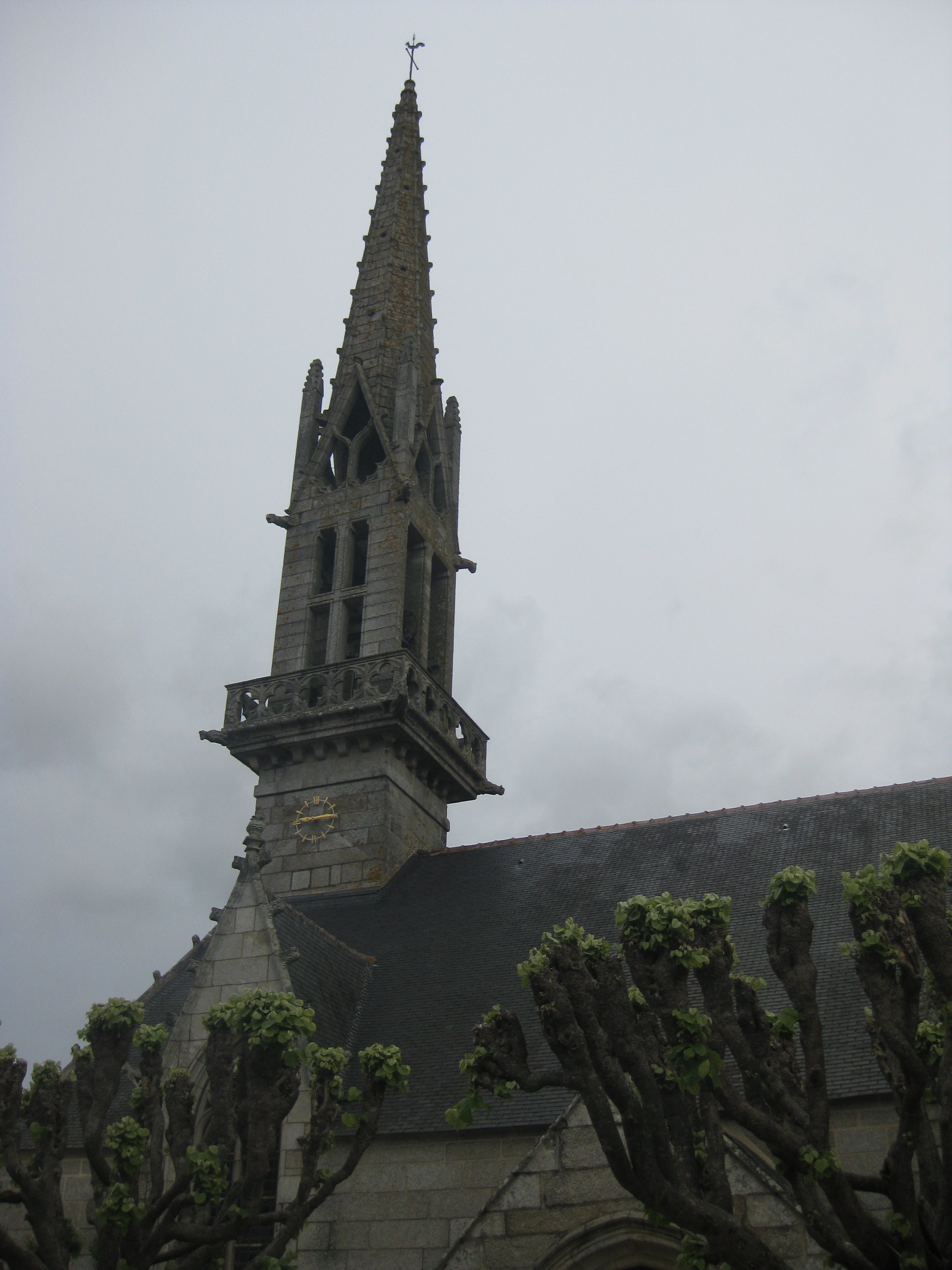
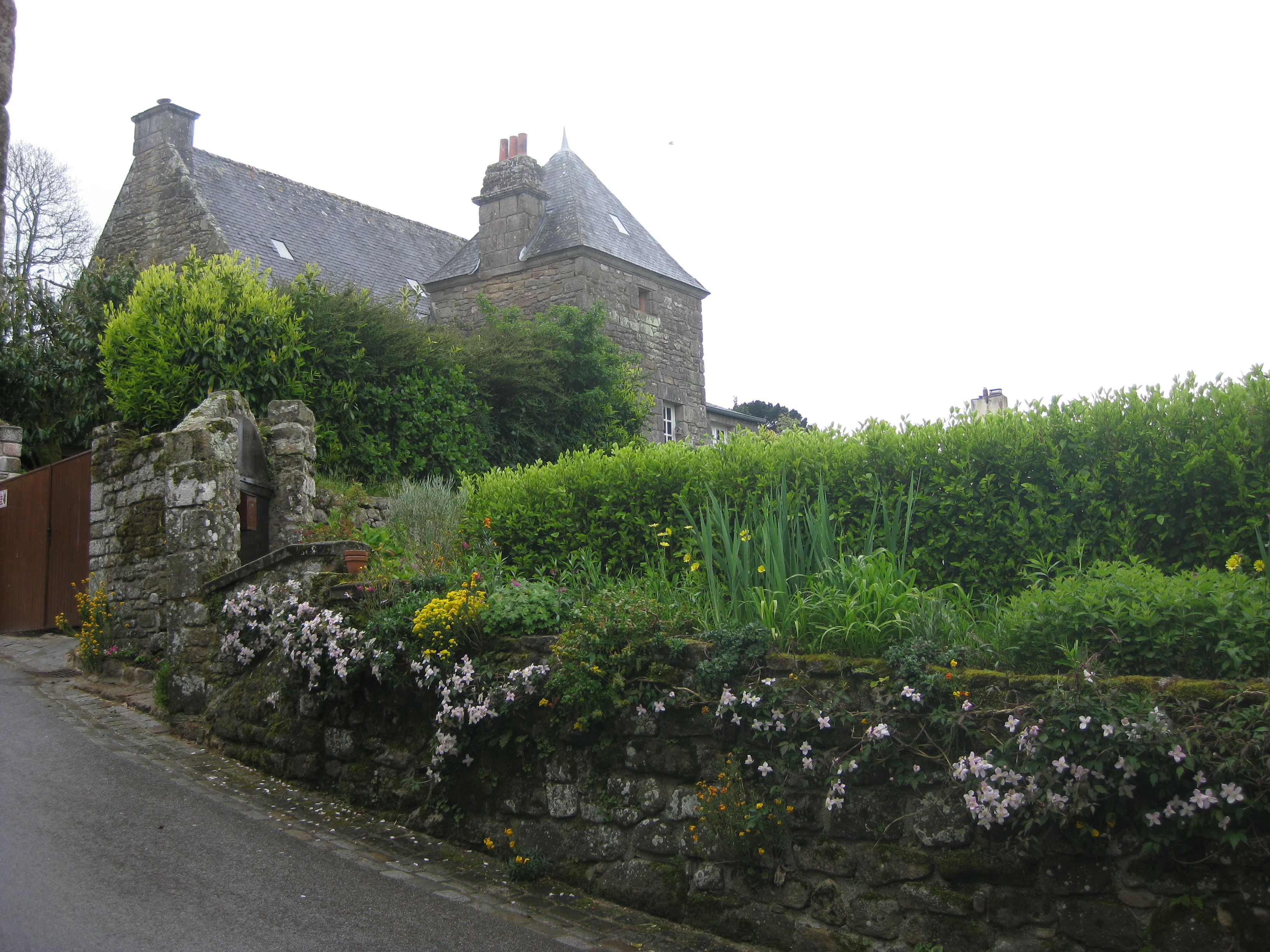
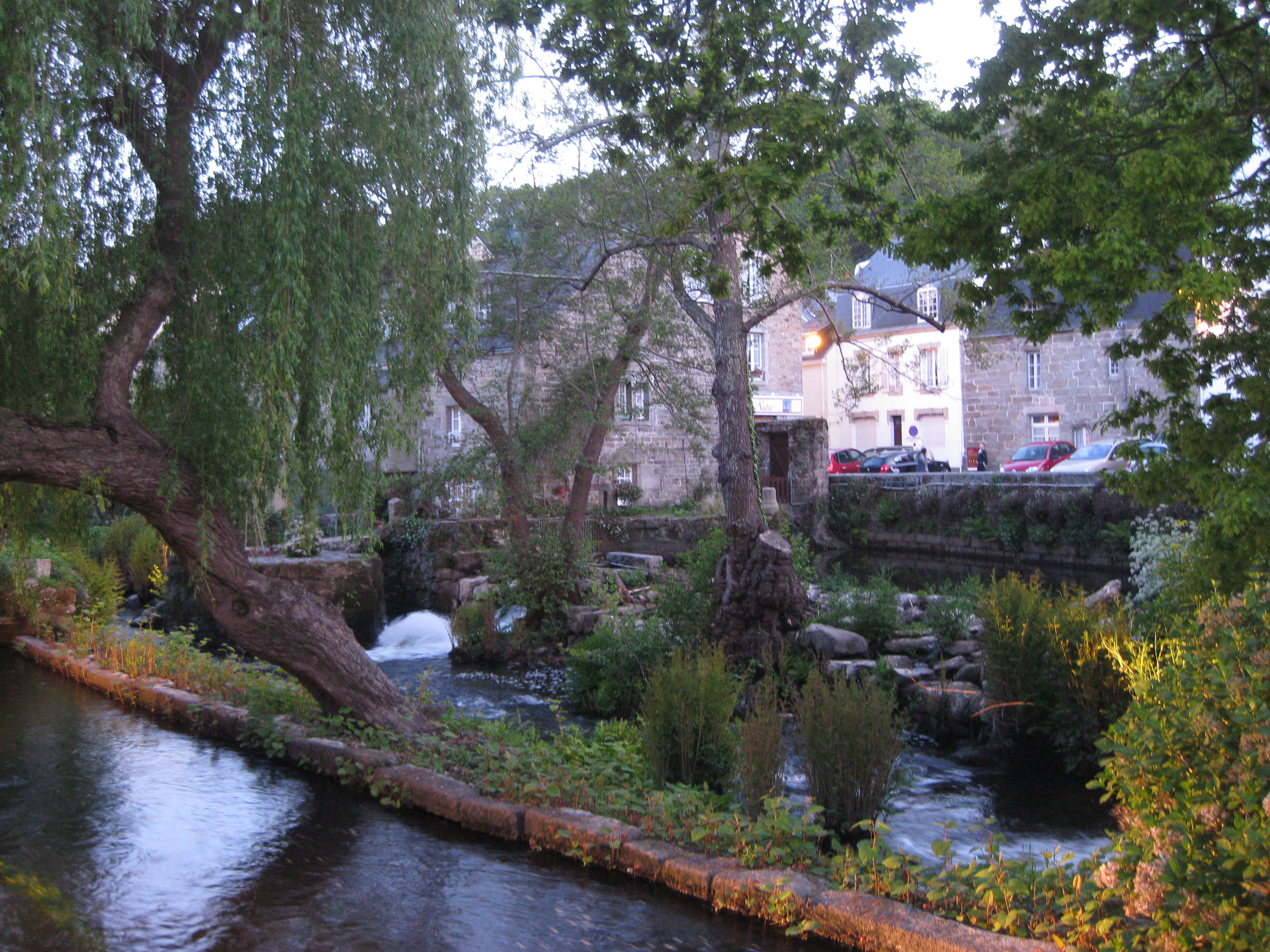
A change of scene: the town. We exchanged the shallow-roofed, unpainted or pastel coloured houses of the south for the tall white narrow pitched roofs of Brittany. Down here, we’re used to our towns and villages being shabby. Brittany’s are clean, sparklingly so, with flower boxes, neat gardens, and a general air of pride in the community. And then there are the churches. No clochers-murs in Brittany, but rather complicated steeples instead.
The seaside. Concarneau was at its sparkling best, with breezes tugging at the flags, clouds pluming across the sky, an early pre-season freshness to the narrow streets of the historic quarter. Their fishing museum there shows all too graphically just how very tough the life of the fisherman was – and is. But it’s a picturesque sight for the tourist
Sightseeing: Our first treat was to visit Locronan, a beautifully preserved granite built 16th & 17th century village, with a mighty central church, and a small chapel at the end of a charming walk.
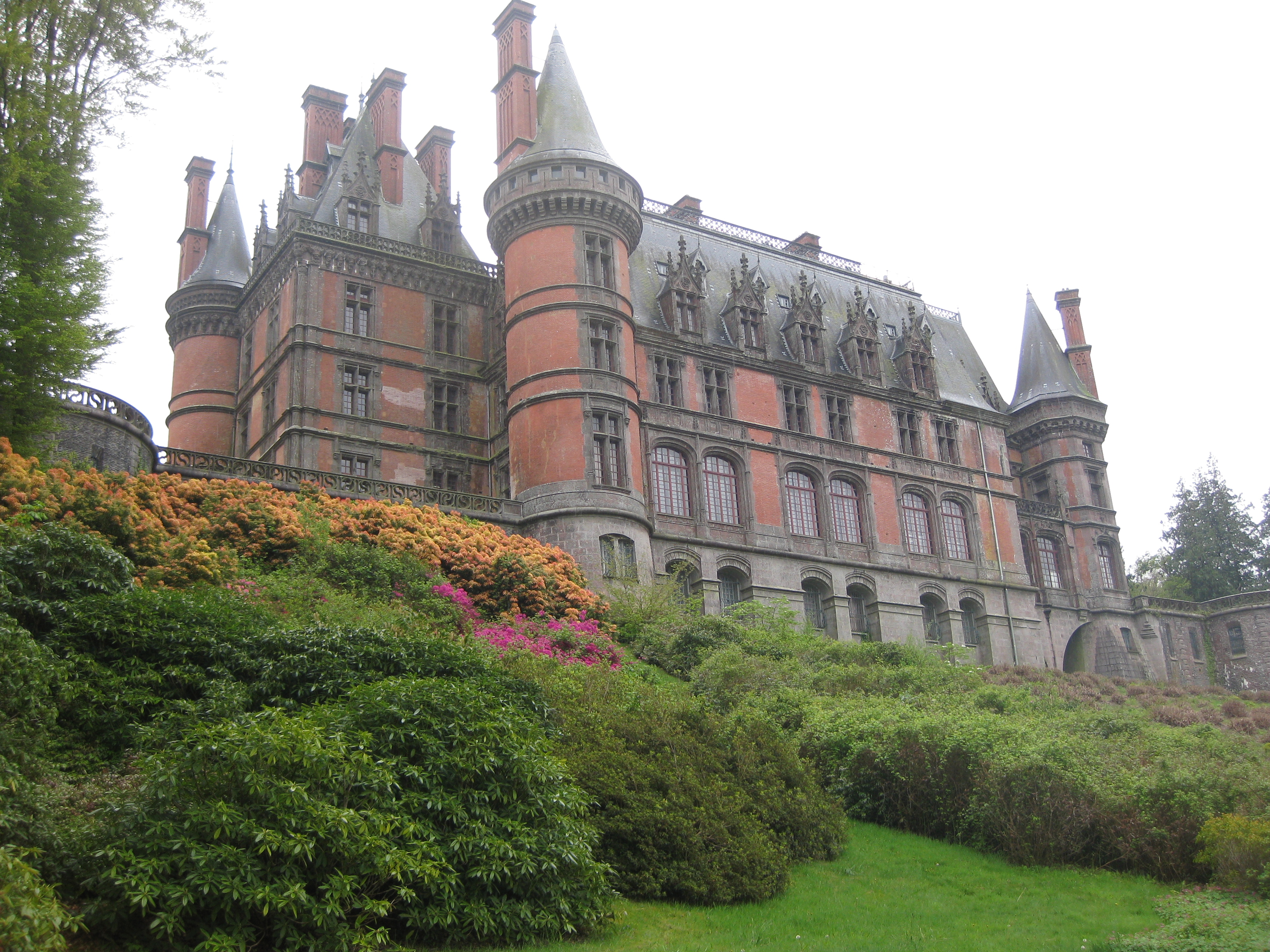
Next was Trévarez, a chateau that might look Gothic, but is in fact a 19th and 20th century construction. Its brickwork gives it the name “château rose”. We spent more time in the gardens though. Apart from a formal area near the house itself, the garden is informal in the style we’re so used to from English stately homes, and glorious at the moment with azaleas and rhododendrons
Celtic music: Friday night was concert night: the chance to listen to an hour or two of traditional Breton music. Malcolm and I particularly enjoyed hearing those favourite Welsh hymns – Land of my Fathers, Cwm Rhondda in Breton– they sounded very different, but just as good
Story telling: Such a treat. Michel Sevellec enchants audiences in Finistère and beyond with his tales drawn from many traditions. On Saturday, as part of a local festival, we joined local children to hear his interpretation of Native American and other stories. Can’t wait for him to come to Laroque in a fortnight!
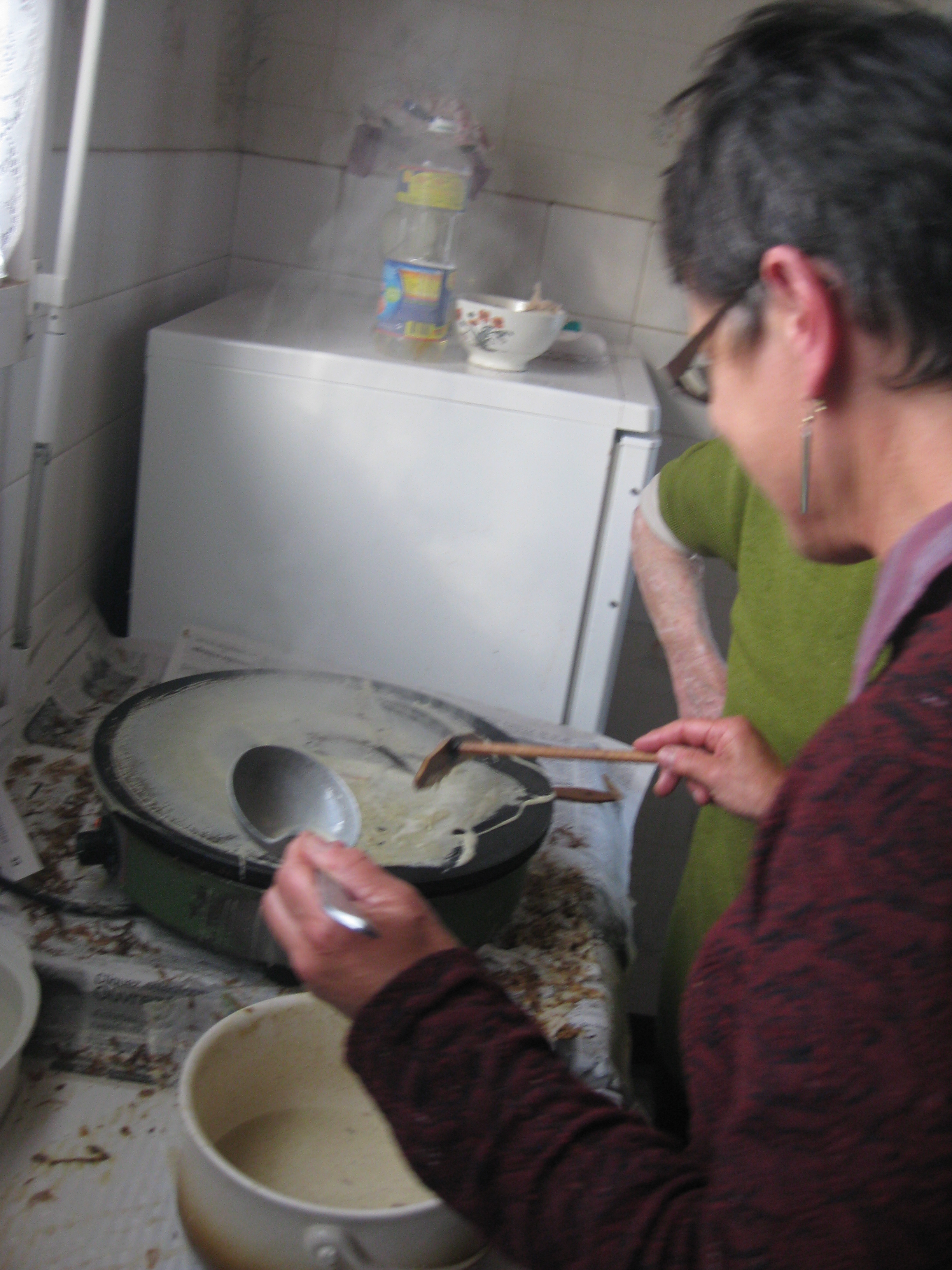
Crêpes:Everyone knows they make crêpes in Brittany. Lots of us have watched them being turned out on those special round hotplates. I always assumed it was easy-peasy. Until we went to eat crêpes at Albert’s mum’s house and she let me have a go. First, carefully pour the batter with your left hand while equally carefully drawing the batter round the plate with a special wooden spatula – not too fast & not too slow, not too thin & not too thick.
Expert at work
Then flip the delicate creation, so thin you could read a newspaper through it, over onto its other side to finish cooking. It was lucky there were hungry dogs to eat all my cast-offs. Lucky for us too perhaps: we’d still be eating them now. Malcolm and I thought 6 crêpes each ought to have been enough for anybody. Our hostess disagreed.
So….we discovered in Brittany an area very different from our own in languages, customs and appearance, and had a chance to be more than simply tourists. We now have new friends in Melgven but also in Laroque as a direct result of this weekend. A good experience.
Pont Aven: I didn’t even mention this lovely little town, did I?
1st May, 4.00 p.m. The washing machine’s just finished washing strappy tops and shorts, but I’m sitting here in front of a cosy log fire watching the rain scything it down in true British style. This time 2 days ago it was 37 in the shade, today it’s 11. What’s gone wrong?
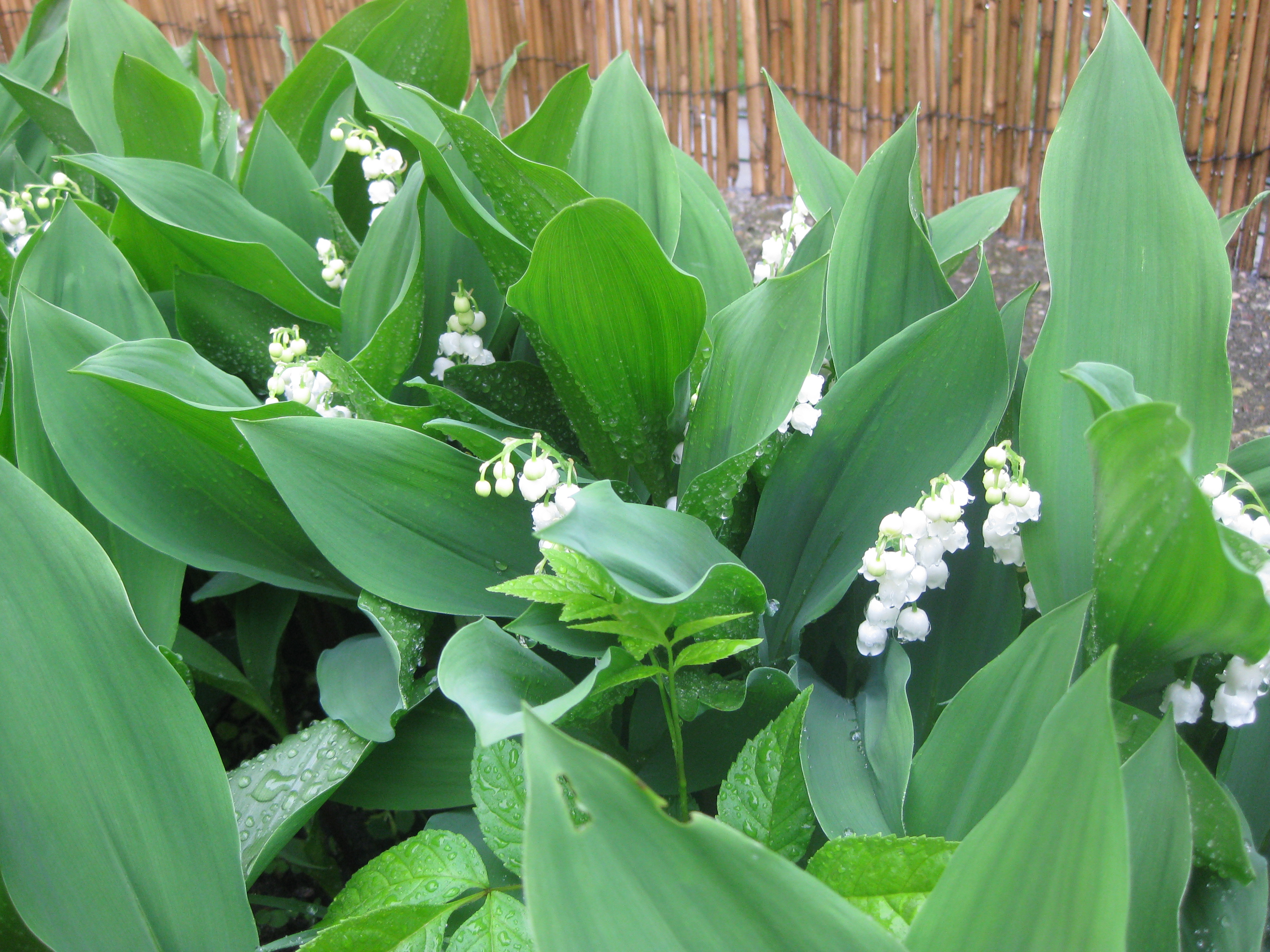
As in England, I suppose the reason is that it’s a national holiday, and few people are at work. In fact it’s THE national holiday, la Fête du Travail. Only a few neighbourhood shops are open, and then only in the morning: no supermarkets, garages, big stores – no newspapers today either. But that doesn’t mean there’s no commercial activity. Oh no! Today’s the day when everyone offers one another a traditional token of friendship and esteem – a sprig or two of lily of the valley, prettily presented. In every village, every town, you’ll find people on street corners, outside the bakers’, at the cross roads, selling the flowers that they probably spent yesterday gathering and tying into pretty posies. Here in Laroque we had groups of children as entrepreneurs. A friend of mine went to Mirepoix to set out her stall, and she’s made 70 euros. It’s the one day of the year when anyone who wants to can sell on the streets without a licence – so long as they’re selling only lilies of the valley (muguets).
I must have asked a dozen people the origin of this tradition. Nobody knows. ‘It’s simply to offer bonheur’, they shrugged. But Léonce had a couple of stories to tell. We all know that lilies of the valley have a strong and lovely perfume. The nightingale smells them as they come into flower on the first of May, and this gives him the energy he needs to get into the woods and begin courting, nest building, and singing. And those bell shaped flowers? Well, they apparently surround the Heavenly Gates, where they come in handy by tinkling musically to announce the arrival of another soul from earth.
We were back in England for a while, getting our house ready to market. Those TV makeover shows have got a lot to answer for. It’s no longer enough to do a bit of casual dusting. We de-cluttered surfaces, touched up paint, knocked the garden into shape, and even gave one room a total makeover (‘People are so thick’, advised one chap who’d come round to give us an estimate for removal. ’Just because you’ve got that room organised as a study, they won’t be able to see it as the house second bedroom. If you can, get rid of all those books, and set it up as a bedroom’). So we did. We boxed up several hundred books and put them in the garage, then covered the dark green walls in restrained buttermilk paint, and popped in a spare double bed we just happen to have, a chest of drawers, a bedside light or two. Add an artificial orchid from Habitat, et….voilà…one genuine bedroom makeover. And then we had to live in, and keep up with, all the unaccustomed tidiness. We hated it.
But we did love being in England. At least I did. Here are my 13 reasons for happiness. Definitely NOT in rank order
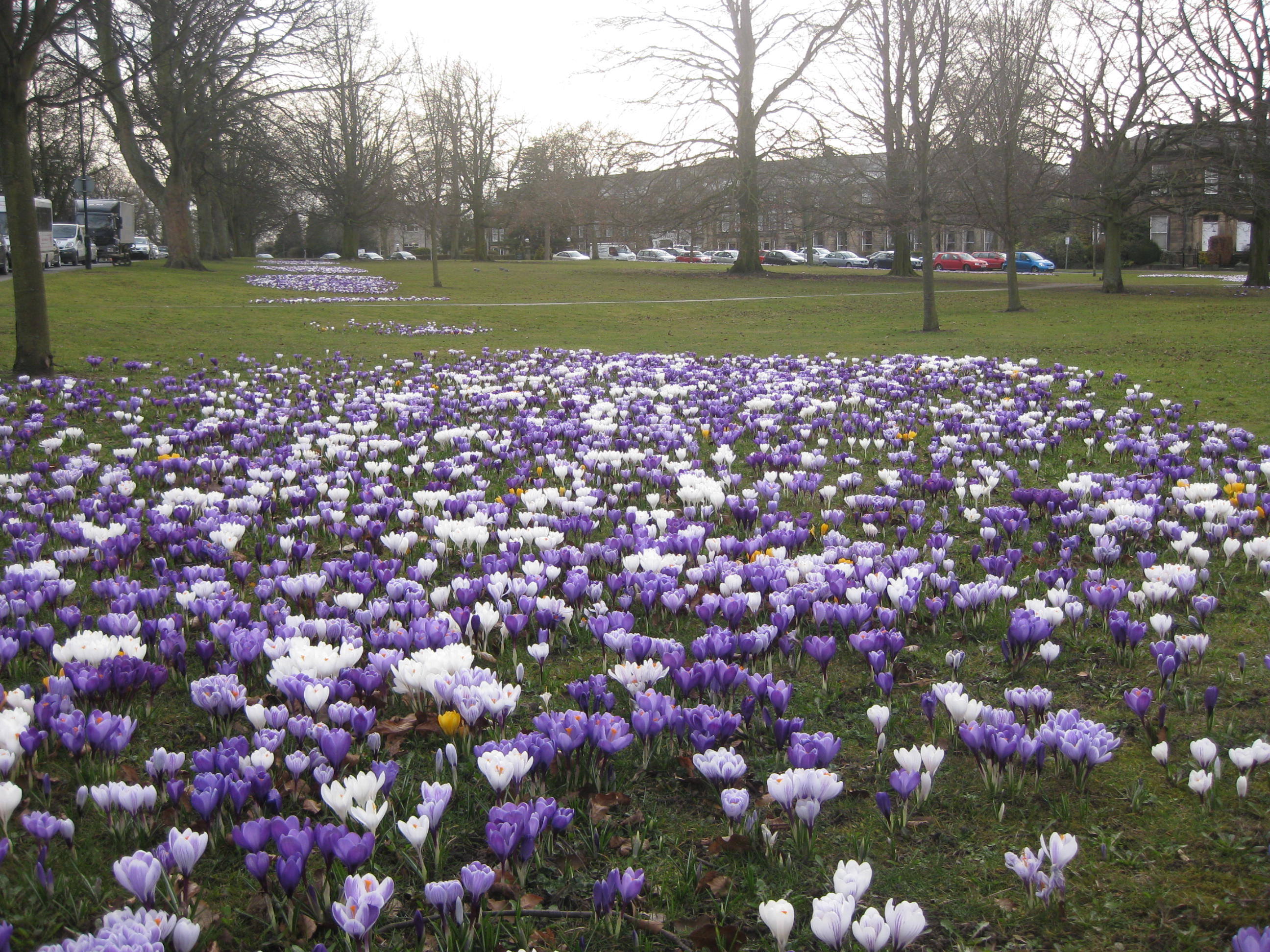
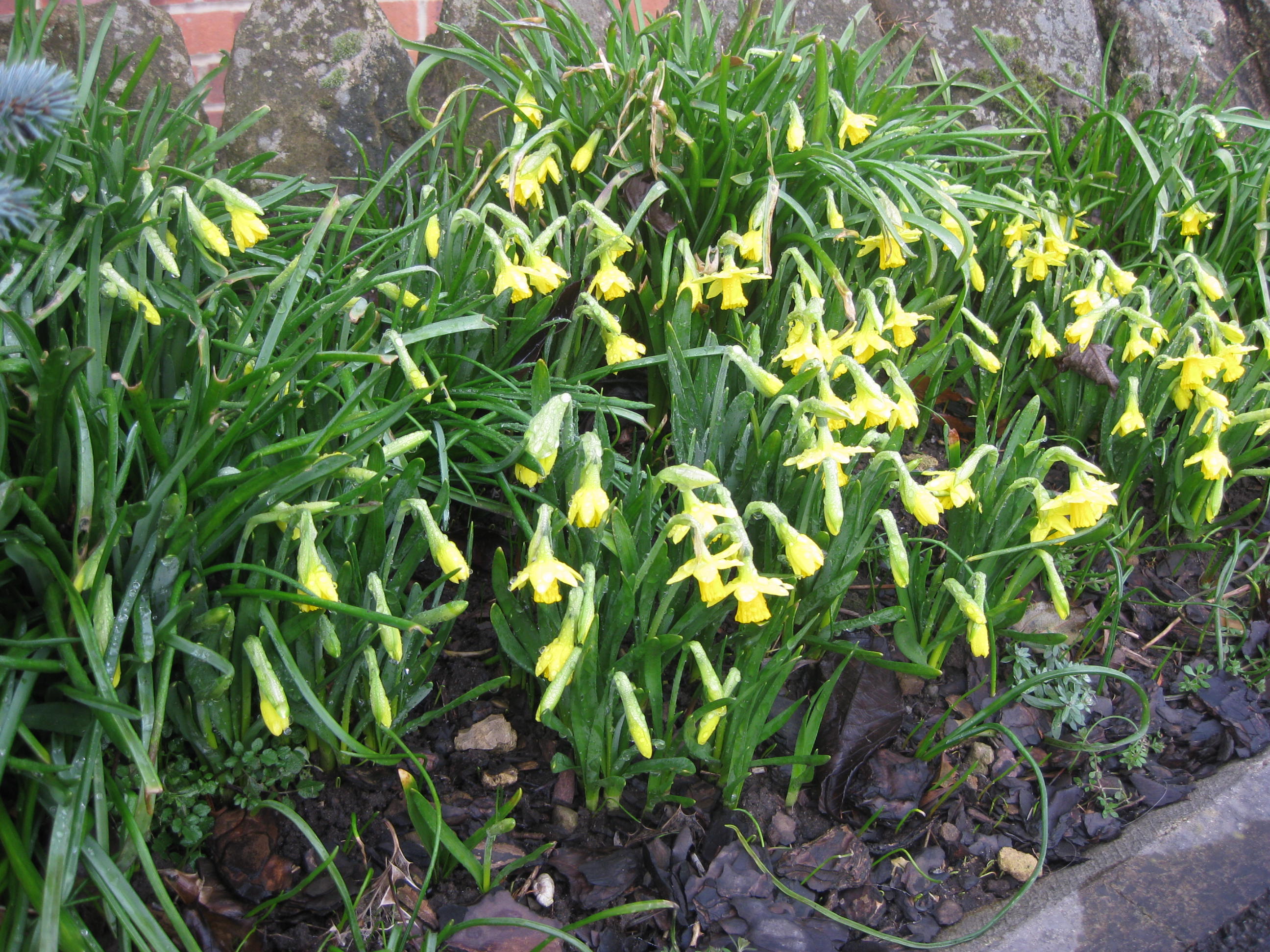
Harrogate in crocus and daffodil season must be one of the loveliest urban sights in Europe. The Stray, that splendid open parkland which girdles the southern part of the town, was all but submerged in a sea of purple white and orange crocus, gradually opening to reveal saffron coloured stamens as the sun teased the flower petals apart towards midday. The crocus fade away to be replaced by an equally extensive display of daffodils. They were only just reaching their best as we left town, but we did at least see them.
Radio 4. I had it on constantly. From Our Own Correspondent, Paul Merton on Just a Minute, Daniel Corbett’s animated and informative weather forecasts, Gardeners’ Question Time….. all to help the day go by as we scrubbed and polished
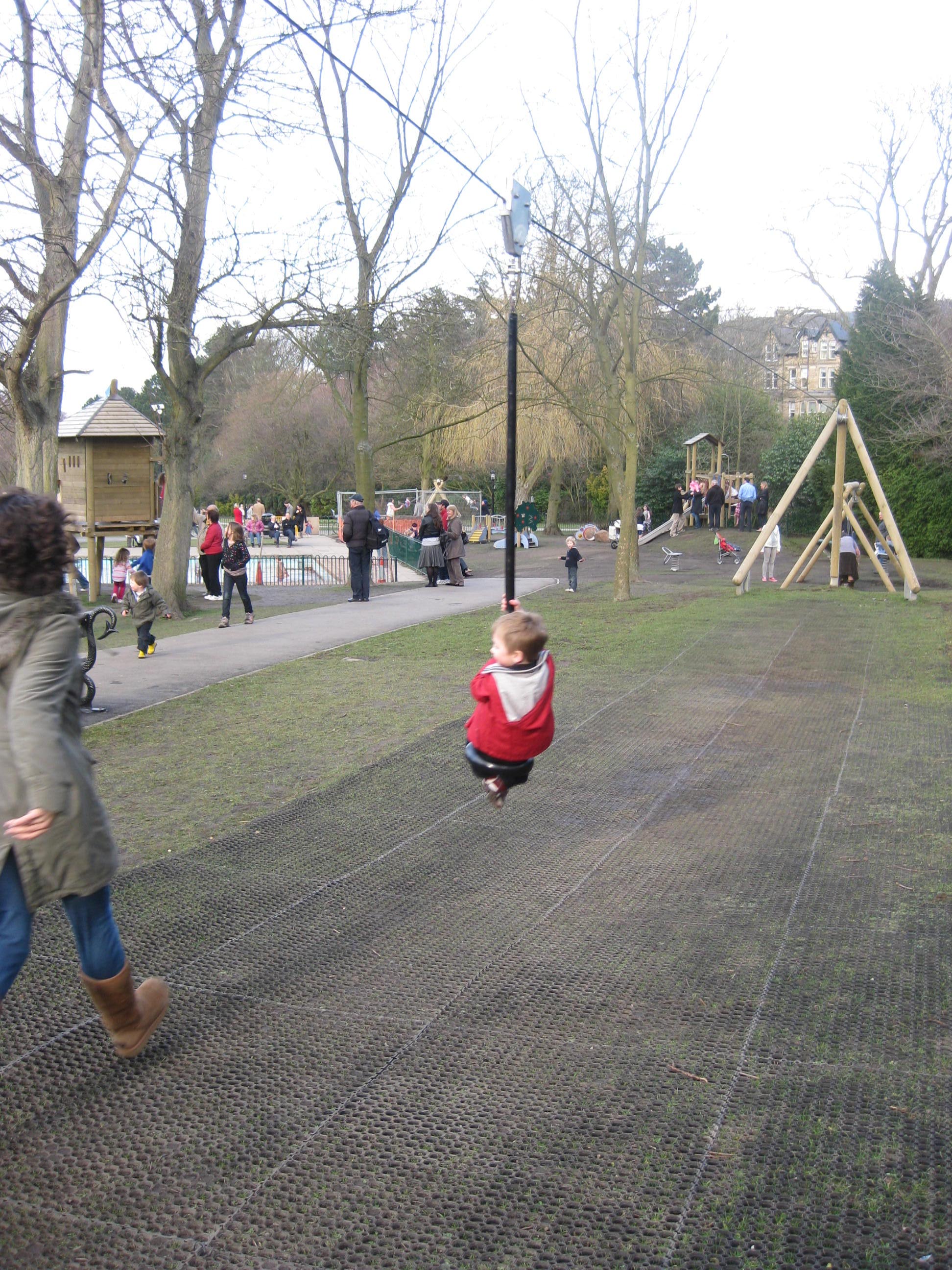
Spending time with those fantastic twin boys, the grandchildren, as they discovered the new adventure playground in Harrogate’s Valley Gardens.
Nidderdale LETS. What a great bunch of friends. We’d organised a Task Force of willing members to tackle the overgrown jungle that was our garden. Naturally it rained on the day. So everyone turned to in the house. They scrubbed paintwork, wrapped ornaments, painted the above-mentioned bedroom, hoovered…And we all had fun, and lunch together. How do people manage without LETS, or SEL as it’s called in France?
Friends. We had little enough time to socialise, but those hours spent sharing time at our house, in Ripon, in Huby, and in various spots in and around Harrogate were all very special
Charity shops. Whenever I’m in England, I spend time combing through the stock of books in all our local charity shops. With everything from the latest Man Booker winner to little-heard-of classics all going for anything from 30p. to a pound, why wouldn’t I want to stock up? And this time, we off-loaded quite a few things too
Freecycle. The amount of stuff that Harrogate Freecycle keeps out of landfill must be quite phenomenal these days. And its members seem to be amongst the nicest people in town. So we were glad to pass on some stuff to various happy recipients.
Pontefract cakes. Nothing else quite hits the spot. Oh, except perhaps luxury-end crunchy hand-cooked crisps from Marks and Spencer or Waitrose. Chilli flavour.
Power walking in the Valley Gardens, 8.30 a.m. Sunday morning, with Angela and Chris. Best start to the week. Not sure we really ought to call it power walking any longer though. Power chatting maybe.
Hot cross buns. When I was younger, Good Friday was the day of the year when we ate hot cross buns. Maybe for a day or two after as well, but no more than that. Freshly toasted and dripping with butter, the sugary cinnammon smells wafting through the kitchen, they were one of the food highlights of the year. Now they’re available all the time, they don’t seem half so special. But during this last English fortnight, Good Friday or no Good Friday, Malcolm and I made sure we got quite a few hot cross buns under our belts.
Indian take-away. After hard days spent painting and cleaning, few things are more reviving than a good Indian take-away. Hot, pungent, spicey, sour, the vivid flavours cheered us up and brightened our mood. The French don’t know what they’re missing!
Guardian and Observer. I know I could read Polly Toynbee, Nigel Slater et al on line. But it’s really not the same, is it?
Talking in English. The sheer relief of being able to chat, chunter, chew the fat, confide, discuss, digress, argue, amplify, explain, entertain, without pausing to consider whether I’ve chosen the right gender, the right word, the right ending. Yes, perhaps this really is so precious it really needs to go right up to the top of the list at number 1.
This is Mazerettes, one of the places you’d pass through on the Ariège leg of the pilgrimage route to St. Jacques de Compostelle, on a spring day last year.
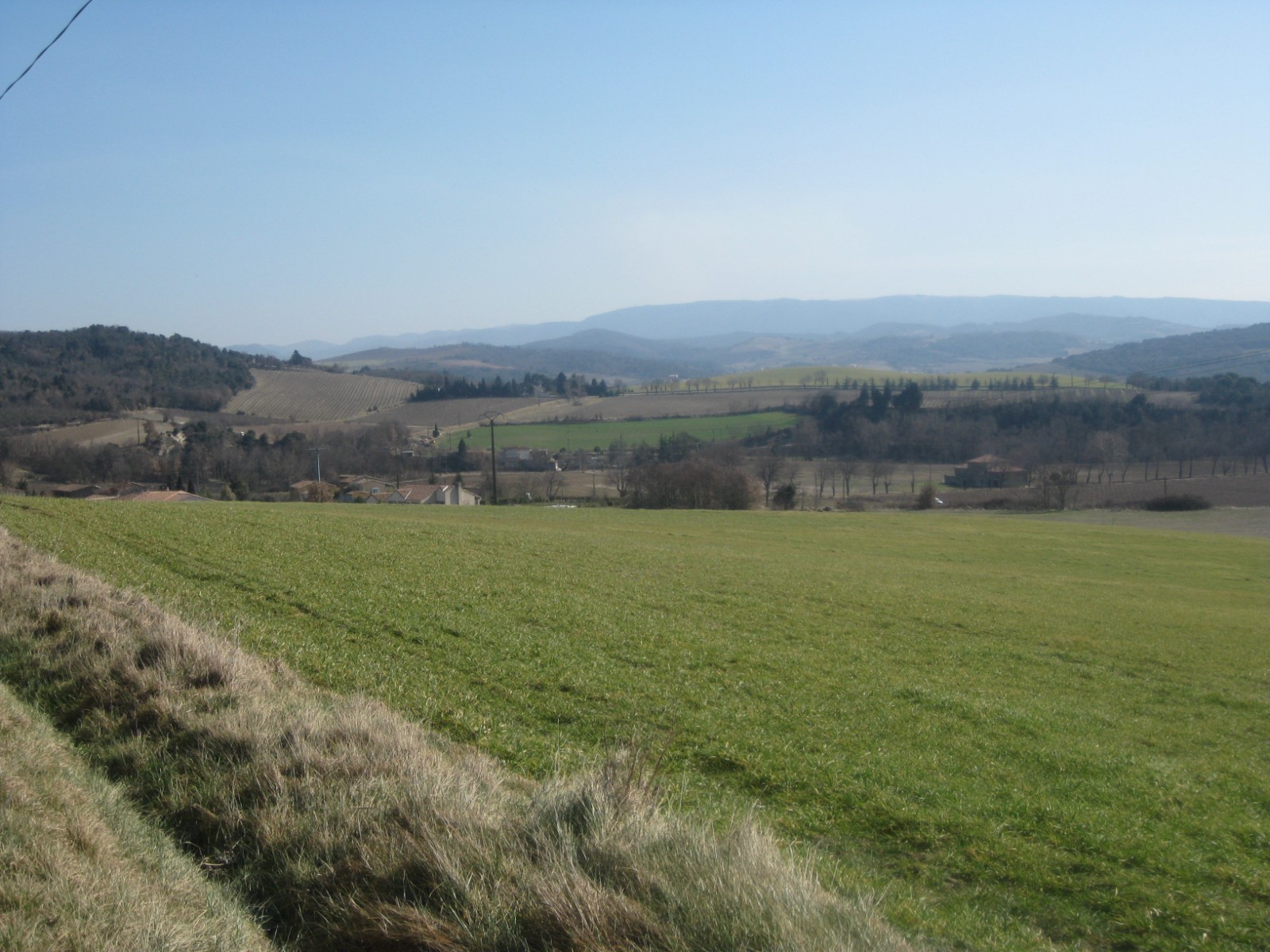
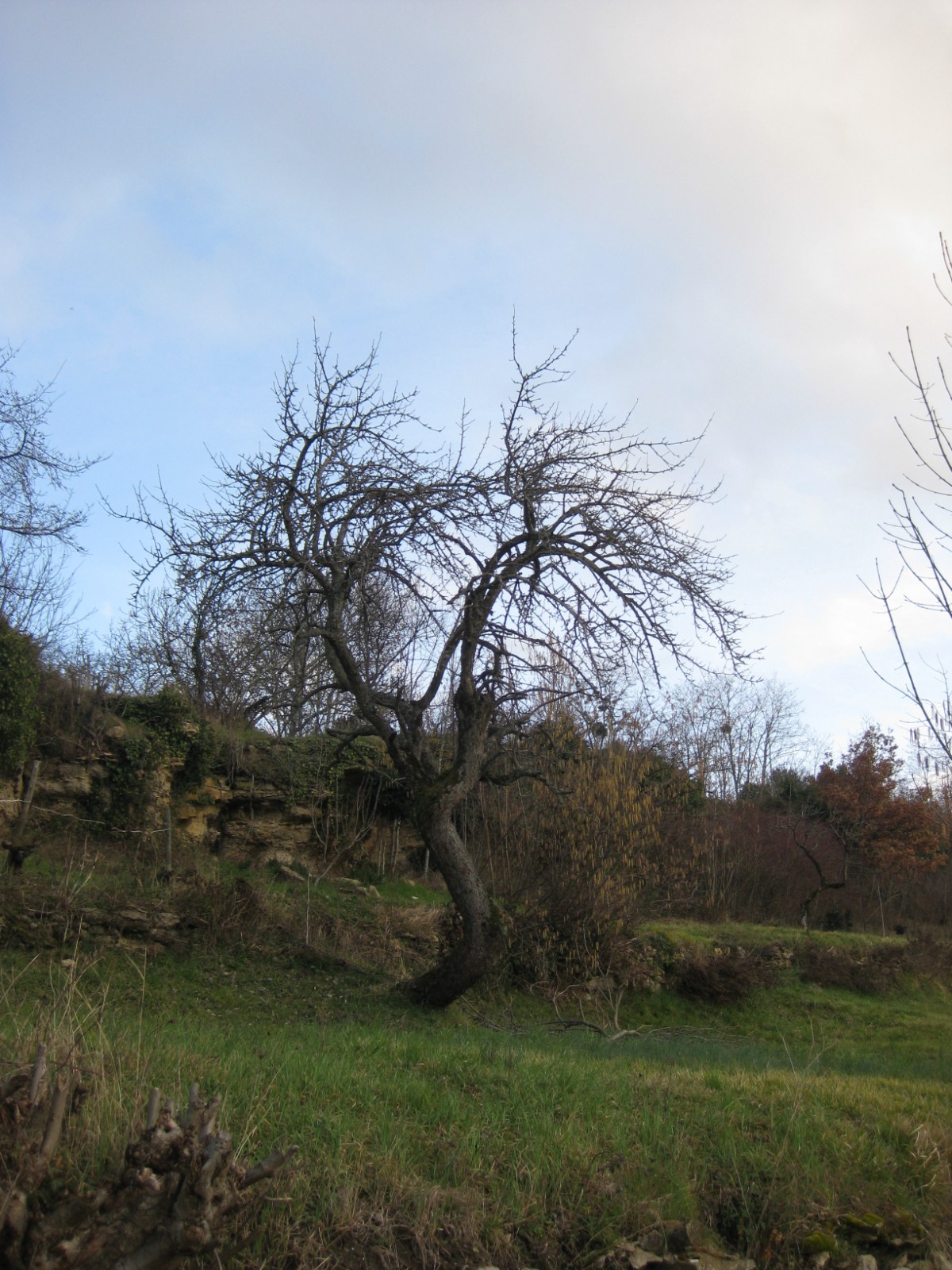
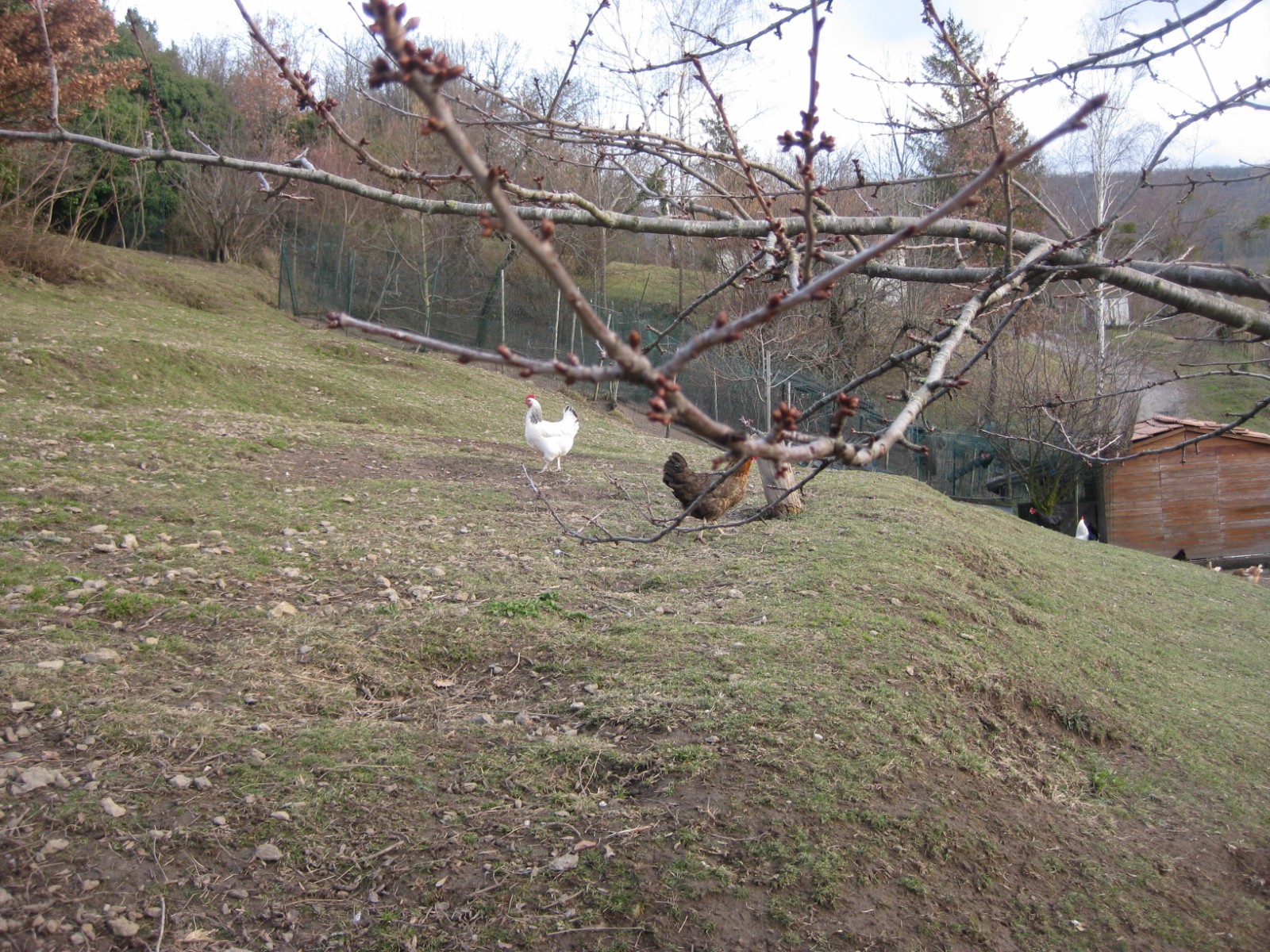
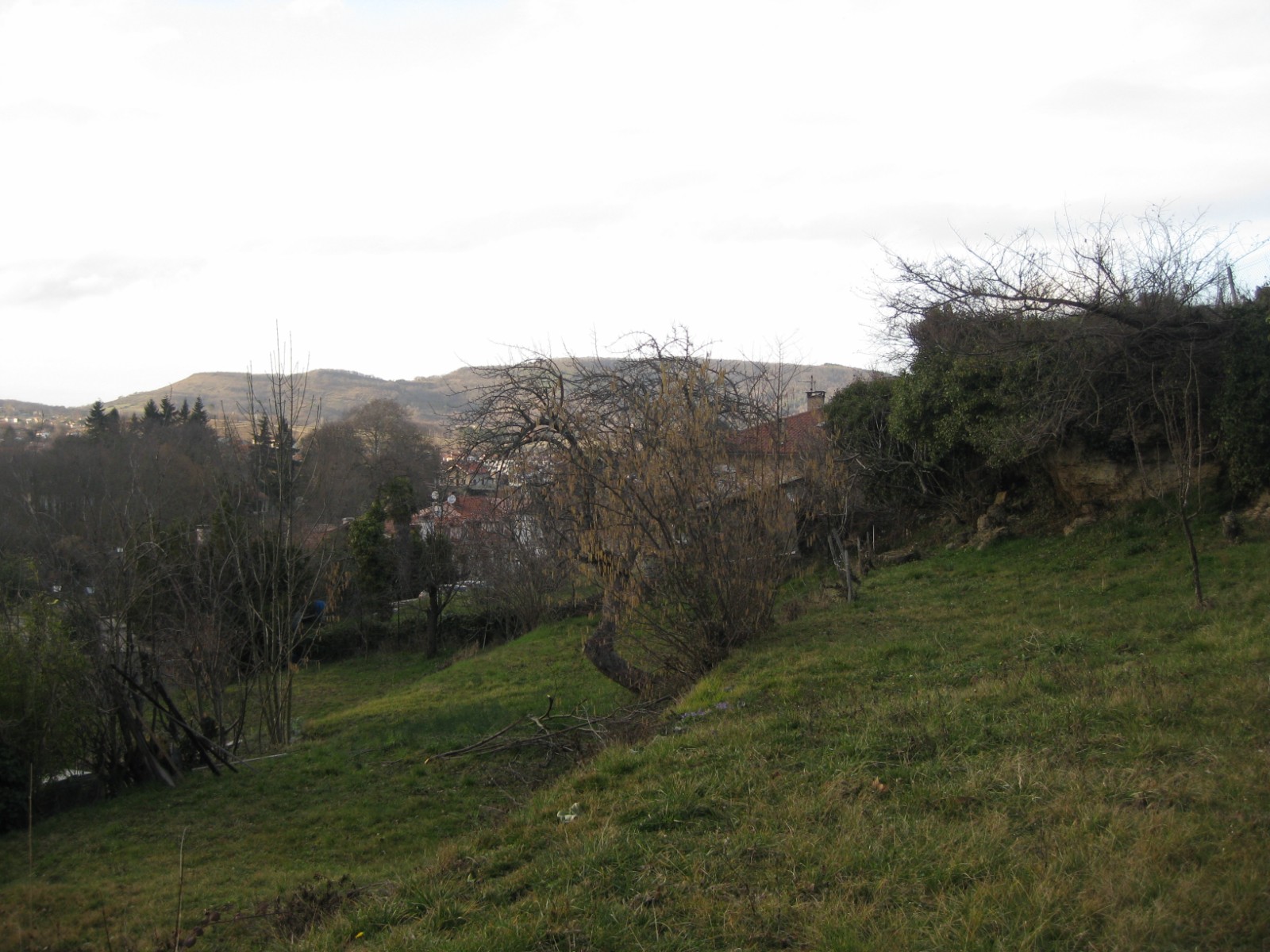
And here are some other springtime moments in the Ariège….













 From Pyrenees to Pennines
You must be logged in to post a comment.