Here’s the Grandfather of the Skyscraper

We’re staying near Shrewsbury just now, vegetable-garden-minding for friends. This mainly involves eating quantities of just-picked produce, to prevent the courgettes becoming marrows, the lettuces bolting, and the beans giving up bothering.

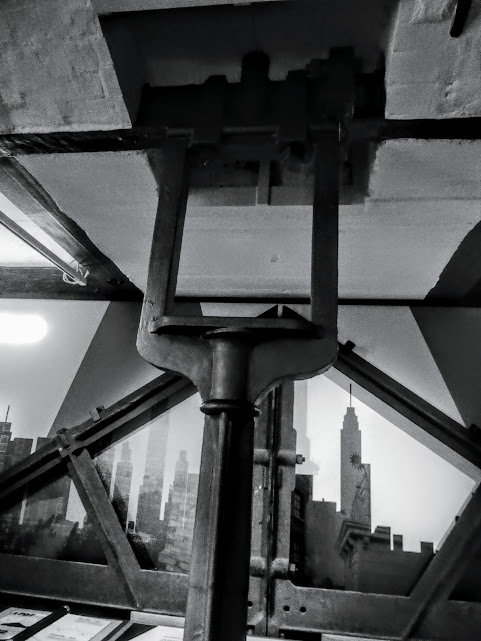
This is not however a full-time job, so I’ll be sending you postcards from time to time. The first is from Shrewsbury Flaxmill Maltings. This was built in 1797, the very first building in the world to use an entirely iron frame. And that made it fireproof. Mill buildings – full of dust, fluff, combustible fibres and fabrics – largely built round a wooden carcass, had a nasty habit of burning down. BUT an iron frame was fireproof. And then it offered another advantage. Buildings made this way turned out to be strong enough to support mulltiple storeys. The way was paved for the skyscaper to be developed.

And the long and varied story of this mill deserves to be told – another day.

Here’s one of those cast iron pillars holding the building up, with photos of more modern steel-framed buildings in the background.

Postcards from Shropshire (1)

Six Word Saturday.
Statuary for Small People to Enjoy

Monochrome Madness this week asks us to feature statues. I could show you Michelangelo’s David. I could feature statues of The Great and The Good, as featured in all big cities everywhere. Or Nymphs and Greek Gods from set-piece fountains everywhere. But I’ve decided to go low-brow and show you pieces destined to appeal to children, or adults in search of their inner child.

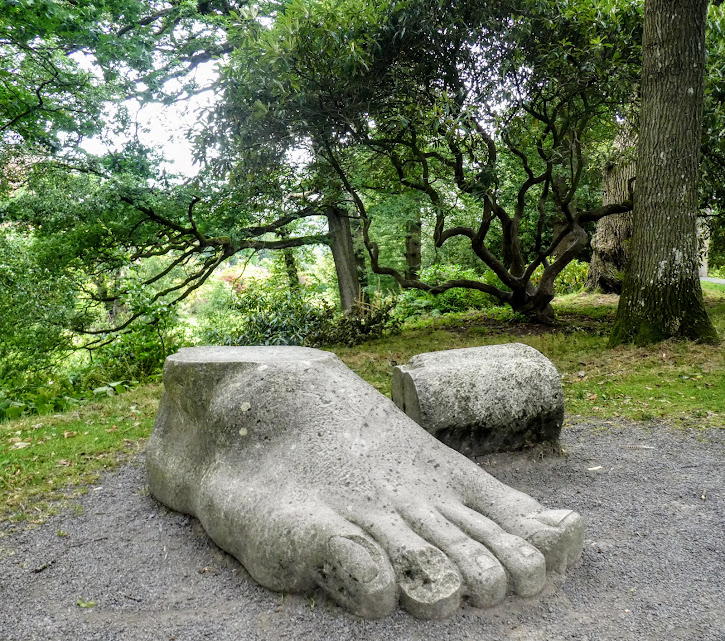
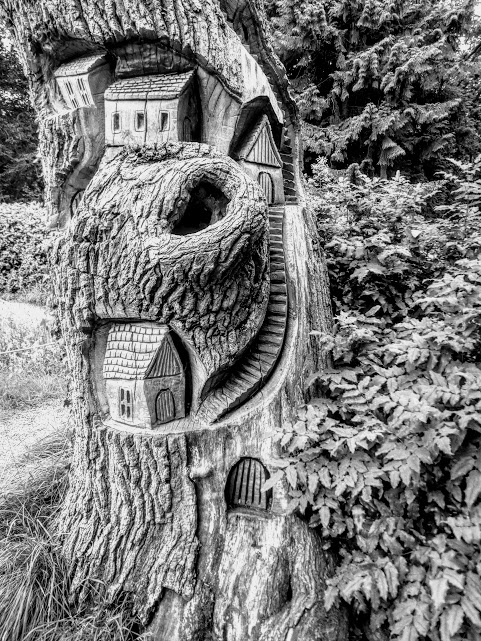
Let’s begin at the Arboretum at Thorp Perrow.

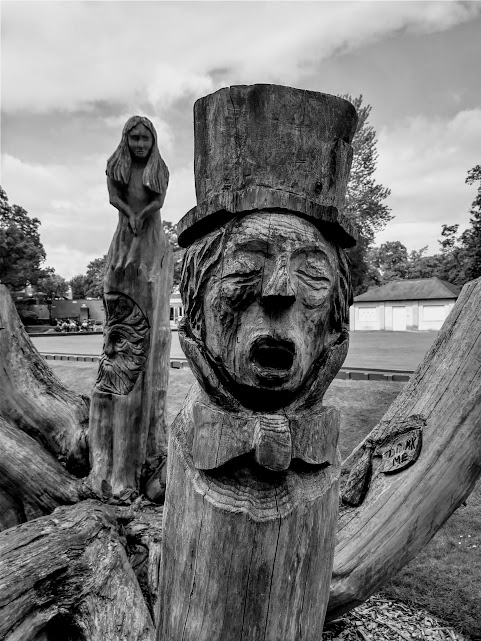
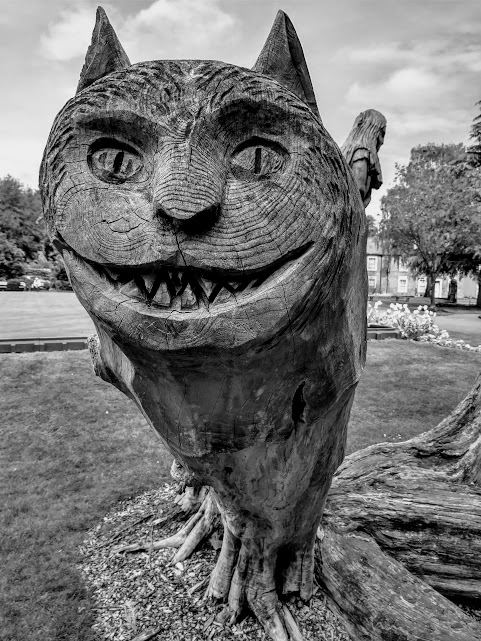
Then we’ll stay local and inspect the Alice in Wonderland characters you’ll find in Ripon Spa Gardens. Lewis Carroll spent part of his childhood in Ripon, because his father was a canon at the cathedral here.

I hope you recognise the Mad Hatter, the Cheshire Cat and the Queen of Hearts.

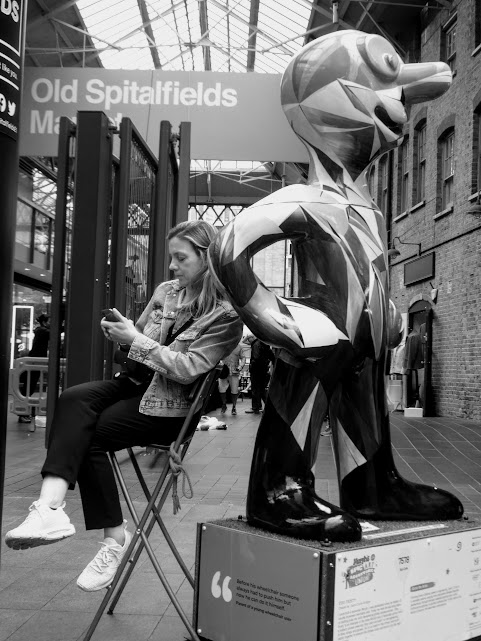
Then there’s this fellow, part of a sculpture trail promoted recently in London by the children’s charity Whizz Kidz.

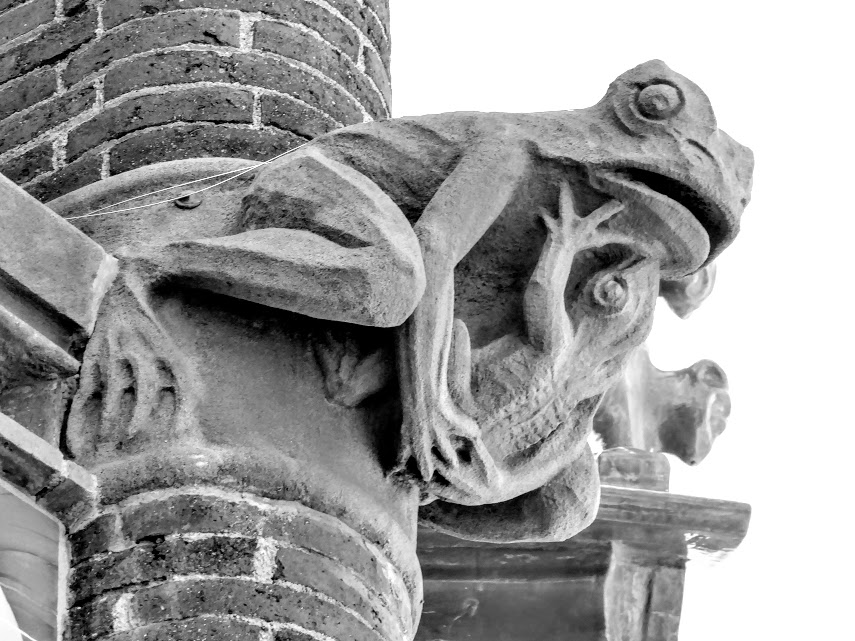
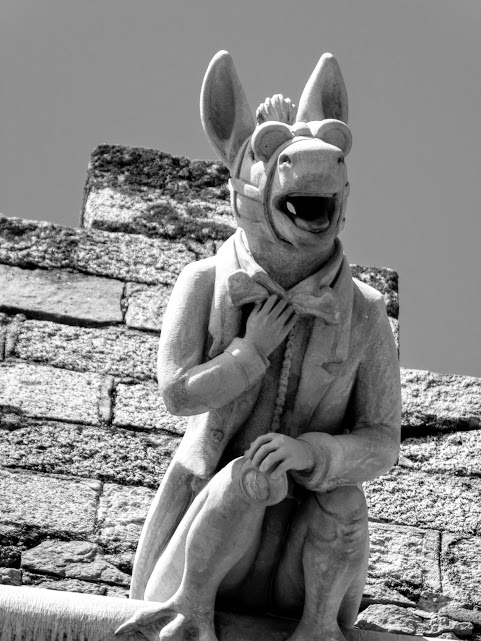
Here are some gargoyles, not necessarily designed for children, but certainly appealing to them: from the Hospital de Sant Pau, Barcelona, and the Església de Sant Julià in Argentona.

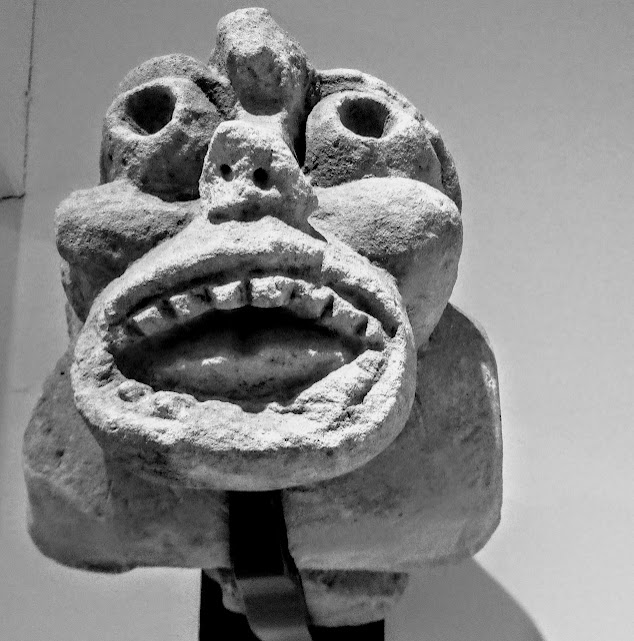
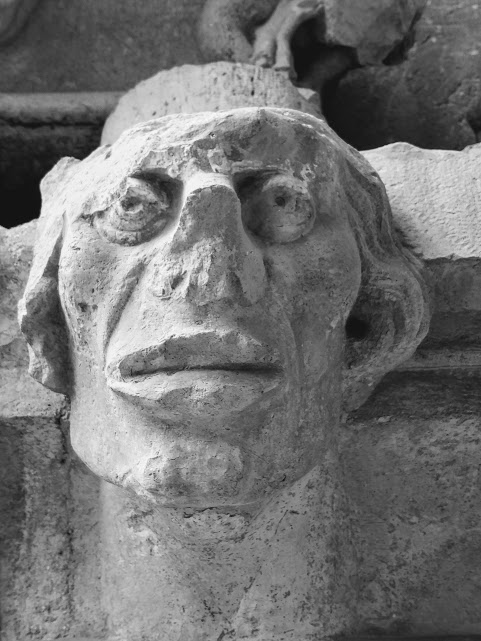
Monks and the Christian faithful – or certainly the masons working for them – generally weren’t above fashioning satisfyingly scary pieces. Here are two battered relics: one from Rievaulx Abbey, and the other from Rheims Cathedral.

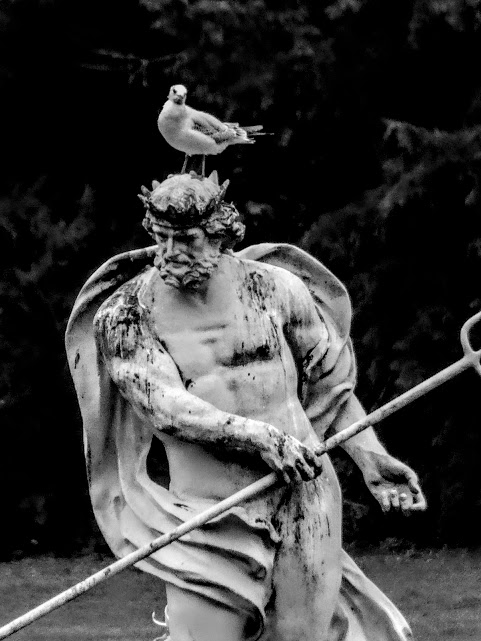
My last image isn’t of a statue designed to be amusing. But Neptune at Studley Royal always makes me and any children I happen to be with laugh when the poor fellow is sporting a seagull headpiece.

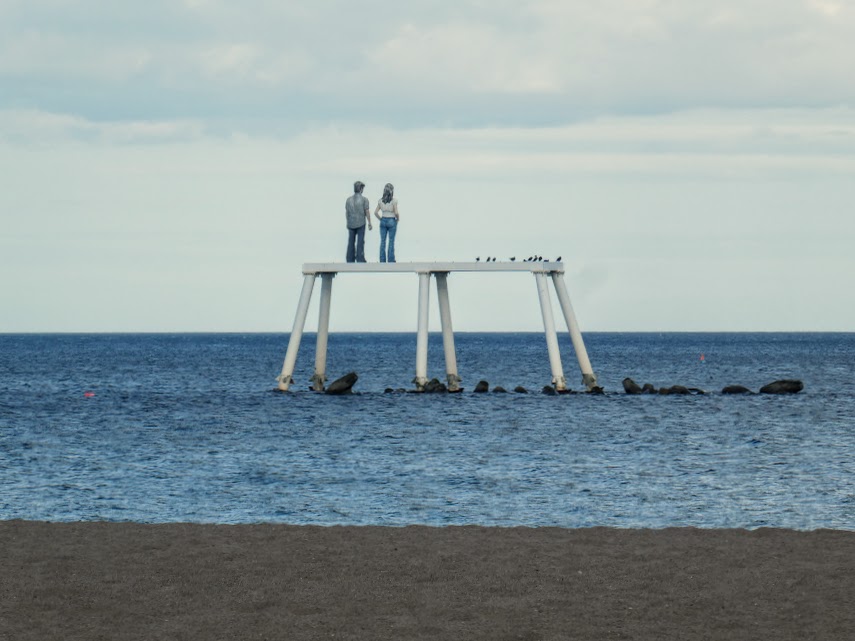
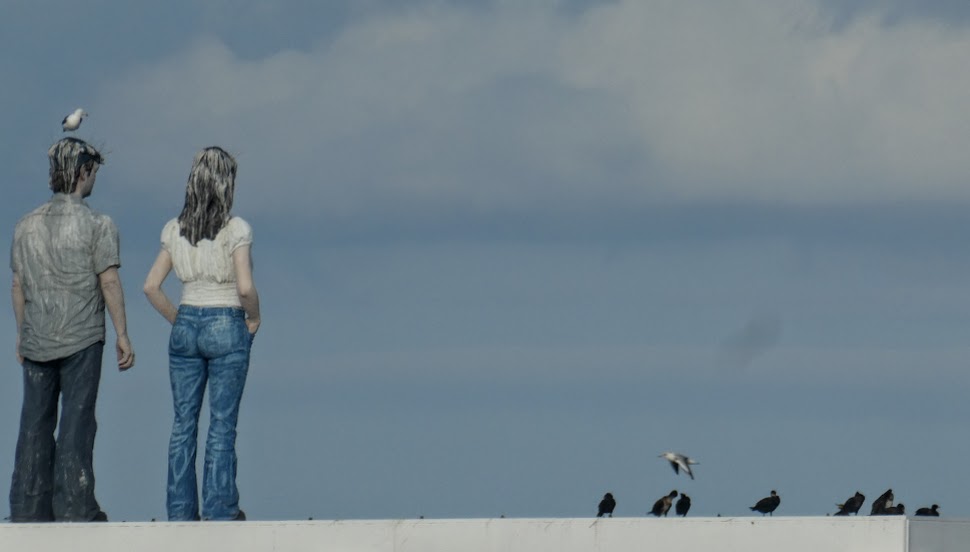
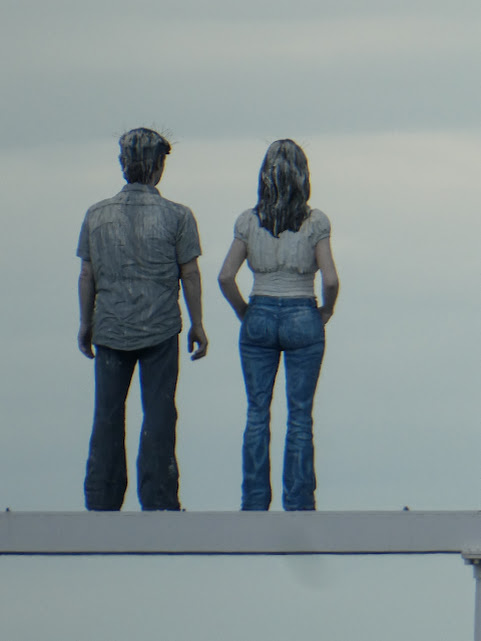
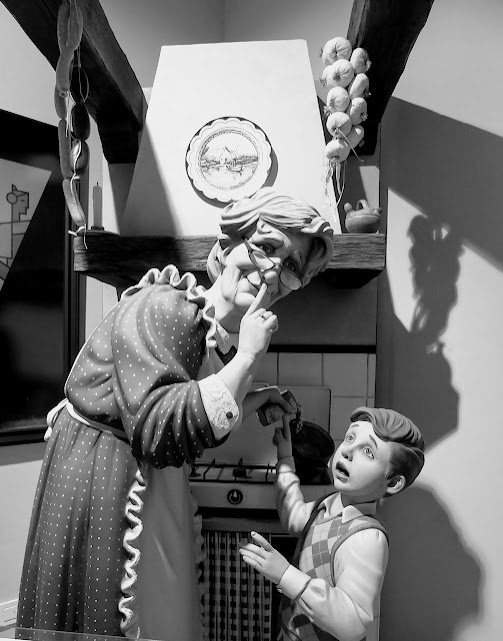
And my feature photo? Are they even statues? Well, I don’t know what else to call these two. They’re from Valencia’s annual Fallas Festival, where humorous figures, originally made of wood, are toted round town in March each year to celebrate the arrival of spring.

For Leanne’s Monochrome Madness, hosted this week by PR, of Flights of the Soul.

And Debbie’s Six Word Saturday.
And Natalie’s Photographing Public Art Challenge (PPAC).

A Frog He Would a-Wooing Go

Every month, over at Fake Flamenco, Rebecca sets a poetry challenge, and invites her readers to submit a verse on a chosen theme, in a selected poetic form. This month, she’s played into the hands of Becky’s Squares challenge. She’s shared an image of another blogger whom I follow, Britta. It’s the one shown in the header photo: a pair of frogs definitely planning on renewing the blood line.

Here’s my doiditsu (four non-rhyming lines, syllable count 7-7-7-5). Why not join in? You have till tomorrow to submit your entry. The real joy is that Rebecca translates every entry into Spanish : there’s a special thrill in having your own words beautifully re-crafted as a poem in another language.

Bathing in their tiny pond,
frogs are croaking words of love:
dressing up in greenest lace
to tryst, woo, then win.

And – Why not? Let’s make a late entry for Debbie’s Six Word Saturday.
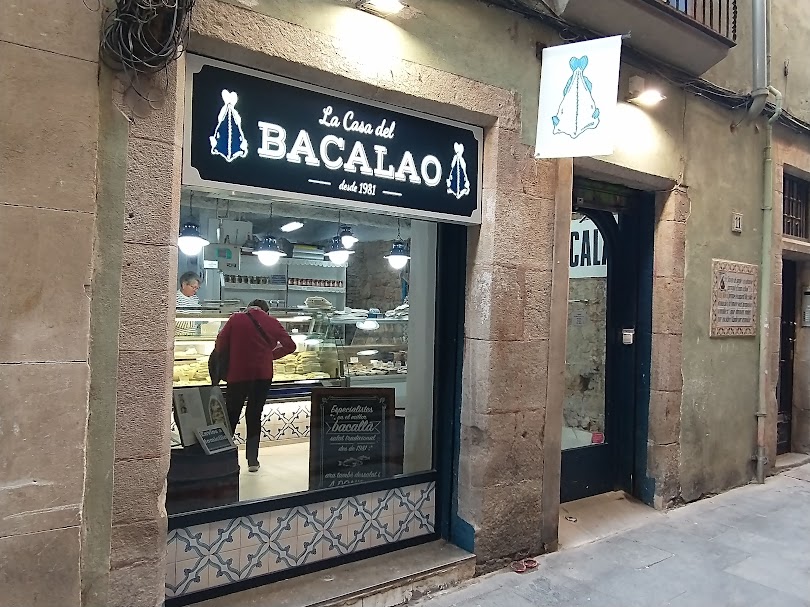
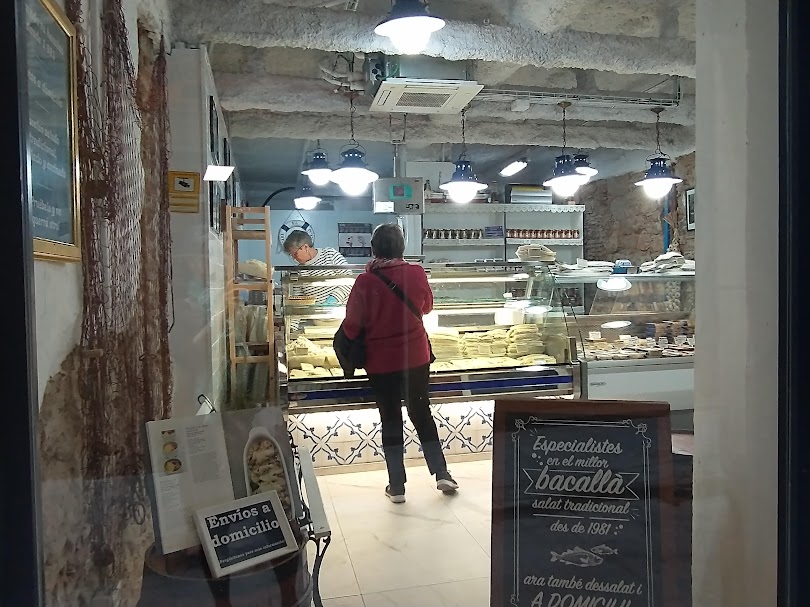
In Cod We Trust – in Barcelona

In a city centre back street in Barcelona, somewhere near Las Ramblas, we found this shop. It sells one thing only: blocks of dried salt cod: bacallà (Catalan) bacalau (Spanish). Salting and drying cod changes and deepens the flavour, and means it will keep for a very long time if necessary. Soak it to remove much of the salt and to soften it, and use in your favourite recipe!

For Debbie’s Six Word Saturday.
An Orange Walk Home from School

Five o’clock. Time to collect Anaïs from nursery school. Off to the shops first, walking along a street planted with Seville orange trees. The bitter fruits don’t tempt anybody to steal one for a snack. But I’m tempted by windfalls. We collect all we can find so that later, we can scrub them clean and make marmalade.

Up the hill, on the way back, here’s a street still with a few papery autumn leaves …

… and a house with a orange tree: sweet oranges this time, and ready to eat.

We turn left, and walk towards the sunset.

Then - finally – home at last …

For Debbie’s Six Word Saturday.
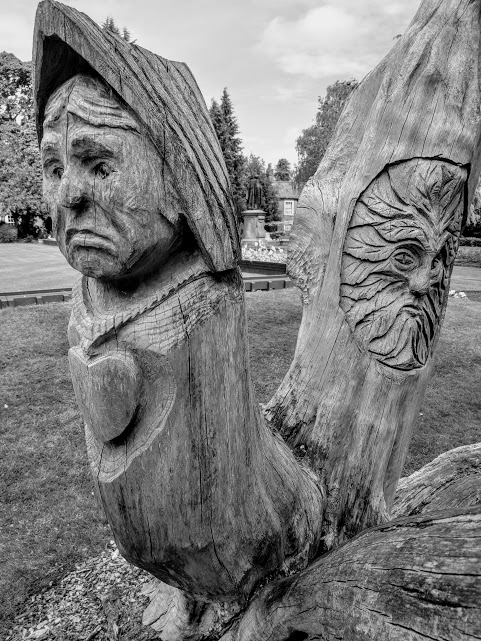
‘Oh, We do like to be …’

Any Brit could finish this off for you, no trouble. But just in case you aren’t a Brit, and can’t, here are the words of this music hall song, now over a hundred years old.
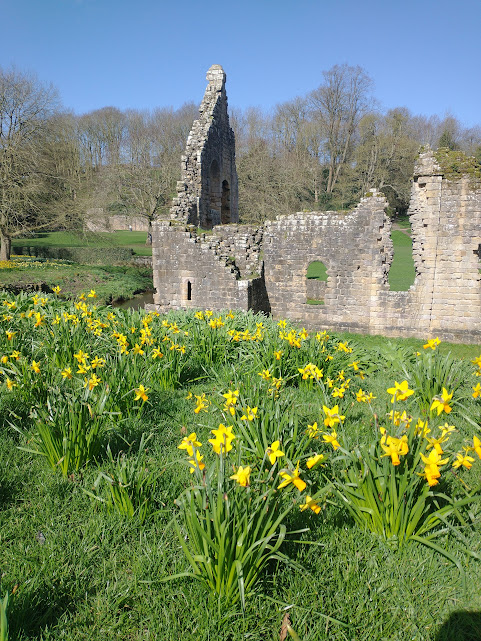
And last Monday, the seaside was where we went, for a suitably British day out. To Saltburn-by-the-Sea in fact: ex-smuggling centre, and a popular Victorian resort which still has a charmingly olde-worlde air.

There’s the sea itself. People-and-dog-watching…

… beach huts …

… the all-important pier …

… which it’s obligatory to walk to the end of, to look at the sea again …

… the equally obligatory fish-and-chip lunch, preferably overlooking the sea …

… the boats in the small harbour …

… and the header mops up the final necessary sights: two surf-board enthusiasts, and even one seagull.

For Cee’s CMMC Challenge: Pick a topic from my photo.

And Debbie’s Six Word Saturday: I’ll get away with it, I think, as the ratio of words to photos is quite low.