Six Degrees of Separation: from I Capture the Castle to Morality Play

On the first Saturday of every month, a book is chosen as a starting point and linked to six other books to form a chain. Readers and bloggers are invited to join in by creating their own ‘chain’ leading from the selected book.

Kate W. – Six Degrees of Separation

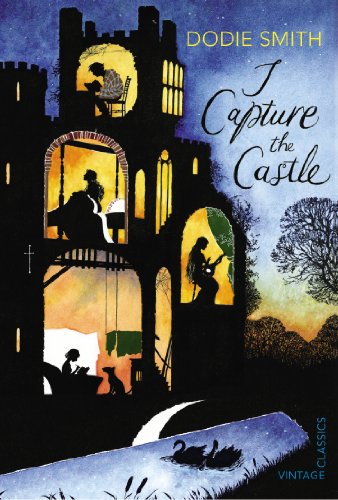
Somehow, I didn’t read I Capture the Castle by Dodie Smith when I was younger.  And I’ve only just managed to source a copy, so I haven’t read it in time for Six Degrees.  This is how it’s introduced in Goodreads. ‘Through six turbulent months of 1934, 17-year-old Cassandra Mortmain keeps a journal, filling three notebooks with sharply funny yet poignant entries about her home, a ruined Suffolk castle, and her eccentric and penniless family. By the time the last diary shuts, there have been great changes in the Mortmain household, not the least of which is that Cassandra is deeply, hopelessly, in love’.

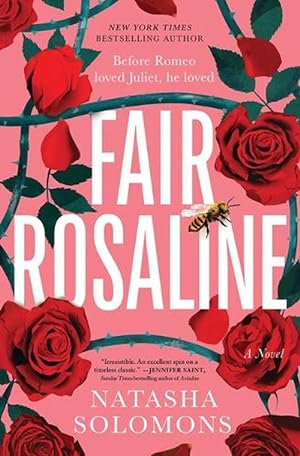
That seemed to chime with a book I’ve just finished, Natasha Solomon’s Fair Rosaline.  This is a re-interpretation of the Romeo and Juliet story from the stand-point of bit- character Rosaline. To be fair, the story of bereavement, infatuation, love and bereavement again zipped along, but even as a page-turner, the narrative quickly became increasingly unbelievable. The characters were something of a caricature and the language veered unconvincingly between the Shakespearean and more modern idiom. If you want a reasonably page-turning beach read, this could be for you. I made the link to our starter book because Rosaline could well have lived in a castle (though she didn’t). And she falls hopelessly in love.

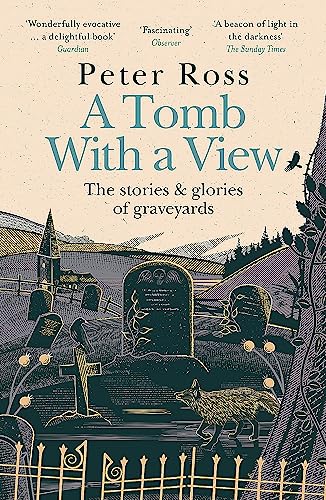
One thing you’ll notice if you read Fair Rosaline is that a fair few characters die.  So my next book is A Tomb with a View, by Peter Ross. This is an evocative, delightful and thought-provoking book. Yes, it’s about death and burial. But the variety of cemeteries, ways of remembering the dead and rituals Ross explores is astonishing. He’s clearly a sympathetic man to have around, and historians of ancient cemeteries, gravediggers, Muslim celebrants, natural burial enthusiasts, proponents of The Queerly Departed all willingly open up to him and bring their own special Final Resting Place to life. He visits graveyards, charnel chapels, cemeteries and so much more, animating them in a delightful tribute to these sites and those who work there and care for them. A book to read with – yes – enjoyment.

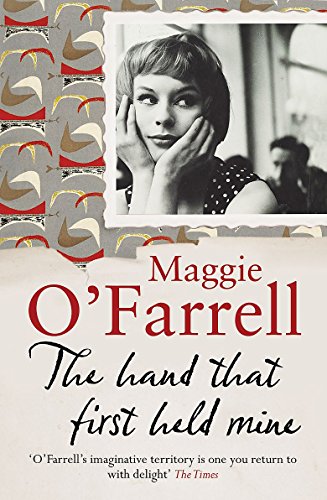
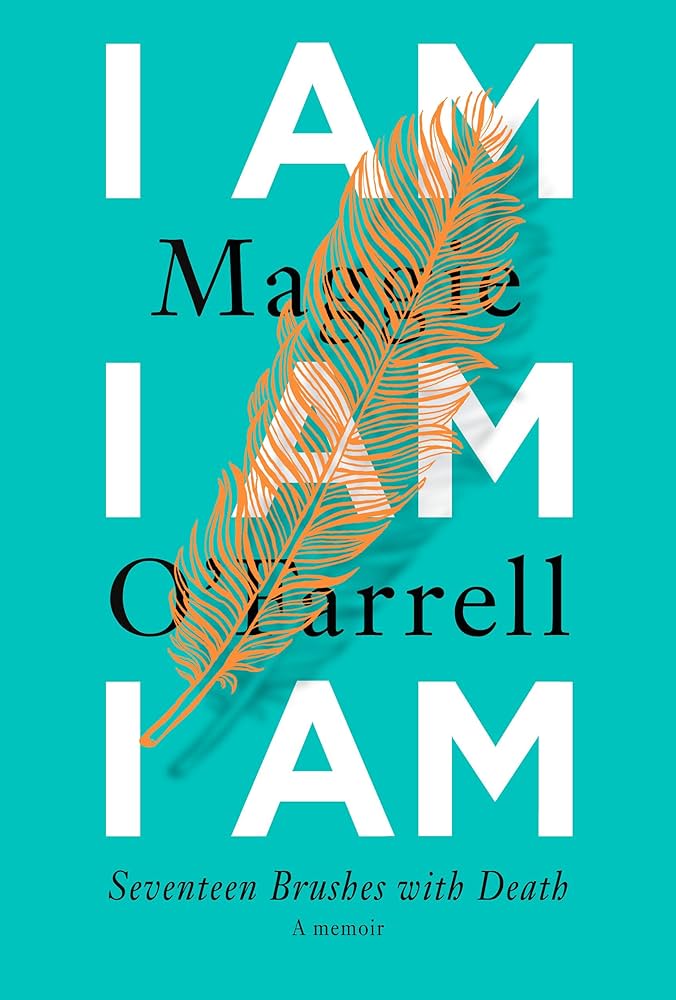
From death, to near death, in Maggie O’Farrell‘s I Am, I Am, I Am.  This is not an autobiography, but a non-chronological exploration of the author’s 17 (seventeen!) brushes with death, each episode named for a different part of the body. Attacks at machete-point, nearly-road-accidents, a dreadful experience of childbirth: all these and more are graphically and tenderly brought to life. Most affecting is the last quarter of the book, where she describes her own debilitating and long-running experience of the after-effects of a virus: and then her daughter’s even worse experiences. It’s compelling, sometimes angry, often visceral. She’s graphic at describing pain, fear, despair. Impossible not to experience at least some empathy for O’Farrell and her experiences. And yet she’s still here, bringing her experience to bear on her other work, in which she brings fictional characters and their dramas to life, informed no doubt by her own experiences.

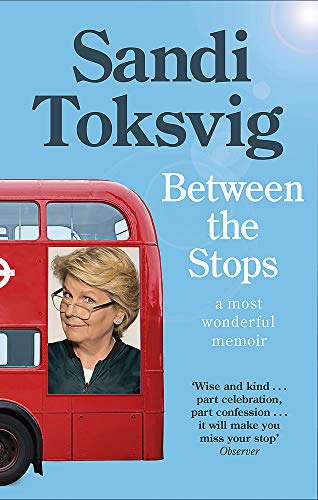
And now from one non-chronological memoir to another: Sandi Toksvig’s Between the Stops. Marvellous. I was suspicious of a book written by something of a National Treasure. It would play to the gallery, surely? I was wrong. This is part memoir, part political polemic from someone whose views I’m happy to share, part social commentary and part Interesting Facts About London and the many places she’s called home. She uses the device of a journey on her most familiar bus route, the Number 12 from Dulwich to central London to gaze out of the window and use the memory triggers she finds as she observes the scene there, or among her fellow passengers to introduce the story of her life in America, Denmark and England. She’s witty, compassionate, angry and introspective by turn, and always amusing, often laugh-out-loud funny. I loved this book.

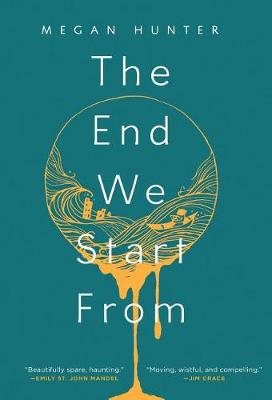
My next choice also uses London as a starting point.  The End We Start From by Megan Hunter is a powerfully unsettling novella. Here is a world descending into chaos and uncertainty just after the ‘author’ has given birth, in London. This is the story of a fleeing into the unknown from a city that’s no longer functioning following an unspecified apocalyptic disaster. Sparingly and beautifully written this is a short, eloquent and potent account of one woman’s fall-out from a not too unlikely future catastrophe. But one which does not finish on a note of despair, but of love.

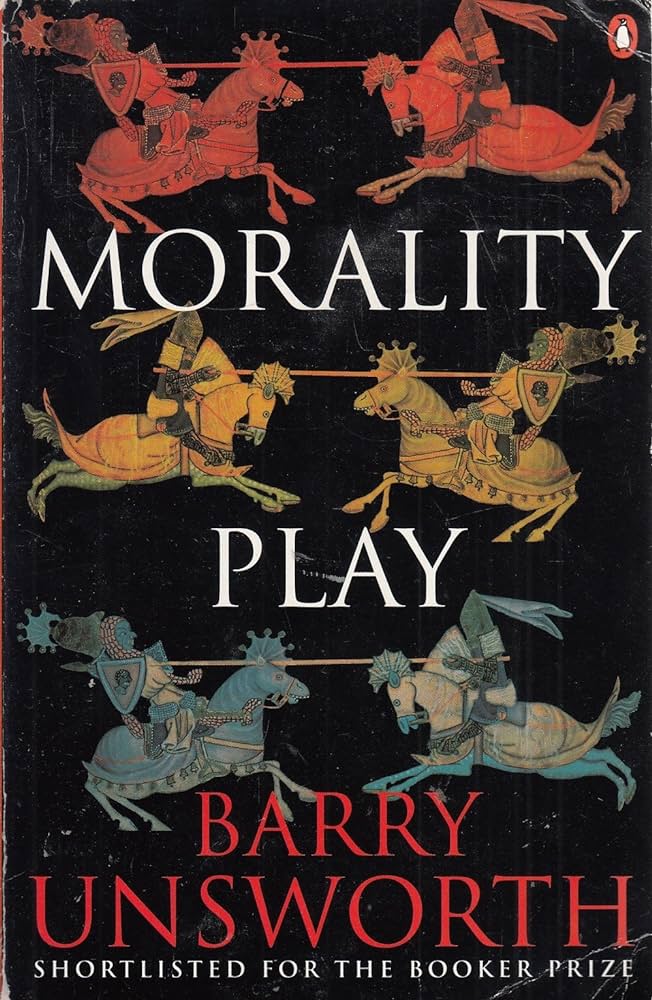
Lastly, let’s go back to the 14th century: a time when England, like much of Europe, was turned upside-down socially by the predations of the Black Death, as well as by war, and it must have felt like the end of the world. Barry Unsworth’s Morality Play. Nicholas Barber, a young cleric who has abandoned his post and fallen in with a band of itinerant players tells his story. What brings this story its power is its power to immerse the reader in the life he’s – at least for the time being – chosen. This band of players live from hand to mouth, often cold, always dirty, always on the move and wondering where the next meal and billet is coming from. But they devise the idea of re-enacting a shocking murder that has just taken place in the community in which they find themselves, and discover that all is not as it seems. And add fear of the more powerful to their list of worries. An immersive tale, bringing the sights, smells, sounds, and mores of the 14th century to life. 

Well. We have wandered about a bit. Each book links, if tenuously, with the next: but there is no common thread running through these choices.

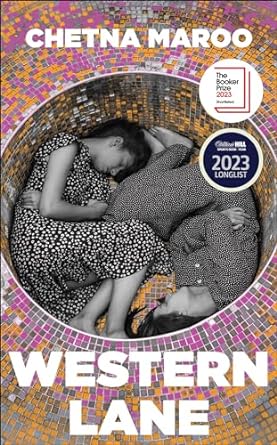
And next month, Kate invites us to read as our starter book Western Lane by Chetna Maroo. Are you going to join in the fun?

Six Degrees of Separation: from Wifedom to Our Souls at Night

On the first Saturday of every month, a book is chosen as a starting point and linked to six other books to form a chain. Readers and bloggers are invited to join in by creating their own ‘chain’ leading from the selected book.

Kate W: Six Degrees of Separation

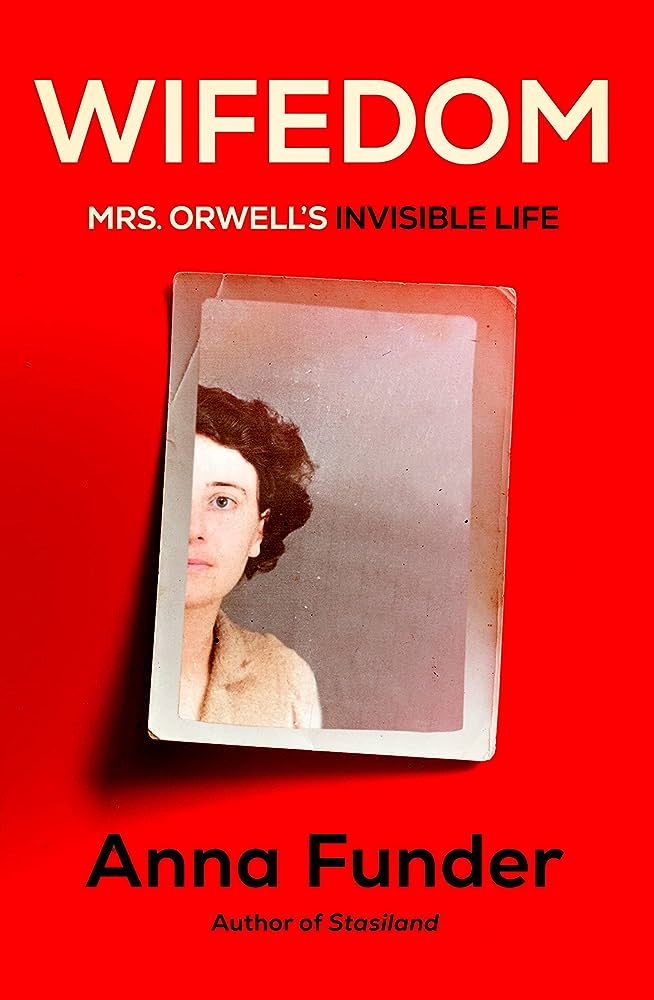
This month’s chain starts with Anna Funder’s Wifedom, whose heroine is Eileen O’Shaughnessy,  George Orwell’s first wife.  She hasn’t had much of a press – good or bad. Orwell never acknowledged her in his writings, and his biographers have largely passed her by. Yet she was an Oxford graduate studying for a masters degree when this was still an unusual path for a woman. She gave it all up when she married Orwell to live in near poverty in a remote cottage. When they go to Catalonia for Orwell to participate in the Civil War, he never mentions in his writing Eileen’s significant role in the struggle or the risks she took. And so it goes on. This is a novel rather than a biography, because there are so few hard facts to rely on: mainly a few letters, so the book is perforce speculative. But enough is known about Orwell’s patriarchal attitude to women and their role to surmise that this is a reasonably faithful account. This is a shock to Funder, long-time Orwell admirer. He doesn’t come out of it well as a husband and father. An interesting and thoughtful reconstruction.

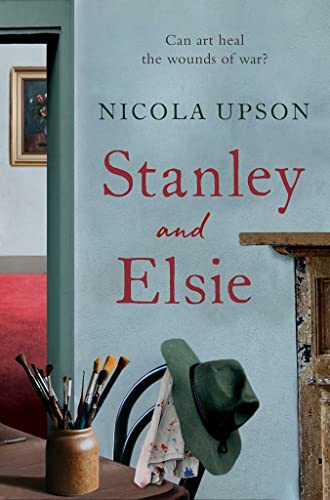
So let’s do a chain on relationships within a marriage, within a family, and start off with Stanley and Elsie, by Nicola Upson, because here is another fictionalised account of the lives of real people.  It brings before us the story of one of England’s most celebrated twentieth century painters, Stanley Spencer, and the women in his life, including the sensible, cheerful live-in maid Elsie, and his two wives, Hilda then Patricia in a most vivid and involving way.  Early twentieth century village life, an eccentric lifestyle, and the complicated lives of imperfect fractured people is brought to life in an entirely readable way.  This is a story of love, obsession, the thought processes of a painter, the English countryside written in a way that demands to be read, compulsively.

And now another book involving real people: a biography this time. There are so very many gaps in knowledge about the facts of John Donne’s life and work. Katherine Rundell, in Super-Infinite: The Transformations of John Donne has done a fine job in meshing what is known with what can reasonably be surmised with an evaluation of the man. Born a Catholic, with all the dangers and limitations that presented, Donne early exhibited his dexterity with words and his sparkling intelligence. Initially successful in the law, an early and unwise marriage pitched him into prison, then penury. What with his wife producing twelve children, five of whom died in infancy, and being remote from the power-house that was London, his career stalled, though his creativity never did. Only when his wife, from whose day-to-day life as mother he was very often absent,  died as a result of childbirth (to a still-born child) did his career finally take off as Dean of St. Paul’s, and preacher extraordinaire. Rundell deftly deals with all this material, all the while offering a critique of Donne’s often dazzling and dextrous use of words. Frequently misogynistic, it’s his love poetry that we often remember him for. She argues that these frequently erotic poems were written not for his wife, but for the enjoyment of his male friends.  His wife seems to have had a raw deal.

Pure fiction now. Claire Kilroy, in Soldier, Sailor, examines two intimate relationships:  of a mother to her baby son (‘Sailor’), and as a wife to her husband.  Here is a book, an all-encompassing and visceral read that brought back almost fifty year old memories of the early days of motherhood. The overwhelming love for that new life brought into the world: but also the endless, utterly debilitating exhaustion, guilt, loneliness, confusion. The realisation that your partner is not, as you had believed, your equal partner, but someone who escapes every day – perhaps to an office, where normal life ensues. All-consuming love, combined with unremitting drudgery is woven through the book. As is reference to  the husband of the narrator who fails to understand, to help, to be truly involved with his son’s welfare. He resents the little that he does, forgetful of simple but important baby-related tasks – but remember, this is Soldier’s tiredness-sodden perspective. She is an unreliable narrator, but one who reliably conjures up early motherhood. We stay with Soldier as very early motherhood ends, but all-consuming love of her partner does not. A devastating book.

Charlotte Mendelsohn, in When We were Bad, is someone else who is good at complicated family situations. I struggled at first to get into this book. There were so many characters, all equally important: all so flawed: all so Jewish. That isn’t a criticism. Just an observation that understanding the Rubin family (and all the characters are family members) means getting to grips a bit with what it means to be Jewish too. I persisted. It was worth it. The lives of every family member begin to unravel as son Leo’s life very publicly does, the day he leaves his wife-to-be some 4 minutes before they take their vows. It turns out that he isn’t the only one in inner turmoil. By turns funny, touching and embarrassing, I was engaged with every character, despite their many and obvious flaws, long before the conclusion of the book.
What about a family that believes it has a trusted protector in its midst? Ricarda Huch’s The Last Summer was written in 1910.  Set during one summer round about that time, we are in Russia, in the country retreat of the von Rasimkara family. They are here because the father, as governor of Saint Petersburg has closed down the University in the face of student protests. The three adult children (a young man, two young women) send the letters from which the book is composed to various family members describing their lives and feelings, and the young man whom the mother has hired to protect the life of their father. Little do they know, as we find out almost immediately, that this young man sides with the student revolutionaries, and is here to do harm to von Ramiskara. And it’s this irony which fuels the book’s narrative. The whole family, for different reasons, believe in the young protector, even when his behaviour is, to say the least, odd. The tension builds until the final letter … An exploration of ideology and trust, and the complicated layers of family life. 

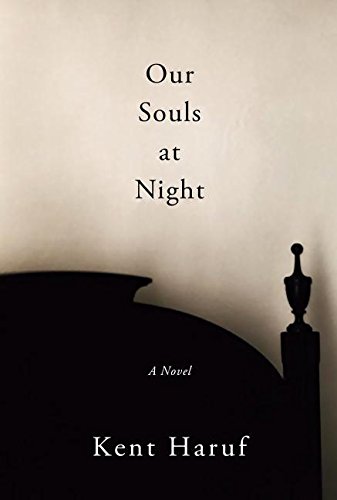
All of these couples, these families have been, in different ways, hard work.  Let’s end on a gentler, sweeter note and look at true love instead, in Kent Haruf’s Our Souls at Night.  This is a tender, gentle novella about two lonely neighbours who in later life find each other, and love. Their measured path towards new happiness, their discovery of and acceptance of their former lives forms the body of the book, even though always there in the background is the judgement of others, threatening their happiness. A delightful last work from the never disappointing Kent Haruf.

That’s my rather loose chain this month: more of a wheel really. Next month, our starter book is the classic I capture the Castle, by Dodie Smith. Why not join in?

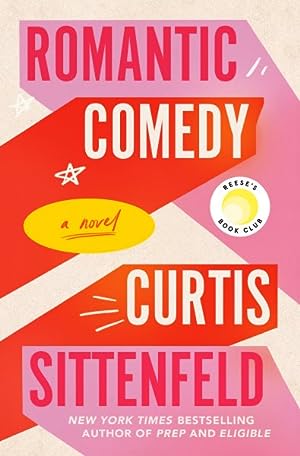
Six Degrees of Separation from Romantic Comedy to Go, Went, Gone

On the first Saturday of every month, a book is chosen as a starting point and linked to six other books to form a chain. Readers and bloggers are invited to join in by creating their own ‘chain’ leading from the selected book.

Kate W. Books are my favourite and best

This month’s starter book is Curtis Sittenfeld‘s Romantic Comedy. Anything Sittenfeld writes is fine by me, but I haven’t managed to read this one yet. The Guardian has it as an ‘affable, intelligently crafted tale of work and love’, with a somewhat insecure heroine who can’t believe that true love has really come her way.

Let’s stay with complicated love, in The Rachel Incident by Caroline O’Donoghue. At first I thought I’d stumbled upon a Mills & Boon for Millennials. Then I thought I might not be all that interested as I’m scarcely the same generation as Rachel and her friends and colleagues, floundering through messy early adulthood. But almost against my will, I was drawn in to the convoluted affairs and working arrangements of Rachel, and her gay friend and flat mate James. We begin in 2009, and there’s a recession on, which colours everyone’s prospects, including Rachel’s middle class dentist parents. Rachel is at first finishing her English degree while also working in a bookshop. She fancies her professor. But he, it turns out, has begun an affair with James, although he’s married to the woman whom Rachel is in due course working for as an intern, and Rachel has fallen for someone who’s fallen for her too, but has a habit of disappearing … It’s all intriguingly complicated and believable. It’s gossipy, witty, wry and a real page turner. Recommended.

Love story involving gay men? We’ll go for a tremendous first novel from Alice Winn: In Memoriam. Here is a book which starts in an English public school, and moves quickly to WWI and the trenches. This is the journey of a varied cast of characters, chief among whom are Stanley Ellwood and Henry Gaunt, both of whom have been exploring their homosexuality whilst still at school. They exchange their privileged lives for the grim reality of battle, and Winn uses telling detail to underpin how truly frightening and beastly in every sense this is. Every few chapters the Preshute College magazine appears, and among the ever-longer lists of dead and wounded old boys are the names of characters we too have come to know. Ellwood and Gaunt, so very different, continue their relationship. Winn explores the strong bonds and unlikely alliances that war brings about, and continues this exploration to show its effects on the families whose sons have gone to fight, and its effects in the years after the war. A moving and deeply affecting book. I’m quite well-versed in WWI literature, but this has perhaps brought the full horror of that war, and its long-reaching effects before me in a way that few other books have done.

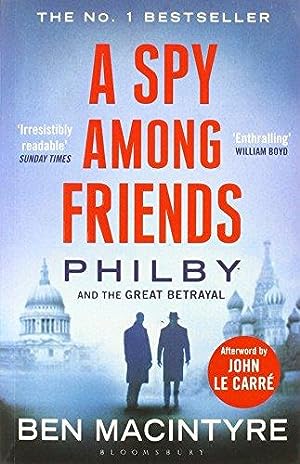
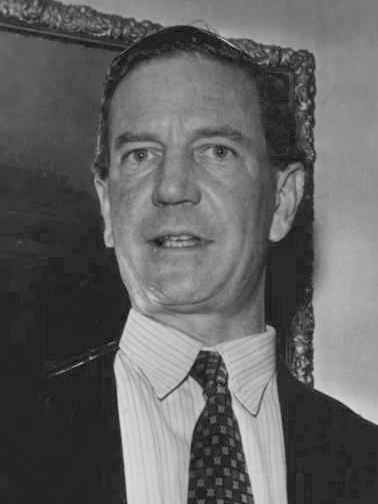
One of the consequences of war is that the world of spying evolves. This month I read Ben Macintyre‘s story of super-spy Kim Philby. As with in Memoriam, this book – A Spy among Friends – is peppered with ex-public school characters. Here is a graphic picture of a completely different world: a world in which who you know, and the school you’ve been to, rather than what you’ve achieved and the jobs you’ve held gets you into a career in espionage. A world in which secrecy was paramount, and – apparently – an ability to down prodigious quantities of alcohol. Ben Macintyre shows us this world, as it existed during WWII and the subsequent Cold War. He introduces us to the milieu of the agent – and the double agent. Specifically to Kim Philby who worked tirelessly not only for the British, but for the Russians, thereby sending colleagues and blameless citizens to untimely deaths. His life was a lie. Not his two closest friends, nor two of his wives or his family had the least idea of his machinations. He remained unsuspected by his M16 and American colleagues for many years. This is his story, pacily told, and offering a picture of this secretive world of postings and relationships all over Europe and the Middle East. In many ways, this isn’t my sort of book. But Macintyre is a reliably involving and good writer who draws you in. I’m glad to have read this book, and thoroughly relieved that neither I nor anyone I know is part of this duplicitous world. I don’t think…
Patrick Modiano‘s The Search Warrant also explores the consequences of war. Nearly 40 years ago, Modiano came across an ad in a 1941 edition of Paris Soir: by two Jewish parents seeking for their daughter who had run away from boarding school. His interest piqued, Modiano set forth on a ten year search to find out more about the life and possible death of the child, Dora Bruder. While he never forgot her, his search was intermittent. He looked at documents and newspapers. He trawled through the streets of the Paris Dora frequented, though many of them had changed almost beyond recognition. In this document of his search, he paints a picture of the Nazi occupation of Paris, of the lives of the Jewish citizenry – incomers from all over Europe – under Pétain’s regime. He connects and contrasts Dora’s adolescence to his own. This then is a personal story, as much about Modiano himself as about Dora Bruder. It is though a memorial to her, and to any and all of the Jews who lived and died in that particular and brutal period of French history.

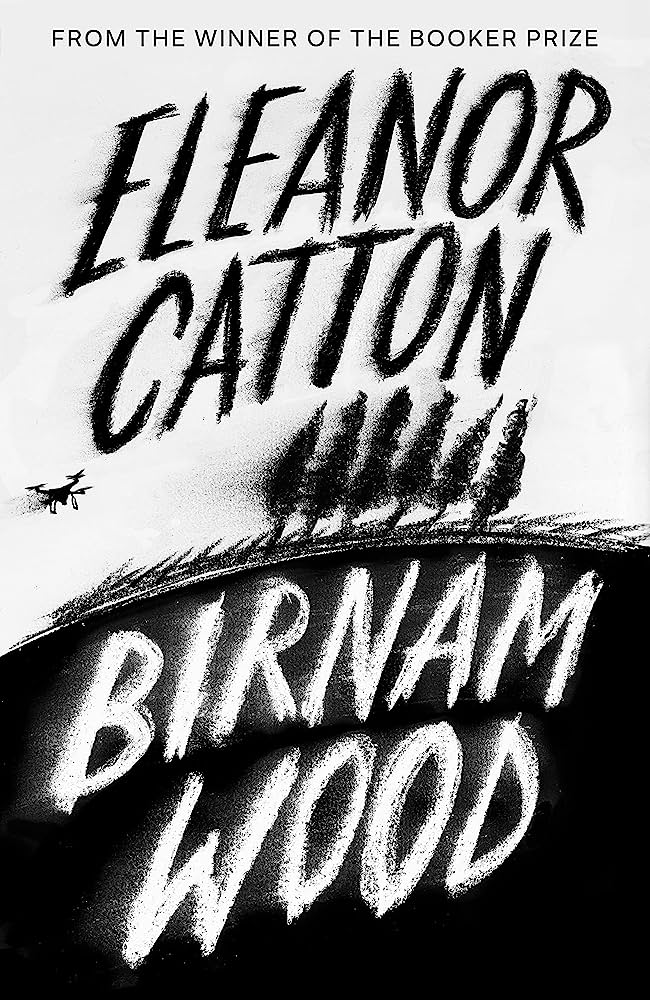
War of a different kind, with Eco-warriors centre stage is the subject of Eleanor Catton‘s Birnam Wood. Full disclosure. I borrowed this edition of the book from the library, then discovered that the BBC was currently serialising it, so – unusually for me – I ‘read’ it courtesy of BBC Sounds. And I didn’t enjoy it. Could this partly have been that the resident ‘baddie’, the American tech billionaire’s voice was so clearly that of a man dripping evil that any nuance the book might have had was lost? In the Good Guys’ (not Shining White Good Guys) corner were the members of a guerilla gardening group who want the land not as a bolt-hole or a secret mining project as American Lemoine does, but to pursue their aims. Lemoine’s drones and techie spyware sees all. Then there’s ex-guerilla Tony, and investigative reporter … and Owen, a self-made pest-control business man, whose wife actually owns the farm on which the land in question is sited, and who is willing to sell. All of these, with conflicting aims and ambitions were in the mix. The verbosity and proselytising of many of them lost me early on. The characters were thinly-sketched ciphers of Types, and I warmed to none of them. The ending was an excitingly gruesome one, but for me it was just a relief that it heralded the end of the story.

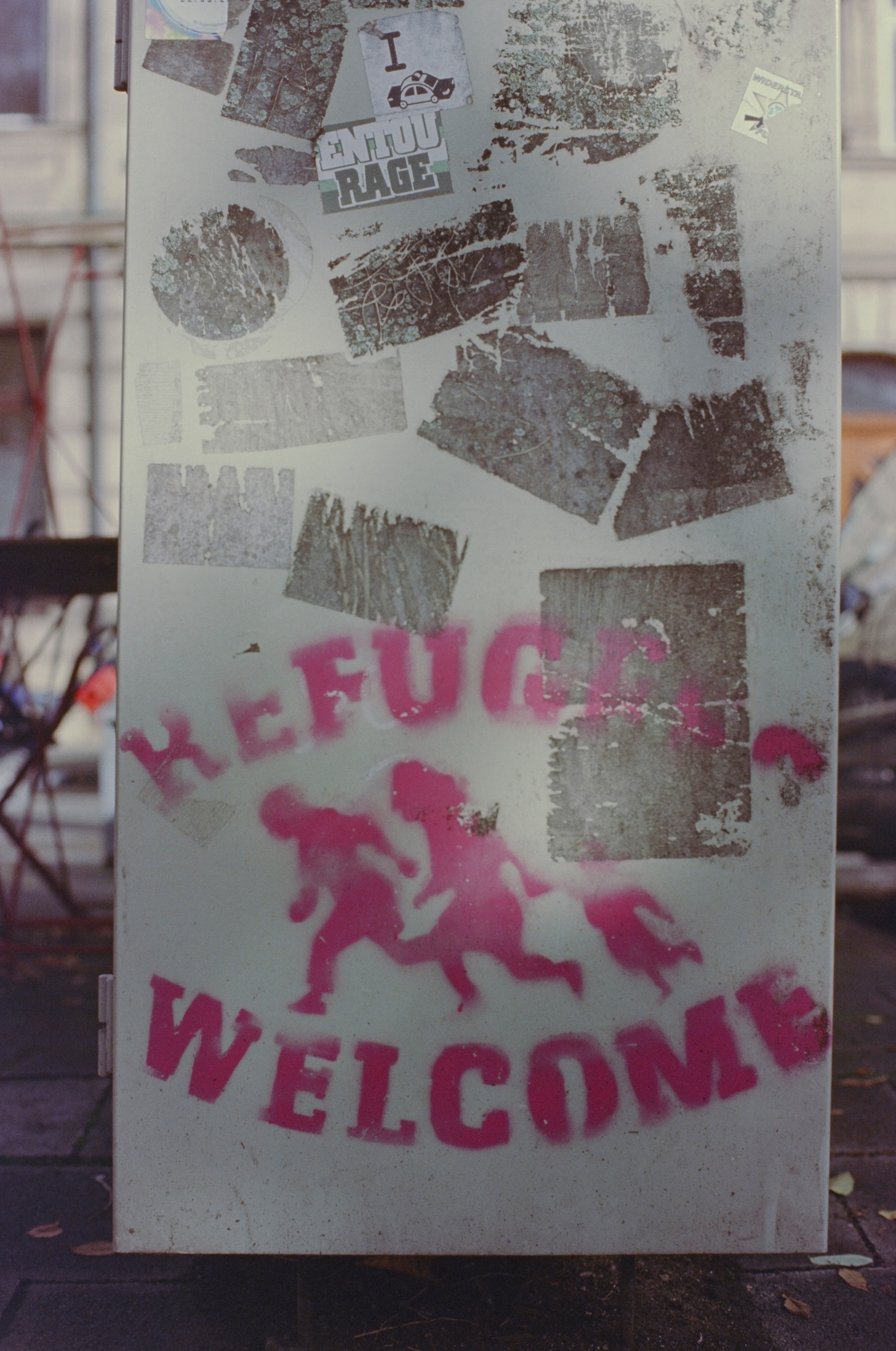
Another consequence of war. Refugees. Asylum seekers. These are the subject of Jenny Erpenbeck’s Go, Went, Gone. Richard is a widower, a retired professor of Classics in Berlin in the former East Germany. His life seems – to him as well – somewhat purposeless. One day he happens upon a demonstration in town by a group of refugees from various African nations who have camped out there. This is a world of which Richard knows nothing, but his interest is piqued, and gradually, reluctantly at first, but then with increasing passion, he comes to know them and something of their stories. Of their families, lost to them, or killed in frightening circumstances. His life acquires a purpose: helping the men fight their corners, seeking funding. He discovers his own country’s dark past, the prejudices still alive and powerful among politicians, many of the general population and his own friends. He finds a legal situation where each country with whom the asylum seekers have contact have a get-out clause enabling them to move these men on to somewhere else. This quietly, lyrically told told but urgent story is an indictment of that system. Absolutely nothing has got better since 2017, when this novel was published. Required reading for Suella Braverman and readers of the Daily Express.

Unusually, there is a further link between all these books. I’ve read them all in the last month, and with one exception, wholeheartedly recommend them: especially the Winn and the Erpenbeck.

Next month’s starter book is Anna Funder‘s Wifedom, which examines the life of George Orwell’s wife. It’s well reviewed here, and I’m looking forward to finding a copy.

And finally, those of you whose TBR pile totters and becomes more unstable by the day might enjoy the cartoon highlighted today in Brian D Butler’s Travel Between The Pages.

Six Degrees of Separation: from Time Shelter to The Last Man in Europe

On the first Saturday of every month, a book is chosen as a starting point and linked to six other books to form a chain. Readers and bloggers are invited to join in by creating their own ‘chain’ leading from the selected book.

Kate W: Books are my favourite and best

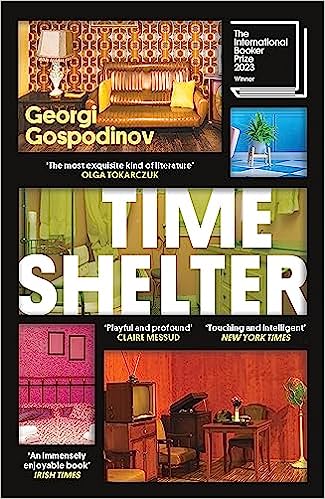
I reserved this month’s starter book, Time Shelter, by Georgi Gospodinov from the library, but it’s only just come in, so I have yet to read it.  However, I gather that an enigmatic flaneur named Gaustine opens a ‘clinic for the past’ that offers a promising treatment for Alzheimer’s sufferers: each floor reproduces a decade in minute detail, transporting patients back in time.

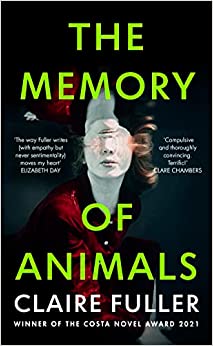
This immediately reminded me of Claire Fuller’s The Memory of Animals, which also opens a window on the past.  This is a  novel no doubt inspired by Lockdown, in which our young heroine is incarcerated in a hospital as part of a drugs trial which isn’t completed because the world at large goes into melt-down as a result of an untreatable variant of the virus rampaging round the world. Whilst there, another participant introduces her to the Revisitor, a device which allows her to re-experience her past life, which has been full of drama and error. It’s all a bit odd as a device for flashback. As are her letters to H, the revealing of whose identity would be a spoiler alert. Unsatisfactory, uninvolving, with too many plot-lurches, this is far from Fuller at her finest.

We travel to the past in my next book: Sheila Armstrong’s Falling Animals.When Oona spots a man apparently resting on the beach in a small Irish seaside town, it’s not immediately that she realises he’s dead. Who is he? How has he died? These questions remain unanswered by Police, the pathologist, and he is finally buried, unknown. But it’s not the end of the story. Each chapter of this lyrically written book introduces us to someone else who may have had a connection with the deceased – often very many years ago. We travel to other countries, to ships at sea: and connections with the man, and with this small town weave themselves into the story from distant lands and cultures. It’s deftly, often poetically done, and the book ends a year after the body was first discovered. Is the man finally identified? You’ll have to read the book to find out, and I highly recommend you do so.

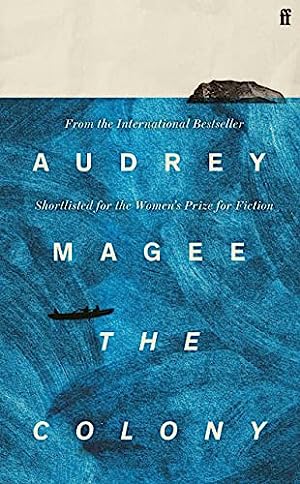
Looking to the past informs my next choice: The Colony, by Audrey Magee. We’re in Ireland in 1979, on a small, sparsely populated and isolated island, whose inhabitants have only recently started to learn and use English. Two visitors come to spend their summers there. Mr. Lloyd is a painter who wants to explore the landscape. He’s rude and entitled, but interesting to young islander James who has ambitions to go to art school. Masson, known as JP, is a French academic, keen to preserve and promote the Irish language, whether the inhabitants want it or not. Each chapter is interspersed with a terse newspaper-like account of a sectarian murder on the mainland, whether of a Catholic or a Protestant. At first these almost seem an irrelevance. Gradually, the penny drops that these incidents are deeply rooted in the history of the English towards their Irish ‘colony’, and do much to explain the largely hostile feelings both of the islanders and its two visitors. The book paints a picture of an island in many ways left behind, whose characters still struggle to find their place in the world, as indeed do the two visitors. A book to provoke thought long after the last page has been turned.

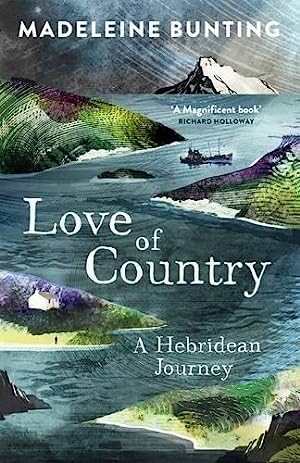
Let’s stay in Gaelic territory, but shift to Scotland. Love of Country by Madeleine Bunting. I’ve never been to the Hebrides, nor even really thought of going. This has changed, thanks to this book. Bunting makes a journey through the wild and remote islands of the Hebrides, focusing on seven in particular. This book recounts her explorations. Everything is potential material. The wild and severe beauty of the place touches her soul, and she writes poetically and personally about this. She explores geology, natural history, bird life, literature, and above all the sad and often wretched history of the people of these isolated places, and the people who sought to dominate or exterminate them. I found this a moving and fascinating book, and I’ll return to read other work by Bunting.
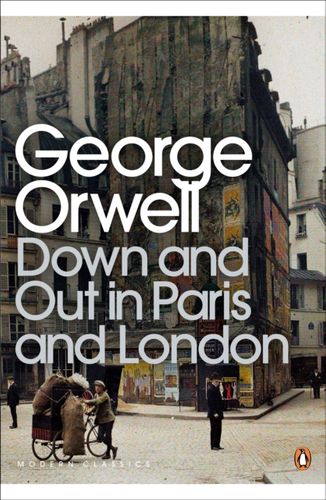
Poverty is what defines my next book:  Down and Out in Paris and London, by George Orwell, set in Paris and London in the late 1920s.  In one sense an easy read, in that the narrative sweeps the reader along: in another, difficult, because the story, describing conditions of brutal poverty as a ‘plongeur’ in a Paris hotel kitchen, then as an English tramp in southern England is unappetising in the extreme. The diary-like narrative is interspersed with anecdotes from the lives of other characters, such as his Russian friend Boris, and with more political reflections to make a striking and unforgettable short book. His characterisations of the men that he meets – and they’re nearly always men – are lively, and rounded, and put us in touch with the reality of existing on a meagre diet lacking substance and nourishment, of always being hungry, of either being unrelentingly overworked (Paris) or unrelentingly under occupied and bored (London) . The spikes may have changed, but is the reality of existence for the homeless really so very different now?

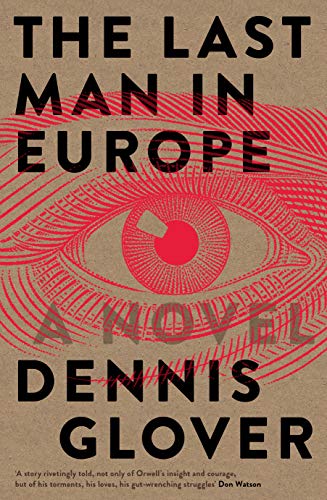
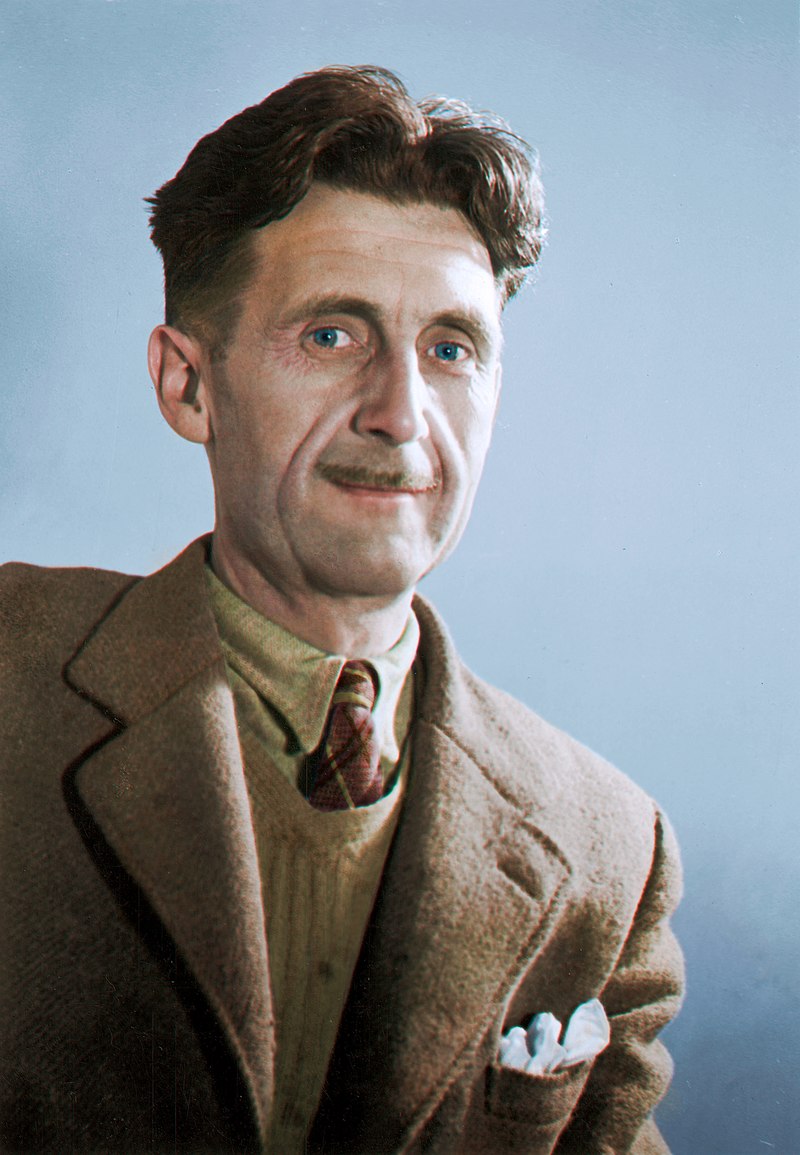
My last choice links with Orwell, with a Gaelic location and not much else.  It’s The Last Man in Europe, by Dennis Glover.  Focusing on the last years of his rather brief life, while occasionally diving back to earlier times – Orwell’s part in the Spanish Civil War for instance – this fictional-though-based-on-fact account mainly has as its subject Orwell’s last years on the Scottish island of Jura. This is a bleak and wholly unsuitable place for a man already dying from tuberculosis. Orwell was there to write his last novel, at first called The Last Man in Europe. We know it by the title he soon gave it – Nineteen Eighty Four. The book is assured in painting a picture of Orwell’s life in shabby-genteel poverty, of his somewhat cavalier attitude towards his colleagues and the women he bedded, and his wives, and most particularly of his changing political thought processes which would come to fruition in his last and probably greatest book. Now I need to go back and read the lot again, and not just Down and Out ….

This month’s chain barely ventured beyond the British Isles and Ireland, but next month we begin in America, with Curtis Sittenfeld‘s Romantic Comedy.

Six Degrees of Separation: From Friendaholic to Best of Friends

On the first Saturday of every month, a book is chosen as a starting point and linked to six other books to form a chain. Readers and bloggers are invited to join in by creating their own ‘chain’ leading from the selected book.

Kate W: Books are my Favourite and Best

This month’s starter book is Elizabeth Day‘s Friendaholic. I haven’t read it, but apparently the clue is in the title: it’s an exploration of friendship.

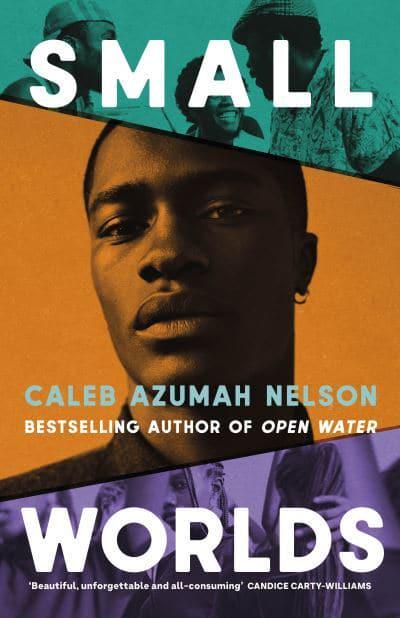
I’ll start then with a book I’m just reading now. It’s Small Worlds, by Caleb Azumah Nelson. At its foundation are two things: the narrator’s strong friendships, deeply rooted in his wider family, and his love – their love- of music, which underpins all their moments of togetherness and happiness.

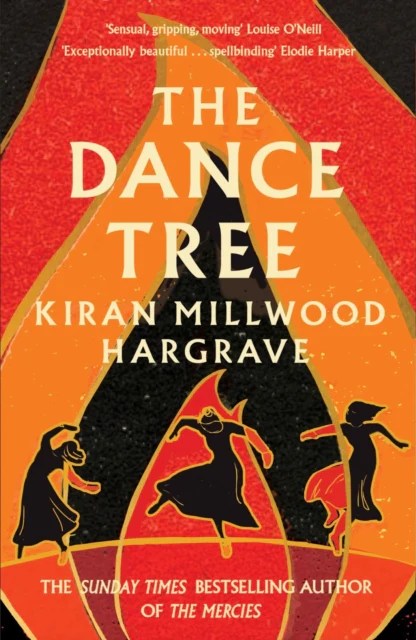
There’s a lot of dancing in Nelson’s book. So let’s go to Strasbourg in 1518, to a story based on a historically documented ‘plague’ of hysterical dancing: The Dance Tree, by Kiran Millwood Hargrave, set in a time of famine, superstition, religious and moral outrage. This is largely the story of Lisbet, pregnant again having already lost nine babies in very early infancy, and beekeeper extraordinaire. Why has her sister-in-law Nethe been required to do penance in a religious community for seven years? Why have hundreds of women been dancing in a frenzy, for hour after hour, day after day? Why do yet more and more people join them? Here are family secrets, forbidden love, frightened and powerless women examined in a story rich in feeling and entirely readable.

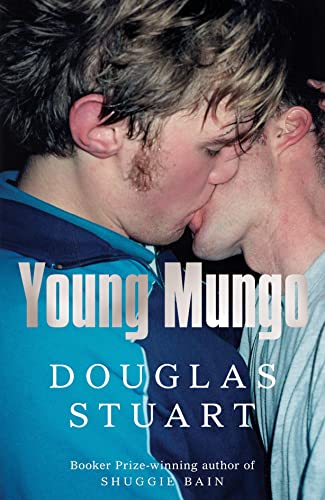
I’ll take you to Glasgow now, to the recent past, to a city which seems to have had parallels with the Strasbourg depicted in the last book. Young Mungo, by Douglas Stuart. Mungo grows up on a down-trodden Glasgow housing estate, immediately post-Thatcher: fatherless, with an increasingly absent and alcoholic mother whom he adores, a clever older sister who looks out for him, and a violent, lawless older brother. Why, at the beginning of the story, does his mother send him away on a fishing weekend with two fellow alcoholics whom she hardly knows? We return throughout the narrative to find out more. Mainly, we are in the poverty-stricken community Mungo calls home. And it’s here he meets James, and discovers his sexuality. That’s bad enough, but in sectarian Glasgow, Mungo is Protestant, James Catholic … This is a story with a deeply rooted sense of place, illuminating and pacy dialogue, with sectarianism, violence, fear and deprivation at its heart, examining what it means to be male in such a society, and the risks attendant on being gay.

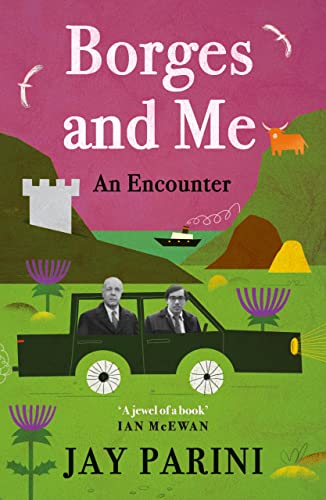
We’ll stay in Scotland, but lighten the mood, by picking up a copy of Borges and me: an encounter by Jay Parini. A romp of a read – a lightly fictionalised account of Parini’s encounter with Borges: a writer whose work I, like Parini, have never (so far) read. Jay Parini, an American, was a post-graduate student at St. Andrew’s University, dodging the draft to the Vietnam War. He’s going through young-man-angst about the subject for his thesis (his supervisor doesn’t seem keen on Parini’s choice of poet Mackay Brown), his draft-dodging and his (lack of) love life. When a friend of his, Alistair, is called out of town on a family emergency, Parini is called in to house-sit Alistair’s guest, the blind and elderly post-modernist writer Borges. Almost immediately, at Borges’ request, they embark on a road trip round Scotland for which Parini is expected to be Borges’ ‘eyes’. Shambolic and unpredictable, Borges is also a fount of dizzying literary talk. This is a trip to savour. A book which is a funny and wry account of an unlikely and thoroughly Quixotic journey: indeed Borges names Parini’s ancient Morris Minor after Quixote’s horse Rocinante. And it’s persuaded me too, that it’s about time I read some of Borges’ writing.

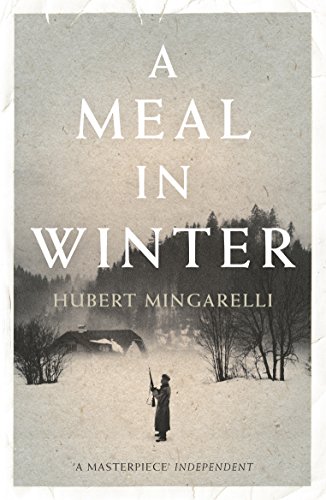
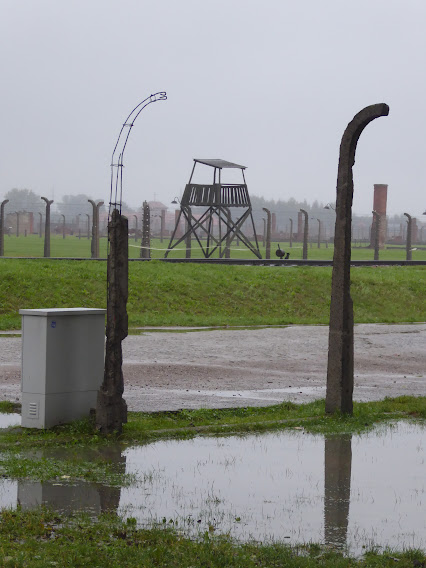
More men thrown together almost by happenstance: this is very much not a romp of a read. A Meal in Winter by Hubert Mingarelli. An account of three German soldiers whose task on a bitterly cold winter day during WWII is to hunt down Jews in hiding and bring them back to the Polish concentration camp where they are based, for an inevitable end. This unenviable task is better than the alternative: staying in camp to shoot those who were found the previous day. They’re friends simply through circumstance, so they talk about family – about the teenage son of one of them – and they find just one Jew. Is he their enemy, deserving his fate, or is he just like them, a young man doing his best to survive? What if they return to camp with nobody to show for their day’s hunting? As the men retreat to an abandoned cottage to prepare a meagre meal, their hatred and fear jostle with their well-submerged more humane feelings to provide the rest of the drama for this short, thought provoking book.

Let’s complete the circle by turning to another book whose protagonists’ family history lies elsewhere, as was the case with Small Worlds (Ghana) but whose home is now London. Kamila Shamsie‘s Best of Friends. This is a book of two halves. The first takes us to 1980s Karachi, and to the lives of two 14 year old schoolgirls. Zahra’s exceptionally bright and will do well. She’s less privileged than Maryam, who expects to inherit her grandfather’s successful leather business. An event takes place which comes in many ways to define their futures. Fast forward 40 years. The girls, now women are living in London, are successful and content. In many ways they are ciphers representing on the one hand liberal and inclusive politics, on the other successful entrepreneurship. Their strong friendship endures. Until the event from their teenage years comes back to haunt them. I didn’t quite believe in this and though the ending is intriguing, I was a little disappointed in this latest book from Shamsie.

So there we have it: a chain that explores friendship in its many guises. Next month? The chain-starter is the winner of the International Booker Prize: Time Shelter by Georgi Gospodinov and translated by Angela Rodel.

Six Degrees of Separation: From Hydra to Purple Hibiscus

Goodness!  I completely forgot that today is Six Degrees of Separation day.  I’ll have to play catch-up.

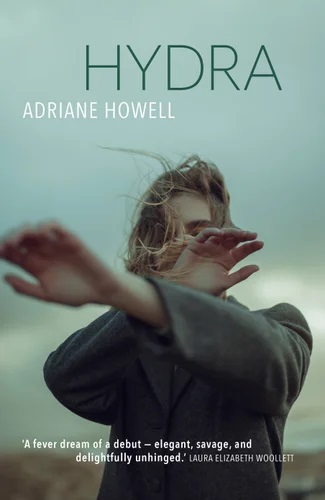
This month’s chain-starter isn’t yet published in the UK, so I haven’t read it: Hydra by Adriane Howell

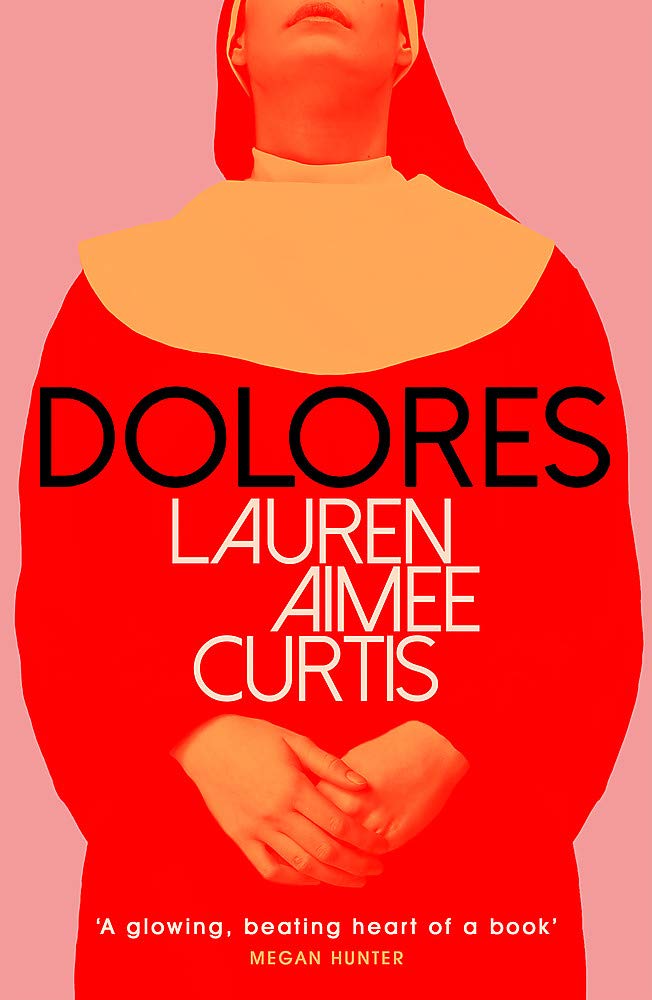
I gather something bad has happened to the heroine as the book begins, so I’ll start with Dolores by Laureen Aimee Curtis. Dolores is a somewhat enigmatic character who fetches up at the gate of a convent – pregnant. The nuns take the young woman in, and she adjusts to their life while her mind slips back to the years before: to the assignations in love motels, sometimes to life back at home, to a boy called Angelo. Life happens to her, almost without her input. The nuns hadn’t known she was already pregnant when she came to their door. She gives birth, and they name her son. What will happen to this confused young woman? We don’t find out. Perhaps this convent, full of mainly elderly and unworldly women will remain her home. Or not. Dolores’ life has been pretty grim so far and seems likely to remain so. Somehow, we as readers remain detached from her, as the author herself does. A strange, visceral book which kept me thinking beyond the time I turned the last page.

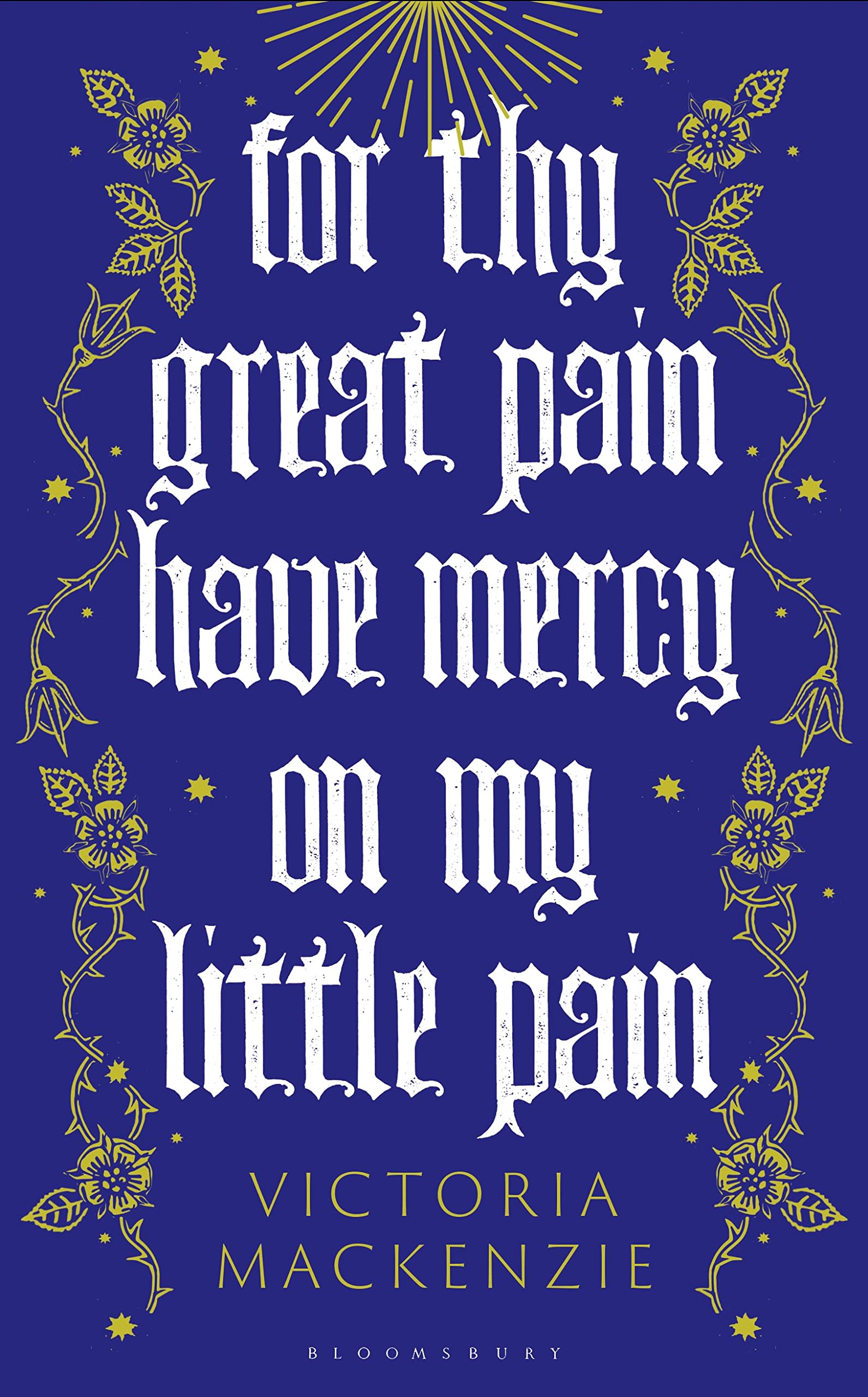
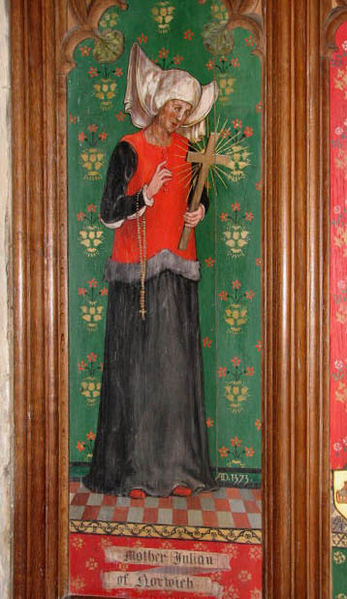
Let’s stay with – well, not nuns – but those who have chosen the religious life:  Victoria Mackenzie’s For Thy Great Pain Have Mercy on My Little Pain. Two female mediaeval mystics, Julian of Norwich and Margery Kempe tell their stories in alternating short chapters. Julian is the better known figure, for her Revelations of Divine Love, written when she was an anchoress, enclosed in a tiny windowed cell abutting a Norwich church. Both she and the other figure in the book, Marjorie Kent, had visions. Whereas Julian chooses to see little, but see it intensely, Marjorie is very different. Illiterate and rambunctious, with little time for her husband and children, she loudly proclaims her visions of Christ to anyone who will listen, and indeed those who do not wish to listen. Both took risks. To go against current Christian orthodoxy, especially as a woman, risked excommunication and a painful death. In the book, and we cannot know if this happened, the two meet, and this unlikely pair make a genuine connection. Beautifully written, and quickly read, this is a book that will stay with me for a long time.
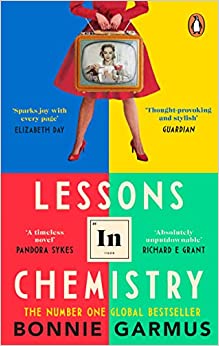
So to another woman, isolated from her professional peers simply by virtue of being a woman:  Lessons in Chemistry by Bonnie Garmus. While Elizabeth Zott, hero of this book, was fighting her battles for acceptance as an academic and chemist in the ’60s, I was a schoolgirl at an all-girls’ grammar school where achievement was expected, and the norm. All the same, our academic prowess when, post graduation, we entered the world of work was not always remunerated as favourably as that of our male colleagues. So this story of a woman who was disregarded while her research was nicked by her male colleagues was bound to interest me, as was her determination not to patronise her female audience when she was hired to do a TV cookery show. But … the characterisation was thin (EZ herself), or frankly unbelievable (her small daughter), and the males disappointingly stereotypical – especially the villains of the piece. As a page-turner it wasn’t wholly successful for me.I’m out of step.  Most readers seem to love it.

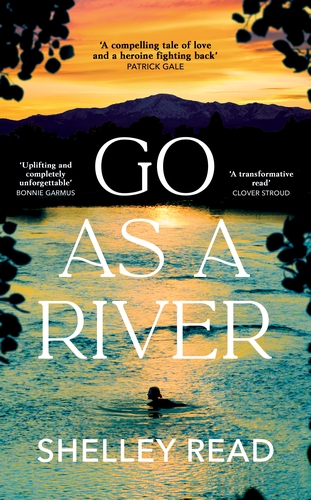
I’ve just finished Go as a River by Shelley Read (Whom I’ve met!  She came to an event organised this week by our local independent bookshop and spoke engagingly and with warm enthusiasm). Victoria lives in a small inward-looking town in Colorado – one that will have been covered by a new reservoir by the end of the book. Hers is a family of men, the women in her life having died in tragic circumstances when she was only 12. They’re either hardworking and grim (father), brutal (brother) or bitter and disabled (uncle). She is their housekeeper. One day, she meets an itinerant young man, a Native American, despised and reviled by the local community: racism is rampant . Falling in love with him changes the trajectory of her life, and is the story which makes up this book. In this account, we have the wild and rugged forest landscape which surrounds her town vividly brought to life, as well as the emotional life of Read’s characters. This is an immersive tale of love, loss and resilience. As a debut novel, it’s a triumph.

Victoria is only 17 when her story begins. Ana, in Dominicana by Angie Cruz, is 15 and living in the Dominican Republic with her family. Since the age of 11 she has been promised in marriage to a man more than twice her age. Love doesn’t come into it. This wheeler dealer, a Dominican now based in New York is her family’s best chance of emigrating there with Ana as the sponsor. New York as Ana finds it is not a city paved in gold, but a shabby flat in which she is more or less a prisoner with a sometimes violent and unpredictable husband. This is her story of her feisty struggles to make a life for herself, and gain some independence, while maintaining contact with her family in troubled political times ( the late 1960s). A good read, up-beat and engaging even when times are very hard, and a real insight into the struggles and compromises of being an immigrant with responsibilities to those who have been left behind.

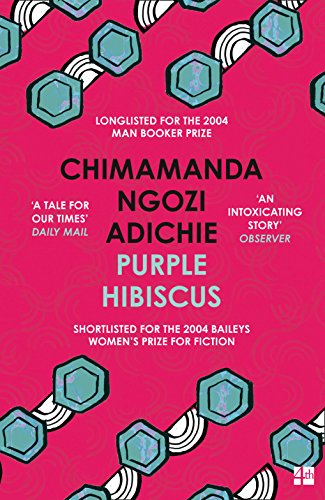
Lastly, another 15 year old, whom we meet in Chimamanda Ngozi Adichie’s Purple Hibiscus. Kambili is a Nigerian teenager who lives a privileged life with her brother Jaja and her parents. Her father is a successful businessman who is proud of the way he is able to support his community with his generosity. His devotion to his Catholic religion is however fanatical and more than a little warped, his expectations of his children controlling and cruel. Their home life is set against the turbulent politics of the time, and the contrast with their father’s sister’s family. They are in much more straitened circumstances, but surround each other with easy-going love. It’s the play between these two sets of attitudes that brings this story into being, and allows Kambili gradually to find her voice. A compelling and often uncomfortable page-turner.

Each of these books is linked by having as their protagonists women, isolated either by choice or circumstance.  Perhaps they could have done with reading next month’s starter book: Friendaholic: Confessions of a Friendship Addict, by Elizabeth Day.

Six Degrees of Separation: to Write a Book, or to Cook a Bear?

On the first Saturday of every month, a book is chosen as a starting point and linked to six other books to form a chain. Readers and bloggers are invited to join in by creating their own ‘chain’ leading from the selected book.

Six Degrees of Separation: Katc W

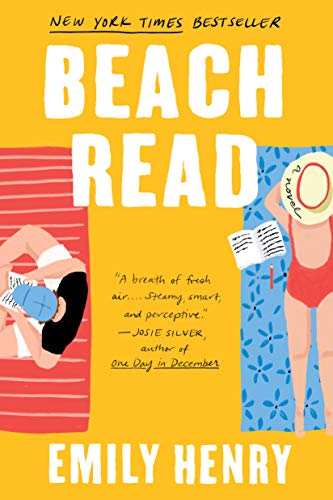
This month’s starter book, Beach Read by Emily Henry is one I had no desire to read. However, one summary I read describes it as being about two very different writers. ‘she pens a happily ever after, he kills off his entire cast‘ Goodreads).

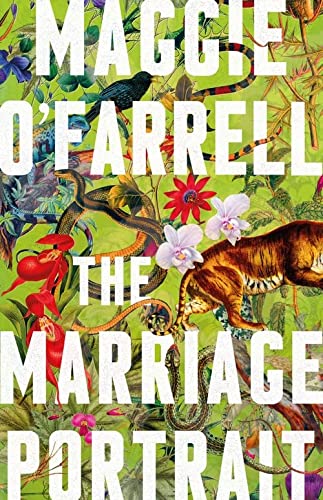
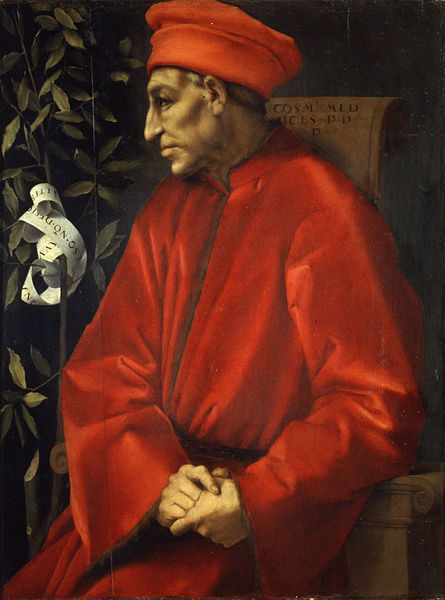
Somehow, that put me in mind of Maggie O’Farrell‘s The Marriage Portrait. In 15th Century Florence, Lucrezia, third daughter Cosimo de’ Medici, finds herself betrothed, then married to Alfonso, heir to the Duke of Ferrara when her older sister, his original choice, dies. The story flits between her early life in Florence and her early married life. Underneath, throughout her marriage, her conviction that she will be killed by her apparently loving husband bubbles away. This is a tale, sumptuously and evocatively told. It’s a mixture of fact, of weaving in allusions learnt from Browning’s poem My Last Duchess, from myth and fairytale and from gothic horror to create an engaging and highly pictorial story, which goes a long way towards helping us understand what it might have been to be Lucrezia: child, noblewoman, wife.

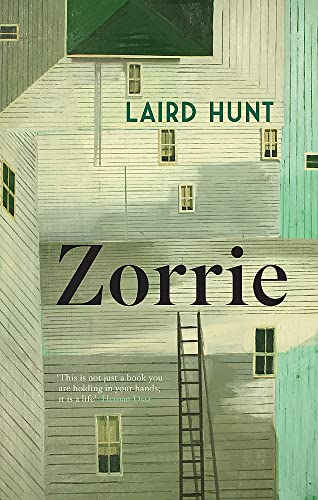
From one woman’s life to another.in this case a wholly fictional one, as told in Laird Hunt‘s Zorrie. This is the story of an ordinary woman living in rural Indiana, born during the 1930s Depression years. It’s quietly, beautifully told, from the days when Zorrie is orphaned and put in the care of a resentful spinster aunt, through the years of her adolescence, marriage and beyond to old age. Zorrie’s is a narrow world, but she has the same struggles with grief, with loneliness that befall most of us at some stage. But she also experiences love, and deep friendships, and reaps the rewards of steadfast hard work. I was moved by and involved in the story told in this short book. 

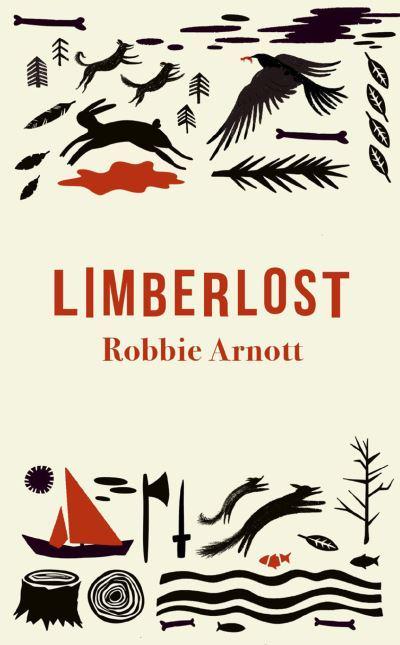
From one simple life to another, in Limberlost, by Robbie Arnott. Set in rural Tasmania towards the end of WWII, , this book ‘s earlier pages chronicle the life of young Ned, son of an apple farmer. As the book moves on, episodes from his whole life interweave the narrative, and indicate how events from his boyhood inform the adult he became. What makes this book special is its sparse yet luminous prose: its ability to make readers care for Ned, who has difficulty articulating his feelings and aspirations.  The novel isn’t plot-driven. It relies on various episodes such as his caring for a fierce marsupial, a quoll, whom he has inadvertently trapped to illustrate his character, his inability to trust himself to explain and justify. The one real drama in his marriage isn’t really explored. This quiet, understated book may well be my book-of-the-year 2022.

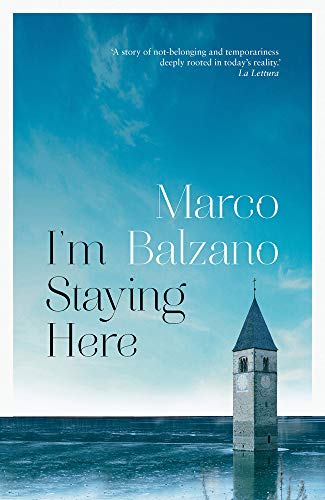
We’re still crossing continents in my next book: to Europe – to Italy. I’m staying here, by Marco Balzano. A powerful, understated novel sweeping us through much of the twentieth century. Trina narrates her story to her missing daughter. She lives in Curòn, in the German-speaking Italian Tyrol, and witnesses Mussolini’s attempts to Italianise it and stifle its German heritage; the impact of the Nazis and war on their lives; and finally sees their community destroyed by the building of a – it turns out – inefficient dam which drowns Curòn and surrounding villages. Important moments of history are told here through the lives of ordinary people, few of whom are described, other than as, for instance ‘the fat woman’, ‘the old man’ – they become ciphers for us all.. That is what makes this book, so simply told, so potent.

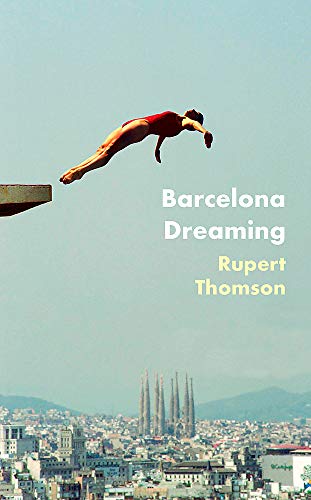
Now we’re off to Spain. I picked Barcelona Dreaming by Rupert Thomson from the library shelves for no better reason than that Barcelona is a city I know well since our daughter moved there ten years ago. Yhis is a book with a strong sense of place. Not Tourist Barcelona, with its must-see monuments, its busy cafes and its omni-present pick-pockets: but the varied city which all kinds of people from dyed-in-the-wool Catalans to ex-pats and immigrants call home. Here are three interlinked novellas, each with a very different character at its heart. They never meet, but are linked loosely through neighbours, colleagues and unconnected events. The book explores themes such as immigration, racism, nostalgia, lack of self-knowledge: old relationships that linger on. Thomson conjures up people whose complicated lives are utterly plausible, and a city that lives and breathes without reference to the tourist haunts so many travellers see. An immersive book.

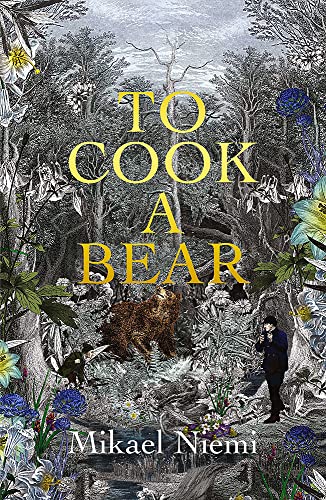
These first five books all have a single character at the story’s heart. My sixth does too in many ways. To Cook a Bear, by Mikael Niemi. But is the hero the narrator, Jusi, or the pastor? We’re in northern Sweden in 1852, within the Arctic Circle – an area where Swedes, Finns and the Sami people all live. Revivalist preacher Laestadius, an avid amateur botanist is pastor in a community here, and takes in an abandoned Sami boy, Jussi, who’s suffered much abuse and poverty. This pastor is astute and observant – more so than the local sheriff, and it’s he who continues his pursuit for the truth when first, a local girl is killed, then another is grievously attacked: the easy, but incorrect answer is – a bear. The pastor teaches Jussi to read, write and use his brain, and it’s largely the boy who tells the story, though he remains, as do the Sami people generally, disregarded and despised by the local community. This is a good story and well told, portraying an isolated community, reliant on gossip, tradition, religion and superstition to get by. There are twists which bring the pastor (who is an actual historical figure) and Jussi into real danger. This is Scandi Noir introduced into the history books, and emphatically not a detective story with added costume.

So I’ve come full circle, by beginning and ending my chain with two stories inspired by the lives of real people. If I’m honest, this was also driven by my wish to include my very favourite book title of 2022: To Cook a Bear. The other factor making this list into a chain is that – quite exceptionally, I read all six of these books straight after one another (though not in this order) since the last appearance of Six Degrees.

And next month’s starter? Trust, by Hernan Diaz. I’ve reserved it at the library already.

Six Degrees of Separation: From The Snow Child to a Mistletoe Murder

On the first Saturday of every month, a book is chosen as a starting point and linked to six other books to form a chain. Readers and bloggers are invited to join in by creating their own ‘chain’ leading from the selected book.

Kate W: Six Degrees of Separation

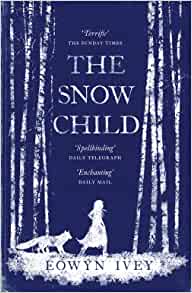
This month’s reading began with Eowyn Ivey‘s The Snow Child. I suspected magical realism and expected to cast the whole thing aside. But this reworking of the traditional Russian fable utterly disarmed me. Set in barely-settled 1920s Alaska, the frozen landscape and the fresh and flower-strewn spring, the tough-because-they-have-to-be characters, the hardships and friendships make this a believable, yet lyrical story which transported me willingly to a different world.

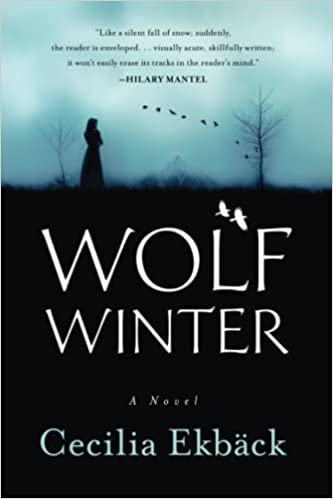
I remembered a book which gave me a similar reaction: Cecilia Ekbäck‘s Wolf Winter. As an evocation of life in an isolated 18th century community of far-flung homesteads in northern Sweden it’s quite wonderful. The sheer drudgery of keeping alive in the long dark days of winter; the isolation; the fear of beasts and evil spirits: in fact the pervasiveness and absolute acceptance of a spirit world was involvingly brought to life. But it’s also a murder mystery, and this pulled me in far less. Nevertheless.five years on, those evocative descriptions of tough lives in a tough place stay in my mind.

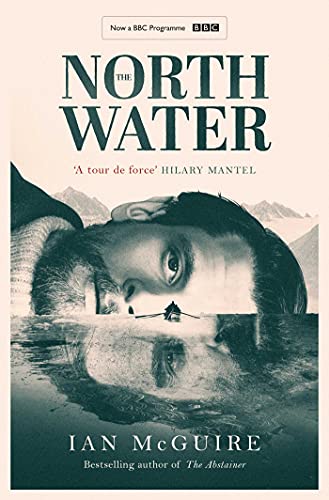
Yet more tough lives in unforgiving conditions. The North Water, by Ian McGuire. This is a gritty story set largely in a 19th century whaling ship. There’s violence, brutality, bad language, bowel movements a-plenty, but it doesn’t feel gratuitous. Patrick Sumner has – we eventually discover – left the British Army in disgrace and his options are few. He becomes a ship’s surgeon on the whaling ship, and finds that a hard and desperate life becomes even worse as the ship and its crew battle against an arctic winter and a particularly brutal and amoral member of the crew. An involving and gripping story that recreates a world I can only be grateful not to be a part of. And – British readers – I’ve just discovered that the book has been made into a five part series available on BBC i-player.

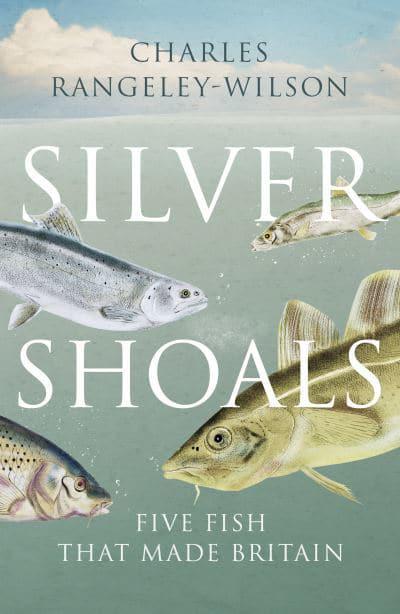
Let’s stay at sea, and with fishing, but let’s lighten the mood – please – by turning to Silver Shoals, by Charles Rangeley-Wilson. I was entirely and unexpectedly engaged by this book, an exploration of our nation’s iconic fish: cod, carp, eels, salmon and herring. This is a story of the fish themselves; of fishermen; of the consequences of greed and the way back from it; of geology; meteorology; our nation’s social history as it relates to food and farming; of corruption and political will. It combines serious discussion of issues with good yarns about the fishermen who took Rangeley -Wilson fishing with them, whether on week-long voyages on trawlers, or half day sorties to the local river bank. He travelled north, south, east and west in quest of fish and their stories, and produced and absorbing account which I read in record time because I was so enthralled by all the threads of the story Charles Rangeley-Wilson told.

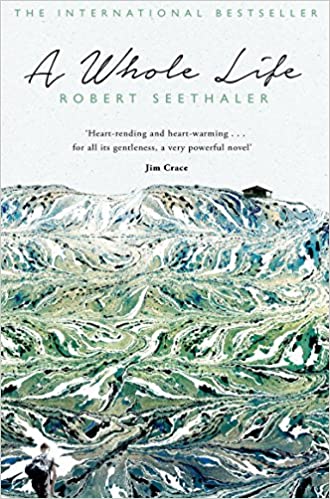
My next book is set not at sea, but in the mountains. However, there is the same attachment to place here that fisherman seem to have to their chosen piece of water.. A Whole Life, by Robert Seethaler. This is a spare and restrained telling of the story of a life. The life of a lonely, but not discontented man living in a small community in a mountain valley, after a chequered and varied early life. This is a man who values solitude, and the landscape in which he lives. His needs are simple, but even these are not always easy to meet. A poetic, satisfying book. It’s a work in translation, but this is an accomplished piece of work which reads beautifully, and deserves re-reading.

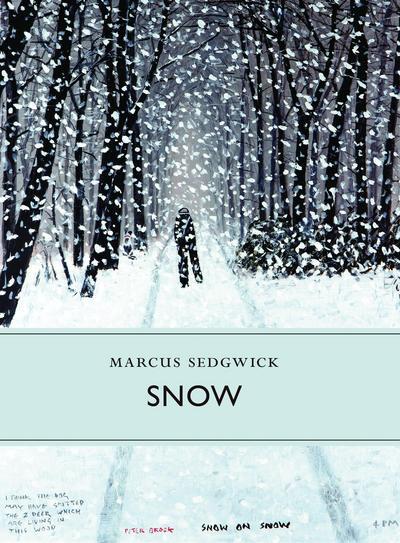
Marcus Sedgwick lives in the Haute-Savoie, not really so very far from Seethaller’s hero. One of his books is Snow. This is a beautifully presented and thoughtful little monograph. Always fascinated by snow, Marcus Sedgwick’s chosen home is one where snow in winter is a daily reality. He’s come to appreciate that there is far more than one kind of the stuff, and that some of it is ‘the wrong kind’, getting in the way of the everyday lives of those who are very accustomed to snow of all kinds. He wanders discursively through science, literature, art, and personal anecdote to build up a vivid picture of this fascinating substance which exercises such a grip on our imaginations and our daily lives when we encounter it. A book to read, to savour, and to continue to dip into from time to time.

Now, let’s lighten the mood. It’s nearly Christmas shopping time. Let’s choose another short book, with winter at its heart. The Mistletoe Murder and other Stories, by PD James. The Guardian describes this book as ‘a box of crackers’, and so it is. These are four short stories of murder most foul that were all originally published elsewhere, all set round about Christmas time. They’re clever, and not at all likely to be mistaken for Scandi-noir. These quickly read little gems, nicely presented by Faber and Faber, would make an ideal stocking filler.

So there we have it. From one murder mystery to four murder mysteries, with four stops in between.

It seems to me that next month’s starting book could hardly be more different. It’s Beach Read, by Emily Henry.

Six Degrees of Separation: The Foodie Special

On the first Saturday of every month, a book is chosen as a starting point and linked to six other books to form a chain. Readers and bloggers are invited to join in by creating their own ‘chain’ leading from the selected book.

Kate: Six Degrees of Separation

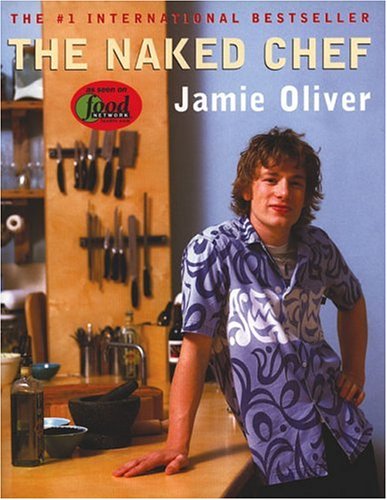
This month, our chain starts off with a recipe book: Jamie Oliver‘s The Naked Chef. I’ve used this and other books by Jamie Oliver as jumping-off points when thinking what to cook. But what I really like is a recipe book that’s a good enough read to enjoy even when not planning meals.

So that’s why I’m starting my chain with Rachel Roddy. I used to follow her when she was a food blogger, a young Englishwoman living in Rome. Then she wrote a book. Then the Guardian newspaper took her up. These days she blogs no longer. But I still use and enjoy that first book, My Kitchen in Rome, in which she talks about Testaccio, the working area of Rome where she lives, far from the tourist hot-spots. She writes about the daily market, her discovery of Roman foods and recipes, and getting to know those who help her on her culinary journey. It’s a right good read. With added recipes.

Nigel Slater is another food writer featured in the Guardian and Observer. I own just about every book he’s written: but today, even if it’s definitely not OK to start doing the Christmas shopping and enter shops where Christmas musak is already being belted out, it is OK already to have baked the family Christmas cake, I’m featuring his The Christmas Chronicles. It intersperses vignettes from his life with observations from his garden, his travels, his kitchen, his Christmas preparations with recipes for Christmas and the winter season generally. Like Rachel’s book, it’s a jolly good read.

The book which probably started many of us out on our cooking explorations is Elizabeth David‘s A Book of Mediterranean Food, first published in 1959. It doesn’t have the same story book quality of Roddy and Slater’s books, but it’s more than a list of ingredients followed by the instructions. She sets the scene, either with her own words or those of other writers, to explain the joy of say a family lunch, a Greek feast, the snail. She explains which ingredients are best, how you might make do, and when you must not make do. I no longer use David’s books as much as I did, but she’s the foundation on which so many later cooks and their books were built.

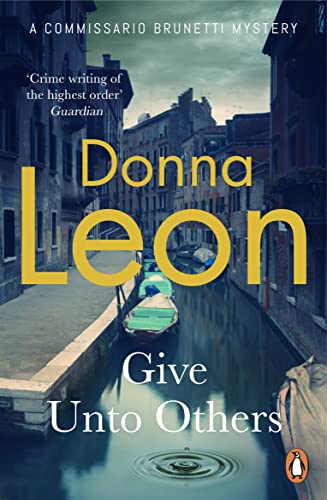
We’ll stay in the Mediterranean. I’ve written before about my entirely unrequited love affair with Commissario Guido Brunetti in Donna Leon‘s books set in Venice. In any one of them you’ll find evocatively described meals, family meals prepared by his talented wife Paola, or those taken in one of the neighbourhood restaurants he’s come to know and be known at over the years. Let’s pick on Trace Elements. A dying woman has an important message to relay to Commissario Brunetti about her recently deceased husband. Inevitably, she dies before she’s able to convey clearly what she needed to say. Can Brunetti and his friend and colleague Claudia Griffoni pick the bones out of all this? Inevitably, they can. Inevitably too, there are twists and turns on the way, and an intriguing ending. A classically satisfying tale, with meal time interludes. 

Still in Italy – Sicily this time. Andrea Camilleri‘s Inspector Montalbano is reliably greedy. His housekeeper leaves him tempting suppers to enjoy when he returns from labouring over yet another murder. Local restaurateurs know him well, and keep their choicest dishes for him. All Camilleri’s books about him celebrate his love of food. It’s a long time since I’ve read one, so no review for this one: The Terracotta Dog.

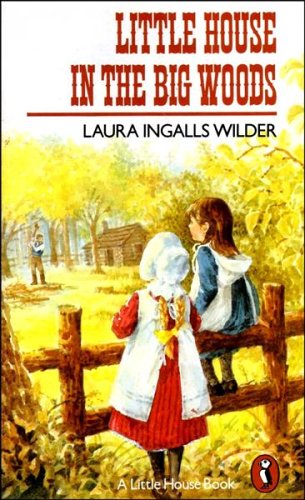
We’ll finish with the Laura Ingalls Wilder Little House on the Prairie books, which my younger daughter read incessantly for a period when she was about 10. It describes the life and adventures of a pioneer family in 19th century America, and the simple business of living occupied much of their days. In Little House in the Big Woods, for example, we’ll be with mother and daughters as they bake bread, churn butter, grow vegetables, dry fruits, make pickles. Father may turn up with a fowl for the pot. It was a simple, tough and hardworking life lived by an energetic and loving family with a deep uncomplicated faith. As my daughter prepared for her teenage years in a rather different society, these books were her frequent companions.

I don’t think I’ve ever written a book post about food before, and I doubt if I shall again. But it’s been fun. Back to the world of fiction next month, for Eowyn Ivey‘s The Snow Child. Join in on the first Saturday in December with a chain of your own?

Six Degrees of Separation: From a Scandal to a Great Fire

On the first Saturday of every month, a book is chosen as a starting point and linked to six other books to form a chain. Readers and bloggers are invited to join in by creating their own ‘chain’ leading from the selected book.

Kate: Six Degrees of Separation

The starter book for this month’s chain is Zoë Heller’s Notes on a Scandal.  Despite its being in many ways the shocking story of an affair between a teacher and her pupil, the book is in many ways memorable for having been narrated by a fellow teacher, who proves to be an unreliable narrator.

So I looked for another unreliable narrator, and found one in Matt Haig’s The Midnight Library.  So much hype surrounded this book. And it is immensely readable. But this story of a young woman who gets the opportunity, through being transported to a magical library in the moments before she commits suicide morphs into an entertaining and – yes- thought-provoking manual to help her re-evaluate her life and its disappointments, and to explore some of the paths that might-have-been, in some ways disappoints. Of course her alternative lives, lasting only a few days each, aren’t going to work out since she isn’t given a back-story and knowledge of the participants. In the end I felt I was being given a parable of how to improve on living the life I have been given. And it didn’t quite live up to what I’ve come to expect of Matt Haigh.

Libraries for the next link then: let’s go to Barcelona in 1945.  Carlos Ruiz Zafón’s The Shadow of the Wind revolves around the mysteries of a little known author, Julian Carax.   The main protagonist, Daniel, stumbles across him in a secret library of literature called the Cemetery of Forgotten books. From there it develops into a story of good versus evil; driven by jealousy and shrouded in the unknown.

I’m all in favour of staying in Barcelona, armed with a copy of Robert HughesBarcelona.  This is a wonderful book, which tells Barcelona’s story through the last two thousand years – though its main focus is the last thousand. Hughes’ area of expertise is art and architecture, but in order to tell the story of Barcelona’s cultural past and present, he has painted a vivid picture of the city’s political and social past. Highly readable, this is a book so densely packed with information that it definitely merits a second, perhaps a third reading as an introduction to the history of this fascinating city.

From Barcelona to Florence, another city I know well. Still Life by Sarah Winman is largely set there.  A charming, uplifting book, about the power of loving friendships and community. It begins in Tuscany in WWII with a British soldier, Ulysses, and continues to London’s East End where Ulysses was brought up. An unexpected legacy takes Ulysses back to Tuscany, to live in Florence, where, little by little, his London friends and relations fetch up too. Over the three decades in which this novel takes place, these individuals and his new friends in Florence all live and work together as some large extended family. Florence – not tourist Florence – but a living, working, vibrant community – is star of the show, and since I lived there too for a year, not long after the 1966 floods which feature in the book, I took this story to my heart.

Another book where a city is centre stage, albeit an 18th century version of the city, is Andrew Miller’s Pure, set in Paris.  Jean-Baptiste Baratte, a well qualified yet naïve young engineer, is sent to oversee the removal of the many thousands of bodies from the cemetery of Les Innocents in Paris, some 4 years before the French Revolution.  Miller conjures a vivid picture of the daily round in this little part of eighteenth century Paris: the smells, whether of sour breath or rotting vegetables or a dusty church; and of a world about to change, in the destruction of the cemetery and church which has for so long been at the heart of the community Baratte finds himself in. Violence and death are ever present.  Unsettled by the narrative, the reader is left with an impression of a world about to change, a world which is already changing in ways its citizens cannot comprehend. Uncertainty is what draws the reader in.

A capital city in time of trouble is portrayed in The Ashes of London, by Andrew Taylor.  What did I enjoy about this book? The picture it evoked of London life in the immediate aftermath of the Great Fire of London. What didn’t I enjoy? The over complex plot, and the flimsy characterisation. The book is peopled by ‘goodies’ and ‘baddies’, and we know for sure which are which. I’m not minded to read the follow-up book, but I found the description of London at this difficult moment evocative and convincing.

How did we get from a modern comprehensive school to seventeenth century London?  As chains go, it’s a bit unlikely.  Let’s see if next month, when we start with a cookery book, Jamie Oliver’s The Naked Chef, is a little more convincing.