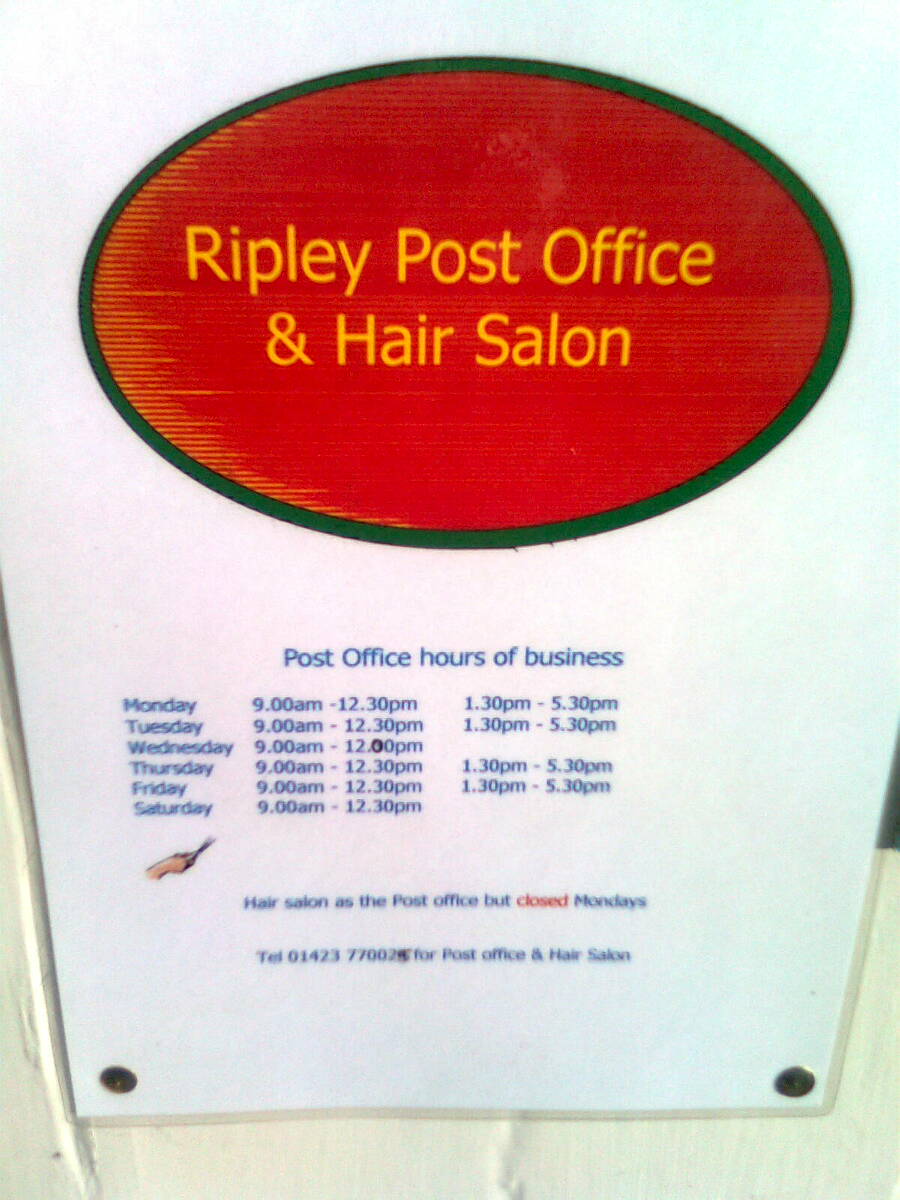
Slow paper is better than no paper

I’m not fully adapted to country life yet.  Forward planning – or lack of it –  is my failing.  I haven’t yet learned to anticipate whether we’ll need more milk, potatoes or whatever before the next planned trip to The Great Metropolis (aka Ripon), and quite often find myself grubbing around at the back of the cupboard for acceptable substitutes.

Saturday, though, is the day we treat ourselves and buy the paper.  There’s enough reading material there to get us through several days, and the sports section, discarded immediately,  is perfect for any number of little jobs such as lining the rubbish bin.  And yet today we had no excuse to visit Ripon, so would we have to go without our newspaper?

Well, no, there is another solution, but we have to reckon on leaving the house for well over an hour to complete the three and a half mile walk.  The round trip to the paper shop involves leaving home along the path through the woods, walking along the riverside path to Sleningford Mill caravan site, dallying by the weir for a few minutes, battling along the narrow path now surrounded by chest-high spring flowers, and finally reaching the bridge at West Tanfield.

The shop in the village is where you’ll find most things.  There’s food, drink, first aid and stationery – and a Post Office.  There’s a community board where today I found news of someone selling chilli plants – I’ll be buying some of those .  And there are newspapers.  I bought our weekly fix.  Then I set off home by a different route.  Out of the village on the road, up the hill, turn right at a farm gate.  The path here’s been slightly diverted, because the farmer’s made wide beetle banks to boost the number of farmer-friendly insects and spiders on his land.  Through several fields of sheep, who come to inspect me, and along the drive of Sleningford Park, a country house.  A final yomp along paths running alongside fields of wheat and barley, and I’m home once more.

It wasn’t quick.  But I came home refreshed by the birdsong I’d heard; the sight of birds, rabbits, squirrels and sheep I’d passed; the flowers I’d spotted on the paths, different already from the ones I’d spotted only a few days ago; and all those country smells, from wild garlic to sheep dung to spring flowers.  I’d had a better morning, I reckoned, than if I’d either gone without, or jumped in the car to grab a newspaper at the petrol station four miles away.

Charity (shopping) begins in Laroque

Charity shops.  Staple of the British High Street, and a really important source of revenue for many charities.  Some parts of English towns seem to have few other shops these days, and on my visits back to Harrogate and Ripon, that’s where you’ll find me,  stocking up on piles of second-hand books at bargain-basement prices.  And not just books.  I have a classic lovat green Loden coat, much admired by whoever sees it, current selling price anything up to £500, which I found in St. Michael’ Hospice Shop in Harrogate for £10.

So here in France, I miss charity shops.  Emmaüs, the international charity focussing on poverty and homelessness concentrates in its large, warehouse-like shops on quantities of furniture and household goods, and a bit of everything else too, but they’re often away from the town centre.  Our local one in Lavelanet is daunting in size, shabby and a little unappetising.

logo_secours_populaire.jpg 1Secours Populaire here in Laroque, as in many towns, provides a lifeline for families in difficulty. It sells donated clothes and other goods, but it doesn’t advertise itself, and is mainly appreciated by those whom it sets out directly to help.  The branch here is in an upstairs room, and is staffed for one afternoon a week only by a cheery team of volunteers who see no need to market the service they provide to a wider constituency, or to go in for careful artistic displays of the goods on offer.  It’s clearly not a shop in the ordinary everyday sense.

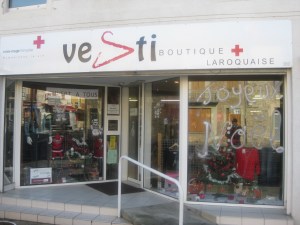
It was a bit of a shock then to realise a few months ago that the shop that was being refurbished up near the cross roads was going to be a Red Cross Charity Shop,  ‘Vestiboutique’.  It opened with a ceremony reported in the local press, and has been trading on 4 afternoons a week.

logo-croix-rougeIt’s a great place.  As in England, there’s a mixture of donated goods, and ends-of-line donated by clothing manufacturers.  As in England, the shop window and the stock within have been displayed with taste and care.  In the backroom, donations are mended, cleaned and pressed if necessary, before being put on sale.  Everything second-hand is either one or two euros, the ends-of-line goods very little more.  The day I first went, I found some cheerful trousers, an elegant high-quality pair of ankle boots probably worn only once by their first owner, and a new fleecy hat for winter walks: I parted with 7 euros.

The two members of staff were happy to talk. They’re not volunteers, though they’re not paid much.  They were excited to be part of this new development.  This shop is the only one in the region, and was sited in Laroque to provide a service in an area of economic difficulty.  Trade was brisk they said, and already the shop was much appreciated locally.  I told them about the huge variety of English charity shops, from international charities like theirs, to shops for charities seeking to combat disease or support animals, to hospice shops.  They were astonished, and couldn’t really imagine the picture I was trying to paint in their minds.  Though there are parts of France – Paris for instance – where you’ll find more shops like this, there are no streets like say, Commercial Street in Harrogate, where about a third of the shops now seem to be charity shops.  Vestiboutique, for the time being, is unique in the Pays d’Olmes.

Vestiboutique just before Christmas.

Christmas on the High Street

Verzeille&decoDec2012 033It was 5 years ago when we were first in Laroque round about Christmas time.  There were no signs of its coming until well into December, and we thought it wonderful: no decorations, no adverts, merchandise or muzak,  just a bustle of festive activity from about two or three weeks beforehand.

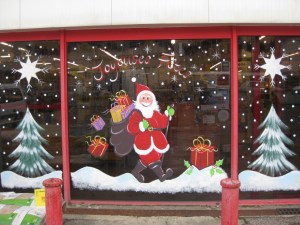
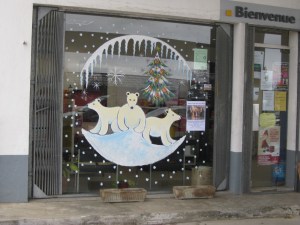
The first signs, as in England, were in the shops.  Unlike England however, most shopkeepers didn’t usually buy tinsel, baubles, and several packs of cotton wool to introduce a Christmas theme into their window display.  Instead they had a seasonal design applied directly to the window.  We once saw a scene-painter busily decorating a local window, and wondered what he did the rest of the year.  Shops in small town high streets like Laroque’s would all be unified by being the same but different.  The same folksy interpretations of Christmas motifs, the same limited palettes of white, red, greens and yellows.  Some would choose scenes of reindeer amongst the Christmas tree forests, others Father Christmas,  snowmen, or radiant candles.

Garage in Laroque
Garage in Laroque

Five years on, hardly any shopkeepers are keeping up this tradition.  They’re decorating their shops, but in their own way: dressing up their window display with baubles, snowflakes and Santa Claus figures.  They’re nicely done too, but I miss the particularly French idea, which I’ve seen nowhere else.

Here are the few traditional window scenes I’ve been able to find this year.  Maybe next year even these will be part of the past.

A baker's shop in Laroque
A baker’s shop in Laroque

The Orange Man

Winter has arrived.  How do I know?  Although the nights are cold, the afternoons are still for going walking or tidying up the garden wearing a tee-shirt, beneath a duck-egg blue sky. So until the other day, I thought we were clinging on to autumn.

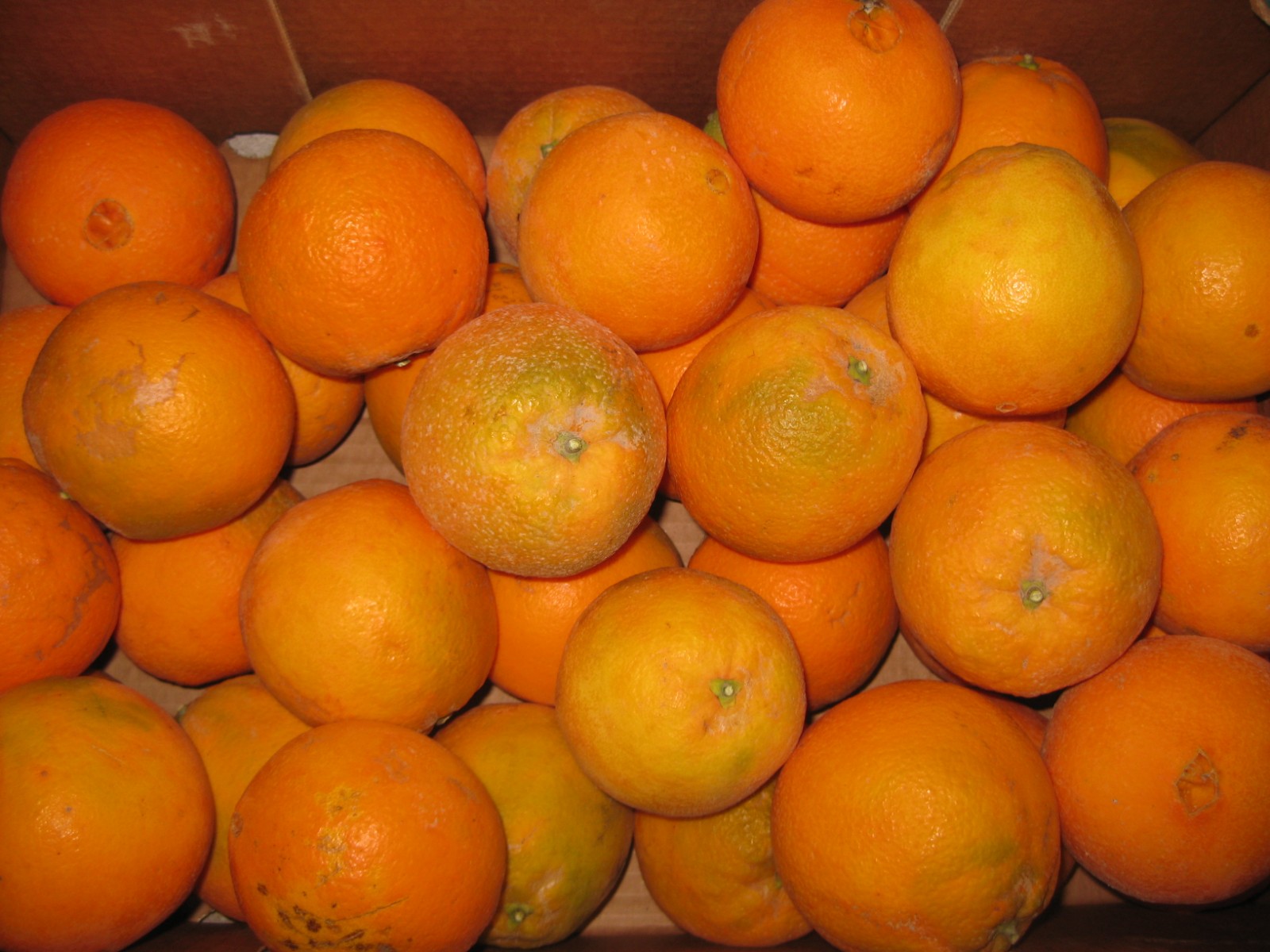
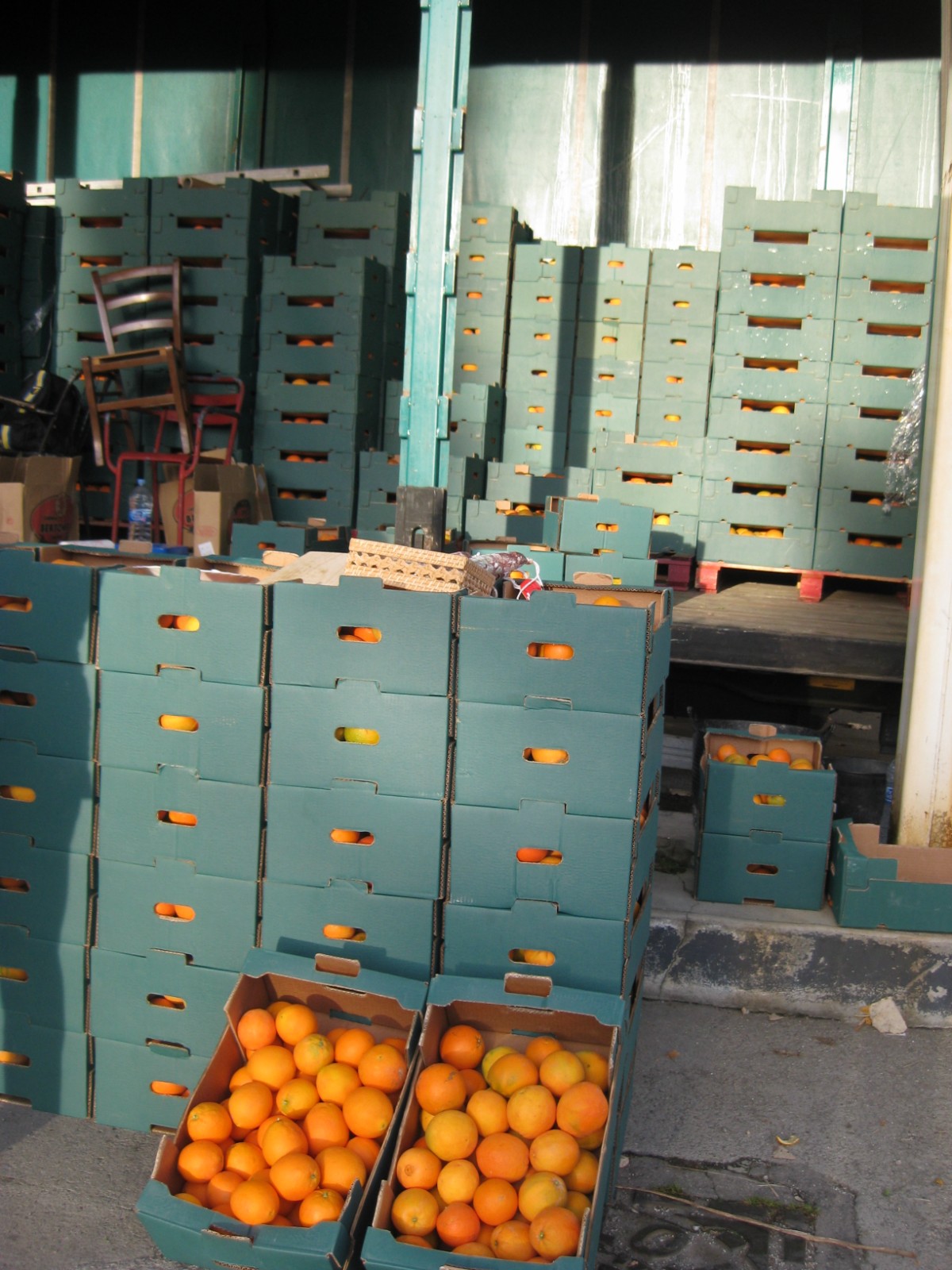
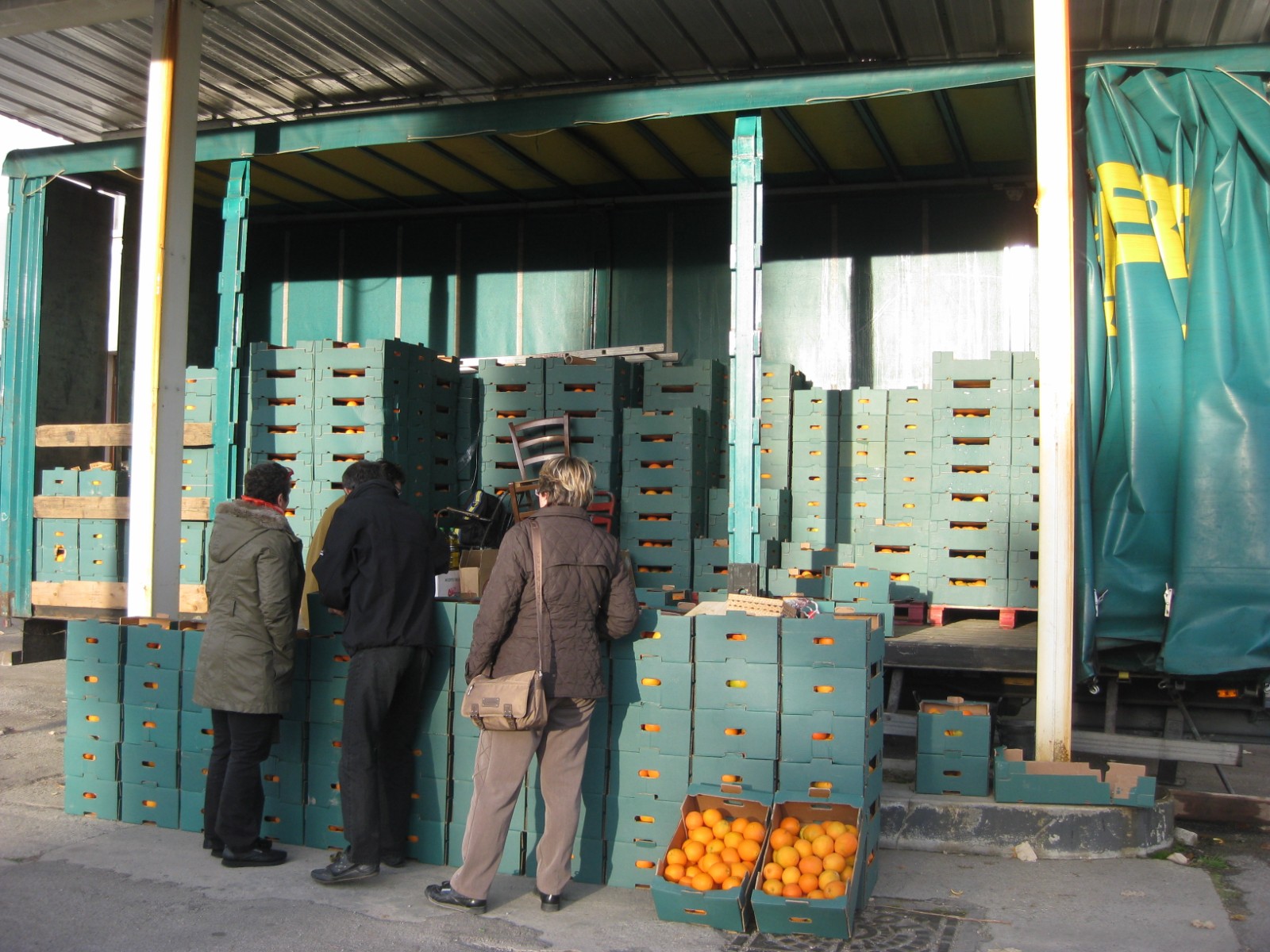
But on Thursday, the Orange Man arrived.  This is exciting enough news for it to be worth phoning a friend.  Every year, once winter kicks in and the orange harvest is well under way in southern Spain, a huge container lorry arrives in Lavelanet. It parks up at a disused petrol station on the main road into town and becomes an impromptu shop.

The man with the lorry, the Orange Man,  speaks only Spanish, and sells only oranges.  Not singly or by the half-dozen, but in large 10 kilo boxes.  10 kilos, 10 euros.  What a bargain.  These oranges, though sometimes a little knobbly and in irregular sizes, are the juiciest and tastiest you’ll ever eat, and it’s no wonder that whenever you pass, you’ll see someone pulling up their car and opening the boot for a case or two.  Our Spanish friend won’t have to stay long.  In a few days the entire container-load will be sold, he’ll return to Spain …. only to return when he’s loaded up again.

When he departs for the last time at the end of the season, we’ll know for sure that spring has arrived.

PS.  Very topically, Hugh Fearnley-Whittingstall takes oranges as his subject in today’s cookery column in the Guardian

Gone but not forgotten – our local charcuterie.

Today is the first day of the rest of Marcel and Mercedes Resseguier’s lives.  Today (barring the odd holiday) is the first Tuesday for 28 years on which they haven’t opened their charcuterie (like most small-town shops, they didn’t open on a Monday).  At 60, Marcel’s retiring.

Their shop is a bit of an institution hereabouts.  Go to an event where food is served and discover that the plates of cold meats, pâtés and cured sausage are from the Resseguiers’ shop, and you’ll be piling your plate high with all that’s on offer.  Go to buy some sausages for an easy lunch, and you’ll join a queue of customers chatting away animatedly as they patiently wait their turn.  What will we do without them? They’re not trying to sell it on – no point.

Once upon a time, theirs was a busy shopping street.  Nowadays, it’s (oops, was) the only shop left.  Still 2 butchers remain in town here however.  Nearby Lavelanet, a town that’s more than twice as big as ours has only one, Marrotte.

When he was 14 ½, Marcel went to Limoux, apprenticed to a butcher’s where he learnt all he needed to learn about the butchery business.  And then he came back to the Ariège to work at the above mentioned Marotte’s. This shop sells not only fresh meat, but charcuterie too: in other words fresh sausage, cured sausage, hams both dried and cooked, and pâtés: mainly, but not exclusively, pork products.  Working here, Marcel realised that, for him, charcuterie was a lot more interesting than presenting fresh meat for sale, and he profited from his time there to learn all he could.

A little later, after his short spell in a general stores with a meat-counter in nearby Villeneuve d’Olmes, the charcuterie here in Laroque came up for sale.  A certain Monsieur Vié owned it.  His son Michel is a pillar of our town, involved in everything from singing in the local choir to supporting our local town-twinning operation.  He didn’t want to go into his father’s business, but like so many people round and about, he’s learnt many of the skills, and will often knock up some cured sausages or a bowl or two of pâté for a family celebration.

Well, Marcel, with his father’s help, bought the shop, together with the good-will and customer-base that came with it. The rest is history.  The charcuterie is hard to find, being tucked away in a side-street where it’s almost impossible to park.  But that didn’t stop it being a shopping destination.  Once there, apart from all the expected meats and sausages, you could buy his tins of jarret de porc or jars of pâté de foie, as well as wine or bottled vegetables.  His was a depot de pain too.  So he’ll be missed, as will Mercedes, his wife, who served the customers and balanced the books.  Happy retirement, Marcel.  Enjoy your new career Mercedes (that’s another story) …. and see you on the next Sunday walk with Laroque’s walking group.

Once upon a time there was a town…

We thought we knew Laroque. An afternoon’s walk round town with local historian Paul Garrigues as part of this weekend’s Journées du Patrimoine has convinced us otherwise.

The bridge near our house is modern and slightly re-sited. But we had no idea that the main road it’s on, leading to one the busiest roads in the Ariège, the D625 to Lavelanet, used not to exist. To go to Lavelanet, you used to go straight up the hill, and down back-street Rue des Pas Perdus.

To those in the know, evidence of the former town gates

And here you’d go through one of the town gates. Using this path day after day to reach our garden, we’d never noticed the buttressing that indicated the former presence of these gates. Nor did we suspect that the narrow road and path which is now a way-marked walker’s route which passes past our garden, down to the River Touyre was once a busy thoroughfare. You follow the river to the former railway line, where you turn right and take a shady tree-lined route barred to anything more technical than a bicycle through the next village, Dreuilhe, and on into Lavelanet. Quite different from the lorry-van-and-busy-commuter route now in operation.

Once upon a time the main road to Lavelanet. Now the path past our garden.

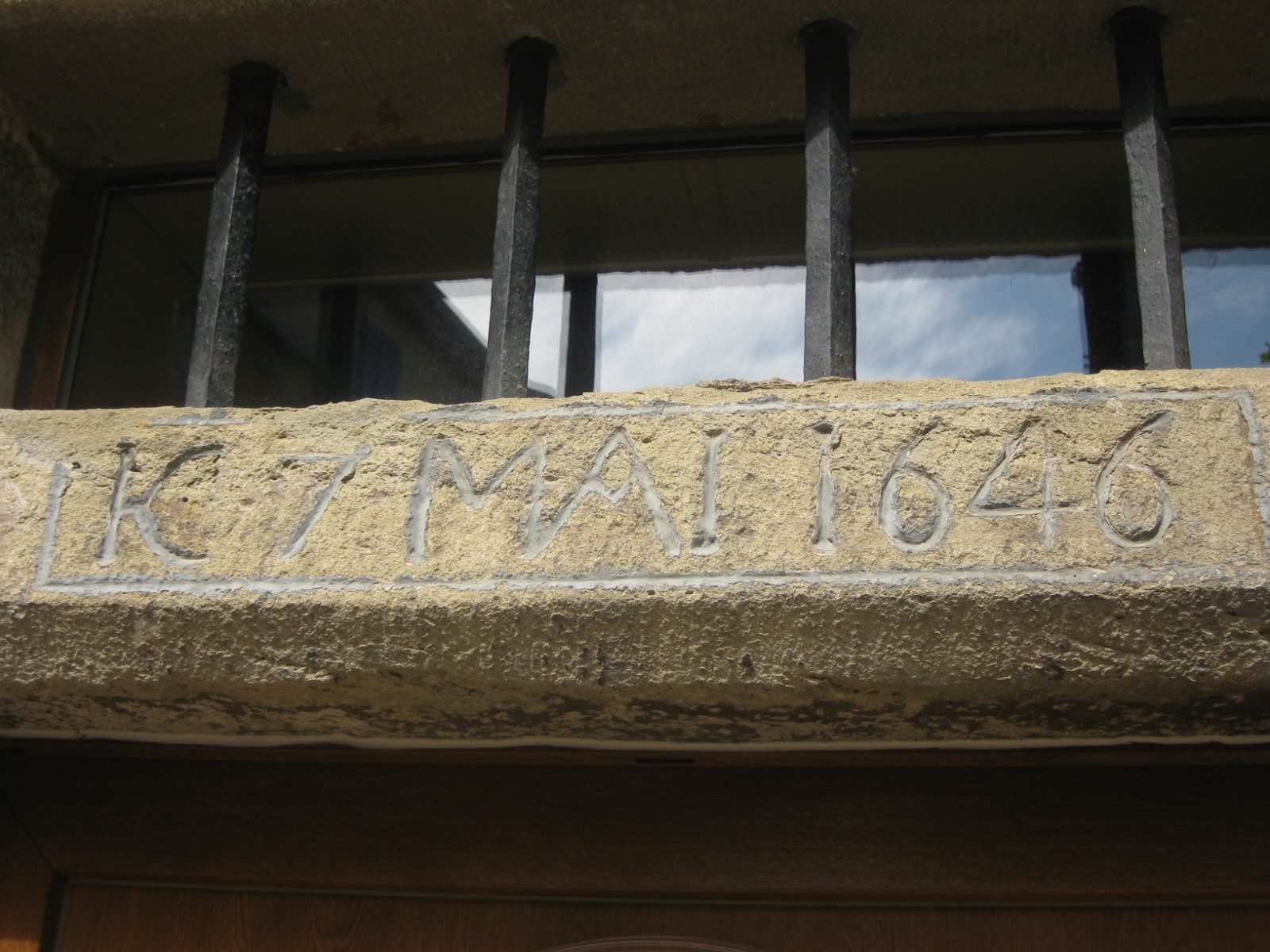
We knew our town is an old one. It’s not uncommon to pass houses whose door lintels are inscribed with a date from the 17th century.

A nearby house announces its d.o.b.

What we didn’t know was that in the old town itself, there are no buildings at all from before this time. This is because every single dwelling was destroyed during the French Wars of Religion (1562 – 1598). The crisis was so grave the King permitted the townspeople an amnesty from paying taxes for several years to give them a chance to rebuild.

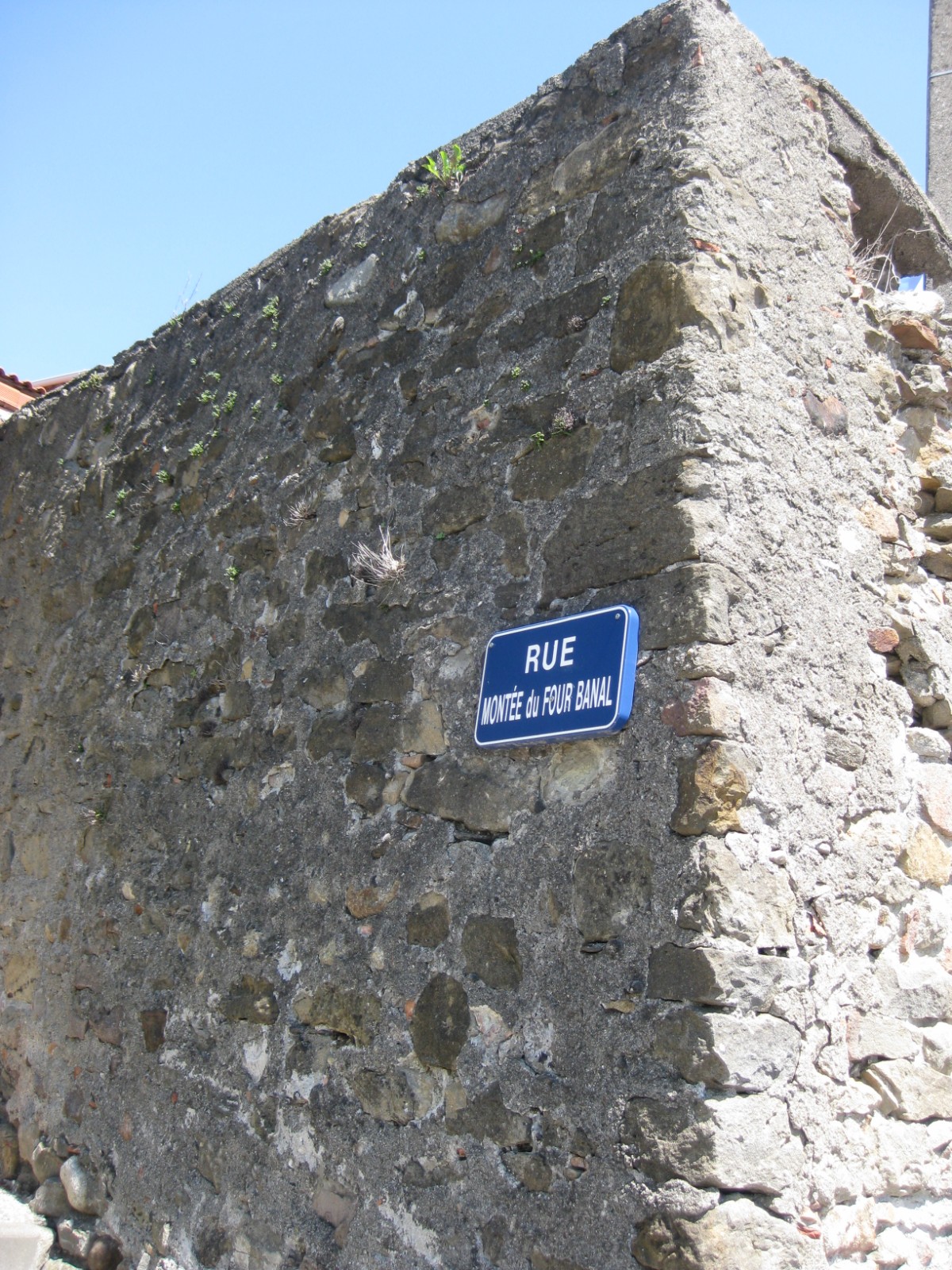
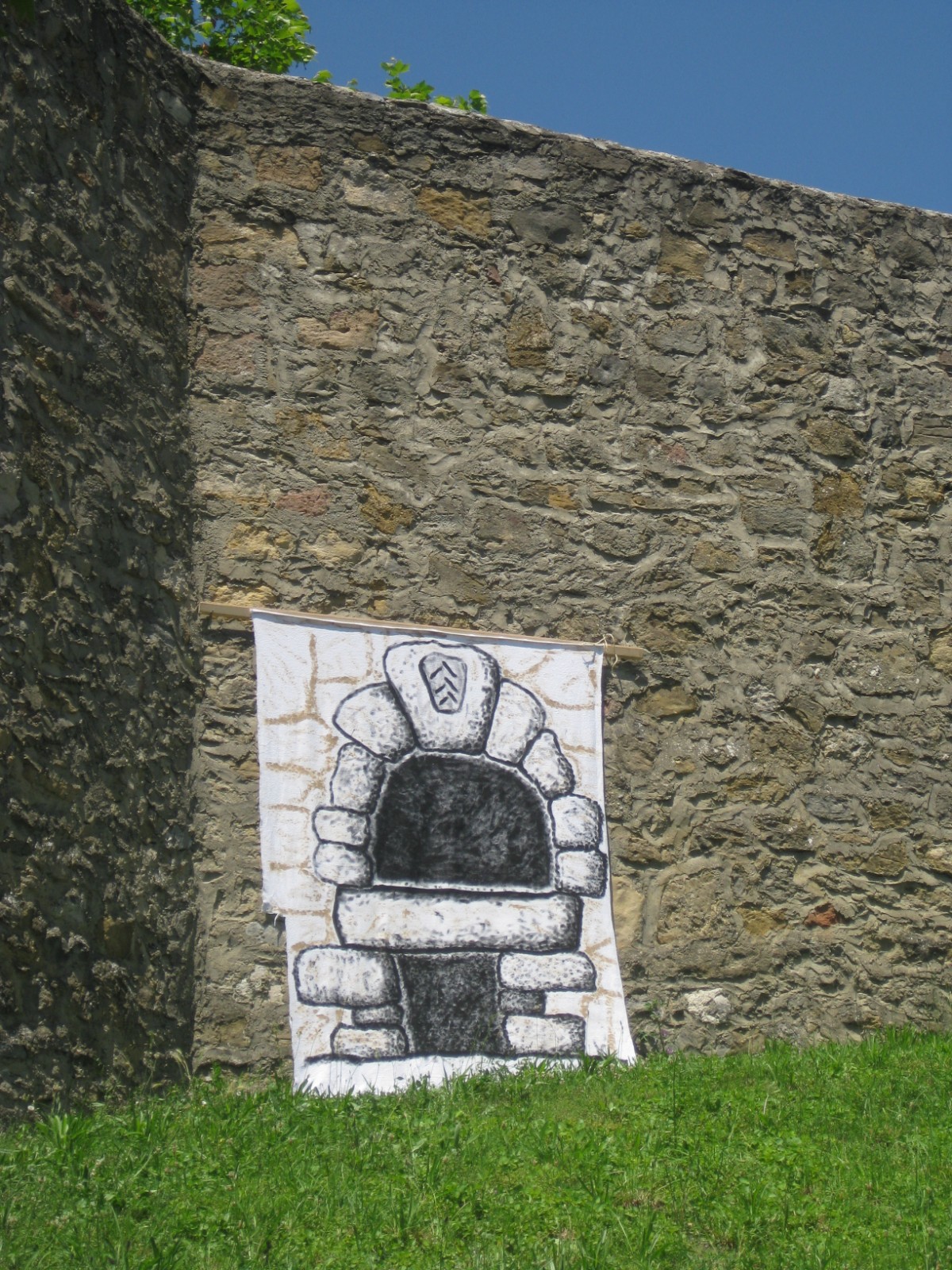
But before all that was …. the Women’s Revolt.  Back in the 16th century, the women of the town would bring their bread to be cooked at the Four Banal, the site of which lives on today as a street name.

Rue Montée du Four Banal: the sign’s fixed to remnants of the old town wall

They paid the local lord to manage this service and the lord paid a baker. Who decided to exact his own charges too – one loaf in every 20. When the women’s angry protests were ignored, some 80 women held a somewhat violent demonstration, and followed up by taking their bread to nearby Esclagne and La Bastide to be baked. It all ended up in an enquiry directed from Carcassonne. Result? It was the baker himself who was found to be at fault: his taxes were illegal, but it was the lord who had to reimburse the women. For their part the women were forbidden to have their bread baked elsewhere. The Four Banal itself is by yet another former town gate, and traces of the old town wall still exist.

Perhaps the Four Banal looked like this?

It was during this period too that several streams ran through the town, forced into culverts between the houses, with little wooden bridges built over. They were useful to all the artisans involved in various aspects of the textile industry and other trades.  Can you imagine the smells you’d have had to endure if you were unlucky enough to live in the same street as the tanner?

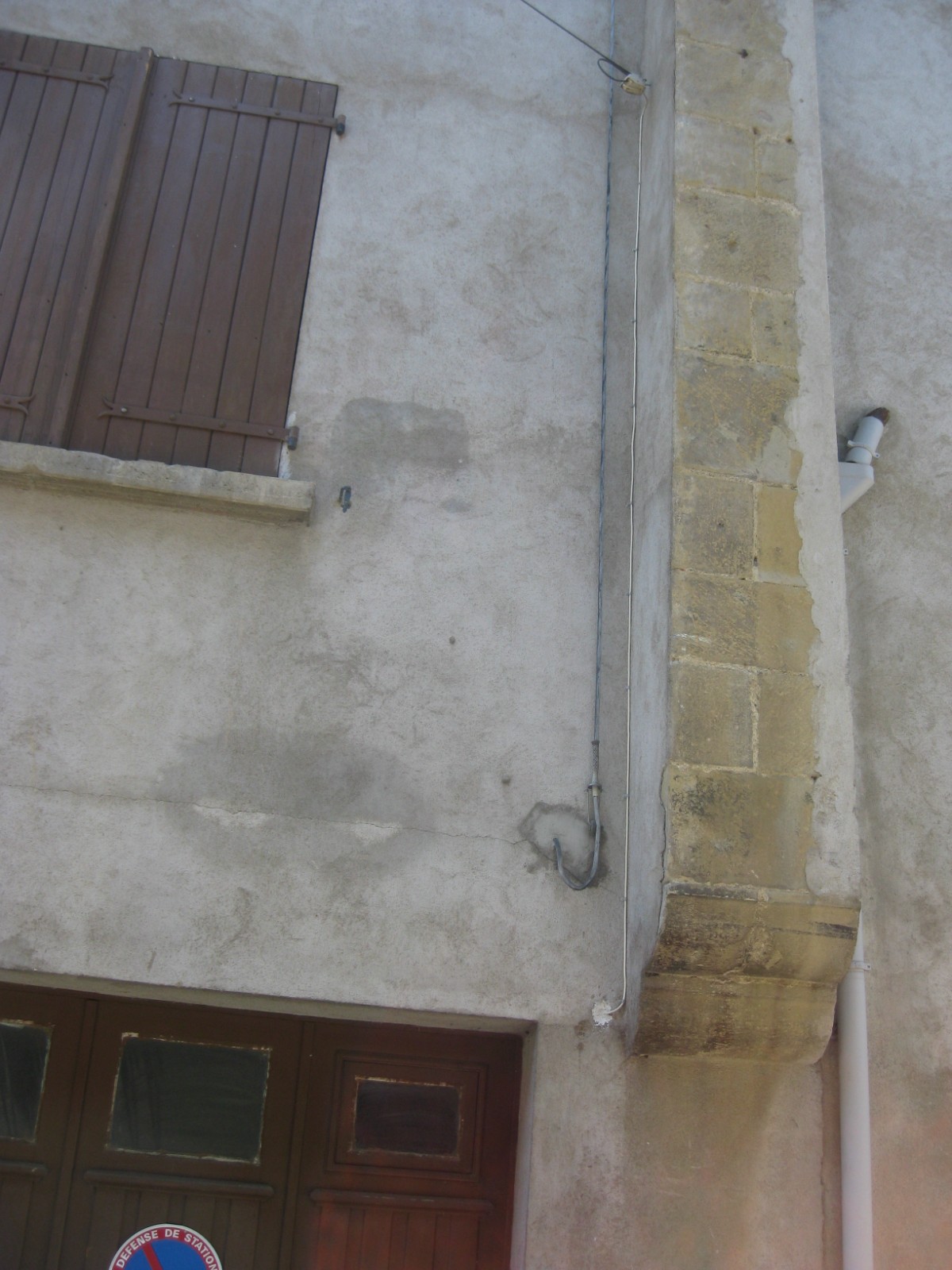
More recently, in the late 19th and early 20th centuries, Laroque was a prosperous commercial centre for its then more than 4000 inhabitants (2000 now) and the workers who flocked from a wide area to work in the textile mills. There were three cafés in the market square alone, as well as an hotel. Three abattoirs too, to serve the needs of all the butchers – one was in what’s now our garage. And shops of every description in what are now entirely residential streets. Then as now there was a huge social mix. One fine house, now down on its luck, was built for a successful surgeon and his banker son.

Once a surgeon’s house: now increasingly shabby

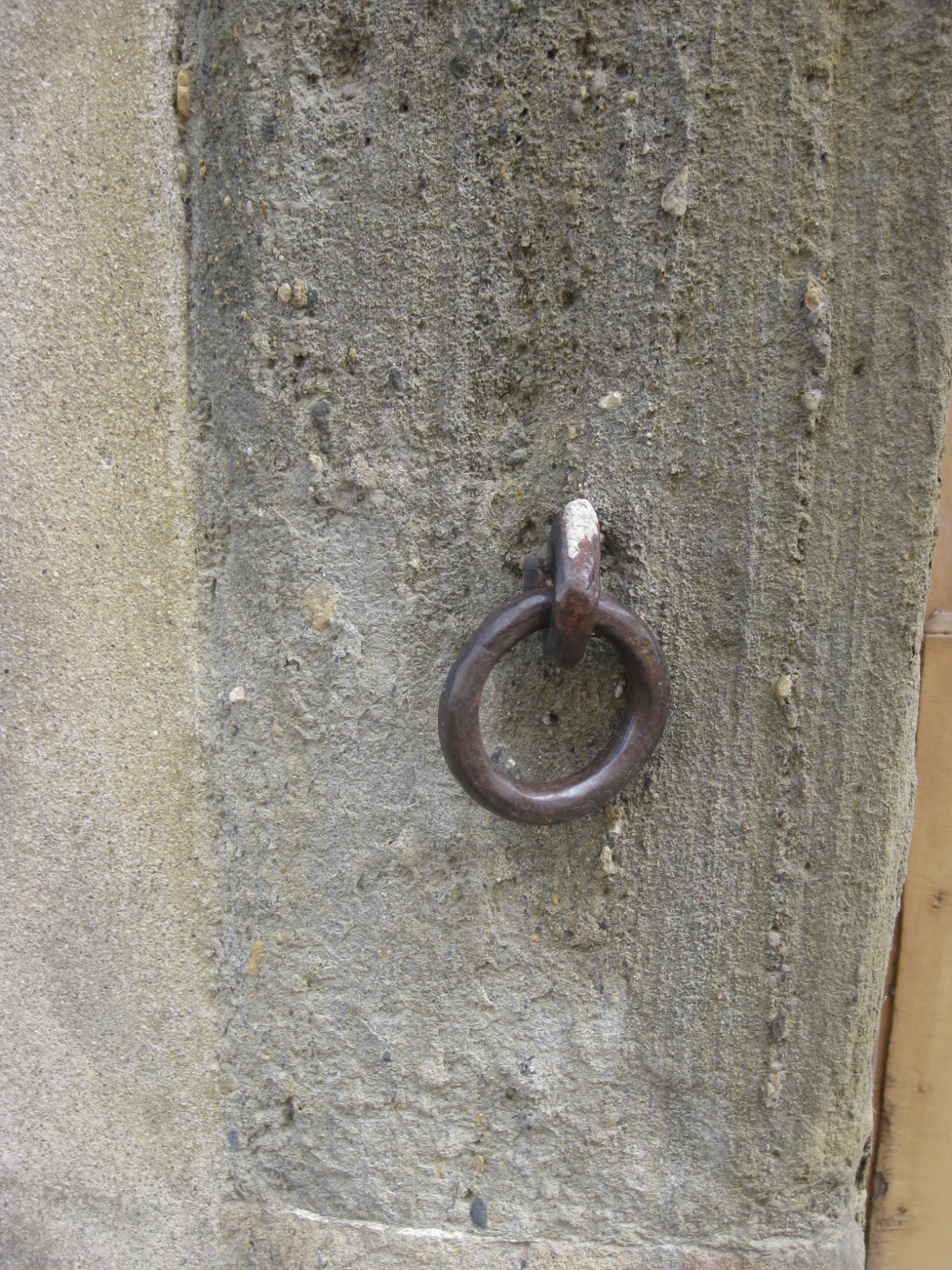
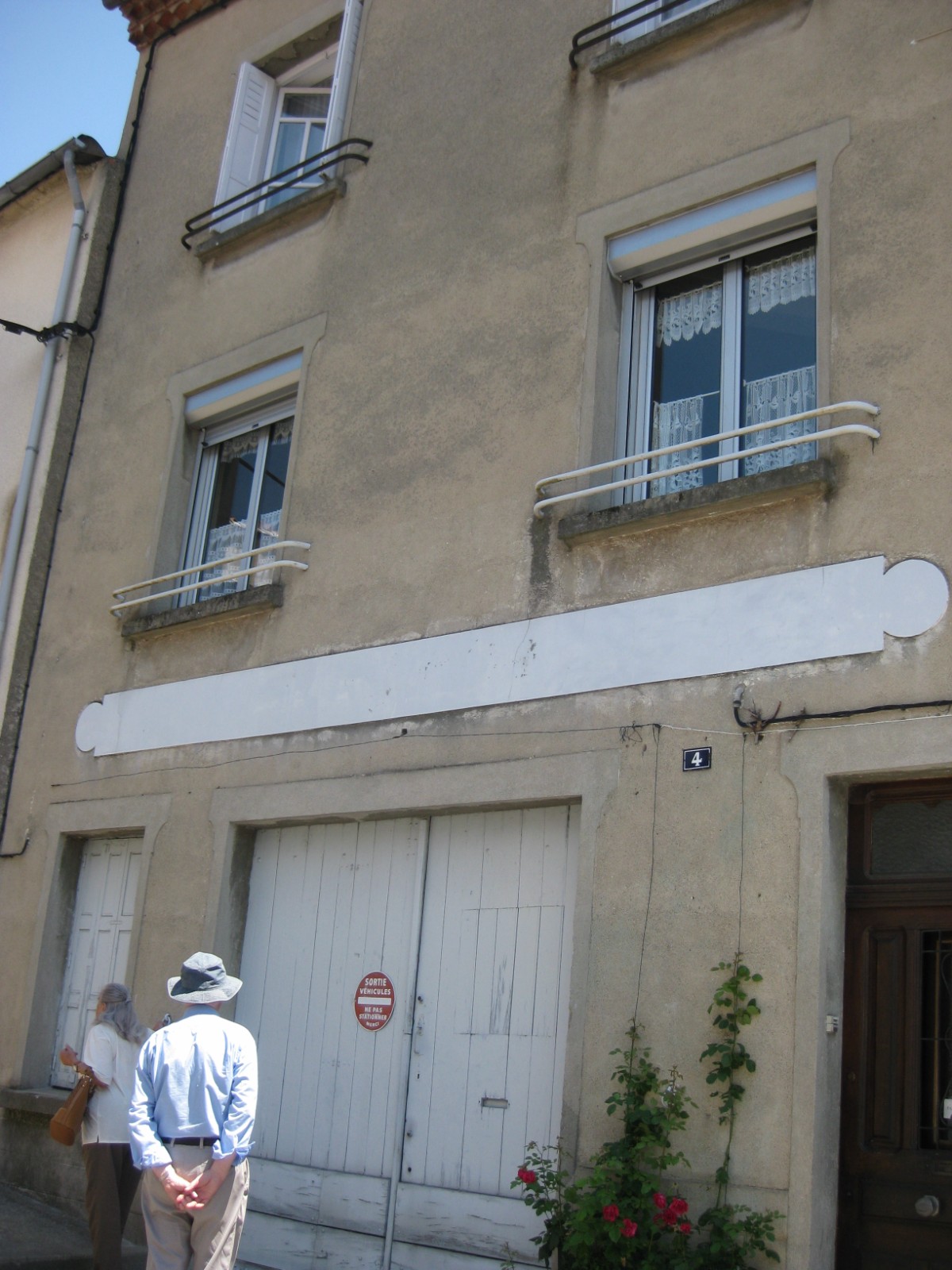
So now we’ll keep our eyes open, and perhaps notice those clues of former commercial activity: a ring set in a wall perhaps, for a trader delivering stock to tie up his horse or donkey, as well as the more obvious painted-over shop signs. I-Spy for residents.

I-Spy a delivery man’s tethering ring

I-Spy a shop front: one of the several vintners in town

‘Comment shoppez-vous?’

Stuck in a waiting room with a pile of magazines between me and my appointment time, my idea of hell is a choice between fashion mags and ones about cars.

Less so in France, at least as far as the fashion ones are concerned.  It’s not that I’m more interested in being stylish and chic here.  I simply have fun reading the articles and noting the ‘English’ words and phrases on almost every line.

Are you a sophisticated lady? Cool? Relax et sexyShow-off? Perhaps you aim for le twist sporty-glam, or like le mix et le match, le style ‘street’, or le fun et le trash.

Down at the shops are you looking for un look color block, le style boyish ou girly, arty-trendy, crazy doll, grungy girl?  If you’ve any sense, you’ll have made a shopping list, to make sure you come home with le jean,  le blazer, le trench, le legging, les shoes (with kitten-heel perhaps), and perhaps one or two it pièces.  Then you could really get to show off and expect le red carpet treatment.

When it comes to make-up, I hope you don’t like le make-up too much.  Light is so much more subtle.  If you’re a beauty addict perhaps you should be looking for un effet sixties, or un twist, using liner and shadowing your eyelids en smoky or flashy to achieve le total-look of your choice.  Then you’d look a real star.

It’s pretty exhausting really.  That’s why keeping up with fashion isn’t very high on my to do list.

Le twist sexy-glam as seen in ‘Le Figaro’

Markets in Toulouse

We went to Toulouse yesterday, to visit the markets.  This wasn’t a trip to stock up the larder though.  This was a history lesson, as offered by Elyse Rivin, long term resident of Toulouse and great enthusiast for the city.  She is a full fledged official guide and art historian, and runs Toulouse Guided Walks.  We’d booked.

Minutes after we met, we found ourselves in front of Victor Hugo market.  You’ll go here for meat or fish, but also for all the other foodstuffs that markets do so well – fruit, vegetables, bread and patisseries, drinks.  At lunchtime you might pop up to the first floor to have a convivial meal at one of the several restaurants up there, all using fresh produce bought only an hour or two before from the stalls below.  This market, like every other in Toulouse bar one, is a concrete horror story.  Back in the late 1950’s and early 1960’s, they demolished the elegant iron and glass Victorian structures: they needed car parking space of course, and somehow contrived to squeeze car-parks-with-added-market onto those old sites.

Toulouse has had markets since way before the 12th century, and most had a speciality.  Victor Hugo’s (I’m guessing it wasn’t called that then) was wood.

We wandered along to the Capitole, the splendid central square of Toulouse.  Usually it’s an an elegant place, airy and inviting.  On Wednesdays it’s inviting for a different reason:  There’s a market: a big one.  Teeming with second-hand books, brocante of every kind, traders from every corner of the world……  And on other days, there’ll be organic food stalls instead.

I remember learning in history lessons how the streets of London were often taken over by particular trades – leather sellers, poulterers, bakers and so on.  So it was in Toulouse.  Many of these trade names have been lost, but there are still streets with the old Occitan names: the cauldron makers for instance.  And some trades hang on, in an unbroken line from the 12th century.  Rue Sainte Ursule for example, then as now, housed textile merchants.  These days that means clothes shops, textile wholesalers, even small scale manufacture.  This area is still named Quartier Bourse after the Bourse des Marchands (a trade association, an antecedent of the Chamber of Commerce).  In the 19th century a fine new neo-Classical building was built, and this is the Tribunal de Commerce, where trading disputes are resolved.

On to Esquirol.  Flour was measured here in a stone basin, by volume not weight, to prevent honest shoppers being short changed.  A beady eye was kept on those who attempted to ‘cut’ their flour with chaff, dustings of rye flour and so on.  Back in the middle ages, as now, white bread was prized.  No market here now, because back in the 19th century, several long straight roads – in this case Rue de Metz – were sliced through the city, laying waste anything in their tracks.  The market hall that was here has been rebuilt piece by piece at Lourdes, so you could go and see it if you liked, unlike all those other lost structures.

Next stop: a walk down down Rue des Filatiers.  I love this narrow street with its tall, elegant houses, many dating from the 16th century.  Take a look at the pictures.  And then we were at Carmes, originally home of the Carmelites.  The order eventually won a long battle with the city to be allowed to have a monastery in Toulouse.  What clinched it was when they assured the pope that their long ministry in the area of Mount Carmel gave them a unique possibility of converting the area’s small Jewish population.  The city fathers had to give in.

Carmes, like the other markets, is now a concrete box, instead of a complement to the smart 19th century character of this historic area.  But we were here to sample cheeses, guided by a local affineur, at a shop called Sena.  What this means is that the shop buys cheeses direct from the maker, and matures and ripens them to what it considers perfection.  Our guide for the occasion wanted to share three fairly local cheeses with us.  We had a young soft goat’s cheese ‘Cathare’, fresh and light, dusted with ash: this was 10 days old.  Our cow’s cheese, yielding, tasty and with a volcanic looking grey crust was 5 weeks old.  Best known was the Ossau-Iraty cheese, made from sheep’s milk from the Basque country and the Béarn, which had the most pronounced taste of all.  He paired these with fruits: raisins, candied kiwi, and almonds.  For tasting purposes, he explained, these are better than bread. We had a glass of the most local wine to Toulouse as well, Fronton.  This was a Négrette, low in tannin and acidity.

I talked to him about English cheeses.  He sells Blue Stilton, but I was alarmed to see, among all his hand-picked artisanal cheeses, a block of shrink-wrapped orange cheddar.  He told me that people bought it for barbecues, to put on cheeseburgers.  He had, he said, little incentive to stock English cheeses, which he knew could be very good, because the French would not buy.  Presented with shrink-wrapped cheddar, are you surprised?

Still, by now it was long past midday.  Back to Carmes to hunt for a lunch-stop, where we could discuss the morning over a leisurely plat du jour.

This slideshow requires JavaScript.

Snow 3: The Market

We woke up to -11 degrees on Thursday (-13 for some on the outskirts). Market trader and greengrocer Patrice and his équipe, who live in Rouvenac, a fairly isolated village 18 miles from here, woke up to -14 degrees.  Thursday’s the day they come to sell in Laroque market. When it’s minus figures outside, who’d want to arrive before 8.00 a.m., set up a stall in an exposed market square, and stay there dispensing fruit, vegetables and bonhomie till about 12.30 p.m.?  Well, if that’s how you earn your livelihood, that’s what you do.  Your only other option is to stay at home and keep warm, earn no money, and watch your stock deteriorate.  Which is what about three quarters of the traders usually at Lavelanet market on Fridays unsurprisingly chose to do this week.
Market square closed for business

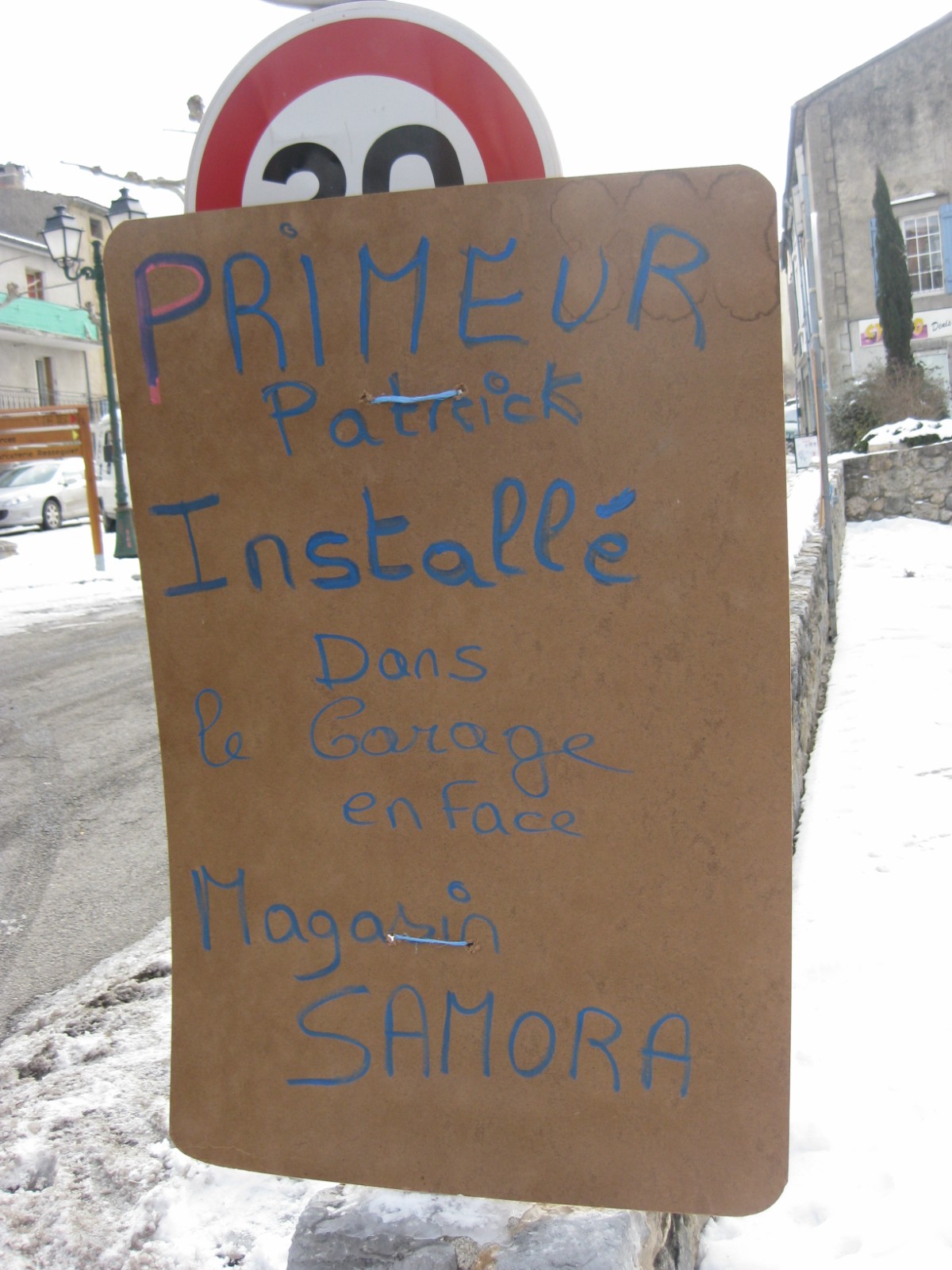
But Obé who runs the bar and restaurant up in Place de la Cabanette had other ideas.  He offered them his huge garage down in our street, big enough for 2 large vans and a car, and that became the market place for the day. It’s dark and perhaps a little cramped for several long runs of produce.  But we don’t get out much here in Laroque, especially in a week like this one, and we all found it quite exciting to crowd in together and do our shopping: it gave us something to talk about.  Patrice and co. took turns to warm their fingers at the rather antique heater Obé had dug out.  They needed to.  The temperature in that garage only just managed to crawl up to  -4.

On our way back home, we just had to stop and look at the river which normally tumbles and chatters busily on its way though town.  Here it is, almost frozen over.

An all-but frozen River Touyre