I never knew my grandmother, as she and my mother were estranged, and even though she lived until I was 14, she was never part of my life. All I knew was that on the early death of my grandfather, my grandmother forbade my mother, then eighteen, to take up the scholarship place at Oxford University that she had been offered just before her father died. She was to stay at home and keep house. In the end, my mother lived at home and went to Leeds University: but she never forgave my grandmother denying her the opportunity – still unusual for a young woman of her background – that she’d worked towards throughout her time at Grammar School. I grew up with no warm feelings towards this woman whom I had never met. In this piece, I’ve tried to look at my grandmother with fresh eyes and to see the world as it might have seemed to her.
Annie, the Vicar’s wife: c. 1925
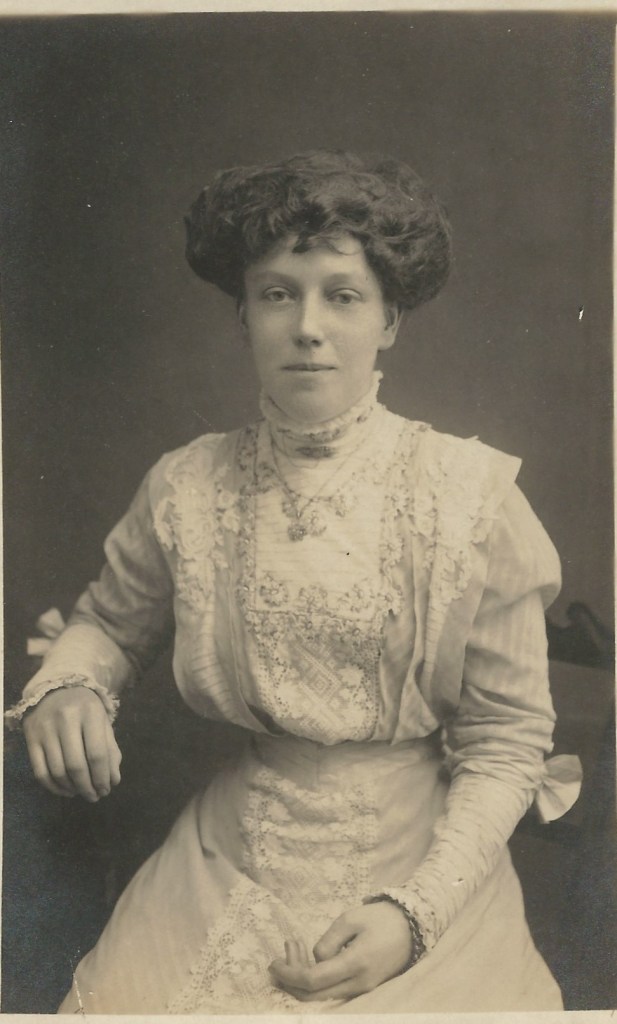
She sat there: no thoughts, no plans. Just a fog of tiredness behind her eyes, gritty with exhaustion. A thin skin congealed on her breakfast cup of tea. Beside her, a loaded and overflowing laundry basket.
The children had long since disappeared to school. There was the Vicarage to clean. Always there was the house to clean. Mouse droppings in the kitchen, little rodents scurrying behind the skirting boards, day and night. Bats in the loft. Buckets in the bedrooms every time it rained.
Charles didn’t mind. Charles didn’t notice. He’d been brought up poor, but his brains had propelled him through school, won him a scholarship to Cambridge, while his sense of duty and his love of God had sent him to theological college, then to failing parishes, where he preached, visited, networked, did whatever God willed to fill the pews and make the church and parish life the centre of the community.
Where did Annie fit in with this? Fifteen years ago, Annie had been dazzled by the handsome young curate: his charm, his popularity, even his clear-eyed faith. What a privilege when they began to walk out together, and then to marry!
But Men of God earn very little. Men of God live in draughty, ill maintained and ill-equipped vicarages with large unwieldy gardens. Men of God rely on the women in their lives to run their parishes with them. What’s a parish without its Women’s Sewing Group, its Mothers’ Union, its Young People’s Fellowship? What’s a parish without a Summer Fair, a regular diet of church socials and a harvest supper? And who, unpaid and completely taken for granted, manages the fellowships and all these events?
Well, here in Morley, it was Annie, wife and mother. Mother of Betty, brainy Betty, hothoused by her father, top of the class in her grammar school in Leeds, and thinking of nothing but wanting to be the first girl in school to get a place at Oxford. Mother of Arthur, fumbling bumbling clumsy Arthur: a bit of a dunce really. What would he be fit for when he left school? Such a worry…
And besides Charles hadn’t been well, though hardly anybody realised, because he worked every single day. He said his was a calling, not a job: no days off for him. Only Annie knew that he had been diagnosed with diabetes. Only Annie was allowed to help him with his daily injection of the new wonder drug insulin. But he was supposed to be very careful, eating regularly to a strict diet. He did neither. Annie knew Charles could – probably would – die. And Annie knew what happened to vicars’ widows. When the vicar of St Agnes’ died last year, Mrs Atkins, poor Mrs Atkins and her four young children were put out of the Vicarage within the month.
Whatever would she do? Whatever would she, Betty and Arthur do when Charles passed?


 From Pyrenees to Pennines
You must be logged in to post a comment.