Six Degrees of Separation: from India to the Arctic

On the first Saturday of every month, a book is chosen as a starting point and linked to six other books to form a chain. Readers and bloggers are invited to join in by creating their own ‘chain’ leading from the selected book.

Kate: Books are my Favourite and Best

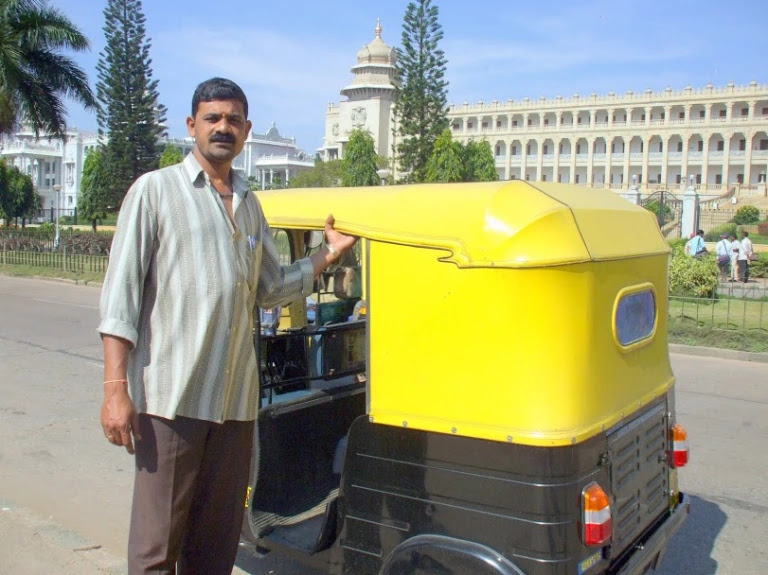
This month’s Six Degrees of Separation Challenge invites us to start with a favourite Lonely Planet travel guide. I rarely use physical guide books any more, but one old friend I won’t be parted from, even though I’m unlikely to travel there again is their guide to South India. This was my bible when, newly retired, I spent a month there, largely solo, in 2007. My travels there began my blogging career, though on a different platform.

I’m taking an easy option for this month’s post. I’m whizzing us to six different countries or regions via a book set in each of them.
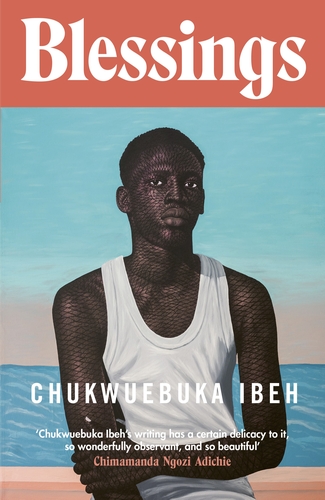

We’ll start not in Asia, but in Africa: Nigeria. Blessings, by Chukwuebuka Ibeh. Obiefuna is the elder son of a couple who had long waited for a child. He’s doing well at school, but isn’t the football-playing, loud and gregarious lad his parents expected. The arrival of a live-in apprentice arouses unexpected feelings in the boy, and his father catches them heading towards an intimate moment. We follow Obiefuna’s adolescence as he’s banished to a strict Christian seminary. We watch him grow into young adulthood where his homosexuality is always a source of shame, even danger in Nigeria’s deeply homophobic society. Obiefuna is a sensitively drawn and rounded character, whose future is uncertain as the novel ends. A compassionate, understated and beautifully written book.
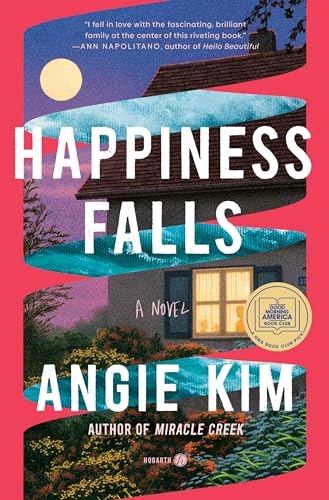
I’ve chosen Happiness Falls by Angie Kim, because this too has a young person as its main protagonist, but her family, besides being American, is also of South Korean heritage. This story, ‘narrated’ by Korean-American Mia is hard to categorise. A young adult, she lives with her parents, her twin brother John and her younger brother Eugene who is both autistic and a sufferer from a rare genetic disorder, Angelman syndrome which leaves him unable to communicate verbally, and with severe motor control difficulties. Mia is very bright, intense, prone to careful analysis and scattering her writing with footnotes. She recounts the family drama in which her father disappears while in the park with Eugene, who arrives home bloodied and distressed. What’s happened? It’s complex, high octane stuff. And while I probably wouldn’t survive for ten minutes in Mia’s company face to face, she’s an engaging, thoughtful narrator with a passion for forensic detail and analysis. Provocative, heartfelt, compelling.

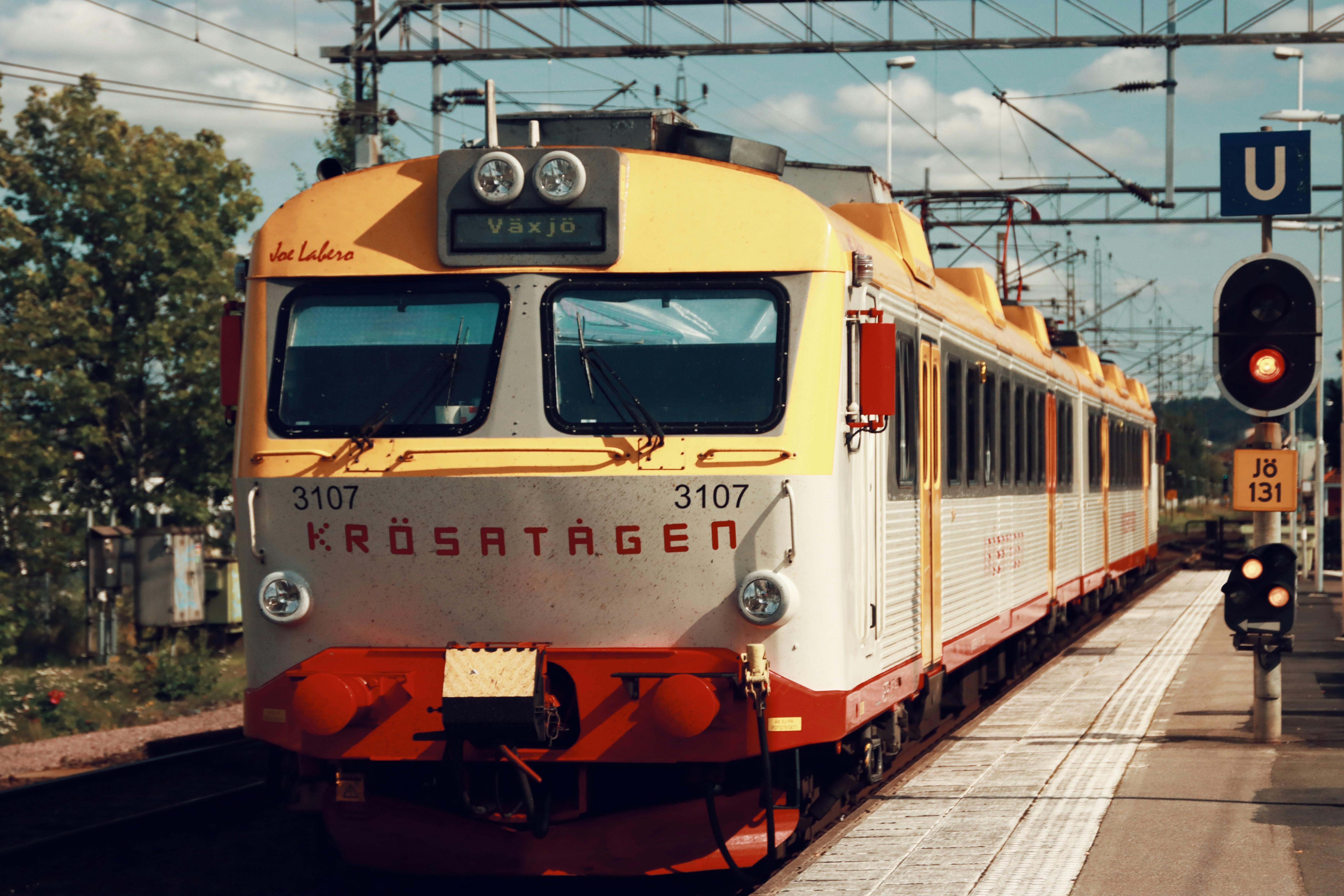
Another book with a family drama at its heart is by the Swedish author Alex Schulman (transl. Rachel Wilson): Malma Station. This was a book I had to finish and stand back from before I could appreciate it. Three sets of people are on a train heading towards Malma. We begin to learn their stories. And we begin to realise that these three sets are not travelling at the same time – years separate them. Yet these sets- father-daughter; wife-husband; daughter are all related. And the story slowly unfolds of how damaged they each are, and how this damage has passed – multiplied even – from one generation to another. It’s a tough, emotional read, with unlikeable characters whom we slowly begin to understand.

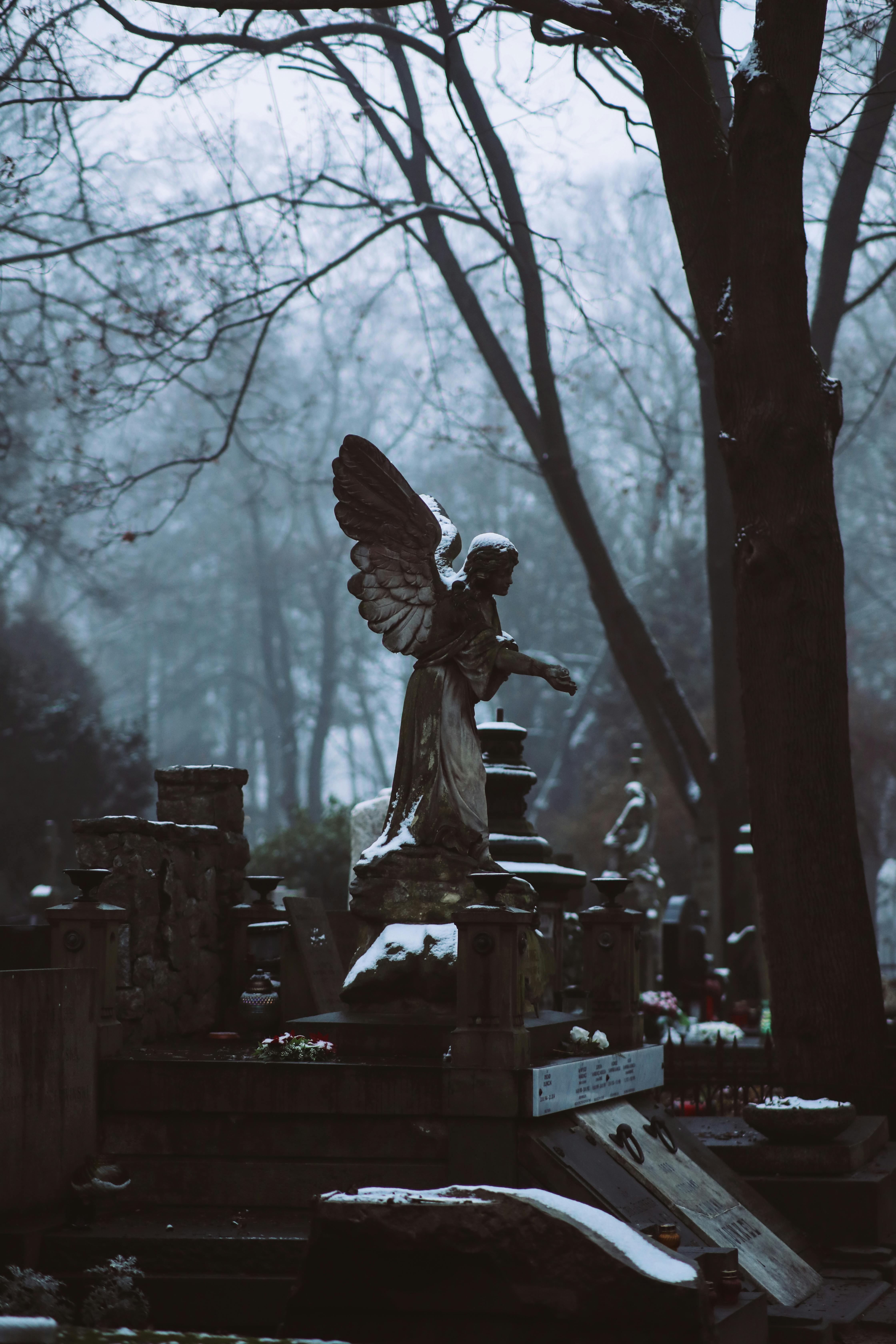
A story about a woman who’s a cemetery keeper in France – yes really – is a complicated family drama too. Fresh Water for Flowers, by Valérie Perrin (transl. Hildegarde Serle). Violette Toussaint had a childhood passed from foster-carer to foster-carer. Illiterate as a young adult, she taught herself to become a skilled reader. She married the sexiest man around, and had an unhappy marriage. The couple were level crossing keepers for many years, then they – and ultimately only she – became a cemetery keeper in the Bourgogne. It’s here that she gets over the tragedy that befell her, and finds friendship and meaning in life. There is a complex web of characters to become immersed in – or not. I think I’ll have to read it again, as I didn’t enjoy this book as much as its many devoted readers.

Now to another woman with a difficult life. Restless Dolly Maunder by Kate Grenville. Another work of fiction? Not quite. Dolly was born in the 1880s, at a time when women knew their place and had to stay there. But during Dolly’s life time, with two world wars forming part of it, things began to change. Enough to make her dissatisfied with her lot. But by sheer hard work and cussedness, she got herself and her husband on in life. It didn’t make her as easy person to get along with. Dolly was Kate’s grandmother, and this book is heavily based on the known facts of her life. An interesting exploration of the life of a woman during a period of huge evolution and change, written with sympathy and some understanding of a somewhat bitter, difficult individual.
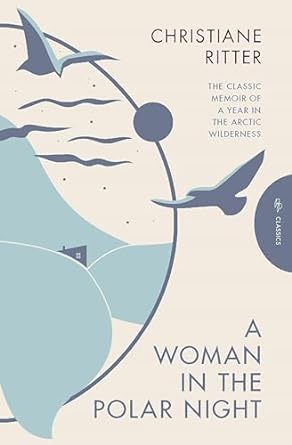
Finally, another story – a true one – of a woman with a difficult challenge. Austrian Christiane Ritter wrote an account of her year in the Arctic in A Woman in the Polar Night (transl. Jane Degras).In 1934, Ritter, a painter, left her ordinary life with a teenage daughter to join her husband in his life as trapper in Arctic Spitsbergen. It turns out to be as cold and inhospitable as we all imagine, and twice as primitive. Seals have to be caught and processed: birds too, and these fatty unfamiliar meats form much of their diet. Husband and Norwegian friend and housemate are often out trapping, looking for animals whose fur they will sell. That’s enough to tell you what much of this book is about. It’s tough in this unforgiving climate. But it’s beautiful too, and Ritter dwells on this. Straightforwardly yet engagingly written, this book offers an insight into the strange world which she chooses for a year to inhabit, and leaves reluctantly.

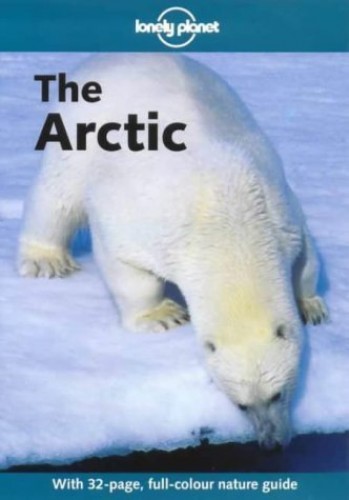
I wouldn’t presume to connect my experiences in India with Ritter’s in the Arctic, but being a woman travelling often alone is what links us. The advantage I had was in owning a guide book. The Lonely Planet Guide to the Arctic wasn’t available then.
And next month? Our chain will begin with Stella Prize 2024’s long listed The Anniversary, by Stephanie Bishop.

All my illustrations this month, apart from the Indian photo, which is my own, come from Pexels. With thanks to the photographers Emmanuel Slope, Kindel Media, Koolshooters, Efrem Efre, Pat Whelen & Kristaps Ungurs.
Six Degrees of Separation: from Passages to Night Crawling

On the first Saturday of every month, a book is chosen as a starting point and linked to six other books to form a chain. Readers and bloggers are invited to join in by creating their own ‘chain’ leading from the selected book.

Kate W: Books are my favourite and best https://booksaremyfavouriteandbest.com/2023/03/04/six-degrees-of-separation-from-passages-to-soundings/

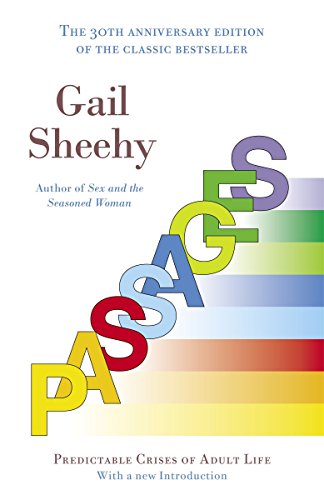
The full title of Passages, this month’s starter book, describes it as being about ‘predictable crises of adult life’  Gail Sheehy’s road map of adult life shows the inevitable personality and sexual changes we go through in our 20s, 30s, 40s, and beyond.  And I haven’t read it. 

But I have read a book whose female heroine is forced into adapting to a life for which she had been totally unprepared, and for which there was no self-help manual: A room made of leaves, by Kate Grenville.  This is an involving story based on the lives of John Macarthur, who has a bit part in Australian history, and his wife Elizabeth, who hasn’t, but who, through her amanuensis Kate Grenville, wrote this book. It’s 1788. After an unwise liaison with a hot-headed and unbalanced soldier, John Macarthur which results in her pregnancy, she is forced to make a new life in Australia where her husband has duties guarding the penal colony in New South Wales. Isolated in this unfamiliar terrain, she has to develop strategies and find strength to navigate her new life and her impetuous and unpredictable husband. This book beautifully evokes the landscape of this part of Australia, and the tough life shared by army personnel, prisoners, and the original Aboriginal population, for whom, unlike most of her fellow countrymen, she develops respect and sympathy. An evocative and poignant story.

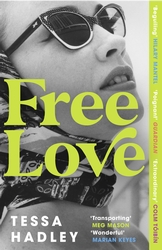
Another book had me reading about a woman who also couldn’t have read Passages:  Free Love by Tessa Hadley. We are in the 1960s, and are introduced to Phyl, a middle class housewife with a husband in the Foreign Office and two children. The family is prosperous and content. Then Nick, the son of old friends comes for a meal, and everything changes as Phyl makes choices which up-end this happy and conventional family.  I was immediately immersed in this story, where first one twist, then another interposed itself in the narrative. Extraordinary as these twists were, the sixties setting gave them the ring of authenticity, and I had little difficulty in being totally sucked into the worlds which Phyl and her various connections inhabited. I found it a real page-turner.

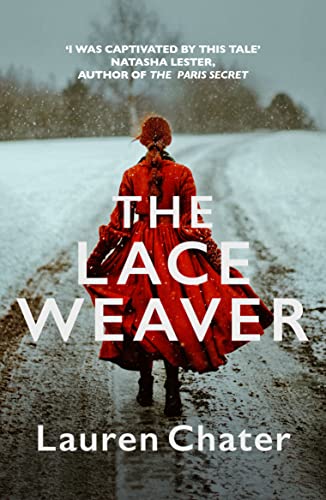
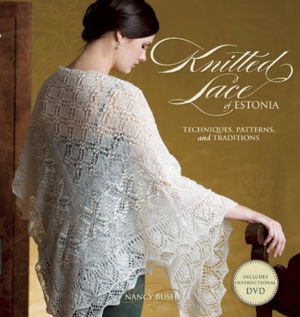
The next two women also had little control over how their lives unfolded:, as told in The Lace Weaver by Lauren Chater. Estonia, 1941. The country is in the grip of a savage conquest and occupation by Russia. Increasingly deprived of a means of scrabbling a livelihood together, for the women of the town where young Kati lives, hanging on to their heritage tradition of shawl-weaving in delicate lacy patterns becomes a way of asserting their commitment to their country.  Moscow, 1941. Lydia, a privileged young woman of Kati’s age discovers some unwelcome facts about her parentage and resolves to escape. After several heart-stopping adventures, she finds herself in the same refugee camp as Kati.The two young women tell their stories in alternating chapters, with the leitmotif of the shawl being the device that threads their stories together: stories of danger, love, brutal deaths and the importance of all the women’s support of one another as their men fight the Russian occupiers in under-the-radar resistance groups. Although I found that difficulties were sometimes too slickly resolved, nevertheless the story emphasised the fragility of life, the strength of the human spirit.

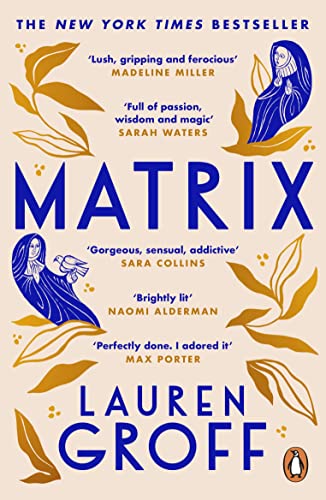
We’ll go back to the 12th century now, to read about a woman who at first had little control over her life- until she learnt how to assume it:  Lauren Groff’s Matrix.  I expected to enjoy this book far more than I actually did. The hero, Marie de France, is someone known to have existed, but very little of her history is known. Which pretty much gave Lauren Groff carte blanche to write her story as she chose. In short, Marie, a bastard of noble birth, is big and ungainly. Sent as a prioress to an impoverished and unimportant abbey, she successfully devotes her whole life to making it large, beautiful, and extraordinarily wealthy. Groff’s research is impressive: she clearly understands the mediaeval religious life well. Her writing is striking, luminous. But I was entirely uninvested in the life of Marie de France and in the lives of her fellow-nuns. Dramas were quickly resolved: whole years, or even a decade or so passed in a single sentence. I didn’t care for Marie a great deal – for her visions and her acquisitiveness – apparently for the glory of God. And really, it was a matter of some indifference to me whether I finished the book: I did – for the quality of the prose, rather than the uninvolving narrative.

Another woman – in fact The hero of this book is the subject of Elizabeth McCracken’s story.  Apparently it’s her mother, but actually it’s auto-fiction, which is fictionalised autobiography. A book that is curiously hard to describe or pigeon hole. The author – American – is playing the tourist in London, re-exploring the haunts she and her recently deceased mother enjoyed together. She moves seamlessly, but never inappropriately between her London adventures, her mother’s life as a woman with life-affecting health issues, and the need to sell the unwieldy and neglected house that was her parents’ last home. Her father also died not too long ago, but he plays no more than a bit part in this story.  McCracken’s mother was wilful and opinionated, witty and optimistic – and great fun, despite her very real mobility difficulties. McCracken herself vacillates between protecting her mother’s privacy and wanting to cherish her memories. She wants to write a book that’s like ‘David Copperfield except Jewish, and disabled, and female, and an American wiseacre, but there’s too much I don’t know and I can’t bear to make up.’  This is a funny, unsentimental and vivid book which is impossible to characterise – or to put down.

I seem to have a chain which is all about women, so here’s my last one, and so different from any previous choices. Night crawling by Leila Mottley.  17 year old Kiara’s father, always in and out of jail, is dead, her mother is in a halfway house, and her older brother chases unrealistic dreams of becoming the next big name in the music industry. She’s in charge of their home, and de-facto of her friend and neighbour’s 9 year old child, whom she loves unconditionally. Under-educated and with no training, she has no means of paying the rent and eviction looms. Sex-working provides an answer, but soon she falls into the clutches of a ring of sex-seeking cops from whose grip she has little chance of escape. This is her story: that of a feisty young woman making the best of the rotten hand that life has dealt her. Told in her own words, Kiara paints a picture of a world where racism and poverty and lack of choice are normal and where the choices she must make are impossible. It’s inspired by a true story of corruption in the police department. Kiara is bold, witty and tough, and Mottley gives her a rhythmic, new and exciting langage. An energising read.

Six women, roughly fashioned into this month’s chain. Where will next month’s take us? It’s Bruce Springsteen’s autobiography Born to Run.

PS. Away from home, I am finishing this post off on my phone. Getting the link to Kate’s post to display in the usual way has turned out to be above my pay-grade.