Six Degrees of Separation: from Kairos to The Little Man from Archangel

On the first Saturday of every month, a book is chosen as a starting point and linked to six other books to form a chain. Readers and bloggers are invited to join in by creating their own ‘chain’ leading from the selected book.

Kate W: Books are my Favourite and Best
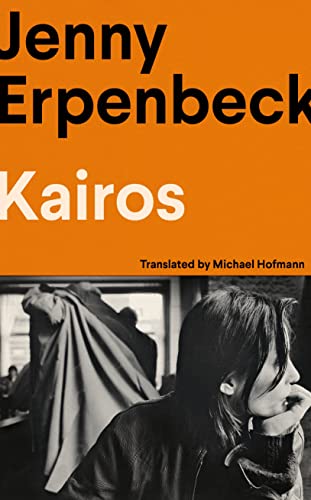
This month’s chain began with Jenny Erpenbeck‘s Kairos, translated by Michael Hoffman, which as it happens I reviewed in my post in May. It gave me the idea though that I would make works in translation this month’s focus.

My first choice is Adania Shibley‘s Minor Detail, translated by Elisabeth Jaquette: another story about living with the consequences of war. The first part of this book is set in 1949, in Israeli- Egyptian border country, and a platoon of Israeli soldiers are seeking unsuccessfully for hidden weapons. They kill a group of Bedouin nomads whom they encounter. Only one young woman – a girl really – survives. She is taken back to camp, and systematically gang-raped before being killed. We hear all this from the point of view of the commanding officer – clipped, without emotion, without judgement. 25 years later a nervy young woman, living and working in Ramallah steps in and takes over the narrative. She’s read about this crime and wants to find out about it by travelling to and investigating it on site – difficult and risky to achieve. This quixotic journey doesn’t end well – how could it? This is – intentionally – an uncomfortable and unsettling read, written with suppressed passion by its Palestinian author.
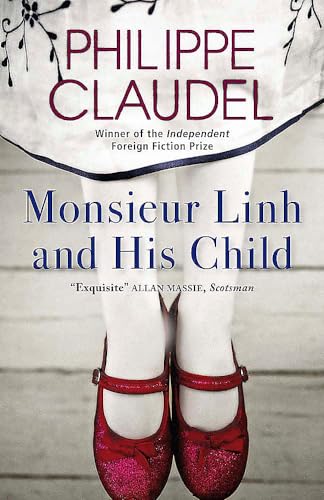

My next choice is also about living in the aftermath of war. Philip Claudel‘s Monsieur Linh and His Child, translated by Euan Cameron. This is a haunting book that will stay with me. Monsieur Linh is in an unnamed country, living in a refugee centre for those who have, like him, fled on an elderly ship from his homeland which has become a war zone – surely Vietnam? His family members have all been killed – except for his baby granddaughter, whom he keeps close and cares for every second of the day and night. One one of his daily wanderings, he meets Monsieur Bark, similarly lonely and isolated since the death of his wife, and the two men, despite having no shared language, develop a deep bond of friendship. Then Monsieur Linh has to be re-homed … This is a restrained and simply told story, which evokes a compelling picture of a gentle man, deeply traumatised by the loss not only of his community and family, but of his homeland, landscapes and daily rhythms. A compassionate, moving book, with an unexpected twist that reveals even more about the losses this elderly man has sustained.
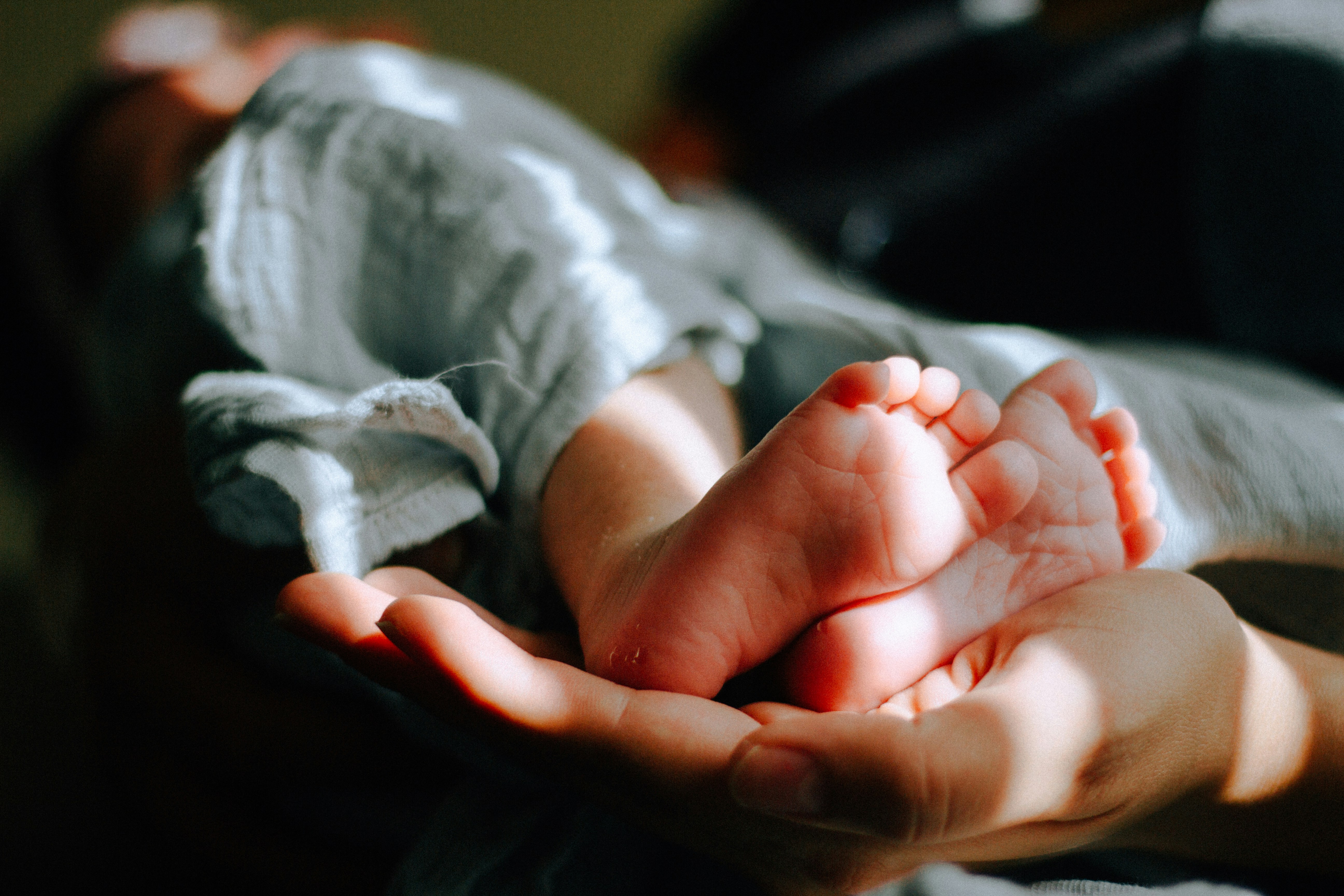
Guadalupe Nettel‘s  Stillborn, translated by Rosalind Harvey also has a child at its heart. Two young women, Laura and Alina, know for a fact they don’t want children. So Laura, the narrator, has her tubes tied. While Alina enters a relationship, and changes her mind, even to the extent of having fertility treatment when pregnancy just doesn’t happen. Life gets in the way. Alina becomes pregnant but before the birth, is given the awful information that her grossly disabled daughter will not live. This book is one which looks a the wider definition of parenthood, through the omniscient eye of Laura, who seems to know every intimate detail of Alina’s life with her partner Aurelio and daughter Inés, as well as of their childminder who’s unable to have children of her own, and of Alina, of her own mother, and her neighbour Doris and son. It examines the emotional conflicts and burdens of motherhood: their overwhelming presence in each woman’s life. A startling and forceful story.

My next book also has children at its core. Homesick, by Jennifer Croft is not translated. She wrote the book first in Spanish, then in English … This book is a haunting one, presenting the childhood of Amy and her younger sister Zoe in a series of vignettes, often extremely short. We gradually build a picture of two extremely close siblings: the elder gifted, the younger dogged by frightening ill-health – a rare but benign brain tumour. Tragedy after tragedy strikes -indirect, but significant. Then Amy gets into University aged only 15. A much shorter section details Amy’s post-graduate life until her mid 30s. Like the earlier part of the book, it’s fragmented, yet intimate and sensitive. I was kept at a distance from the two girls: I felt something of a voyeur, though a sympathetic one. I was privy to some of the many disasters that had struck the girls, without really getting to know either of them. Which felt appropriate. Complex lives make for complex characters. How can we really know what goes on in someone else’s head?
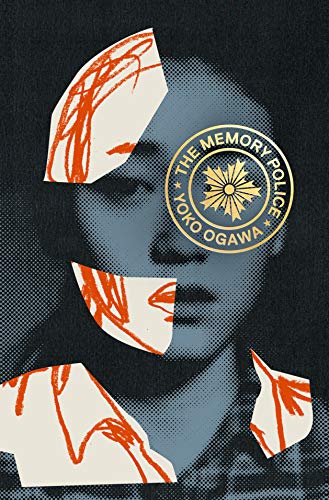
We leave Amy as a young woman, and it’s a young woman who is centre stage in my next choice. I’m not normally a fan of dystopian fiction, but I found Yoko Ogawa‘s  The Memory Police, translated by Stephen Snyder to be a powerful and unsettling read. Simply yet lyrically written , the writer – this is told in the first person – lives on an island in thrall to the Memory Police. Things comprehensively disappear: in the early days, simple things like roses, and the inhabitants soon lose any memories of the things that have vanished. Those unfortunate people who find they do not forget – and the writer’s parents seem to have been among them – simply are removed by the Memory Police and never seen again. The ‘writer’ of this book is herself a novelist, and we are privy to her efforts. We never find out more about the Memory Police, or know to whom they are answerable. But we are left with a lot to think about – totalitarian regimes, life, death and the process of letting go and of dying. I’ll go on thinking about this book.
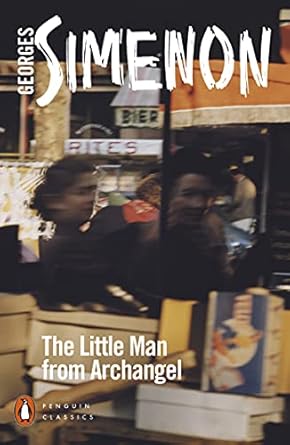

My last book also looks at a life where things are not as they seem: Georges Simenon‘s The Little Man from Archangel, translated by Sian Reynolds. When Gina, the free-loving and much younger wife of Jonas Milk, Russian emigre, small-time bookseller and stamp dealer disappears, Jonas lies, and says she’s away visiting a friend. It’s almost immediately clear that this isn’t true, and Jonas has impotently to realise that his soon-disbelieved untruth has consequences. He’s increasingly made aware that his experience of being both Jewish and a migrant has accounted for his being less integrated into society than he had believed. A powerful evocation of 1950s small-town French life, which though bleak, is also atmospheric and elegantly told.

With my last book, we end where we began: the far-reaching consequences of long-over war. I’m aware that my choices this month have a touch of earnestness about them: they’re not beach-read territory. But they’re well-worth your time.

Next month’s starting point is Heather Rose‘s The Museum of Modern Love.

All illustrations are from Unsplash: Ben White; Jewad Alnabi; Redd F;Omar Lopez; Tom Morbey; Giuseppe Mondi.

Six Degrees of Separation: from The Anniversary to Romantic Comedy

On the first Saturday of every month, a book is chosen as a starting point and linked to six other books to form a chain. Readers and bloggers are invited to join in by creating their own ‘chain’ leading from the selected book.

Kate W: Books are my Favourite and Best

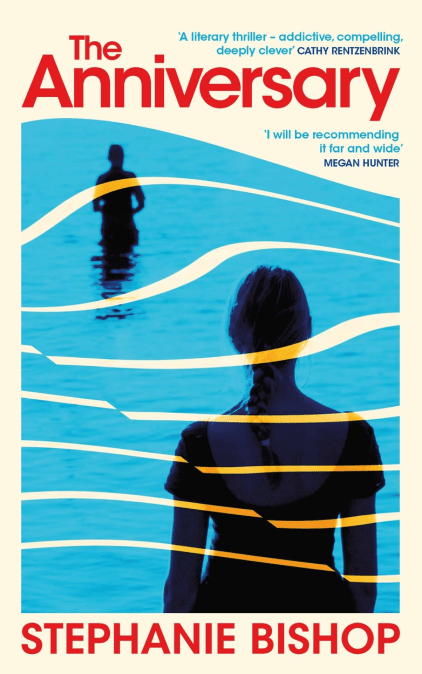
Yet again I  haven’t read the starter book: Stephanie Bishop’s The Anniversary. I gather though that it’s a forensic examination of marriages and relationships.

That gives us plenty to choose from then.  I’ll start with Jenny Erpenbeck’s Kairos, a compelling story of a doomed love affair, set against the background of the crumbling of the GDR in the 1980s. A young student meets by chance a very much older married man and they fall into a tumultuous, torrid affair, fuelled by their love of music and art. He’s had several affairs during his marriage, but when she strays for a single night, he submits her to cruel and demeaning punishments, picking over her confession for weeks and long months. This is not a tidily wrapped up book, though we learn from the prologue and epilogue that the affair does in fact end. As did the GDR. Though that wasn’t tidy either. One quibble – in a society where spying on one’s neighbours was expected, how did this couple keep secret their affair, conducted in full public view?

My next choice might have had a married man having an affair as its subject.  Not quite.  How to Make a Bomb by Rupert Thomson was a surprise to read. Instead of full stops, there are line breaks. Sentences are often short – staccato even, giving the book something of a feel of a prose poem: this choppy presentation suits the book and its main unable-to-stick -with-an-idea protagonist well. Philip Notman is an acclaimed historian who’s been to a conference in Bergen. He’s happily married to Anya. From nowhere, apparently, he start to question life itself – it’s ‘artificial’, ‘unbearable’. His solution is to go away for a while – to Cádiz, where a woman – Inés – whom he met at the conference lives, and for whom he has formed an attraction. No adultery takes place, and soon he is off to Crete, because some chance acquaintances have lent him their holiday home there. He dabbles with integrating himself into local male society, with religion, before moving back to London, but not to his wife. He still loves her, still needs time. His rather self-indulgent and self-aggrandising quest to solve the ills of society via his Notmanifesto (see what he did there?) is rather a mish-mash of received ideas. His grandiose ideas amount to very little and we leave him on the last page no further forward than he was when he embarked on his unlikely quest. Unconventionally written, with its absence of punctuation, this is an immensely readable book whose subject is a Privileged White Male living out a cliche.

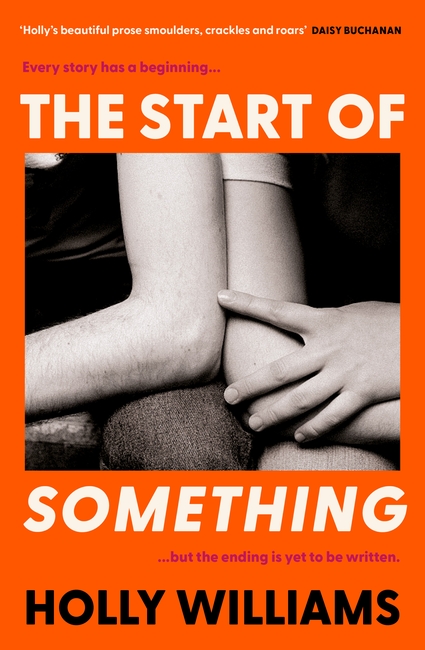
Next, Holly WilliamsThe Start of Something concerns a group of people also exploring relationships.  It’s a cleverly constructed novel – or is it a set of short stories? in which ten characters in turn have their inner stories revealed. Each character has slept with the one before. Several are exploring or questioning their sexuality: some are lonely, because or in spite of their relationship; some are heartbroken: all are seeking – something. One chapter is coming to an end for each of them, another is beginning. And at the end, there is hope for the two people with whom the book closes.

More exploration of sexuality in The Sleep Watcher by Rowan Hisayo Buchanan.  A young woman, Kit, uses this book to address her lover to explain how her teenage self has made her who she is. She lived with her parents and younger brother in an unnamed seaside town in southern England and became prone to out-of-body nighttime wanderings as she slept. This device should have had me slamming the book shut, never to open it again, but it worked. Able to travel round the town at will, she witnesses her parents in private moments and realises their relationship is increasingly fragile, her father not the happy-go-lucky man she thought she knew. She’s also exploring her own sexuality with her closest school friend, Andrew. The satisfaction of reading this book lies in the evocation in just a few phrases of her home town, her teenage companions, her family, and the things they did. Her conflicting feelings about her parents – especially her father – whom she thought she knew are well portrayed. Kit is a convincing, if enigmatic character. An intriguing read.

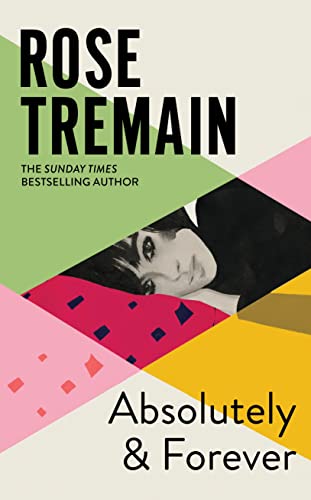
Here’s another book written in the voice of the main protagonist reviewing her past. Absolutely and Forever by Rose Tremain, of whose writing I’m usually a fan. But while this book was, as expected, a page-turner, I didn’t warm to it much. It’s written in the voice of Marianne, whom we meet as a 15 year old boarding-school girl, with self-obsessed parents whom I found to be caricatures. She’s helplessly in love with 18 year old Simon. She knows they’ll soon marry and she willingly loses her virginity to him. Life gets in the way, and he’s despatched to Paris when he disappoints himself and his parents. She never forgets him, despite a decent marriage, which is detailed in all is downs and ups. The denouement, when it comes, isn’t a surprise, to me at least. I found most of the characters to be ciphers, and the characters slightly unbelievable. An easily-read and well-written, but slightly unsatisfactory read.

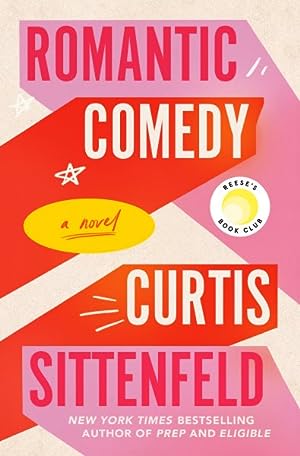
There’s quite a bit of serious stuff here.  Let’s finish in a lighter vein.  Curtis Sittenfeld’s Romantic Comedy.  An engaging and highly readable … romantic comedy. Sally is in a team of writers and other creatives who collectively and separately write a popular Saturday night TV sketch show. It feels as if Sittenfeld has accurately brought to life this high-octane, stressful environment where very close friendships sustain the team, and the lively portrayal of a-week-in-the-life-of was eye opening as well as entertaining. But this story is that which develops between Sally, and one of the guest hosts, wildly popular singer Noah. We follow their tentative first mis-steps towards romance, through an e-mail relationship that develops in lockdown through further mis-steps to … well read it and find out. The story is sustained by cameos of the relationship Sally has with her two closest women friends, and with her now-widowed step father. A rewarding romantic novel with the added edge of giving an insight into aspects of the world of show business.

That’s it for this month. My last book doesn’t link back to my first, but all of them this month deal with the search for, or life with A Significant Other. Next month’s starter is Butter by Asako Yuzuki. Apparently it’s a crime novel with a difference.

The first, second and fourth images in the text of this post are my own. The third is by Valentin Antonucci of Pexels. The sixth is by Penin Thibault of Unsplash, and the seventh is by This is Engineering of Unsplash.

Six Degrees of Separation from Romantic Comedy to Go, Went, Gone

On the first Saturday of every month, a book is chosen as a starting point and linked to six other books to form a chain. Readers and bloggers are invited to join in by creating their own ‘chain’ leading from the selected book.

Kate W. Books are my favourite and best

This month’s starter book is Curtis Sittenfeld‘s Romantic Comedy. Anything Sittenfeld writes is fine by me, but I haven’t managed to read this one yet. The Guardian has it as an ‘affable, intelligently crafted tale of work and love’, with a somewhat insecure heroine who can’t believe that true love has really come her way.

Let’s stay with complicated love, in The Rachel Incident by Caroline O’Donoghue. At first I thought I’d stumbled upon a Mills & Boon for Millennials. Then I thought I might not be all that interested as I’m scarcely the same generation as Rachel and her friends and colleagues, floundering through messy early adulthood. But almost against my will, I was drawn in to the convoluted affairs and working arrangements of Rachel, and her gay friend and flat mate James. We begin in 2009, and there’s a recession on, which colours everyone’s prospects, including Rachel’s middle class dentist parents. Rachel is at first finishing her English degree while also working in a bookshop. She fancies her professor. But he, it turns out, has begun an affair with James, although he’s married to the woman whom Rachel is in due course working for as an intern, and Rachel has fallen for someone who’s fallen for her too, but has a habit of disappearing … It’s all intriguingly complicated and believable. It’s gossipy, witty, wry and a real page turner. Recommended.

Love story involving gay men? We’ll go for a tremendous first novel from Alice Winn: In Memoriam. Here is a book which starts in an English public school, and moves quickly to WWI and the trenches. This is the journey of a varied cast of characters, chief among whom are Stanley Ellwood and Henry Gaunt, both of whom have been exploring their homosexuality whilst still at school. They exchange their privileged lives for the grim reality of battle, and Winn uses telling detail to underpin how truly frightening and beastly in every sense this is. Every few chapters the Preshute College magazine appears, and among the ever-longer lists of dead and wounded old boys are the names of characters we too have come to know. Ellwood and Gaunt, so very different, continue their relationship. Winn explores the strong bonds and unlikely alliances that war brings about, and continues this exploration to show its effects on the families whose sons have gone to fight, and its effects in the years after the war. A moving and deeply affecting book. I’m quite well-versed in WWI literature, but this has perhaps brought the full horror of that war, and its long-reaching effects before me in a way that few other books have done.

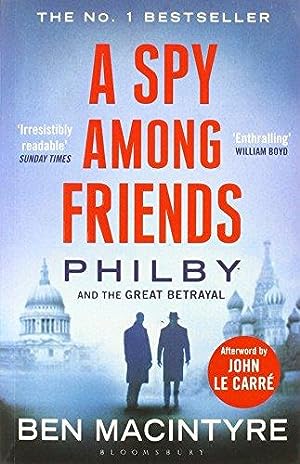
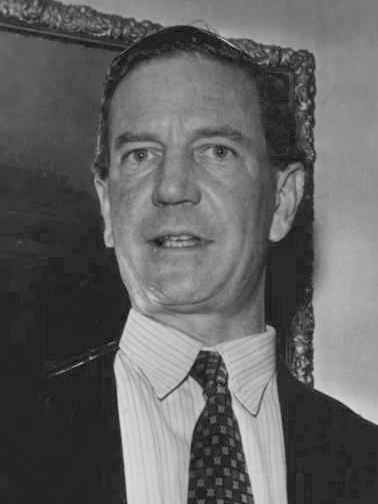
One of the consequences of war is that the world of spying evolves. This month I read Ben Macintyre‘s story of super-spy Kim Philby. As with in Memoriam, this book – A Spy among Friends – is peppered with ex-public school characters. Here is a graphic picture of a completely different world: a world in which who you know, and the school you’ve been to, rather than what you’ve achieved and the jobs you’ve held gets you into a career in espionage. A world in which secrecy was paramount, and – apparently – an ability to down prodigious quantities of alcohol. Ben Macintyre shows us this world, as it existed during WWII and the subsequent Cold War. He introduces us to the milieu of the agent – and the double agent. Specifically to Kim Philby who worked tirelessly not only for the British, but for the Russians, thereby sending colleagues and blameless citizens to untimely deaths. His life was a lie. Not his two closest friends, nor two of his wives or his family had the least idea of his machinations. He remained unsuspected by his M16 and American colleagues for many years. This is his story, pacily told, and offering a picture of this secretive world of postings and relationships all over Europe and the Middle East. In many ways, this isn’t my sort of book. But Macintyre is a reliably involving and good writer who draws you in. I’m glad to have read this book, and thoroughly relieved that neither I nor anyone I know is part of this duplicitous world. I don’t think…

Patrick Modiano‘s The Search Warrant also explores the consequences of war. Nearly 40 years ago, Modiano came across an ad in a 1941 edition of Paris Soir: by two Jewish parents seeking for their daughter who had run away from boarding school. His interest piqued, Modiano set forth on a ten year search to find out more about the life and possible death of the child, Dora Bruder. While he never forgot her, his search was intermittent. He looked at documents and newspapers. He trawled through the streets of the Paris Dora frequented, though many of them had changed almost beyond recognition. In this document of his search, he paints a picture of the Nazi occupation of Paris, of the lives of the Jewish citizenry – incomers from all over Europe – under Pétain’s regime. He connects and contrasts Dora’s adolescence to his own. This then is a personal story, as much about Modiano himself as about Dora Bruder. It is though a memorial to her, and to any and all of the Jews who lived and died in that particular and brutal period of French history.

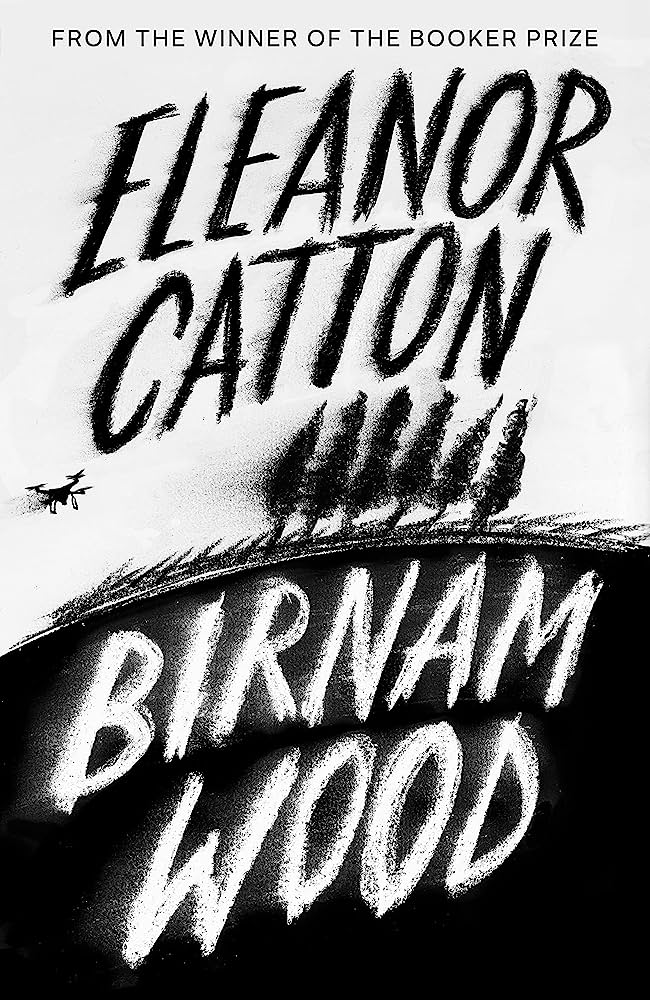
War of a different kind, with Eco-warriors centre stage is the subject of Eleanor Catton‘s Birnam Wood. Full disclosure. I borrowed this edition of the book from the library, then discovered that the BBC was currently serialising it, so – unusually for me – I ‘read’ it courtesy of BBC Sounds. And I didn’t enjoy it. Could this partly have been that the resident ‘baddie’, the American tech billionaire’s voice was so clearly that of a man dripping evil that any nuance the book might have had was lost? In the Good Guys’ (not Shining White Good Guys) corner were the members of a guerilla gardening group who want the land not as a bolt-hole or a secret mining project as American Lemoine does, but to pursue their aims. Lemoine’s drones and techie spyware sees all. Then there’s ex-guerilla Tony, and investigative reporter … and Owen, a self-made pest-control business man, whose wife actually owns the farm on which the land in question is sited, and who is willing to sell. All of these, with conflicting aims and ambitions were in the mix. The verbosity and proselytising of many of them lost me early on. The characters were thinly-sketched ciphers of Types, and I warmed to none of them. The ending was an excitingly gruesome one, but for me it was just a relief that it heralded the end of the story.

Another consequence of war. Refugees. Asylum seekers. These are the subject of Jenny Erpenbeck’s Go, Went, Gone. Richard is a widower, a retired professor of Classics in Berlin in the former East Germany. His life seems – to him as well – somewhat purposeless. One day he happens upon a demonstration in town by a group of refugees from various African nations who have camped out there. This is a world of which Richard knows nothing, but his interest is piqued, and gradually, reluctantly at first, but then with increasing passion, he comes to know them and something of their stories. Of their families, lost to them, or killed in frightening circumstances. His life acquires a purpose: helping the men fight their corners, seeking funding. He discovers his own country’s dark past, the prejudices still alive and powerful among politicians, many of the general population and his own friends. He finds a legal situation where each country with whom the asylum seekers have contact have a get-out clause enabling them to move these men on to somewhere else. This quietly, lyrically told told but urgent story is an indictment of that system. Absolutely nothing has got better since 2017, when this novel was published. Required reading for Suella Braverman and readers of the Daily Express.

Unusually, there is a further link between all these books. I’ve read them all in the last month, and with one exception, wholeheartedly recommend them: especially the Winn and the Erpenbeck.

Next month’s starter book is Anna Funder‘s Wifedom, which examines the life of George Orwell’s wife. It’s well reviewed here, and I’m looking forward to finding a copy.

And finally, those of you whose TBR pile totters and becomes more unstable by the day might enjoy the cartoon highlighted today in Brian D Butler’s Travel Between The Pages.