‘Brittany is a Foreign Country: They Do Things Differently There’

…as LP Hartley nearly said.

When we first understood that Laroque is twinned with Melgven in Brittany, we were nonplussed.  Surely twinning arrangements are with England, Germany, Spain – or anywhere abroad.  What’s the point in twinning with a town in your own country?

Well, quite a lot as it turns out.  As part of the twinning arrangements, citizens from Melgven come for a long weekend here in Laroque , while Laroquais have the chance of a few days’ stay there in May.  This year, we signed up for the 10 hour mini-bus trip to Finistère

Straight away, we began to see the differences.  As we arrived, we were welcomed to enjoy poking round their fundraising ‘Troc et puces’ fair in the Sports hall.  The Bretons are a Celtic race, and it shows in their physical appearance.  Meanwhile, down here, there’s a long tradition of Spanish immigration, most recently in the Spanish Civil War, and the Second World War, so many locals here are olive-skinned and not very tall.  A tannoyed announcement for M. Garcia and M. Sanchez to report to the desk in a public hall somewhere near here would have nearly half the room scurrying to reception.

And then there’s the food.  Brittany, like Britain, favours butter, and unlike the rest of France, the salted variety.  Out to a meal on Saturday, the lunchtime bread came with pats of butter, something that never happens down south.  In the Ariège, cooking’s done in duck fat, and more recently, olive oil.   No part of  Finistère is very far from the sea, so fish and seafood are an important part of the diet.  Down here, duck in all forms is king.  But pork, lamb, game, beef are all welcome on the dinner plate. If it moves, eat it.

When we looked round a market in Concarneau on Saturday, we were struck that there was little charcuterie or cheese on sale, and what there was came from elsewhere.  It seems as if every other stall in our local Ariègois markets is one selling cheese and charcuterie, much of it from just a few miles away.

Brittany – cider and beer.  Southern France – wine.  As part of our welcome apéro, we were served kir made with cassis and cider.  After sipping it suspiciously, we accepted refills with enthusiasm.

So…what were the highlights?

The welcome. Of course.  Some Laroquais have been going on these exchanges for several years, and the warmth of the relationships forged is clear to see.

A change of scene: the countryside. Our host, Albert, took us on several walks, and we were struck with how very British this part of Brittany looks: softly rolling hillsides, woodland and meadows.  We traded orchid spotting in the Ariège for enjoying the swathes of bluebell glades in the woods.
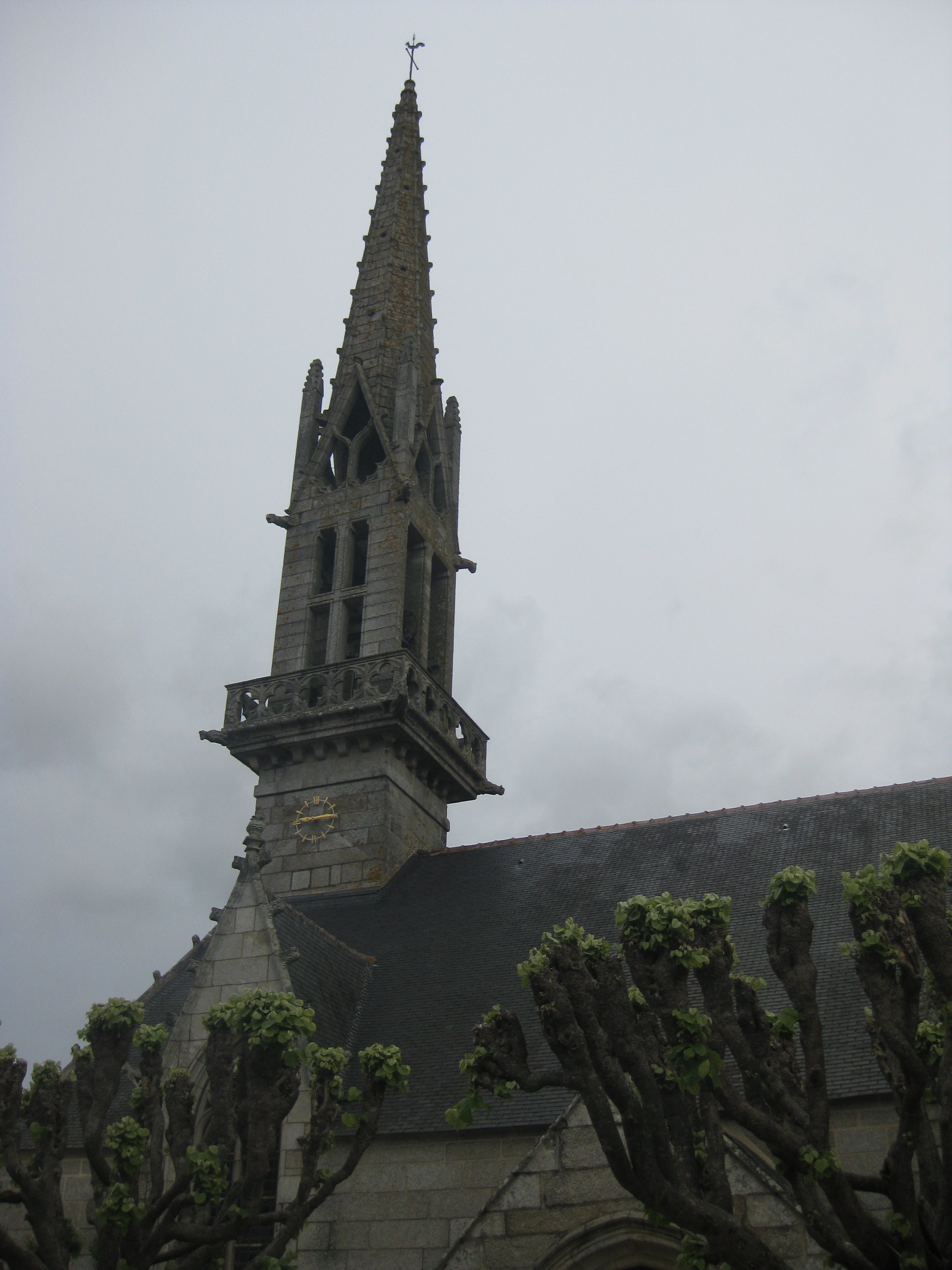
A change of scene: the town.  We exchanged the shallow-roofed, unpainted or pastel coloured houses of the south for the tall white narrow pitched roofs of Brittany.  Down here, we’re used to our towns and villages being shabby.  Brittany’s are clean, sparklingly so, with flower boxes, neat gardens, and a general air of pride in the community.  And then there are the churches.  No clochers-murs in Brittany, but rather complicated steeples instead.

The seaside. Concarneau was at its sparkling best, with breezes tugging at the flags, clouds pluming across the sky, an early pre-season freshness to the narrow streets of the historic quarter.  Their fishing museum there shows all too graphically just how very tough the life of the fisherman was – and is. But it’s a picturesque sight for the tourist
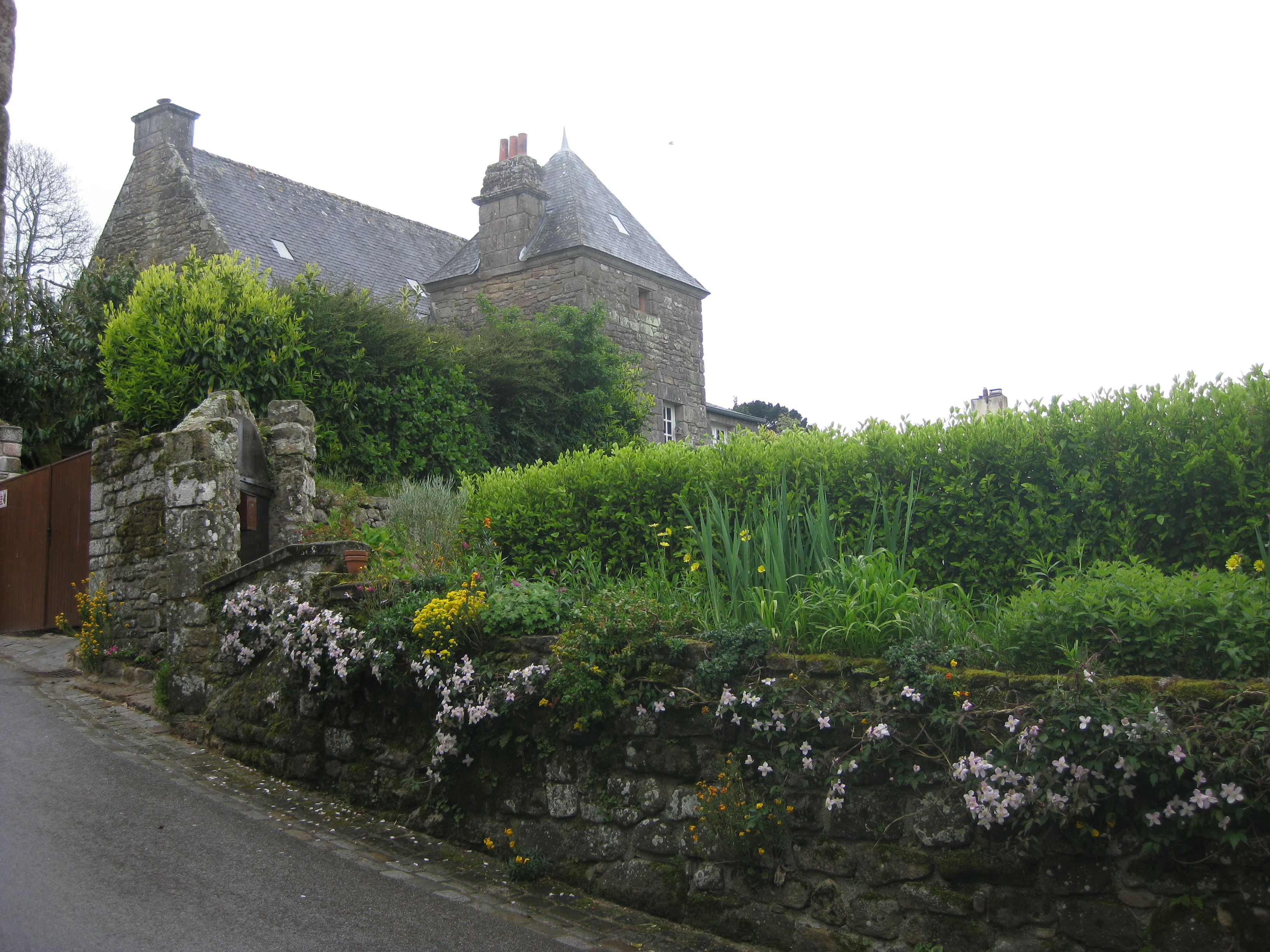
Sightseeing: Our first treat was to visit Locronan, a beautifully preserved granite built 16th & 17th century village, with a mighty central church, and a small chapel at the end of a charming walk.
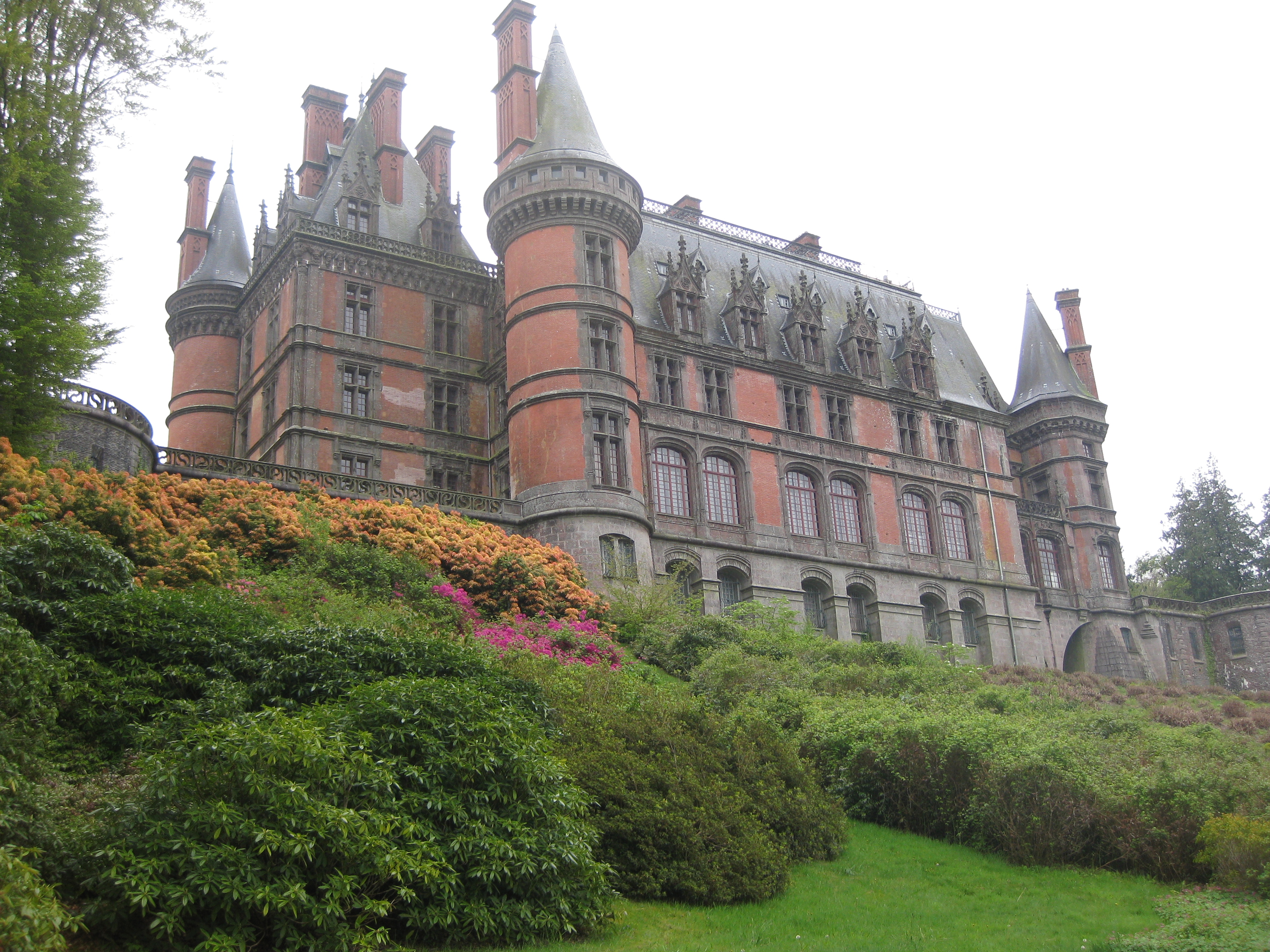
Next was Trévarez, a chateau that might look Gothic, but is in fact a 19th and 20th century construction.  Its brickwork gives it the name “château rose”.  We spent more time in the gardens though.  Apart from a formal area near the house itself, the garden is informal in the style we’re so used to from English stately homes, and glorious at the moment with azaleas and rhododendrons

Celtic music: Friday night was concert night: the chance to listen to an hour or two of traditional Breton music.  Malcolm and I particularly enjoyed hearing those favourite Welsh hymns – Land of my Fathers, Cwm Rhondda in Breton– they sounded very different, but just as good

Story telling: Such a treat.  Michel Sevellec enchants audiences in Finistère and beyond with his tales drawn from many traditions.  On Saturday, as part of a local festival, we joined local children to hear his interpretation of Native American and other stories.  Can’t wait for him to come to Laroque in a fortnight!
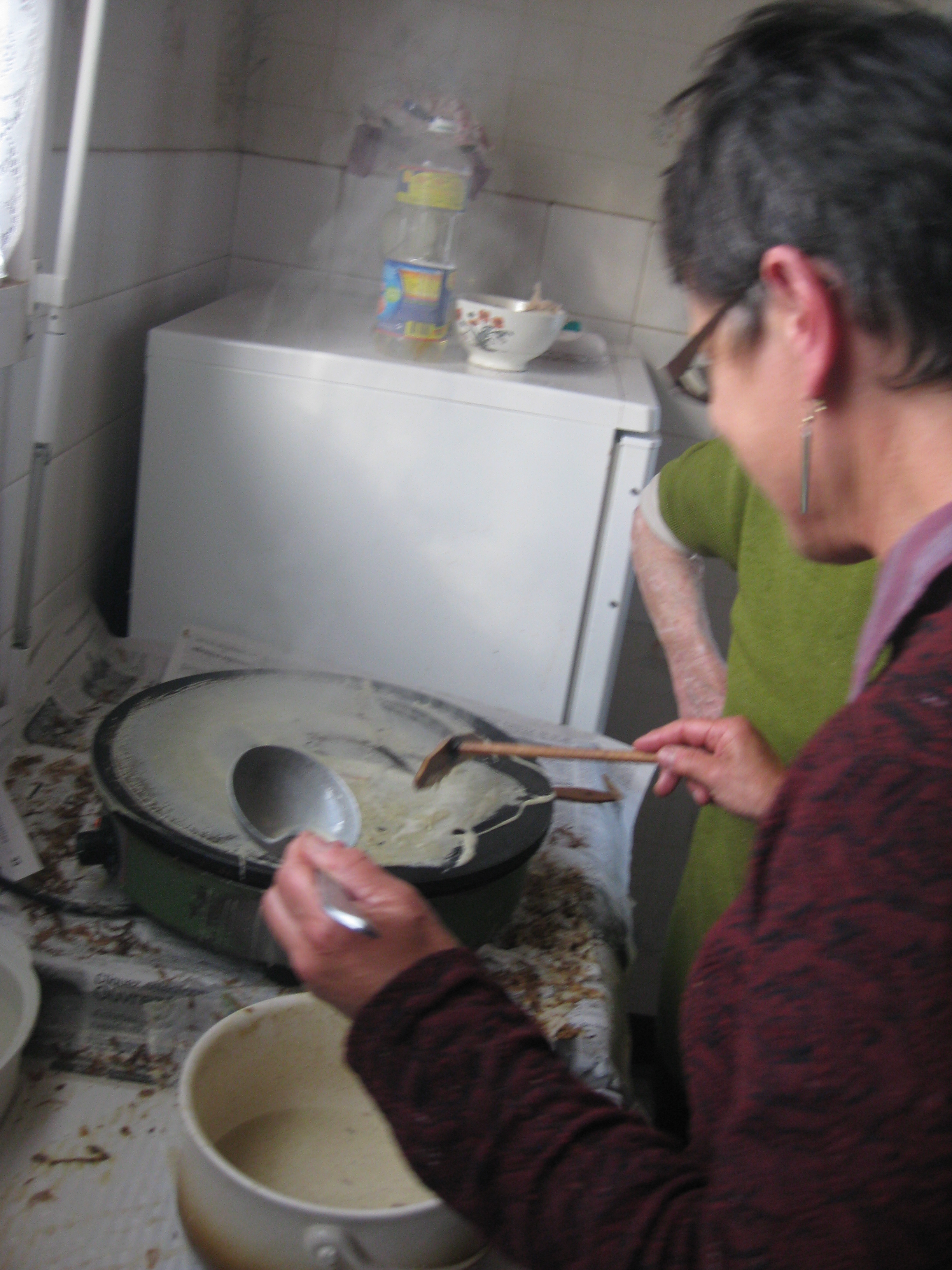
Crêpes:Everyone knows they make crêpes in Brittany.  Lots of us have watched them being turned out on those special round hotplates.  I always assumed it was easy-peasy.  Until we went to eat crêpes at Albert’s mum’s house and she let me have a go.  First, carefully pour the batter with your left hand while equally carefully drawing the batter round the plate with a special wooden spatula – not too fast & not too slow, not too thin & not too thick.

Expert at work

Then flip the delicate creation, so thin you could read a newspaper through it, over onto its other side to finish cooking. It was lucky there were hungry dogs to eat all my cast-offs.  Lucky for us too perhaps: we’d still be eating them now.  Malcolm and I thought 6 crêpes each ought to have been enough for anybody.  Our hostess disagreed.

So….we discovered in Brittany an area very different from our own in languages, customs and appearance, and had a chance to be more than simply tourists.  We now have new friends in  Melgven but also in Laroque as a direct result of this weekend.  A good experience.
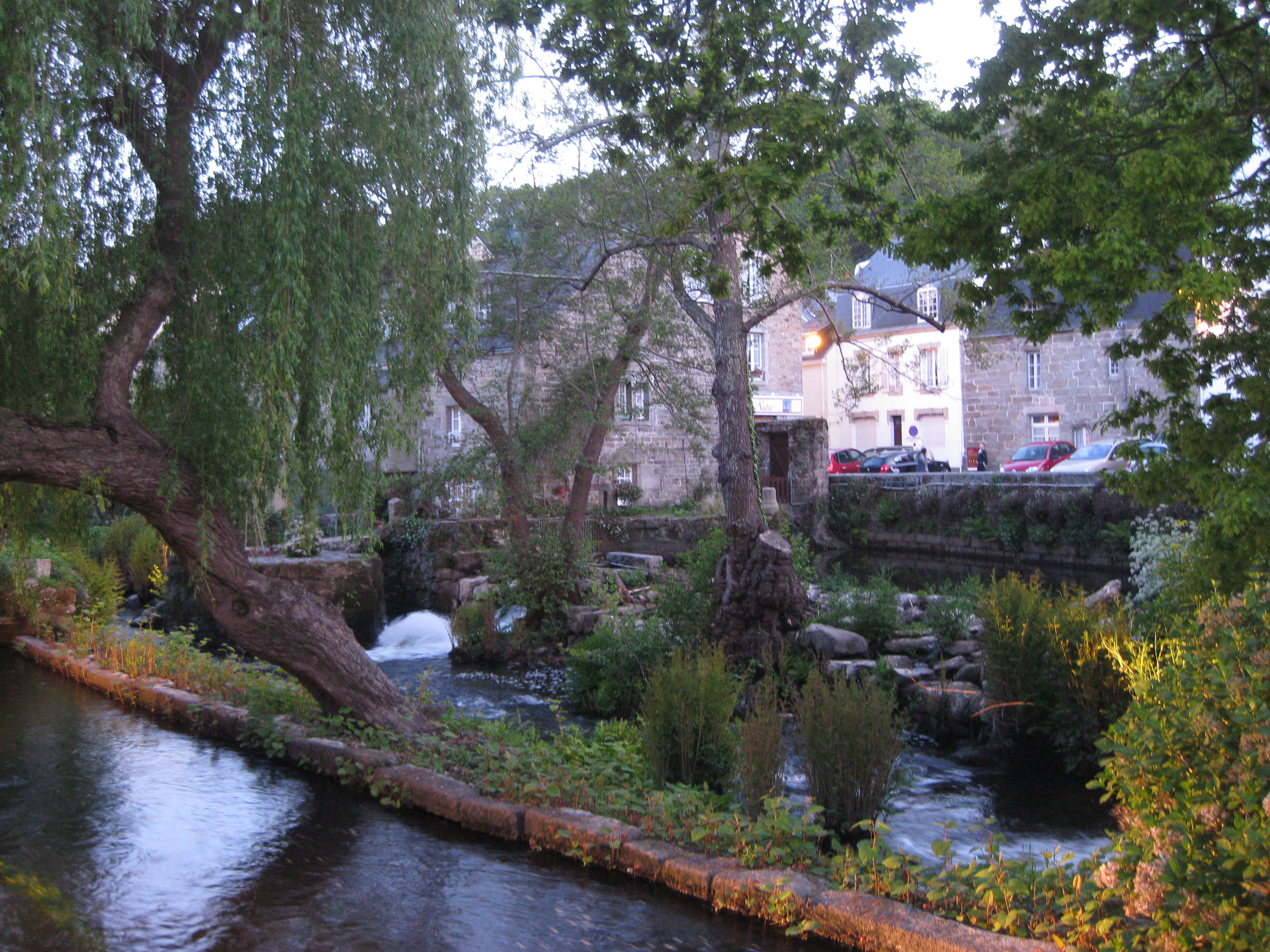
Pont Aven: I didn’t even mention this lovely little town, did I?

The Big Snow: History

If you turn on the radio these days, or look at the inside pages of the daily paper, you’re likely to find reminiscences of the big freezes of last century, 1947, 1960, 1963 and 1979.

Well, I don’t remember 1947. My mother had bitter memories of it, but I was rocking gently in a warm bath of amniotioc fluid, and didn’t have to worry about the cold.

In 1960, I was at girls’ grammar school, and becoming, with my class mates, a sulky teenager. My main memory is of long frozen January lunch hours in the school playground (unthinkable that we’d be allowed to remain inside in the warm). Considering ourselves too old to have fun chasing each other with snowballs, we stood around in morose groups, comparing our newly fashionable long johns with each other (they were long legged bloomers really, in garish colours. But they helped a bit).

By 1963, an even starker winter, we were sitting out mock O Levels. The school heating system broke down, and we sat several exams in our winter coats, and sometimes even our velour hats. We had to write with our woolly gloves on. No ‘manifs’, no walk outs, and no line of indignant parents outside the headmistress’ office complaining about Health and Safety. The stroppiest of us (and I wasn’t stroppy in those days) just got on with it as just one more thing to be endured in those gloomy January days. We must all have been raving bonkers.

Things were very different by 1979. Elinor was born in late ’78, and Thomas was just under 2 years old. We lived perched towards the top of one of Sheffield’s (allegedly) 7 hills (‘Same as Rome, see?’), and getting up and down that steep slope of ours with a pram was unthinkable. It WAS a steep slope. Occasionally, a hired coach would try to take a short cut down our road. It would find itself marooned at the bottom, the driver’s cab already on the level main road, while the back of the bus remained suspended on the 45 degree tarmac behind, to the unbridled delight of all of us who lived in the street: we’d all turn out to watch the fun.

So we stayed at home as the snow fell, and continued to fall. For 6 weeks. No shopping, no walks in the park or toddler groups or visits to friends (apart from the family next door, in exactly the same position as us). For someone like me, always looking for busy things to fill the day, it should have been utterly unthinkable. But it wasn’t. My memory of that time is of spending hour after hour, the three of us, cosily curled up on the sofa while I breastfed Elinor, reading one story after another to Thomas. Children’s picture books were just taking off in those days, and we had our supply of Picture Puffins… Farmer Fisher, Wonky Donkey, Bread & Jam for Frances, Maurice Sendak…. Whenever I remember that long and rather lazy winter, it’s always with simple pleasure.

This winter is a little more complicated. We’d like to be in France, but since we can’t be, we’d like to be seeing our friends. We can’t do that either. Either we can’t get up our hill, or they can’t get down theirs. Or their children’s school is closed. Or something. So instead we worry about feeding the birds: They’re pretty hungry, but it wouldn’t do to have them depend on a supply of food which may disappear at any moment. We compromise, and put scraps, but only scraps, scattering them in different places. And then we worry about weather forecasts. If it’s not snowing here, it is in the south of England. How’s northern France doing? And further south? It depends which forecast you listen to or read. What to do……? Watch this space

A visit to Fontfroide

Yesterday, the day here in Laroque started with the threat of snow, finally realised this morning.  But with our Rando group, we set off for the brighter if bracing Corbières.

The Corbières are of course well known for wine production.  As our mini-bus reached the area, we saw no cows, sheep, donkeys…or any animals at all.  What we did see was acre after acre of vineyards, along the narrow plains, scrambling up the hillsides, with each Domaine favouring a different style of pruning, from the wild and wiry abundance of tendrils clearly being left alone till the spring, to almost knobbly stumps sticking bare out of the ground, scalped of any living shoot.

The Abbey, as we first saw it

Walking here is so very different from the Ariège.  The scrubby garrigue, so reminiscent of Spain, is covered in tough herbs such as rosemary and thyme, tiny wiry green oak trees with richly burnished brown acorns, and olive trees.  The soil is sandy, shot through with red ferruginous deposits.  There were views of the sea, of distant castles, and of the monastery we’d come to see, Fontfroide. We loved it as a change, but this scenery simply seemed lacking in the variety that our own patch offers – map reading was a nightmare, so we’ll stick with it as a holiday destination, we think.  Still, our trek was invigorating in the bright winter sunshine, and it was a good way to spend the morning before an afternoon devoted to cultural matters.

The elegant courtyard, once the scene of manual labour

The Abbey of Fontfroide was founded as a Benedictine abbey in 1093 and affiliated with the Cistercians in 1145.  It began its history then, as a Romanesque gem, though it was added to in Gothic, Romanesque and elegant 17th and 18th times.  It’s been privately owned since it ceased to be a monastery in 1901, and in this last century, accomplished craftspeople have continued to restore and add to it.  Quite simply, it is an architectural gem.

It looks old - but it's Catalan and early 20th century

Right from its early days, the monastery flourished and soon became a centre of orthodoxy.  The murder in 1208 of Pierre de Castelnau, a Fontfroide monk and legate to Pope Innocent III, led to the Albigensian Crusade, which is such a living part of our history over here, at nearby Montségur.  After peace was restored, construction on Fontfroide Abbey continued. The influence of the abbey soon dominated the entire region, all the way to Catalonia, and a daughter monastery was founded in Poblet.  After the Black Death, the monastery had a chequered history, but it always escaped physical damage, and was often added to and improved with taste and elegance.  Nowadays, it’s almost unique among Cistercian abbeys in being in such wonderful condition.

The cloisters

The Abbey of Fontfroide is an excellent example of the kind of monastic town prescribed by Saint Bernard of Clairvaux, in which the buildings and surrounding gardens and land contain everything necessary for simple living. The monks devoted themselves to hard work and worship, and had no contact with the lay people who worked there too, physically separated from the monastic community.  This is only apparent now whenpointed out, but despite the Abbey now being in private hands, many ecclesiastical references remain, especially in the cloisters and church.  If you ever have the opportunity, do visit this very special place.

An Ariège Alphabet

Accent –local:  If standard French is a challenge, how much more so is the local accent?  Remember school French, and being told that usually you don’t pronounce the final letter?  Doesn’t apply here.  ‘Pain’ is ‘peng’, ‘loin’ is ‘lueng’, and so on. ‘G’s happen a lot – ‘tous ensemble’ becomes ‘tous angsamble’

L’Apero, l’heure de:  Great custom

Bio:  – organic.  Buying organic food is ‘normale’ here, especially at the markets.

Bountiful free food:  The hoarding season’s pretty much past its best now.  We’ve been out looking for walnuts, almonds, chestnuts, rosehips, apples, sloes and coming home with the kind of quantities that will see us through the year.  It’s a full time job.

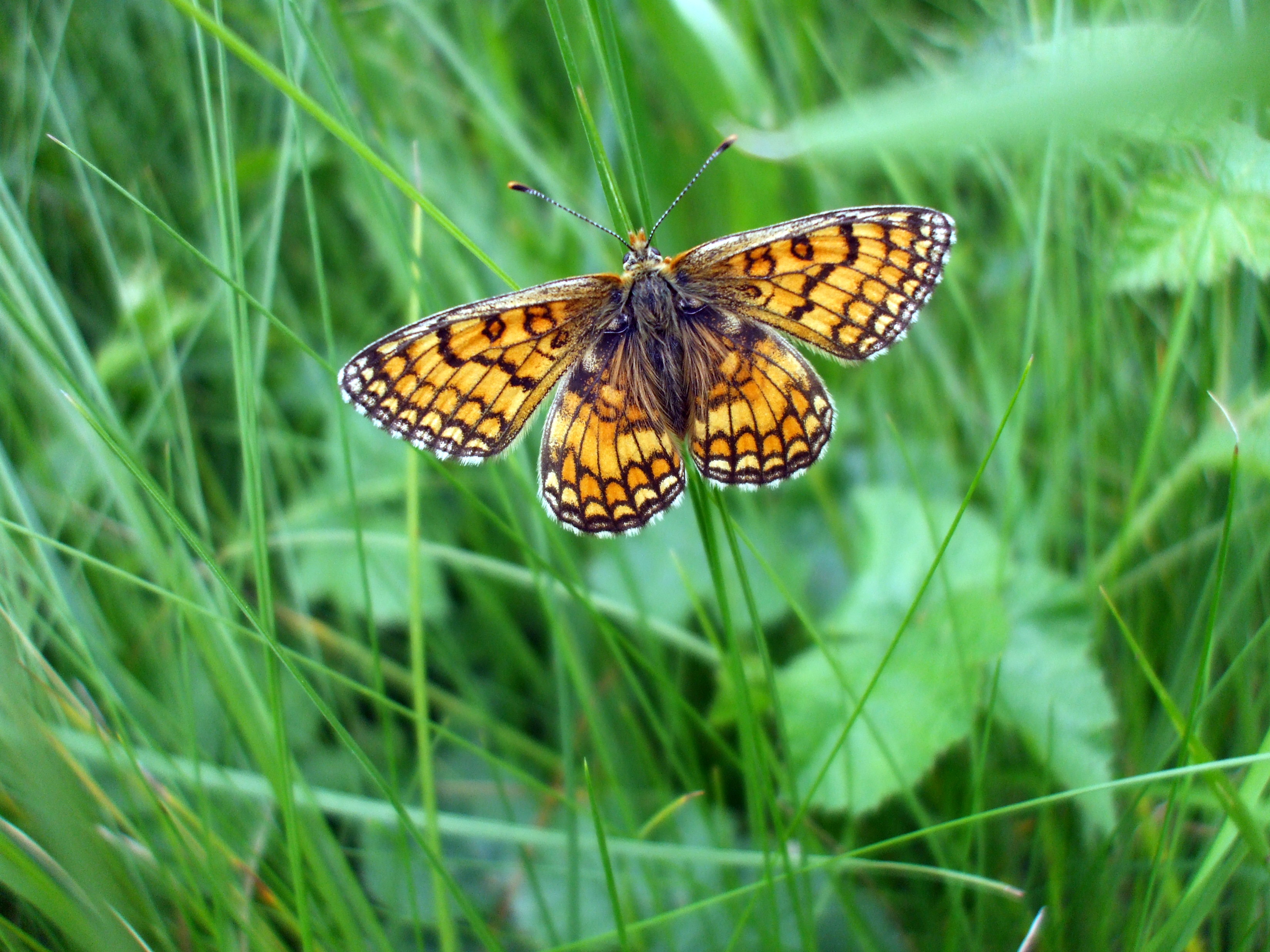
Butterflies: So many varieties, and seen everywhere, almost all the year round.  Even yesterday, November 22nd.

Courtesy:  Walking down the street here, it’s normal to offer greetings to everyone you meet.  ‘Bonjour Madame!’  With anyone you actually know, you shake hands, maybe exchange bises on both cheeks.  Small children greet you, surly teenagers greet you.  It’s one of the real pleasures of small town life.

This sheep is currently not on milk-for-cheese duties

Cheeses: Cows, goats, sheep, all busily producing milk for dozens of varieties of (preferably non pasteurised) cheese: soft, hard, creamy, runny, mild, stinky.

Dépêche du Midi (La):  It’s the local daily.  We don’t often buy it, as world events seem to pass it by in favour of the marriage of the local lass in La Bastide de Bousignac.

En cas où…….. Out walking, we always have a spare bag stuffed in a pocket.  En cas où we find some mushrooms, a handful of berries, some windfalls, a log for the fire.  Everybody does it.


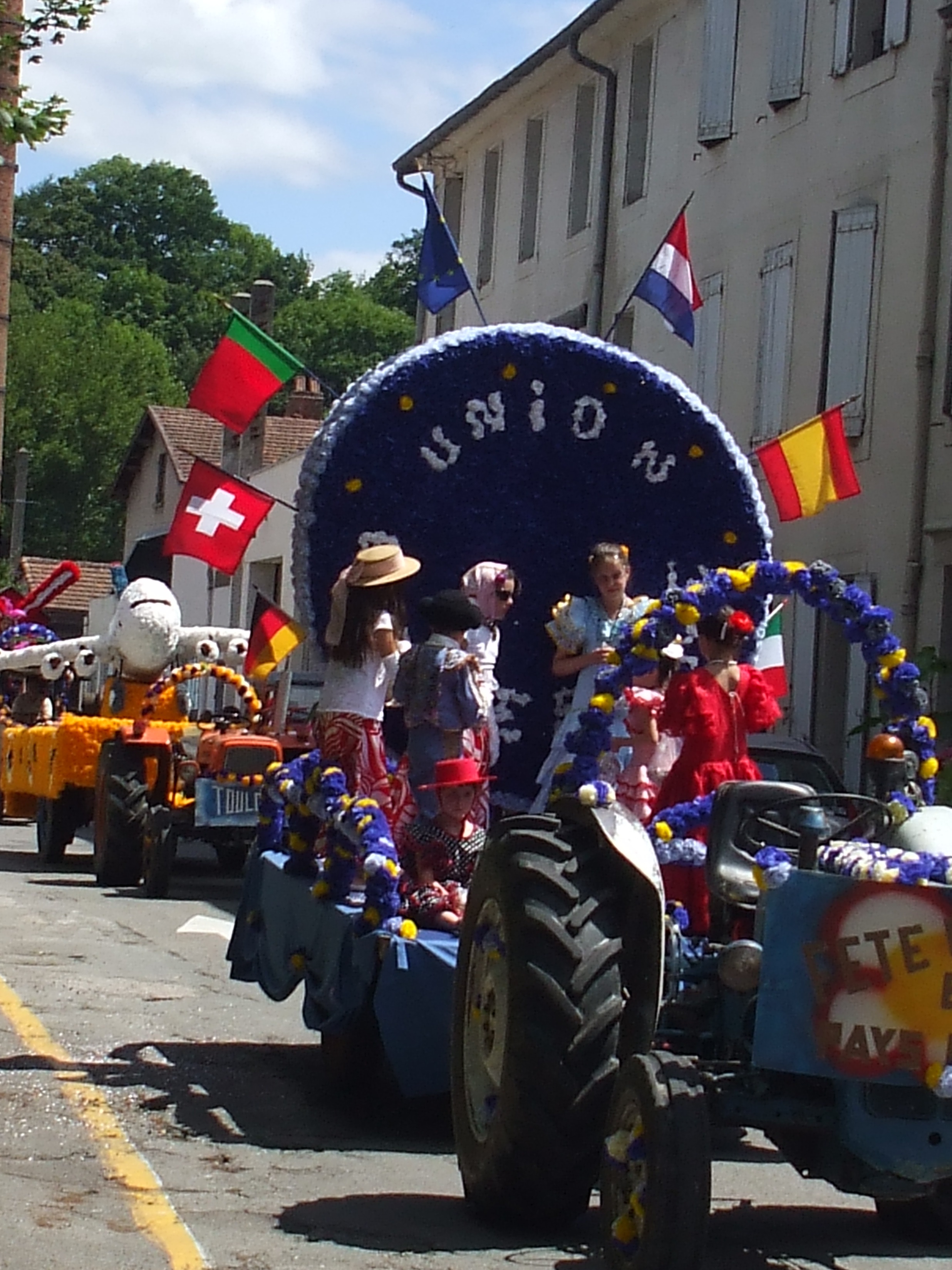
Fêtes Festivals and Fun: No weekend is complete without its fête, or festival, somewhere nearby.  The other weekend saw the Fête de la Transhumance at le Sautel, with cows and sheep returning to the lowlands.  There was a food market, a vide grenier (see below), films, dancing, a barbary organ, a big communal meal on Sunday. Le Sautel is a hamlet rather than a village, but it hasn’t stopped it running a right good show. Recently, there have been la Fête de la Noisette at Lavelanet,  la Fête de la Figue at Mas d’Azil…. and in among, there are small local fêtes in nearby villages.  No need to get bored at weekends, ever.

Gallic shrugs and gestures.  I’ve posted about this before, and do you know, I don’t think my accent’s getting any better.  I’m rubbish (shakes left hand vigorously with floppy movement from wrist)

History: I love it that so many people, especially older people, seem to know so much about the history of the region.  They’re proud to tell you stories of times past, farming traditions and customs.

Ingenuity: The sort of make-do-and-mend that is such a feature of English allotment life is even more commonplace here.  Our garden shed is made of several old doors, a redundant polystyrene fish box, random bits of corrugated iron and plastic screwed together, ancient bits of wire netting and bits of string.  To our knowledge it’s been standing 20 years or more, and it’s not about to fall down.

Junk:  Freecycle may not exist here – yet – but one person’s junk is another person’s lucky find.  We take our household rubbish to central collection points – no dustbin collections here.  On Sunday evenings, lots of people (including us, naturally) will be hovering to walk off with and make use of discarded pans, empty packaging, toys, plant pots….

Kilometres and Kilometres of space…..  North Yorkshire, which always seems spacious by English standards, has a population density of 74 people per square km.  The Ariège has 28.  So there’s plenty of room

Lizards: Our garden companions on any sunny day

Lunar calendar: Planting by the phases of the moon is completely mainstream here.  Gardening magazines carry free lunar calendars early every spring, and anybody you talk to will give you unsolicited advice on which day the moon dictates you get those spuds into the ground

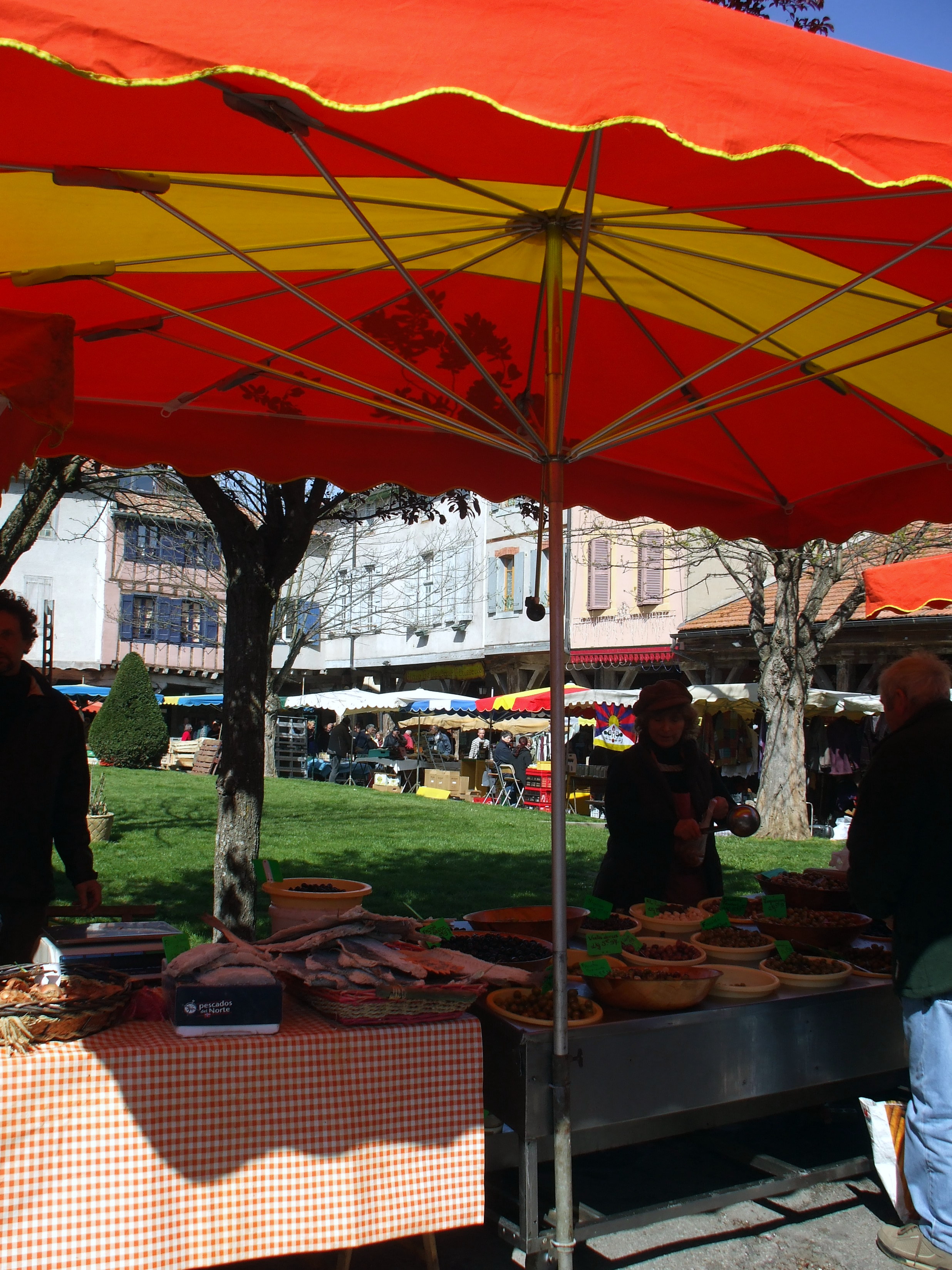
Monday market, Mirepoix

Markets: The best and happiest way to shop for fresh seasonal food.  Don’t be in a hurry though.

Music: So important here.  Concerts of every kind, cheap or free, in public buildings, market halls and squares, and churches everywhere.  Choirs (introduced to a large extent by the English apparently) in most communes – I belong to two.  Bands and singers at fêtes.  Even small towns like ours have their own music centres.  And lots of bars are home to groups of local musicians too.

Non!  Protest comes naturally to the French.  We’ve even been on a ‘manif’ ourselves, protesting at teacher cuts.  But you won’t travel too far in France before you see signs painted, very large, across the road. ‘Non à l’ours’ (bears are being reintroduced to the Pyrénées, to the disgust of the farmers). ‘Non à la déchetterie!’ (tip), ‘Non aux aeoliennes !’ (wind farms)

Occitan: The everyday language of south western France until well into the 20th century, the Lenga d’òc is little spoken now, thanks to the systematic imposition of the French language in the early years of the twentieth century.  Nevertheless, we do hear the elderly speaking it from time to time.  It’s once again taught as an option in schools, and in adult education classes. I love passing through the many places that celebrate their Occitan heritage by having town and street names expressed in Occitan as well as French – Autariba rather than Auterive for example. 

Patrimoine in the Pays d’Olmes et Pyrénées:  ‘Patrimoine’ translates I suppose as ‘heritage’, but it’s not quite as chintzy and twee as that word suggests. Everyone here is proud of their history, and there’s so much going on to celebrate it – talks, walks, conferences, often with a meal thrown in.  Just join the party!

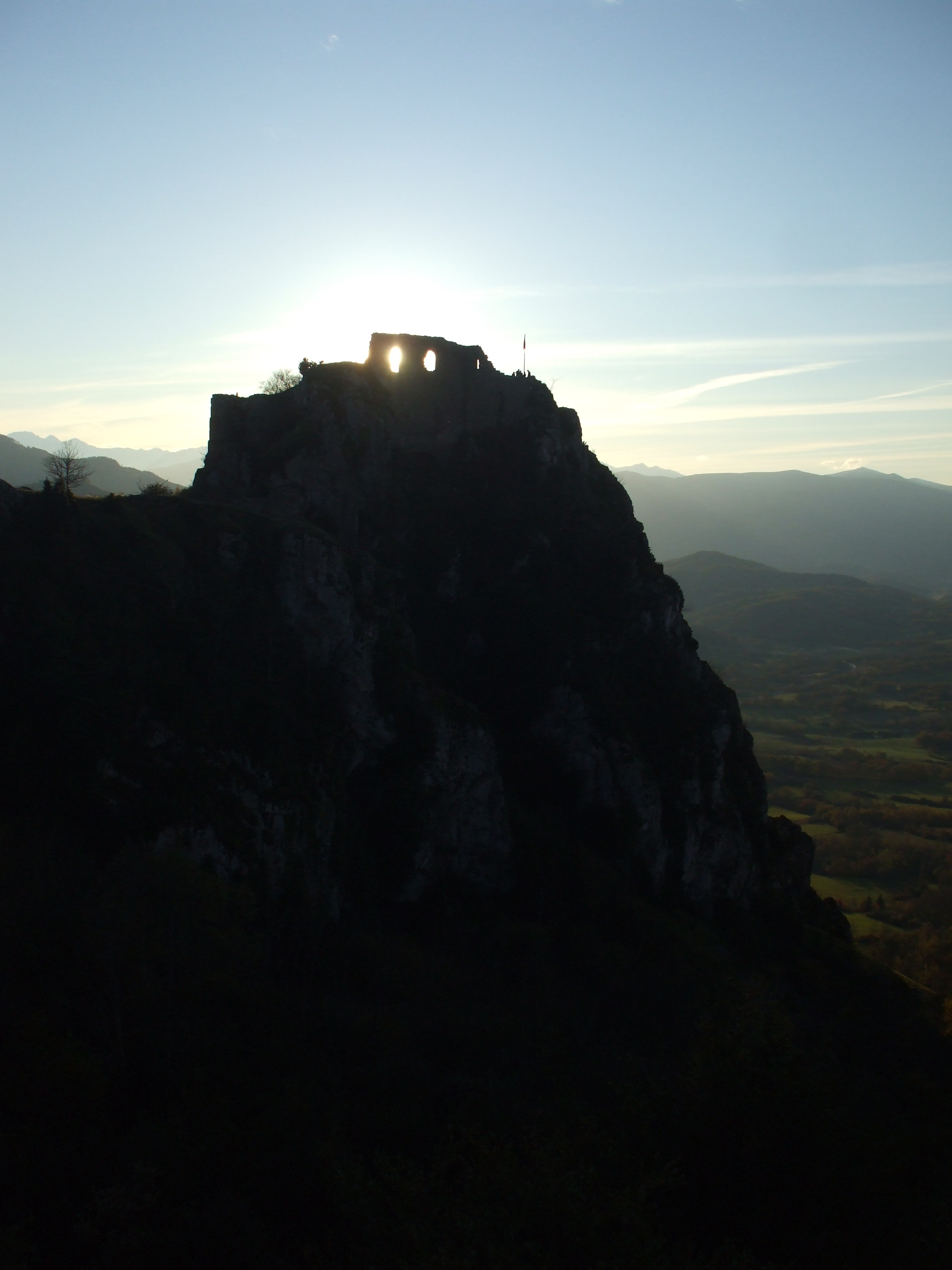
Sunset over Roquefixade

Queuing.  Don’t let anyone tell you that only the English queue.  It’s part of life in neighbourhood shops and markets here.  But it’s not a problem.  It’s an opportunity to chat with friends and strangers, exchanging local gossip, recipes, scandals.  If it’s our cheese man in Lavelanet market, he’ll join in too, and you’ll never get away

Restaurants: I’m not thinking of the elegant once-in-a-blue-moon meal out.  I’m thinking of the ‘formule’ at midday,  when to a large extent you get what you’re given, in copious and well cooked quantities.  Take today, when we went to a fairly down-at-heel looking brasserie on a busy street corner at the wrong end of town.  Great salad, followed by tender tasty magret de canard and wonderfully creamy dauphinoise potatoes, a home made concoction of fromage blanc and crème chantilly, coffee, wine, all for 12 euros.  We shan’t be eating again today….

Shopping-centre-free-zone.  Bliss.  Also, though this has recently been partially undermined, almost no Sunday shopping.  AND shops usually close for between 2 and 4 hours at midday

Temperatures: Proper seasons here.  Summers are hot, winters cold.  Autumn, warm, is a time of glorious colour and food for free.  Spring, warm, is a treat for its flowers

Underwear.  If you want to be disabused of the notion that the French are chic, that haute couture rules, go to any market stall selling women’s undies.  Turquoise knickers, orange bras, lime green or luridly lavender matching sets…..  And while you’re there, check out those lovely pinafore dresses so beloved of French women of a certain age.  Wonder when I’ll be old enough to wear one?

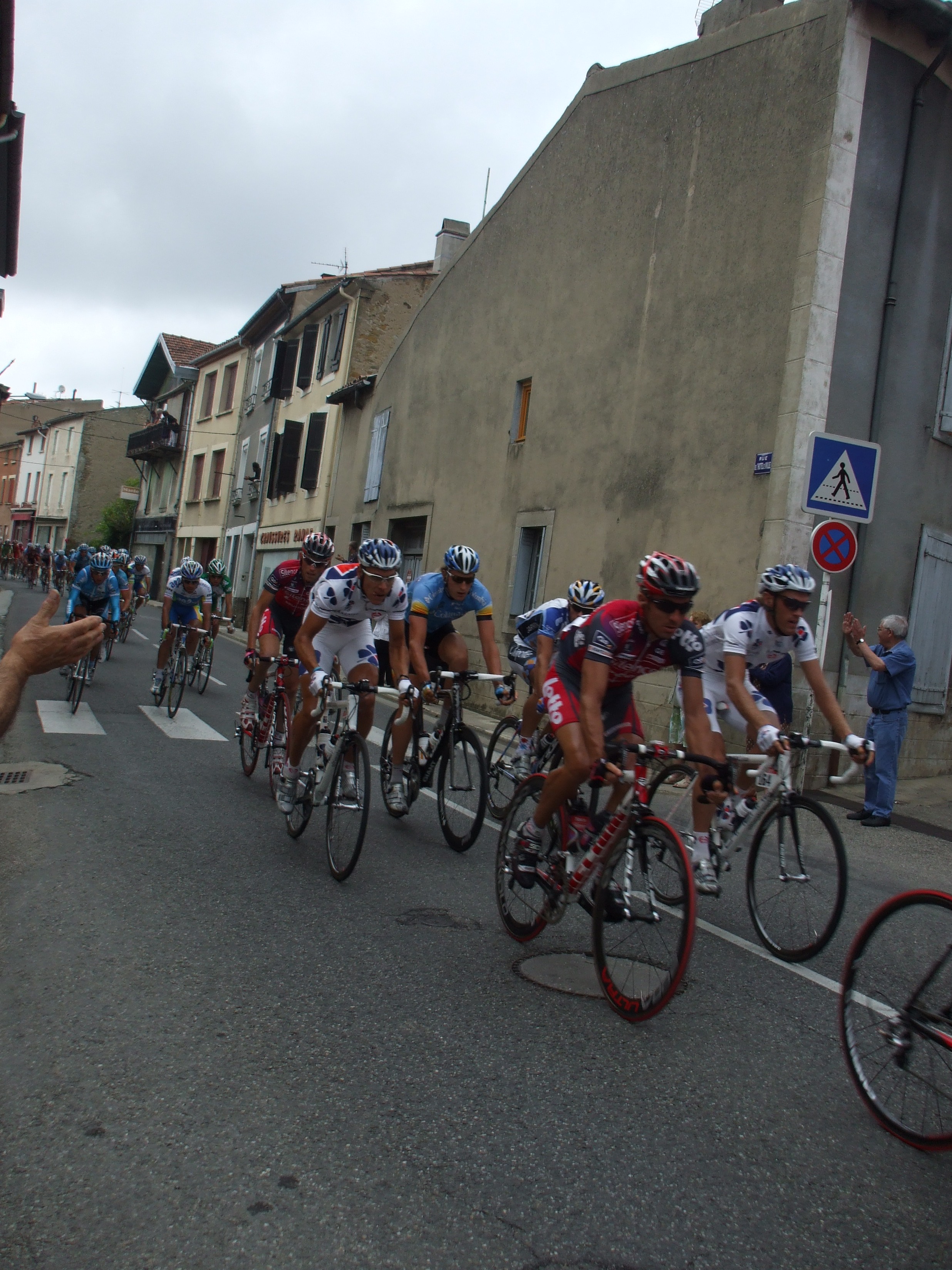
The Tour de France whips down our street in 2008

Vélo .  Cycling’s big here.  Any cyclist, old or young, is kitted out in skin tight lycra, and may well own a bike costing several thousand euros.  There’s a cycling club here that meets on Wednesdays and Saturdays.  Its runs are routinely 120 km. or more (and it’s very hilly).  The wimps manage some 80 km., but only ‘les ancêtres’ can get away with a mere 40 km or so

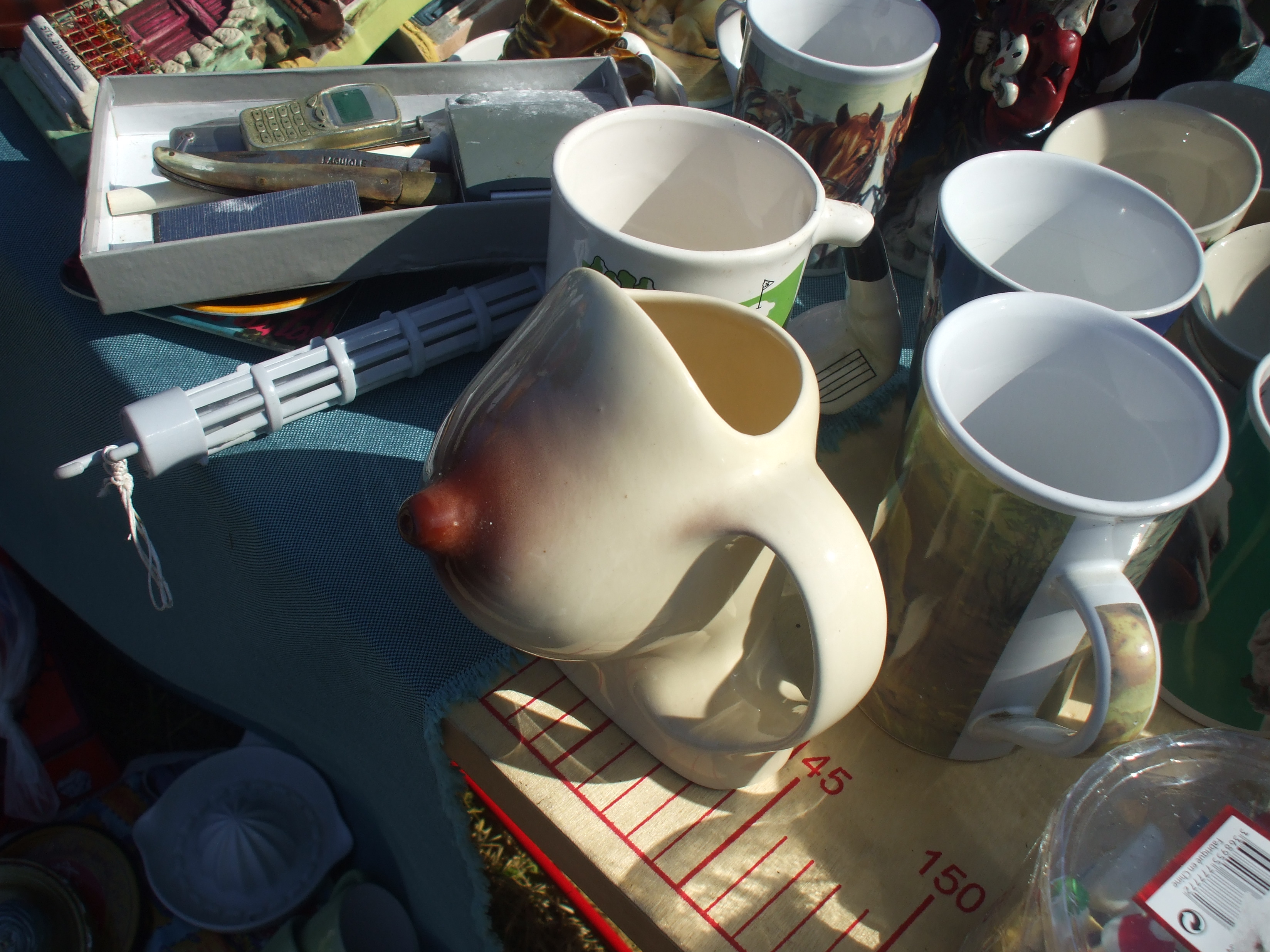
A lucky find at a vide grenier?

Vide Greniers;   People here empty their attics instead of filling their car boots.  Any Sunday in spring, summer or autumn some commune or another nearby will have a Vide Grenier organized.  One of the larger streets, and probably a few more besides, will have been taken over by the sellers, who display their goods from early morning till supper time,.  It’s the same mixture as an English car boot sale, with the addition of all kinds of rusting tools and junk that really HAS come out of the attic.  Nobody will buy it.  It’ll just appear at the next sale

A walk with our group, near Tarascon

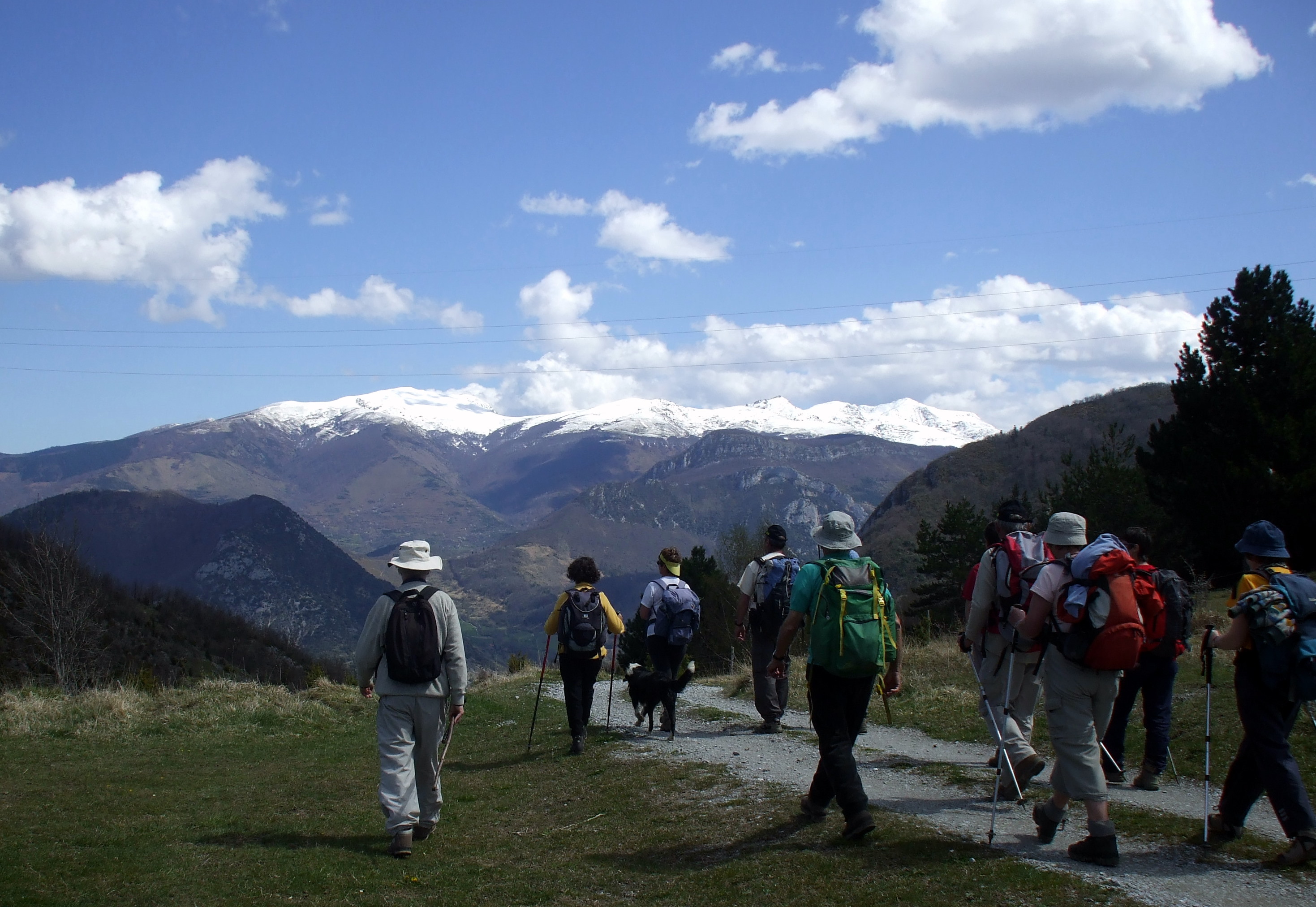
Walking: so many walks, so much variety.  We love learning about new places to explore from books, from maps, from talking to friends, from walking groups.  We’ll never run out of fresh walks to try, ever.

Wood-burning stoves:  So cosy, we really looked forward to November chill.  As for foraging for wood, see ‘en cas où ’, above

Xmas.  In early September, a friend over from the UK said that Christmas had already started in the shops. We’re happy to report that nothing at all will happen here until the first week of December at the earliest.  Wonderful.

You: Here, there’s the whole tricky business of ‘tu’ or ‘vous’, and it’s a minefield. Children and your friends are of course ‘tu’.  The shopkeeper, the bank manager and those adults you really don’t know, are obviously ‘vous’.  But there’s a whole grey area in between.  Fellow randonneurs and choir members generally settle for ‘tu’ from Day 1, on the grounds we’re all in this together.  But not necessarily.  Last year at Choir, I sat between 2 women, both more or less my age, both chatty and friendly.  To one I was routinely ‘tu’, to the other. ‘vous’. And I was supposed to pick the bones out of that??

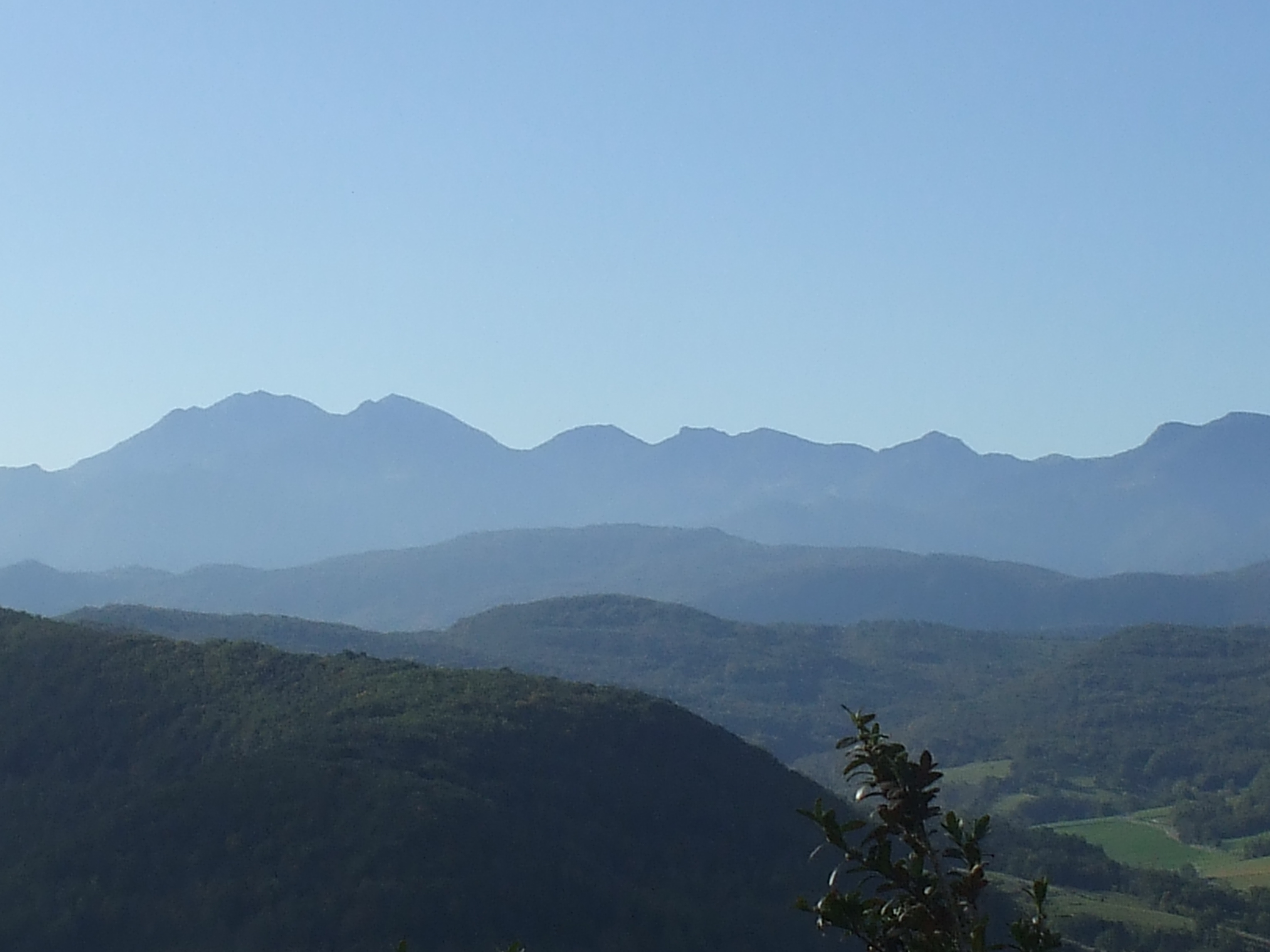
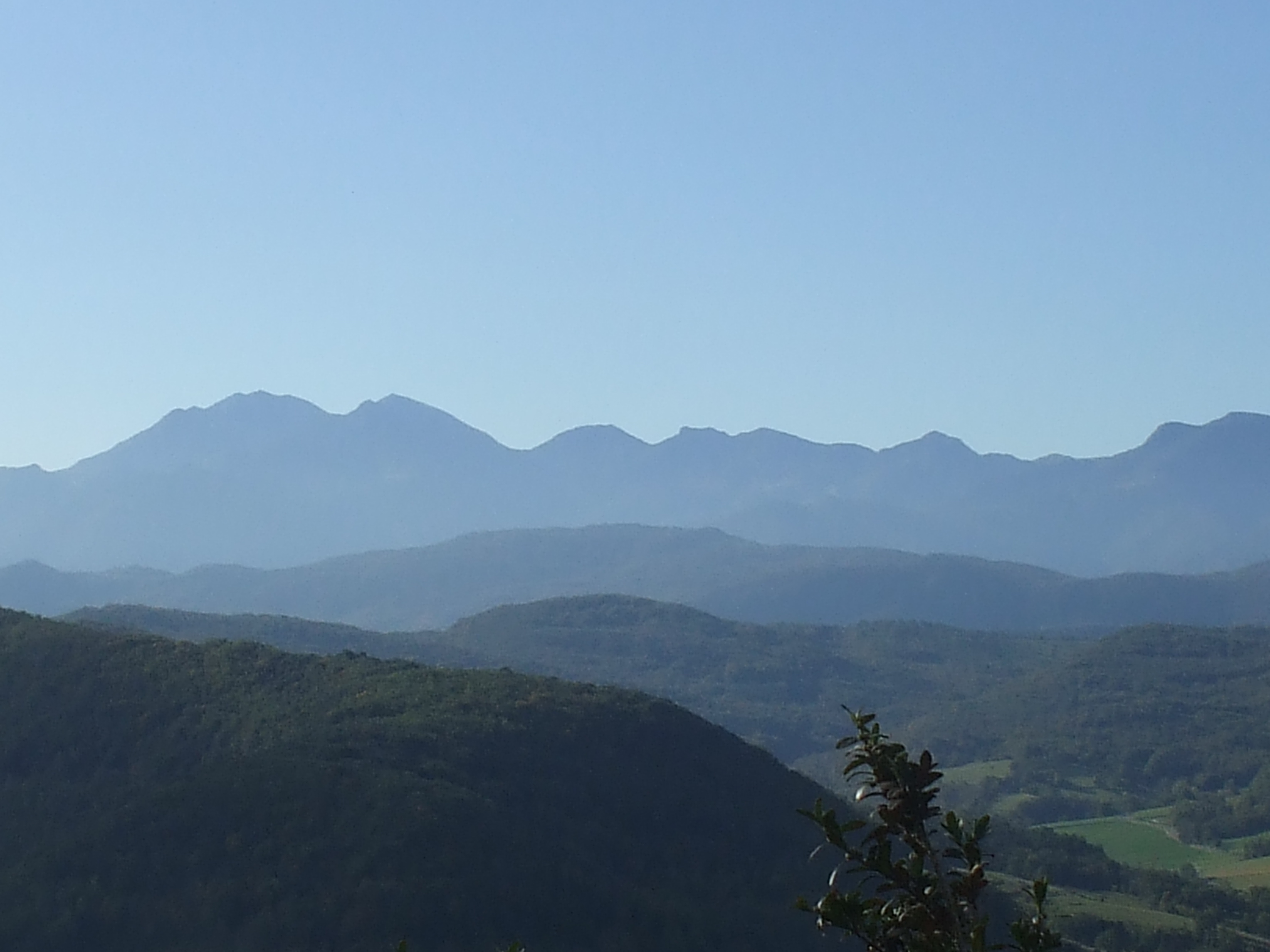
Zero Neuf: 09, the Ariège, our department.  We love the space, the huge variety of scenery. There’s gently rolling countryside that wouldn’t be out of place in Shropshire with its orchards and winding lanes, oak and beech forests, gentle foothills with grey Gascon cattle, and stunning, awe-inspiring mountains with craggy outcrops and peaks.  And all within easy reach of our house.

A few minutes from our house...and this is the view

...and higher up, much nearer Spain, another view