Six Degrees of Separation: from After Story to Beastings

On the first Saturday of every month, a book is chosen as a starting point and linked to six other books to form a chain. Readers and bloggers are invited to join in by creating their own ‘chain’ leading from the selected book.

Kate: Books are my Favourite and Best
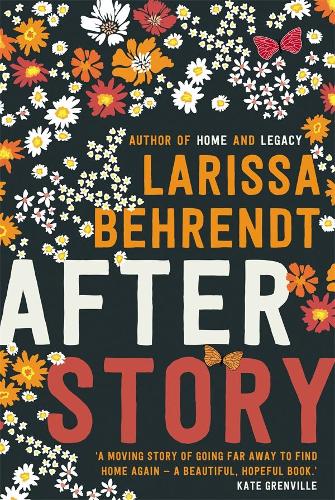
I haven’t read this month’s starting book, After Story, by Larissa Behrendt. I understand it’s about a mother and daughter struggling to come to terms with the death of a sibling. They embark on a journey, visiting the sites important to their literary idols. Idols who include the Brontës. So …
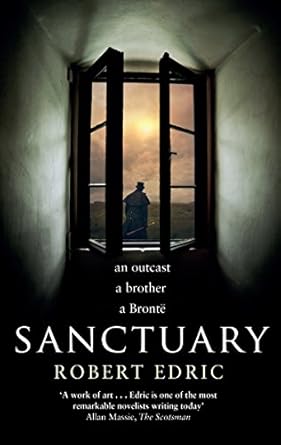
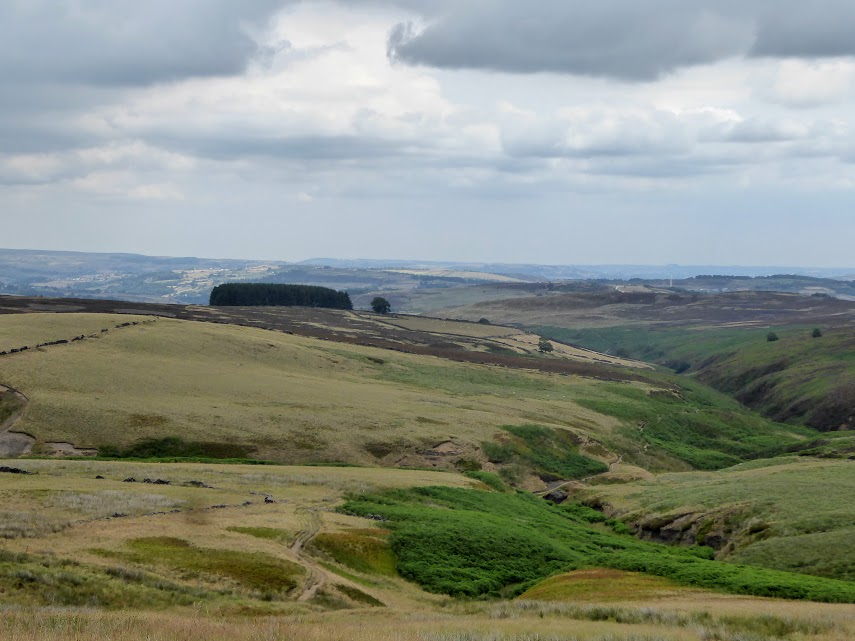
Robert Edric‘s Sanctuary. You can’t be familiar with the brooding moorlands near Howarth and not feel as though you understand something of the Brontë family and their lives. Most of us think we know about them: the mother and sisters who died; the sisters who remained hewing their path towards immortality in slow, painful steps. And then there’s the brother, Bramwell, the black sheep, fighting his failures, his addictions, his inability to find a way to make something of his life. He is the subject, in fact the ‘author’ of this book. He paints a sorry picture of his stumbling path, in the final year of his young life, towards illness, addiction and death. I found the picture he painted of himself – hopelessly depressed, fault-finding, increasingly estranged from his family, increasingly self-deluded a fascinating one. In this book, Bramwell does not dig deep in his moments of introspection, but then you wouldn’t expect him to. He doesn’t favour us with pen portraits of his father, his sisters. Just tantalising glimpses of what they’re like. But nobody is more self-centred, less self-aware than Bramwell Brontë. Edric has carefully constructed this book in a series of vignettes that barely constitute a narrative, but which leave us feeling bewildered sympathy for an intelligent young man who has utterly lost his way. A beautifully imagined reconstruction of a life ill-lived.
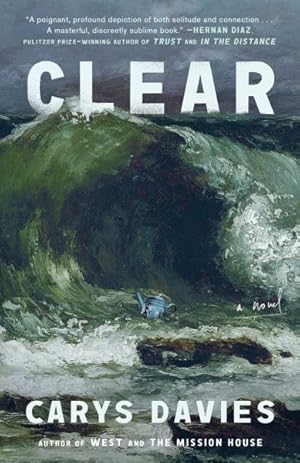
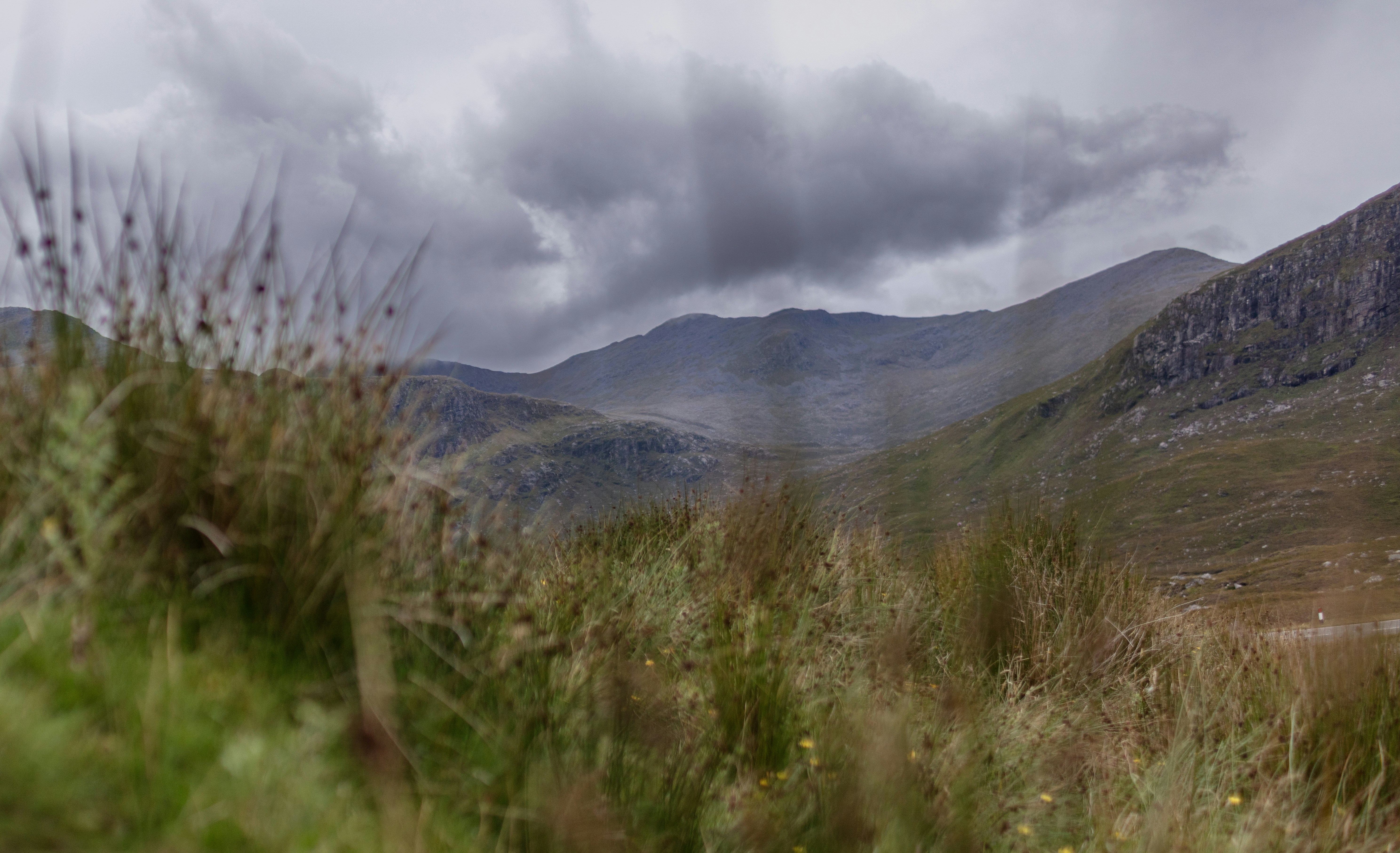
Here’s another book re-imagining history. Carys DaviesClear. This is a story about a vanished way of life. One which vanished during the devastating Highland Clearances in Scotland during the 19th century. A man Ivar, the sole inhabitant – with his few animals – of a remote island, is alive to the natural rhythms of the island – the many seasons, winds, mists, rains and tides that govern it. And when John Ferguson turns up to evict him, but instead falls into a concussioned coma from which Ivar nurses him back to health, he too falls under the island’s spell. Haltingly Ferguson begins to learn the vocabulary, then the language itself which Ivar speaks. The books celebrates that language and the fragity of life in such a spot, as well as asking questions about the future of Ivar, John, and John’s wife Mary, all of whom are in different ways implicated in the consequences of the Highland Clearance.
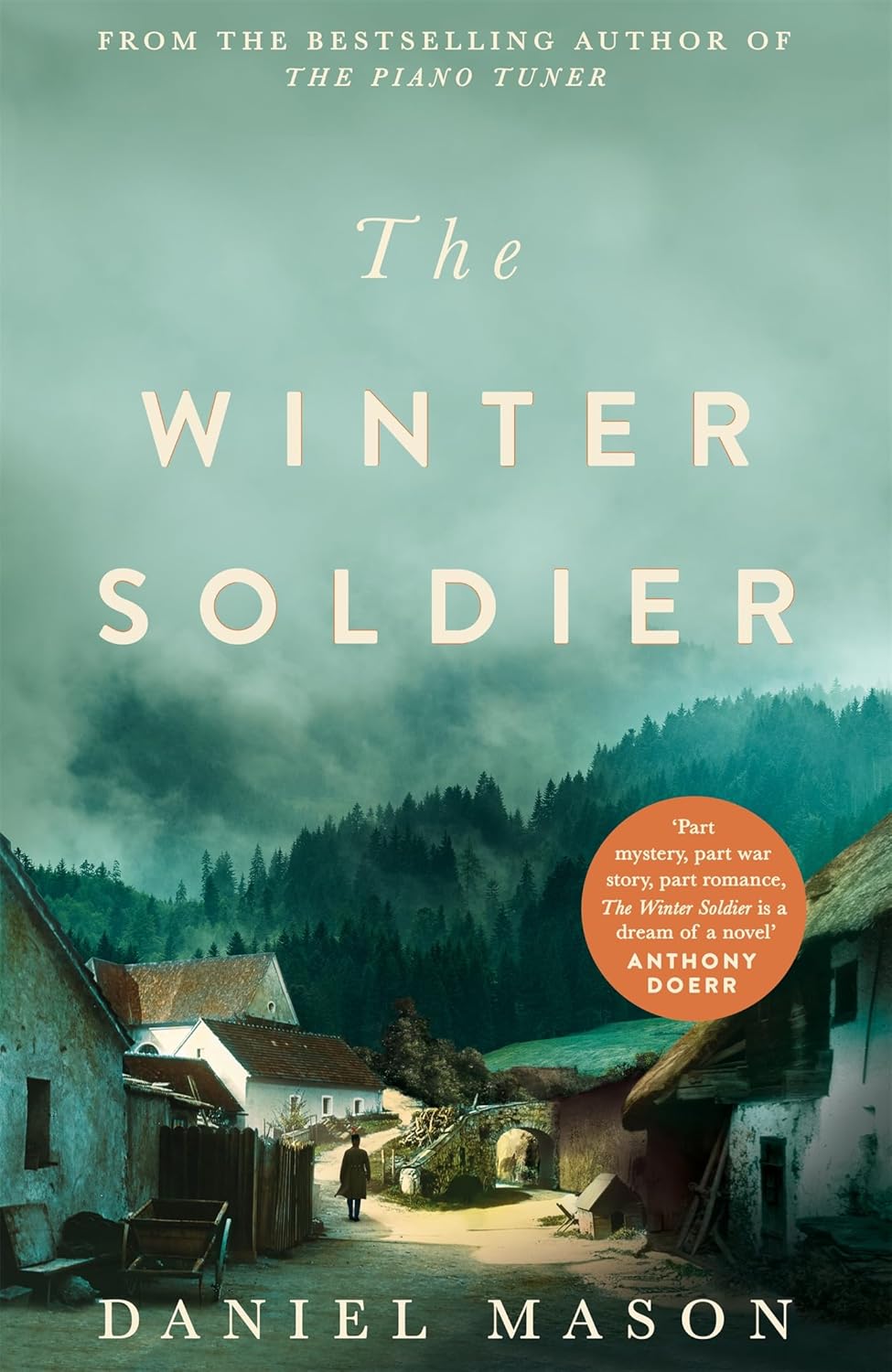
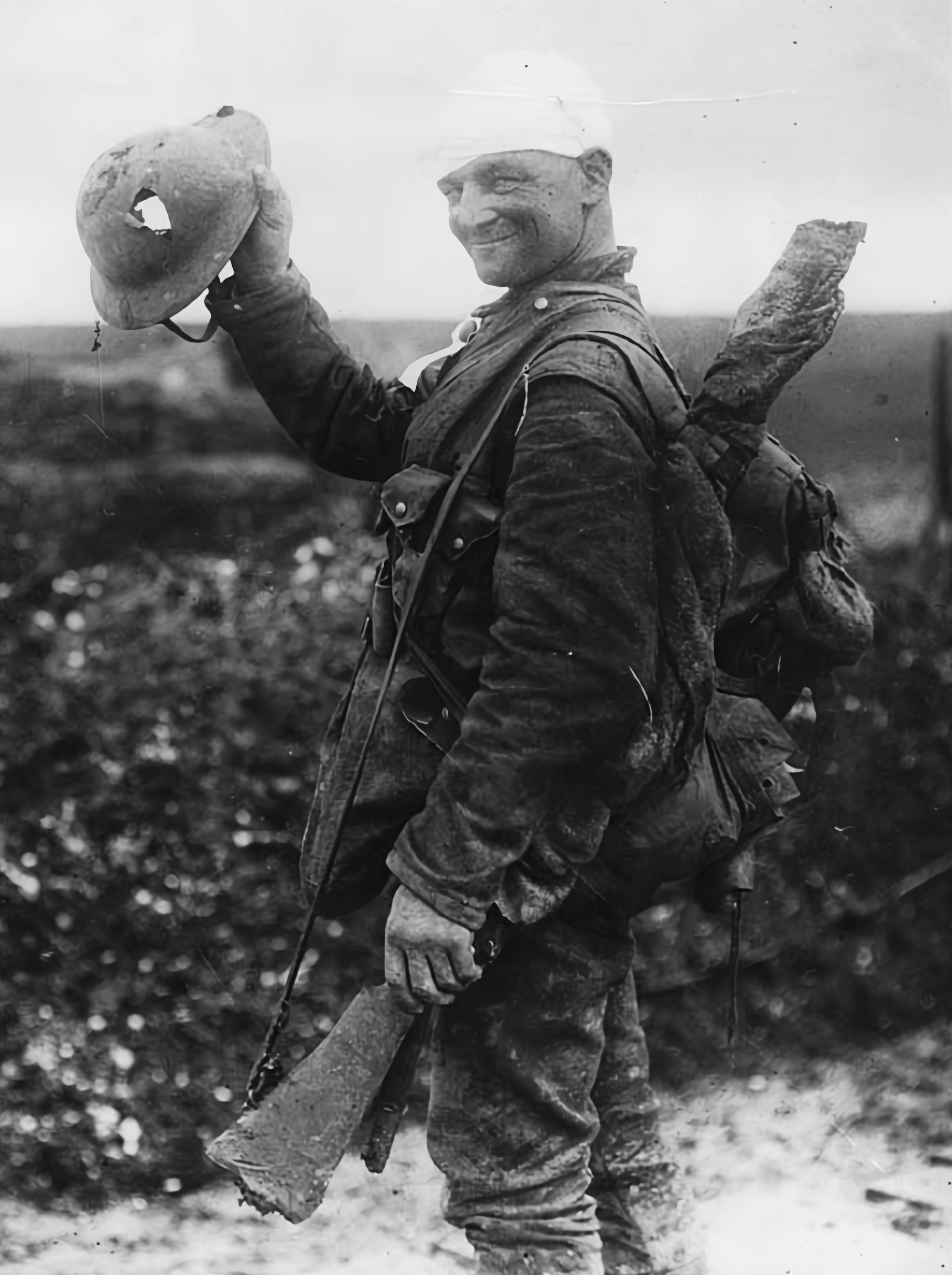
A forbidding terrain and climate are central too to Daniel Mason‘s The Winter Soldier. We’re in Eastern Europe at the beginning of the First World War early on in this book – well, Vienna rather than Easter Europe. Privileged Lucius Krzelewski, medical student, finds himself put in the role of fully-fledged doctor, with only a nurse who’s also a nun, and a few other men – a cook and general hand, in a woefully underequipped and isolated field hospital on the Eastern Front. He does his best to learn his craft, largely from nun Margarete, and has to make decisions about the onward fate of soldiers who leave his care. One such decision has lasting consequences for the soldier concerned, for Margarete and for him. And he falls in love, just before the war sweeps him up once more and makes decisions for him…. A heartfelt and involving story, bringing to life the appalling conditions which so many had to contend with on the Eastern Front.
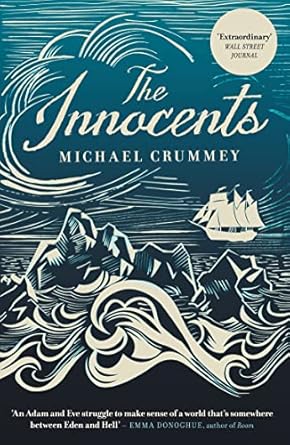
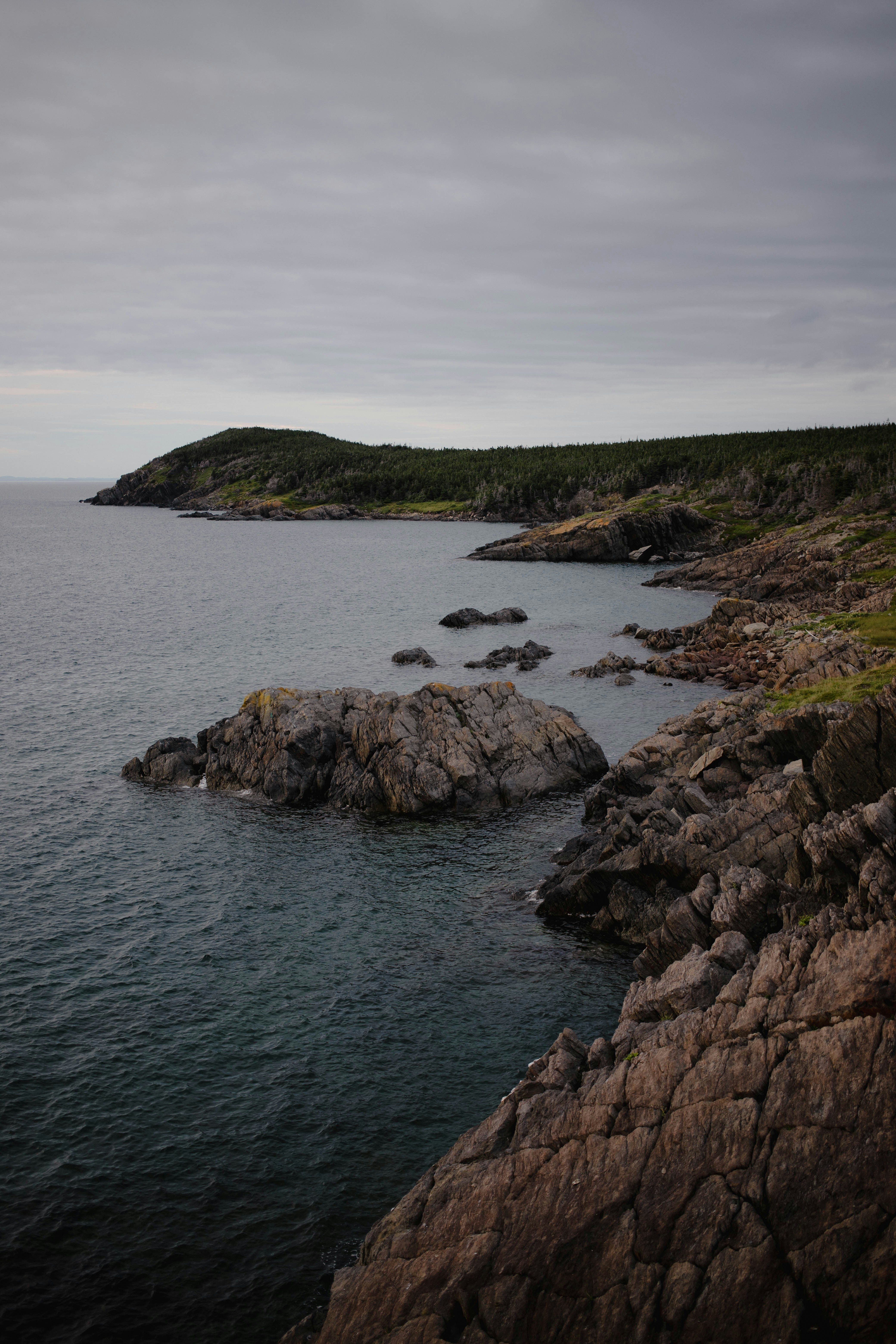
Another book, another unforgiving landscape in Michael Crummey‘s The Innocents. Set in 19th century Newfoundland, this is the story of a brother and sister, aged about 12 and 10 at the beginning of the book, whose baby sister, then their mother, then their father die after a long period of illness. They are isolated. The nearest town is not near at all, and they get supplies only twice a year, when the ship Hope arrives to buy what they have produced and sell them what they need for the coming year. Evered and Ada cope. They have no choice. The landscape is harsh and unforgiving. Fish and seals are their natural resources. There are occasional adventures – to a shipwerecked vessel, where what they find at first delights, then horrifies them. There are occasional visitors from distant ships: well-drawn characters who add leaven to their lives. It’s the depiction of the landscape, then the story of the maturing of these two lonely, isolated yet self-sufficient children as they become adolescents that gives this book its unusual power. A gripping tale.
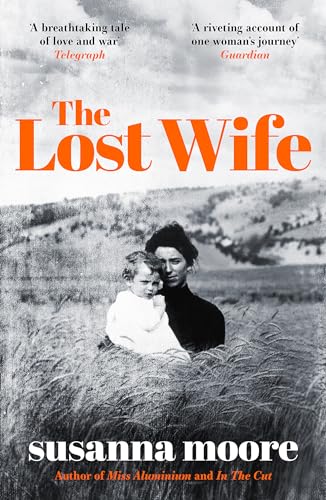
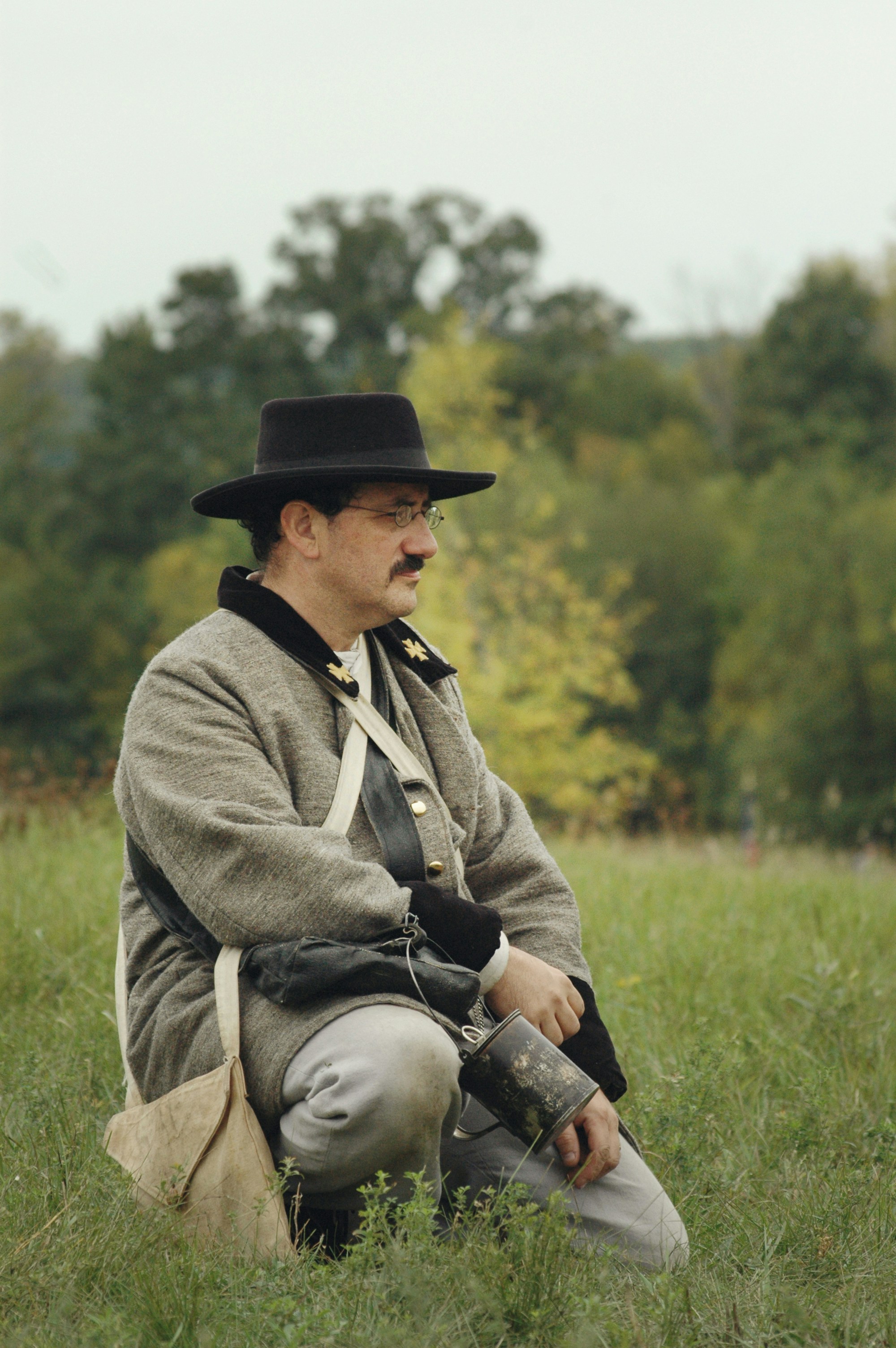
We’ll stick with contending with demanding circumstances and landscapes, and with not-so-recent history too by looking at The Lost Wife by Susanna Moore. In 1855, Sarah leaves her abusive husband and her child, to flee from Rhode Island to the American West, Minnesota: Sioux country. Resourceful, she quickly finds a husband, a doctor, who decides his calling is in a community where Native Americans live too. This is the story of a woman who becomes friendly with the indigenous population, and who finds her husband, herself and her children in danger when this population rises in revolt at the unfair treatment routinely meted out to them. In the ensuing uprising, she’s not entirely trusted by some native Americans, but thoroughly despised by her fellow whites. What should have been a gripping rendering of a rather terrifying and unedifying history based on known facts is rather prosaically yet choppily told. A slightly disappointing read, from which I nevertheless learnt a lot about this piece of pre-Civil War American history.
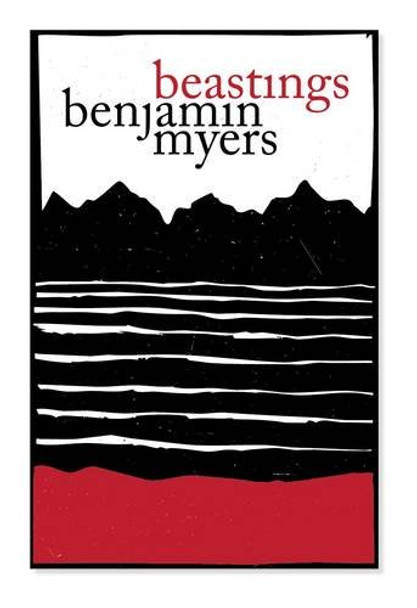
Uncompromising stories set in testing landscapes seem to be this months’s choices. Why change the formula? Beastings is by my current pin-up author, Benjamin Myers. A priest who’s no better than he ought to be enlists the aid of a poacher to pursue a mute young girl, the product of a brutal orphanage, who has made off with a baby whose parents – specifically the father – she mistrusted. Their pursuit takes them across an unyielding and elemental Cumbrian countryside which is itself a character in this austere, bleak novel. It’s not entirely clear when this novel was set, but it doesn’t matter. The Girl (no character is named) meets one or two helpful souls: a woodsman, a farmer, but on the whole she and the baby are alone, trusting to the landscape and the elements as they undertake their increasingly desperate escape from a life with few prospects into an equally bleak and impossible future. A shocking, absorbing, involving story.

My chain this month seems to consist of books which relate more to each other than to the starter book. Ah well. Next month, our book to begin the chain is Colm Tóibín’s Long Island, which has been on my Must Read list since the day it was published.

Photo credits: Me; Ed Philips; National Library of Scotland; Erin Minuskin; Jen Theodore.
Six Degrees of Separation: from The Museum of Modern Love to On Gallows Down

On the first Saturday of every month, a book is chosen as a starting point and linked to six other books to form a chain. Readers and bloggers are invited to join in by creating their own ‘chain’ leading from the selected book.

Kate: Books are my Favourite and Best

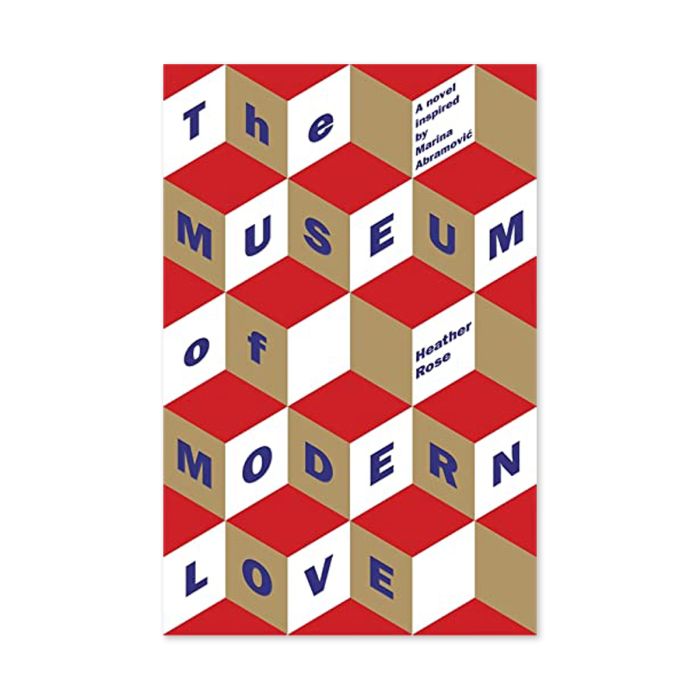
This month’s starter book is The Museum of Modern Love by Heather Rose, and I really enjoyed it.  I’d like to thank Kate for drawing our attention to it. It’s an illuminating and satisfying examination of how we interact with art and what we get from it.  It’s told from the perspective of Arky Levin, a composer whose terminally ill wife has forbidden him from visiting the hospital where she is dying, so he can get on with his career, and from a clutch of – very different – subsidiary characters. The real hero of the book is performance artist Marina Abramović, who in 2010 sat immobile in MoMa’s atrium while spectators queued up to take turns sitting opposite her while looking into her eyes.

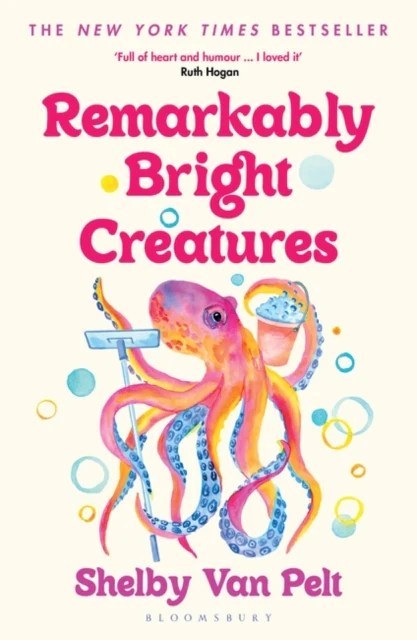
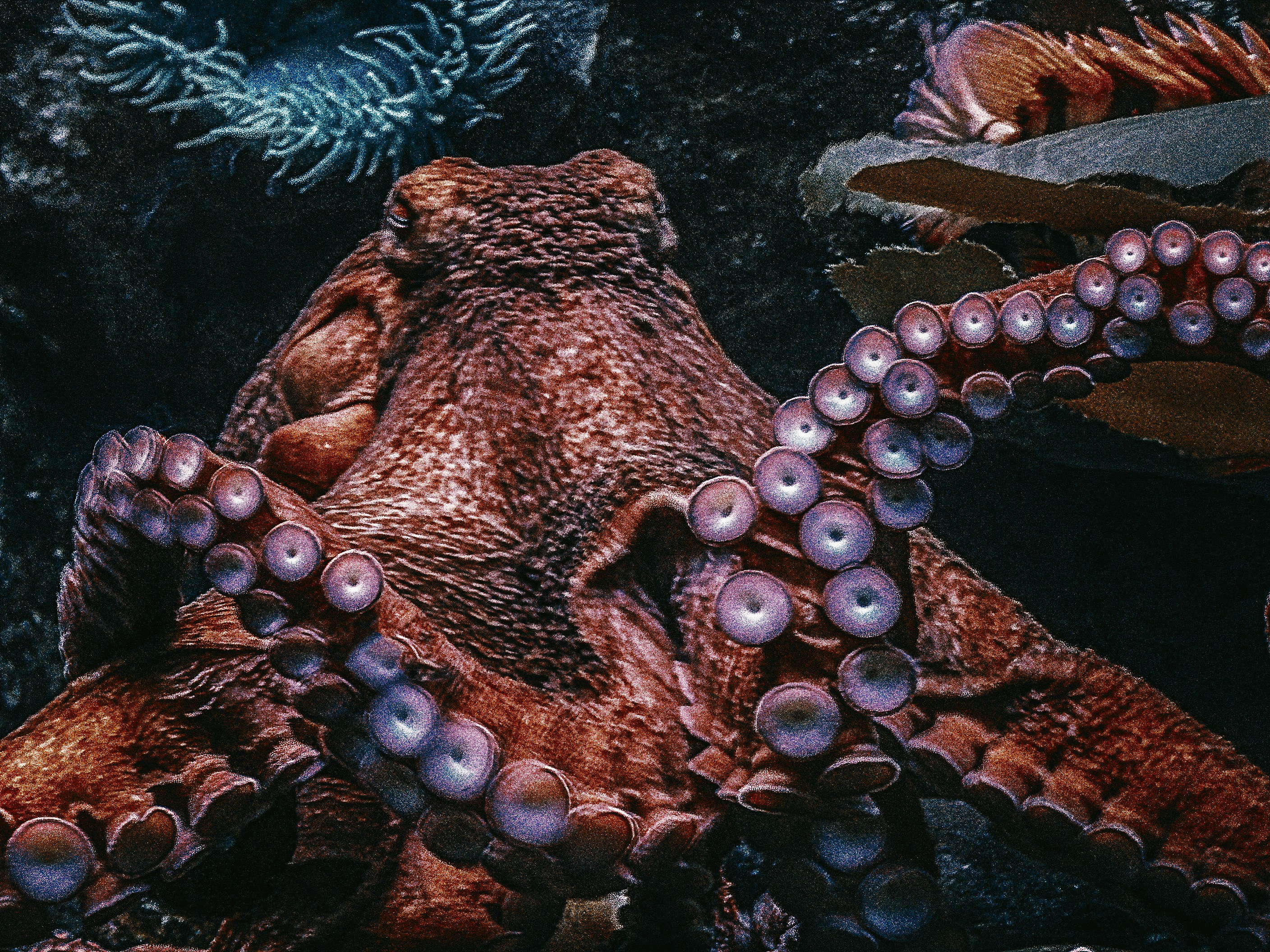
Marina Abramović was an exhibit. So’s my next character. He’s an octopus in an aquarium, and his story is told in Shelley Van Pelt‘s Remarkably Bright Creatures. Seventy year old Tova Sullivan needs to keep busy since her husband died. She’s needed to keep busy for years in fact, since her son Eric was apparently drowned – his body was never found. So she works as a cleaner in the town’s aquarium. And it’s here she establishes a bond with an elderly octopus, who also gets to tell his story in short occasional chapters. Suspend your disbelief. This works. The other main character is Cameron, a man with a chip on his shoulder searching for the father he never knew. This book tells the story, the journey of each of them, with a light touch: with humour and with wit. A light, yet involving and engaging read.

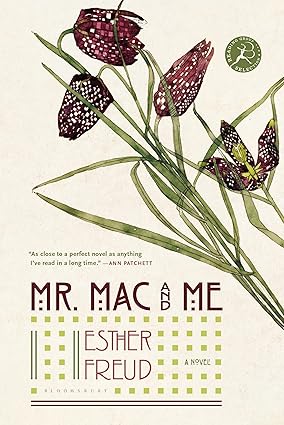
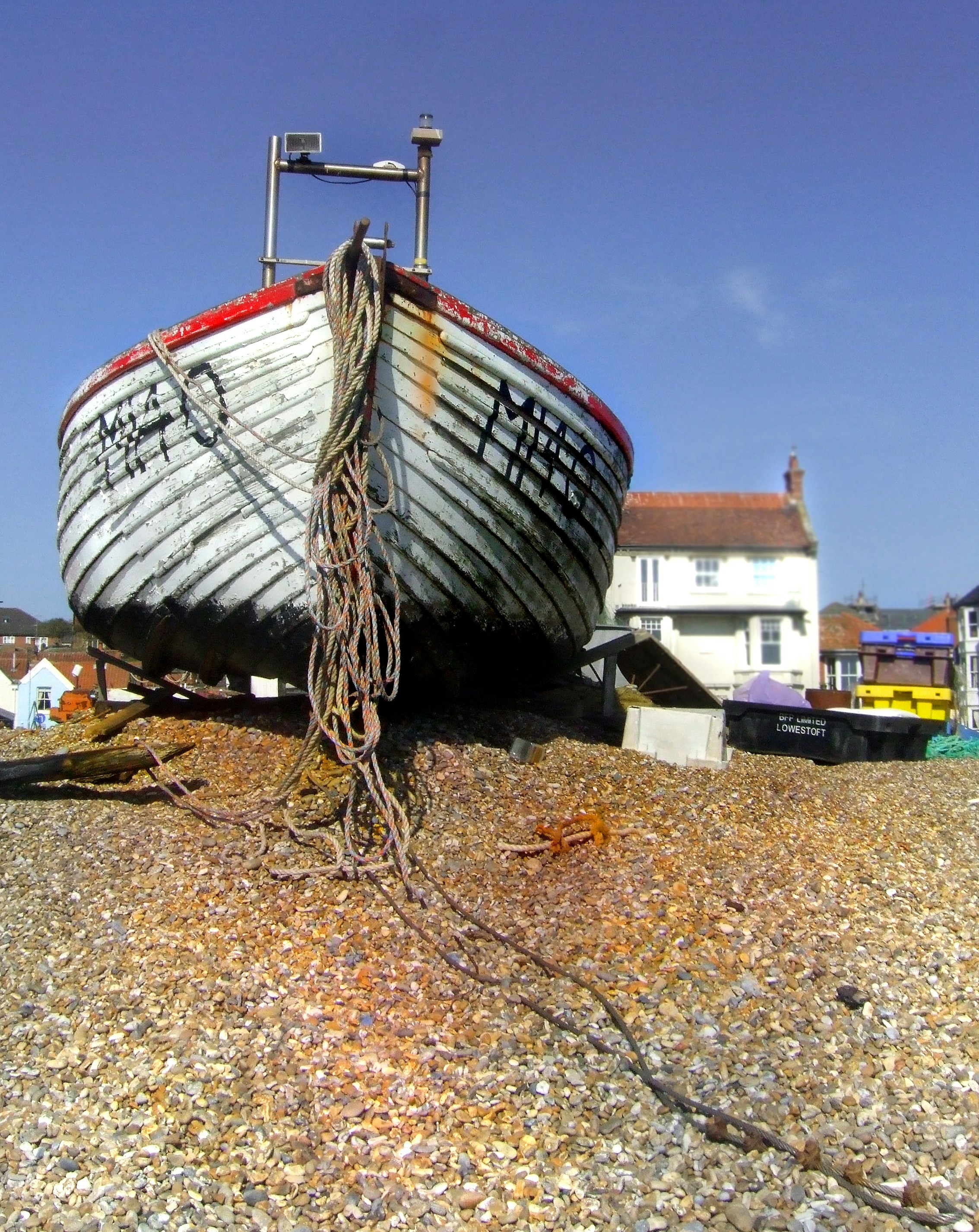
From an unhappy octopus to an unhappy – and creative – man: Charles Rennie Mackintosh. He and his wife fetched up in a Suffolk coastal village at the beginning of WWI, to nurse his wounded ego, with commissions unforthcoming, and his Glasgow School of Art unrecognised. His story, and that of the community where he’s settled for a while is told through the voice of 11 year old Thomas Maggs whose own family life is difficult. This book – Mr. Mac and Me, by Esther Freud paints a picture of life in a working coastal village as well as that of the life of a poverty-stricken and disappointed artist. An absorbing story.

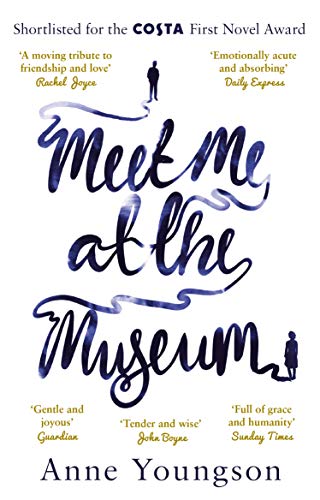
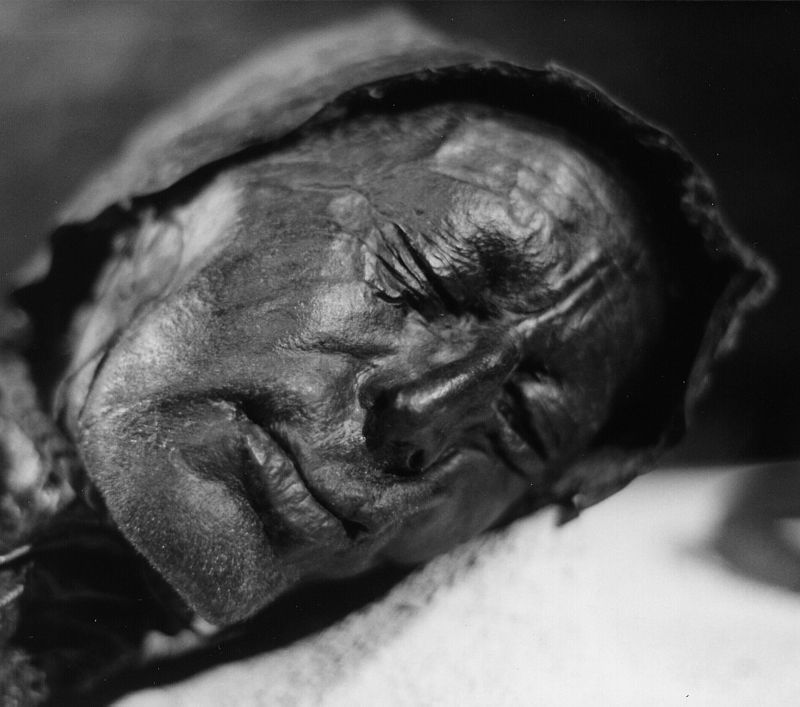
Two more disappointed people: in Ann Youngson’s Meet Me at the Museum. This book of considerable charm is told entirely in an exchange of letters between an English 60 year old farmer’s wife and the curator of a Danish Museum which houses the Tollund Man. Initially formal, the letters become more intimate. This busy outdoorsy farmer’s wife with her chintzy house couldn’t be more different from austere Scandinavian Anders. But both are lonely and have gaping holes in their lives. With every letter they disclose more of their joys, disappointments and difficulties and draw inexorably closer. At the end is a revelation. What effect will this have on them, on their burgeoning relationship? We can only speculate. A touching and intimate book.

These two characters are in different ways rooted in their local surroundings. Anita Sethi in a British born woman of British Guianan heritage who suffered a racist incident while travelling by rail which resulted in a conviction for the abuser. It prompted her to plan and execute a journey along the backbone of England – the Pennine Way – which she records in I Belong Here. This was for her, an inexperienced walker, a journey of healing and a time for reflection. It also became an extended metaphor for her feelings about her status as British person from an ethnic minority; the Pennines as ‘backbone’; of ‘making your own path’; of ‘ruggedness and strength’; of laws which protect landscapes and humans .. and so on. She muses on community, on history, on legislation as she walks an area I know well, and gave me, a white person with roots in this part of the country, plenty to think about. I’ll be interested in how the rest of the proposed trilogy develops.

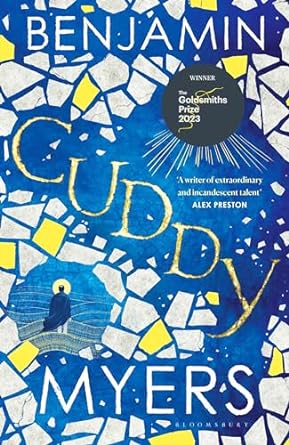
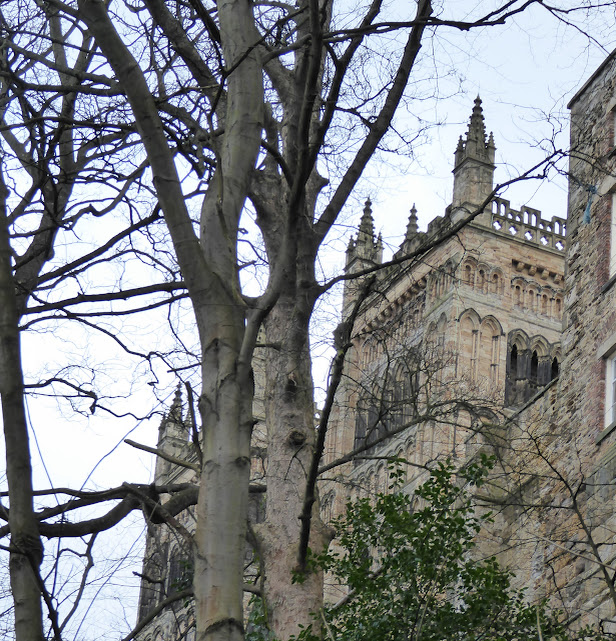
Here’s another book which begins with a journey through northern England. Cuddy, by Benjamin Myers. I know little about Saint Cuthbert beyond the fact that he was a simple man, much venerated in his own time. Which explains why a motley band of monks and devotees intermittently spent years moving his remains around to save him from the depredations of Viking raiders. And we meet some of them here, in the first section of the book set in 995CE, where orphaned Ediva, in her breathless disjointed but poetic prose recounts their journey, the landscape, and her vision for his final resting place. In Book Two, set in 1346, masons are enhancing and repairing the mighty hilltop cathedral (Durham). The wife of one meets and succumbs to another …. Then we leap to the 19th century to meet the opinionated and cocksure Forbes Fawcett-Black who has been invited to join the team exhuming the saint to see if the legend that his flesh is incorruptible is true. And finally we are in 2019, where a young under-educated man who cares for his dying mother is employed as a gopher to the current restoration team. His eyes are opened to a world and a heritage he had not known about. How different and yet how connected the sections are to each other. The language of each couldn’t be more different one from the other: free-flowing yet poetic; dense blocks of prose; a pastiche Victorian ghost story; a rich narrative in which sense of place and societal deprivation are juxtaposed The kinds of story told are utterly different. Yet links are there – there’s always an owl-eyed lad in the narrative, for instance. A richly complex feast of prose and poetry, provoking thought and discussion long after the last page has been turned. This is a book inviting – and deserving – several readings.

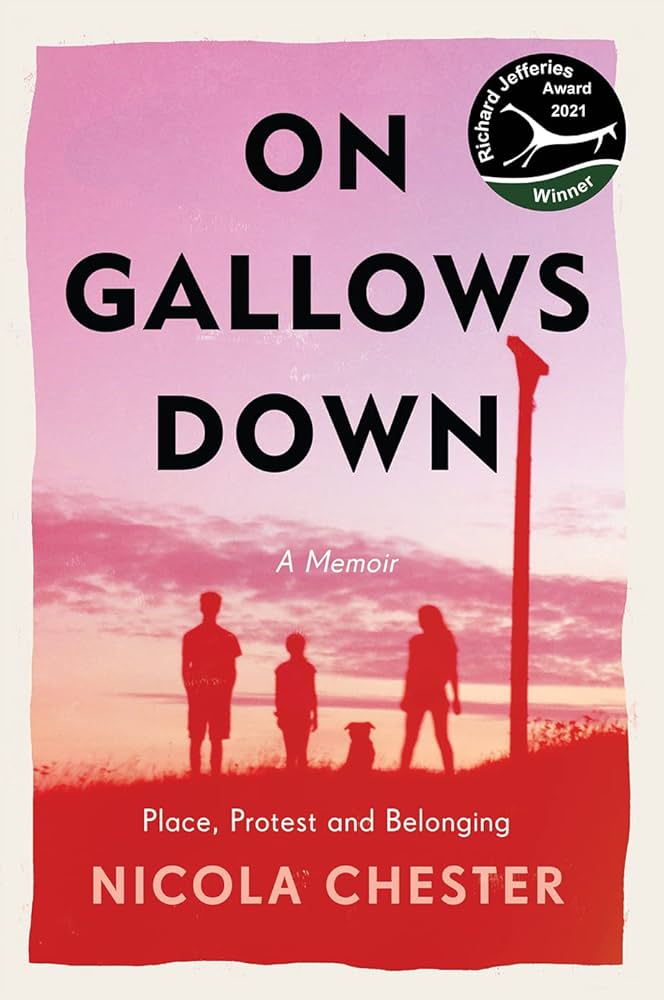
My last book is also rooted in the British landscape. But Berkshire this time. On Gallows Hill, by Nicola Chester. Nicola Chester has lived her whole life in Berkshire. This area has had a history of rebellion by the under-represented. John Clare wrote his poetry here. The Civil War had bitter battles here. Tenants throughout the centuries rebelled against their landowner masters. It’s where Greenham Common, site of the women’s peace camps, and Newbury Bypass, a much fought-over project which destroyed so much natural and rural history when it was sited near her homes. Chester has been a tenant all her life, and understands powerlessness. She also understands the natural world, and deepening her understanding of it, spending time in it with her family, particularly her children, is her salvation. Her battles change to doing her part to save the natural world. She has her nature writing accepted by the RSPB, the Guardian, her local paper, and this becomes part of her fight. She writes with lyricism and passion, describing the seasons, the creatures that form part of her day-to-day environment with incisive, poetic words and concludes ‘Anyone could make a place their home by engaging with its nature’. A book to read slowly, and to savour.

I think we can link Chester back to Abramović, since both share a passion for the things that matter to them, and go to often uncomfortable lengths as they invite the world to share their compulsive interest.

Next month? Our starter book will be After Story, by Larissa Behrendt.

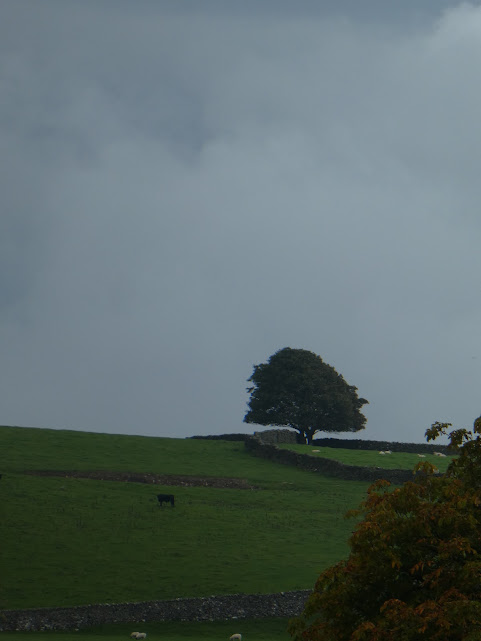
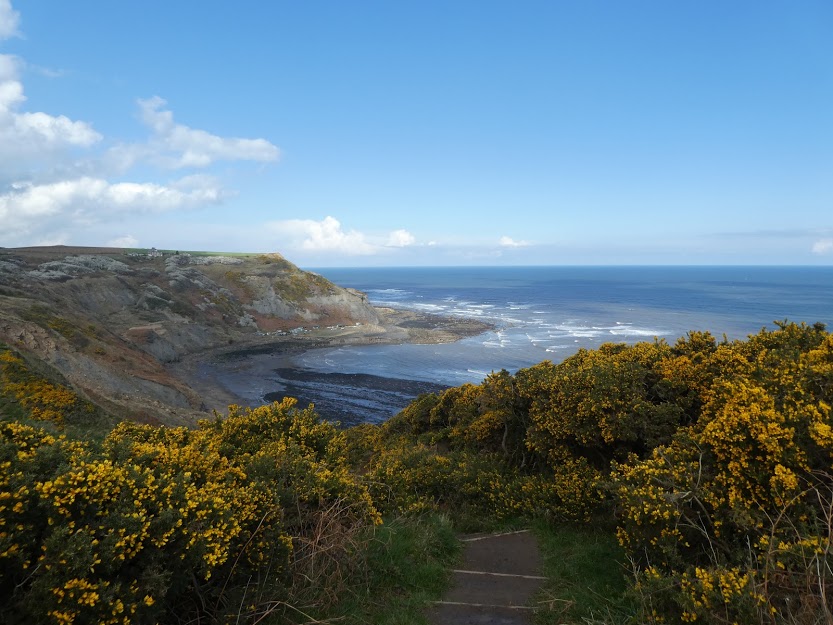
Several illustrations are via Unsplash: (i) K Mitch Hodge (ii) Pete Williams and (vi) Frances Synge. (iii) Tollund Man is in the Public Domain: Sven Rosbum . (iv) Durham Cathedral and (v) Pennines landcape in North Yorkshire, are my own.

Three Books. Three Good Reads

Considering that reading is such an important part of my life, it’s perhaps strange that I rarely blog about books.  Thanks to Sandra, writing from A Corner of Cornwall, I’m going to put that right this week.  She in her turn responds to Sam, at Taking on a World of Words.  Every week, she poses this question:

What are you currently reading?
What did you recently finish reading?
What do you think you’ll read next?

I can answer that.

I’m reading Benjamin Myers’ The Offing.  I first met this writer  Under the Rock, his poetically written book about his home patch in Mytholmroyd, West Yorkshire, and which simply defies categorisation – autobiography, geology, true crime, edgelands, poetry … it’s all here.

The setting for ‘The Offing’: the coast near Robin Hood’s Bay.

The Offing though, is fiction.  It tells the story of Robert, the sixteen year old son of a Durham coal miner, on the cusp of adulthood, as he foot-slogs slowly southwards just after the Second World War.  His simple hand-to-mouth existence changes when he meets Dulcie, who’s older, eccentric, from a very different world, and who opens her home to him. I won’t tell you more, because you may like to join the long queue of would-be-borrowers at your local library.  Here you will find an involving story, lyrically told, by an author who’s immersed in the sights, scents and images of the northern countryside he knows and loves, and who paints his characters well.

It follows on well from the book I’ve not long finished:  Julian Hoffman’s Irreplaceable.  I was led to this book by Bookish Beck.  It’s her book of the year.  It may be mine too.  Its subject matter is urgent:  the destruction of our planet.  Hoffman visits marshland in Kent that’s been under frequent threat of becoming another London airport.  He visits Indonesian islands whose unique coral habitats have been partially destroyed through mining.  He visits allotments outside London; a Macedonian National Park; Kansas prairie land … and so many more.  Such variety, and all so threatened in different ways.  Some of these stories end well, others badly, and yet others … who knows?  This is though, a call to arms. Hoffman makes it clear that our future lies not only in the hands of ‘experts’, but in indefatigable ordinary people battling for their own communities, their own treasured landscape.  And it’s not simply a battle between Progress and Tradition.  Life is more nuanced than that.  Sometimes, compromises may be needed.  But what kind of compromises?

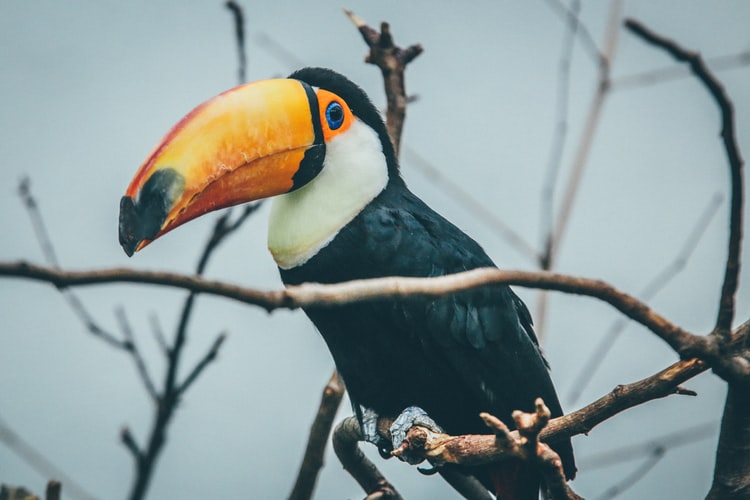
Now. Why have I chosen a photo of a toucan to accompany my thoughts on Irreplaceable? You’ll have to read the book to find out. (Photo from Nick Karvounis , Unsplash)

Though a fairly long book, this is an accessible one.  The prose is evocative and to be lingered over and savoured.  It’s an excellent, beautiful read as well as an important one.

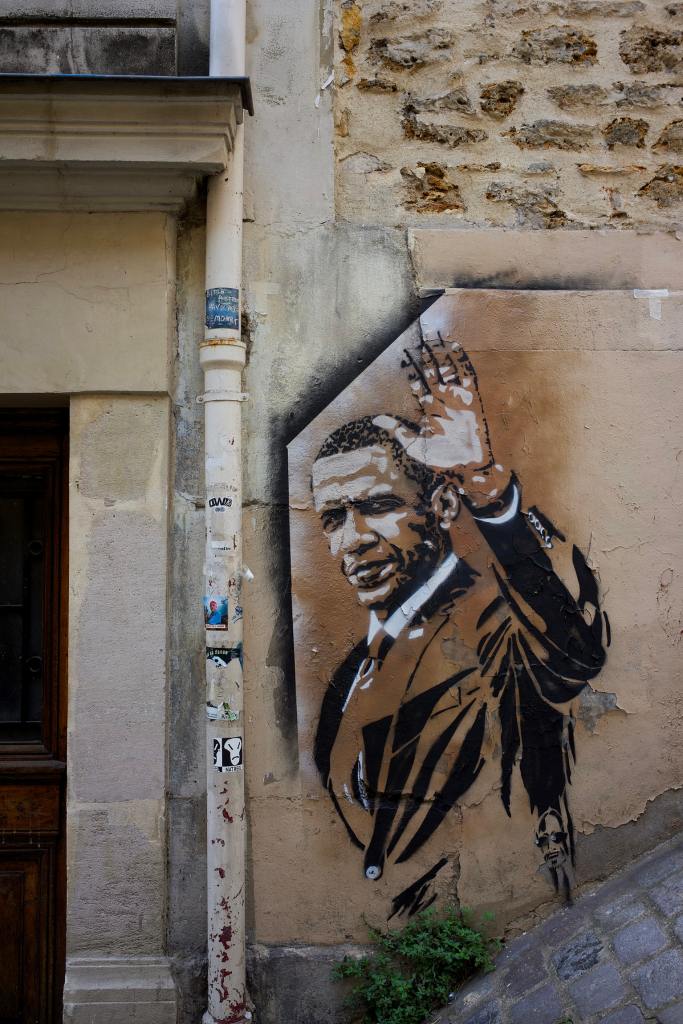
And the next one to read?  This time, that’s easy.  Book Group is coming up: best get this month’s choice under my belt.  An American Marriage, by Tayari Jones.  If Barak Obama describes it as ‘moving’, one of his favourite summer reads of 2018, that’s good enough for me.  I wonder what Donald Trump’s favourite book is?

Barak Obama – street art in Montmartre (Lubo Minar: Unsplash)