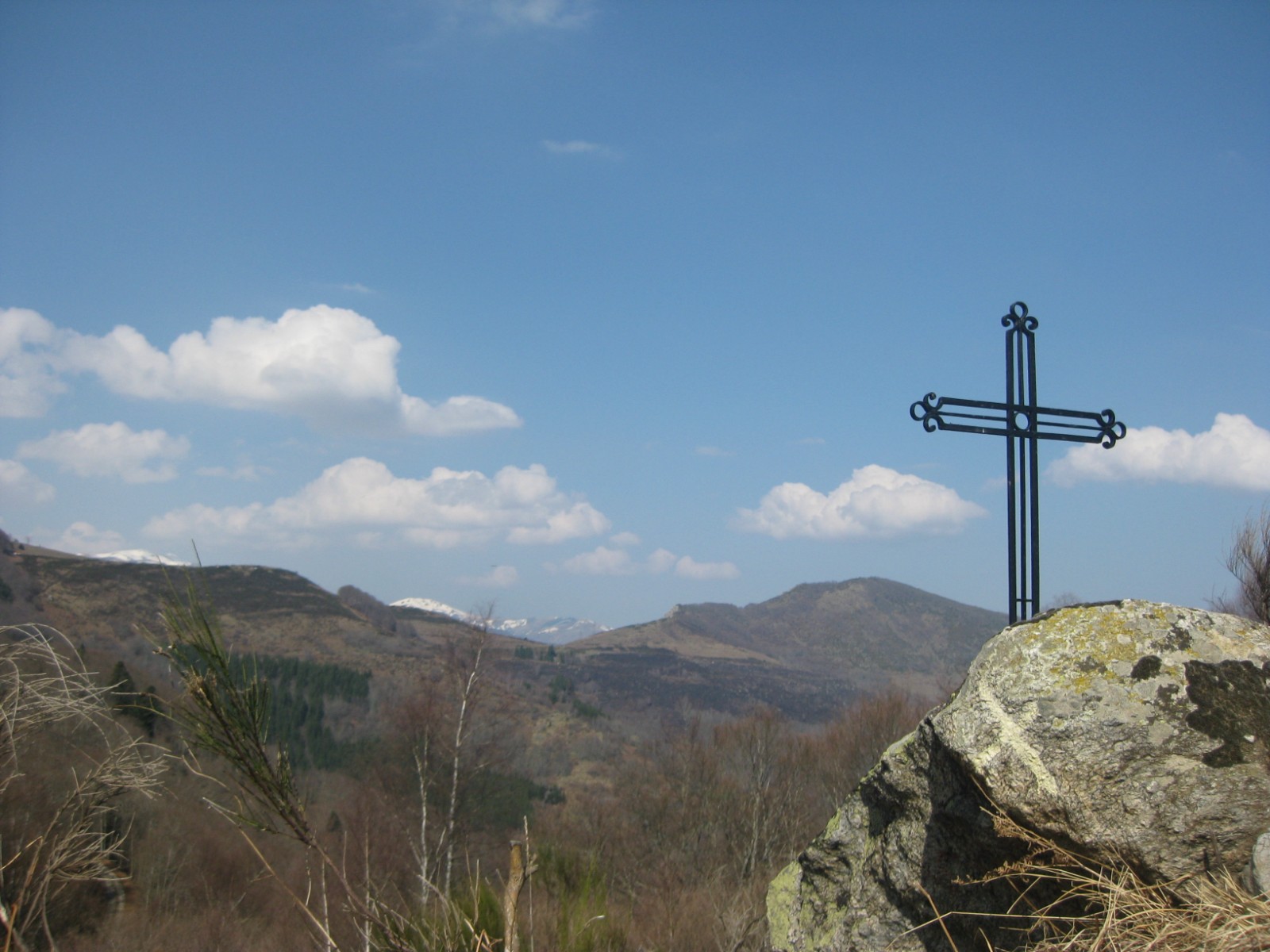
Such crosses - nearly all different - marked our route
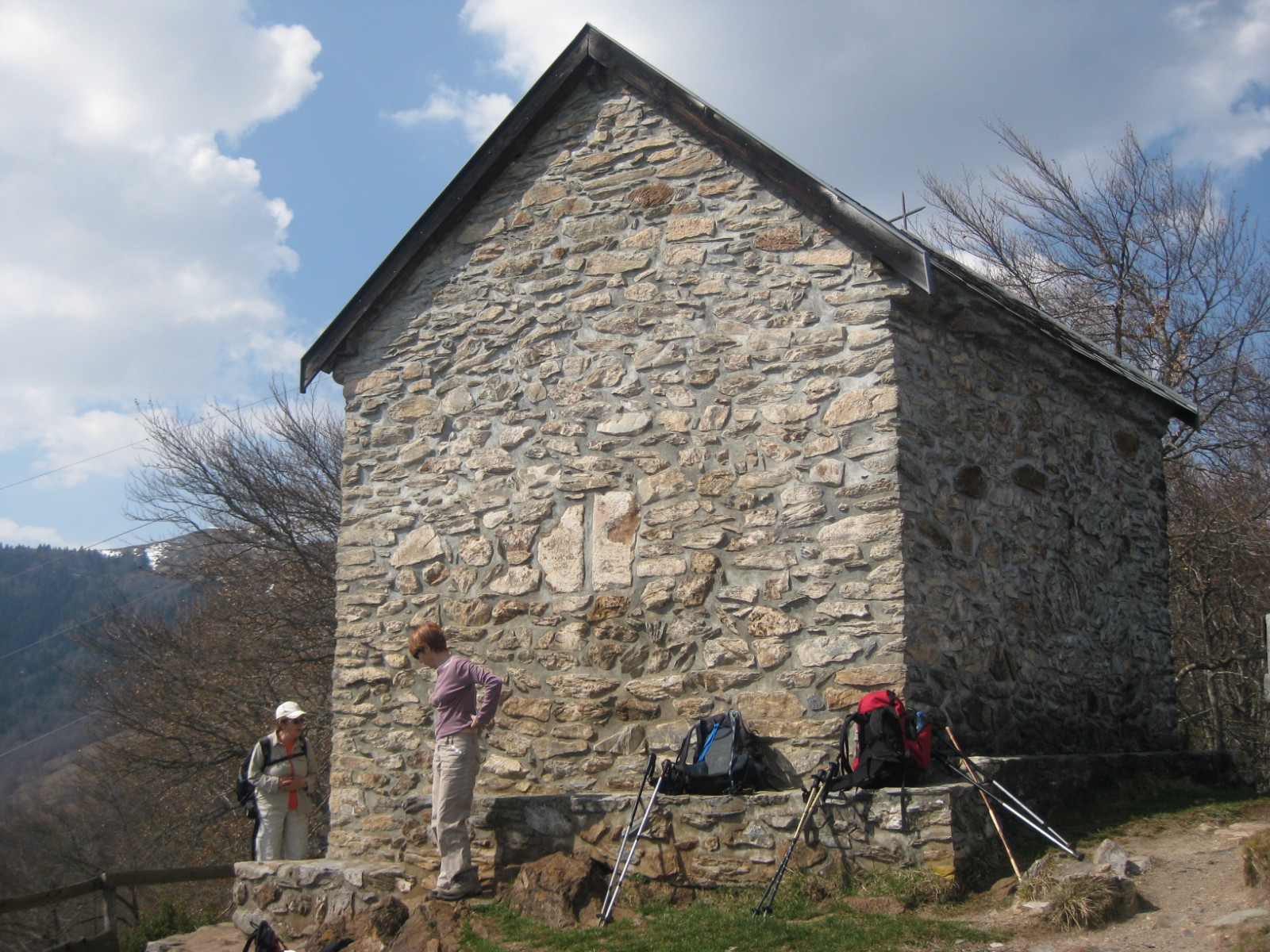
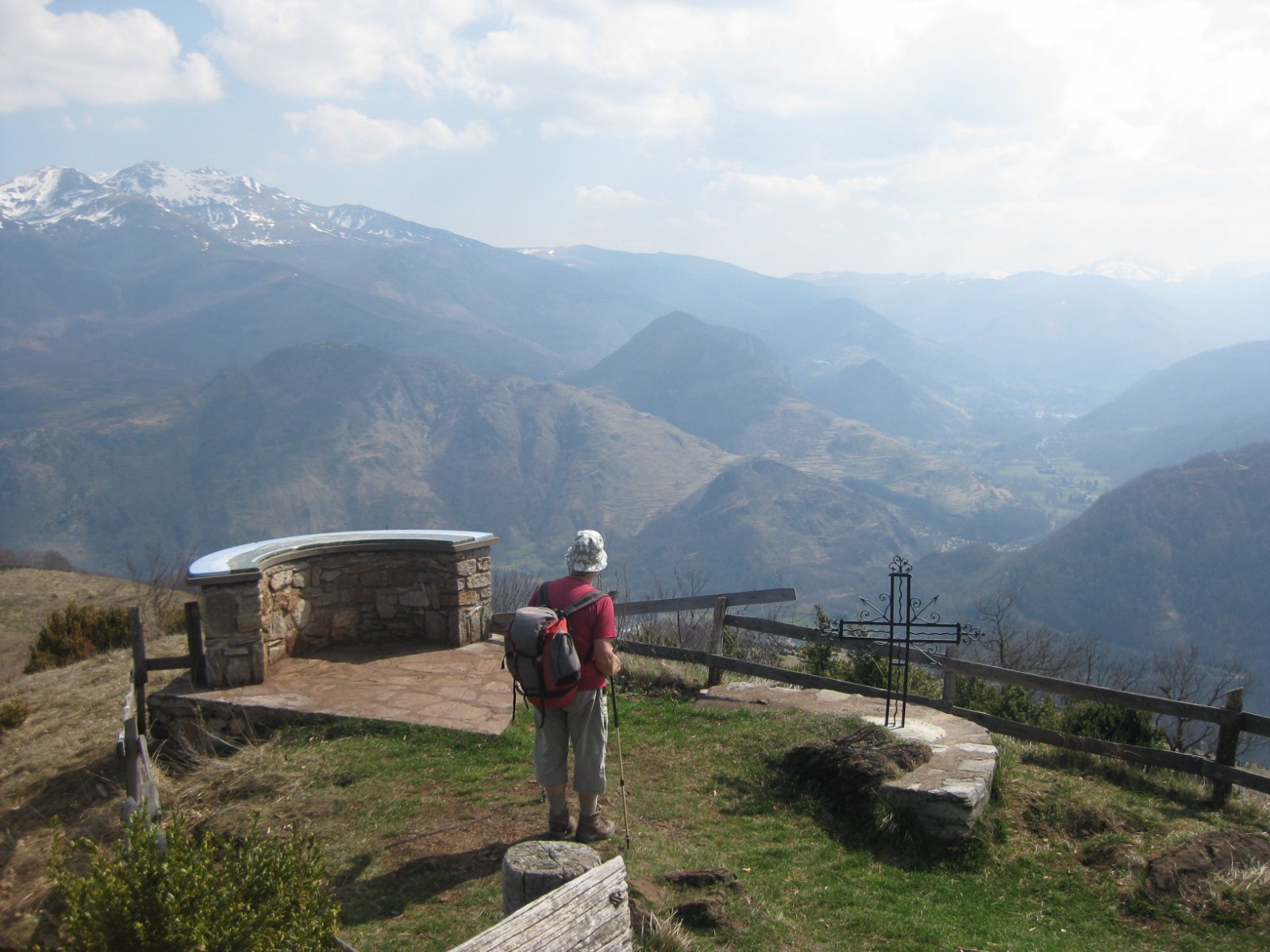
Our walk today was to the Chapelle de Saint Barthélemy, high in the Vallée d’Ax, beyond Tarascon. We quickly realised we were on a pilgrimage route – our path was marked by decorative iron crosses. But none of us knew why. Now I know, and it’s a grisly story.
Back in 1854, cholera hit the area. It’s hard to see how it spread in such a thinly populated region, where every settlement is surrounded by forest, fields and pasture. Our drive up to the little village of Larnat, where we parked to begin our walk, was up and up a long single track road characterised by an unending series of hairpin bends – and no villages or farms on the way once we’d left the lower slopes. The road to Larcat is up a similarly tortuous route. But despite this, cholera did arrive in the area, and when it struck, the people of Larcat didn’t hesitate to massacre the poor family responsible. In time, the few survivors built a tiny chapel at the summit, dedicated to Saint Barthélemy, and promised an annual pilgrimage. This chapel is a very simple windowless structure. Some garden sheds are bigger. It enjoys splendid views in every direction, and provided the perfect lunch-spot.
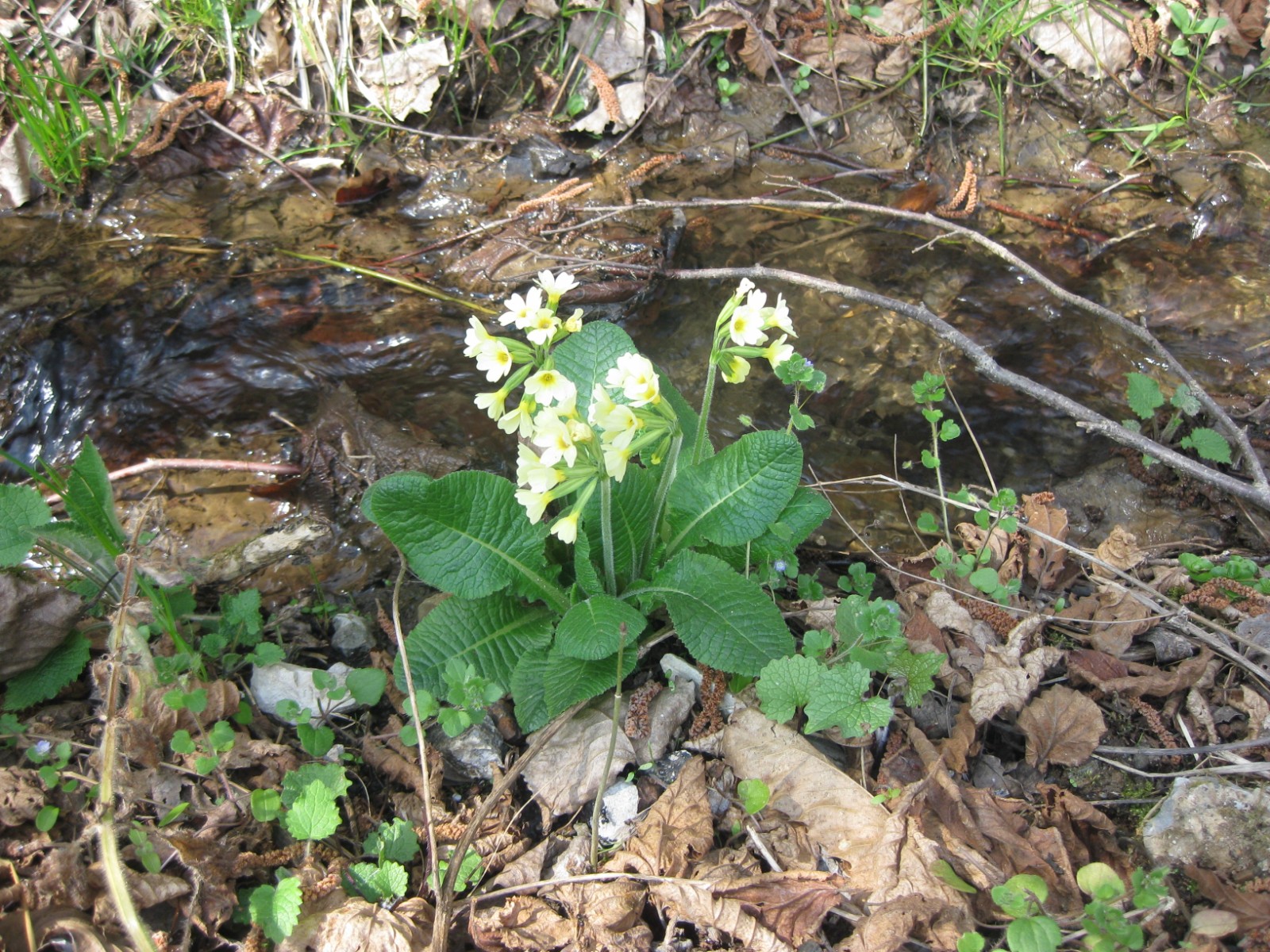
We arrive at the Chapelle de Saint BarthélemyCowslips en route
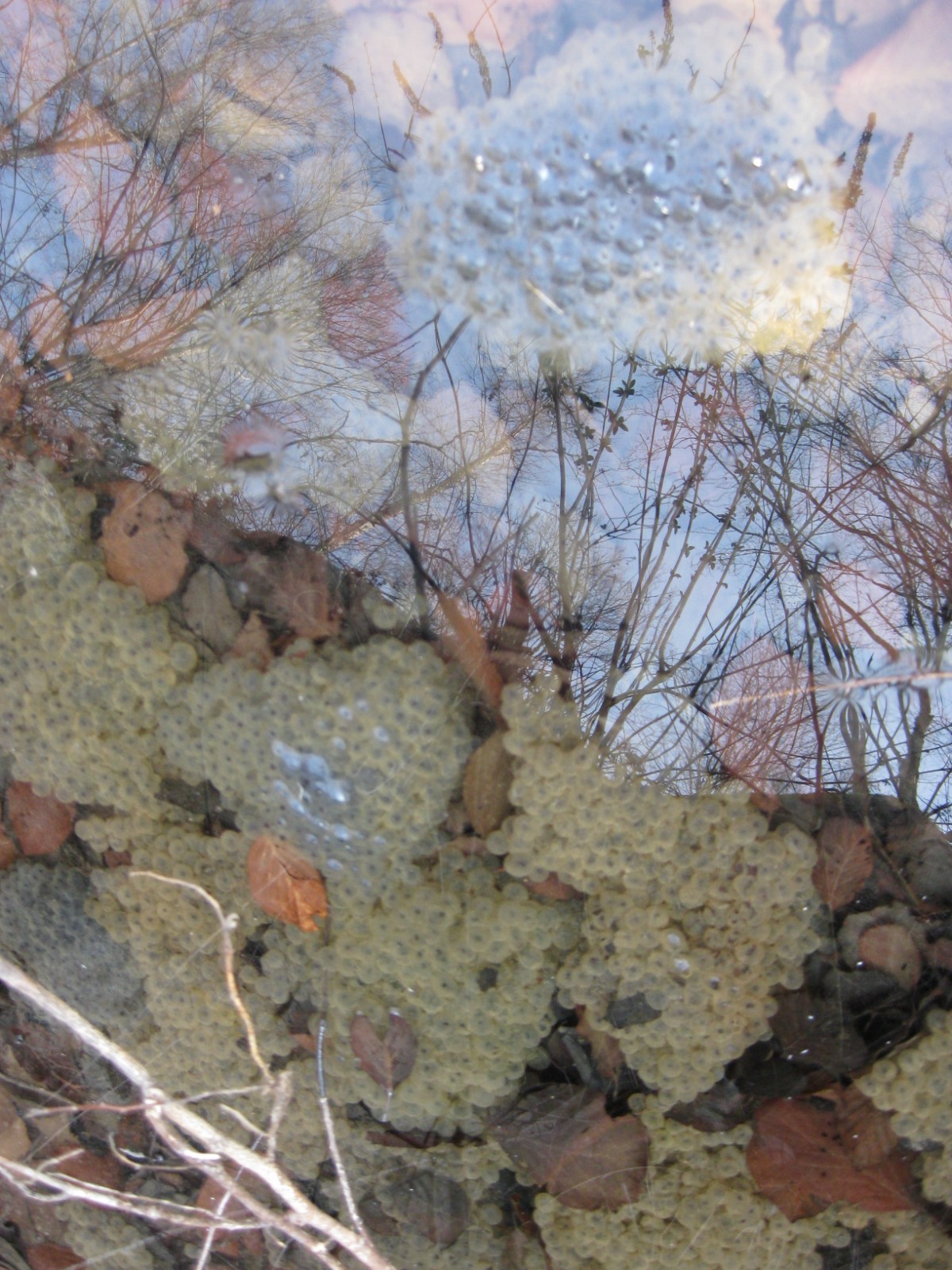
Ignorant of the bloody events that had caused the chapel to be built, we had a pretty easy feel-good walk. The slope upwards was a gradual one, through forest tracks, emerging eventually onto an airy path commanding view of the mountains which surrounded us. We had time to enjoy the emerging spring flowers –chiefly wood anemones and cowslips – and spotted several clumps of frogspawn.
Frogspawn en route
Did I know, Jean-Claude wondered, that when he was younger, it was quite common to see men staggering back from a country walk with hessian sacks stuffed not with the potatoes for which they were originally intended, but frogs destined for the market and then the dinner table? I didn’t, and was glad to hear frogs are now protected and it’s illegal. Apparently, though I’ve never seen them on the menu, frogs are still eaten. Now however, they’re imported from China.
They certainly weren’t on offer today. As usual, the day finished with tea and cake: much more welcome.
We woke up to -11 degrees on Thursday (-13 for some on the outskirts). Market trader and greengrocer Patrice and his équipe, who live in Rouvenac, a fairly isolated village 18 miles from here, woke up to -14 degrees. Thursday’s the day they come to sell in Laroque market. When it’s minus figures outside, who’d want to arrive before 8.00 a.m., set up a stall in an exposed market square, and stay there dispensing fruit, vegetables and bonhomie till about 12.30 p.m.? Well, if that’s how you earn your livelihood, that’s what you do. Your only other option is to stay at home and keep warm, earn no money, and watch your stock deteriorate. Which is what about three quarters of the traders usually at Lavelanet market on Fridays unsurprisingly chose to do this week.
Market square closed for business
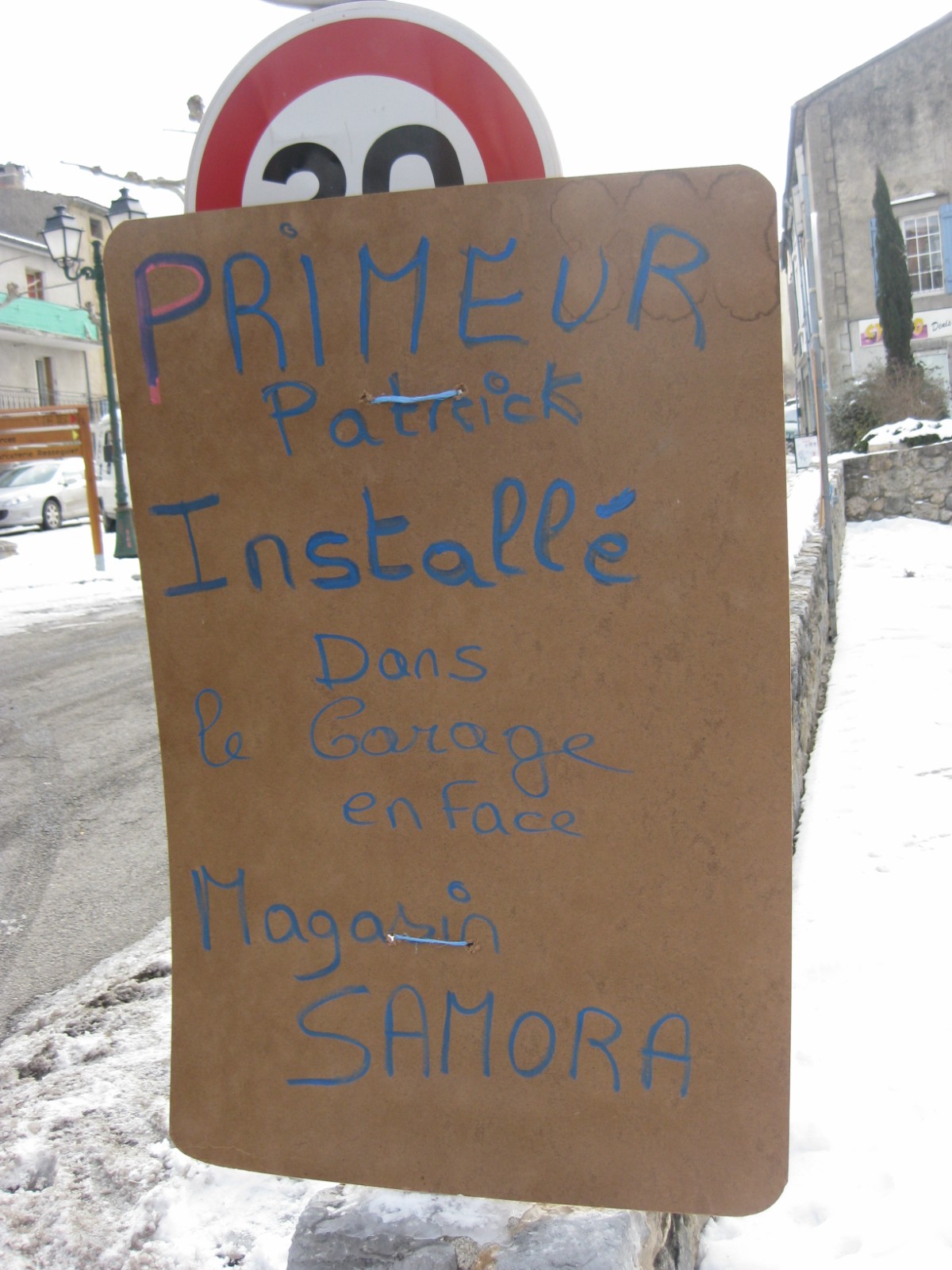
But Obé who runs the bar and restaurant up in Place de la Cabanette had other ideas. He offered them his huge garage down in our street, big enough for 2 large vans and a car, and that became the market place for the day. It’s dark and perhaps a little cramped for several long runs of produce. But we don’t get out much here in Laroque, especially in a week like this one, and we all found it quite exciting to crowd in together and do our shopping: it gave us something to talk about. Patrice and co. took turns to warm their fingers at the rather antique heater Obé had dug out. They needed to. The temperature in that garage only just managed to crawl up to -4.
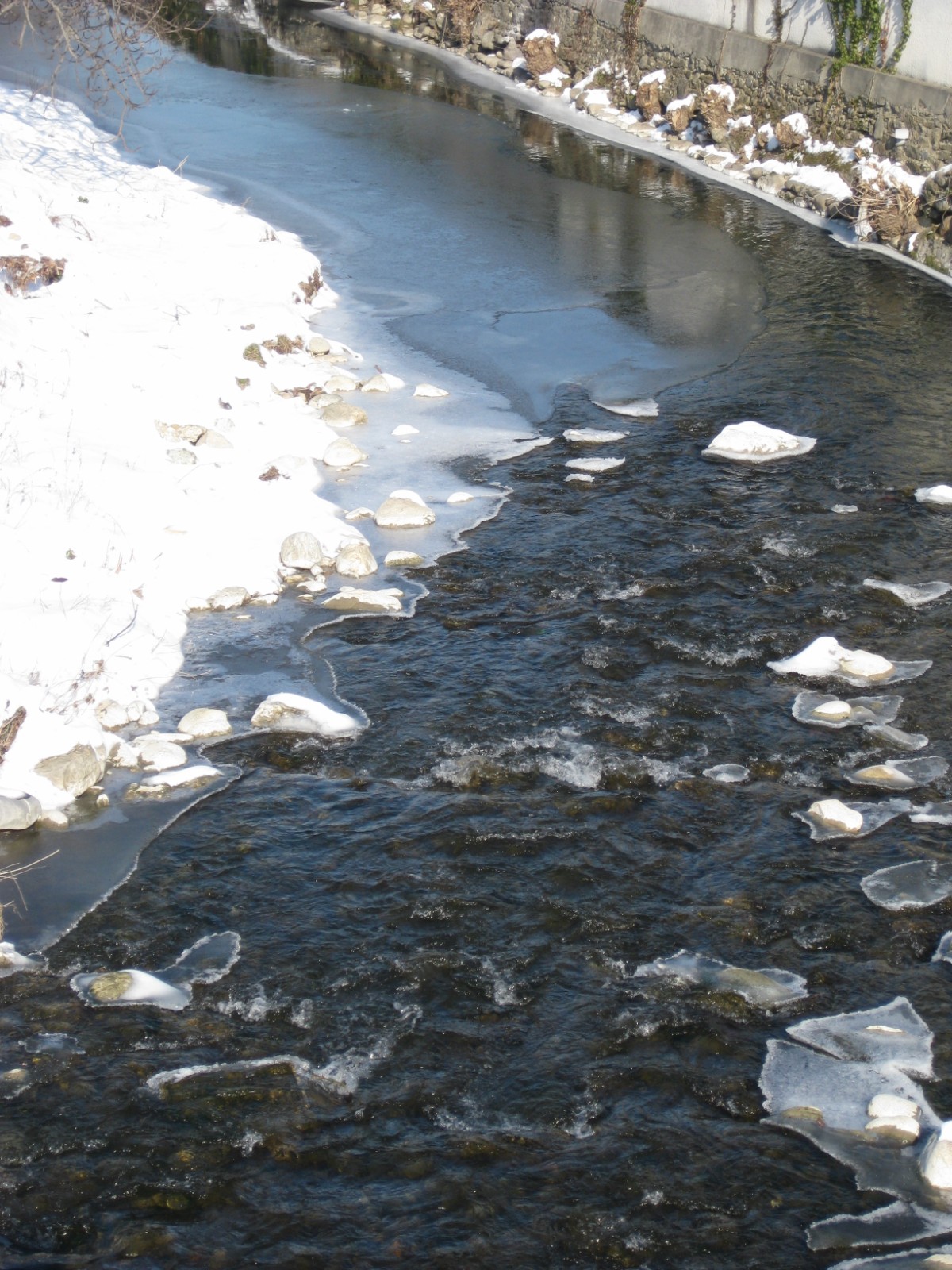
On our way back home, we just had to stop and look at the river which normally tumbles and chatters busily on its way though town. Here it is, almost frozen over.
We Brits are famous for complaining when the Wrong Kind of Snow snarls up the networks. The trains don’t run, schools shut, and there’s a run on store-cupboard ingredients in the shops. The Daily Mail or some other self-styled Voice of The People is sure to announce that ‘We’re the laughing stock of Europe and America’.
A deserted field
Well, actually, life grinds to a halt when it snows in some parts of Europe too. Here for instance. There has been no schools’ transport all week: and with many children living out in the sticks, schools have been half empty. Markets, where we go to shop, catch up with jobs in town and to meet everyone we know, have pretty much not functioned for 10 days or more. Clubs and walking groups, concerts lectures and meetings: all have been cancelled or postponed. We’ve all left our cars at home and confined ourselves to doing what we can on foot.
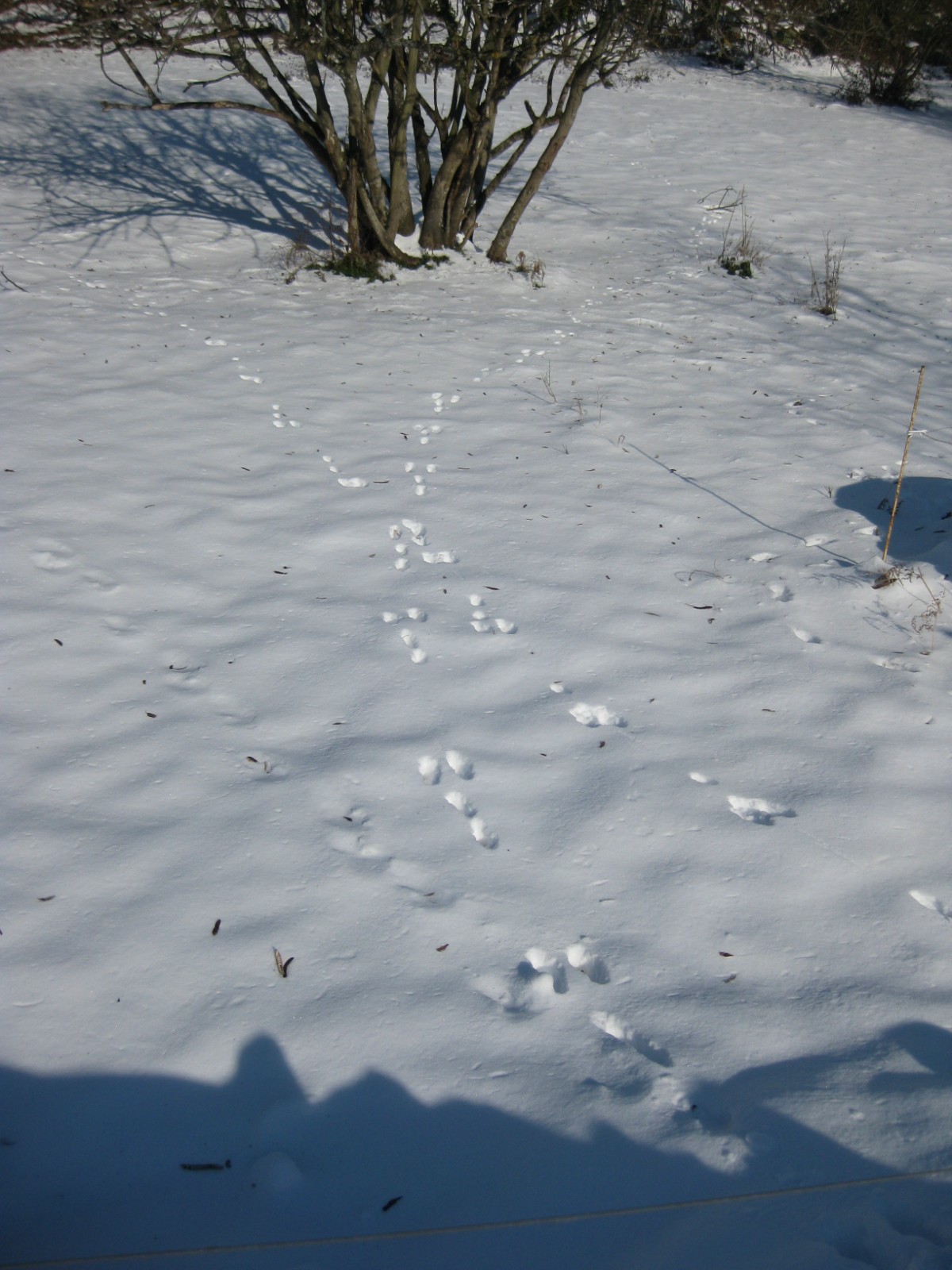
Rabbit cross roads
Don’t we have snow ploughs here? Well, of course we do. In big communes like ours (there are 2000 of us you know), council workers do the job. In more rural spots, farmers may be pressed into service. But either way, they’ve all been to the same training school. After they’ve done their rounds, the ploughs leave an inch of hard-packed, glossily polished snow especially for drivers to enable their cars to take up skating. Lethal stuff.
The fast-flowing River Touyre begins to freeze
We’d hoped to drive to Barcelona this weekend to see Emily. Reading the local government website’s travel section soon changed our minds. We were recommended to use snow chains on several of the roads on our route. On others we’d be required to use them. Conditions are described as ‘very snowy’, ‘difficult’, and everyone we know says ‘Don’t go’. So we shan’t: not till the snow goes anyway.
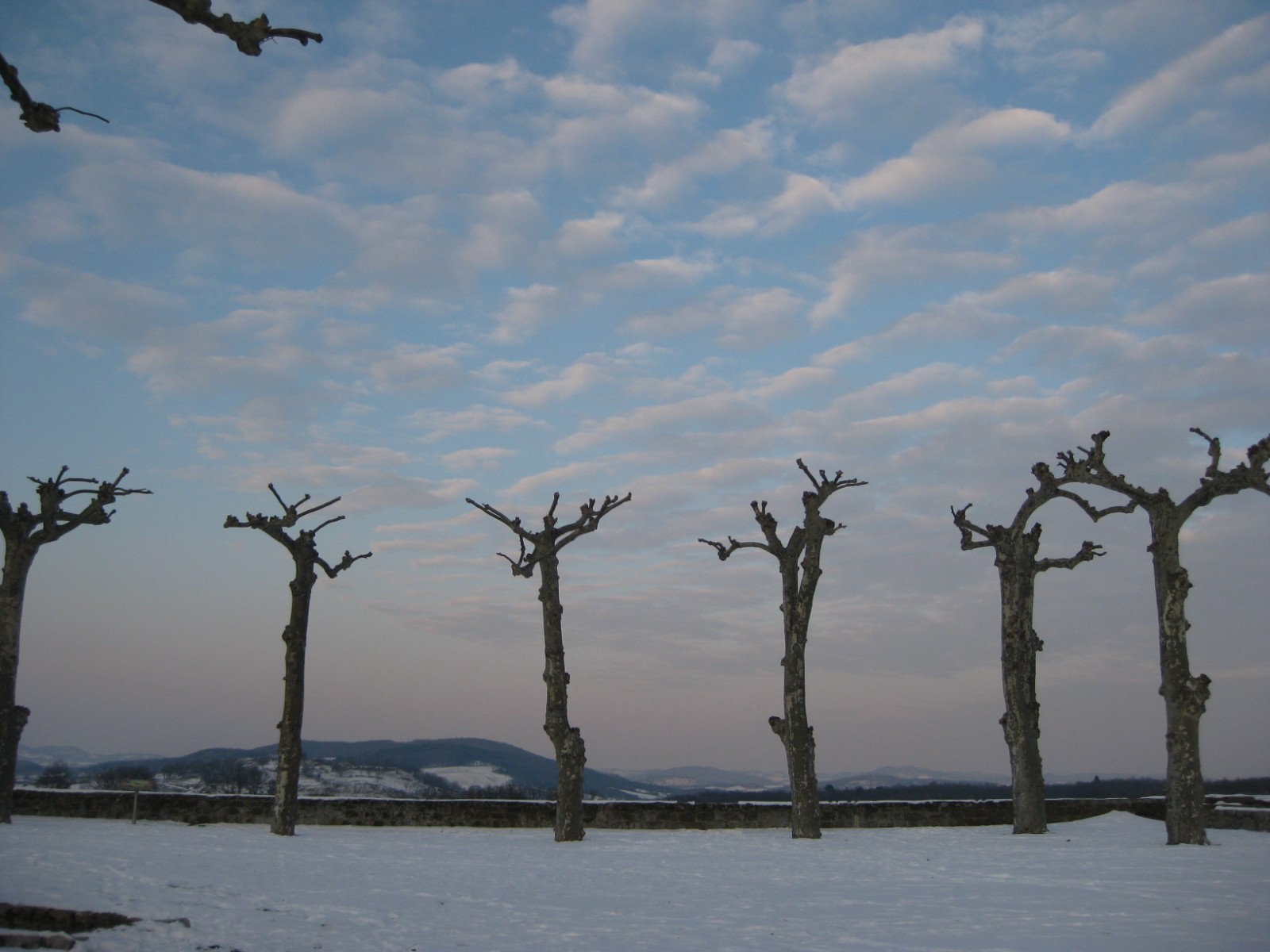
Pollarded plane trees by the church before sunset
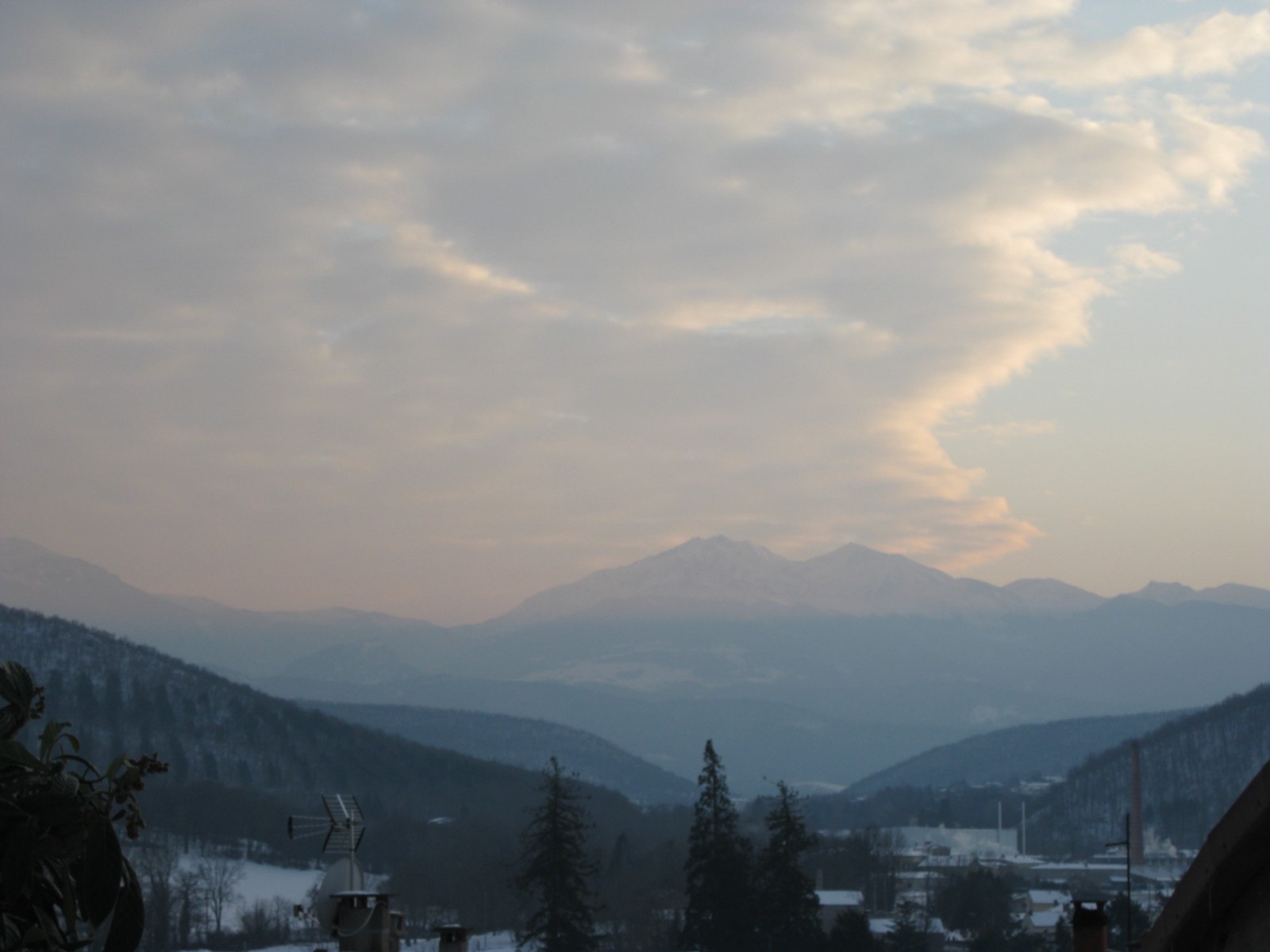
As in the UK, radio TV and the local papers are filled with stories of the Big Snow. The empty roads, the jack-knifed lorries (actually though, HGVs are kept off many of the main arteries and have either to turn back or make use of temporary lorry depots opened up for their use), the utilities failures, the heart-warming human interest stories – they’re all there. The snow stopped some days ago, but the sub-zero temperatures remain, and so the snow’s till here. What is different from England though, is the sky. Through the day, we’ve enjoyed a cloudless duck-egg blue sky. And that’s something to be relished.
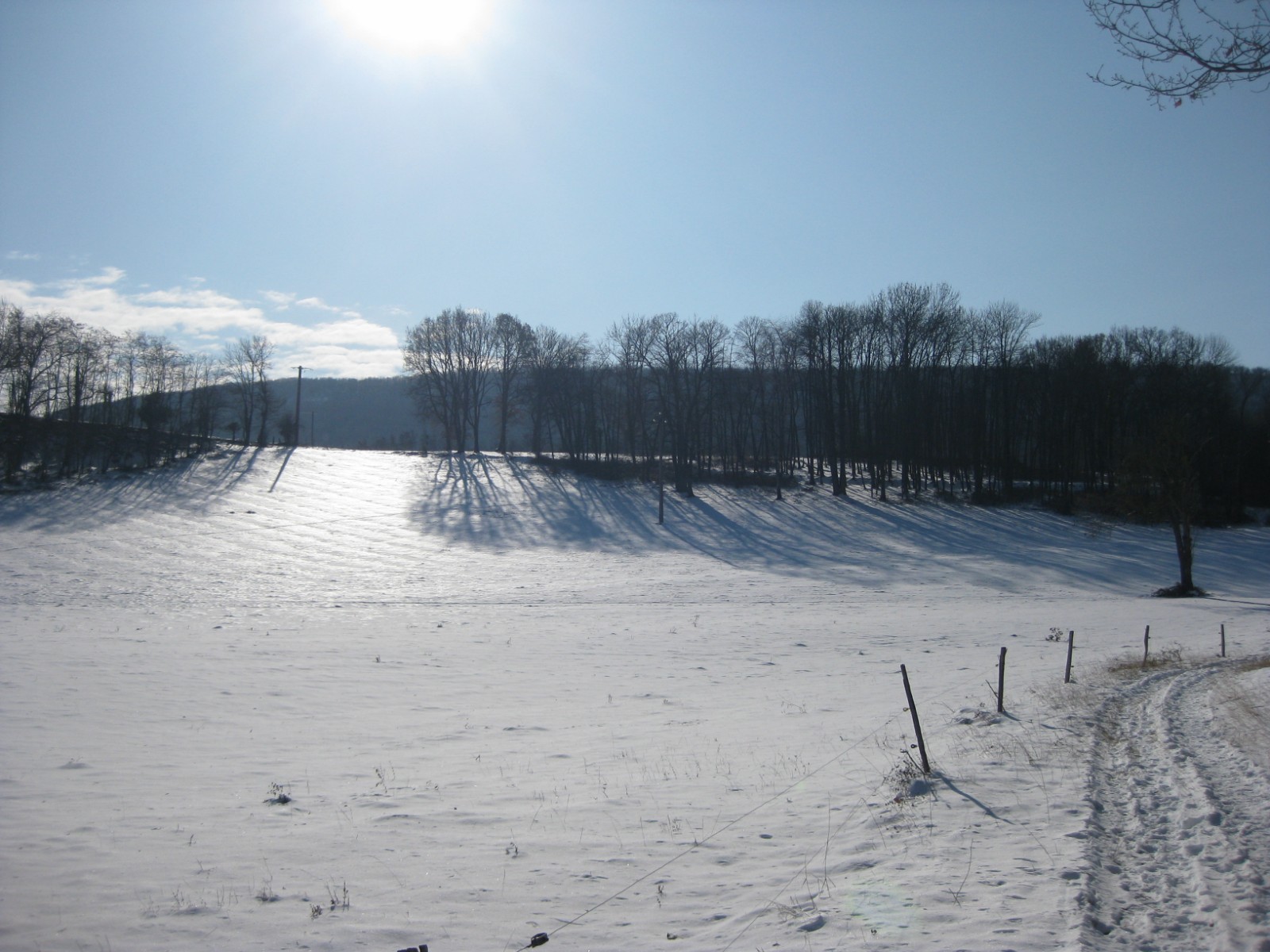
We’ve all had snow – well, much of Europe, anyway. And everyone’s been posting their snow pictures on blogs, news sites, Facebook…. so here are a few of mine.
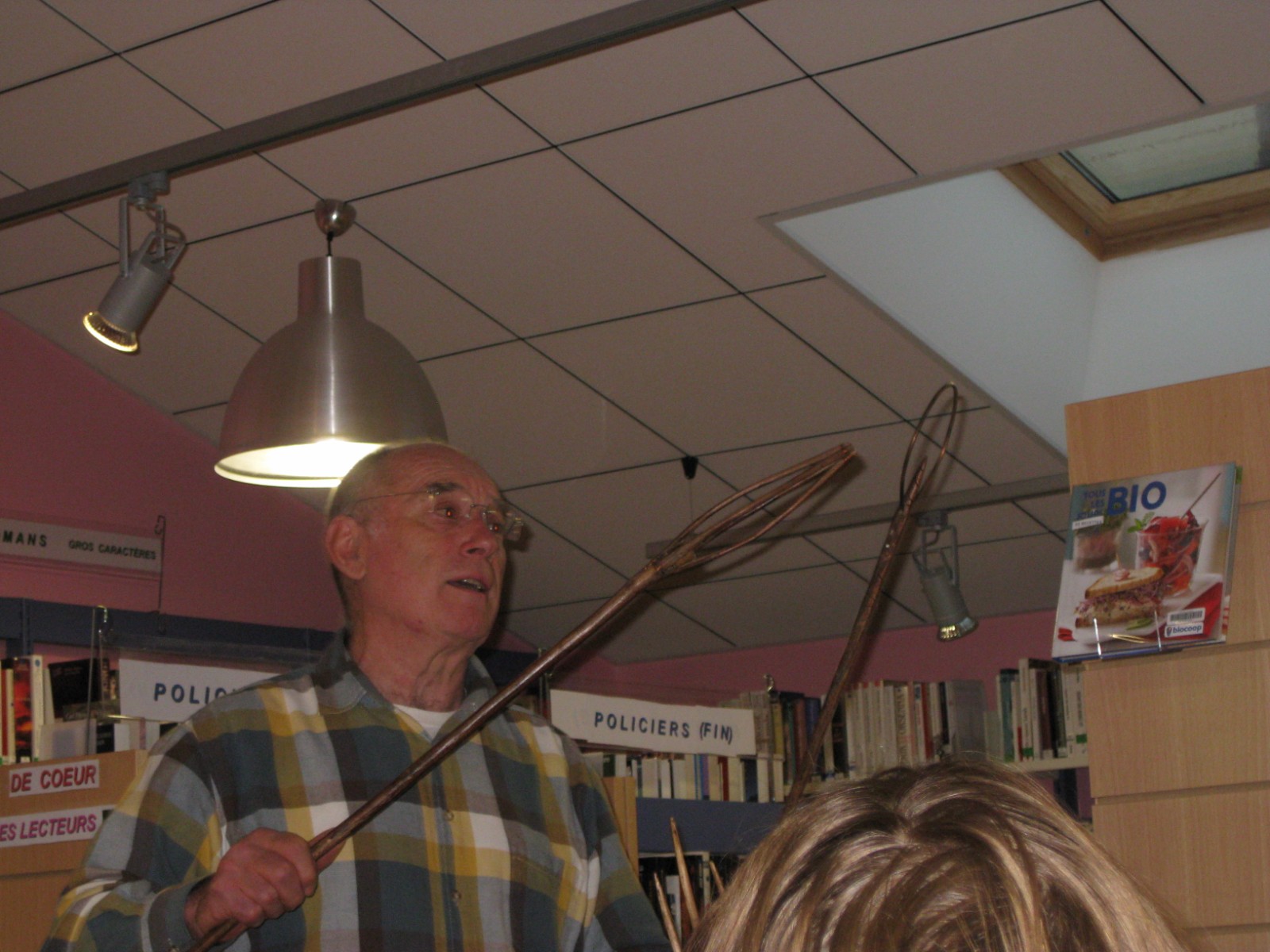
Yesterday afternoon was fascinating. We went to Belesta library for a talk by Paul Garrigues, a local historian who collects old wooden artifacts. He’s such a good speaker, and gave us an insight into a way of life which only finally drew to a close about 30 years ago. He’s pretty much my age, but his childhood was spent around ox-drawn farm machinery, distaffs and a host of things that formed no part of my rural infancy. Now that most Ariègeois farms look pretty much like anywhere else’s, with tractors, silos and irrigation systems, it’s rather hard to believe.
Paul’s childhood was spent in the next village to here, Aigues Vives. Later, he met and married a young woman from a tiny community in the Couserans, a part of the Département to the west of here. He was surprised to find how different the tools in his wife’s village often were. There too, the villagers spoke Gascon, rather than the Occitan traditional in our part of the area.
And so his interest began. He started to collect mainly wooden artifacts: agricultural items, kitchen tools, playthings. To him these things tell a story of rural life here as it was lived over many centuries. Yesterday he came to Belesta Library to talk and show part of his collection.
First of all, a simple wooden torch, looking something like a charred rounders bat. This interests him because items just like this were in use – almost daily – since man first populated the area in Stone Are times, right up until the First World War, and in a few cases, beyond.
Next, a distaff. This item too remained unchanged almost from those early days until the early years of last century. Any female over the age of about 8 living over the last 1000 years and more, whether rich or poor, would have recognised it. Spinning would have been a constant part of her daily routine, whether she was managing a fine estate, or supervising a few sheep on the mountainside. And do you know what? Constantly licking your finger and thumb as you handled the wool made your mouth dry, so beside you, you might have a little wooden box, filled with snuff, to help your saliva to flow: he showed us samples.
A couple of millas stirrers
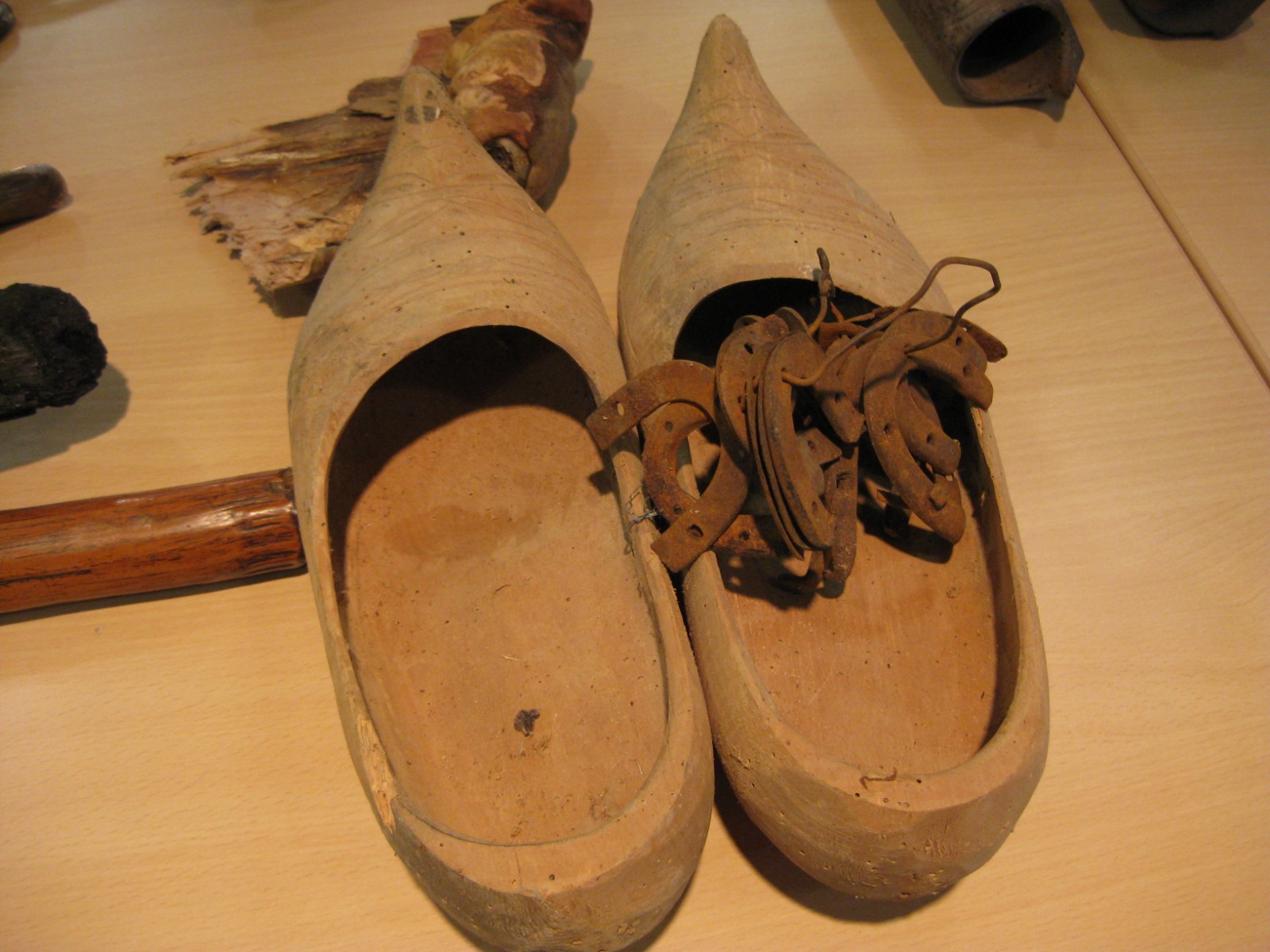
We saw long wooden balloon whisks and three-pronged forks used to stir the great vats of millas (a sort of porridge made from cornmeal) beloved of the Ariègeois, wooden spoons and forks, large wooden bowls. He showed us wooden clogs.
Wooden clogs with metal horseshoe-style heel strengtheners
We saw wooden roof tiles. All these things are made from unplaned wood, so the implements can follow the natural grain of the wood and be strong and sturdy.
From the Couserans he had savage long thick knives, looking like swords in their wooden or leather scabbards. Their design was directly descended from the instruments of war the Gascons often saw in their battle-rich past, but in fact they were used to cut rough grass, crops, and the long straw required for thatching.
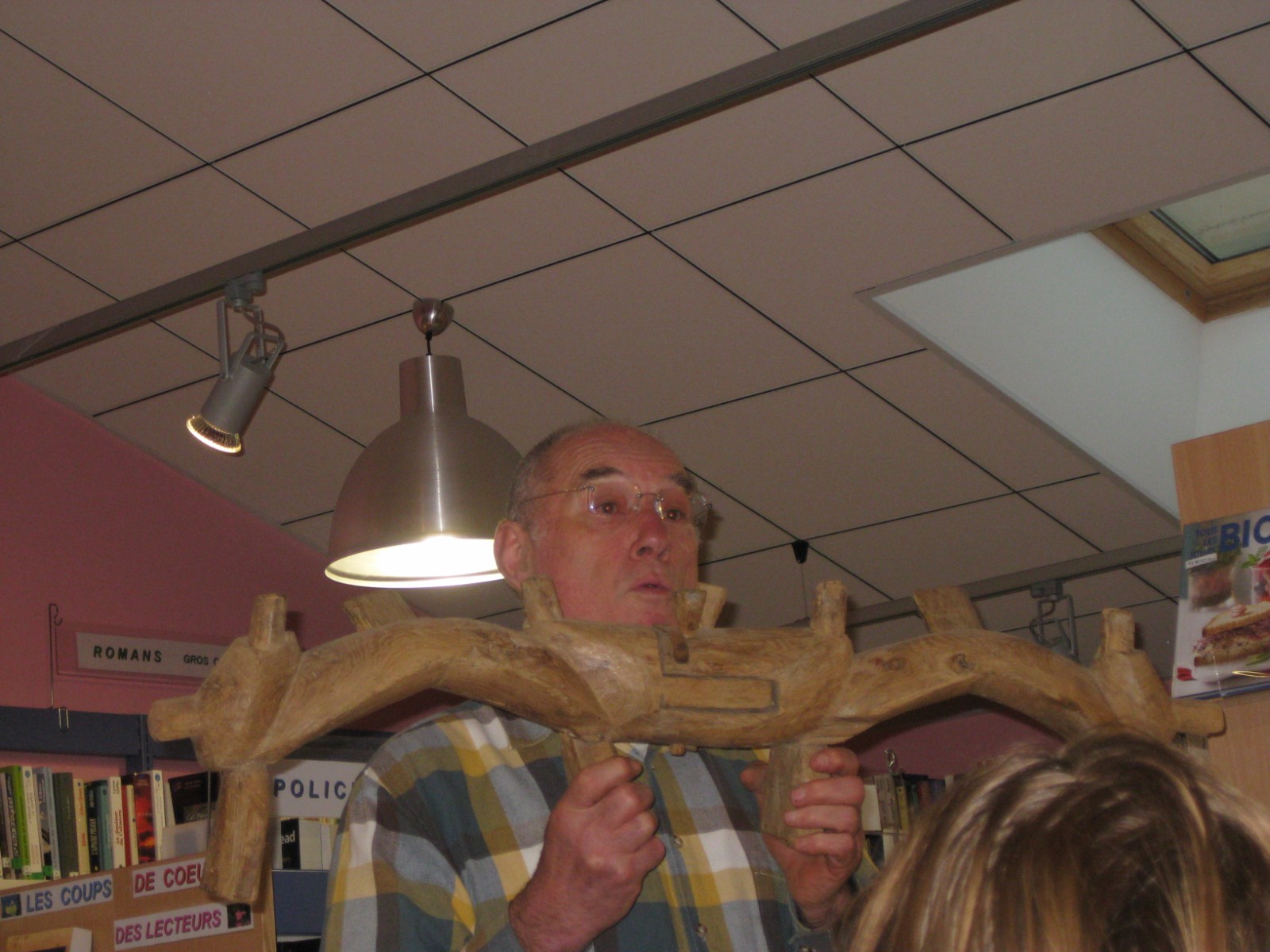
A yoke. For safety reasons, it can quickly be divided in two
There were other differences between that part of the area and ours. Here, terracing was a feature of upland farms, and it was male beasts who worked the land. There, the farmers worked directly on the steep slopes: the cows who ploughed the land (it was female animals who did the work here) had to have specially designed wooden yokes so that they weren’t strangled as one worked at a higher level than her work-mate.
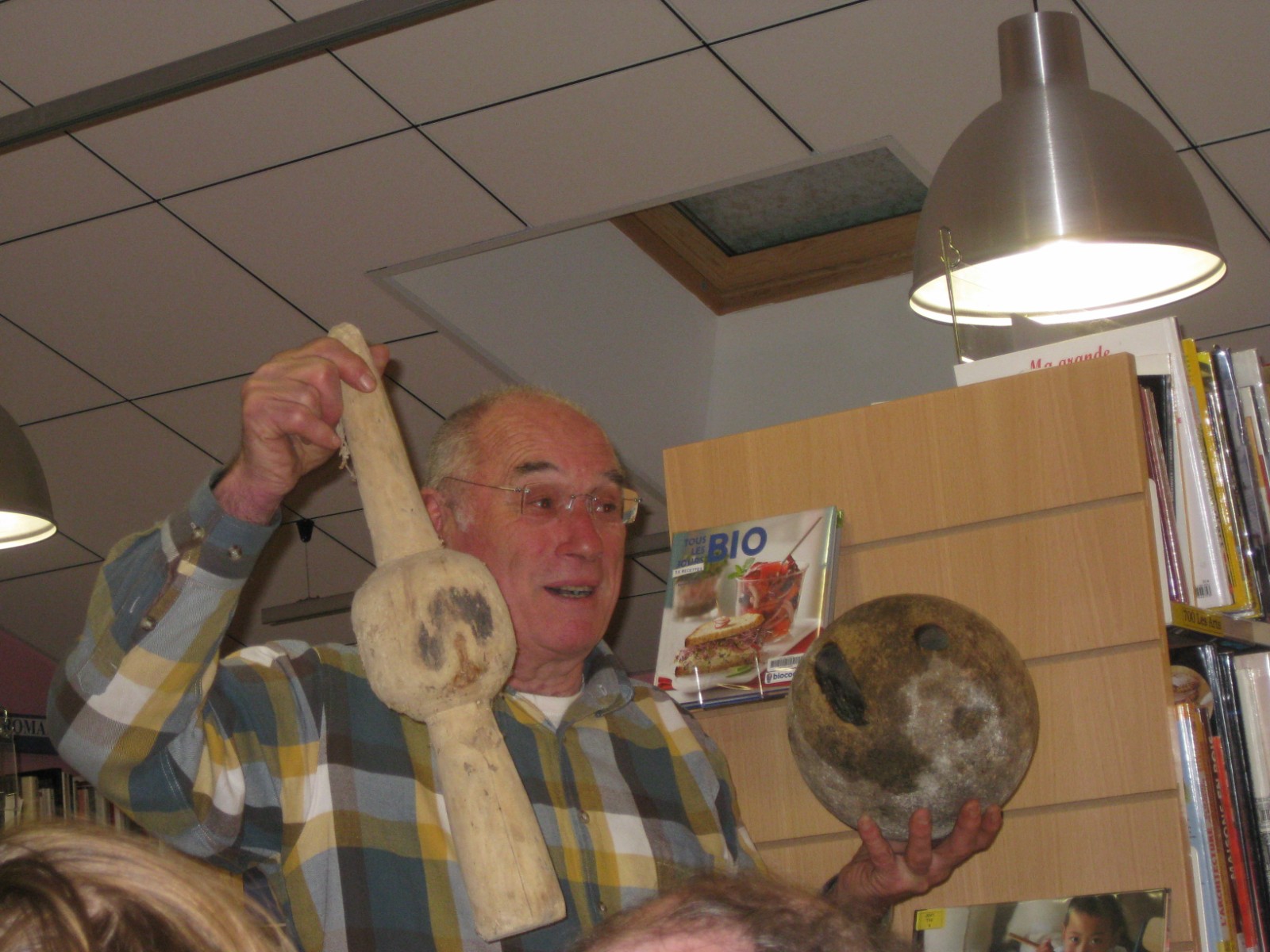
But it wasn’t all hard labour. Anyone who’s ever been to a bowling alley would recognize the bowls and skittles he showed us (made from wood, naturally). They were a big feature of life round Biert in the Couserans, but inter-village tournaments were rare. They all played to different rules, which tended to make contests rather difficult. But it was over here, in nearby Le Sautel, that a game was bought to a sudden end at the end of the 19thcentury.
Wooden skittle and bowl. Confiscated from the church at le Sautel?
One Sunday, the women went obediently to Mass, and as usual, the men played with their bowls outside, getting argumentative and noisy as the morning wore on. Eventually, the priest in church could take no more. He stormed out through the church porch, confiscated the bowls, and hid them in the sacristy. Evidently completely unchastened, the men simply produced other bowls when it came to their next match.
Paul’s keen that we should regard these tools and artifacts as living objects, part of a traditional way of life extending back hundreds, sometimes thousands of years. He doesn’t want them consigned to the cemetery of history. If you live round here in some old-style village or town house, you’re almost certain to find quite of few of the things he talked about in your outhouse or attic. Perhaps I should have another look.
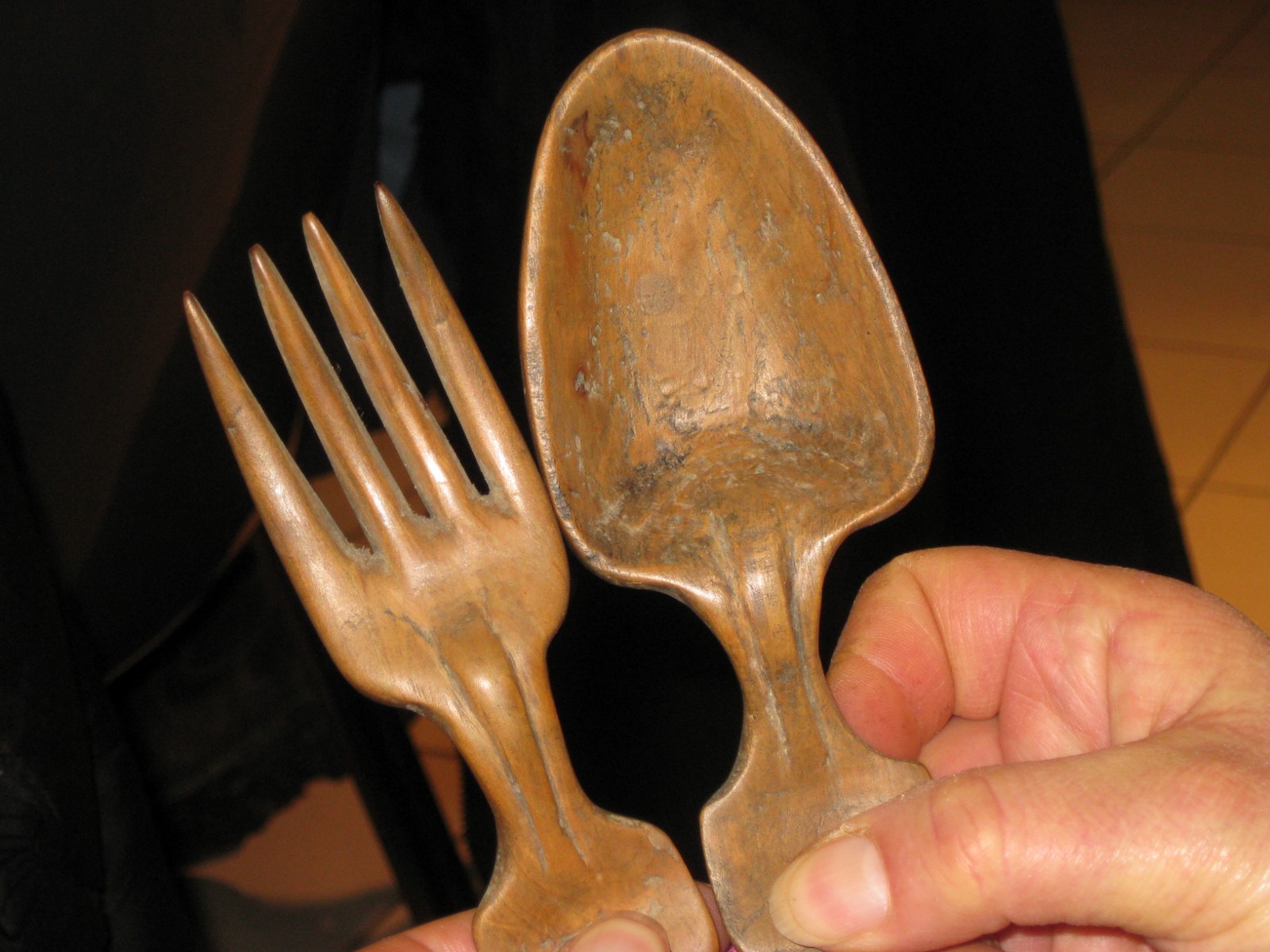
Wooden fork and spoon. A good strong shape. The short handles ensure a long and useful life.
One of the daily pleasures of our Life in Laroque is watching the birds of prey, particularly buzzards and red kites, wheeling above our heads, catching the eddying breezes.
One of our pleasures here back in Yorkshire, is doing exactly that, now that red kites have become almost common round and about Harrogate.
It was back in 1999 that red kites were first re-introduced to Yorkshire, to Harewood. Back then it was a rare treat to spot one, a newsworthy event to share with all your friends. Gradually they became more common, though no less exciting. Then last time we were here, we spotted one lazily coasting over the Yorkshire Showground, only a very few miles from Harewood as the kite flies. Later that day, there were others, this time over the relatively urban Knaresborough Road estate. This visit, we’ve spotted them for the first time in the part of north Harrogate where we used to live.
And then today, after lunch catching up with a good friend – thank you Cath – I took myself off for a walk. Soaring above me, then plunging down, so very close that I could clearly see his breast plumage, was a red kite, nearer to me than one has ever been before. It made my day.
A good old-fashioned English Christmas has come early to Lavelanet. To the library (oops, mediathèque) to be exact. The librarian there enjoys children’s literature, and is a bit of an Anglophile. So she’s mounting a small festival of English Children’s literature featuring everyone from John Burningham and Quentin Blake to, of course, Charles Dickens and Beatrix Potter.
What a disappointment I am to her. I can’t produce a pretty tea set awash with rosebuds, and she can’t believe I really don’t like tea very much: and that when I do drink it, I decline to add milk.
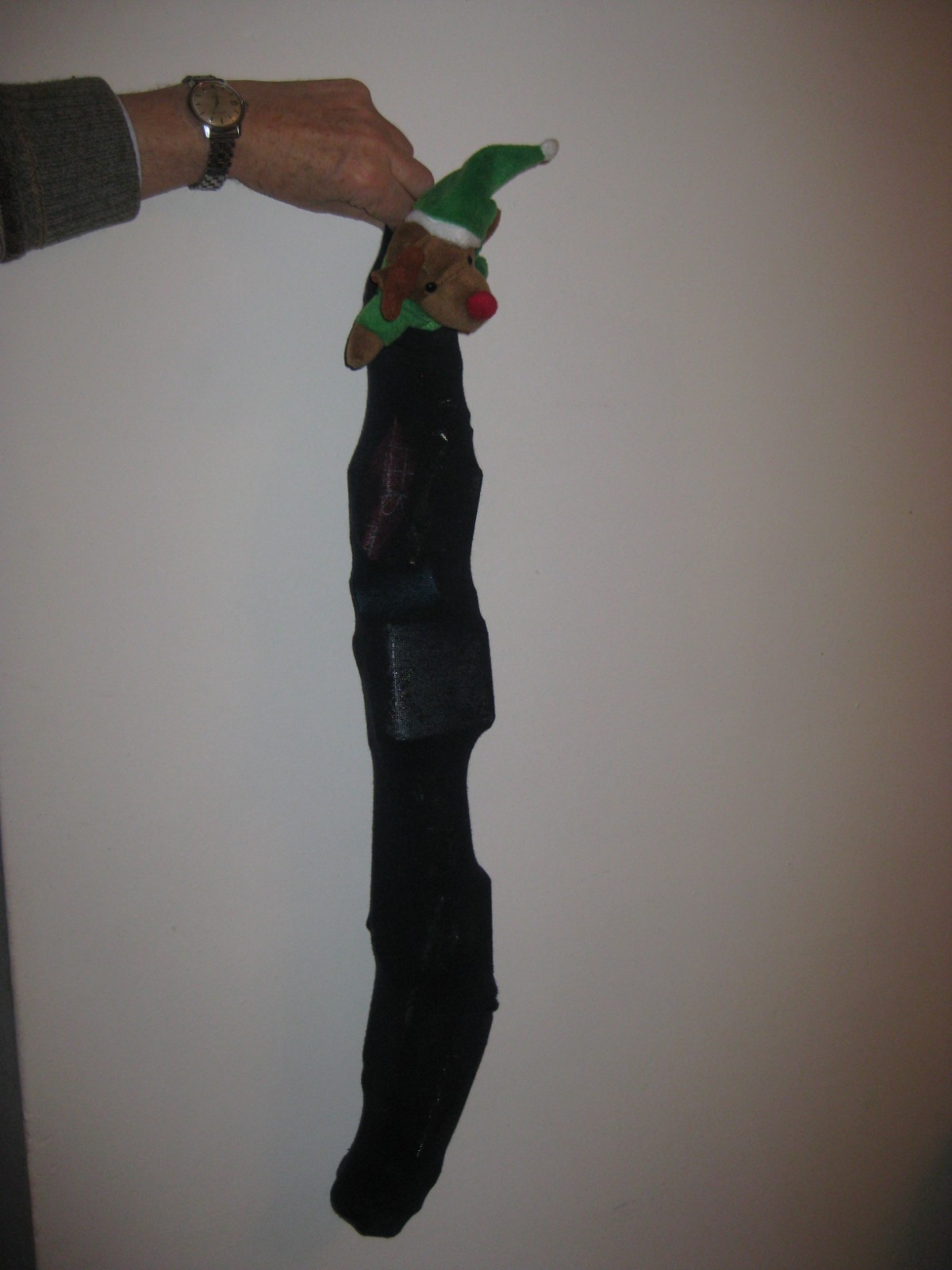
Look what father Christmas left!
She’s wheeled in Découverte des Terres Lointaines to help with all the activities for schools, retirement homes, and the general public. And DTL have wheeled me in as Consultant on All Matters English. Together we’ve chosen recipes and we’re baking biscuits and cakes and we’ve planned craft activities round, for instance, our ‘so British’ Christmas cards. From tomorrow, I’ll be reading stories in English, helping pull crackers, and unpacking – many times – a stocking which dear old Father Christmas has delivered to me early.
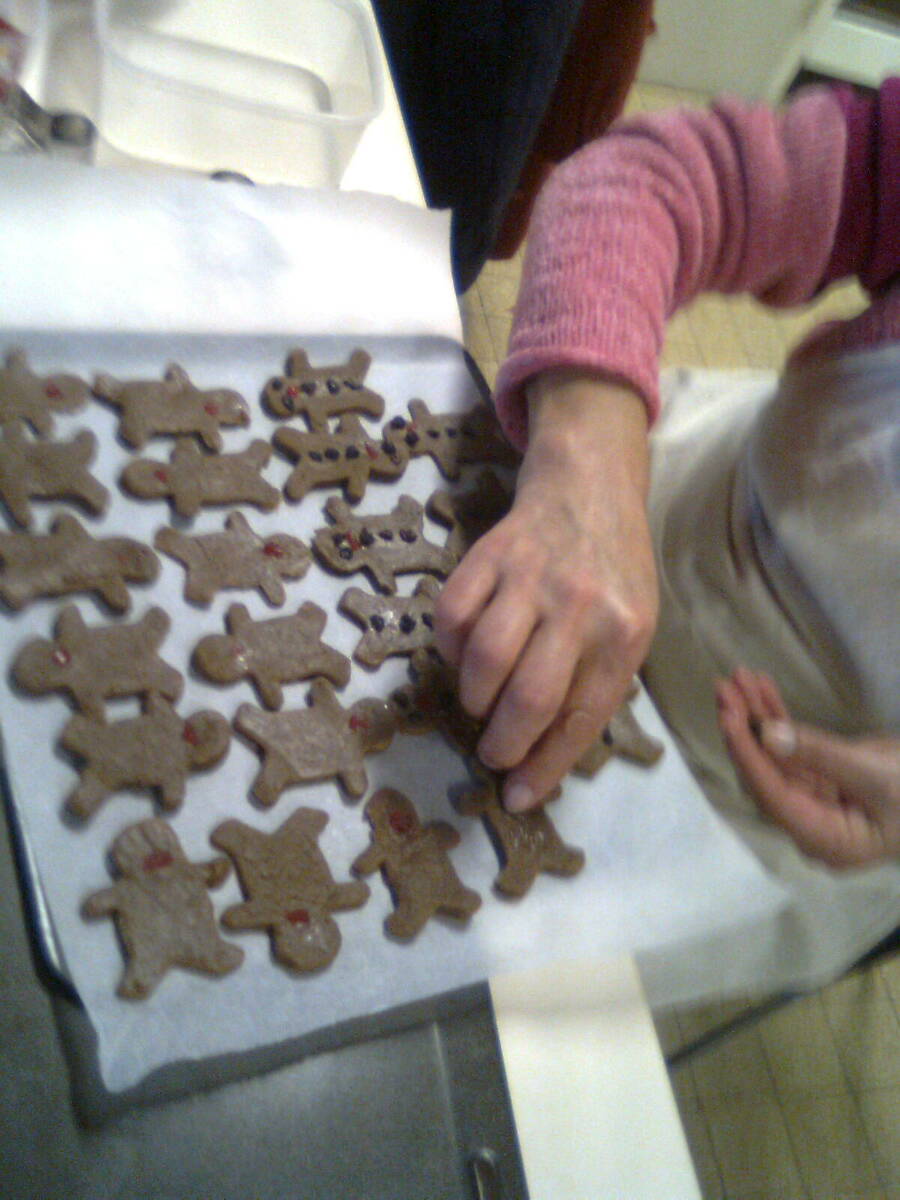
Mass production of gingerbread men
My other job is to correct the misapprehensions learnt from French websites and children’s books about England. Who knew that the English enjoy tucking in to a huge plate of oysters at the beginning of Christmas dinner? Or that all British schoolchildren have a free bottle of milk every morning? Margaret Thatcher abolished that back in the early 70’s. And Sylvia misunderstood me, and thought we served stewed cherries, not sherry sauce, with our Christmas pudding (cherries – sherry: easy to confuse when you speak no English). And so on.
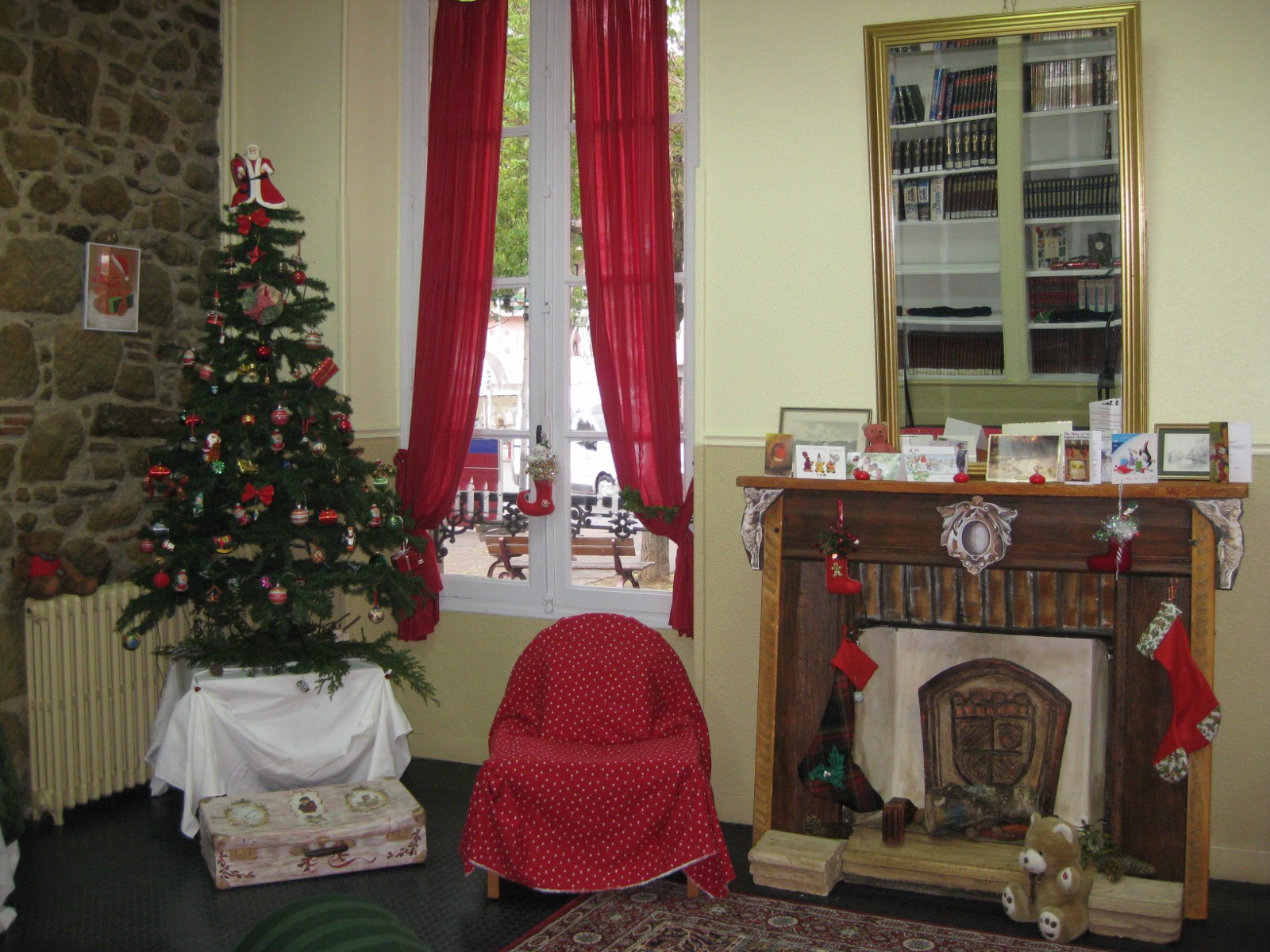
But it’s been fun transforming the community room in the library into an impossibly cosy snug, full of Christmas cheer. Let’s see what ‘le tout public’ think, when we open the doors tomorrow.
Christmas is coming. How do I know? Not from the Christmas decorations or shops full of Yuletide Cheer, although that’s beginning, a bit. No, here the first sign of the impending end-of-year festivities is the appearance of The Calendar.
The other day in Laroque you’d have passed two volunteer sapeurs pompiers (Fire and Rescue service) in full uniform, trudging door-to-door with a pile of calendars. They need us all to make a donation in exchange for one. I wouldn’t dare not.
....and January.
They don’t expect very much money: the loose change in your purse is fine. After all the calendars are entirely paid for by the adverts inside and all the rest is profit. But you’ll get a receipt, your first Christmas card, and your first calendar, with each month illustrated by some thrilling event in the life of our local stations. Photos of the local crew too. Though not the sort of hunky photos you sometimes see in England, with Mr. Universe types stripped to the waist the better to display their tanned and rippling muscles. These men and women are all the guys-next-door.
Anyway, don’t think that this purchase represents the end of calendar-buying for this year. Any day now it’ll be the Majorettes, and after that….who knows? But there will be others. And we’ll have to buy from all of them.
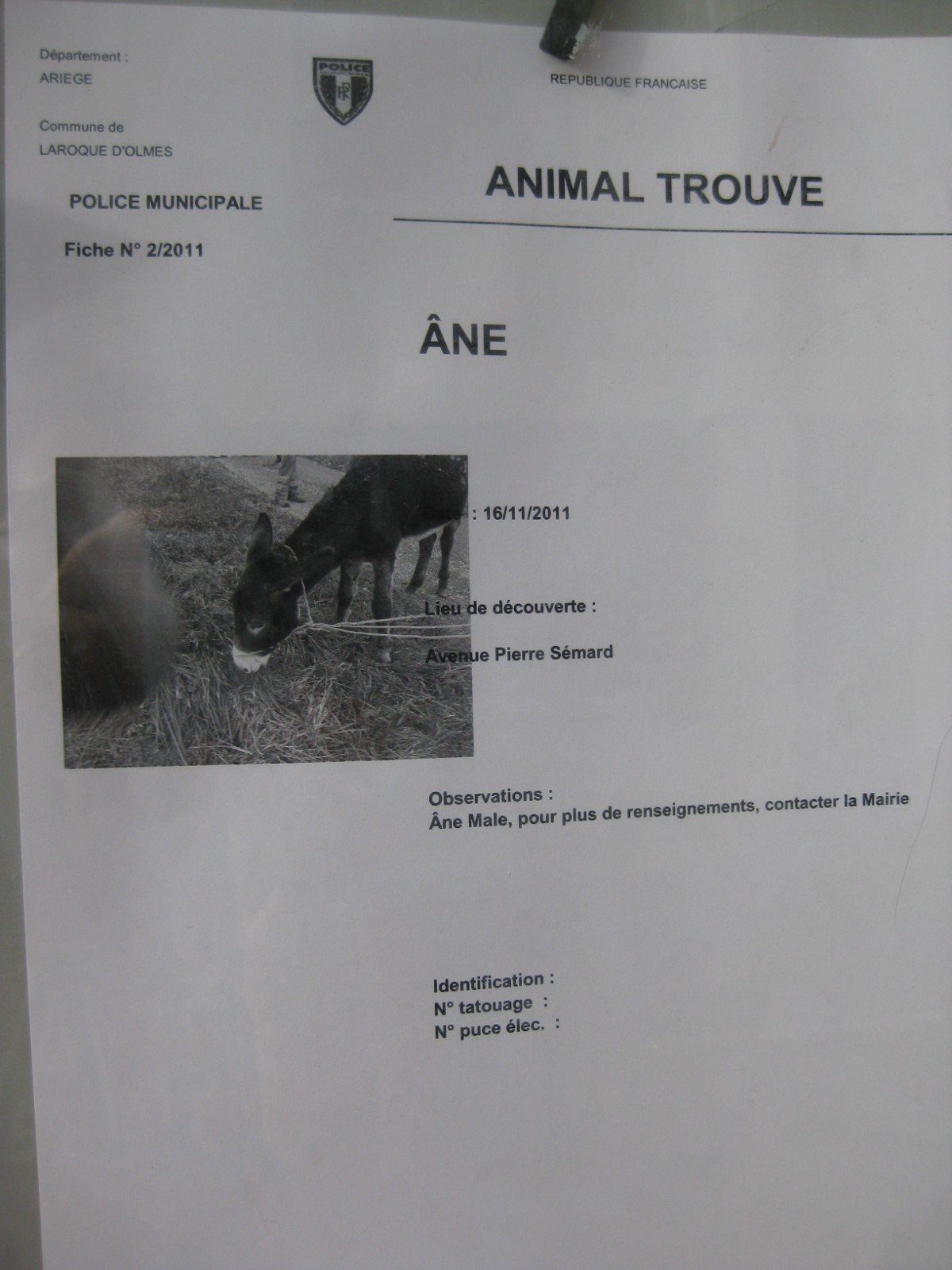
Every now and then, in among all the banns of marriage and planning notices on the information board at the town hall here in Laroque, there’s a poster about a stray dog that’s been found. Not cats or hamsters. Just dogs.
Last week, though, my eye was caught by this:How does anyone lose a donkey? And what do you do with it whilst you put out an appeal for the owner? ‘Oh he’s fine’, said Thierry, our Community Copper, ‘We’ve put him to work in the office in the Mairie’. I decided against saying the obvious, that he would be bound to be doing a far better job than the Mayor.
Image from Unsplash.
It took a week for his owner to show up. He – the donkey that is – had an exciting time. First of all he was rounded up by the three blokes who first spotted him in the road just outside town, but who had no idea how to set about the job. Then he was frisked for tattoos or identity chips. None. Next he was sent to stay with our friend Henri’s donkeys (Thierry was fibbing about the office work). That had to stop when Henri’s female donkey got all excited at the new arrival and came on heat. Then he went to stay with the vet’s partner. He escaped. Amateur detectives all over Laroque and Lavelanet tried to find out where he came from. Eventually, after a week, his owner showed up, really rather cross. ‘Why didn’t anyone think to get in touch with me?’
There we are. That’s our excitement for November over.
Image from Unsplash.
For non-British readers: Little Donkey is a Christmas song much favoured by UK muzak producers at this time of year. One reason to avoid shopping there during November and December. Whereas ‘an everyday day story of country folk’ is ‘The Archers’, a daily radio soap opera full of story lines such as the one above. It’s been a permanent part of the BBC schedules since 1951. You could join the fan club.







 From Pyrenees to Pennines
You must be logged in to post a comment.