Footnotes in History: Unterlinden, Colmar

On our recent trip, mainly to Alsace, but with sorties to Germany and the Netherlands, we came across several stories from the past which we’d known nothing about, but found engrossing. For the next few Fridays, I’ll share these stories with you.

Unterlinden, Colmar

Maybe this post will be a bit History-lite, but it’s still a story worth telling. Back in 13th century Alsace, the Dominican order founded a convent, Unterlinden, in the then outskirts of Colmar. The nuns from this contemplative order were woven into the life of the city until the French Revolution, when in 1793 the convent was confiscated. First abandoned, it then became a military barracks.
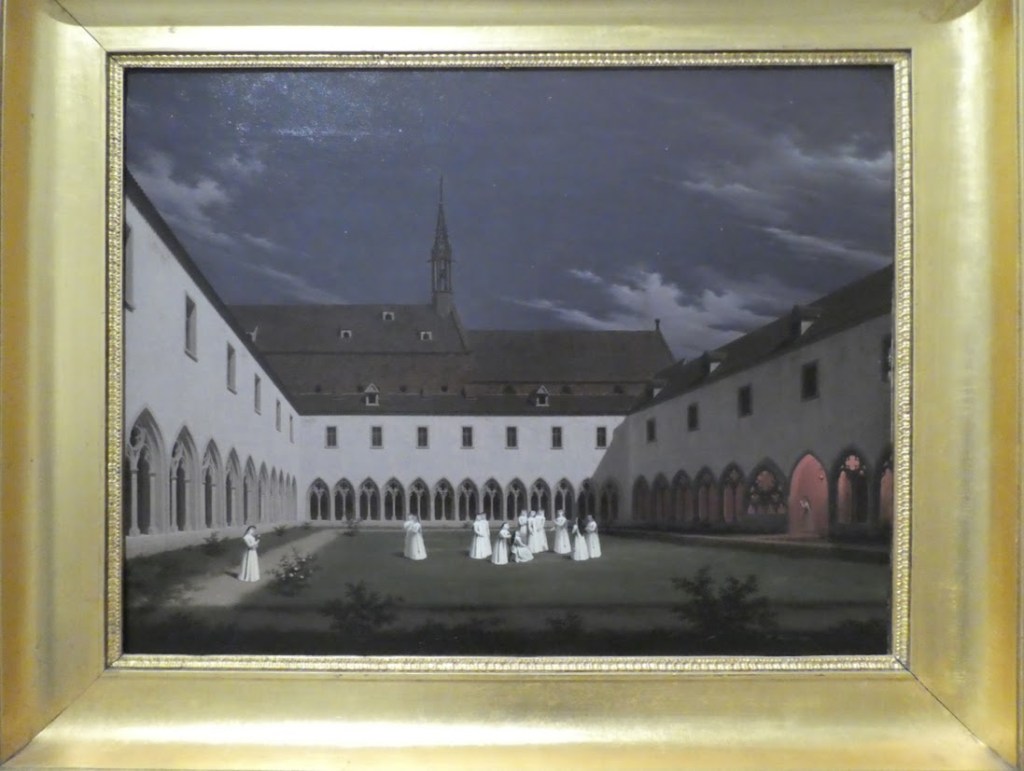
Henri Lebert Thann 1794-1862 imagined life in the convent in this oil painting.

In 1846, something rather extraordinary happened. Louis Hugot, the archivist-librarian of the City of Colmar set about bringing together fellow intellectuals and enthusiasts with the aim of setting up a print collection and drawing school. They called themselves  Societé Schongauer afer an Alsatian engraver and painter, an important influence on  Albrecht Dürer. The following year, they bought the now-abandoned convent and bequeathed it to the city.

Its earliest display is still here: a locally-discovered Roman mosaic. Here it is.
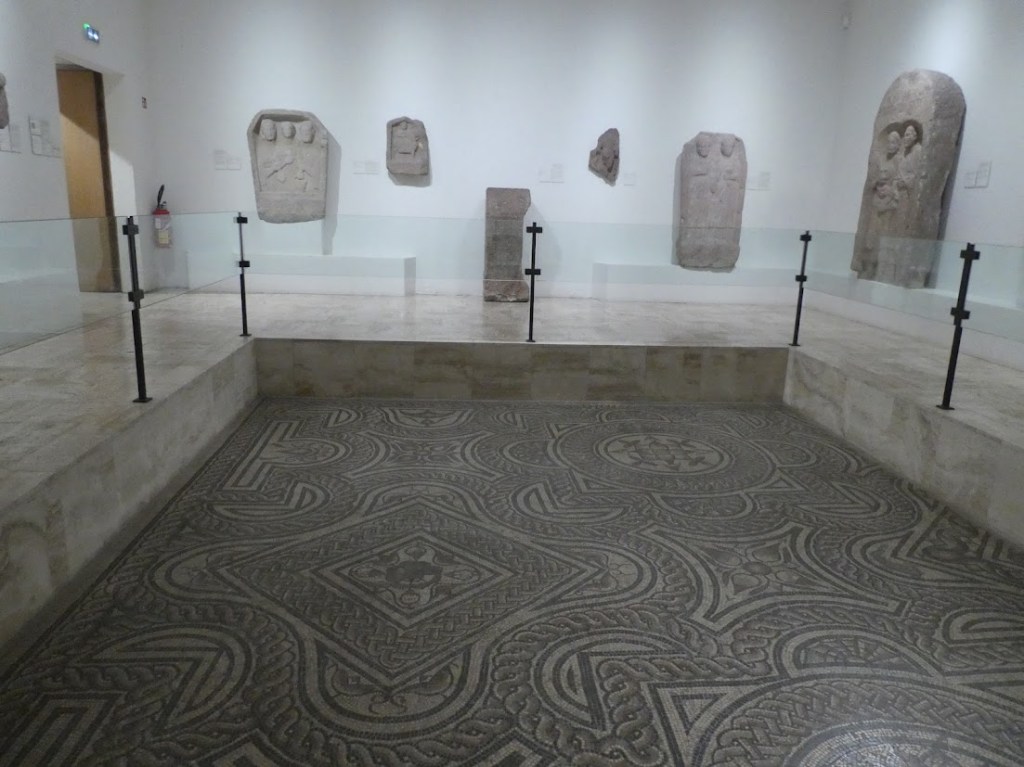
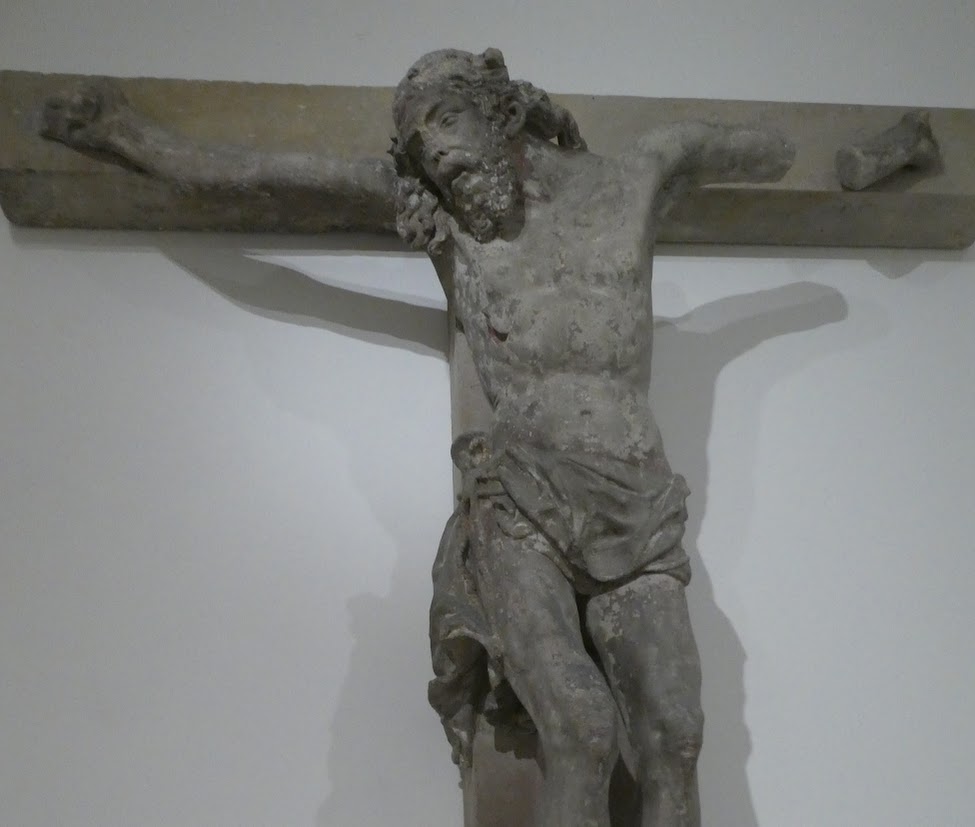
Then, the museum made do with plaster casts loaned from the Louvre. Now, it has an impressive collection of sculpture and altarpieces from a variety of churches in the area.
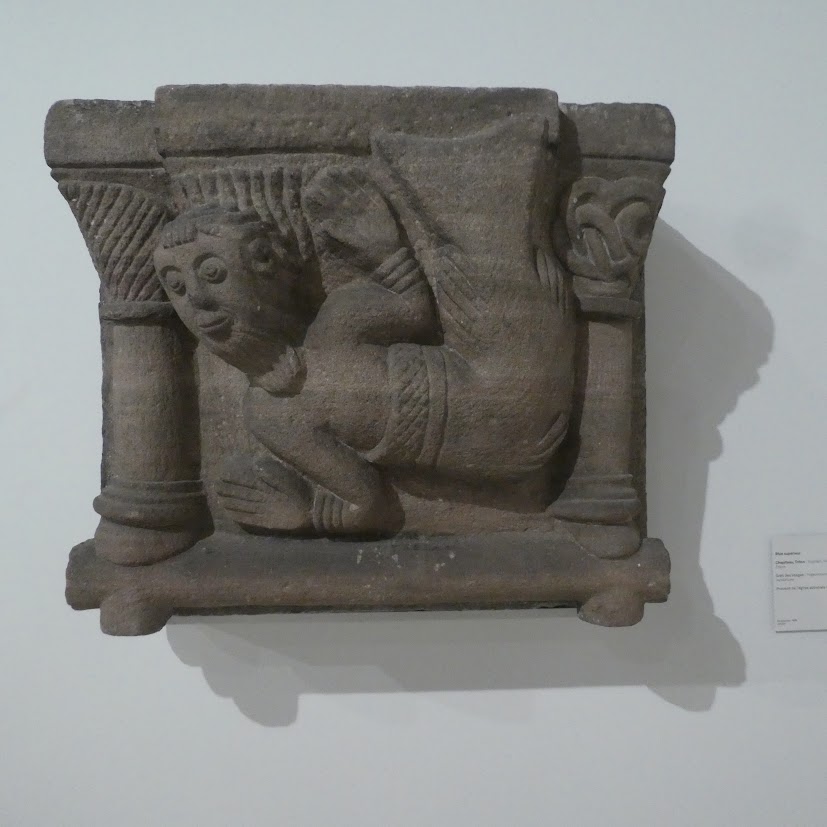
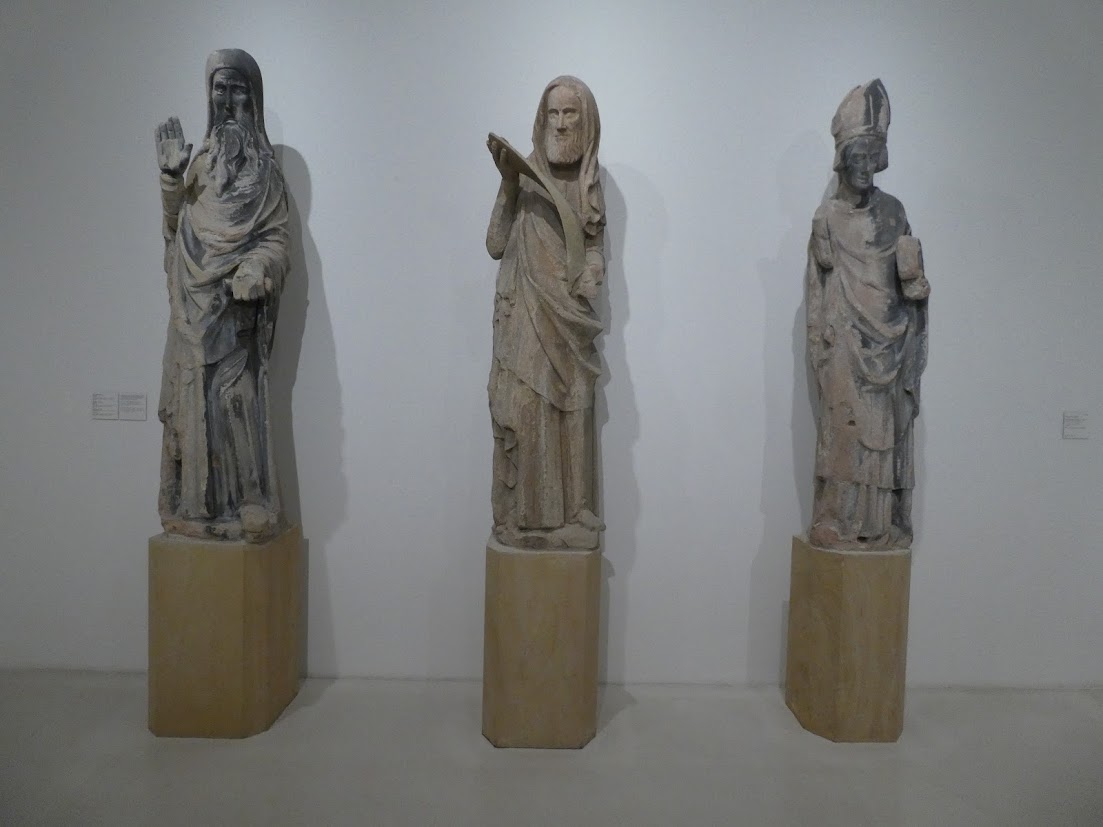
I was quietly impressed by these displays. Simply presented against white-painted walls, these pieces spoke of their spiritual intent, and I spent a long time in their presence, for the most part alone.

These pieces were all acquired in the early 1850s. But the star of the show, then and now, and the reason why most people visit this gallery is to spend time with Matthias Grünewald’s Isenheim altarpiece. As I did. But partly because I have no good images of it, and partly because it deserves a long appreciation, I won’t discuss it here. This is a good article from the Guardian –here.
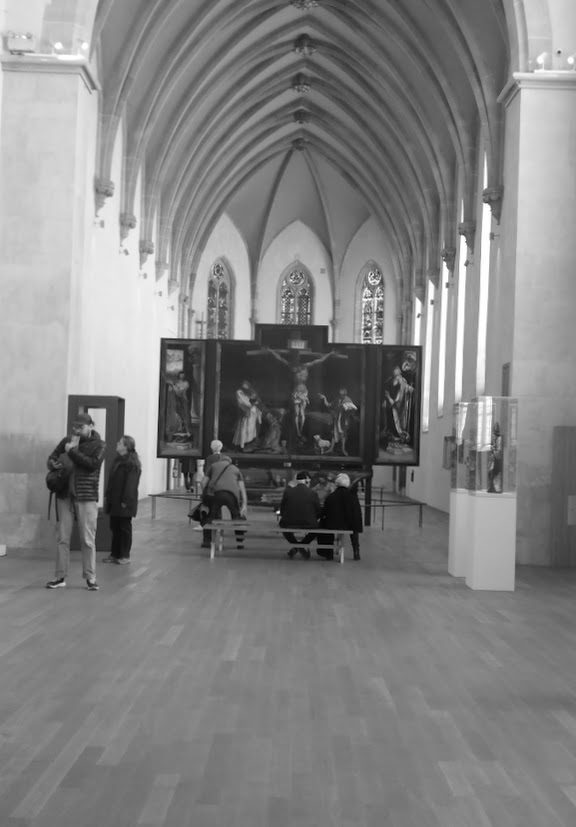
Matthias Grünewald’s Isenheim altarpiece.

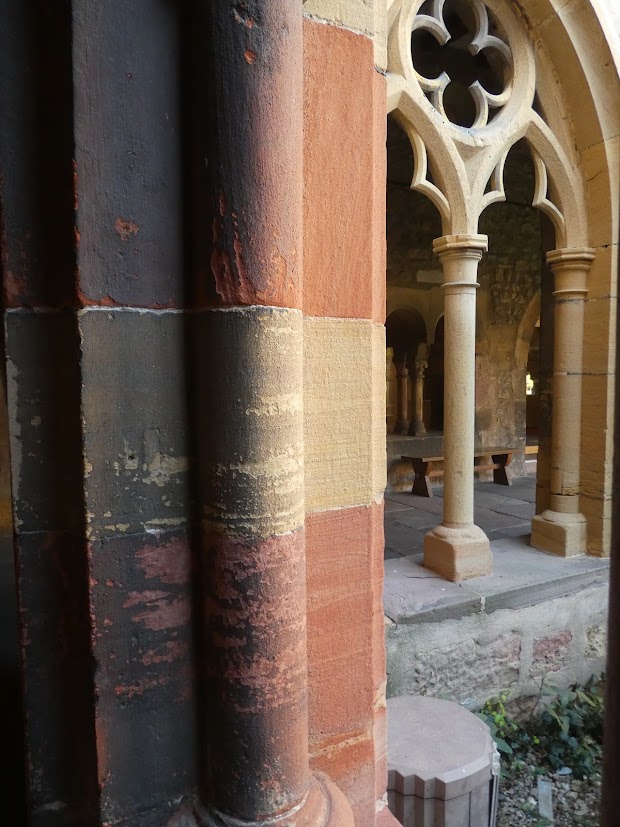
Then there are the cloisters: just the place for more religious statuary.
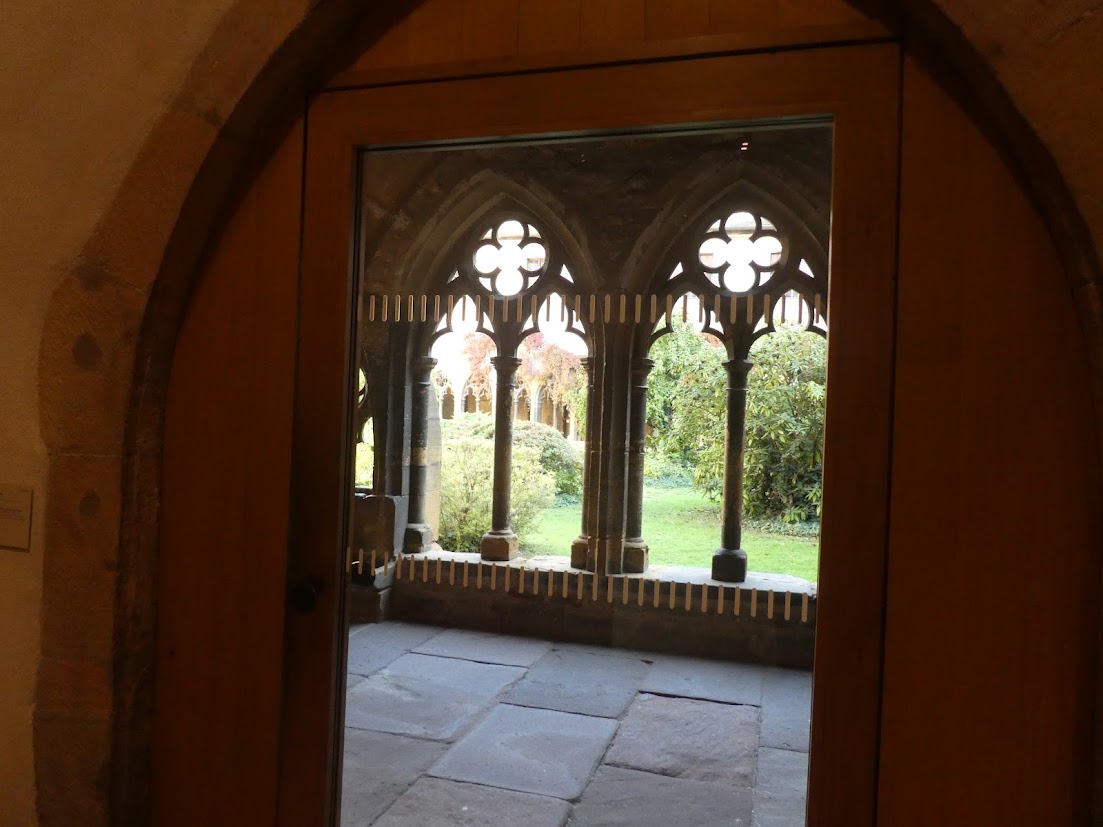
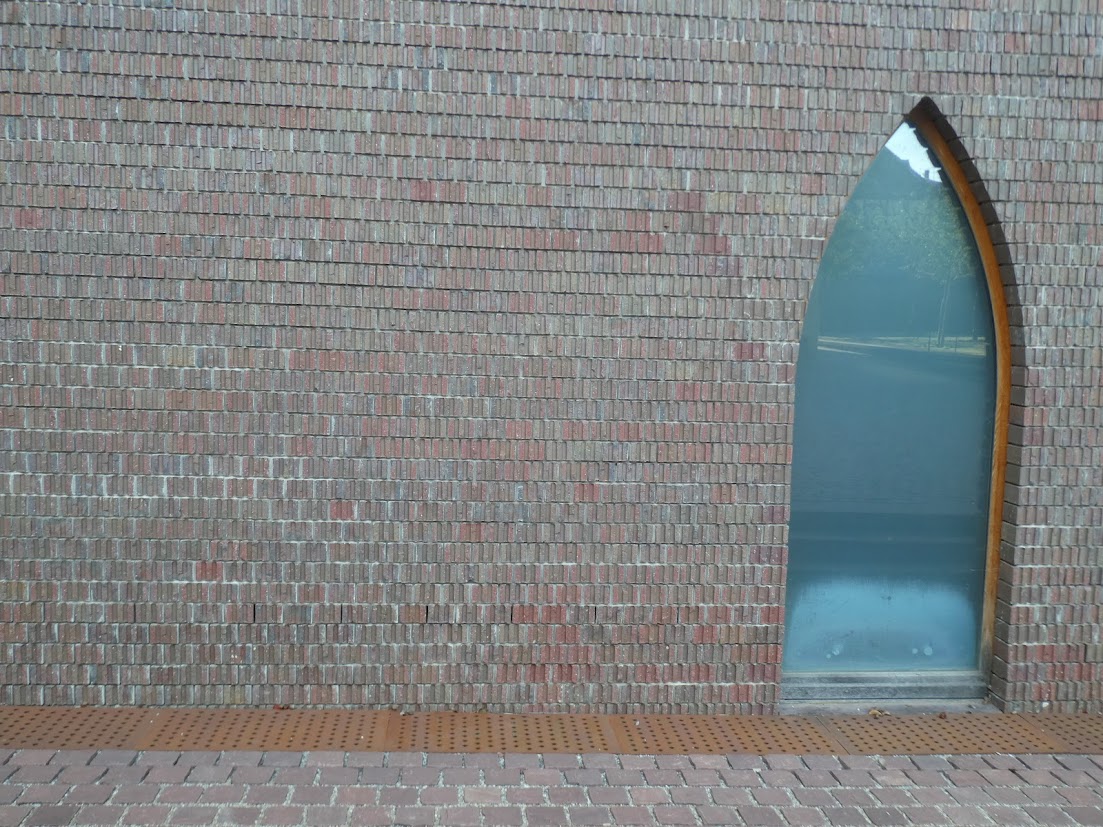
By the early 21st century the museum was running out of space. It was making contemporary acquisitions. It needed a refreshment area. Basel architects Herzog & de Meuron thought outside the box. The 1912 Public Baths on the other side of the road were no longer in use.
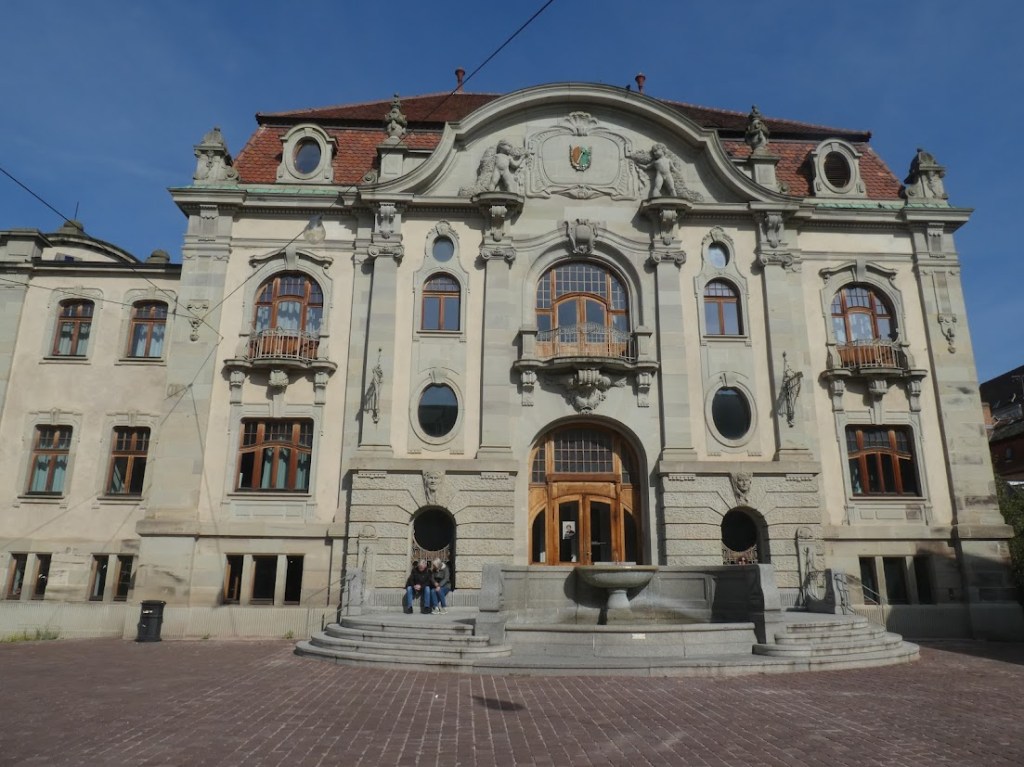
The 1912 former baths

Why not connect the two buldings with an underpass which could also be a display area?

This is the result.
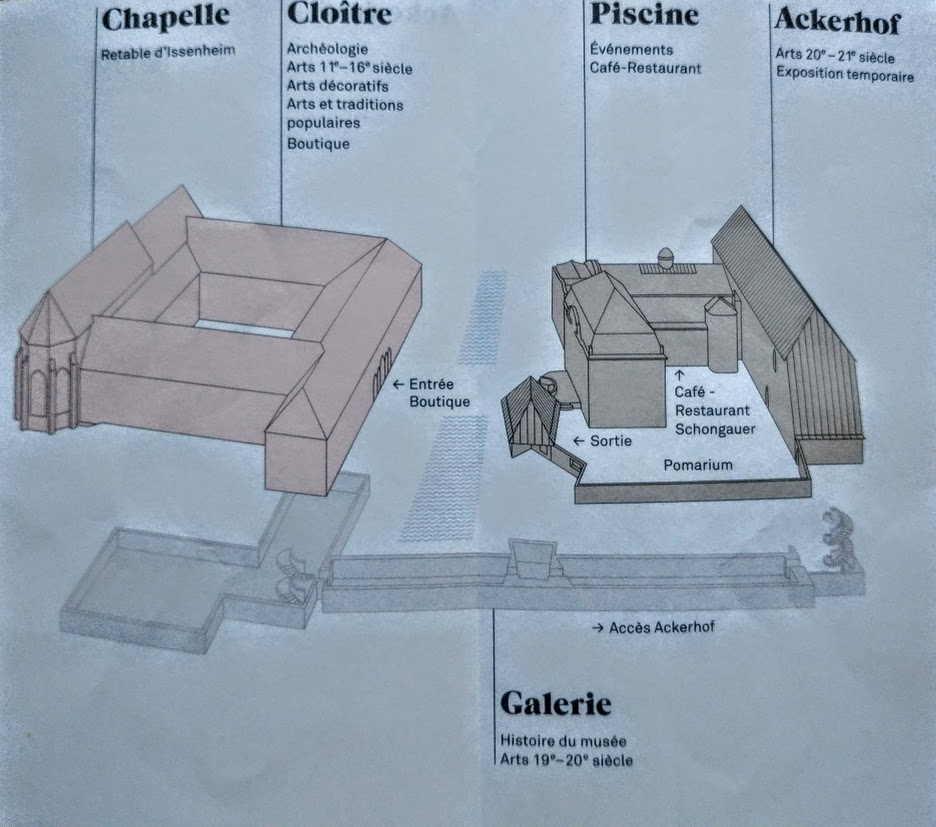
The result is a gallery where the works on display can breathe. Where the newer parts complement the old and reflect its religious past. It’s an exciting as well as a contemplatve space, and I put this gallery down as possibly among the best viewing spaces that I have ever visited.
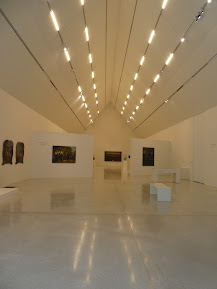
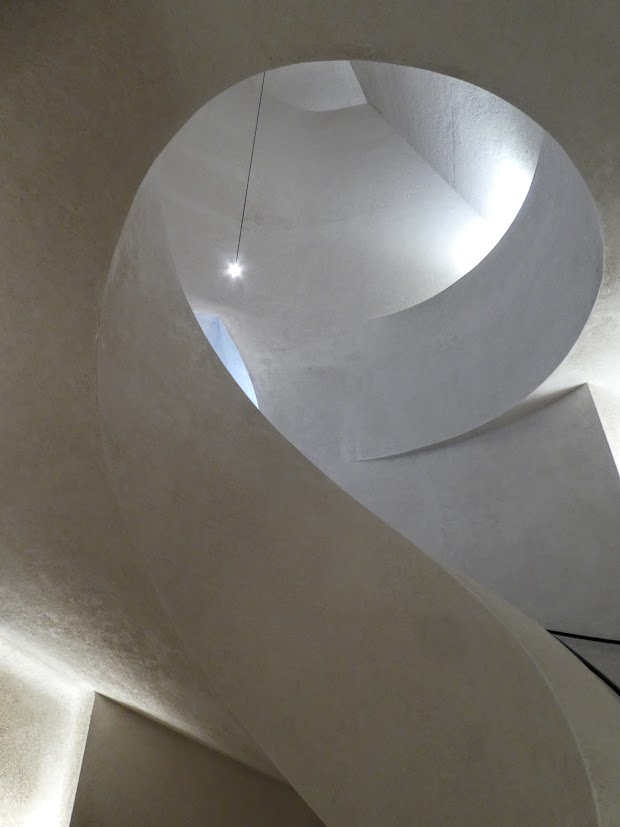
  • An outside space

I’ll finish by showcasing two or three of the works which appealed to me.
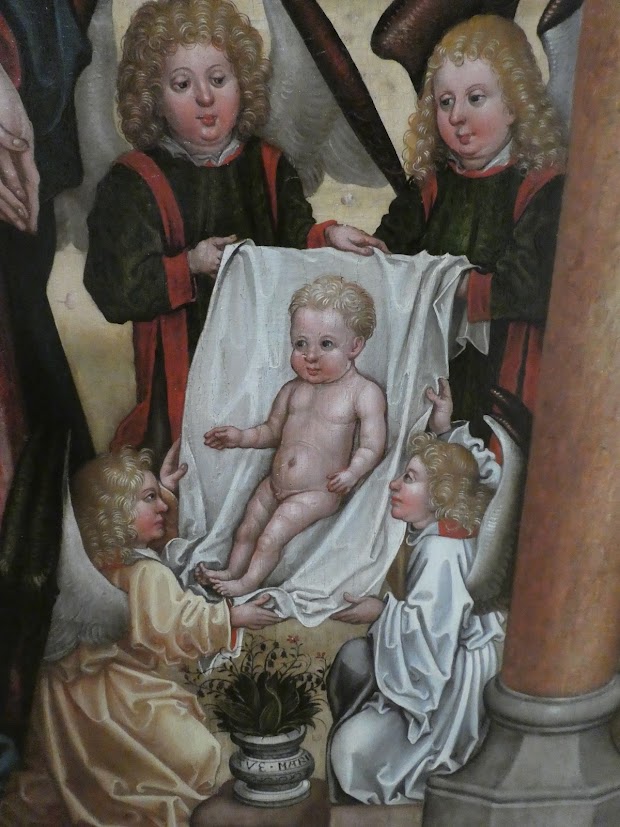
A detail from a 1480 Nativity recovered from an old Franciscan church in Colmar. The infant Jesus is the only one not old beyond his years.
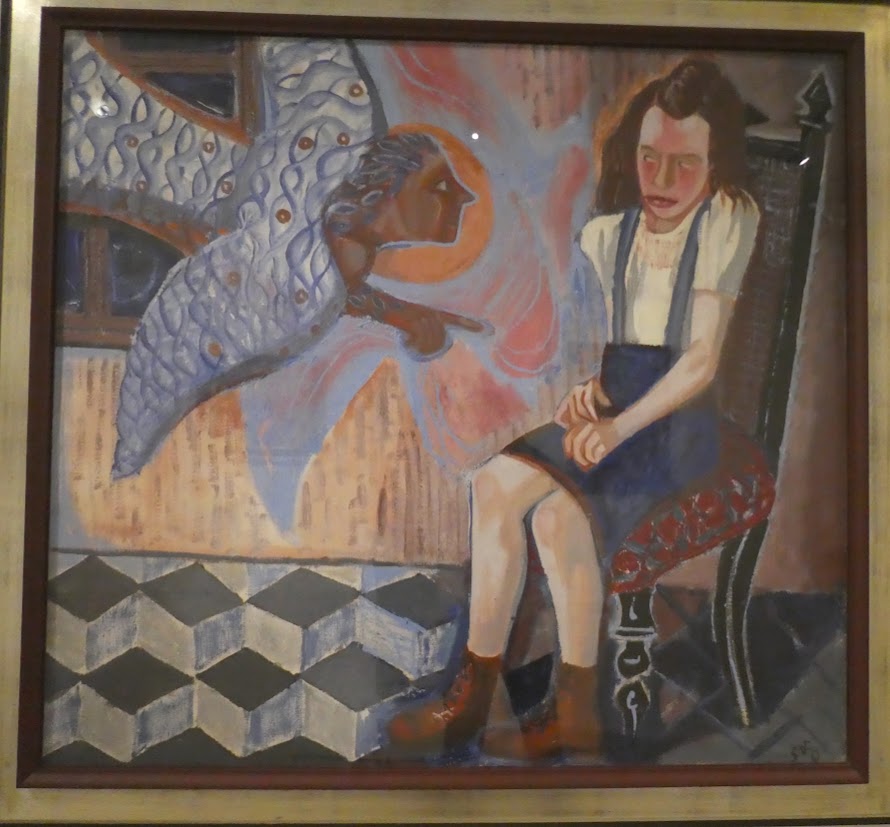
A 1950 Annunciation by Otto Dix. Surely, if there was an Annunciation as described in the Bible, Mary might have been caught not at all in her Sunday best, and just plain embarrassed by the whole thing. What me? Sex before marriage? My mum’d kill me. Me? An unmarried mother? I don’t think so. What would Joseph say?
Paul Rebeyrolle, La Souche (the Stump) 2005. A composite of various organic and inorganic materials: wood, vines, straw, vegetable and animal fibres, wire, expanded polyurethane foam, resin, mortar, adhesive, paints.

Just a postscript. Malcolm didn’t come with me. He thought he was too tired to be able to spend a few hours standing before a succession of art works. If only we’d realised. He could have made use, for free, of one of these flâneuses, or leisurely strollers. What a brilliant idea!
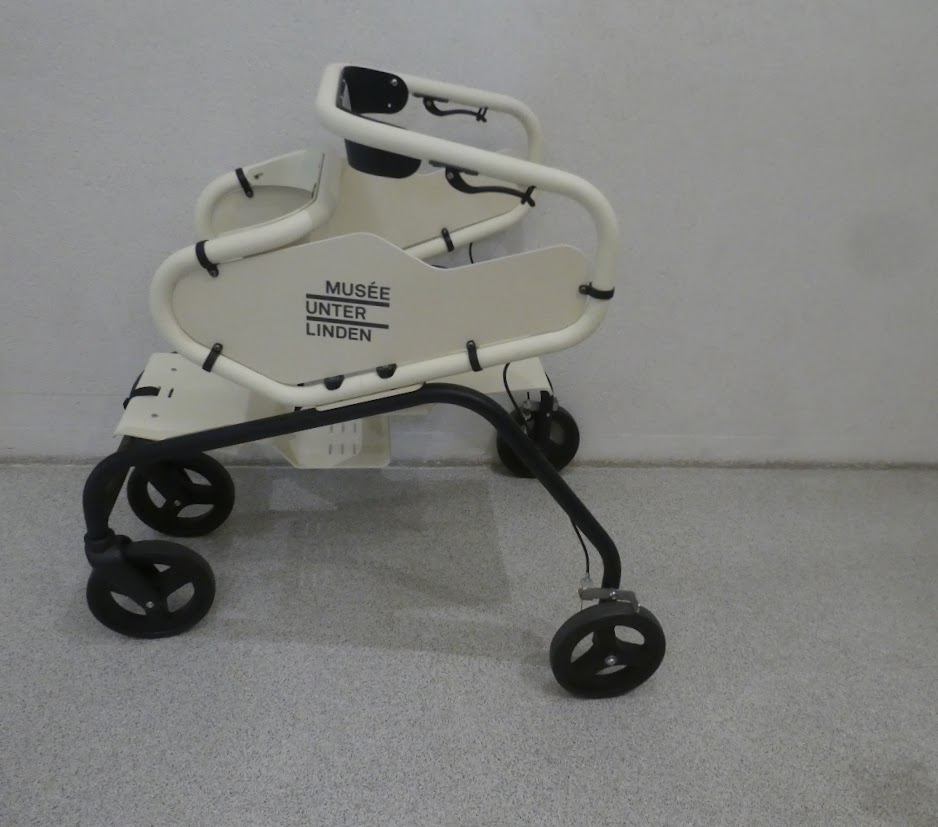
Borrow a flâneuse! It’s free!

Becky, can you find the image + shadow for NovemberShadows? I hope so.
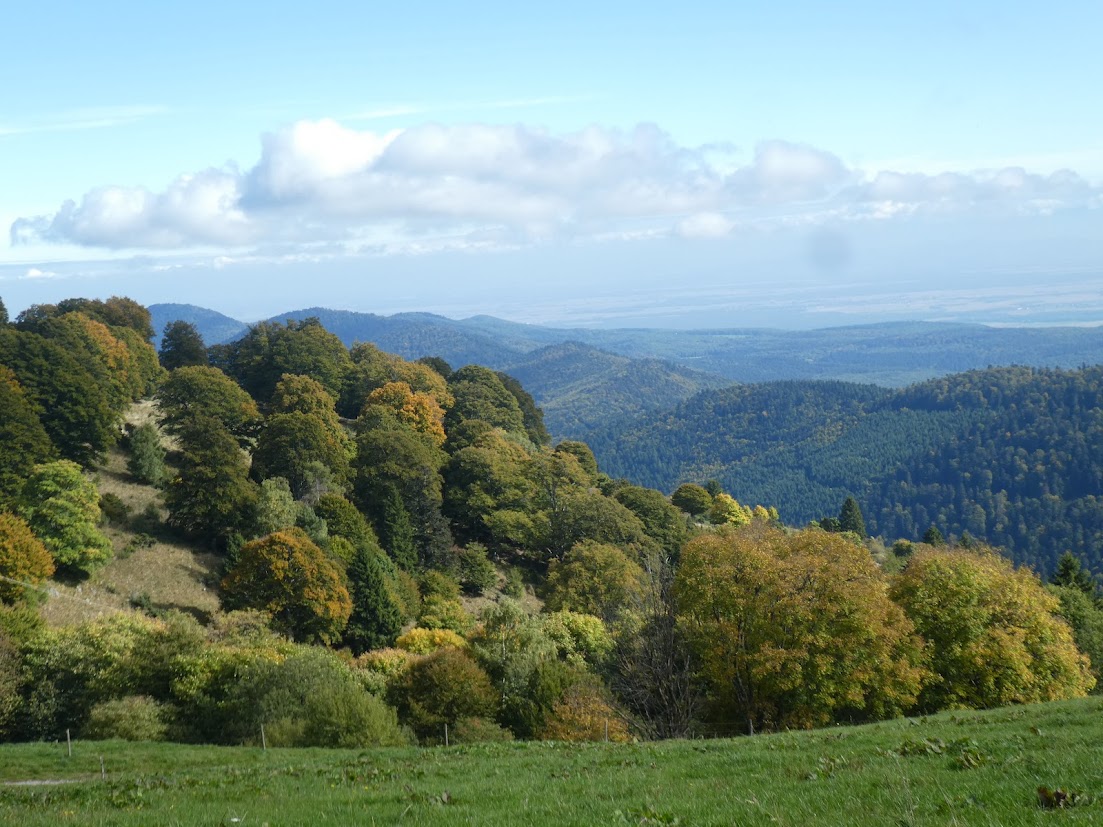
Walking in Mountain Scenery

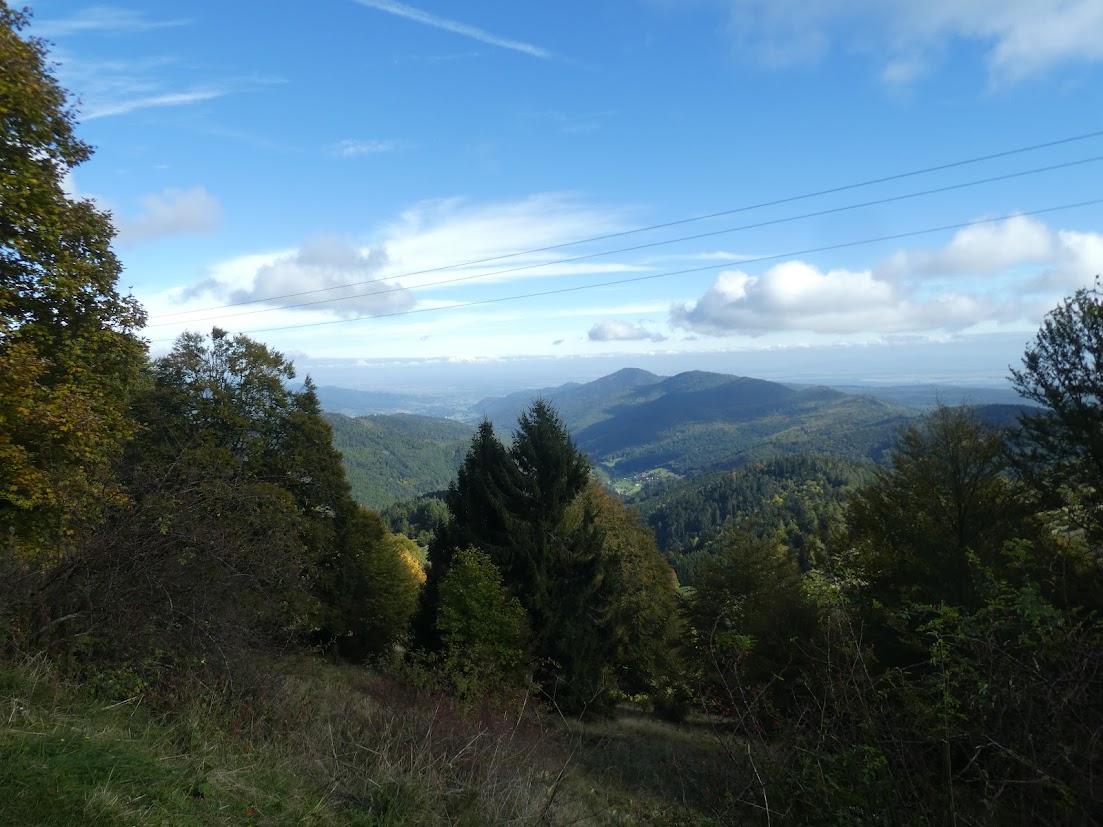
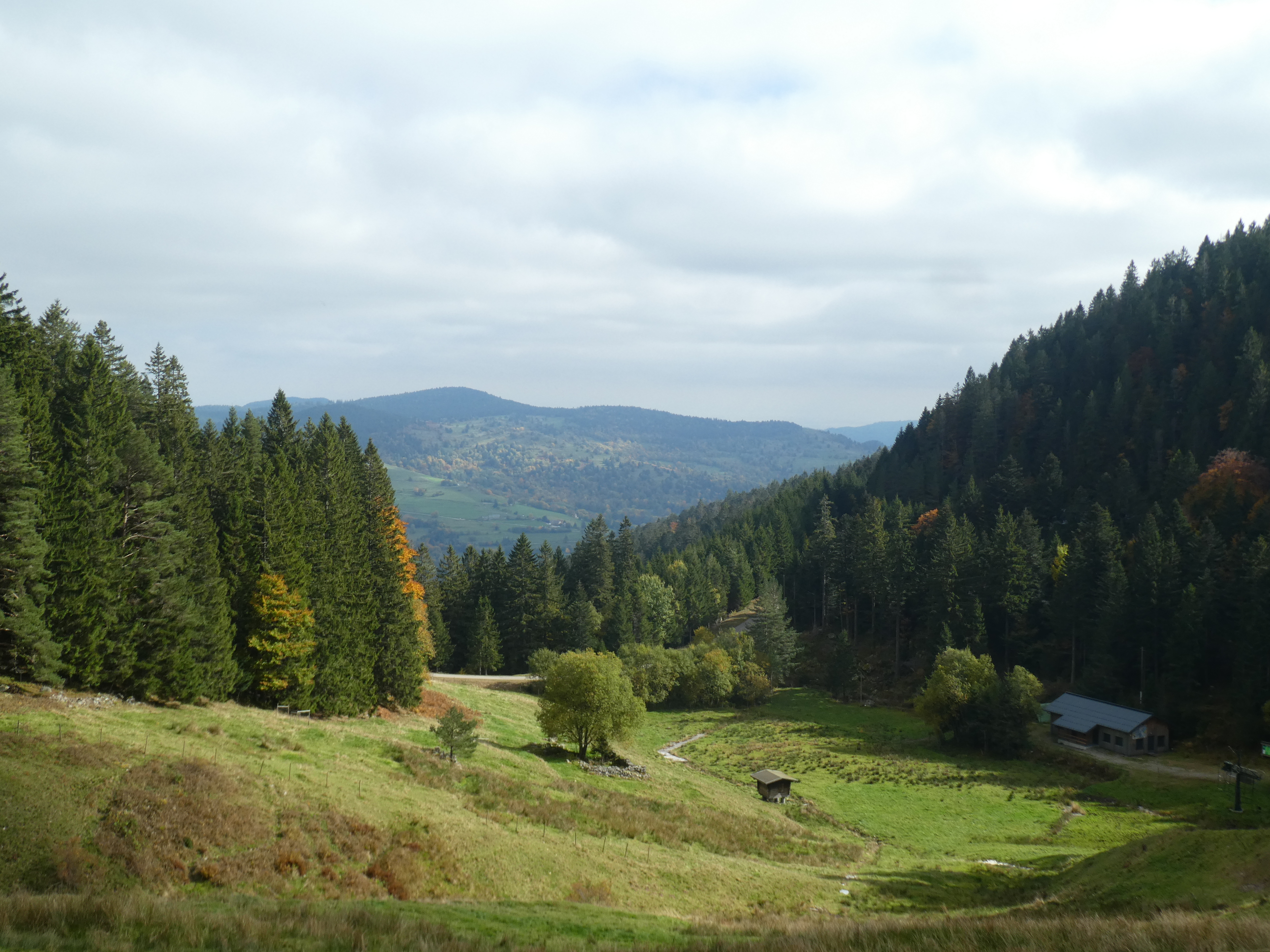
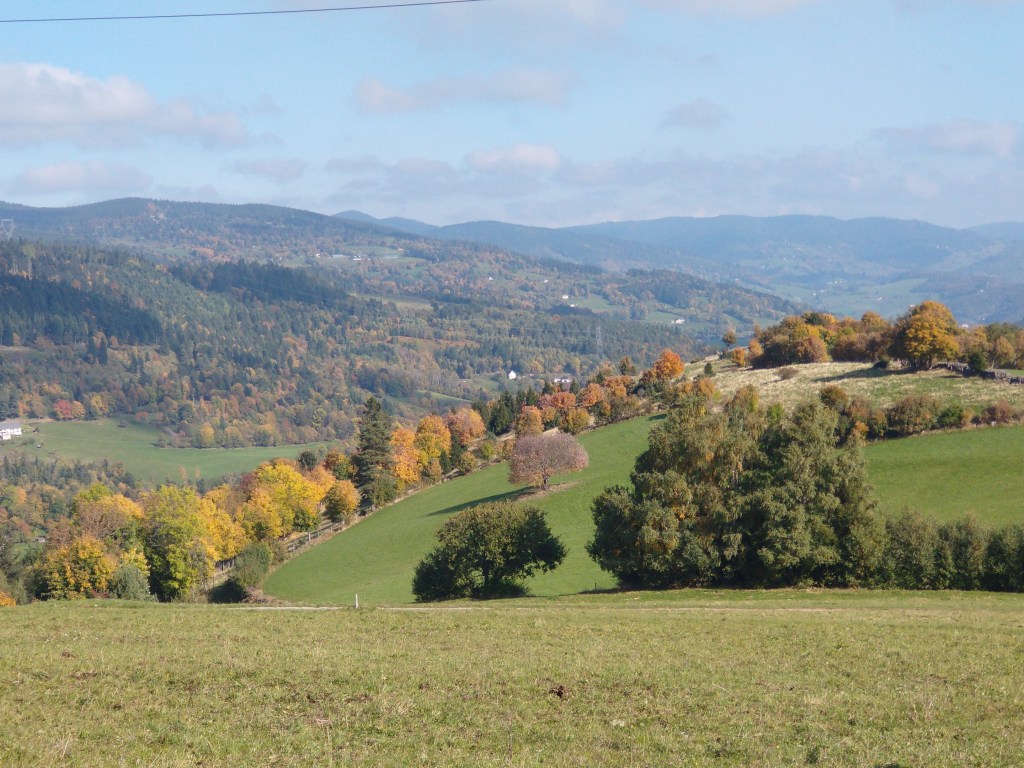
Since we left our home in France, eleven years ago, I’d forgotten the exhilaration of walking in the mountains. The Vosges are not the Pyreneees, far from it. But they offer the same reward of yomping, puffing and panting ever the harder, up the steepest of slopes before finally offering you views- across to distant slopes, and to valleys below: pastures, forests, settlements.

So in Alsace, Malcolm and I picked our chosen pastimes – walking for me, cycling for him. And on this day, we’d driven about 15 km. from ‘home’ to only a couple of hundred metres below the summit of Le Petit Ballon, so he could enjoy the exhilaration of zooming downhill, then along the valley bottom on a series of cycle ways to our holiday premises. I was to enjoy the different exhilaration of climbing to the top of the mountain before walking down and up and down and up the circular route I’d chosen to get me back to the car.

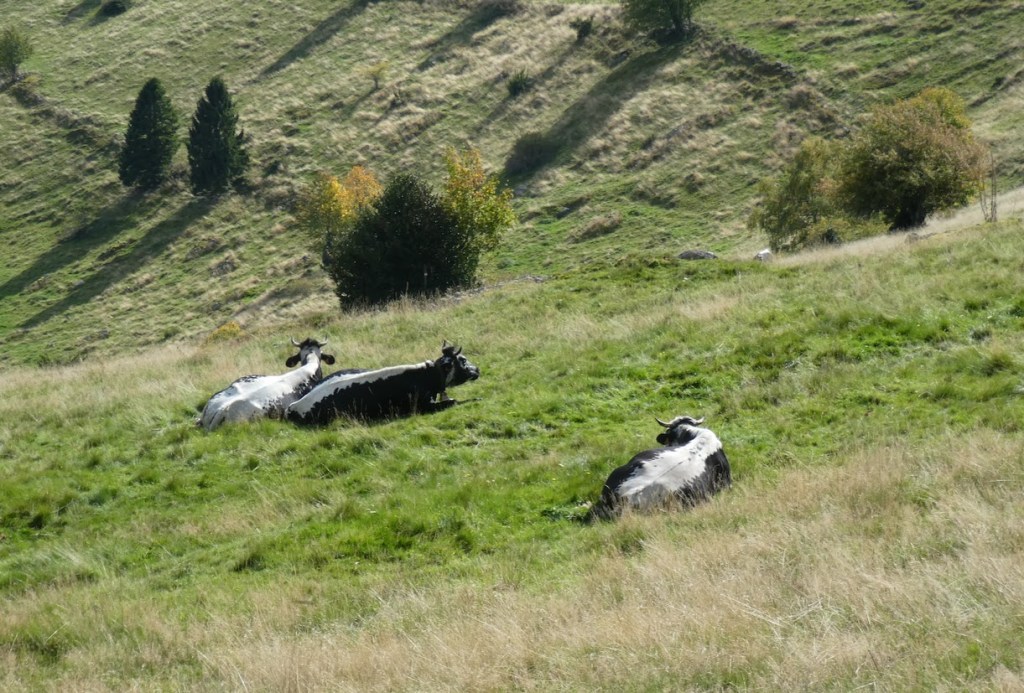
I passed cows first, the sound of their bells reverberating mellifluously far across the valleys.

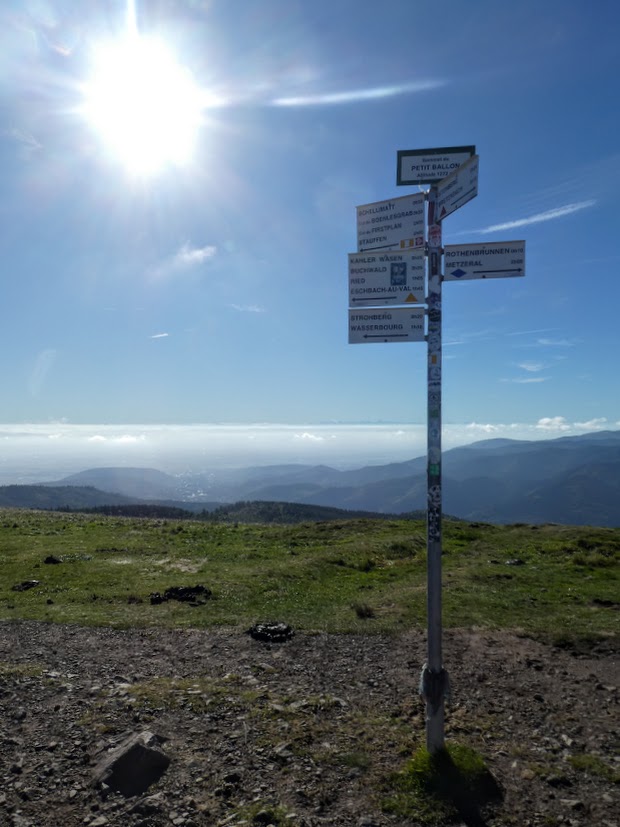
It was a hard slog to the top, but I got there, and was disappointed by the presence of a bulky and rather ugly phone mast. And then immediately went wrong. I was relying on a walk description in a booklet I’d bought, and on the French equivalent of our OS maps. Which we’d long ago discovered do not do anything like as good a job. I was to follow several different series of balises (waymarks), which are also inconsistent in their usefulness (they tend to be there when you don’t need them, absent when you do).

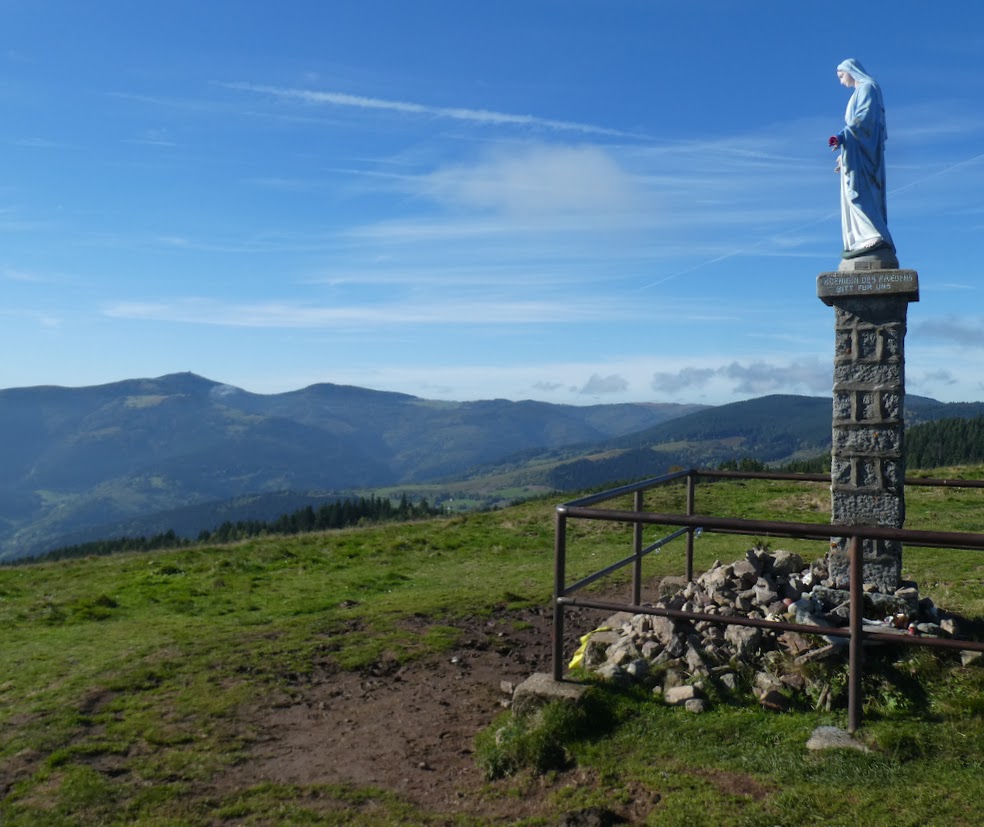
My booklet said to walk to the statue of the Madonna and turn right. I did. I walked downwards, and found a path which didn’t seem right. Coming across some walkers from a French rambling group, they greeted me cheerily. ‘Are you alone? Come with us!’ I was tempted, but they were going the other way. But they pored over my map with me and set me right before going on their way. Anyway, it turned out I had followed the Wrong Madonna. Who knew there would be two in more or less the same area? I adjusted my walk plan and carried on.

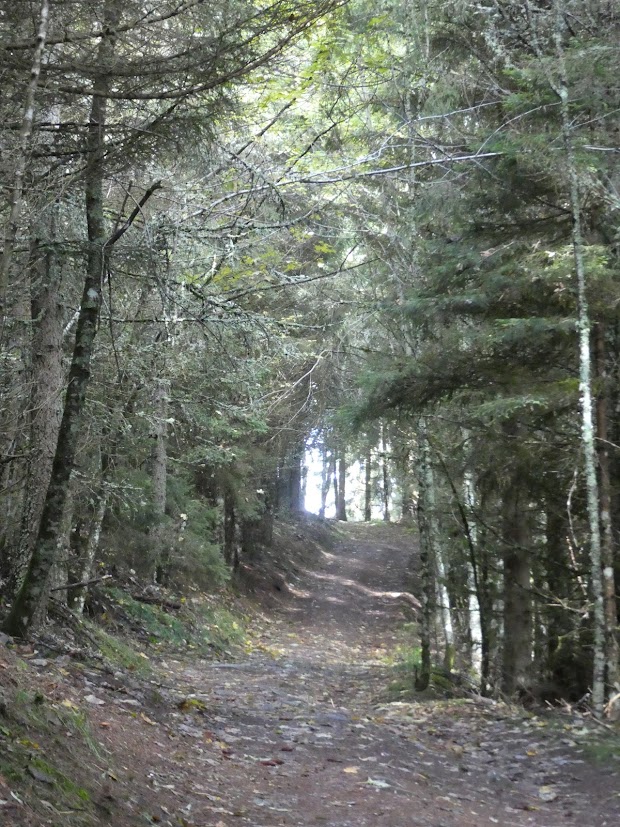
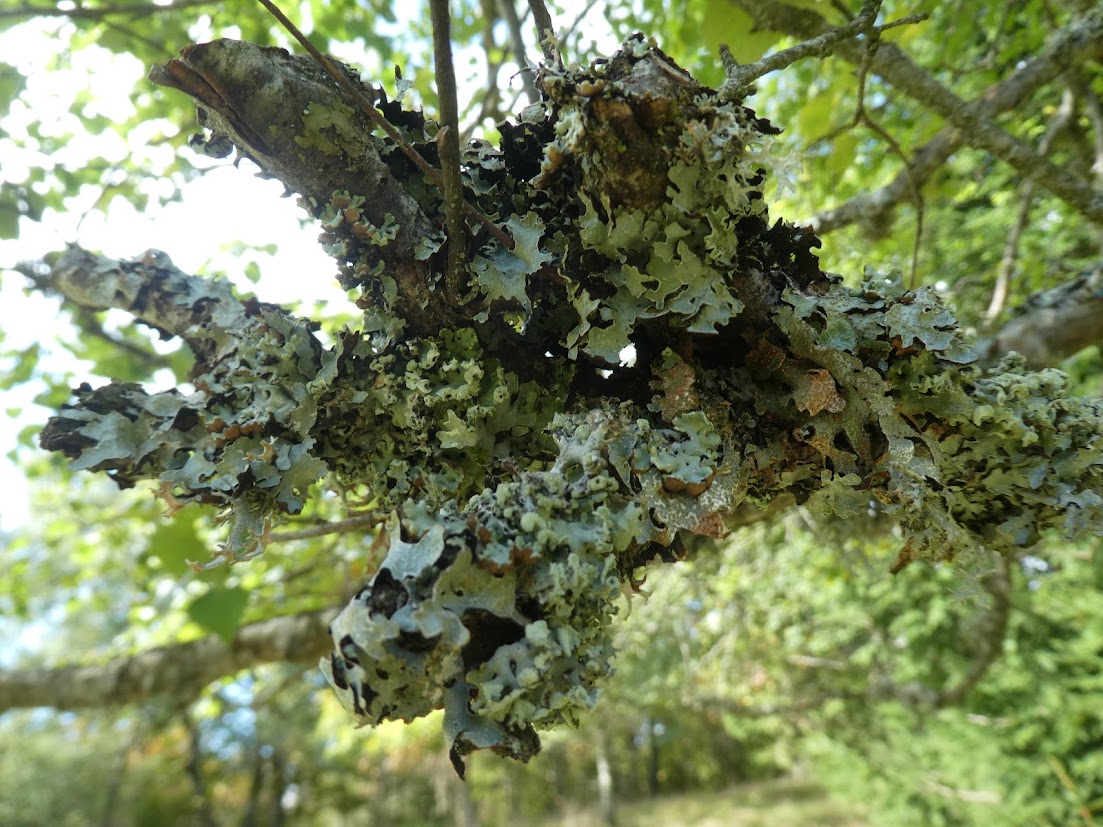
I passed through woodland, a rich loamy path, with weightless grey lichens clinging to every twig and branch. Then open pastureland with distant mountain and forest views.

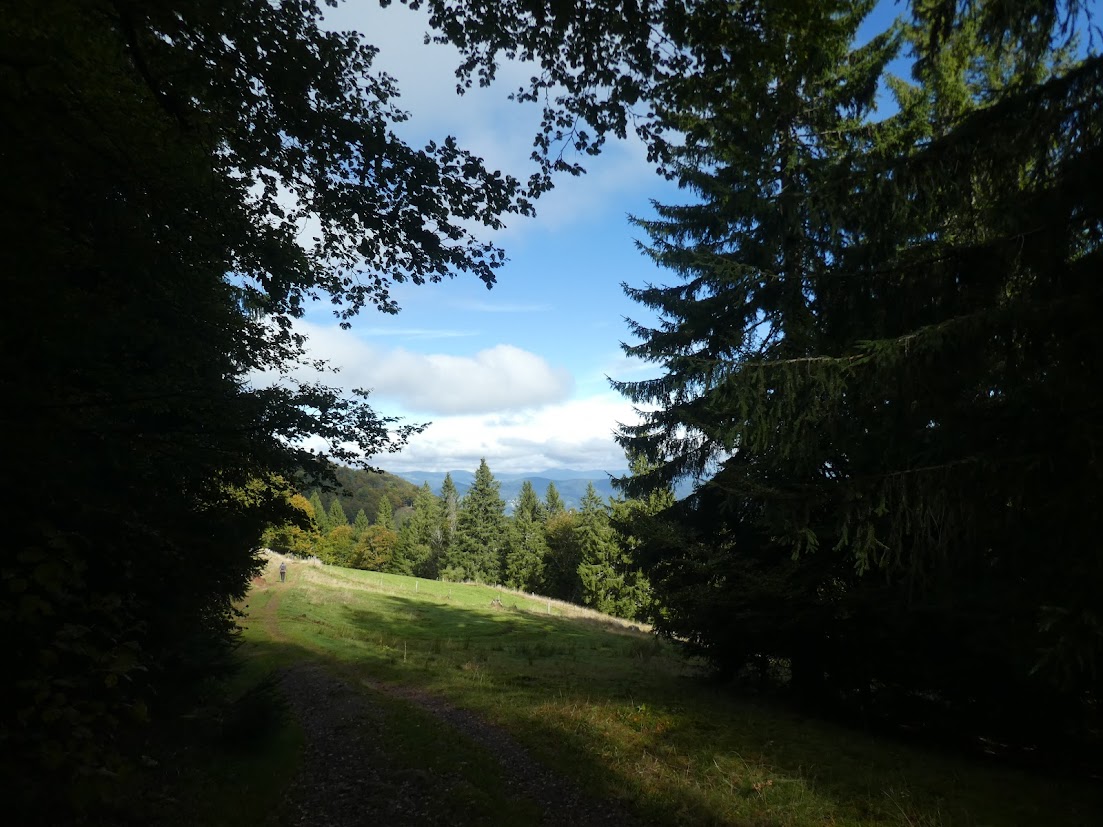
Onwards and upwards, till I came to an open summit with boulders scattered randomly around, making a perfect choice of picnic venue for me, offering me views in every direction. It was just warm enough, just sunny enough. Perfect.

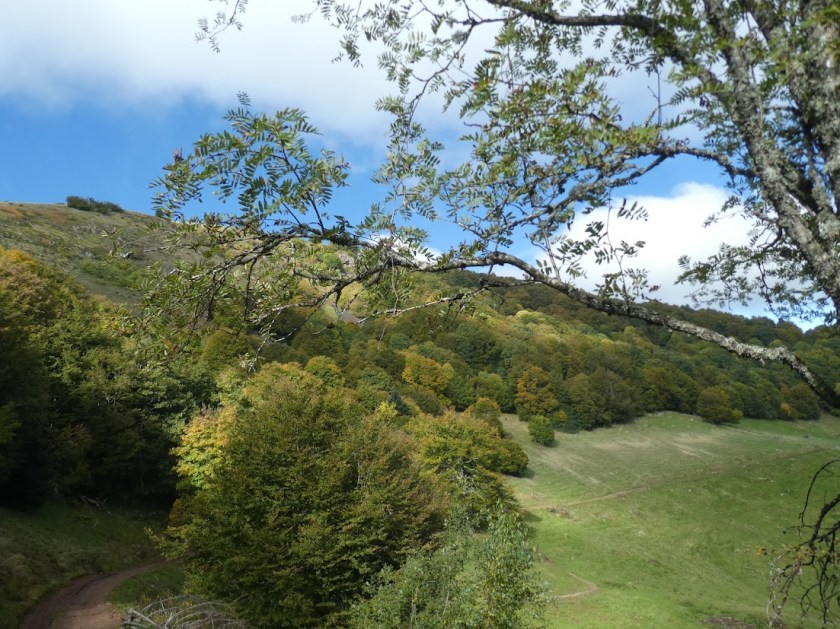
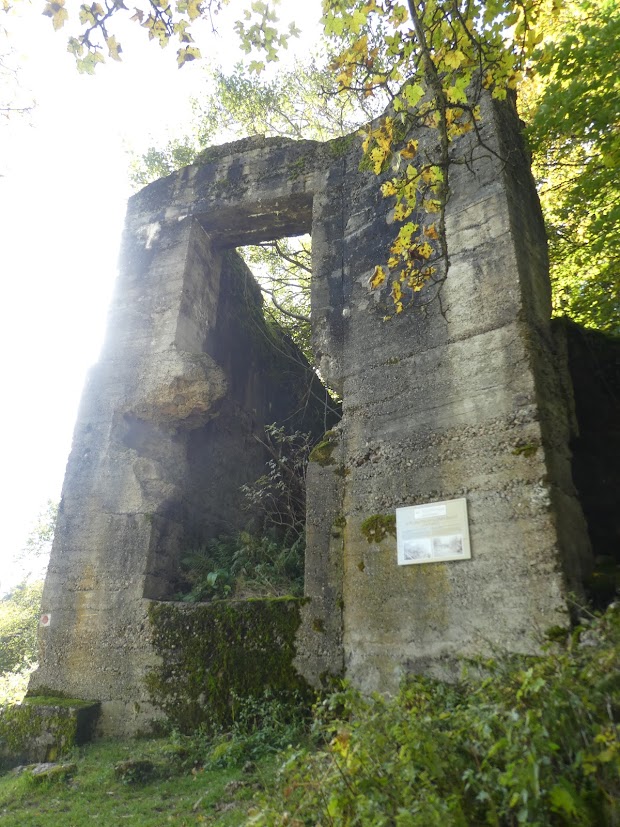
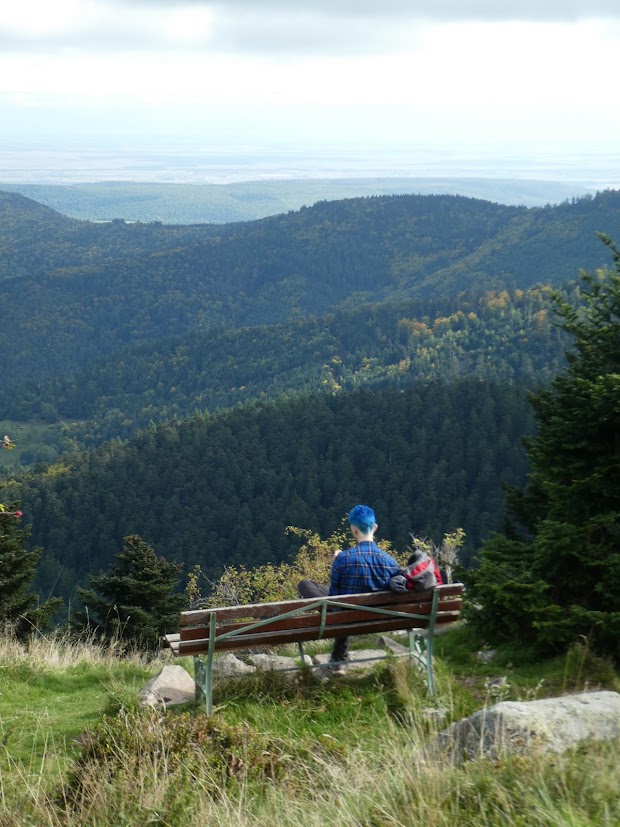
After lunch, the views became more open, the colours more autumnnal, the path, though inexorably upwards, was a gentler slope. I passed the peak with the bench I showed you yesterday, and meandered slowly down to the wooded valley. On my way down, I found a piece of history from 1915: the remains of a German téléphérique, used to transport goods and all the chattels of war: a reminder of all we’d learnt up at le Linge.

My final couple of kilometres were disappointing, along a road – the one we’d travelled ourselves en route that morning. But I’ve forgotten that now, and kept instead the memories of a fresh, bright day in early autumn: an energetic and satisfying walk.

For Jo’s Monday Walk.

Footnotes in History: The Battle of Le Linge

On our recent trip, mainly to Alsace, but with sorties to Germany and the Netherlands, we came across several stories from the past which we’d known nothing about, but found engrossing. For the next few Fridays, I’ll share these stories with you.

The Battle of Le Linge

Anglophone readers will all know the dreadful story of the so-called Great War, 1914 – 1918. Particularly the war in Flanders, with its trench warfare in which first the Allies, then the Germans, gained a few yards of ground, then lost it, and gained it again in manoeuvres that resulted in the pointless deaths of thousands upon thousands of men whilst upending the communities in which those battles took place, as well as the families whom they had left behind. It turns out that this story was repeated in very different territory too.
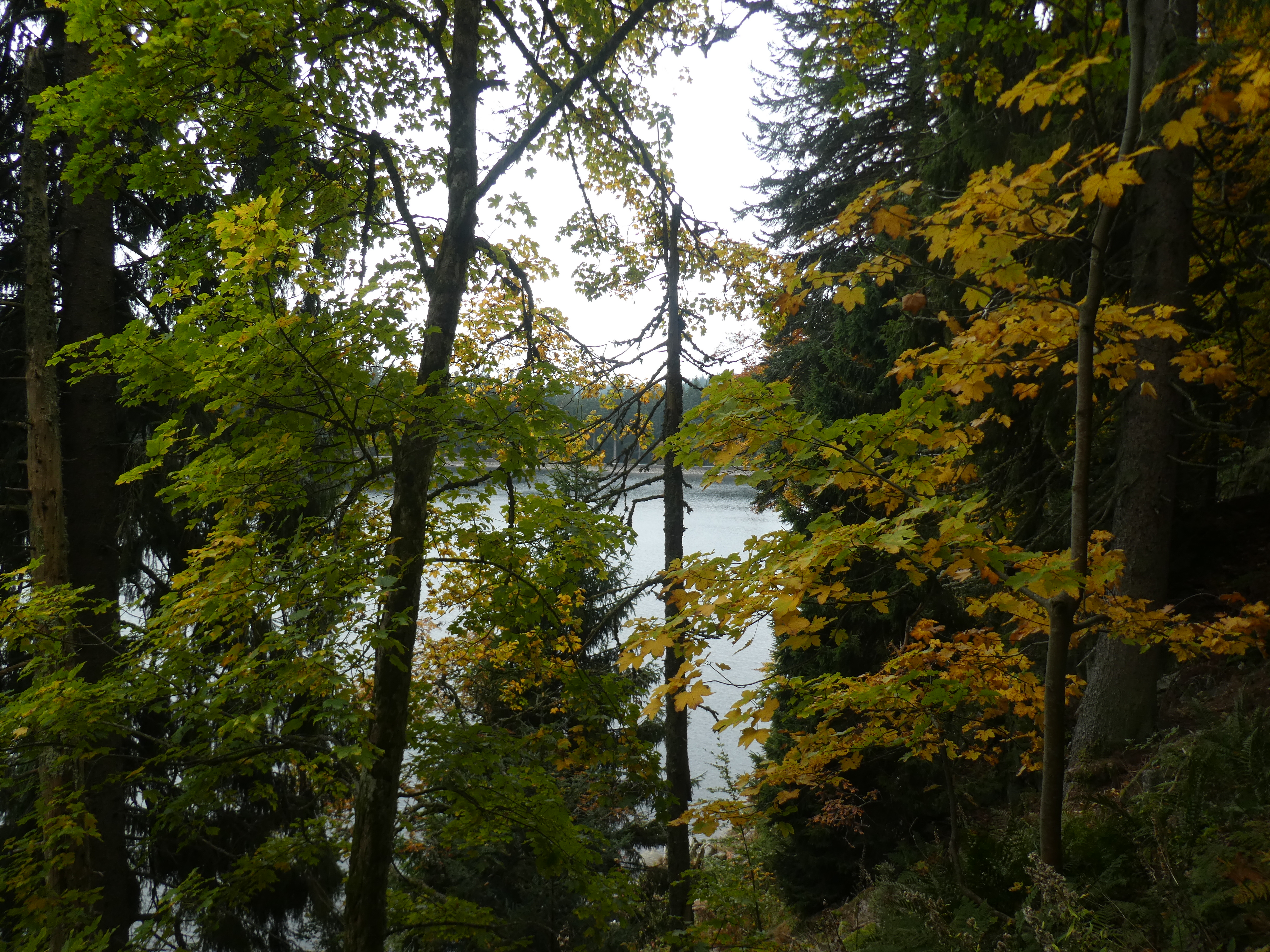
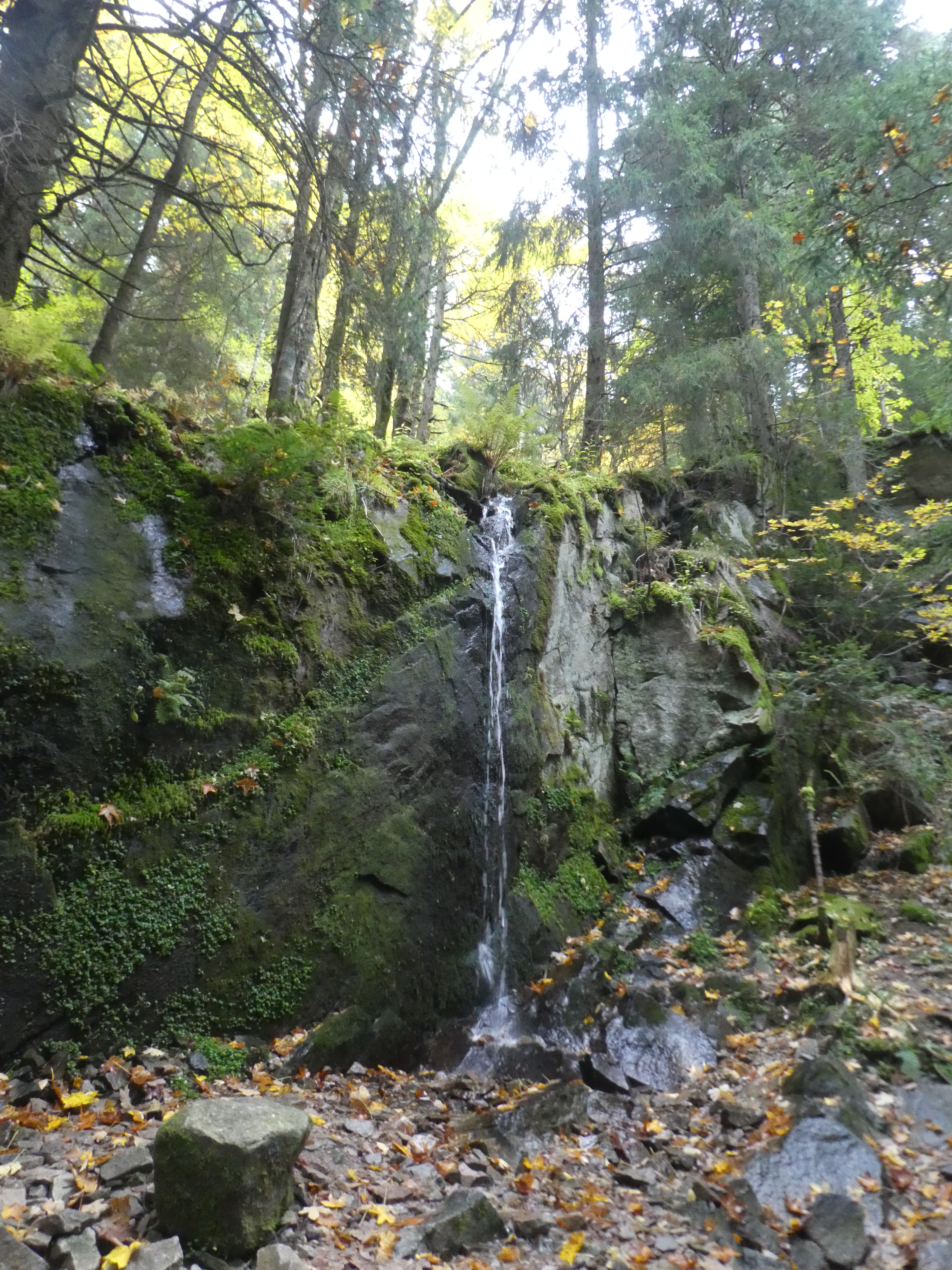
In the Vosges mountains, in territory which has through the centuries passed repeatedly between German and French hands there is a col known as Le Linge. It’s a mere 17 miles (28 km) from Colmar, but it’s a different, often desolate world, reached by travelling up apparently endless and steep hairpin bends which cut through dense forest and a rocky landscape untouched by human hands. On the day we went there, to visit the  Mémorial du Linge, it was rainy: and I was glad. This was no site to enjoy in balmy sunshine.
Early on in the course of the war, both French and German commanders thought they could see advantages in taking control of Alsace, though both had sent the bulk of their troops elsewhere – notably the Marne.

Here’s what the Memorial’s own website has to say:

'Given the situation on the battlefield, the French army had to overcome enormous logistical difficulties . Starting from scratch, it had to build roads, camps, ambulances, aid stations, transport ammunition and supplies on mules, install heavy and light artillery, build battery emplacements, shelters and other necessary installations, and finally transport the combatants, all in full view of the German enemy.

Faced with such preparations, the latter would not remain inactive and would prepare for the coming assault. Taking advantage of the shelter of the forest, excellent logistics (notably a narrow-gauge train from Trois Epis) and the proximity of the Alsace plain, the German troops established solid defenses. Trenches, shelters and connecting trenches were installed on the mountain, fortifications built, pillboxes and machine gun nests arranged, fields of barbed wire unrolled along the steep slopes between trees, rocks, brambles and other chevaux de frise (movable obstacles, often made of a wooden frame with spikes). These defenses added to the complexity of the battle for the French forces and further accentuated their initial disadvantage on the terrain.'

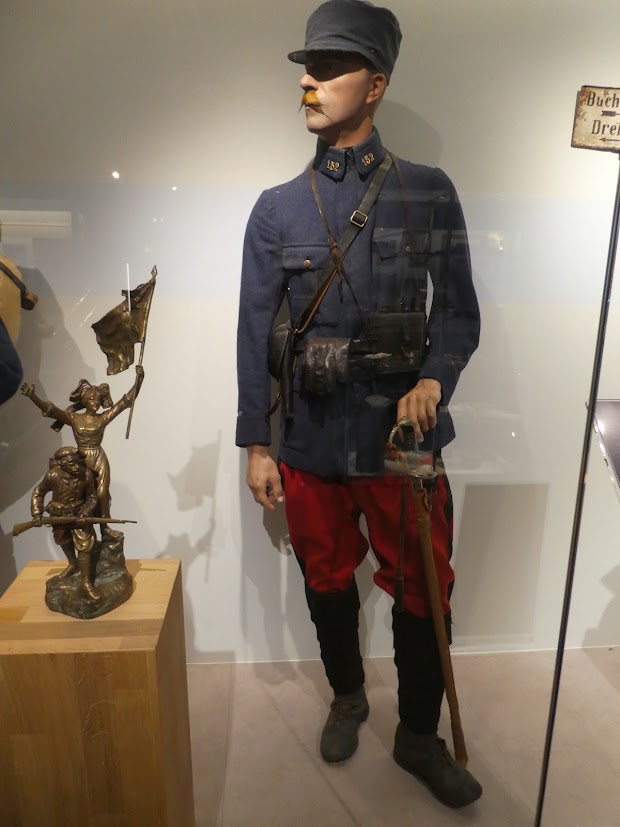
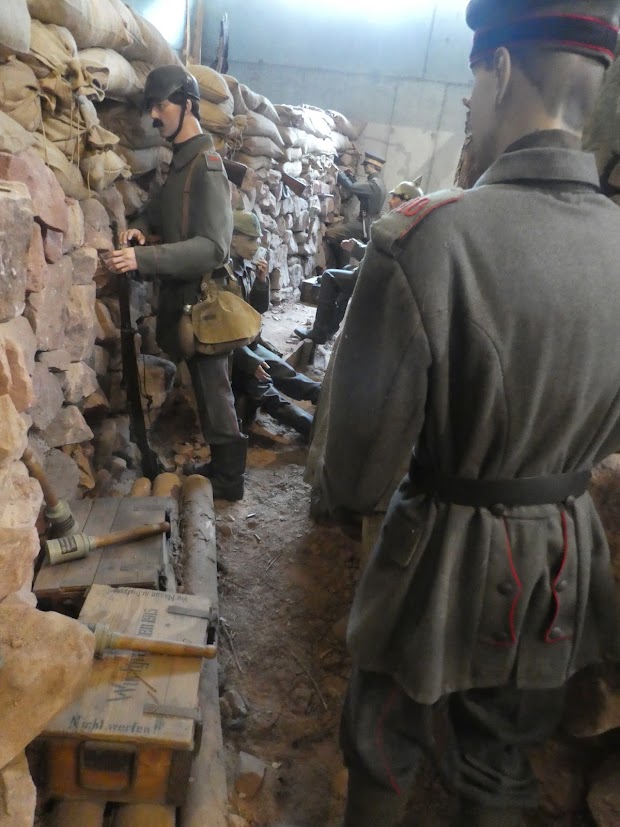
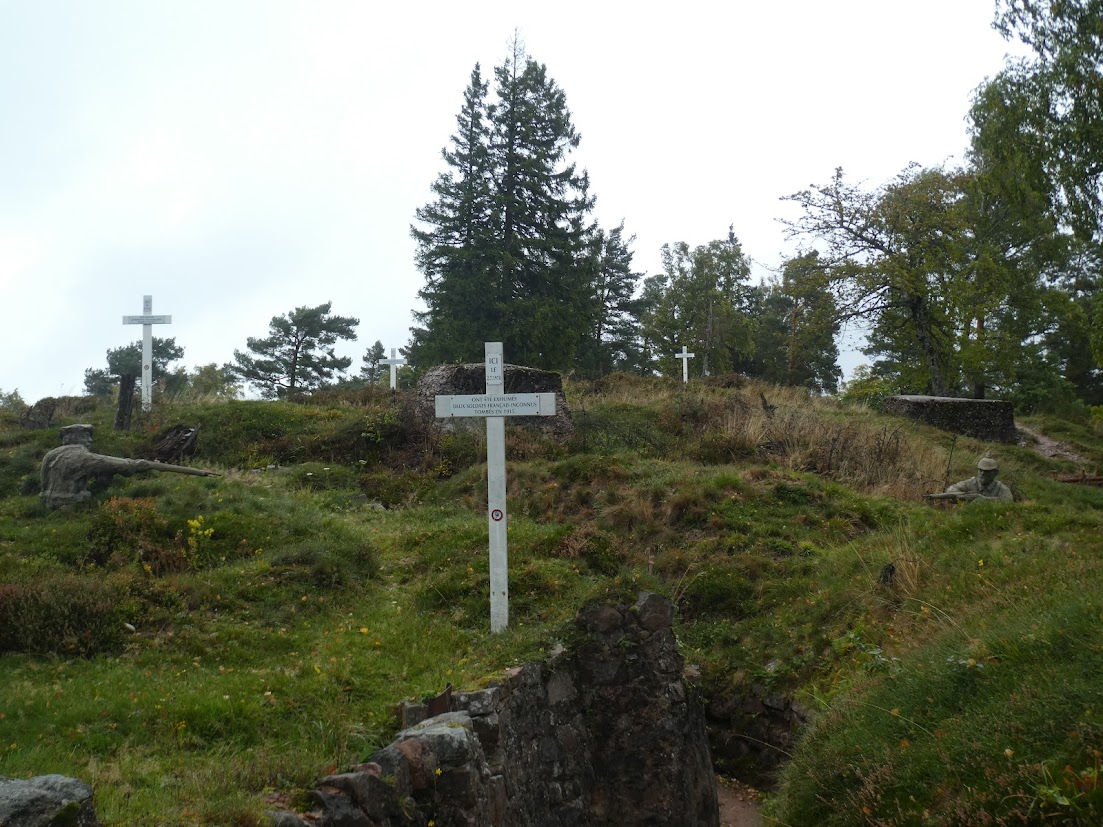
Both soldiers here look almost 19th century, equipped for different battles from the long-drawn out trench warfare to which they were actually subjected.

From July 1915, battle commenced. There were attacks, counter-attacks, hand-to-hand fighting as each side was only feet away from their enemy. I read one account in the museum, which I’ve been unable to find again, telling of a batallion going into battle one night with over 2000 men, and returning in the morning with just 3 officers, and 28 men.

Despite courageous resistance from the French, the German forces always maintained the upper hand. On October 16th, the last German assault took place, after which both sides retreated into an uneasy, exhausted, totally debilitated calm.

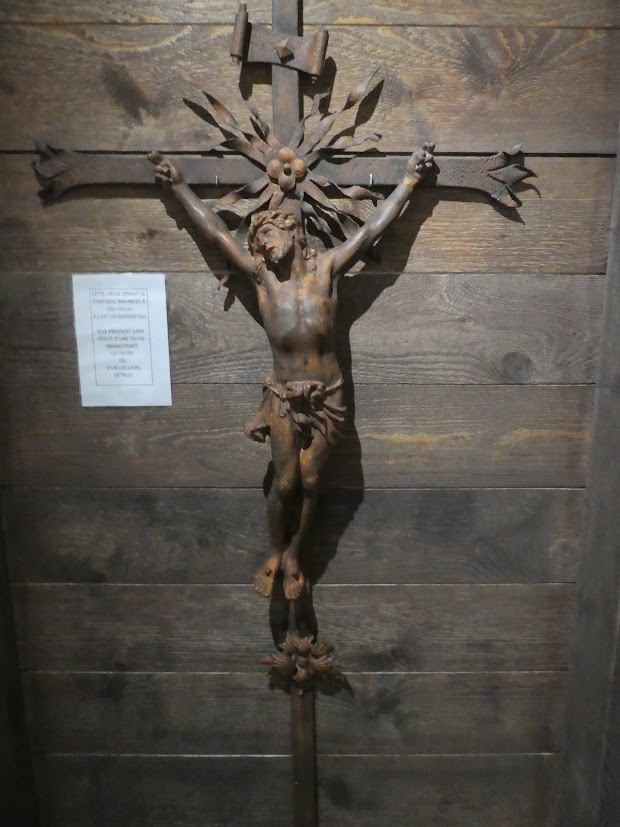
Pillaged from a local church, this was found displayed in a trench, doubtless as an impromptu altar.

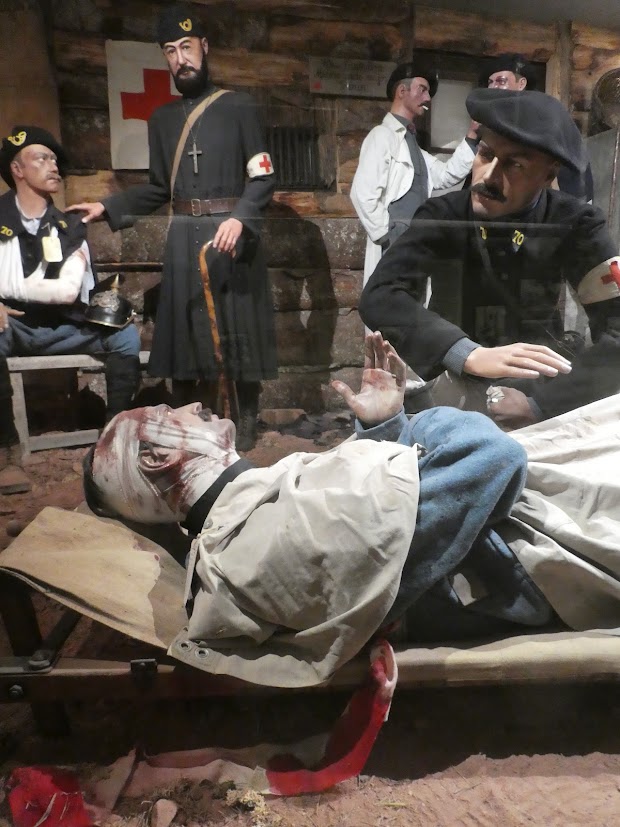
And yet. Both sides retained a pointless presence there for the whole of the rest of the war, with skirmishes a daily routine. On average, 5 men died every day during the whole of this period: young men, mainly aged 19 or 20. Specialised forces were deployed, such as these troops here: skiers. Whole villages were forced to evacuate, and many remained abandoned after the end of the war.

Yet again, the website sums it up:

'The Battle of Linge, of no strategic importance, was a true human tragedy marked by the courage, determination, self-denial, and sacrifice of French and German soldiers. 
It bears witness to the brutality and difficulty of the fighting of the First World War, where thousands of lives were wasted for often minimal territorial gains.'
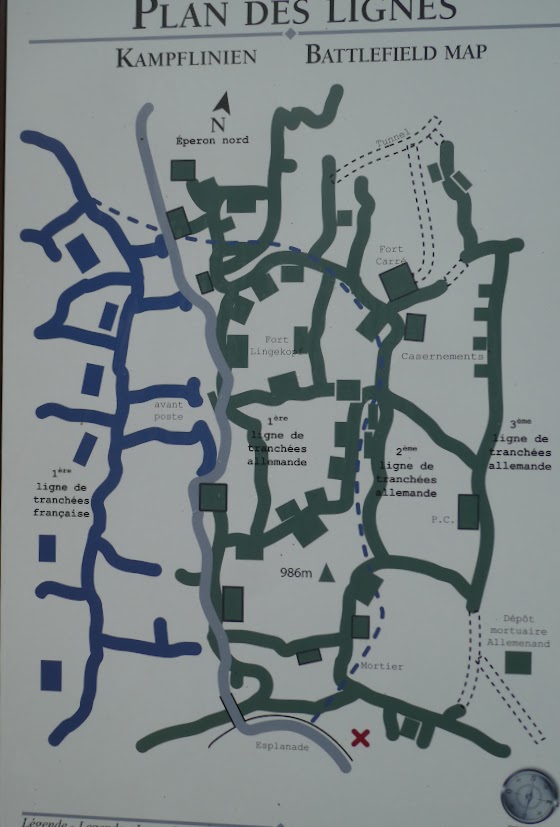
A map of the trenches. No wonder I found it hard to get my bearings!

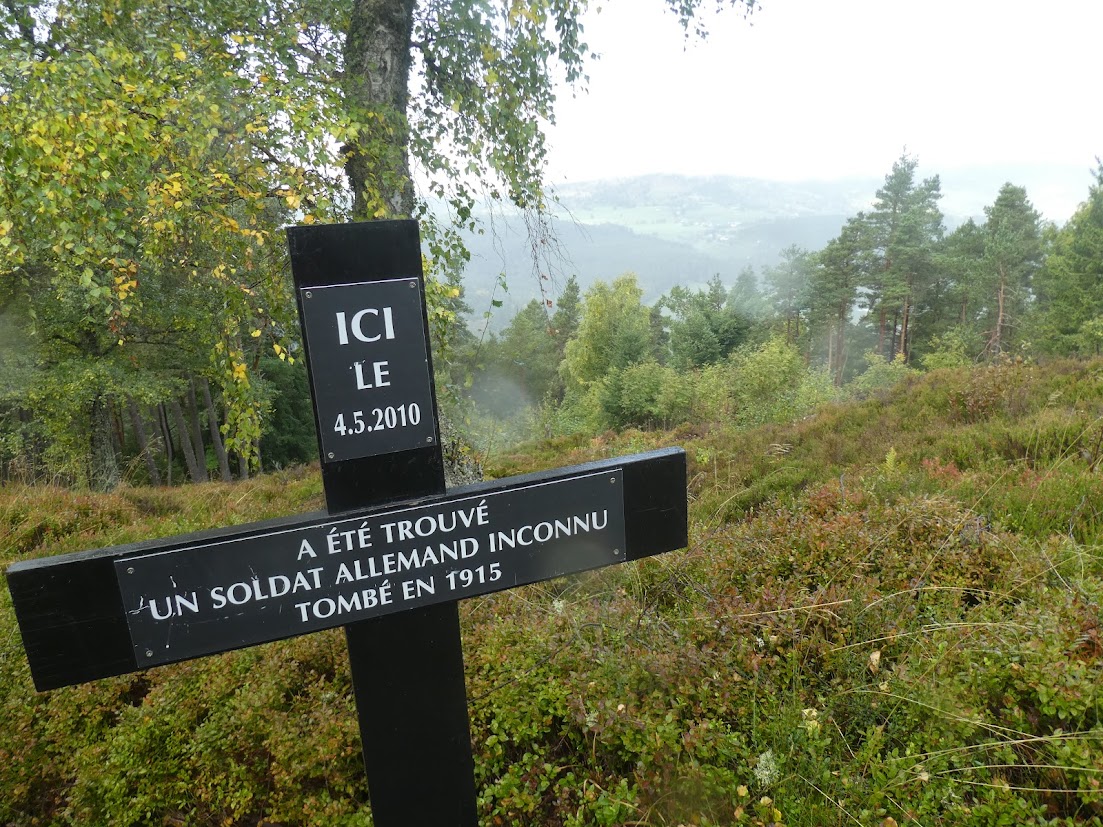
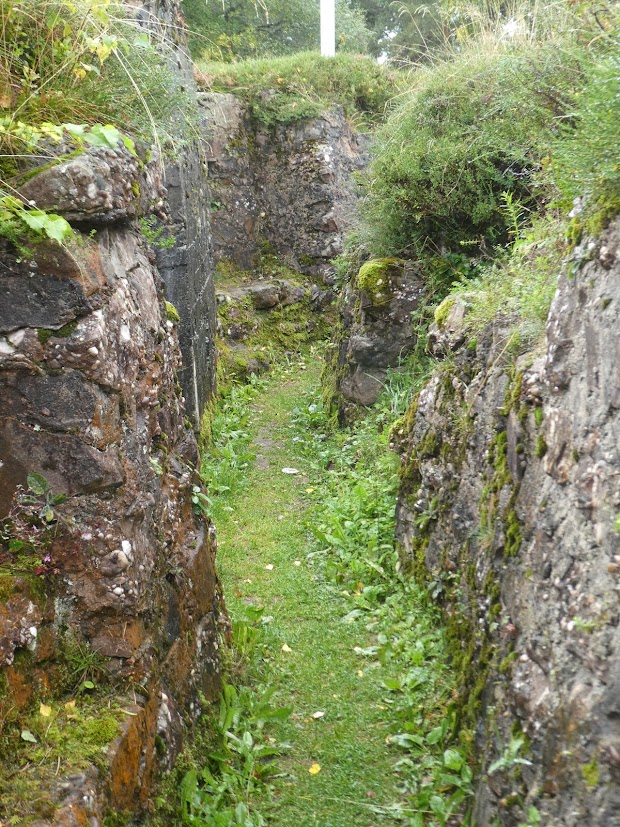
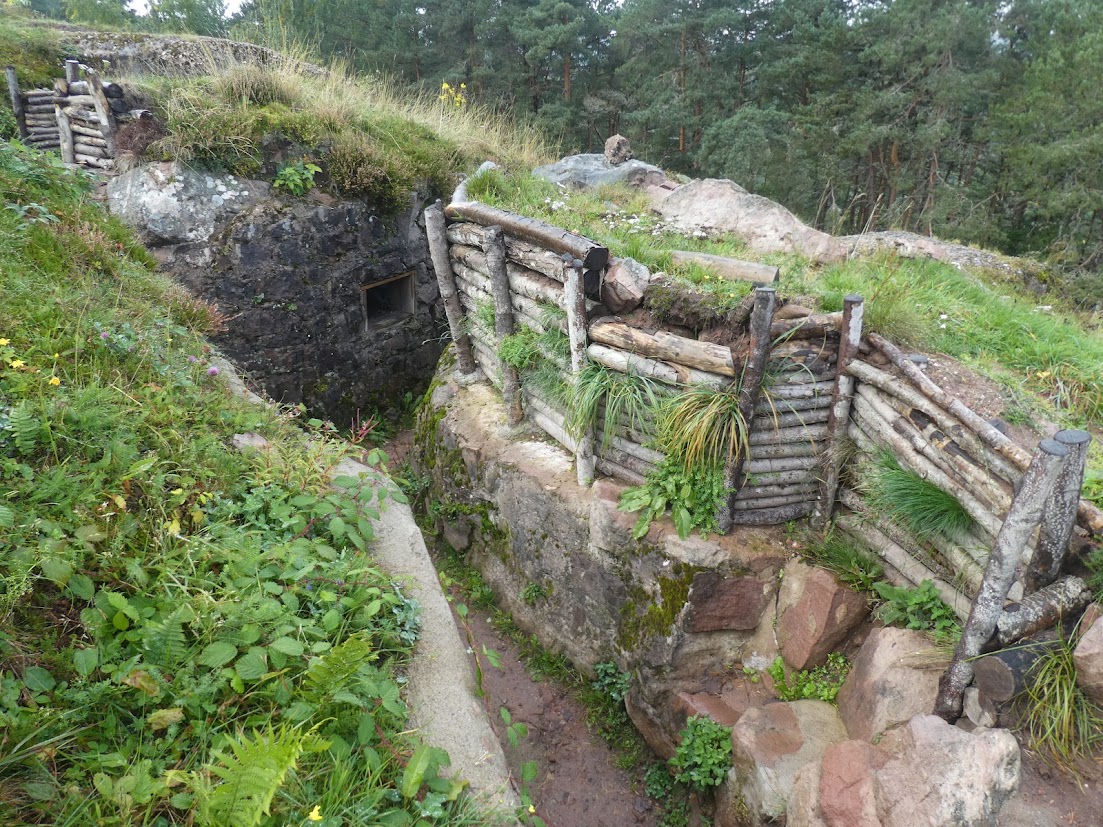
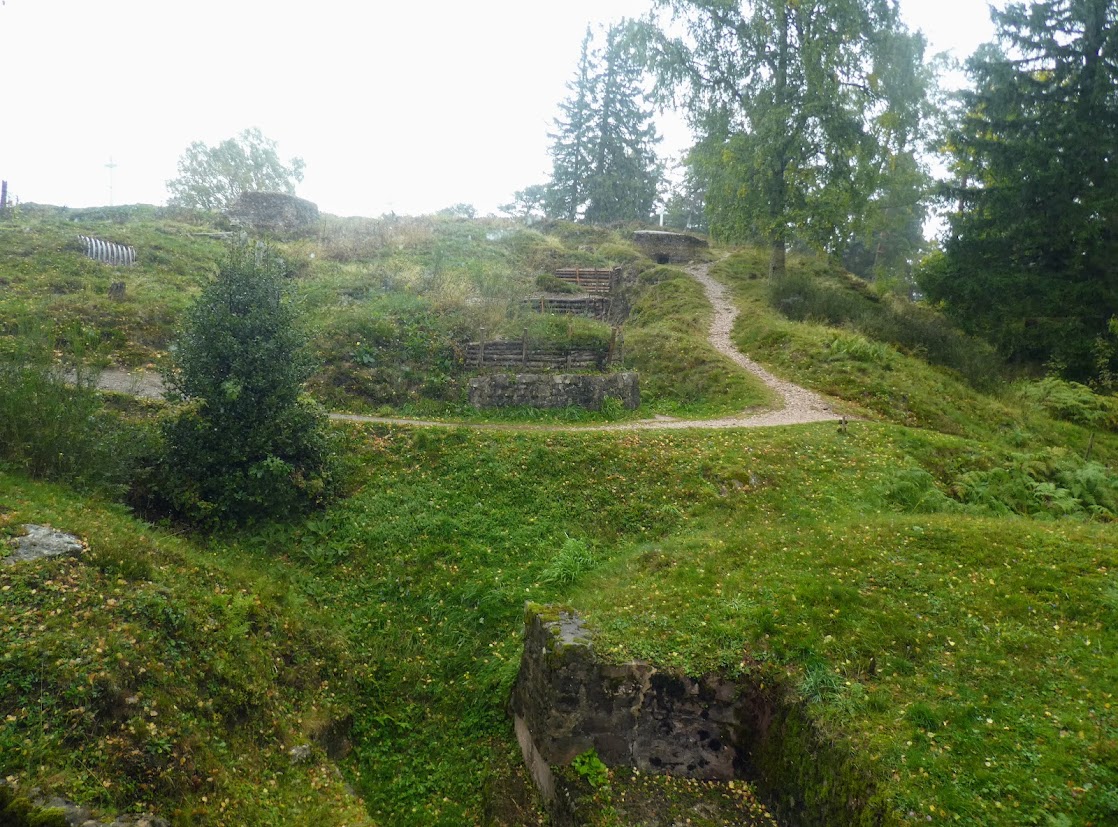
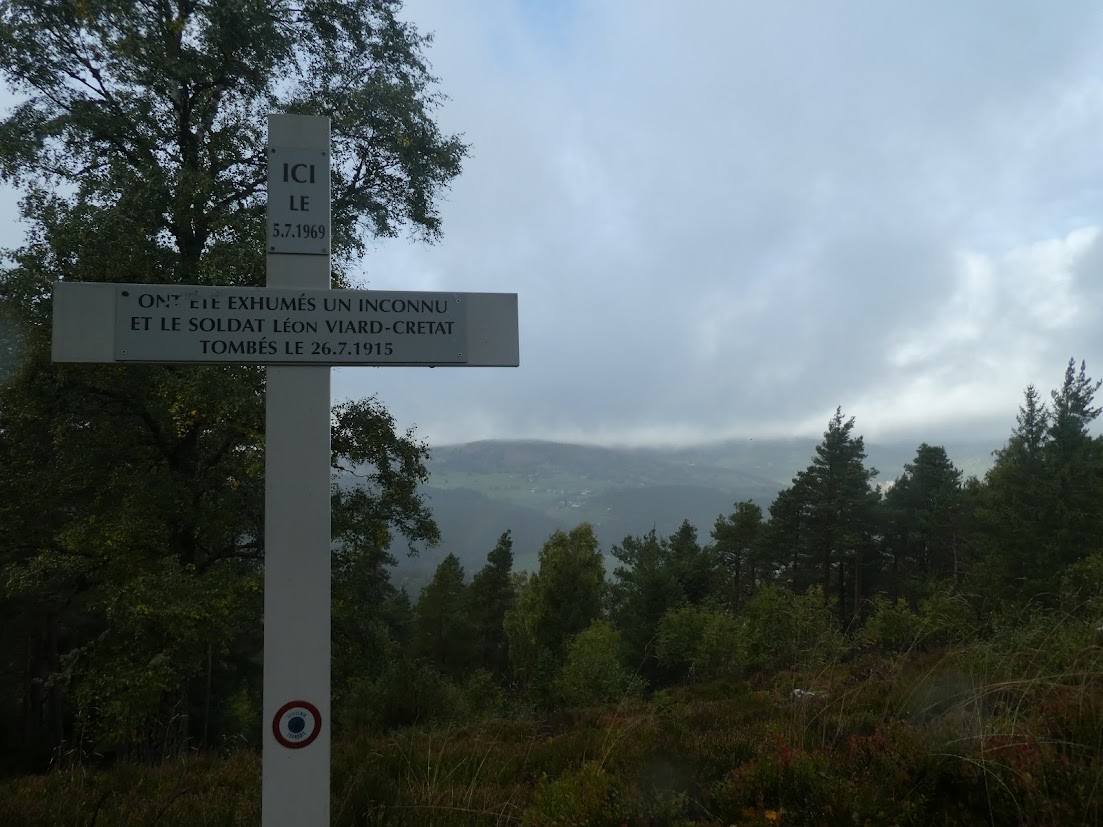
After the museum, it was time to go outside and inspect the trenches, still intact. We were reminded that those we see today would have then been about a metre deeper. As advised, I was wearing my walking boots – Malcolm wisely decided not to join me. I set off confidently on the ‘difficile‘ circuit, and after a degree of inelegant scrambling, retreated to the ‘moyenne‘, and finally to the ‘plus facile‘. The scenery was a treat: the terrain by turns rocky, slippy as gravel skittered away from me, slippery, steep, narrow, impassable. The trenches were cold, narrow, inhospitable, offering the occasional cave cut into the rock to offer shelter from rain, wind and- in winter – snow and ice. Winter temperatures there regularly fell well below freezing. On my walk I often passed a white cross, indicating a French corpse who had been found, or a black cross for a German. Both are now memorialised respectfully. It’s recommended that visitors take up to an hour and three quarters to discover the whole site. I did not. It was raining. I was neither a poilu*, nor a frontschwein**.

This was a thought-provoking day, and one which we shan’t forget, at a time when seeing images of war and its human consequences are still part of our daily routine.

*The French term for a infantryman, and actually meaning 'hairy man'.
** A frequent term for a German infantryman, meaning 'front pig'.

Postcards from Alsace: A day of Walking, and Fossicking About

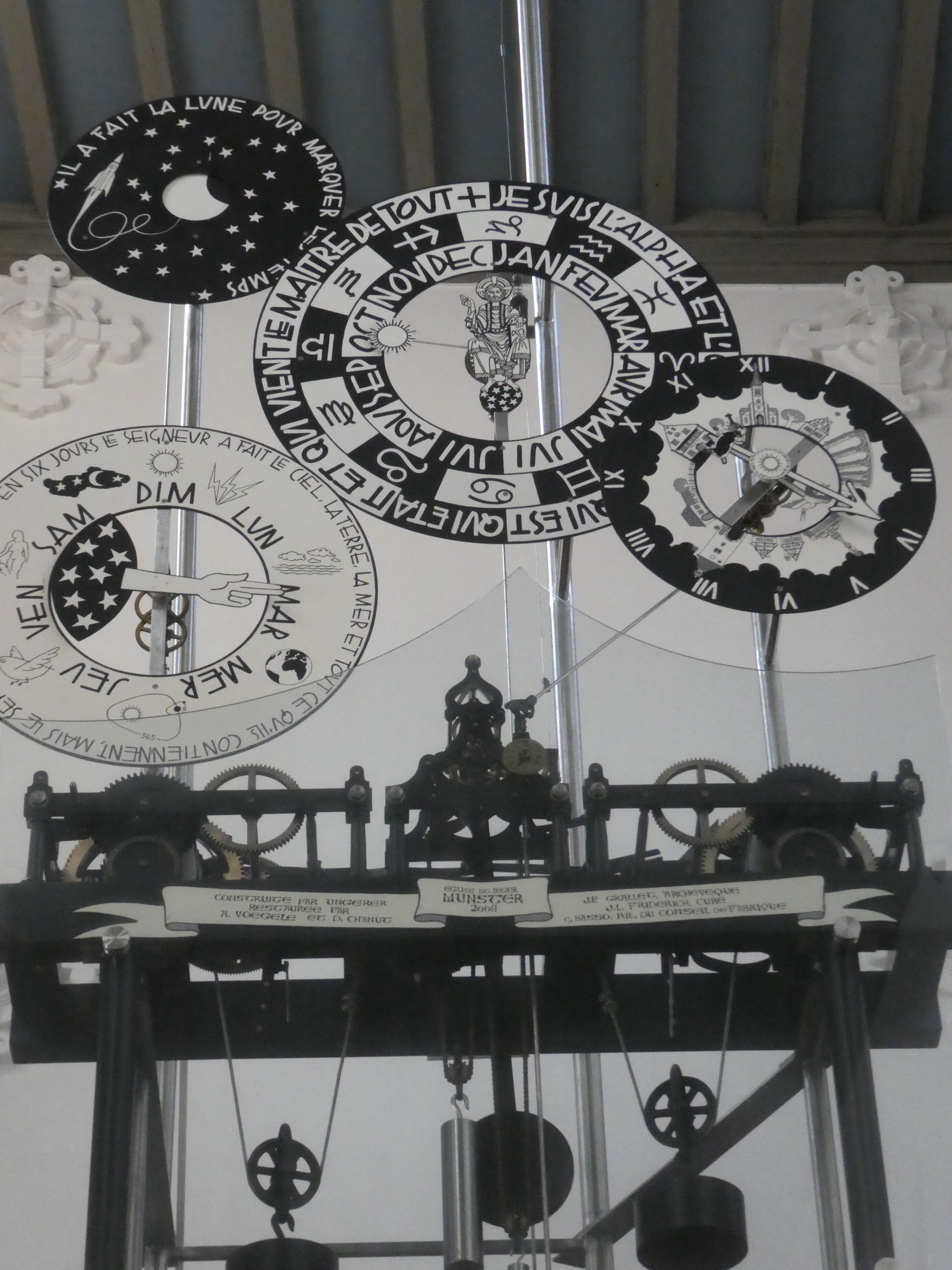
It’s our last day in Alsace. Alas. Tomorrow we leave, returning home via friends of Malcolm in northern Germany. We had a day of lakeside walks at le Lac Vert, a hearty meal at a mountain auberge, more walking on bucolic mountain paths, and a final wander round Munster, where we walked into the Catholic parish church and found a wonder of a modern clock,’l’Horloge de la Création’, with no fewer than four faces. A satisfactory last day. If any last day can be satisfactory.

The bonus card for today is a short video of contented cows, their bells tunefully chiming as they grazed. Sadly, they’re not the native black and white cows of the Vosges. But you can’t have everything.

Postcards from Alsace: Four Castles, One Town and a School

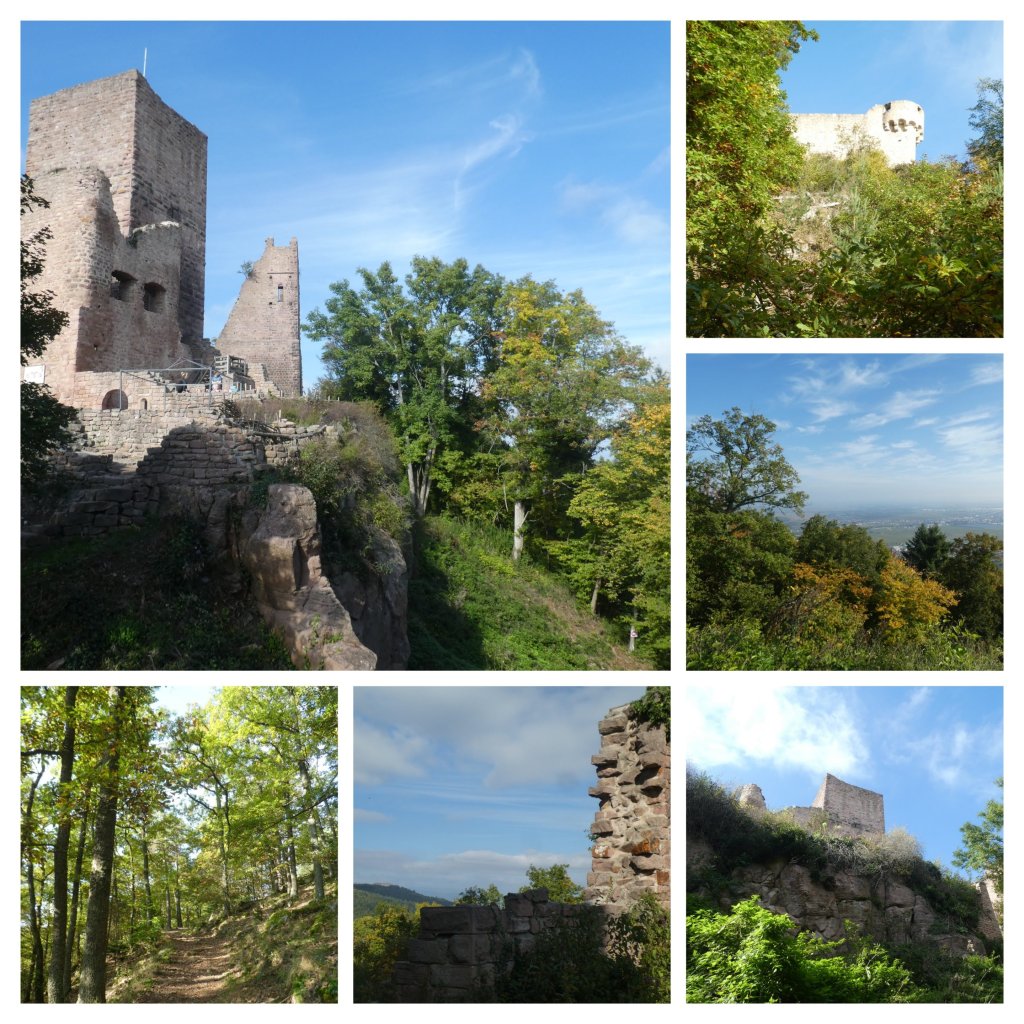
We aimed high today and went in quest of castles, all visible from the valley below, as they are all top-of-the-landscape and visible for miles. Alsace is littered with them. Our first was Hohlansbourg, a mighty curtain of a fortress. We could have walked from there to the next three, but it would have taken a long time. Those next three, all from the 11th and 12th centuries are built in a line and are only steps apart. Quite ruined, nobody calls them anything but ‘les trois châteaux’. The picture postcard shows the pleasant walks up to them from – not the valley floor – but the car parks, still some distance away.

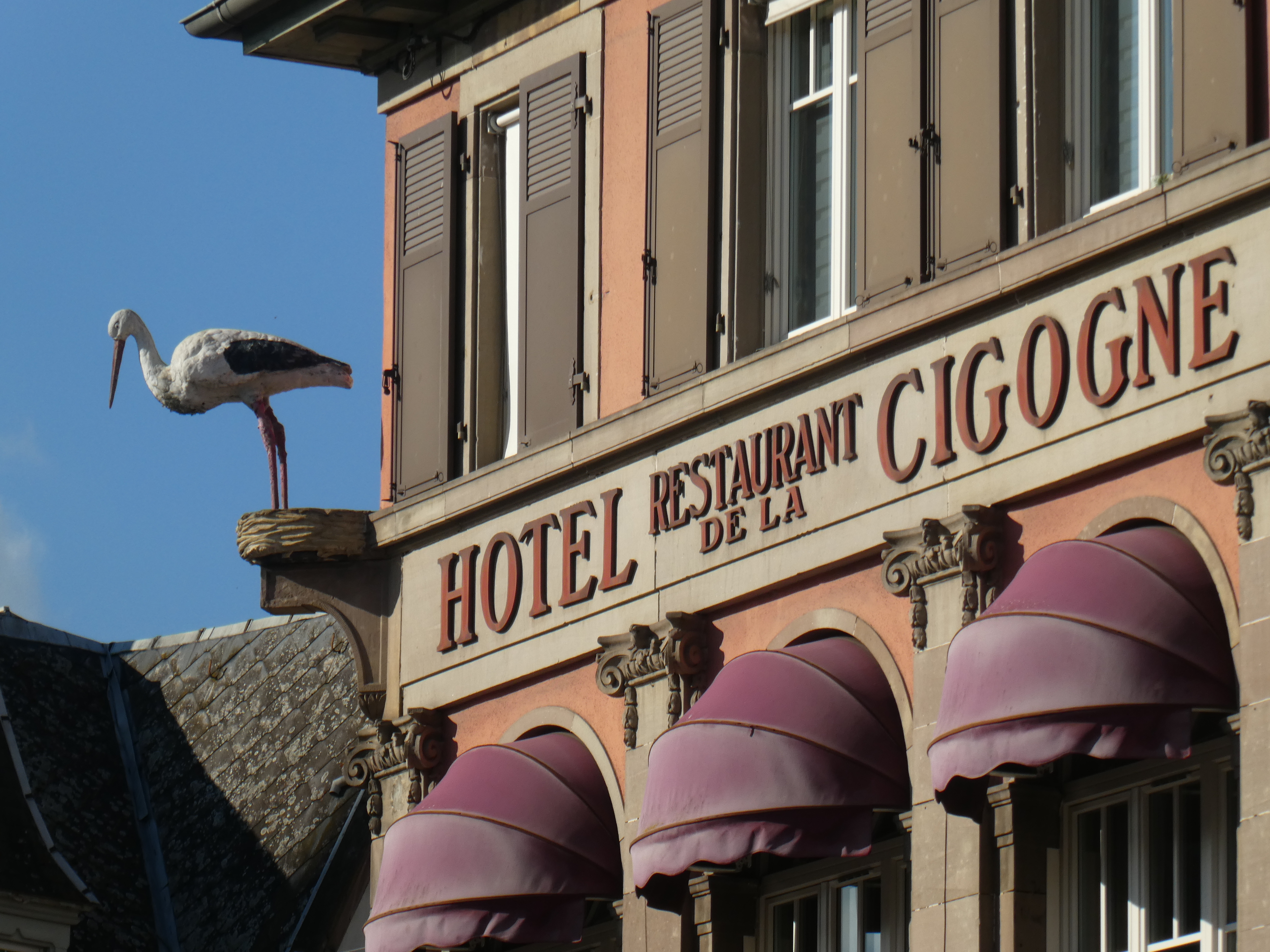
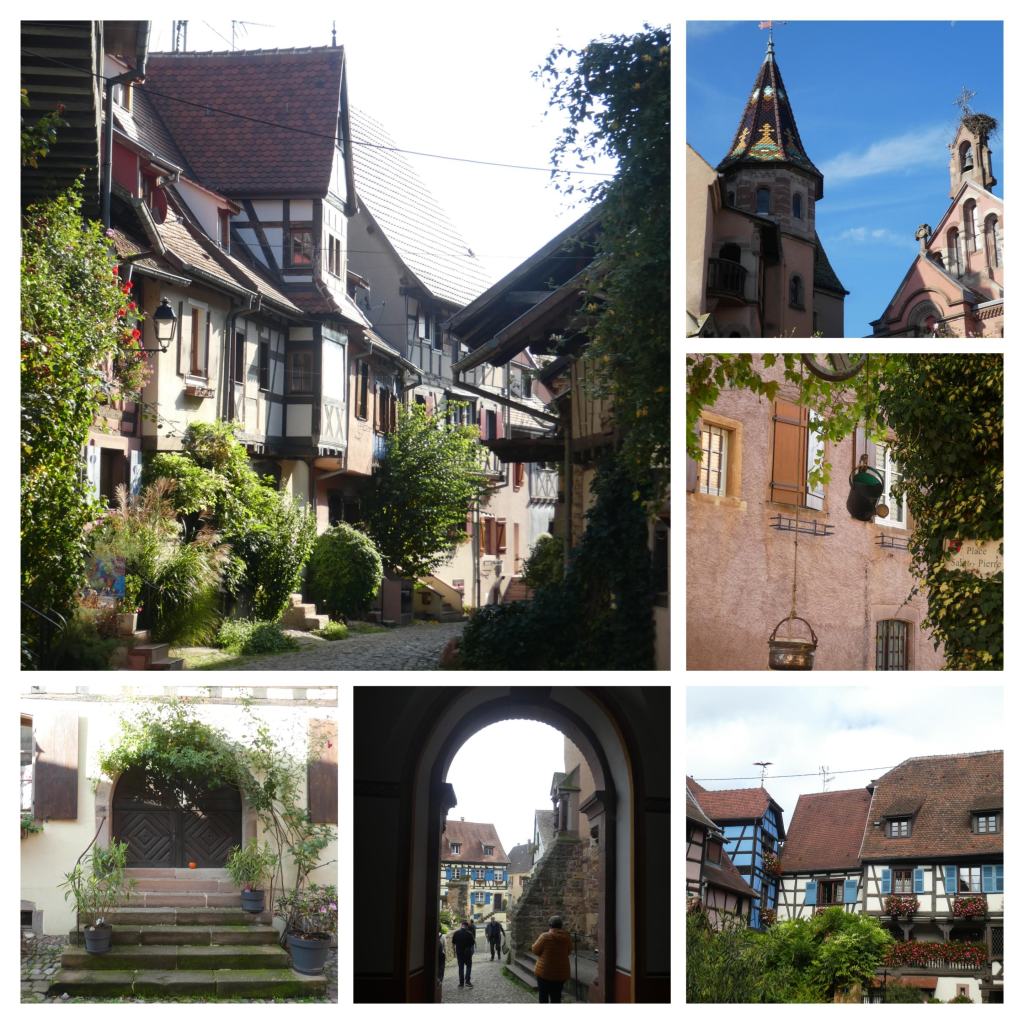
You’ve seen a town or two in Alsace already, but here’s another, Eguisheim. What fascinated us here were hugely wide front doors, all up several steps. What was that about? No horse-drawn delivery cart could make use of them. Also – we saw two storks wheeling above our heads. The Alsatians love their storks, and encourage them to build nests on their houses to bring good luck. Normally they leave in August. Increasingly warm winters are persuading them to give Africa a miss, and stay.

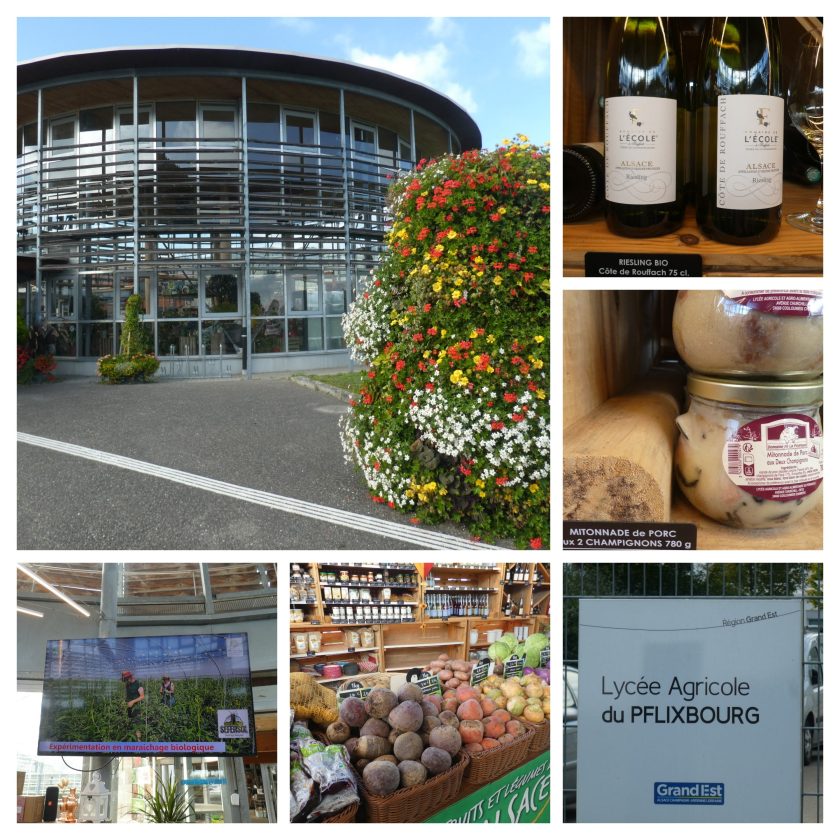
Finally, a curiosity – to us. On our way home we called in at the shop run by the local high school. It specialises in agriculture, for pupils looking for that sort of career. Every département has one. The shop stocks the produce not only of this school, but many other agricutural lycées: note the wine! As well as other local produce. A good end to a varied sort of day.

Postcards from Alsace: A Wettstein Walk, and a Choral Concert

A day of contrasts: this morning, a not entirely successful walk in which we quite comprehensively failed to find the path for the latter part of our morning. Never mind. The woodland was atmospheric, the autumnal views across the Vosges just starting to become a spectacular blaze of colour.

Then later, a visit to an unusual church in Colmar, St. Matthias. It was completed in the 15th century by the Franciscans, but in 1715, the church was divided in half … to serve the Catholic community at one end, the Protestants at the other…

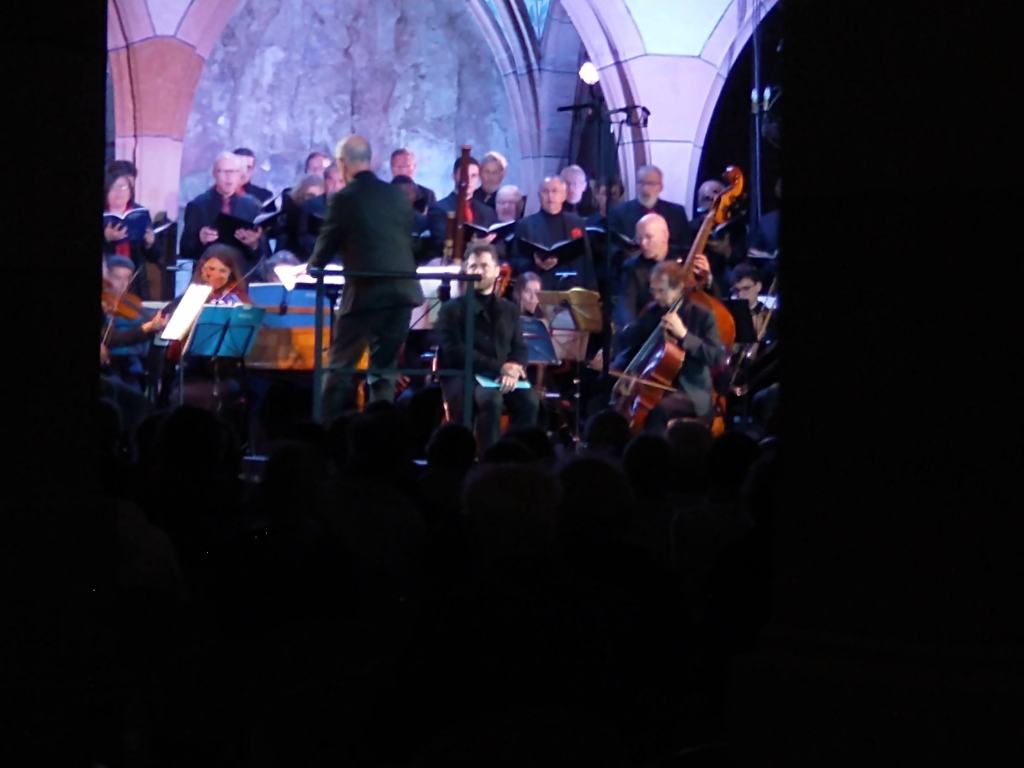
In this case, the Catholic end of the church has become a concert hall. And we have just experienced a powerful performance of Haydn’s Creation there. The choir who performed, Passion Bach 25, recruits area-wide, and draws members from both Alsace and Germany. The accompanying orchestra was German, and the choir will perform this work in Germany as well as here in Alsace. We were so lucky to be there.

Postcards from Alsace: Colmar Again

I couldn’t decide whether to post high-rise dwellings for those working-from-home, 1580s style (as tanners, so not popular with the neighbours: it’s a smelly job) … climbing up to the top floor looks a little taxing …

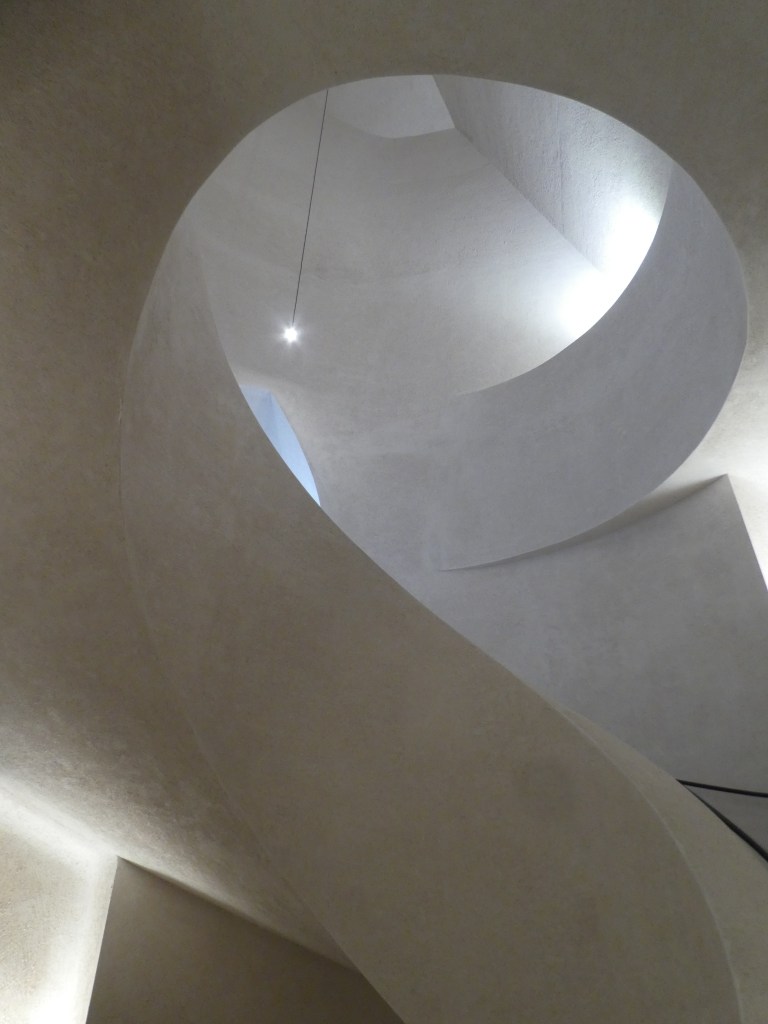
…. or the staircase from the very wonderful Unterdenlinden Museum, once a convent, now an art gallery right up there as One of the Best (a post one day soon?)…..

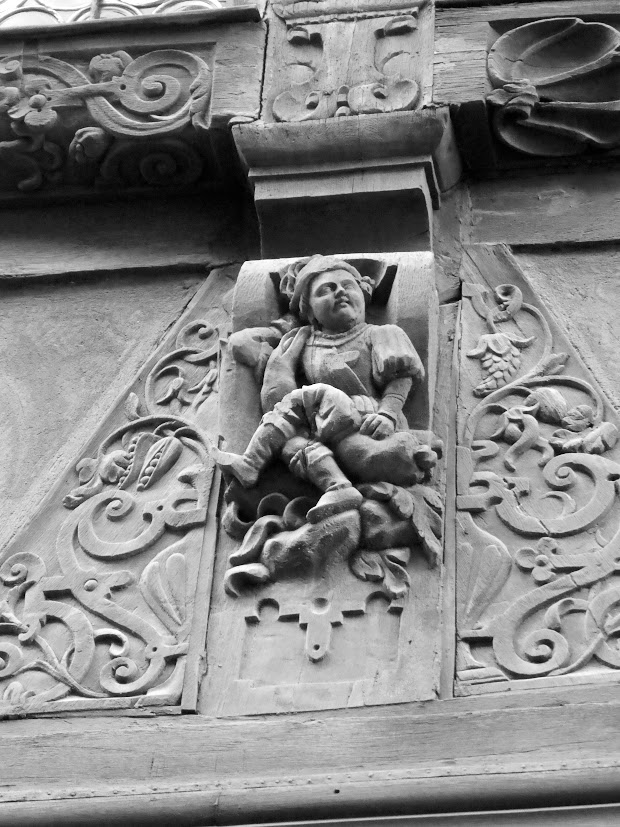
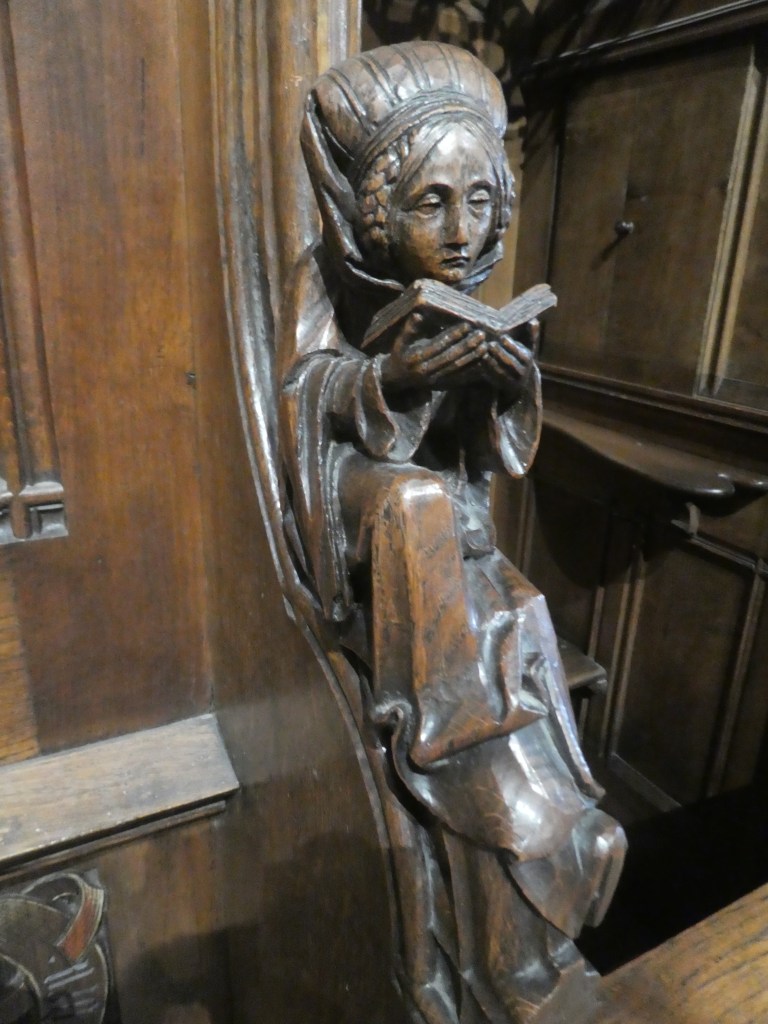
… or a very earnest, if tiny little figure, spotted on a confessional in St. Martin’s Cathedral …

So much else qualifies too, but three postcards is quite enough, I think.

Postcards from Alsace: Strasbourg

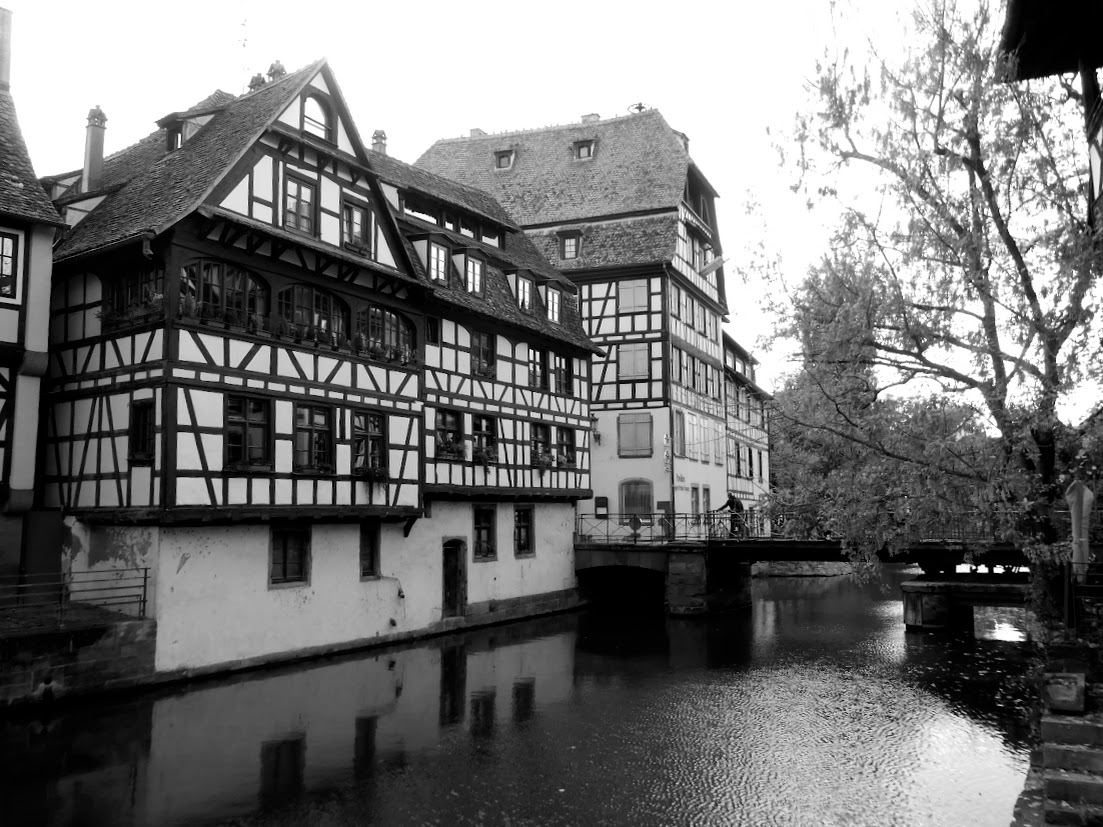
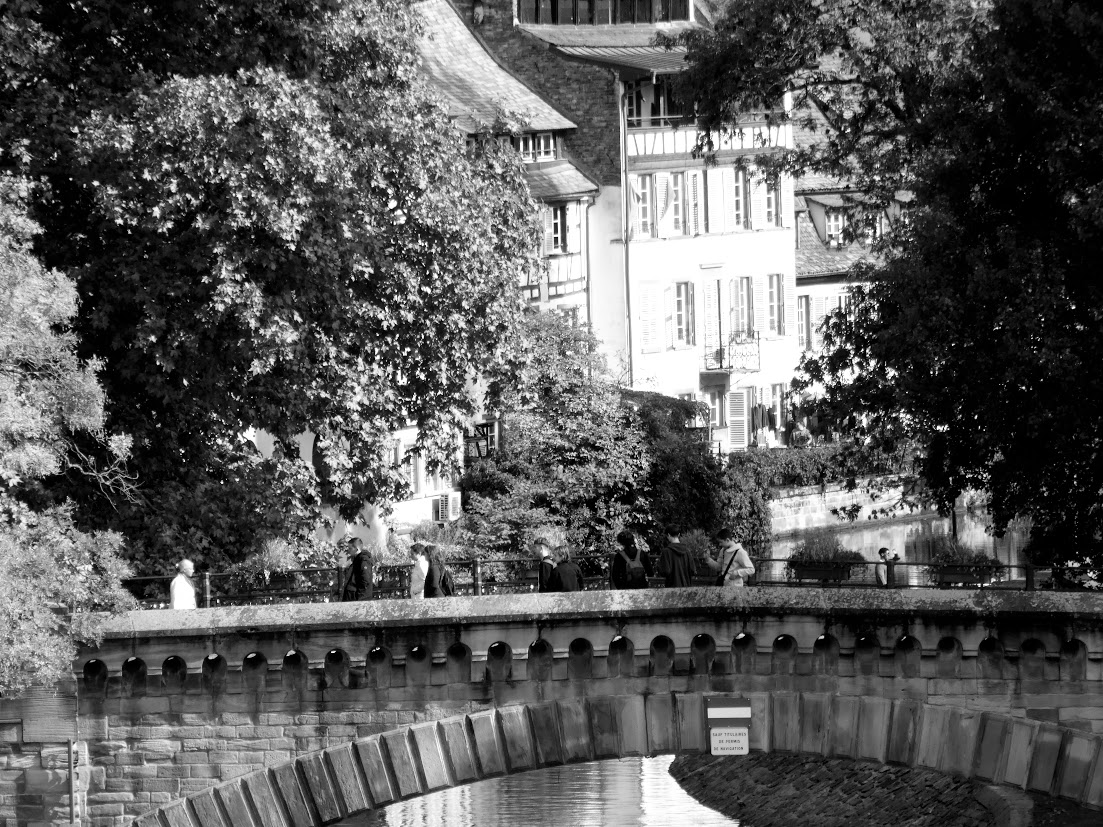
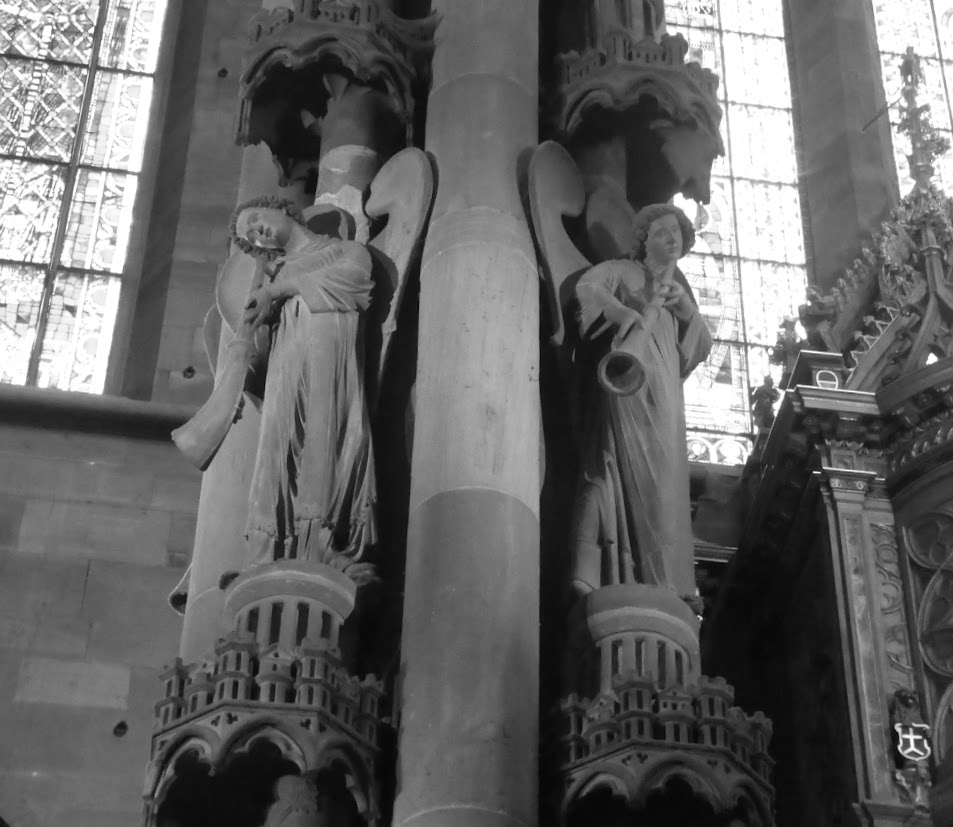
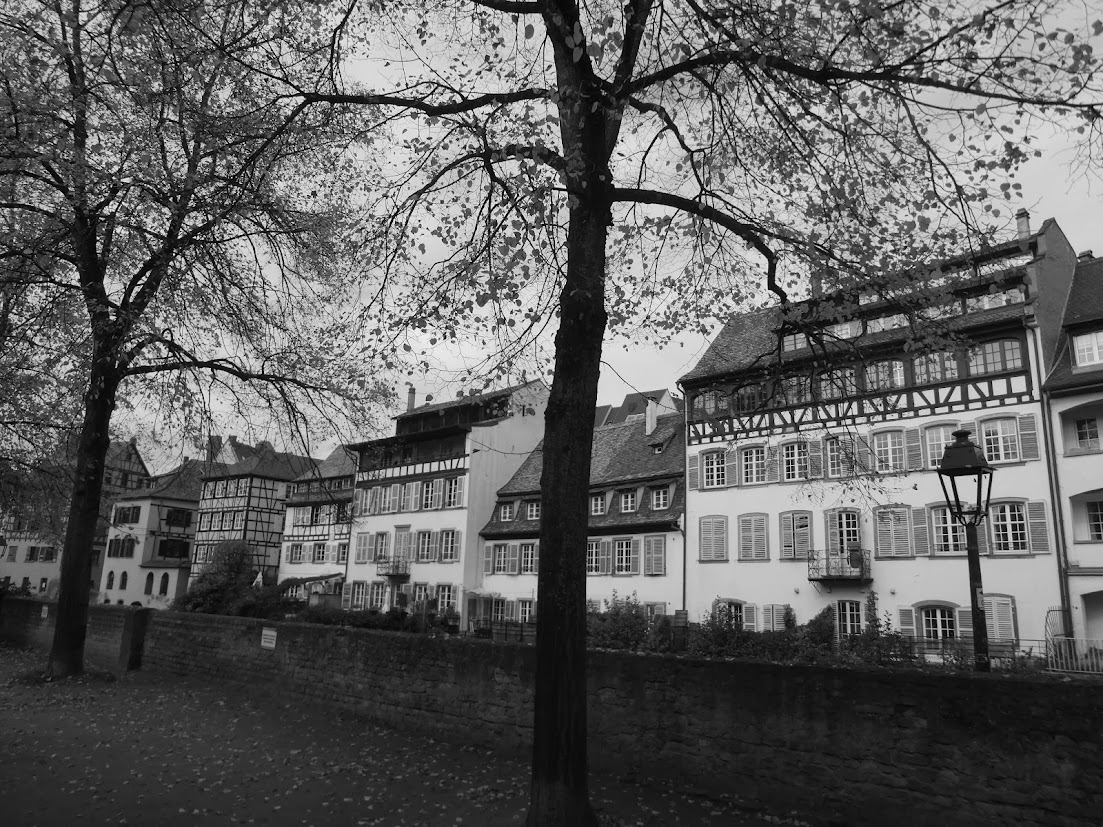
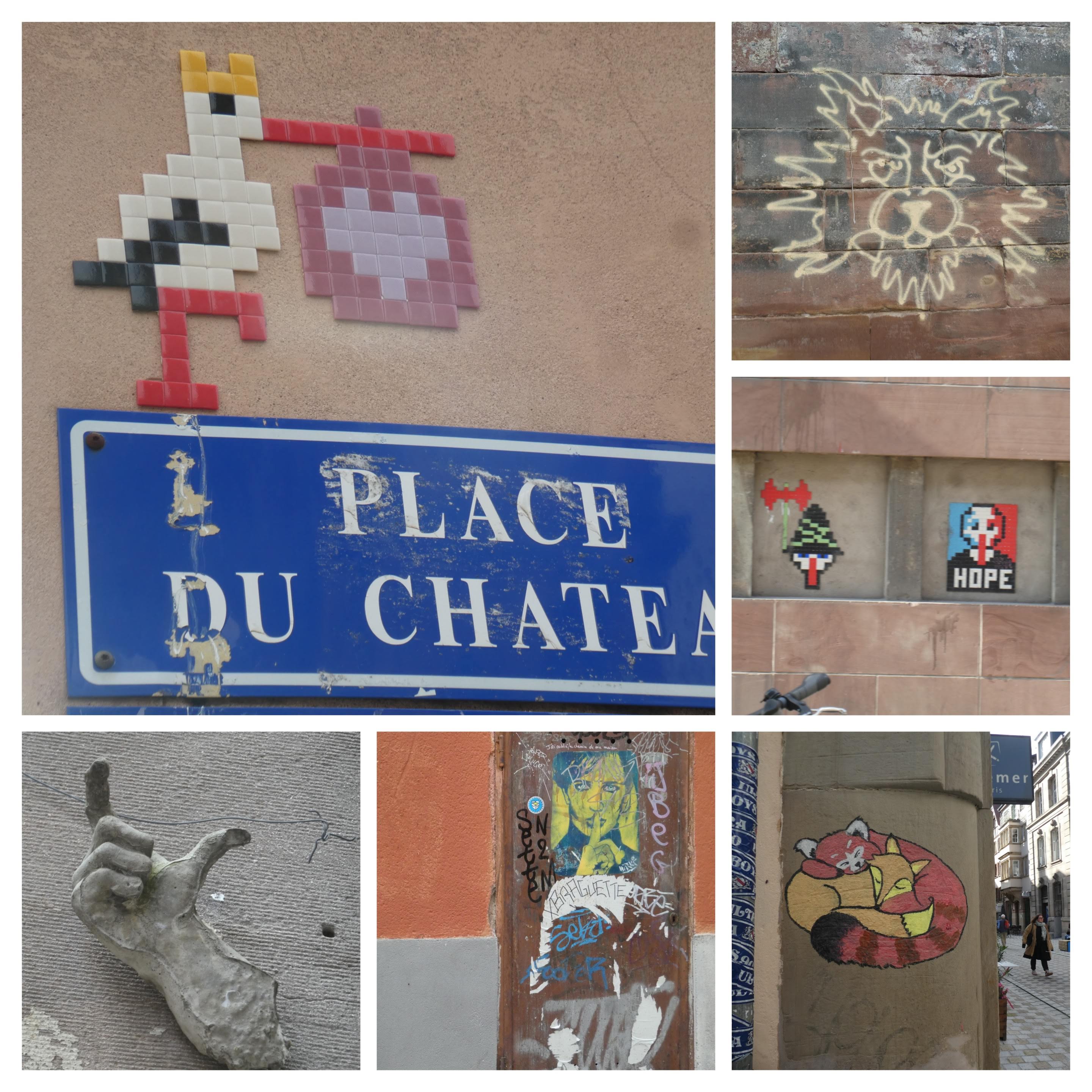
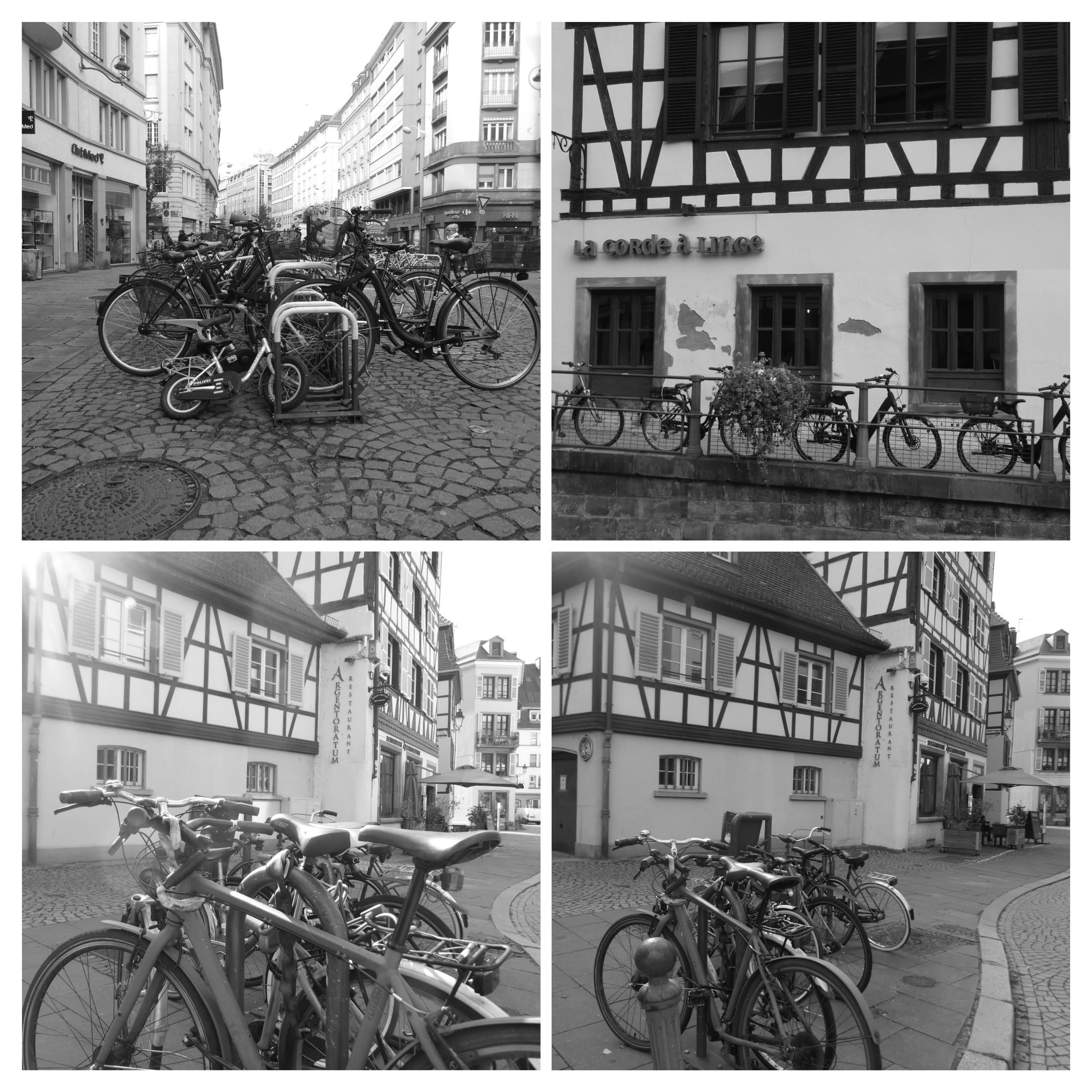
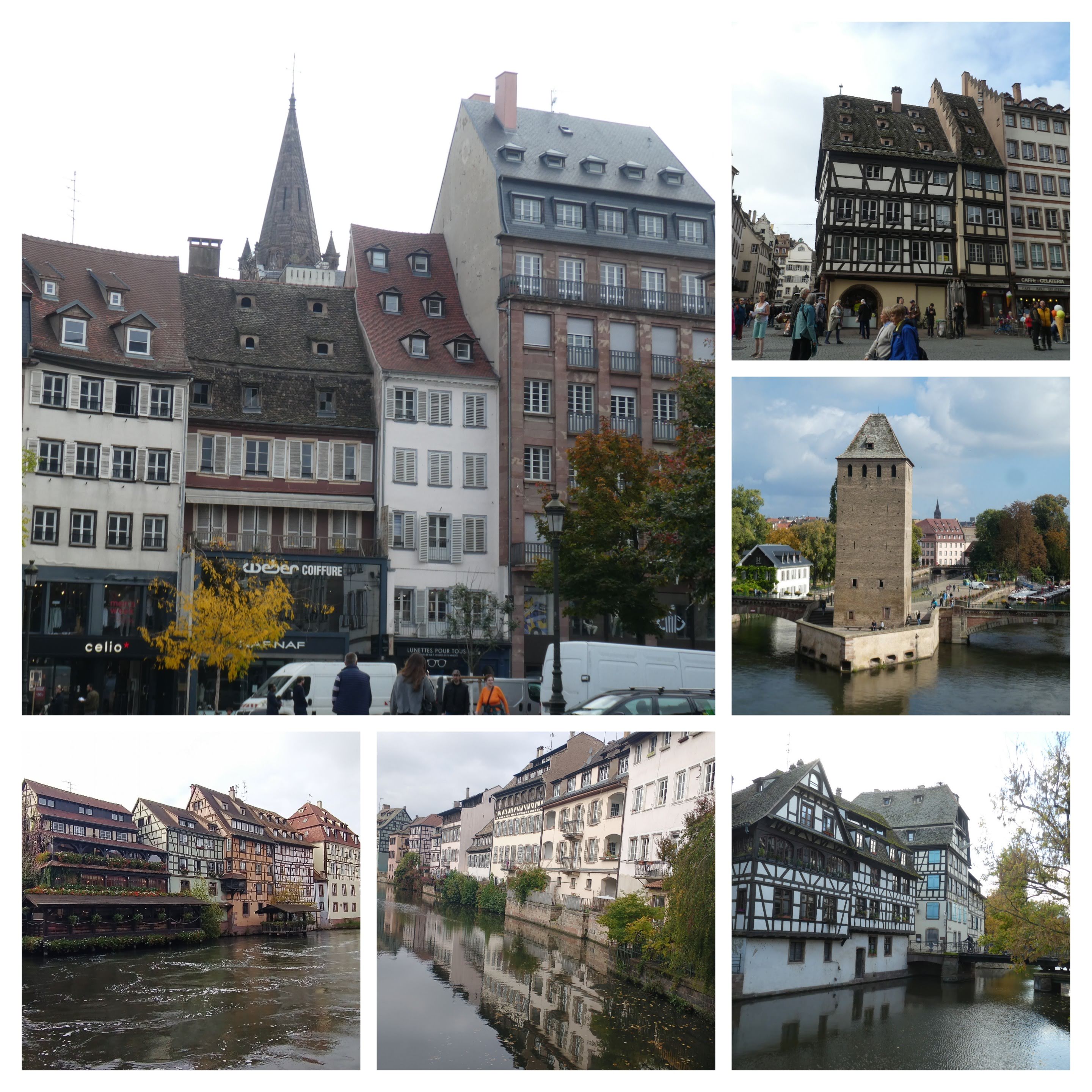
Technology is still defeating me, so I’ll send you uncommented-on shots from our marvellous day in Strasbourg.

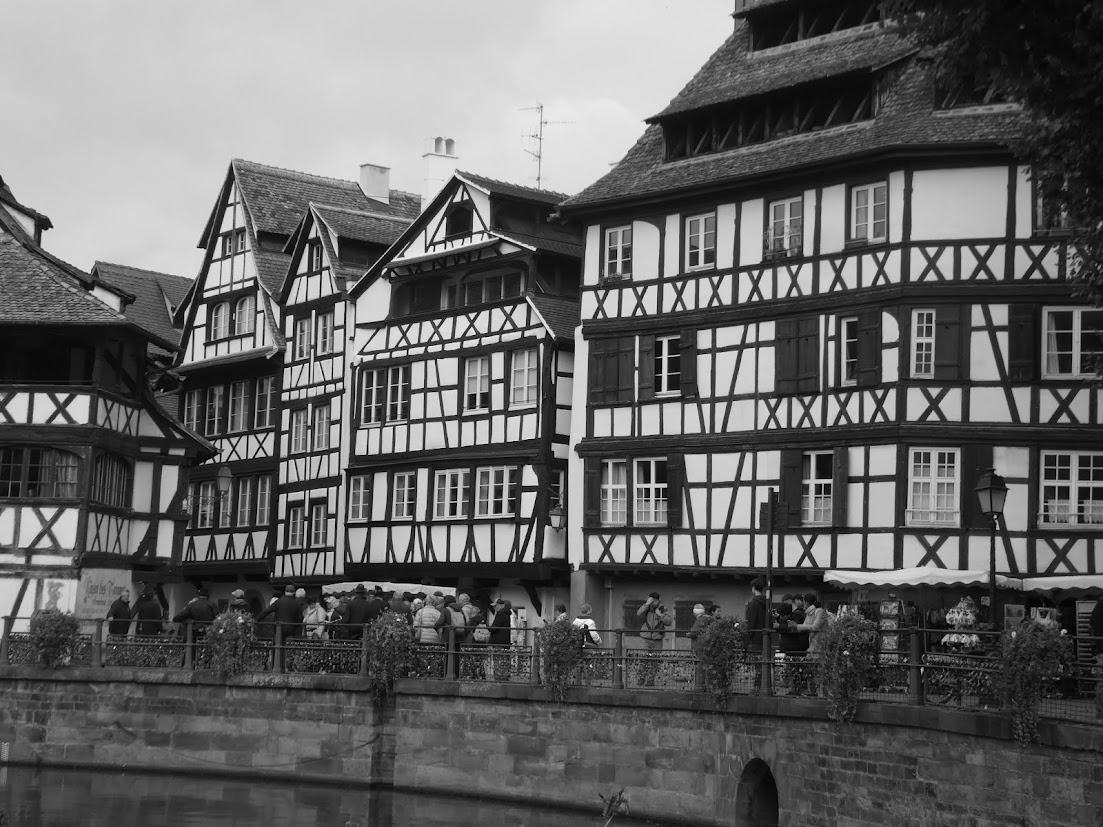
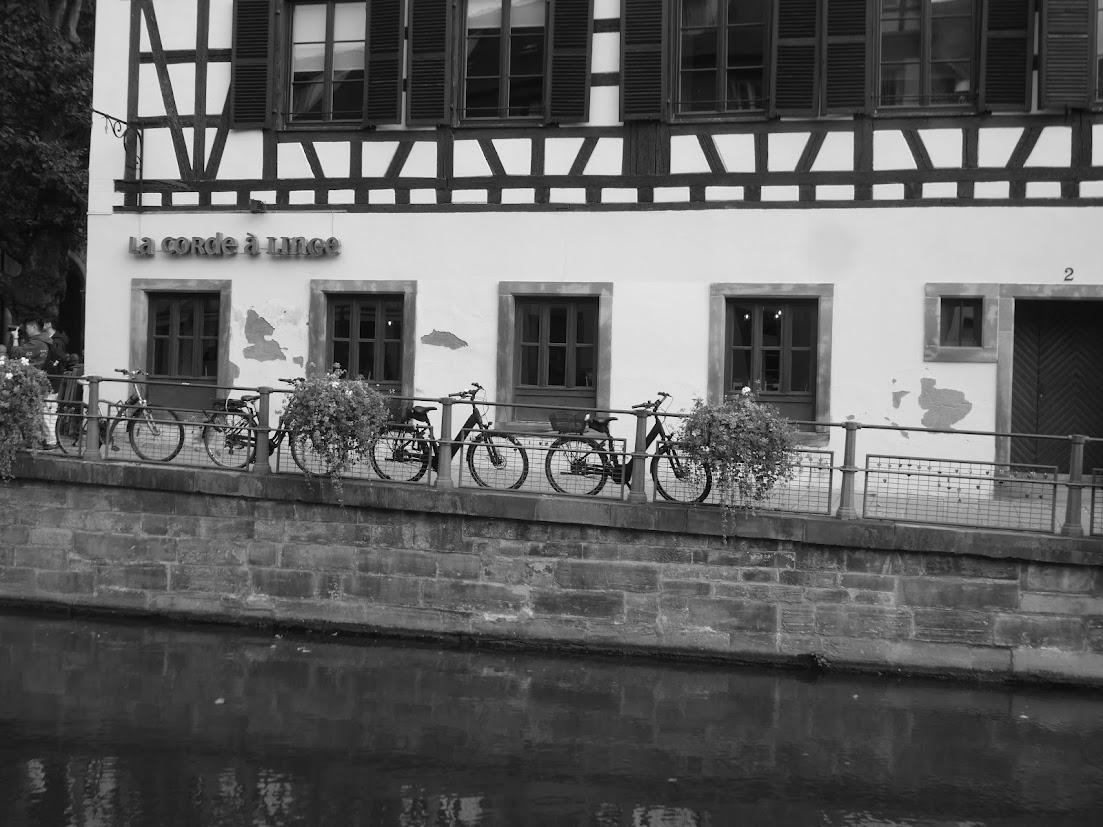
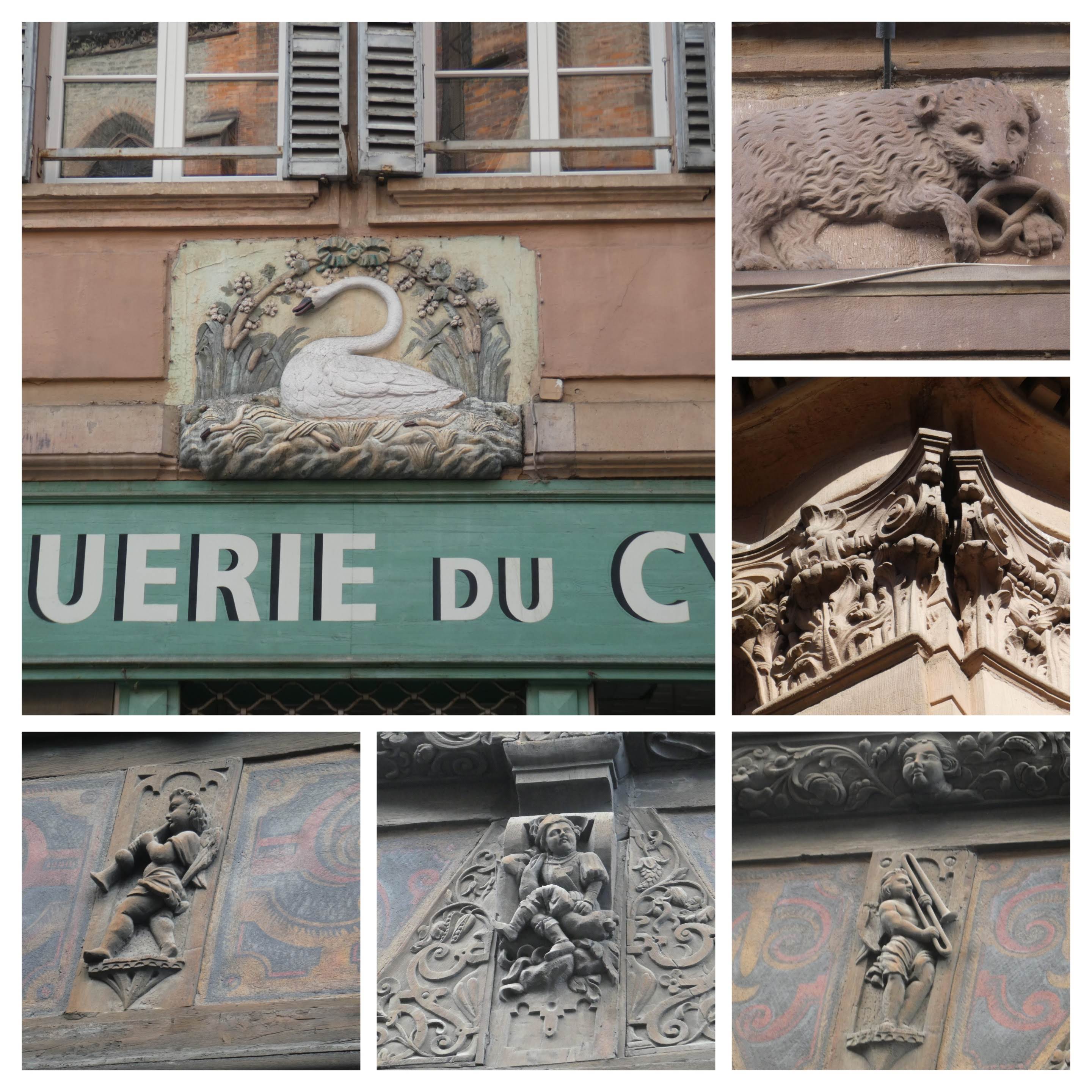
And there you have it. A header showing the cathedral. Details (old) of Strasbourg; details (new) of Strasbourg; the bikes of Strasbourg; streets of Strasbourg.

My computer and I have had enough together now. Before I throw it out of the window, I’ll press ‘publish’.