On the first Saturday of every month, a book is chosen as a starting point and linked to six other books to form a chain. Readers and bloggers are invited to join in by creating their own ‘chain’ leading from the selected book.
Kate W. Books are my favourite and best
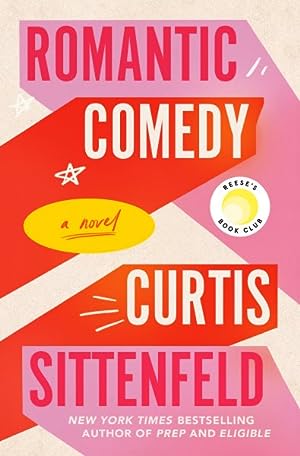
This month’s starter book is Curtis Sittenfeld‘s Romantic Comedy. Anything Sittenfeld writes is fine by me, but I haven’t managed to read this one yet. The Guardian has it as an ‘affable, intelligently crafted tale of work and love’, with a somewhat insecure heroine who can’t believe that true love has really come her way.

Let’s stay with complicated love, in The Rachel Incident by Caroline O’Donoghue. At first I thought I’d stumbled upon a Mills & Boon for Millennials. Then I thought I might not be all that interested as I’m scarcely the same generation as Rachel and her friends and colleagues, floundering through messy early adulthood. But almost against my will, I was drawn in to the convoluted affairs and working arrangements of Rachel, and her gay friend and flat mate James. We begin in 2009, and there’s a recession on, which colours everyone’s prospects, including Rachel’s middle class dentist parents. Rachel is at first finishing her English degree while also working in a bookshop. She fancies her professor. But he, it turns out, has begun an affair with James, although he’s married to the woman whom Rachel is in due course working for as an intern, and Rachel has fallen for someone who’s fallen for her too, but has a habit of disappearing … It’s all intriguingly complicated and believable. It’s gossipy, witty, wry and a real page turner. Recommended.

Love story involving gay men? We’ll go for a tremendous first novel from Alice Winn: In Memoriam. Here is a book which starts in an English public school, and moves quickly to WWI and the trenches. This is the journey of a varied cast of characters, chief among whom are Stanley Ellwood and Henry Gaunt, both of whom have been exploring their homosexuality whilst still at school. They exchange their privileged lives for the grim reality of battle, and Winn uses telling detail to underpin how truly frightening and beastly in every sense this is. Every few chapters the Preshute College magazine appears, and among the ever-longer lists of dead and wounded old boys are the names of characters we too have come to know. Ellwood and Gaunt, so very different, continue their relationship. Winn explores the strong bonds and unlikely alliances that war brings about, and continues this exploration to show its effects on the families whose sons have gone to fight, and its effects in the years after the war. A moving and deeply affecting book. I’m quite well-versed in WWI literature, but this has perhaps brought the full horror of that war, and its long-reaching effects before me in a way that few other books have done.
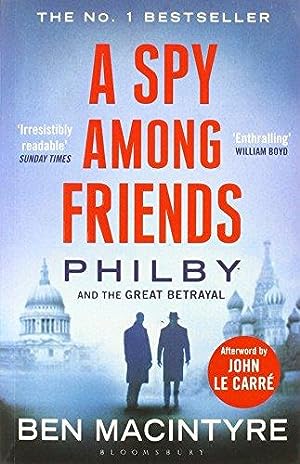
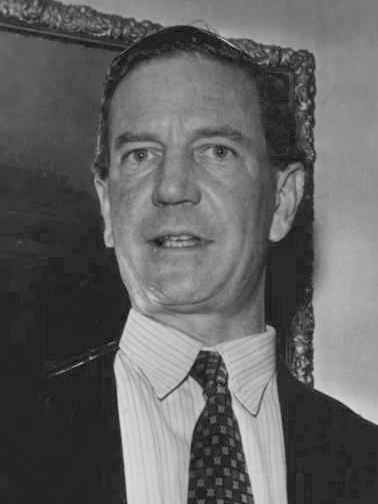
One of the consequences of war is that the world of spying evolves. This month I read Ben Macintyre‘s story of super-spy Kim Philby. As with in Memoriam, this book – A Spy among Friends – is peppered with ex-public school characters. Here is a graphic picture of a completely different world: a world in which who you know, and the school you’ve been to, rather than what you’ve achieved and the jobs you’ve held gets you into a career in espionage. A world in which secrecy was paramount, and – apparently – an ability to down prodigious quantities of alcohol. Ben Macintyre shows us this world, as it existed during WWII and the subsequent Cold War. He introduces us to the milieu of the agent – and the double agent. Specifically to Kim Philby who worked tirelessly not only for the British, but for the Russians, thereby sending colleagues and blameless citizens to untimely deaths. His life was a lie. Not his two closest friends, nor two of his wives or his family had the least idea of his machinations. He remained unsuspected by his M16 and American colleagues for many years. This is his story, pacily told, and offering a picture of this secretive world of postings and relationships all over Europe and the Middle East. In many ways, this isn’t my sort of book. But Macintyre is a reliably involving and good writer who draws you in. I’m glad to have read this book, and thoroughly relieved that neither I nor anyone I know is part of this duplicitous world. I don’t think…


Patrick Modiano‘s The Search Warrant also explores the consequences of war. Nearly 40 years ago, Modiano came across an ad in a 1941 edition of Paris Soir: by two Jewish parents seeking for their daughter who had run away from boarding school. His interest piqued, Modiano set forth on a ten year search to find out more about the life and possible death of the child, Dora Bruder. While he never forgot her, his search was intermittent. He looked at documents and newspapers. He trawled through the streets of the Paris Dora frequented, though many of them had changed almost beyond recognition. In this document of his search, he paints a picture of the Nazi occupation of Paris, of the lives of the Jewish citizenry – incomers from all over Europe – under Pétain’s regime. He connects and contrasts Dora’s adolescence to his own. This then is a personal story, as much about Modiano himself as about Dora Bruder. It is though a memorial to her, and to any and all of the Jews who lived and died in that particular and brutal period of French history.
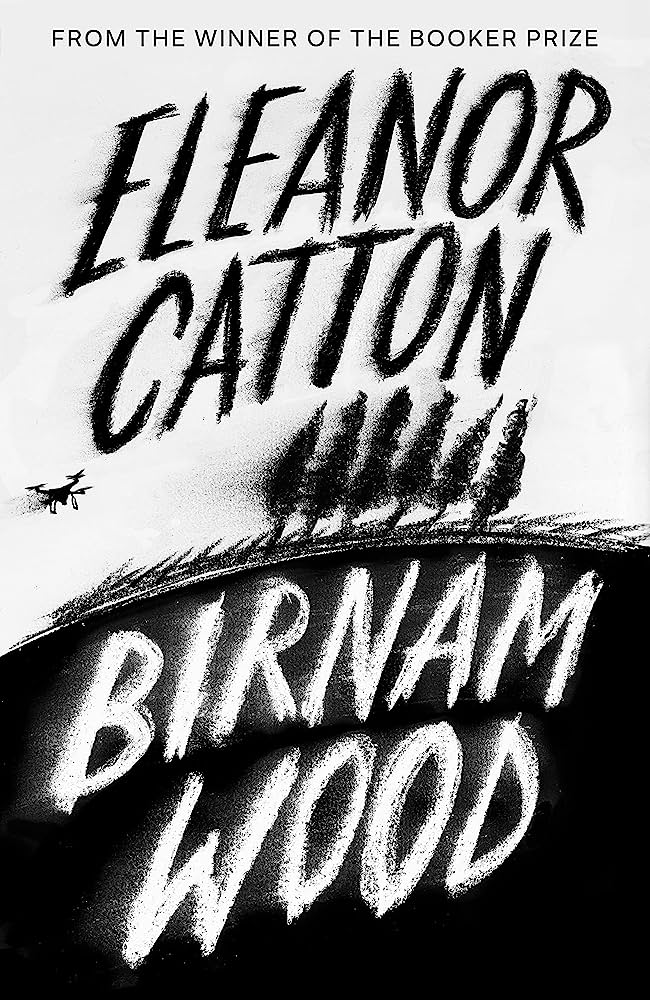

War of a different kind, with Eco-warriors centre stage is the subject of Eleanor Catton‘s Birnam Wood. Full disclosure. I borrowed this edition of the book from the library, then discovered that the BBC was currently serialising it, so – unusually for me – I ‘read’ it courtesy of BBC Sounds. And I didn’t enjoy it. Could this partly have been that the resident ‘baddie’, the American tech billionaire’s voice was so clearly that of a man dripping evil that any nuance the book might have had was lost? In the Good Guys’ (not Shining White Good Guys) corner were the members of a guerilla gardening group who want the land not as a bolt-hole or a secret mining project as American Lemoine does, but to pursue their aims. Lemoine’s drones and techie spyware sees all. Then there’s ex-guerilla Tony, and investigative reporter … and Owen, a self-made pest-control business man, whose wife actually owns the farm on which the land in question is sited, and who is willing to sell. All of these, with conflicting aims and ambitions were in the mix. The verbosity and proselytising of many of them lost me early on. The characters were thinly-sketched ciphers of Types, and I warmed to none of them. The ending was an excitingly gruesome one, but for me it was just a relief that it heralded the end of the story.

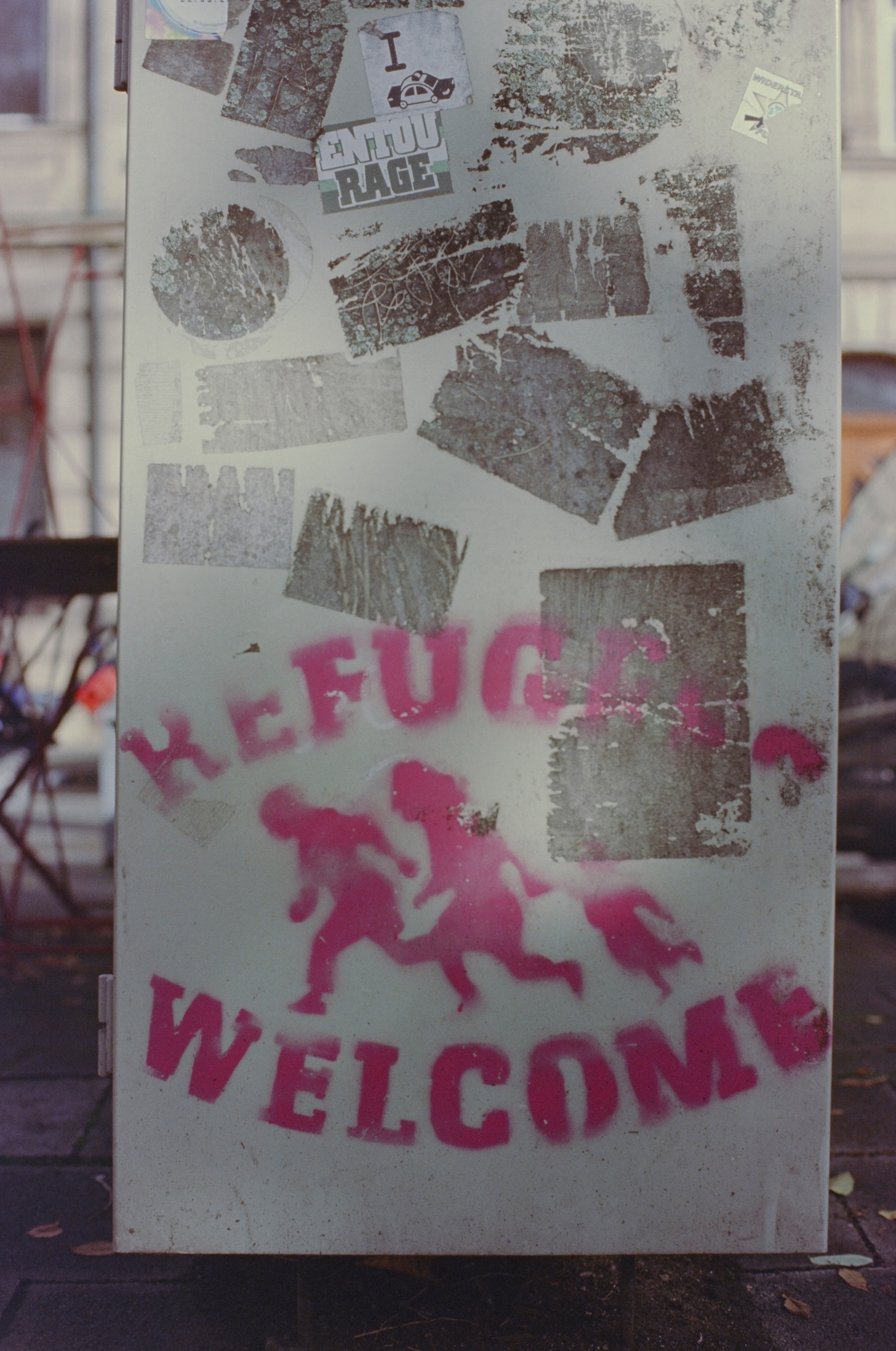
Another consequence of war. Refugees. Asylum seekers. These are the subject of Jenny Erpenbeck’s Go, Went, Gone. Richard is a widower, a retired professor of Classics in Berlin in the former East Germany. His life seems – to him as well – somewhat purposeless. One day he happens upon a demonstration in town by a group of refugees from various African nations who have camped out there. This is a world of which Richard knows nothing, but his interest is piqued, and gradually, reluctantly at first, but then with increasing passion, he comes to know them and something of their stories. Of their families, lost to them, or killed in frightening circumstances. His life acquires a purpose: helping the men fight their corners, seeking funding. He discovers his own country’s dark past, the prejudices still alive and powerful among politicians, many of the general population and his own friends. He finds a legal situation where each country with whom the asylum seekers have contact have a get-out clause enabling them to move these men on to somewhere else. This quietly, lyrically told told but urgent story is an indictment of that system. Absolutely nothing has got better since 2017, when this novel was published. Required reading for Suella Braverman and readers of the Daily Express.
Unusually, there is a further link between all these books. I’ve read them all in the last month, and with one exception, wholeheartedly recommend them: especially the Winn and the Erpenbeck.
Next month’s starter book is Anna Funder‘s Wifedom, which examines the life of George Orwell’s wife. It’s well reviewed here, and I’m looking forward to finding a copy.
And finally, those of you whose TBR pile totters and becomes more unstable by the day might enjoy the cartoon highlighted today in Brian D Butler’s Travel Between The Pages.
 From Pyrenees to Pennines
You must be logged in to post a comment.