A Final Bench for The Bench Challenge

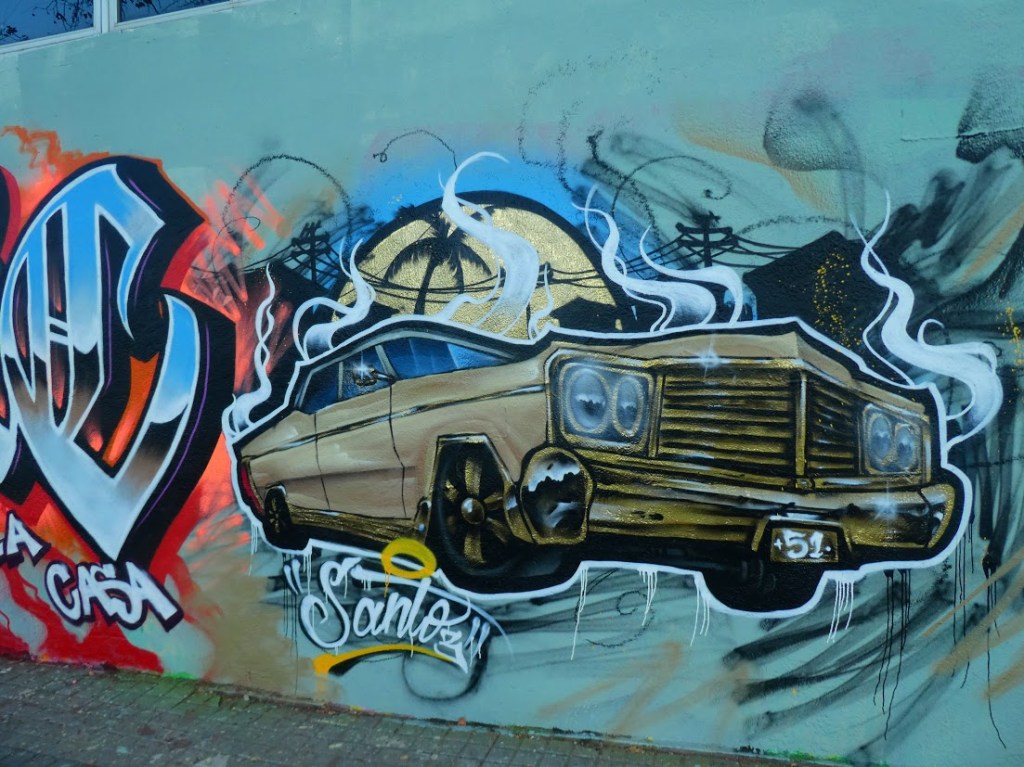
All through 2025, Jude of Travel Words fame has invited us to give our Sunday posts over to benches. Benches that are worth sitting on for the rest and comfort they offer, or for the views they preside over. Even though I’ve been an inconsistent post-provider, it would be rude to ignore this final Sunday. And just to be contrary, I’m offering not an actual bench, but a piece of street art in Angers, France, showing a bench – in honour of this song composed for Jeanne Moreau, who sang it in the film Jules et Jim.

My Favourite Fiction in 2025

As I turned the last page of one of the very first books I read this year, I knew it would make my 2025 Top Ten. It may even be my Top Read. It’s Lucy Steeds‘s The Artist, set in rural Provence in the years after WWI. Rupert is sent off to France to write about the reclusive and wildly successful artist, once a friend of the deceased Cezanne, Edouard Tartuffe. Here he meets the idiosyncratic and uncommunicative painter, and his timid, almost invisible niece, Ettie, who serves his every need. This is their story – evocative, involving and completely immersive.

Shortly after this, I read Tessa Hadley‘s The Party. Hadley packs a lot into this novella about two student sisters, Evelyn and Moira, living in Bristol on the cusp of the 1950s. We meet them at a party in an all-but abandoned pub. We’re introduced to their home life, and to their sortie out of this stifling environment. A thoughtful and enjoyable evocation of a period of recent history and its awareness of class, its sexual and societal mores that feels at once so distant, yet so very recognisable.
Douglas Bruton‘s Woman in Blue next. He must have been fascinated by Vermeer’s Woman in Blue Reading a Letter, in the Rijksmuseum: he knows it so well. In his story, an unnamed man visits this picture every day, for several hours, knows it intimately and interrogates it for meaning. The other narrator is the young woman in the picture, who describes how it is she comes to sit for this particular portrait, and her own feelings. This book explores the boundaries between reality and illusion in art, inspecting the portrait and the two protagonists intimately. It’s a captivating novella, with a surprise ending, and beautifully expressed throughout.

Joseph O’Connor‘s The Ghosts of Rome now. A thriller that starts where My Father’s House leaves off: though it can be read independently of the earlier book without difficulty. We’re in Nazi-occupied Rome in 1944. The novel details the activities of a group in the Vatican known as The Choir, daring Escape-Line activists, who have real achievements under their belts despite the disapproval of the Pope, and the efforts of Obersturmbannführer Paul Hauptmann to have them brought down. The writing is immediate, graphic and authentic; and the book is based on a real knowledge and understanding of this particular slice of Rome’s wartime history. It’s a thrilling and involving story that I was captivated by from the very first page.

Georgina Harding‘s Land of the Living has two settings: the Burma campaign towards the end of WWII, set in the beautifully exotic and remote landscape of Nagaland with its rains, forests, waterfalls and exotic birds; and the muted grey, flat Norfolk farmland to which Lt. Charles Ashe returns to farm following his wartime soldiering. Ashe soon marries the woman he was engaged to, Claire, and embarks on the hard day to day life of a Norfolk famer. He can’t – won’t – communicate with her about the horrors he’s encountered. She doesn’t know how to break his protective shell, finds she hardly knows him. Their mutual incomprehension, and Ashe’s two vastly different worlds is well-wrought. A vivid and emotionally charged book.

The Safekeep: Yael van der Wouden. We’re in a small Dutch town in the 1960s. WWII has cast a long shadow. Memories of the hardships endured then, and of the fall-out from the defeat of Germany intercede in every day life.This book keeps on delivering surprises. Is it about a lonely – and frankly unpleasant – young woman, Isabel, left living in the family home after her parents had died and her brothers departed? Is it about an astonishingly unexpected lesbian love affair? Or perhaps something else altogether? An absorbing, cleverly plotted book, which made me aware of a part of Dutch history about which I knew little.

We Germans, by Alexander Starritt, takes the form of a long account written by an elderly German, shortly before his death, to his British grandson, who has, perhaps clumsily, been asking what the old man did back in WWII. In 1944, Meissner, a German artillery soldier, had been fighting with his unit in Russia, in Ukraine. But in Poland, he and a few others somehow got separated when detailed to look for a rumoured food depot. They’re forced to kill as they attempt to muddle their way back to their unit, They witness horror. They steal. They squabble. This is a well-drawn book, a deft exploration of the moral contradictions inherent in saving one’s own life at the cost of the lives of others. Though fiction, it’s clearly deeply rooted in the reality of the helpless, pointless horror of the last period of the war for those often starving people, both army and hapless civilians who found themselves marooned on the Eastern Front.

With Benjamin Wood‘s Seascraper, we’re in the 1950s. Thomas is nineteen, and lives in poverty with his mum in a dishevelled house in a depressed Lancashire coastal town , scrabbling a living since his much-loved grandfather’s death by continuing his work as a shankar – prawn collector – using a pony and trap. Though bright, he never completed his schooling. His dream is to become a musician. One day, an American film director who somehow meets his mum involves Thomas in his idea to use a stretch of local beach as the atmospheric backdrop to his latest film. And he’s willing to pay Thomas well. Although he’s sceptical, this is an opportunity perhaps to escape his obligations, the bleak poverty of his situation. Of course, things don’t turn out to be so straightforward, but yet the story ends with a glimmer of hope. This story, unfolding a film-that-might-be is cinematic in its evocation of the bleak seaside landscape and Thomas’ dreary, tough existence. It packs a lot into its 160 pages. Benjamin Wood is someone whose writing is to be savoured.

The Two Roberts by Damian Barr re-imagines two lives: those of Bobby McBride and Robert Colquhoun, two twentieth century painters of whom you may not have heard. Both born in working-class Glasgow just before WWI, they both had a struggle at home to be permitted to attend Glasgow School of Art. Where they met, and soon became inseparable, living and working together, exploring their homosexuality at a time when they risked ostracism and imprisonment by being so much as noticed for this. Early success propelled them to star-status. They worked hard, but played harder, and their tendency to self-destruct sent them on a downward trajectory towards poverty and early death. An immersive, sympathetic imagining of two lives. The first part, where the two men overcome their difficult circumstances to become rising stars is perforce much more enjoyable than the later chapters illustrating their self-destruction. But the book describes well the blossoming of two talents, as well as showing what it meant to be queer in a society which both reviled and punished homosexuality.

The Wax Child by Olga Ravn is beautifully translated by Martin Aitken. This story takes us to 17th century Denmark, where on average, one ‘witch’ was burned every five days. This kind of event was mirrored all over Europe. Our narrator is a little beeswax doll fashioned by a impoverished noblewoman, Christenze Krukow. Omniscient, she sees and hears all that goes on. How her maker is one of a group of women who work, and sing, and gossip, and practice the folk remedies they learned from their own mothers: who protect one another from violence from husbands or others in their household: who become seen in their communities as practisers of magic and witchcraft. The book is interspersed with spells and incantations which exist not to harm, but to protect; to prevent accident and disease; to bid others be kind; to divine if someone’s life may soon end. Inevitably, most die, found guilty of witchcraft. This book is beautiful, horrifying, visceral, poetic. There is a sense of spells being woven on every page. The women in this story existed. They died as ‘witches’ and now they are remembered in this powerfully atmospheric and evocative re-imagining of their circumstances.

I made this list of Top Ten books a week or so ago. But lo! Since then I have had two further 5 ⭐reads. I’ll review those in my Love your Library round-up next week. They couldn’t be more different from each other. They’re Saltblood: Francesca de Tores and Back in the Day: Oliver Lovrenski (Translated by Nichola Smalley).

It’s been a good year for memorable books. Of the 112 or so books I’ve read, well over half have scored 4⭐and above.

Only one has gained but a single star: Horrible Histories author Terry Deary came and spoke at our local Independent book shop about his venture into crime writing – Actually I’m a Murderer. I thought I should give this book a chance, even though Cosy Crime isn’t my thing. I tried. I have concluded that Cosy Crime definitely isn’t my thing.

I already have a pile of books, mainly from the library – fiction, works in translation, and non-fiction, awaiting my attention in 2026. Not to mention the books that sit on our bookshelves, month after month, wondering why I never get round to them. One day …

The featured photo is by Nitin Arya, via Pexels.

Happy Christmas!

Joyeux Noël – Feliz Navidad – Bon Nadal – Fröhliche Weihnachten – Buon Natale – Feliz Natal – Hyvää Joulua – God Jul – Geseënde Kersfees – Chúc Giáng Sinh Vui Vẻ –  क्रिसमस की बधाई Maligayang Pasko – Mutlu Noeller – Wesołych świąt – Gut Yontif – Prettige Kerstdagen Crăciun Fericit

Season’s greetings to you all. I’ve tried to include a message to readers from every country where I have a follower: apologies if I’ve missed you out. Though as you all speak English, maybe I didn’t need to do this. You may not celebrate Christmas: but most f us seem to have an end-of-year festiviy of some kind

The Twelve Days of Christmas

I think most English speaking people have come across the Christmas song in which the singer is offered by the beloved a whole series of different gifts over the twelve days of the festival, beginning with a single partridge in a pear tree. Here’s a list of those gifts:

On the first day of Christmas my true love sent to me .... (and so on, through to the last day of all)

A partridge in a pear tree
Two turtle doves
Three French hens
Four calling birds
Five gold rings
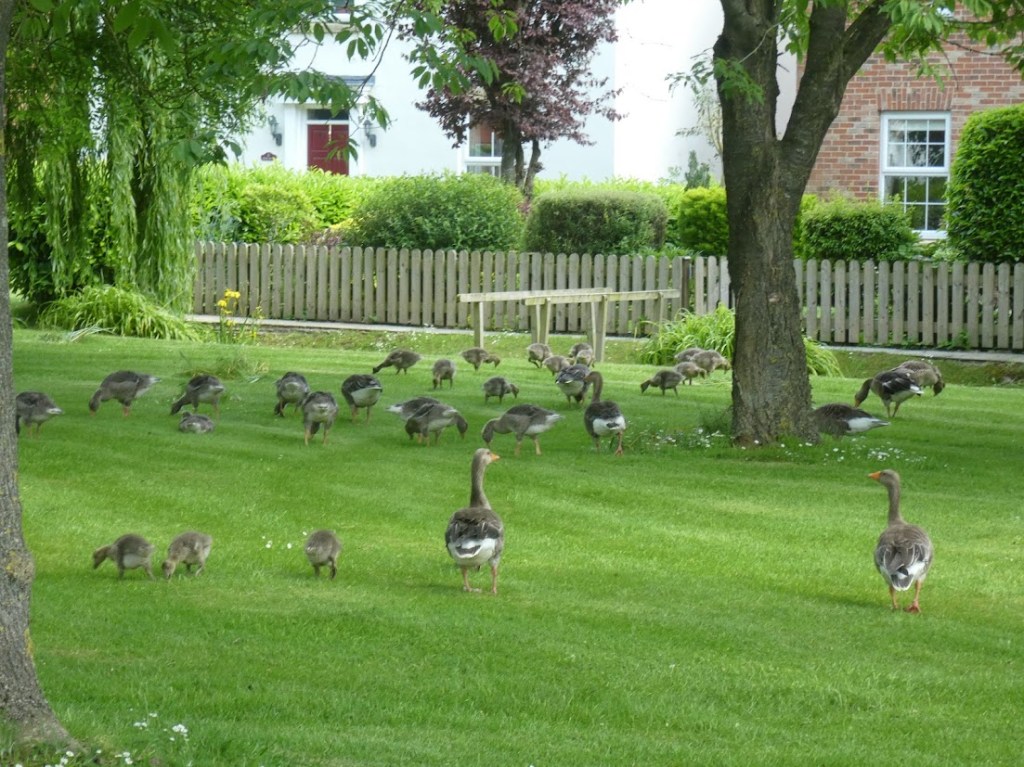
Six geese a-laying
Seven swans a-swimming
Eight maids a-milking
Nine ladies dancing
Ten lords a-leaping
Eleven pipers piping
Twelve drummers drumming

My Monochrome Madness Challenge to you is to illustrate this song, just choosing three or four of those gifts. I’m not going to be harsh. For instance. If you choose swans a-swimming , you really don’t have to have seven. One will do. If you’ve got ten or more French hens, who cares? Because I set the challenge, and in case I hear any more un-Christmas-y mutterings from those to whom I’ve already disclosed my theme, I’m going to illustrate all twelve to prove it can be done. And taking liberties is entirely acceptable. In fact, it’s to be encouraged. Here goes.

On the first day of Christmas my true love sent to me – a partridge in a pear tree. ‘Ooops. The partridge seems to have flown off. He’ll be back in a minute. Bound to be.’
On the second day of Christmas my true love sent to me – two turtle doves.’We’re not turtle doves, just common-or- garden pigeons. But we’re related. We’re fine. Choose me! Choose me!.’
On the third day of Christmas my true love sent to me – three French hens. ‘I don’t know whether we have French blood. Probably not. Does it matter?’
On the fourth day of Christmas my true love sent to me – four calling birds. ‘Just me at the moment. The others’ll be along soon.’
On the fifth day of Christmas my true love sent to me – five gold rings. ‘There’s just that one on top, mate. But there’s bound to be a few more if you take your time and look.’
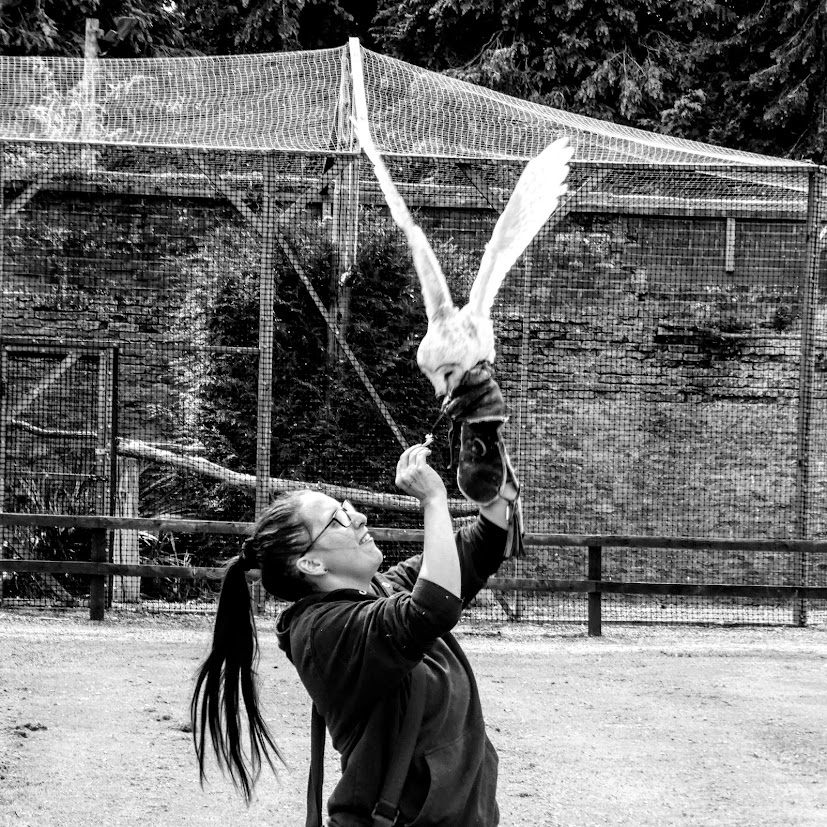
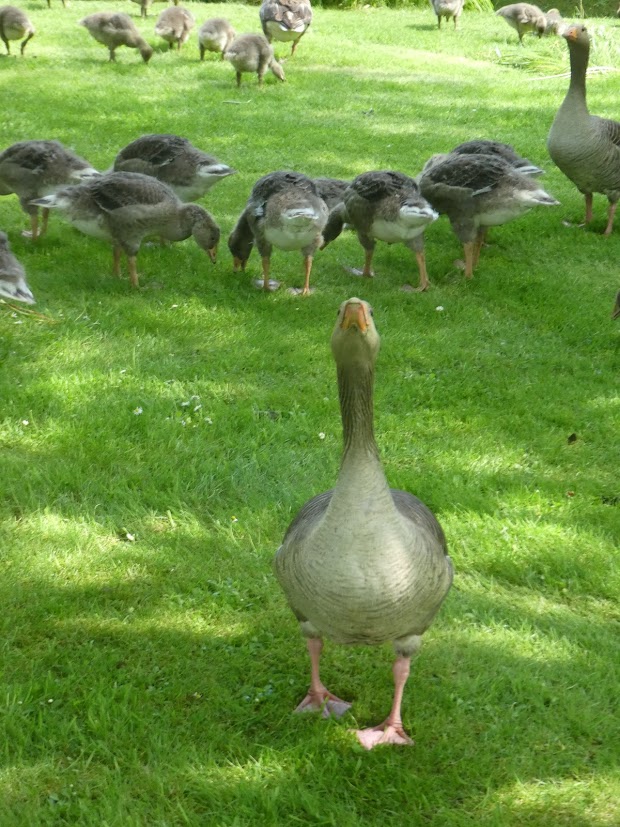
On the sixth day of Christmas my true love sent to me – six geese a-laying. ‘They’re on their way to do just that, sir.’
On the seventh day of Christmas my true love sent to me – seven swans a-swimming. The others are over there – on the other side of the pond.
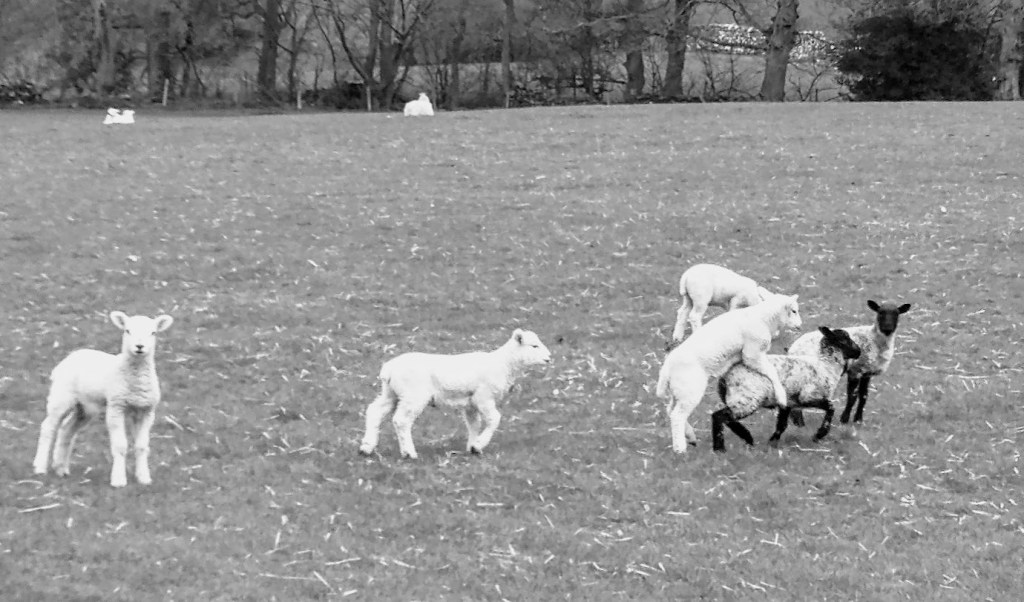
On the eighth day of Christmas my true love sent to me – eight maids a-milking. ‘Yep, that little maid was only born the other day. She’s milking her mum alright! Seven more calves due in the next few days. Just gotta be patient.’
On the ninth day of Christmas my true love sent to me – nine ladies dancing. ‘Just nine you want? Yes, we can do that for you, sir.’
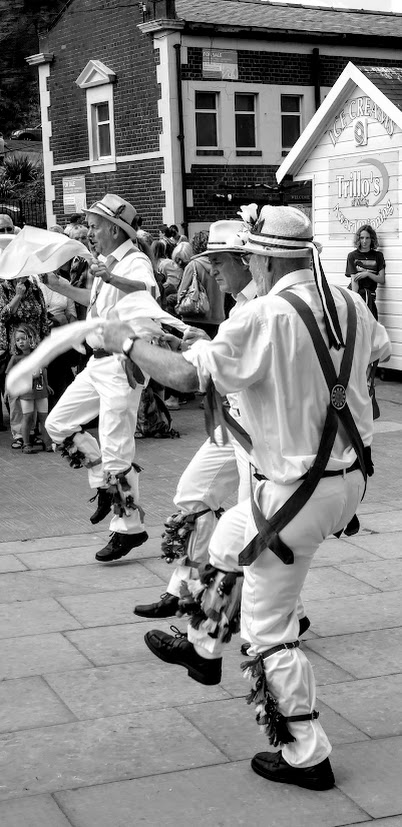
On the tenth day of Christmas my true love sent to me – ten lords a-leaping. ‘We might find it difficult to supply the full set of ten sir. Most lords aren’t as young as they once were. But look at these two. Can’t fault their leaping.’
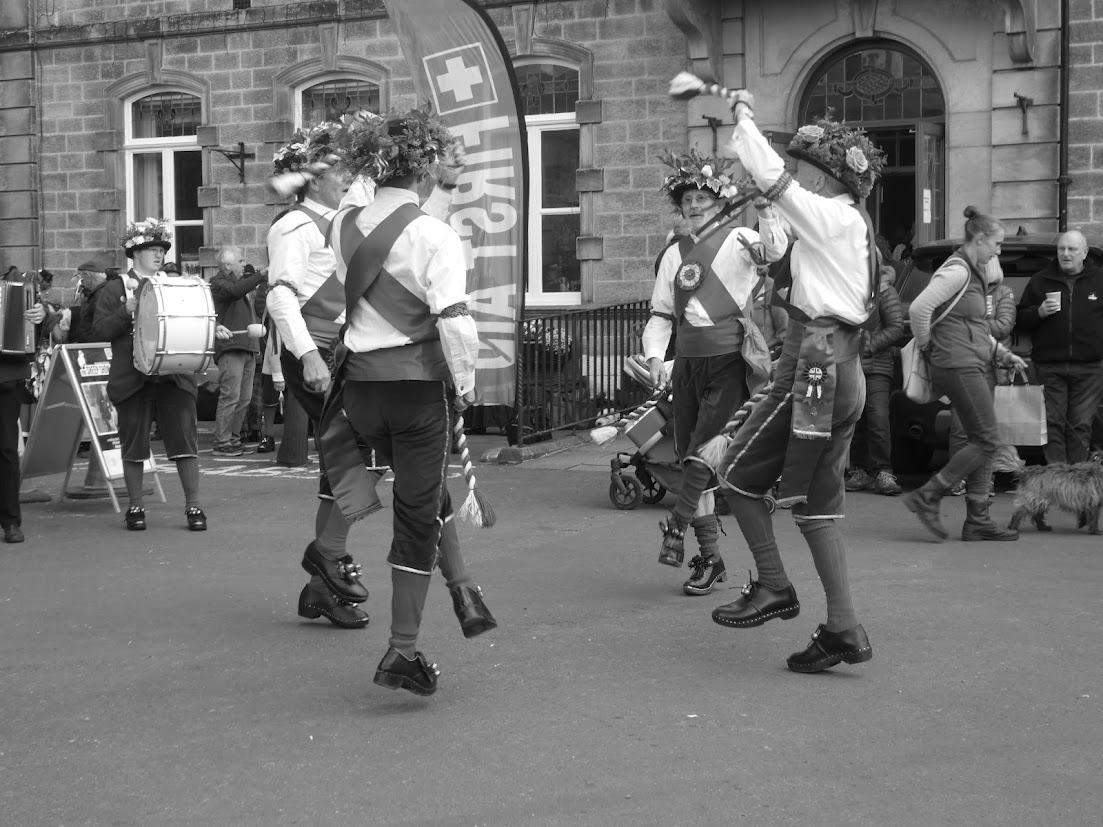
On the eleventh day of Christmas my true love sent to me – eleven pipers piping. ‘If you think your young lady can take the noise, we can certainly do you the full eleven pipers.’
On the twelfth day of Christmas my true love sent to me – twelve drummers drumming. ‘Easy. We’ve got at least eleven more on call just like this fellah. Would that suit you?’

There! Now just pick three or four of those days and show us what you can do.

Leanne and Elke have already beaten me to it ….

My Favourite Non-Fiction Reads of the Year

It’s that time of year, The endless lists. I’m joining in too. Next week, I’ll write about my favourite fiction. But this week, I’ll instead focus on my 10 favourite non-fiction reads of 2025. I’m not ranking them. I’ll start with my most recent read, and reach back towards January. ‘Are you sitting comfortably? Then I’ll begin’. (who’s old enough and British enough to remember this welcoming formula introducing Listen with Mother on the Home Service at 1.45 every weekday in the early 1950s?)

A Short History of America: from Tea Party to Trump: Simon Jenkins. Jenkins puts right my formerly really rather sketchy grap of American history in a highly readable account of its early days as a barely inhabited continent, through its early discovery by Asiatic peoples on the one coast, and Vikings and similar on the other. Native American; intellectual and economic development; the long history of slavery; the Civil War; and right up to more recent history and the emergence of Trump. It’s lucid, informative and useful.

The Lie of the Land: Guy Shrubsole. This is a book that should be read by every sitting MP, particularly those Tory MPs anxious to preserve the status quo as far as our countryside is concerned. It is about our countryside and who gets to decide how it’s used: about the way the countryside has been treated has made the UK so nature-impoverished. It’s about how our history has give much of our countryside over to the landowner. It’s about the shooting industry; the draining of the fens; the Enclosure Acts. And it’s a Call to Action.

Island Stories – An Unconventional History of Britain: David Reynolds. In this book, Reynolds demonstrates how England (not to be confused with Britain) has, from the earliest years, even before the Roman Empire took this island under its wing, been inextricably bound to mainland Europe and beyond in dozens of ways, both political and social. He shows how our Glorious Past, our days of Empire grew up in conditions that can never be repeated, and how in any case had many aspects – slavery, subjugation of indigenous peoples – of which we cannot be proud. He looks at the Brexit delusion of making a ‘clean break’ from Europe and demonstates its impossibility, especially in the context of the four nations that currently constitute the British Isles. A thought-provoking read.

And now for something completely different. Raising Hare: Chloe Dalton. Dalton finds a small, apparently abandoned leveret. This is her story. Of how she treads a difficult path of wishing to help it survive to adulthood, while respecting its wildness. But the creature has a profound effect on Dalton. She strives, as she describes in this book to restore a sense of the sacred and to meet an animal on its own terms. Its part in her life changes her forever.

Stuffed: Pen Vogler. This is a book to relish, as it journeys through the history of eating, in good times and in bad, in the British Isles. It doesn’t begin at the beginning, then go on until it comes to the end, and then stop. Instead it works thematically, focussing in turn on some of the foodstuffs that perhaps define us:for instance, bread & ale; turnips (yes, really!); herring; Yorkshire pudding; gruel … and several more. She tells a good story, bringing it right up to date by mentioning the campaigns by Marcus Rashford and Jamie Oliver, and comparing child poverty and malnutrition as it presents now, with Victorian and even earlier times. A well-researched and highly readable book.

Bird School: Adam Nicolson. Nicolson was not a birder. But he decided to change that, and had a rather superior bird hide built in a wild corner of his Sussex farm. And there, all manner of birds come, and he learns. And teaches us: about surviving; singing;breeding; flying; migrating – every aspect of bird life. The story however, turns somewhat depressing. Birds here are in decline, because the natural world is generally in decline. Nicholson tells us why, so we can join the fight for the natural world in our turn.

Let’s go indoors now, and off to America: All the Beauty in the World: Patrick Bringley. I loved this book. Here is a highly educated man who left his start-of-a-glittering-career in a period of grief following the death of his 27 year old brother, to become a museum attendant at New York’s Metropolitan Museum of Art. He spent ten fulfilled years there. In his book he talks about the works of art he spent his day with; the collections themselves; his colleagues; the visitors; his personal life. He’s perceptive, likeable and tells a good story. The accompanying illustrations by Maya McMahon tantalisingly suggest the works we can see when we get there.

The Meteorites: Helen Gordon. I picked this up in the library on a whim. I knew little about Deep Space, and next to nothing about meteorites. Not only do I now know more about the rich variety of forms they take, how they are formed and where they might come from, but I’ve met the dealers, hunters academics and geologists involved in the meteorite community across the world. I now have a whole new perspective on our planet and outer space,and a hunger to know more, by reading this engaging and enjoyable book.

A little Book of Language: David Crystal. Here’s a book which with a broad brush, discusses all kinds of aspects of language: How a baby learns to communicate; how sounds are made; languages and dialects; writing; changing and evolving and disappearing languages; slang and style … and so much more. Not all of this was new to me – this is not the first Crystal book I’ve read – but all of it is told in a lively and engaging way, encouraging thought and discussion. 

And finally … Island Dreams: Gavin Francis. This is a beautifully produced book. On heavy paper, with blue and black ink, the text is allowed generous space to breathe. As well, the text is interspersed – also generously – with maps old and new illustrating the outlines of islands he visits and discusses. These are the only illustrations. It encompasses myth, psychology, philosophy, literature and straightforward travel writing. So this is a book to savour and linger over, returning several times to the maps on display.

And if you’re going to push me into naming a favourite? Raising Hare, no question. Heartwarming, thoughtful, highlighting the tension between the natural world and our own, beautifully written.

I’m not going to be able to respond to any comments this weekend. Family Official Christmas, ahead of the usual date. But replies will happen.

David Hockney at Salts Mill

Here we are. A large installation – a collage – one of David Hockney’s iPad works. Each of these nine ’tiles’ shows a constantly changing set of views of the same scene at different times, independently of all the others. The full image is in a case of constant flux, always showing a slightly different aspect of the snow scene Hockney was viewing. It’s a bit like those plastic puzzles that I had as a child with 15 tiles and one blank space, so you could move the tiles around till you made a picture. Or not, in my case, usually.

In the absence of actual snow this year, I offer you this snow scene for the week before Christmas, and for Leanne’s Monochrome Madness.

More Windows from Salts Mill

Today I bring you not just one, but twenty or more windows from the shop on the ground floor of Salts Mill in Saltaire. Its magnificent bookshop is upstairs, but here, as you come in, you can buy posters and cards, stationery and supplies, art materials – all temptingly laid out for browsers who wander around this space, decorated with vast ceramic pieces from Leeds-based Burmantofts pottery, elegant vases of fresh lilies. The window in the featured photo is in the entrance hall to the Mill, and hints at the treasures to be found within.

For Monday Windows, hosted this week by Brian of Bushboy’s World.

Alexis Soyer: My Latest Pin-Up

Last week, a blog post by Steve of A London Miscellany took my eye. It’s about a 19th Century French celebrity chef working in London who became struck by the plight of the city’s poor. Do read this post about a remarkable man: a talented cook and inventor with a practical social conscience.

I heartly recommend Steve’s weekly blog posts. He always has interesting and curious tales to tell about London’s past

The image of Alexis Soyer shown as the featured photo is a picture painted by his wife, and currently in the Reform Club, London.

The Space Between….

That’s the title of Stupidity Hole‘s intriguing challenge as guest presenter of Monochrome Madness.

I started off with the obvious. The restricted spaces in narrow lanes, alleyways and thoroughfares.

Then I remembered the time when my grandson leapt into the space between the strokes of the letter O in a street installation.

Or there’s the curious tree near us where the space between the two parts of its malformed trunk form an ad hoc picture frame.

And lastly, a negative image. The tree occupies the space between an apparently endless expanse of – well- fresh air.

Thanks, Stupidity Hole for providing a provocative challenge to engage the mind on an excessively windy winter morning.