All over Europe, people are hot and bothered – not so much here up north, where it will only reach 25 degrees today. So my contribution to keeping you cool, if you’re affected by the heatwave, is to offer this refreshing sit down in our local wood.
This week for the Lens-Artists Challenge, Anne invites us to focus on Reflections. She, and now many others, have shown us photos of astonishing beauty featuring the natural world. I thought I’d go down a different road, and look at distorted reflections.
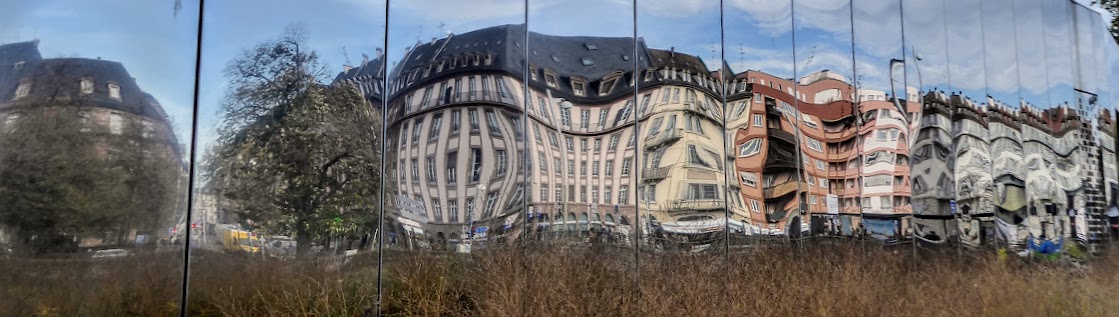
I love the scene shown in the featured photo. It comes from Strasbourg, and features a mirror reflecting buildings from an unlovely part of town, then the home of lots of car parks and redevelopment.
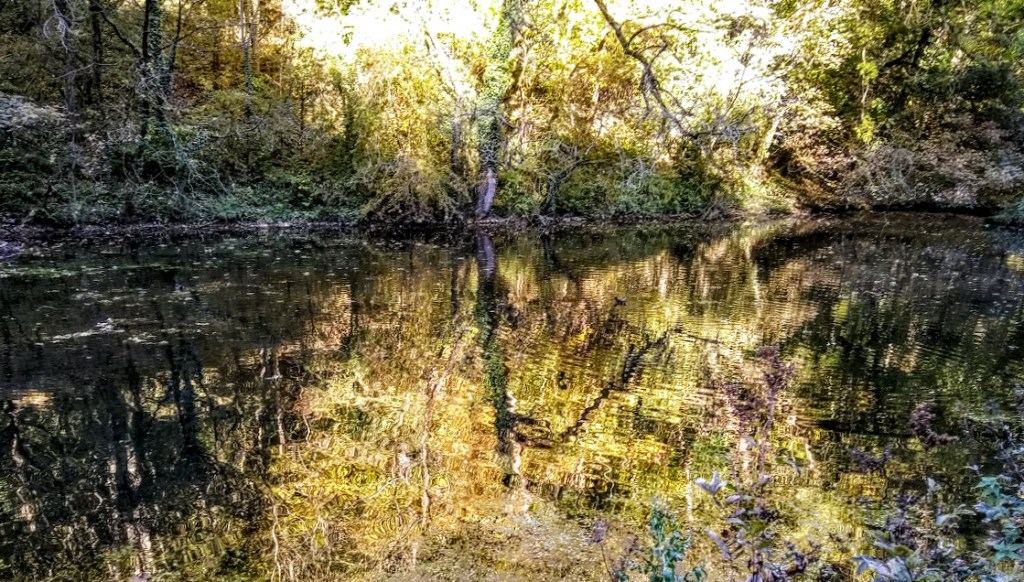
This next one isn’t distorted exactly. But it is hard to read. It’s a pond landscape which to me looks like an expressive painting of … who knows?
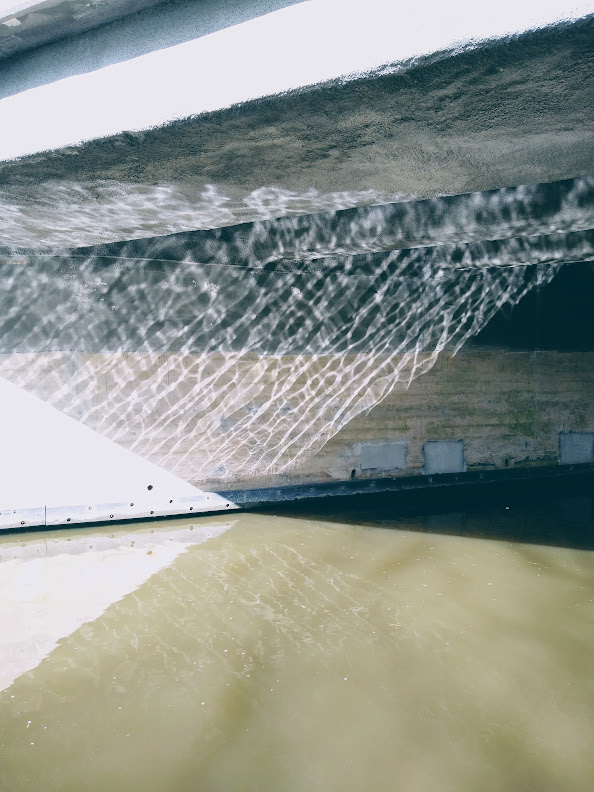
I’m beside water for my next one too. The Leeds-Liverpool Canal. What’s different about this one is that it’s the water that reflects on the concrete above, rather than the other way about.
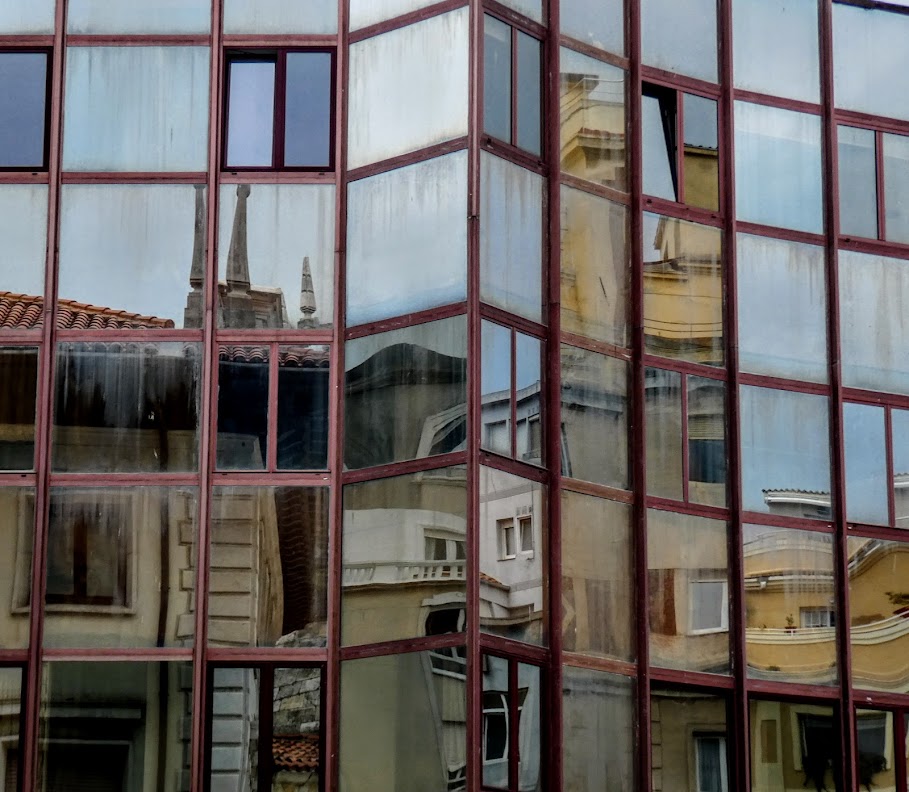
What next? A bit of a Rubik’s cube of images. I feel if you pushed these individual reflections-in-windows about, you might come up with complete pictures of the buildings reflected here.
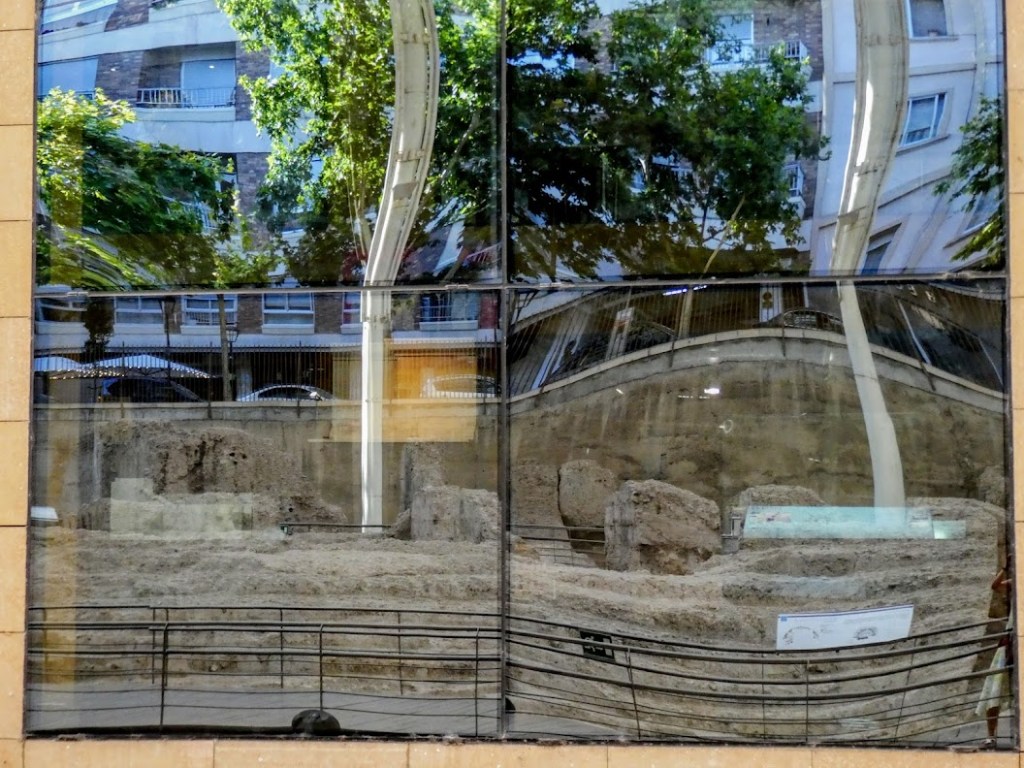
And here we are in Zaragoza. Are we looking at the relics in the Roman Museum behind the glass, or the street outside’s buildings and trees?
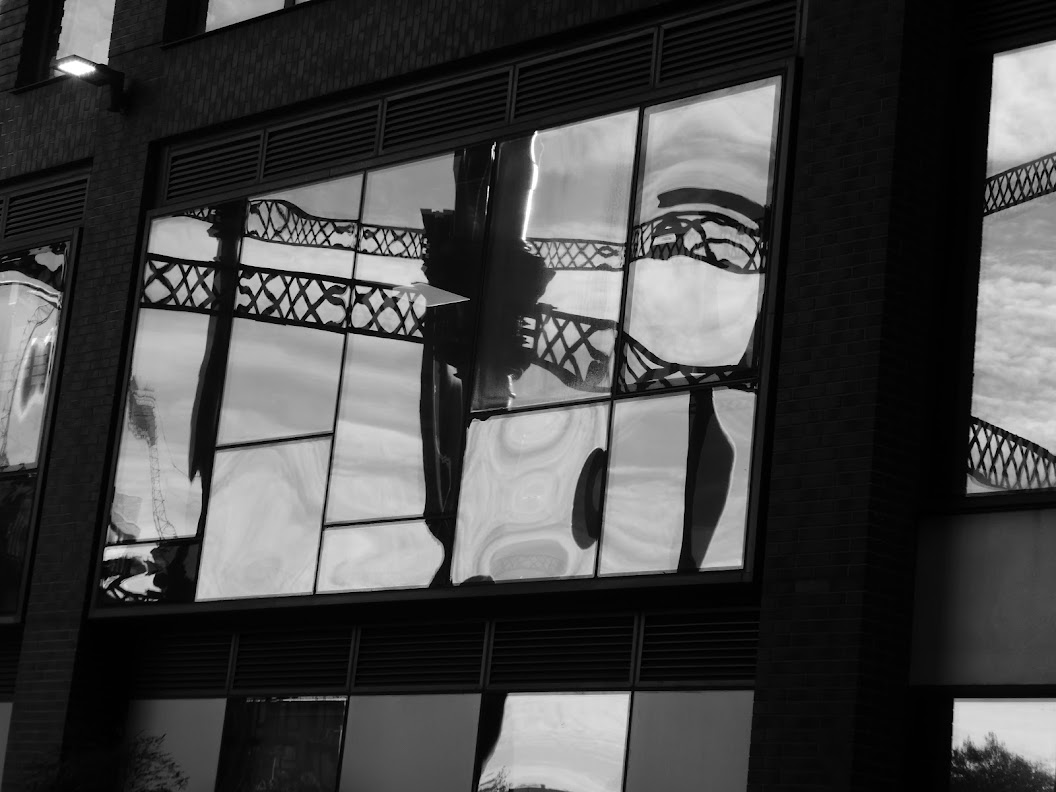
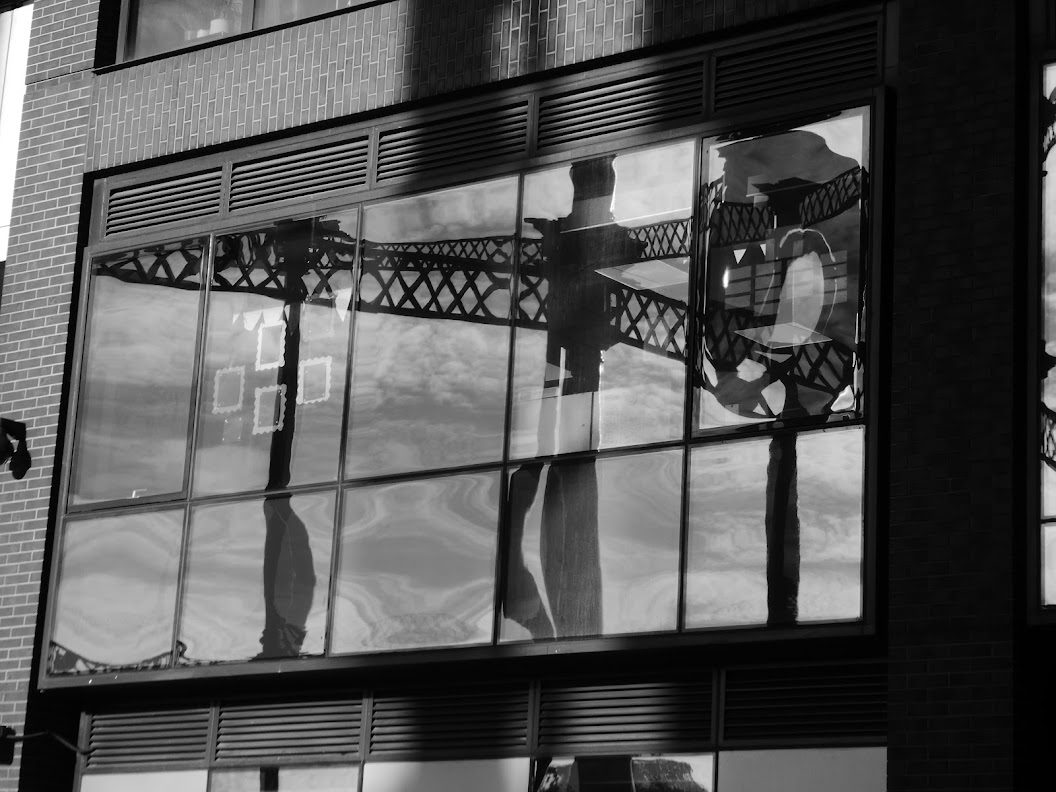
And here’s a couple of images from London’s Gasholder estate.
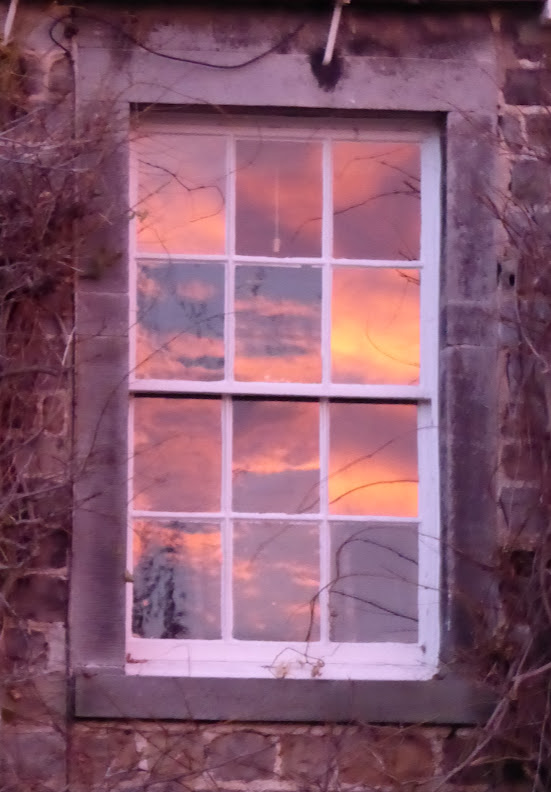
And finally, an image from home that I’ve shown before, and will surely show again: I love it. Sunrise on Christmas Eve a few years ago.
My diary, revived from my trip to India back in 2007. This second part details my solo travels during the last three weeks or so.
A Long Train Journey
Thursday 22nd November
Last day in Mysore! I’m sitting at breakfast enjoying watching the hornbills in the trees. I think they’re the magpies of the area – never still, always flying around moving all the other birdlife on. The other treat is at nightfall when the enormous fruitbats come out. Wonder what they’ll have in Tamil Nadu?
Later ….
My train to Thanjavur
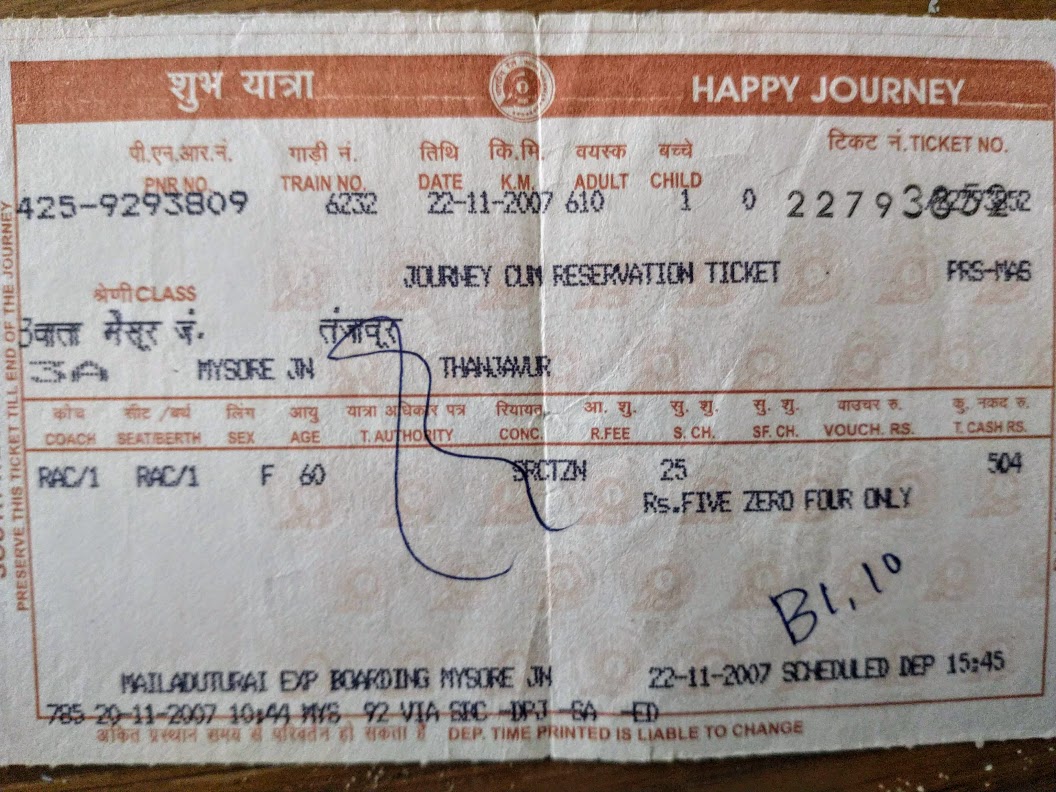
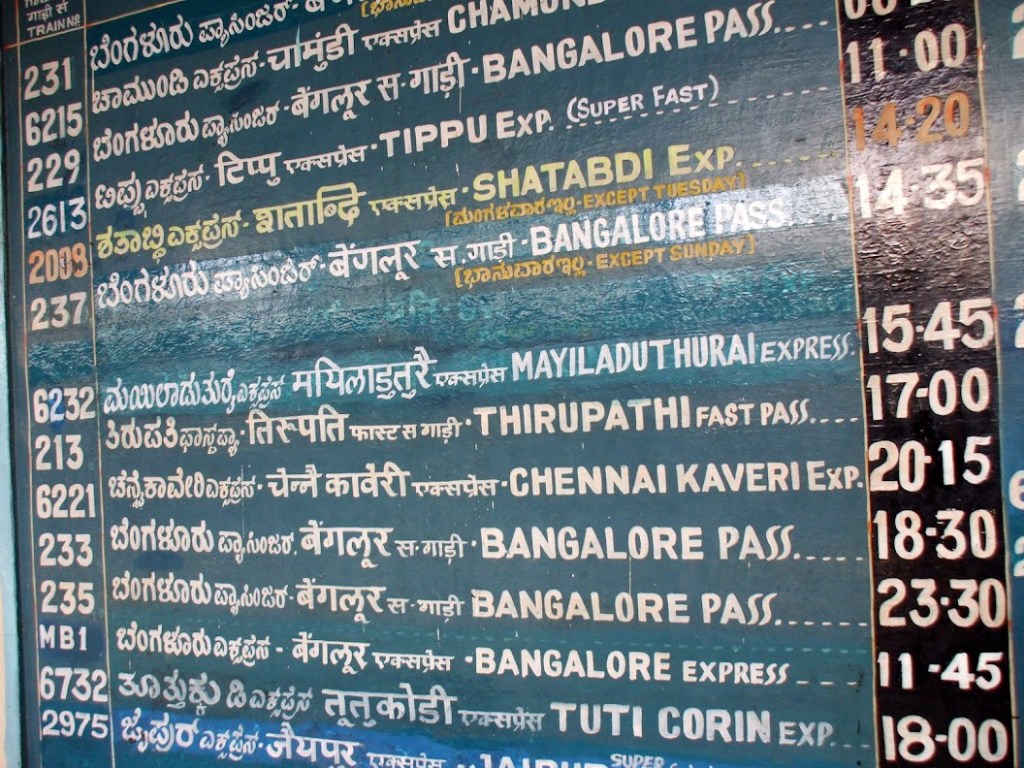
I’m now on the train which at 7.20 had just left Bangalore (Mysore 3.45). Fascinating stuff. The train gets in nearly an hour ahead of departure so we can all sort ourselves out. As I was clearly a Country Cousin (the only European on the train), a man at the station took me in hand. I hadn’t known I had to ‘check in’, in the manner of an airline passenger. Nor had I identified how to use my ticket to find my seat. So he helped me – for Rs. 20.
Meanwhile, on the station, everyone got on with life. A large family spread themselves out on the ground, got out metal plates and canisters of food, and got stuck in. Some women, like me, headed for the calm of the Ladies’ Waiting Room. I also made sure I had enough water – a constant feature of life here, buying water. Not a lifestyle choice, but a necessity, certainly in the towns. Rs. 10-ish in a bottle. This was all after I’d identified my seat. I wasn’t about to sit on a hot train unnecessarily for ¾ of an hour. The train was fairly empty – nobody in my bit of the compartment.
Mysore Station
Eventually though, I took my seat, and the train started, I enjoyed watching the world pass by, and occasionally chai and coffee boys would go by, though I haven’t succumbed yet. Interminable stops at non-official stations. And then, as darkness fell, I was struck by the low level of lighting in the streets: and then, as we pulled into Bangalore, by the almost nonexistent level of lighting on the station – a real surprise. Still, now we saw some action. More tea, coffee and waterboys. I got some nuts, fearing I would get nothing else, but then, just after that, along comes the offer of meals, veg or non-veg. So I got a veg. option for Rs. 20: rather better value than the Rs. 50 nuts! A foil-wrapped container was filled with fried rice and lots of vegetables – quite good actually – which of course I ate with my fingers – what I could manage. It was an enormous portion.
Now I’m sharing my compartment with a college lecturer, and a college librarian from Trichy (Tiruchirappalli – which I rather wish I’d visited). Their English is limited, so plenty of room for misunderstanding. By the way, lots of people assume I’m French. What’s that about?
8.30 p.m. At yet another station. Masala dosa and idli man doing his stuff – that sounds good!. Lots of people have made their beds up, but not us yet. One young woman got on at Bangalore having had her hands and wrists henna-ed on both sides. She’s been trying to manage her life handlessly. Difficult.
One family had produced a three course supper with several dishes on metal plates. It all looks very good, and now mum has gone to wash up …. Sadly, I can’t find my carefully-packed toothbrush.
At about 9.00 ish, we all got our beds ready: our compartment separates into 2 sets x 3 of beds, then by the windows, 1 x 2. Up we all jumped ito our bunks and slept, surprisingly. At 4.00, at Trichy, a lot of people got off, and naturally I slept no more, as I was off at 5.00 at Thanjavur.
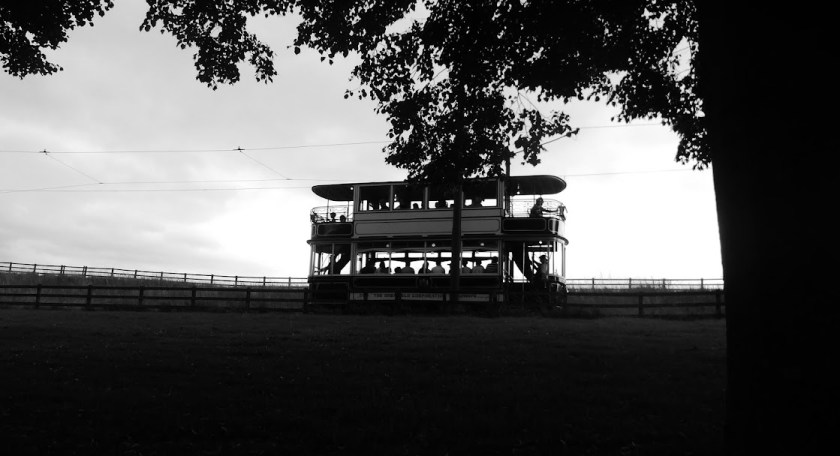
The theme Dawn has chosen for this week’s Monochrome Madness is Transport. That’s a bit of a facer. I’m not the sort of person who ever thinks to take a shot of a car, or be part of a cluster round someone’s state-of-the-art motor bike. I only notice trains or buses if they’re late, and you’ll never catch me on a bicycle.
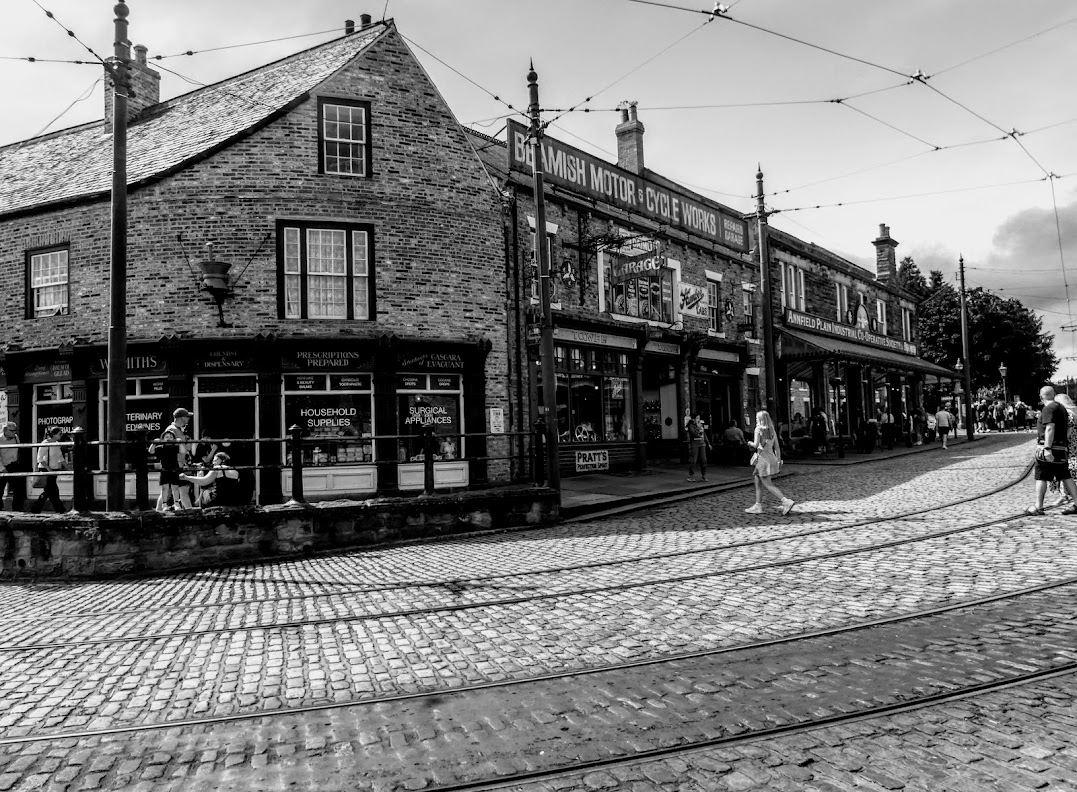
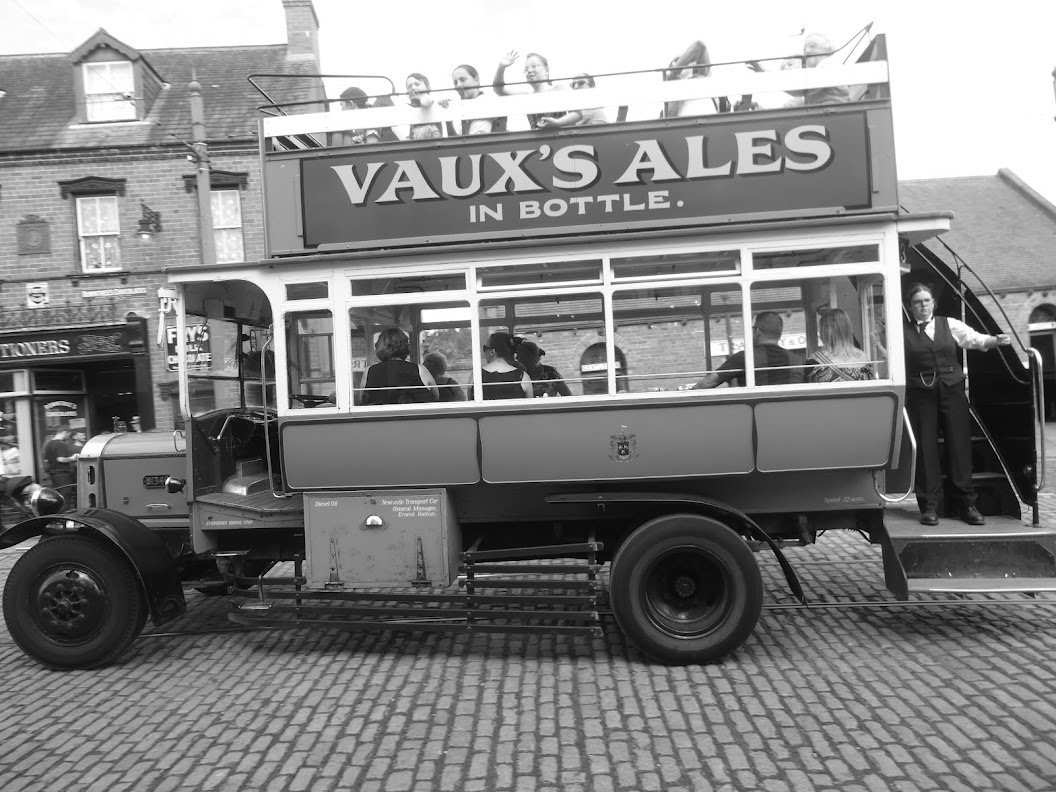
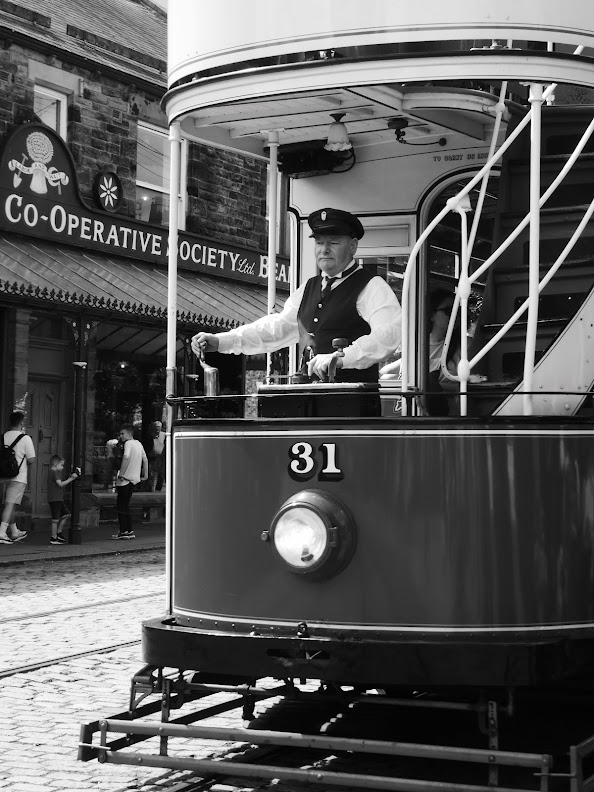
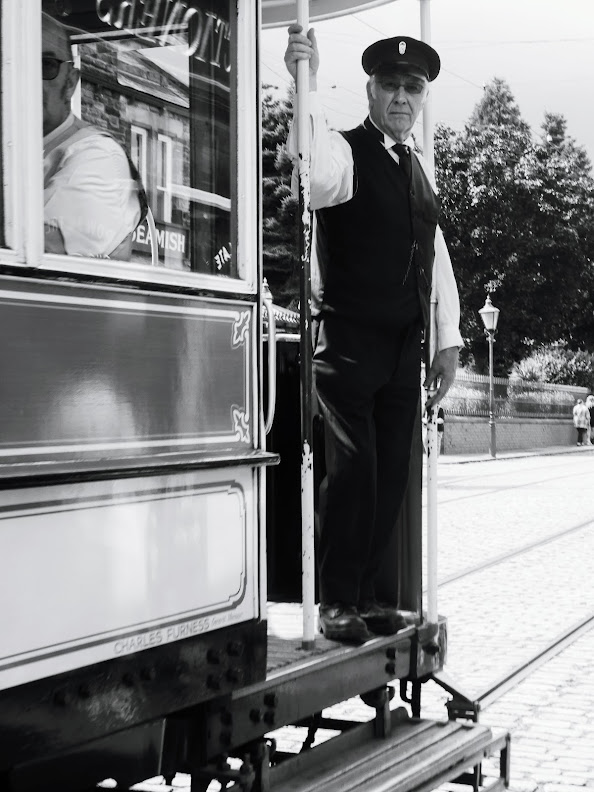
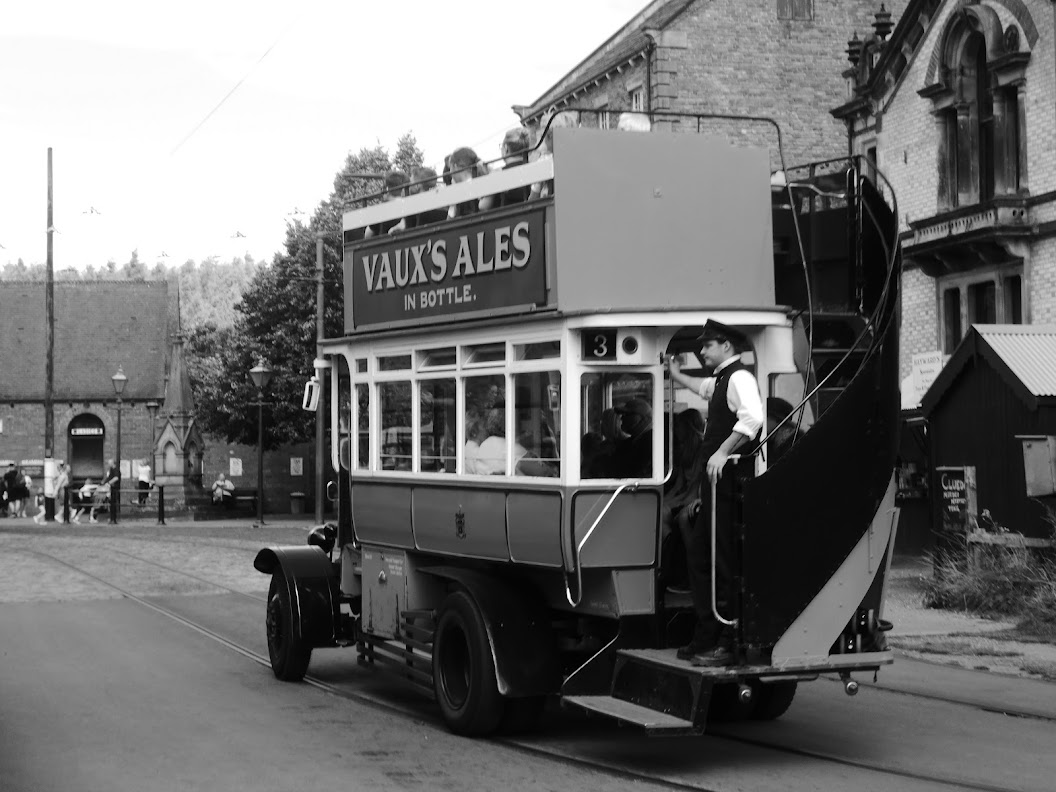
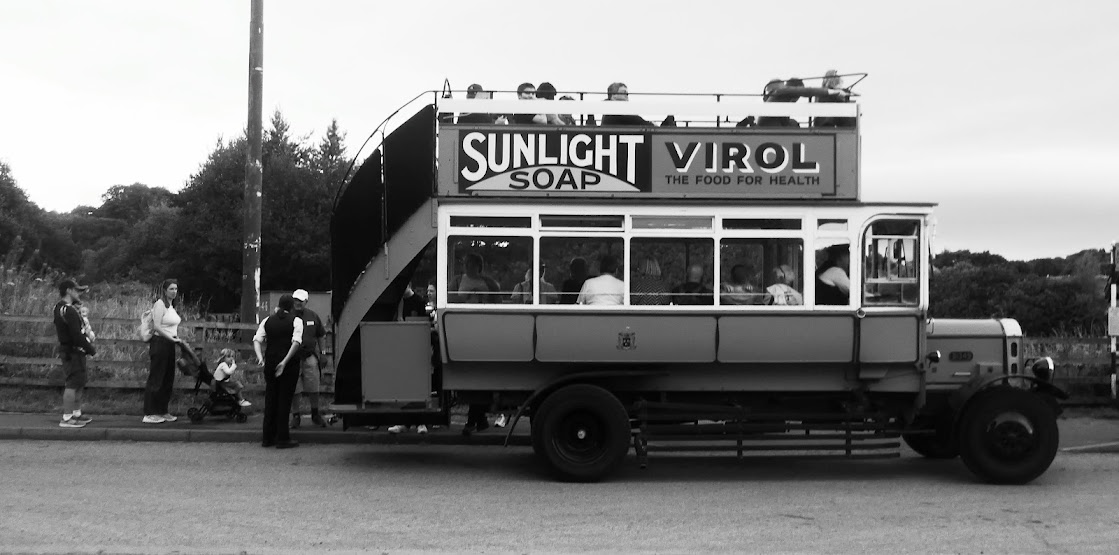
So my best bet seems to be a visit to the past, and a trip we took last year to Beamish, a wonderful open air museum, telling the story of life in North East England during the 1820s, 1900s, 1940s and 1950s.
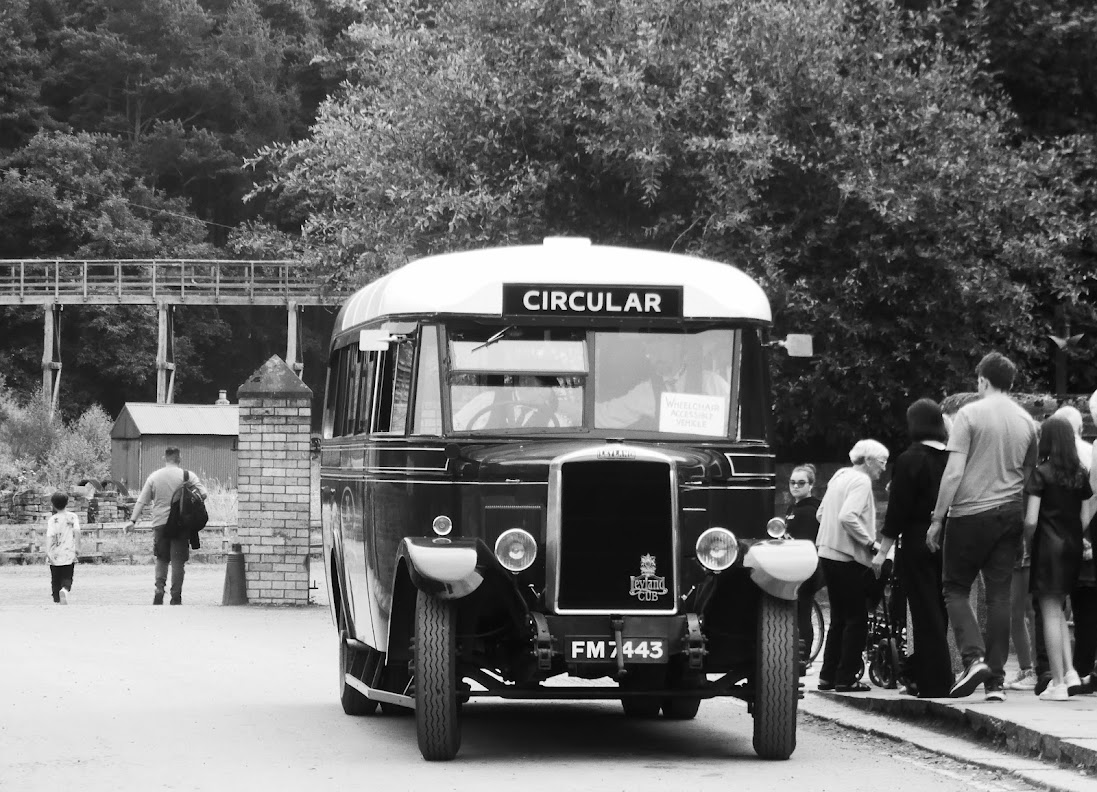
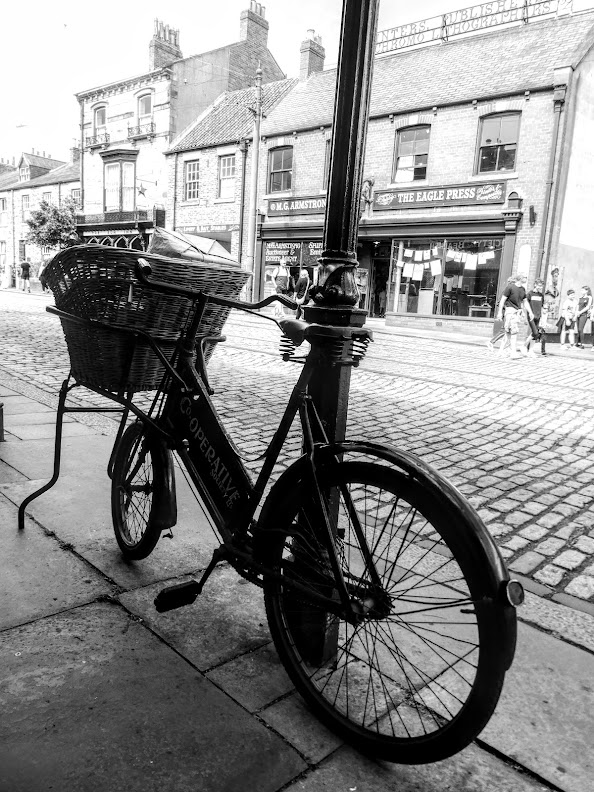
The site is huge, and public (well, public to those who’d paid to get in) transport a necessity. We had fun popping on and off trams, trolleybuses, and single decker buses, and inspecting the bicycles of delivery boys.
My feature photo shows no trams and bikes. There are tramlines, but what it illustrates is the most common form of transport there is, world-wide. Shanks’s pony. I’m not sure if this phrase has spread as a description of walking beyond the UK, nor am I sure of its origins. There ARE various theories on the internet: but I believe none of them.
Here’s a gallery of all the transport we used as we explored this site.
Trams …
… and buses …
… and bikes.
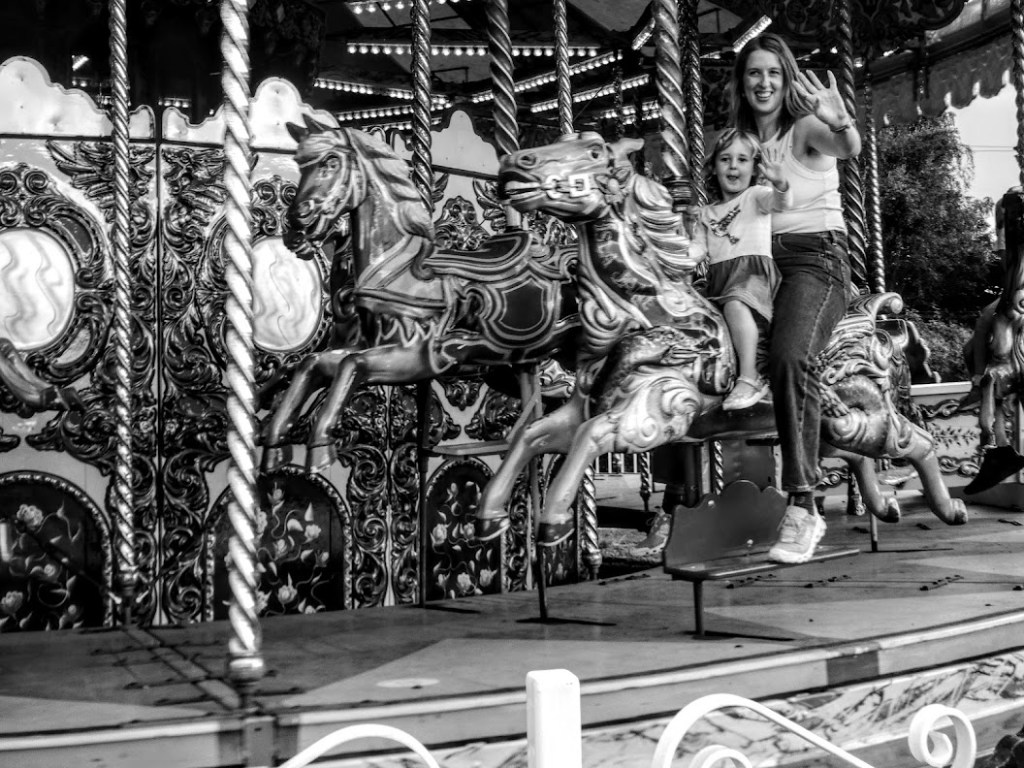
And does a merry-go-round horse count as transport? My granddaughter thought so.
And here’s a final photo, as evening drew in, and people hurried onto whatever form of transport they could find to take them towards the car park, and their journey home.
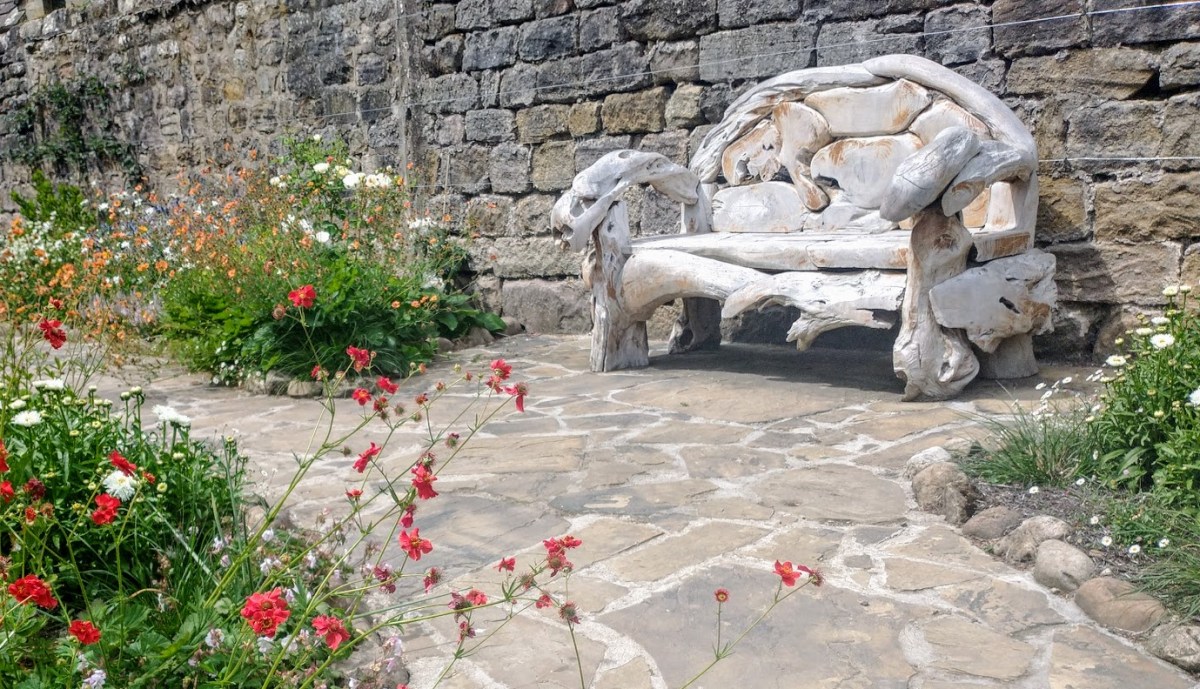
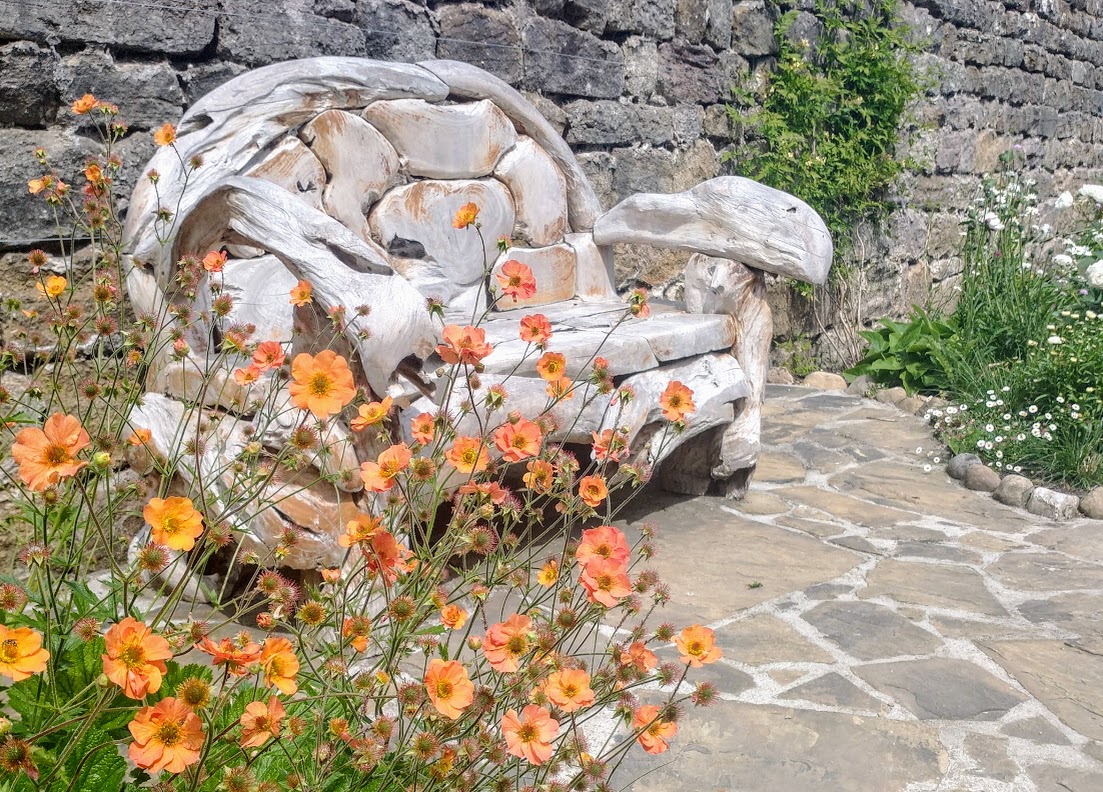
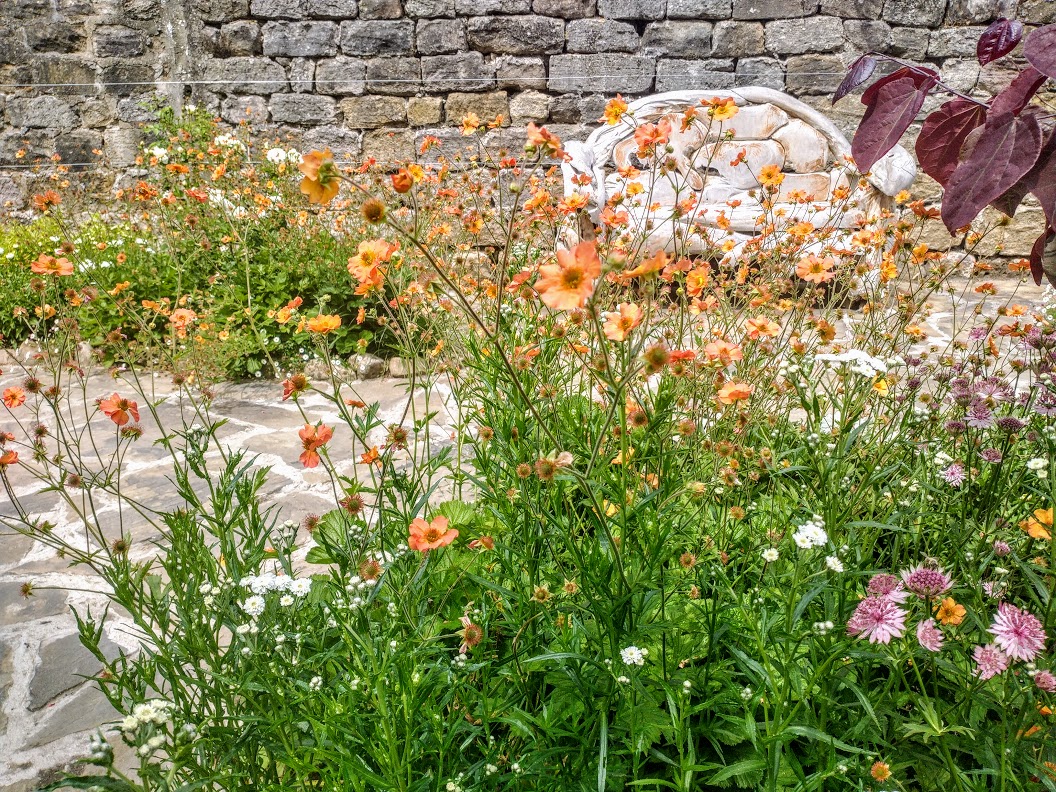
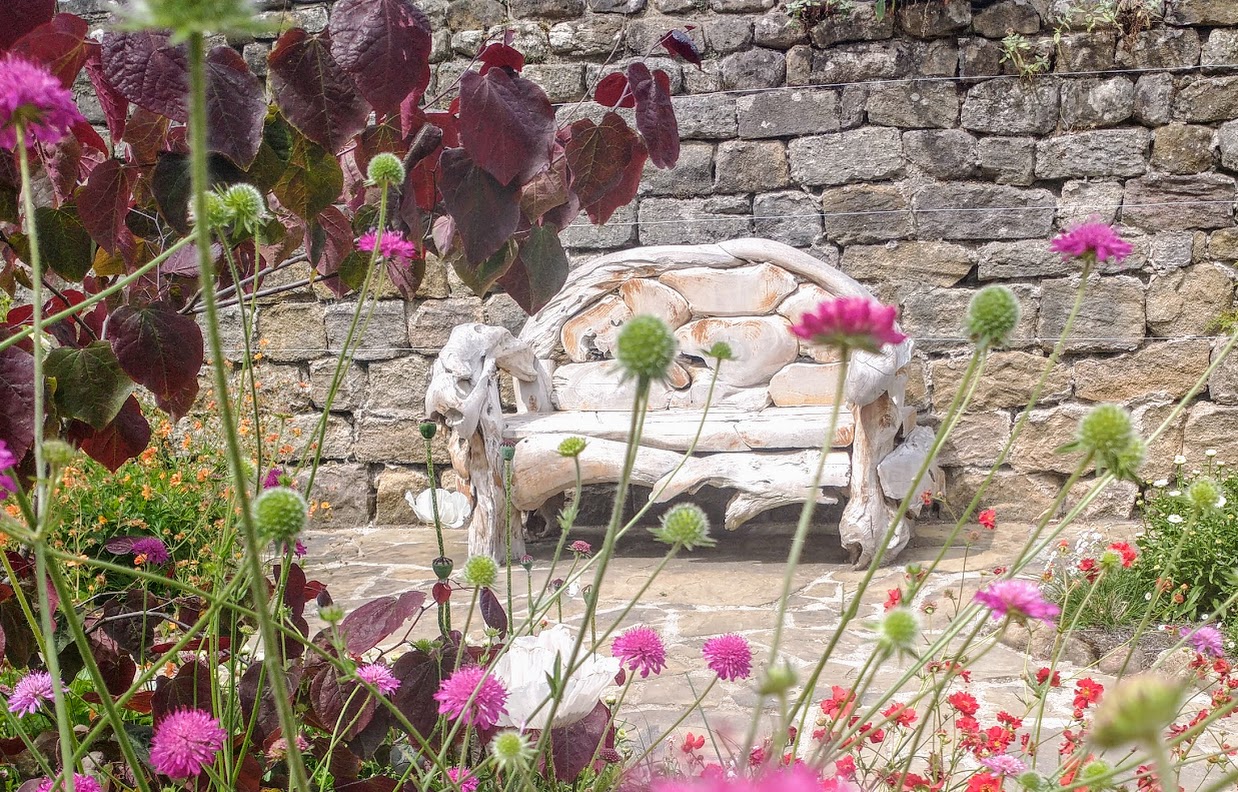
Near Fountains Hall, the early Jacobean house in the grounds of Fountains Abbey, a new garden has recently been opened. The Quiet Garden. It is indeed a peaceful haven. My favourite feature is this bench, made from the wood of now-fallen trees in Studley Royal’s deer park.
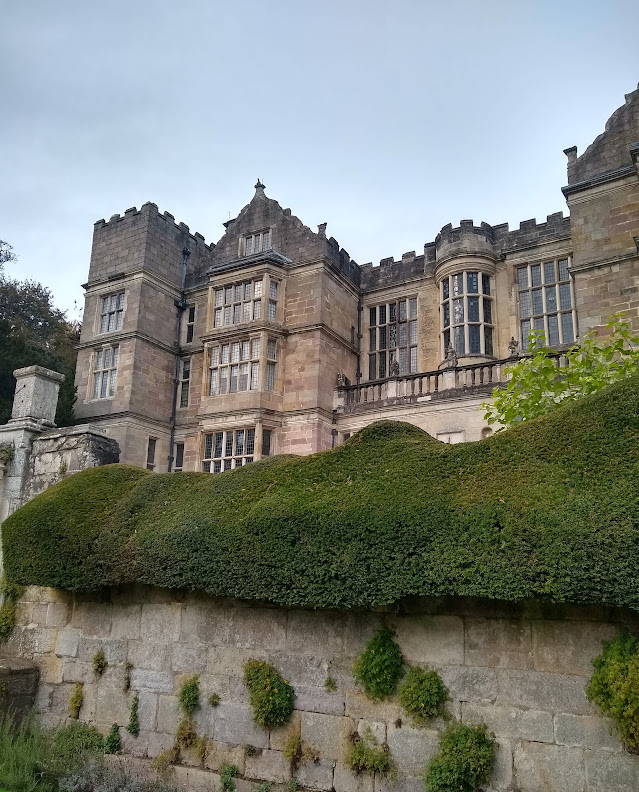
And in case you’ve not seen it before, here is Fountains Hall.
In my opinion, storms are best appreciated from behind closed curtains, when I’m curled up with a good book. If a roaring fire can be arranged, so much the better.
Nevertheless, there’s something thrilling and energising about the power and drama of a storm, whether it’s by being hurled sideways by a potent and tyrannical wind; half-drowned by an unrelenting downpour; or by experiencing ocean waves careening coastwards. Unless you’re on board a ship, as I once was, enduring a six hour crossing that should have taken an hour and a half. That was NOT thrilling at all.
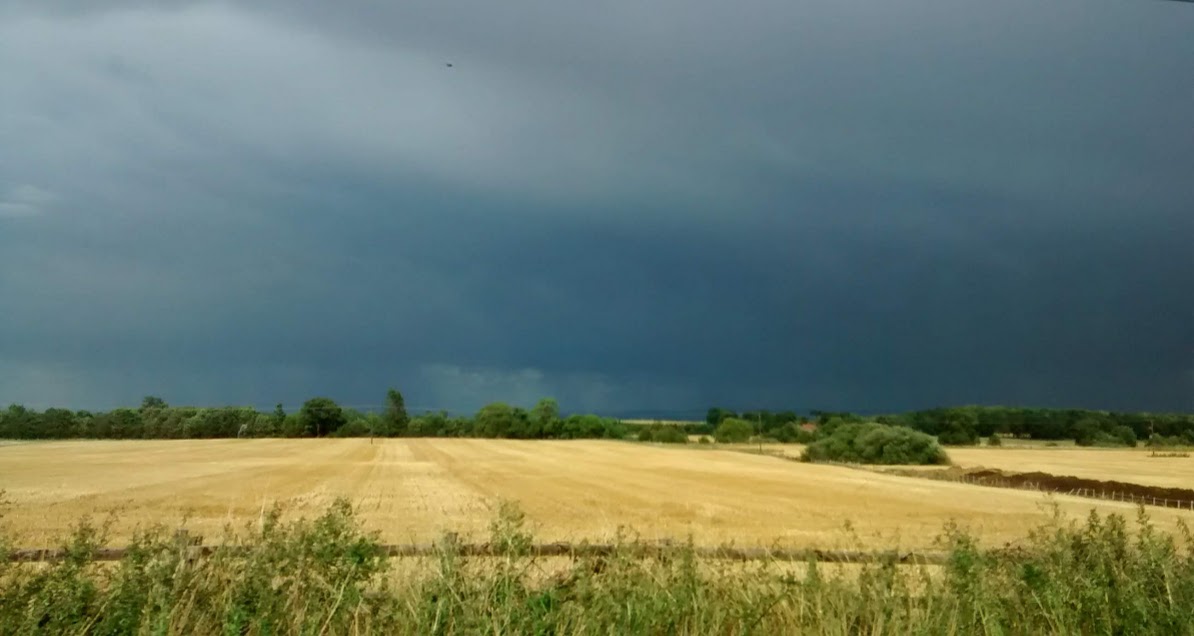
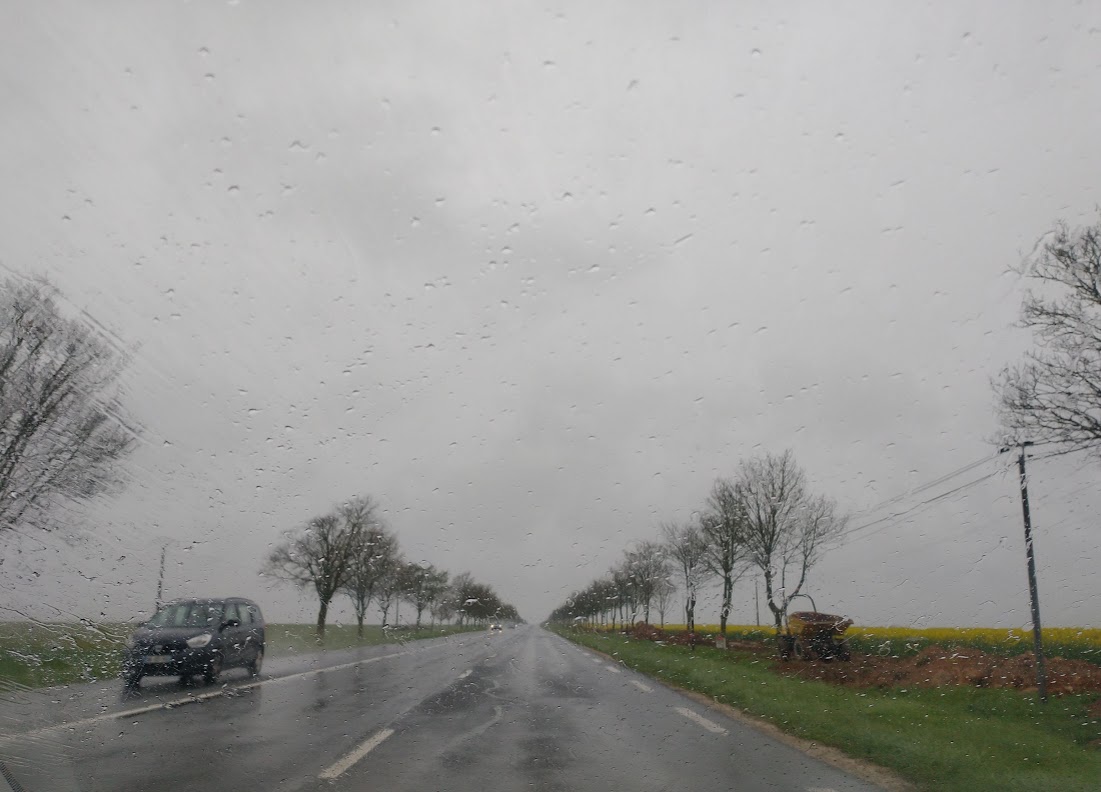
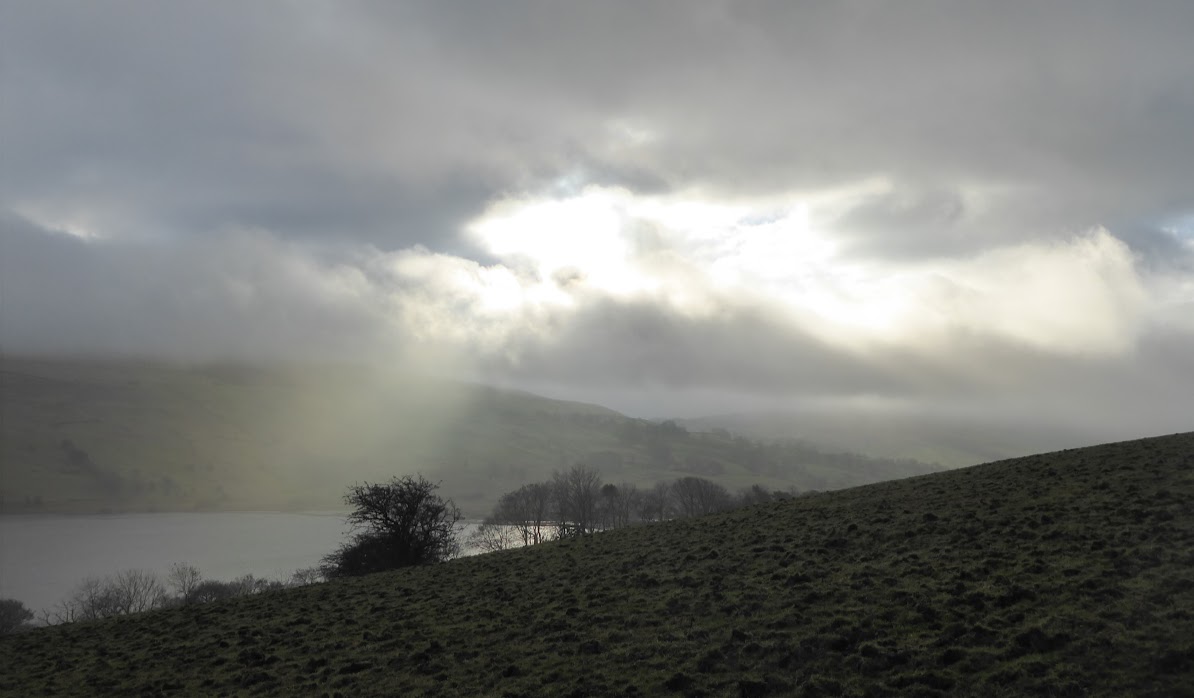
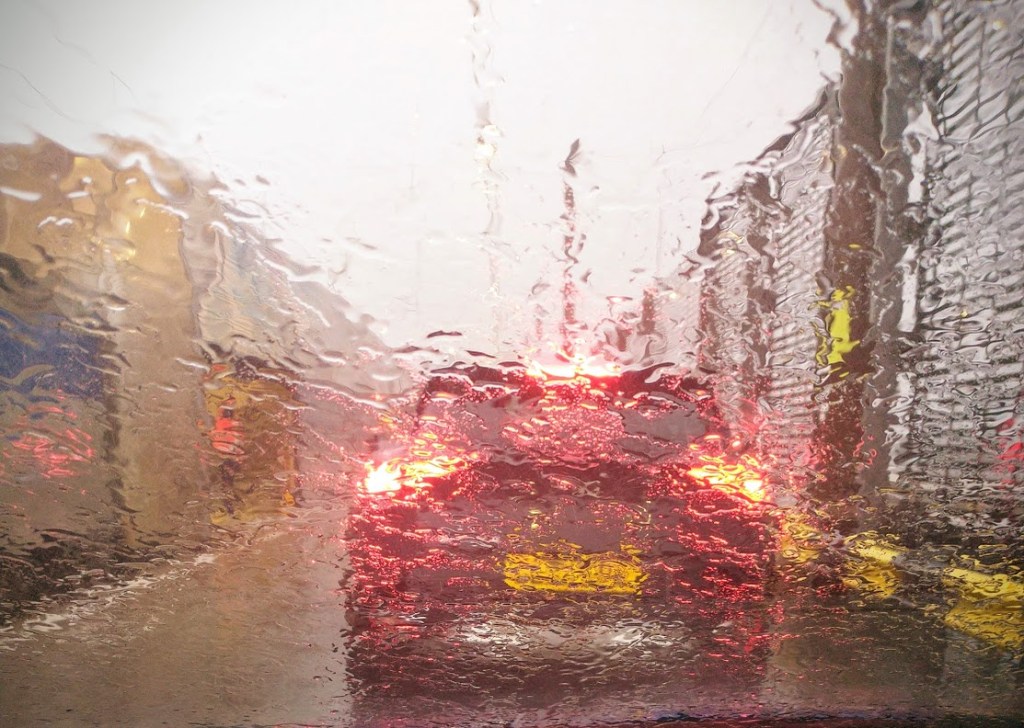
But because of my preference outlined above, I can only offer pictures of the precursors to, or aftermaths of storms. Oh, and a few rainstorms.
Just a few rainy images in monochrome: two are naturally (almost) monochrome – that’s rain for you. The other one is processed from colour.
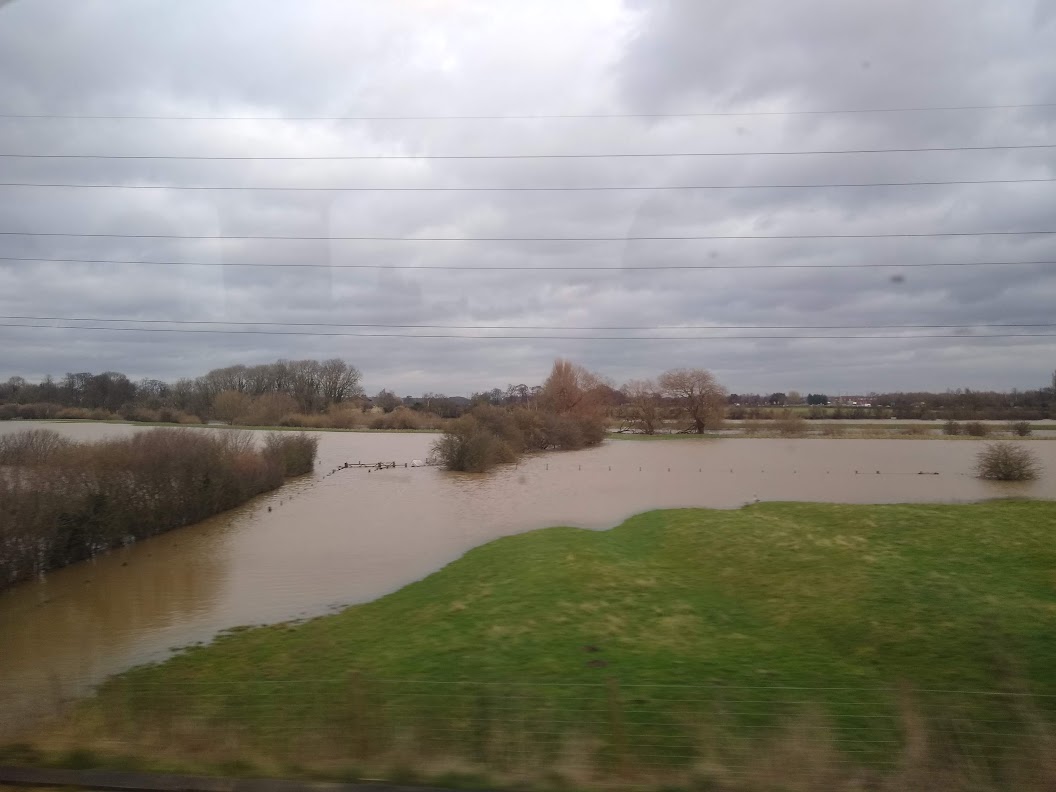
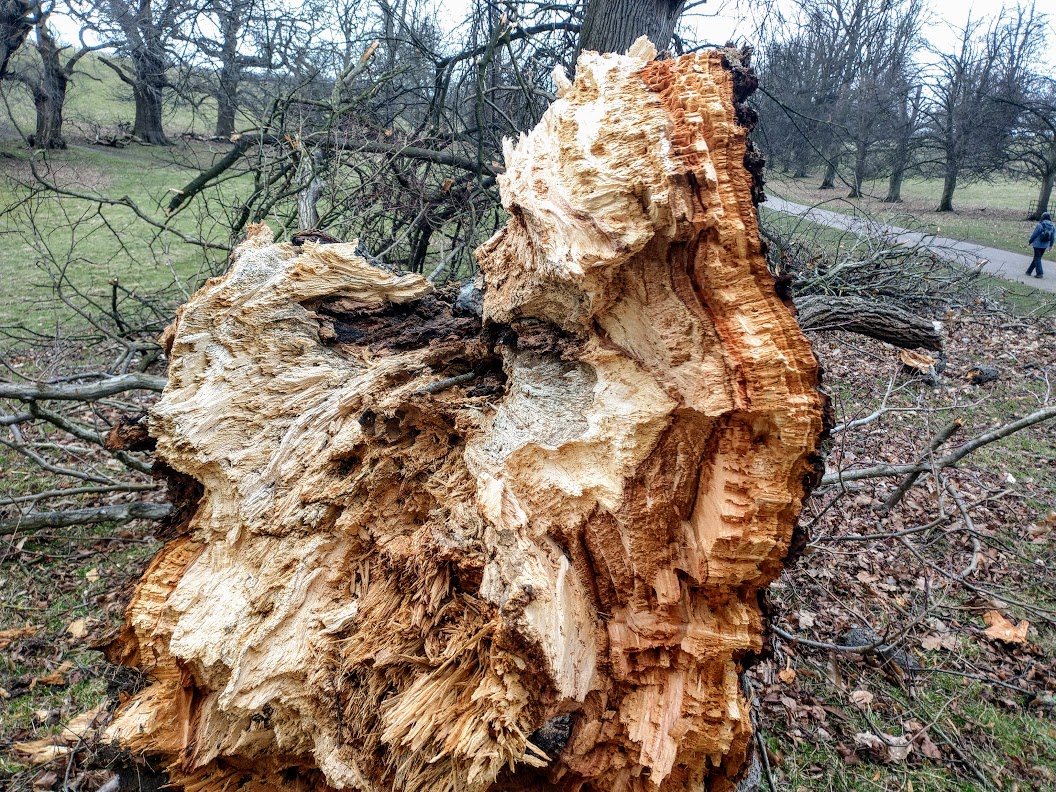
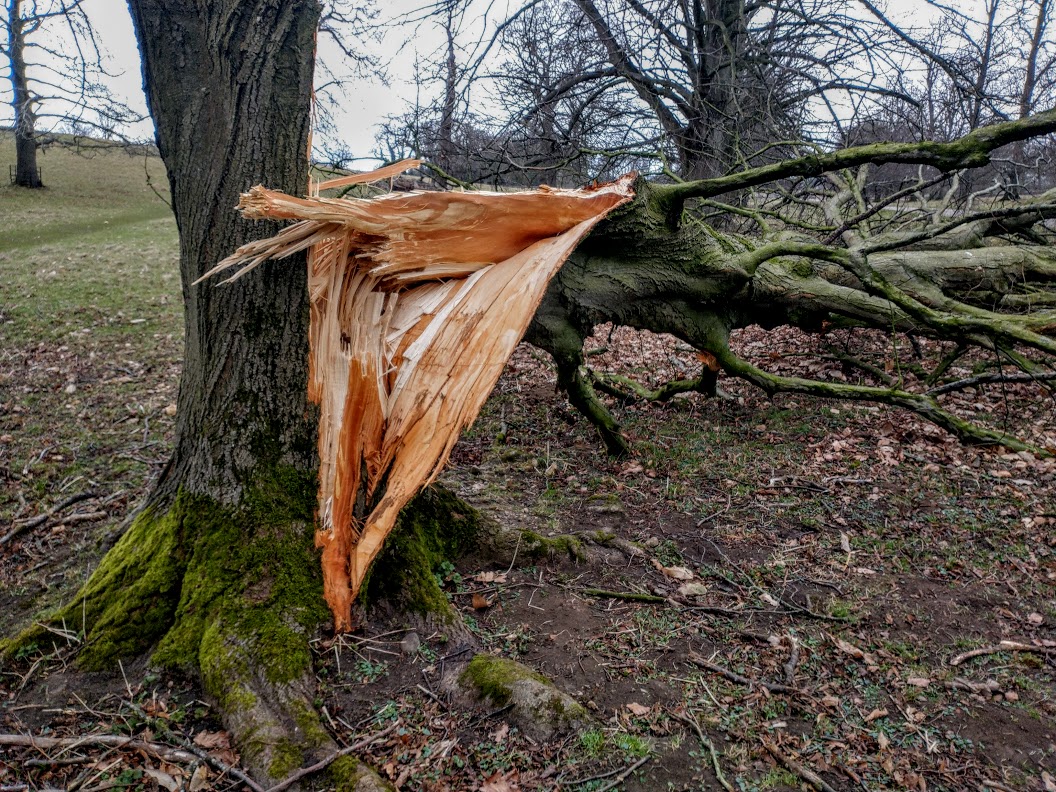
And here’s more aftermath: flooded fields near York, spotted from a train window: and trees at Studley Royal, broken by Storm Otto in 2023.
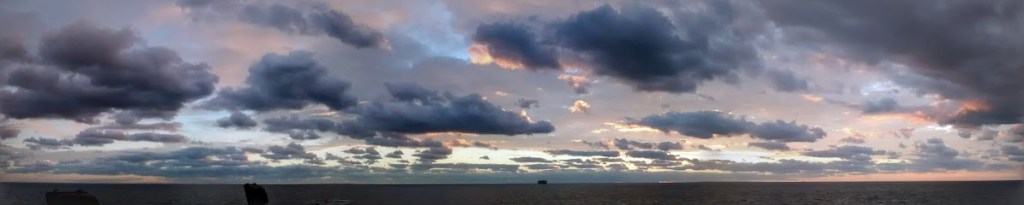
And, just as my header photo celebrates a storm about to arrive, my final photo shows its aftermath, and the promise of finer weather ahead.
My diary, revived from my trip to India back in 2007. This second part details my solo travels during the last three weeks or so.
A Day in Mysore
Wednesday 21st November.
Time to say goodbye to everyone: people are off to all points north, south, east and west.
I took a rick to the station, and didn’t manage to change my ticket (Jobsworth in charge) But there was good internet access and I caught up a bit.
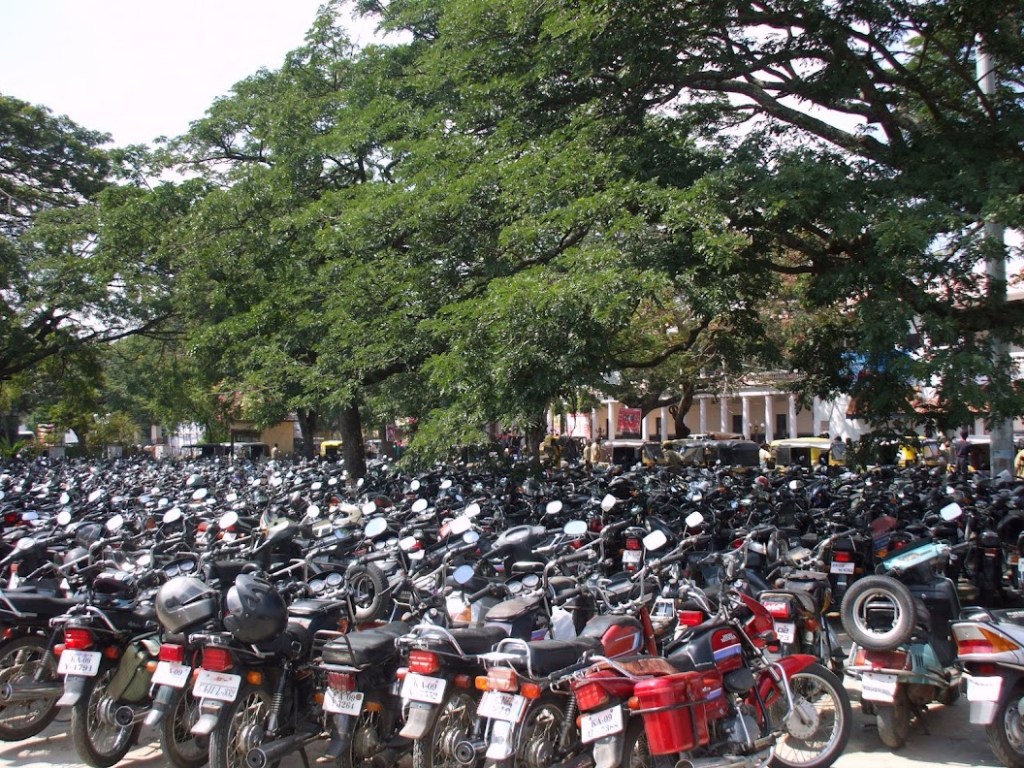
Bike park outside the Station
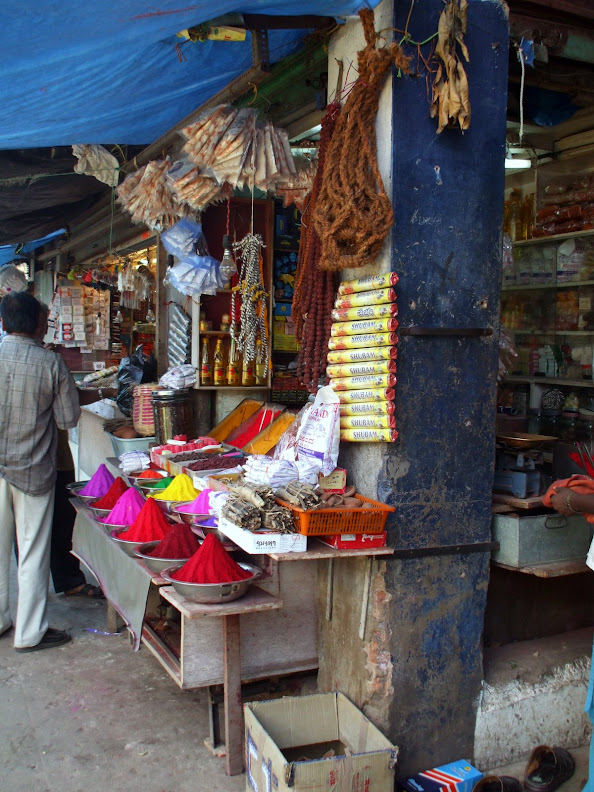
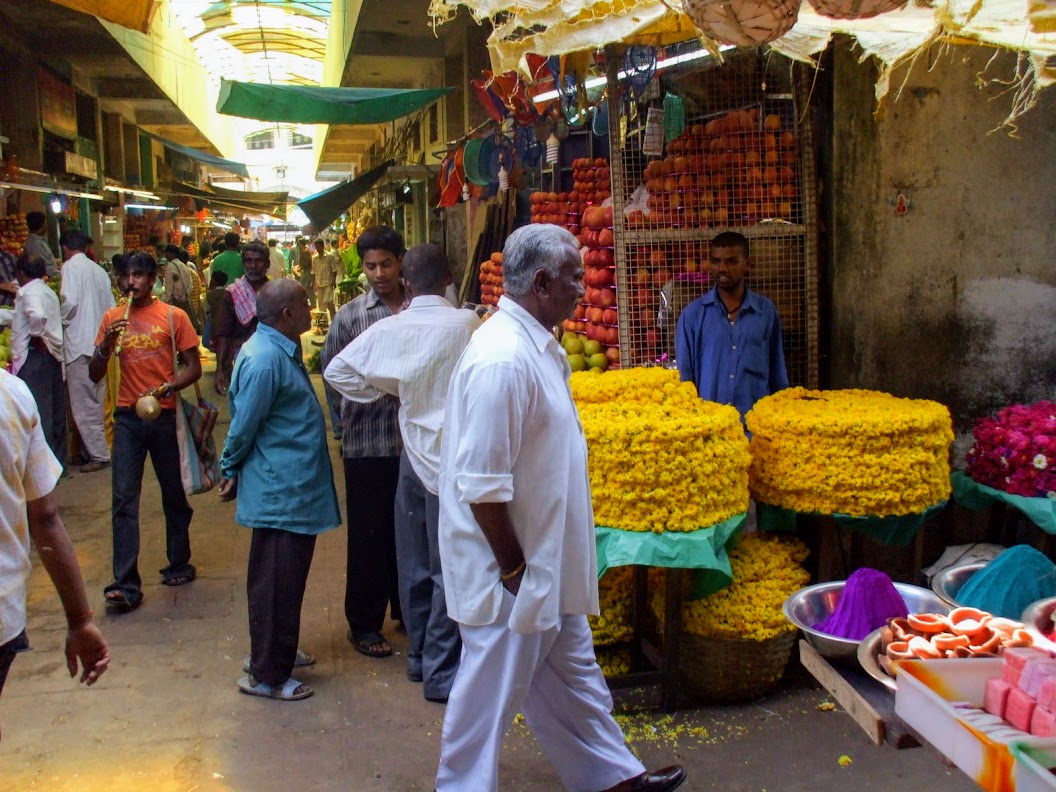
The market, if colourful, was a lot of hassle. Touts everywhere. Of unbelievable persistence. A youth selling flutes came down from Rs 280 to Rs 50, unable to take ‘no’ for an answer. And STILL I didn’t buy (This market remains one of my worst memories of India. I couldn’t enjoy a single second in peace). Later though, in a side street, I found a tailor and bought fabric , so that for Rs 600 (not much more than £5.00) I’ll have a custom made salwar kameez by 7.30 this evening.
Lunch was fun, at a local cafe where all the locals were, like me, enjoying the ‘small’ veg thali served on a banana leaf. A guy with a big canister kept doing the rounds, topping up the already big portions of all the diners. I declined sugar on my yoghourt-for-pudding, but my table mates didn’t, and sugar equal to the amount of yoghourt was spooned into their bowls.
I got quite comprehensively lost after lunch (easy to do. No street signs. Stop to look, and a rick driver is on your tail, or a vendor. Ask the way, and you’ll pick one of the few inhabitants who speaks no English).
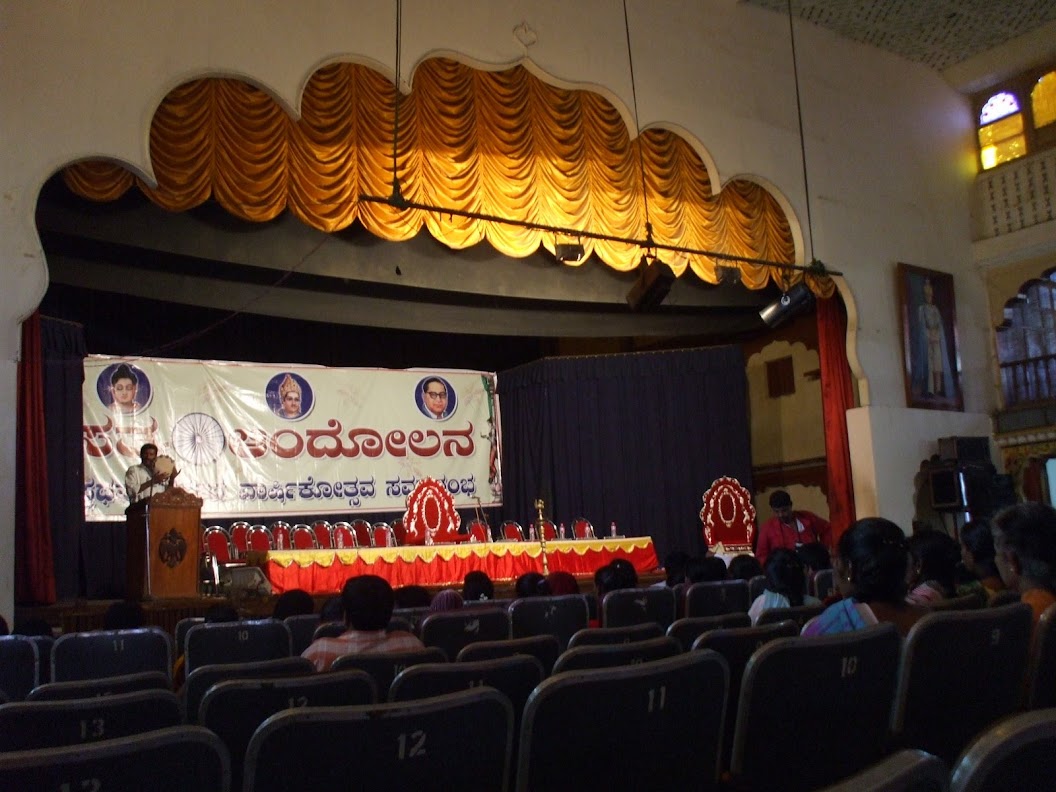
But here I am at the Art Gallery. There’s supposed to be an Indian Dance Festival, and I’ve been here for about 40 minutes now, with lots of audience, mainly women, sitting patiently waiting … but … nothing.
And that was how it went really. A ‘warm up’ singer came along, and I quite enjoyed that, as well as watching the stage being set up with plush seating and flower garlands. I thought I’d leave at one point, but a man implored me to stay, saying it was starting in 10 minutes – which it did … But after the presentation of garlands to the Great and the Good, they moved onto – I dunno – soliloquies, perhaps poetry, impenetrable – to me anyway – so I did go.
And got a rickshaw to FabIndia which has lovely simply styled stuff, so I got a salwar kameez, a blouse, and a kurta for Malcolm.
Rick back to Om Shanti – my driver looked as though he’d just got a place at Oxford: all preppy glasses and smart casual shirt and trousers – perhaps he has! Anway, he was the first person who knew where Harding’s Circus was. Where I had my first disappointing meal: cabbage vadi with some trimmings and a lassi. Expensive for what it was. The last time I use Lonely Planet!
Funfair at Mysore
Ran into a young man, Samir, a teacher. We got ito conversation and he took me to the funfair. ‘I no try funny business. You – old lady – like my mother. Me – like your son’ That went down well. But we were in a public place and it was indeed fine. He took me round the funfair because it I’d noticed all the lights – it was quite fun. Then a rick to the market to collect my salwar kameez. Then, inevitably, to his friend’s uncle, and Ayurvedic practitioner, where I did indeed buy some oils (they were brilliant and lasted me ages). A rick home was produced and we said our goodbyes. Market salwar inevitably disappointing: FabIndia’s – not.
My featured photo was taken at the station. Those schoolgirls have just dismounted from that autorickshaw to hurry off to school. You might be able to see the rickshaw still has several passengers within. The schoolchildren I saw were always smartly dressed. Definitely no customisation of uniforms, with rolled-over skirt waistbands or heavily-adjusted ties, as here in the UK.
This wasn’t the post I intended to make. But an accident turned into an opportunity..
Yesterday morning saw me with a friend, completing our tour of duty as volunteer Roaming Rangers in the Deer Park at Studley Royal. This involves doing a low-key census of the deer, looking out for noteworthy wildlife, answering questions from the public, and occasionally asking dog-owners to put their pets on a short lead, especially now, when female deer are busy giving birth. And I took my camera. Accidentally, I left it on black and white setting. But I find I don’t mind. I’ll share some of my images with you.
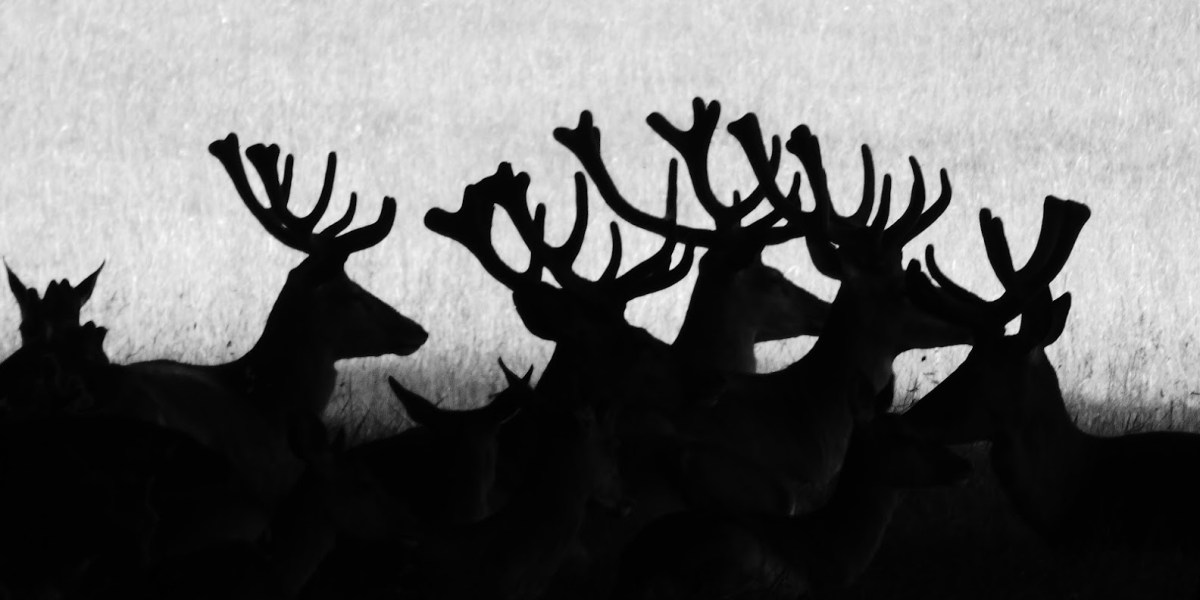
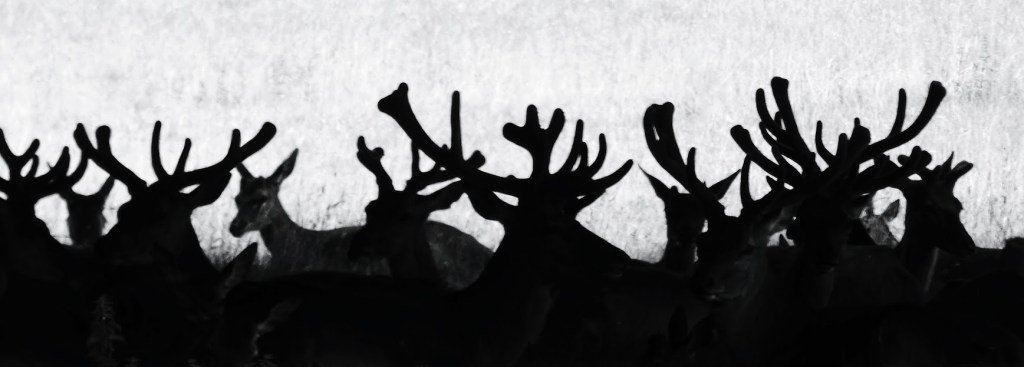
The featured photo shows the first scene we saw: red deer stags all sitting resting beneath the trees. This is their languid time of year, when they eat and rest, building up their strength for the autumn rut.
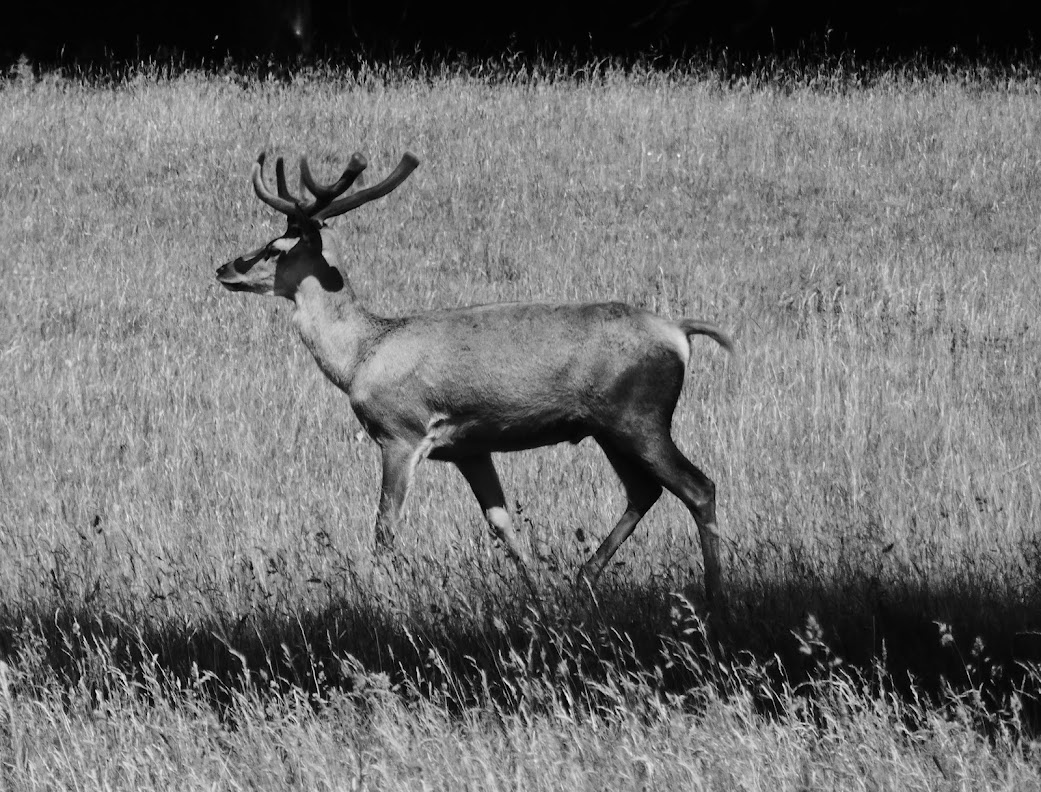
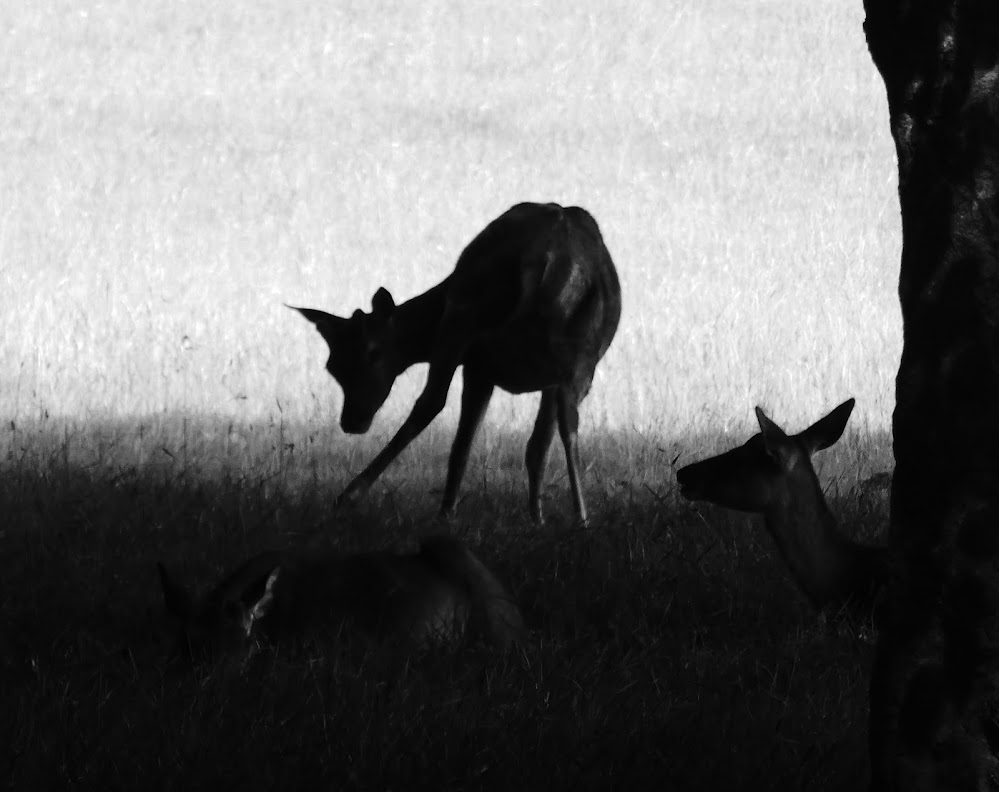
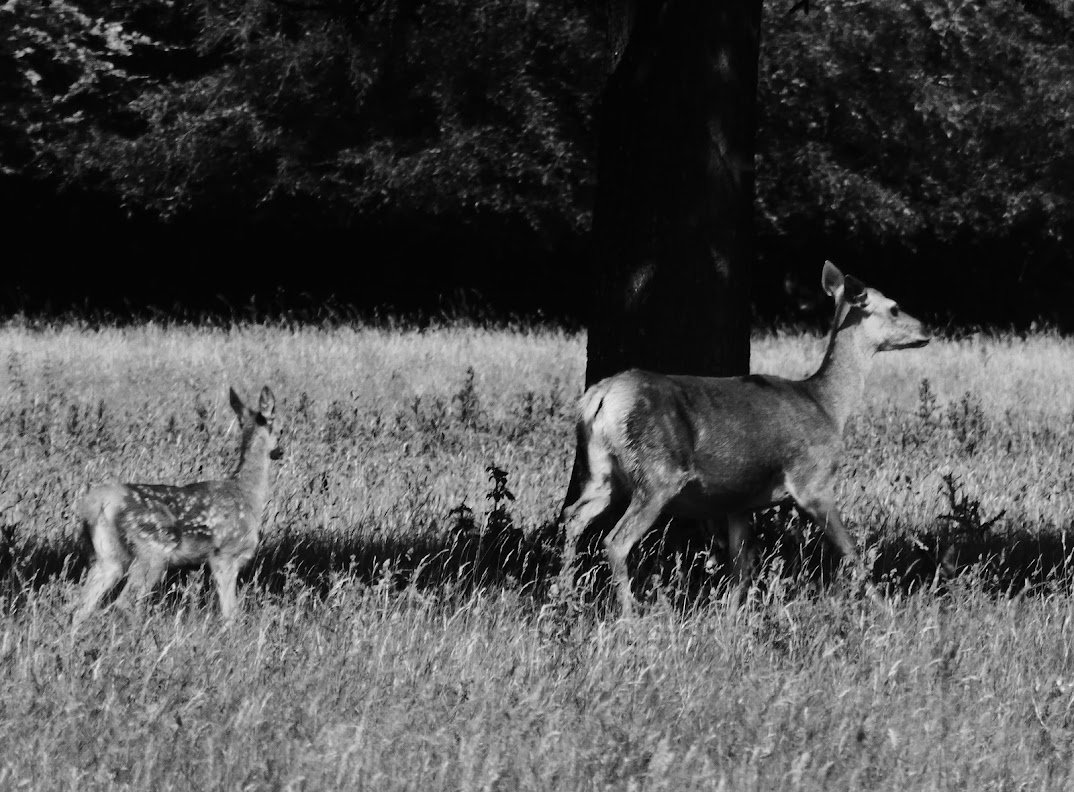
And here’s a stag; a young calf; and a hind with her calf.
We’re just about to change terminology, because we’re leaving red deer behind, and joining the fallow deer. The male is a buck, the female is a doe, and the youngster a fawn.
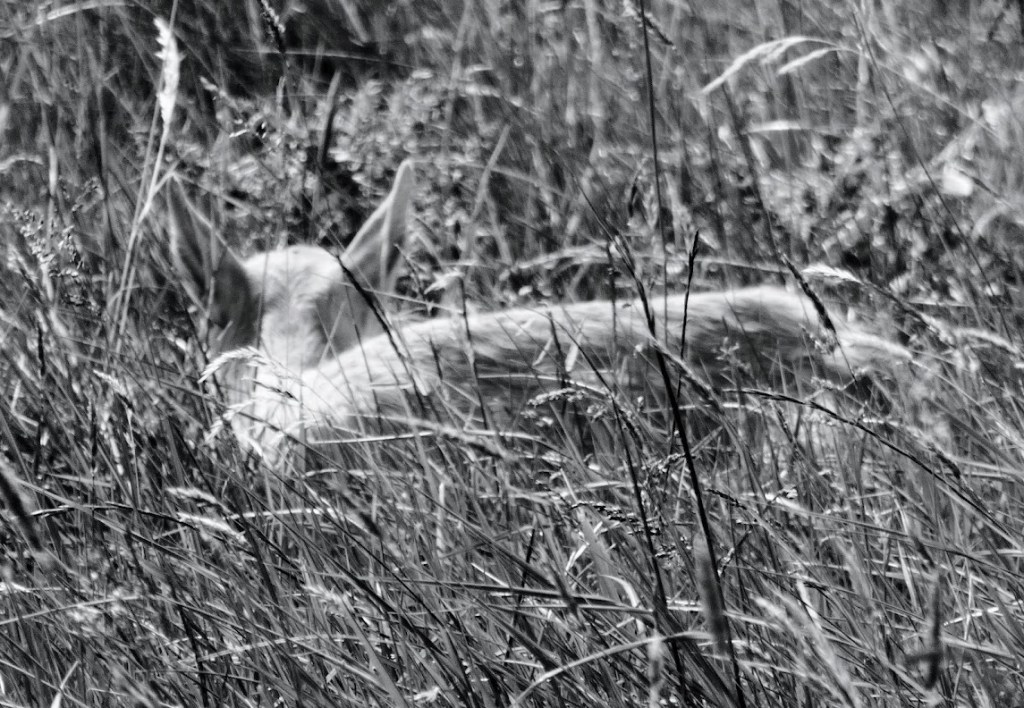
As we spotted fallow deer ahead of us, we all but walked into the youngest of young fawns, left sleeping by its mum far too near an – admittedly little-used – path. I snatched this photo, but we hurried away, not wanting to cause distress to the little creature’s mother.
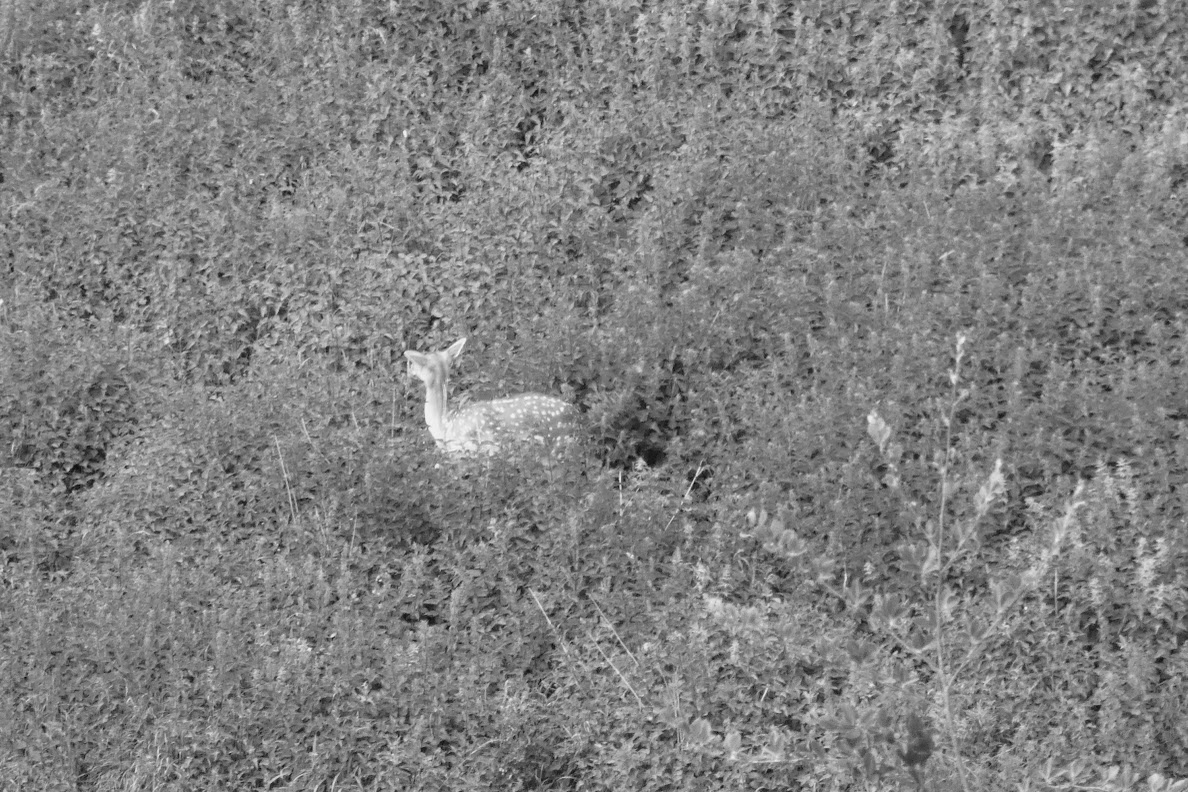
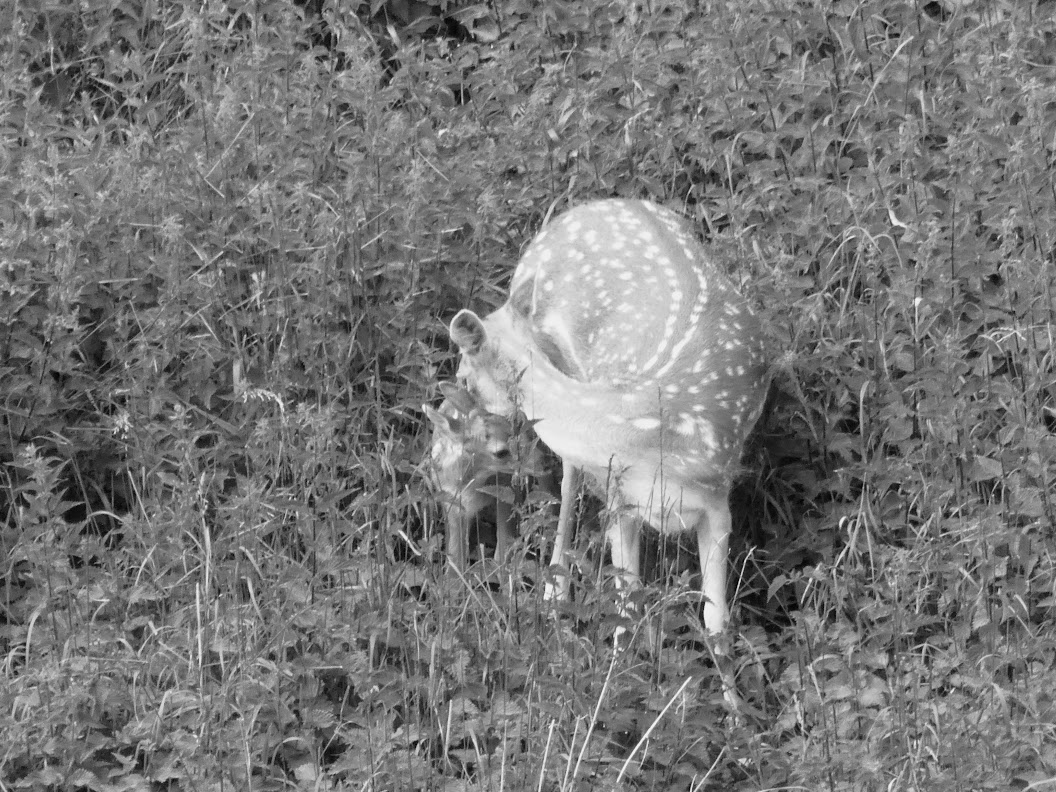
Then we had a wonderful twenty minutes or so, staring across a deep dry valley much loved by the deer because of its relative inaccessibility, and watching a young fawn gambolling through the long grass, dashing back from time to time to see its mum.
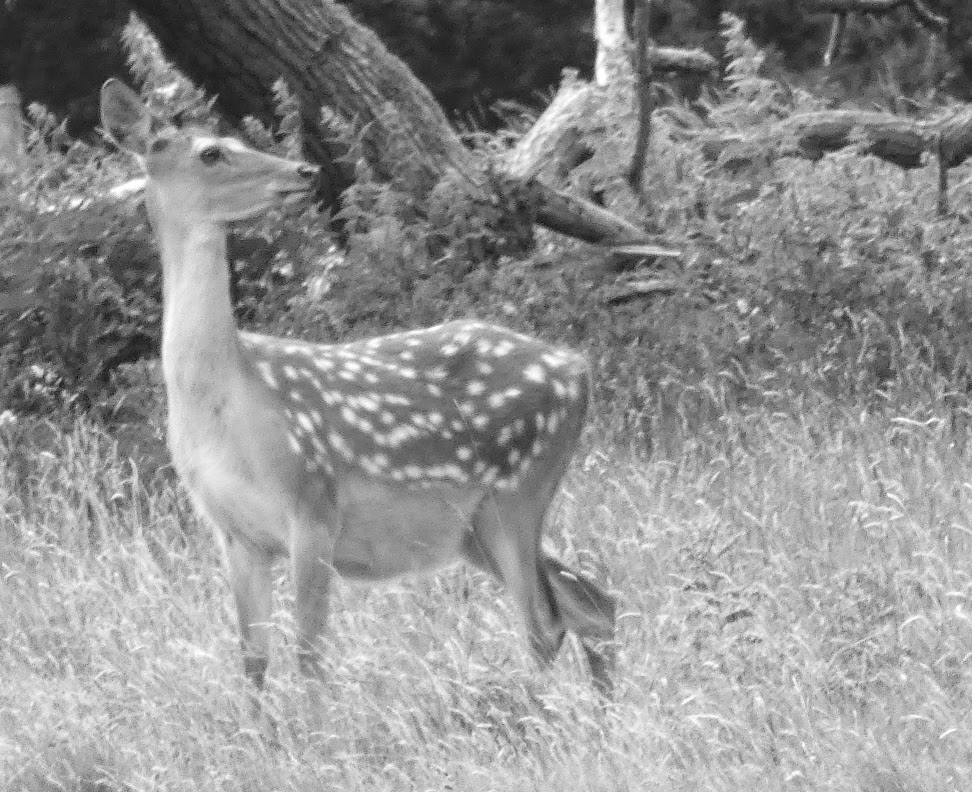
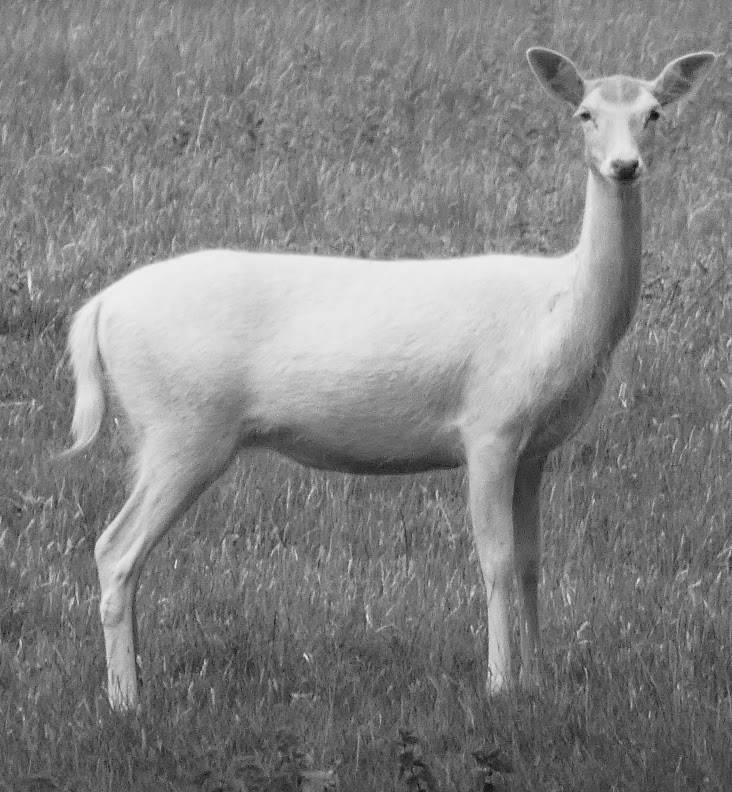
And here are two typical does: one looks ‘normal’, but the white one is too. She’s not albino, but leucistic: she has reduced pigentation in her coat: it’s a pretty common variation – as is melanistic, where the opposite is true, and over-production of melanin leads to a black coat.
But I’ll leave you with a further set of silhouettes from those utterly relaxed stags.
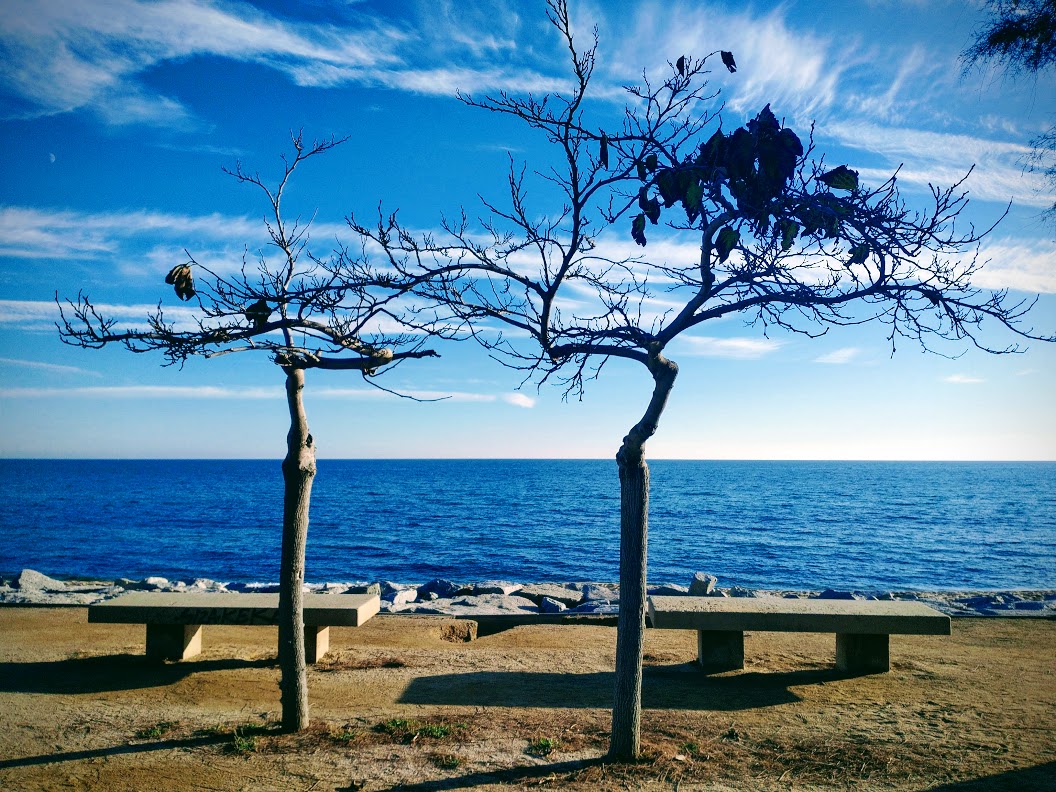
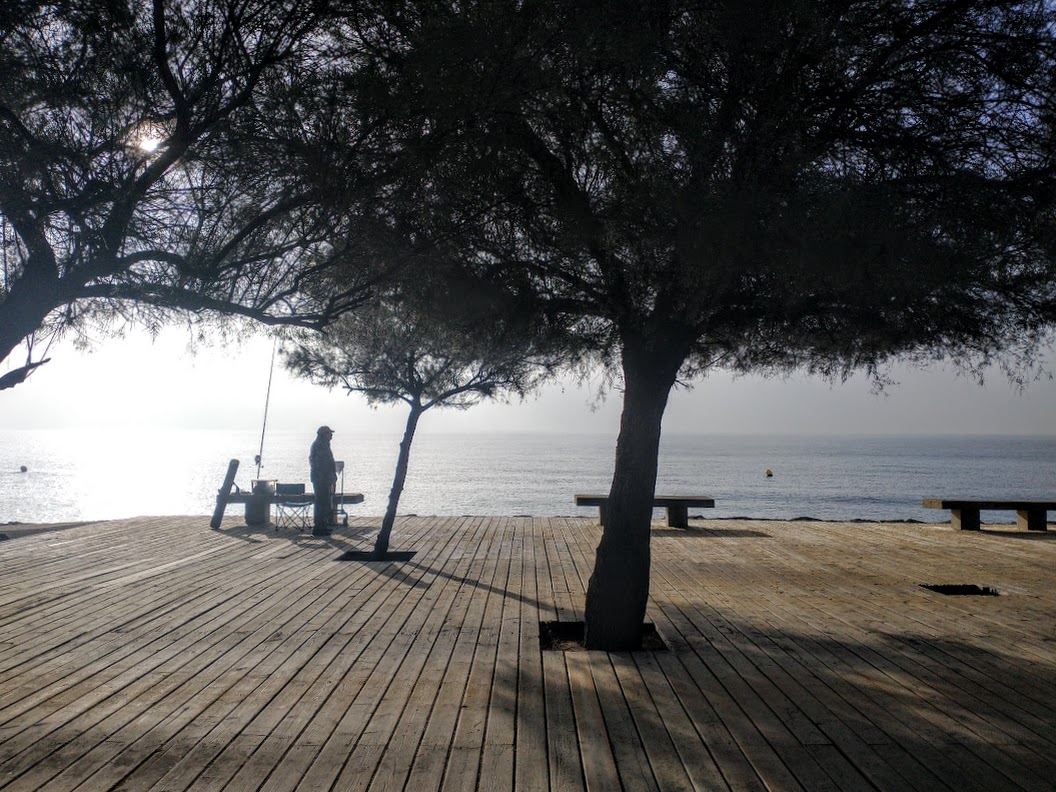
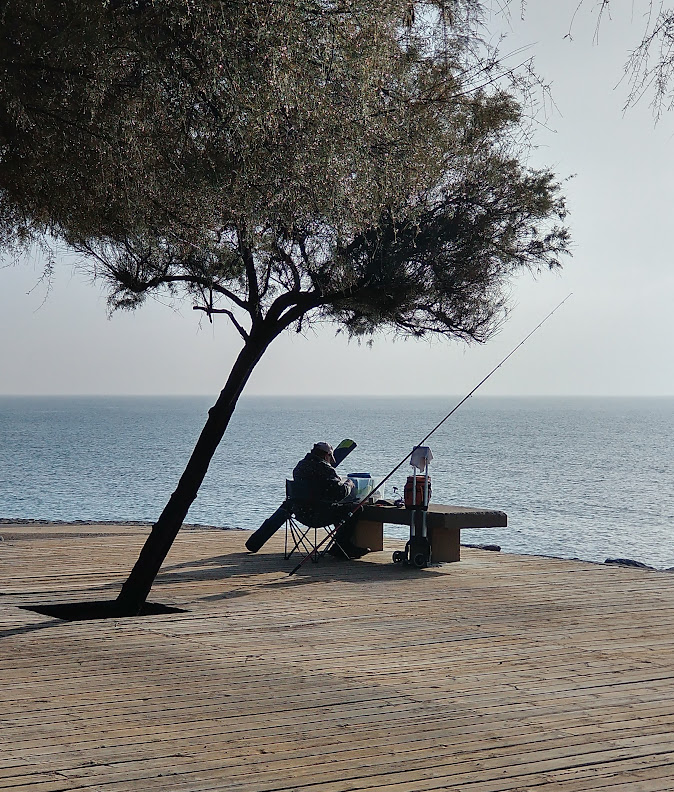
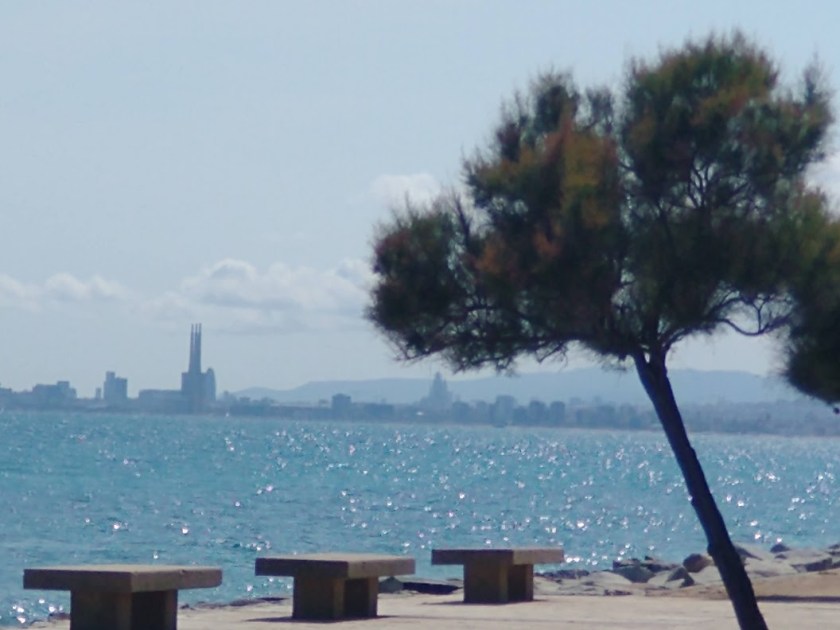
I have chosen to stay in Premià this morning, perhaps because here it is grey and gloomy, even though warm enough. A beachside path leads all the way from Barcelona, through Badalona, Montgat, El Masnou, Premià and beyond – all the way to Mataró. Between the beach and the path is scattered a series of benches- wherever there’s a tree or two to offer welcome shade. Here are a few.
El Masnou is the nearest town to Premià de Mar, and somewhat nearer to Barcelona. Probably because of this, it has a slightly grander recent past. In the 19th century, wealthy families looked from Barcelona to its wide sandy beaches and the hilly countryside beyond, and commissioned Modernista architects to build them a residence away from the bustle of the Big City. Over in Premià they just got on with fishing and a spot of market gardening as usual.
One day last week, during my Spanish stay which was emphatically NOT a holiday, but Granny as housekeeper, au-pair and what’s the next job? I nevertheless awarded myself a day off, and walked the 6.5 km. there along the seaside path.
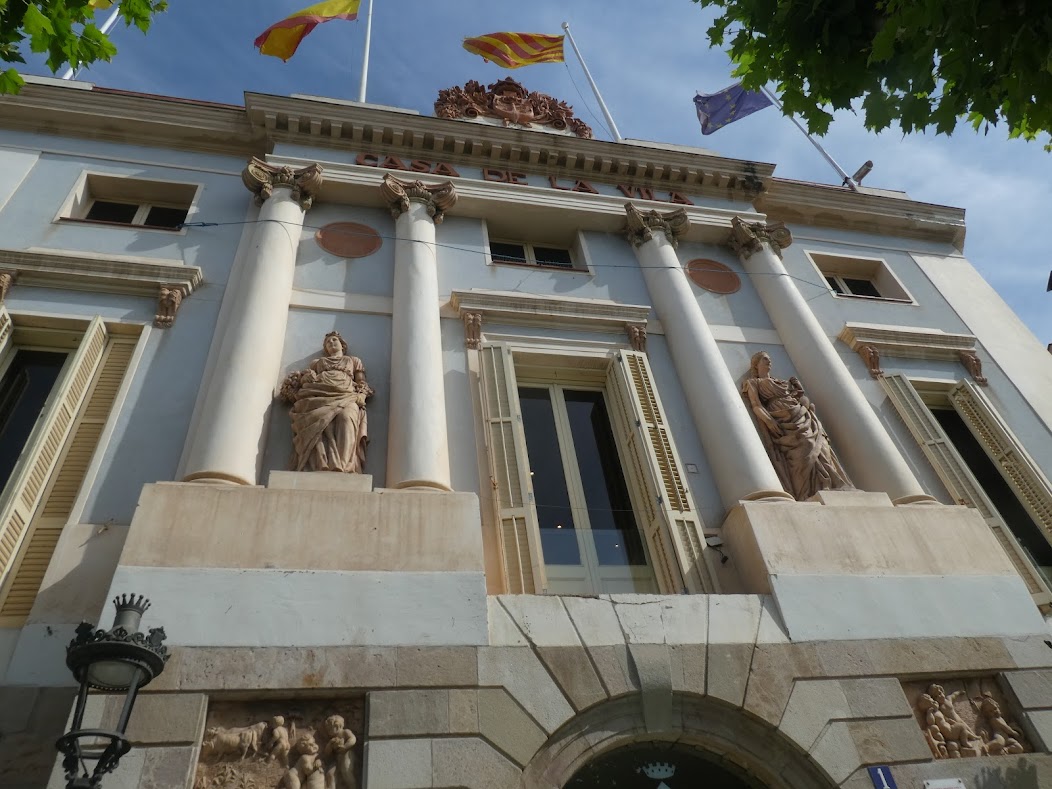
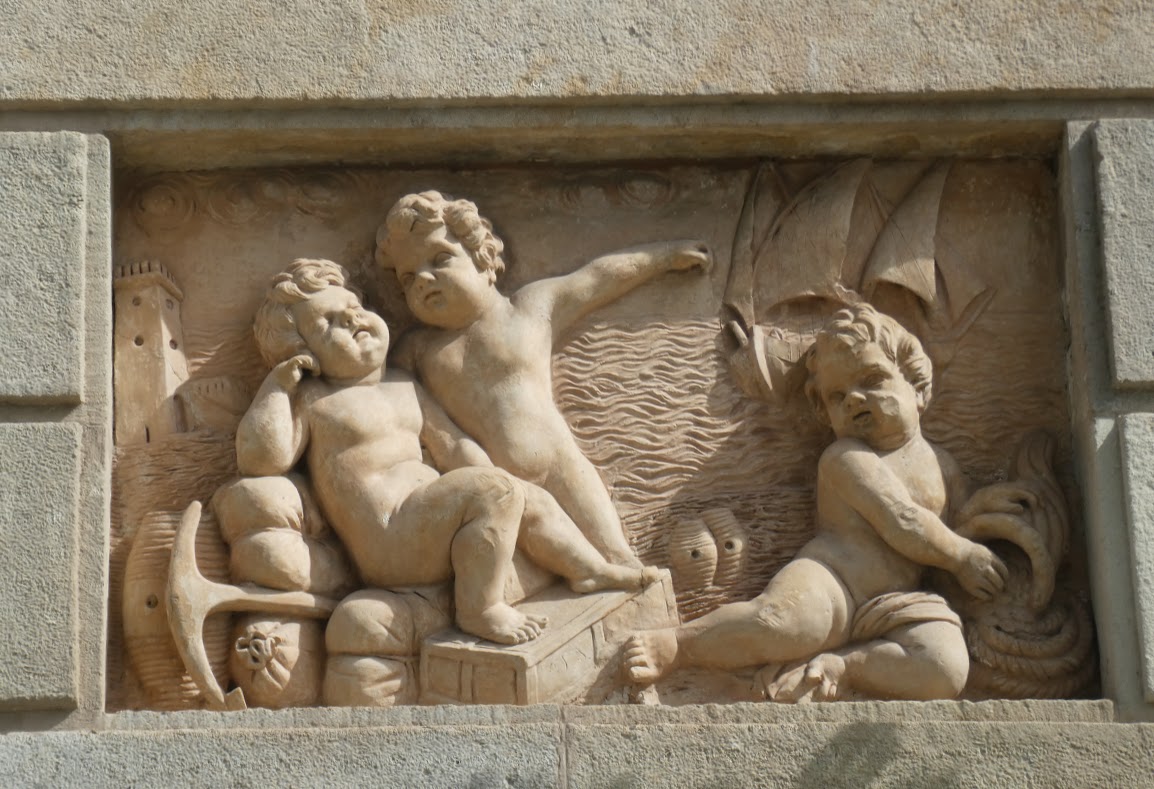
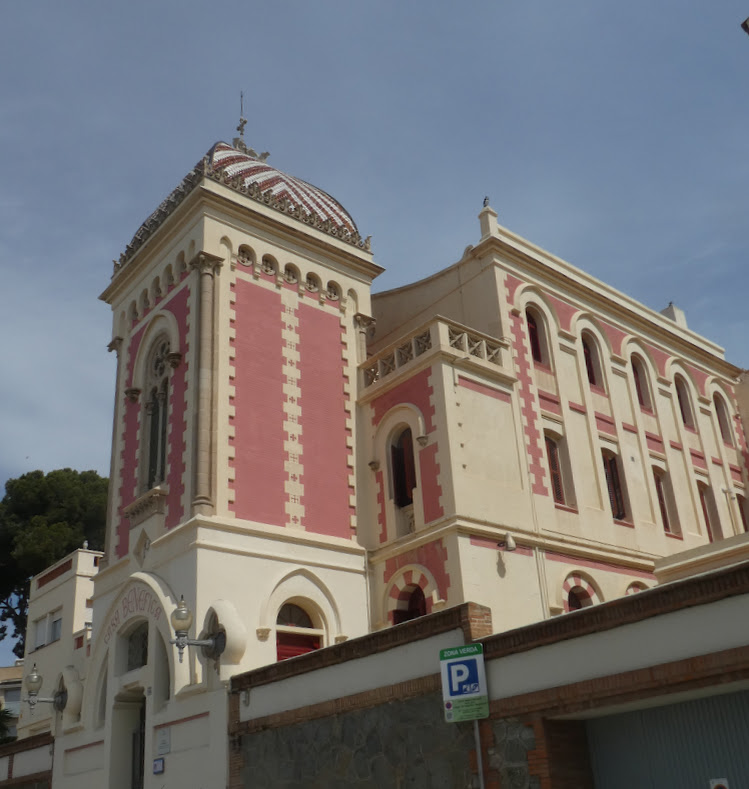
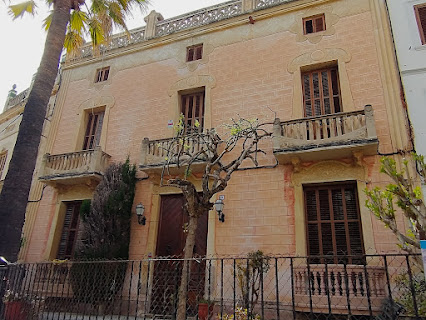
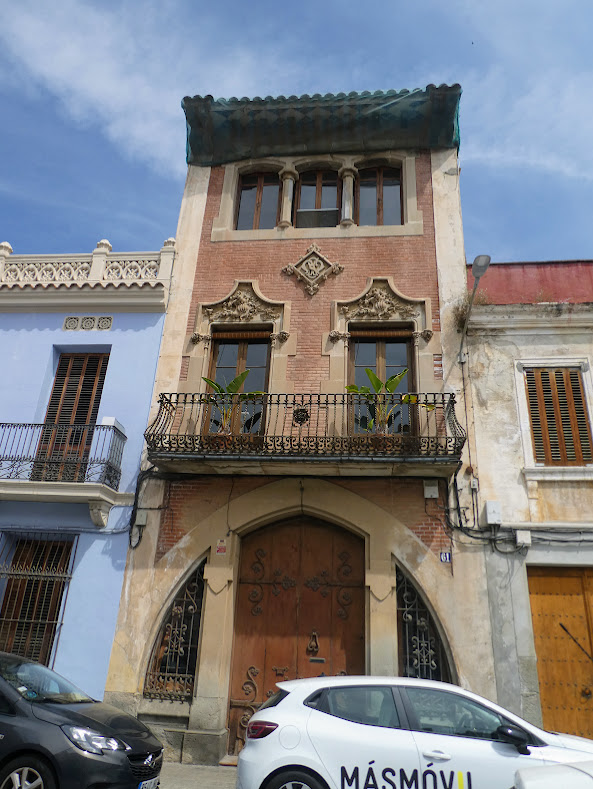
I wanted to track down a few neo-classical and modernista buildings, and I did. but they were hard to photograph, being – often – in narrow streets.
Click on the images to reveal the captions.
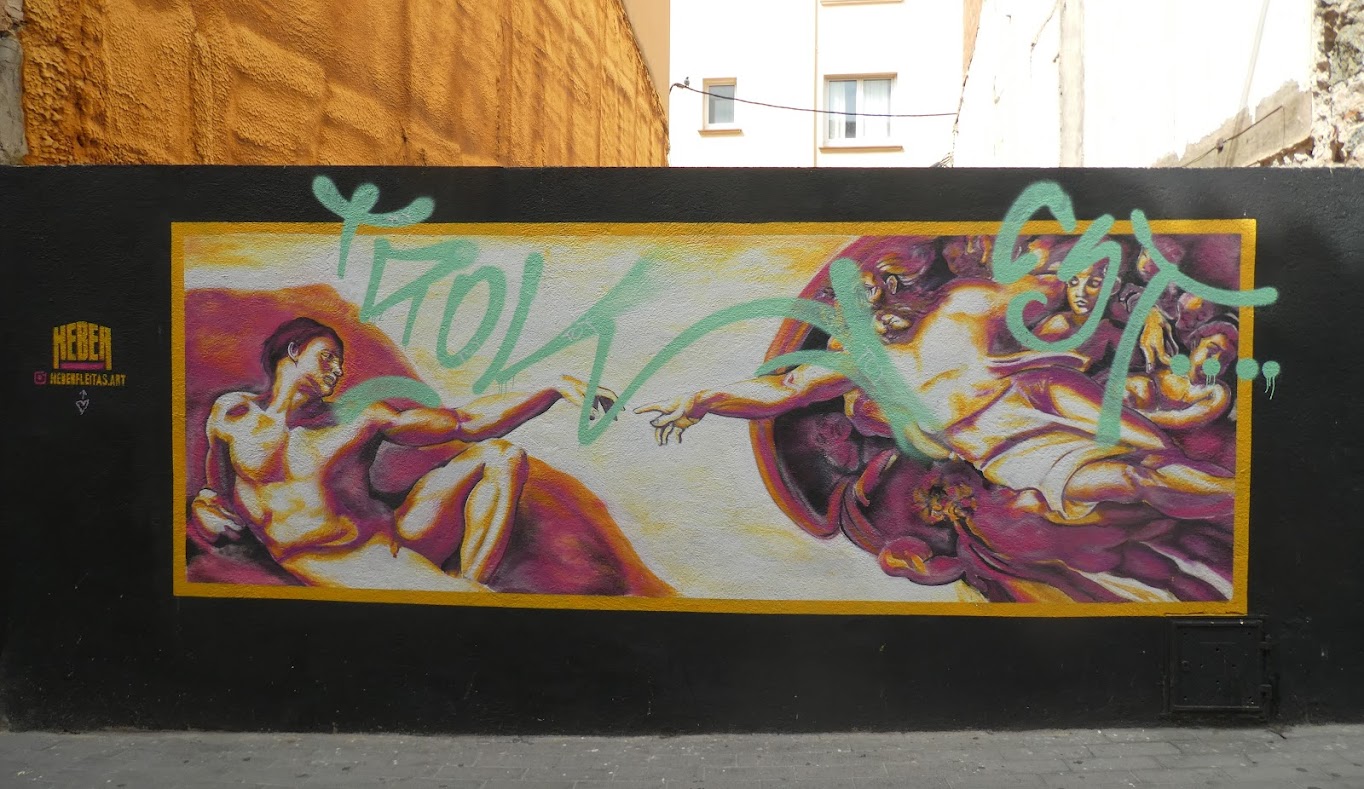
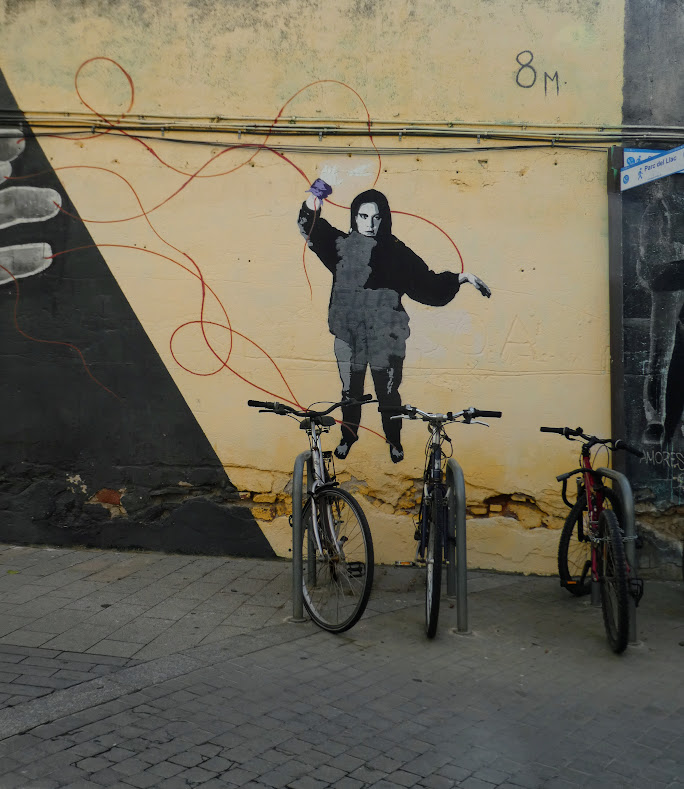
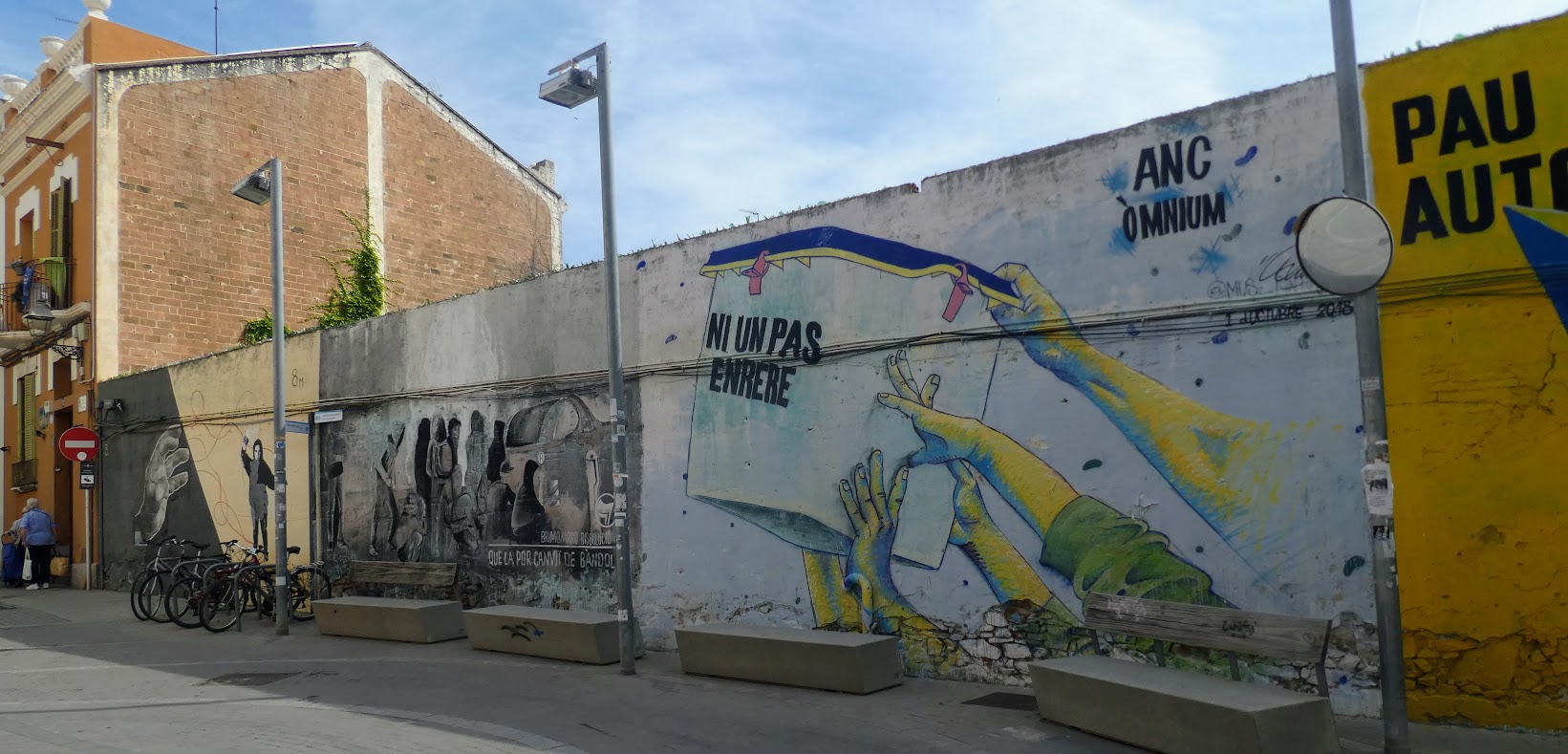
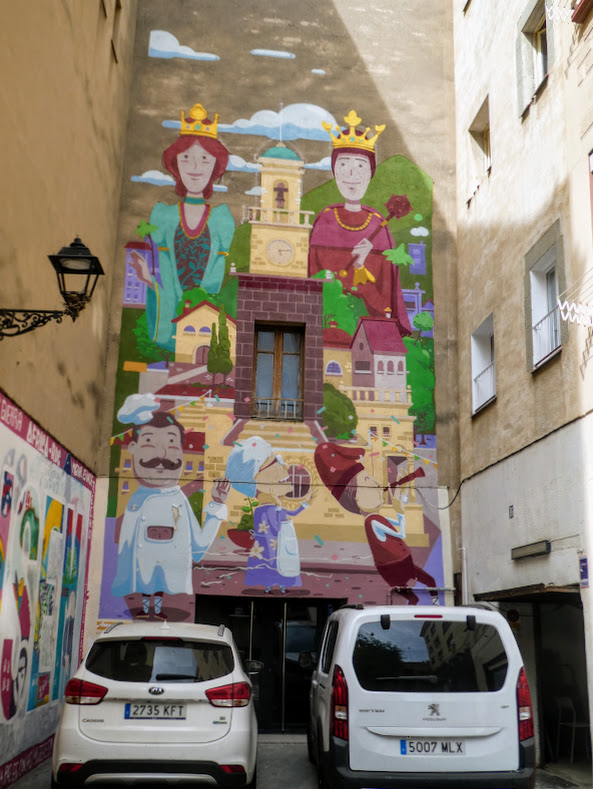
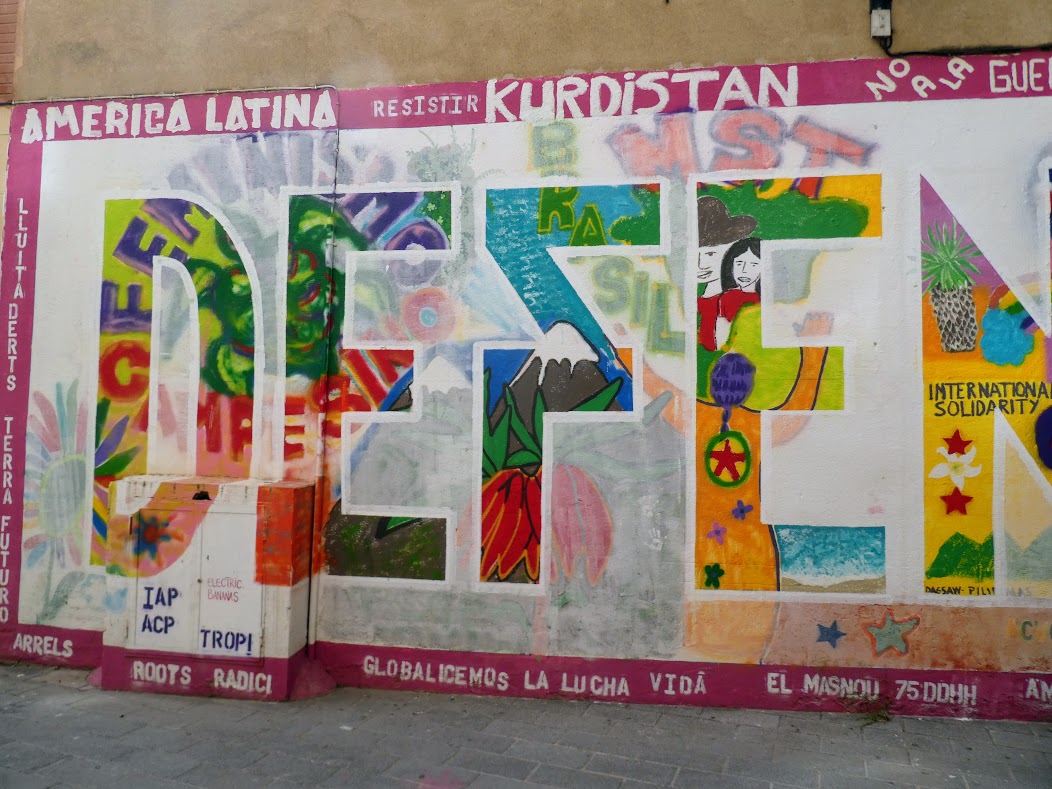
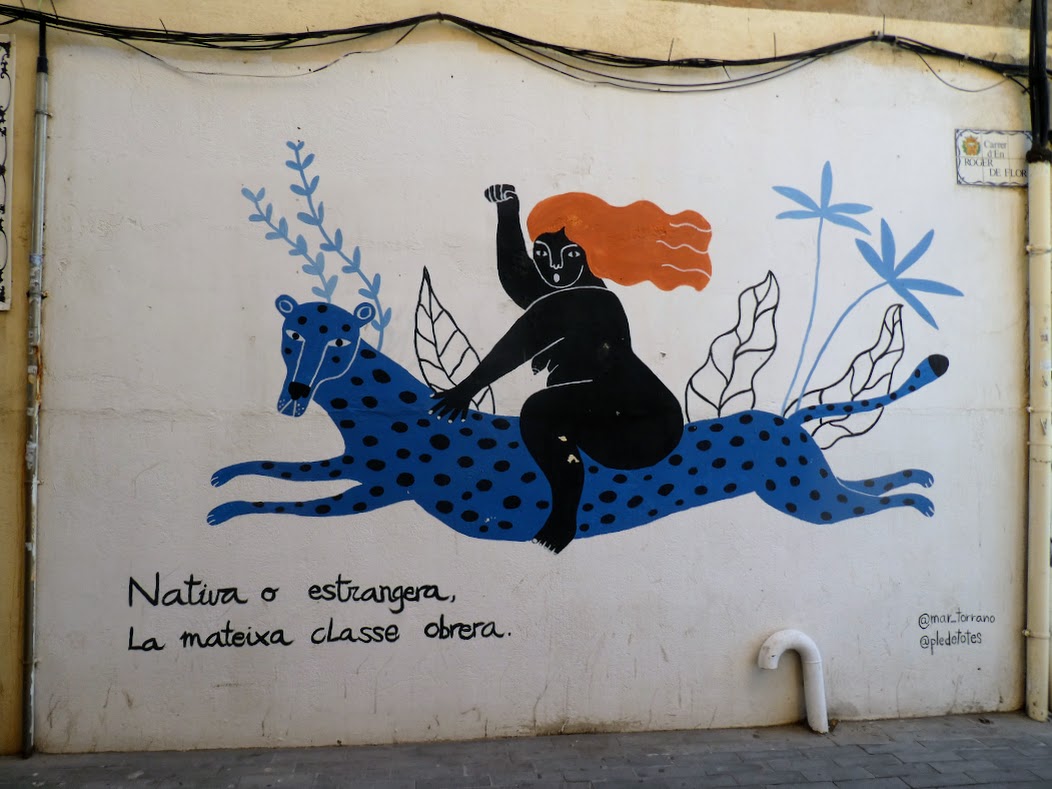
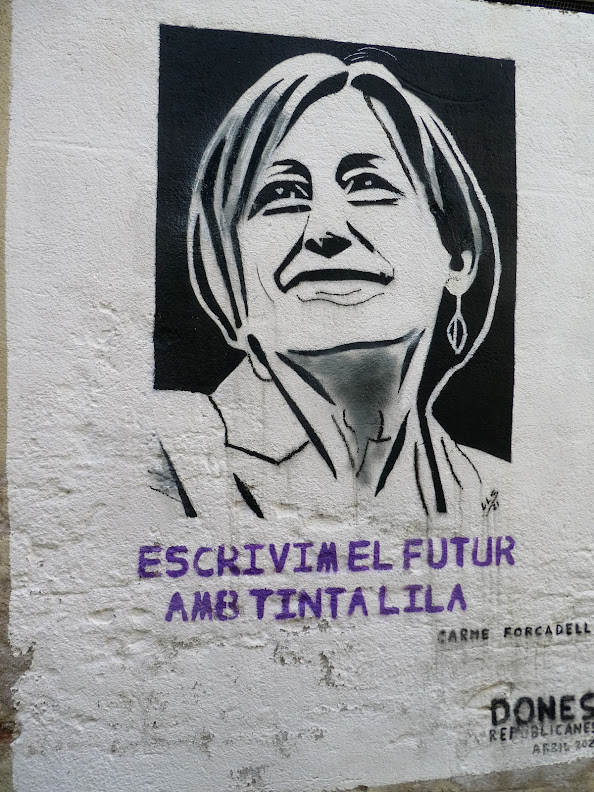
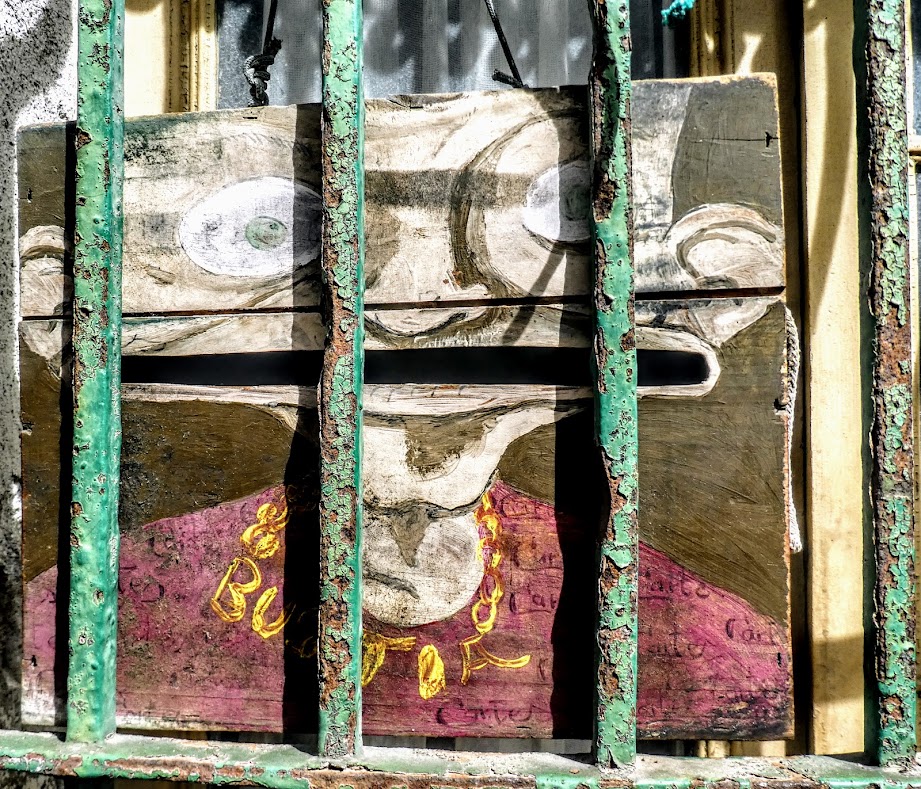
I wanted to track down street art. It’s often assertively political here, defending Catalan independence, the rights of the dispossessed, and celebrating female pioneers of the last couple of centuries.
Click on the images to read the captions (on some of them).
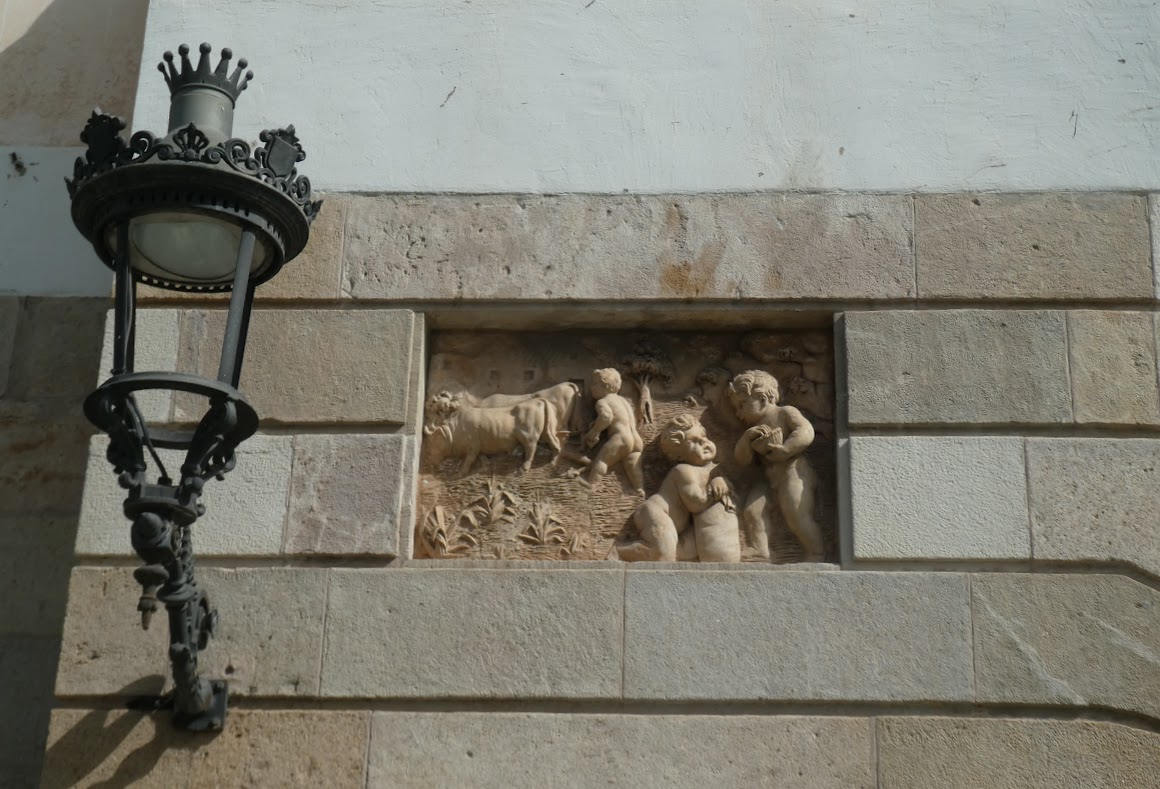
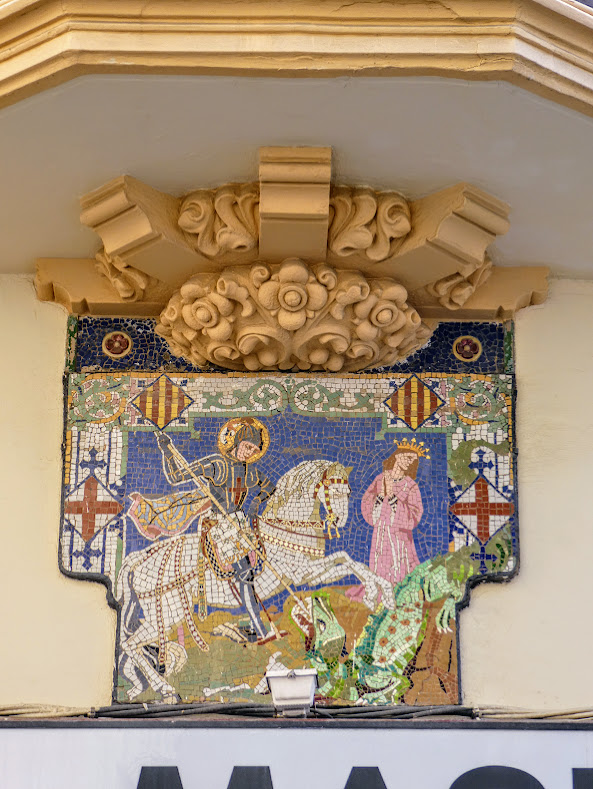
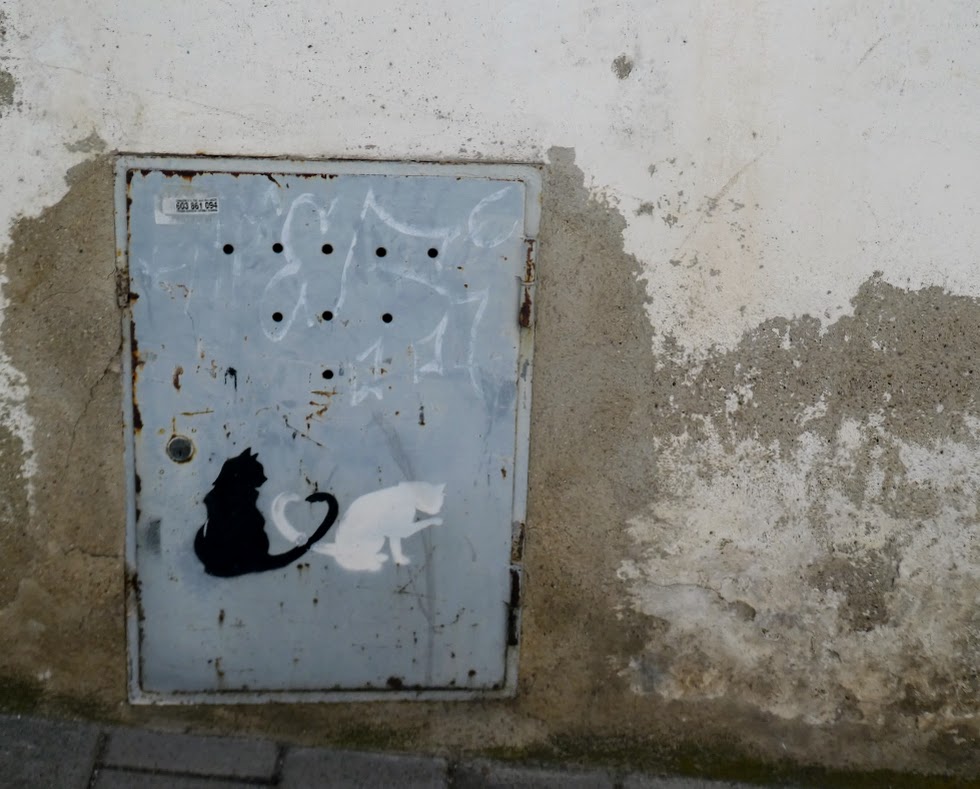
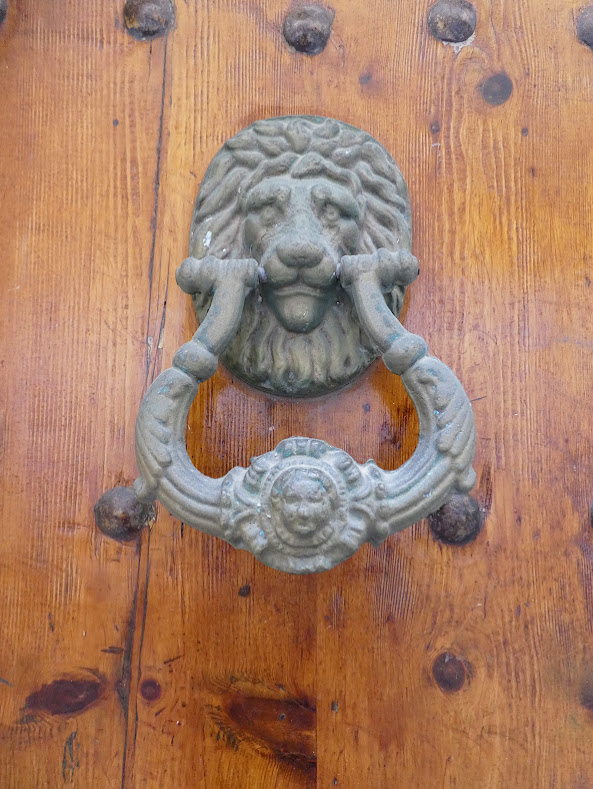
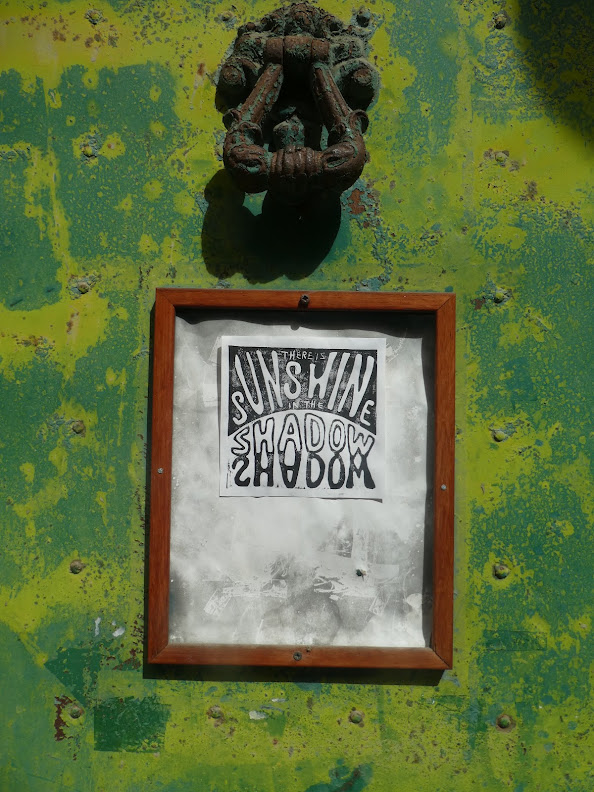
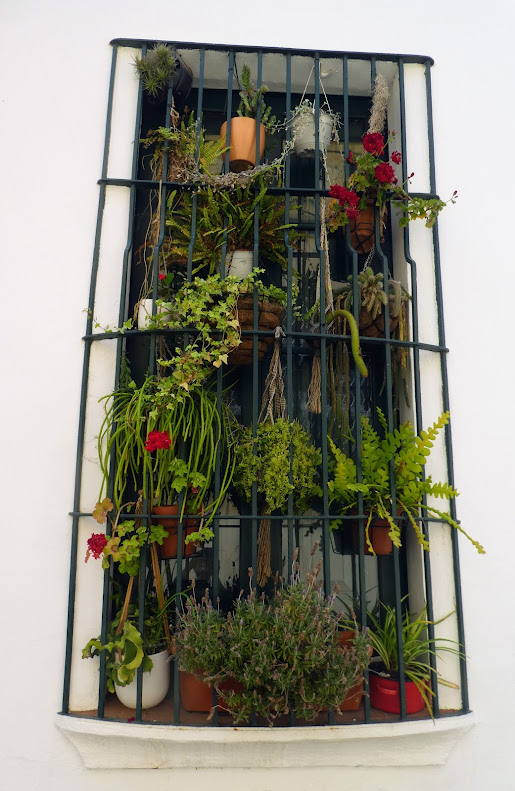
Then there are the charming details every town must have: the mosaic of St. George, Catalonia’s patron saint (and also of England; Aragon; Georgia; Lithuania; Palestine; Portugal; Bulgaria; Ukraine; Malta; Ethiopia; Russia; Bosnia; Kosovo & Serbia. To name but a few). The little cats painted at pavement level. The gaping mouth letter box (but how to get a letter in?). The door knockers.
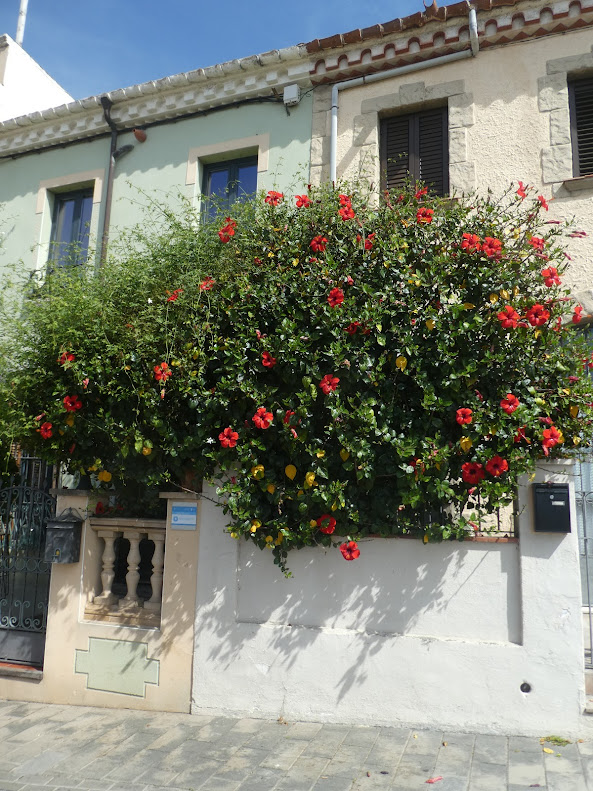
Then there are the ordinary streets, with ordinary houses. Or not so ordinary houses.
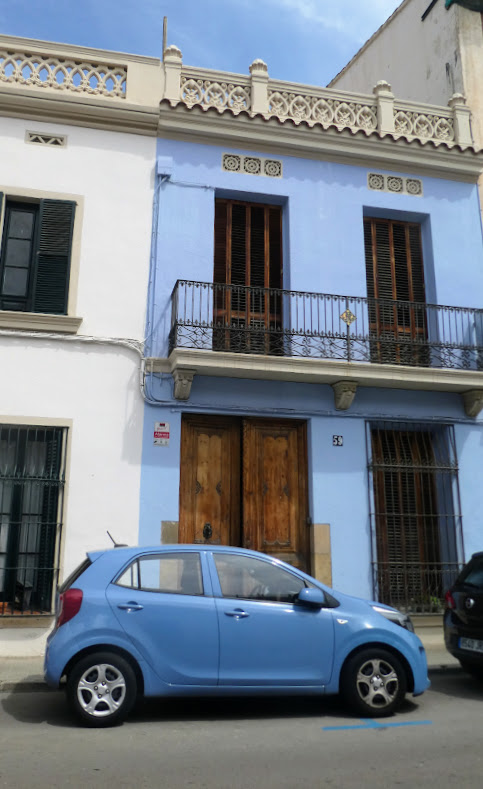
And my favourite. The house with the matching car parked outside. In this image, they don’t seem quite to match. Trust me, they did.
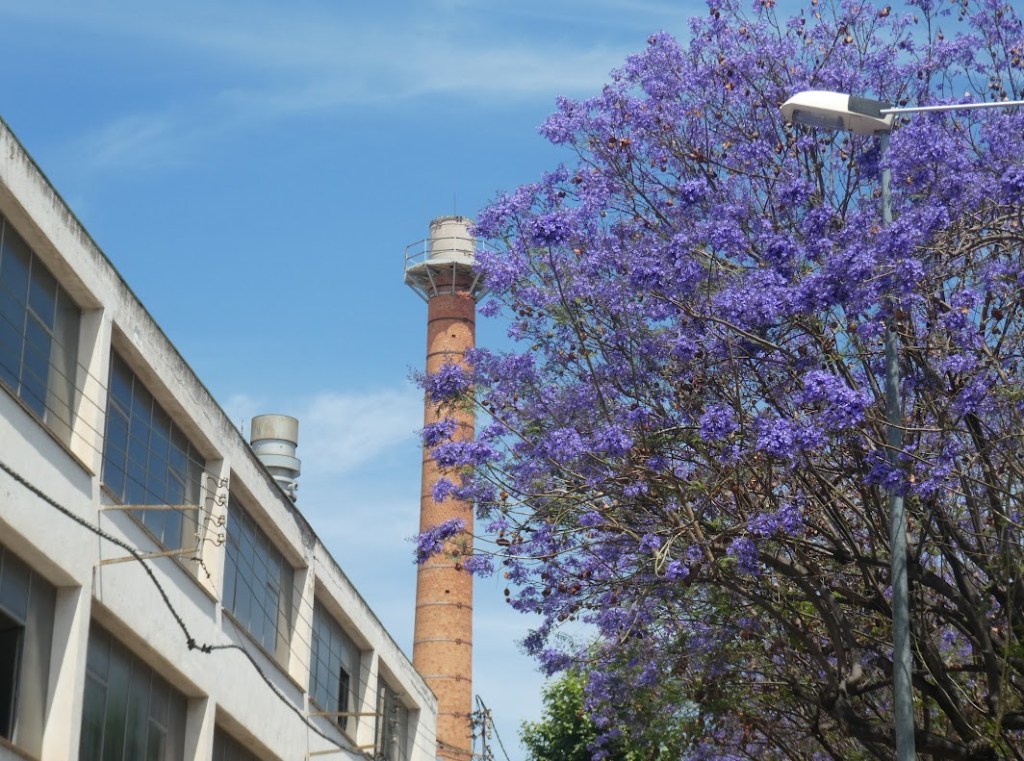
I left the town, walking through its industrial quarter. Even industry seems pleasant enough when every street is lined with jacaranda trees in flower.
After that, it was a drink in the quiet square I showed ten days ago, and a walk home inland through the market gardening area. A morning well spent.
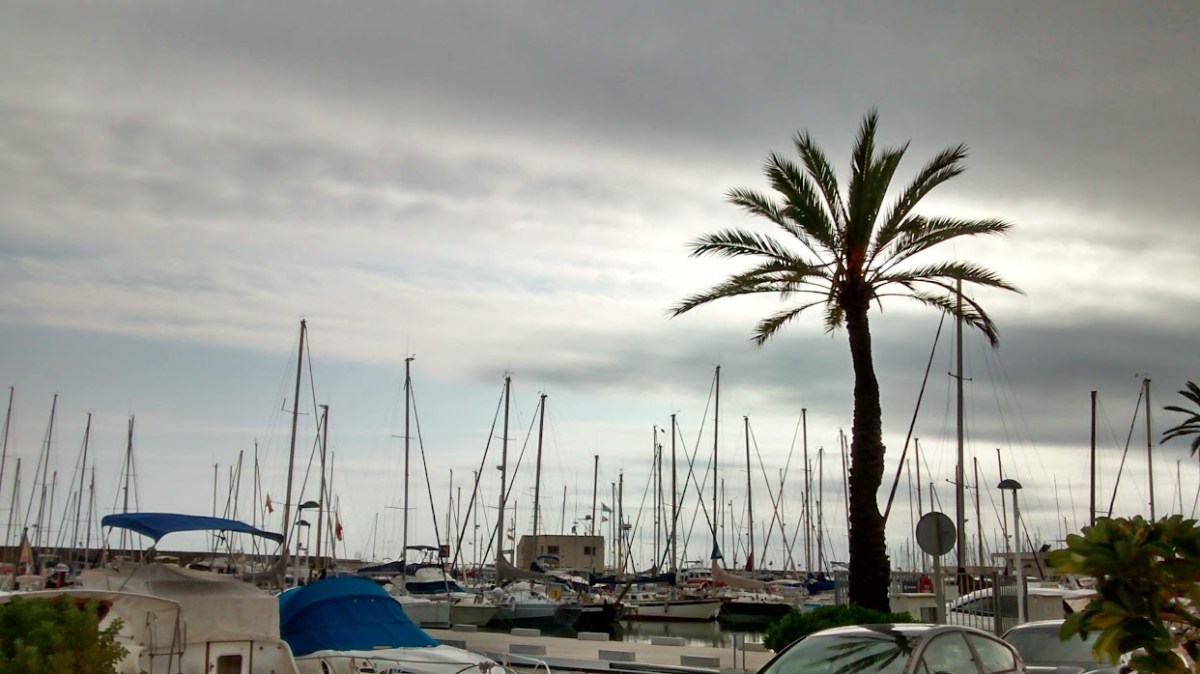
PS. The featured photo of the busy port wasn’t taken last week, but on a greyer day last spring. My walk was on a strictly bright blue sky day.










You must be logged in to post a comment.