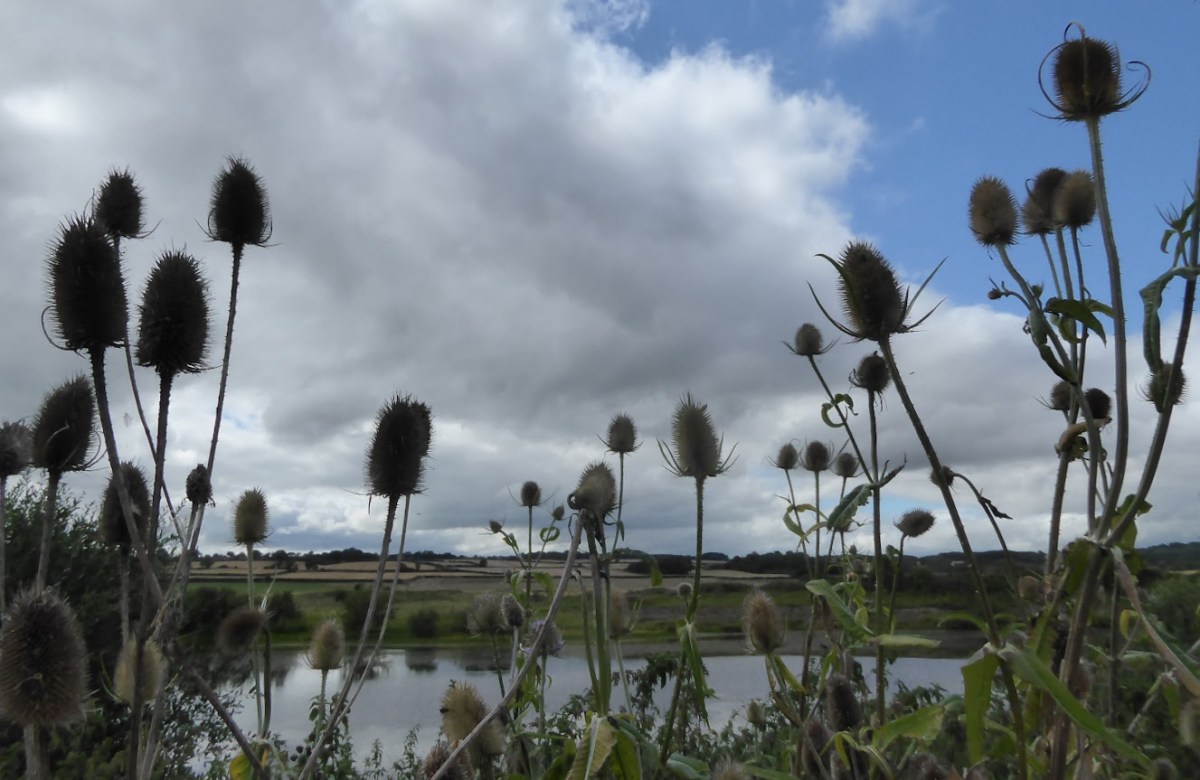
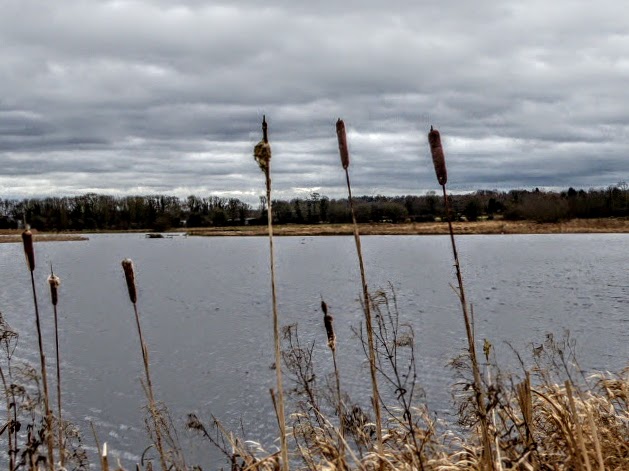
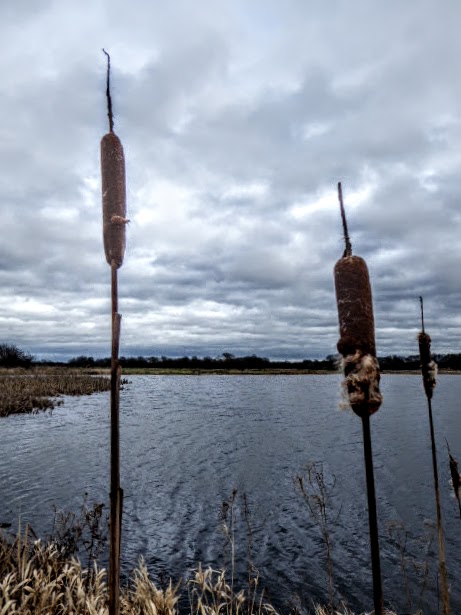
Our local Nature Reserves tend to be chilly in December. Especially when, as today, the wind is making its presence felt. Best to rush round the bulrushes and hurry home for a mug of hot chocolate. Sunny days, though, are available, for a gentler amble. My header photo is from Nosterfield on a sunny day. A wintry trip to Staveley was distinctly nippy,
Back in 2012, we were living in France. And if we’d believed the doomsayers, not for very much longer. Here’s the story as I told it on my blog, after we’d spent the day with our walking group near the Pic de Bugarach.
Bugarach: ‘Doomsday Destination’
December 15th 2012
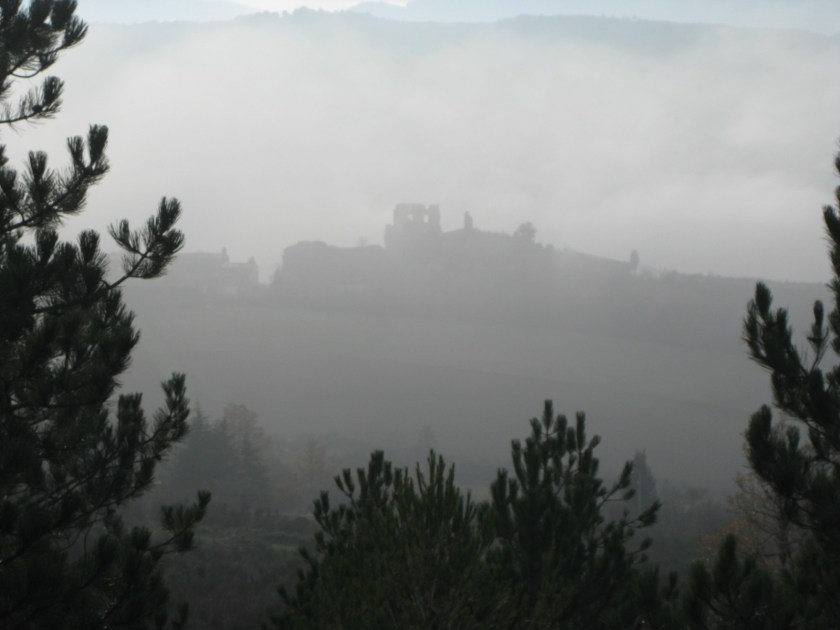
The castle at Coustassa glimpsed through the mist
Cold. Pale thin fog baffles the contours of the hillsides, and those of the distant castle at Coustassa. Glimmering frost bristles the short maquis grass beneath our feet. A watered lemony sun high above us attempts to burn winter away, and eventually does so.
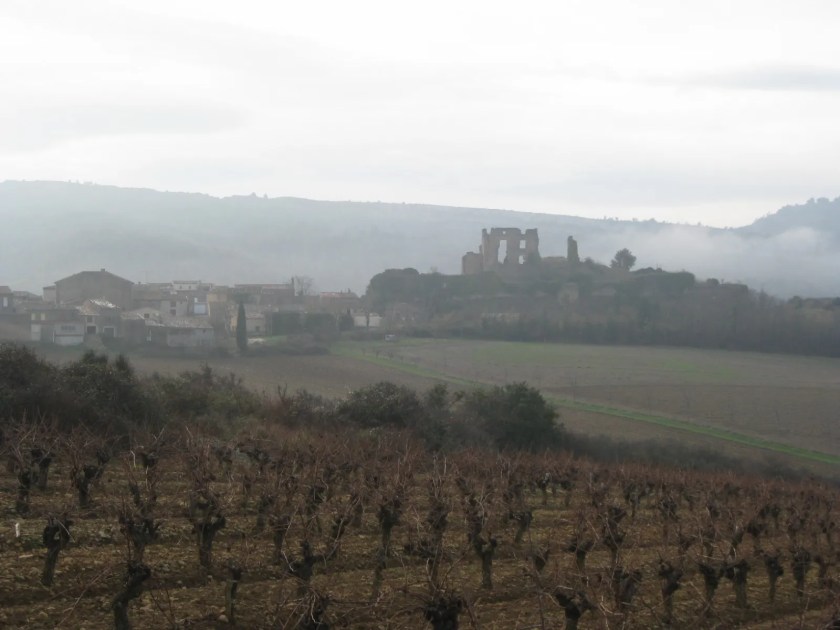
The mists begin to clear
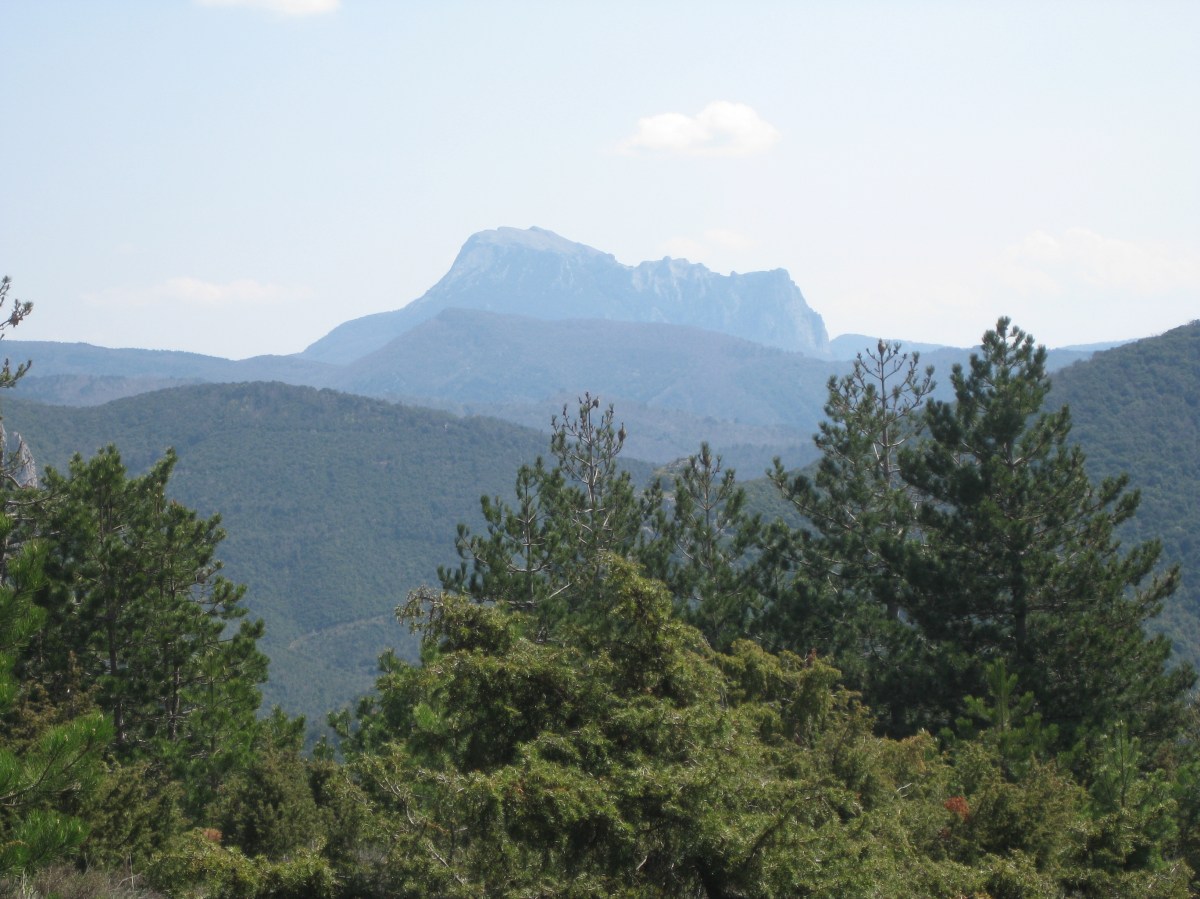
That’s when we have our first view of Bugarach – shown in the featured photo – the imposing thick-set mountain which dominates this part of the Aude, because it stands alone, rather than as part of a range, and today is pretty much thatched in snow.
‘According to an ancient Mayan calendar, at some point towards the end of 2012, the world will come to an end.
It is not clear how that will happen, but apparently humanity does not stand a chance – except for those who seek shelter in the area surrounding Bugarach.
Just 200 people live there all year round, but doomsday believers and spiritual groups are convinced the village has magical powers, thanks to the local mountain – the Pic de Bugarach.
For years, rumours have circulated on the internet that extra-terrestrials live in the mountain, and come the apocalypse, the top will open and they will emerge with spaceships, and rescue the local inhabitants.’
Although it’s quite hard to entertain the idea that the mountain might have some sort of underground UFO car park, there are plenty of people who have done so, and with great fervour. Here’s today’s Daily Mail, which has been talking to Jean-Pierre Delord, Mayor of the tiny village of Bugarach (pop. 176).
‘On Wednesday, he will close the village for five days to anyone who doesn’t live here or isn’t already booked to stay, and draft in hundreds of police, military, firemen and Red Cross to ban any gatherings, shut off the mountain and arrest anyone silly enough to try flying over it.
‘What if tens of thousands of people turn up?’ he says, throwing his arms up in the air. ‘I have no way of knowing what will happen. I have no crystal ball! I don’t care if people want to chant naked or talk to the trees, but I have to protect my villagers. I am responsible for them.’’
He’s not over-reacting. Local house-owners have been able to rent out their homes for the period in question for astronomical prices, and even camping spots are going for 400 euros a night. For most locals though, the whole thing is at best a nuisance, at worst a real headache. The nearer we get to December 21st, the more people descend on the area, and the police and army are already involved in keeping order.
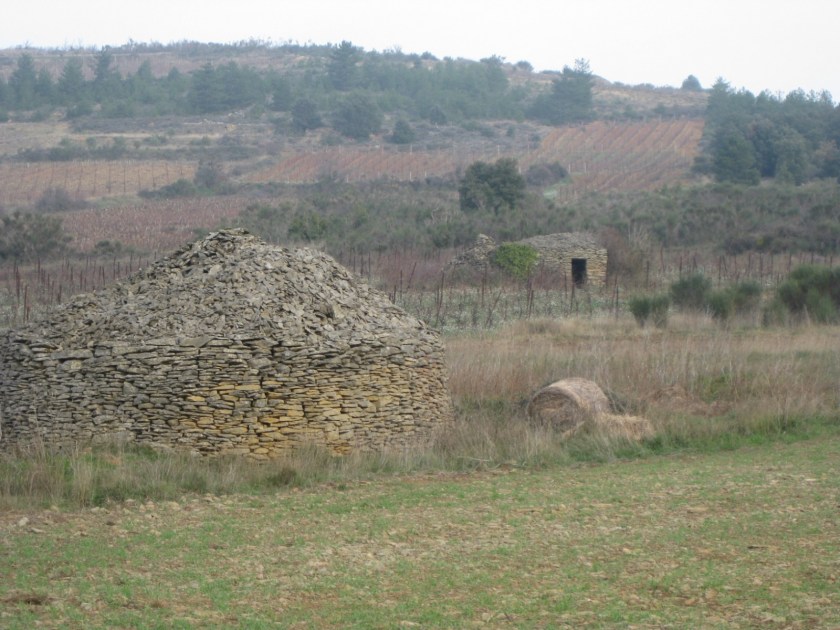
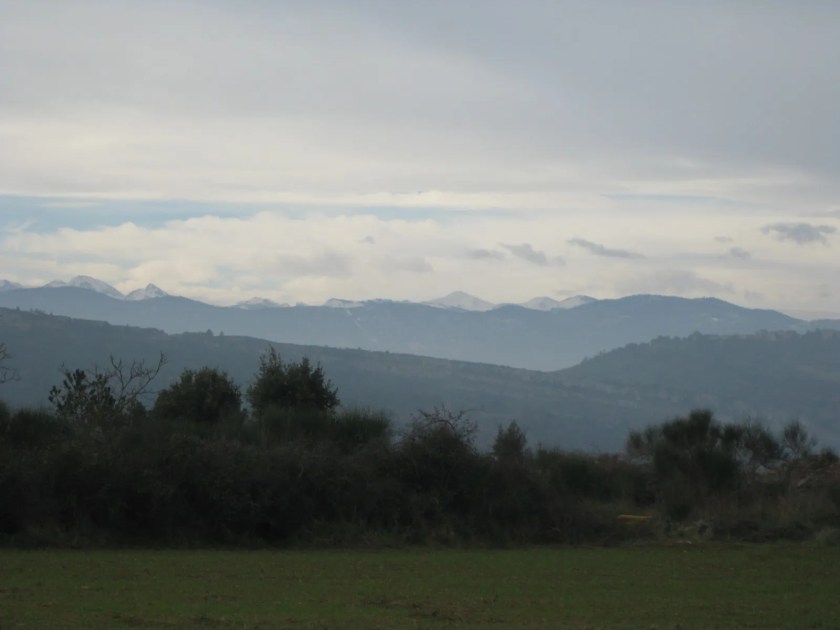
We enjoyed our views of Bugarach, as ever. We spent time pretending to look for UFOs and generally mocking the New-Agers who are so convinced by the end of the world as we know it. Then we got on with the business of enjoying our walk in the here-and-now. Here are a couple of photos showing what else we saw that day
This is a walk past dozens of capitelles: shelter for sheep farmers & vineyard workers in former times.Glance away from Bugarach, and you’ll see the Pyrenees.
Update: December 14th, 2024. As you see, we’re still here. And so are you.
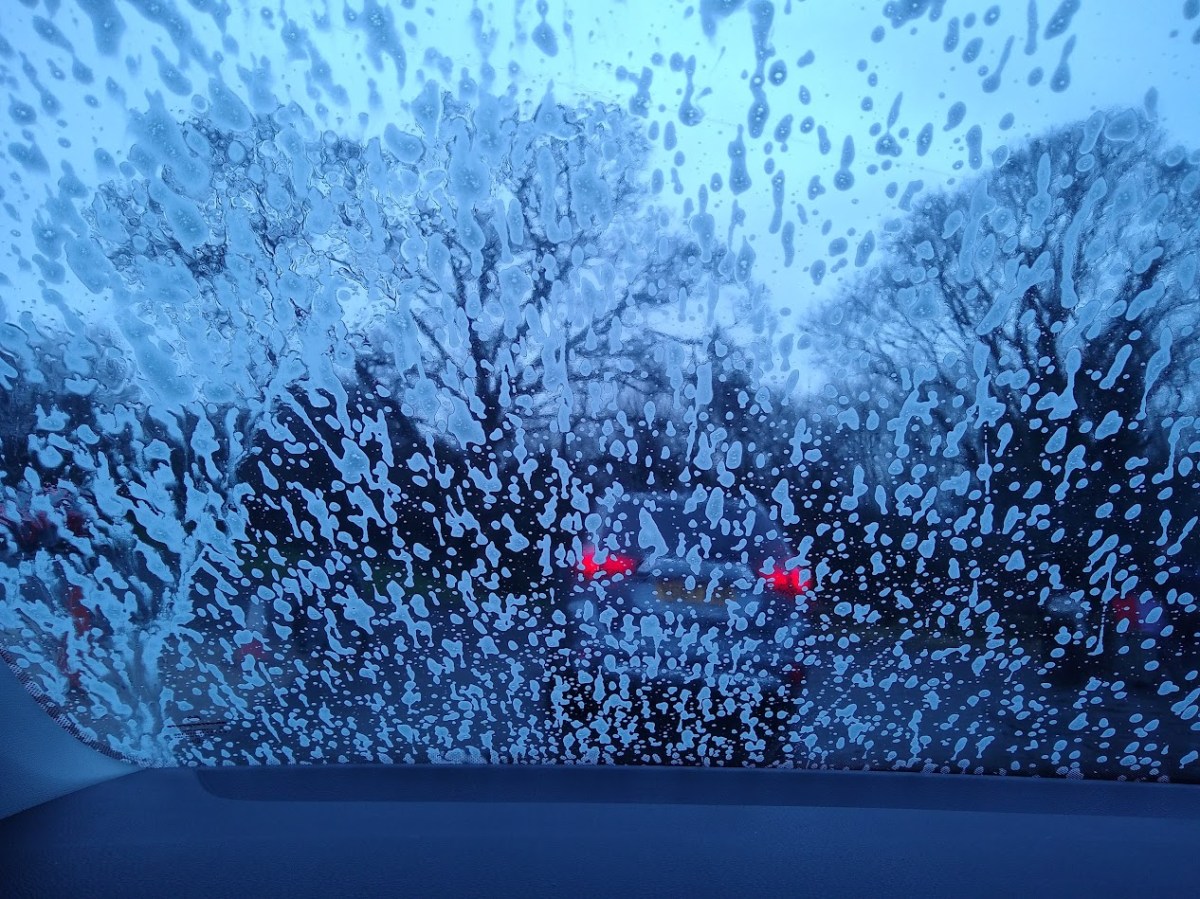
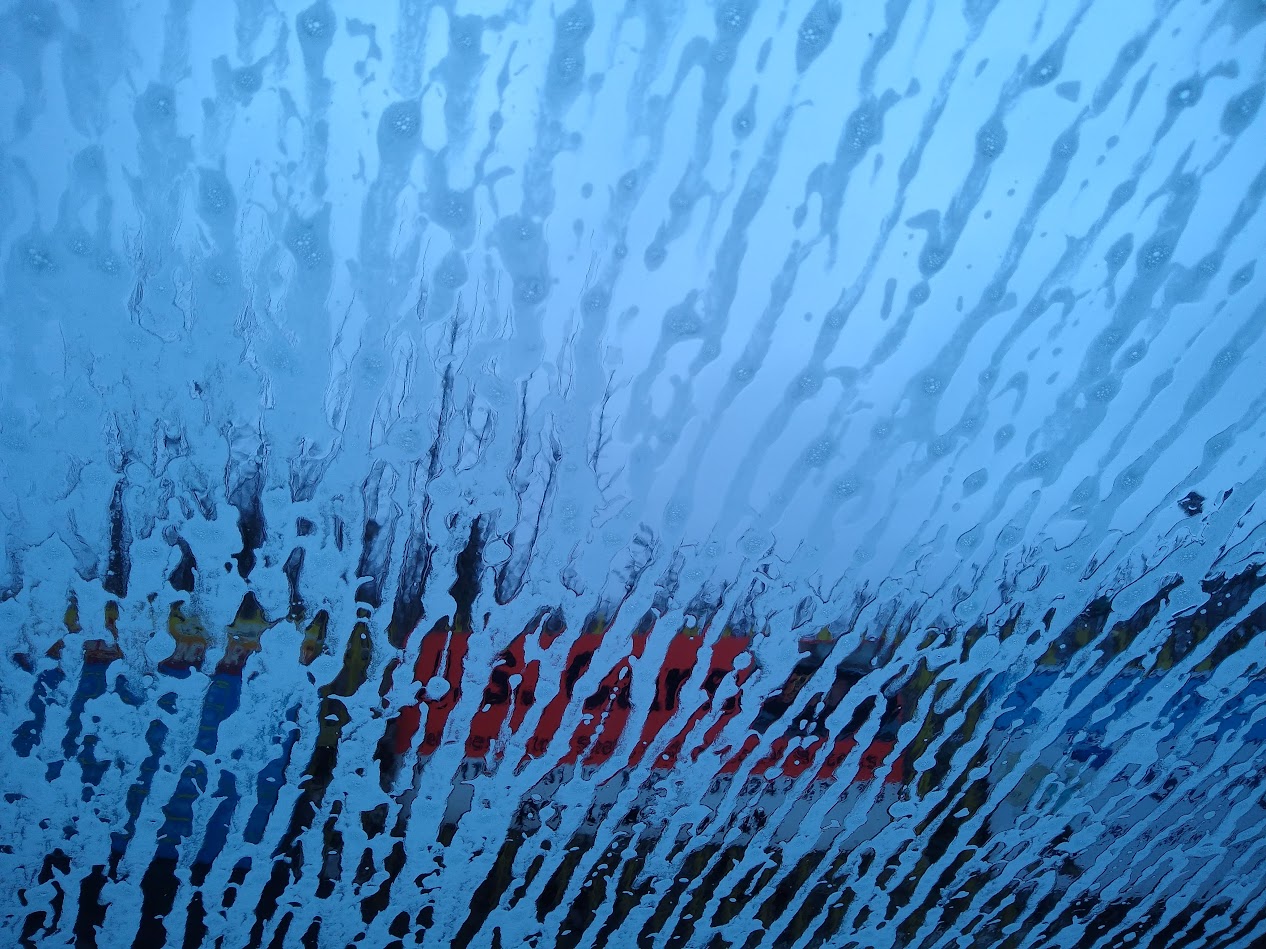
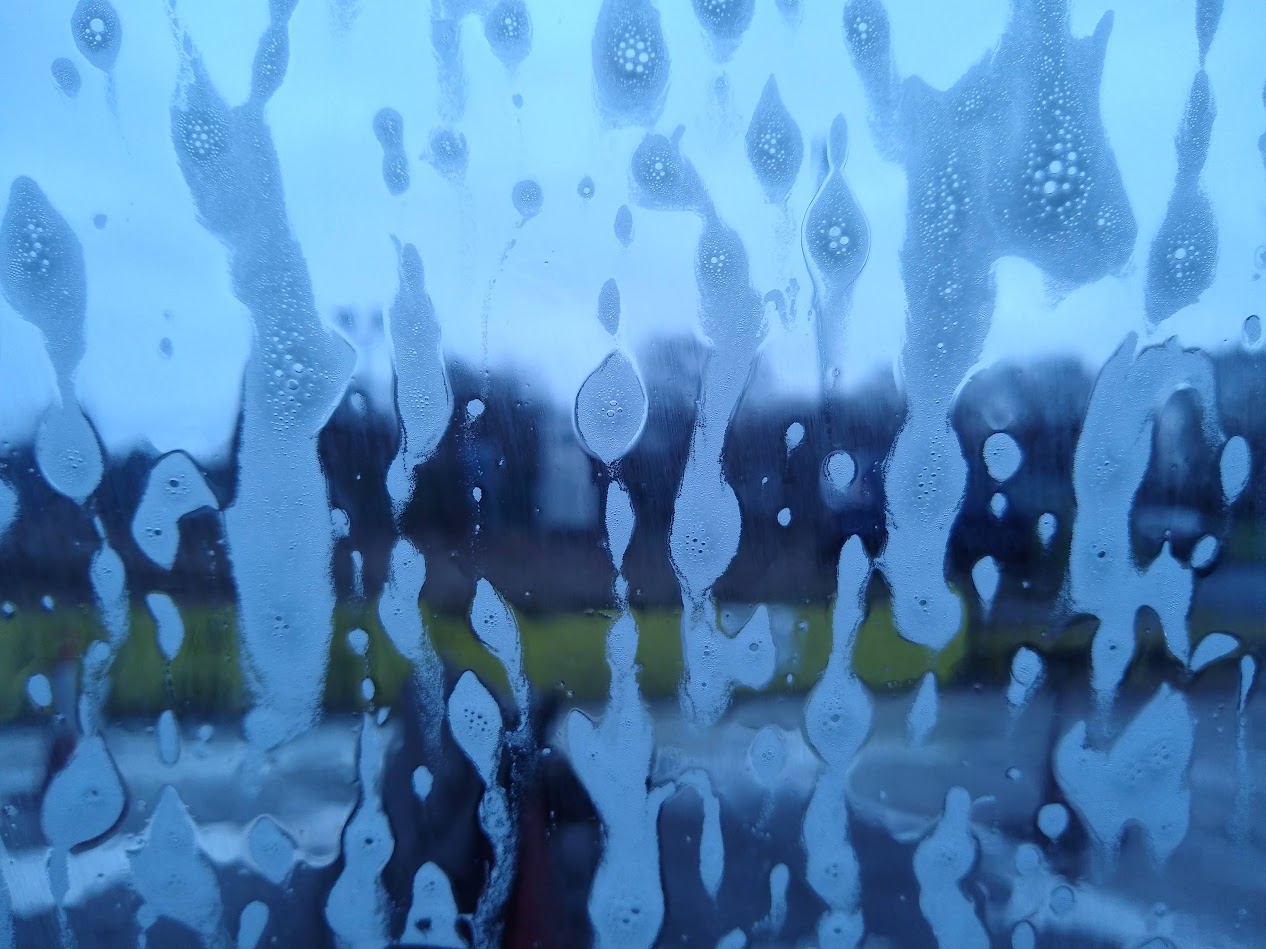
After a weekend of Storm Darragh, our car needs a litte TLC. On the way into town this morning, we’ll have a session at the car wash, and enjoy the view through the window as the suds and brushes do their work.
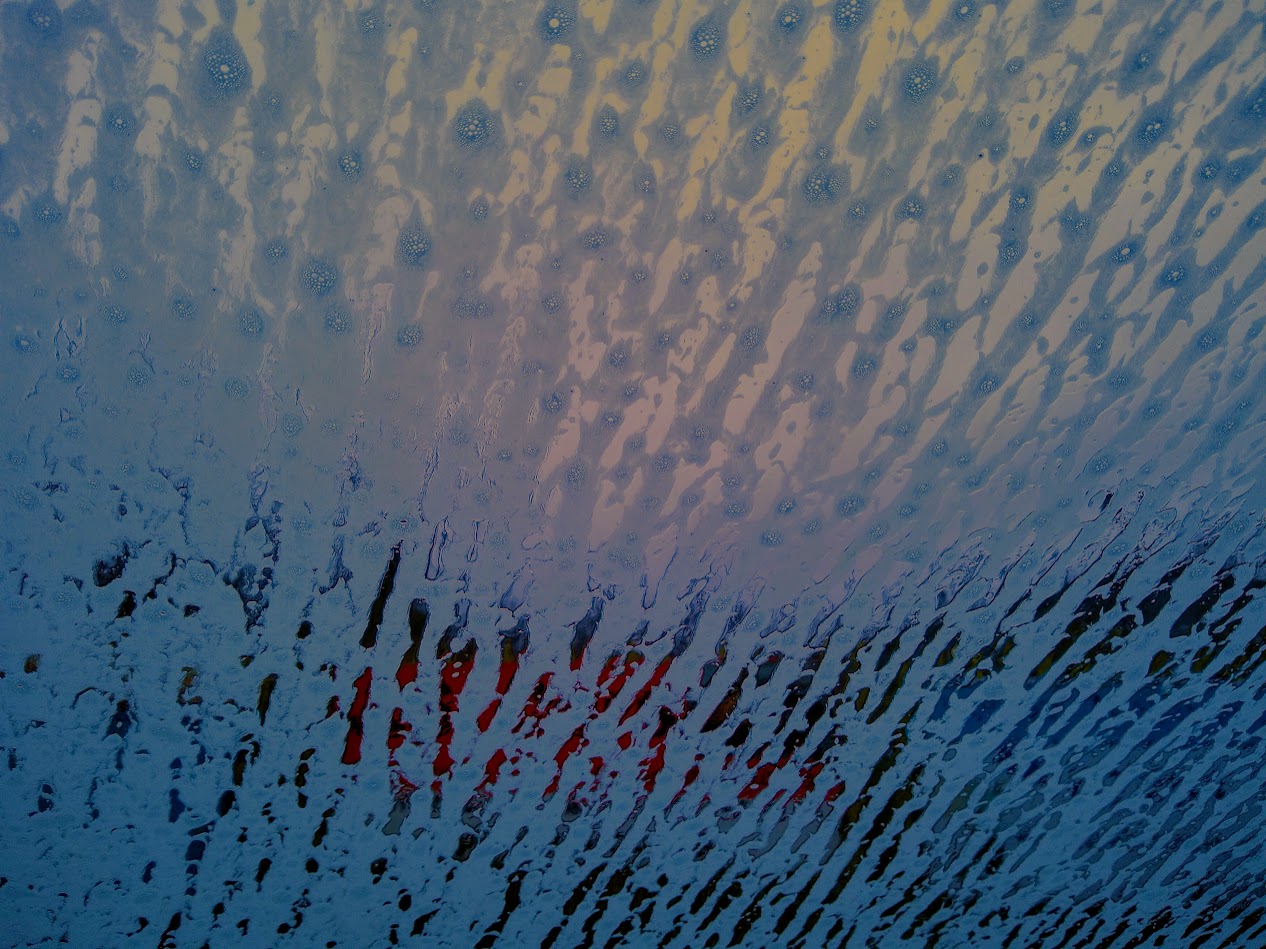
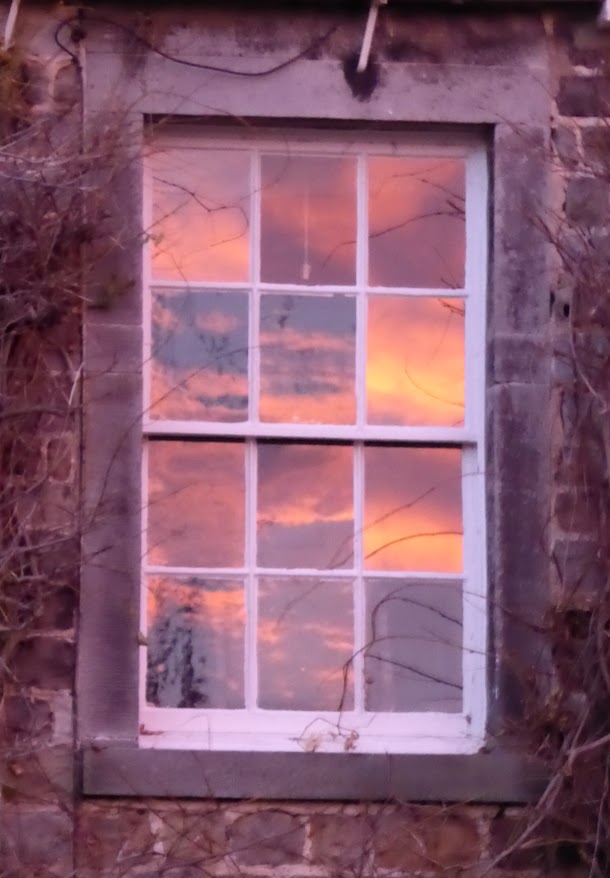
A sunrise captured in one of our downstairs windows one December morning. This image always makes me happy, so I’ll make it a bonus post for Ann-Christine’s This Made Me Smile challenge too.
On Tuesday morning, I was quietly dreading my shift as volunteer Roaming Ranger in Studley Royal Deer Park. ‘Raining’ was an understatement. As I was driving over, the wipers sliced savagely across the windscreen, ineffectually sweeping away the rivers of rainwater cascading over the car. Signing in, we volunteers on various parts of the estate commiserated wanly with each other, and went our separate ways.
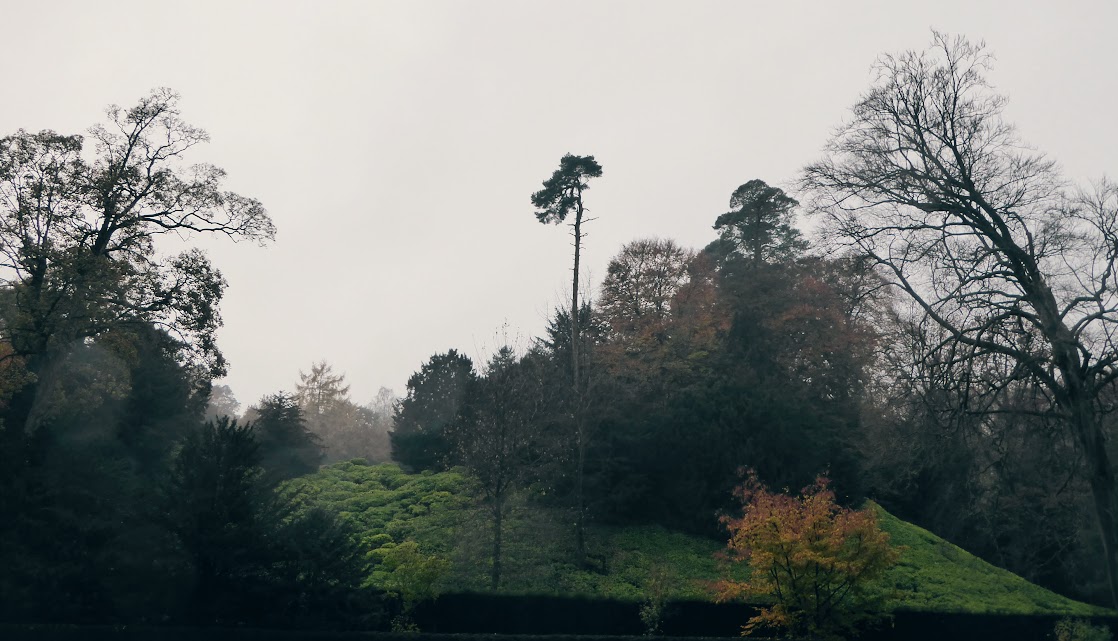
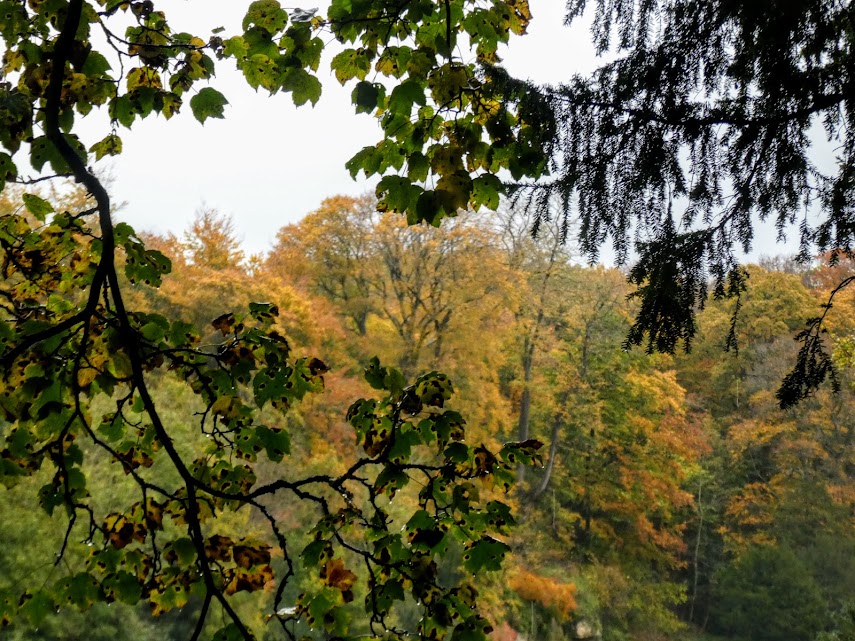
But outside, the rain had suddenly and unexpectedly decided to stop. Instead, familiar trees, now turning autumn gold and russset could just be perceived through the mist. A familiar autumn scene, especially here where we have three rivers in town to add to the general miasma of an October or November day.
Much later in the morning, as I was completing my shift in a much cheerier frame of mind, autumn’s third and best mood showed itself. Omnipresent autumn colour in the form of leaves cascaded to my feet to be eagerly shuffled and crunched through as I willingly connected with my inner child.
I offer a selection of photos to illustrate these different moods. I didn’t take my camera with me on Tuesday. The weather and the forecast were so very poor I just didn’t dare expose the poor thing to the elements. More fool me, to believe the weather forecast.
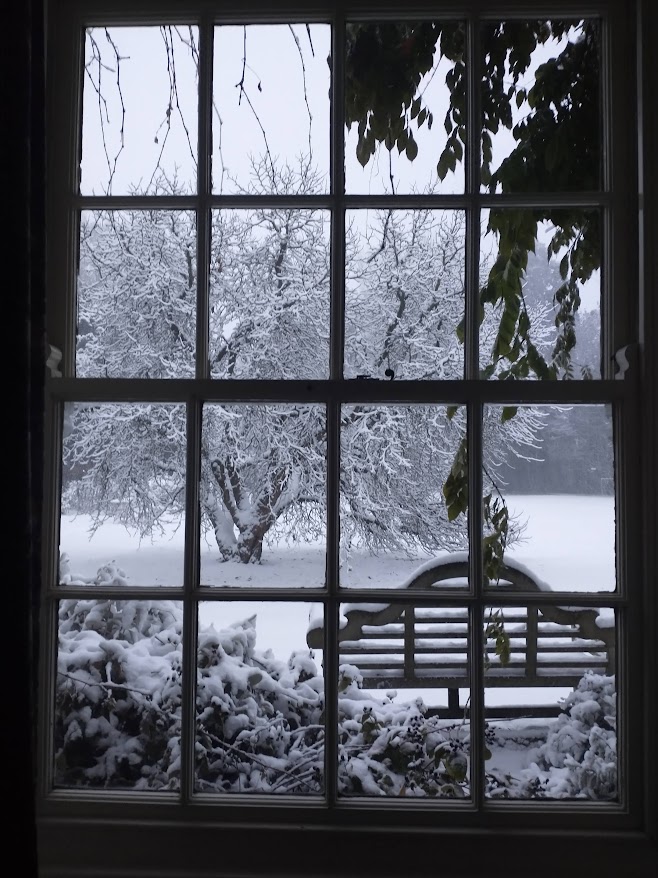
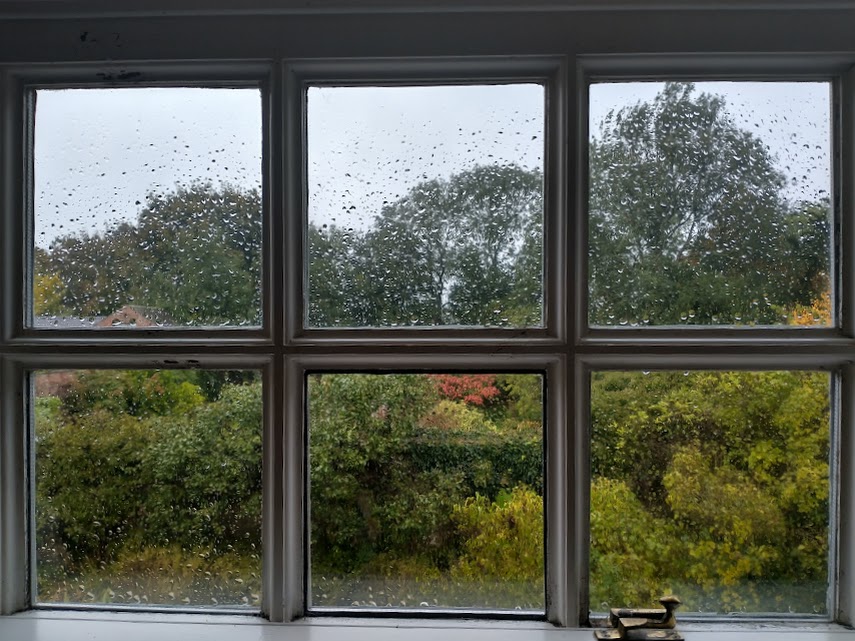
My featured photo is looking through our kitchen window on Tuesday morning. There’s more of the same on the way …
Any UK readers will have had plenty of occasions to recite a favourite childhood ditty this week.
Rain, rain, Go to Spain, Never show your face again.
James Howell, an Anglo-Welsh historian added this verse to the traditional English rhyme ‘Rain, rain go away/Come again another day’, as a reminder of the failed invasion of the powerful Spanish Armada in 1588. They had intended to overthrow Queen Elizabeth I and restore Catholic rule over England.
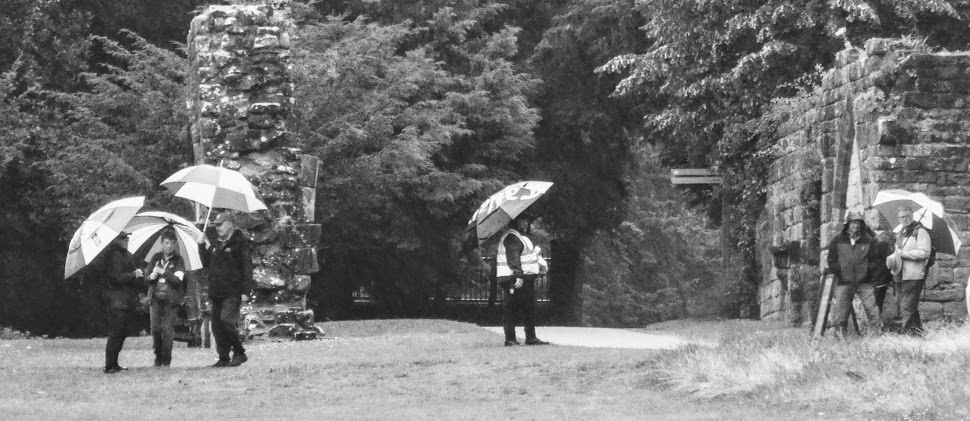
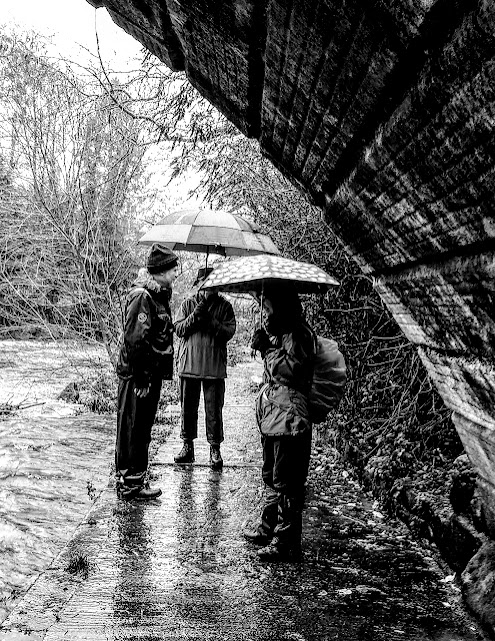
Like now, for instance. But we’re all safely indoors, so let’s peer out at a few rainy shots. I hope you have an umbrella.
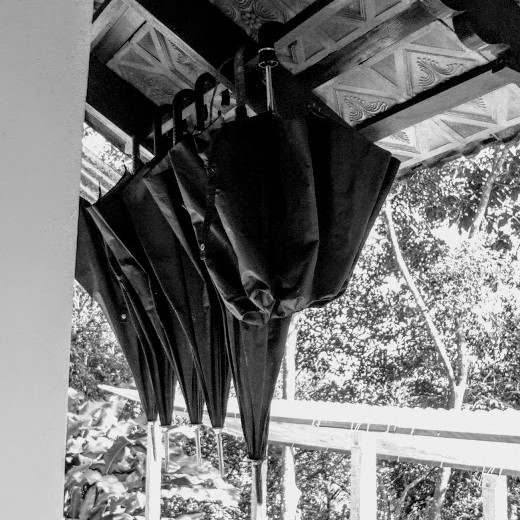
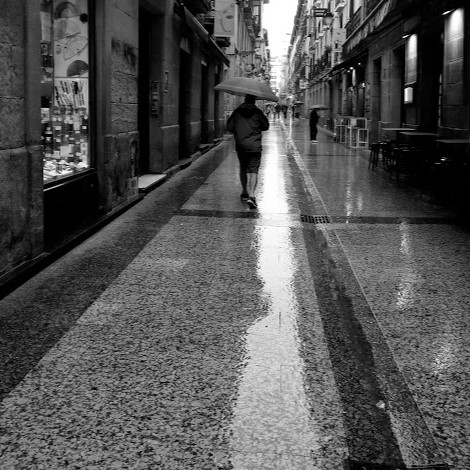
Count the brollies in these two shots, and they’ll add up to seven.
Umbrellas waiting for the monsoon in IndiaNot England. San Sebastian. In Spain. The ditty worked …
This week, A Canadian blogging pal, Rebecca of Rebecca’s Reading Room reflected on re-reading Emily Brontë’s Wuthering Heights. It made me think of a post which I wrote six years ago, in which I described a walk in Emily’s footsteps. Now it’s not really playing fair to re-post something I published before for the Lens-Artists Challenge: Tourist Attractions Near and Far. But I’m going to do it anyway. How many walking routes does anyone know in the UK where the way-marking is in any language other than English? Here, they’re in Japanese. This wild and often unforgiving part if England has become an unlikely tourist Mecca for devotees of Brontë’s story of the passionate and tumultuous love affair between Heathcliff and Catherine Earnshaw.
Wuthering Heights
28th July 2018
Haworth: a charming village on the top of a high and steep hill, in an area of high, bleak and steep hills; home to the Brontë sisters and the surrounding moorland countryside of Wuthering Heights.
Cottages near Haworth. Cosy now: possibly less picturesque back in the Brontë’s time.
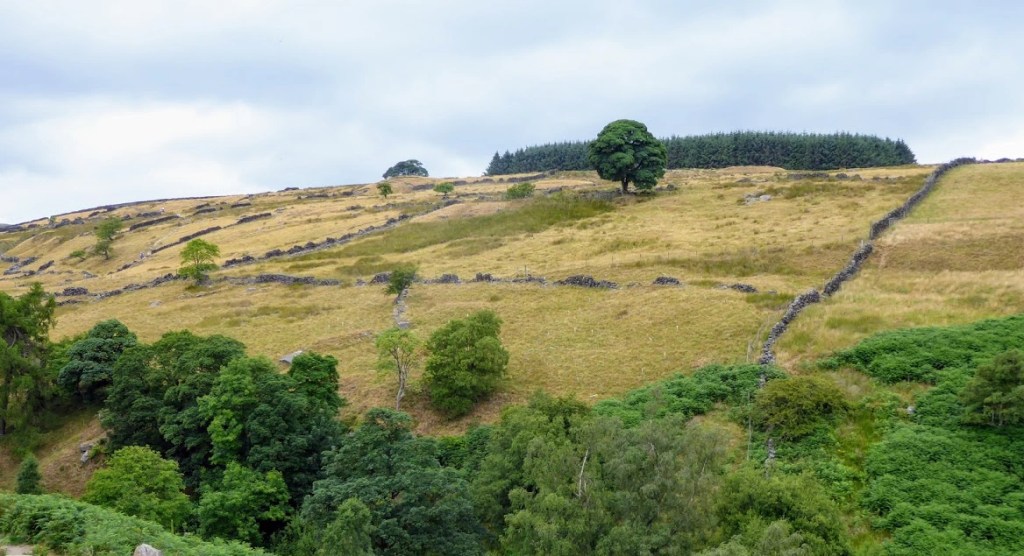
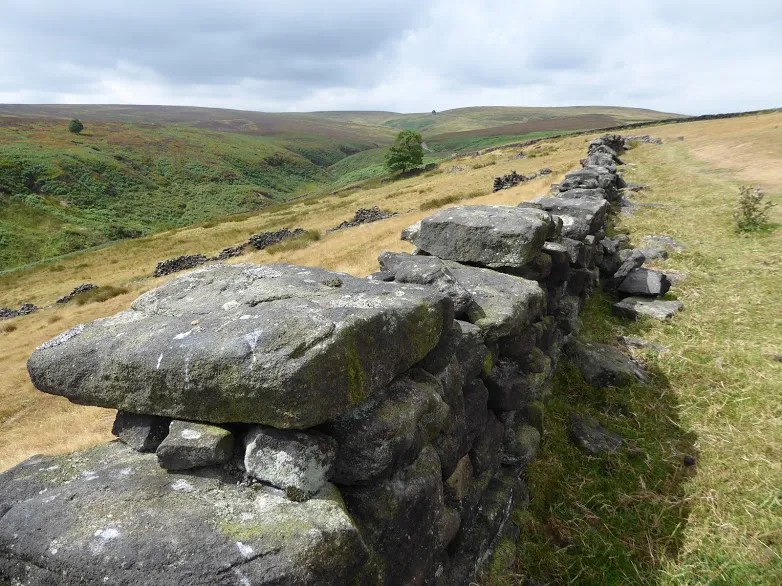
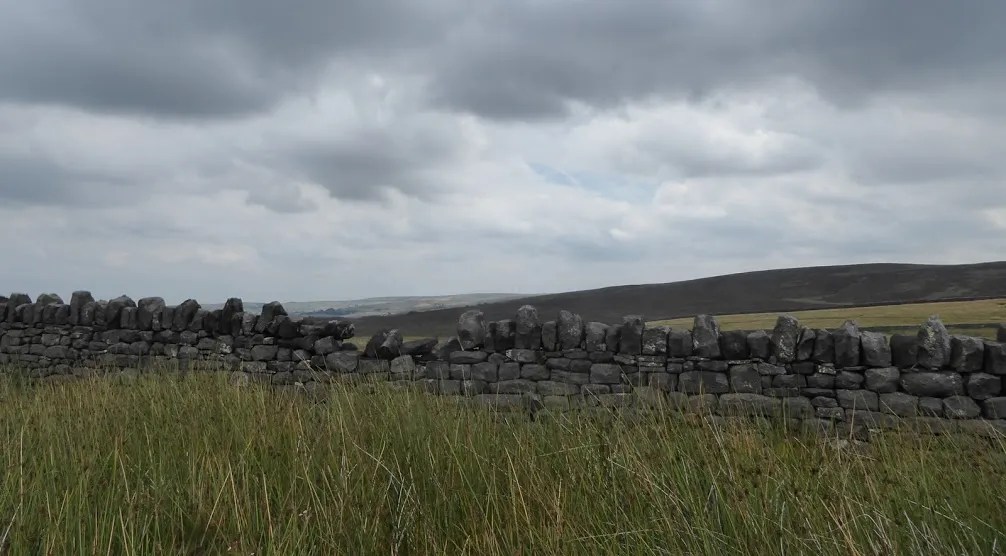
Everyone knows that you can expect ‘weather’ when you come here, whatever time of year you arrive. As you stumble along the church path to leave the village, slashing rain tumbling from sullen hostile skies needles your skin, slicks your hair to your face and saturates your clothes. As you set your face against the wild wind, your boots sink into the sodden peaty turf as you trudge onto the moor. If you dare to glance up, you see unending moorland before you: bleak, barren and bare, with sheep huddled against the dry stone walls which march across the landscape. This is Nature-in-the-Raw, and we expect no different.
I went there earlier this week. None of the above applied.
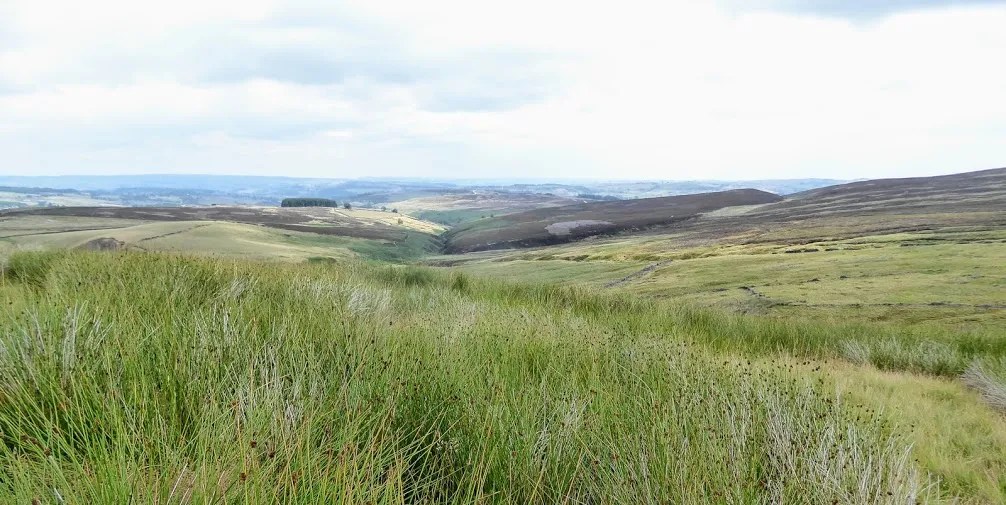
We are in Week Five of a heatwave. I doubt if either the Brontës or even Heathcliff himself had ever seen the like. Brittle coir matting now carpets the brooding moorland fells: and several weeks early, the heather is almost in flower, rich and purple. Yellowing grasses replace the dense green turf the sheep prefer, whispering and rustling in the light breeze.
Beyond Howarth, coir matting stands in for moorland turf.
There’s a little brook in the valley here. Angry peaty water jostling officiously along its path has been replaced by still, clear shallow pools.
The brook by Brontë bridge.
The Brontë sisters would cheerfully have paused here to rest, reflect and write a little. Then, like me, they would have slogged on, up the peat-and-stone pathway that leads upwards, ever upwards, towards Top Withens.
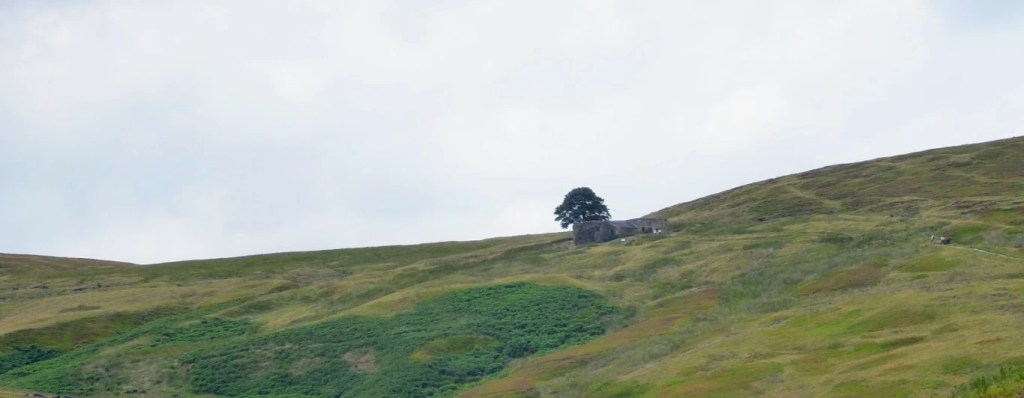
There’s Top Withens, up there. Beside that solitary tree.
Top Withens may have been the isolated upland farmhouse that Emily Brontë pictured Cathy Earnshaw and family living in when she wrote Wuthering Heights. It’s a ruin now, the roof torn off in a violent thunderstorm in the 1890s. Just as you’d expect.
It was the perfect picnic spot for me. The moorland stretched before me, its hillsides rhythmically rising and falling. The world was silent: not that silence in which there is no sound, but that of the living countryside: the low susuration of the swaying grasses; the humming of the wind in my ears; the occasional complaint of a bird sweeping overhead. Beyond the moorland, greener fields lay, chopped centuries ago into rough rectangles by drystone walls. Some held sheep, some cattle, others recently cut hay. The sun warmed my rocky seat, and I was perfectly content.
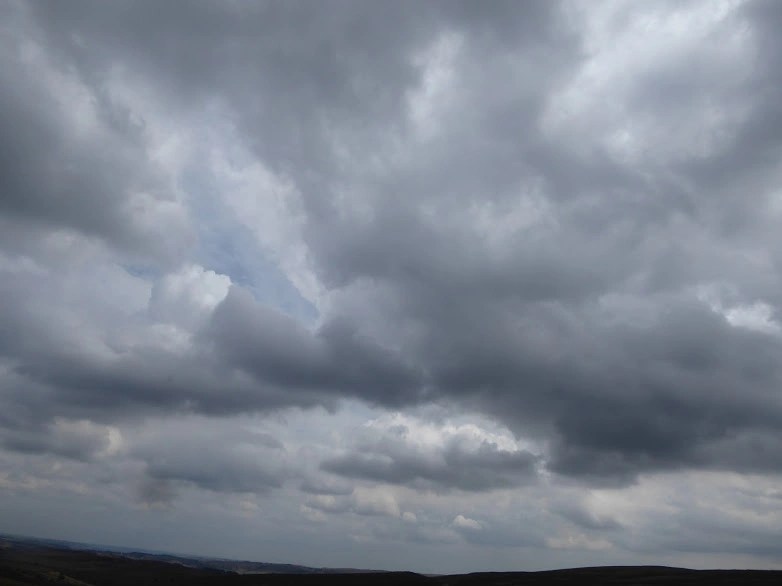
Except for the sky. The day was sultry, sweaty, but freshened by a soft breeze. I knew the sun might be chased away by gusty rain. Ash-grey clouds swelled and receded, revealing granite tones behind: and beyond that, cornflower blue once more. It was a signal. Haworth takes weather seriously. Never be tempted to climb these uplands without a very capable waterproof in your kit.
The moorland I saw this week was not the Brontë’s moorland. It’s been a little sanitised. There are helpful finger posts pointing the way at every junction, in English and … Japanese.
Top Withens or Top Withins? Take your pick. I don’t know which the Japanese choose.
The pathways the sisters trod are no longer springy peat tracks, or sticky muddy gullies. Instead, heavy slabs line the way, to prevent footfall damage to this fragile area from the hundreds of people who tramp these paths looking for the Real Brontë Experience.
My day was far too comfortable for that. I was not returning to a draughty parsonage with self-destructive brother Branwell to worry about. If you want to see the Brontë’s life through his eyes, read Robert Edric’s ‘Sanctuary’. You’ll be glad to get back to bustling tourist-destination Haworth for a nice cup of tea.
You want water in motion, Sofia, for your Lens-Artist Challenge? You’ve come to the right place. We speak of little else in England this year. Look at this.
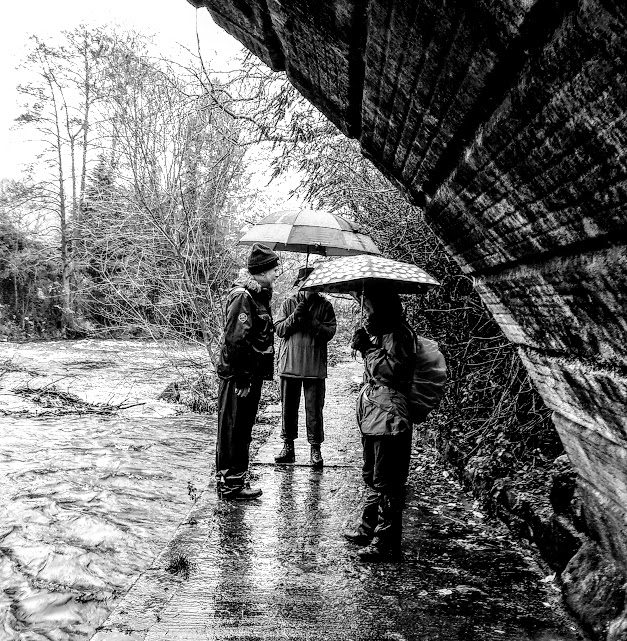
A dismal moment sheltering by the River Skell in Ripon.
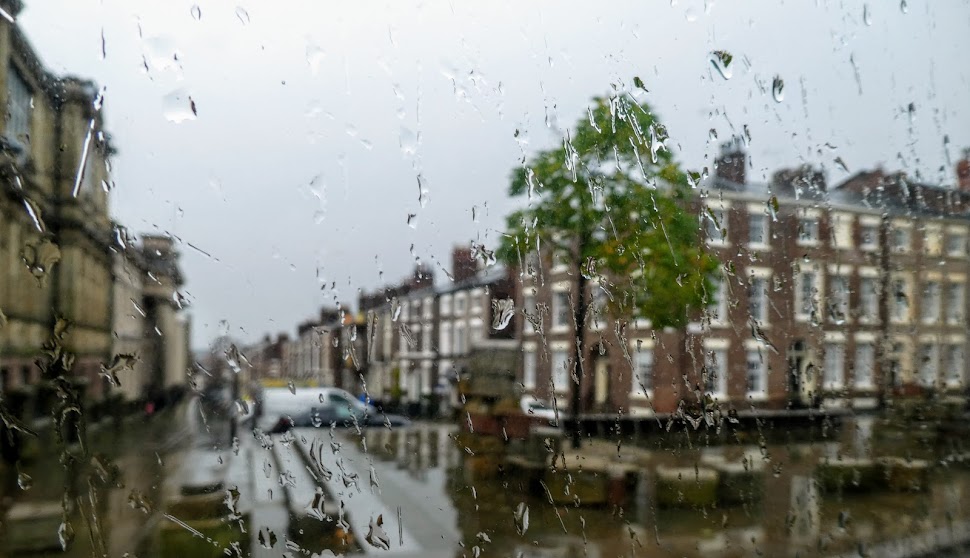
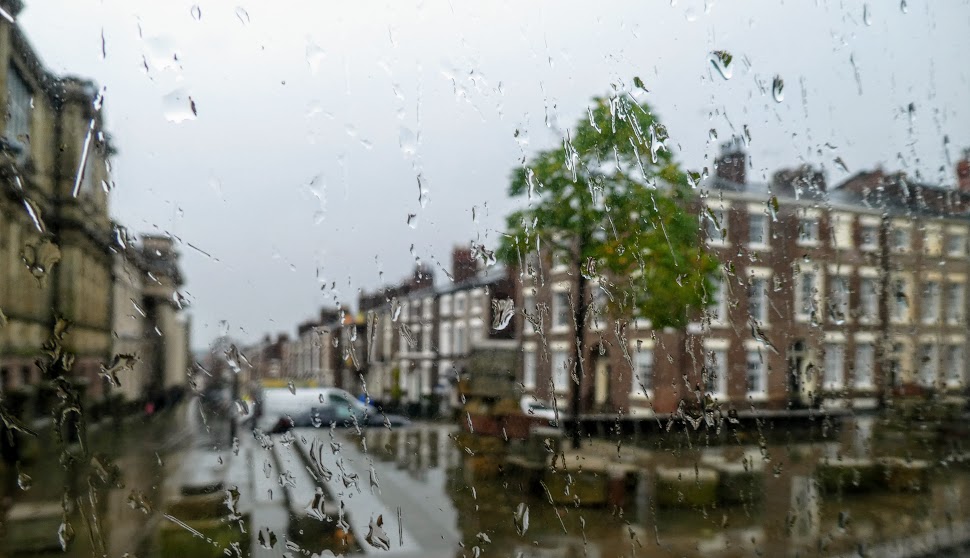
Or this, taken through the windows of Christ the King Cathedral, Liverpool.
A (typical?) view of Liverpool.
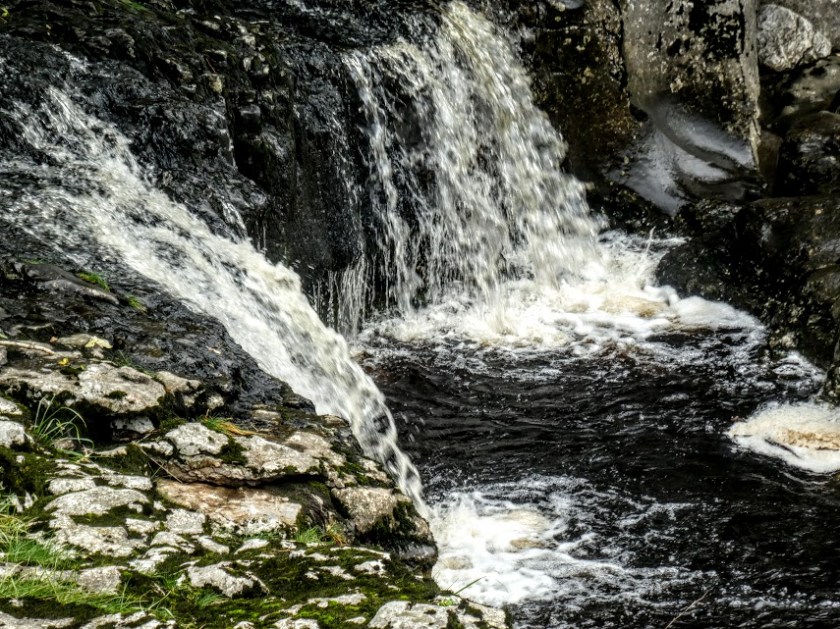
But without this rain, we wouldn’t have those glorious tumbling riverside views: these are both from Yorkshire: I’m focussing on England for this post – it seems appropriate.
The River Wharfe at Grassington
The River Ure at Redmire Force.
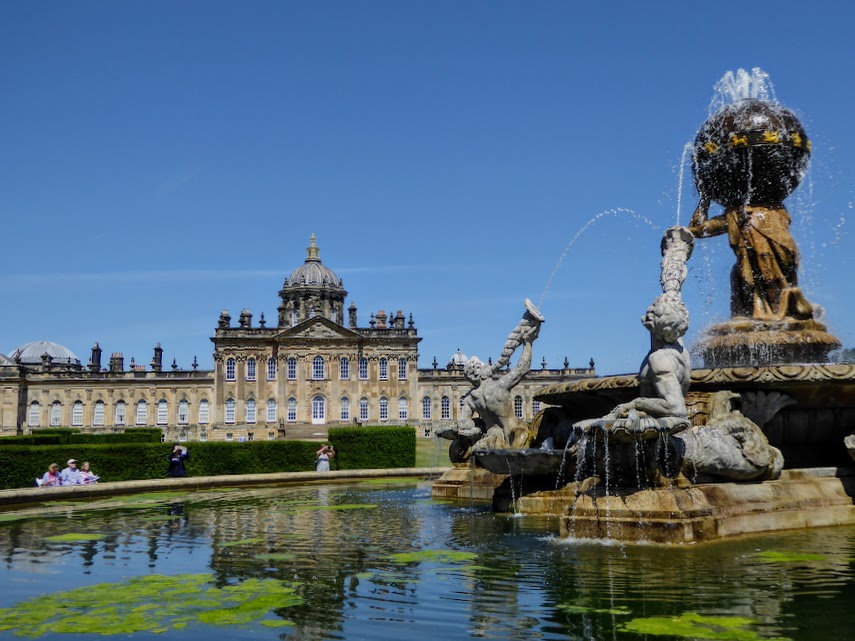
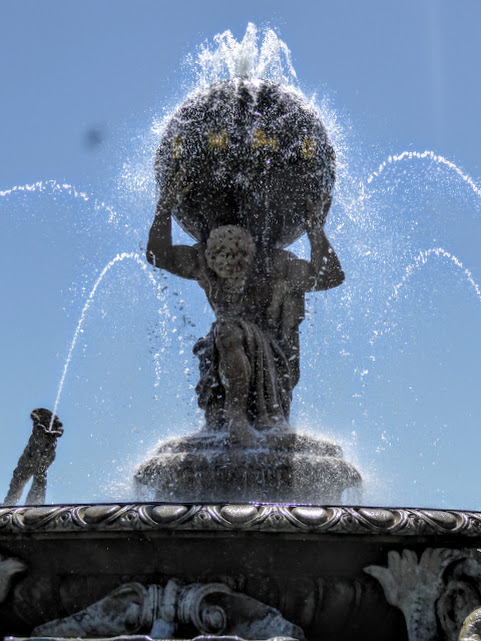
Water’s playful too: especially in the hands of a sculptor. Here’s Atlas with his sea gods at Castle Howard, Yorkshire. A fuller image is shown as the featured photo.
Atlas , Castle Howard
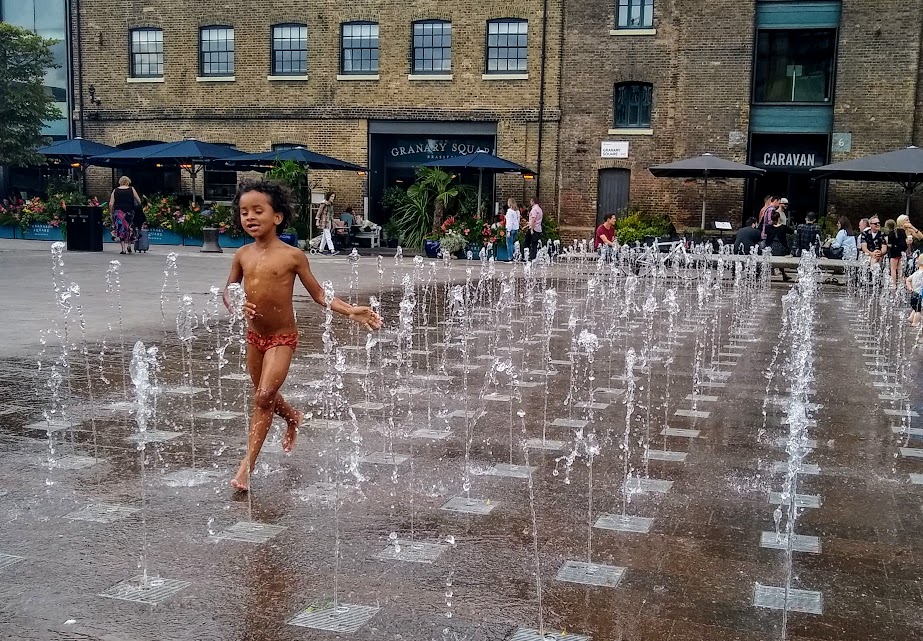
And a child in Granary Square, London is certainly having fun.
Fountain, Granary Square, Kings Cross London.
But we’ll conclude with a more typical London view, overlooking the River Thames.













 From Pyrenees to Pennines
You must be logged in to post a comment.