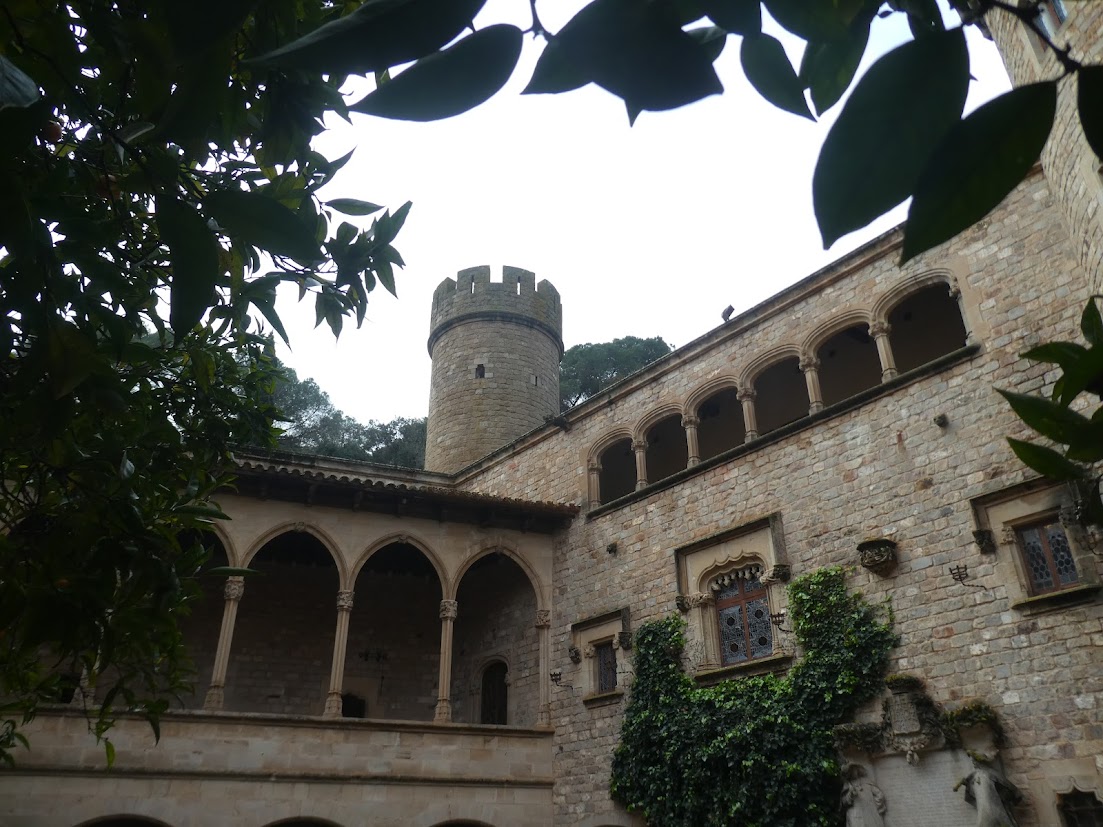
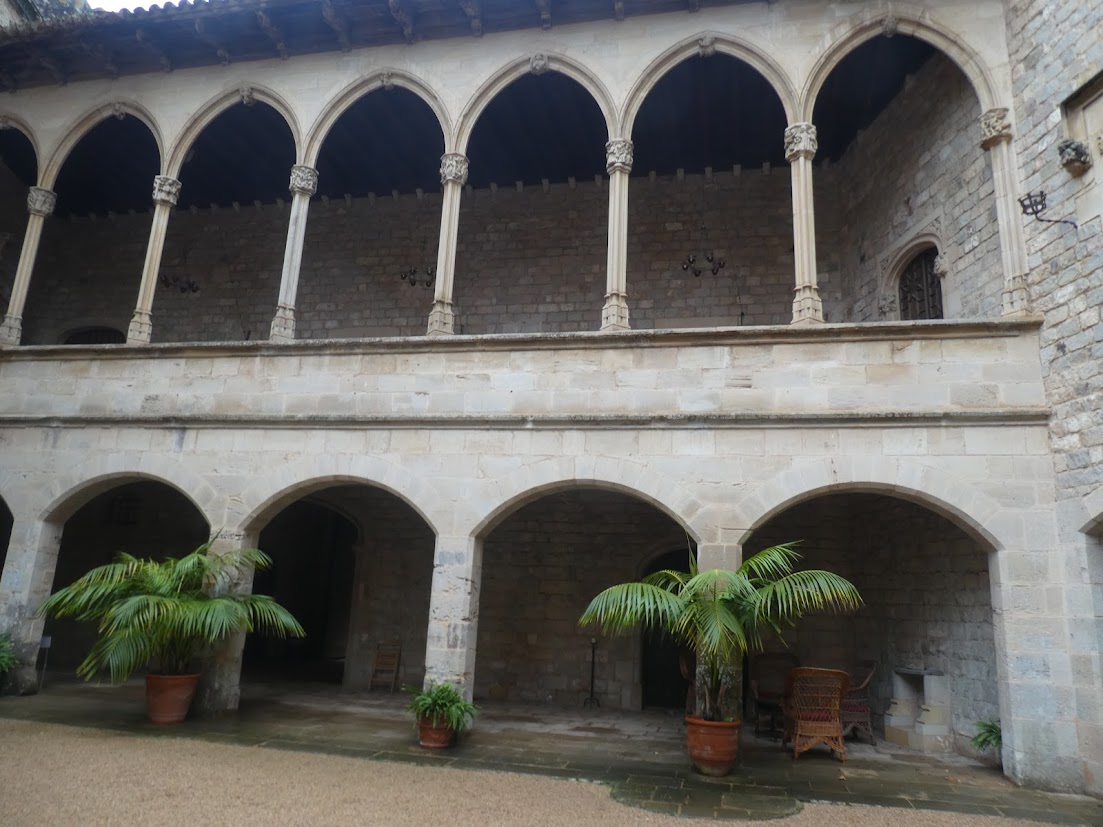
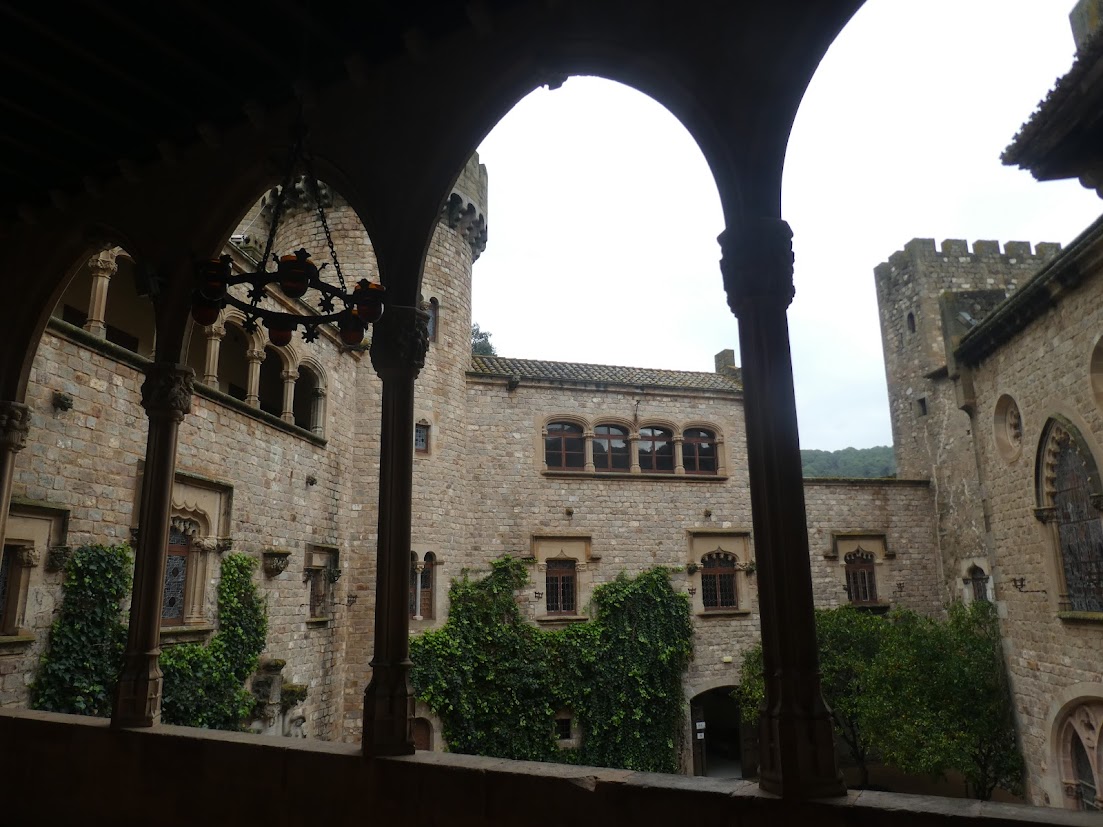
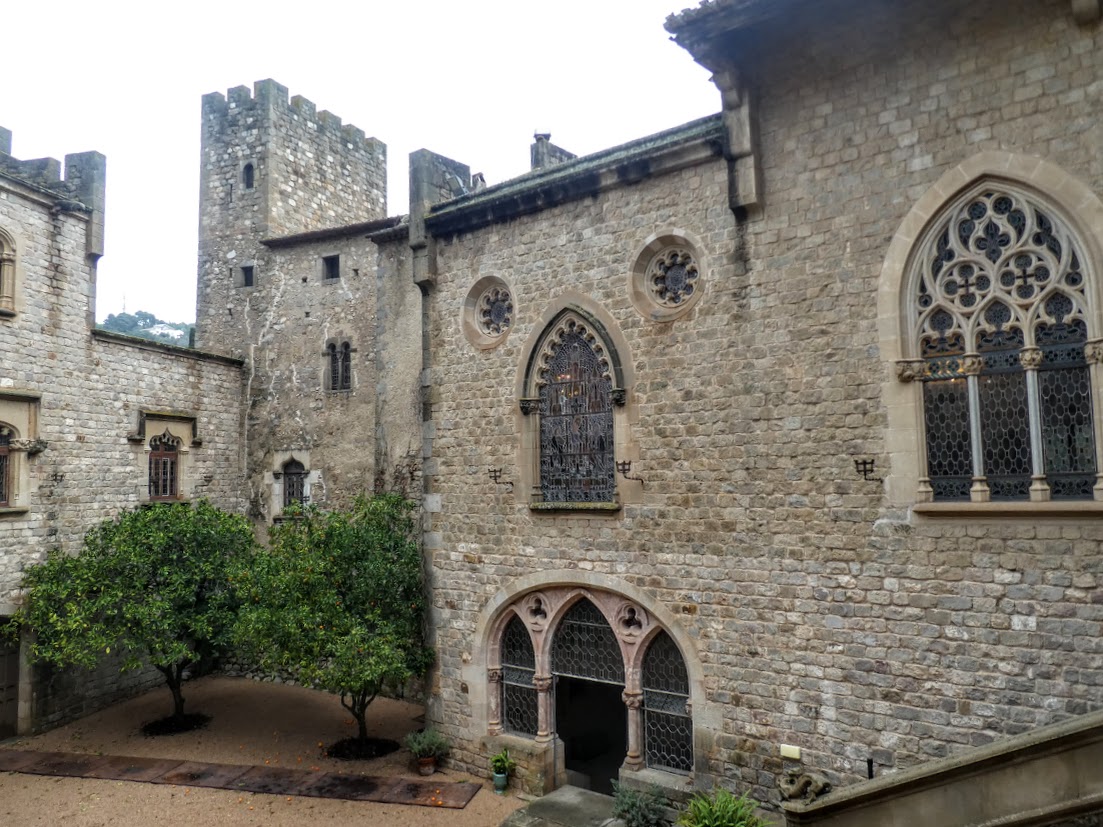
Castell de Santa Florentina has its roots as a 11th century fortified farmhouse, built on the ruins of a Roman villa to defend the area of Canet de Mar against pirates. It evolved into a proper castle-that-looks-like-a -castle-with-turrets in the 14th century.
And that’s how it pretty much stayed until the end of the 19th century, when noted Catalan modernist architect Lluís Domènech i Montaner, who was related to the then owner Ramon de Montaner, came and put his own stamp on the building, employing a team of like-minded craftsmen and sculptors. We Brits would probably recognise the style as being somewhat pre-Raphaelite: a rather romanticised Gothic vibe.
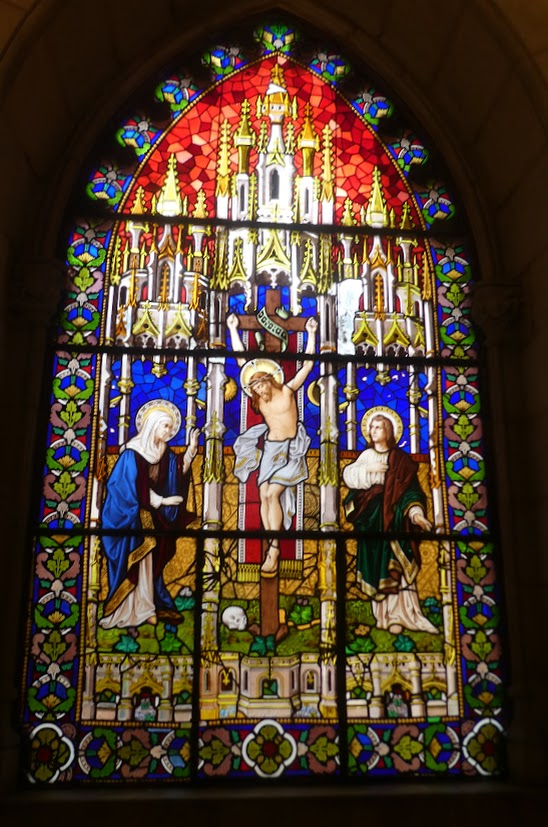
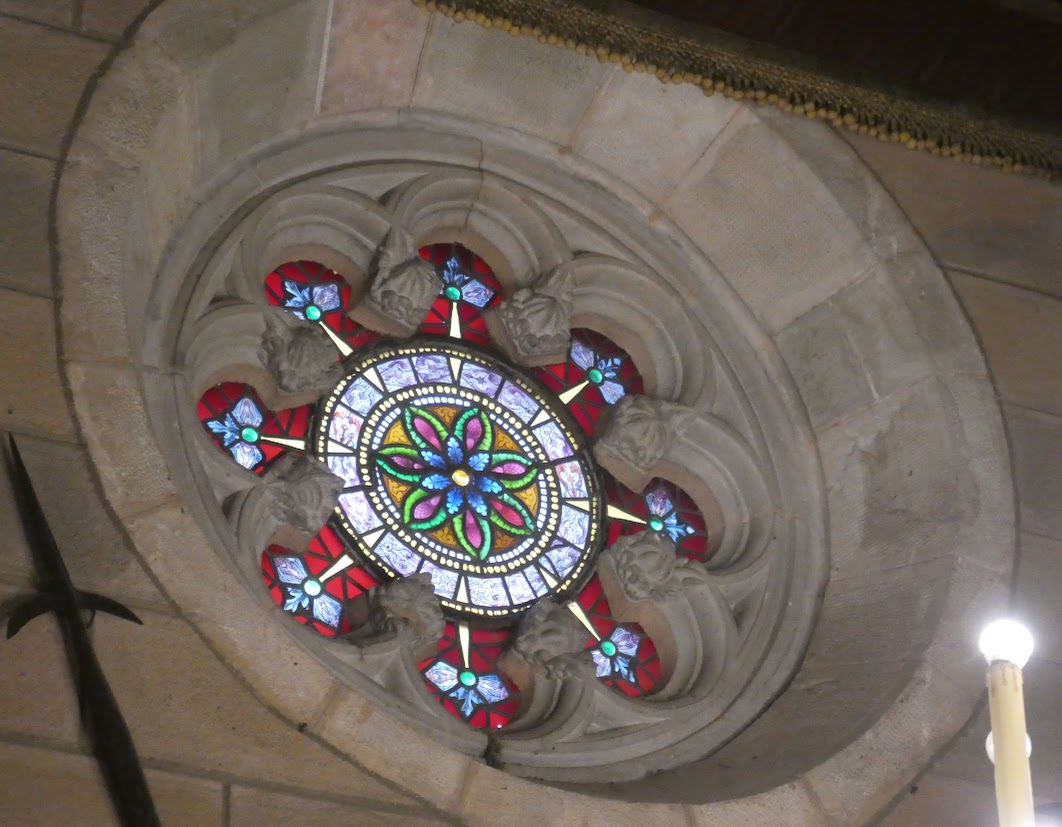
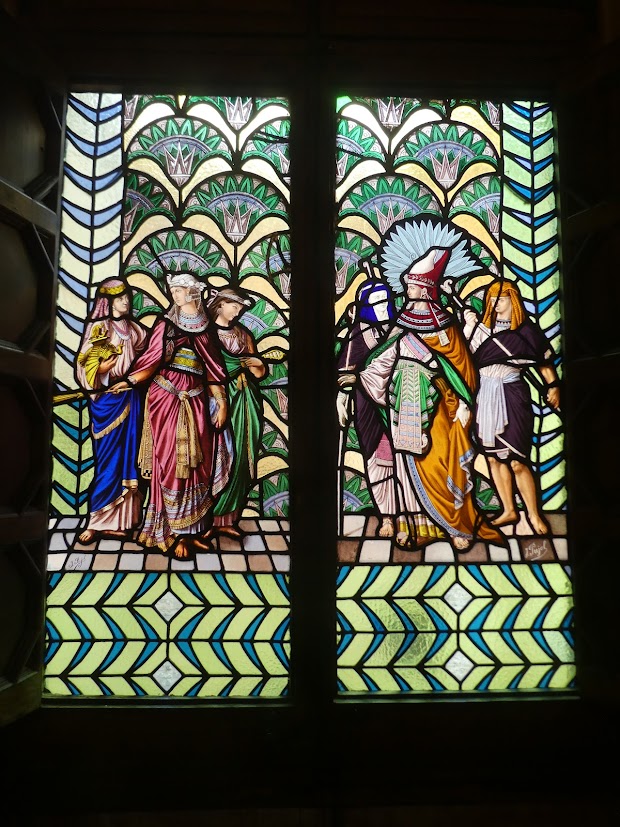
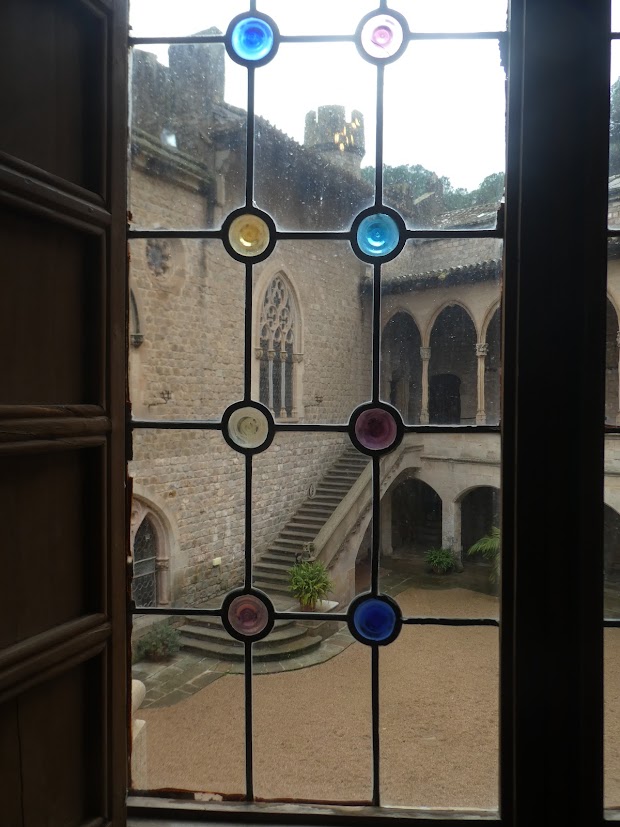
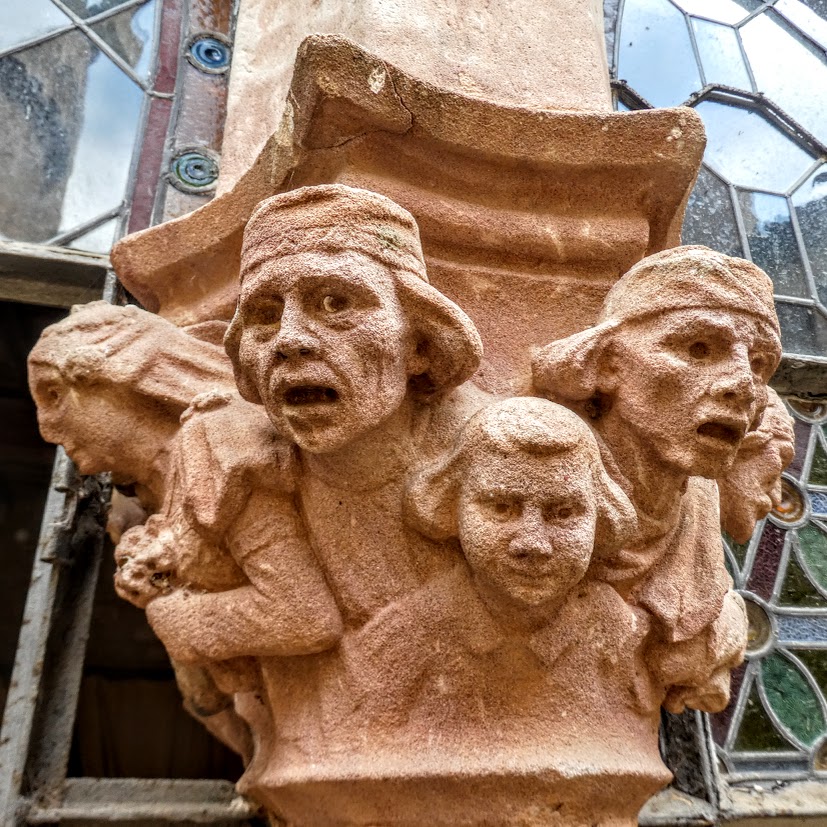
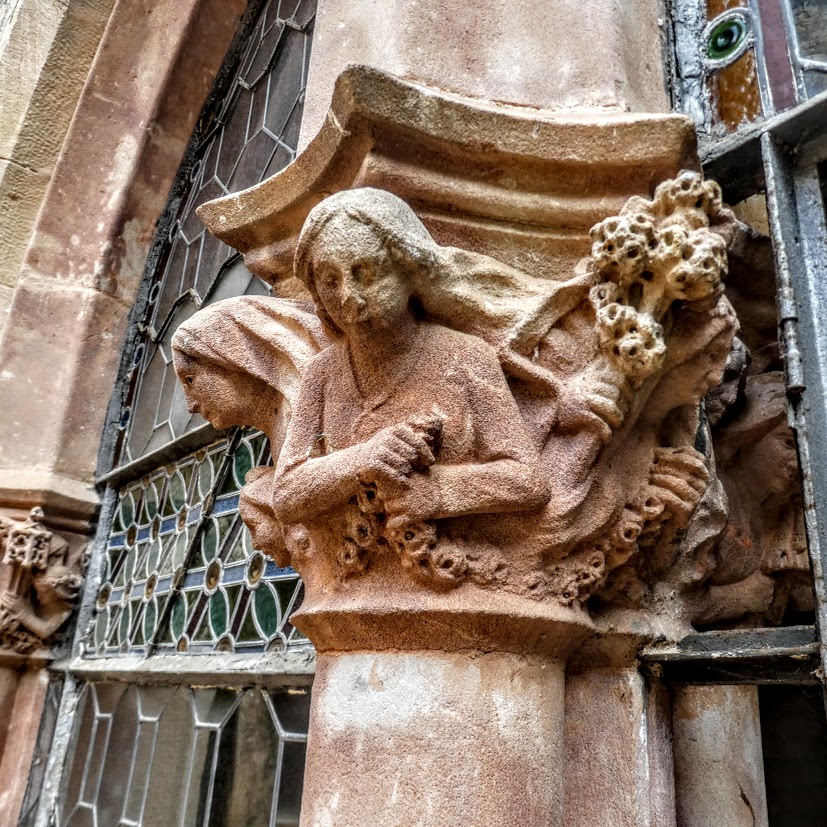
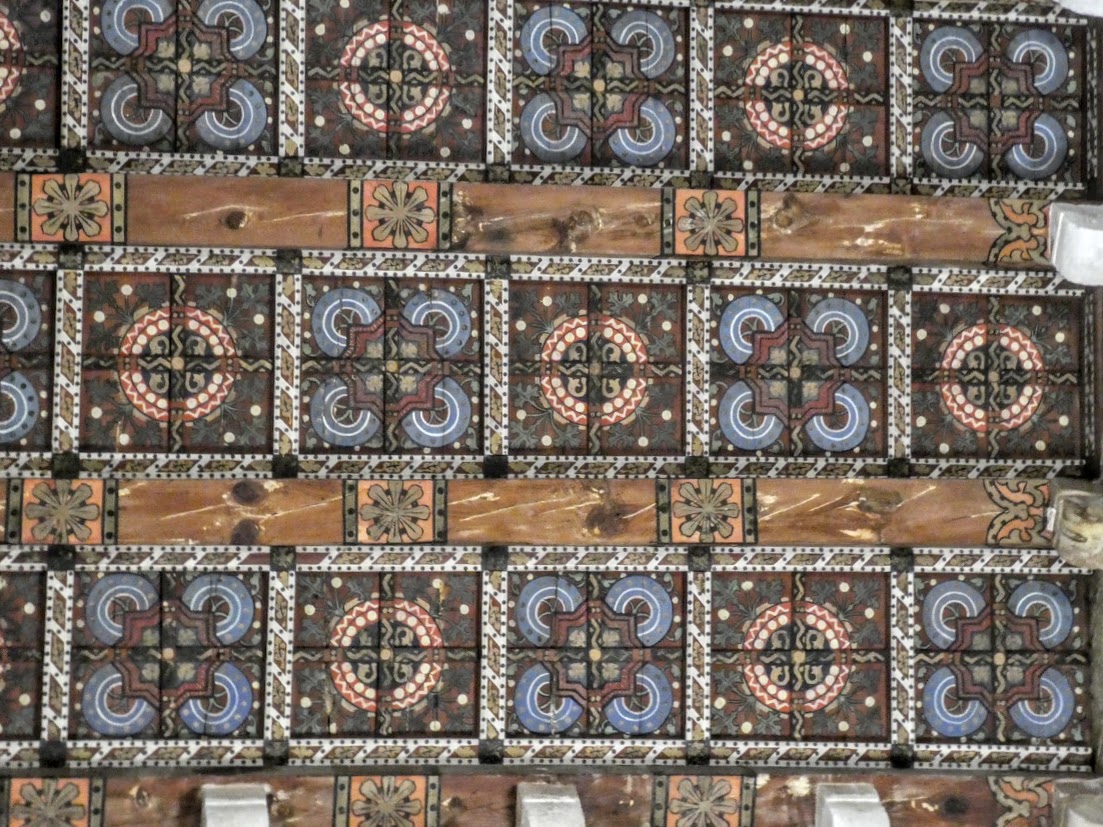
We went there yesterday. It was a bit unexpected. The route to the castle was an overgrown, muddy and pot-holed track to which our poor car strongly objected. The gate to the castle grounds was unprepossessing, firmly locked, and we and our two fellow would-be visitors wondered whether the place would open in time for our booked visit – or at all. It did: and our initial doubts were soon replaced as we wandered round this glorious building with its stained glass, ornate ironwork, fine ceilings and sculptures, harmoniously blending with the existing Gothic structure.
It’s beyond me to give you a structured and informative tour. Why don’t you just enjoy some of the details that we spotted and lingered over in the time we spent there?
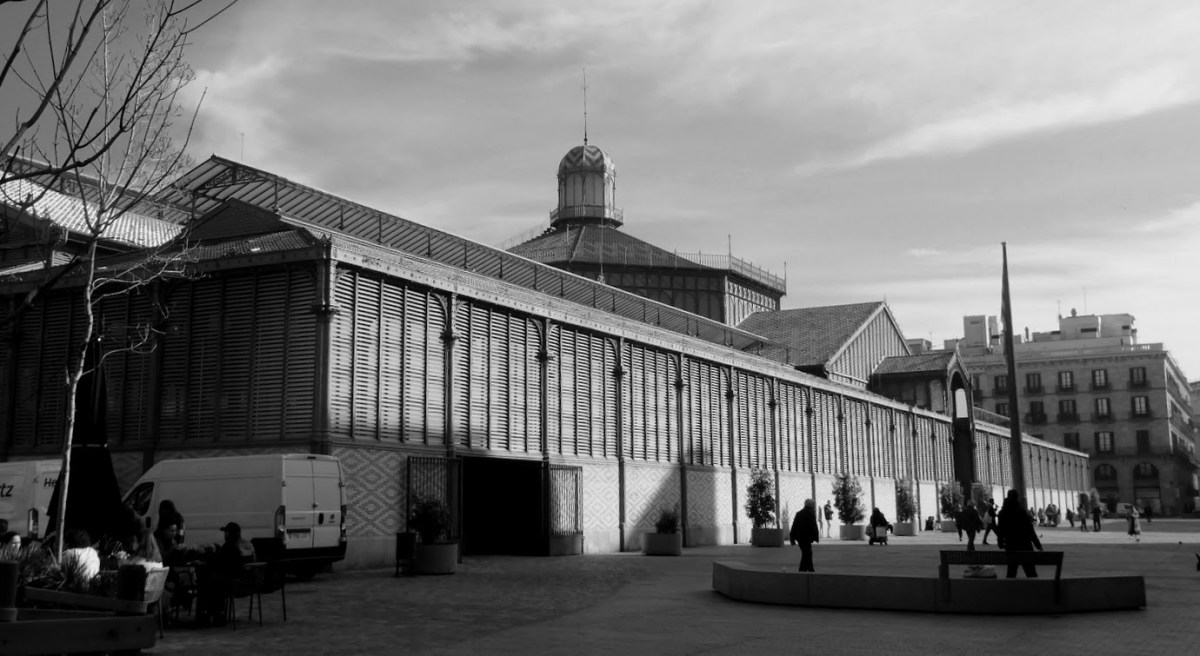
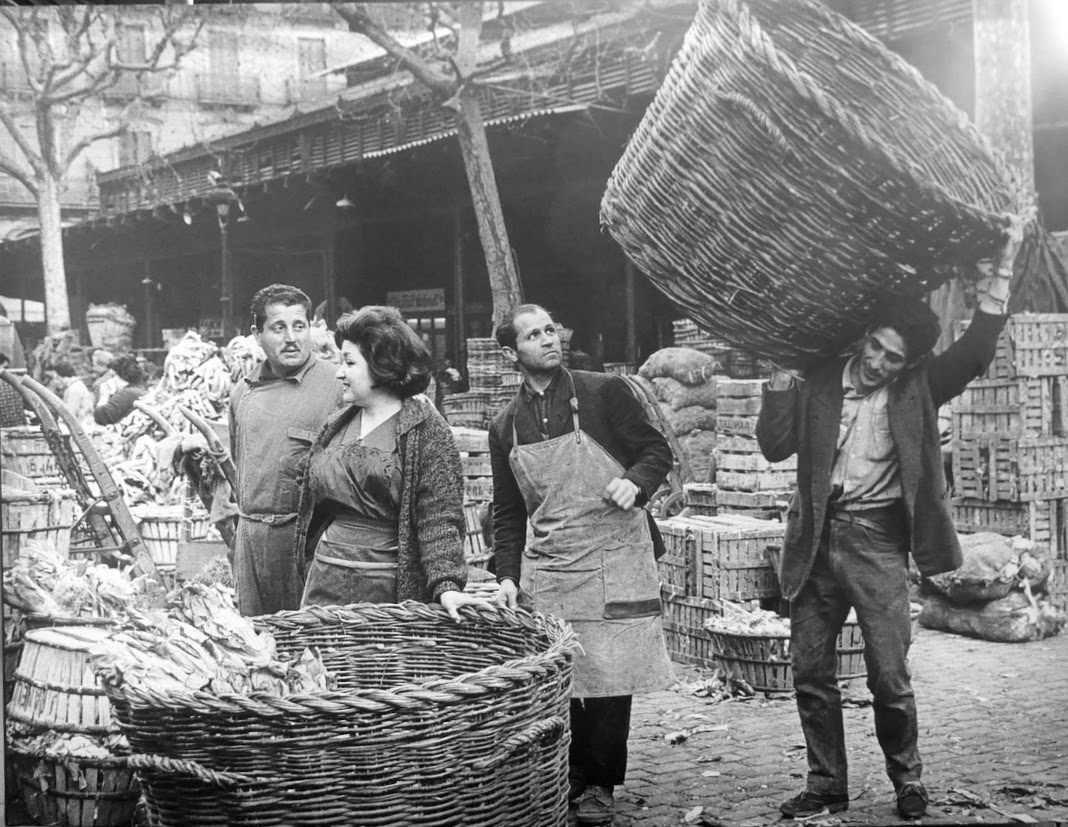
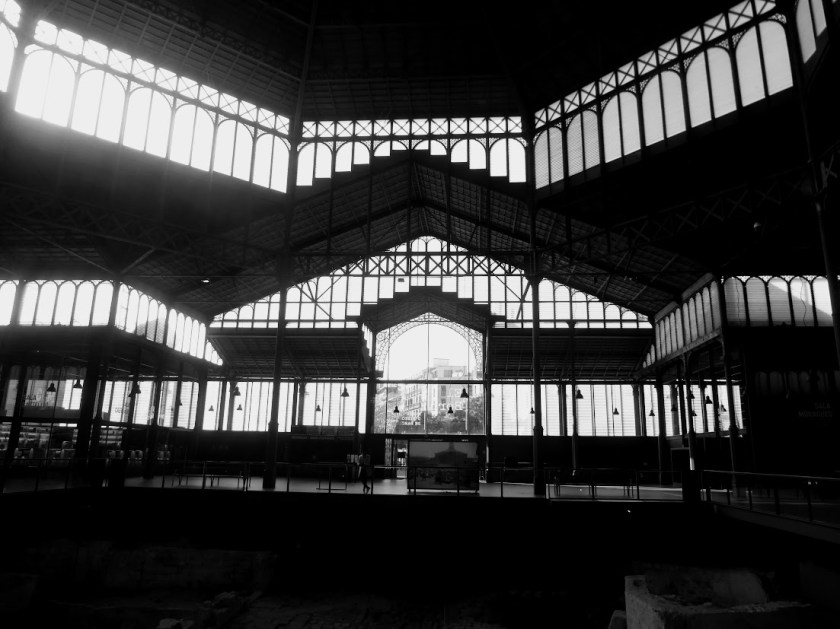
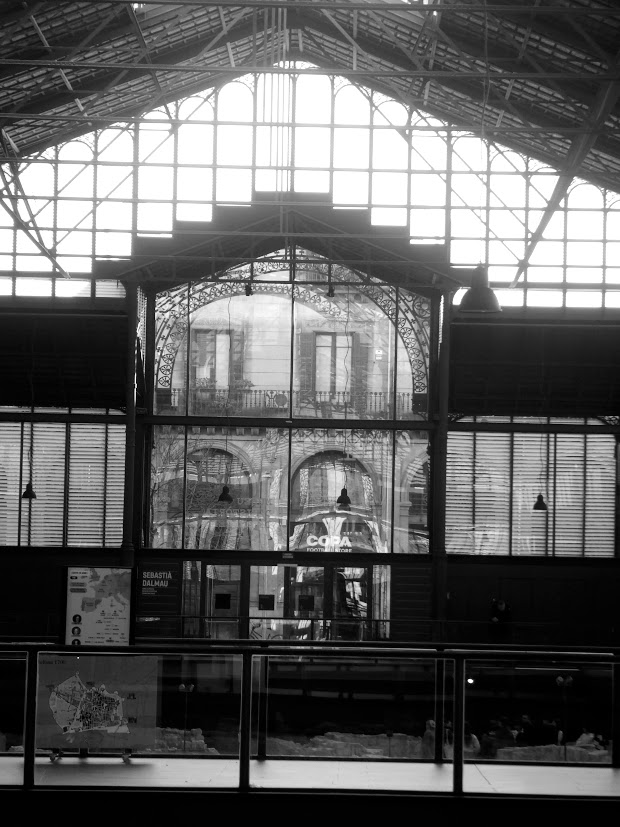
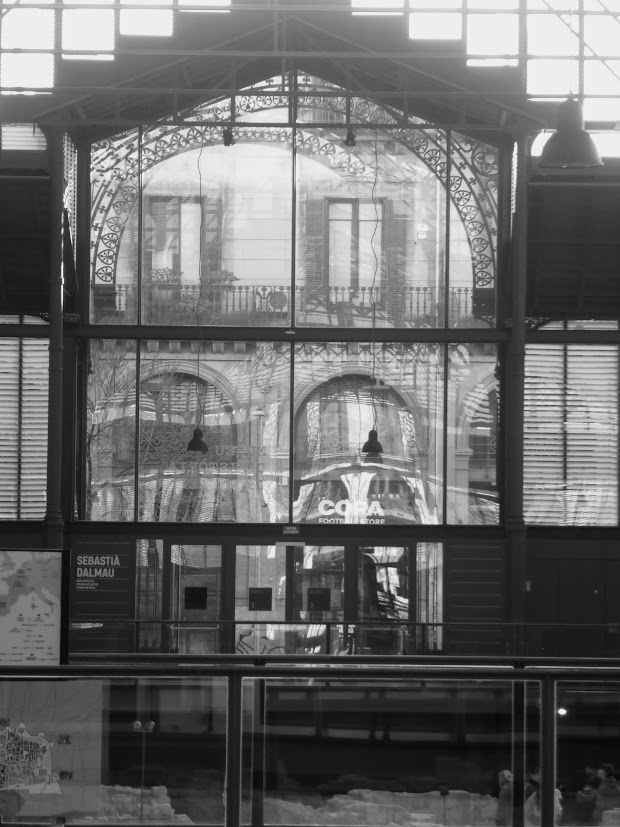
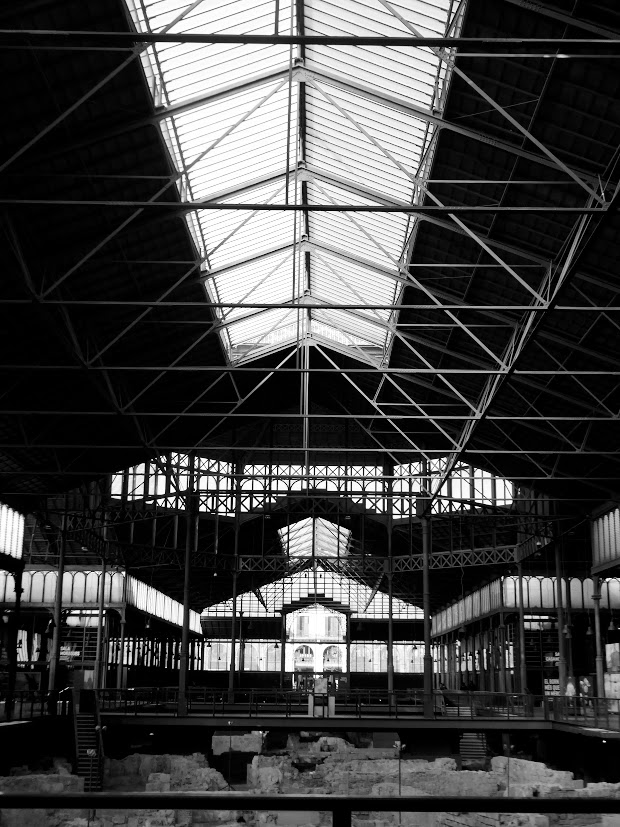
Answer? When it’s a museum – more or less about itself. That’s Born Market in Barcelona. Built in 1876 as Barcelona’s first large-scale cast-iron building, it was a local market, then a wholesale fruit and vegetable market which closed in 1971. But what to do with this fine structure? The problem more or less solved itself when in 2001, more than 60 houses dating from the 1700s were found below ground level. Painstakingly uncovered, they reveal the life of this busy neighbourhood, where tripe-sellers and violin makers, leather-tanners and glass blowers, and food producers of every kind jostled together in this bustling, flourishing part of the fast-growing city. Their story, this city’s story is now told here in El Born Centre de Cultura i Memòria.
Here are two photos-of-photos showing the market in its heyday.
And here are a few shots of the building as it looks now: a quiet and spacious place to pass away an interesting hour or two away from bustling Barcelona, just beyond its doors.
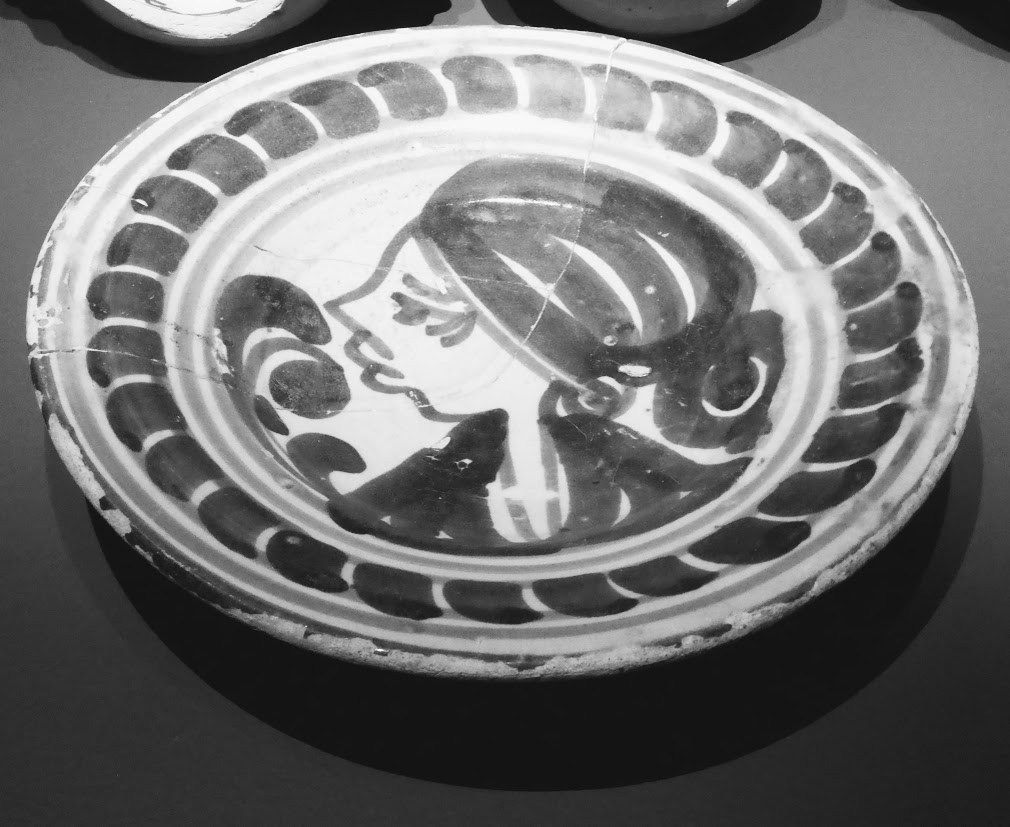
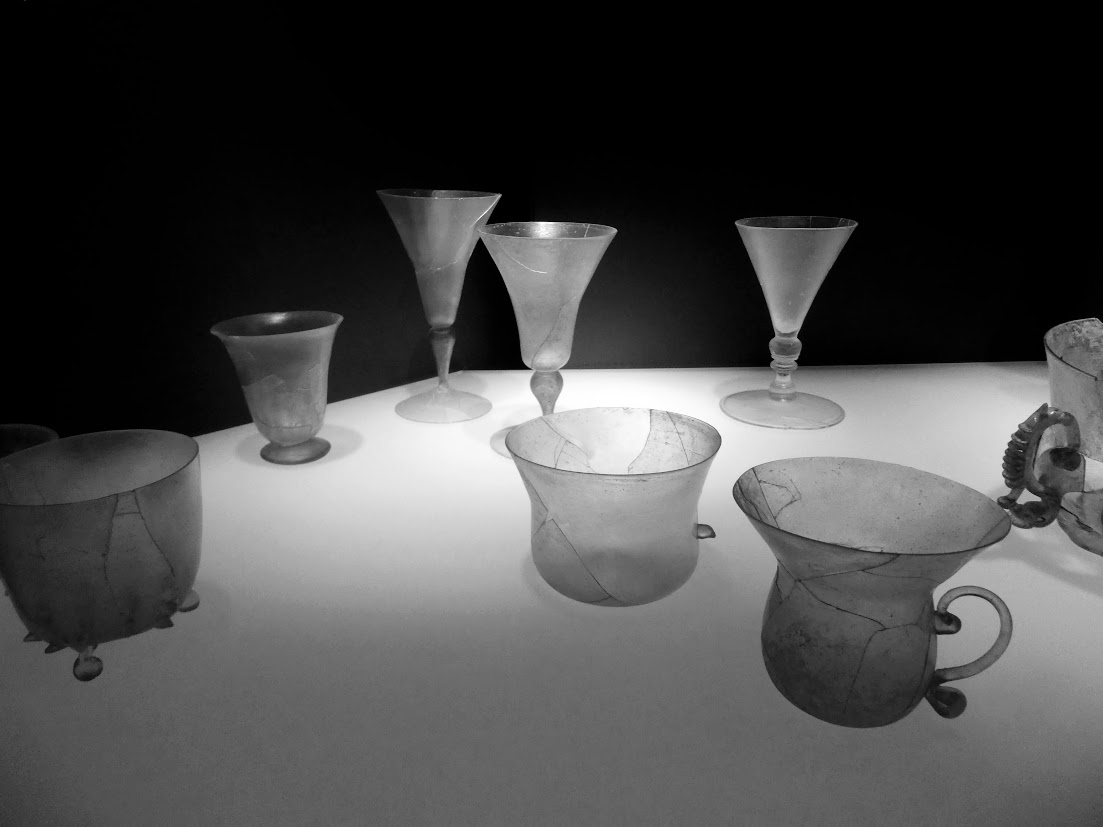
In the last image above, you can see at floor level the excavated city beneath. Here are some of the everyday objects the archaeologists found: plates, chocolate cups and glassware, all made locally.
Last week, a blog post by Steve of A London Miscellany took my eye. It’s about a 19th Century French celebrity chef working in London who became struck by the plight of the city’s poor. Do read this post about a remarkable man: a talented cook and inventor with a practical social conscience.
I heartly recommend Steve’s weekly blog posts. He always has interesting and curious tales to tell about London’s past
On our recent trip, mainly to Alsace, but with sorties to Germany and the Netherlands, we came across several stories from the past which we’d known nothing about, but found engrossing. For the next few Fridays, I’ll share these stories with you.
Ammerschwihr
We happened upon Ammerschwihr on our way back from Le Linge and decided to stop, attracted by its mediaeval town gates.
The first set of town gates we spotted
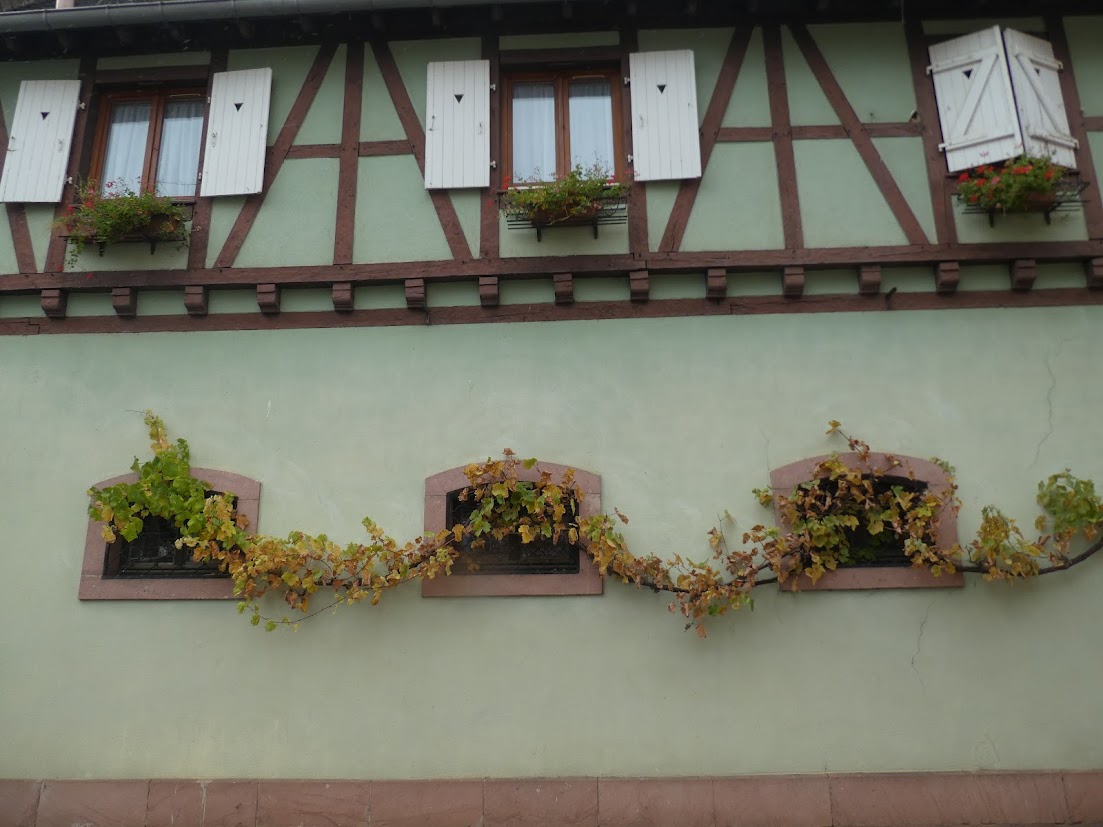
It’s a prosperous little town. This commune is home to the highest number of winegrowers in relation to the number of inhabitants anywhere in Alsace. And that’s saying something.
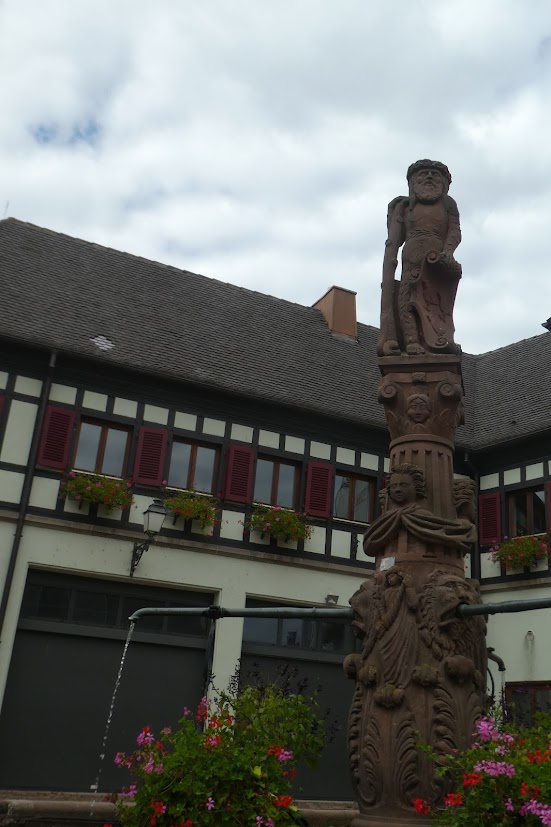
In front of modern housing in traditional style is this fountain of the Wild Man of Ammerschwihr, 1560. He’s holding a shield showing the town’s weapons in one hand, while leaning on a vine stock.
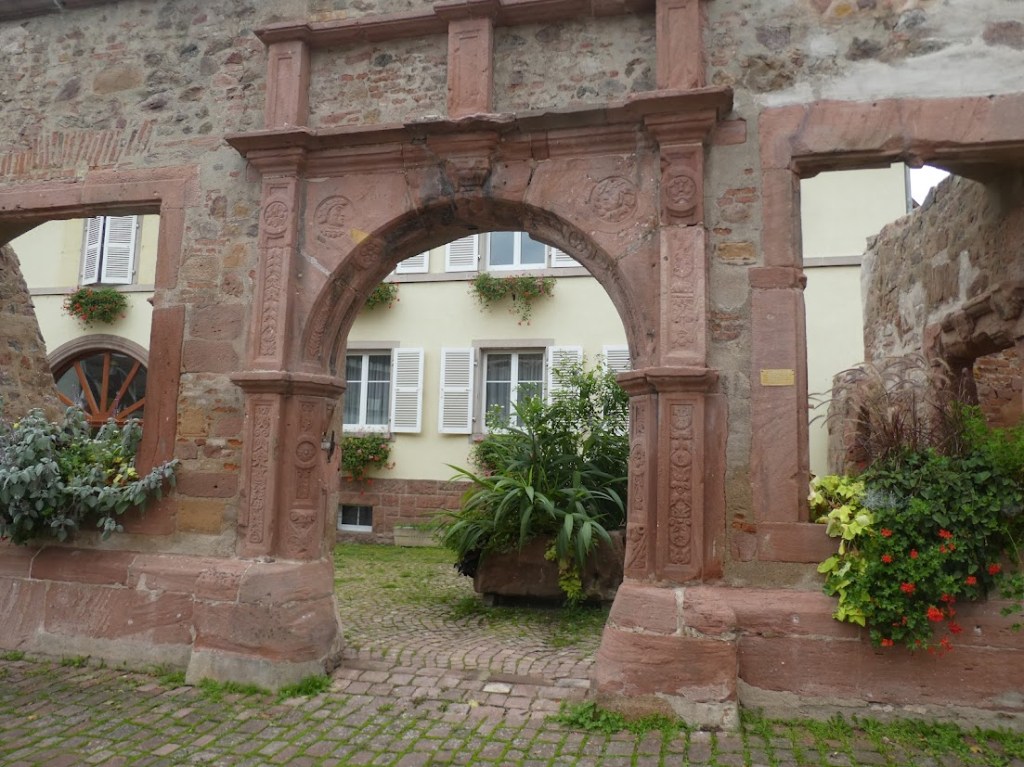
As we mooched round, it gave the air of being yet another pretty town of half-timbered houses. Until we reached the old town hall, which these days doesn’t even justify being called a facade.
What’s left of Ammerschwihr’s former Town Hall
Then a small plaque. Oh! So it was destroyed during the war?
The Town Hall, built in Renaissance style in 1552 was destroyed in an act of war in December 1944. It’s classed as a historic monument.
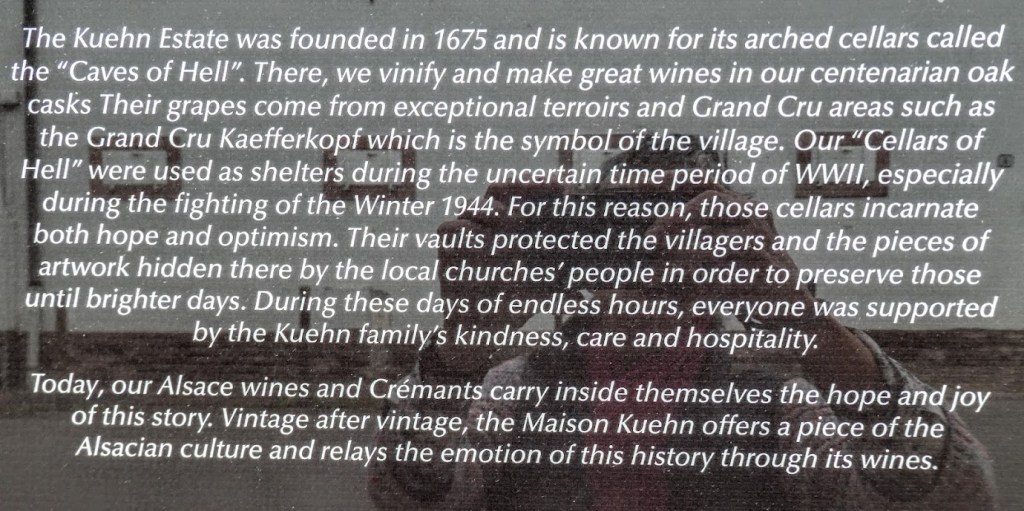
Buildings nearby were clearly more modern, though sympathetically built to fit in with the ancient centre (which we later realised were also reconstructions). We found another notice, attached to the wall of one of the many wine producers in town.
We needed to know more.
During the later stages of WWII, The Battle of the Bulge was the Germans’ last attempt to break through Allied lines. They gained a dangerous amount of French territory in a campaign which though apparently well known, I hadn’t heard of. The Allies promptly regained much of this territory, except in an area near Colmar, which became known as The Colmar Pocket. Ammerschwihr was in this zone, and like so many other nearby communities, it lost 85% of its buildings to bombing raids in December 1944.
But the ins and outs of military campaigns are above my paygrade, and if they interest you, you can read about them here and here. I prefer to know what life was like for the women and men on the street. Although I read that the conditions for the serving soldiers during this part of the war were truly horrendous. A particularly harsh winter in 1944 – 45 meant that both sides endured the sheer misery of fighting in deep snow and mud in totally inadequate clothing. Getting supplies to them was a sometimes unachievable struggle. Casualties were extremely high.
For the civilians, life was no better. Ammerschwihr wasn’t evacuated, but many villages were, and unending columns of the dispossessed trailed to what they hoped was safety, having lost everything but the little they could carry. Those who remained faced street barrages, hand-to-hand fighting. Food and often water were hard to come by, and the population hid in cellars, sharing what little they had. For those of us whose territory wasn’t invaded during WWII, this suffering is almost unimaginable. And afterwards – the long hard road to reconstruction, and trying to re-establish some kind of normal life.
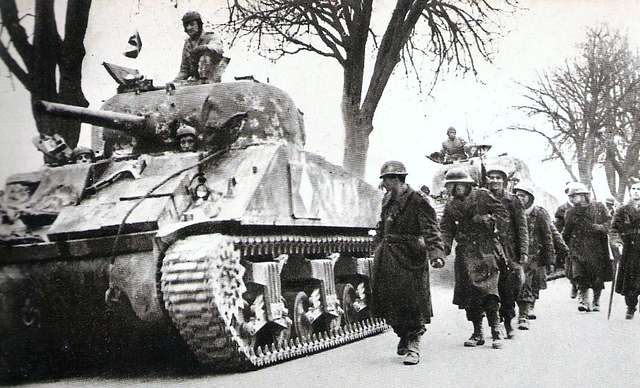
The victorious French advancing through Colmar in 1945 (Picryl.com)
Here’s what it says in WWII History Tour: Colmar Pocket
Once under German control, Alsace was subject to forced Germanization policies. The use of the French language was banned in schools, public spaces, and even private conversations in many cases. Street names were changed, French cultural symbols were removed, and local populations were pressured to embrace a German identity, often against their will. Families with French allegiances were treated as enemies, and suspicion ran high among neighbours, with the region caught between two nations. The sense of belonging for Alsatians became deeply conflicted as they struggled to retain their unique Franco-German culture under oppressive occupation.
Perhaps the most devastating aspect of Nazi control was the forced conscription of Alsatian men, known as the “Malgré-nous” (meaning “against our will”). Thousands of young men were drafted into the German army, the Wehrmacht, and even the feared SS, despite many feeling a strong allegiance to France. Some were sent to fight on the Eastern Front, where casualties were extremely high. Families were torn apart, and many Alsatians who tried to resist conscription faced imprisonment, deportation, or execution. After the war, the return of Alsace to France did not immediately heal the scars. The region carried the burden of divided loyalties, lingering mistrust, and the painful memories of occupation and forced service, which shaped its identity for decades to come.
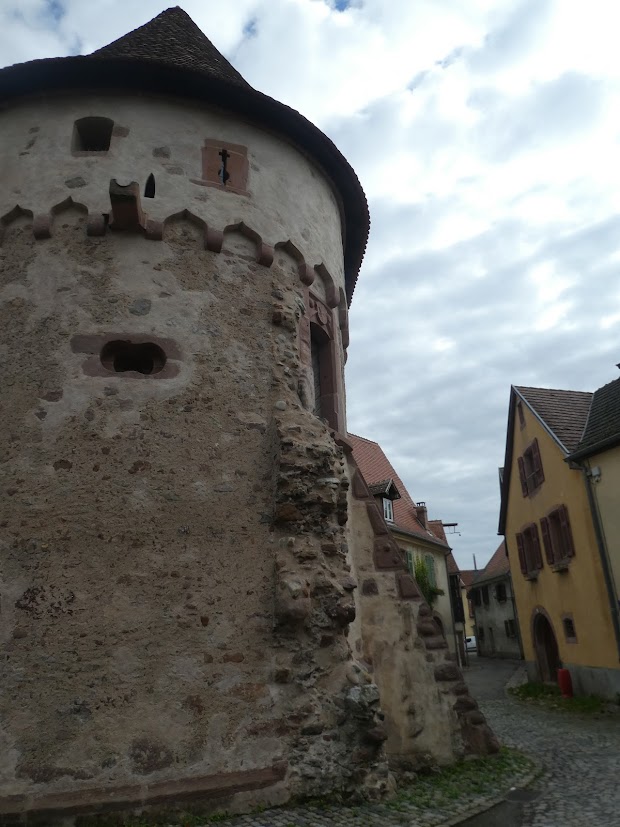
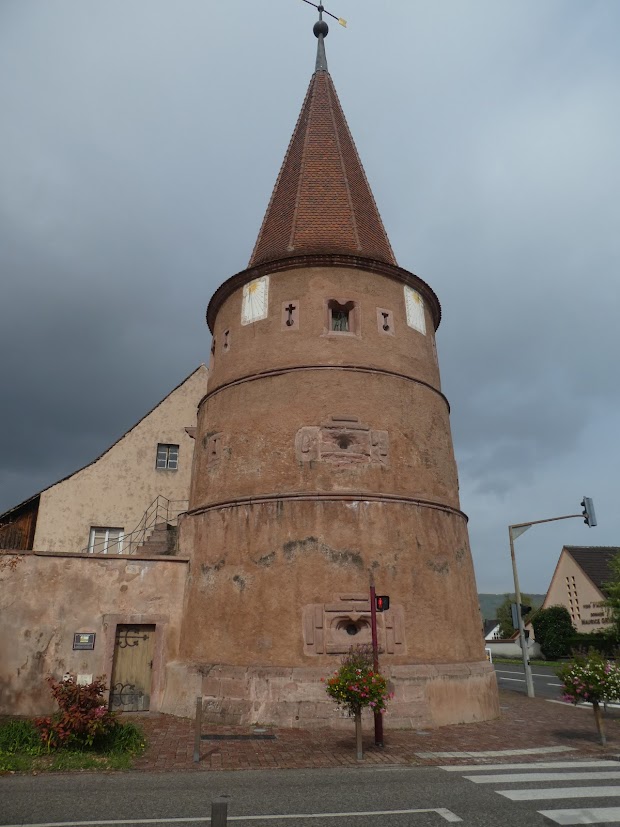
It was hard to reconcile all this with the charming, civilised, peaceful little town we wandered around. The nearest we got to the unpleasant realities was this building, once a town gate, once in fact a prison, and known as Le Tour des Fripons – the Tower of Knaves. It all seemed much less immediate than the town’s more recent disturbing history.
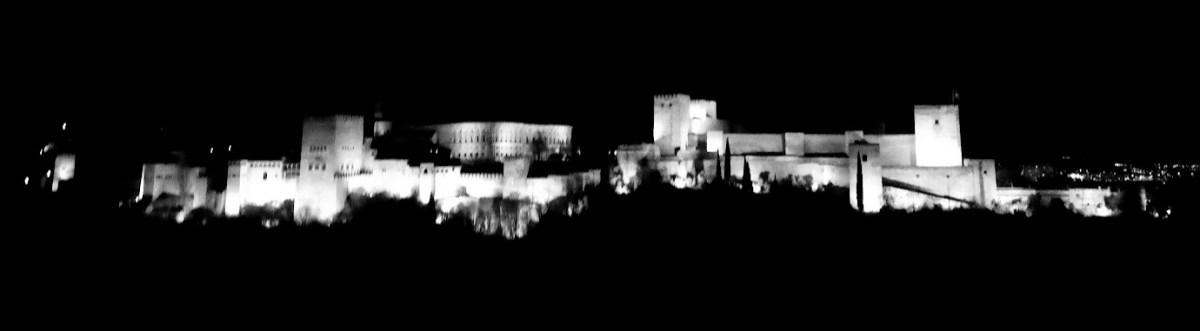
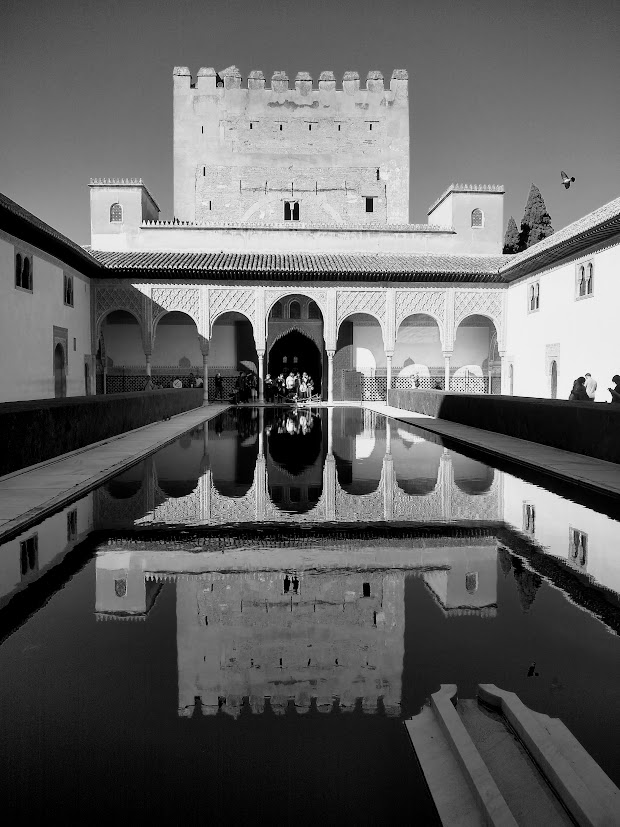
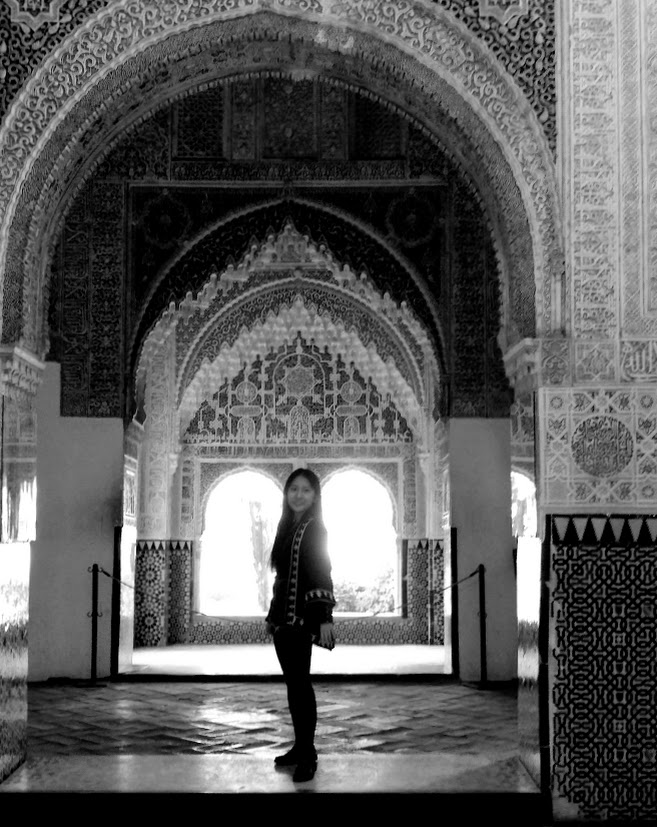
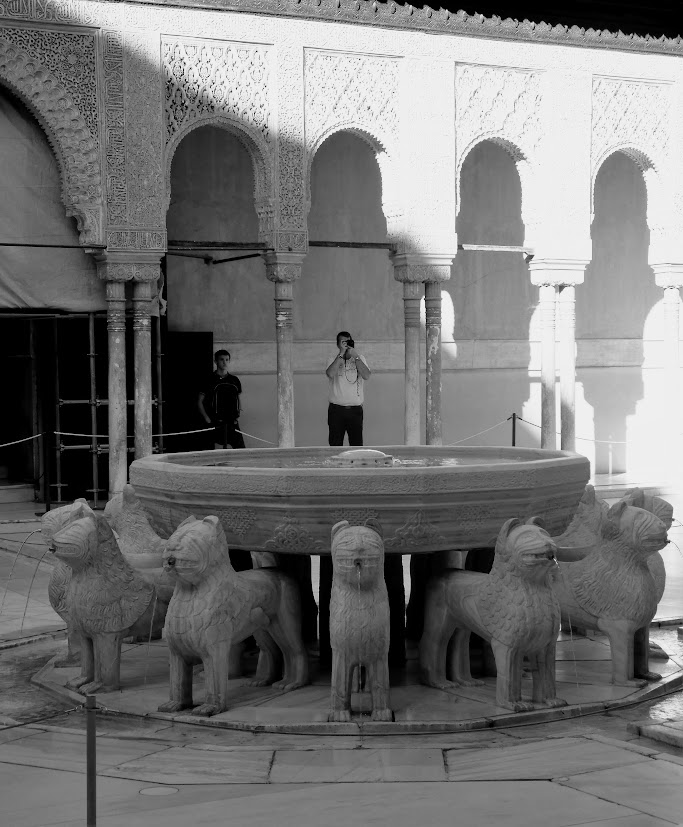
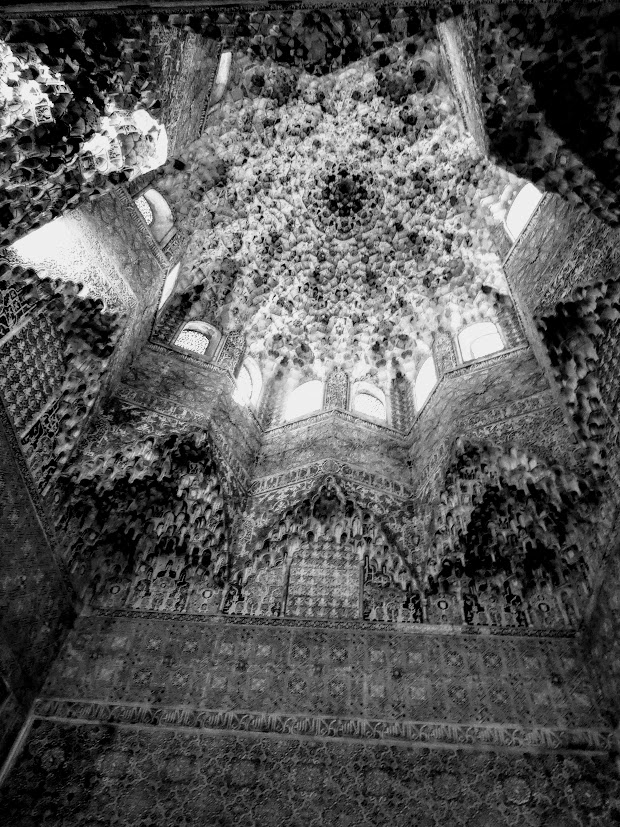
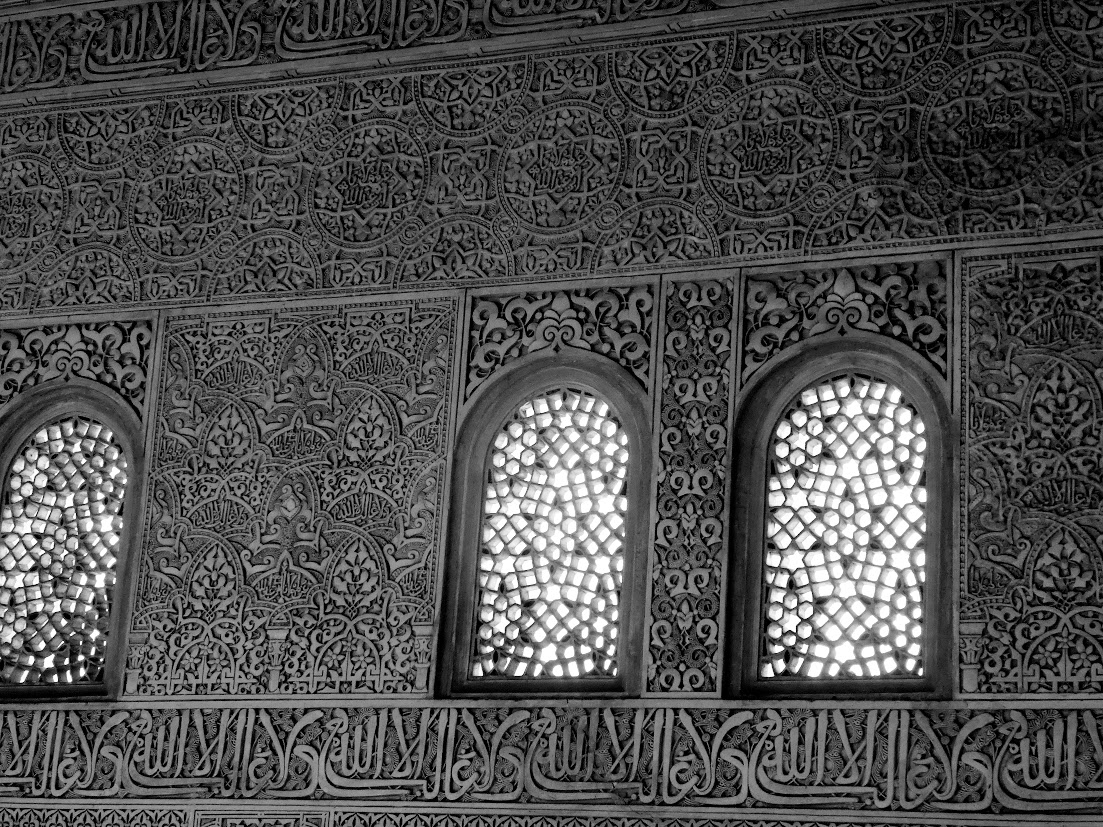
The Alahambra in Granada has a history going back to the 11th century. It was a Zirid fortress, then a 13th and 14th century Nasrid royal palace and fortress complex. Like all Nasrid palaces, it’s a harmonious blend of space, light, and water, featuring intricate decorations and inscriptions, and it’s quite wonderful. Despite the crowds and the selfie-seekers, one of whom is immortalised below. We couldn’t get rid of her.
But in 1492 (the same year, as any English schoolchild knows, that ‘Columbus sailed the ocean blue‘), Catholic monarchs captured Granada, the last bastion of Moorish rule in Spain. It became a royal court for some time before falling into disrepair, was damaged by Napoleon’s troops, and was eventually discovered by 19th century Romantic travellers. Rediscovered, restored, it’s now a UNESCO World Heritage site.
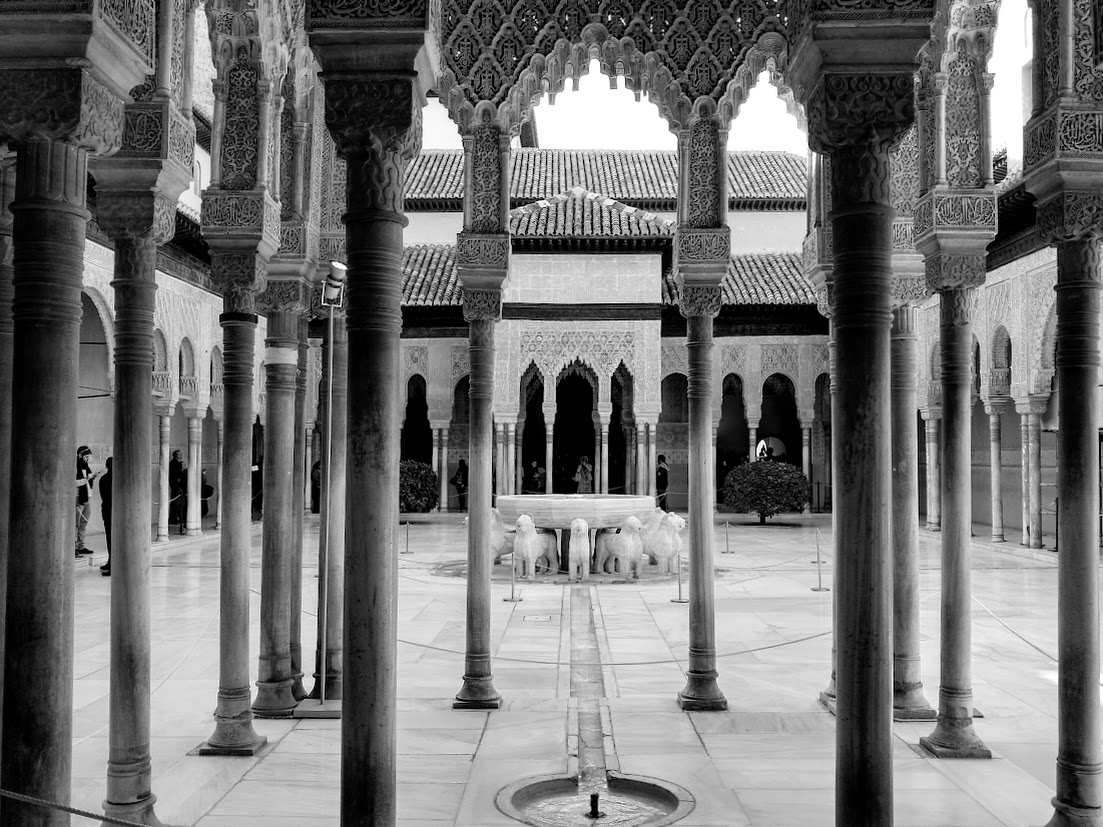
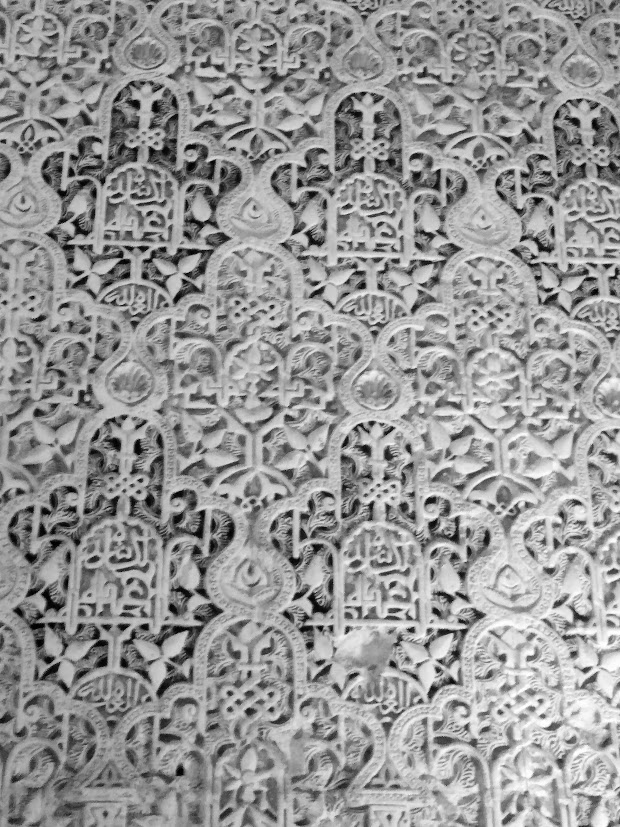
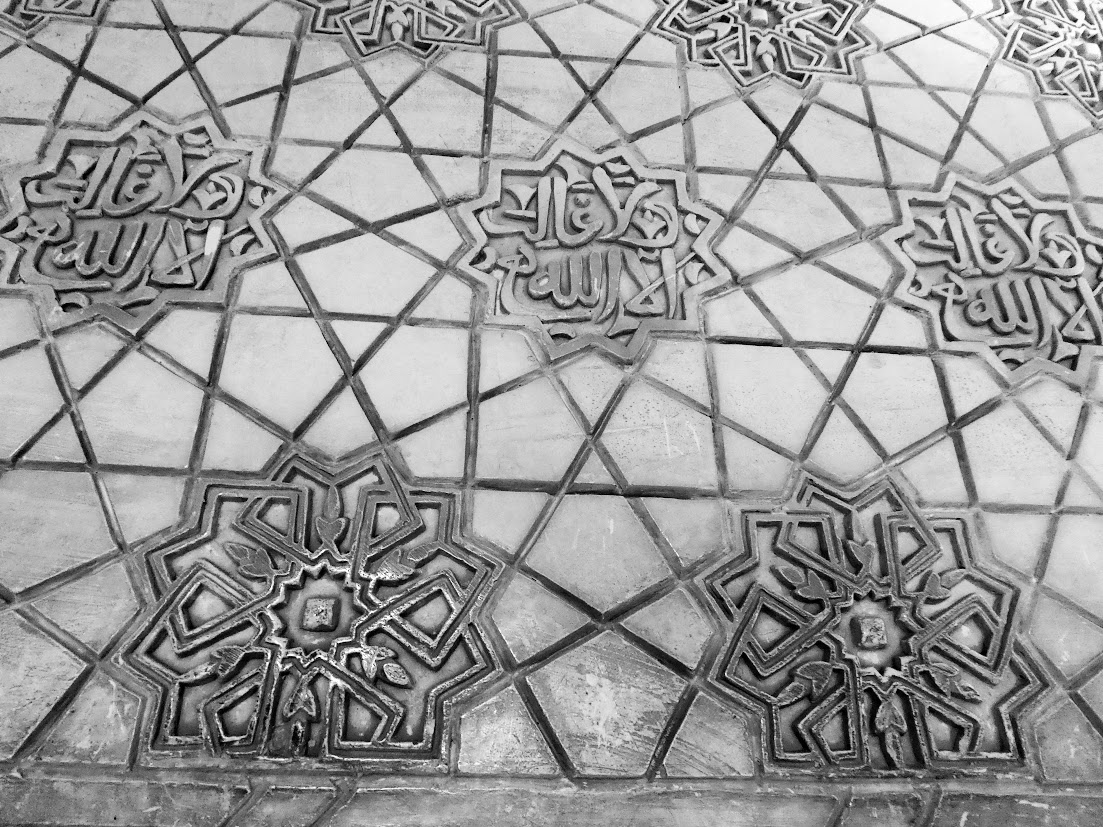
Here’s some decorative detail. Also symmetrical.
And so it’s here I’ve come to celebrate symmetry for Leanne’s Monochrome Madness, hosted this week by Dawn of The Day After. We visited in 2019.
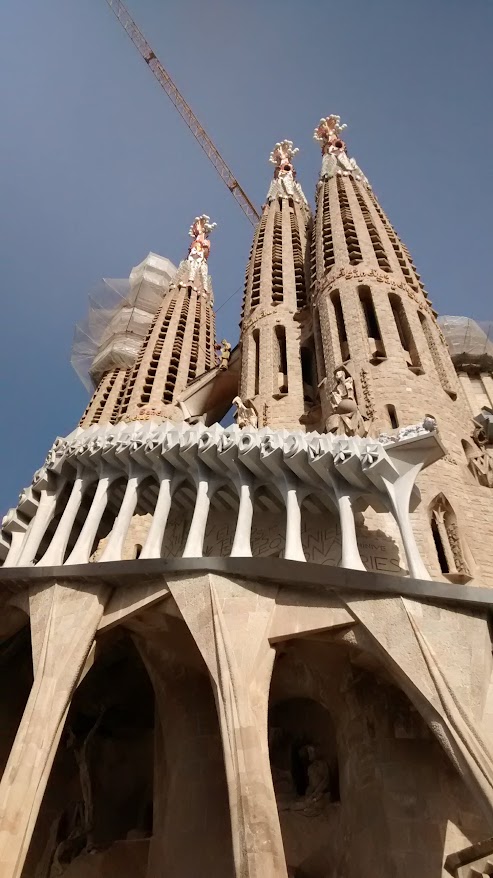
Anyone and everyone who visits Barcelona has a trip to La Sagrada Familia as a ‘must see’. They come because for almost a hundred years, since he was first involved, Antoni Gaudí’s bold vision of a church has been in the news as a source of controversy. We’ve all heard of it.
For a start it wasn’t commissioned by the diocese, as was usual when a new church was required. Instead, an association founded by a local bookseller wanted it built, and Gaudí wasn’t even their original choice of achitect. Work on the church began in 1882, but Gaudí wasn’t officially involved until 1914. Gaudí himself died in 1926, when the project was barely a quarter complete, and since then, many architects have been involved. Is the building that may be finished next year even reflecting Gaudí’s original vision?
Funds to build it relied and rely on donations from the public. The Spanish Civil War got in the way. In July 1936, anarchists from the FAI set fire to the crypt and broke their way into the workshop, partially destroying Gaudí’s original plans. Later, Covid 19 got in the way. The foundation that manages the finances neither publishes accounts nor pays taxes.
You won’t have to go far in Barcelona to find citizens who are no friends of La Sagrada Familia. They speak of how over-tourism round the church has lowered the local quality of life, and impacted negatively on other tourist sites. They find it ugly, and moving ever further from Gaudí’s original vision. One of the later additions to the plan, to build a stairway which will involve the demolition of local housing has generated a row which I think still isn’t resolved.
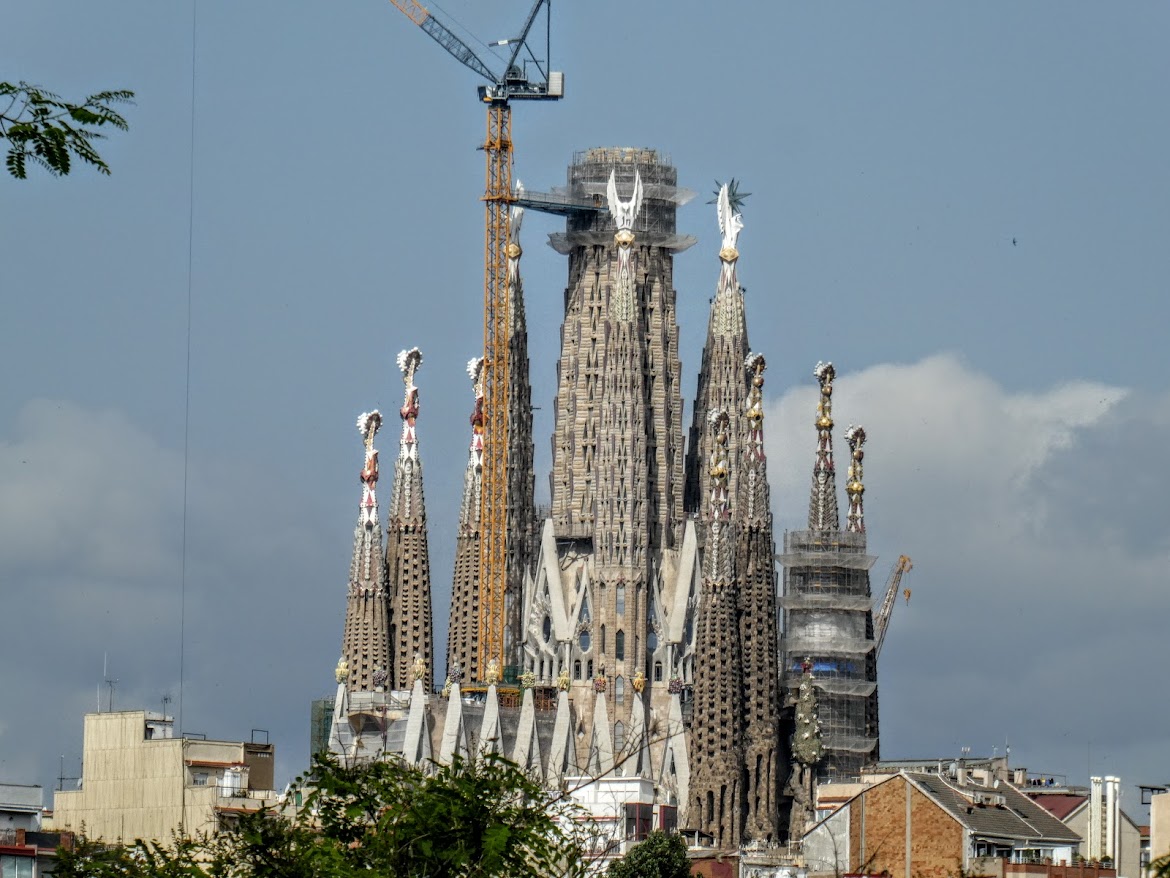
One was or another, I think it’s fair to say that La Sagrada Familia, by its sheer size and complexity, is an audacious bit of planning. Its impact on the city skyline is definitely bold.
If you haven’t yet been, and want to do so, plan well beforehand. Book ahead. It’s a bold and undaunted tourist, or a foolish one, who turns up at the gates and expects to get straight in. Once in, you’ll be shepherded around a prescribed route, and not at your own pace.
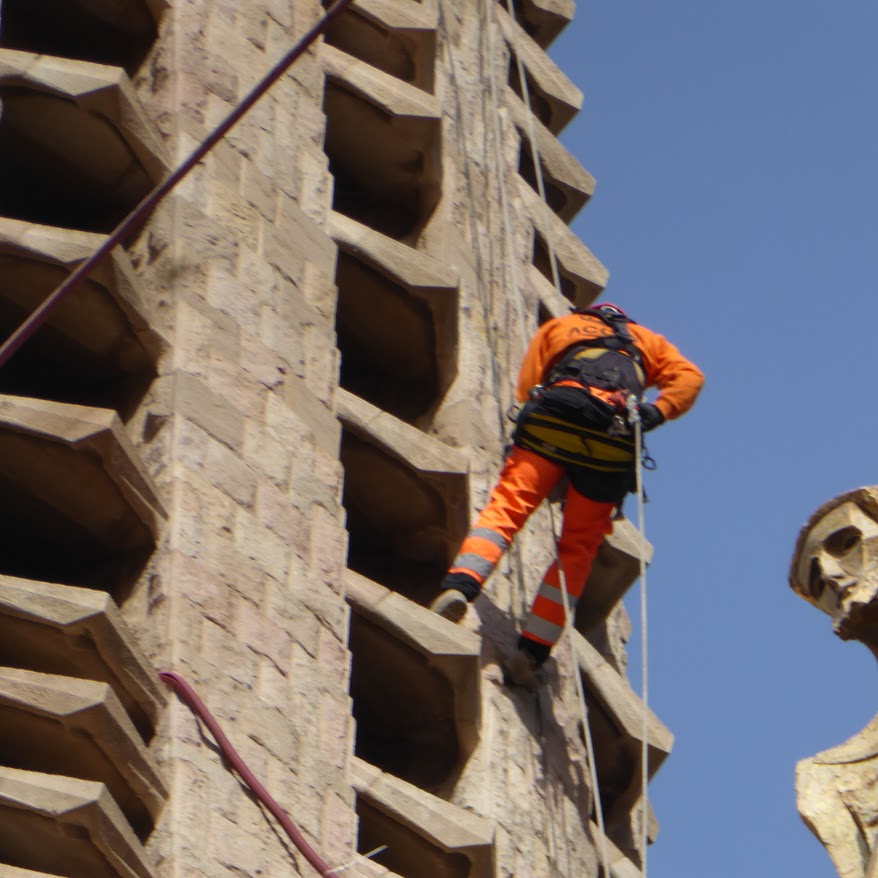
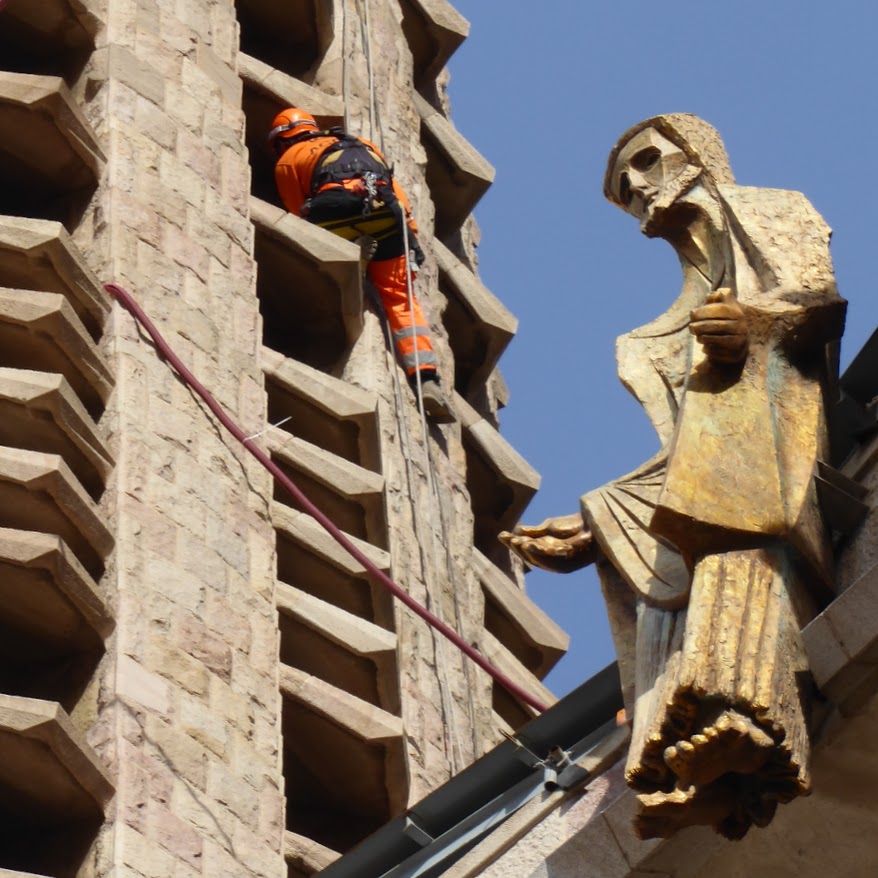
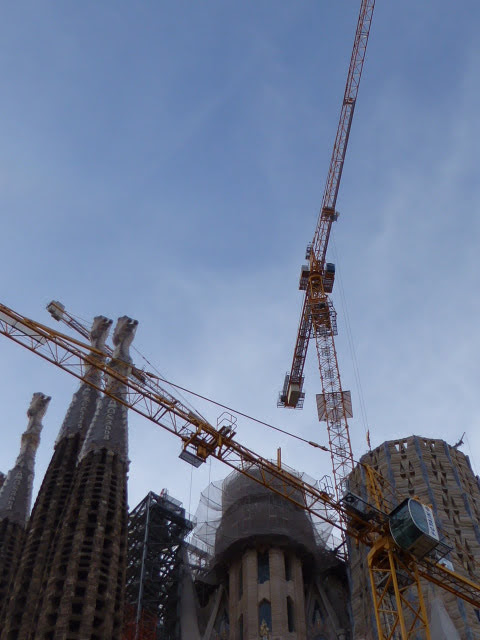
Whatever you think of the church, I think these builders, scrambling up unfeasibly high walls and towers are pretty bold.
Look how high up some of them have to work.
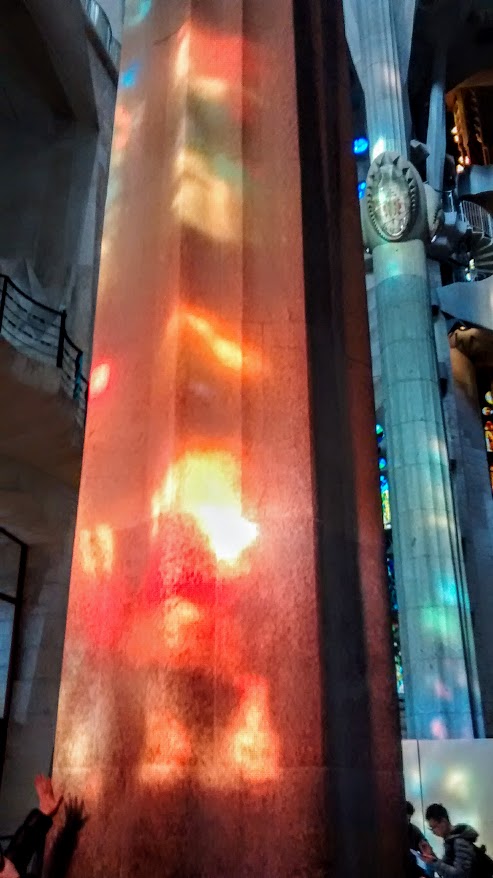
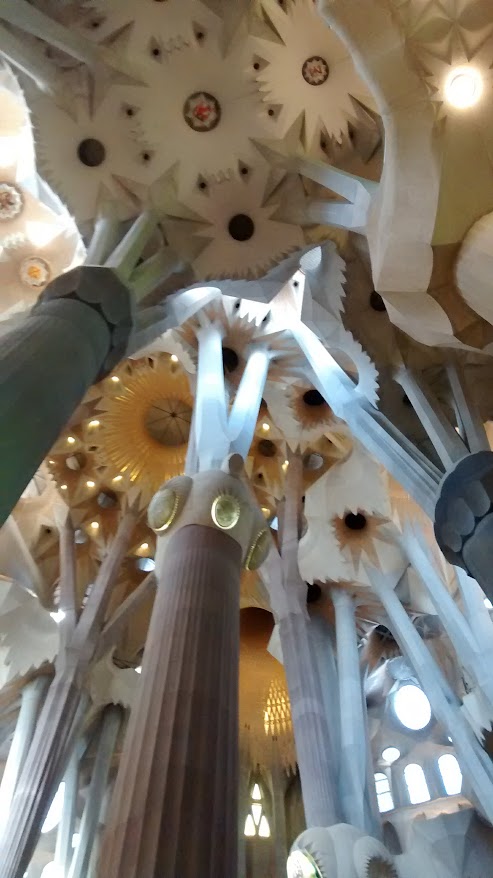
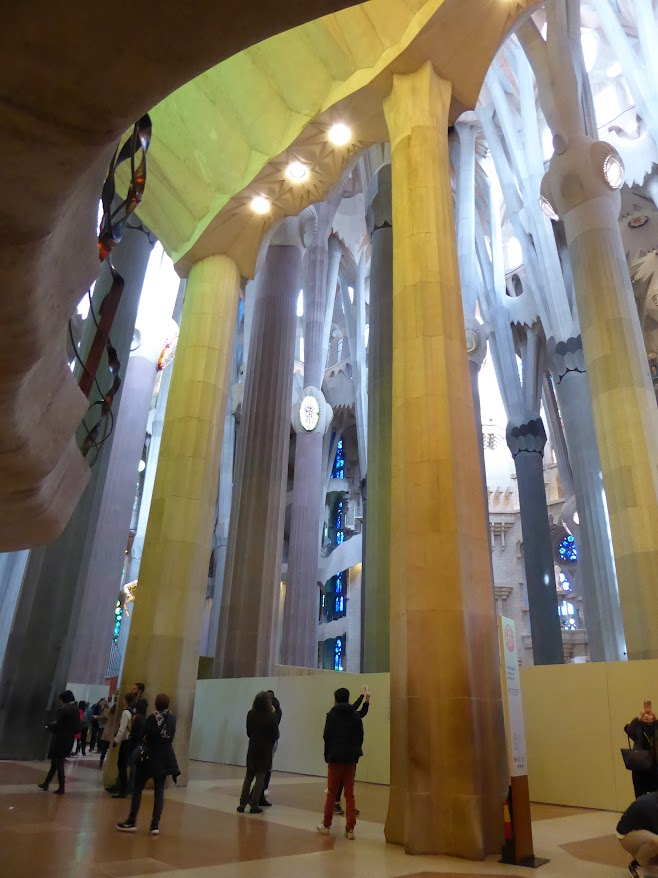
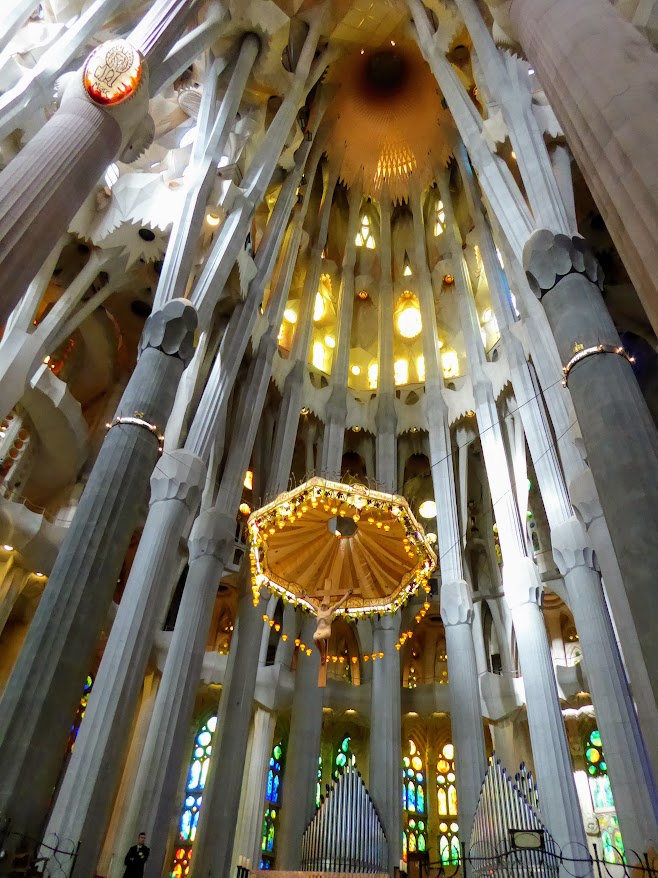
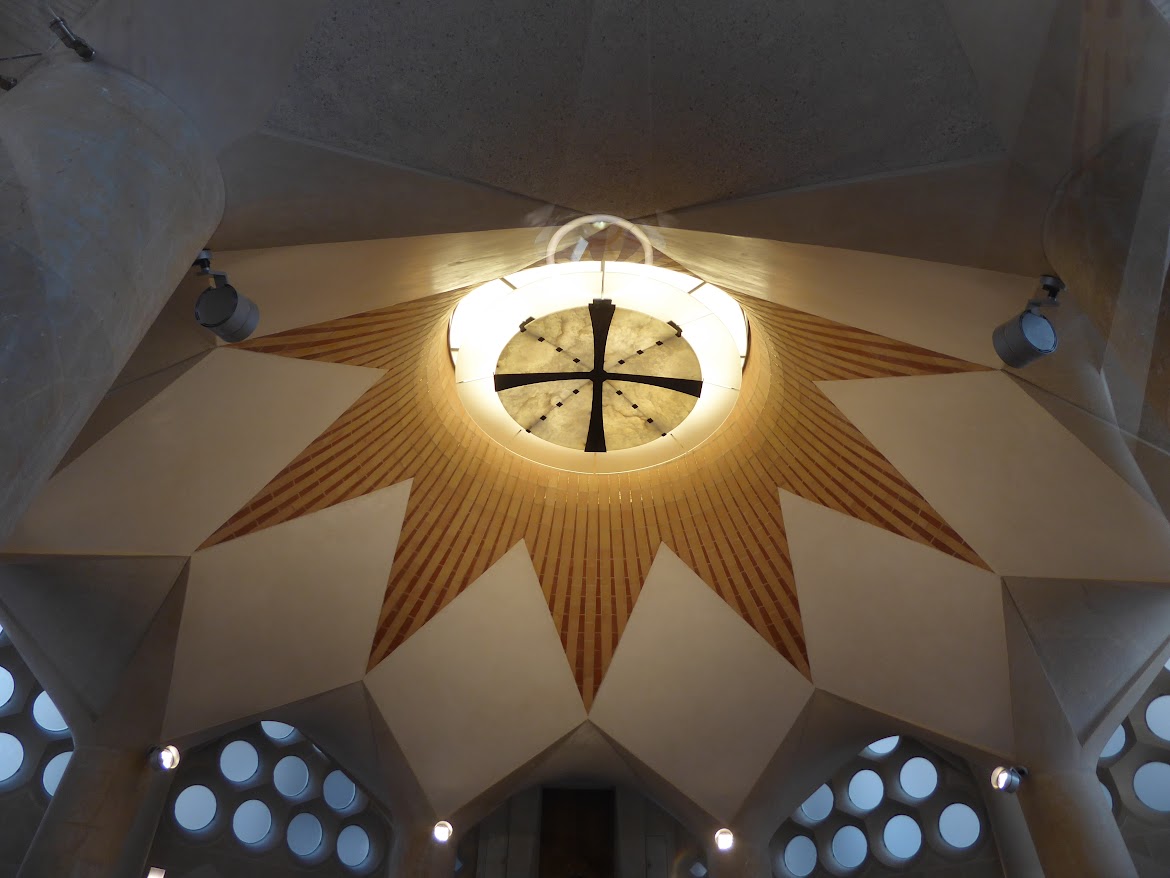
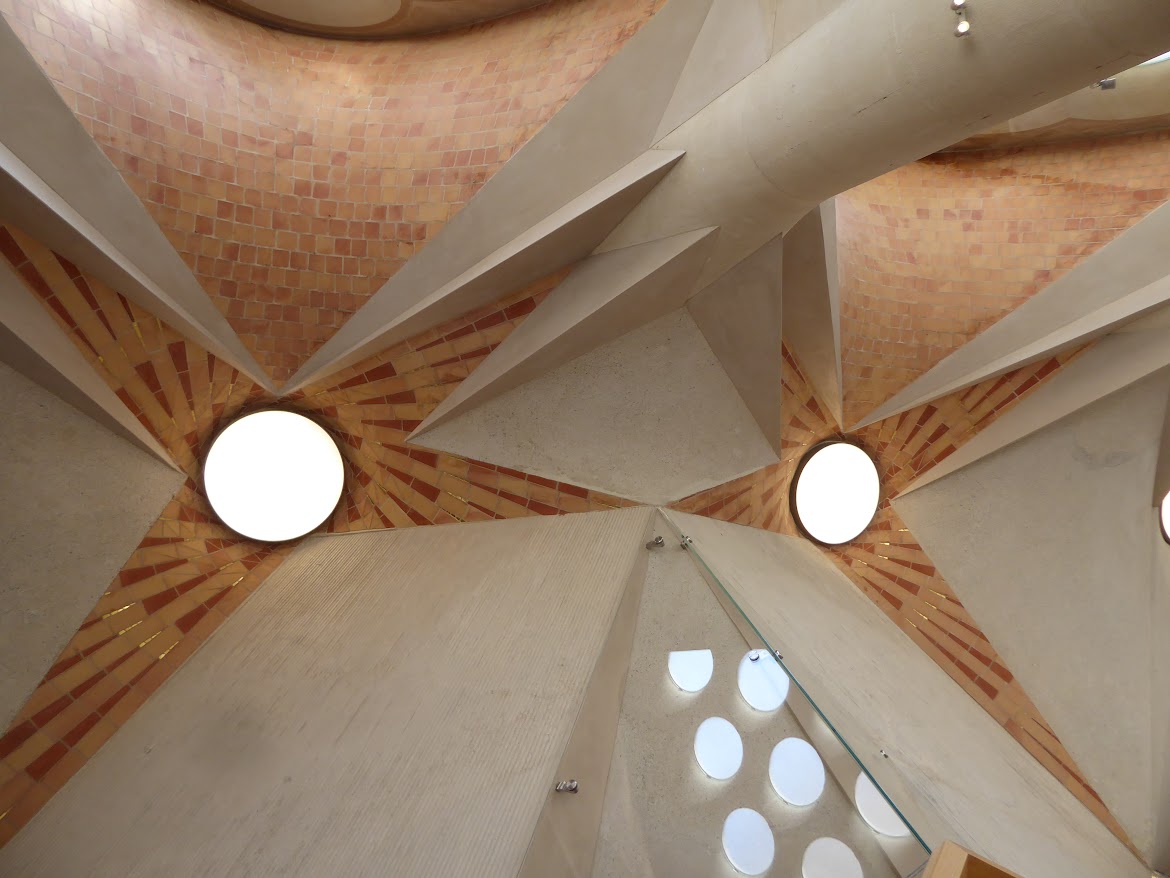
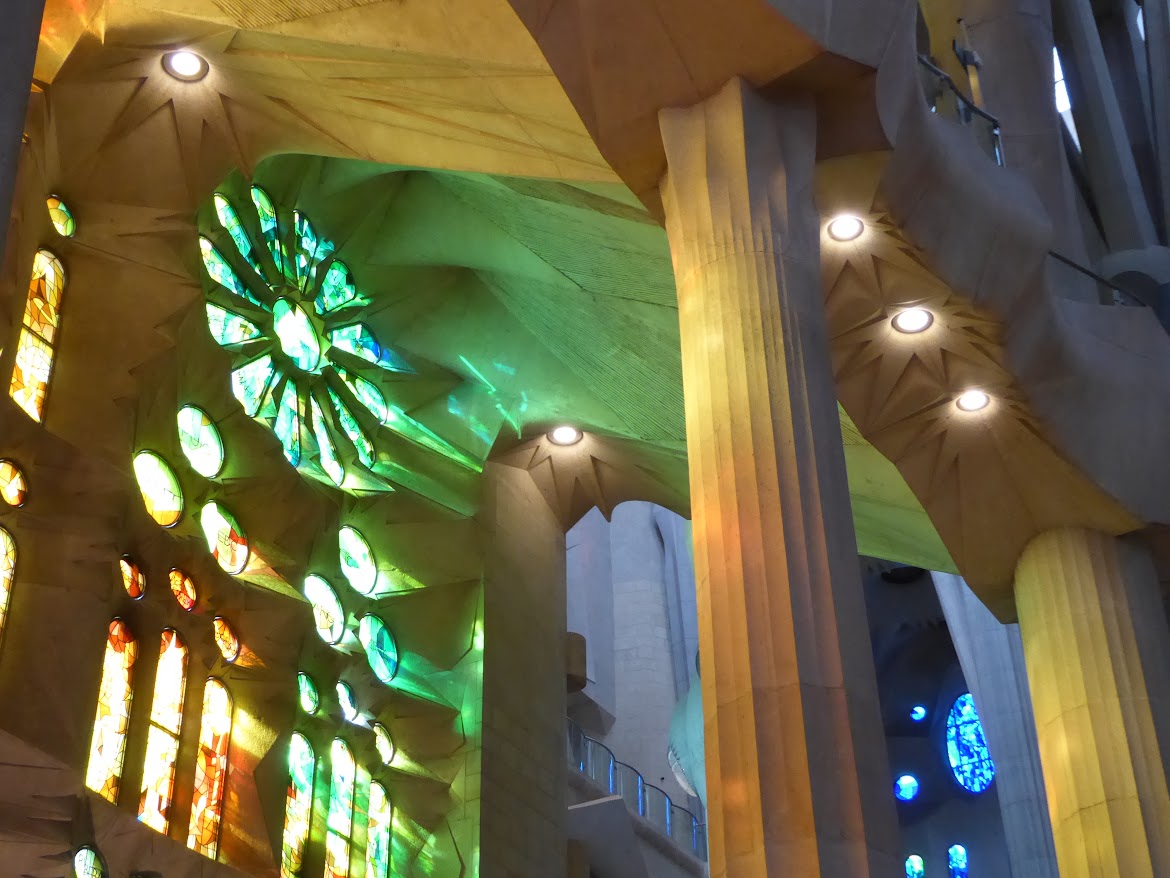
Here’s a miscellany of shots from the interior of the building.
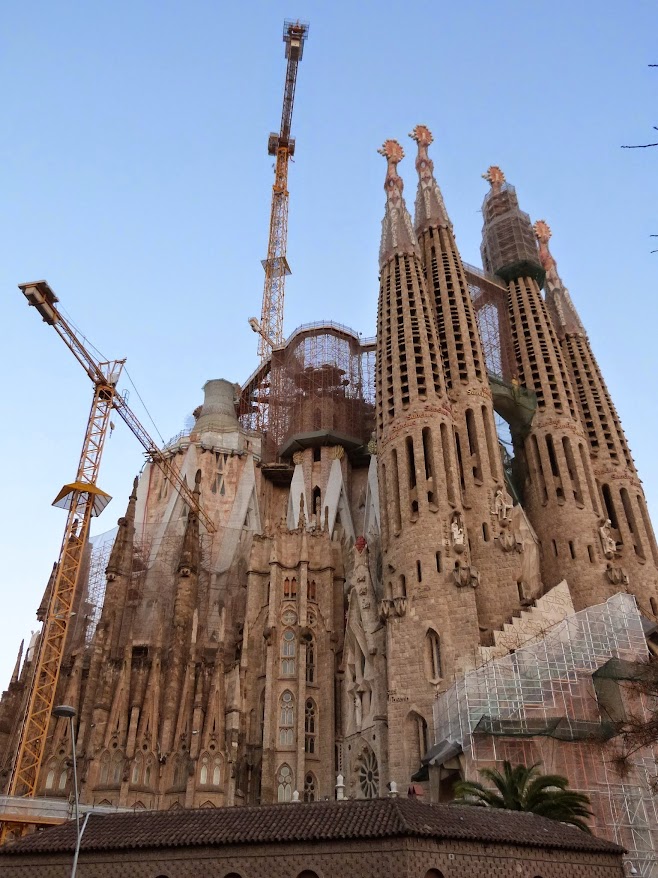
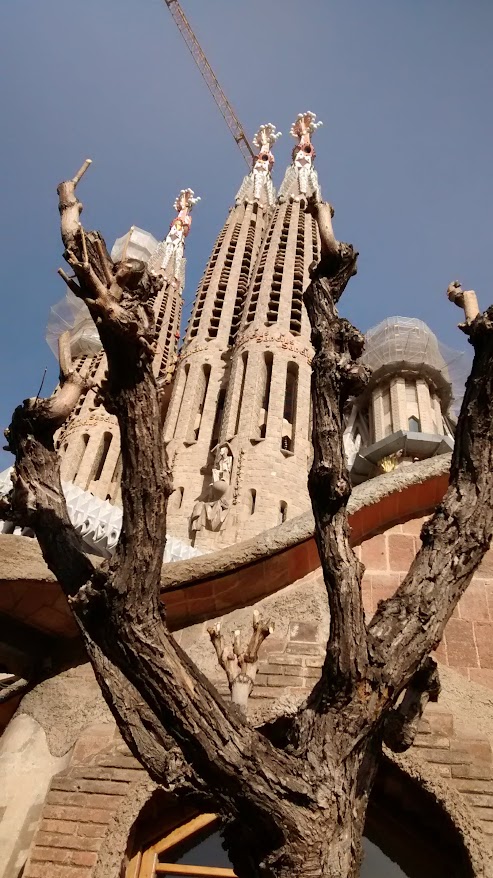
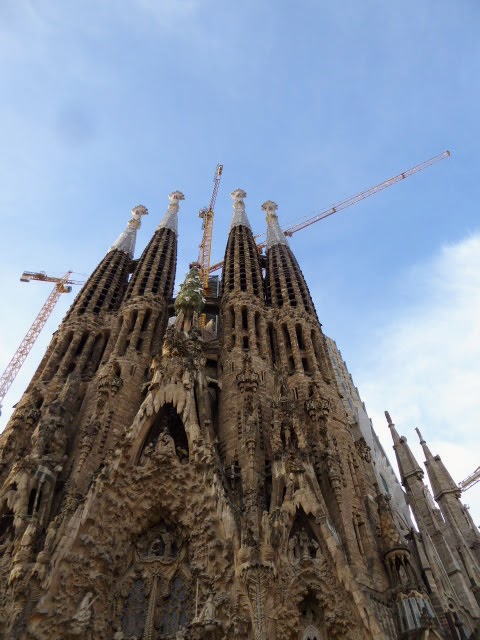
And the exterior.
The featured photo is my most recent, taken in January from the Mercat dels Encants, some distance away. As you can see, quite a lot of recent additions have been made since the exterior shots shown above were taken .
What to visit instead? Be intrepid! Make your way (and it’s not that easy) to Colonia Güell, outside town, and visit Gaudí’s incomplete (but bold) church there, the one he expected to make his Magnum Opus until the funding stopped, and the Sagrada Familia presented itself as an opportunity. You can read about it here. You mght be able to tell where my sympathies lie.
We arrived back home yesterday afternoon – and by gum, it’s cold. Brrrr. A house in January, unlived in for a month, is Not The Place To Be. So I’ll warm myself up by showing you some pictures of a town we enjoyed visiting for just a couple of hours on our last day.
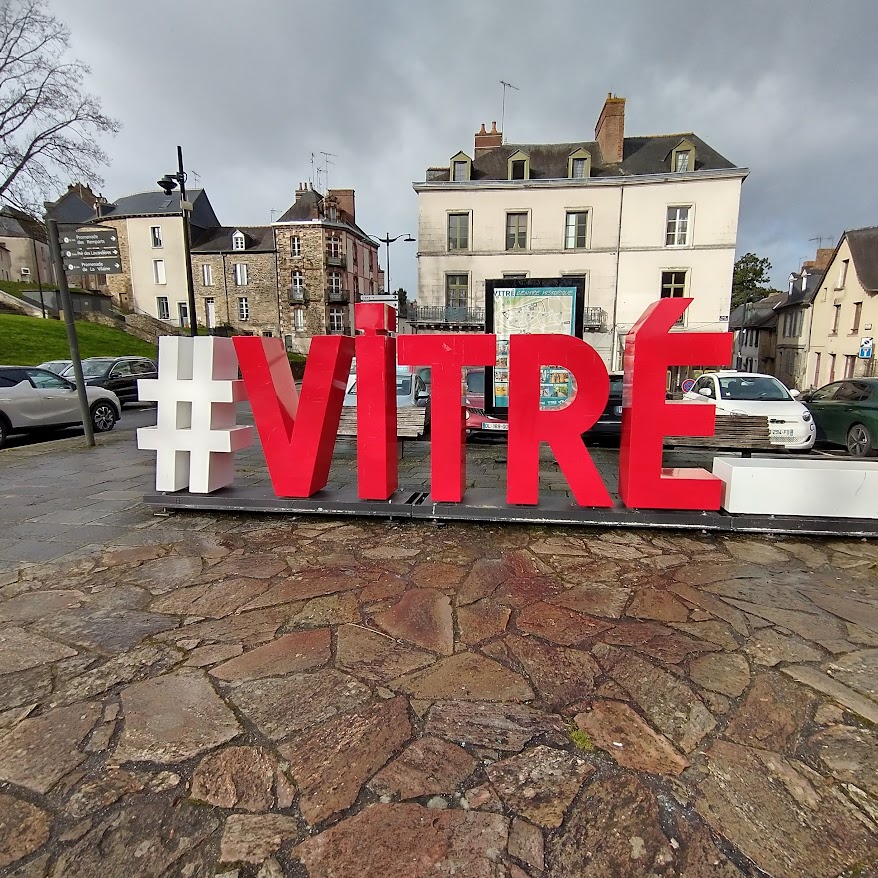
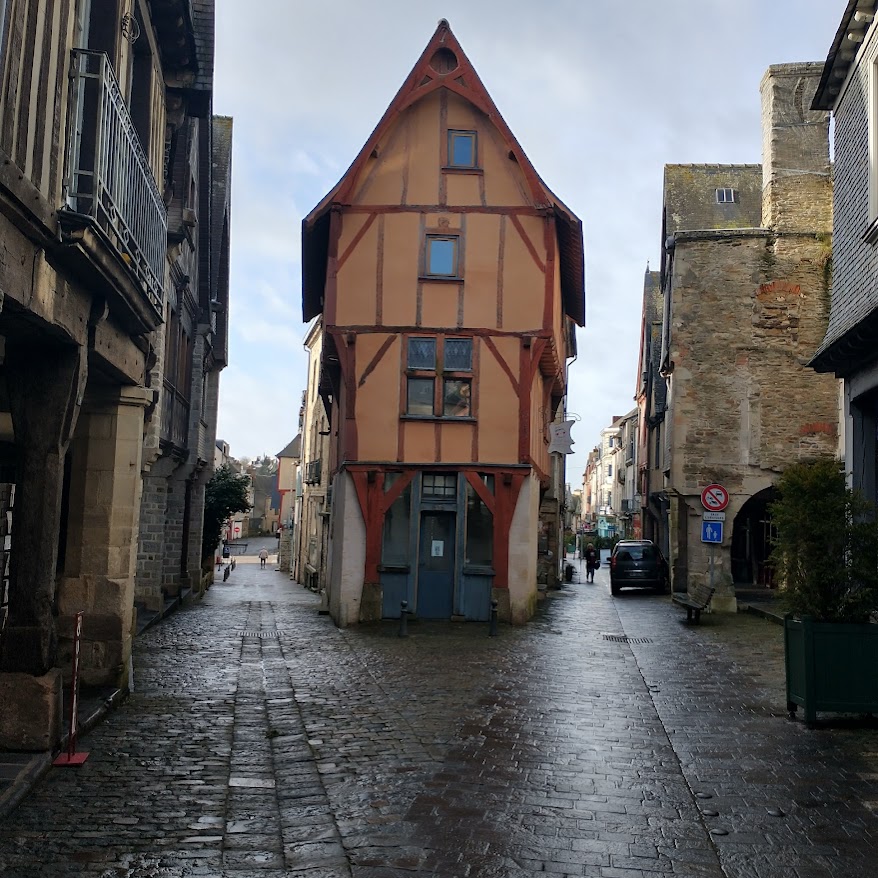
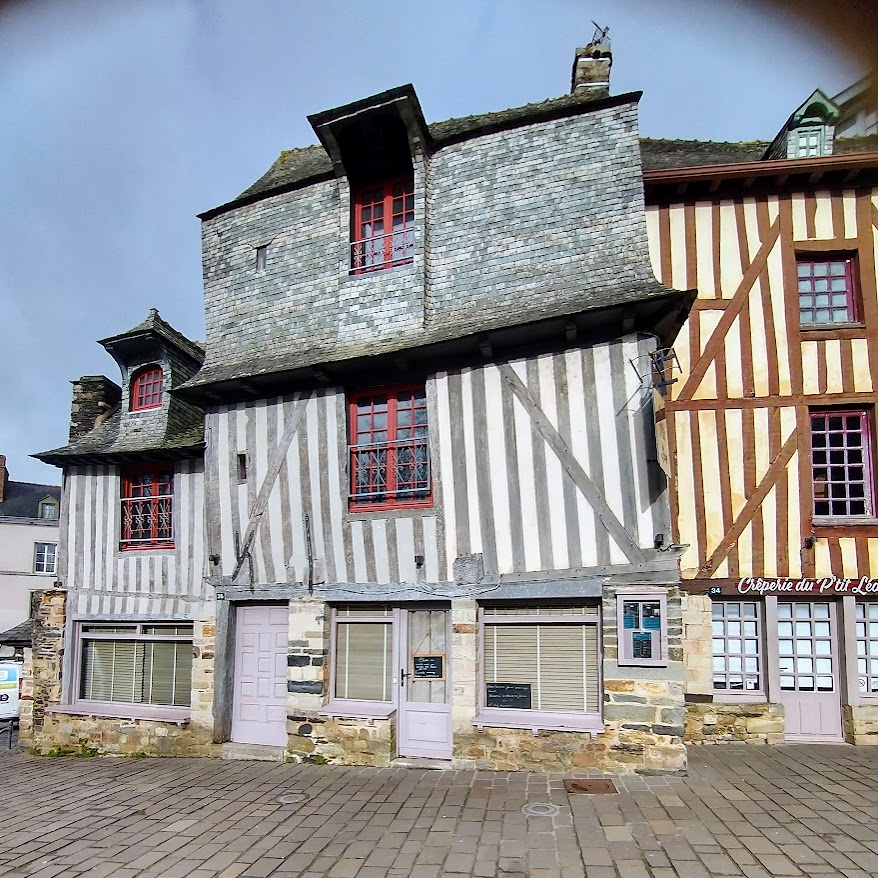
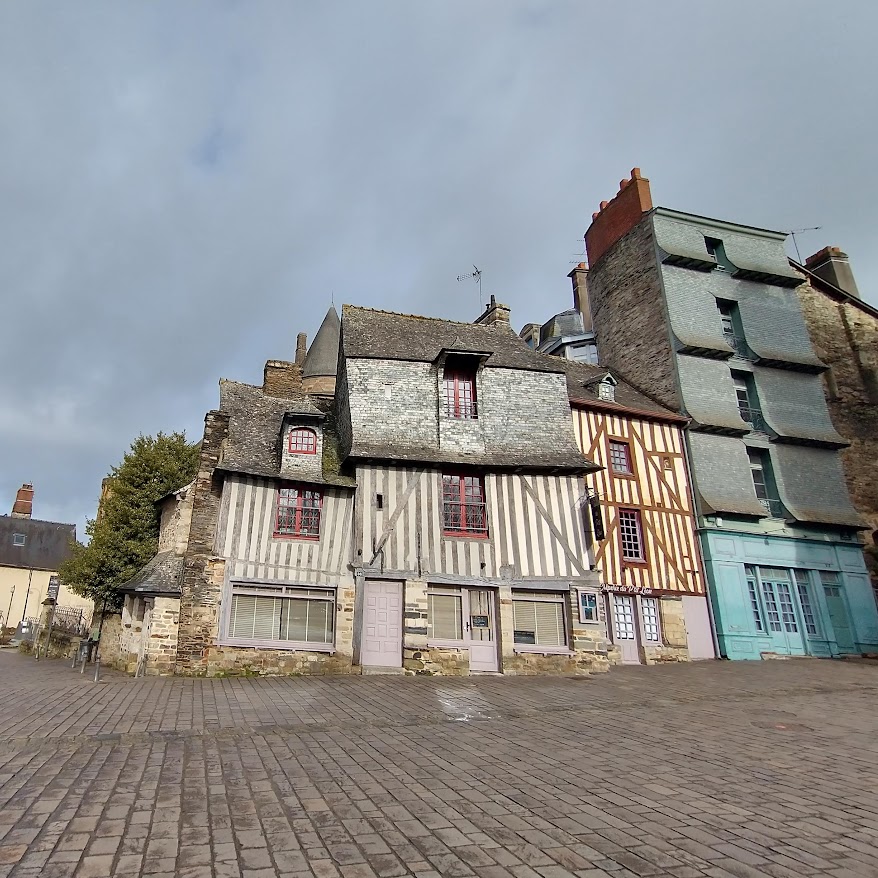
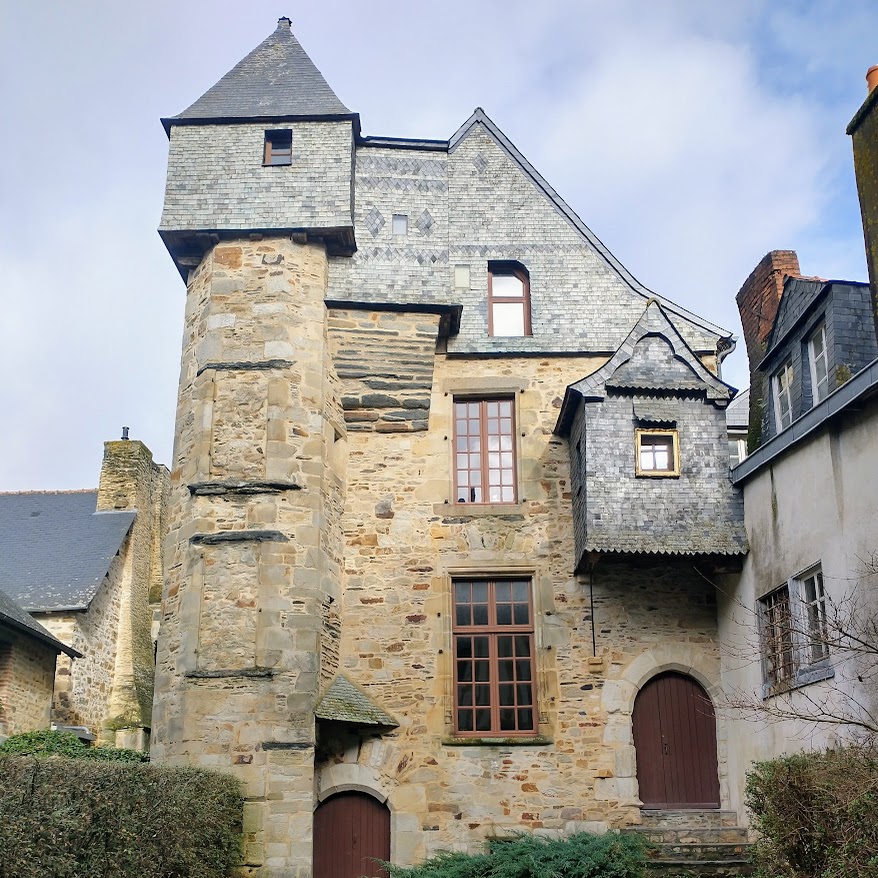
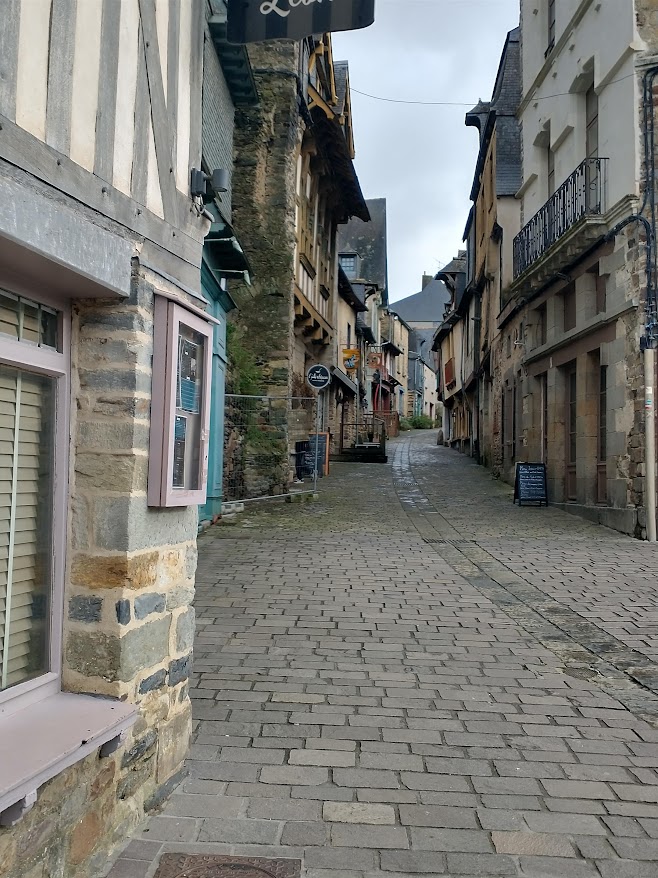
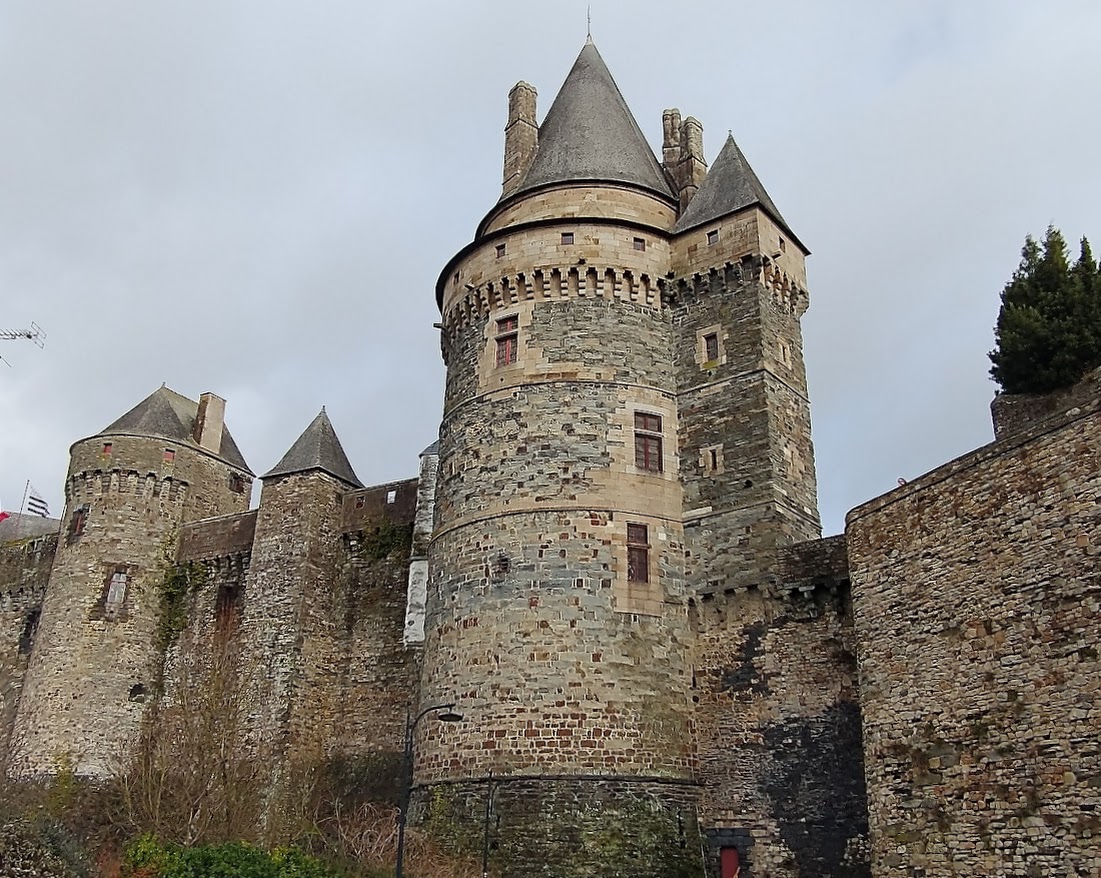
It’s Vitré, a town in Brittany that still has not only an impressive castle, but a preserved town centre dating from mediaeval times. It was both a prosperous trading centre for wool and woollen goods, and a bit of a military hotspot. That castle, commanding from its hilltop site views all over the Vilaine valley below saw frequent military action.
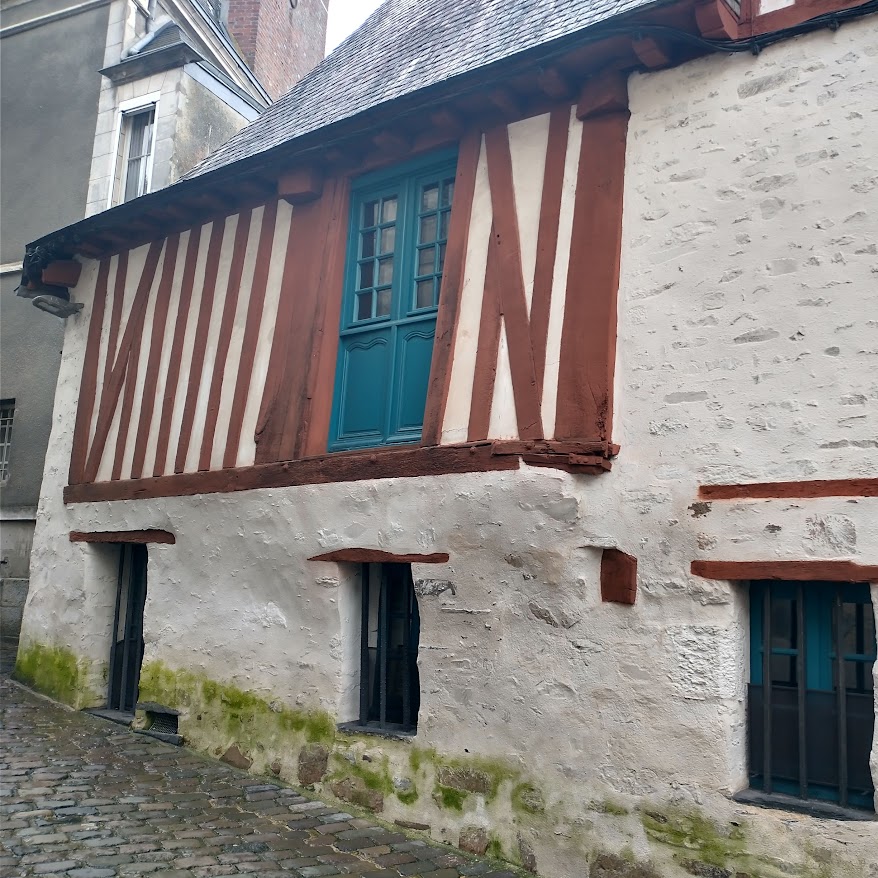
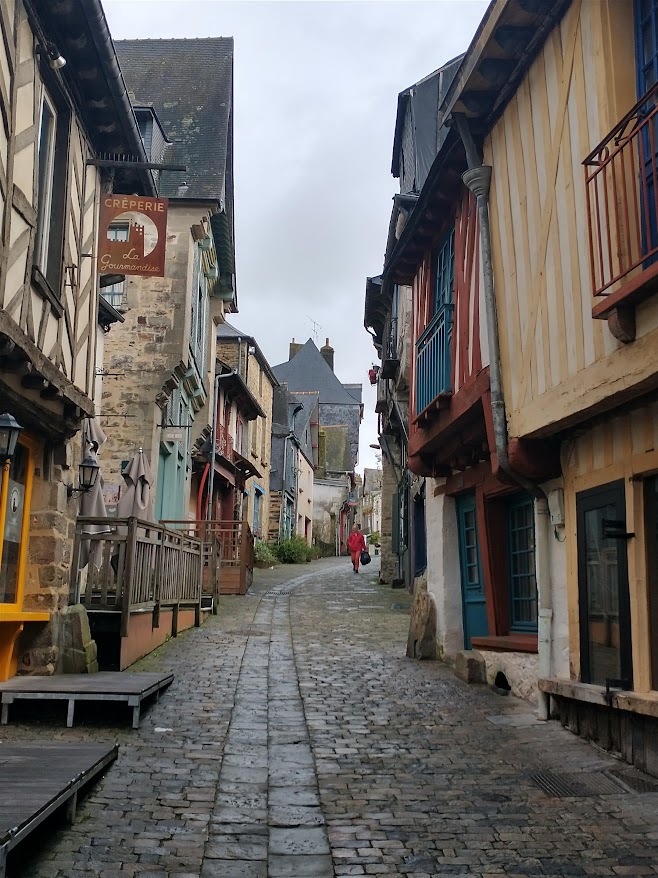
Today, the town is charming, picturesque – and wonkily geometric. Just enjoy a quick stroll round its narrow streets with me:
Do you think Rapunzel lived in the dwelling below?
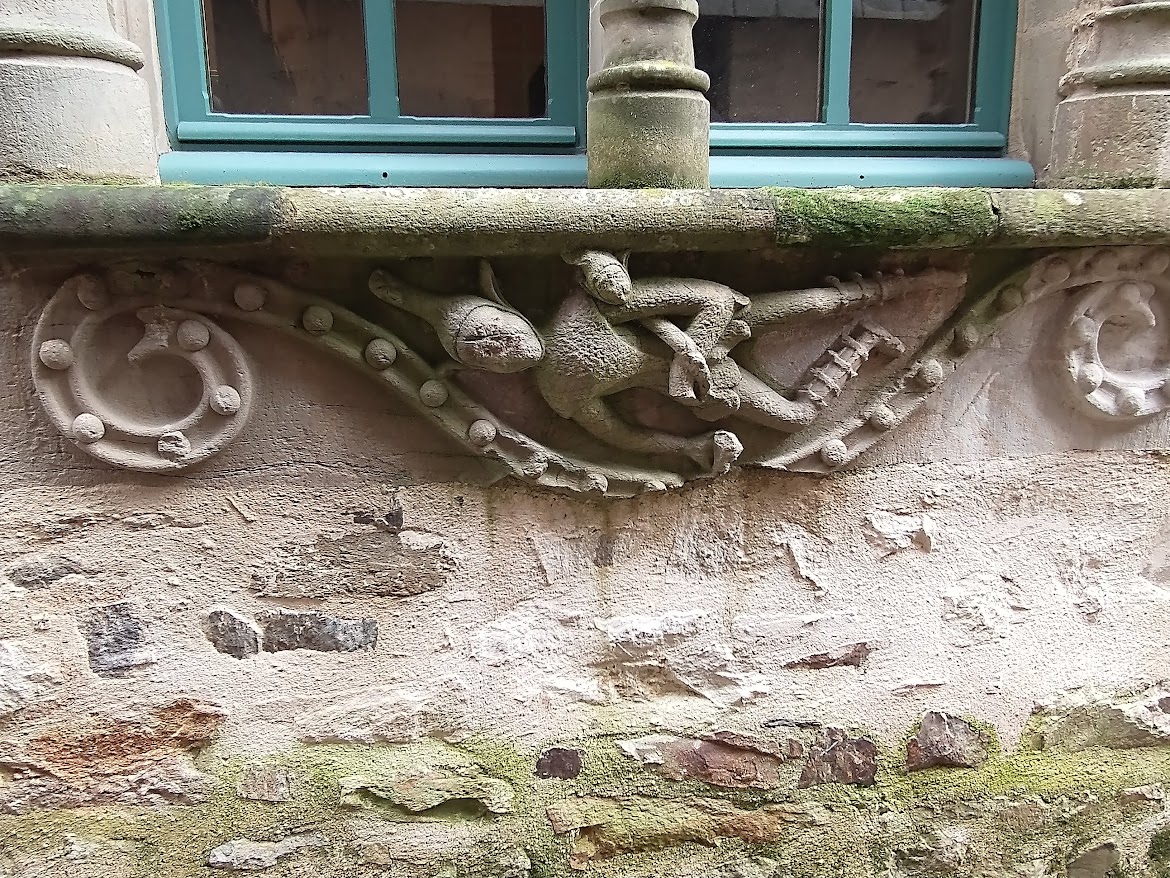
A couple more streets, and a charming decorative detail beneath a window …
…. and finally, the castle.
We didn’t visit the castle or the museum housed there – they were both closed. A good enough excuse to go back another time and explore a little longer.
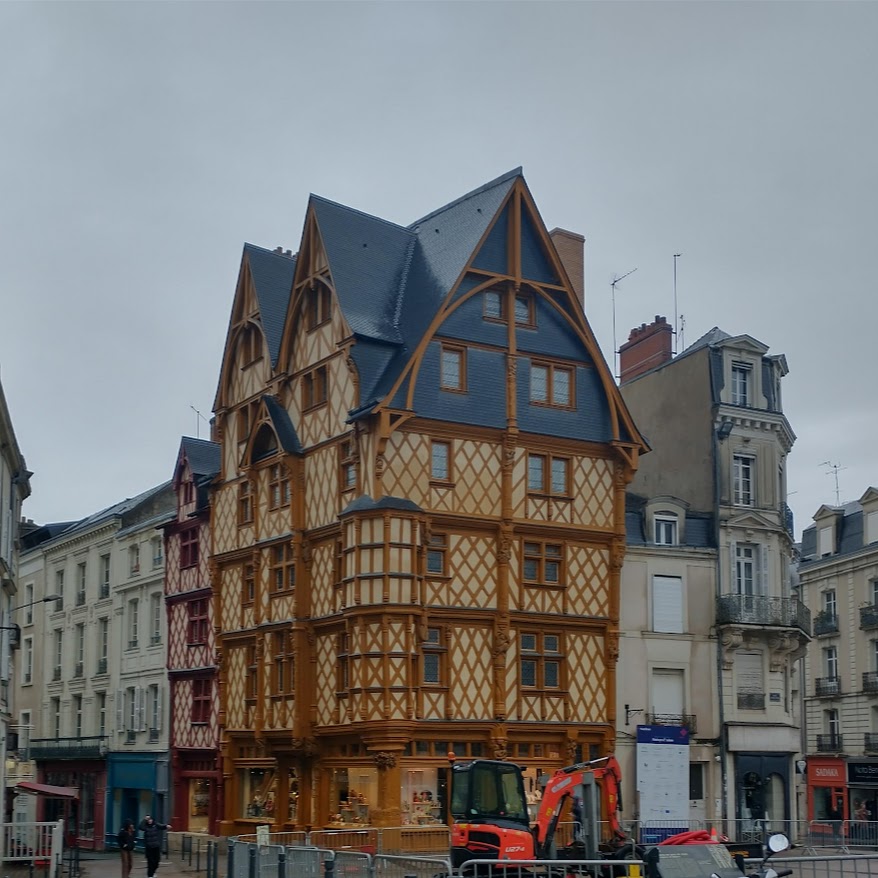
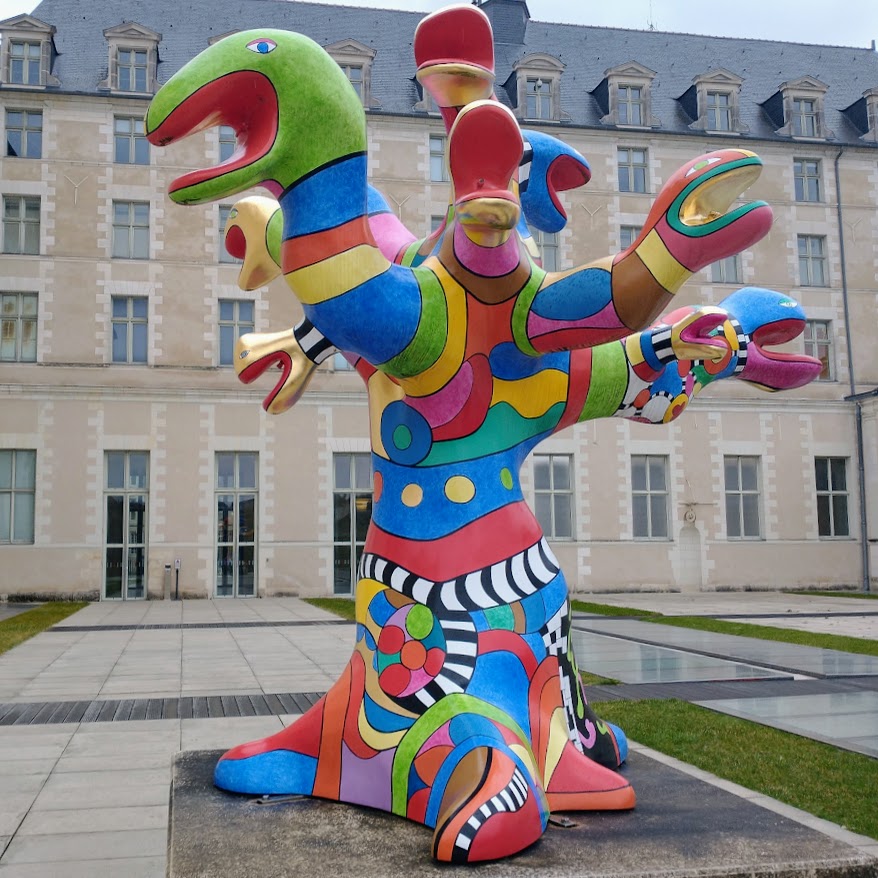
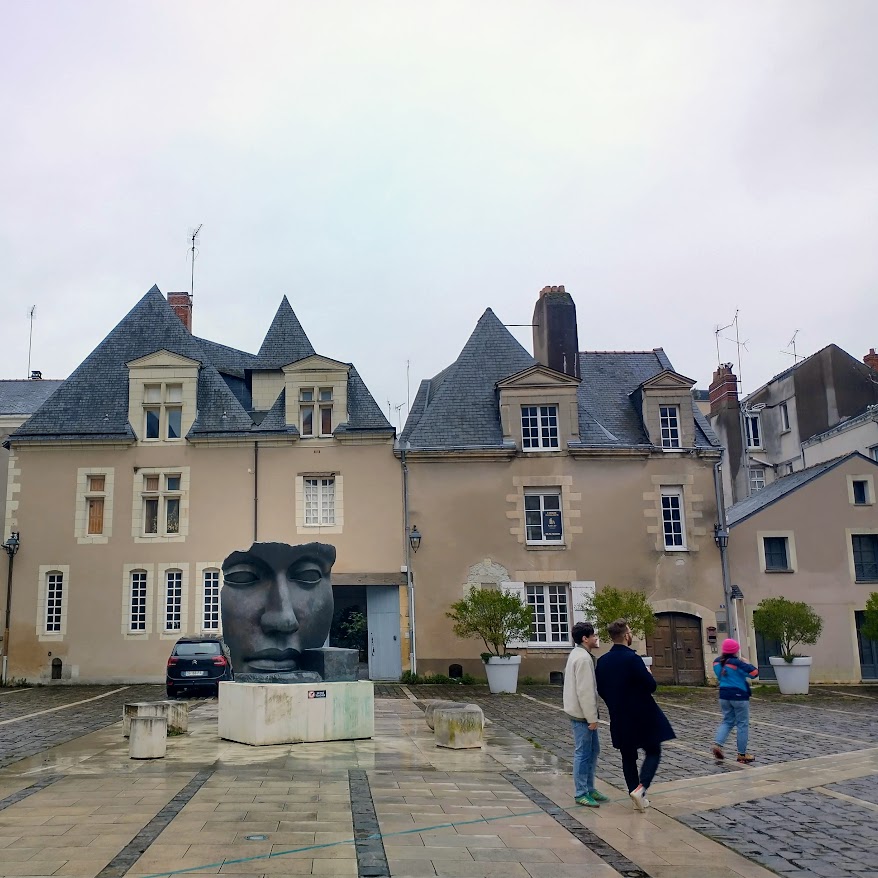
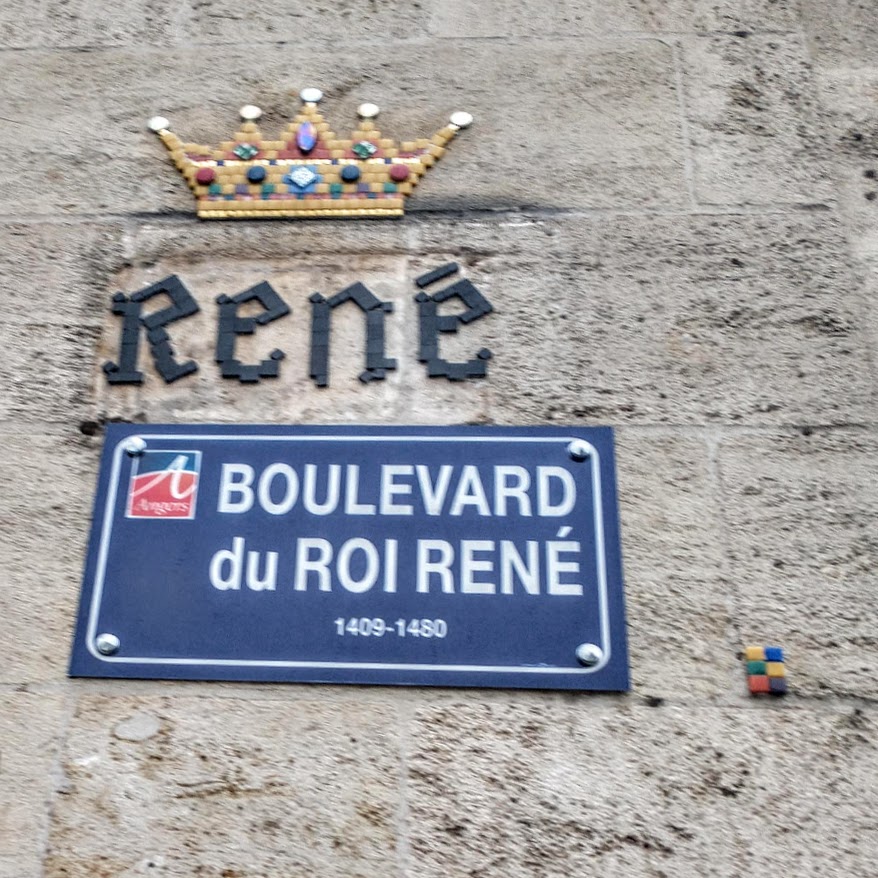
I expect not one word of sympathy from British readers when I say that yesterday in Angers was very cold, very wet and very windy. My camera got creaky from the damp, and we didn’t walk around as much as planned. But we had a good day. We ‘did’ the castle and will report back later. I ‘did’ the David d’Angers Gallery, and will report back later. And here are geometric views from the streets, including geometric chocolate which, trust me, you can’t afford.
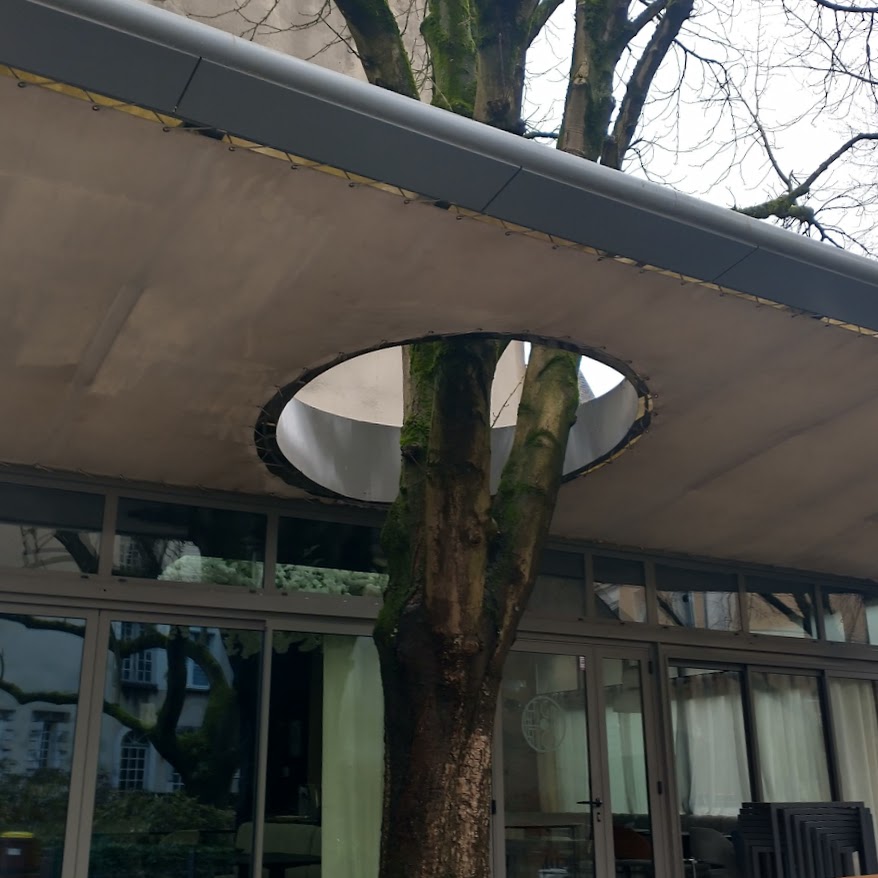
I definitely need to include this: a building whose canopy had a circular hole built into its design, to allow the pre-existing tree to continue to flourish, as it always had.
We’ve arrived in Angers. Irritatingly, Sally SatNav pronouncs it just like that. Angers. In fact, it’s ‘On-jay’.
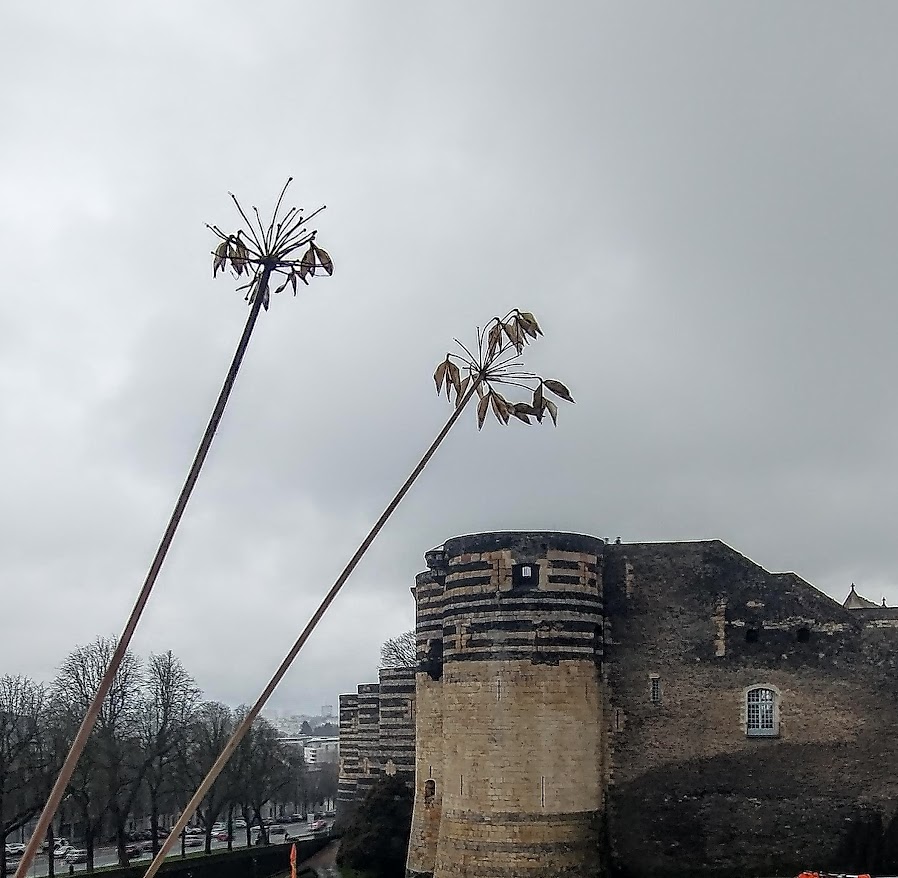
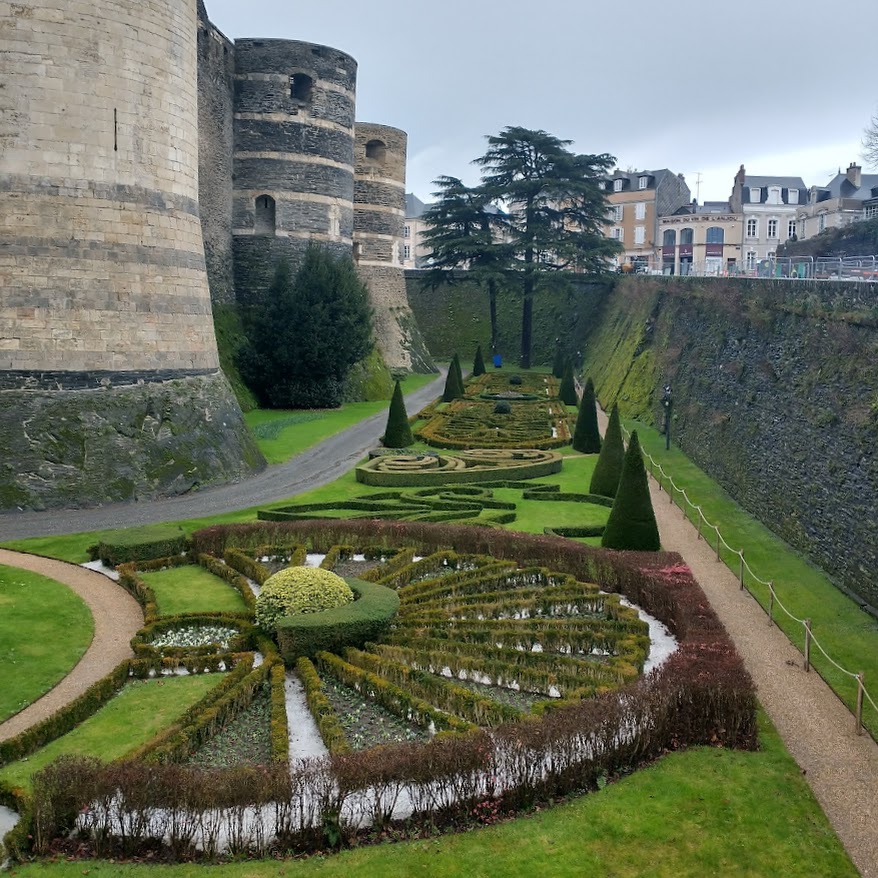
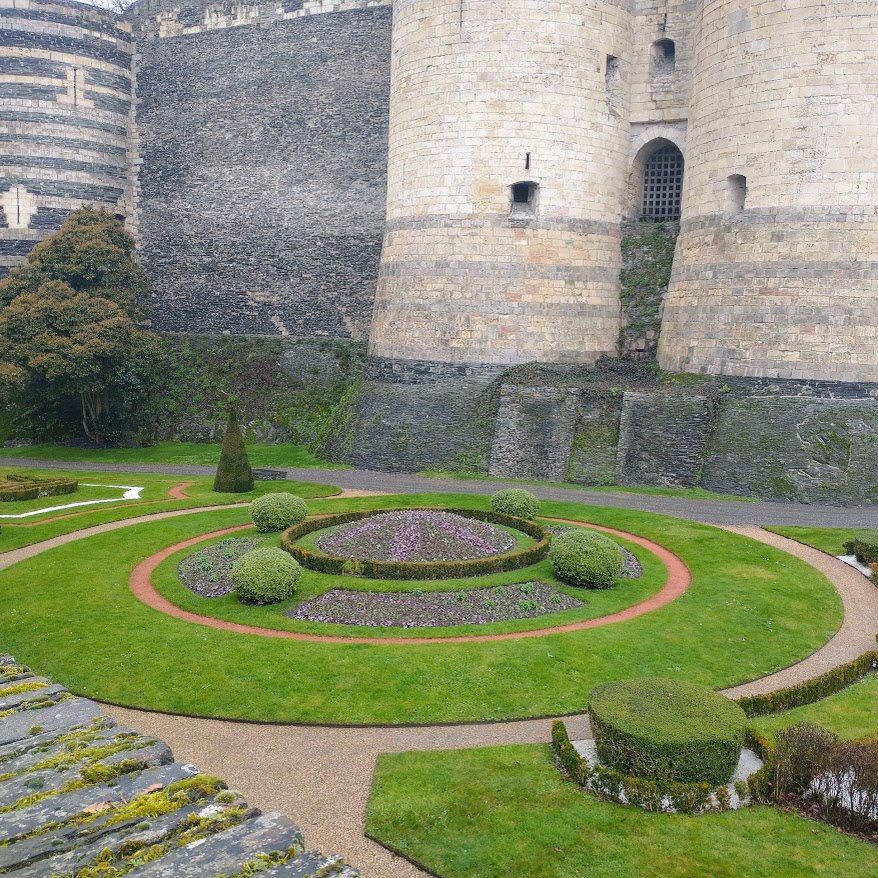
Any right-thinking Brit should have this town on their travel itinierary when in France, because (to quote Wikipedia) ‘Angers was the seat of the Plantagenet (or Anjou) dynasty, and for over 300 years English monarchs had Angevin blood, from Henry II in 1154 to Richard III in 1485. The Angevin Kings of England had strong claims to the French throne, which eventually plunged the two nations into the Hundred Years War.’ And our hotel is opposite the seat of much of the action. Le Château d’Angers, built in the 9th – 13th centuries. We’re going to visit it today, and I dare say I shall have plenty more to say, either in my next post, or more likely once we get home. For now, we’ll look at a few outside views, and also admire the stylised geometry of the formal gardens now filling the moat.
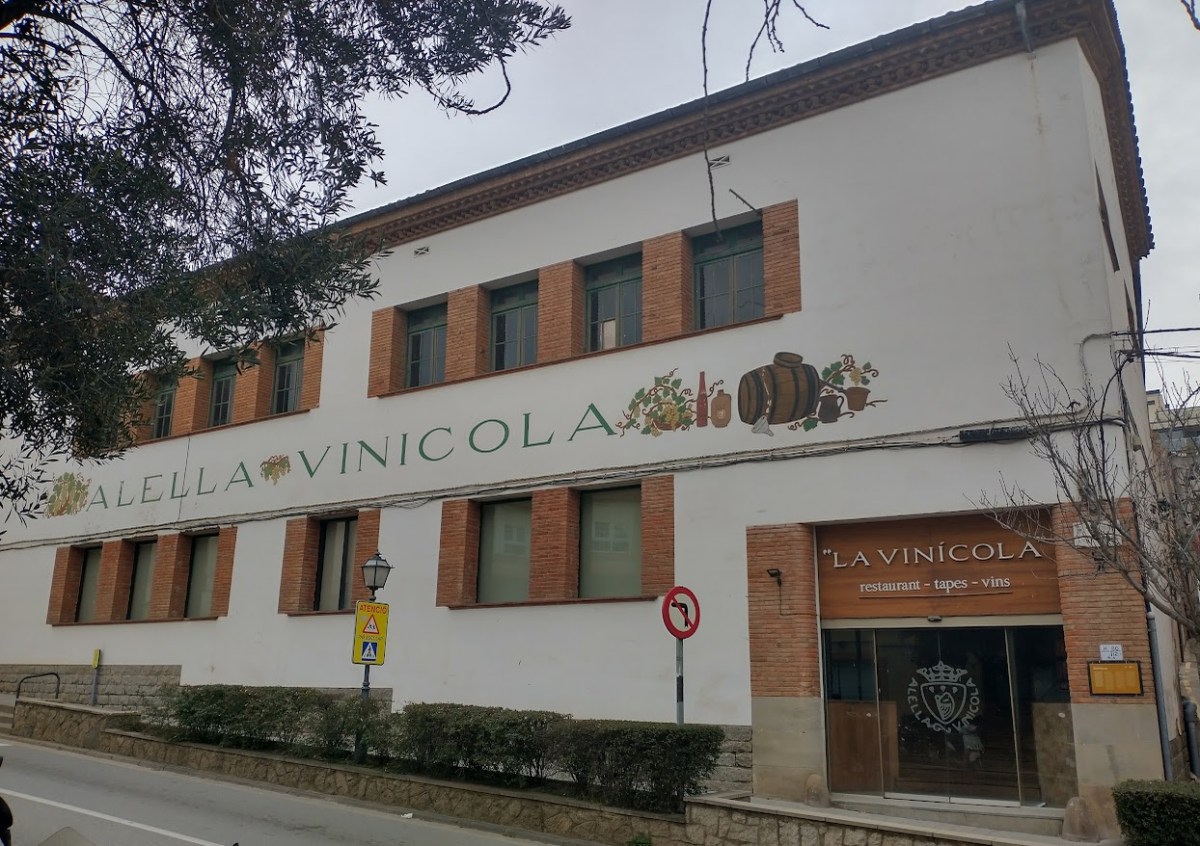
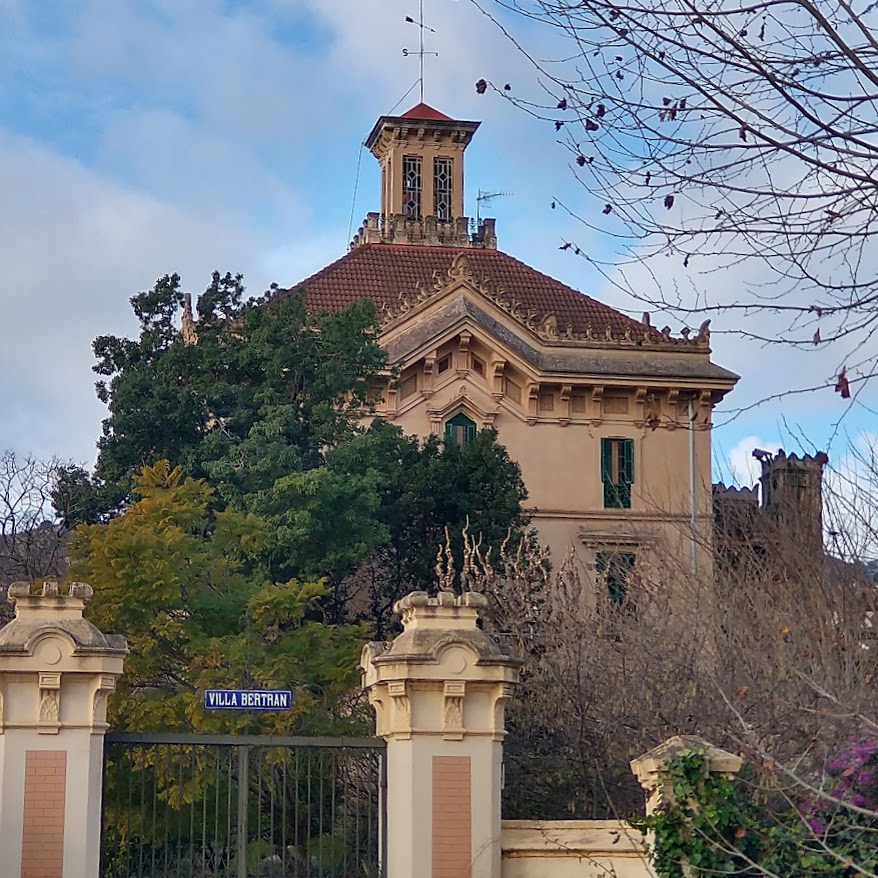
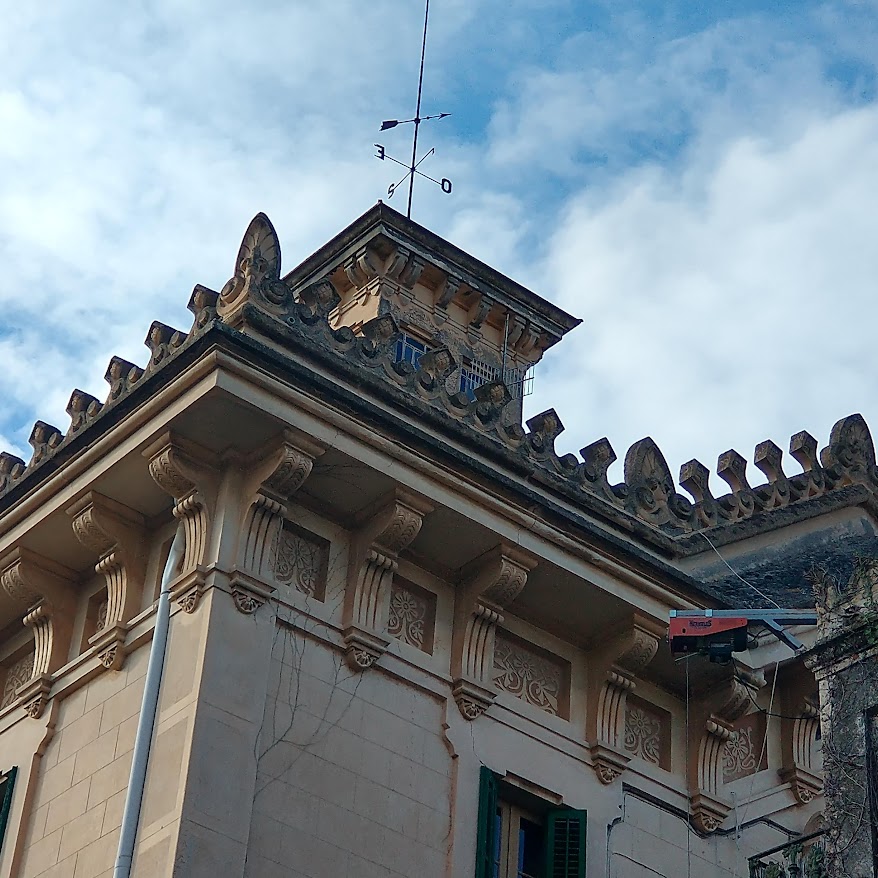
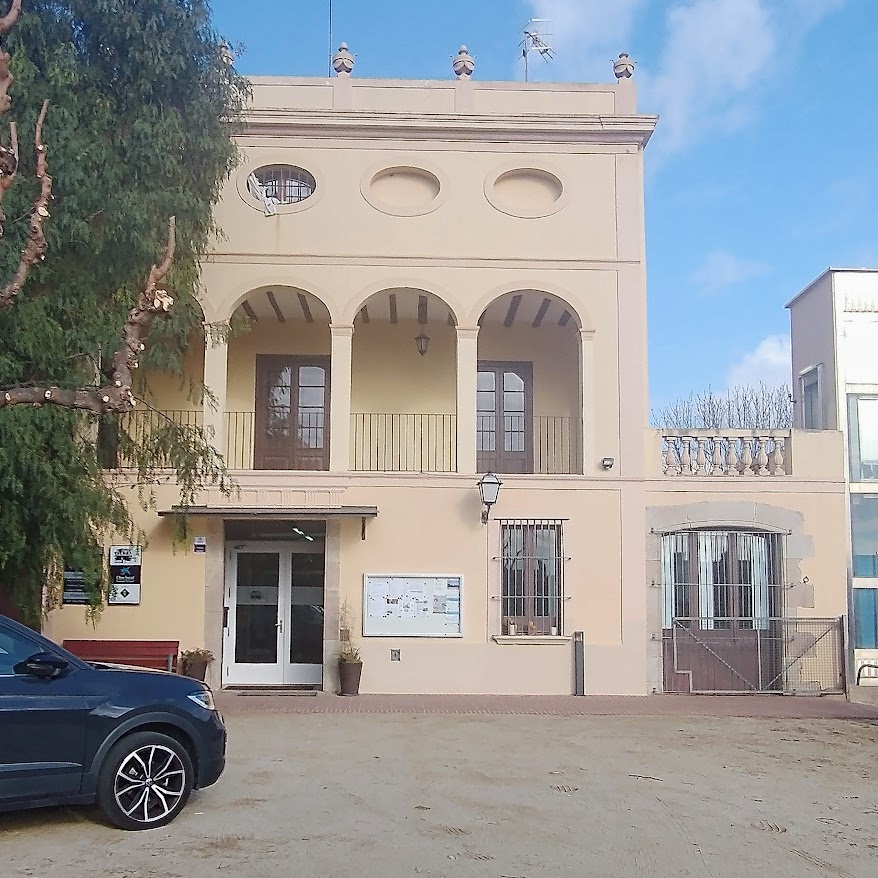
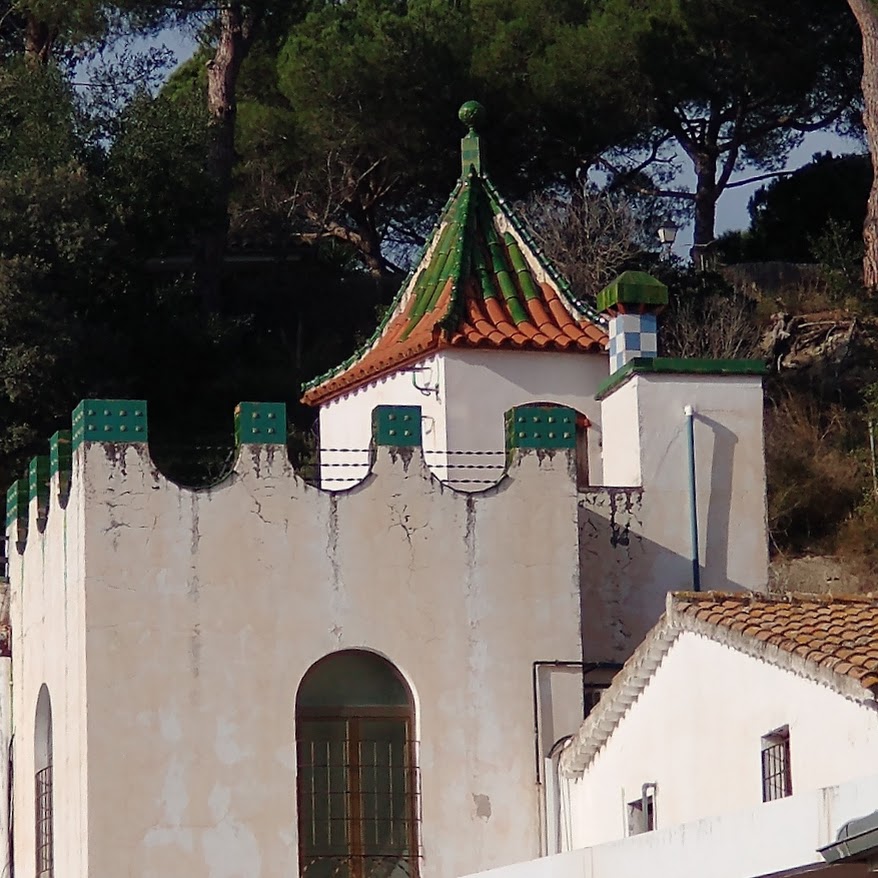
Alella is a well-heeled little town in the hills, about half way between here and Barcelona. It sits comfortably in productive wine country, and in the 19th century, wealthy landowners – often the aristocracy – either bought plots on which to build, or else knocked down and rebuilt or extended existing properties they already owned. Malcolm and I went to have a look today. A few are still in private ownership, but most have passed into other uses, such as clinics or residential accommodation for those with various disabilities. Come and stroll round town with us – no history lessons – just enjoy the varied, always geometrical and often quirky buildings we found, and plan to research later.
Villa BertranVilla Bertran
This was the most extravagant of all, and the one we saw first.
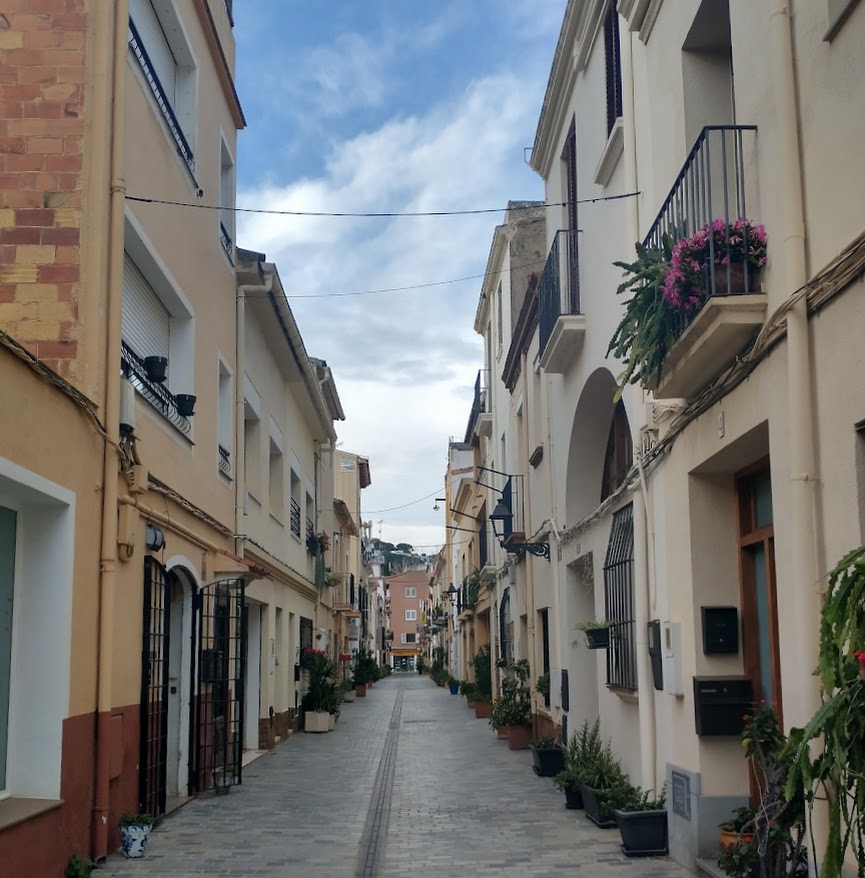
We saw ordinary streets too. Like this one …
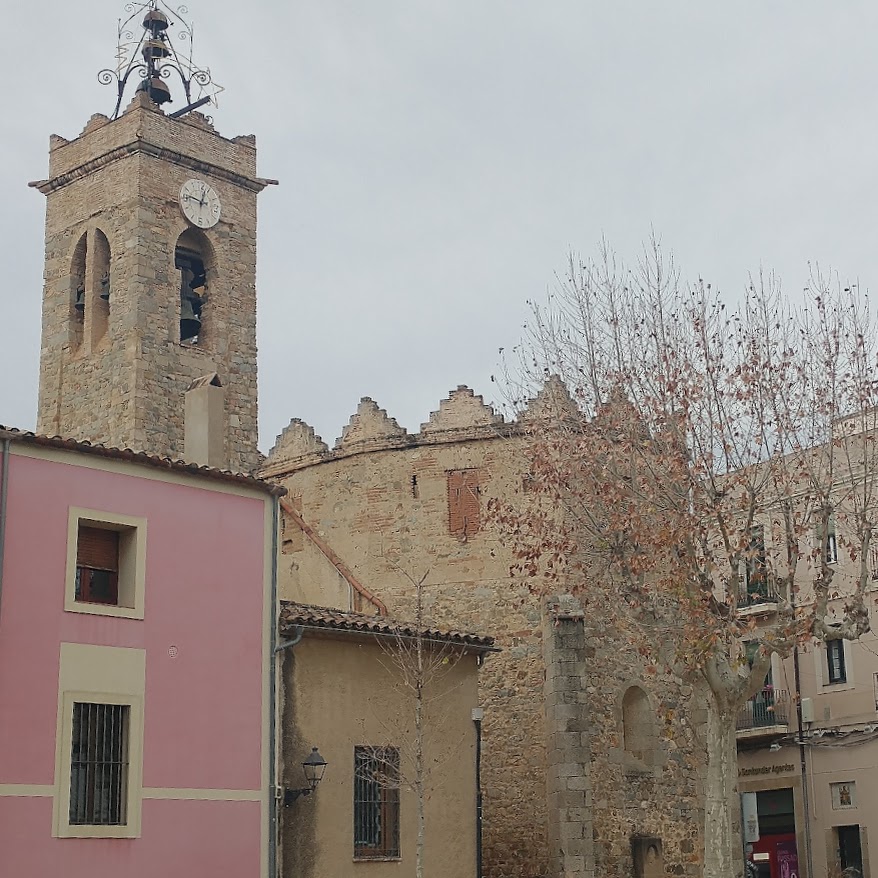
…and a church, Sant Feliu, in a pleasant square.
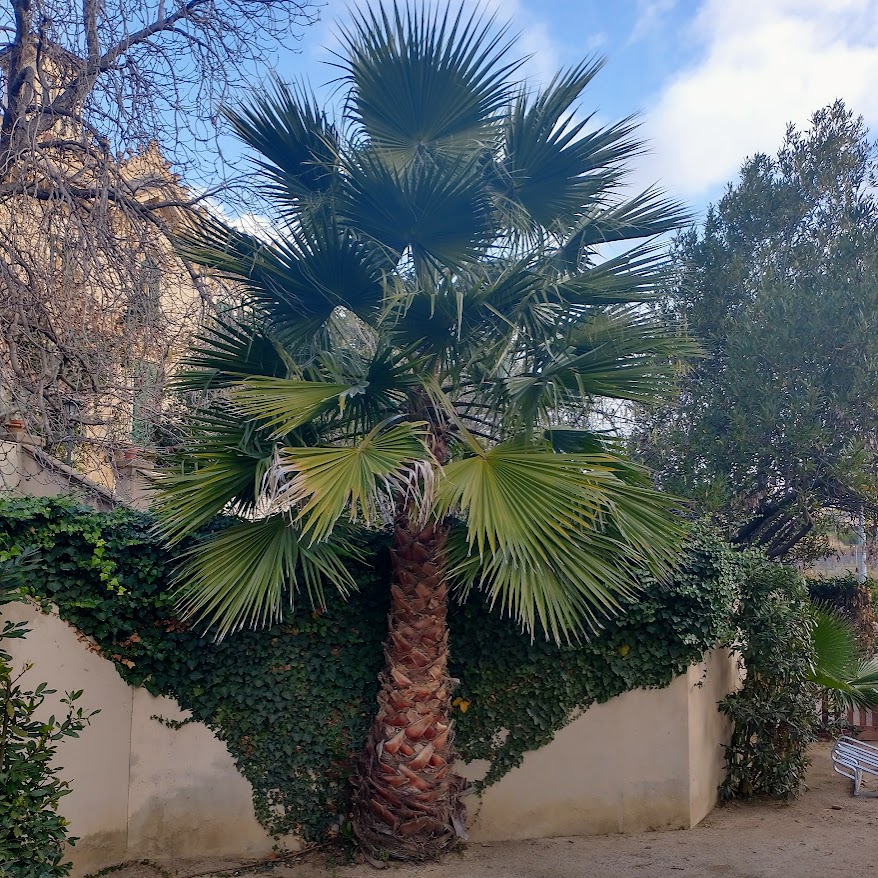
… and some geometric plant life …
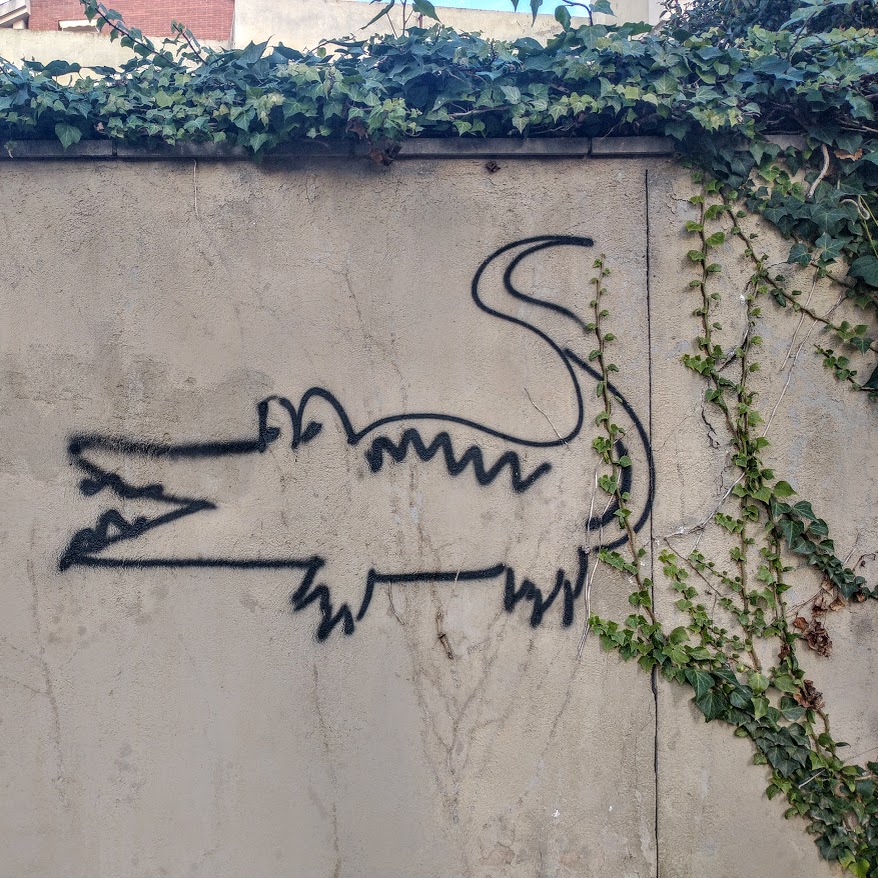
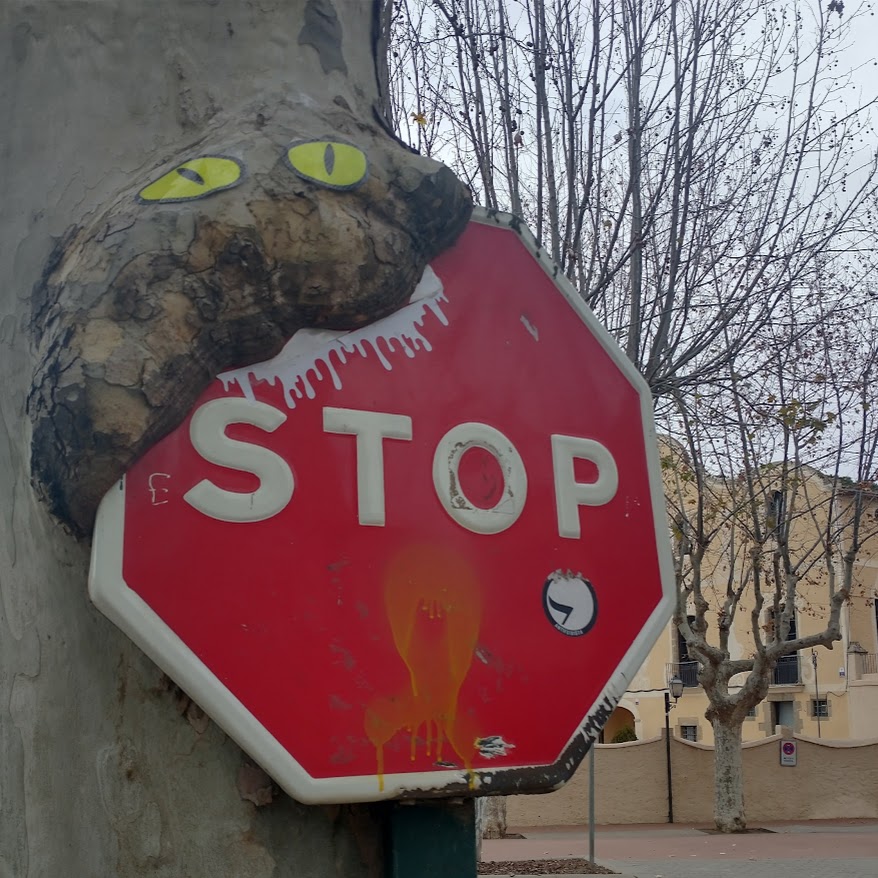
What town is complete without a sense of humour? The first image isn’t geometrical at all, but I’ll include it anyway. And the second is a road sign that was once geometrical until the tree it was placed on started to grow over it, and the Town Wag took matters in hand.










 From Pyrenees to Pennines
You must be logged in to post a comment.