
A charming little town just up the road from us. It’s one of the most significant wine villages in Alsace, though not so much on a Monday when almost everything was closed. Fun to explore though.
A charming little town just up the road from us. It’s one of the most significant wine villages in Alsace, though not so much on a Monday when almost everything was closed. Fun to explore though.
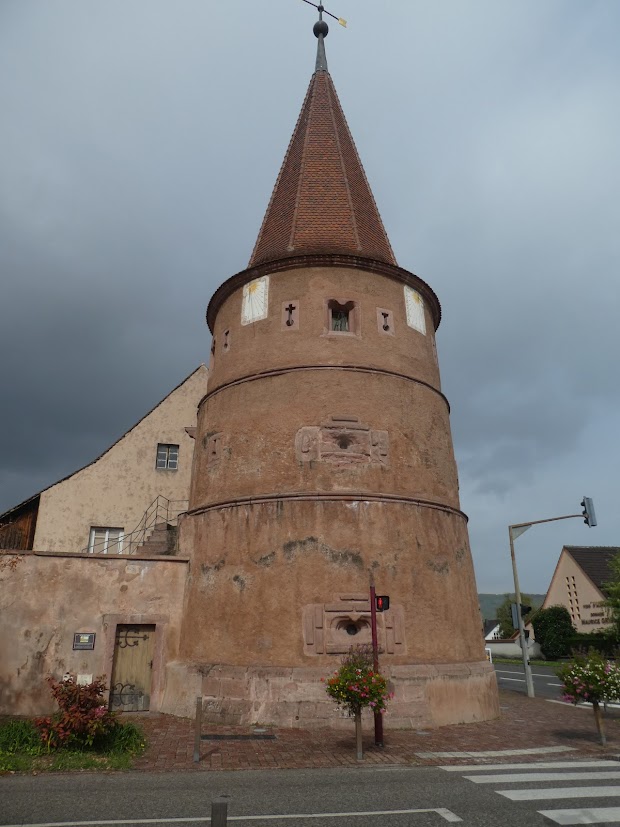
This little town has many delights. But have a care! It also has La Tour des Fripons. It was one of the two towers protecting the entrance to the town. But it did double duty as a prison. Hence the name. A ‘fripon‘ is a ‘knave‘.
Our real objective for today was the Memorial Museum at Linge. Here was somewhere that brought to life one of the many horrifying periods of WWI, in this case high in the Vosges mountains. It’s a tale that needs telling, but not tonight. Expect a post sometime after our return home.
We know that over in the UK you are battling with Storm Amy, so I’ll keep quiet about the fact that though it is raining here, it’s the only expected poor-weather-episode in our holiday. So we’ve decided to have an afternoon off, allowing me to send lots of postcards from the Fête de la Transhumance in nearby Muhlbach which we visited this morning, ahead of the deluge we’re currently experiencing.
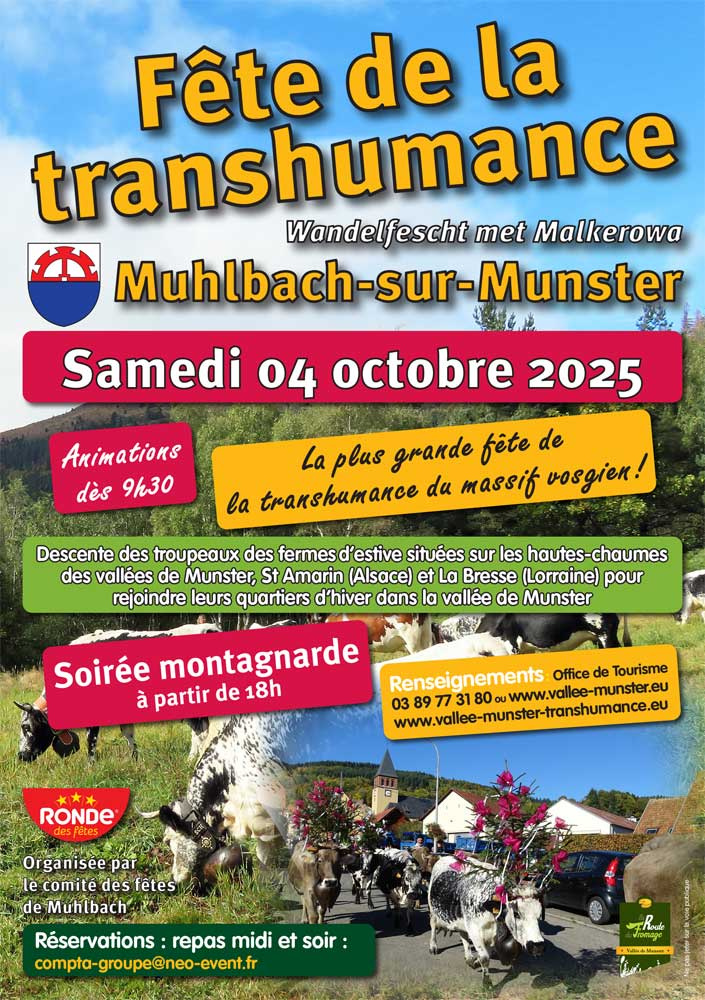
Transhumance is the practice of taking cattle to spend the summer grazing in the lush upland pasture, before bringing them back down to spend the winter in their home community, Both ends of the season are times of celebration, and here’s transhumance in Seix, from our days in the Pyrenees.
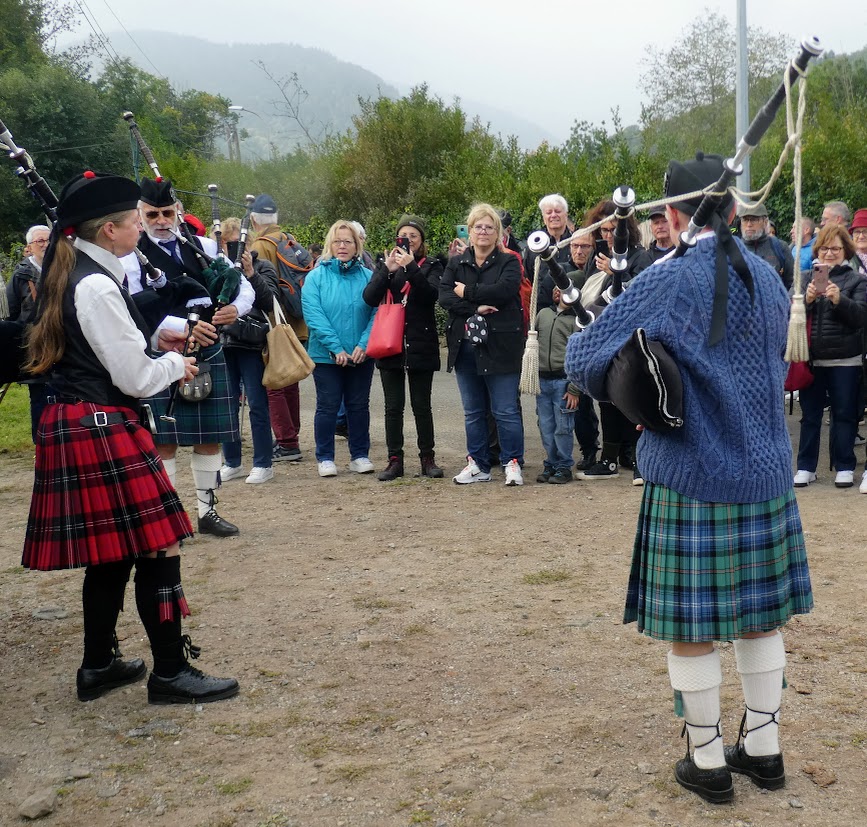
The first people we met after we’d arrived were a group of three people in kilts tuning up their bagpipes. We greeted them in French, then reverted to English, assuming they were Scottish. But no! They come from Strasbourg, speak not a word of English, but are Passionate about Bagpipes, and here they were, ready to play their cornemuses for everyone’s bemusement and delight.
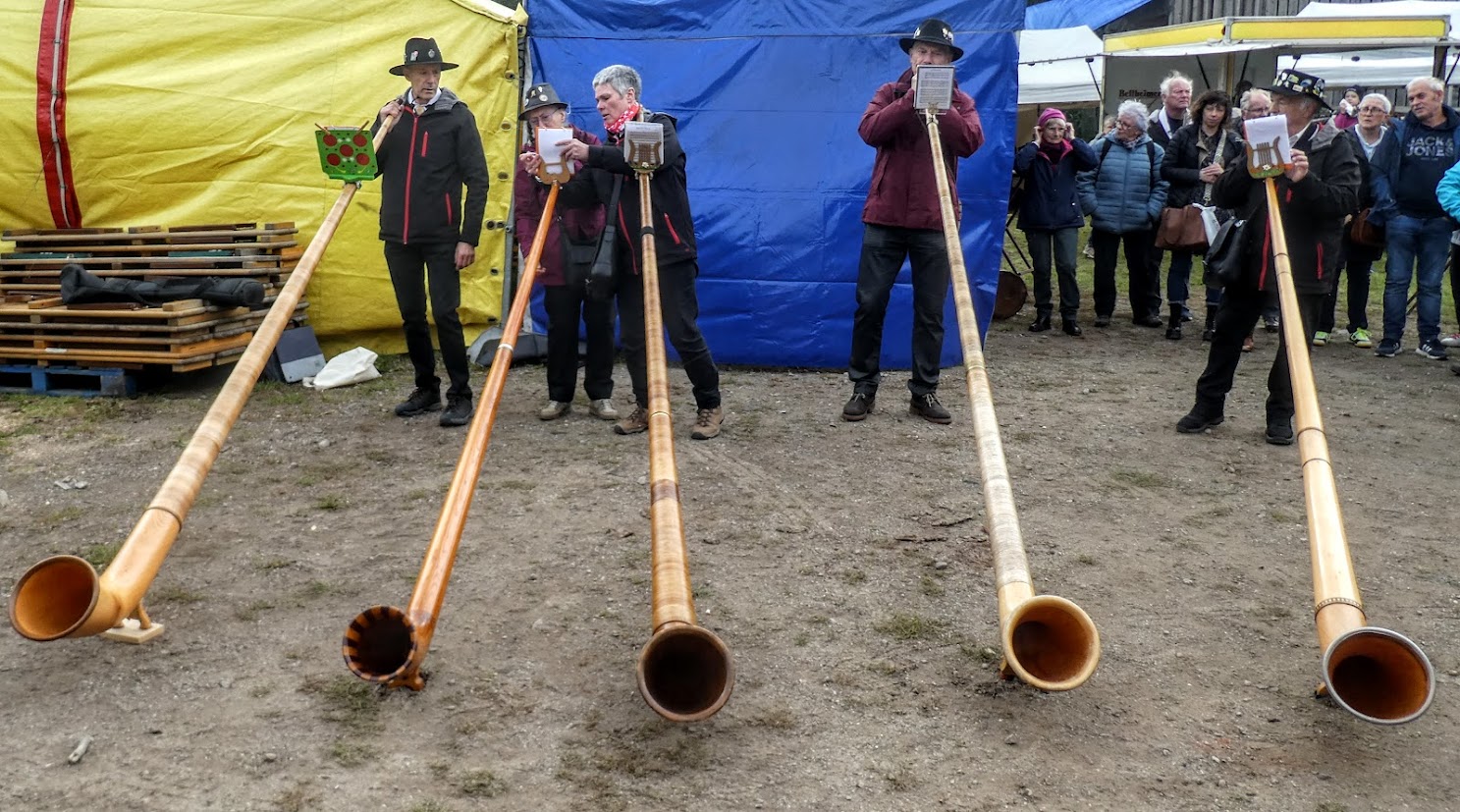
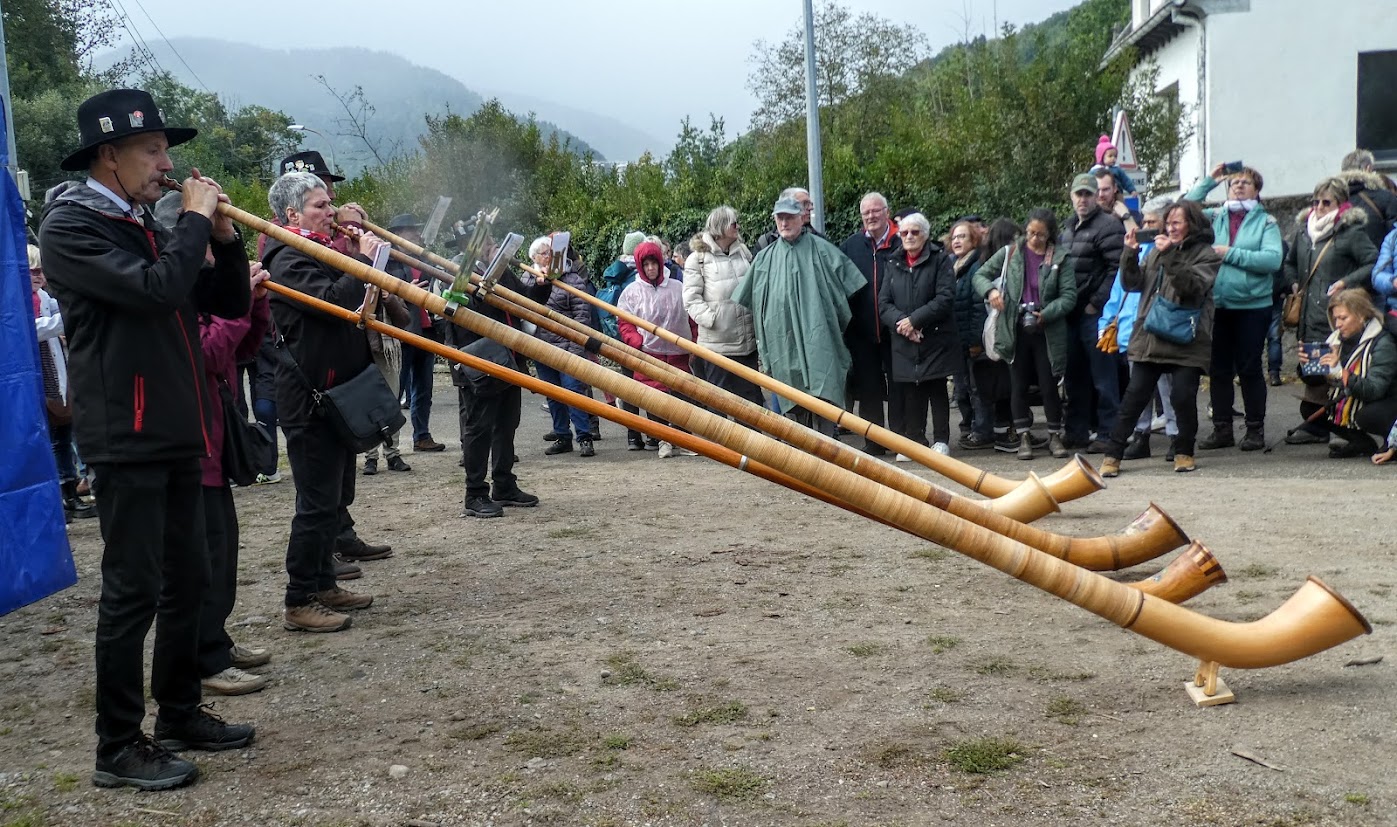
The Alphorn was originally used to call cattle. These days it’s the province of musical folklore enthusiasts and there were several bands of them playing today.
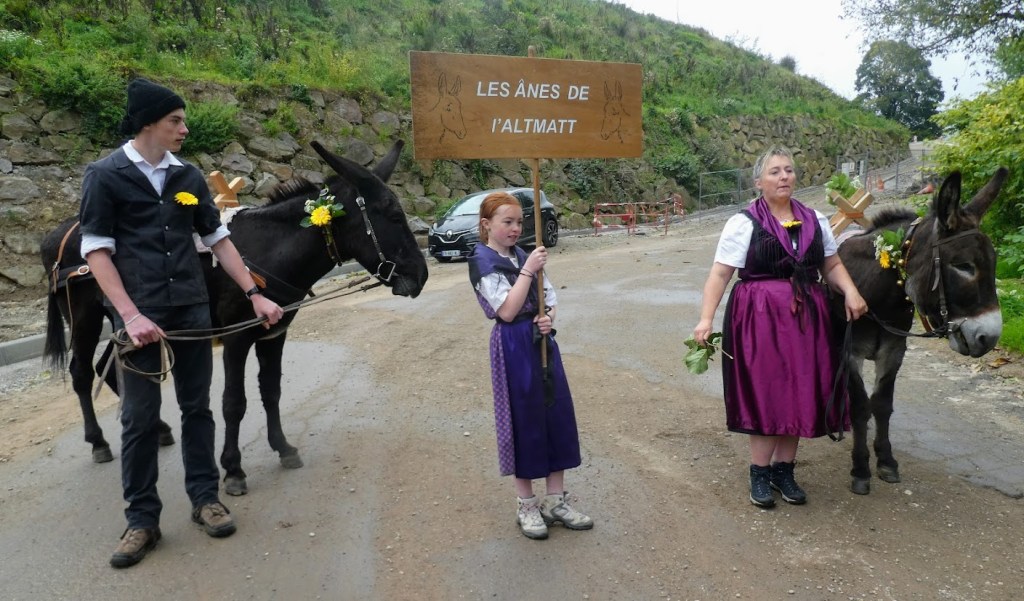
Then it was off to visit the donkeys who would be part of the procession of cattle (Don’t ask. No idea why).
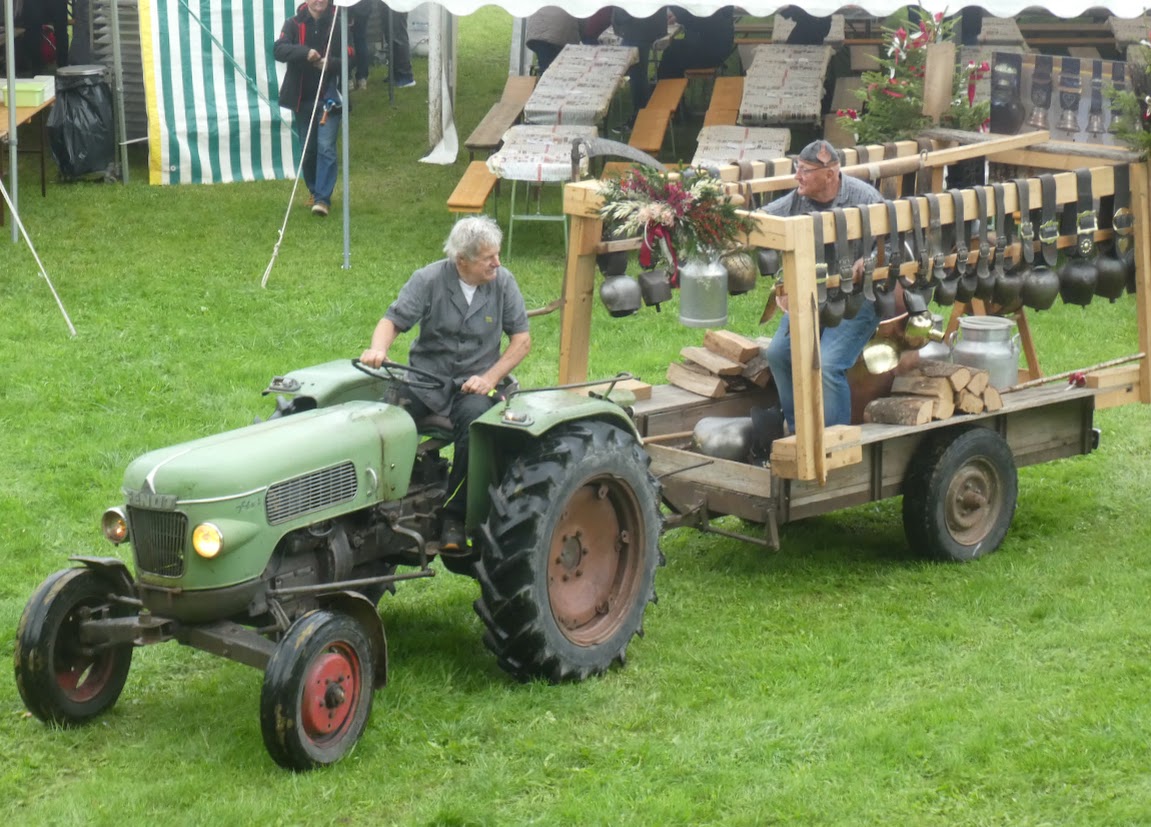
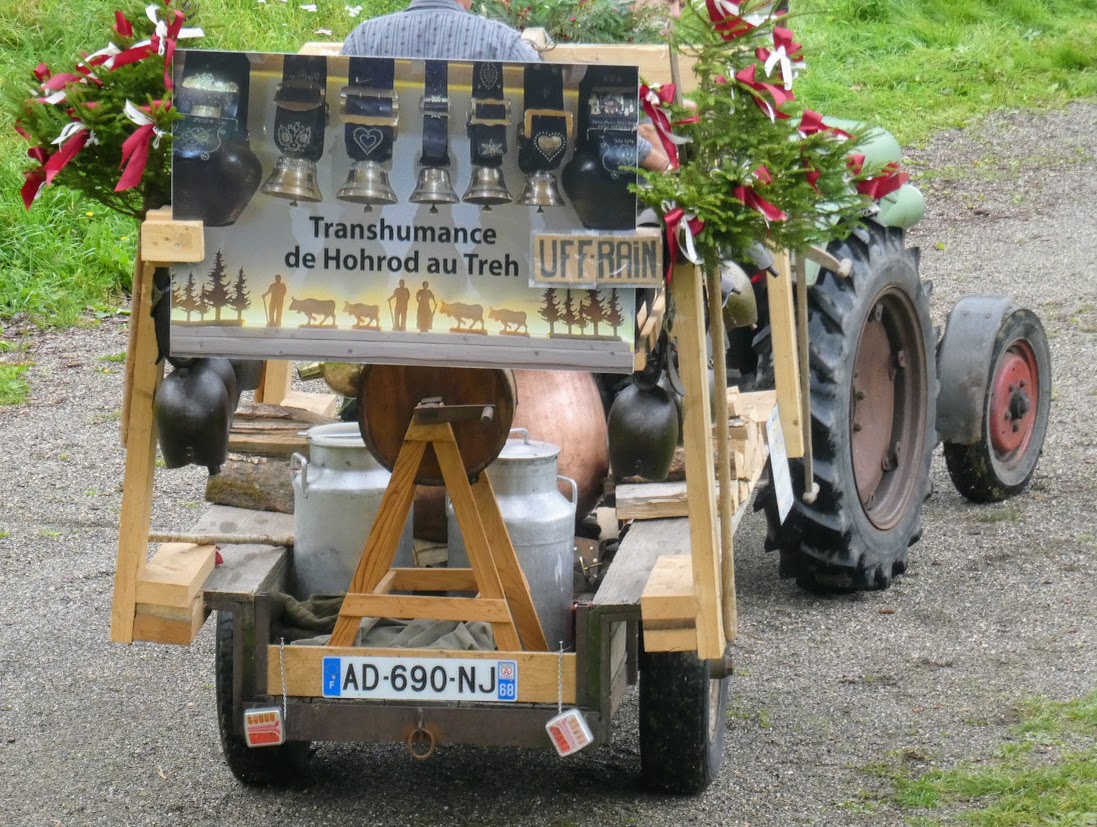
On our way up to view the procession we found the tractor that carried so many of the cowbells the animals wear when in their summer pasture, to keep tabs on them.
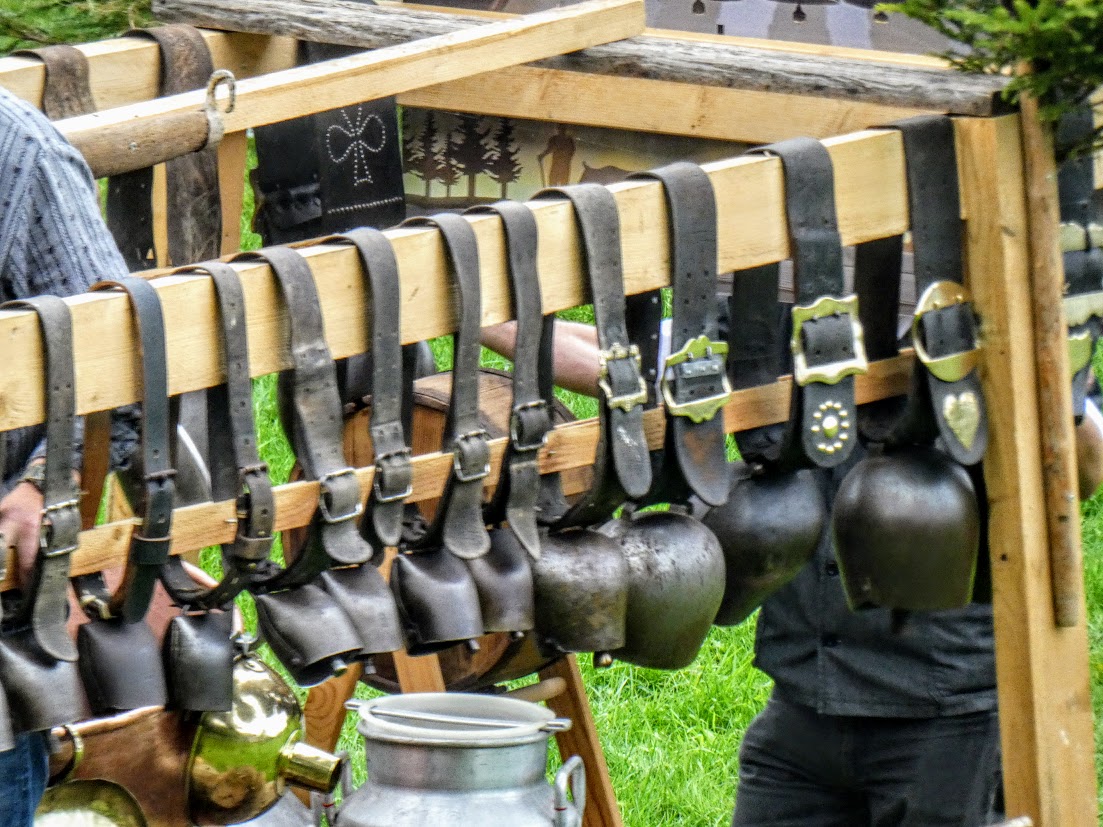
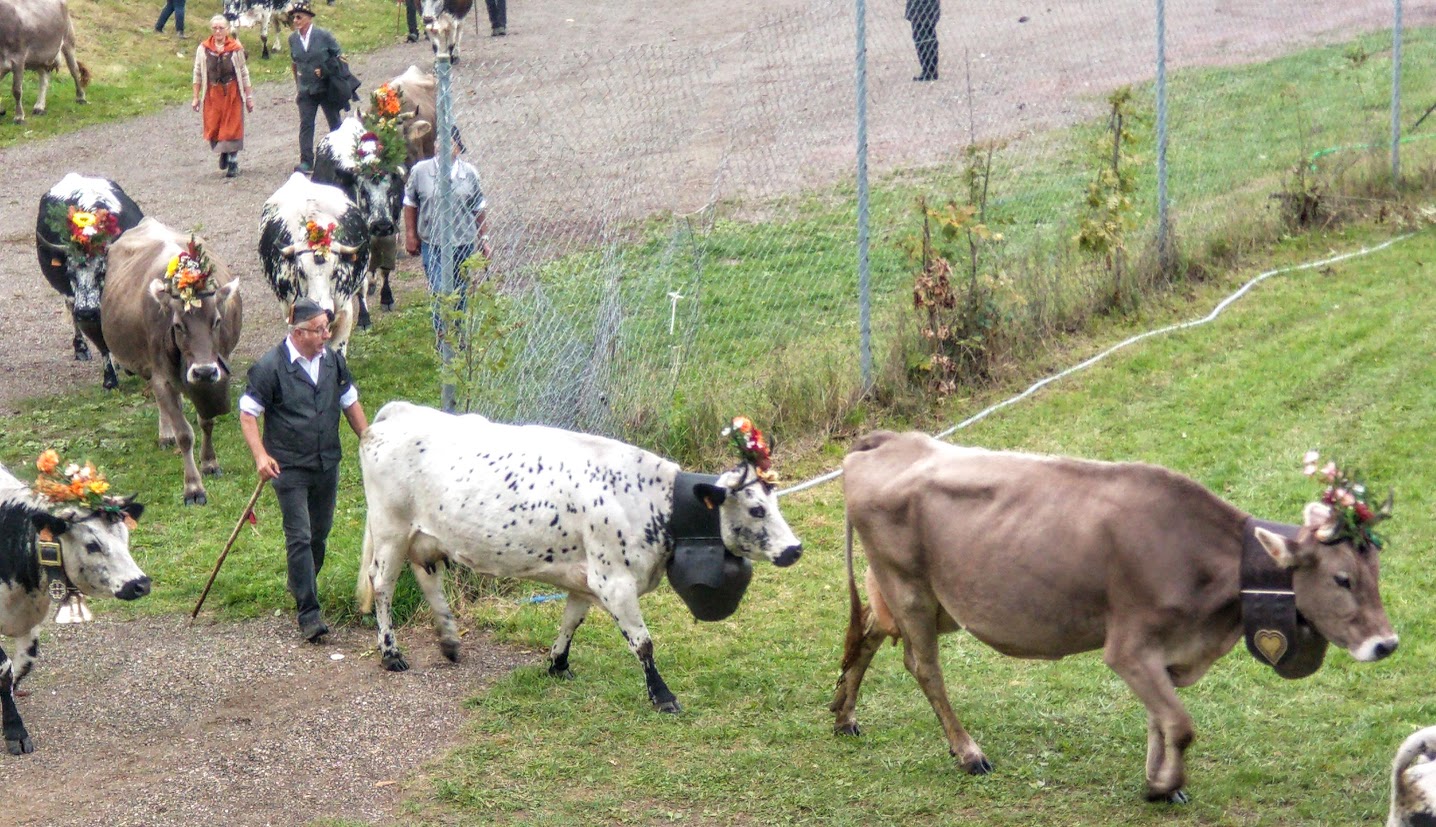
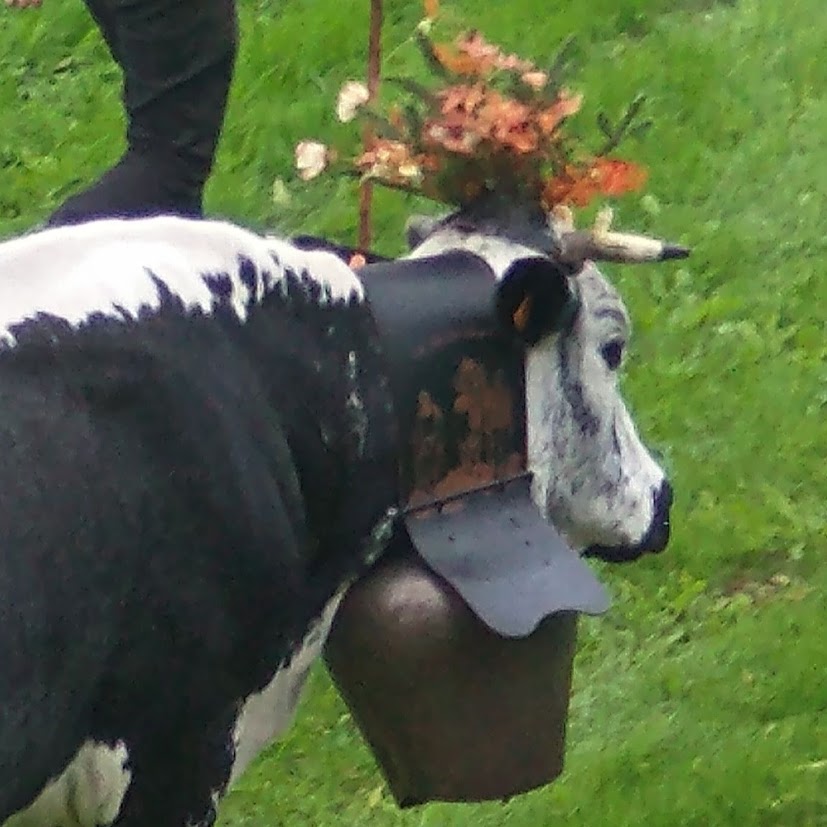
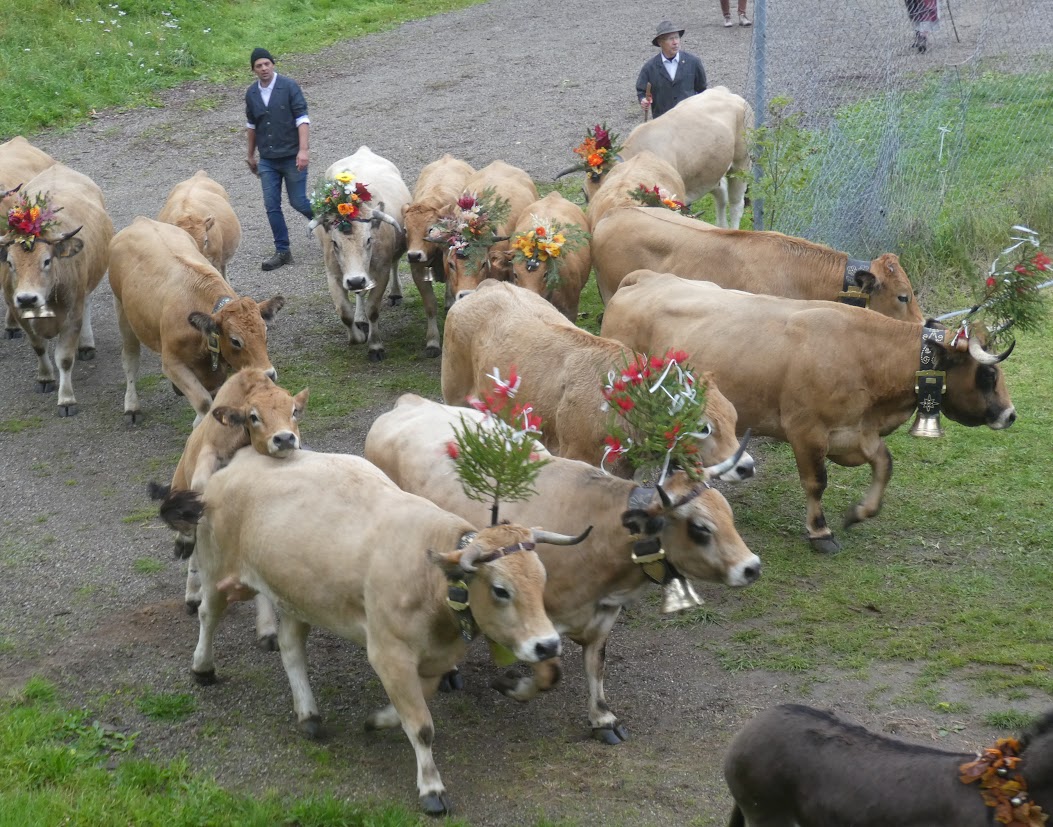
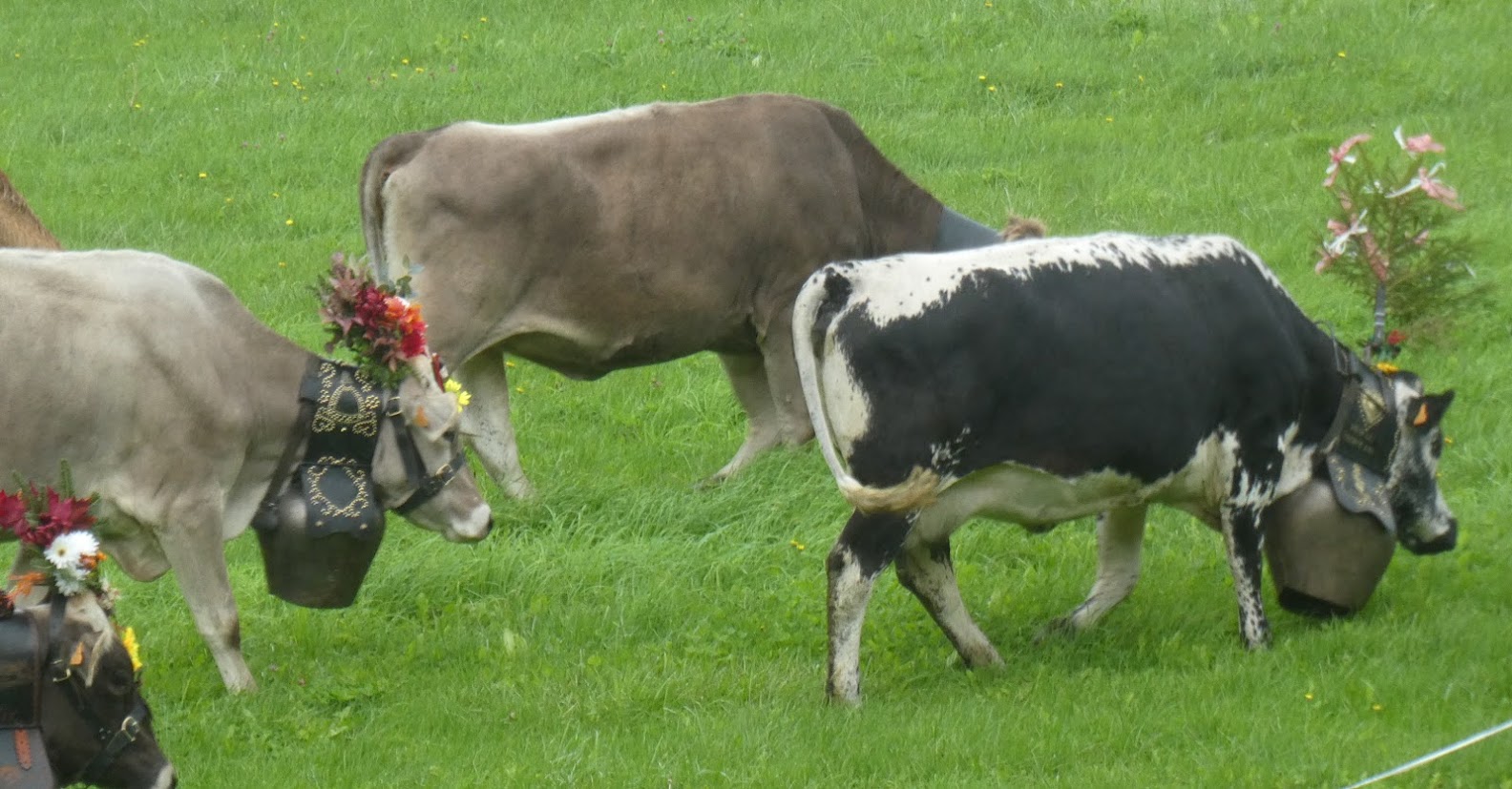
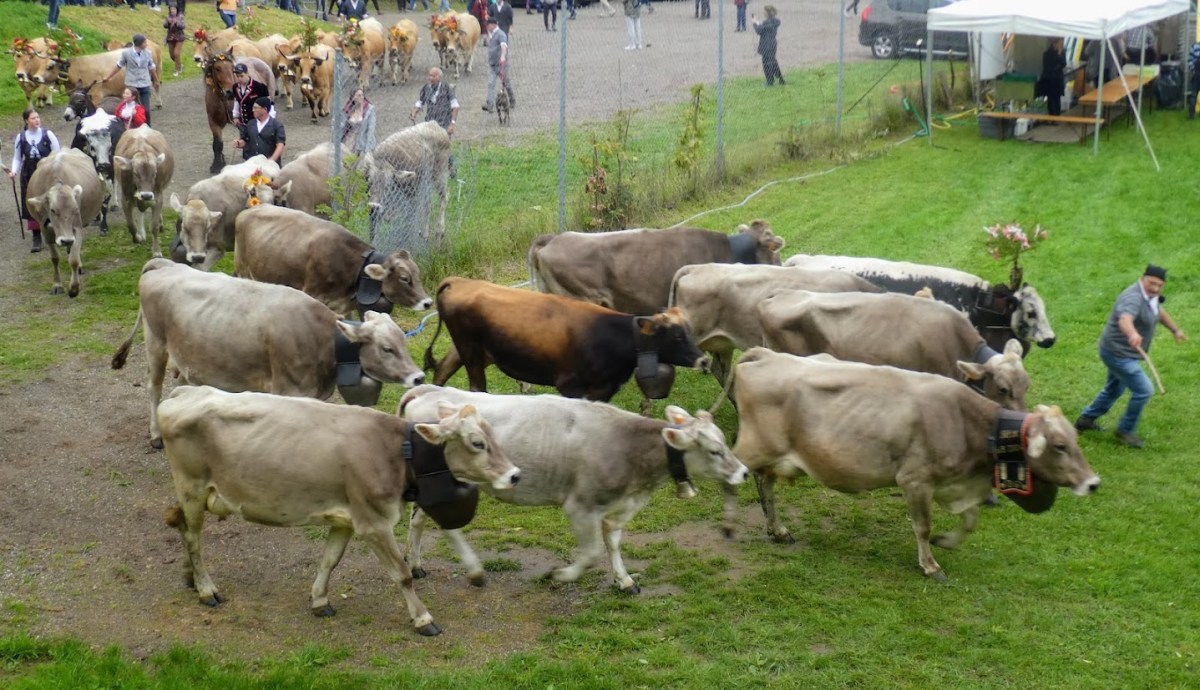
Then finally, we could hear all those cowbells clanging away, announcing that the cows were on their way. In truth the cows weren’t happy, and many of them skittered nervously about. I don’t know how much the leading cows enjoyed their fancy headdresses either: but they didn’t complain. By now it’ll be over, and they can forget all about it till next spring, when they’ll be off up the mountain again.
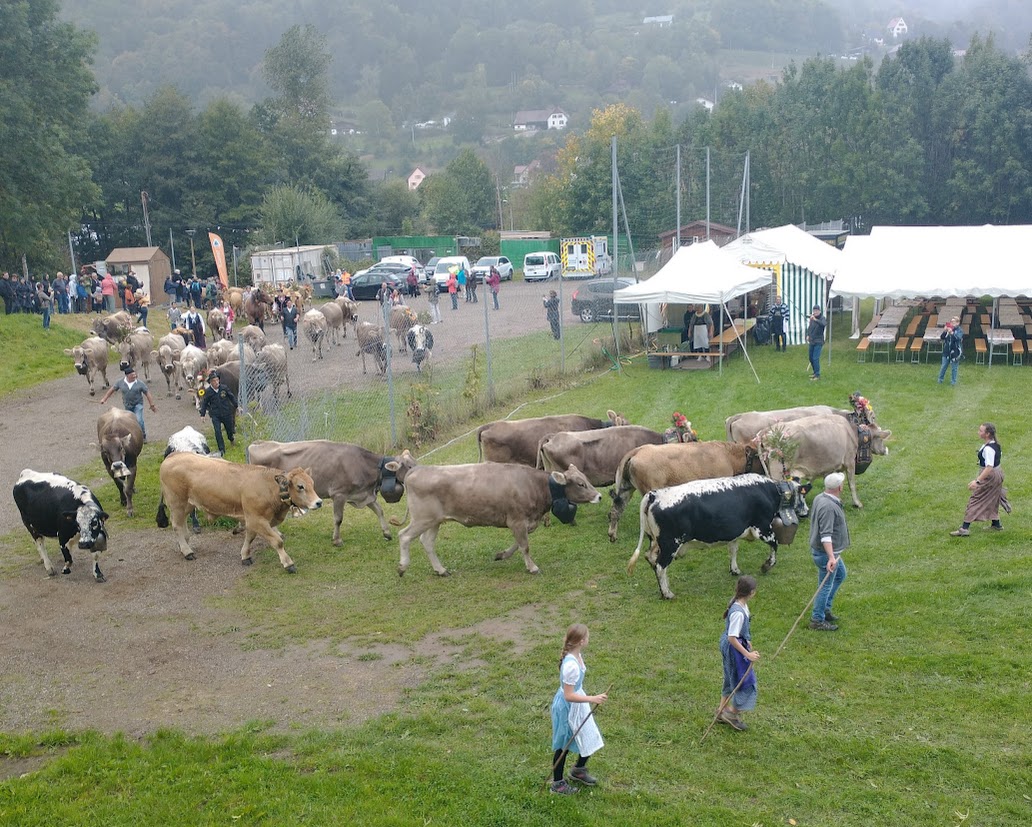
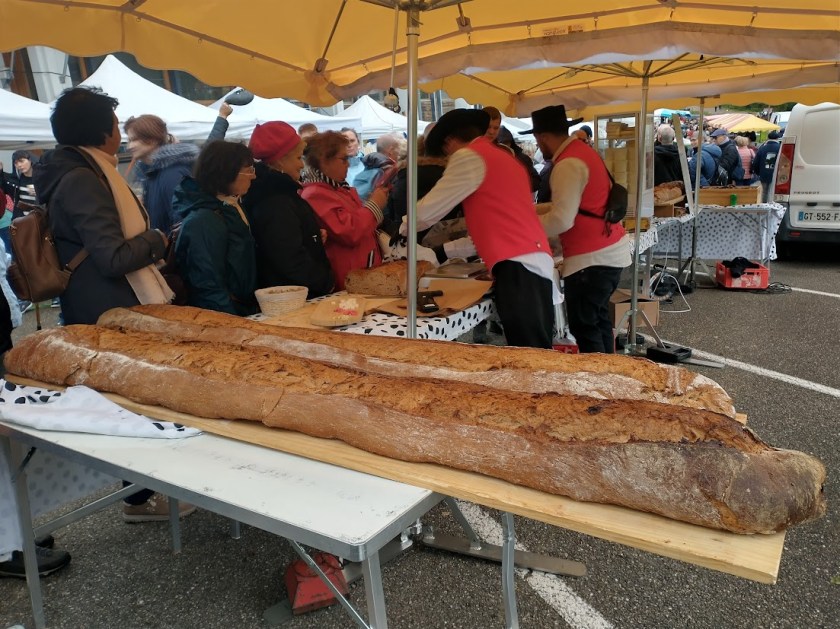
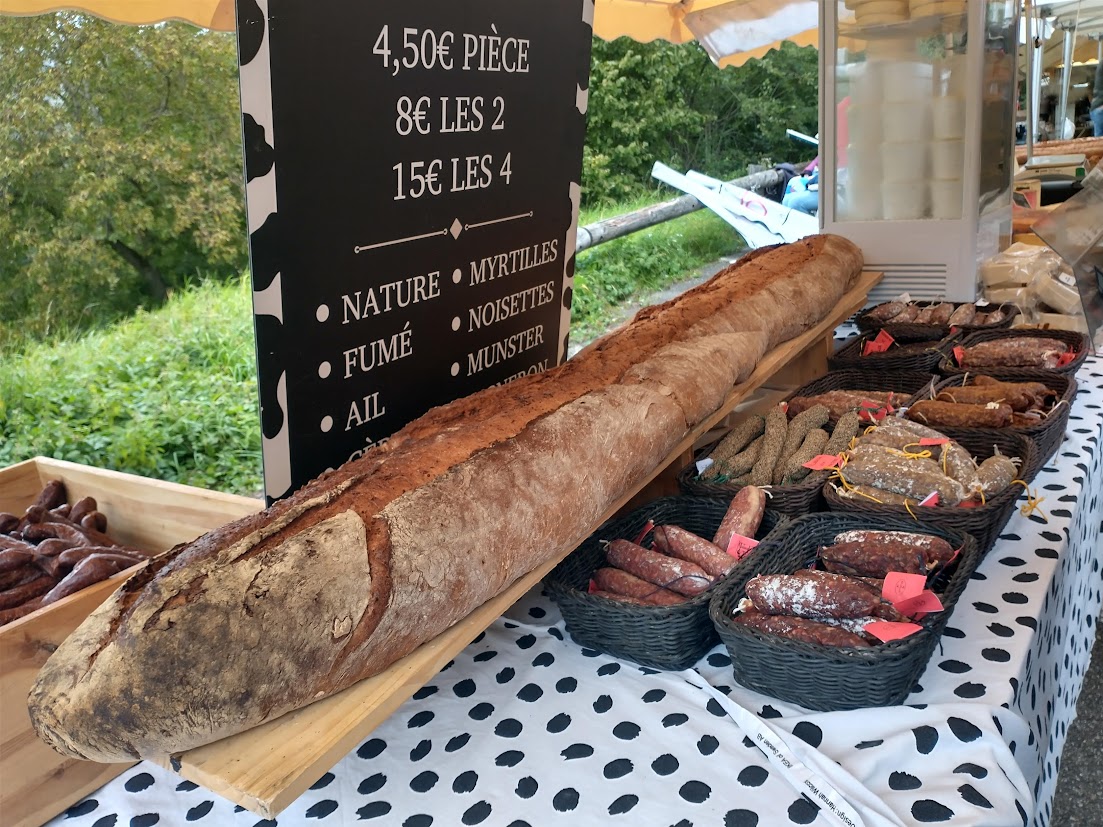
We didn’t stay for the highpoint of the event for many of the locals, the large communal meal, thankfully under canvas. But before we went, we looked round the market: local cheeses, sausage, sweetmeats – cowbells too.
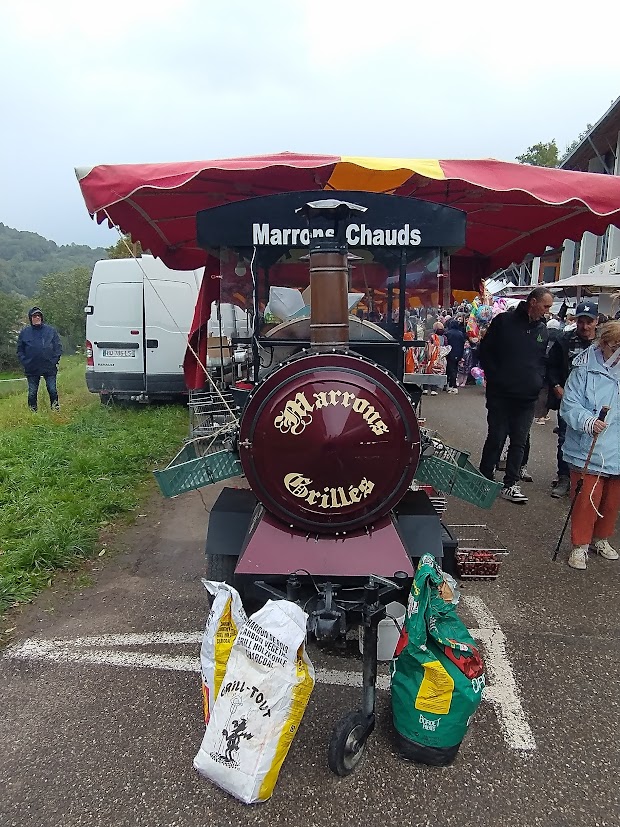
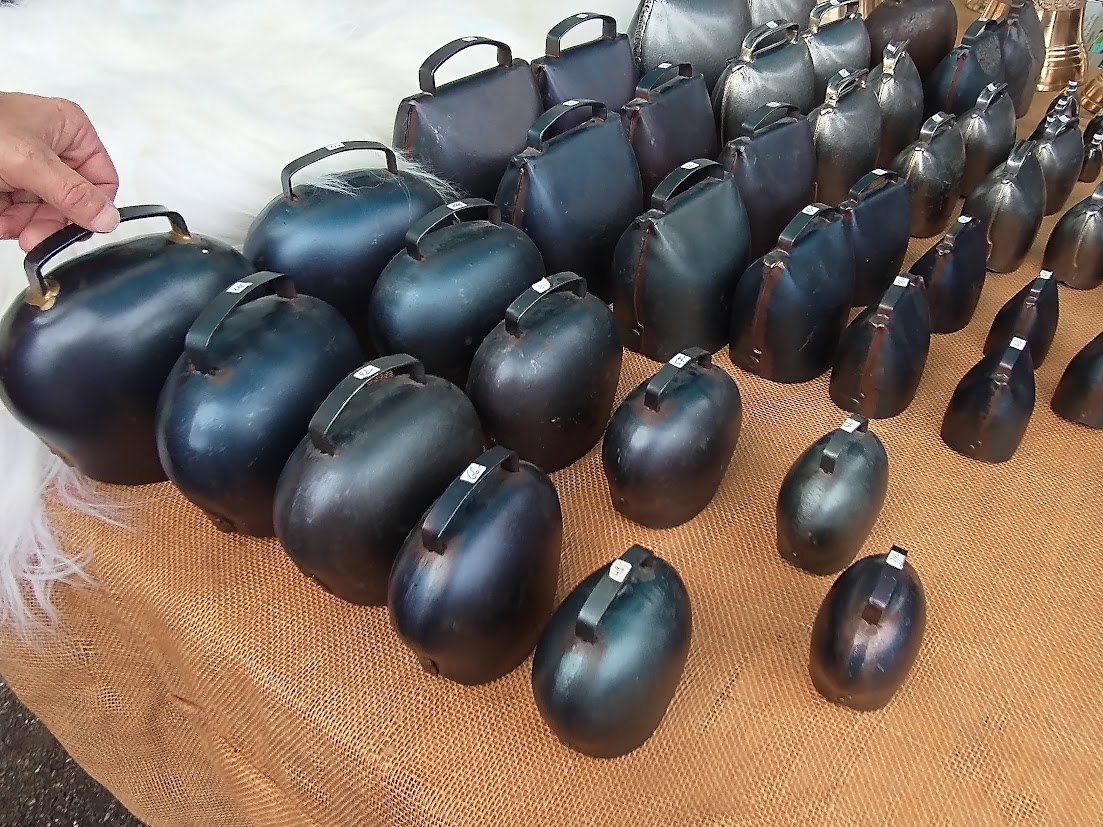
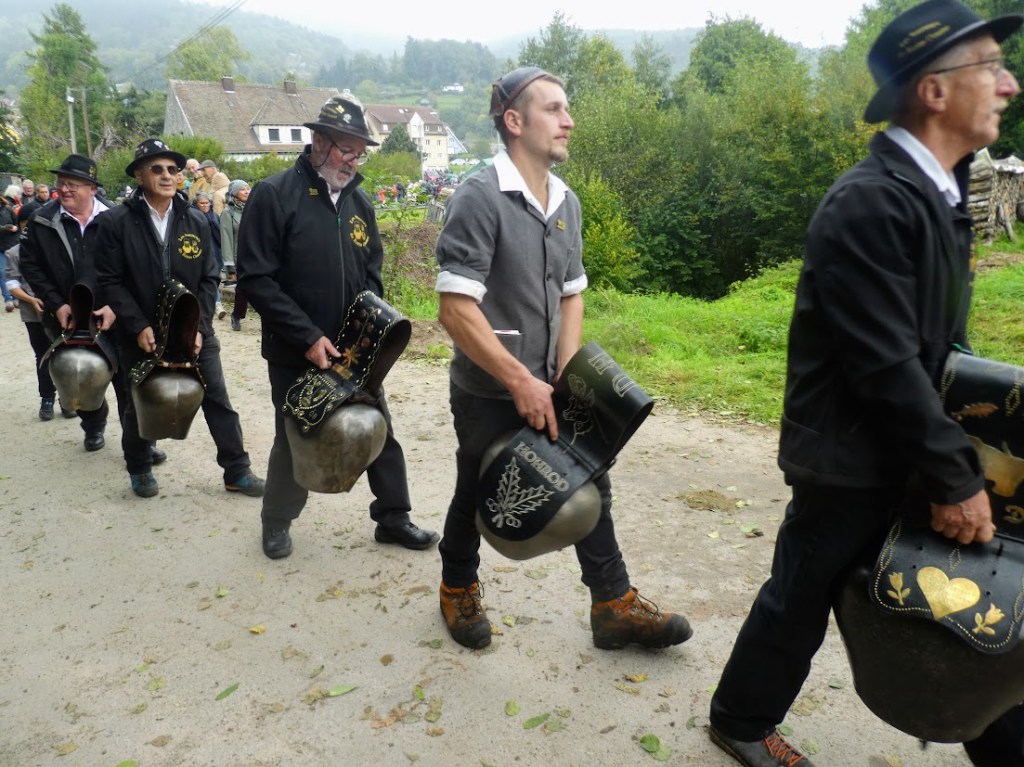
And as we were leaving, something else extraordinary. A procession of people, each holding a large cowbell, which they knocked on each knee alternately as they walked forward, producing a rhythmical cow-bell-dirge. Ouch! Poor knees!
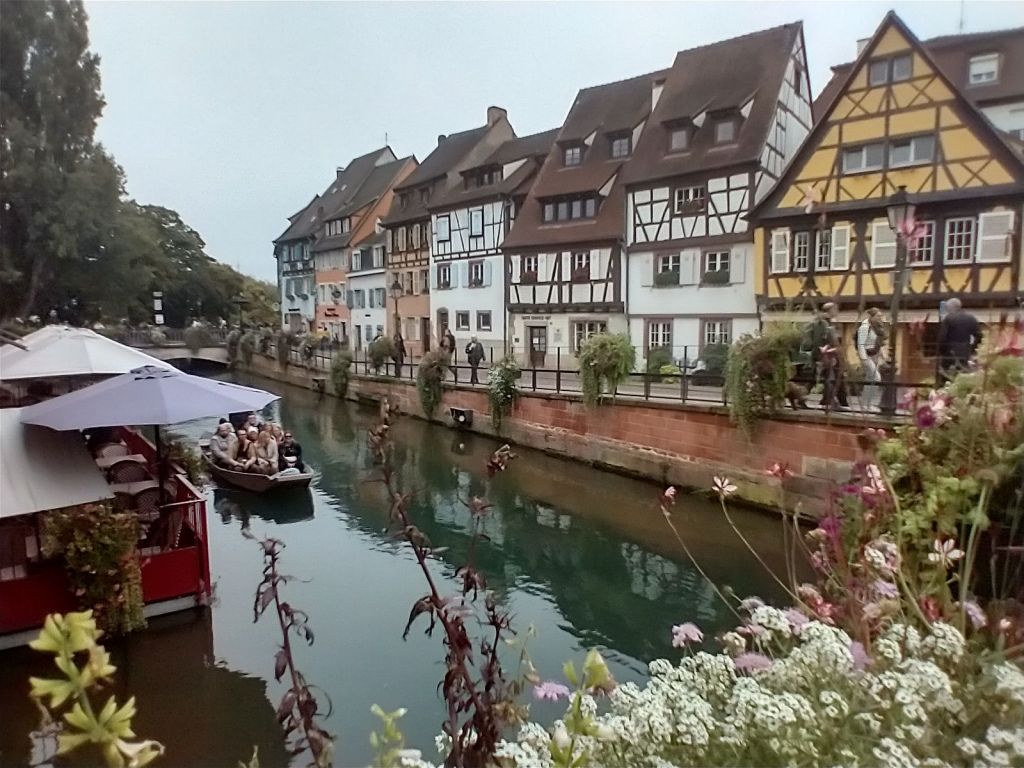
After yesterday’s experience at Colmar, which was Tourist Central, jammed with visitors (like us …) it was good to be at a local celebration: crowded to be sure, but almost exclusively with locals, many of them chatting away in Alsatian, which is widely spoken here, particularly among the older generation.
We feel as if we’ve properly arrived here now.
P.S. WP’s AI suggests the following tags: technology; art; cats.
https://travelwithintent.com/2025/10/04/its-that-fruity-time-of-year/ – Six Word Saturday
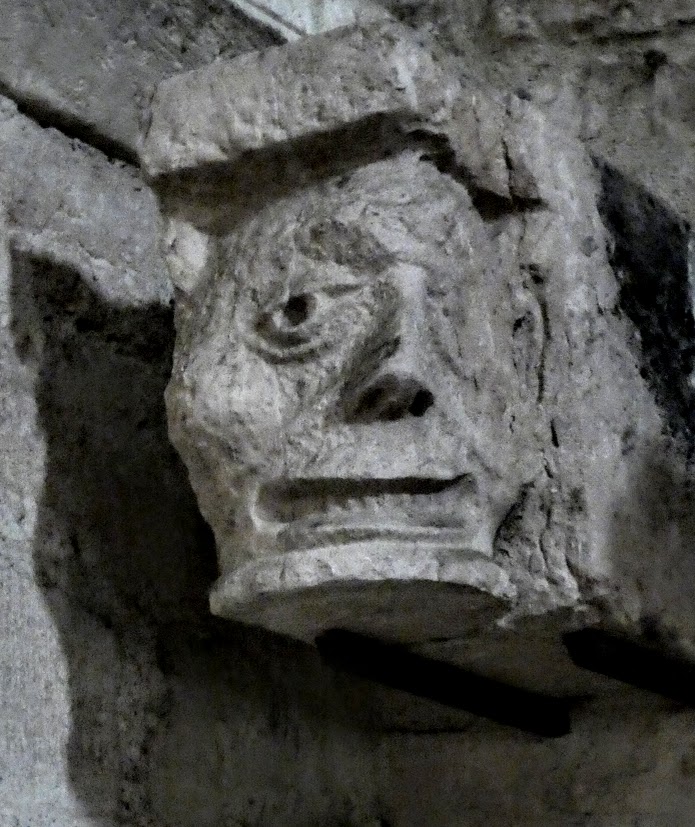
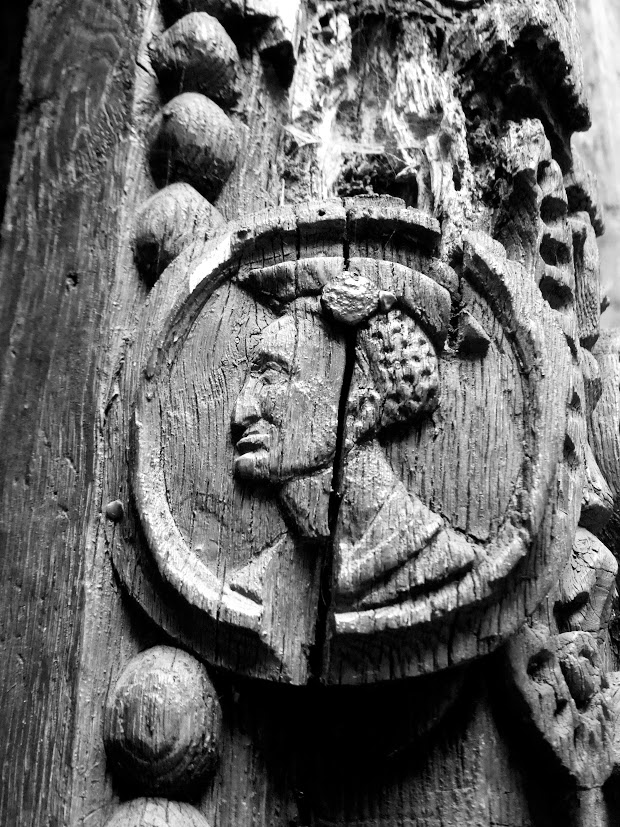
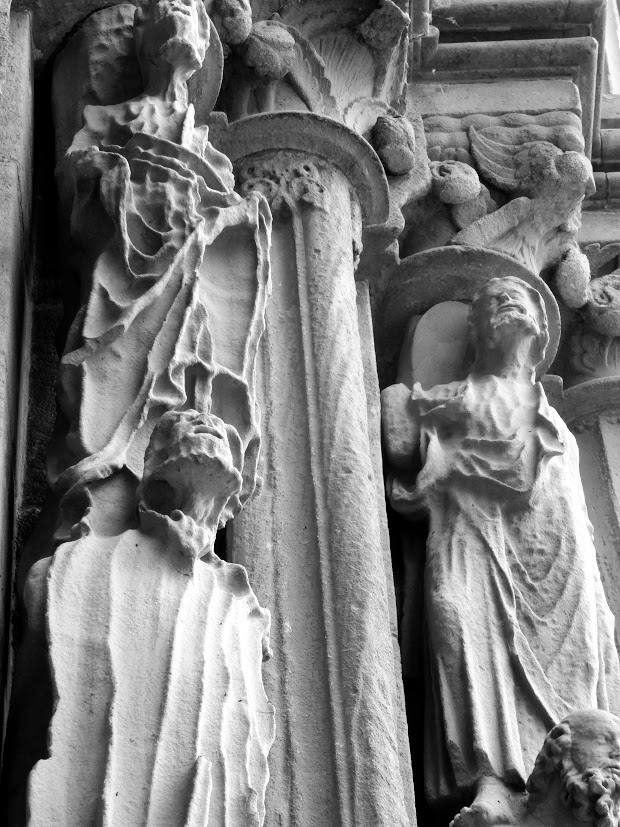
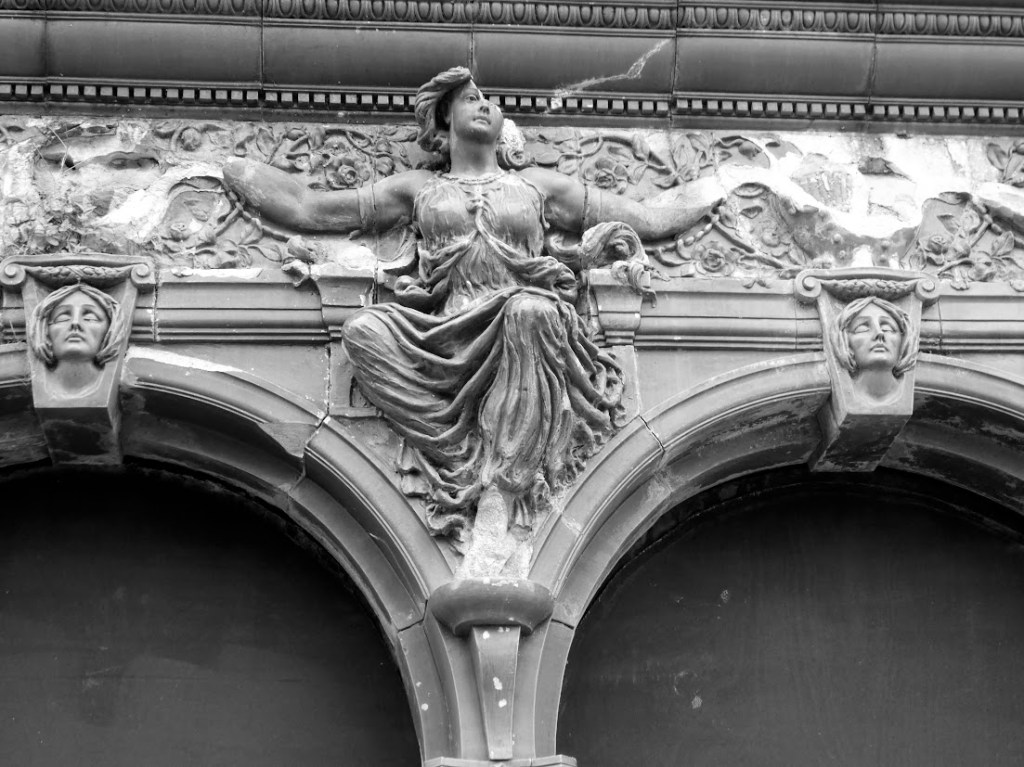
Today, for Leanne’s Monochrome Madness, Sarah of Travel with Me invites us to photograph ruins. I could so easily take you (yet again) to my favourite ruined abbeys: Fountains Abbey, Jervaulx, or Rievaulx. But Sarah herself has shown Fountains Abbey off in her post. I could take you to ruins all over this country and beyond. Instead, I thought that I’d show you not buildings, but their statues, often ruined by weather, by warfare, or quite simply the passage of time.
Best start in Rievaulx though, where carvings in its museum gave me the idea.
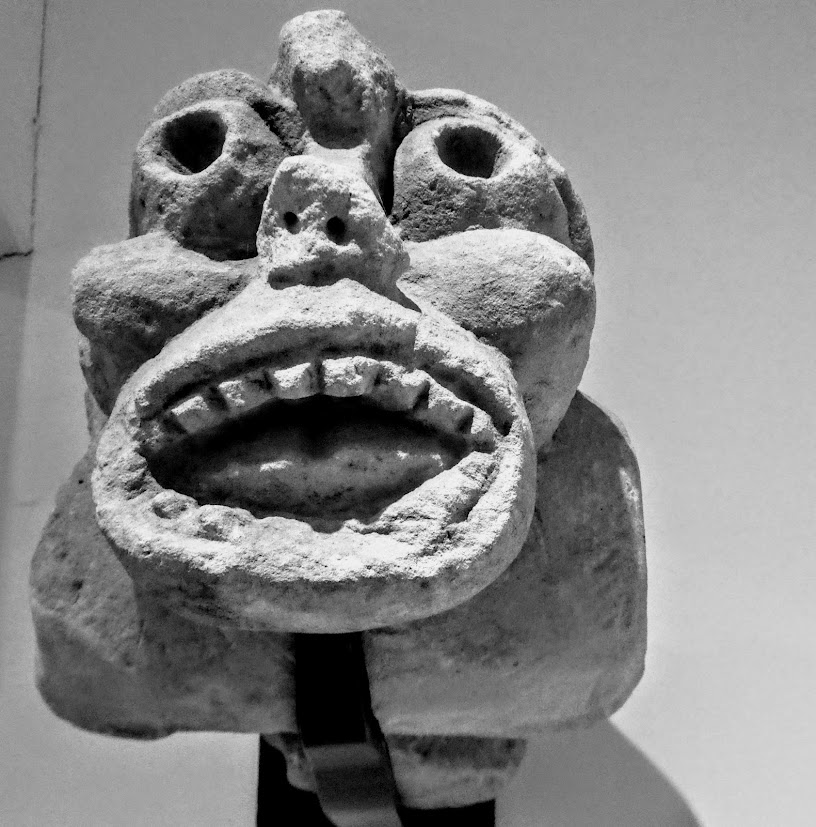
Off to North Eastern France, where the churches and cathedrals of Rheims, Laon and Tournus (to name but a few) have all mightily suffered from the weather eating into into the local limestone from which these were built.
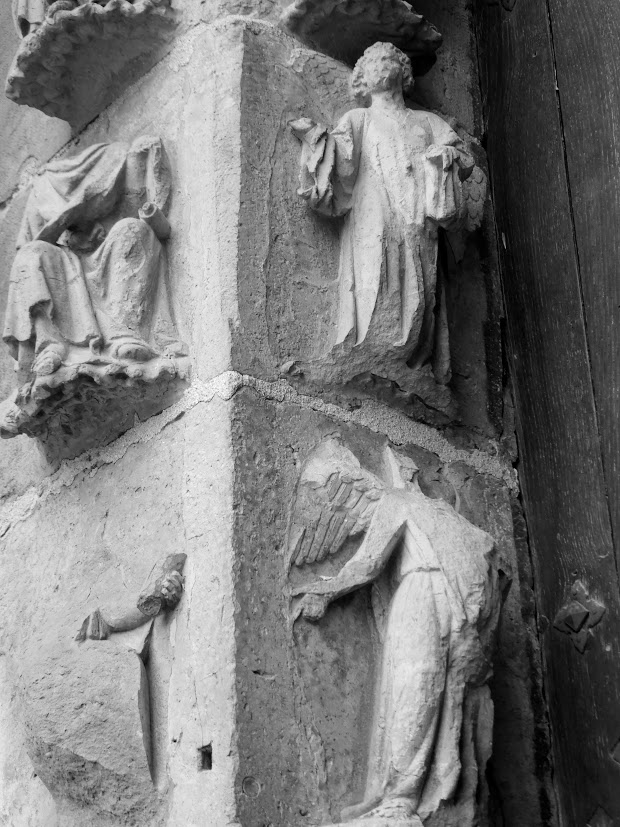
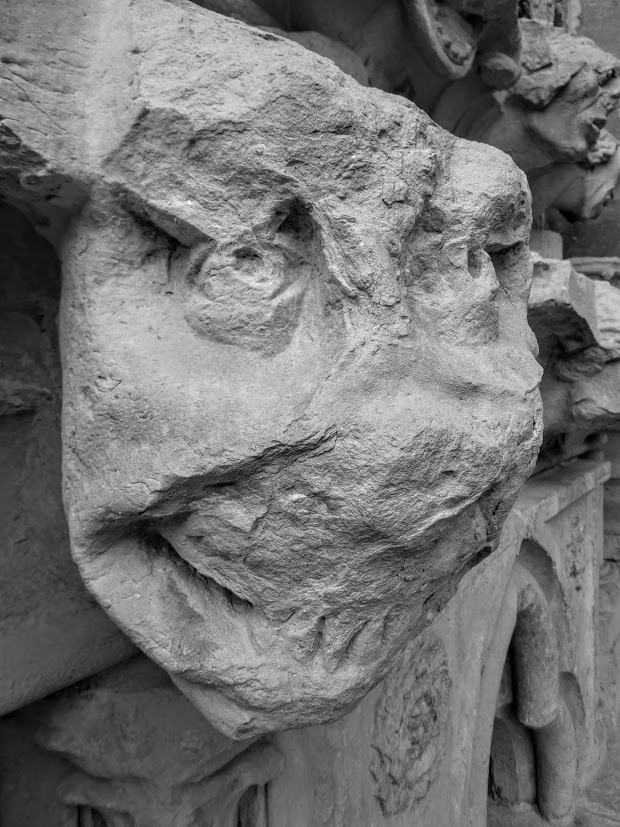
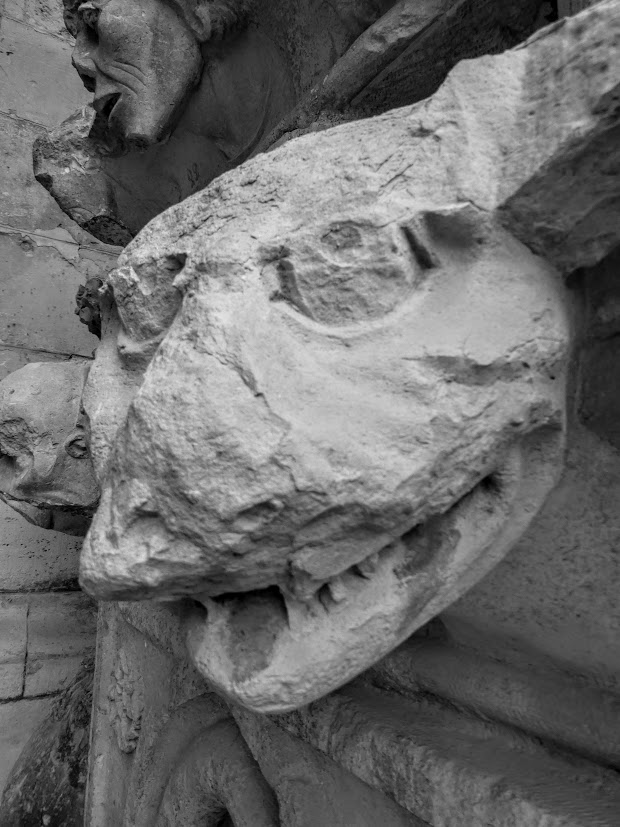
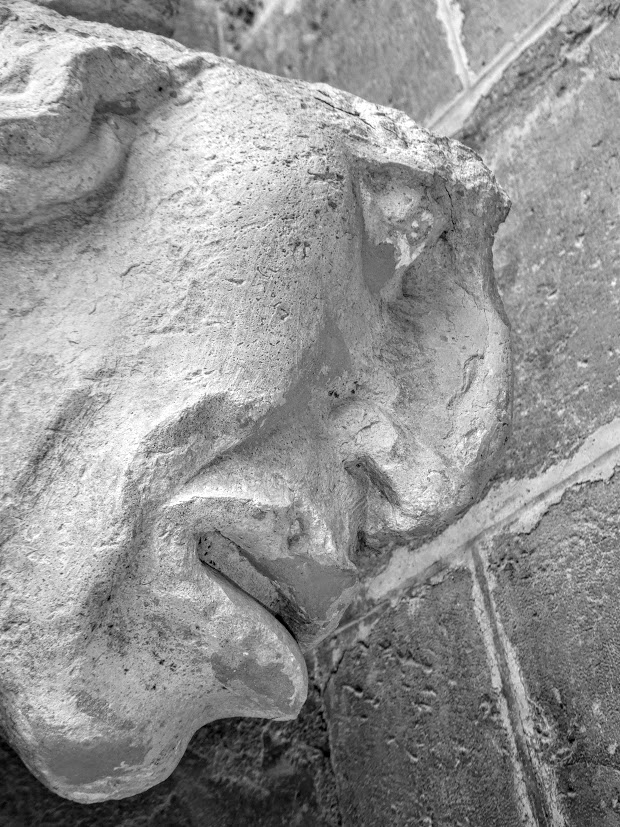
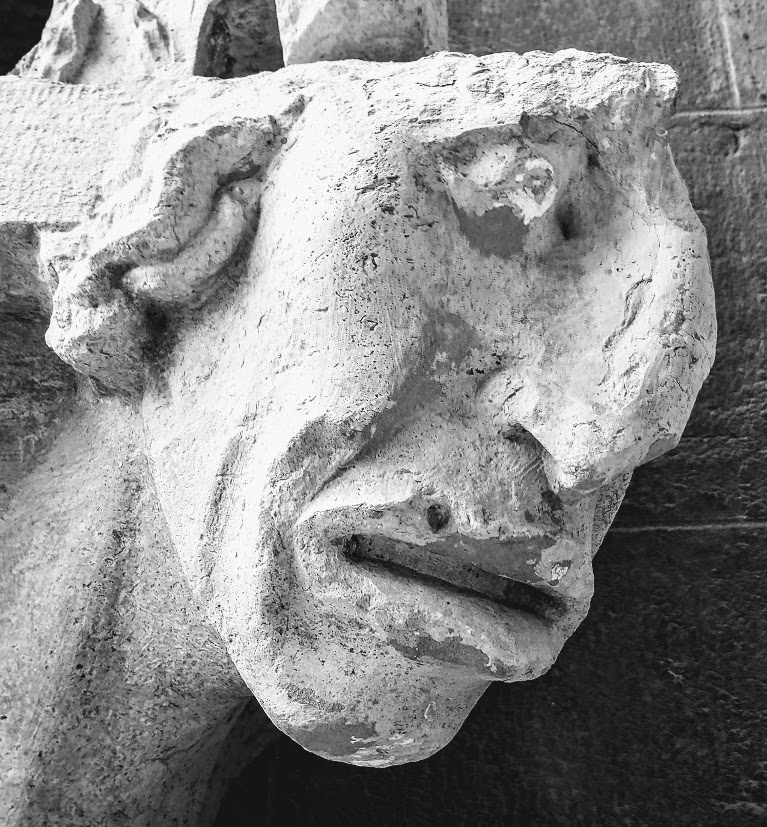
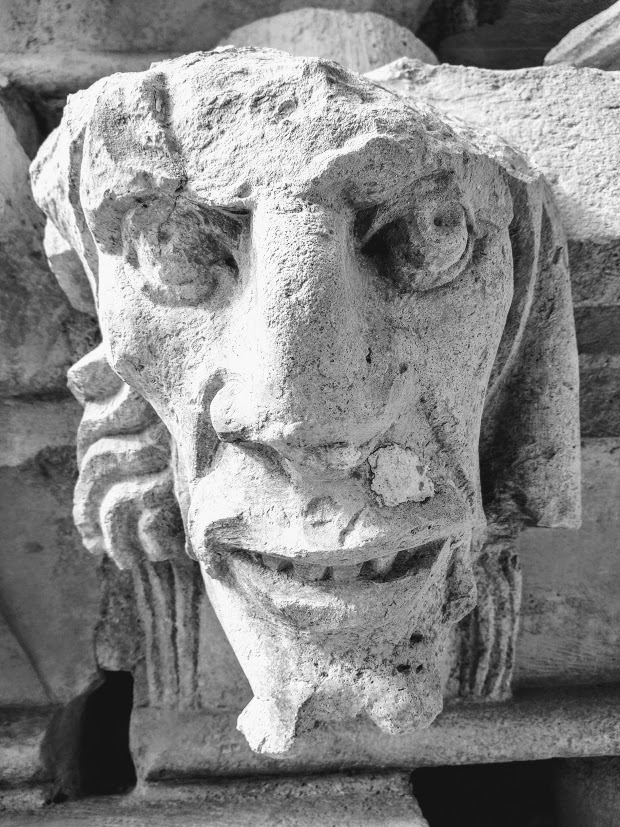
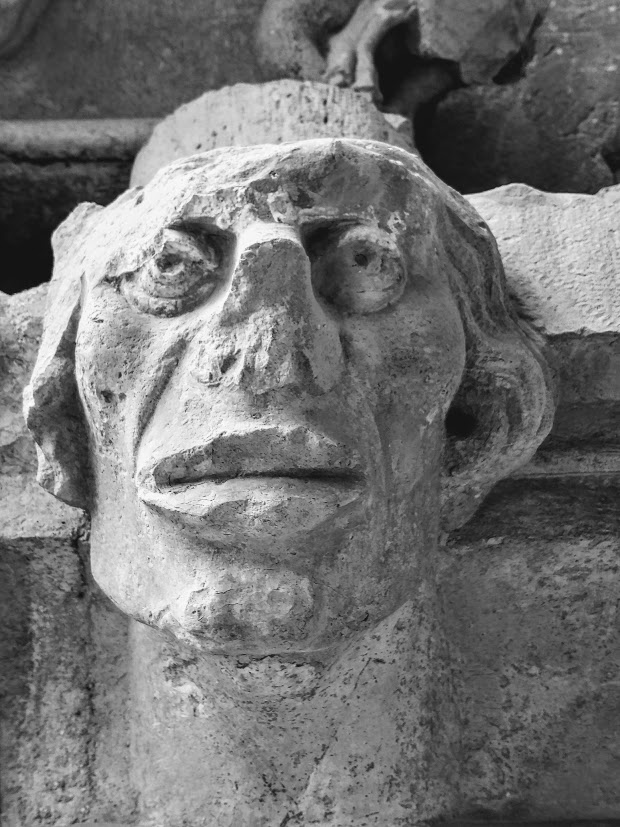
And in Troyes, wooden buildings have taken a weather-beating too.
A church in Bamberg has suffered mightily from having been contructed from limestone.
But even more recent buildings have been ruined a bit. Come to Hartlepool with me.
Let’s finish off by disobeying the challenge completely, at Sant Julia church, in Argentona, Catalonia. Its gargoyles were so ruined they pulled them down. And replaced them. Like this.
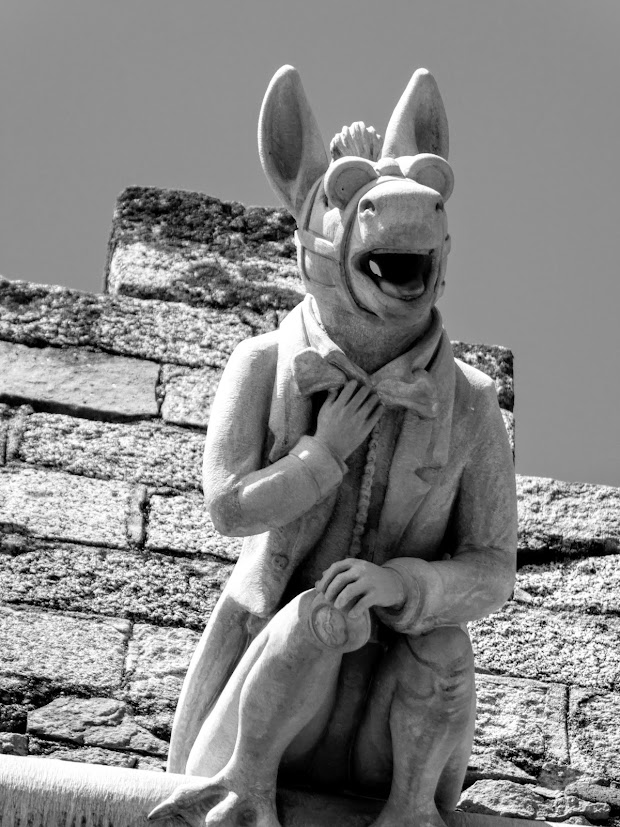
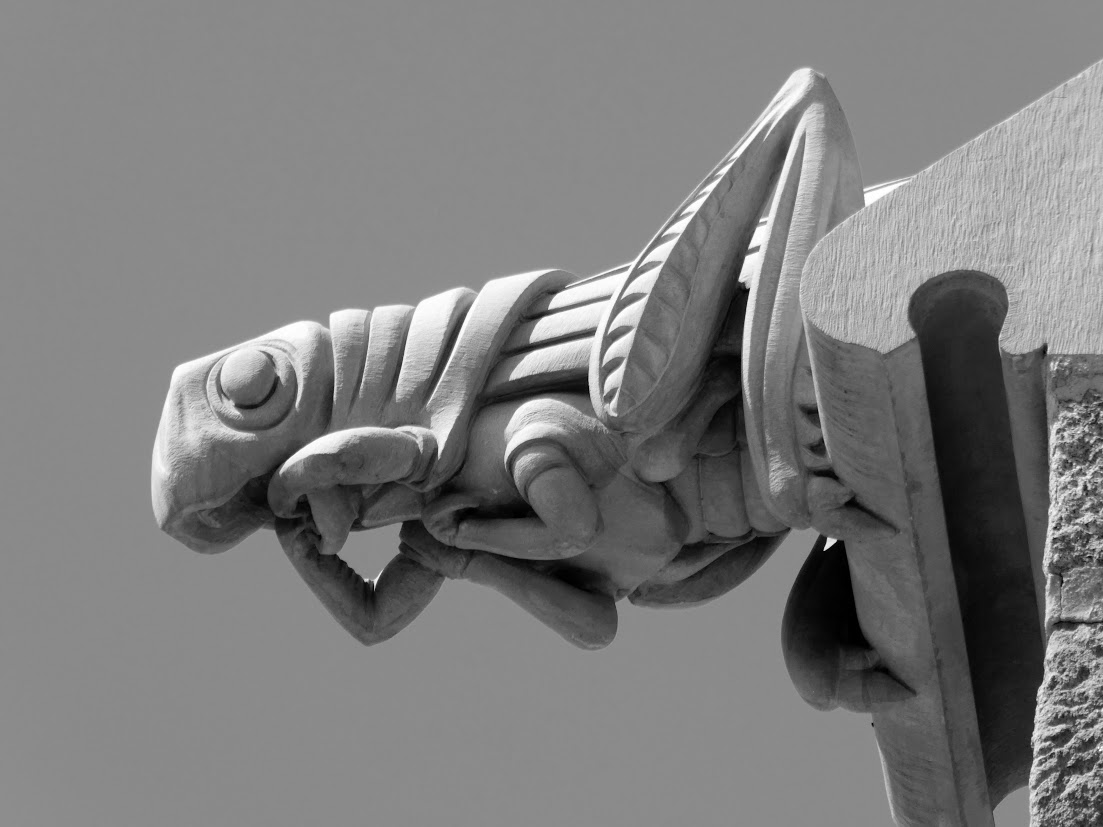
By the time you read this we will be at least half way down England, in transit for eastern France – Alsace. So you won’t get prompt responses to any comments I’m afraid, as we shan’t finish travelling till Friday. But I will send a postcard before the weekend is out!
Saudade is a Portuguese word, introduced to us by Egidio, who proposes it for this week’s Lens-Artists Challenge. Here’s what it means:
... an emotional state of melancholic or profoundly nostalgic longing for a beloved yet absent someone or something. It is a recollection of feelings, experiences, places, or events, often elusive, that cause a sense of separation from the exciting, pleasant, or joyous sensations they once caused.
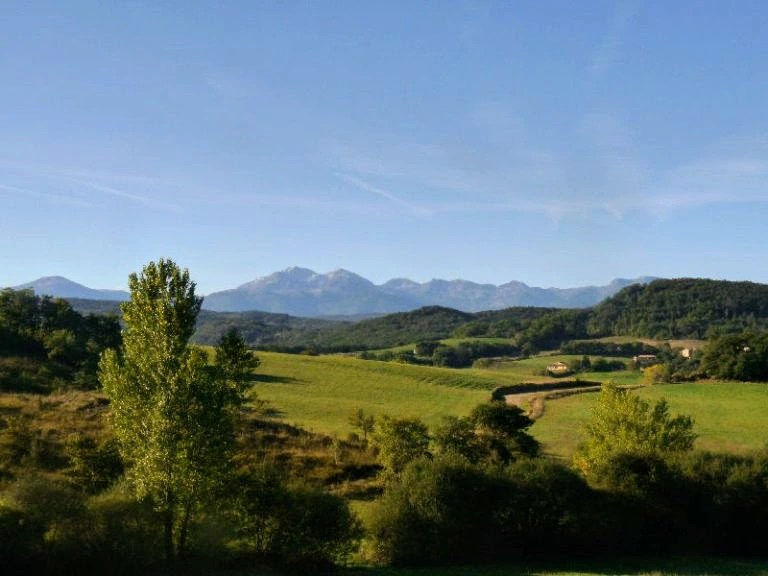
It’s what we both feel so very often about our years in southern France, now some ten years gone. Of course we remember the landscape – the foothills, the Pyrenees themselves, the seasons, the climate , the slower pace of life …
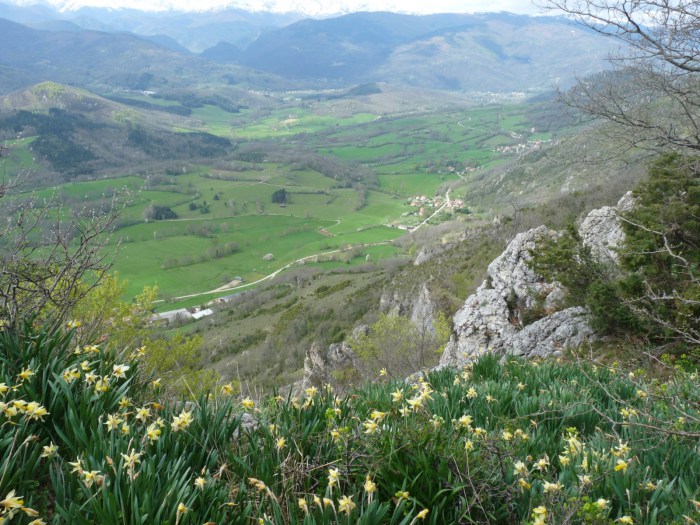

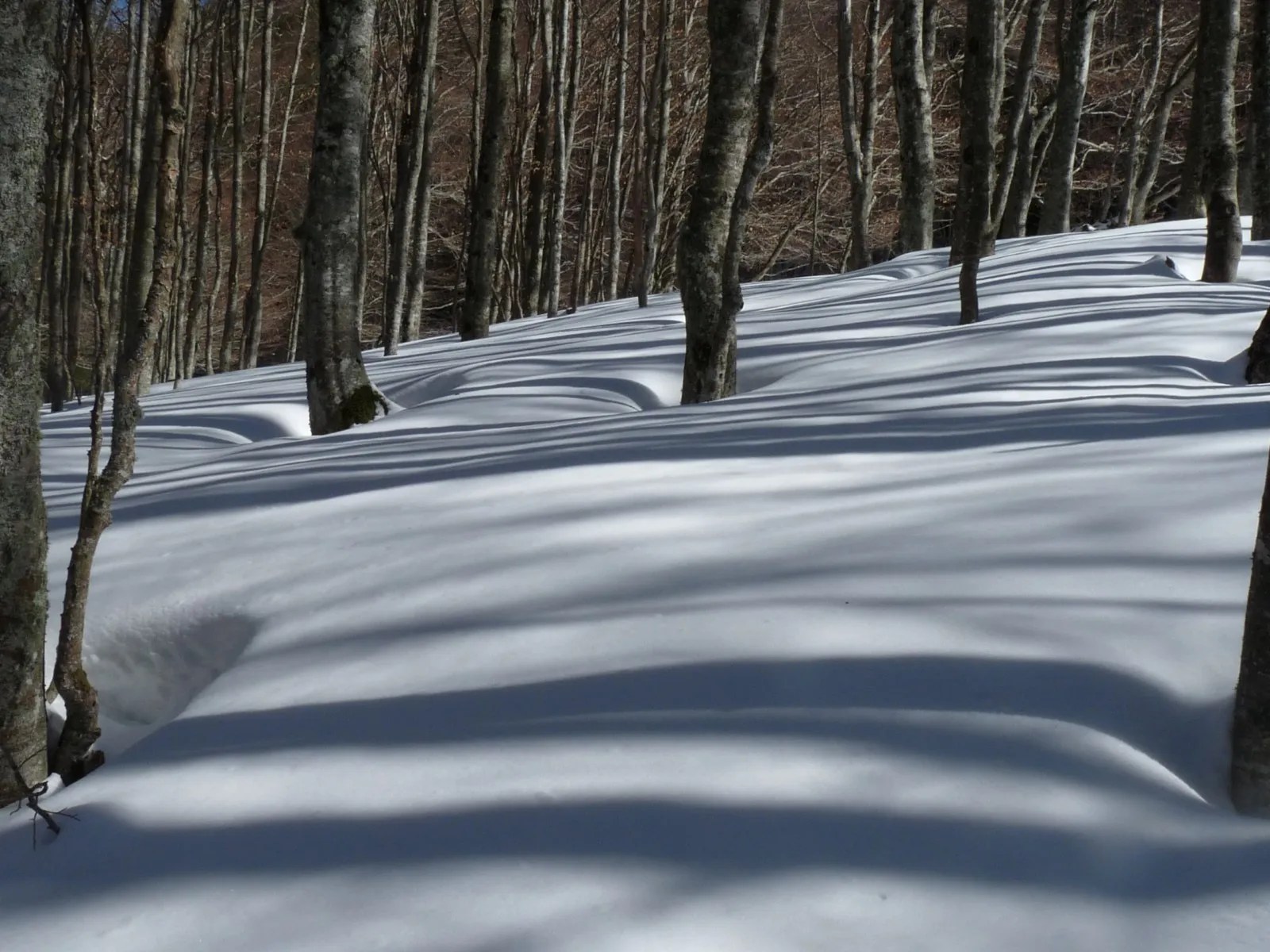
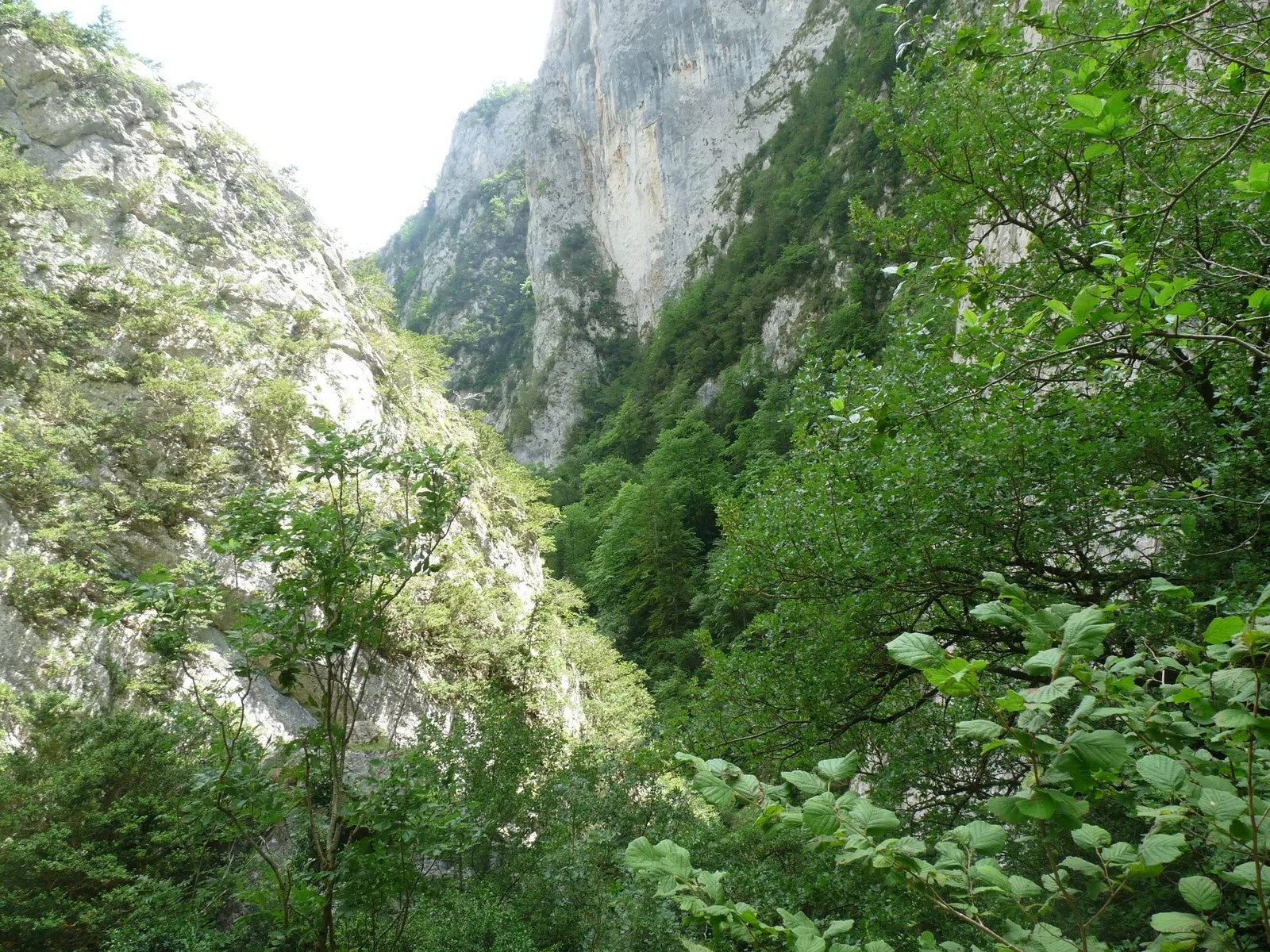
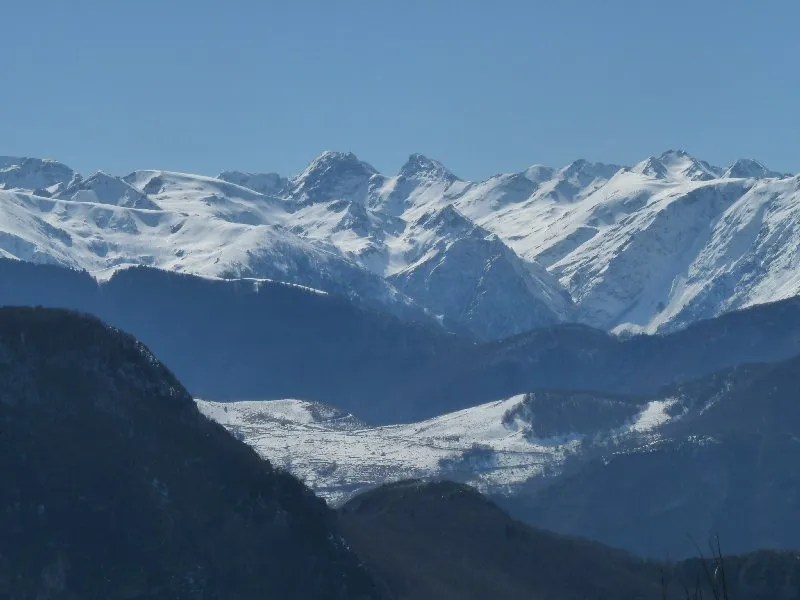
Of course we do. But we remember even more the happy Sundays and Thursdays we had discovering these landscapes with our two local walking groups. We were the only British members, and how different these expeditions were from their English equivalents. After a morning slogging up a mountain, we were rewarded with views, perhaps a stream, a wild-flower strewn meadow. Then Marcel the butcher would produce his own home-cured sausage; Sylvie offered her daughter’s sheep’s milk cheese; someone would bring bread; Yvette and I brought cake; wine was on offer, and an apéro, and after that someone or other would hand out sugar lumps, on which to drip just a little of their grandfather’s special home-confected digestif. After a nice long rest, we’d pack up and find a different path downwards.

Eating was at the heart of so many activities. Here’s another community meal, tables ranged over the town square so everyone could get together and enjoy each other’s company while celebrating some local highlight..

In fact enjoyment came high on everyone’s agenda. Every July, for instance, in a small village a few miles from ours, a group of volunteers spend months devising Le Jardin Extraordinaire. People come from miles around to enjoy strolling through bowers confected from still-growing gourds, and climbing upwards through woodlands with surprises: beautiful, silly, witty – every year was different.

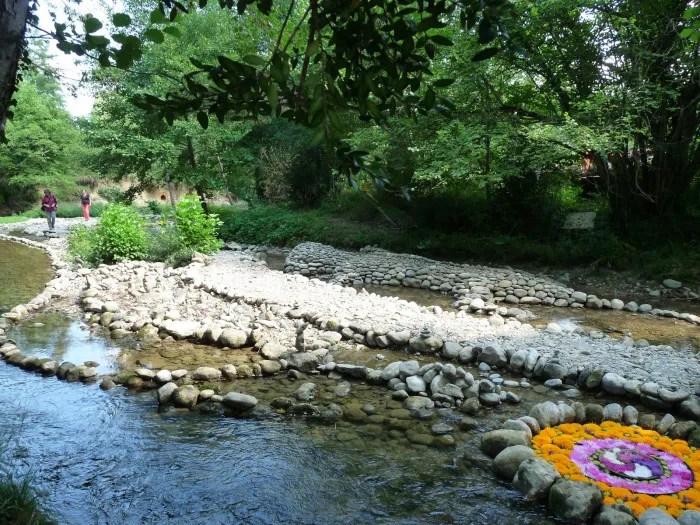

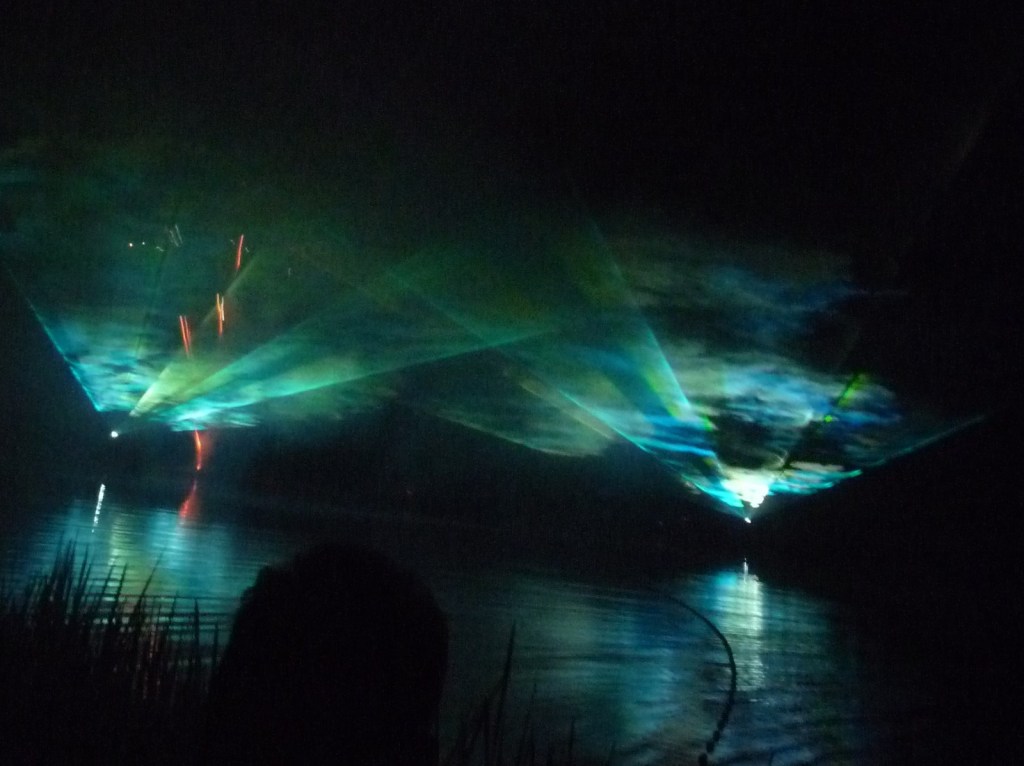
Then there was the annual firework display on the lake at Puivert, which took the concept of fireworks to a whole new level. It reduced the audience of 1000 or more, who’d all come with families, friends and the makings of a fine picnic to astonished silence as the spectacle ended, before simultaneously roaring their tumultuous appeciation of the astonishing creations set before our eyes.
Our French friends taught us about ‘au cas où‘: the need to have with you at all times a bag or similar ‘just in case‘ you found walnuts, wild cherries, sweet chestnuts, mushrooms – all sorts of food-for-free for the thrify householder. I was au cas où–ing only yesterday, finding crab apples, pears, apples, mirabelles all there for the taking, just as our French friends recommended.
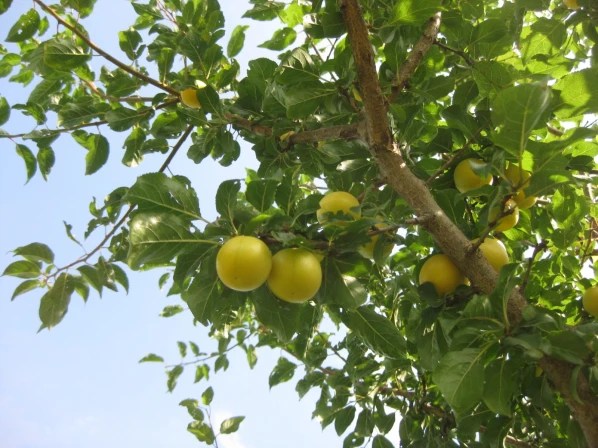
I’ll stop there. The feelings of longing, of saudade are strong …
For Egidio’s Lens-Artists Challenge #365: Longing.
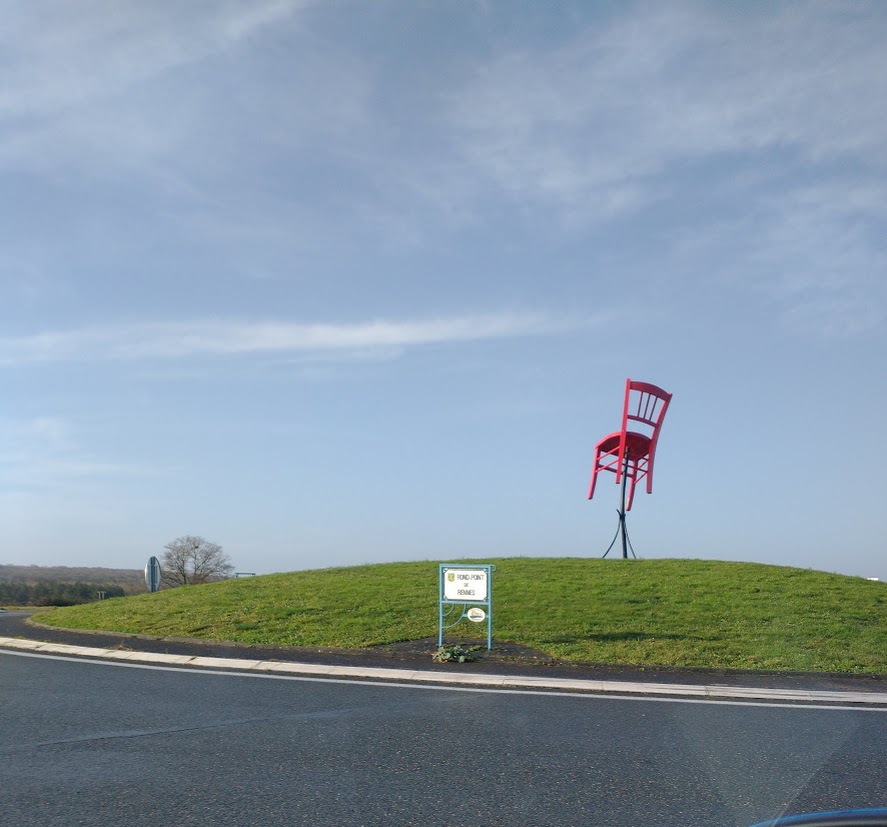
Spotted on a roundabout in Brittany. It can’t qualify on its own for Jude’s Bench Challenge, though it’s perfect for Becky’s #SimplyRed. But would three together cut the mustard?
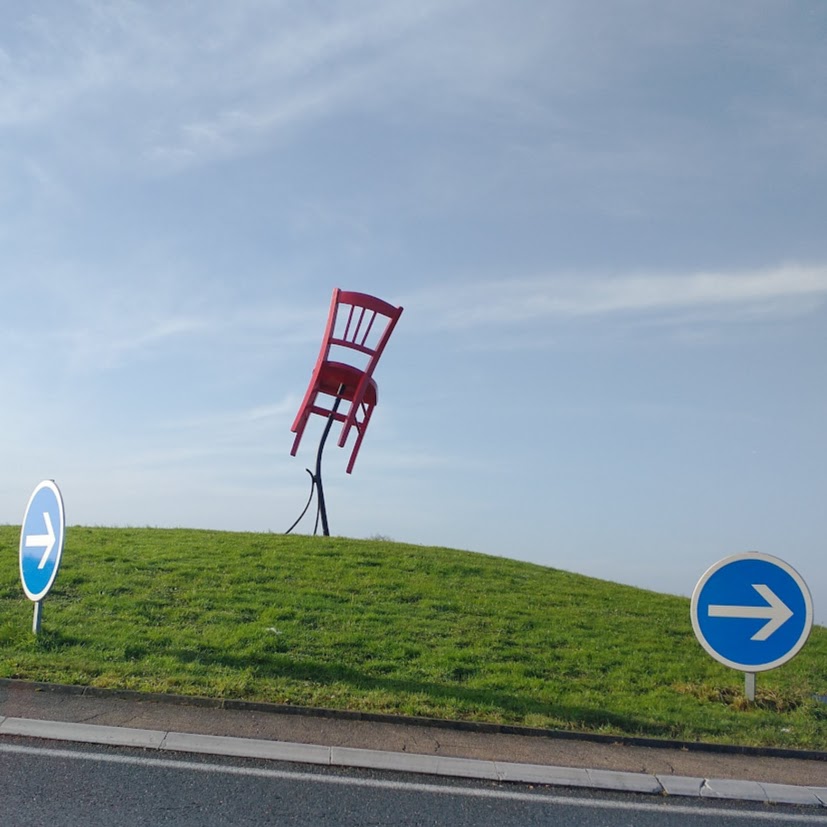
something beginning with H. That’s what Sarah of Travel with Me wants from us today for Leanne’s Monochrome Madness.
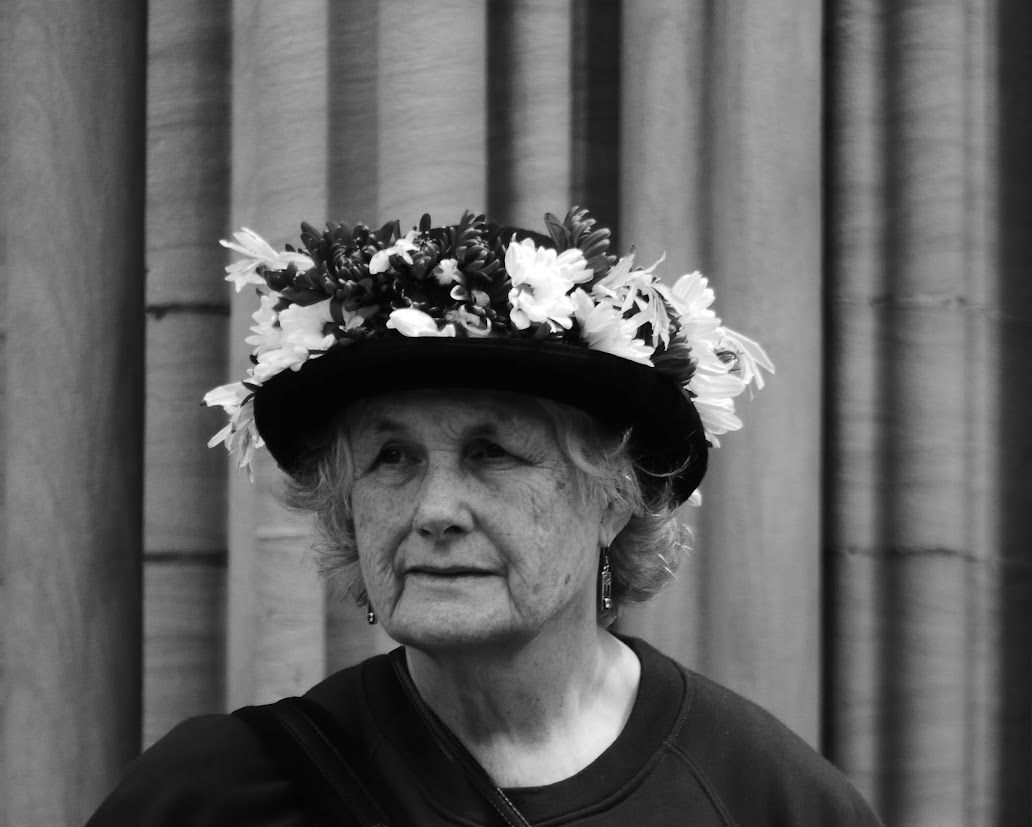
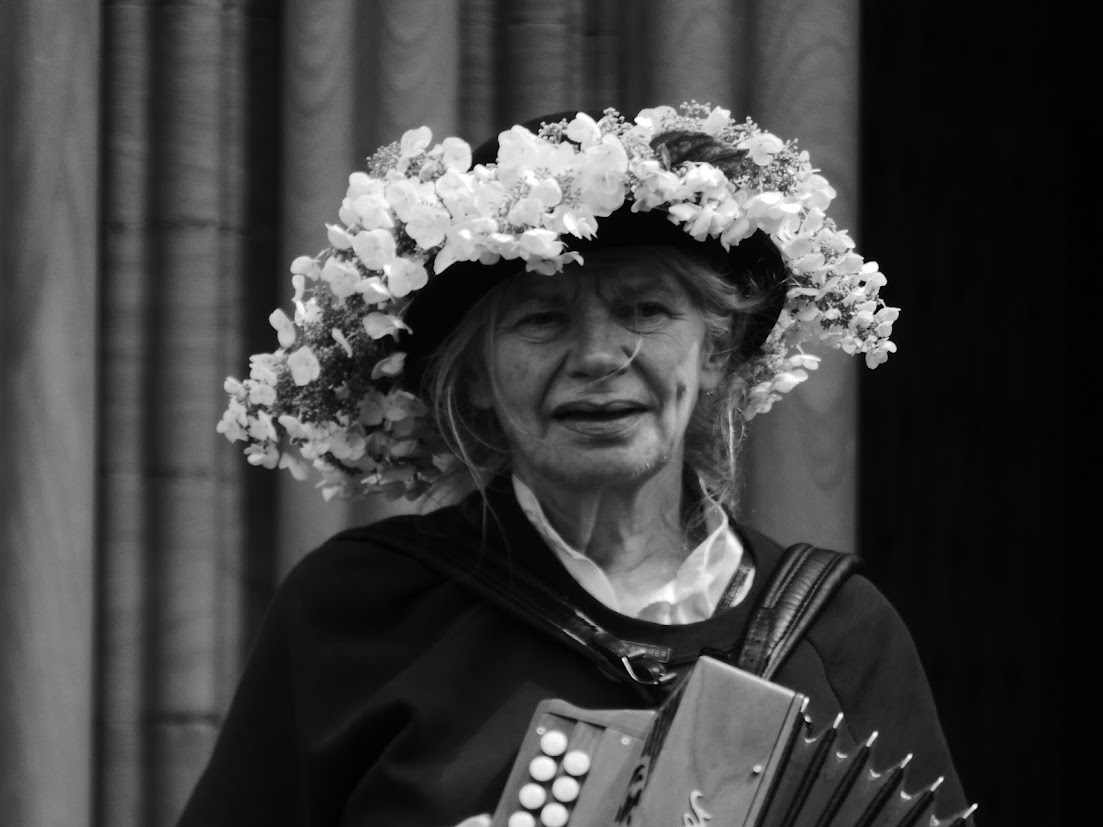
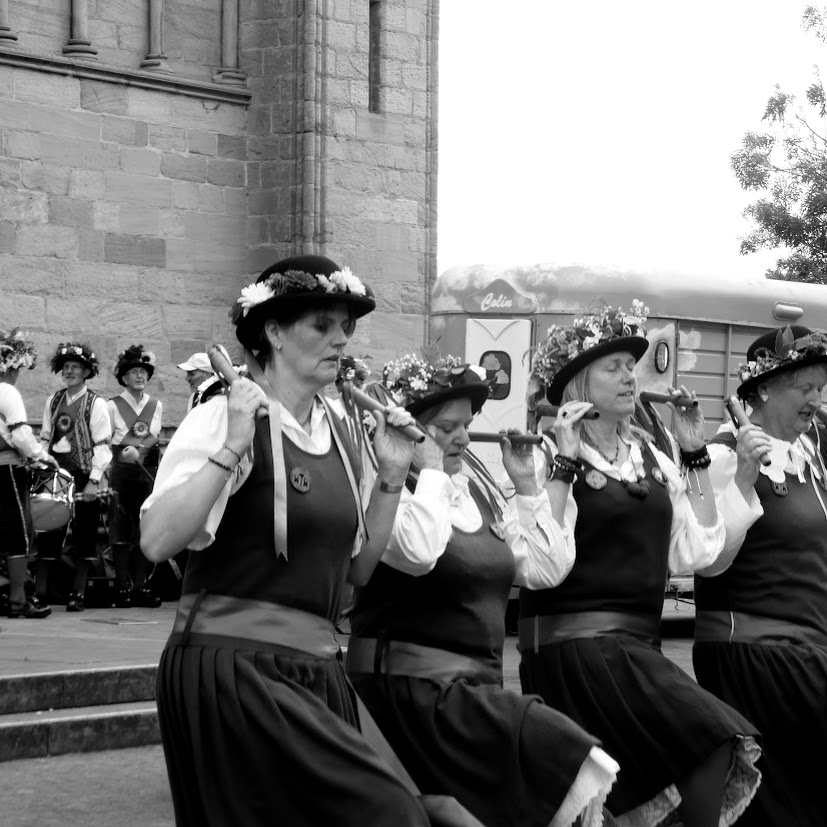
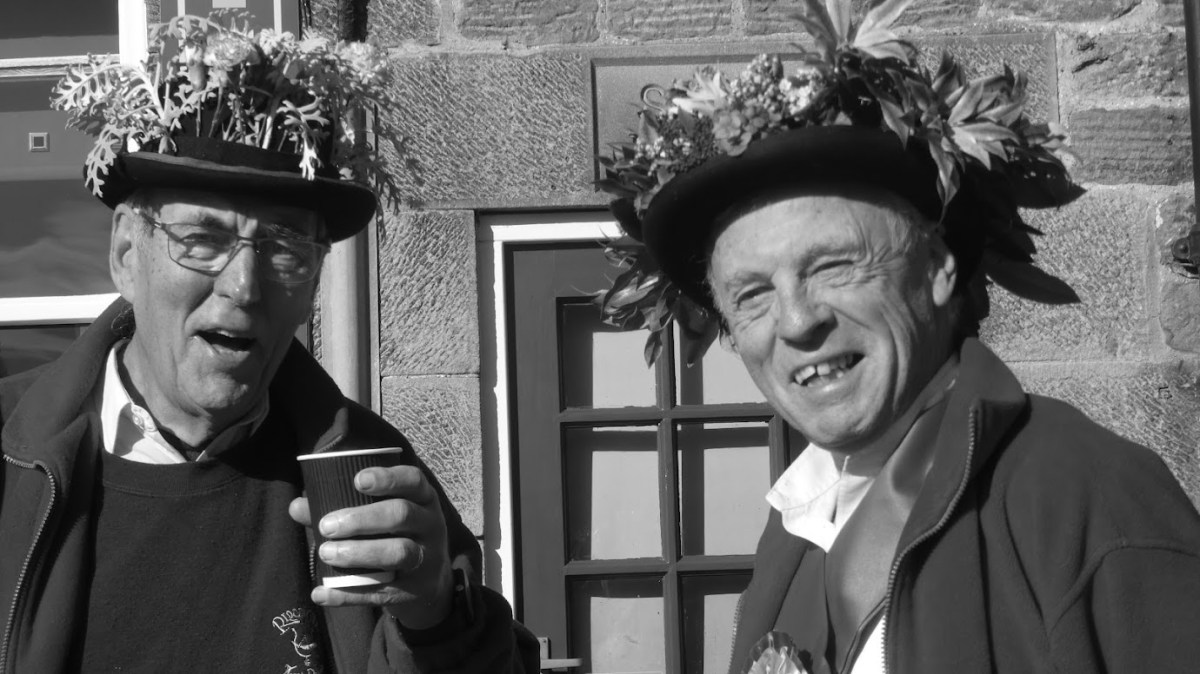
Well, in among all the other acts, Ripon’s Theatre Festival included a few sets of Morris dancers – just as likely to be women as men these days. And they all flaunt terrific Headgear on their Heads. I mean… Hats. Here are a couple: and including two more in the featured photo.
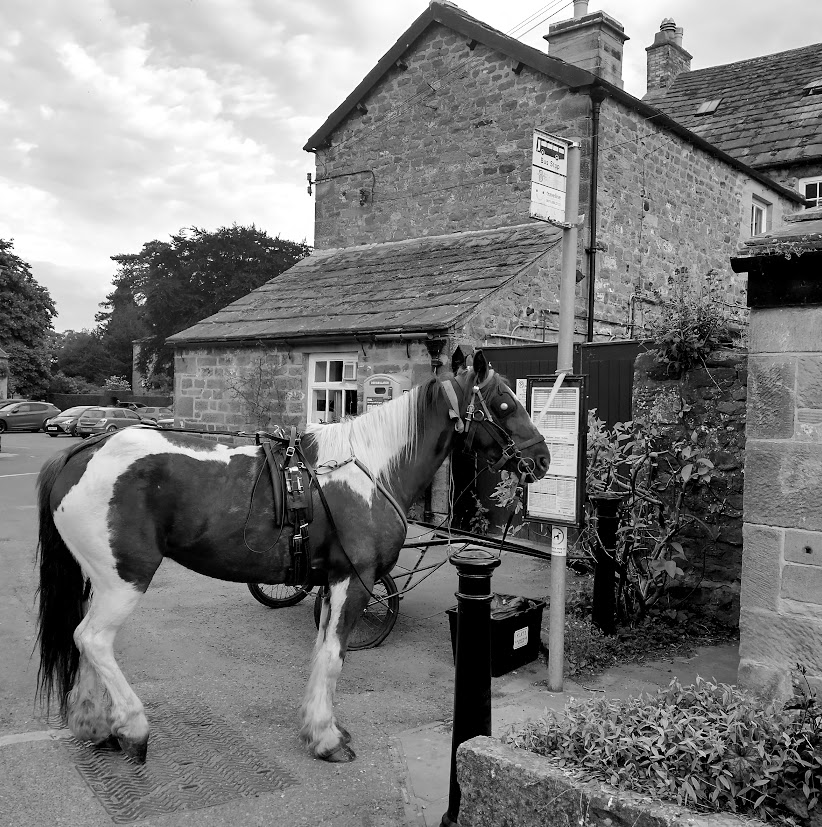
Horses. I won’t show you show-jumpers, or mares with their foals in bucolic meadows. Here’s one waiting patiently for the 159 in Masham one evening as we were on our way to Photo Club. The last bus had left an hour and a half before. In truth, she was on the way to Appleby Horse Fair, an event that. although centuries old, isn’t as long-established as Morris dancing. This horse was one of dozens of horses and vardoes we see making their slow way there in the weeks before.
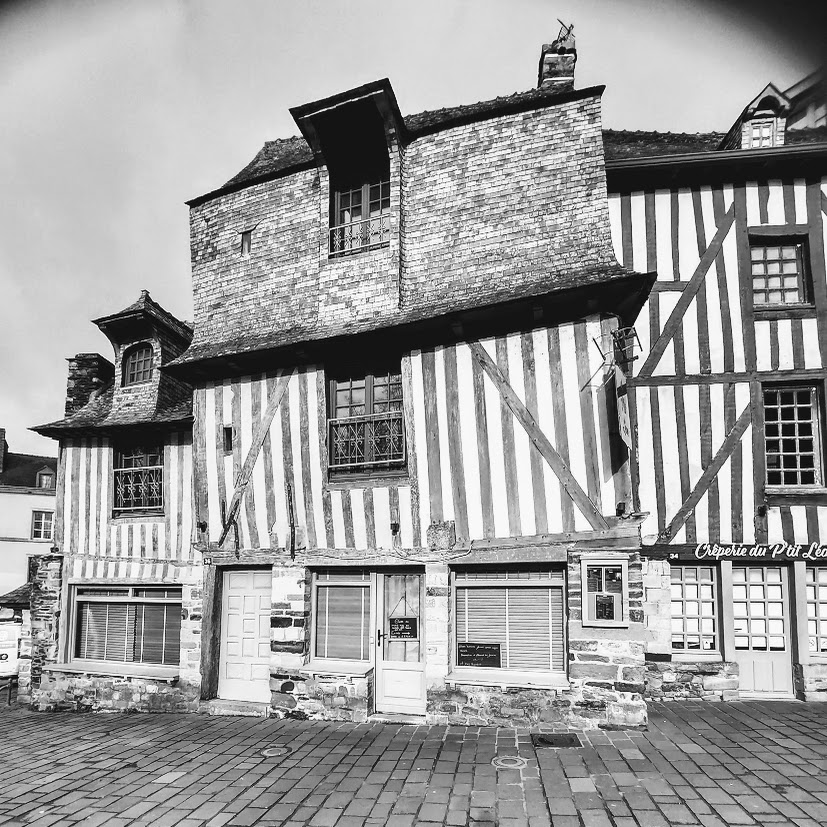
Let’s continue to be a little Olde Worlde. Here’s a House spotted last year in Vitré in Brittany, a town which boasts almost no other housing style.
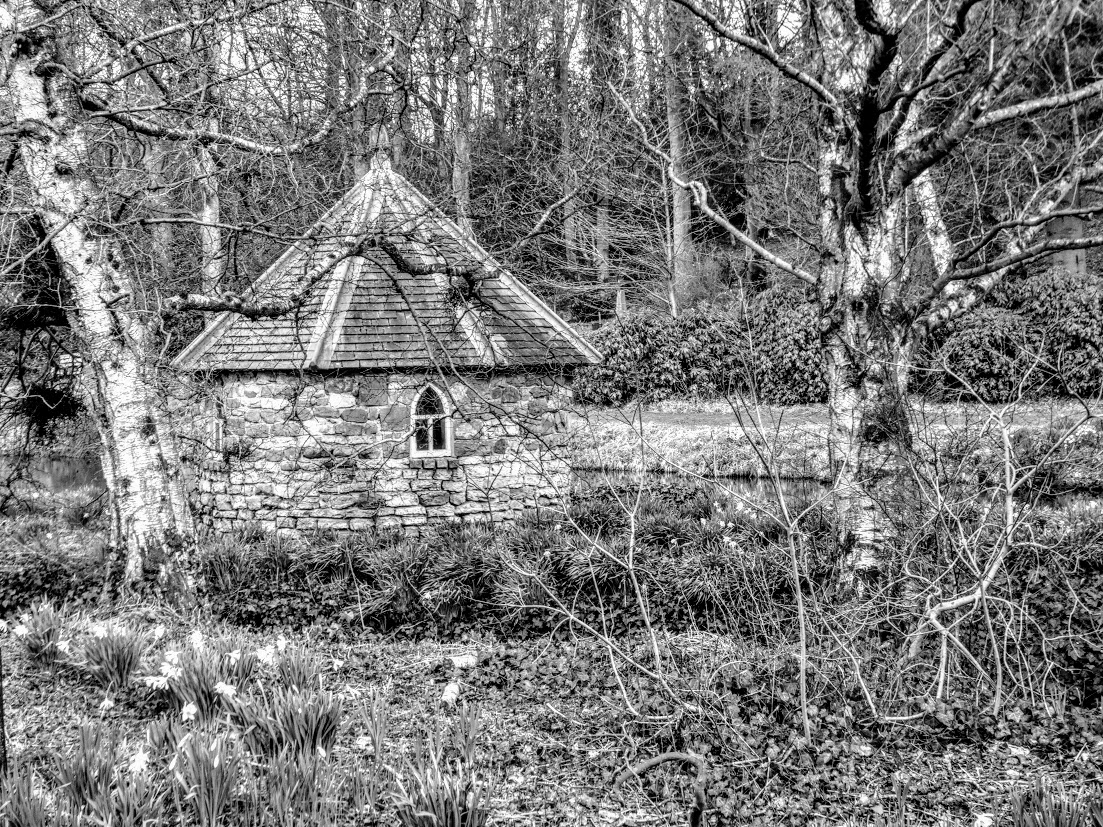
Or shall we go for a little Hut in the grounds of Sleningford Old Hall, or a tiny House, fairies-for-the-use-of, in Nidd Hall?
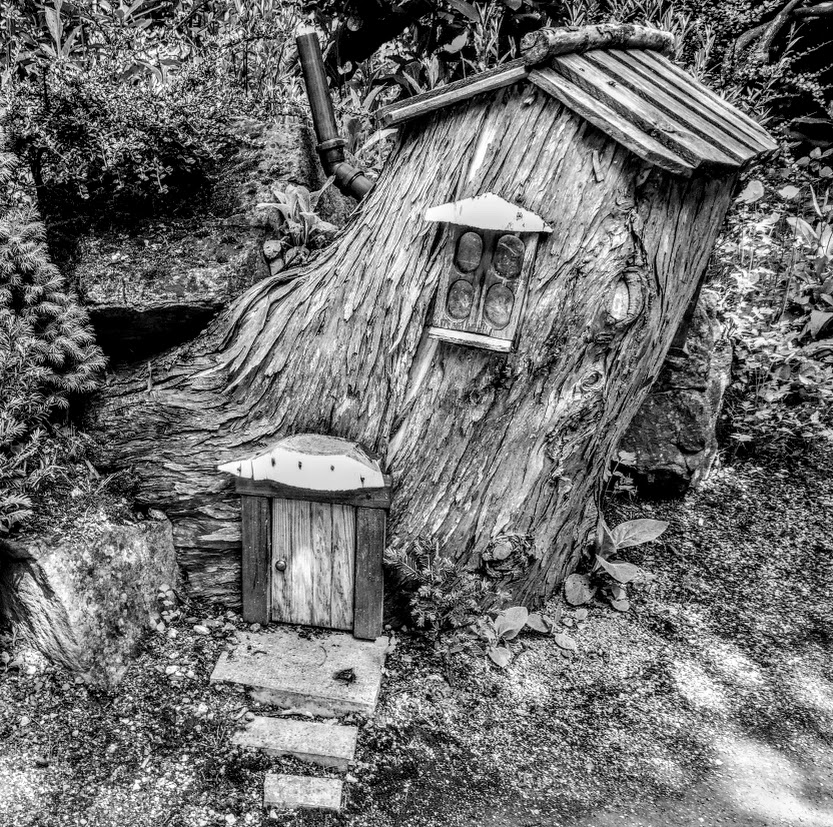
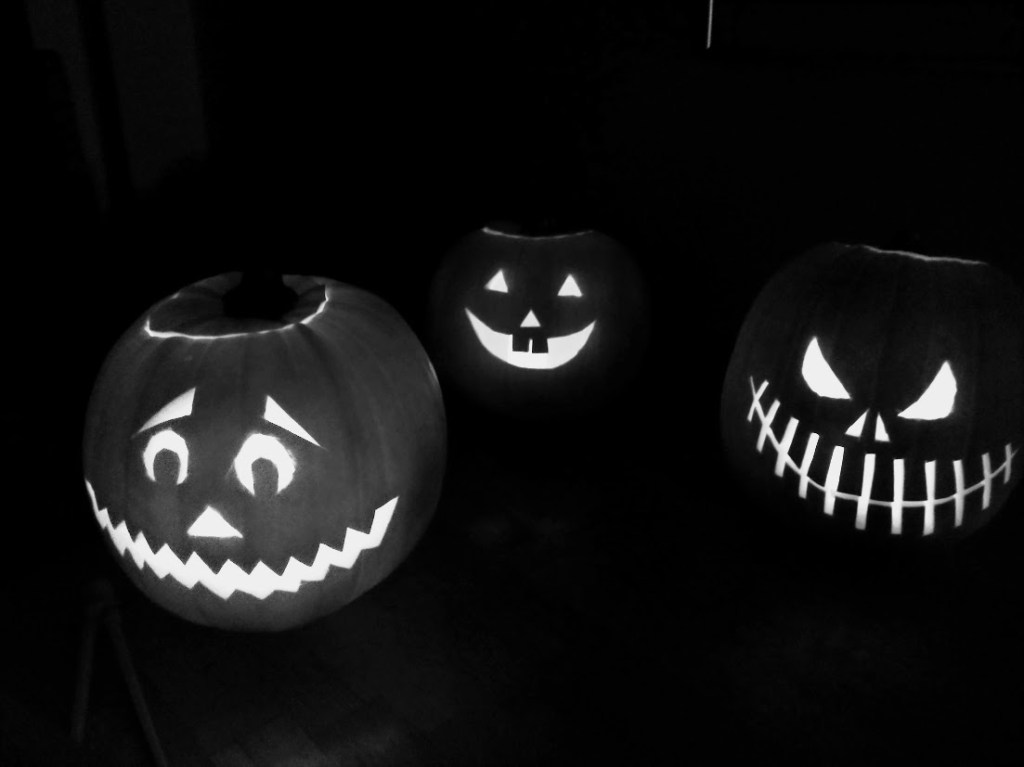
Fairies make me think of other out-of this world creatures, as seen at Hallowe’en.
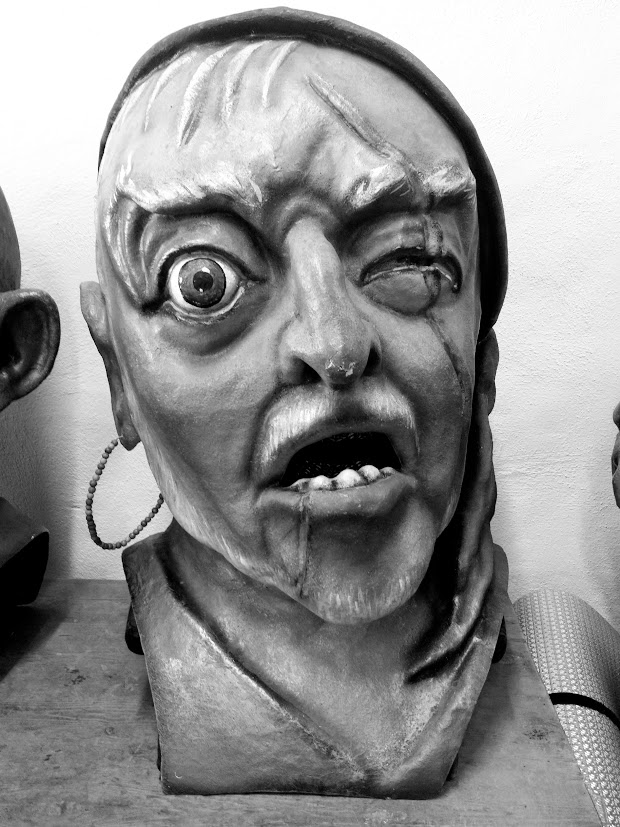
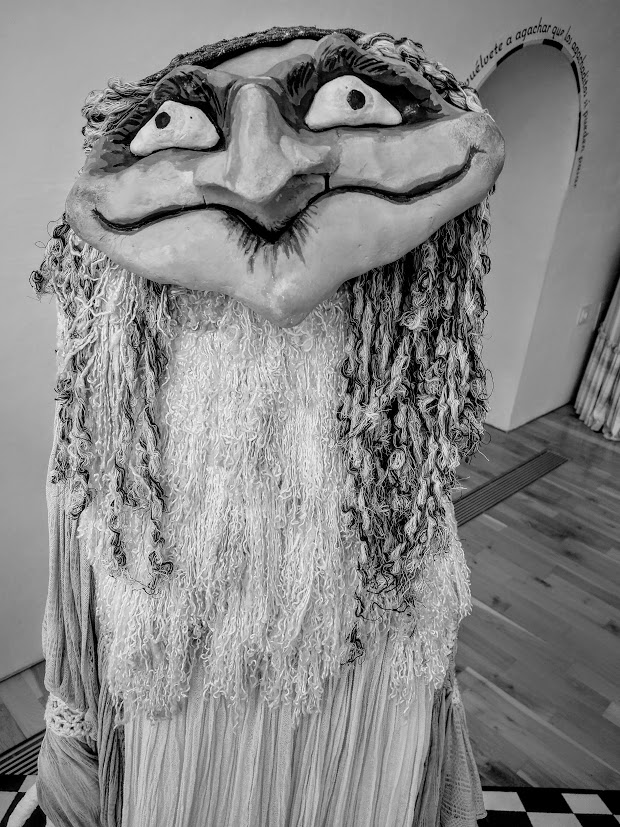
Not frightened yet? I can sort that out. Here’s the Hideous Head of a Gegant in Premià de Mar , and a Haunting Harridan from the Puppet Museum in Cádiz.
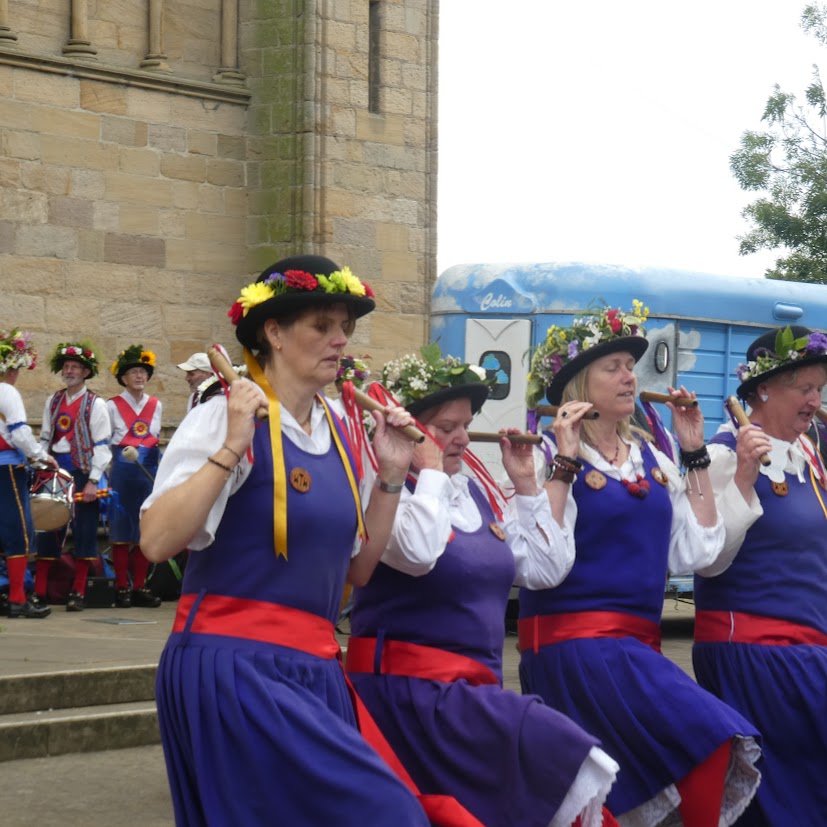
I don’t want to leave you quivering though. Let’s go back to Morris Dancing and Hats of course, and let the Slubbing Billys cheer you up. In black and white, and in Glorious Technicolor With Red Highlights for Becky’s #SimplyRed Squares.
For this week’s Monochrome Madness, This week’s host Brian of Bushboy’s World has asked us to consider Street lights. I assembled a clutch of them, and realised that they all come from Spain.
The featured photo was taken one evening near our hotel in Seville. This next batch all come from Cádiz.
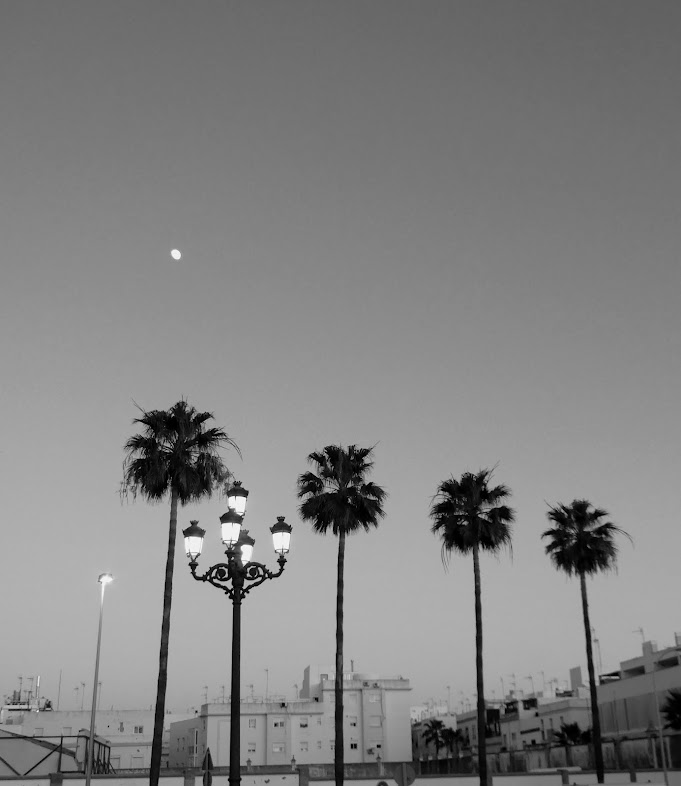
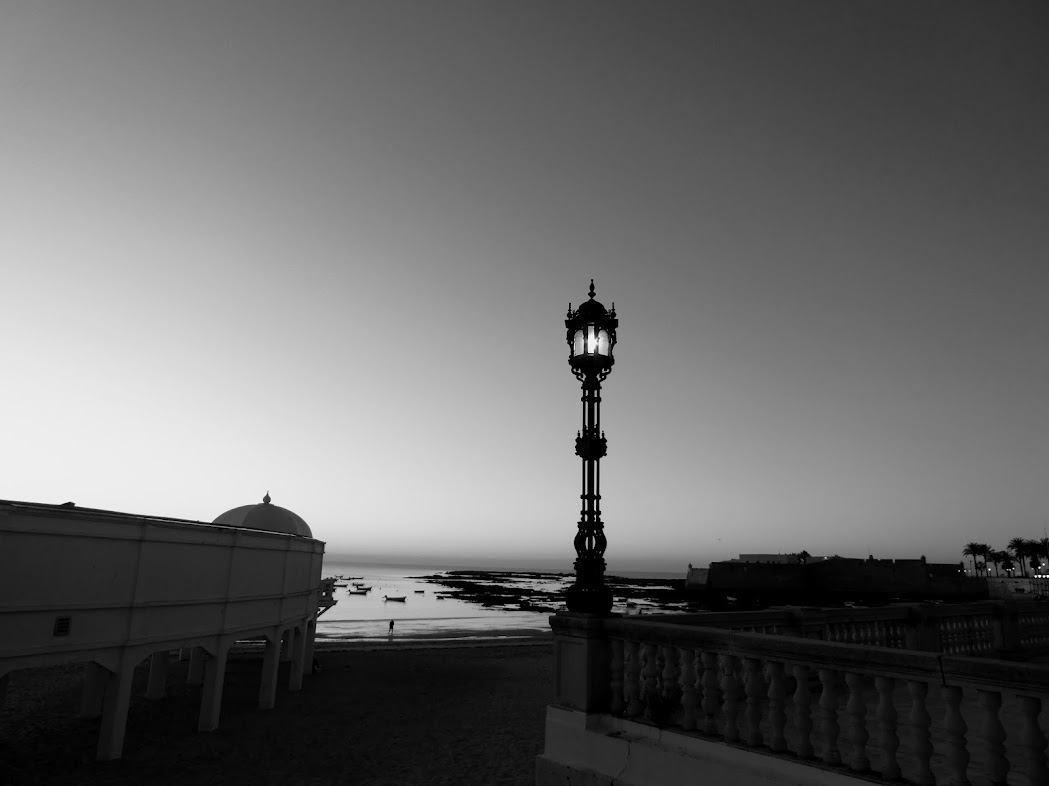
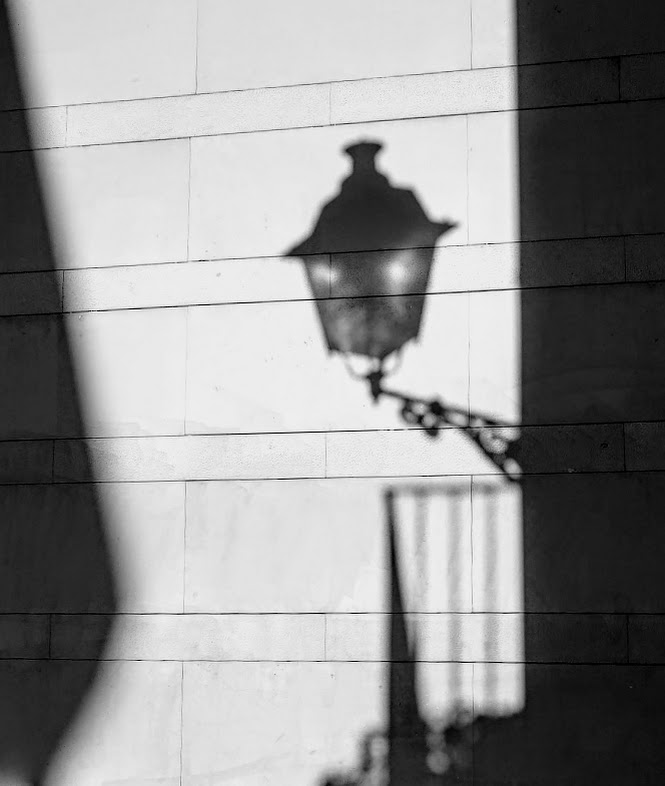
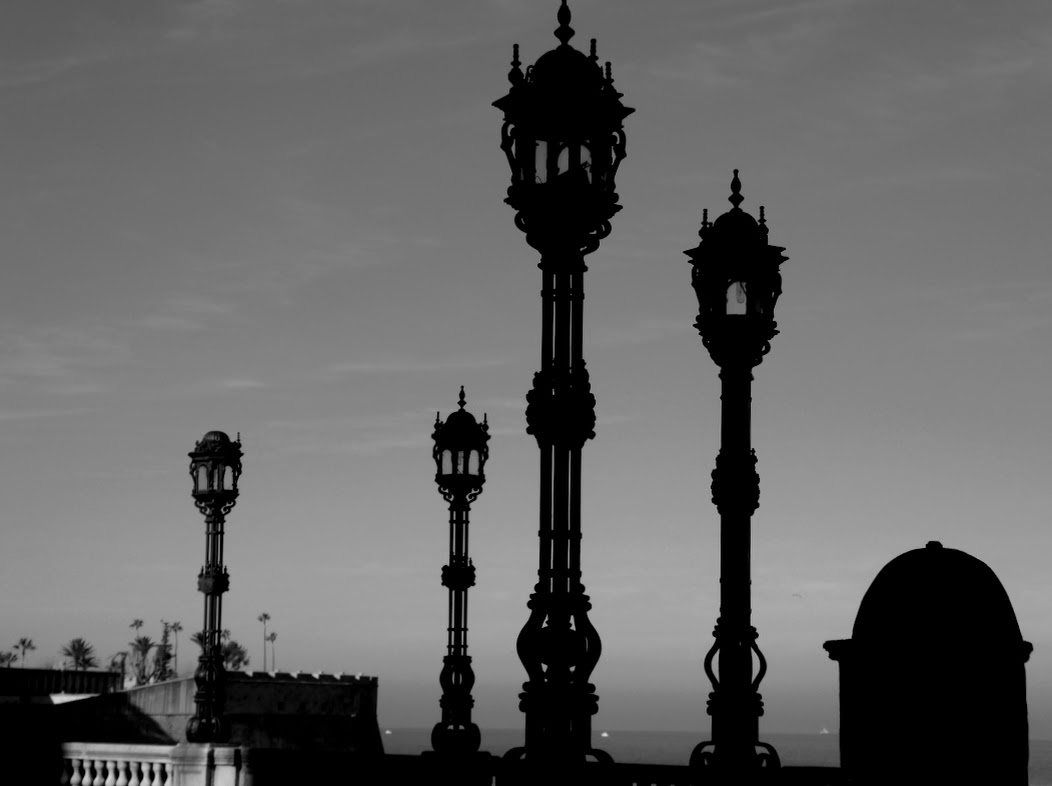
… and one of them is merely a shadow of a streetlight.
Off to Málaga now, just after Christmas.
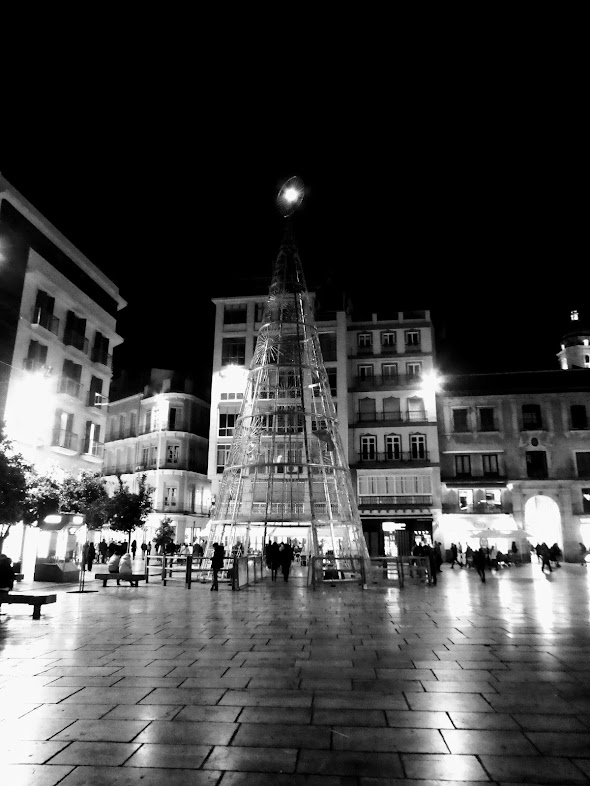
Another one from Seville …
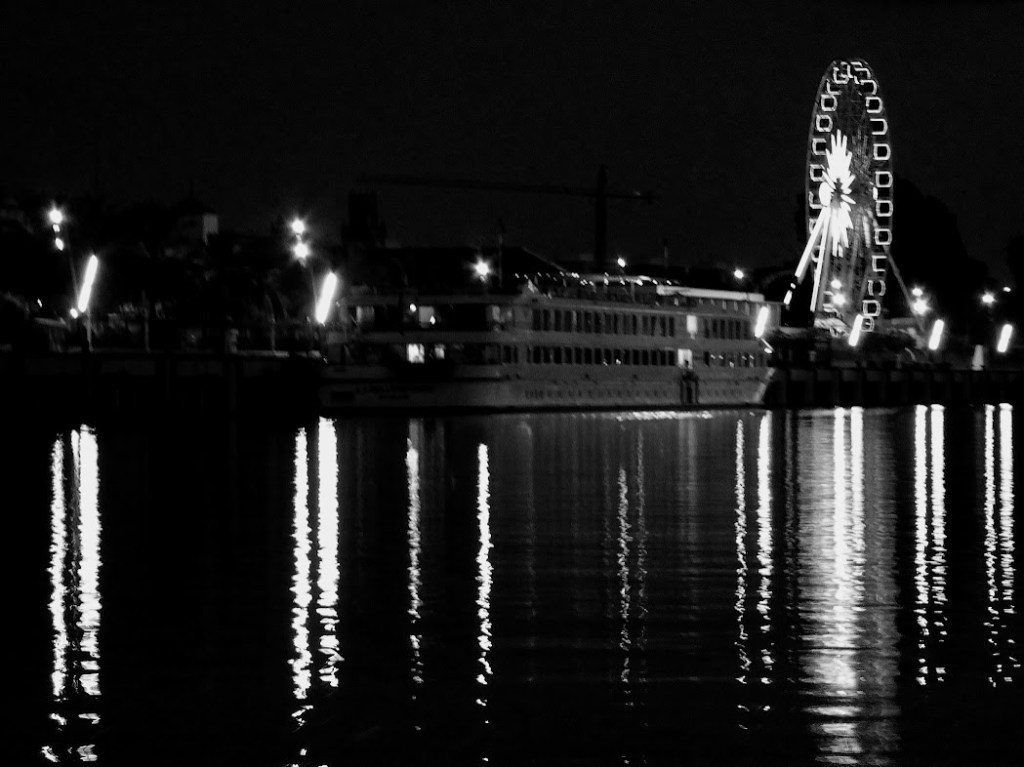
And the city I know best, Barcelona? Well, not a single night time shot. Instead, here are two taken in broad daylight.
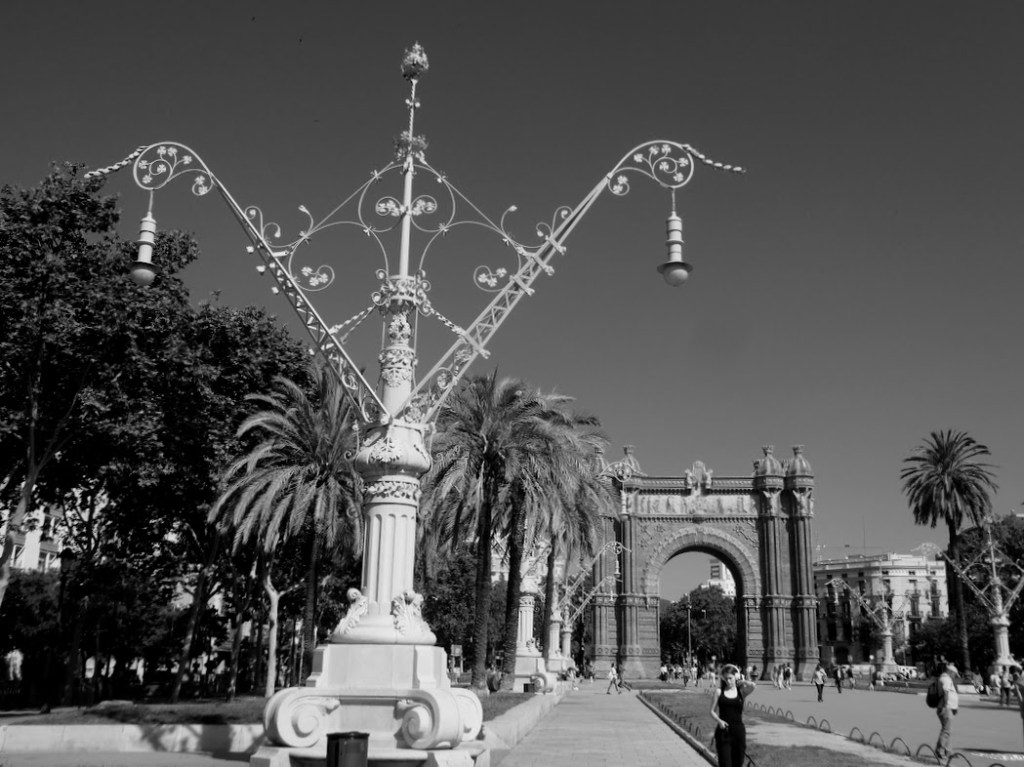
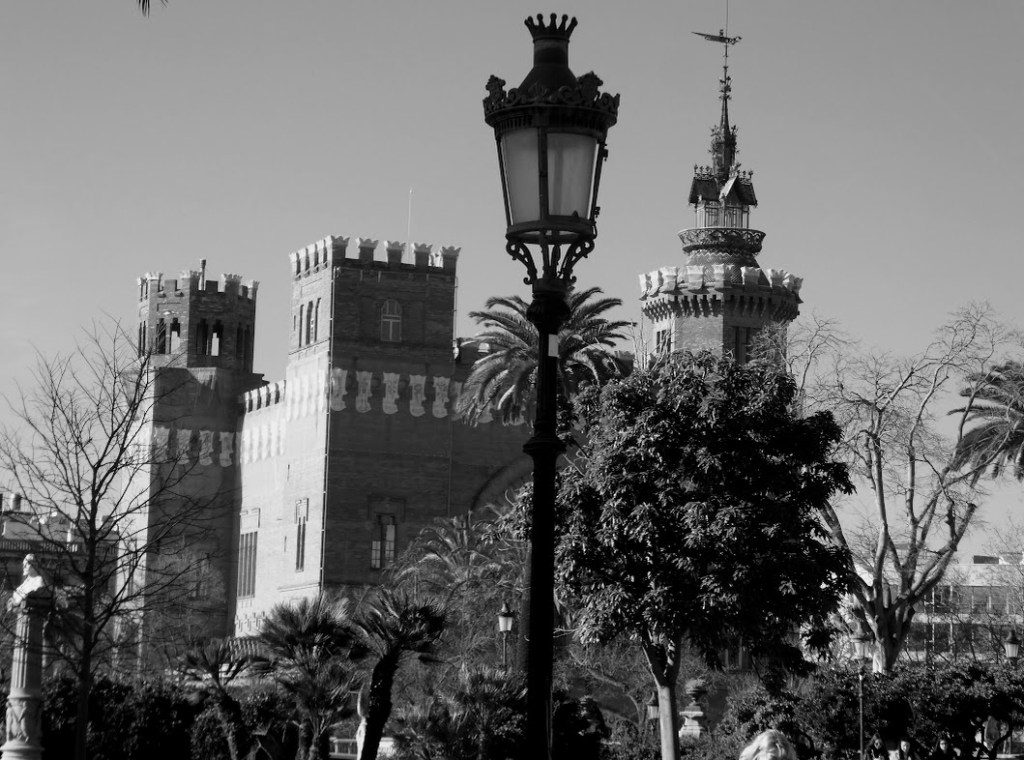
I’m away for a few days, so this post, and the next few are scheduled. So – sorry – I may be slow in commenting, and even slower at reading your posts.
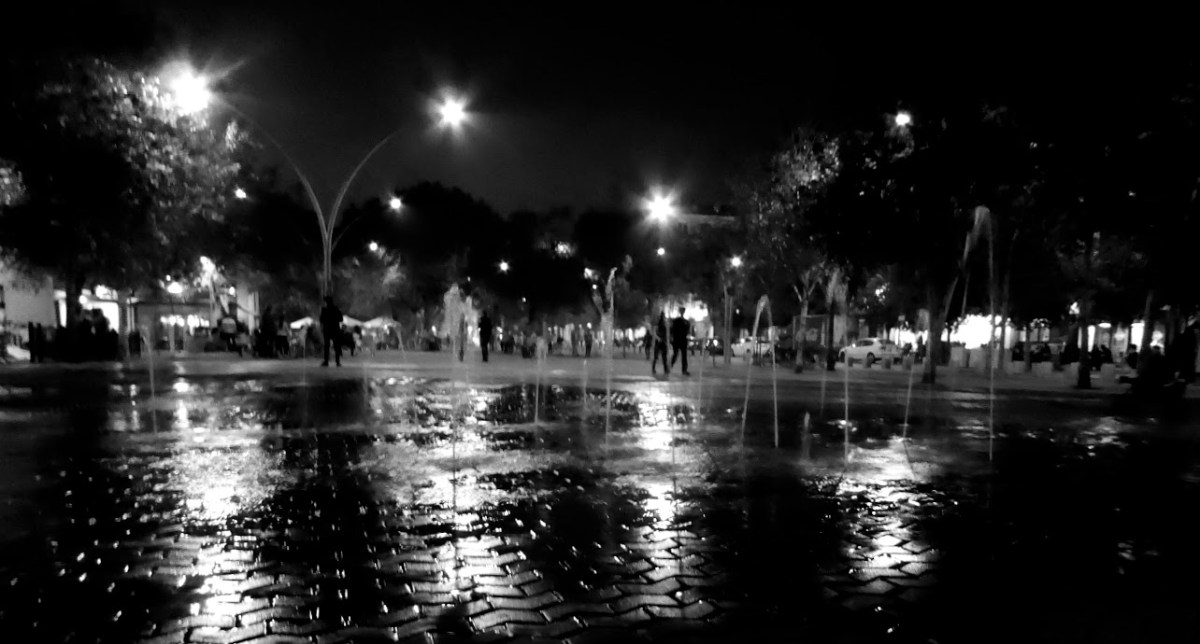
Night photography isn’t really my thing, so Elke, this week’s host for Monochrome Madness, provided me with a real challenge when she proposed Night time as her theme.
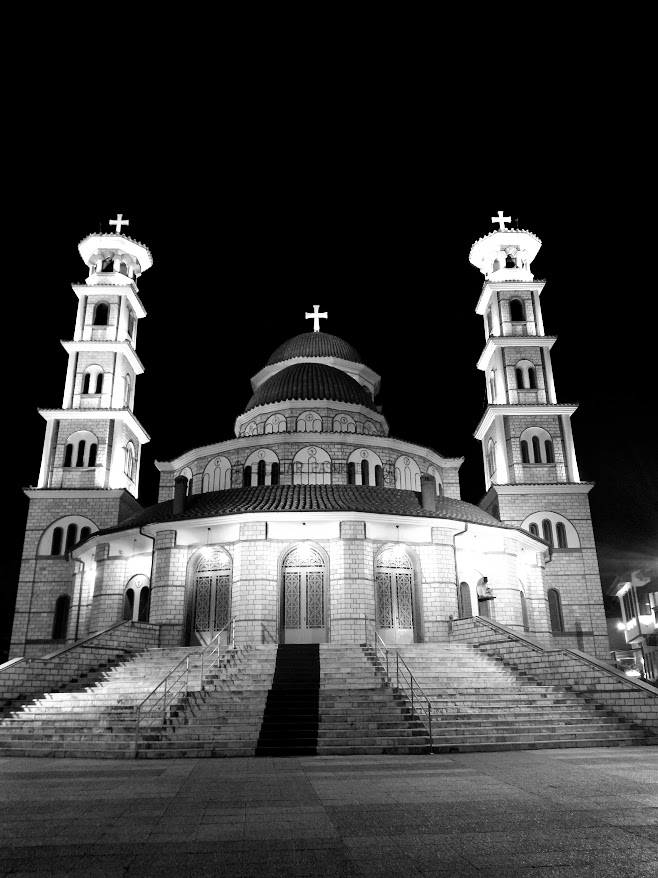
Unsurprisingly, towns and cities provided me with a few ideas. Let’s go on a quick tour. Let’s visit Albania, England, Spain, France, South Korea and Poland…
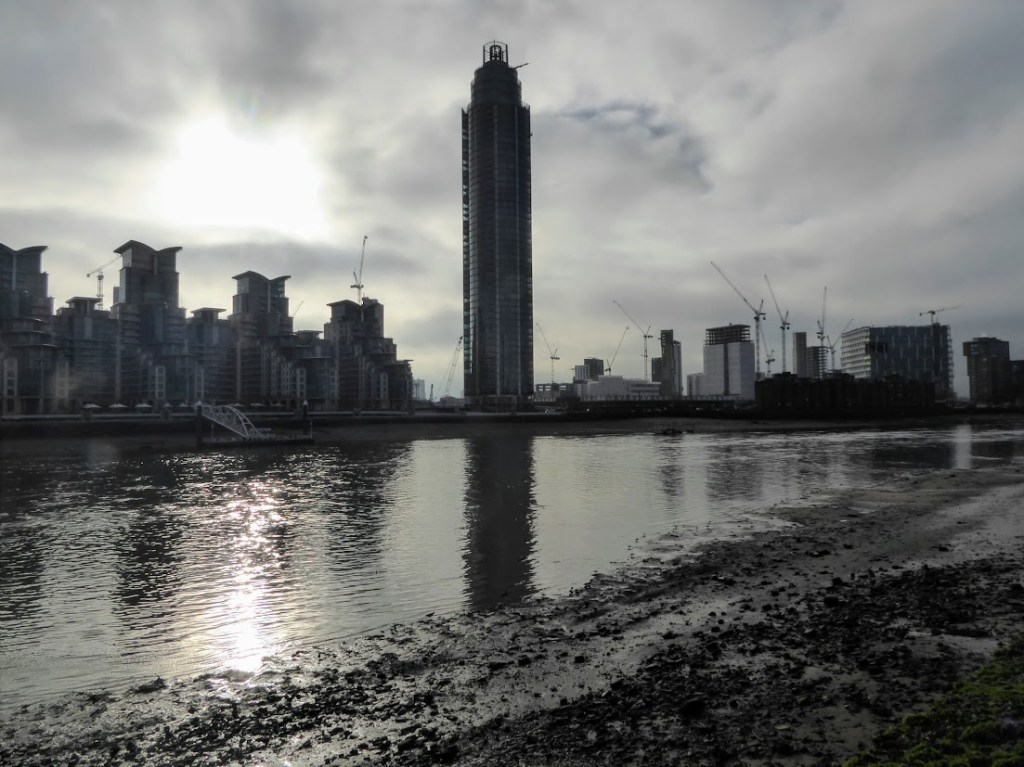
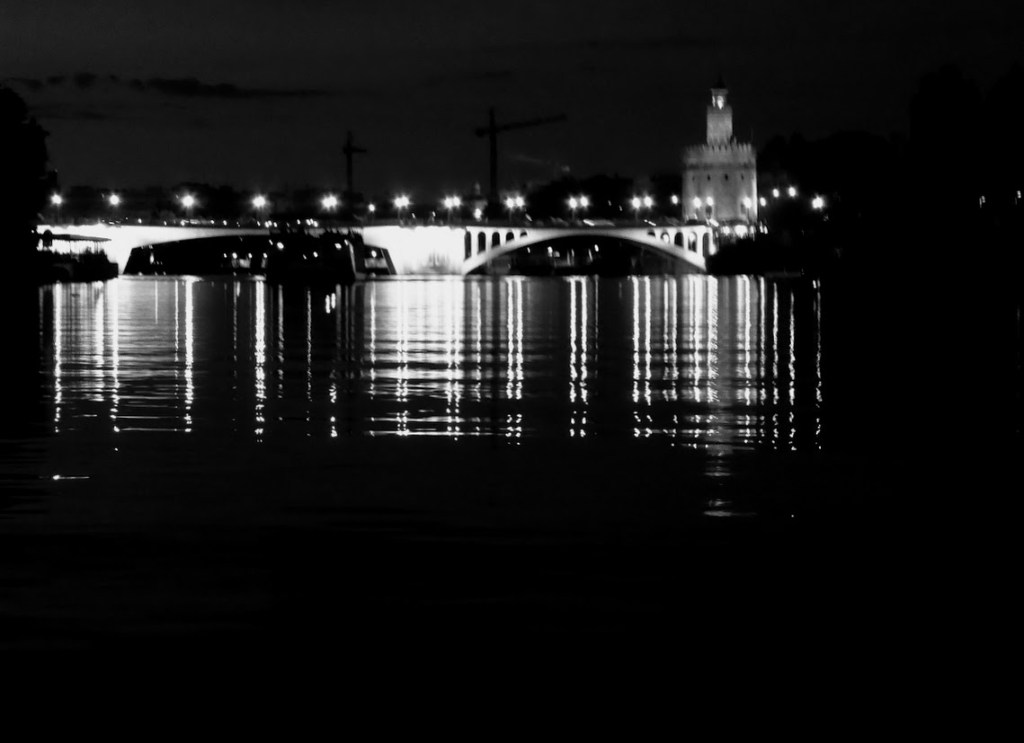
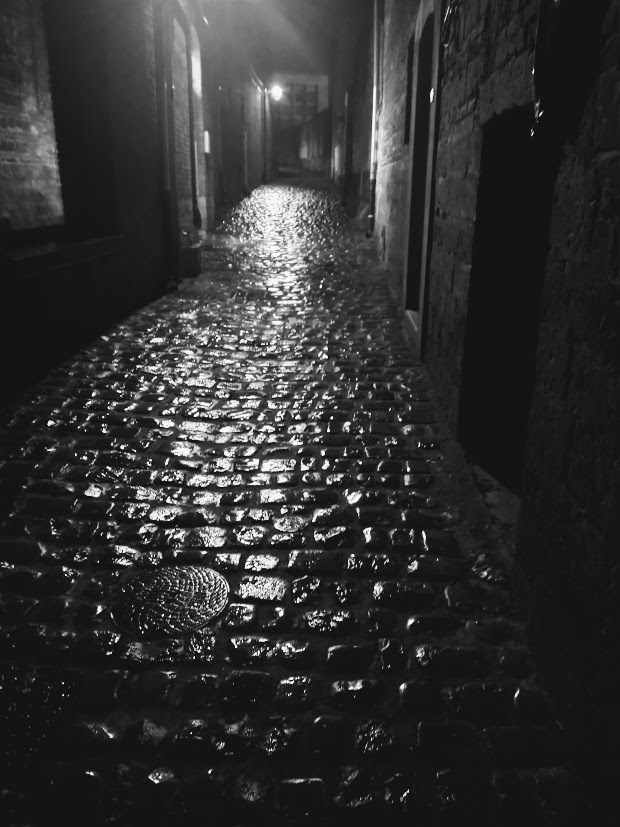

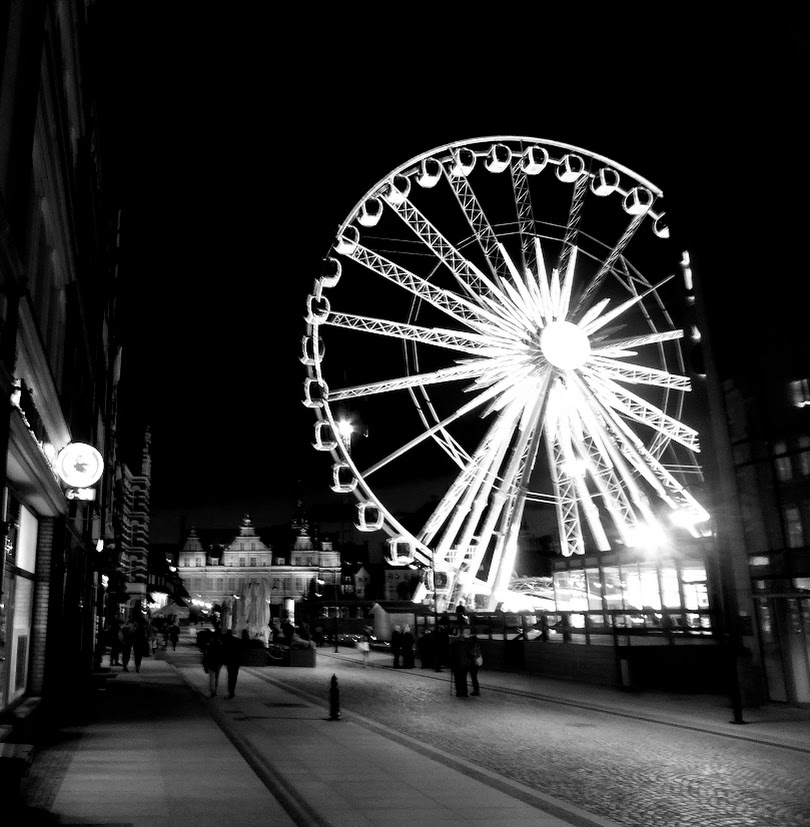
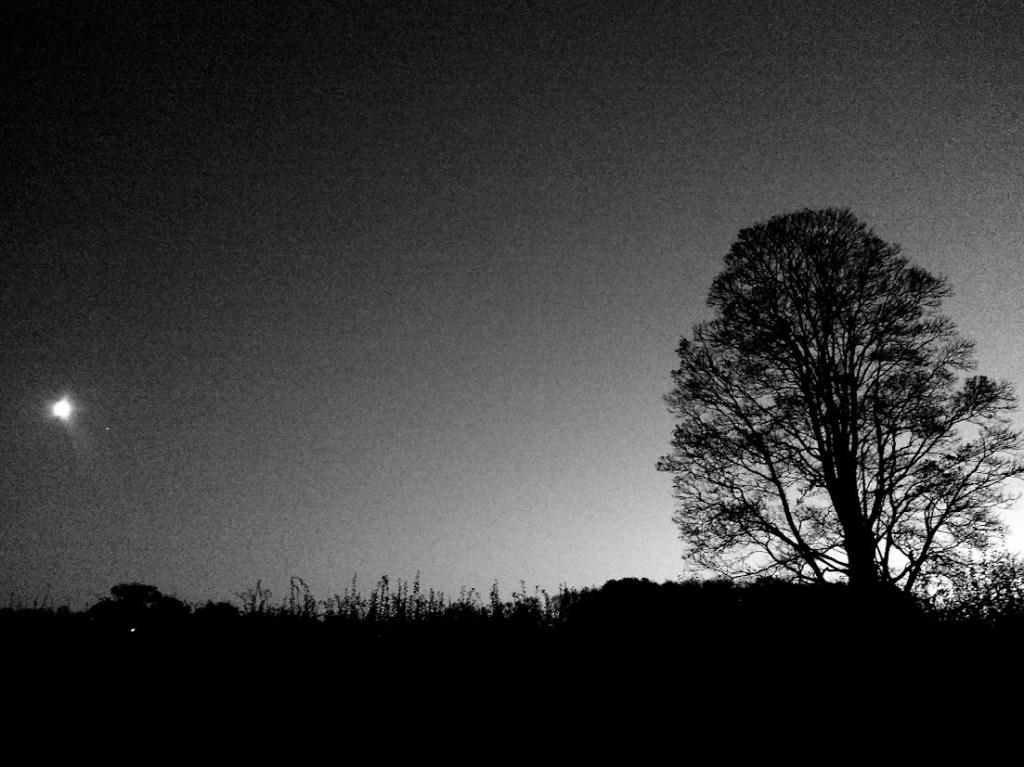
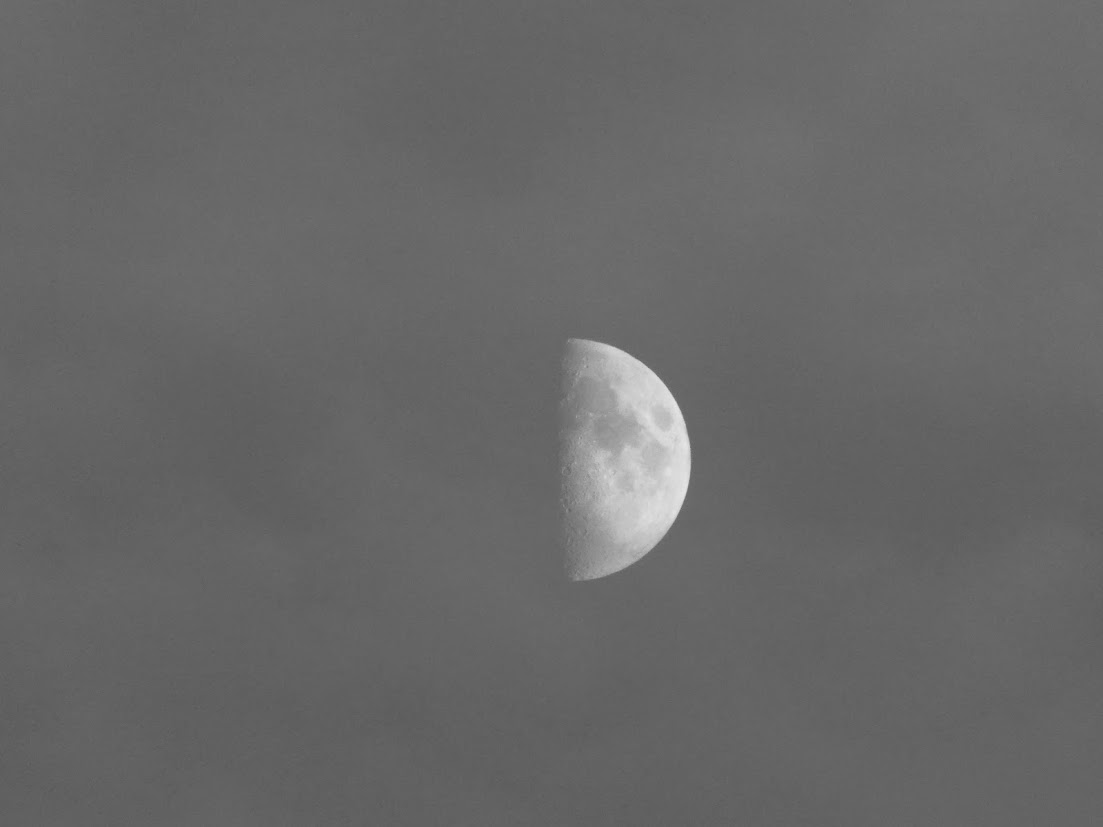
Really though, Country Mouse prefers to dodge big cities. My featured photo is of the moon as darkness fell recently, while the photo below was taken just at the end of the road.

 From Pyrenees to Pennines
You must be logged in to post a comment.