…as LP Hartley nearly said.
When we first understood that Laroque is twinned with Melgven in Brittany, we were nonplussed. Surely twinning arrangements are with England, Germany, Spain – or anywhere abroad. What’s the point in twinning with a town in your own country?
Well, quite a lot as it turns out. As part of the twinning arrangements, citizens from Melgven come for a long weekend here in Laroque , while Laroquais have the chance of a few days’ stay there in May. This year, we signed up for the 10 hour mini-bus trip to Finistère
Straight away, we began to see the differences. As we arrived, we were welcomed to enjoy poking round their fundraising ‘Troc et puces’ fair in the Sports hall. The Bretons are a Celtic race, and it shows in their physical appearance. Meanwhile, down here, there’s a long tradition of Spanish immigration, most recently in the Spanish Civil War, and the Second World War, so many locals here are olive-skinned and not very tall. A tannoyed announcement for M. Garcia and M. Sanchez to report to the desk in a public hall somewhere near here would have nearly half the room scurrying to reception.
And then there’s the food. Brittany, like Britain, favours butter, and unlike the rest of France, the salted variety. Out to a meal on Saturday, the lunchtime bread came with pats of butter, something that never happens down south. In the Ariège, cooking’s done in duck fat, and more recently, olive oil. No part of Finistère is very far from the sea, so fish and seafood are an important part of the diet. Down here, duck in all forms is king. But pork, lamb, game, beef are all welcome on the dinner plate. If it moves, eat it.
When we looked round a market in Concarneau on Saturday, we were struck that there was little charcuterie or cheese on sale, and what there was came from elsewhere. It seems as if every other stall in our local Ariègois markets is one selling cheese and charcuterie, much of it from just a few miles away.
Brittany – cider and beer. Southern France – wine. As part of our welcome apéro, we were served kir made with cassis and cider. After sipping it suspiciously, we accepted refills with enthusiasm.
So…what were the highlights?
The welcome. Of course. Some Laroquais have been going on these exchanges for several years, and the warmth of the relationships forged is clear to see.
 A change of scene: the countryside. Our host, Albert, took us on several walks, and we were struck with how very British this part of Brittany looks: softly rolling hillsides, woodland and meadows. We traded orchid spotting in the Ariège for enjoying the swathes of bluebell glades in the woods.
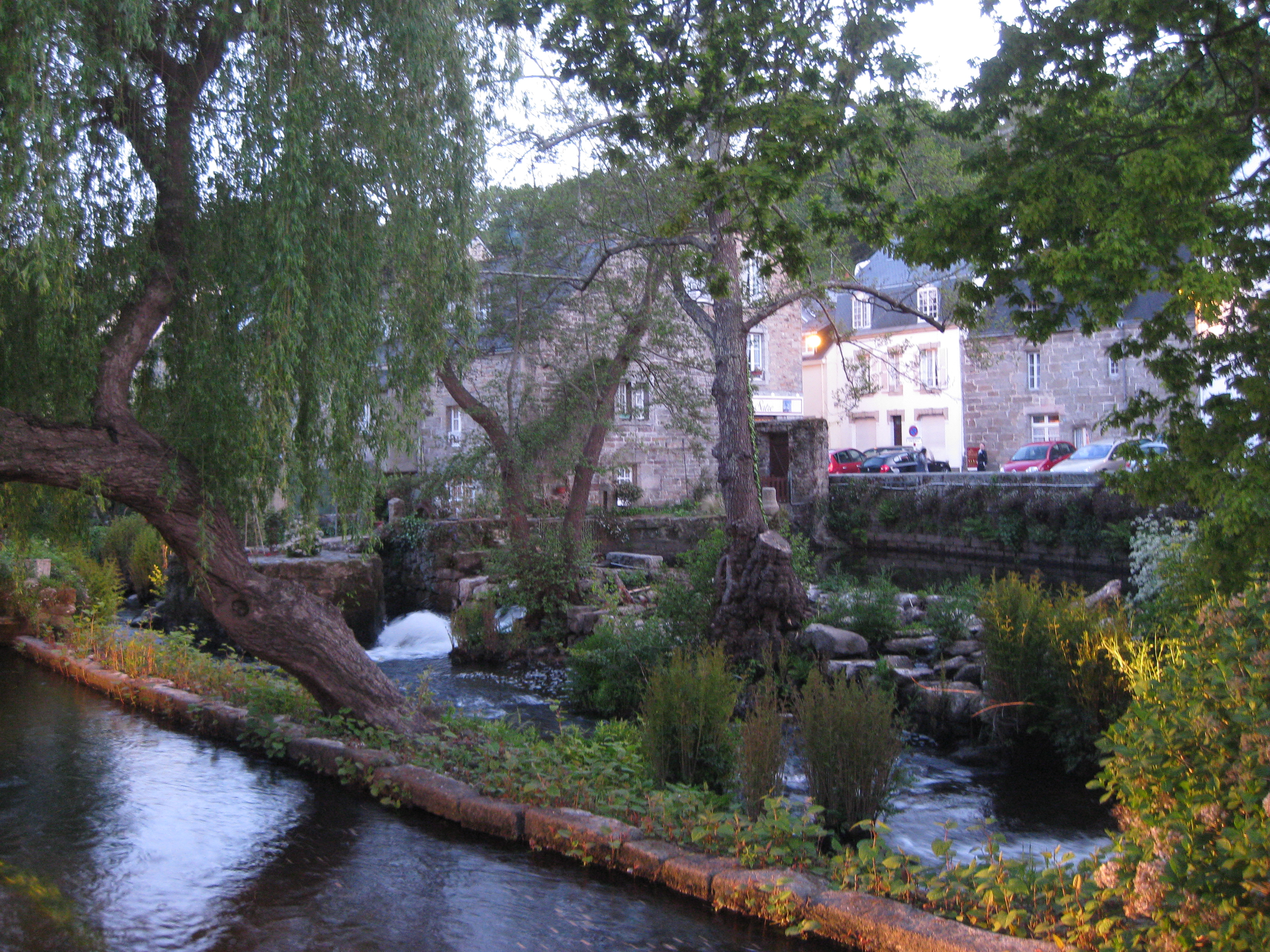
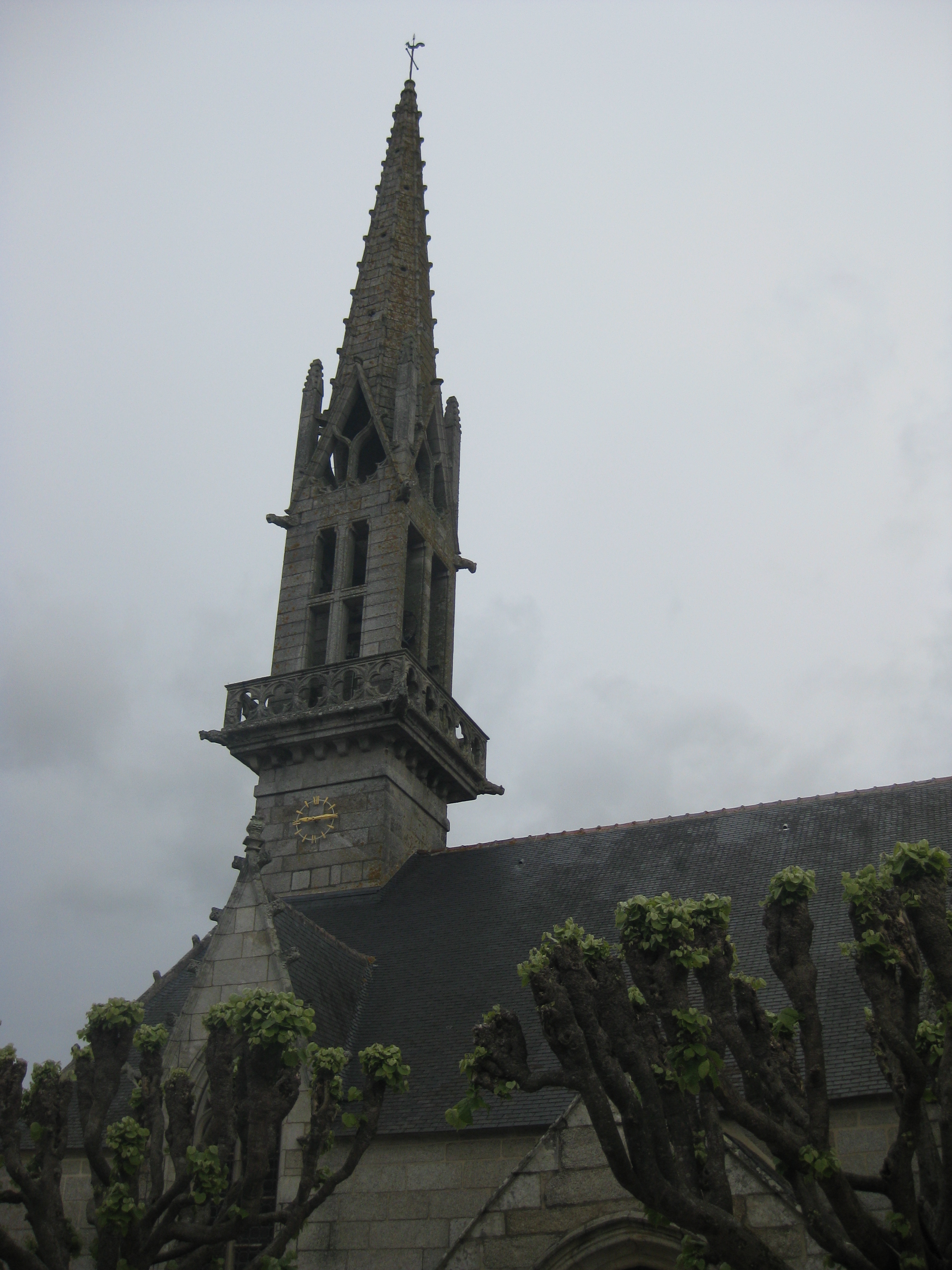 A change of scene: the town. We exchanged the shallow-roofed, unpainted or pastel coloured houses of the south for the tall white narrow pitched roofs of Brittany. Down here, we’re used to our towns and villages being shabby. Brittany’s are clean, sparklingly so, with flower boxes, neat gardens, and a general air of pride in the community. And then there are the churches. No clochers-murs in Brittany, but rather complicated steeples instead.
 The seaside. Concarneau was at its sparkling best, with breezes tugging at the flags, clouds pluming across the sky, an early pre-season freshness to the narrow streets of the historic quarter. Their fishing museum there shows all too graphically just how very tough the life of the fisherman was – and is. But it’s a picturesque sight for the tourist
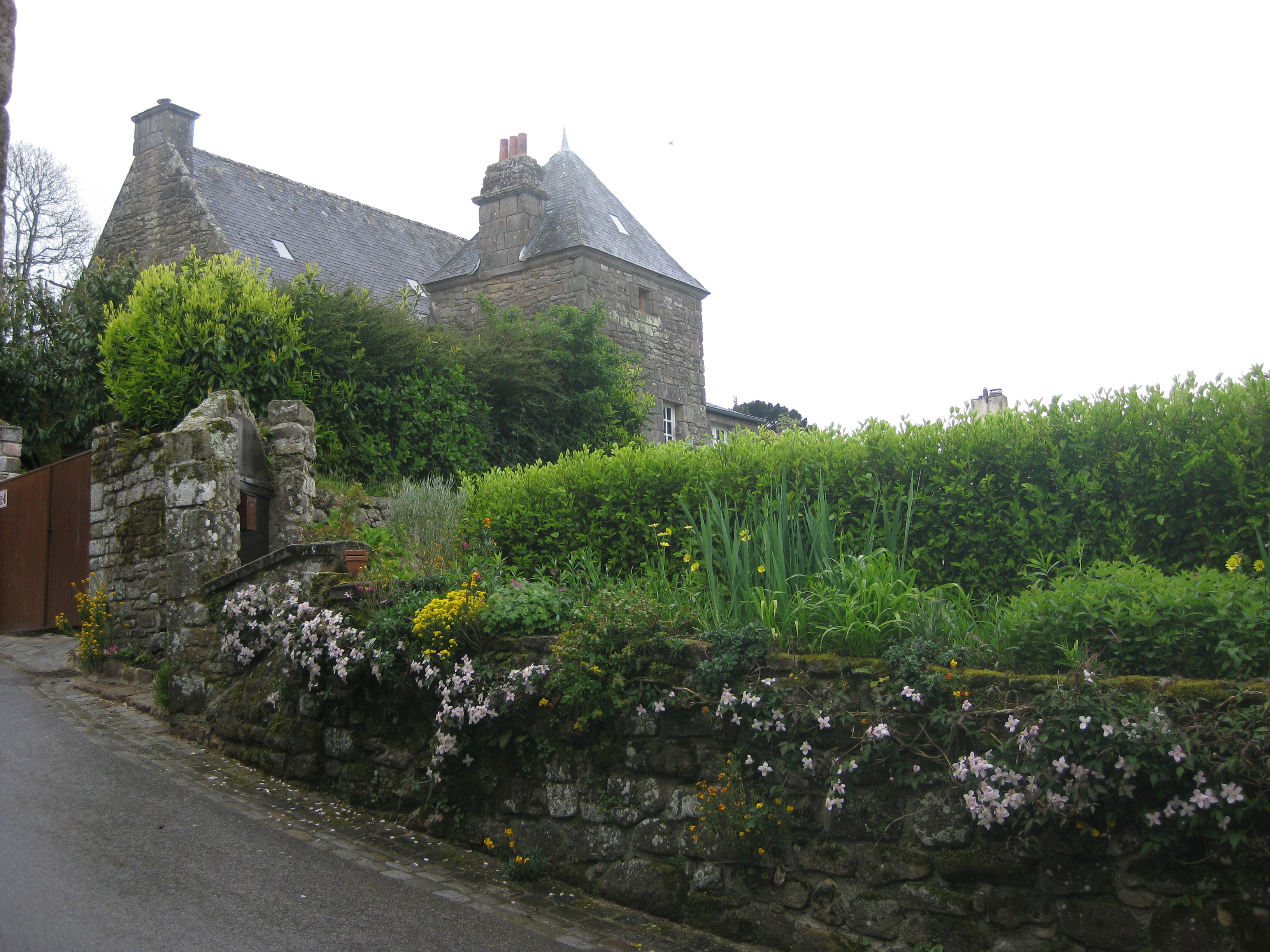 Sightseeing: Our first treat was to visit Locronan, a beautifully preserved granite built 16th & 17th century village, with a mighty central church, and a small chapel at the end of a charming walk.
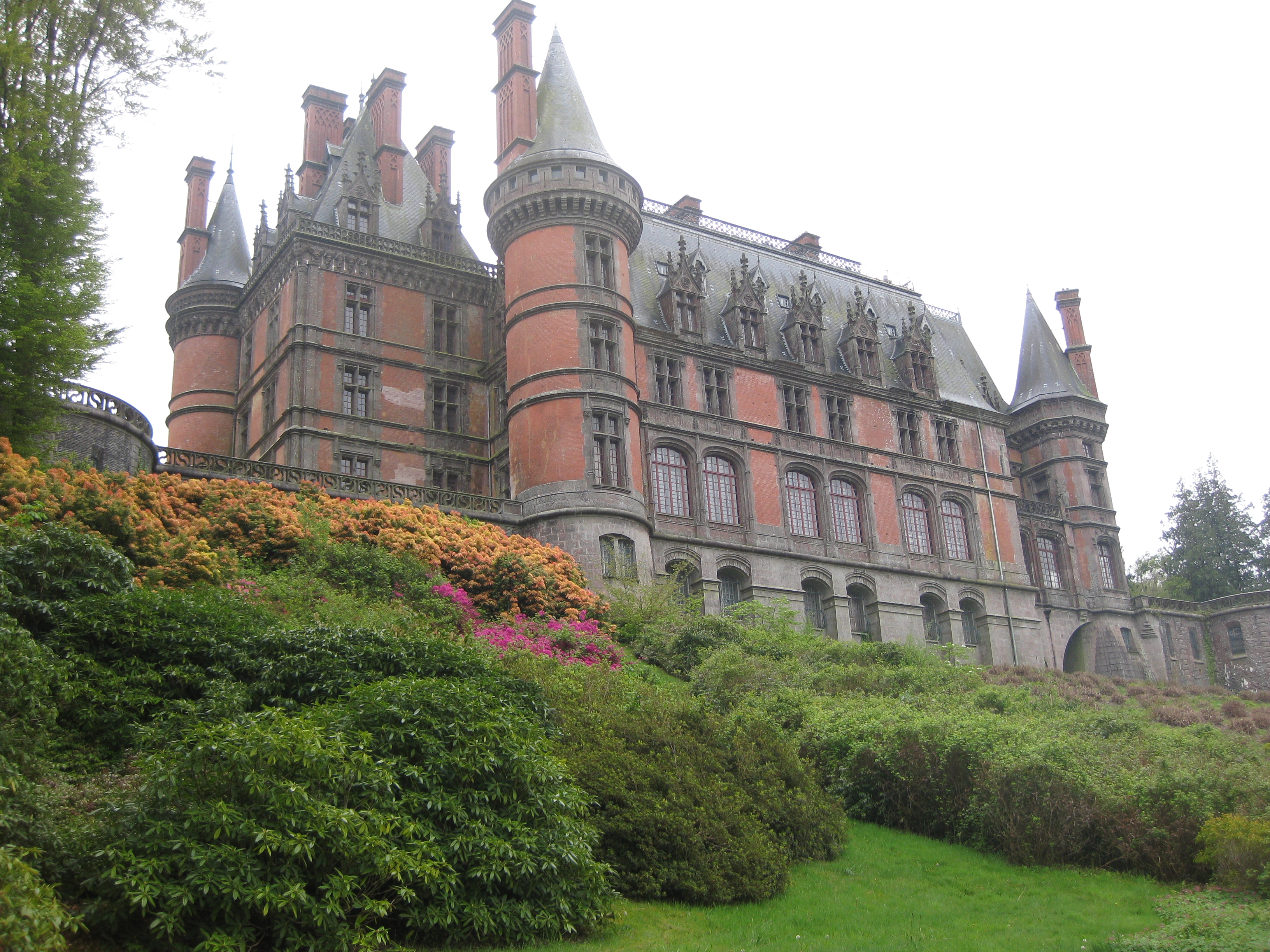 Next was Trévarez, a chateau that might look Gothic, but is in fact a 19th and 20th century construction. Its brickwork gives it the name “château rose”. We spent more time in the gardens though. Apart from a formal area near the house itself, the garden is informal in the style we’re so used to from English stately homes, and glorious at the moment with azaleas and rhododendrons
Celtic music: Friday night was concert night: the chance to listen to an hour or two of traditional Breton music. Malcolm and I particularly enjoyed hearing those favourite Welsh hymns – Land of my Fathers, Cwm Rhondda in Breton– they sounded very different, but just as good
 Story telling: Such a treat. Michel Sevellec enchants audiences in Finistère and beyond with his tales drawn from many traditions. On Saturday, as part of a local festival, we joined local children to hear his interpretation of Native American and other stories. Can’t wait for him to come to Laroque in a fortnight!
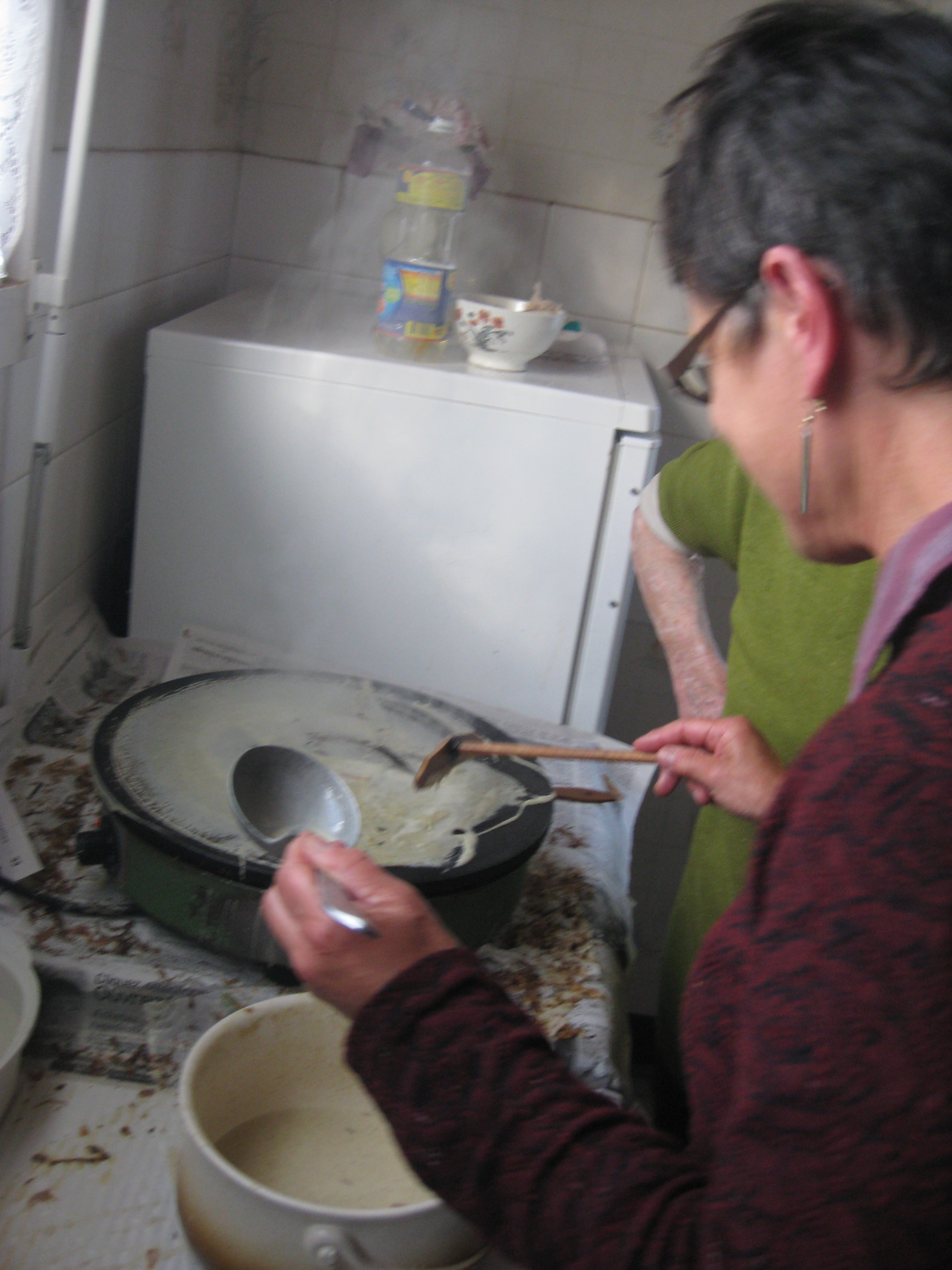
Crêpes:Everyone knows they make crêpes in Brittany. Lots of us have watched them being turned out on those special round hotplates. I always assumed it was easy-peasy. Until we went to eat crêpes at Albert’s mum’s house and she let me have a go. First, carefully pour the batter with your left hand while equally carefully drawing the batter round the plate with a special wooden spatula – not too fast & not too slow, not too thin & not too thick.

Then flip the delicate creation, so thin you could read a newspaper through it, over onto its other side to finish cooking. It was lucky there were hungry dogs to eat all my cast-offs. Lucky for us too perhaps: we’d still be eating them now. Malcolm and I thought 6 crêpes each ought to have been enough for anybody. Our hostess disagreed.
So….we discovered in Brittany an area very different from our own in languages, customs and appearance, and had a chance to be more than simply tourists. We now have new friends in Melgven but also in Laroque as a direct result of this weekend. A good experience.



You must be logged in to post a comment.