A friend brought us some mushrooms yesterday. I’m not going to tell you which friend. And I shan’t tell you where he found them either. He was ranging about in the woods, snaffling mushrooms. If the forest ranger or a landowner had caught him because he’d strayed onto private land, they could have fined him. 150 Euros. And the friend who was with him, another 150 euros. It’s a lot to pay for half a pound of mushrooms, but everyone does it.
Nobody however, wants to kill the goose that lays the golden egg, and most people, like our friend, pick carefully and respectfully so that mushrooms will still be growing there tomorrow, and the next day, and for as many years as there are people wanting to eat them.
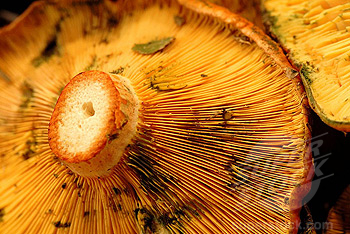
The ones he brought us are lactaire delicieux – saffron milk caps. I know they exist in England, because Googling produces a score of recipes from the UK, but I’ve never seen them there.
In fact they’re native to this part of the world, both in France and Spain, and live in the acidic soil under Mediterranean pine trees. They’re yellowy orange, and exude orangey milk when broken or cooked. Roughly handled, they develop a scary green stain. But that doesn’t mean they’re poisonous. Anything but.
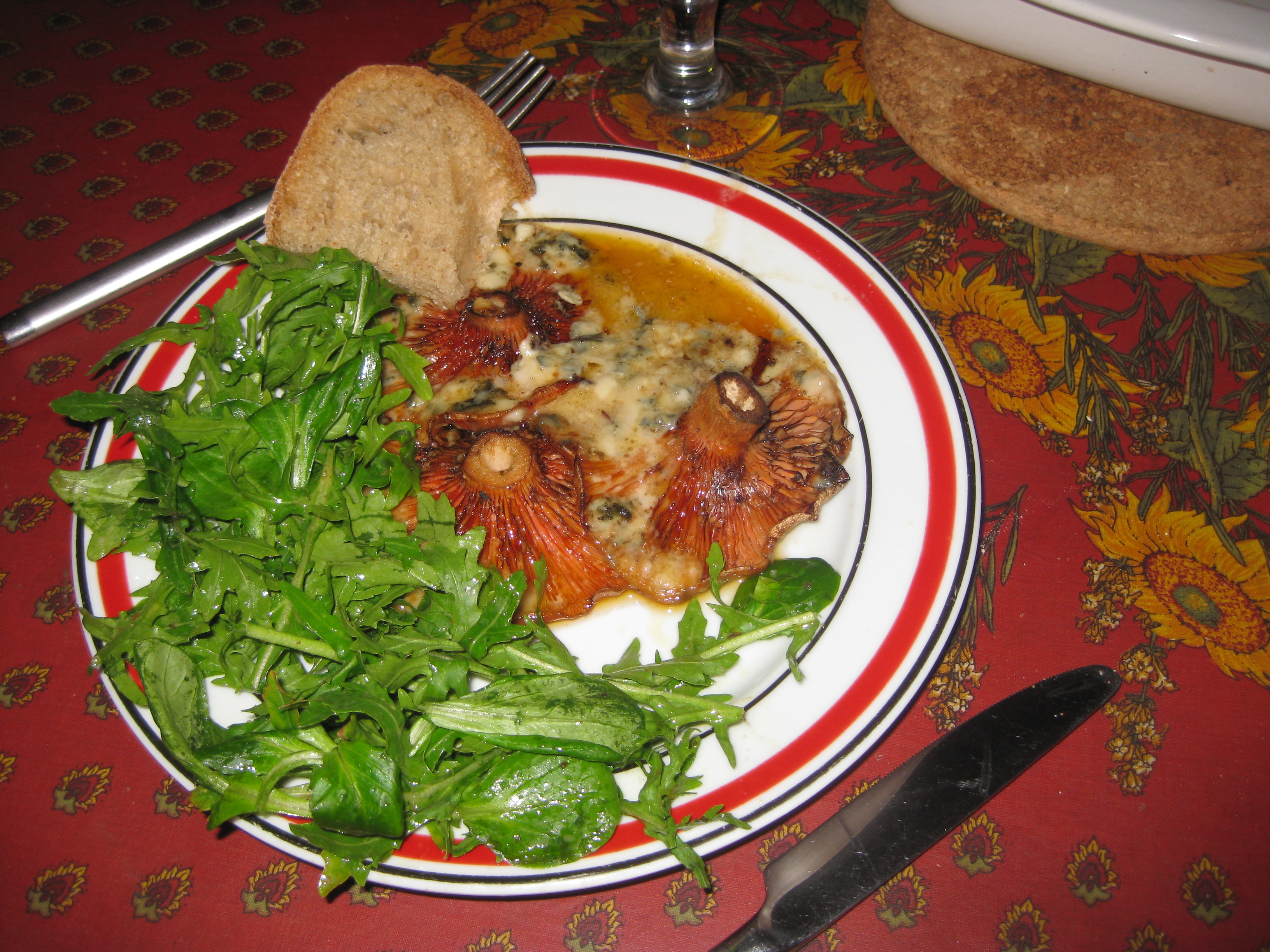
Here’s what he suggested we do with them.
You’ll need at least 2 or 3 large ones each. They’re often small though, so you may need more. Clean them by brushing them gently and lay them cap side down in a shallow buttered oven dish. Cover generously with knobs of butter and Roquefort cheese – 4 parts cheese to one part butter. Grill till the cheese is melted and the mushrooms cooked. Serve with lots of crusty bread to mop up the juices, and a green salad.
If he brings any more, or if we’re lucky enough to find some ourselves, I’ll be Googling again, because there are any number of simple ideas, just waiting to be tried and enjoyed.
‘What a mess. Half of the population who’ve got jobs are on strike. The other half can’t get to work because there’s no petrol, or the trains are on strike. And meanwhile, the numbers on the dole are growing. And it’s half term, and nobody can take their kids out because there’s no fuel. Welcome to France.’ That was the baker’s wife on Friday morning.
France, like most of Europe, is in the throes of passing legislation to raise the retirement age to cope with the pensions crisis. And the French don’t like it. More than that, they really don’t like Sarkozy. What better time to express their dissatisfaction by going on strike! Since September, there have been General Strikes at least once a week, with marches, demonstrations and protests. For more than two weeks, the petrol refineries have been blockaded, and fuel is running out. Apparently some 70% of the population, even right-voting electors, support the protests. Not round here though.
This part of the world is traditionally left-leaning, and I’ve met nobody who’s prepared to admit to having helped vote Sarkozy into power. But they’re not happy with the present state of affairs. The baker’s wife is not alone. There’s discontent at the number of days the children have missed at school, and at the intimidation by some of the striking students. Rubbish isn’t being collected. Prices are rising.
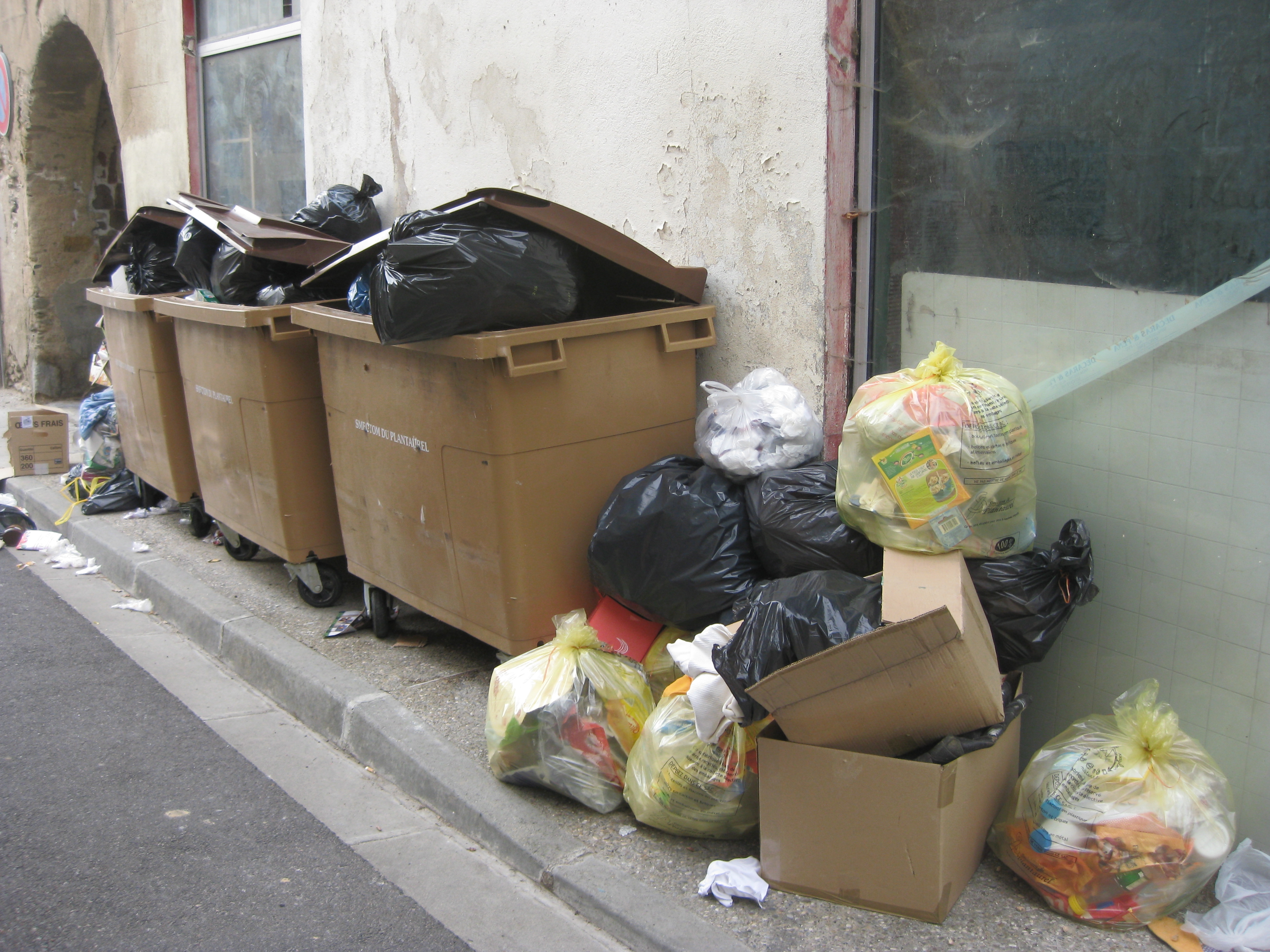
The rubbish piles up in Laroque
Some of the protests have their funny side. In the Dordogne, electricians have cut the electricity supply at town halls where the mayor supports President Sarkozy’s party, the UMP. Others seem to be turning a bit nasty. In a school in the Centre region, students and teachers who support the strike have smeared every available exterior surface with mayonnaise and ketchup to make it difficult and unpleasant for teachers and students who want to enter the building to do so.
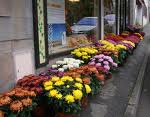
chrysanthemums on sale for Toussaint
Today on the radio, a hortculturalist explained her difficulties. For weeks she’s been growing the chrysanthemum plants which are sold in vast numbers, this week only, in time for the traditional All Saints’ holiday, the day when people visit the graves of their relatives to lay flowers. Petrol shortages mean the plants can’t be distributed, and unless things change very quickly, she’ll be left in debt, with a mountain of unsaleable plants. Anyone who depends on logistics in any way, such as farmers and shopkeepers, is in a mess.
And as M. Fonquernie pointed out this morning, the senate voted to pass the legislation on Friday. They won’t change their minds. But laws like this take a while to enact. Come the next election, two years away, the French get their chance to rid themselves of Sarkozy et al, and the newly elected government can repeal the legislation and pass its own. If it chooses.
Meanwhile, I’m far from happy. On Thursday, my son, his wife and her parents are due to fly out from England to stay with us. Guess what? Another general strike. So….no air traffic control, no flights, no anything much.
Tell most Ariegeois that you’re going to Andorra, and they’ll assume you’re popping over to stock up on hooch, cigarettes, cosmetics and cleaning products, then fill the car with as much petrol or diesel as it’ll hold.
The Principat de les Valles de Andorra is a little historical oddity. It’s a Catalan speaking independent country, only 468 square km., slap in the midst of the Pyrénées between France and Spain. It was, since 1278, co-ruled by the President of France (as the Count of Foix is no more) and the Bishop of La Seu d’Urgell in Cataluña. In odd numbered years, France receives tribute money, and in even-numbered years, the Spanish bishop calls in 900 pesetas (or the euro equivalent, I suppose), 12 chickens, 6 hams and 12 cheeses. 1n 1993, the Andorrans voted for democracy and a constitution- but those tributes still get paid.
What makes Andorra popular, here in the Ariège as elsewhere in France, is its lack of taxes. Petrol therefore costs something like 40 cents a litre less than in neighbouring France, and you can buy 3 new car tyres for the cost of two here. And so on. So Andorra’s border towns are nothing more than huge unpleasant shopping malls, blighting the slopes of the wilderness Pyrénées on which they’re situated. The capital city, Andorra le Velle, and the surrounding towns which have become its suburbs, are given over to little other than retail therapy.
In other words, not really our cup of tea.
Andorra, though, offers so much more. Zig-zag up the narrow mountain roads only a few kilometres away from the capital, and you’ll be alone amongst grand peaks, dense forest and craggy paths. Apparently, the further you travel from the capital, the wilder and more spectacular the scenery becomes. Tiny villages remain undefended by castles: the circumstances of its past government meant castles were forbidden. But charming Romanesque churches, often with original frescoes, are common throughout the country.
Henri and Brigitte invited his cousin and wife and us, to join them on a mid-week break at an Andorran hotel they’d chanced upon a few months ago. Henri doesn’t do bargain basement, so we were surprised when he told us that full board at this 3 star hotel was 51 euros each.
Hostal La Font is in a tiny village, Os de Civis, clinging to the mountain side not, as it turned out, in Andorra at all. It’s in Spain. But it might as well not be. The one road serving the community connects the village to Andorra la Velle and to nowhere whatsoever in Spain. Out of season, 20 people live there.
It was busy when we checked in to the hotel though, just in time for lunch. Vegetarians need not apply. Before the meal, tomatoes, garlic, olive oil, dried sausage, olives all appeared on the table. Then a hearty meatball-cabbage-chickpea-potato soup arrived. Then a selection of salads and charcuterie. Full yet? I hope not. There’s grilled lamb and 3 different sorts of grilled sausage with baked potato, and a large choice of puddings to come. The secret of course is to help yourself to tiny portions of everything offered: that’s what I did anyway, because I knew there would be a 3 course meal in the evening, and Henri has a way of making sure that nobody does their own thing by skipping dinner – or even a course.
Anyway, after lunch, we all chose to stride forth into the mountains. Henri’s cousin, Jean-Claude, has been a lifelong farmer, and made a great walking companion. We learnt from him the grasses that any discerning sheep chooses, given half a chance. He showed us how the local cows, a Swiss grey breed, have narrow agile hooves and legs to enable them to cope with climbing up and down the steep slopes of their summer pasture. And he told us tales of transhumance: the days in spring and autumn when cows and sheep are taken up to high pastures for the summer, and down again in winter: for his sheep, each journey took three days.
Later, we explored the village. Just as well the streets are equipped with handrails. Steepest village I’ve met. The dark local stone is the picturesque material both houses and streets are built from. It might look pretty in the September sun, but life looks tough here, and I’m not surprised the village all but closes once the tourists go.
We’ll be back. A walking week or so in these wild and empty mountains is a must, and hotels are affordable. Anyway, the car needed 2 new tyres, and the money we saved by buying in Andorra all but paid for the holiday.
We spent last week in Italy, Lago di Garda to be exact. We joined daughter No. 1, her husband and twin boys for a camping holiday. It was all we hoped for: time simply to enjoy being together; breakfast, lunch and dinner all eaten outside; the easy transitory friendships of campsite life; splashing in the pool with the boys; rowing or swimming – rather badly – in the lake; and the pleasures of small-town Italy – people-watching as we sat at some street side bar or restaurant with an ice cream, beer, or plate of pasta, and exploring charming back streets or ancient churches.
Malcolm and I had it best though. Not for us the tedious wait in crowded airport departure lounges for the journeys there and back. We drove through France and Northern Italy, and had a taste of regions we didn’t know, but plan to know better. Here’s a slide show of some of the places we saw: the Alpes de Haute Provence, little known gems such as Cremona, where Stradivarius came from, the Mercantour and Luberon National Parks. Best of all was a day spent in Mantova (Mantua). Unlike Florence or Rome, it’s on few tourist itineraries, so it’s unspoilt, uncluttered.
It’s a town whose prosperous Medieval, Renaissance and Baroque mercantile past is told in every street in the city centre, as piazzas, churches and fortified buildings crowd together demanding attention. The old city is surrounded by waterways which once were swampy rivers, were then extended and widened for defence, and are now pleasant open spaces for pleasure boats, wildlife, fishermen, and people who like us, simply wanted a cool walk at the water’s edge. Go there if you ever have the chance.
Just in case you think we had a totally idyllic week, you might like to know that on the way home, Saturday night in our particular bit of northern Italy proved to be a hotel-free zone. The nearest we came to finding a bed was when I went to check out a faintly unpromising looking albergo in some very untouristy town. I scuttled away when I realised it was certainly the local brothel. We slept in the car.
We’ve finally made it back to France, after 4 weeks of family, fun, and titivating our house there for marketing purposes. When we arrived, stocking up with food was a problem. The shop was closed: the baker’s was closed: holidays you see. Then I remembered the evening market at La Bastide sur l’Hers.
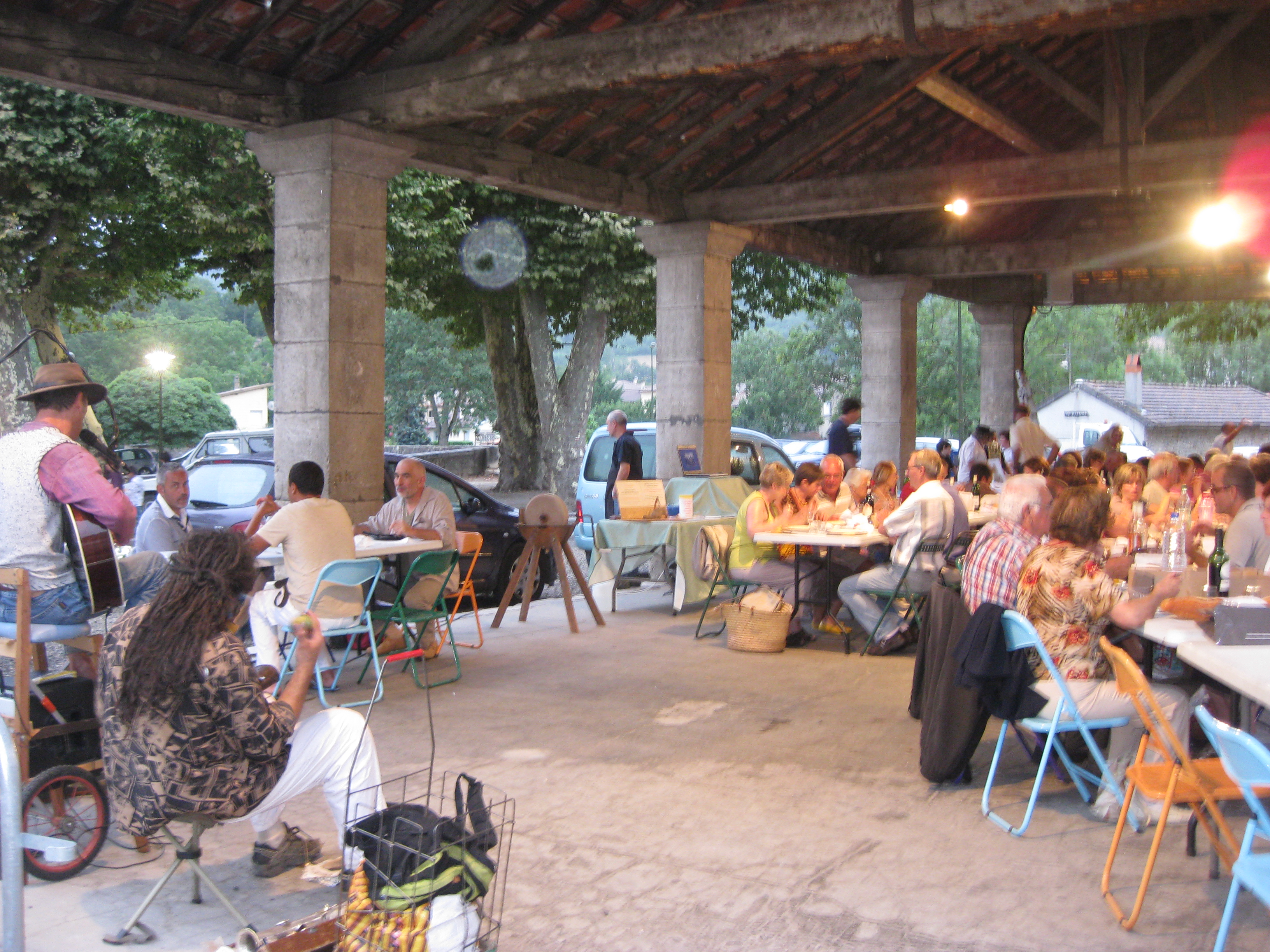
Over the last few years, during July and August, evening markets have grown in popularity in the towns and villages in this part of the world. Originally, the idea was to attract people in to spend a pleasant hour or two browsing at the stalls offering hand-crafted goods and bits of this and that. Increasingly, they’ve become somewhere to come to have a night off cooking, and spend a cheerful hour or two eating or drinking with friends. There are always plenty of food stalls: couscous, paella, oriental stir fries, pizzas, barbecued meats….. Bring your own knives and forks, don’t forget the corkscrew, find a place at a communal table, sit down and enjoy!
Well, that was what we planned for yesterday. Then it started to look grey. Soft warm raindrops slowly started to drop intermittently from the sky. With no food in the house, we had to go anyway. We knew we’d be alone. The French seem to have no appetite, like we Brits, who are used to such things, for hiking in the rain, or market shopping in a storm. In the past, we’ve been victim of the cancelled walks, we’ve seen the empty market squares.
This time, we were wrong. We chose a spot at a table under a row of plane trees which sheltered us from the worst of the rain, bought our food, opened our wine, and tucked in as we got gradually damper and damper. We people-watched: there were plenty of people to watch. We saw others doing the same. We saw families arrive with their cool boxes, determinedly striding through the puddles. We saw chivalrous men standing with opened umbrellas protecting the rest of their party from the worst of the weather. We laughed and shared the fun with our neighbours at table as the rain got heavier and heavier. Obé’s paella has never tasted better.
Some lucky people - including the musicians - kept dry under the shelter of the market hall
Well, on Tuesday I nearly claimed on Malcolm’s life insurance. We had a very scary day at the end of which Mal was in intensive care in hospital in Toulouse: so the first thing to say is that he’s now OK, in the sense of being back at home, functioning and cheerful, and no longer quite literally at death’s door.
He’d complained of feeling peculiar after breakfast, but put it down to a caffeine OD. He worked like stink all morning, knocking mortar from an old wall, and much more difficult than it sounds, as it wasn’t so much mortar as ancient concrete. So he was tired at lunchtime, but then complained of chest pains, and sweat poured from him. I started checking up my fears on the internet, and rang 118, as well as some friends, who hurtled over immediately, even though it was the sacred French lunch break. Though I’d been worried, I wasn’t unduly, but Francis later told me he was really scared at the concretey colour of Mal’s face and his description of his symptoms.
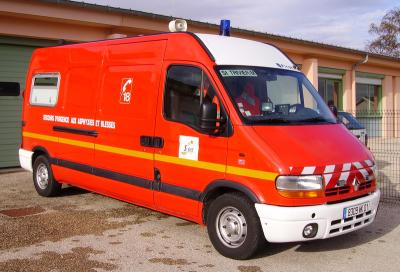
The sapeurs pompiers came (ambulance and fire is a sort of joint service here. As in English rural areas, it’s staffed by on-call volunteers), as did the local community constable, and they crashed around the living room making lots of noise and asking questions as they pulled out all their equipment and gave him oxygen. I didn’t realise at the time they were doing anything really useful, but in fact they saved his life, and were much praised by the specialists in Toulouse who looked after him later. All the same, in their zeal, they gave him a a bit of a slap in the kisser as they strapped him with great gusto into his stretcher, and, as I later discovered, carefully removed a (wide) door off its hinges in their efforts to manoeuvre him outside the house.
Not Mal's ambulance: you didn't think I'd be out there taking photos, surely?
They were supposed to await the doctor and nurse coming from Foix, but decided to save time by getting him into the ambulance (bright red!) and starting off. Luckily the doctor and nurse arrived just then, in gleaming white operating theatre type garb. It was the doctor’s job to decide where to send him, and I was a bit shocked when he decided not for our local hospital in Lavelanet, not even for the big departmental one in Foix, but for one in Toulouse, the Polyclinique du Parc. After, I learnt that it is practice to go for the centre of excellence as first choice, rather than somewhere that may not prove to be quite state-of-the-art enough. At the time, I found it a scary decision.
This team was with Mal throughout his journey. Emergency siren blaring, driving at full speed, they nevertheless took their turn and joined quite a queue to get through the motorway toll – so French.
He was overwhelmed with specialist care on his arrival, and indeed throughout his stay. He had a blood clot blocking a main artery, and so they operated immediately, removed the clot, scaping clean the artery walls and permanently enlarging the artery with a stent. He was conscious throughout and watched with interest as they manoeuvred a tube inside his arm from his wrist to his chest. The various sensations he experienced – hot, cold, discomfort, were never painful, he said.
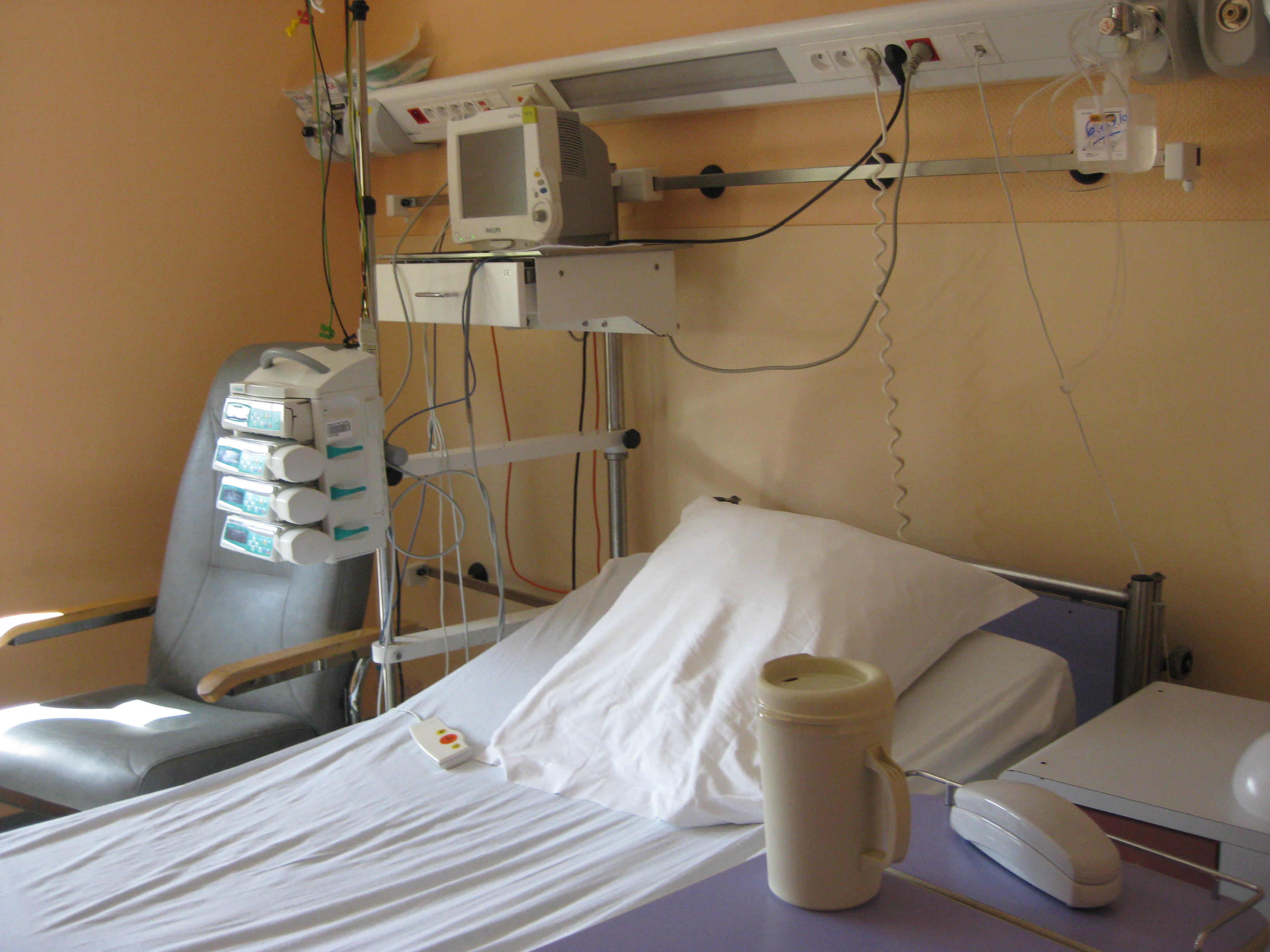
Later, Francis and I got to see him in his rather luxurious quarters with en-suite bathroom (Room 07, in fact): he was wired up to all kinds of equipment, his body an artwork of electrodes and patches, but looking much more like his normal self. He remained like this, his body mechanisms monitored and tested every second of the day and night, until the moment he left on Thursday morning. He wasn’t allowed to leave until he’d read two booklets and passed a test on whether he’d understood the contents. All in French, of course. Do you know the English for ‘infarctus du myocarde’? No, thought not – put your hand down now Kalba.
The just-vacated hospital bed
So….it’s been a bit of an unlooked for insight into French health care. It confirmed all the positive things we’d heard, apart from one thing. The food was, how to put it gently, somewhat mediocre. But he’s happy to return in September, to go through it all again with Artery Number Two.
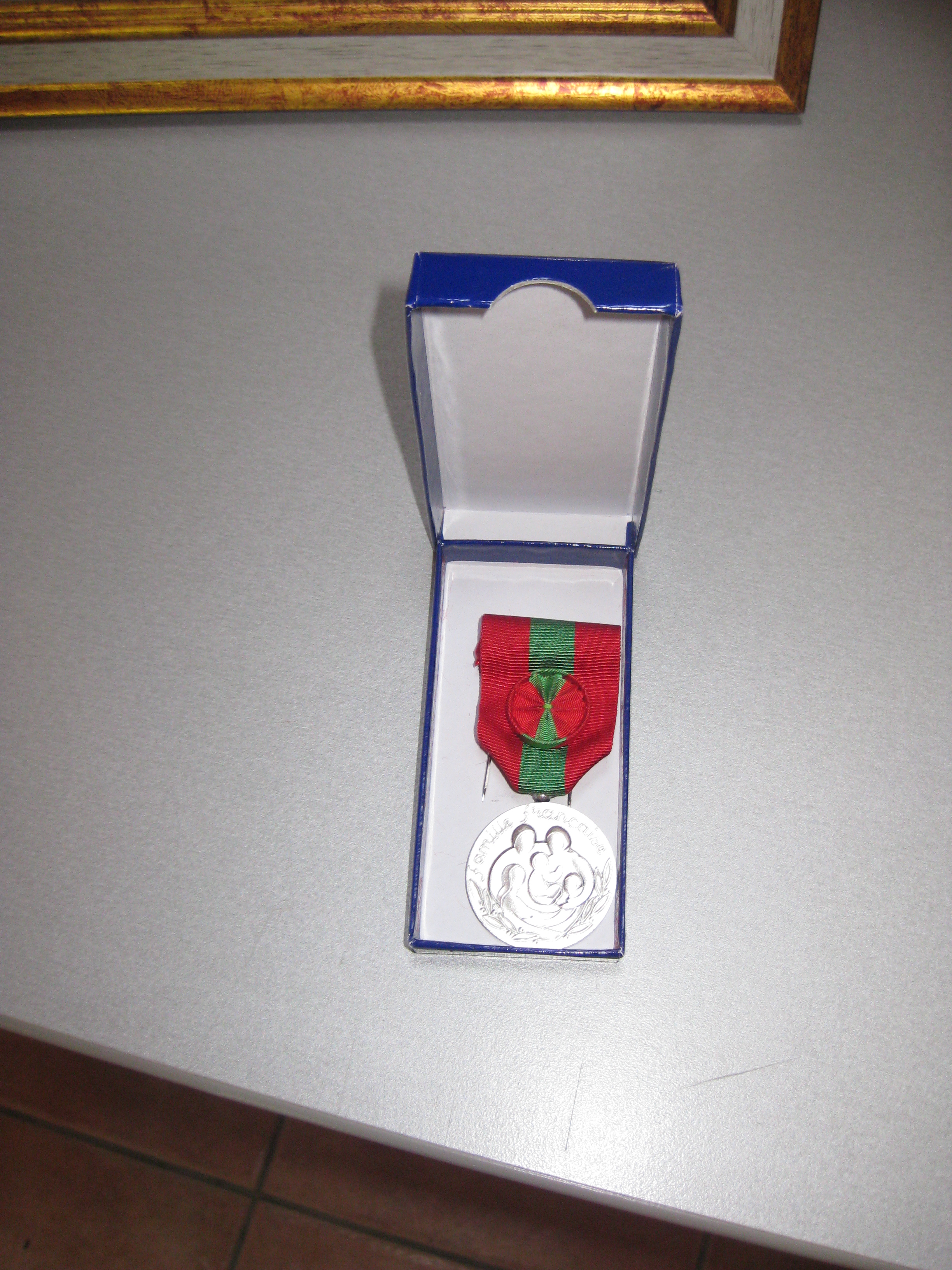
The Médaille de la Famille Française was created on 26th May 1920, following the catastrophic losses of the First World War, and can be awarded to mothers:
Bronze medal: for raising 4 or 5 children
Silver: for raising 6 or 7 children
Gold: for raising 8 or more children.
Since 1983, fathers or non-family members who have been responsible for bringing up numbers of French children can also qualify for a medal. There’s even a Catholic priest who qualified for the award, having raised his housekeeper’s children when she died.
Why the history lesson? Well, recently, we were invited to a ceremony to award such a medal. Sadly, I was in England on the day, but Our Man in Laroque, Malcolm, has submitted his report of the event
Two French friends, Martine and Francis, have a large and happy family – six children: three boys, three girls. Recently, Francis invited us to attend a ceremony to award his wife a silver Médaille de la Famille Française– not a word to Martine about this, you understand – a family event, but to be a surprise for her.
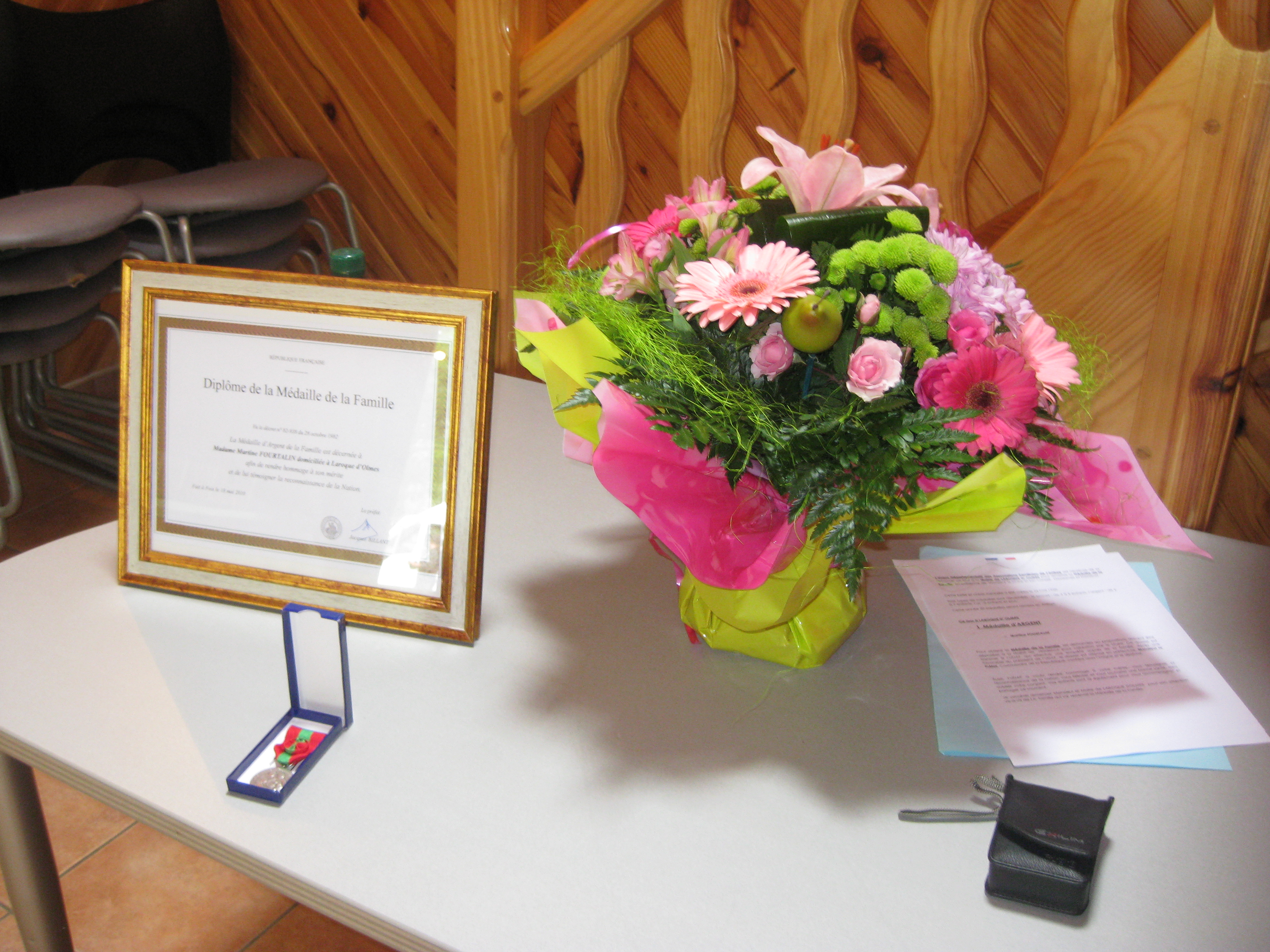
Turned up on the dot – a quaint English practice – at the appointed place. There were only six people there, and no sign of husband or wife. Nibbles were ready and waiting on tables, along with a few bottles of champagne, and there, on a separate table, stood a framed award, a small velvet-lined box containing a medal, and flowers, beautifully wrapped in presentation packaging.
And so we waited. And waited. Gradually, more of the children arrived. But not all. Then Francis, wearing a blue suit (before, we’ve only ever seen him casually dressed). And then, eventually, Martine appeared, chauffeured by one of her boys, and looking somewhat bemused. She too was wearing some finery.
And still we waited. For the sixth, and youngest, child of the family to arrive. But she didn’t. Turned out she had a football match on, and had forgotten….
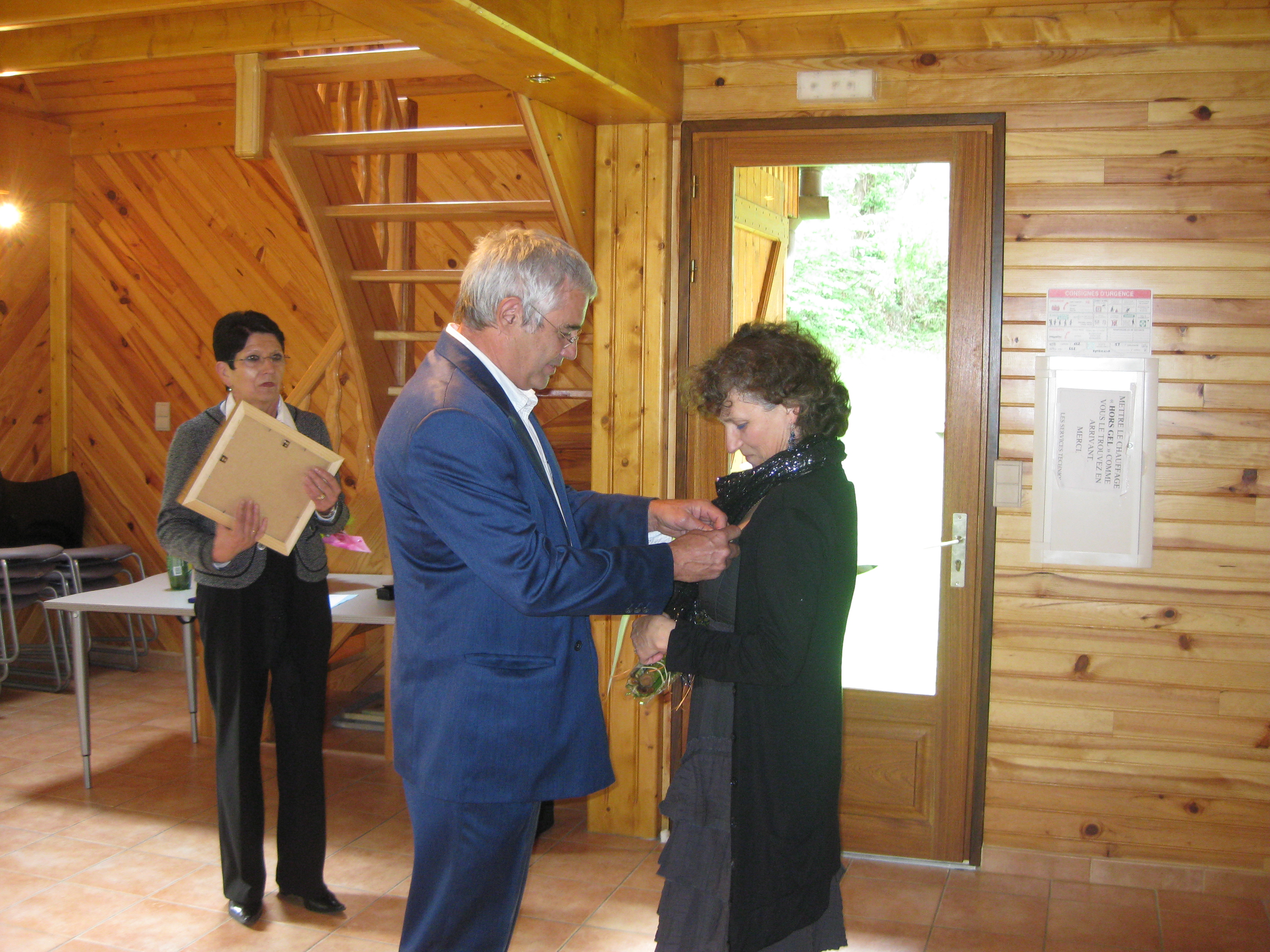
So the ceremony began without her. A smartly dressed woman of a certain age, the representative of the préfet, read a prepared speech from a sheet, Francis read another, and then presented Martine with a large bouquet of beautiful and rather exotic-looking flowers. Then came the handing over of the framed certificate, more flowers, and, most importantly, the silver medal, which was taken from its box and pinned on her.
The ceremony over, it was time for wine, nibbles, and photos.
And later? The family went back home to eat a special meal. This time, all the children were present, as the football match had ended. More posing, more photos, then an evening round the table – mother and father, their six children, a daughter-in-law, heavily pregnant, her parents, and one guest – me. I felt tremendously privileged to have been invited to this ceremony and then to their celebratory meal. Unique – I’d never been to such an event before, and doubt I’ll ever go to another like it – and moving – if integration is what we’re trying to achieve, it doesn’t come better than this.
When we first understood that Laroque is twinned with Melgven in Brittany, we were nonplussed. Surely twinning arrangements are with England, Germany, Spain – or anywhere abroad. What’s the point in twinning with a town in your own country?
Well, quite a lot as it turns out. As part of the twinning arrangements, citizens from Melgven come for a long weekend here in Laroque , while Laroquais have the chance of a few days’ stay there in May. This year, we signed up for the 10 hour mini-bus trip to Finistère
Straight away, we began to see the differences. As we arrived, we were welcomed to enjoy poking round their fundraising ‘Troc et puces’ fair in the Sports hall. The Bretons are a Celtic race, and it shows in their physical appearance. Meanwhile, down here, there’s a long tradition of Spanish immigration, most recently in the Spanish Civil War, and the Second World War, so many locals here are olive-skinned and not very tall. A tannoyed announcement for M. Garcia and M. Sanchez to report to the desk in a public hall somewhere near here would have nearly half the room scurrying to reception.
And then there’s the food. Brittany, like Britain, favours butter, and unlike the rest of France, the salted variety. Out to a meal on Saturday, the lunchtime bread came with pats of butter, something that never happens down south. In the Ariège, cooking’s done in duck fat, and more recently, olive oil. No part of Finistère is very far from the sea, so fish and seafood are an important part of the diet. Down here, duck in all forms is king. But pork, lamb, game, beef are all welcome on the dinner plate. If it moves, eat it.
When we looked round a market in Concarneau on Saturday, we were struck that there was little charcuterie or cheese on sale, and what there was came from elsewhere. It seems as if every other stall in our local Ariègois markets is one selling cheese and charcuterie, much of it from just a few miles away.
Brittany – cider and beer. Southern France – wine. As part of our welcome apéro, we were served kir made with cassis and cider. After sipping it suspiciously, we accepted refills with enthusiasm.
So…what were the highlights?
The welcome. Of course. Some Laroquais have been going on these exchanges for several years, and the warmth of the relationships forged is clear to see.
A change of scene: the countryside. Our host, Albert, took us on several walks, and we were struck with how very British this part of Brittany looks: softly rolling hillsides, woodland and meadows. We traded orchid spotting in the Ariège for enjoying the swathes of bluebell glades in the woods.
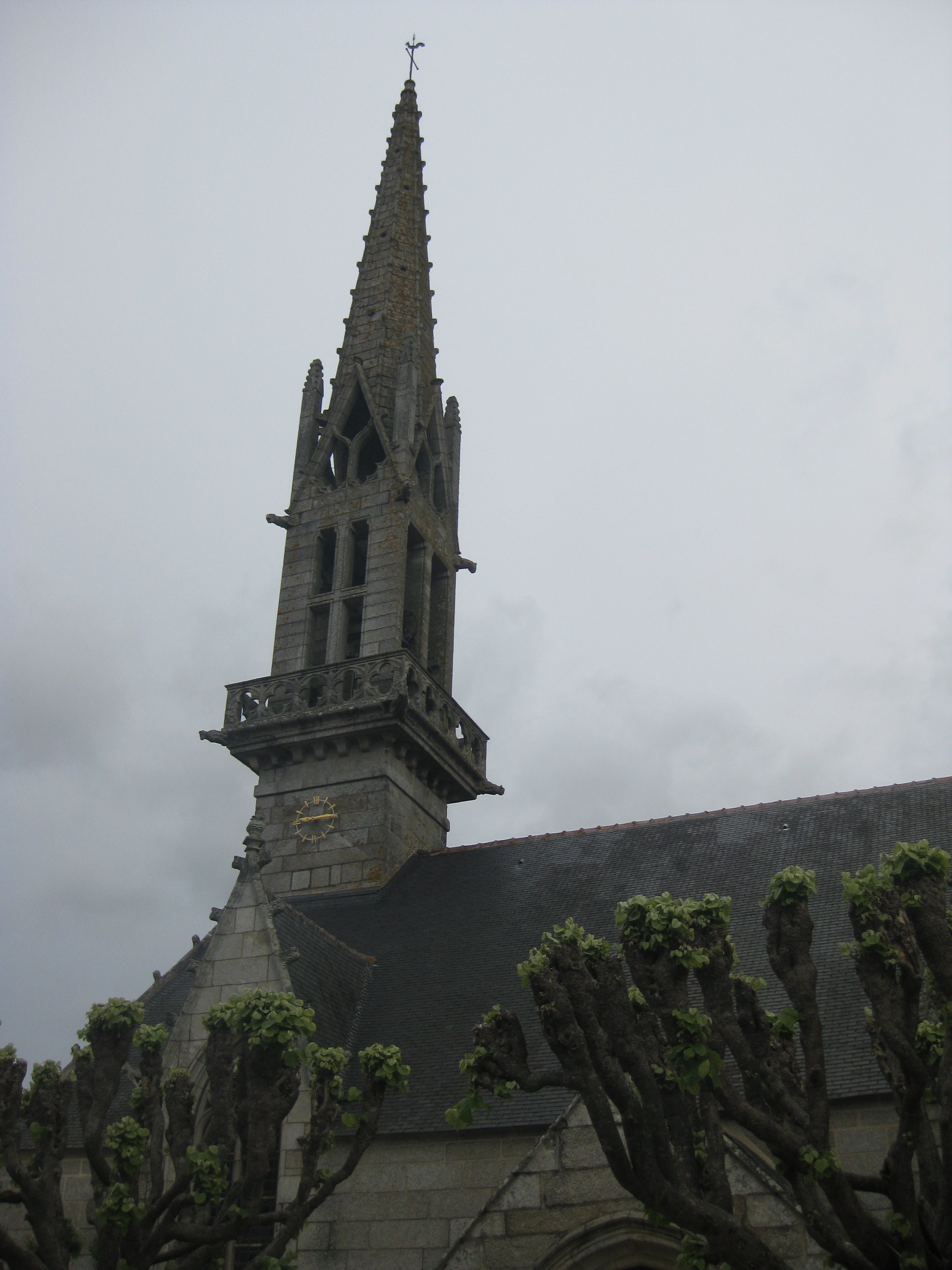
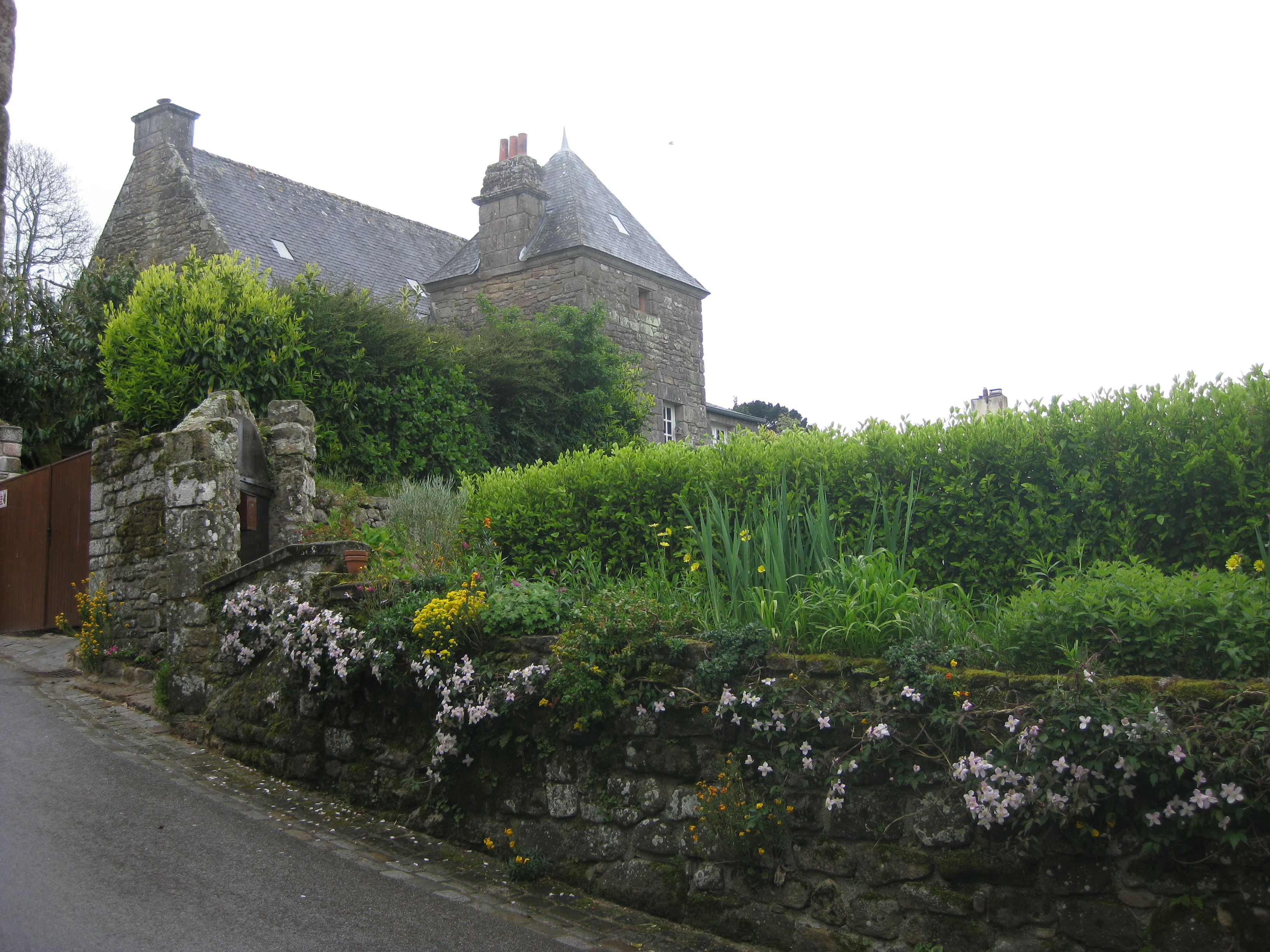
A change of scene: the town. We exchanged the shallow-roofed, unpainted or pastel coloured houses of the south for the tall white narrow pitched roofs of Brittany. Down here, we’re used to our towns and villages being shabby. Brittany’s are clean, sparklingly so, with flower boxes, neat gardens, and a general air of pride in the community. And then there are the churches. No clochers-murs in Brittany, but rather complicated steeples instead.
The seaside. Concarneau was at its sparkling best, with breezes tugging at the flags, clouds pluming across the sky, an early pre-season freshness to the narrow streets of the historic quarter. Their fishing museum there shows all too graphically just how very tough the life of the fisherman was – and is. But it’s a picturesque sight for the tourist
Sightseeing: Our first treat was to visit Locronan, a beautifully preserved granite built 16th & 17th century village, with a mighty central church, and a small chapel at the end of a charming walk.
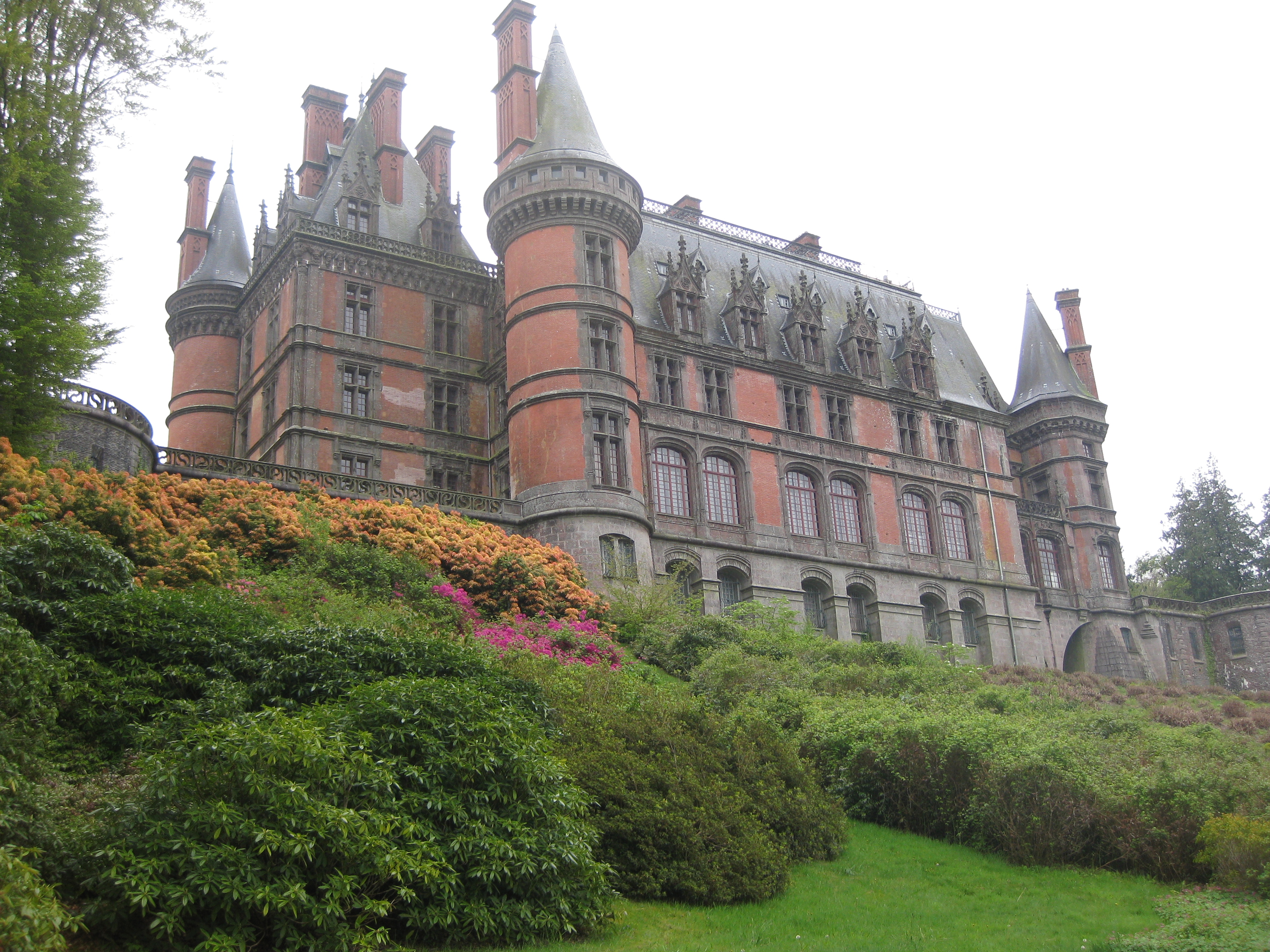
Next was Trévarez, a chateau that might look Gothic, but is in fact a 19th and 20th century construction. Its brickwork gives it the name “château rose”. We spent more time in the gardens though. Apart from a formal area near the house itself, the garden is informal in the style we’re so used to from English stately homes, and glorious at the moment with azaleas and rhododendrons
Celtic music: Friday night was concert night: the chance to listen to an hour or two of traditional Breton music. Malcolm and I particularly enjoyed hearing those favourite Welsh hymns – Land of my Fathers, Cwm Rhondda in Breton– they sounded very different, but just as good
Story telling: Such a treat. Michel Sevellec enchants audiences in Finistère and beyond with his tales drawn from many traditions. On Saturday, as part of a local festival, we joined local children to hear his interpretation of Native American and other stories. Can’t wait for him to come to Laroque in a fortnight!
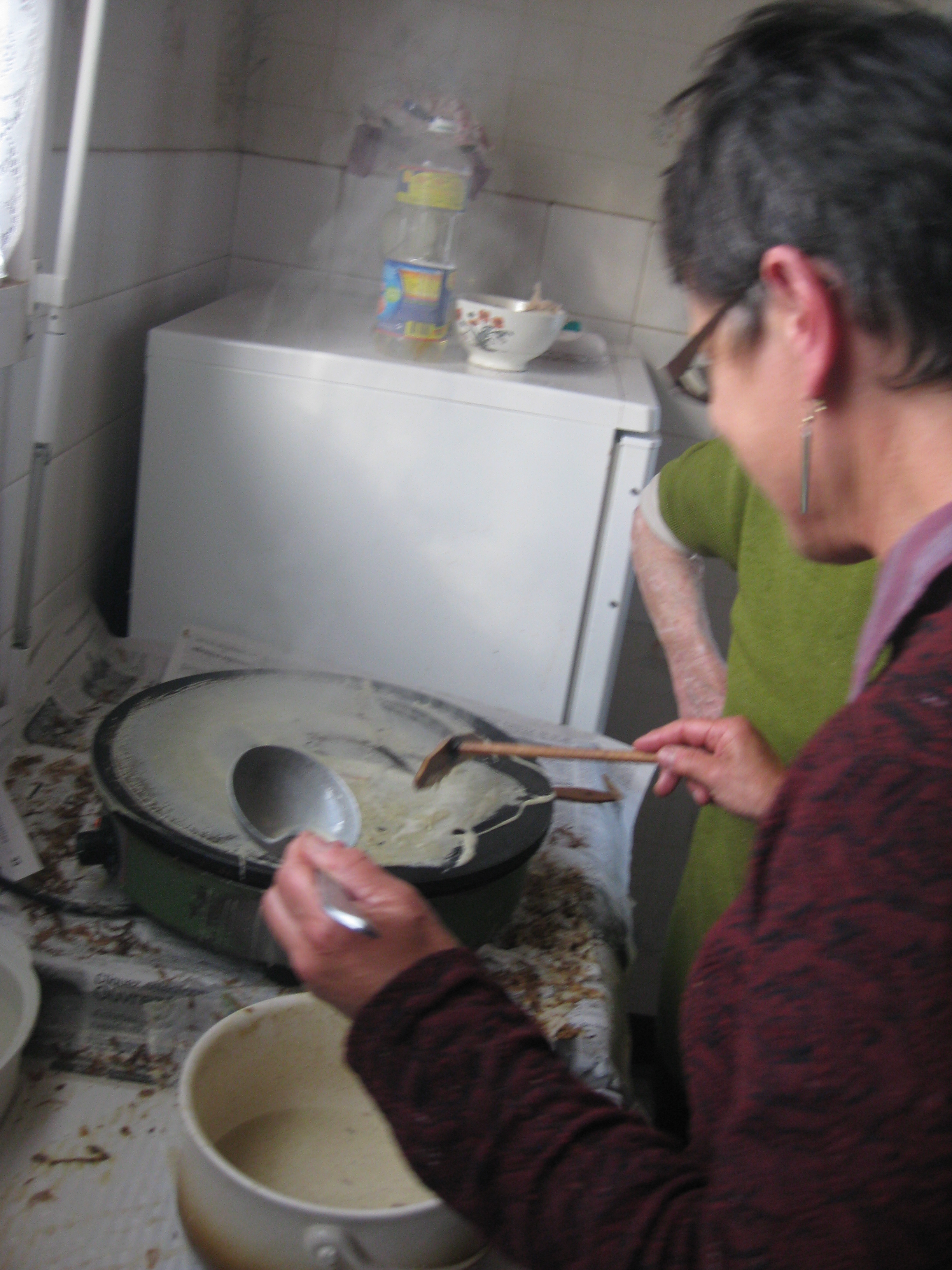
Crêpes:Everyone knows they make crêpes in Brittany. Lots of us have watched them being turned out on those special round hotplates. I always assumed it was easy-peasy. Until we went to eat crêpes at Albert’s mum’s house and she let me have a go. First, carefully pour the batter with your left hand while equally carefully drawing the batter round the plate with a special wooden spatula – not too fast & not too slow, not too thin & not too thick.
Expert at work
Then flip the delicate creation, so thin you could read a newspaper through it, over onto its other side to finish cooking. It was lucky there were hungry dogs to eat all my cast-offs. Lucky for us too perhaps: we’d still be eating them now. Malcolm and I thought 6 crêpes each ought to have been enough for anybody. Our hostess disagreed.
So….we discovered in Brittany an area very different from our own in languages, customs and appearance, and had a chance to be more than simply tourists. We now have new friends in Melgven but also in Laroque as a direct result of this weekend. A good experience.
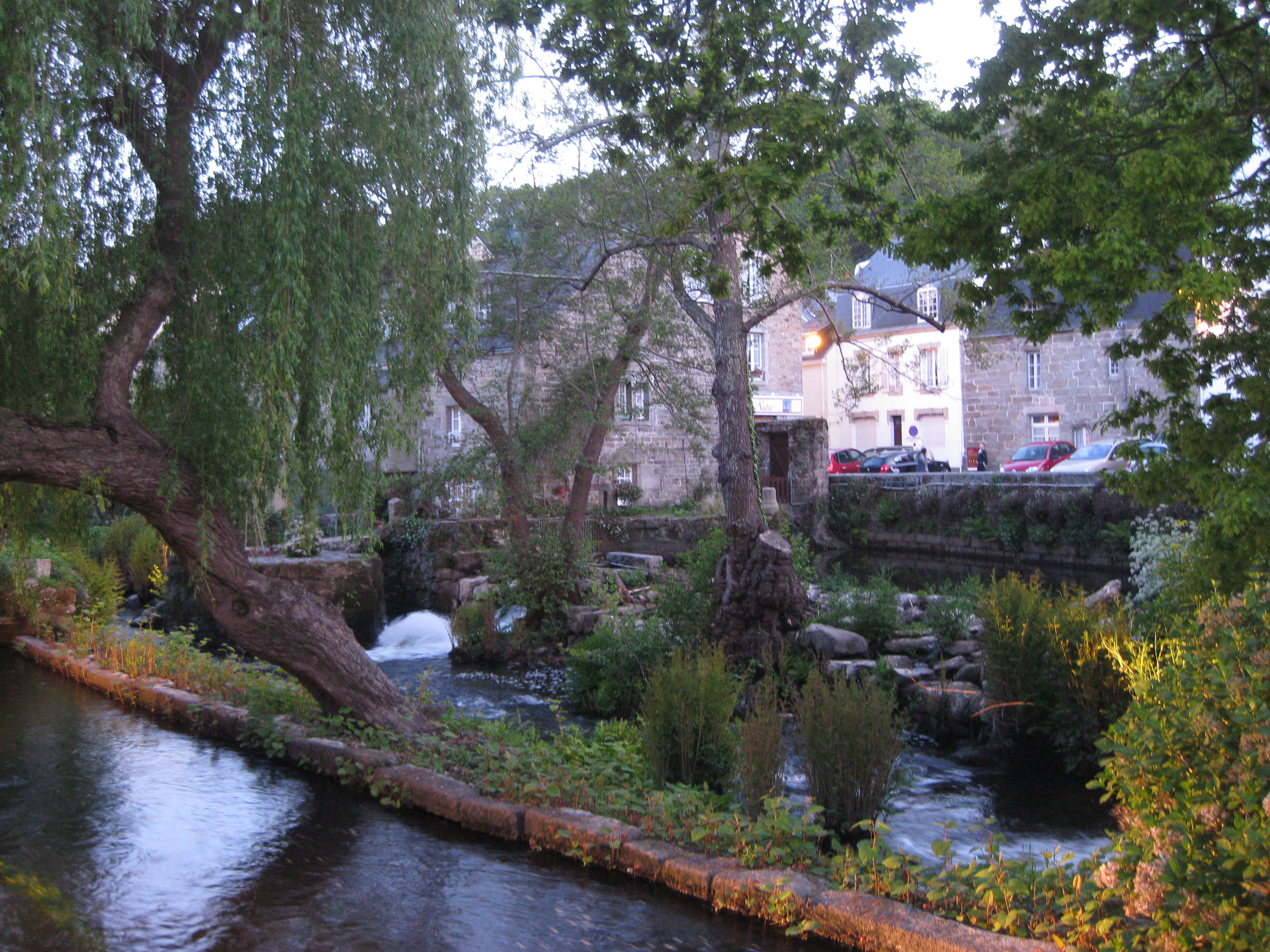
Pont Aven: I didn’t even mention this lovely little town, did I?
Over at the BBC, they do things differently. The weather forecast, that is. It’s a big operation, the weather: 24 broadcasters– Daniel Corbett, Helen Willetts et al, and between them, they cover all the bulletins broadcast on BBC radio and television – even World service. On the radio, it’s the word picture you might expect, while on TV, the graphics are ever more sophisticated
Here in France, it’s different. Switch on France Inter for the weather forecast, and what you’ll get is the slightly southern, slightly nasal, but warm and measured tones of Joël Collado. Forecast after forecast. Day after day. Year after year He is allowed days off: he’s even allowed holidays sometimes, and when those occur, we’ll have Jacques Kessler or sometimes Jean-Michel Golynski. Just those three.
It’s quite comforting really. The French obviously think so. Watch a French film or television drama, and Collado’s reassuring, slightly soothing voice may well be murmuring in the background of those early establishing shots. The good old British forecast wouldn’t send out such a message of timeless normality, I don’t think. A young French social care assistant wrote what almost amounted to a declaration of love to Joël Collado on her blog Pause Café, (‘You’re my ray of sunshine, even when you’re forecasting rain and cold’). Facebook apparently has The Joël Collado and Jacques Kessler Appreciation Society – which I’ve not been able to read, as I think I am the next-to-last person in this web-aware world not to have a Facebook account. The last is Malcolm
Those three radio forecasters though, don’t present on TV. There are other teams for that job, depending on the station. We’re always amused that female presenters, who in this house go under the generic name Pixie-frou-frou, seem to have been hired specifically for the shortness of their skirts and the archness of their radiant smiles.
Then there are the papers, and the internet. Our local paper, La Dépêche du Midi, is famously wrong much of the time, and I gave up on the internet when the site I was reading assured me that at that very moment, it was snowing in Laroque d’Olmes. It wasn’t. It was sunny. I saw not one snowflake all that day. As in England, so in France, those who forecast the weather are only talked about when they are wrong
I’ve been quite interested in the run-up to the UK election. That may come as a surprise to those of you who know me as a not-very-party-political-animal, and as even more of a surprise to UK residents who seem to have been engulfed in non-stop election fever since early March.
For us, access to the election news has been via French radio and television. We don’t buy the papers very often, but I generally hear a couple of news bulletins a day from France Inter (roughly Radio 4 equivalent), and we often watch the main evening news on France 2 (BBC1-ish channel). So this scarcely constitutes an academic study of the British elections seen through French eyes.
It’s been quite a surprise to me that for the last couple of weeks, there’s usually been something about the British elections in every main bulletin. France 2 has had a series of mini-election specials every night. These have covered everything from SamCam versus Sarah Brown (Sarah Brown won on points, because they had a library photo of her talking to Carla Bruni-Sarkozy. In that particular encounter though, they clearly thought Carla B-S won on points), to the National Front in Barking, to Boris Johnson talking in sub-O Level French (but at least he did it. I’m old enough to have memories of Ted Heath’s sabotage of the French language back in the 1970’s). Nick Clegg has the French vote sewn up, on account of his fluent French (and Dutch, German and Spanish) – he’s had several interviews on pro-European matters in the French media
Yesterday’s report on France Inter’s lunch time news covered the fact that the polling stations are open from 7.00 a.m. – 10.00 p.m, to accommodate the fact that we vote on a Thursday, a working day, unlike most of the rest of Europe, which has Sunday as Polling Day. They incorrectly stated too that churches were among the buildings used as polling stations. Then they went on to explain our first-past-the-post voting system, which they rightly find bizarre.
And today, how much more bizarre it all seems. The first-past-the-post system seems even more unacceptable now that the Liberal Democrat share of the vote is so little behind that of the Labour Party. It’s impossible to spin it in a positive way to the French who ask about it. Like most Europeans, the French are more at ease with the idea of multi-party government, and perhaps bemused at the total impasse in which the leaders find themselves.
I thought I was going to see the election story out to the end on this blog. I’ve a feeling that could involve a very long wait, though. Here is the unfinished article

 You’ll need at least 2 or 3 large ones each. They’re often small though, so you may need more. Clean them by brushing them gently and lay them cap side down in a shallow buttered oven dish. Cover generously with knobs of butter and Roquefort cheese – 4 parts cheese to one part butter. Grill till the cheese is melted and the mushrooms cooked. Serve with lots of crusty bread to mop up the juices, and a green salad.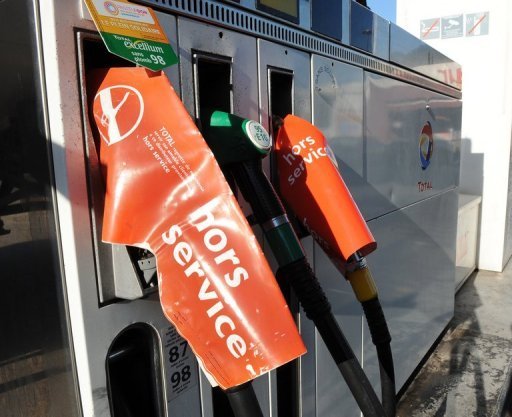





 From Pyrenees to Pennines
You must be logged in to post a comment.