A Morning with the Deer of Studley Royal

This wasn’t the post I intended to make. But an accident turned into an opportunity..

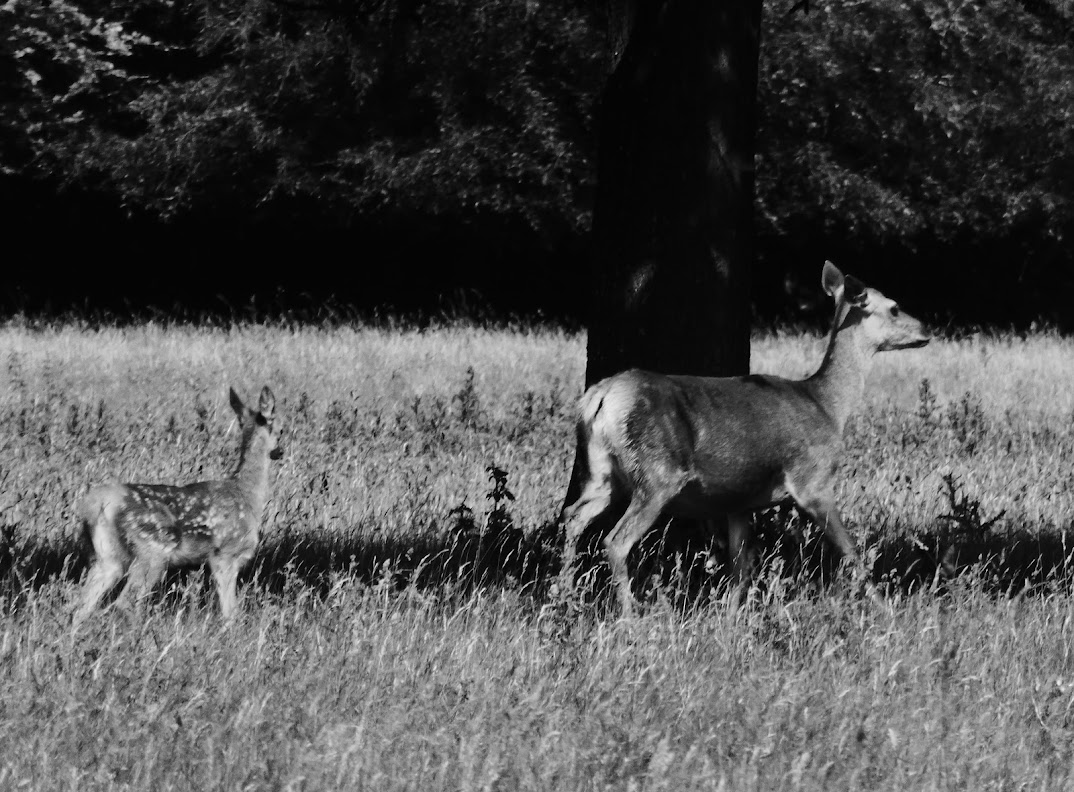
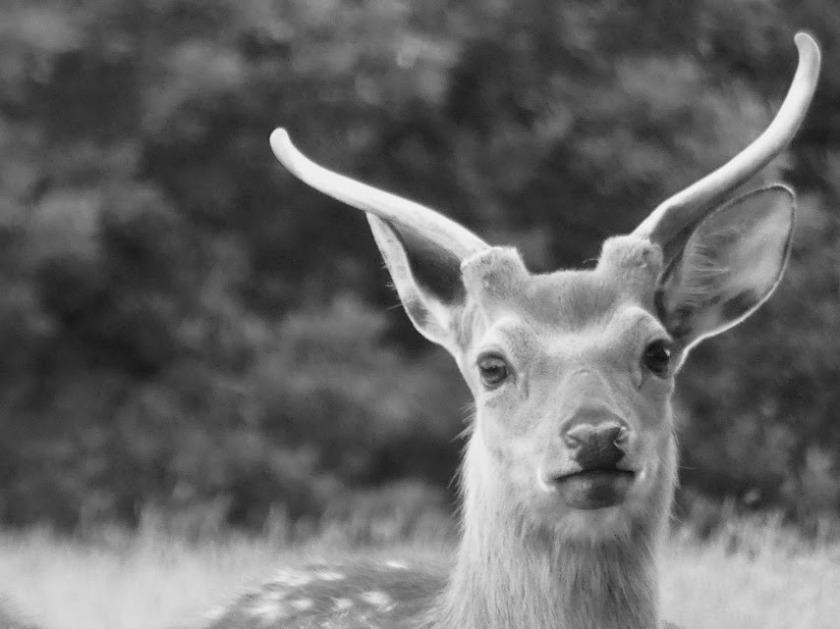
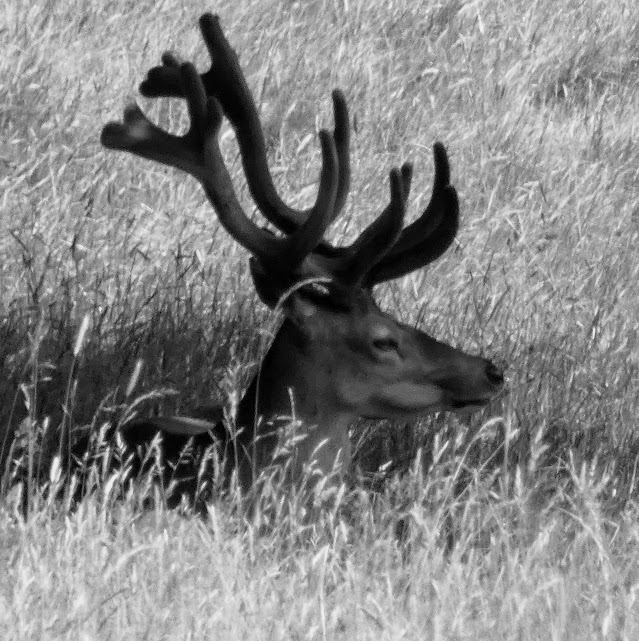
Yesterday morning saw me with a friend, completing our tour of duty as volunteer Roaming Rangers in the Deer Park at Studley Royal. This involves doing a low-key census of the deer, looking out for noteworthy wildlife, answering questions from the public, and occasionally asking dog-owners to put their pets on a short lead, especially now, when female deer are busy giving birth. And I took my camera. Accidentally, I left it on black and white setting. But I find I don’t mind. I’ll share some of my images with you.

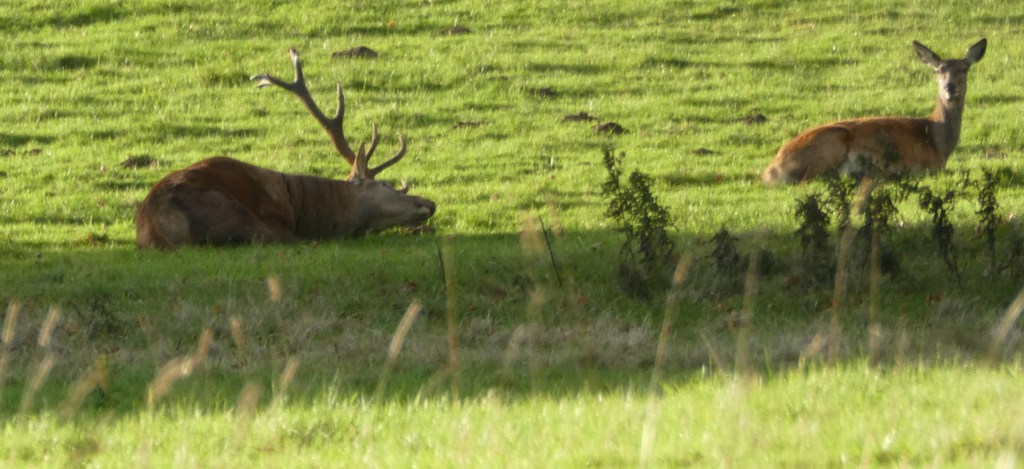
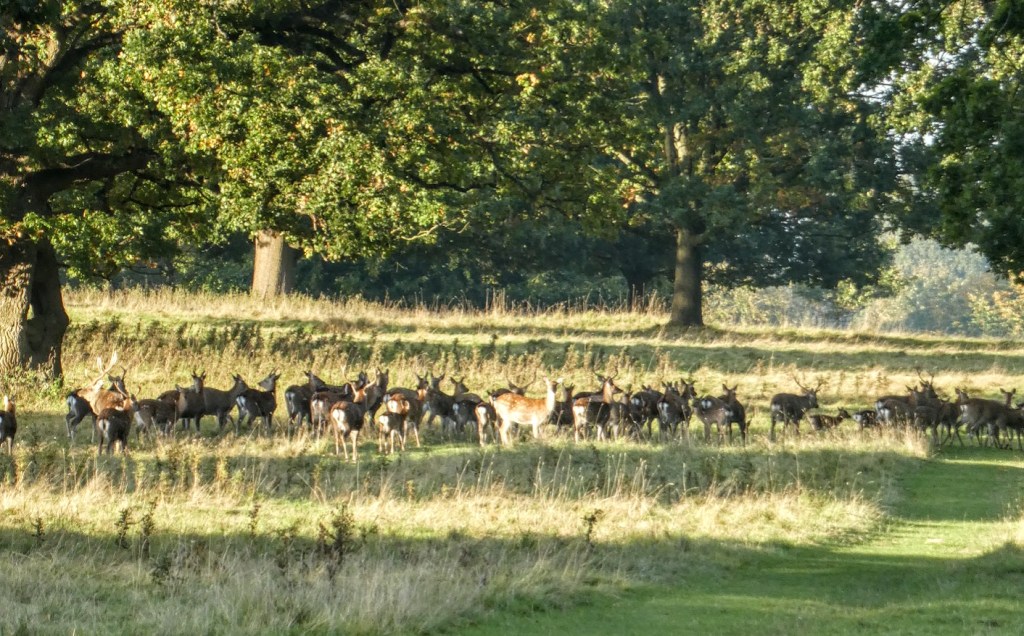
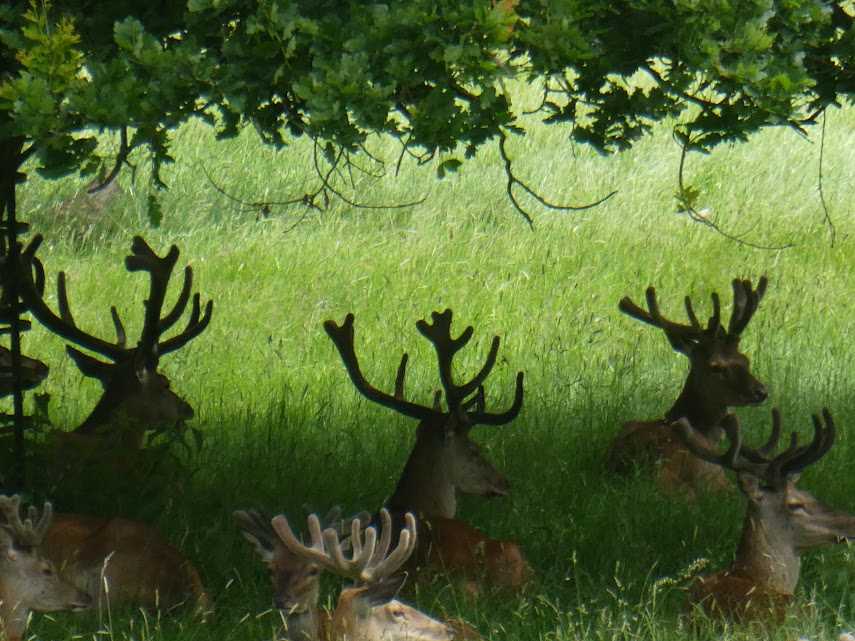
The featured photo shows the first scene we saw: red deer stags all sitting resting beneath the trees. This is their languid time of year, when they eat and rest, building up their strength for the autumn rut.
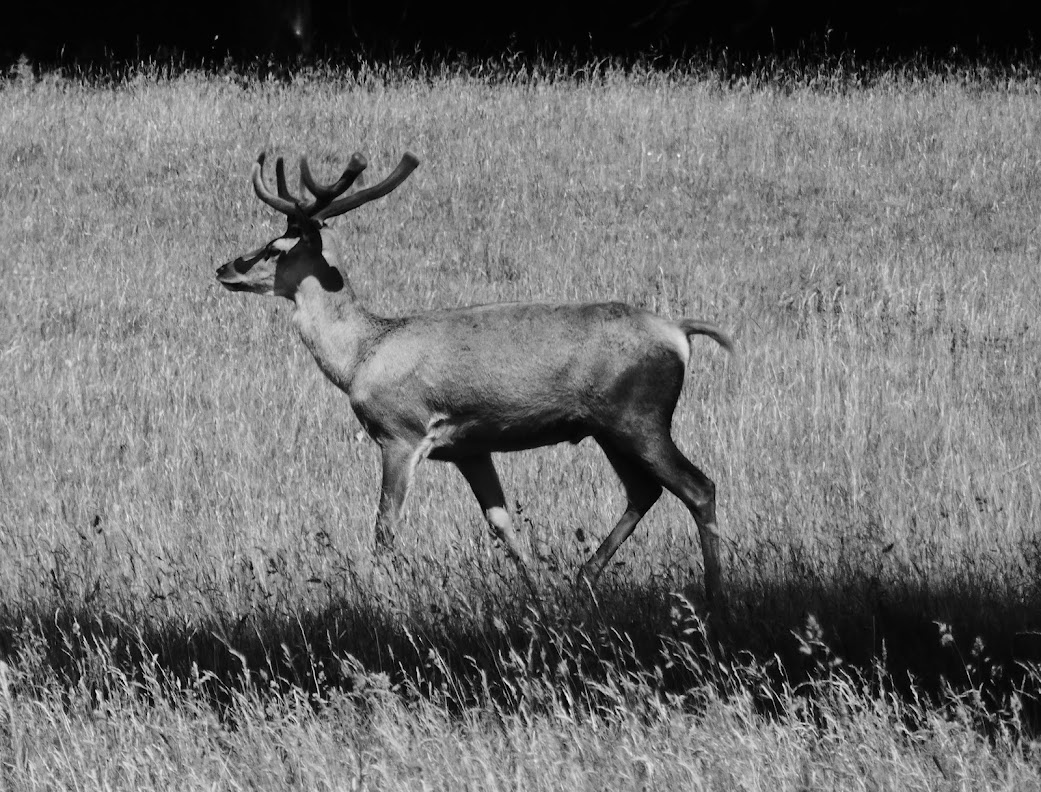
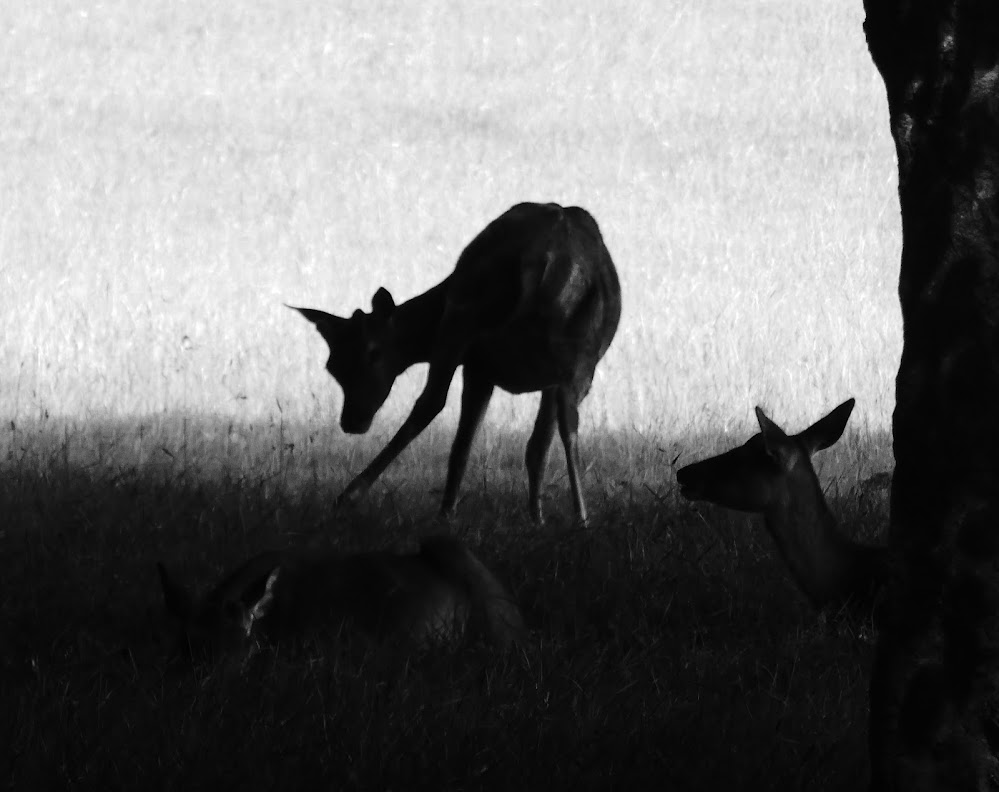
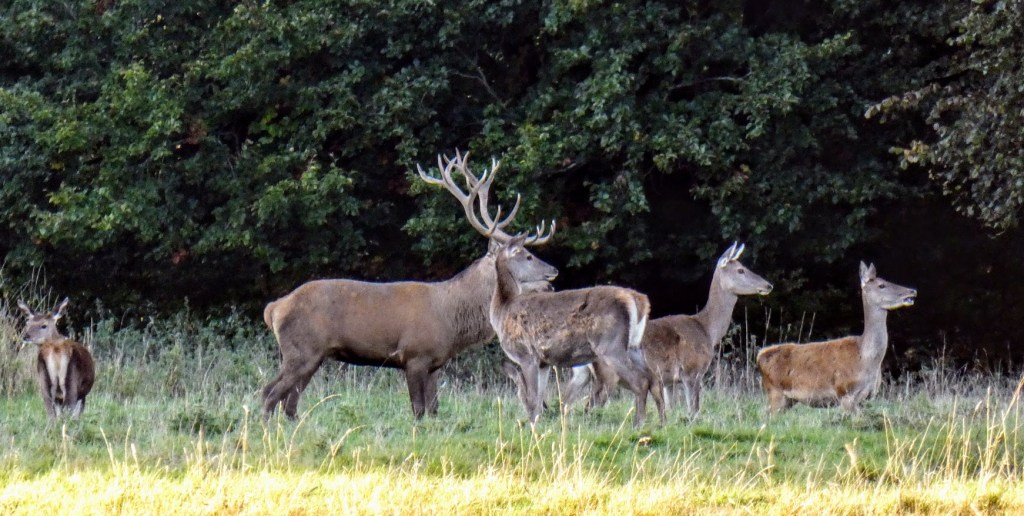
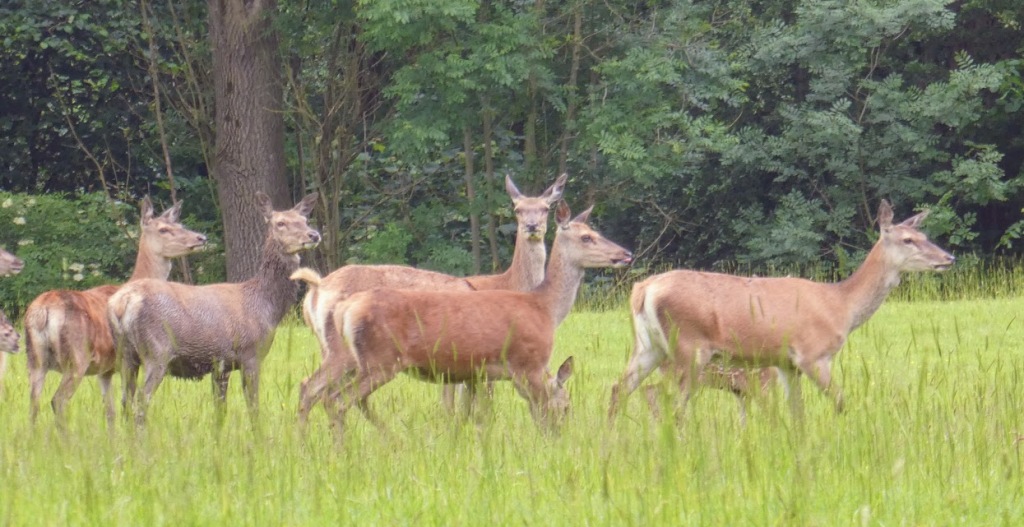
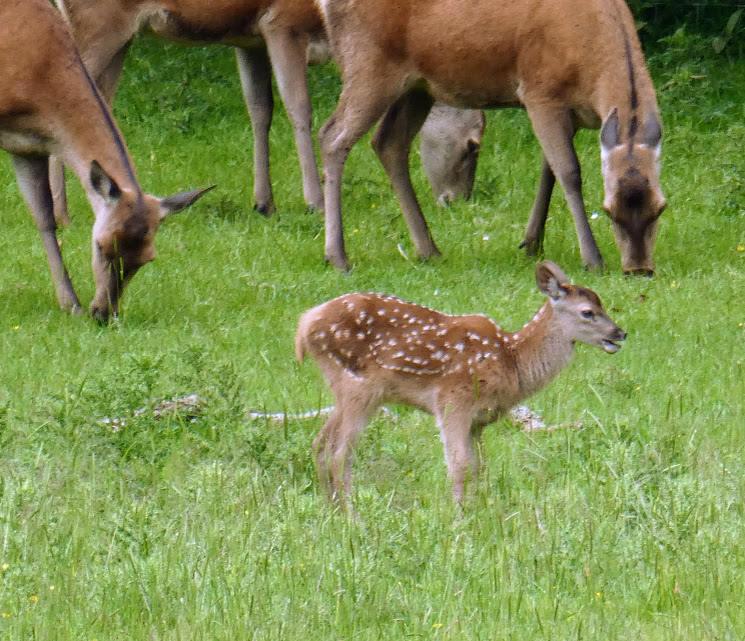
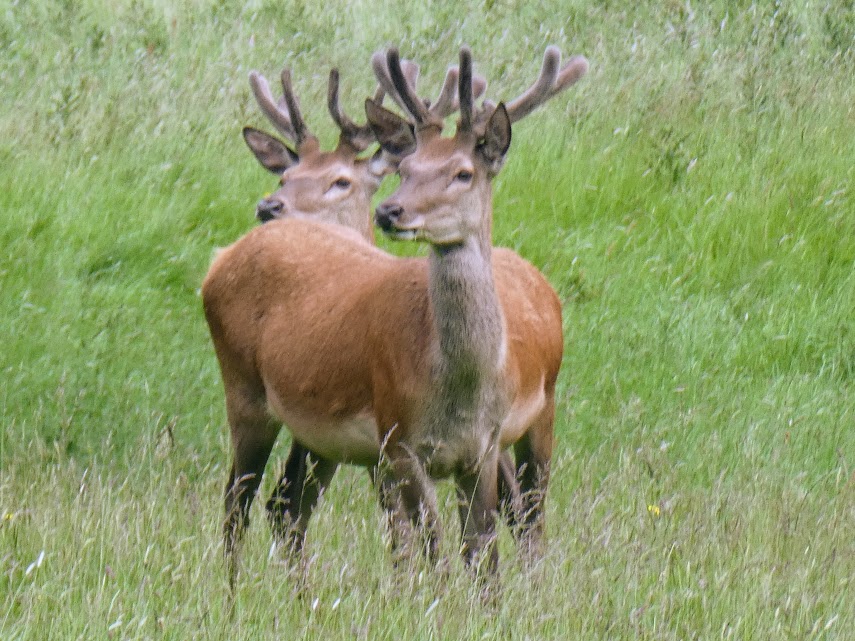
And here’s a stag; a young calf; and a hind with her calf.

We’re just about to change terminology, because we’re leaving red deer behind, and joining the fallow deer. The male is a buck, the female is a doe, and the youngster a fawn.

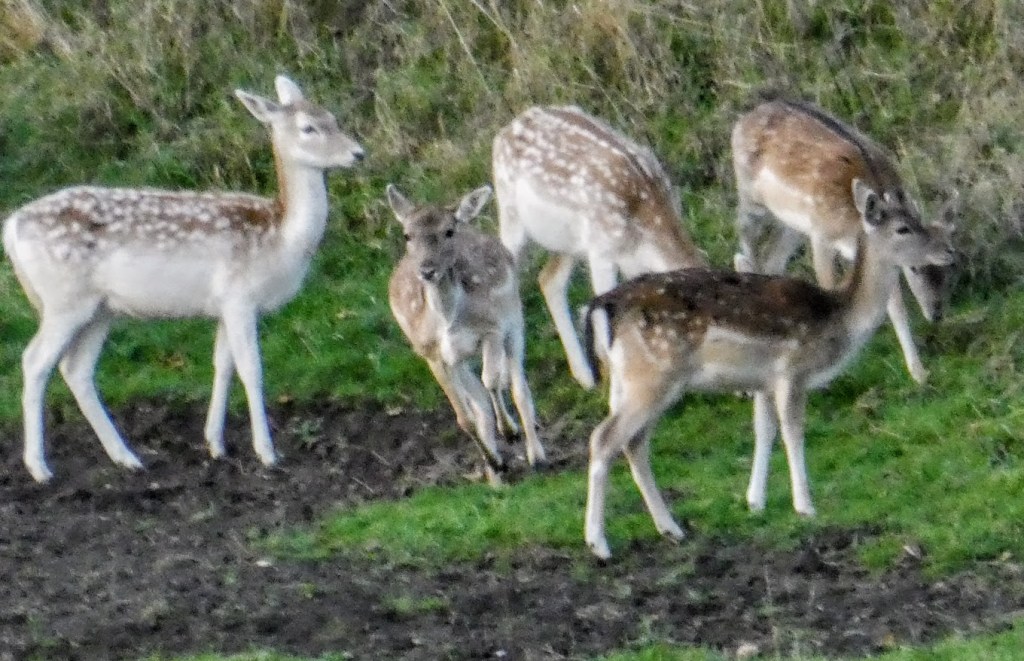
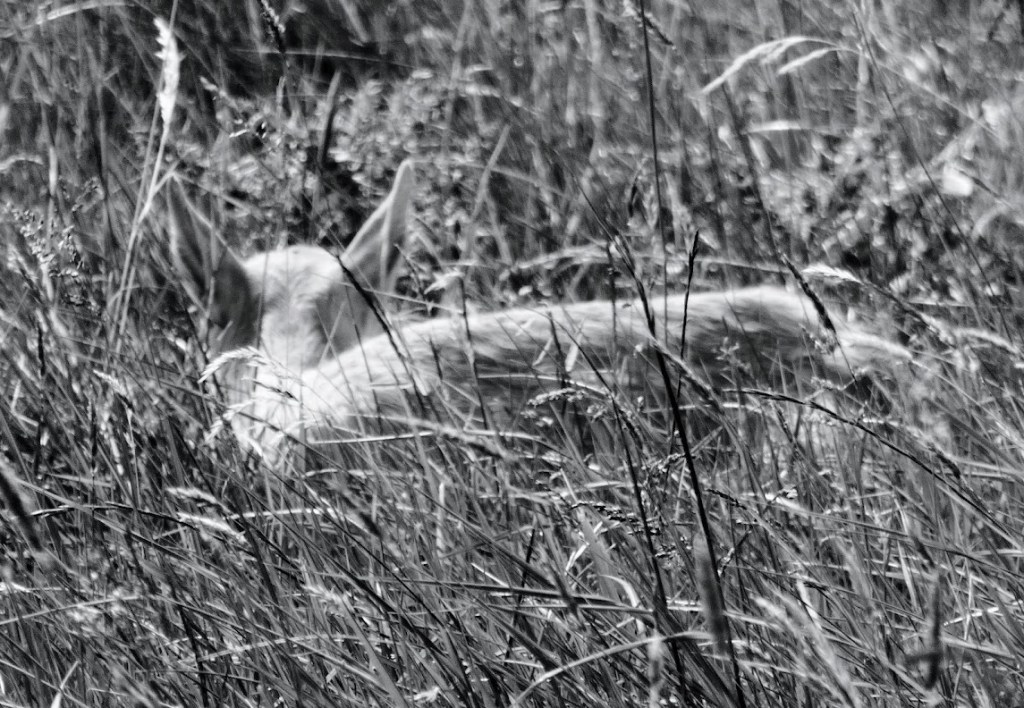
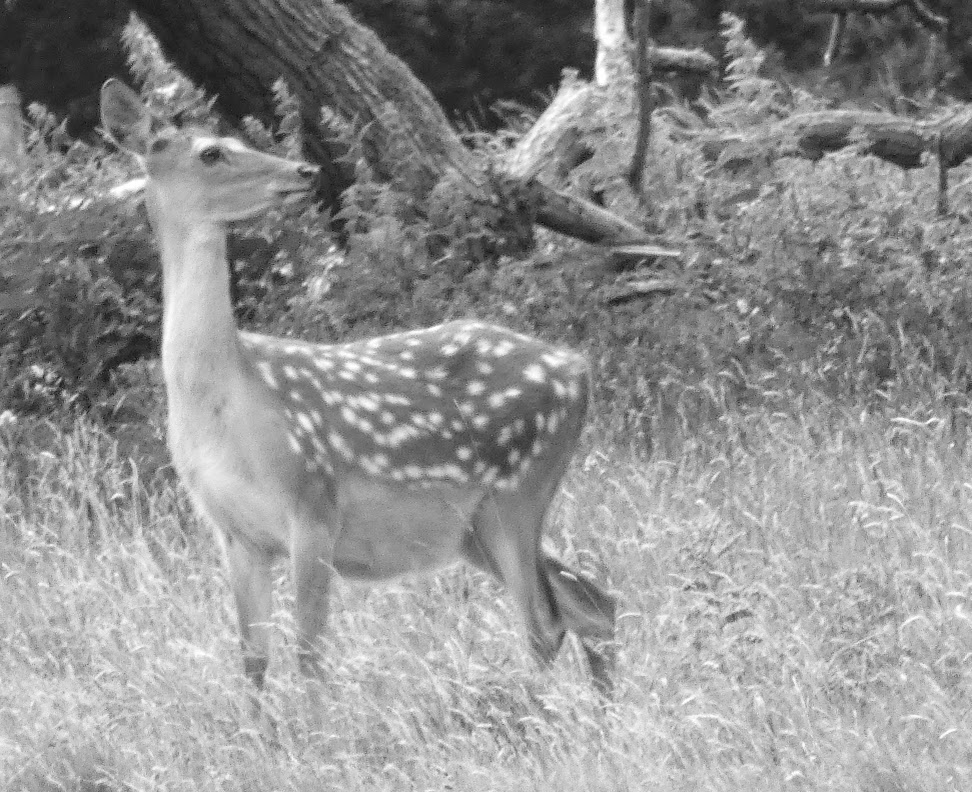
As we spotted fallow deer ahead of us, we all but walked into the youngest of young fawns, left sleeping by its mum far too near an – admittedly little-used – path. I snatched this photo, but we hurried away, not wanting to cause distress to the little creature’s mother.
Then we had a wonderful twenty minutes or so, staring across a deep dry valley much loved by the deer because of its relative inaccessibility, and watching a young fawn gambolling through the long grass, dashing back from time to time to see its mum.
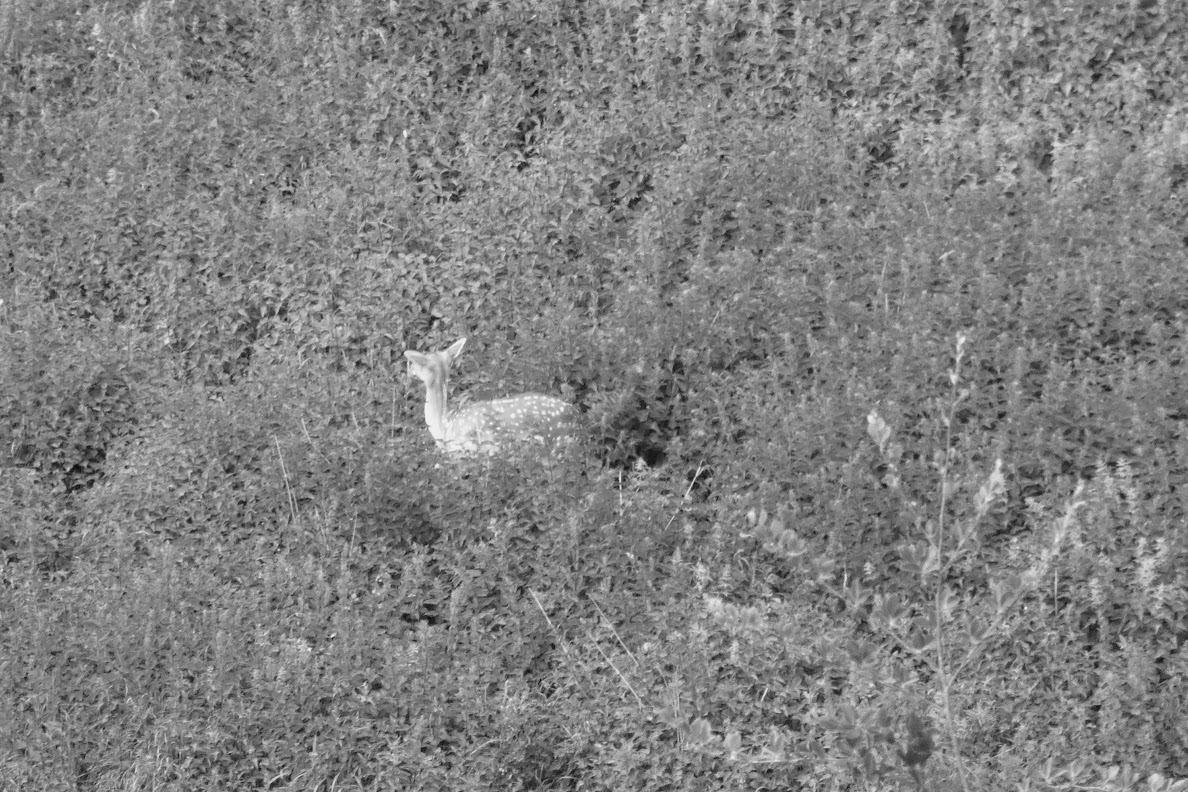
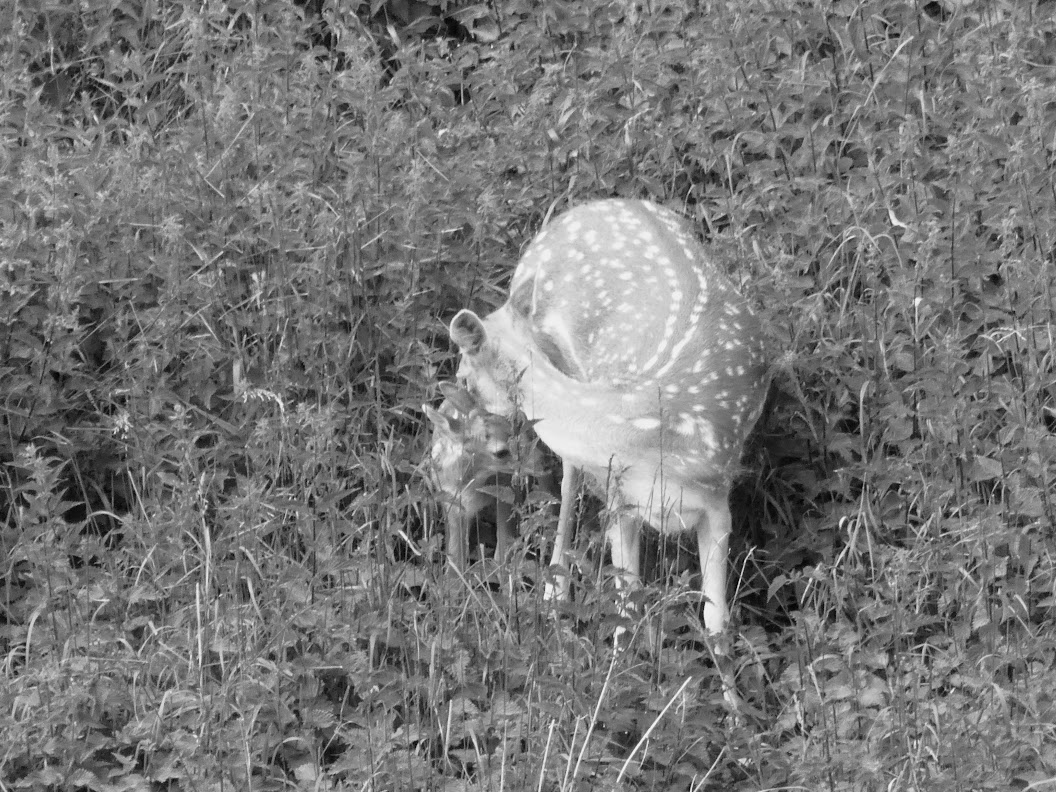
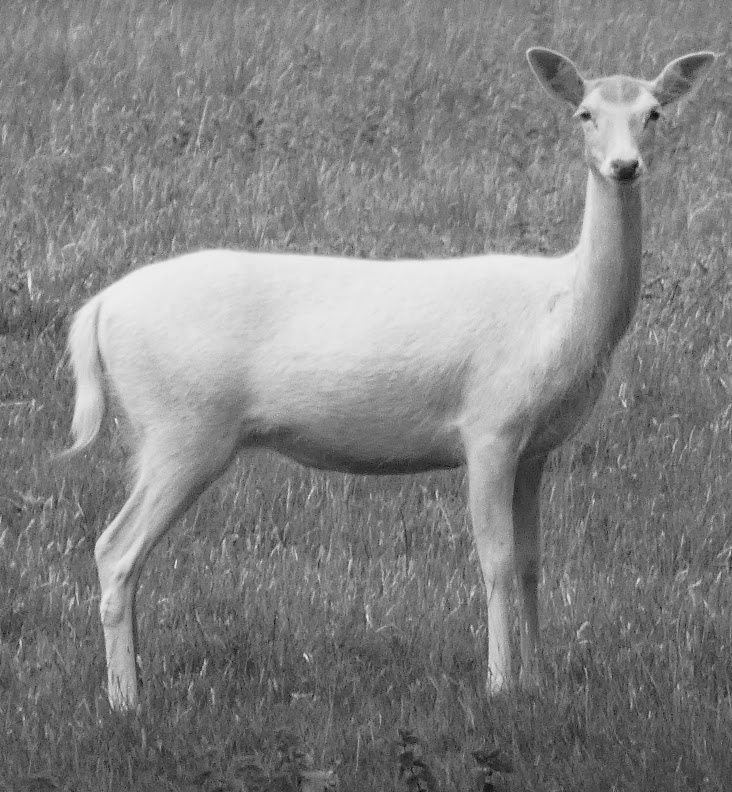
And here are two typical does: one looks ‘normal’, but the white one is too. She’s not albino, but leucistic: she has reduced pigentation in her coat: it’s a pretty common variation – as is melanistic, where the opposite is true, and over-production of melanin leads to a black coat.
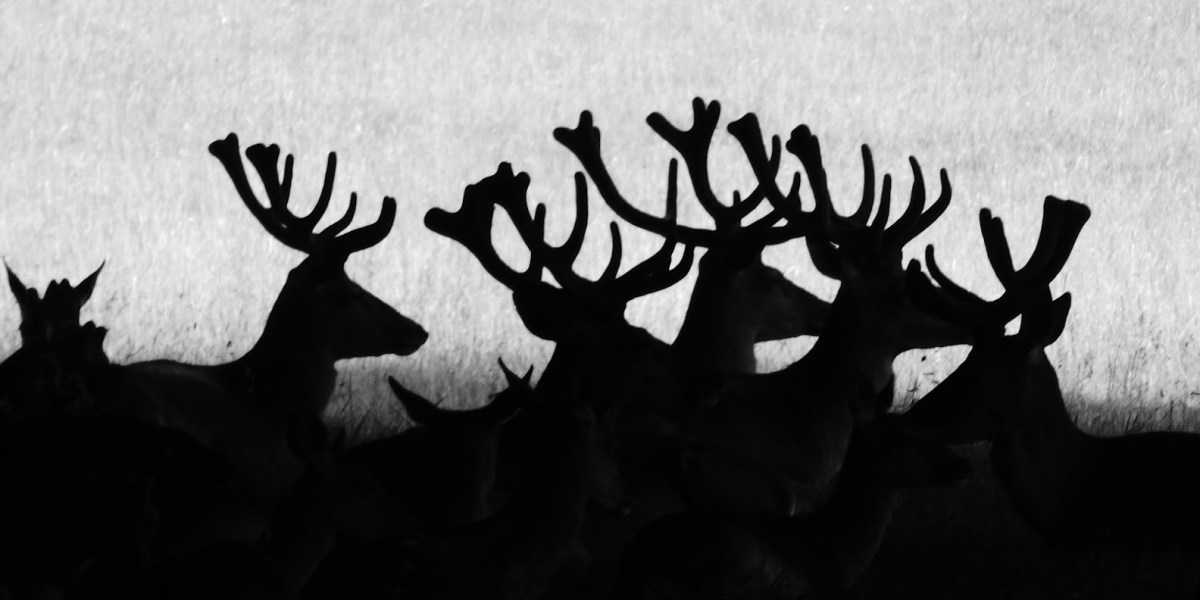
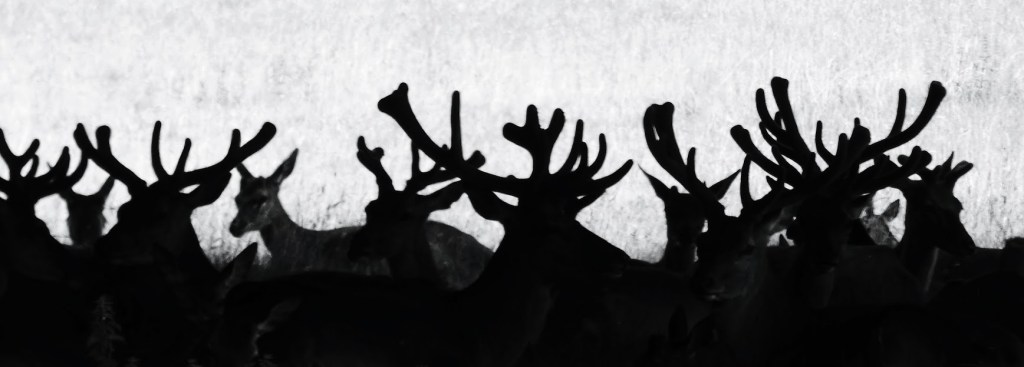
But I’ll leave you with a further set of silhouettes from those utterly relaxed stags.
For Leanne’s Monochrome Madness …

… and Jo’s Monday Walk
Spring in Glorious Technicolor – or Muted Monochrome

Even though over the last few days the weather has reverted to winter chill with a vengeance, I think it’s definitely the week that Spring has Sprung. The daffodils have suddenly burst forth into golden glory. The grass is lusher. Dandelion and daisies crowd the verges. Spring announces itself in an explosion of colour, in contast to the muted browns and greys of winter with its dull skies and overabundance of mud.

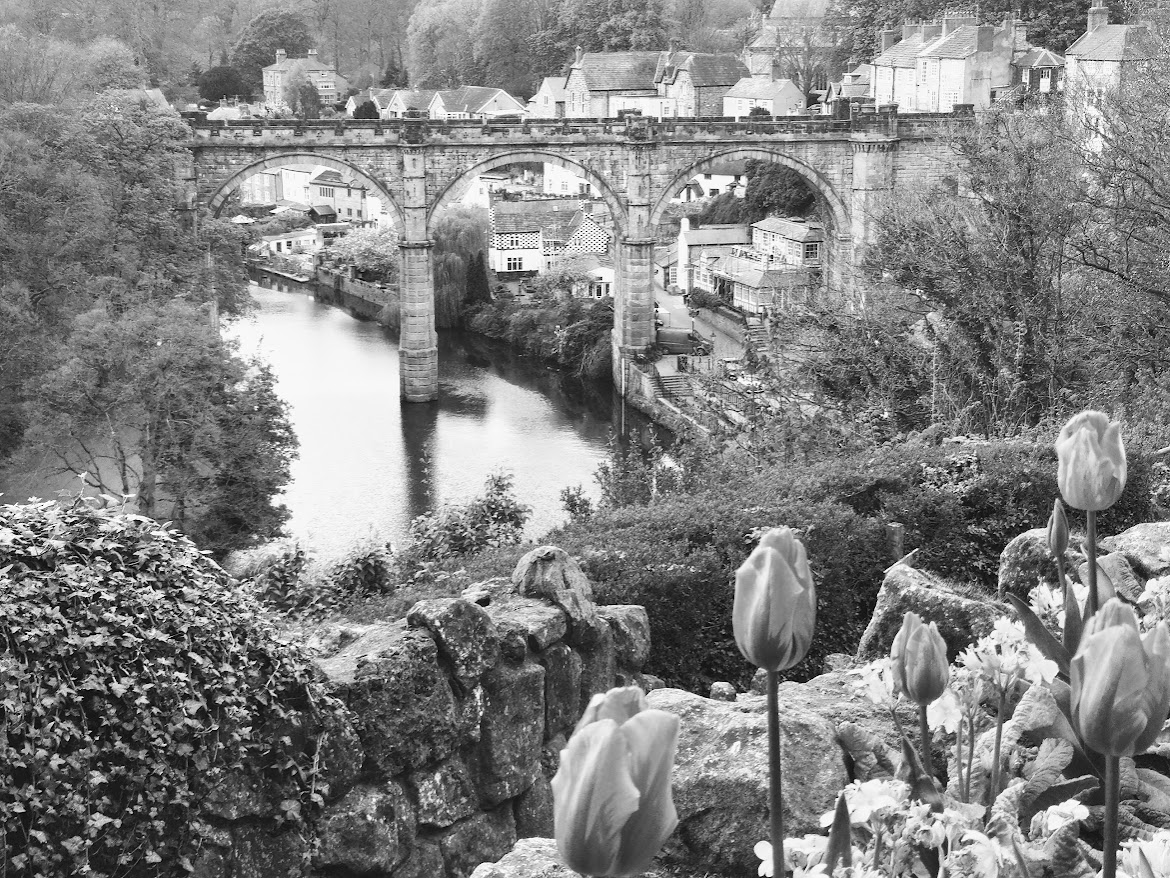
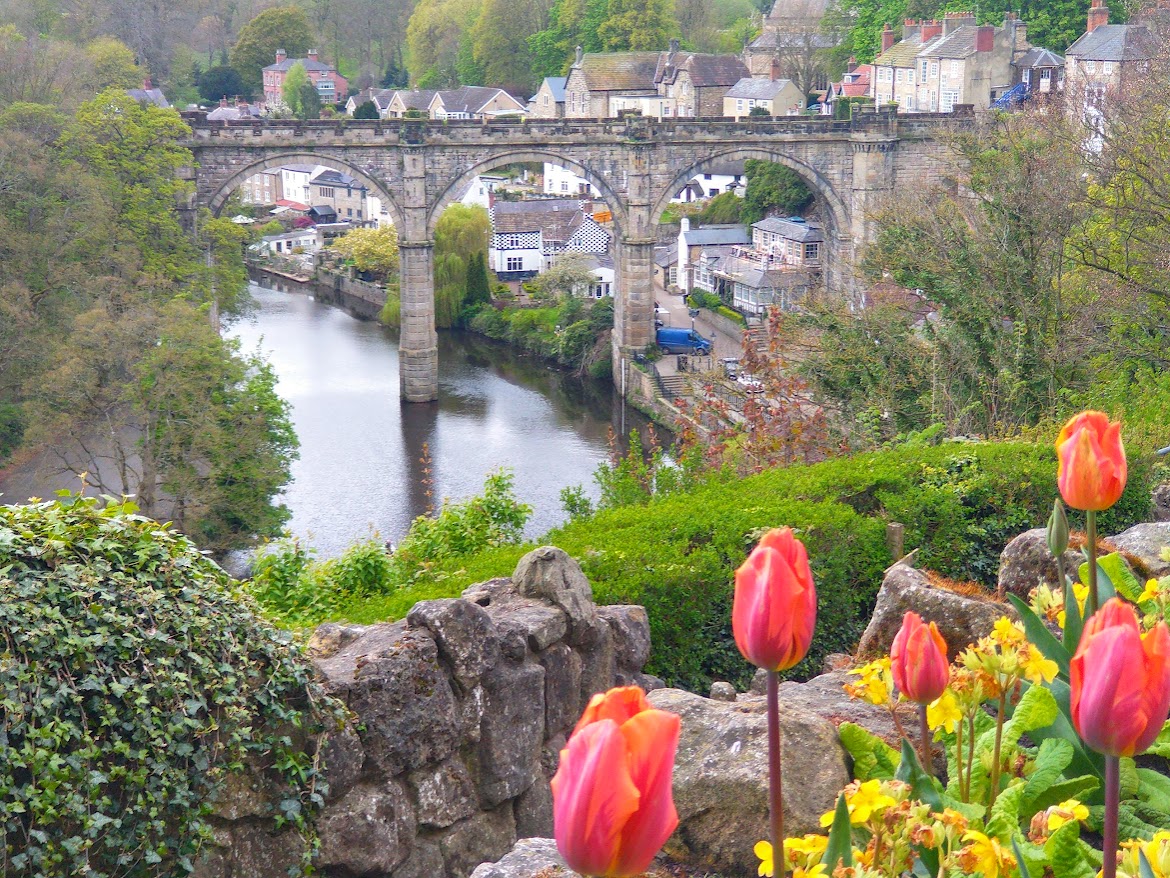
So is there even any point in ‘doing’ spring in monochrome? I thought I’d find out, and chose four images where it’s not just spring flowers telling the story, because they’re complementing the buildings they grow near.

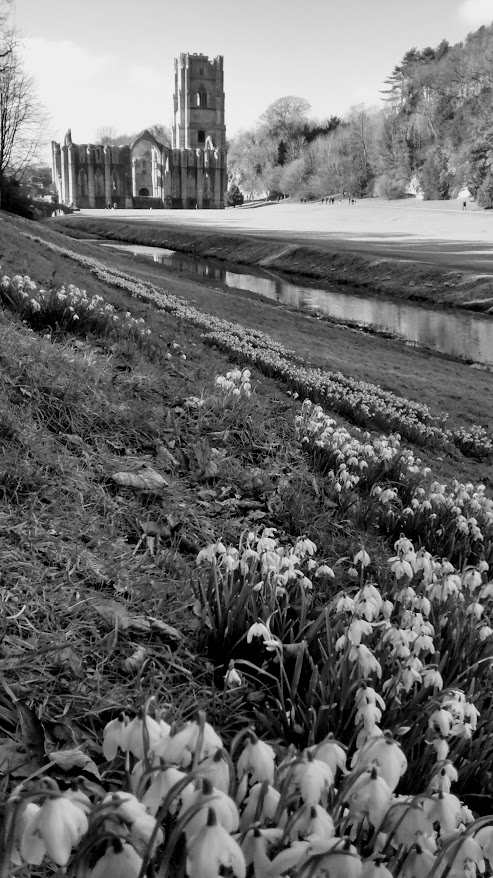
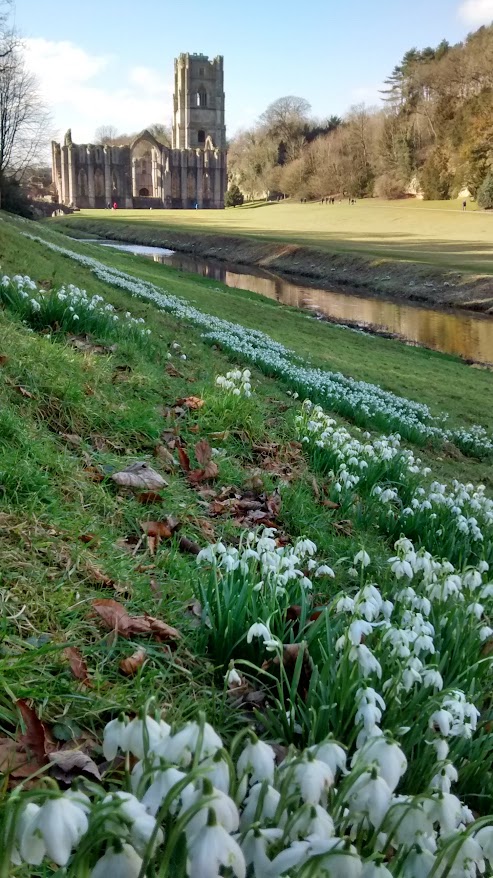
Perhaps these aren’t part of the story, because snowdrops show their faces from early January. But they’re white, so may not suffer so much in monochrome.
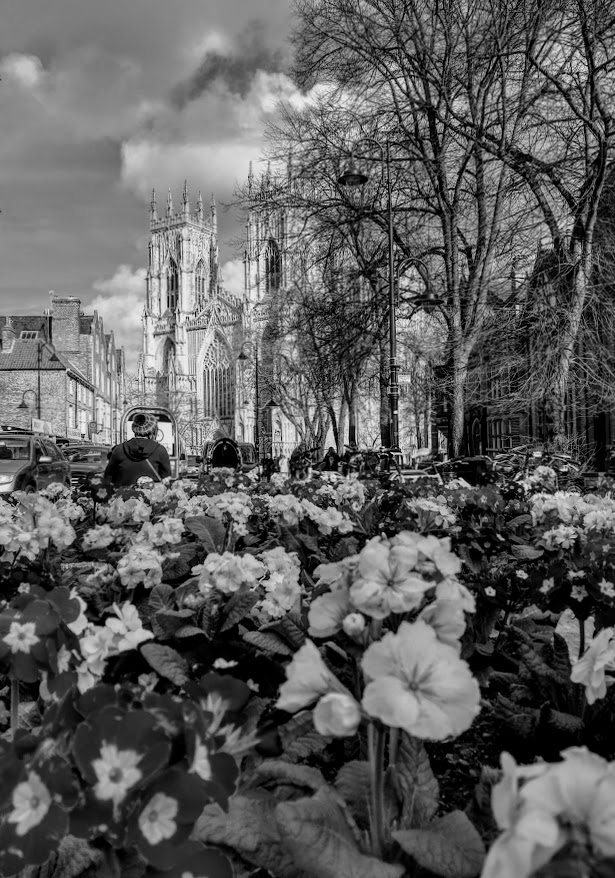
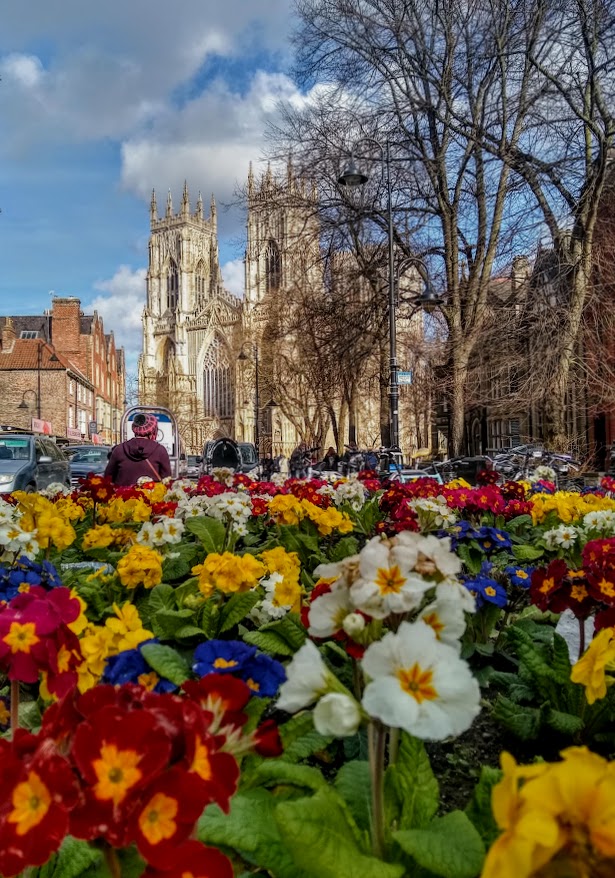
Primulas on a traffic island near York Minster.
Tulips overlooking Knaresborough Viaduct.

Part of my own difficulty is that I don’t enjoy tinkering with photos. What comes out of the camera either works, or it doesn’t, and then I’ll junk it. At most I’ll level the picture up, maybe lightly crop it, even – slightly – fiddle with brightness. So my translations into monochrome are crude at best. If I want monochrome – and I’m increasingly choosing it over colour – I’ll shoot in black and white. And perhaps follow up with a further version in colour. I admire those photographers who use editing tools with discretion, so what we see is the original shot – just enhanced in subtle ways. I’m less keen on dramatic editing. But in a diary that is already over-full, I guess I don’t feel like giving this particular skill the time it needs to learn to do it well.

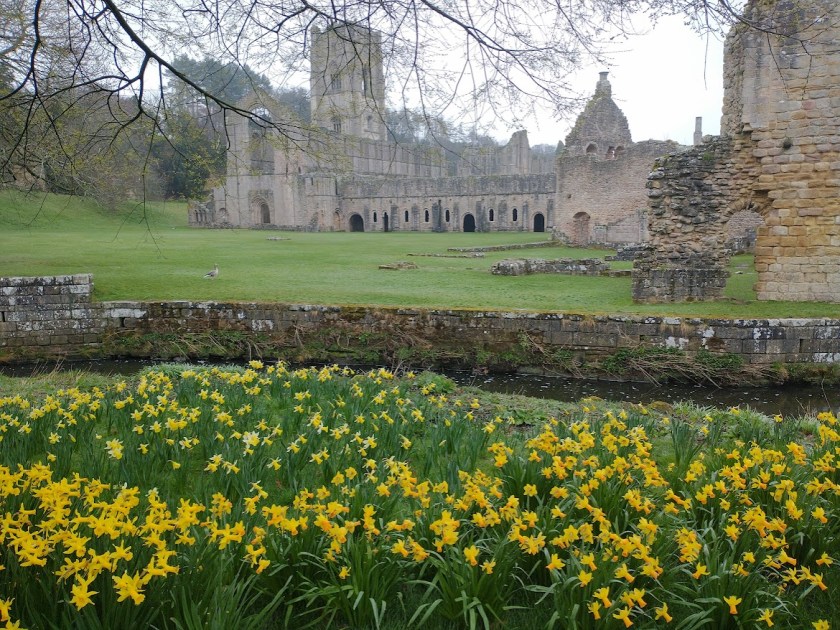
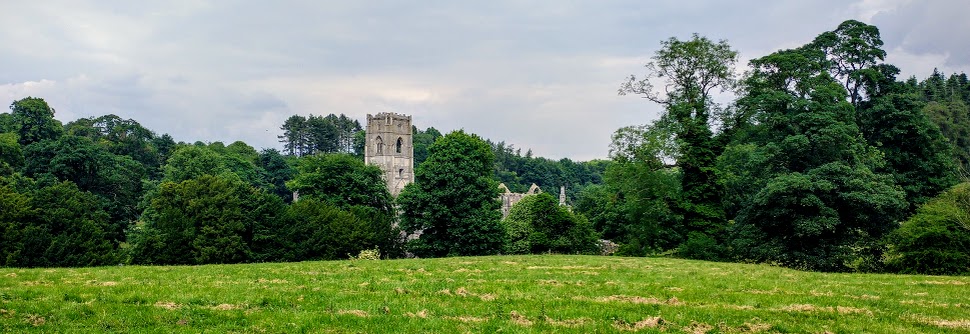
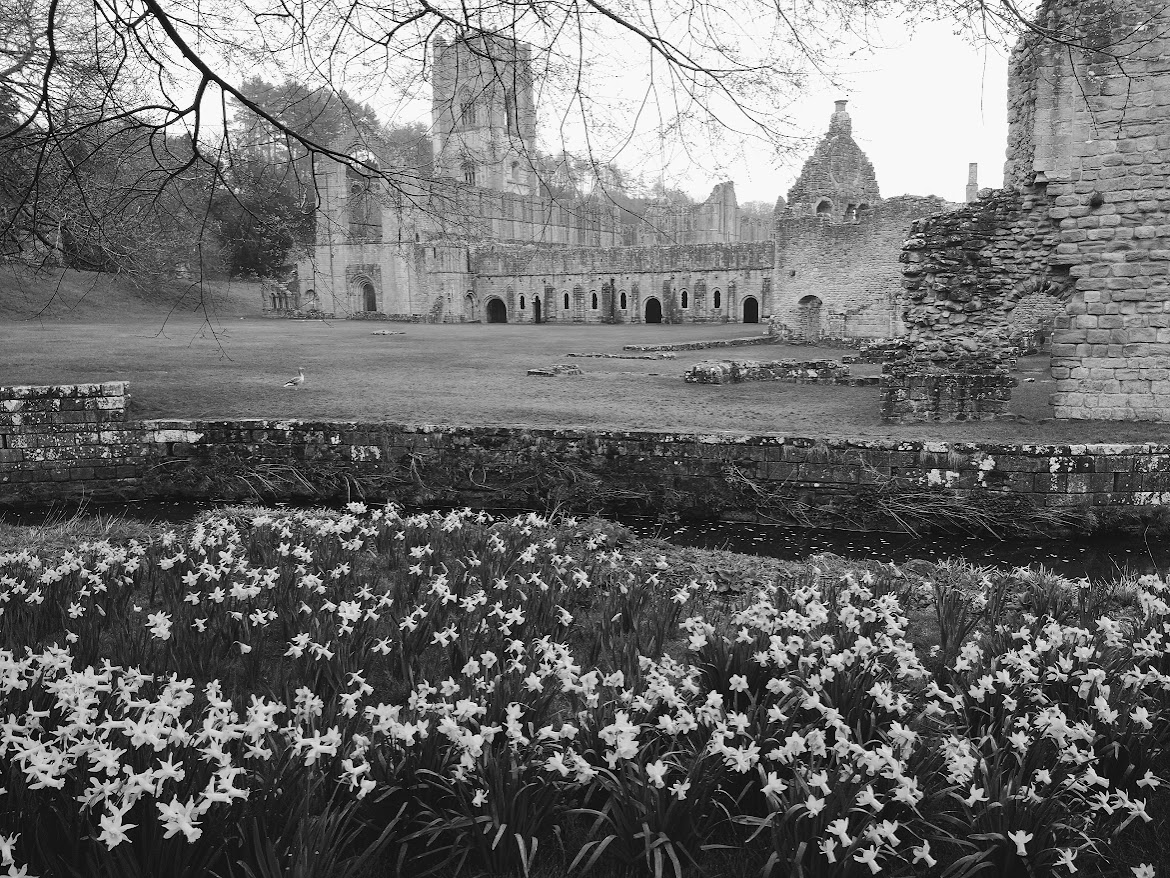
I’ll finish with Fountains Abbey as it is now, its grounds carpeted in daffodils. Black and white as my featured photo, and – my much preferred version here – in the above-mentioned Glorious Technicolor.

For Leanne’s Monochrome Madness

Workaday Staircases

This week’s Monochrome Madness theme is proposed by Aletta of nowathome: and she’s chosen Steps or Stairs. It’s an interesting idea, and one where I could have chosen the grand and elegant staircases gracing the finest palaces and country houses of the rich, titled or famous.

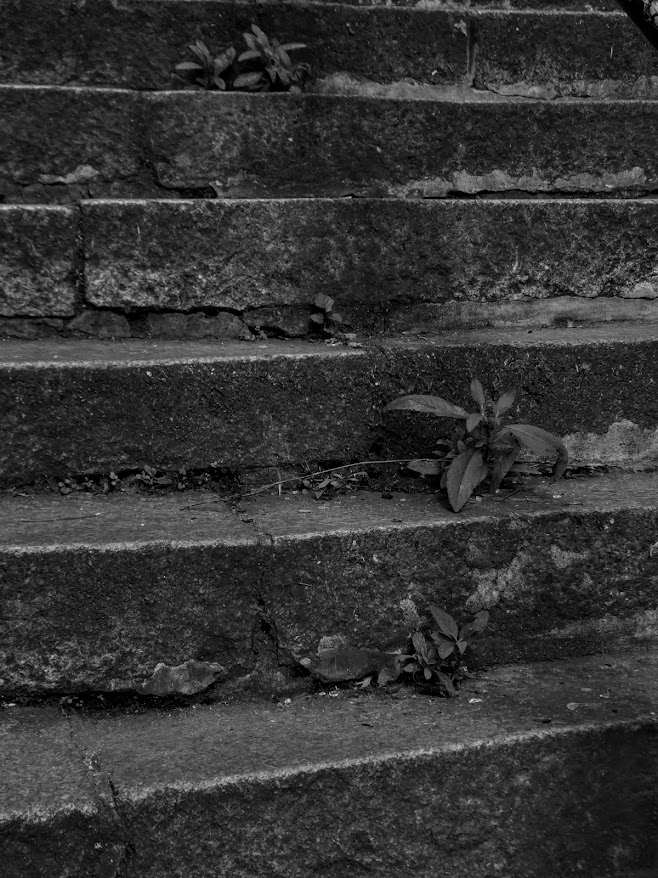
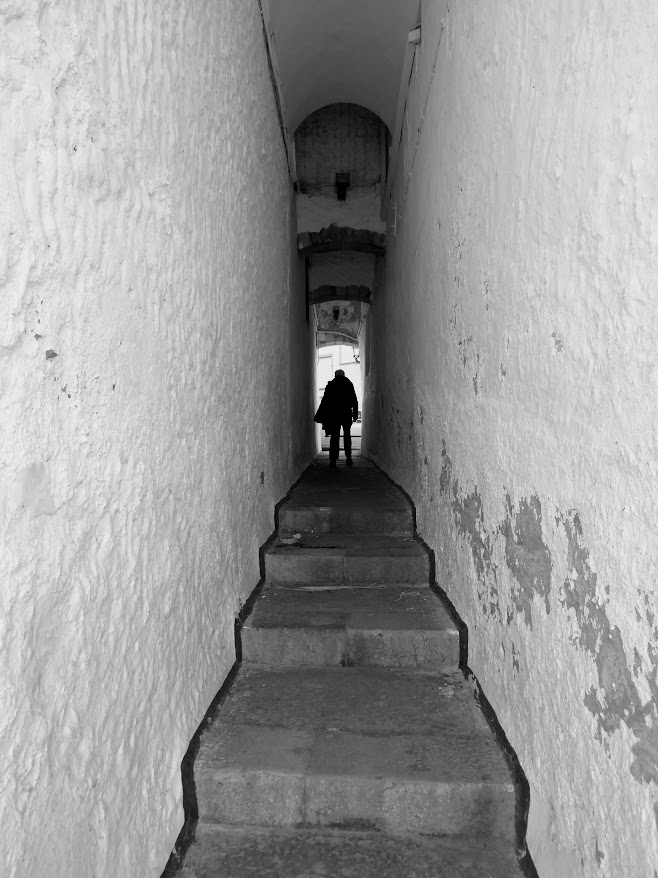
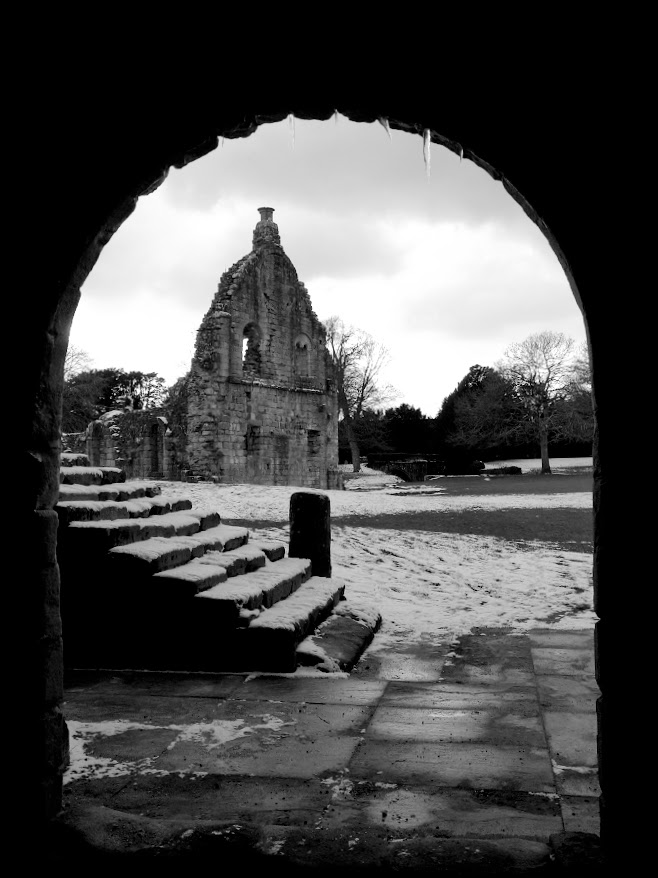
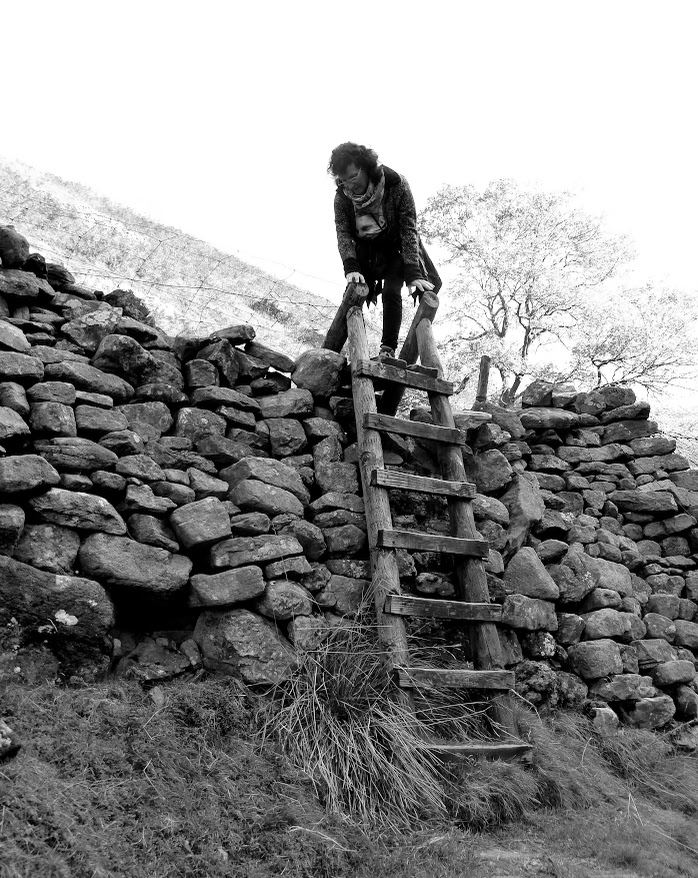
Instead I’ve chosen the steps trodden by ordinary folk on their daily round in Barcelona (featured photo), Newcastle and Sitges; or by monks engaged in their spiritual duties at Fountains Abbey; or by a hiker, needing to nip over a few drystone walls on her several mile journey from A to B.

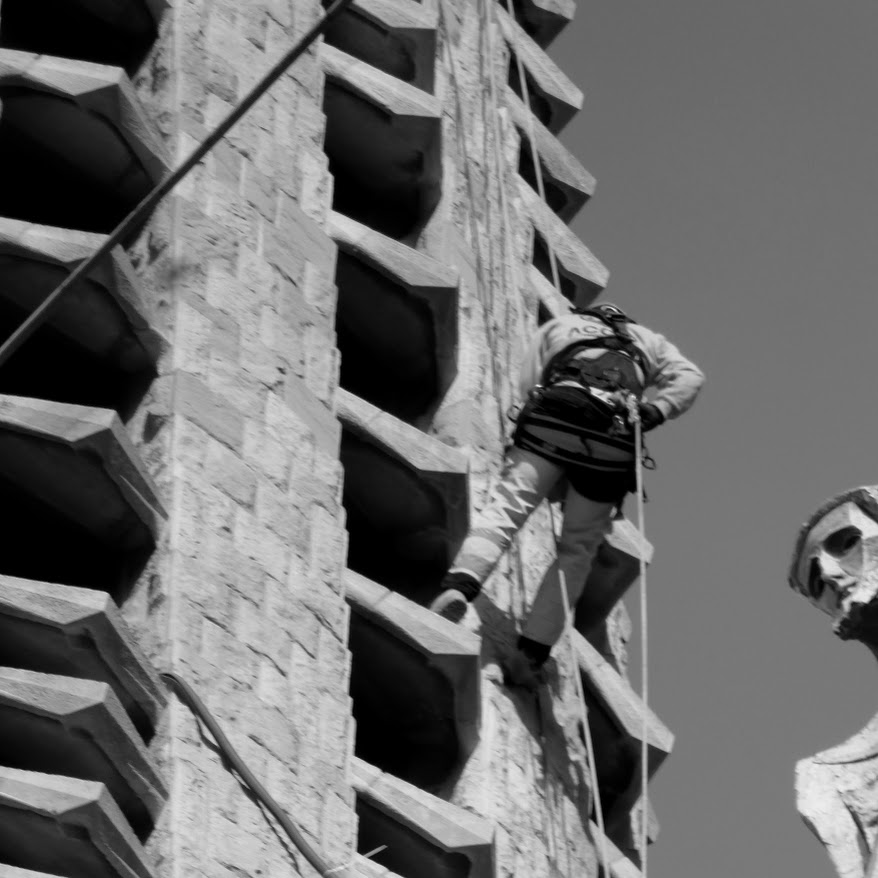
Or there’s the worker helping construct la Sagrada Familia in Barcelona. It might be one of the most famous buildings in Europe, but shinning about its heights looking for footholds is just part of his 9 – 5, every working day.

Works conttinues at La Sagrada Familia, Barcelona

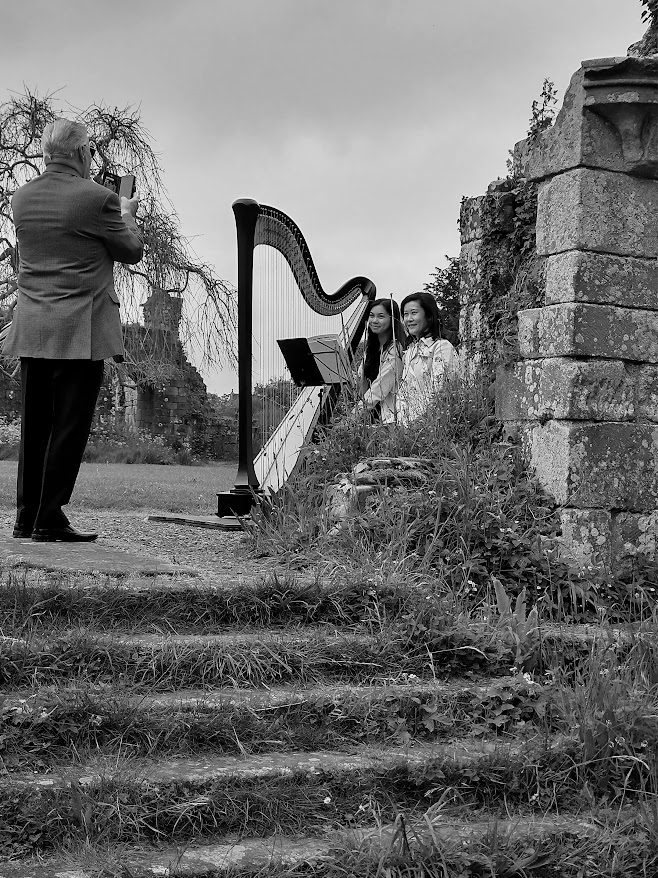
And I’ll leave you with one little treat. A harpist at Jervaulx Abbey this summer, playing at the wedding of some good friends of ours. She was working, even if the rest of us weren’t.

Jervaulx Abbey North Yorkshire.

Deer Walk at Dusk

On Friday afternoon, I was back on duty in the deer park at Studley Royal. This time as a sheep dog. Two of my colleagues were leading interested members of the public on a walk round Studley Royal at a time of day when deer tend to be more active. I was there to make sure nobody got left behind: and to enjoy this particularly lovely autumn afternoon.

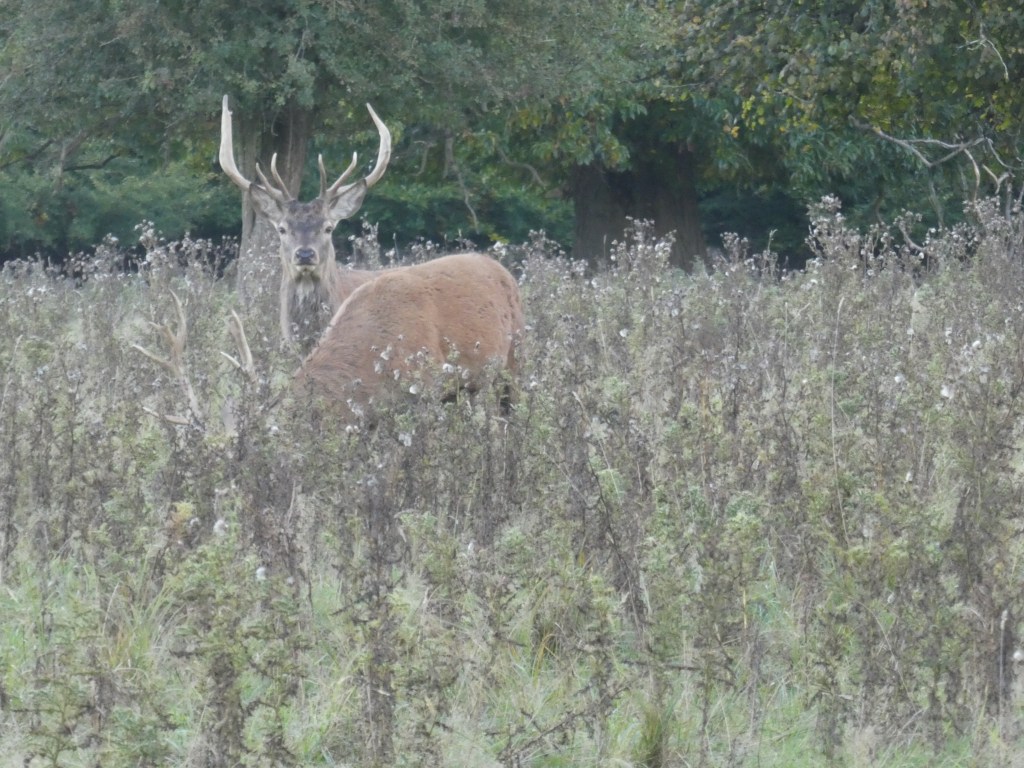
Red deer are rutting. The stags are collecting themselves a harem so they can breed the next generation. They roar loudly to attract females, and to deter other males from seducing ‘their’ does. If necessary they’ll fight – noisily – with those heavy antlers. We saw harems, which included a few males who, though they had antlers, were too young and inexperienced to have a hope of breeding ths year. It’s a hard life being Top Stag.

Top Stag has a rest.

We saw a stag chasing females on whom it had Breeding Ideas. Mainly, they lost the race, but a couple of does succumbed – briefly and reluctantly – to being impregnated. The act is so brief – no pictures. Anyway, who wants to be a voyeur?

Sika deer, originally from China, are not even thinking about the rut yet. They’re handsome creatures, with simpler antlers than the red deer. We spotted them in smallish groups, but here are a couple of stags.

Sika stags grazing

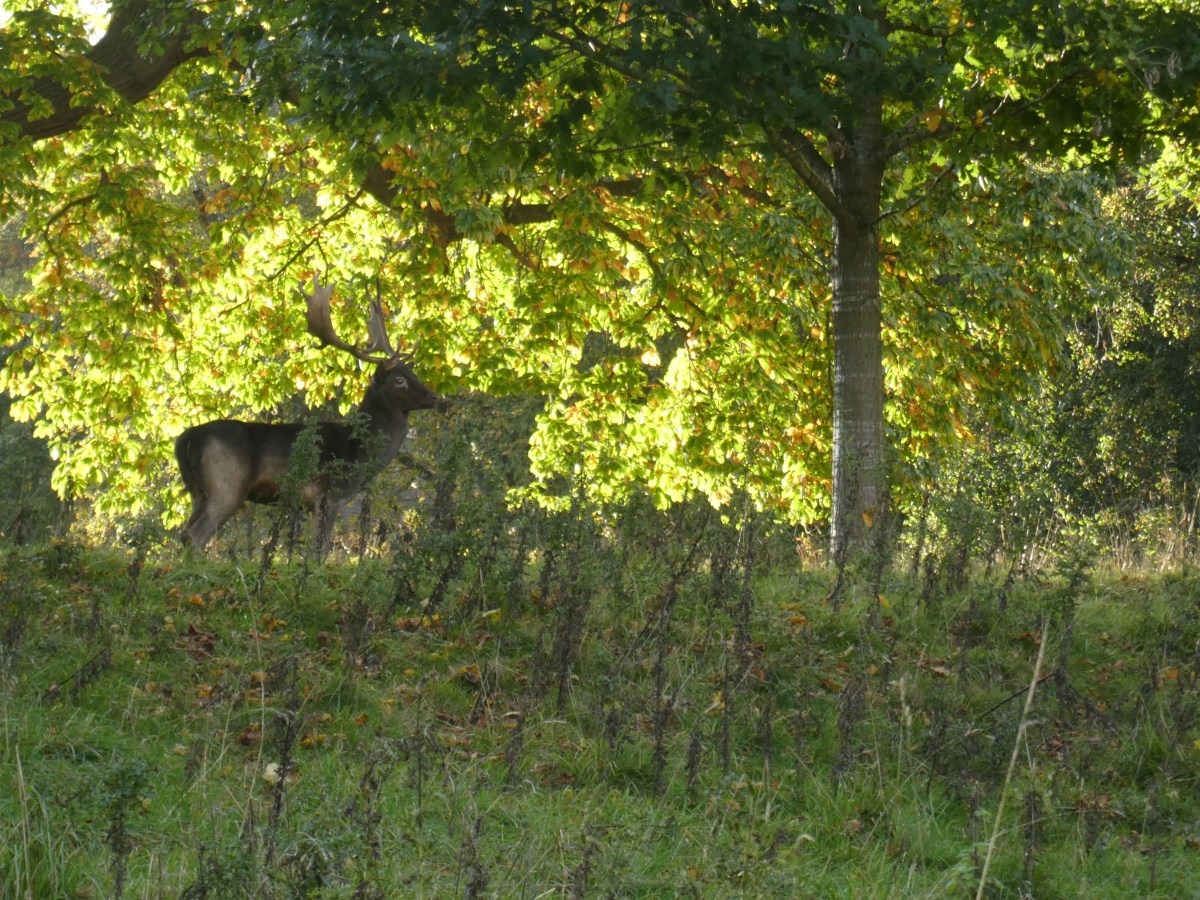
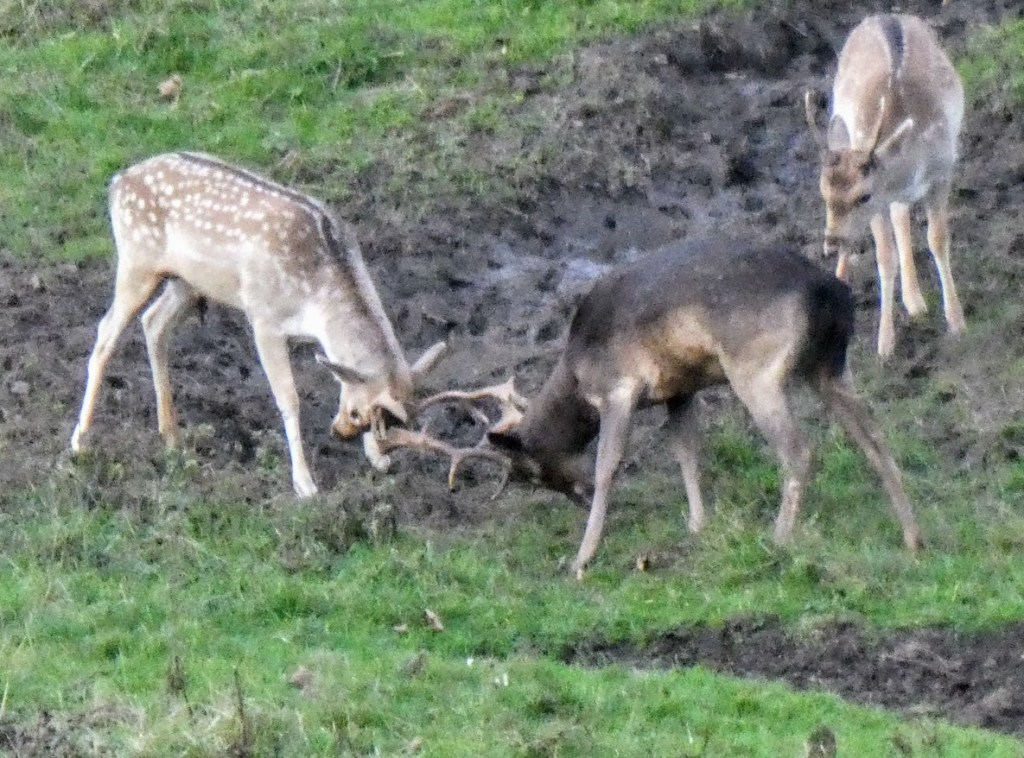
Fallow deer – living on this site since the 1600s -are only just beginning to think about the rutting season. We saw two young bucks practising: heads down, their antlers clacked and clattered noisily together. No harm done. They’ve no chace of a harem this year.

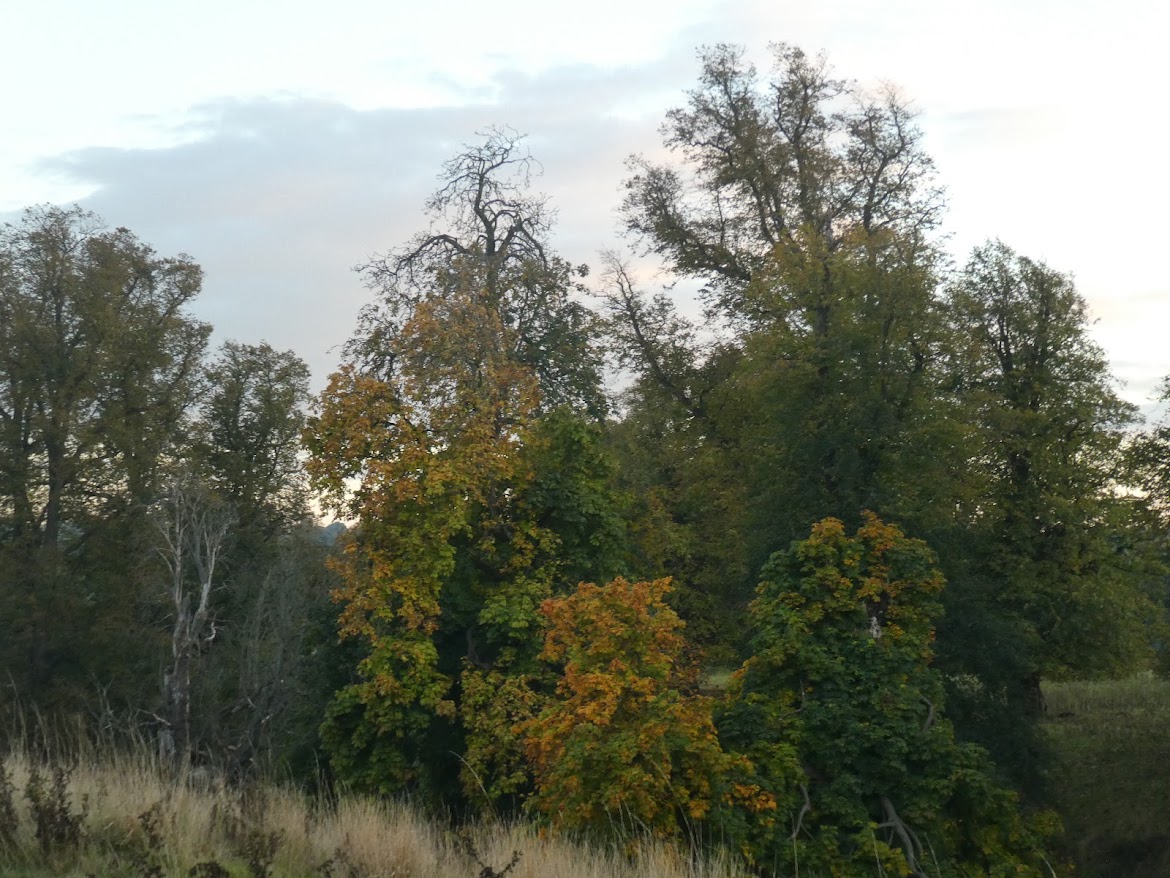
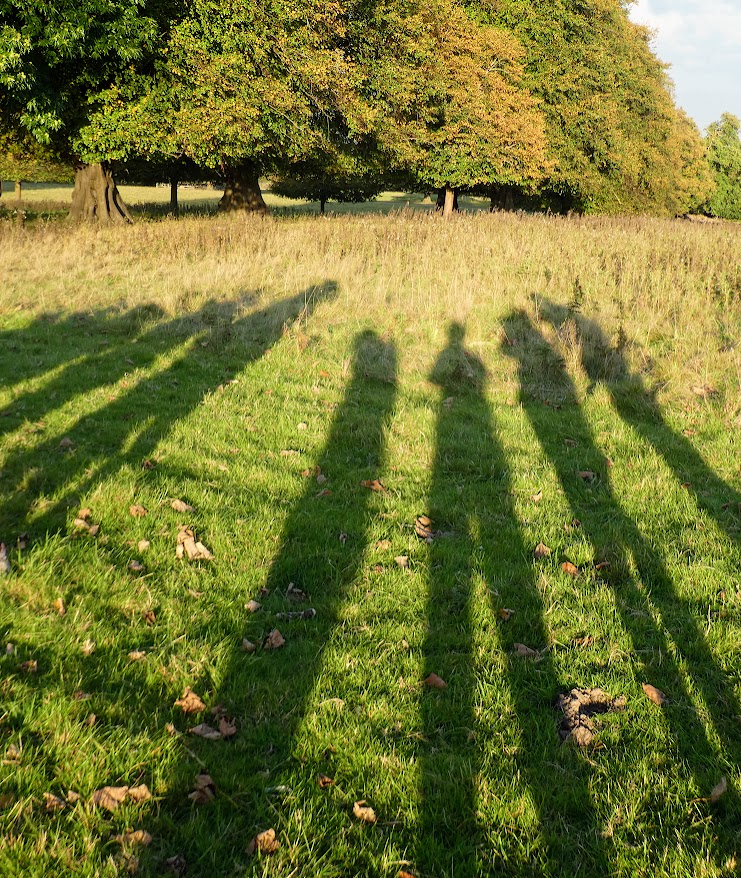
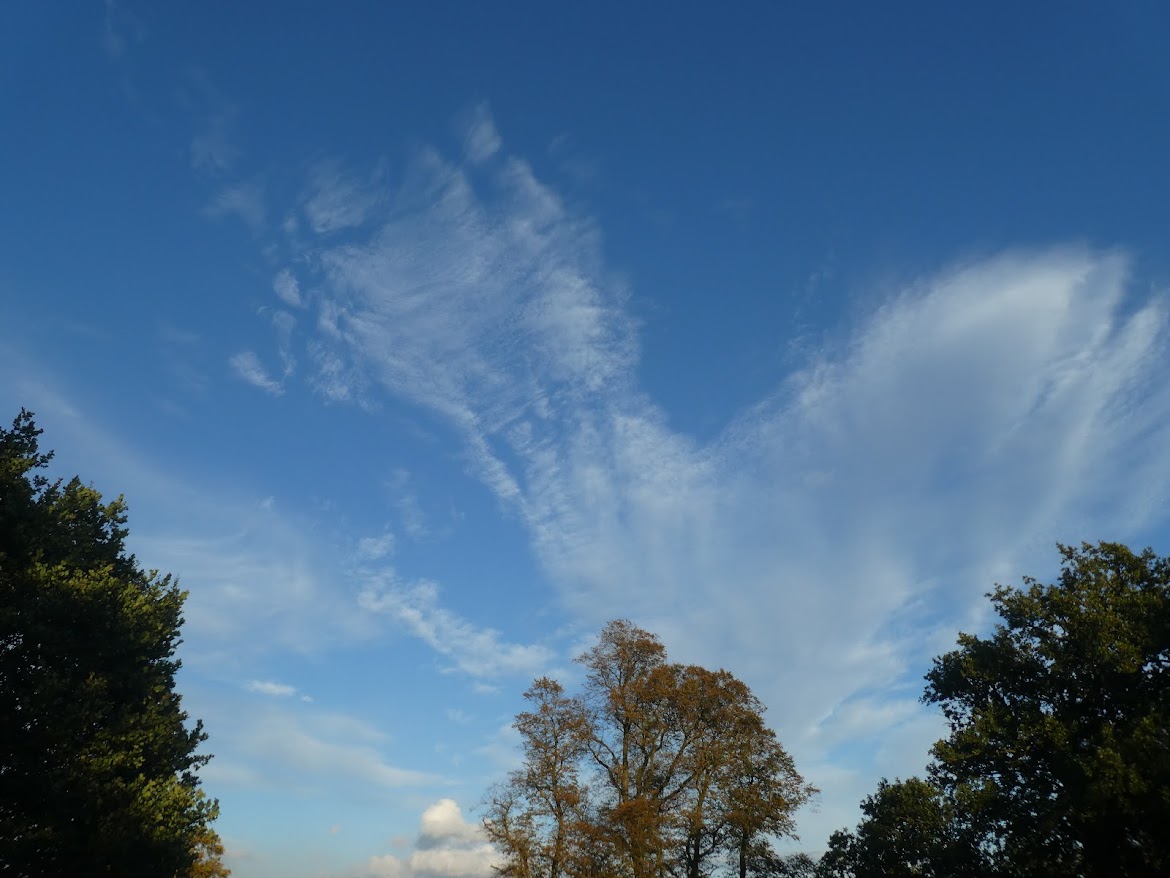
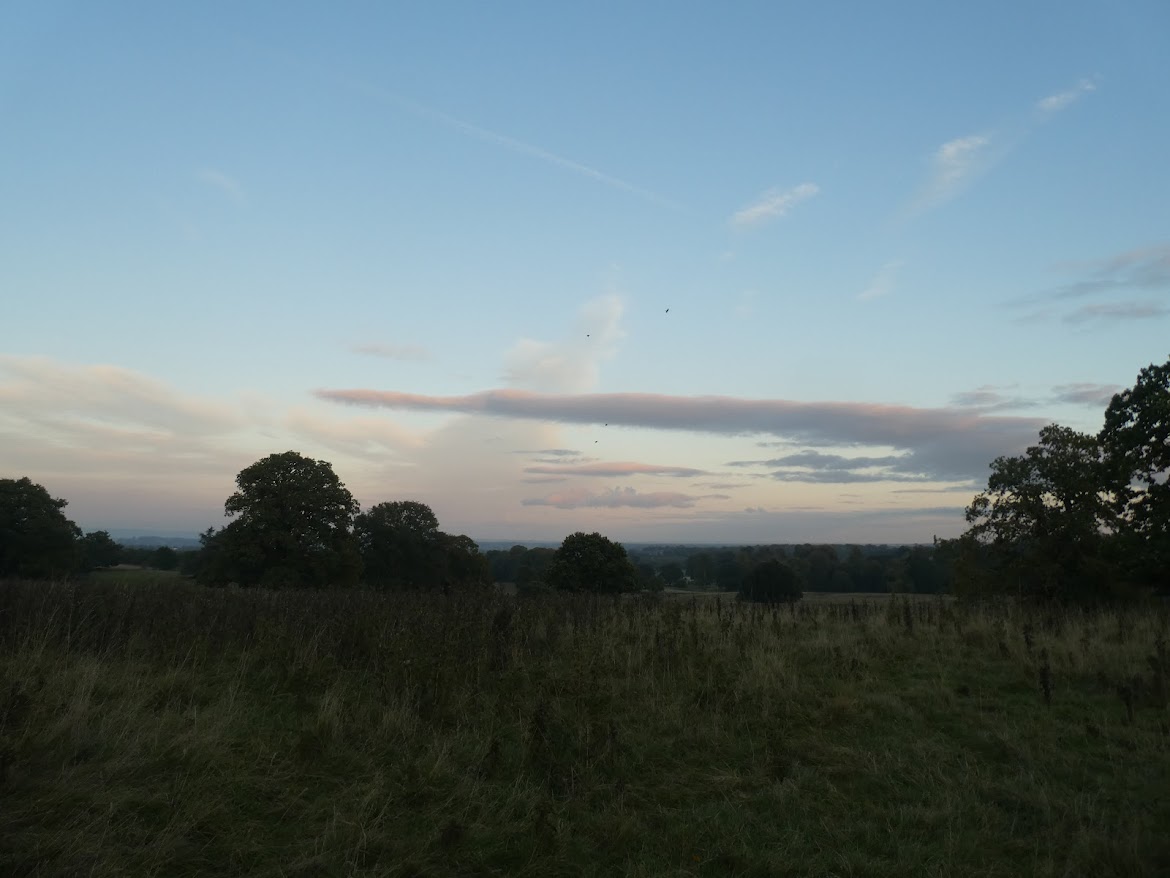
But our walk was’t just about the deer. We enjoyed the trees, just now decking themselves in autumn finery. We relished the afternoon shadows, striping the fields: and enjoyed seeing long-legged versions of ouselves as we deer-stalked. And sky too, streaked with evening colours as the sun began to set.

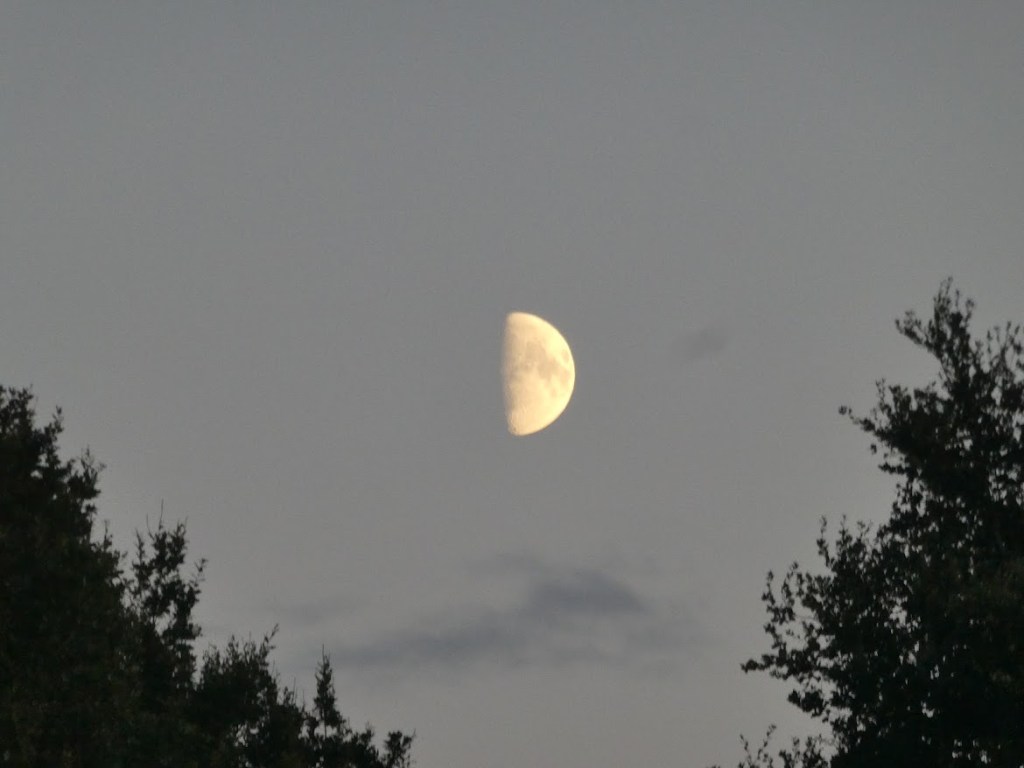
As we finished our walk, and dusk was indeed beginning to fall, the moon was rising between the trees. A fitting finish.

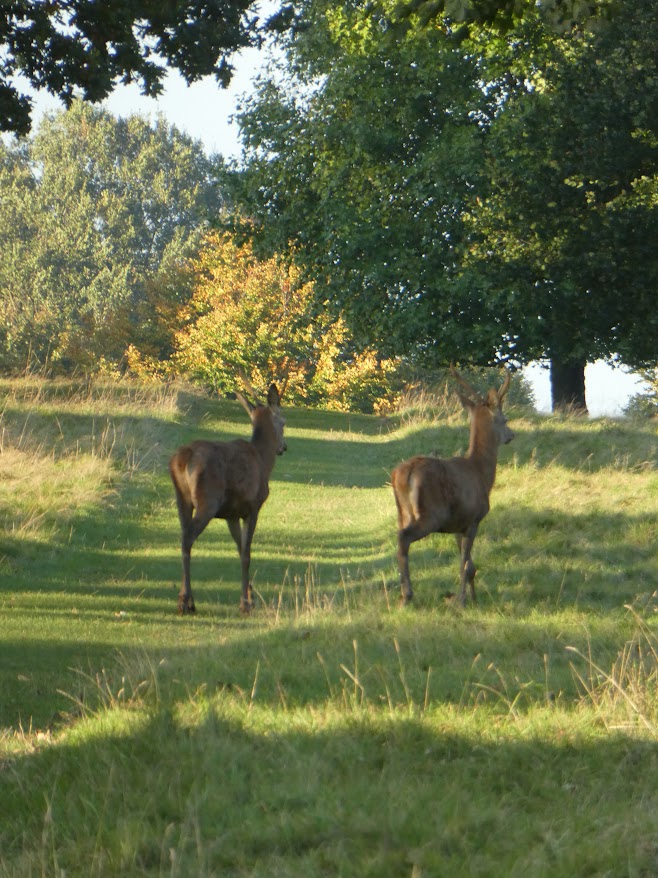
A few last images. The quality isn’t great, because my camera was on Zoom on a high setting. But they record memories of a happy autumn afternoon.

For Jo’s Monday Walk
Moody Autumn

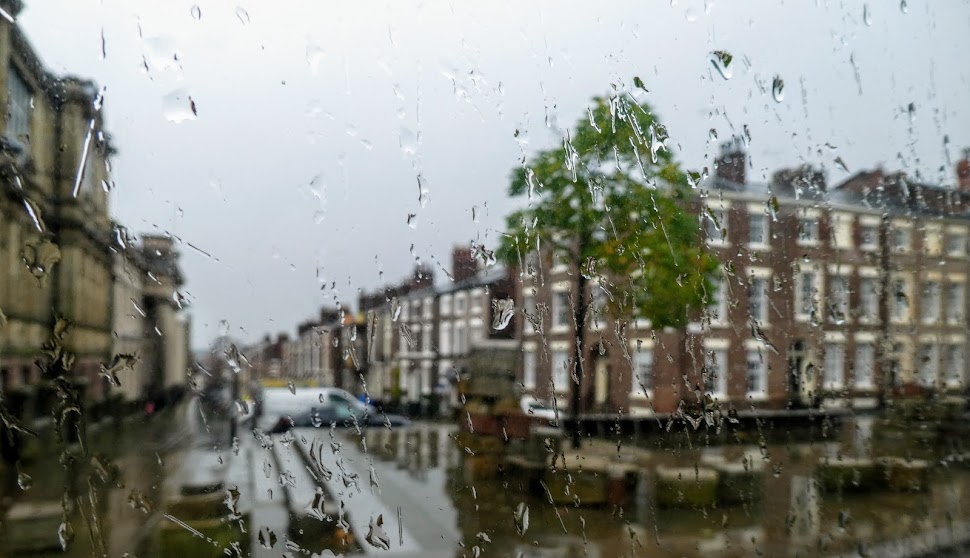
On Tuesday morning, I was quietly dreading my shift as volunteer Roaming Ranger in Studley Royal Deer Park. ‘Raining’ was an understatement. As I was driving over, the wipers sliced savagely across the windscreen, ineffectually sweeping away the rivers of rainwater cascading over the car. Signing in, we volunteers on various parts of the estate commiserated wanly with each other, and went our separate ways.

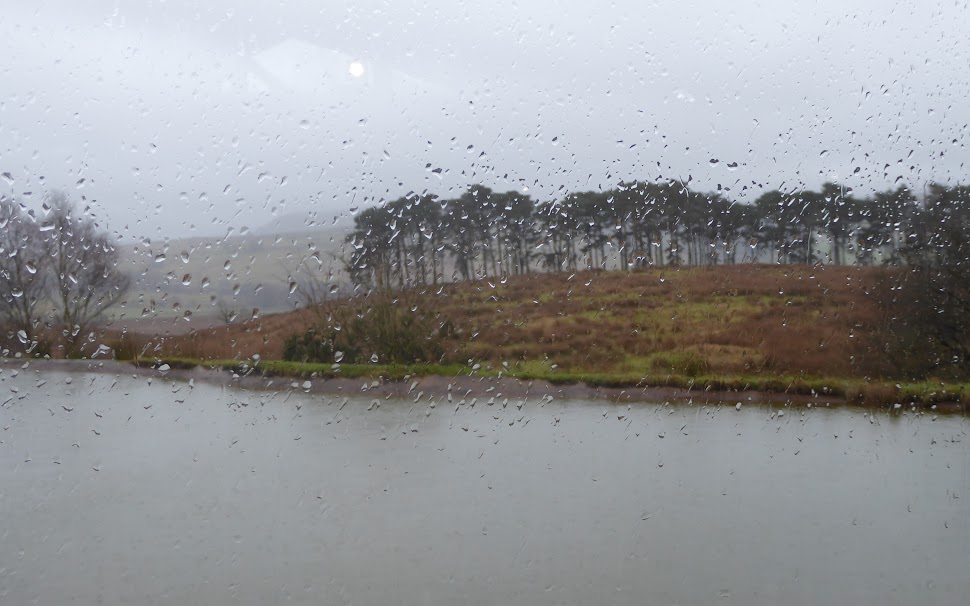
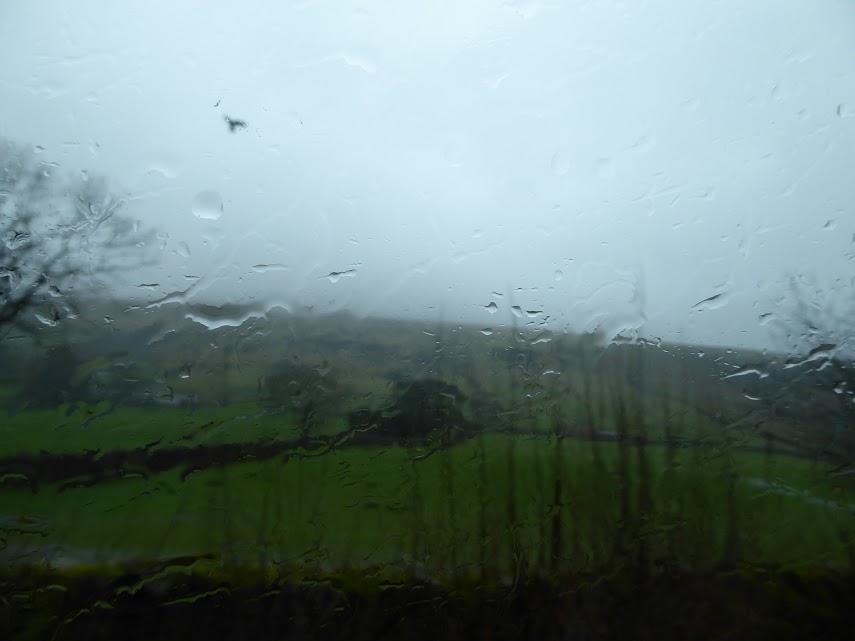
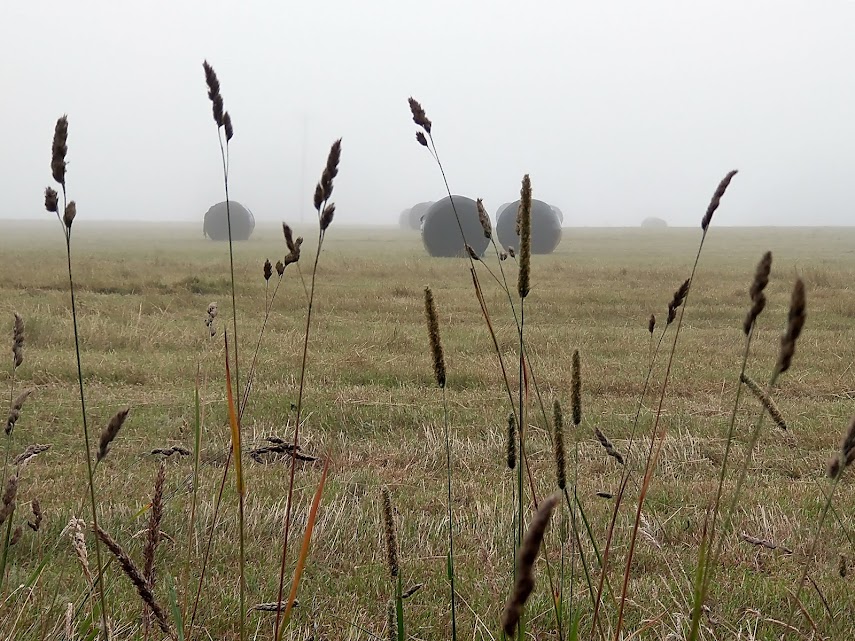
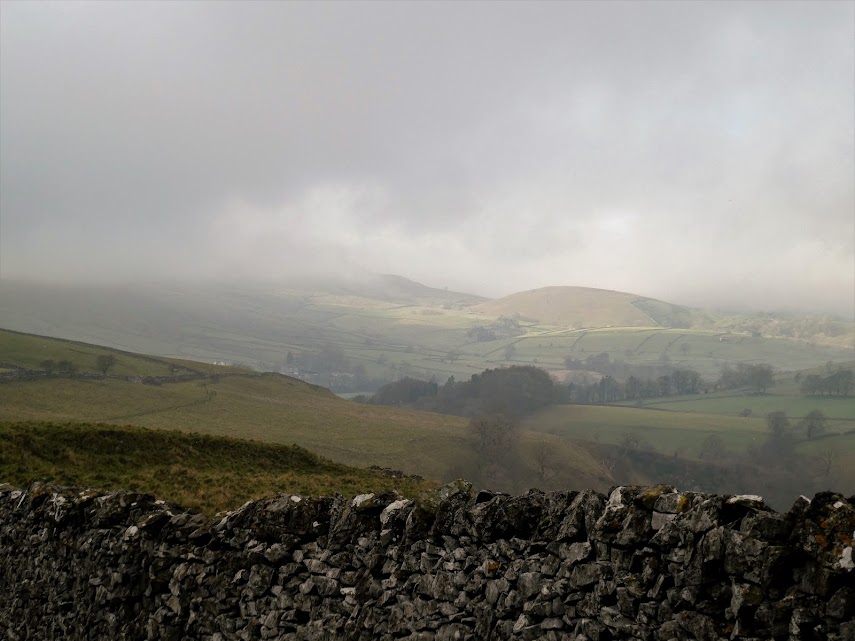
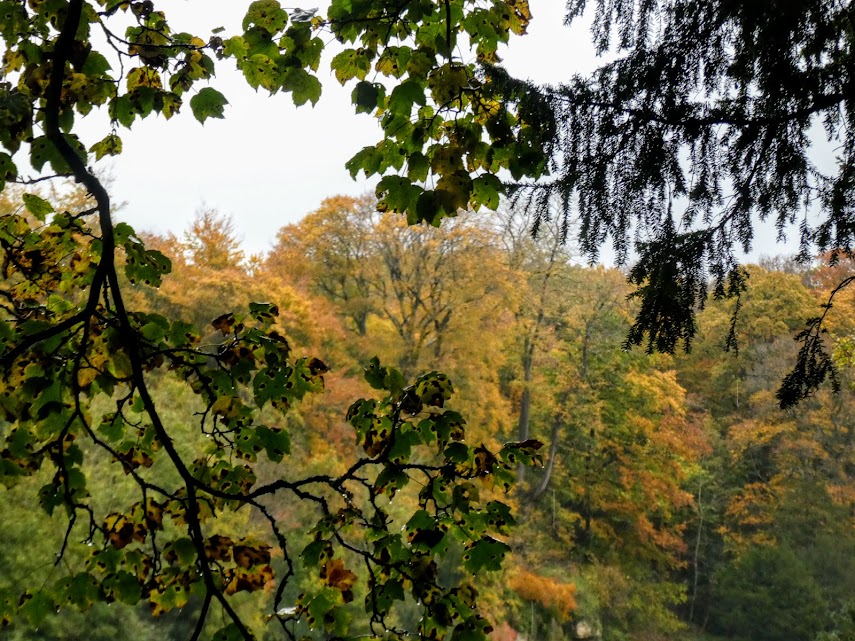
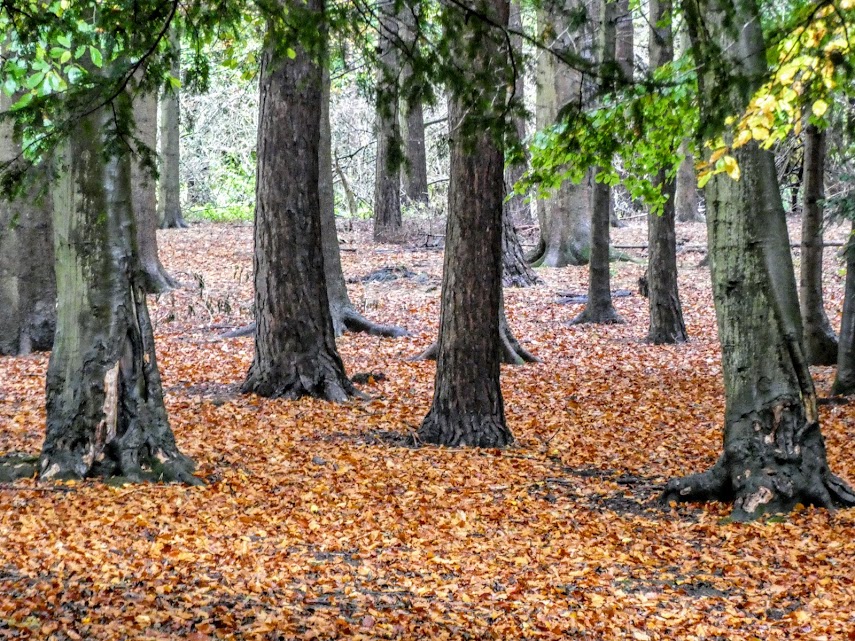
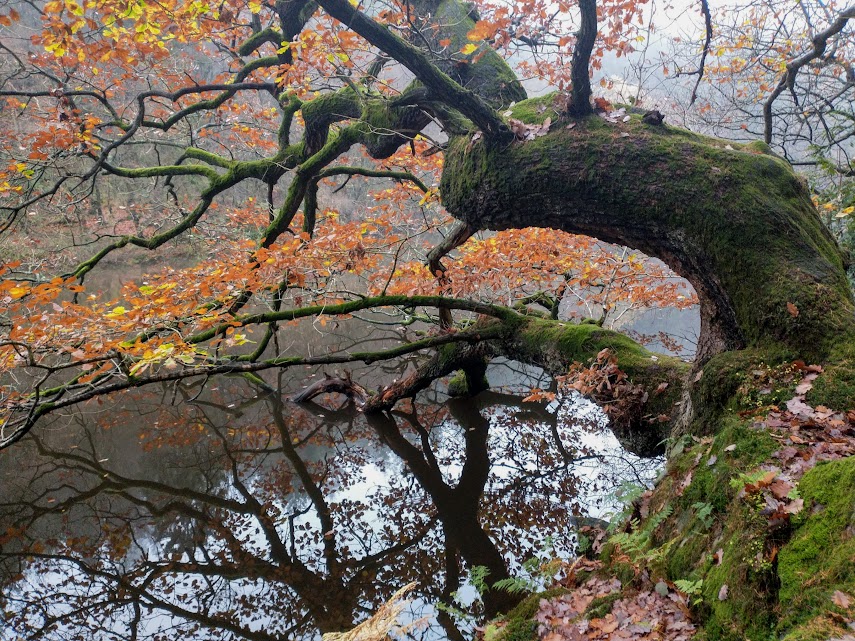
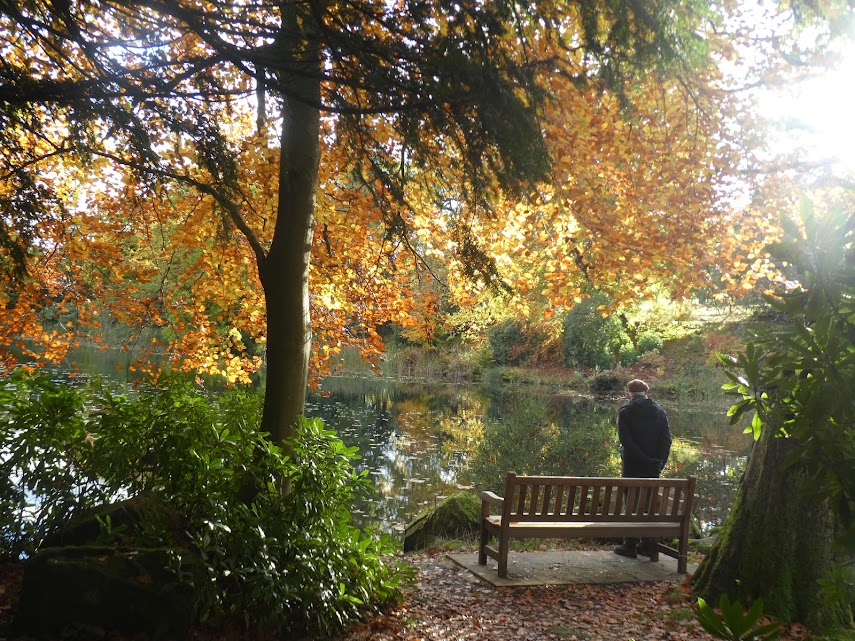
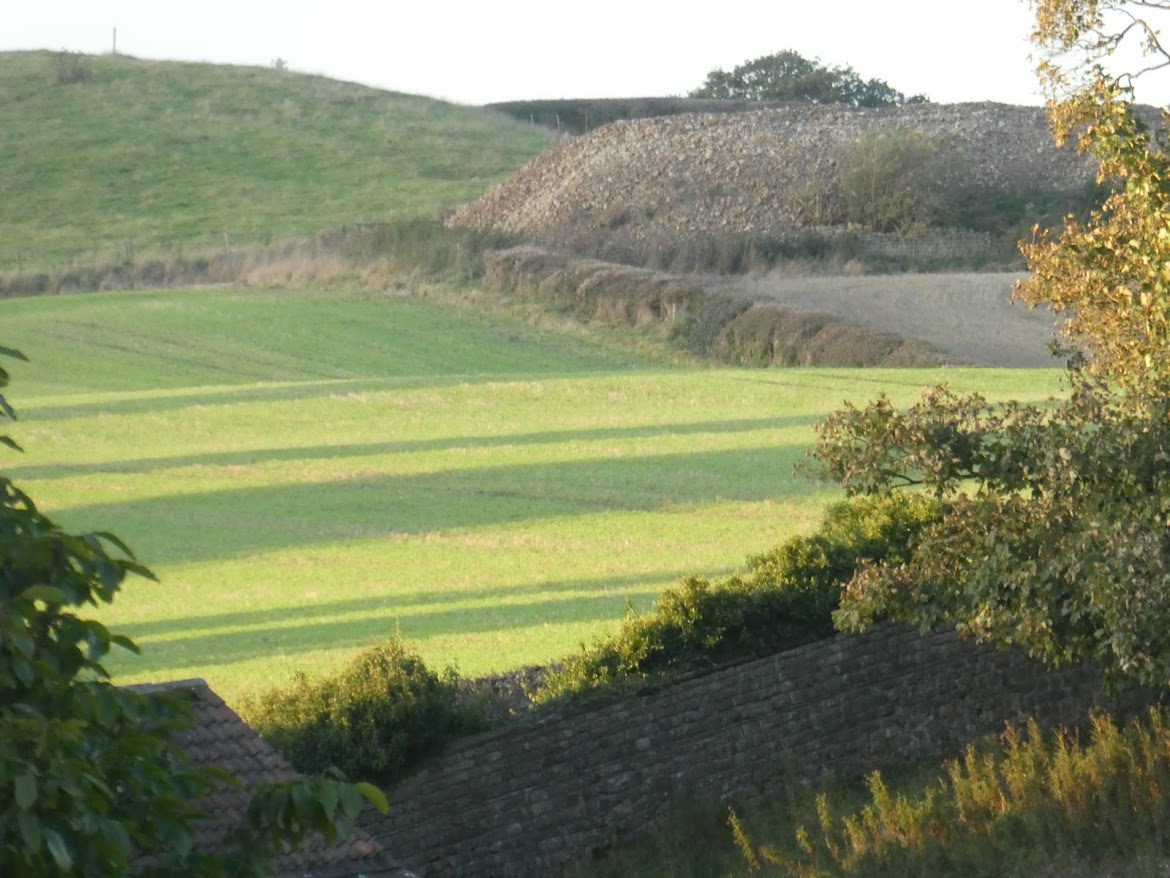
But outside, the rain had suddenly and unexpectedly decided to stop. Instead, familiar trees, now turning autumn gold and russset could just be perceived through the mist. A familiar autumn scene, especially here where we have three rivers in town to add to the general miasma of an October or November day.

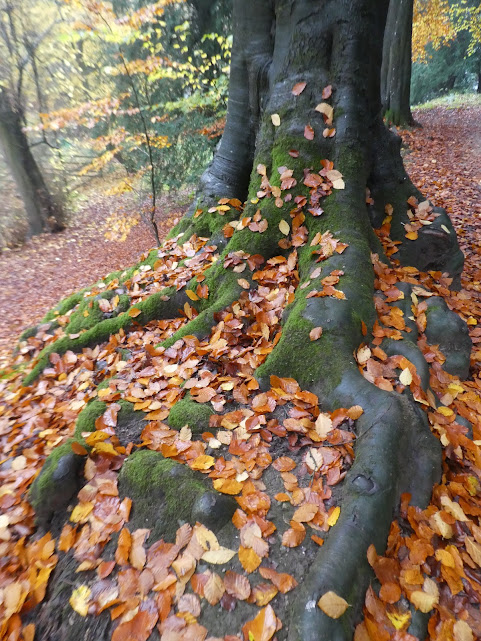
Much later in the morning, as I was completing my shift in a much cheerier frame of mind, autumn’s third and best mood showed itself. Omnipresent autumn colour in the form of leaves cascaded to my feet to be eagerly shuffled and crunched through as I willingly connected with my inner child.

I offer a selection of photos to illustrate these different moods. I didn’t take my camera with me on Tuesday. The weather and the forecast were so very poor I just didn’t dare expose the poor thing to the elements. More fool me, to believe the weather forecast.

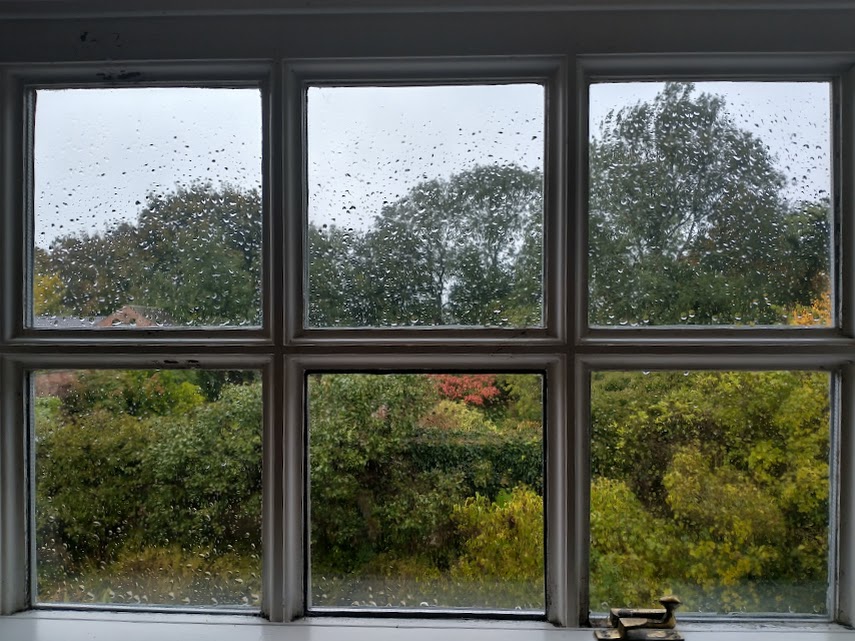
My featured photo is looking through our kitchen window on Tuesday morning. There’s more of the same on the way …

For Ann-Christine’s Lens-Artists Challenge #319: Setting a Mood

Half as Old as Time

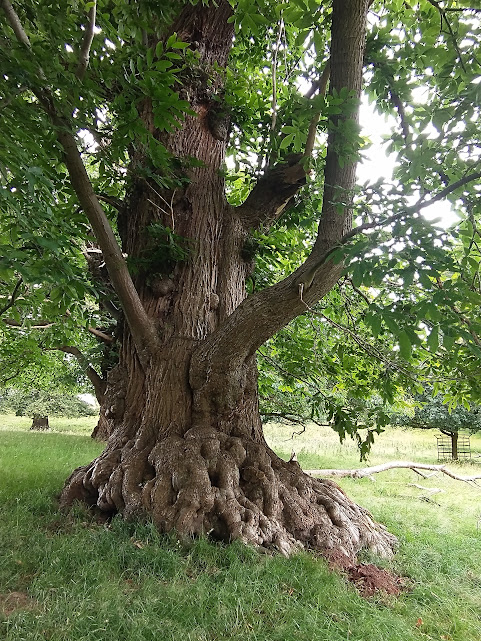
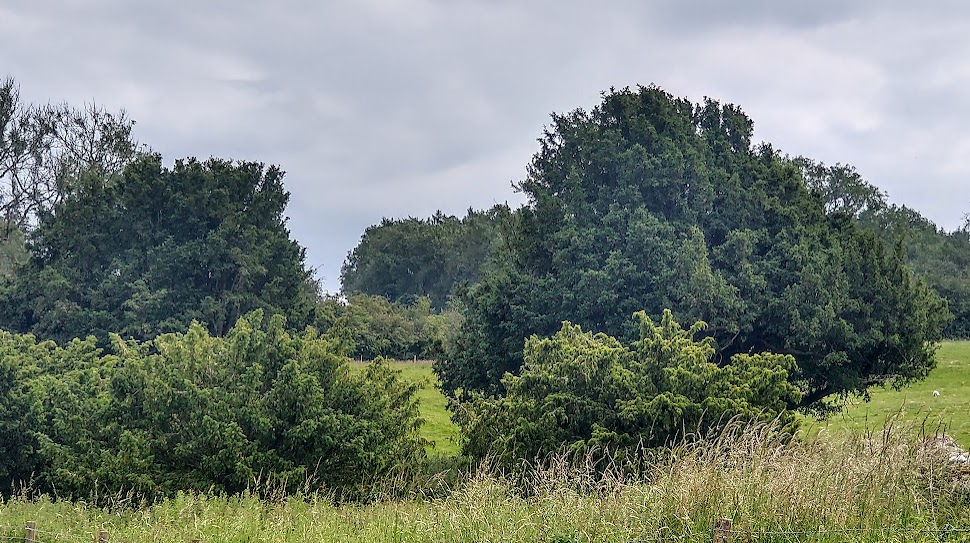
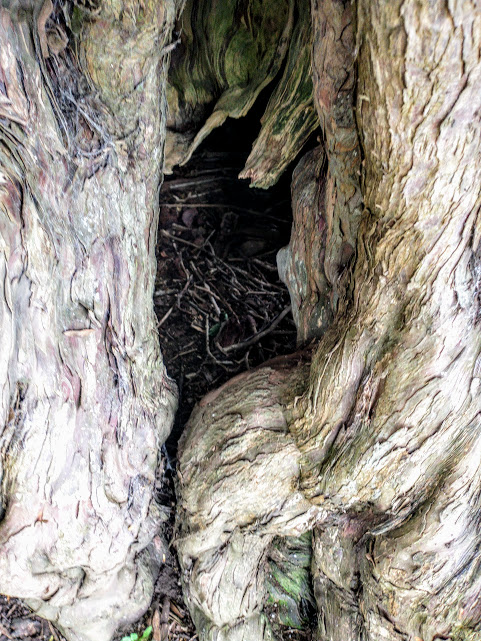
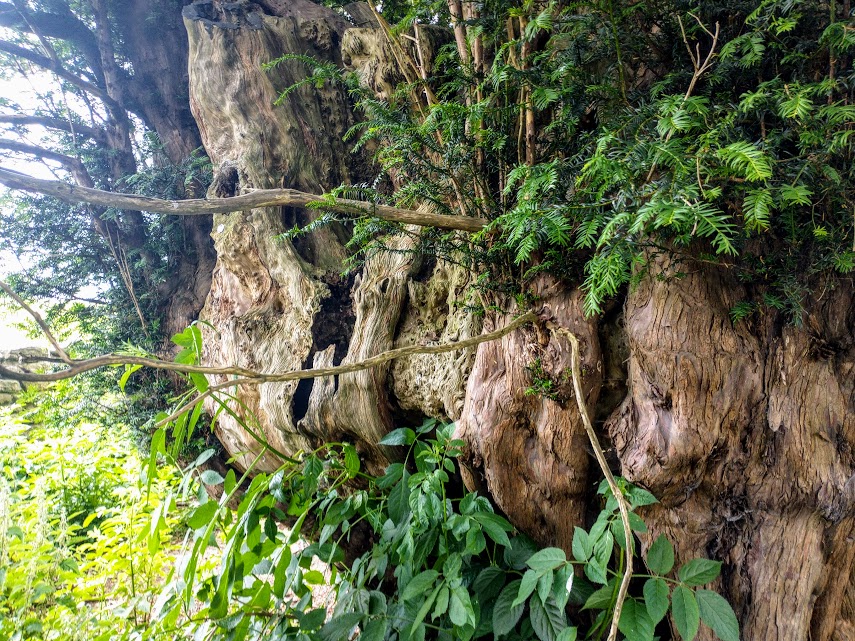
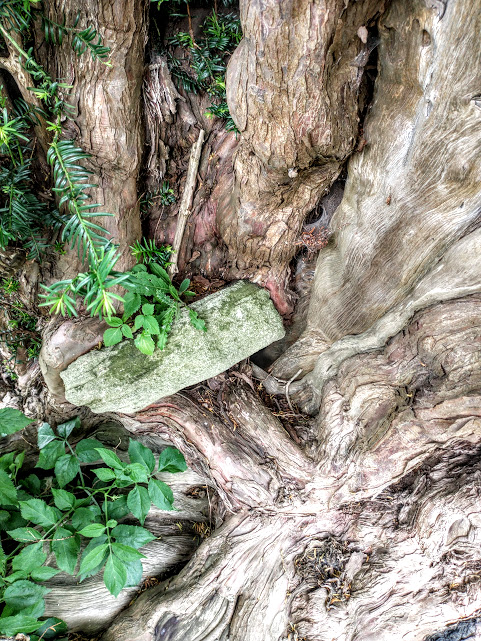
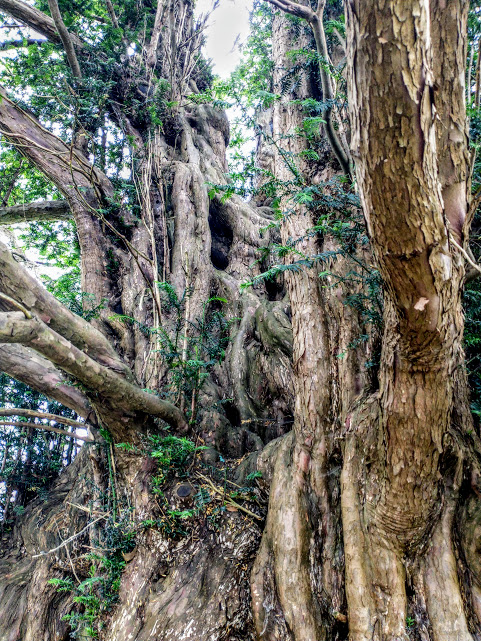
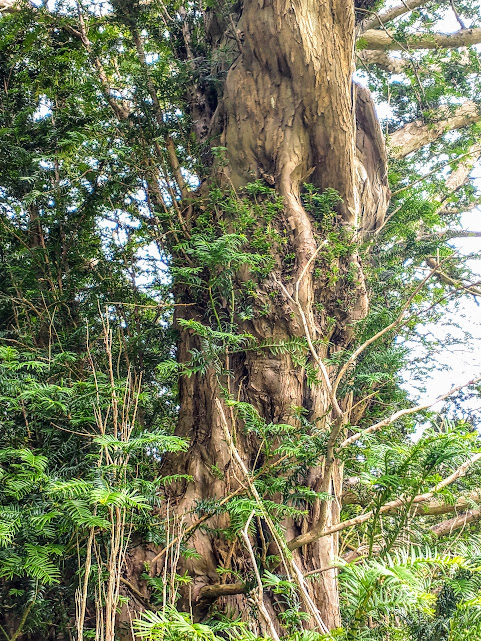
Just beyond the walls surrounding Fountains Abbey estate is a farm rented by a tenant farmer. It includes a small patch of land, untended and fenced off, because several trees got here first. They’re yew trees, and they’re thought to be about 1400 years old.

Think how long ago that was. It was only a couple of hundred years after the Romans had finally left these isles. It was several hundred years before the Norman invasion of 1066. By the time a group of monks from York had come to the site to build a Cistercian community here in 1132, those trees were already some 500 years old. This area would have been wooded, wild and interspersed with occasional farms. There would have been wolves, wild boar, lynx, otters, red and roe deer. But no rabbits. There’s no archaeological evidence for rabbit stew in any of the nation’s cooking pots from those days. They probably came with the Normans.
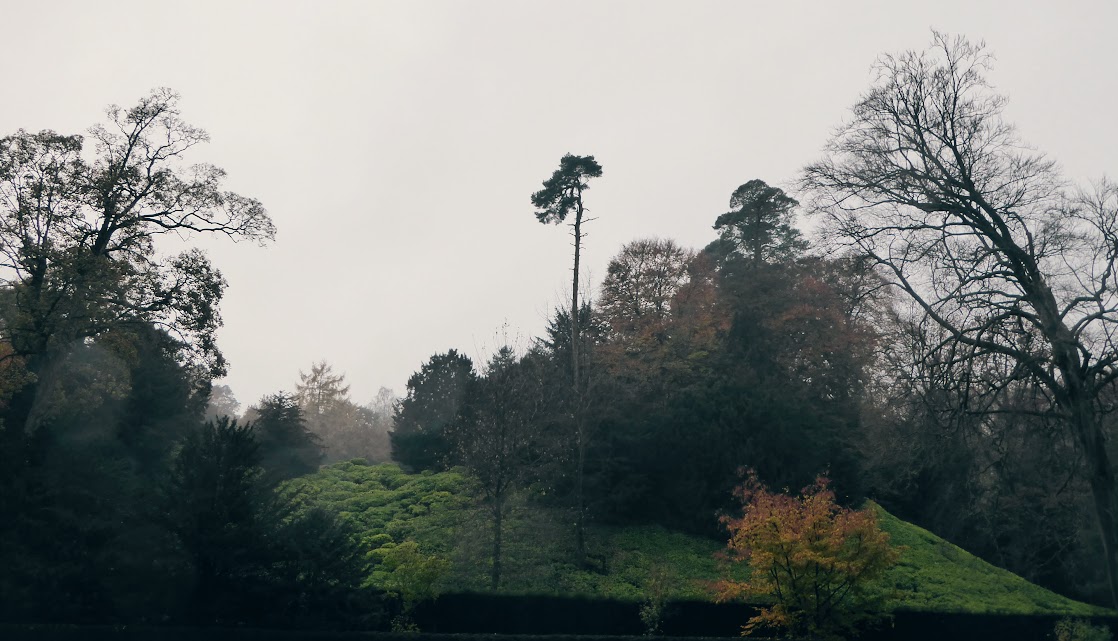
Those trees – once seven, now only two – would have been witness to the monastic community maturing: to the abbey and all its supporting buildings and industries developing. They would have seen the community grow, then all but collapse during the Black Death in 1248: and slowly prosper again. Until Henry VIII dissolved all the monastries, and Fountains Abbey’s roof was hauled down in 1539, leaving it pretty much the ruin it is today. By then, the trees were working towards being 1000 years old.

They’ve always been a bit out on a limb, these trees, and that’s what has made them such a rich habitat. They offer protection and nest sites for small birds, who can also eat their berries . Caterpillars feast on the leaves. These days, they’re home to eight species of bat, and a wide variety of owls. Yew trees are famously toxic to most animals – that’s why they’re fenced off – but badgers are able to eat the seeds, and deer the leaves.

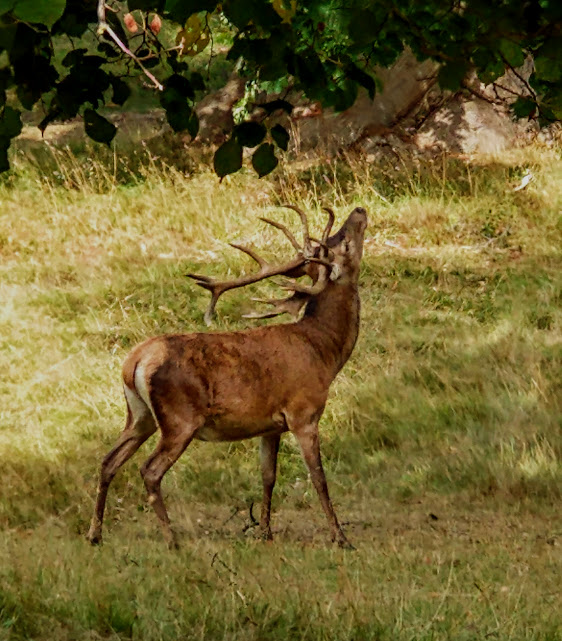
A red deer stag grazing on leaves: not yew leaves this time.

I can’t show you any of the creatures for whom these trees are their neighbourhood – apart from a grazing deer at nearby Studley Royal. Just the ancient trees themselves, the nearby Fountains Hall, built in late Elizabethan times when they were already 1000 years old, and a slightly more distant view of Fountains Abbey itself. My featured photo, the last image I took in June, is of those yew trees, looking as though they’re ready for the next 1000 years.

Fountains Hall, as seen from the yew trees.
Fountains Abbey, as seen from the yew trees.

This is for Brian’s Last on the Card, and – somewhat tenuously – for this week’s Lens-Artist Challenge from Tina: Habitat.

The phrase ‘Half as old as time’ was actually coined by John William Burgon in 1845, in his poem ‘Petra’.

Pick a Word – then Pick a Photo

Here’s a challenge and a half. Take five words, chosen monthly by Paula of Lost in Translation, and illustrate them. Here are the words: MONASTIC; ABANDONED; CRYSTAL; ECHOING; AFFABLE.

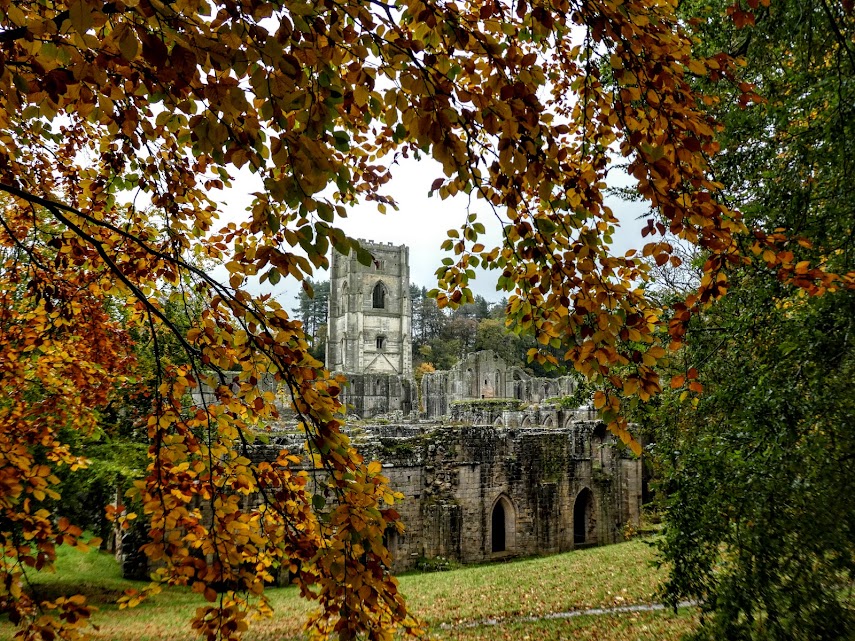
Monastic was easy. Of course I chose Fountains Abbey, a religious community from 1132 until Henry VIII caused it to be surrendered to the crown in 1539, under the Dissolution of the Monasteries. It’s where I have the privilege of volunteering, so it’s almost become my back yard. Here, in my featured photo, is the Abbey in autumn.

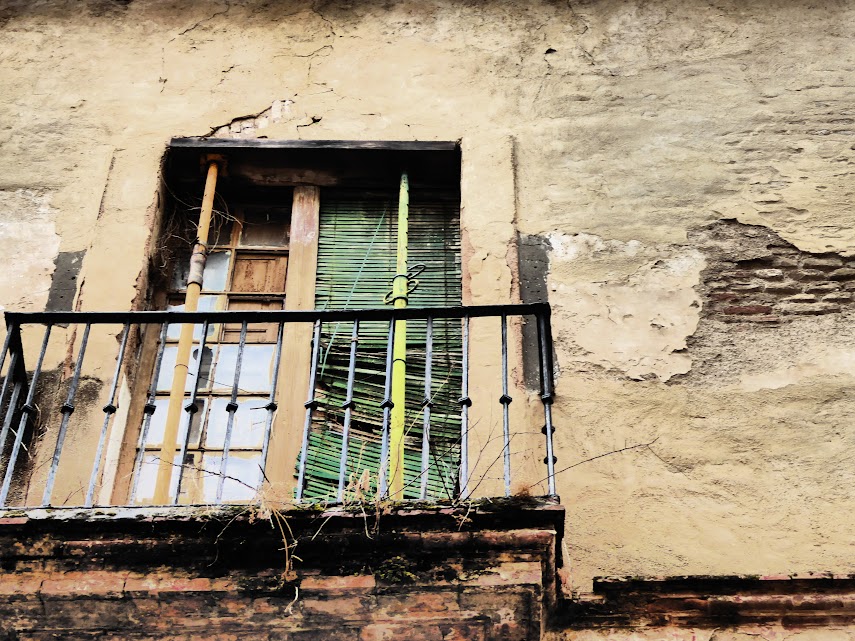
Abandoned? So much choice. I’ve picked a rather wrecked house in Seville.

Crystal was trickier. I don’t move in the right circles. But here is a crazed plate glass window on a ferry bound for Spain which has a slightly crystal-ish look.

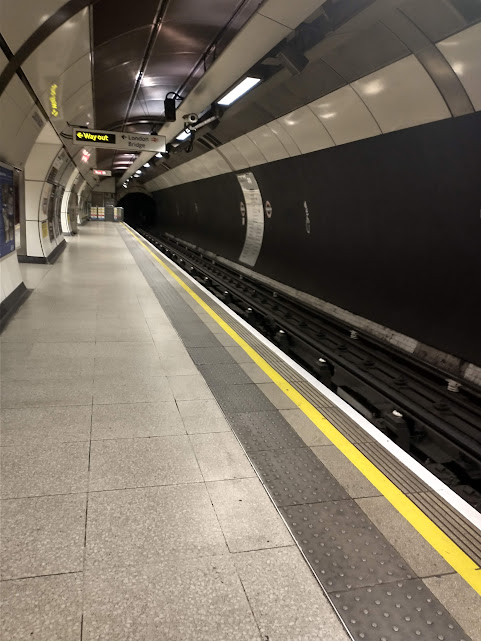
You may not think my next photo illustrates ‘echoing‘. But trust me – it does. I was among the first passengers to arrive at London Bridge Underground Station just after 5.00 a.m one morning recently. There was not another soul on my platform. Only me. It echoed.

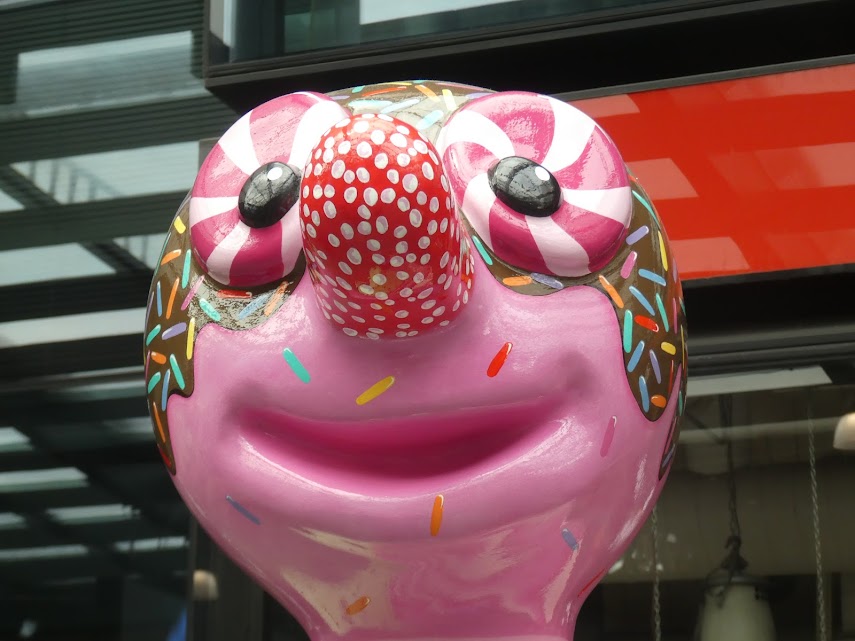
And we’ll stay in London for my last image, a cheery one. This affable chappie was snapped on a day out with Sarah of Travel with Me fame. He was part of a fun sculpture trail for children’s wheelchair charity Whizz Kidz.

So there you have it. Following the links to Paula’s and Sarah’s posts will show you very different interpretations, and perhaps you’ve seen others in blogs you follow too.

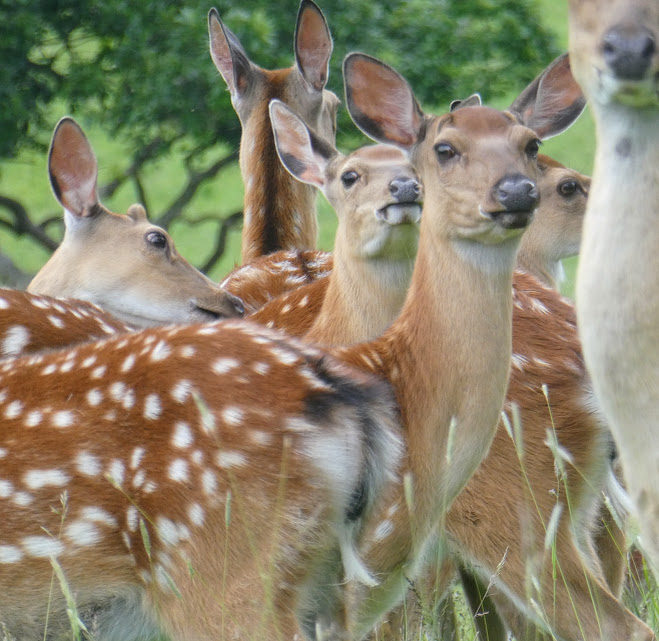
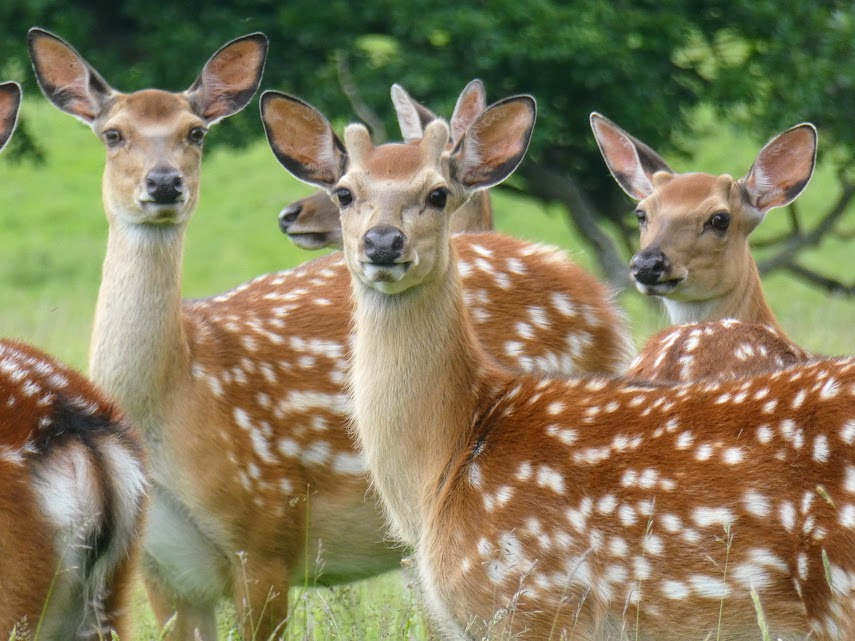
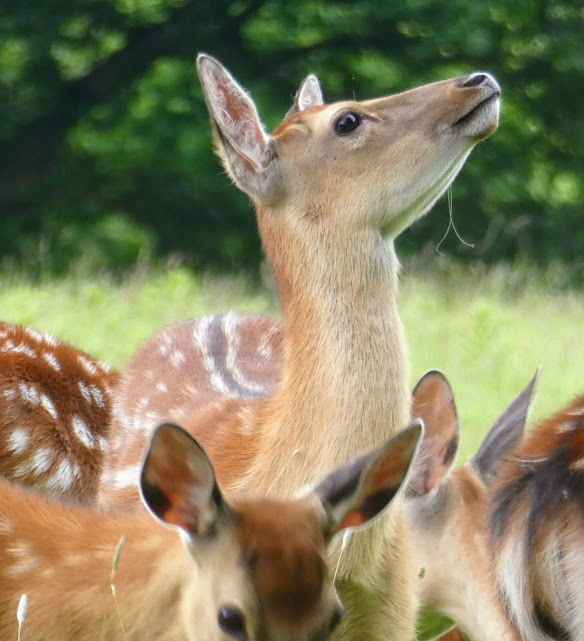
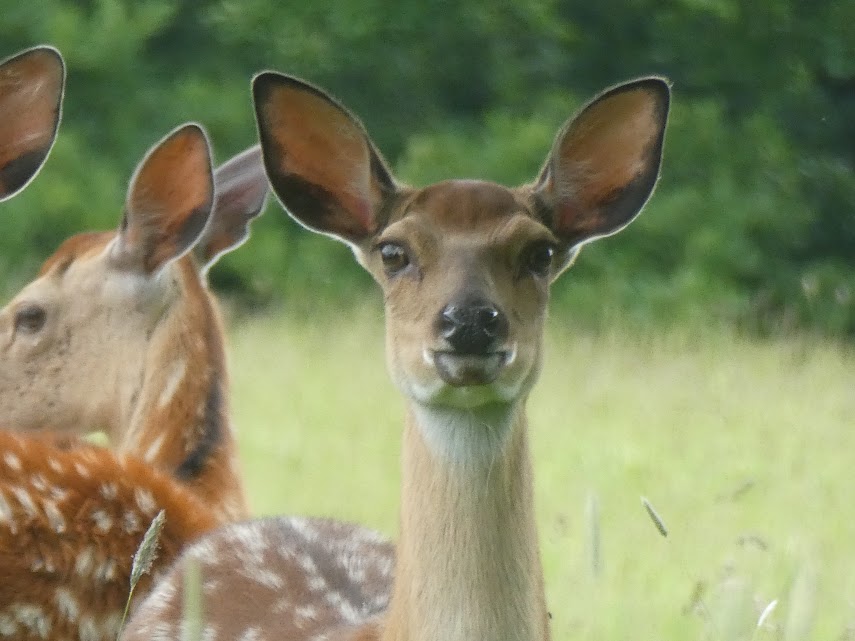
The Deer of Studley Royal

‘That woman. Seen her before. One of those volunteer Roaming Rangers isn’t she? I think she’s harmless.’

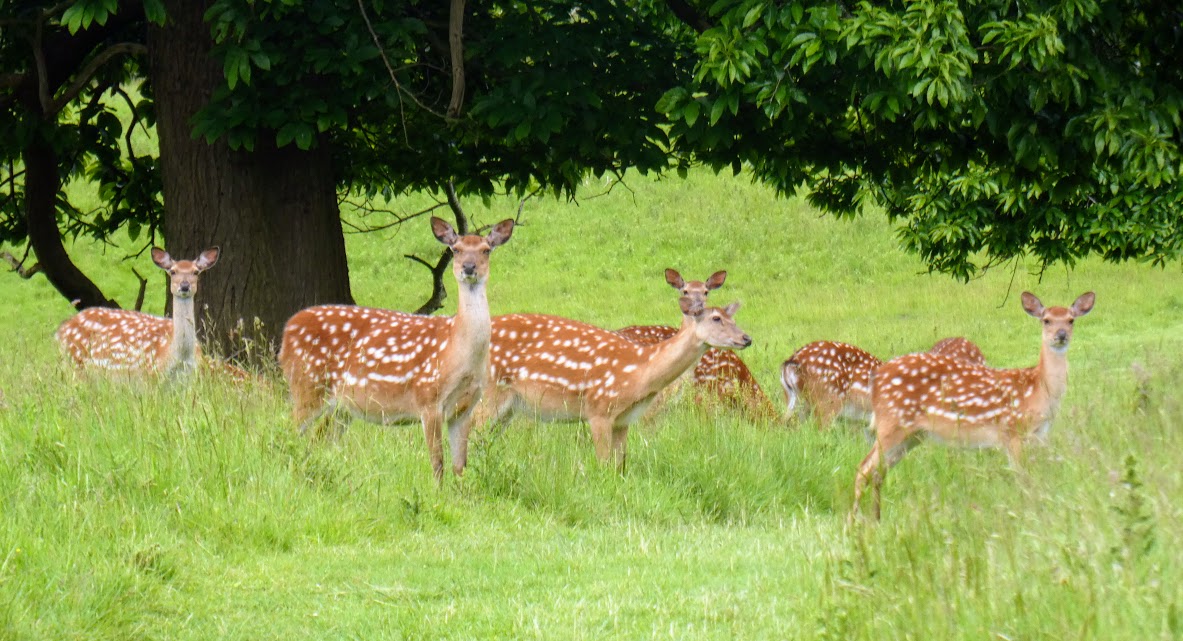
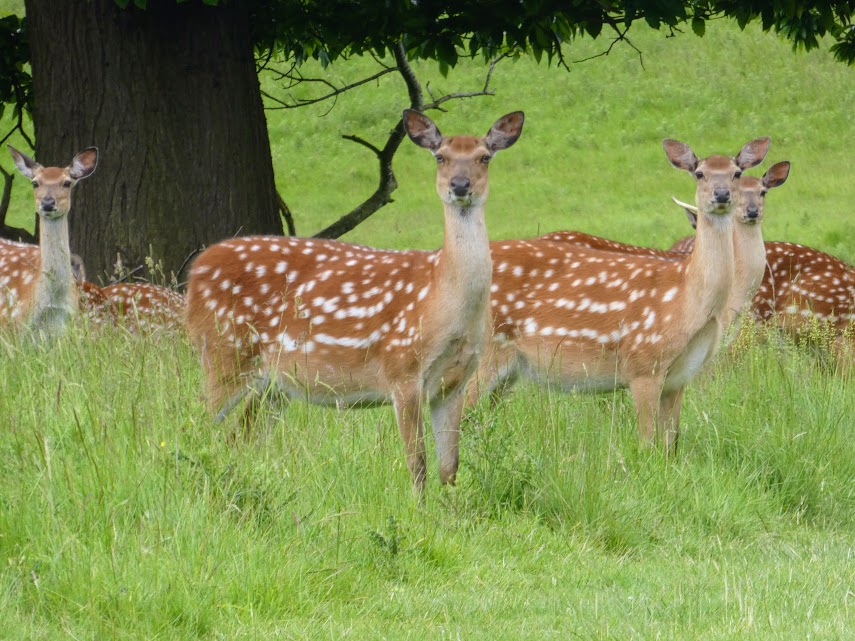
Sika hinds

‘I’m not sure. I’m off …’

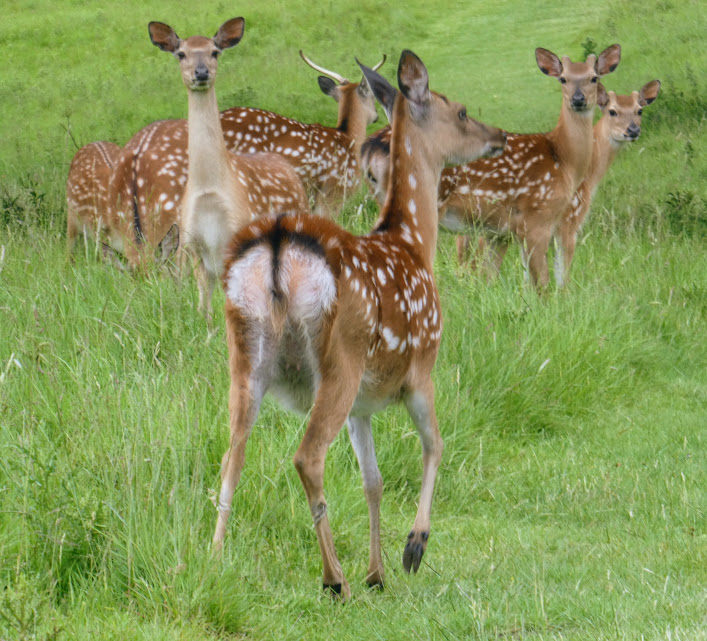
Sika hinds with just one young stag.

‘That one’s a scaredy-cat. Who’ll be back. We’ll just wait here and see what happens…’

‘There. Told you she means no harm. She’s off to see the red deer now…’

Wandering red deer hinds …

Just one calf …

Young stags – no chance of breeding this year …

Ah, those antlers are more like it. Best rest now while they can … They’ll be battling it out in the rutting season.

And just to finish off, here are two classic portraits of stags, for Leanne’s Monochrome Madness. The first is a young sika…

… the next a mature red deer.