Fetch up at our friend Peta’s on a summers day, and she’ll have thrust a cool glass of sophisticated, refreshing and home-made elderflower cordial into your hand before you’ve even had time to admire the garden. Somehow, I’ve never got round to making it myself …. before this year.
Which is silly, because it’s too easy, and you can make several bottles of concentrated cordial for the price of a bag of sugar and a couple of lemons. Oh, and a small amount of citric acid. And there’s the rub. I had a small pack left over from some project in England. It’s all gone and now I’m trying to replace it. Every chemist I’ve spoken here to has narrowed his or her eyes suspiciously and offered to order me half a kilo to arrive next week. What CAN they think I’m up to?
Here’s Sophie Grigson’s recipe:
Ingredients
20 heads of elderflower, well shaken to remove any insects
1.8 kg. granulated sugar
1.2 litres water
2 unwaxed lemons
75 g. citric acid.
Method.
Heat the water and sugar to boiling point and stir till the sugar has dissolved.
Meanwhile pare the zest of the lemons in wide strips and put into a bowl with the elderflowers.
Slice the lemons, discard the ends and add the slices to the bowl.
Pour over the boiling syrup and add the citric acid.
Cover with a cloth and leave at room temperature for 24 hours.
Next day, strain the cordial through a muslin-lined sieve, and pour into thoroughly clean bottles. And it’s done.
And if you explore this link, you’ll find lots of ideas for using it.
There’s been discontent in the house. No jam to go with the fresh bread and coffee at breakfast time. At this time of year, you can’t expect either the hedgerows or the market place to produce any suitable ingredients, so what to do? Then I remembered my mother’s solution to winter jam crises, and a good one too. Dried apricot jam.
I remember that she used to use those dark, rich yet slightly tart and chewy fruits that needed long soaking and cooking to soften them, though I always used to prefer to eat them as they were. Jam recipes recommend them still, but just you try buying them, even on Lavalanet market. It’s all the plump pale soft style these days. I was afraid these would deliver a slightly wishy-washy and anaemic jam so I added a few spices to the mix. And here’s what I made:
Breakfast sorted.
Dried apricot jam
500g dried apricots
1 cinnamon stick
Seeds from 3 cardamom pods
A chunk of peeled fresh ginger
500g caster sugar
A large lemon
Place apricots in a large bowl, cover with a litre of water and soak overnight.
Use a potato peeler to peel the zest thinly from the lemon: chop the zest into fine pieces.
Roughly chop the apricots, put them and the soaking liquid in a large pan with spices, bring to the boil, then reduce heat to low and simmer for 15 minutes. Add sugar and the juice from the lemon, and return mixture to a slow boil until jam setting point is reached (105 degrees C). Remove the ginger chunk (I ate it). Pour jam into about 3 sterilised jars.
We went to Toulouse yesterday, to visit the markets. This wasn’t a trip to stock up the larder though. This was a history lesson, as offered by Elyse Rivin, long term resident of Toulouse and great enthusiast for the city. She is a full fledged official guide and art historian, and runs Toulouse Guided Walks. We’d booked.
Minutes after we met, we found ourselves in front of Victor Hugo market. You’ll go here for meat or fish, but also for all the other foodstuffs that markets do so well – fruit, vegetables, bread and patisseries, drinks. At lunchtime you might pop up to the first floor to have a convivial meal at one of the several restaurants up there, all using fresh produce bought only an hour or two before from the stalls below. This market, like every other in Toulouse bar one, is a concrete horror story. Back in the late 1950’s and early 1960’s, they demolished the elegant iron and glass Victorian structures: they needed car parking space of course, and somehow contrived to squeeze car-parks-with-added-market onto those old sites.
Toulouse has had markets since way before the 12th century, and most had a speciality. Victor Hugo’s (I’m guessing it wasn’t called that then) was wood.
We wandered along to the Capitole, the splendid central square of Toulouse. Usually it’s an an elegant place, airy and inviting. On Wednesdays it’s inviting for a different reason: There’s a market: a big one. Teeming with second-hand books, brocante of every kind, traders from every corner of the world…… And on other days, there’ll be organic food stalls instead.
I remember learning in history lessons how the streets of London were often taken over by particular trades – leather sellers, poulterers, bakers and so on. So it was in Toulouse. Many of these trade names have been lost, but there are still streets with the old Occitan names: the cauldron makers for instance. And some trades hang on, in an unbroken line from the 12th century. Rue Sainte Ursule for example, then as now, housed textile merchants. These days that means clothes shops, textile wholesalers, even small scale manufacture. This area is still named Quartier Bourse after the Bourse des Marchands (a trade association, an antecedent of the Chamber of Commerce). In the 19th century a fine new neo-Classical building was built, and this is the Tribunal de Commerce, where trading disputes are resolved.
On to Esquirol. Flour was measured here in a stone basin, by volume not weight, to prevent honest shoppers being short changed. A beady eye was kept on those who attempted to ‘cut’ their flour with chaff, dustings of rye flour and so on. Back in the middle ages, as now, white bread was prized. No market here now, because back in the 19th century, several long straight roads – in this case Rue de Metz – were sliced through the city, laying waste anything in their tracks. The market hall that was here has been rebuilt piece by piece at Lourdes, so you could go and see it if you liked, unlike all those other lost structures.
Next stop: a walk down down Rue des Filatiers. I love this narrow street with its tall, elegant houses, many dating from the 16th century. Take a look at the pictures. And then we were at Carmes, originally home of the Carmelites. The order eventually won a long battle with the city to be allowed to have a monastery in Toulouse. What clinched it was when they assured the pope that their long ministry in the area of Mount Carmel gave them a unique possibility of converting the area’s small Jewish population. The city fathers had to give in.
Carmes, like the other markets, is now a concrete box, instead of a complement to the smart 19th century character of this historic area. But we were here to sample cheeses, guided by a local affineur, at a shop called Sena. What this means is that the shop buys cheeses direct from the maker, and matures and ripens them to what it considers perfection. Our guide for the occasion wanted to share three fairly local cheeses with us. We had a young soft goat’s cheese ‘Cathare’, fresh and light, dusted with ash: this was 10 days old. Our cow’s cheese, yielding, tasty and with a volcanic looking grey crust was 5 weeks old. Best known was the Ossau-Iraty cheese, made from sheep’s milk from the Basque country and the Béarn, which had the most pronounced taste of all. He paired these with fruits: raisins, candied kiwi, and almonds. For tasting purposes, he explained, these are better than bread. We had a glass of the most local wine to Toulouse as well, Fronton. This was a Négrette, low in tannin and acidity.
I talked to him about English cheeses. He sells Blue Stilton, but I was alarmed to see, among all his hand-picked artisanal cheeses, a block of shrink-wrapped orange cheddar. He told me that people bought it for barbecues, to put on cheeseburgers. He had, he said, little incentive to stock English cheeses, which he knew could be very good, because the French would not buy. Presented with shrink-wrapped cheddar, are you surprised?
Still, by now it was long past midday. Back to Carmes to hunt for a lunch-stop, where we could discuss the morning over a leisurely plat du jour.
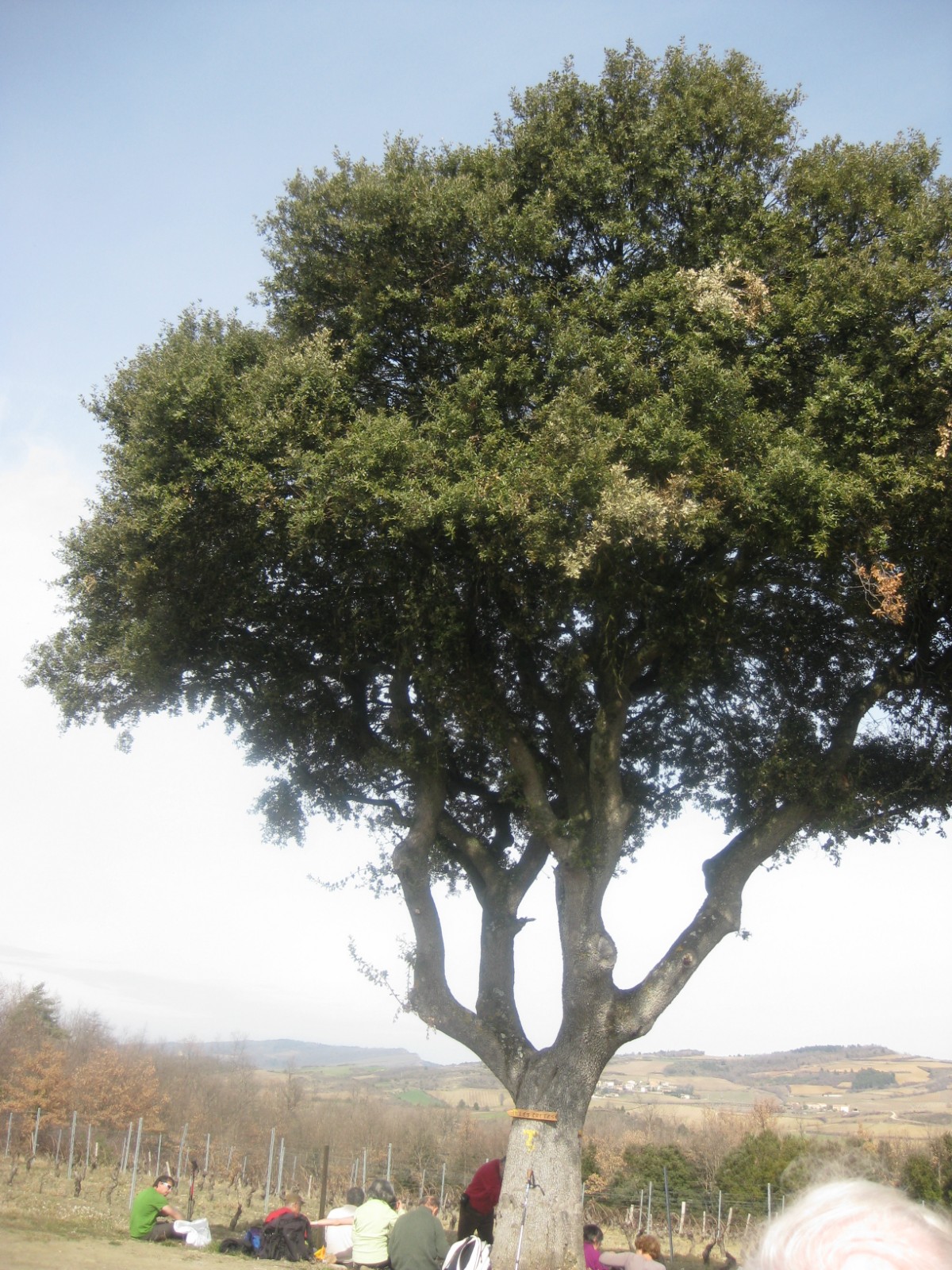
It was a walking day again yesterday – Malcolm too this time – this time with the new hiking group at Laroque. The walk, again amongst vines, but in the more Spanish style garrigue around Esperaza, was relaxing and fun, but the highlight of the day was lunch. We sat by a vineyard, either in the sun, or shaded by a shapely and statuesque holm oak tree, and unpacked our rucksacks.
Under the spreading holm oak tree we laid our picnics out.
For a picnic on a walk, most people put together a chunk or two of cheese and sausage, a bit of fruit, and stop at the boulangerie on the way to pick up some bread. We all did that….but…. there was food to share too.
Phillippe, Sylvie and Jean-Charles opened wine.
Jean-Charles offered peanuts.
Michel produced home made charcuterie (dry cured sausage).
So did Phillippe and Sylvie (boudin blanc) – theirs was home made too.
They brought some of their daughter’s home made goats’ and sheeps’ milk cheese.
I made a drenched lemon cake.
Yvette made crisp chocolate biscuits.
Jean Charles brought an ‘artisanale’ fruit cake.
Then he came round with coffee.
And finally, Yvette offered plum eau de vie made by her grandfather in 1985. A little dripped onto a sugar lump and scrunched is the perfect end to a perfect picnic.
Then we all lay around in the sun for half an hour while we digested that little lot.
That’s the way to do it, eh? And as everyone said, as we finally decided we ought to have a go at walking off all those calories, “Vaut mieux le vin d’ici que l’eau de là” : it’s better to have a drink among friends than to be no more for this world.
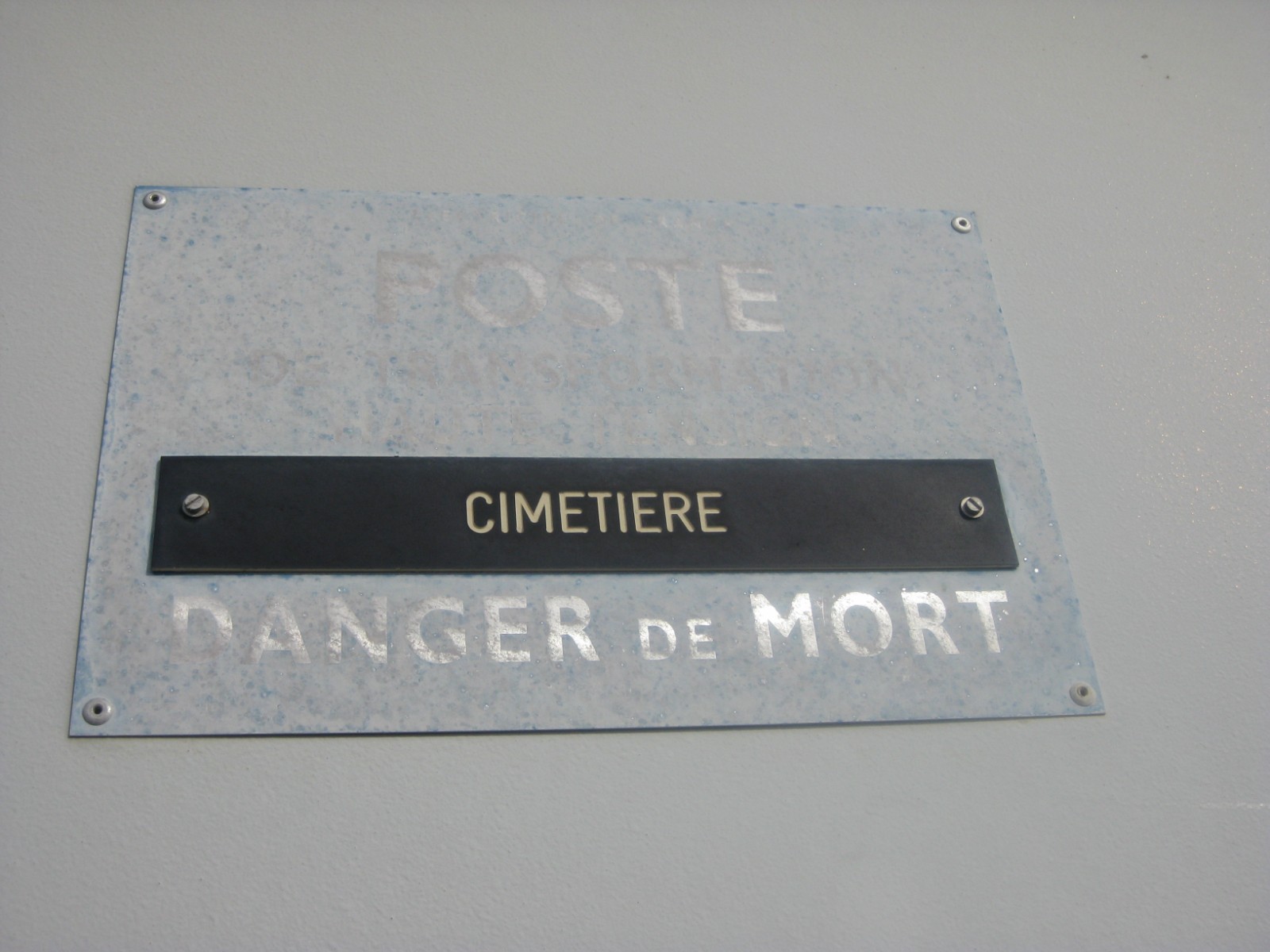
As we ended our walk, we found an electricity substation, handy for the graveyard, that reminded us that death is an ever-present threat. Definitely a good thing to have shared that food and wine at lunchtime.
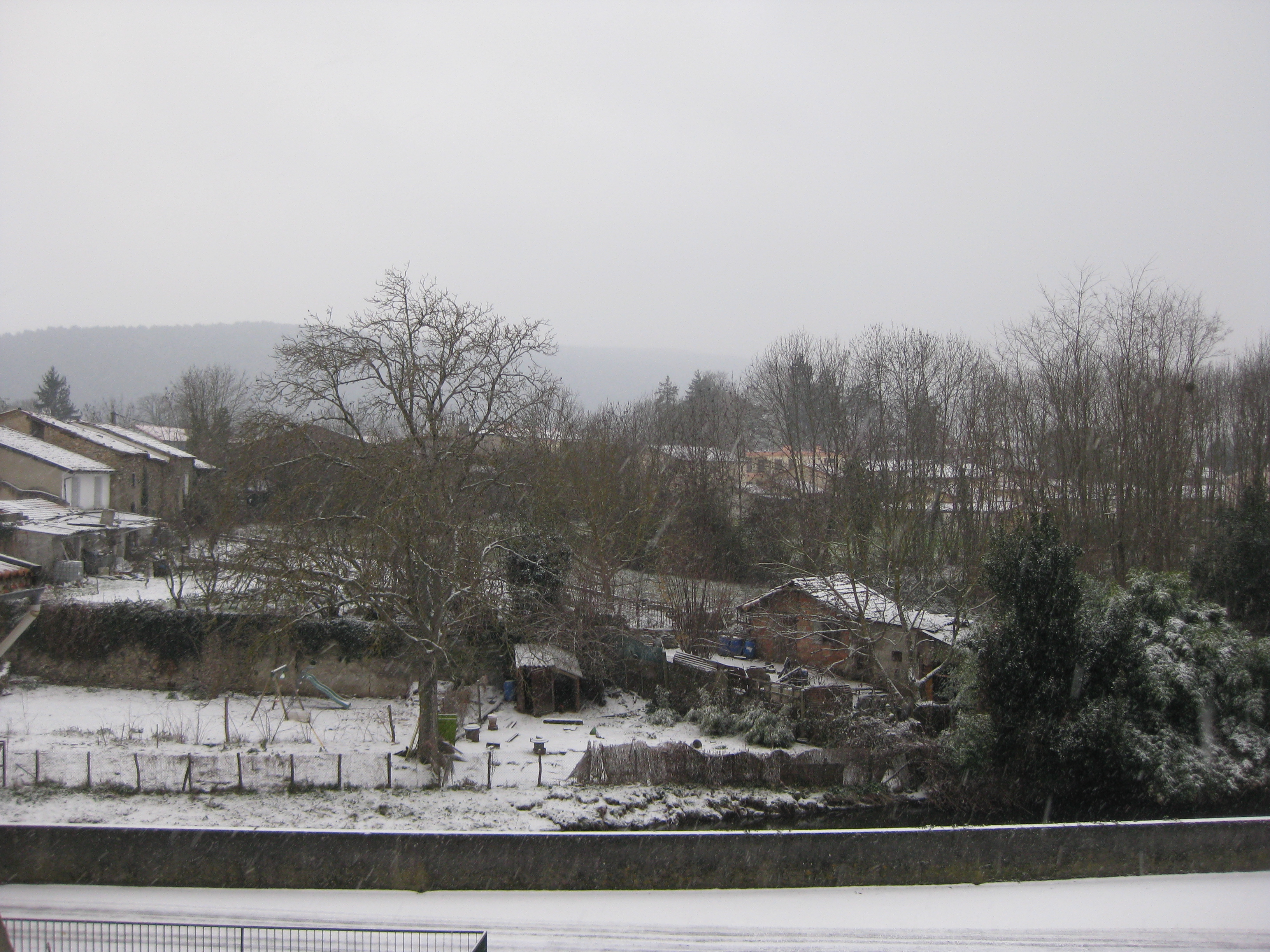
Thursdays, I walk. I do these days anyway. A few weeks ago I was invited to join a small informal group from round these parts, went once, and had a great time. Then The Great Snows came, and that was that for a while.
Yesterday, though, we went to Cépie, near Limoux. Cépie is a village that Malcolm and I happened to be driving through several years ago in high summer, and where we spotted a fruit producer, selling peaches and nectarines. Those peaches we saw that day have become the standard against which all others are measured. Dripping with perfumed sweet juices, the tray we bought scented the car with its decadent fragrance, and all but intoxicated us as we drove home. So I was keen to go again, lack of peaches notwithstanding.
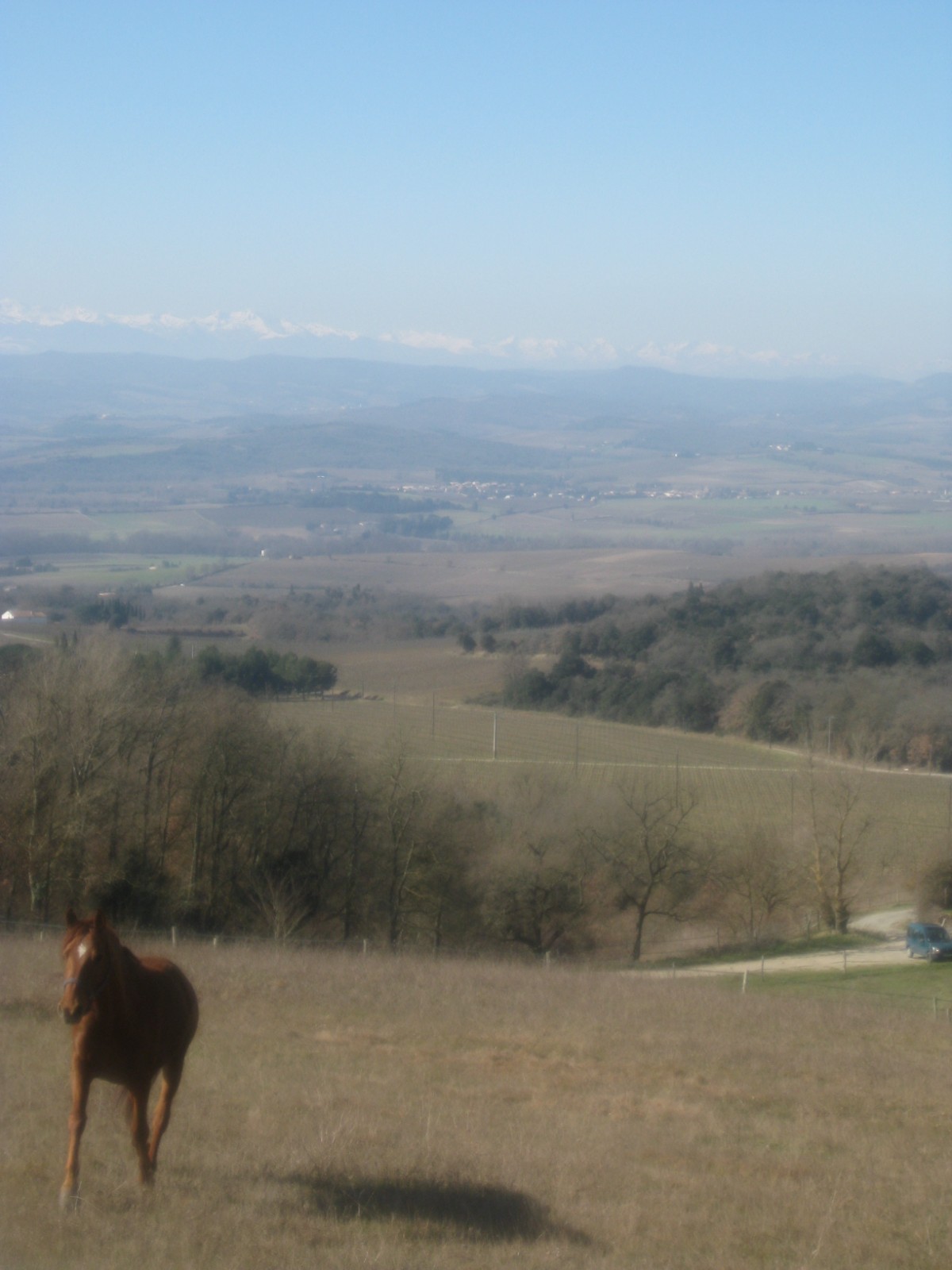
You'll struggle to see the snowy Pyrenees as the backdrop to this picture. They are there. Keep looking
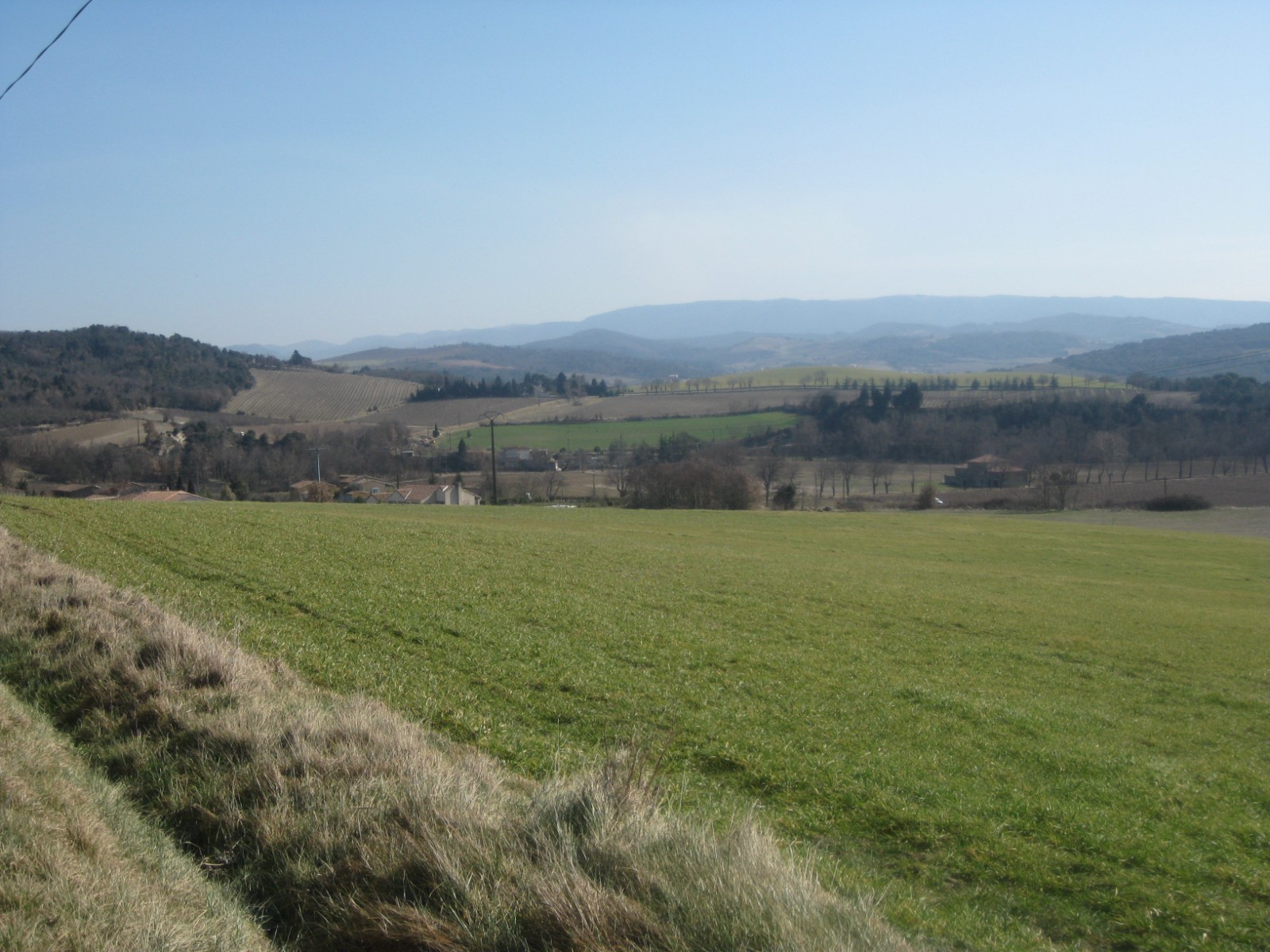
Instead of peaches, there were views. The Pyrenees are more distant here, but that means we got horizon-filling views of the gleaming snowy mountains as they rise and sink in a line of angular peaks, marching right across the skyline from east to west. Because of the haziness of the day, the photos give no idea of the panoramas which we quite simply had to stop and gaze at, time after time.
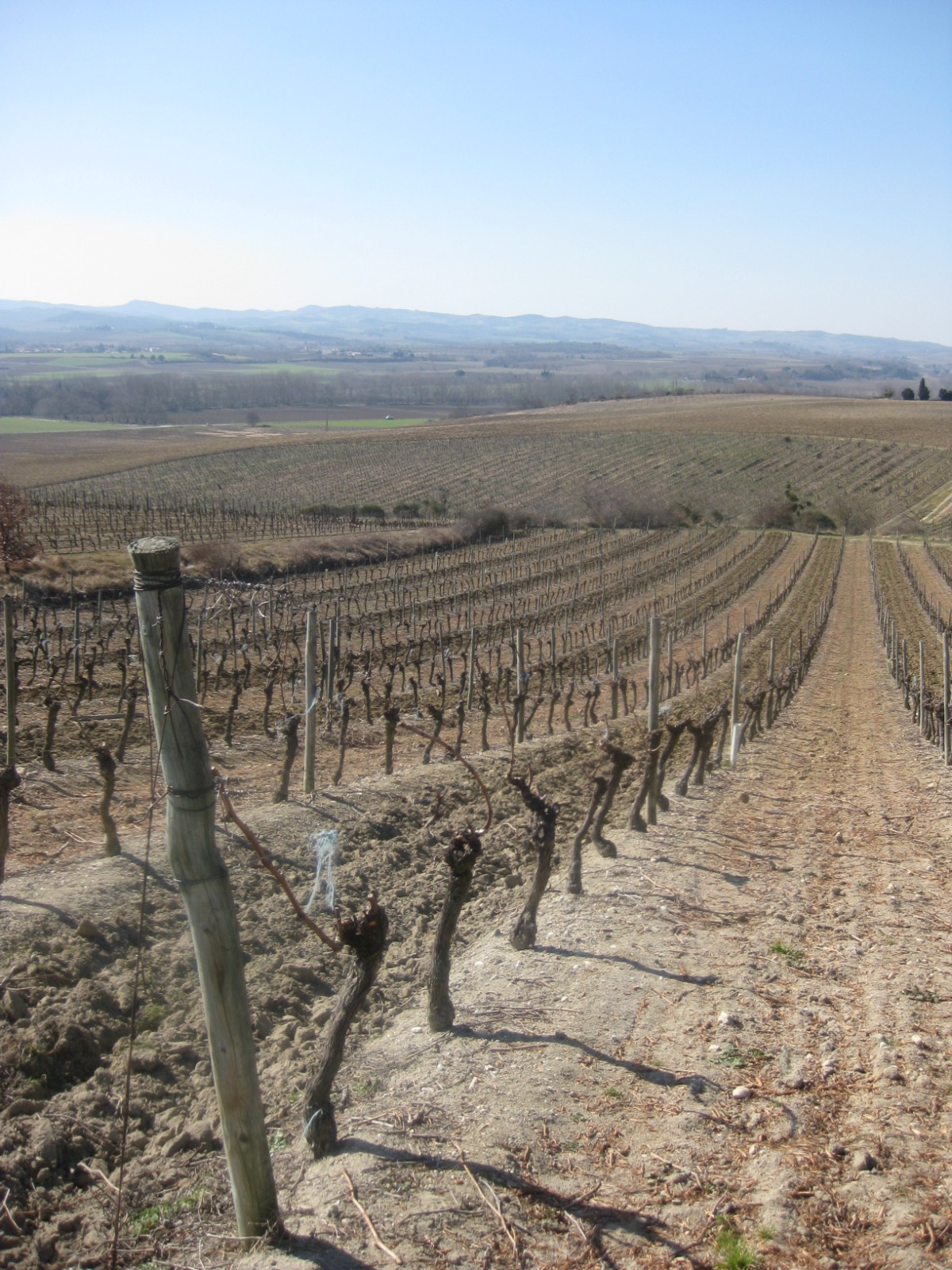
This area is Tuscan style Aude – rolling hills with distant domains and lines of cypresses, covered for acre after acre with mathematically precise lines of vines. I used to find these vineyards rather dull in winter.
Notre Dame du Razès, protégez nous et protégez nos récoltes
Now, as the workers get busy in the fields, pruning away all the growth from the previous year to leave little more than a two or three foot high trunk, I enjoy the way these organised lines echo and follow the contours of the landscape.
Vineyards march across the landscape
Our walk took us in a figure of eight through sandy, stony wooded paths, passing near domaines and hamlets whose reason for being is those vineyards. Towards the end, we paused in the tiny village of Saint Martin de Villereglan and enjoyed looking at the school-cum-town hall, the views down to the church, and generally pausing for breath before the final yomp up, then down the hill that divided us from Cépie.
A nice touch with these walks is that every week, one member of the group makes a special cake to share at the end of the day. A lovely moment of sharing (in this case with a couple of passing villagers who got chatting), it gives a much needed calorie rush. We’d only done about 16 km, but the local temperatures rose to more than 23 degrees, and we felt we deserved our gâteau aux noix.
Over at Découverte Terres Lointaines, we realised that Fun was sometimes in short supply. Often busy getting the next event together, with deadlines to meet and crises to overcome, we weren’t getting together and having time sharing our skills for the simple pleasure that brings.
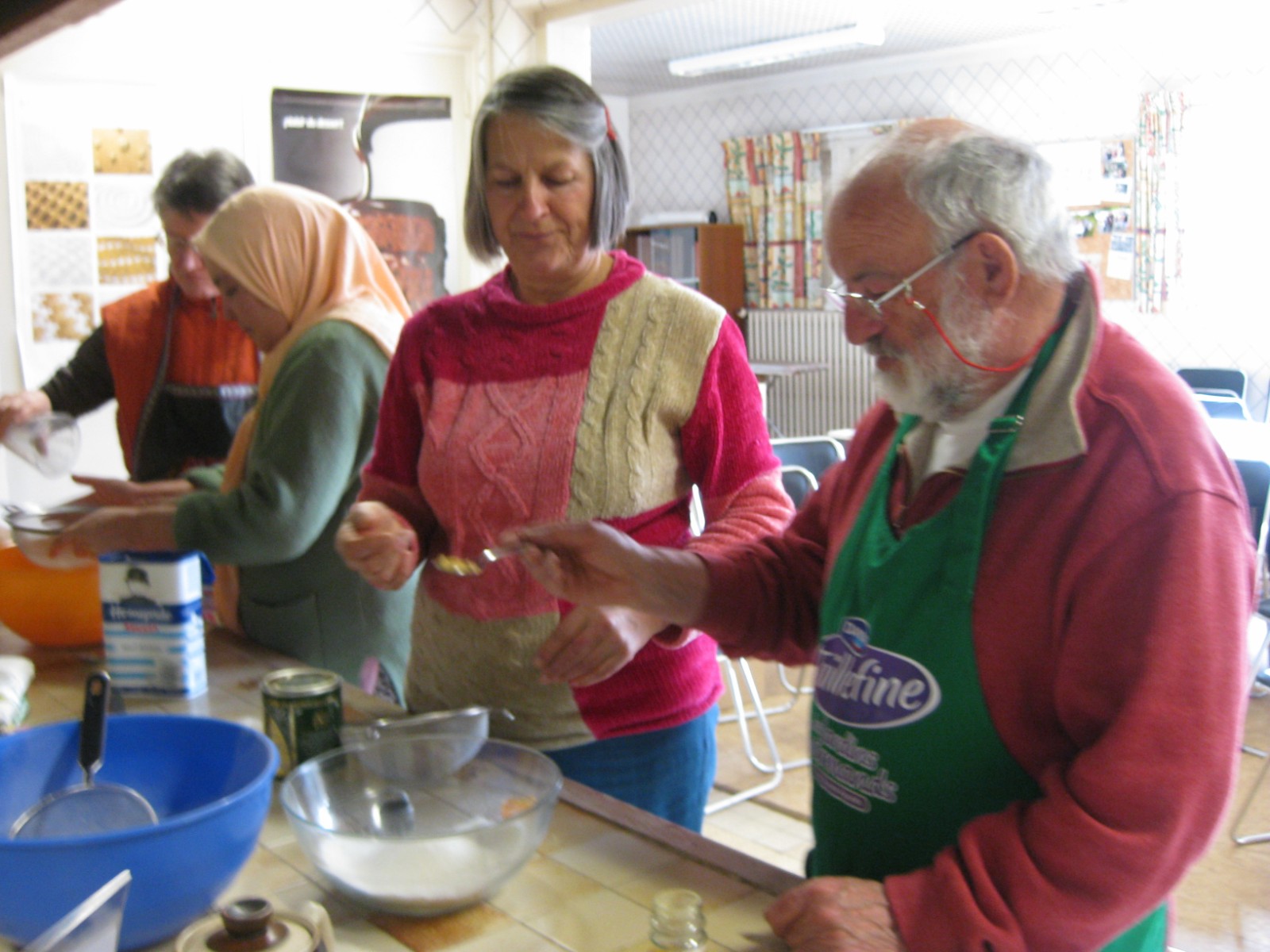
So this afternoon, we had our first atelier to do just that. We did a little publicity and attracted five women and one brave man, who came along to the CAF (Social Services. Sort of) with their pinnies to cook.
The work we’re doing this year is on England, Yorkshire in particular, so I was put in charge of the session: though Sylvia did the work of producing a recipe booklet for each participant. What to choose? In the end I settled for scones, which are unknown here, and crunchy ginger nuts. Both start with the same technique – rubbing flour and butter together- but end up quite different from each other. Both are inexpensive and quick to prepare.
Getting stuck into ginger nutsEveryone rolled up their sleeves, weighed, stirred, mixed, rolled out, organised what they’d made onto baking trays….and waited while the ovens did their work.
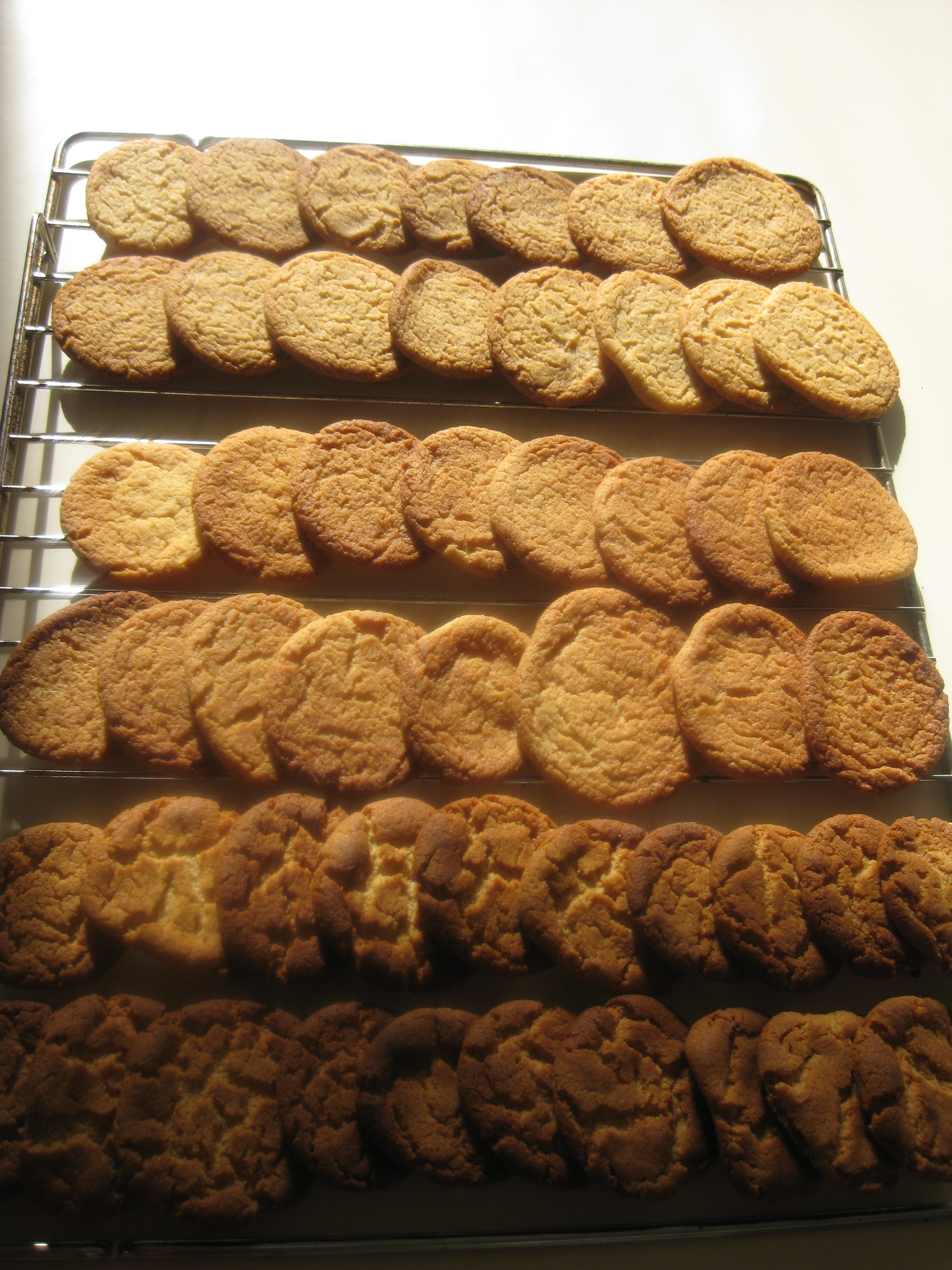
Astonishing to see how identical ingredients prepared identically by different hands, with different ovens varied so much. Some ginger nuts had crunchy crackled crusts, others were smoother, crisper. Some scones were domed, others, equally well-risen, were flatter on top.
3 cooking squads, 3 sets of biscuits
So we all had to try everybody else’s over – of course – a nice cup of tea. Lots of discussion and constructive criticism (‘Did you add salt to yours? Which do you think is better? With? Without?’). The scones were a hit, though not everyone chose to have either butter or jam. The ginger nuts went down well too.
Everyone declared they’d had fun. Plenty of time to cook, to share, to talk and laugh and eventually sit and eat what we’d made with new friends. We’ve all said we’d like to come and do it again. Soon.
Puzzled by the title? It’s an allusion to a series which has apparently been popular back in the UK: The Great British Bake Off
I’m getting a bad case of cabin fever at the moment. The snow is turning to hard packed ice and/or slush and is not much fun to walk on. We’re not getting out much. So I’ve turned to comfort cooking.
About a week ago, my favourite food blogger, David Lebovitz wrote about his take on that wonderfully decadent Italian treat, Panforte. Two days after that, Kalba’s blog dropped into my in-box. She’d been tweaking his recipe whilst hiding from the snow on her side of the Ariège. Today it was my turn- and here’s my tweaked recipe
40g unsweetened cocoa powder, plus extra for dusting the tin
200g chopped toasted nuts- I used the hazelnuts I gathered with some friends early last Autumn, and the last of my walnuts
100g chopped dried prunes
110g flour
200g chopped candied orange peel
1 tablespoon ground cinnamon
2 teaspoons ground ginger
1 1/2 teaspoons freshly ground black pepper
1/2 teaspoon ground red chilli
1/2 teaspoon mixed spice
A pinch of freshly grated nutmeg
85g dark chocolate, chopped
200g sugar
210g clear honey
Preheat the oven to 165ºC.
Line the bottom of a 22cm springform tin with parchment paper. Dust the inside, including the sides, with cocoa powder.
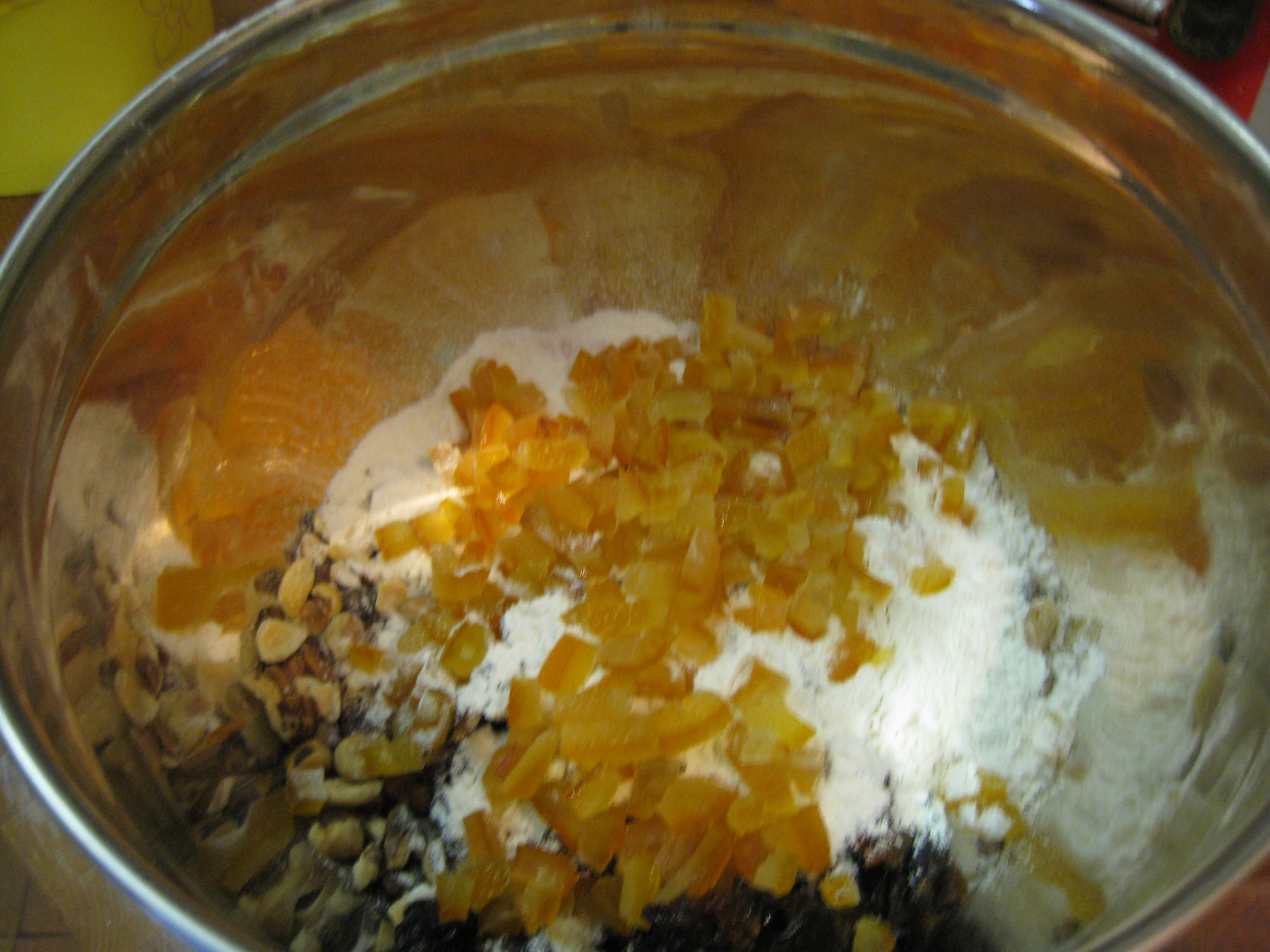
In a large bowl, mix together the cocoa powder, dried fruit, nuts, flour, candied peel, cinnamon, ginger, black pepper, mixed spice, and red chilli.
Melt the chocolate in a small bowl set over a pan of simmering water. Remove from heat and stir it into the nut mixture.
Gently heat the sugar and honey to 115ºC.
Pour the hot honey syrup over the nut mixture and immediately stir it all well to mix. Scrape the batter into the prepared pan and smooth the top.
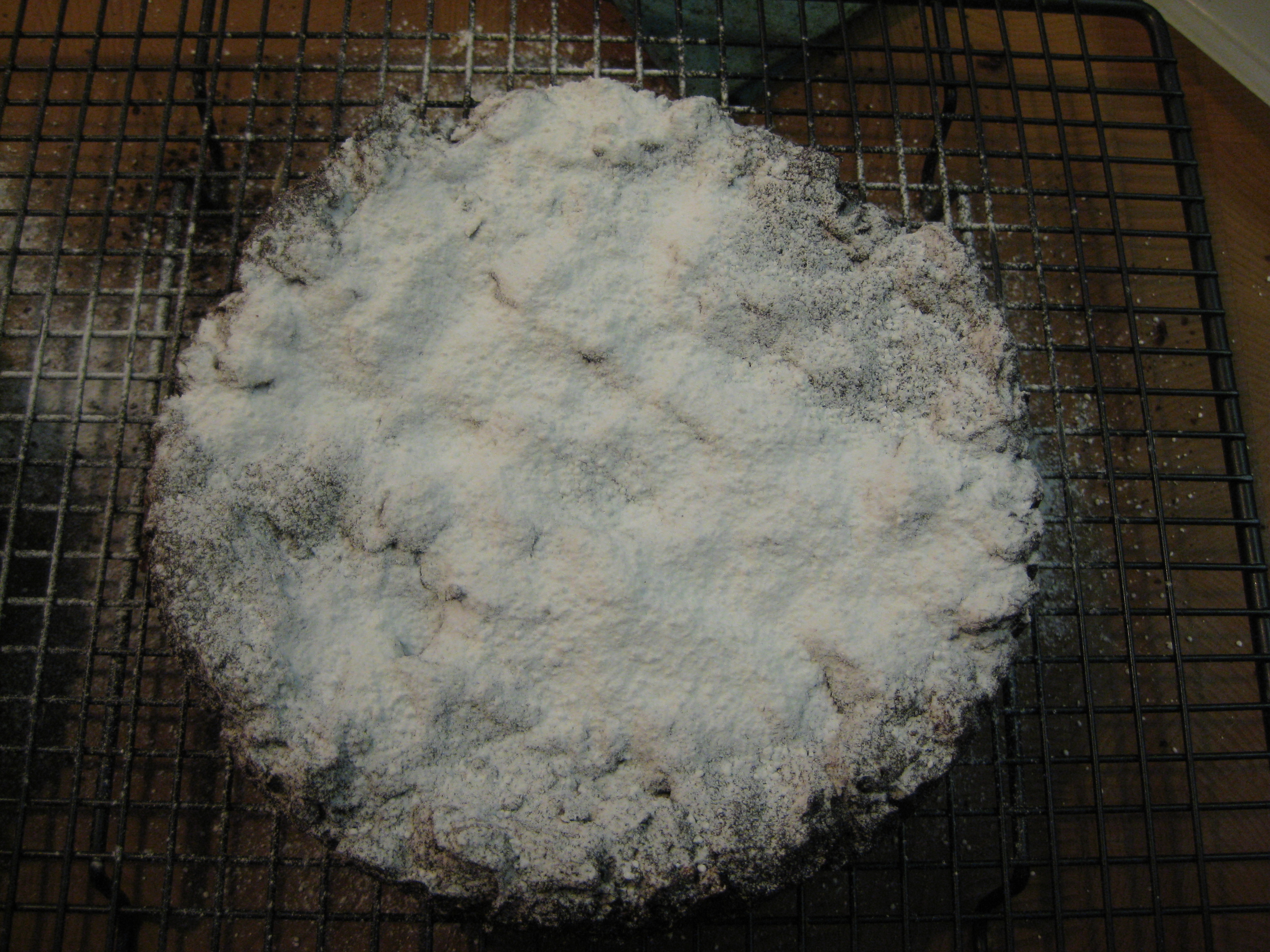
Bake the panforte for 30-35 minutes; the centre will feel soft, like just-baked custard, and if you touch it, your finger will come away clean when it’s done. Let it cool in the tin on a wire rack for 15 minutes, then run a knife around the edge to loosen it. Remove the springform carefully, let cool completely, and dust generously with icing sugar.
The panforte's on its way
So why have I changed things? For my usual reason of being short of an ingredient or two of course. I’d run out of dried apricots. Well, what’s wrong with prunes then? No candied lemon peel? I used the last of the orange peel.
Entirely untypically, I decided I’d get in a muddle if I didn’t weigh out all the ingredients and put them neatly beside the mixing bowl in dinky little dishes ready for the off, in the manner of Delia Smith and TV cooks everywhere. We both weighed, chopped, melted things and mixed. The panforte safely in the oven, we started tidying up, and then I found….the dish of cocoa powder.
Unlike those TV chefs, I whipped the panforte out of the oven, dumped the mixture in a bowl with the cocoa, mixed it up, and shoved it back in the tin, and then into the oven again. I think I got away with it…..
Can't eat it yet
The thing is, Malcolm’s always said he doesn’t care for panforte. That’s why I made him a treat of his own this morning. But this afternoon, we both squabbled over who could lick the scrapings from the bottom of the panforte bowl. He liked it. We both more than liked it.
We can’t try the finished article yet though. Several days waiting time for the flavours to marry together is recommended. We’ll have to do our best to ignore the box sitting in the pantry.
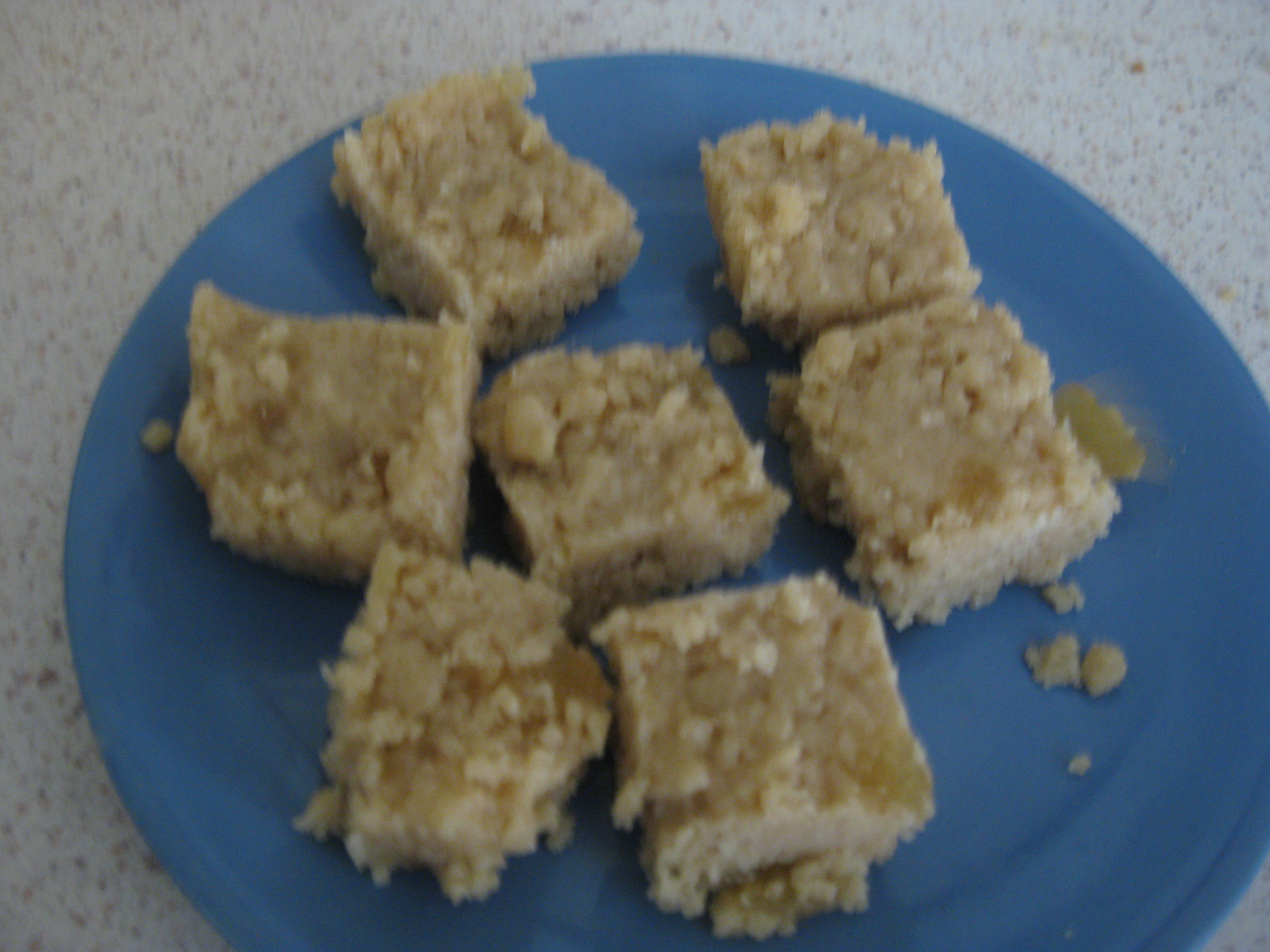
So what did I make for Malcolm? Well, tidying up my recipe collection, I found Dan Lepard’s recipe for Sesame Ginger Halva. Like the Panforte, it’s perfect with a shot of strong black coffee. Unlike the panforte, you can eat it immediately, and it’s a comforting pick-me-up on a snowy day.
250g tahini
100g stem ginger, strained from its syrup
200g caster sugar
50ml water
50g of the syrup
Spoon the tahini and the oil separated from it into a bowl and beat with an electric hand whisk until it is smooth and emulsified.
Chop the ginger into ½cm cubes. Line the base of a 2lb loaf tin or similar with a buttered sheet of foil.
A crumby photo of a crumbly treat
Place the sugar, water and 50g syrup from the stem ginger in a saucepan and bring to the boil. Simmer for 5-10 minutes until a drop of the toffee hardens when popped into a glass of cold water, and can be squeezed with the fingers into a soft ball. This step’s tricky. Because there’s so little syrup, the heat increases rapidly. Just do your best: if it gets too hot, the halva will be crumbly rather than creamy, but who cares?
Next, add the ginger cubes and remove from the heat and add the tahini. Beat until the mixture thickens, then tip into the foil-lined tin. Cut into squares when warm.
Just one tip, while you’re reading this: do as the spellchecker does, and substitute ‘pianoforte’ for ‘panforte’ every time the word occurs. It makes for interesting reading
It’s La Chandeleur, Fête de la Lumière today. You might know it as Candlemas, and if you’re English, you’ve probably not given it a thought, or even knew it existed.
Here in France, you’ll certainly know all about it. If you’re Catholic, you’ll remember the day as the one in which the Virgin Mary was purified after giving birth, and Jesus himself was presented at the Temple.
Catholic or not, the French eat a lot of crêpes today. Apparently, whilst making them, it’s traditional to hold a coin in your writing hand and a pan in the other, and flip the crêpe into the air. If you manage to catch the pancake in the pan, your family will be prosperous for the rest of the year. It’s exactly half way though the official winter season, in any case. Pancakes perhaps look a little like the sun, so they stand in for the sun – ‘la lumière’.
Winter sunlight looking like a crêpe?
More important than eating however, is seeing what Winter is thinking. He pays the day a lot of attention. He has decisions to make. On this day, Winter will either pack his bags and disappear till the end of Autumn, or he’ll settle in, and make his presence thoroughly felt for quite a few more weeks. Hence the expression:
À la Chandeleur, l’hiver cesse ou reprend vigueur
At Candlemas, winter ends or strengthens.
It looks pretty much as though he’s decided though. Today the temperatures plunge from a high of minus 3, to a low of minus 10 (and feeling like minus 16), and the ten day forecast is worse. Tomorrow, for example, it promises to be minus 9 at 10.00 a.m. and feel like minus 16.
It’s quite nice not to have to wait till Shrove Tuesday for the first pancakes of the year though. Even better that we can be snug indoors today and hope for Winter to knock off duty.
View from the roof terrace at 8.00 a.m. It looks as though Winter’s really made up his mind
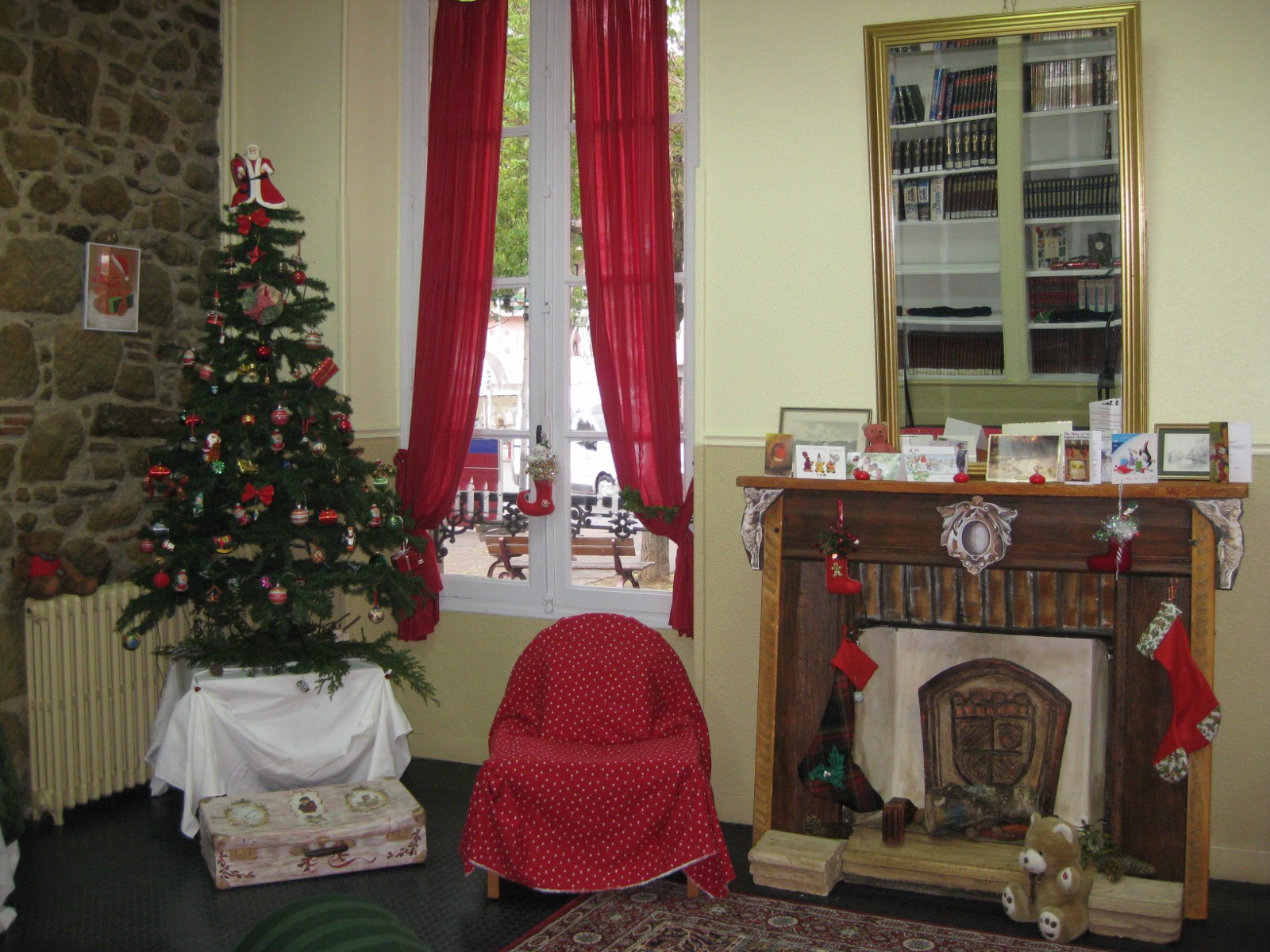
A good old-fashioned English Christmas has come early to Lavelanet. To the library (oops, mediathèque) to be exact. The librarian there enjoys children’s literature, and is a bit of an Anglophile. So she’s mounting a small festival of English Children’s literature featuring everyone from John Burningham and Quentin Blake to, of course, Charles Dickens and Beatrix Potter.
What a disappointment I am to her. I can’t produce a pretty tea set awash with rosebuds, and she can’t believe I really don’t like tea very much: and that when I do drink it, I decline to add milk.
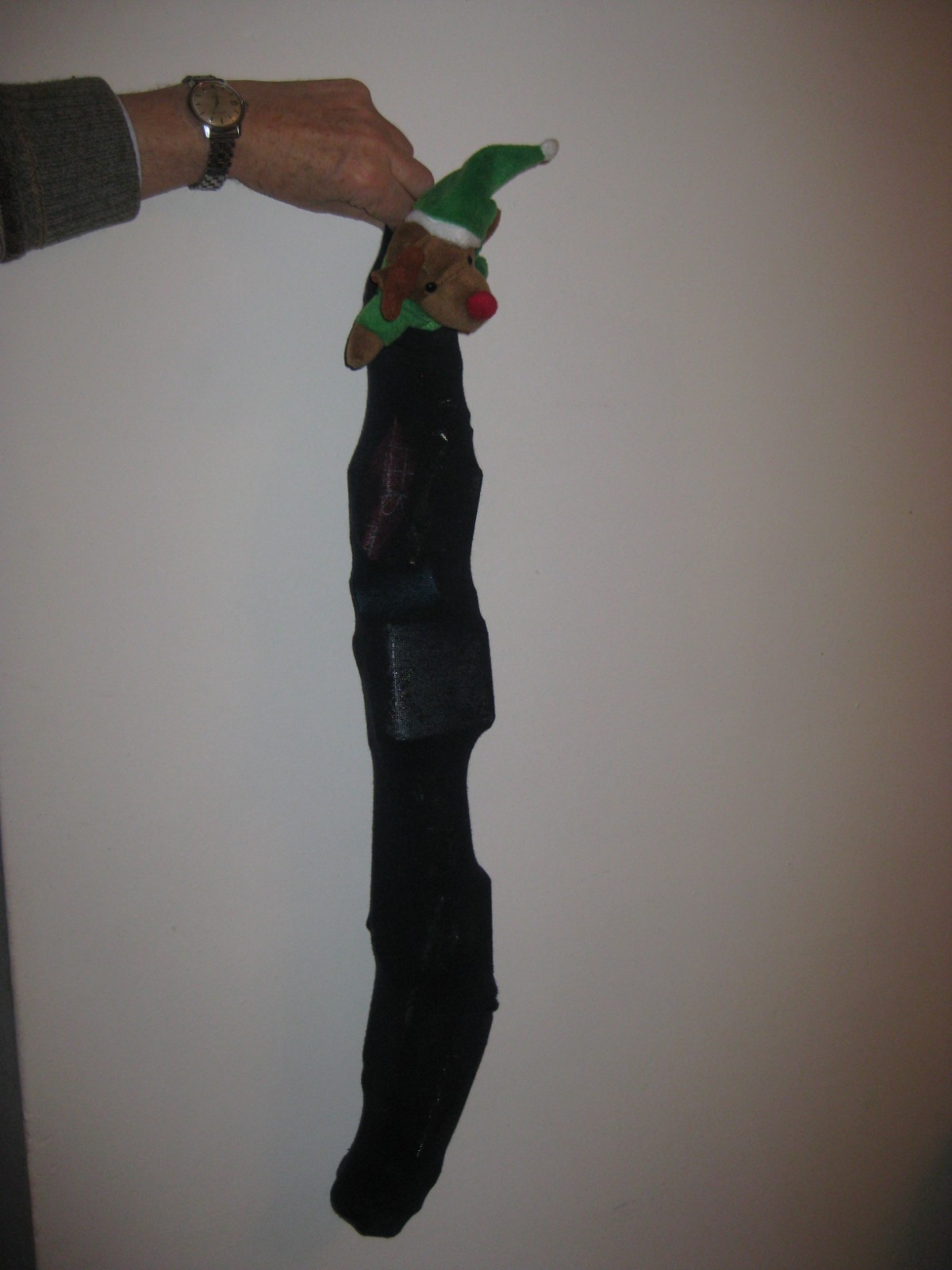
Look what father Christmas left!
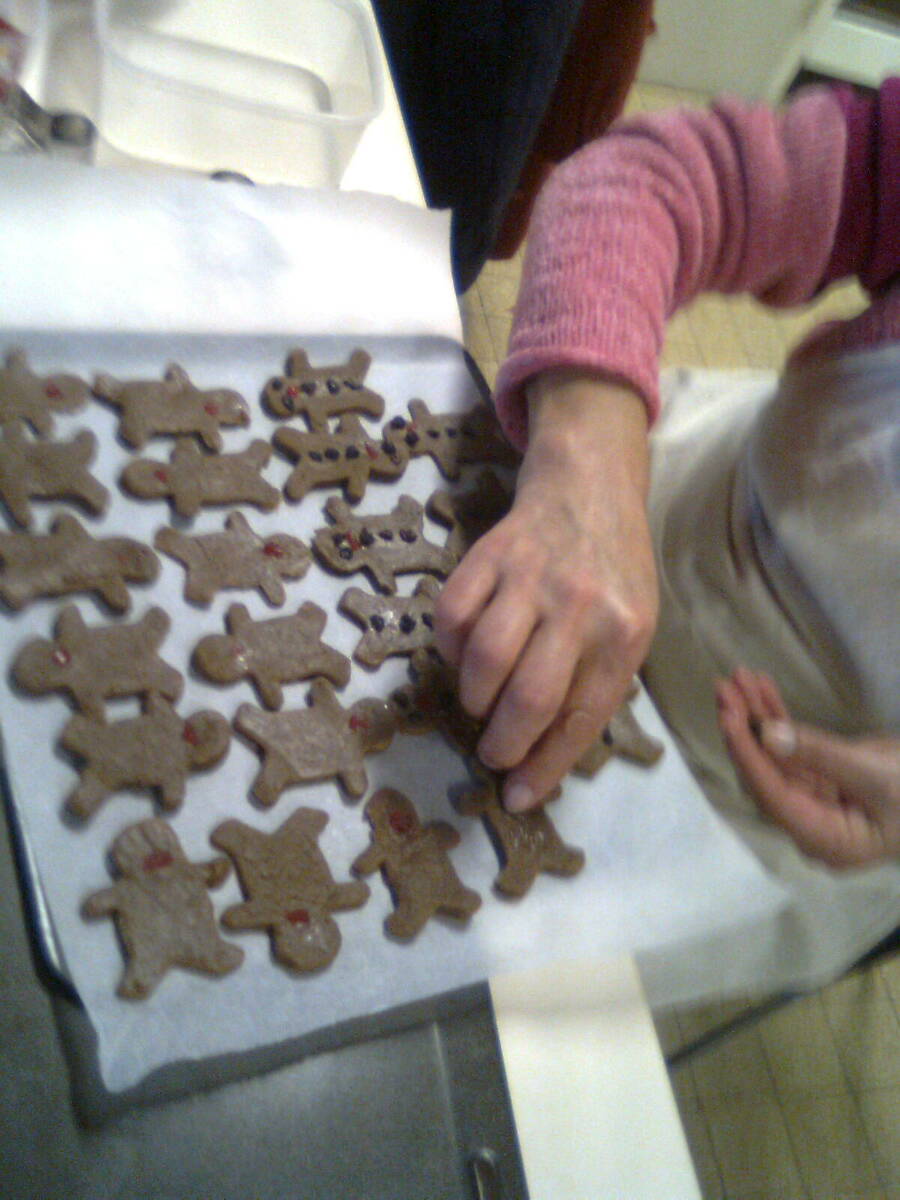
She’s wheeled in Découverte des Terres Lointaines to help with all the activities for schools, retirement homes, and the general public. And DTL have wheeled me in as Consultant on All Matters English. Together we’ve chosen recipes and we’re baking biscuits and cakes and we’ve planned craft activities round, for instance, our ‘so British’ Christmas cards. From tomorrow, I’ll be reading stories in English, helping pull crackers, and unpacking – many times – a stocking which dear old Father Christmas has delivered to me early.
Mass production of gingerbread men
My other job is to correct the misapprehensions learnt from French websites and children’s books about England. Who knew that the English enjoy tucking in to a huge plate of oysters at the beginning of Christmas dinner? Or that all British schoolchildren have a free bottle of milk every morning? Margaret Thatcher abolished that back in the early 70’s. And Sylvia misunderstood me, and thought we served stewed cherries, not sherry sauce, with our Christmas pudding (cherries – sherry: easy to confuse when you speak no English). And so on.
But it’s been fun transforming the community room in the library into an impossibly cosy snug, full of Christmas cheer. Let’s see what ‘le tout public’ think, when we open the doors tomorrow.
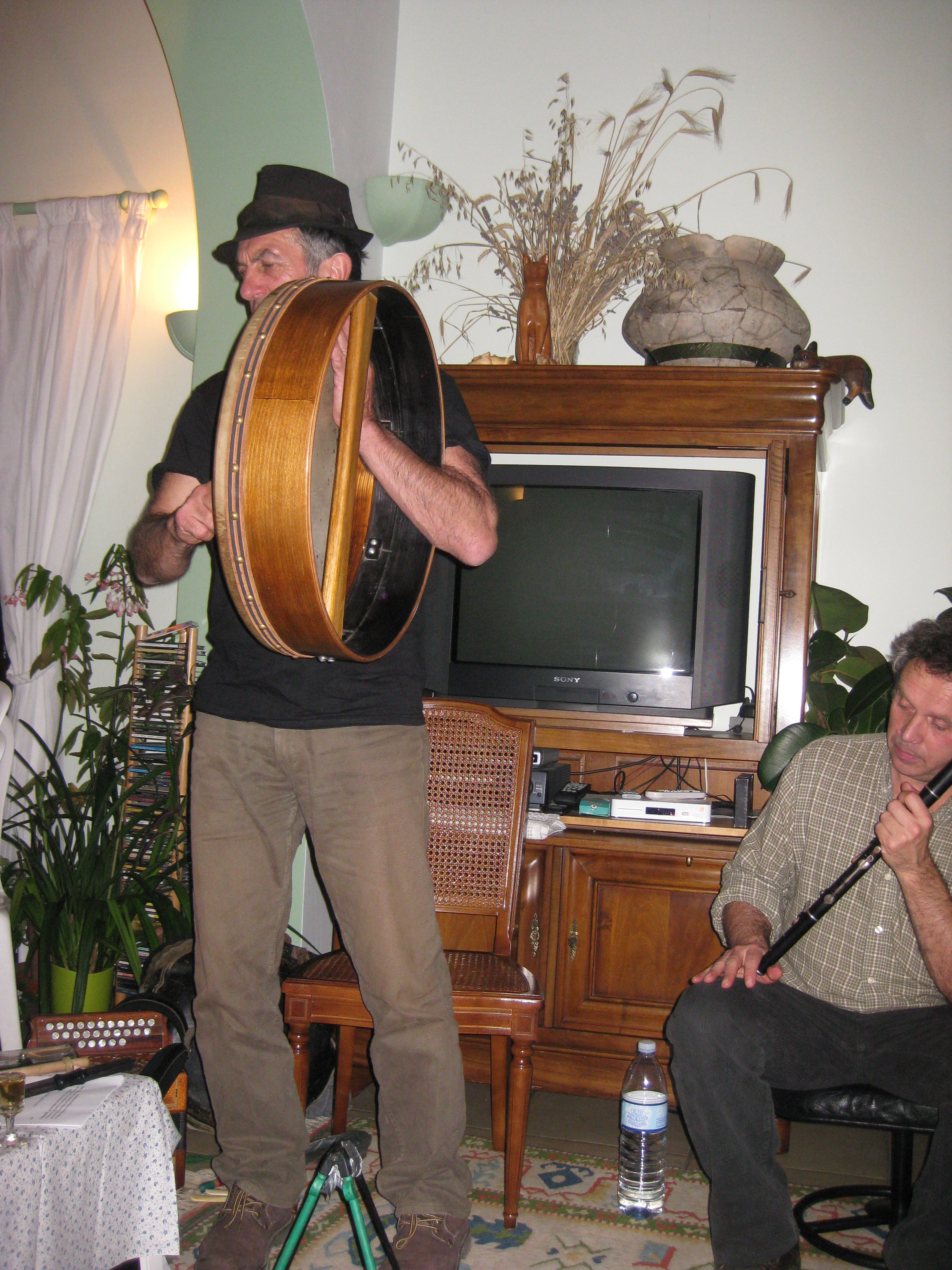
It’s town-twinning time again. Our Breton friends were here in Laroque for a few days, and a Good Time Was Had By All. It’s hard to describe the simple pleasure of this weekend. Re-discovering the region through Breton eyes and getting to know our northern friends a bit better: getting to know our Laroquais friends and acquaintances better too: music – lots of it – thanks to the talented and eclectic musicians who always form part of the group – a singer and bodhran player, a flautist and a keyboard player: and shared eating, lots of it.
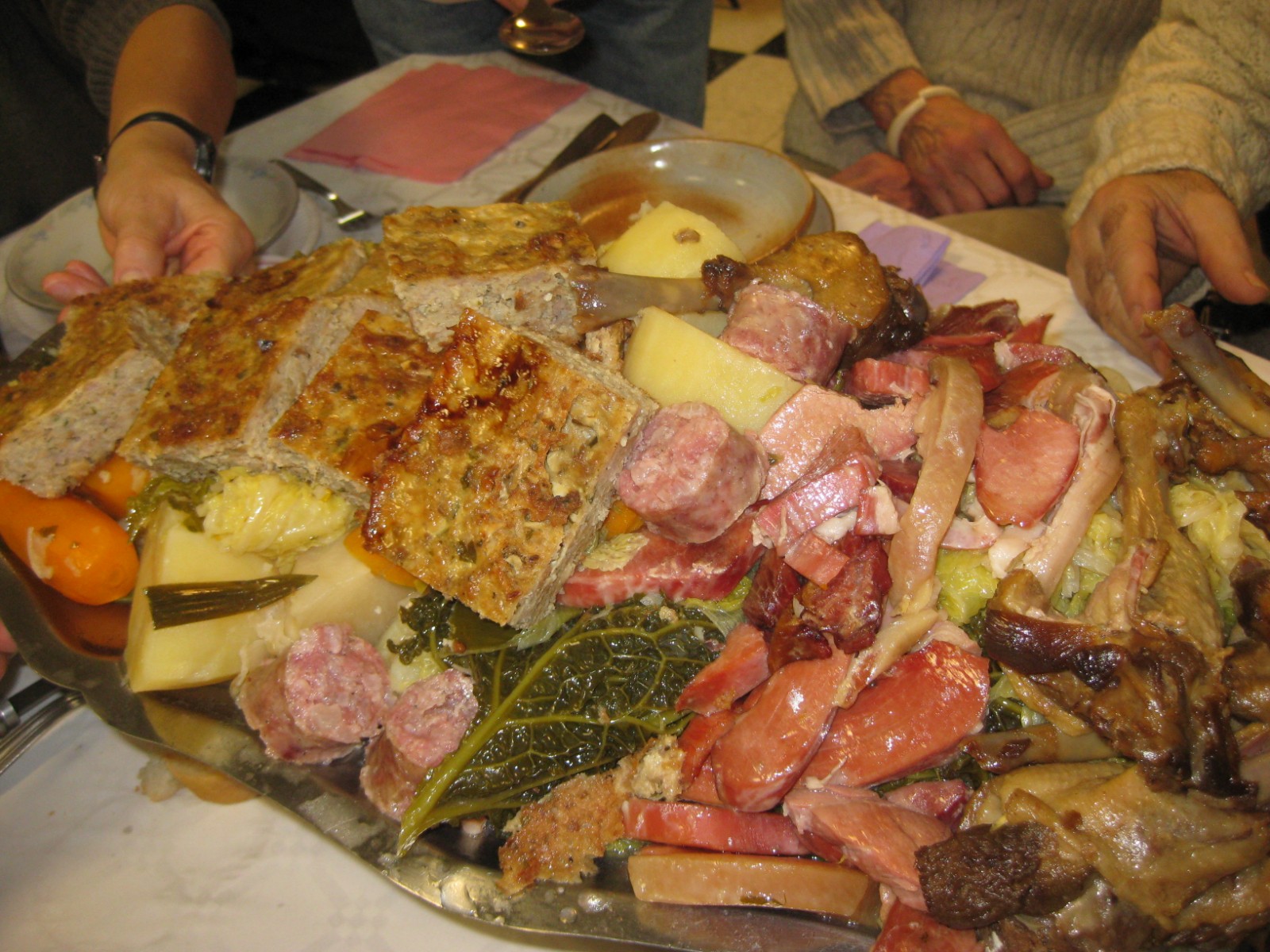
If you still think France is the land of sophisticated and fine dining, you’ve yet to discover the Ariège. People lived close to the land, they were out with their stock, working the fields, or keeping the textile industry alive and successful. Busy women put a pot of food on the fire in the morning and expected it to look after itself till hungry workers came in demanding nourishment. And they were likely to get azinat. Azinat with rouzolle. That’s what about 80 of us sat down to on Saturday night,
I suggested it was a dish that was more than a bit troublesome to prepare. Joscelyne, in her 70’s and a life-long Ariègeoise was having none of it.
‘No, it’s easy! Take a large cabbage and blanch it for 5 minutes. Meanwhile, chop your onions or leeks, carrots and any root vegetables you fancy, and sauté them gently. Add some slices of belly pork, some sausages, a couple of bay leaves and the cabbage. Throw in a couple of litres of water and simmer gently for at least a couple of hours.
Now throw in some large chunks of potato, some dried sausage, and the duck leg confit (these are portions of duck which have been preserved by salting the meat and cooking it slowly in its own fats) which you’ve browned gently in a frying pan to remove the excess fat, and continue to cook gently for another half hour or so.
Meanwhile, make the rouzolle. Mix together chunky sausage meat, some chopped fatty bacon, eggs, milk, a couple of slices of bread, chives, parsley, garlic. Form into a flat cake and fry on both sides.’
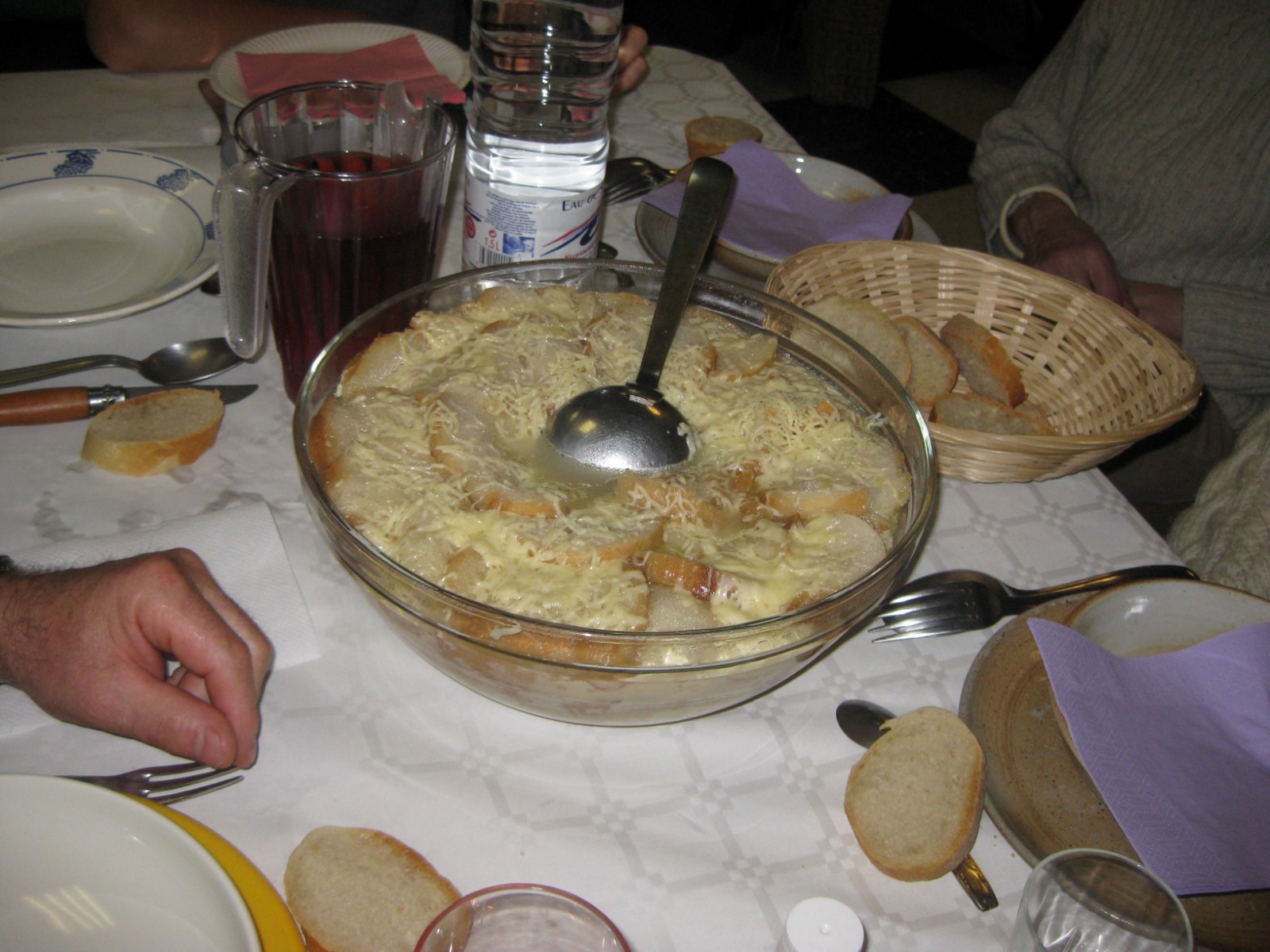
According to Joscelyne, the hungry family would have as their lunch the bouillon from the dish, poured over slices of bread generously sprinkled with grated cheese. Cheap, filling and nourishing.
The deliciously soggy bouillon
Dinner, at the end of the day, would be all the meats and vegetables.
Azinat
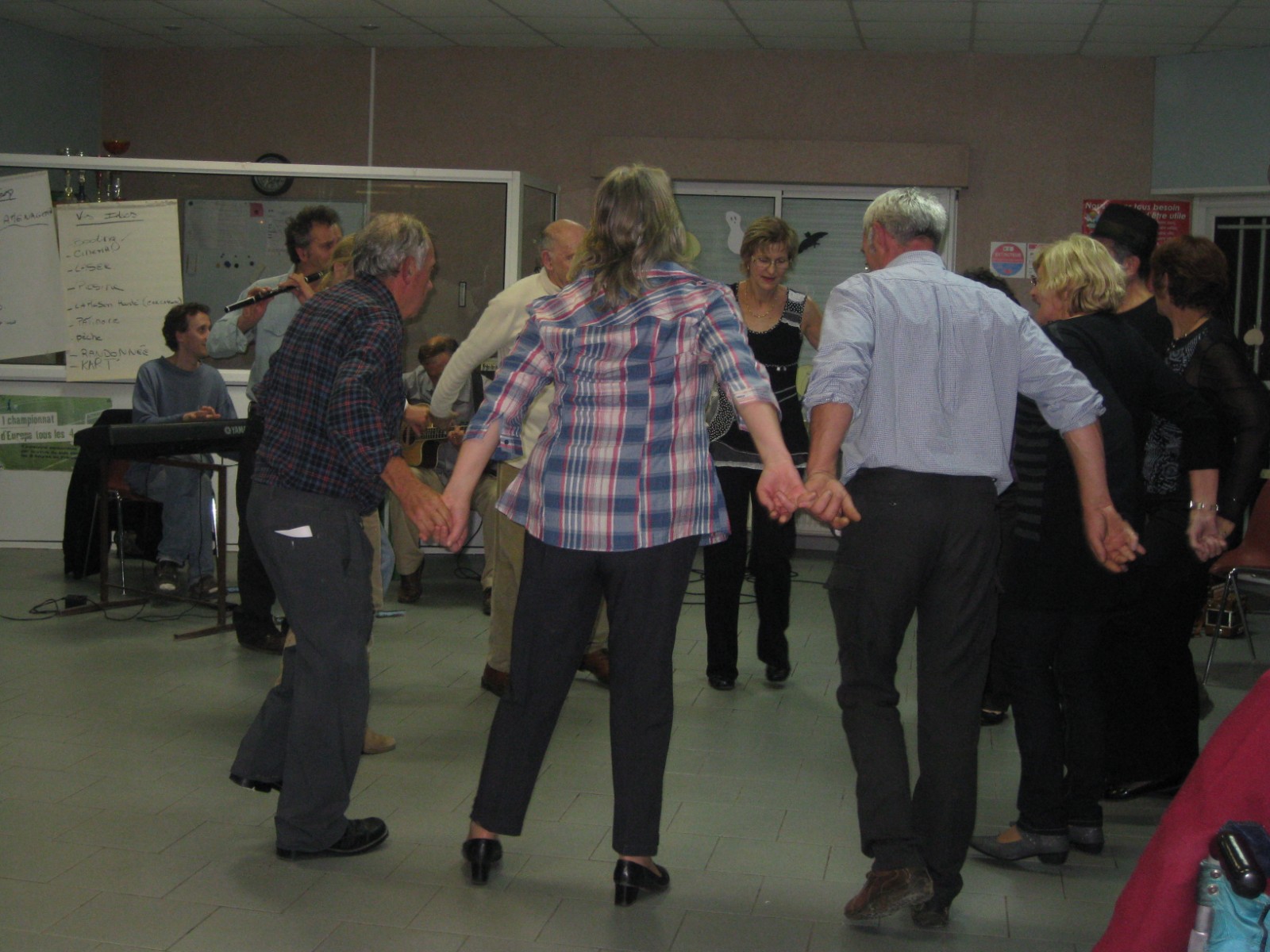
That evening, we sat down to the soup, followed by the meats. Followed by cheese. Followed by croustade, the Ariègeois answer to apple pie. Followed by membrillo – quince paste – and coffee. Followed by an energetic evening of Breton dancing. We needed to burn off those calories.
It took a while to get us all on the floor. But we all made it eventually. Even me.
 Fetch up at our friend Peta’s on a summers day, and she’ll have thrust a cool glass of sophisticated, refreshing and home-made elderflower cordial into your hand before you’ve even had time to admire the garden. Somehow, I’ve never got round to making it myself …. before this year.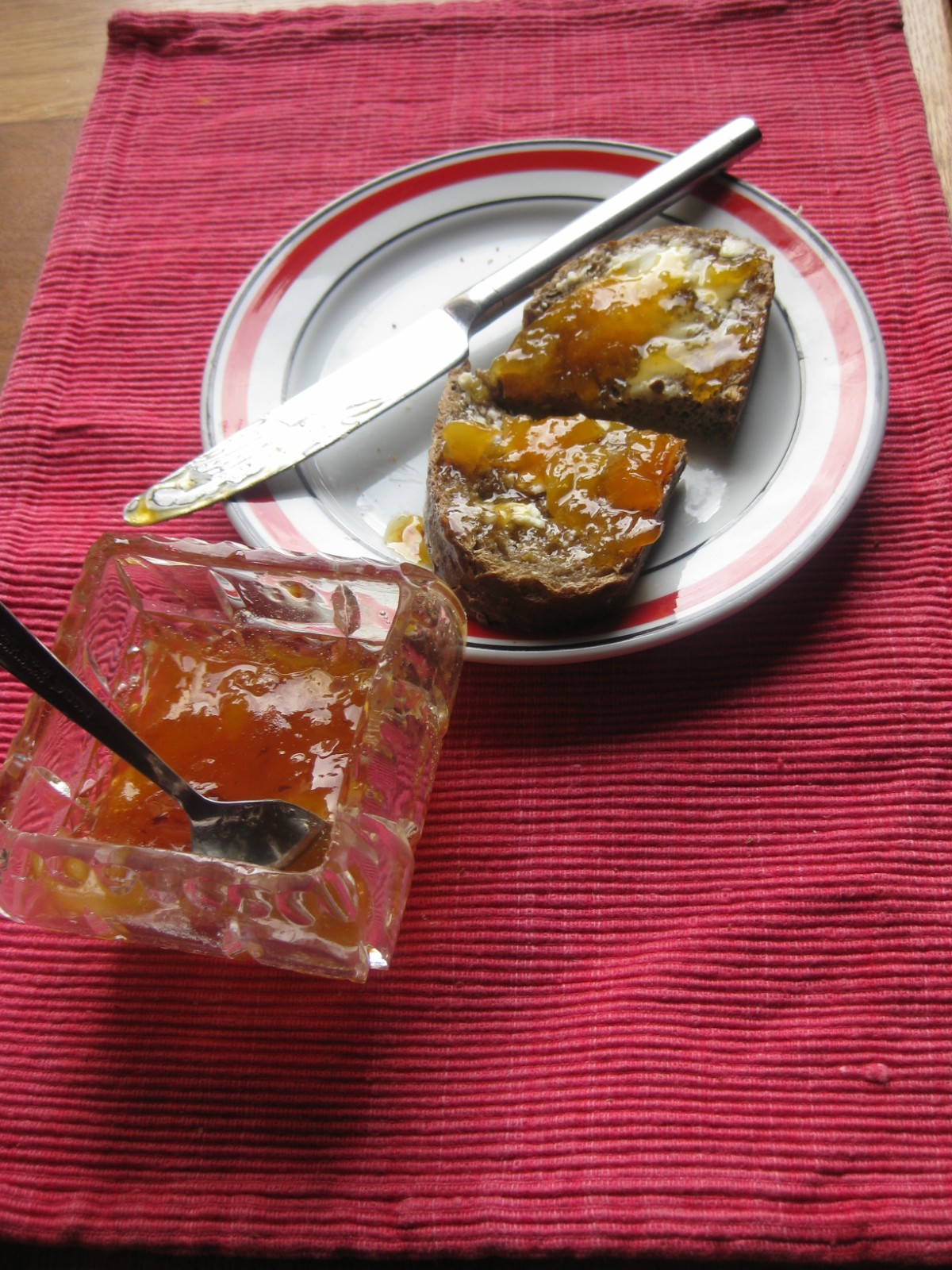





 From Pyrenees to Pennines
You must be logged in to post a comment.