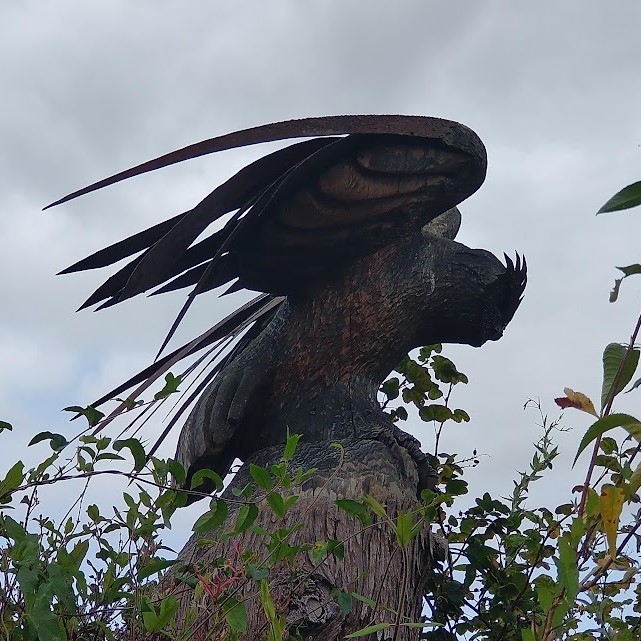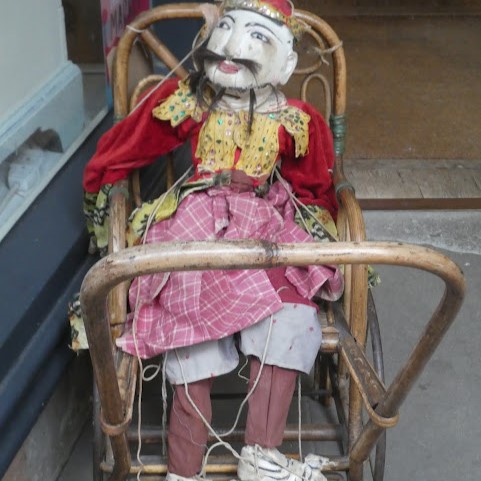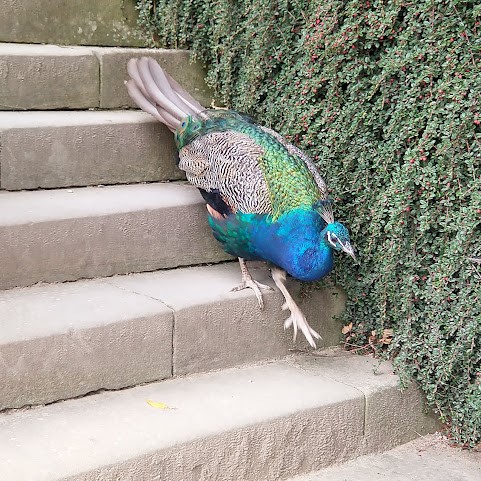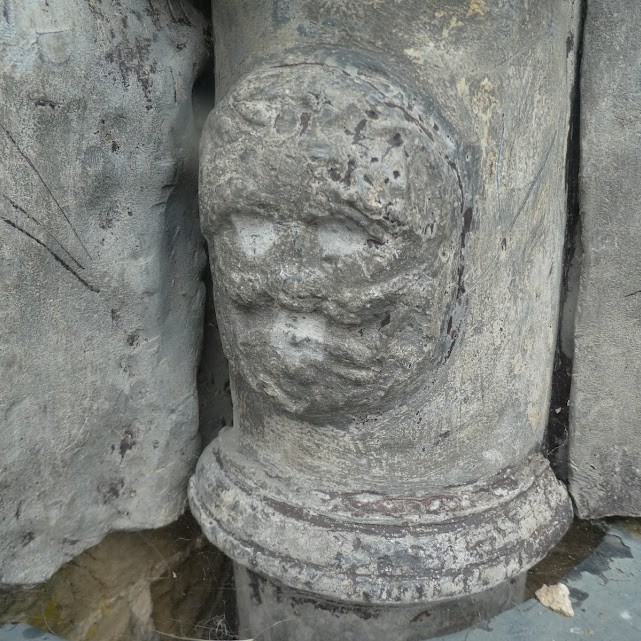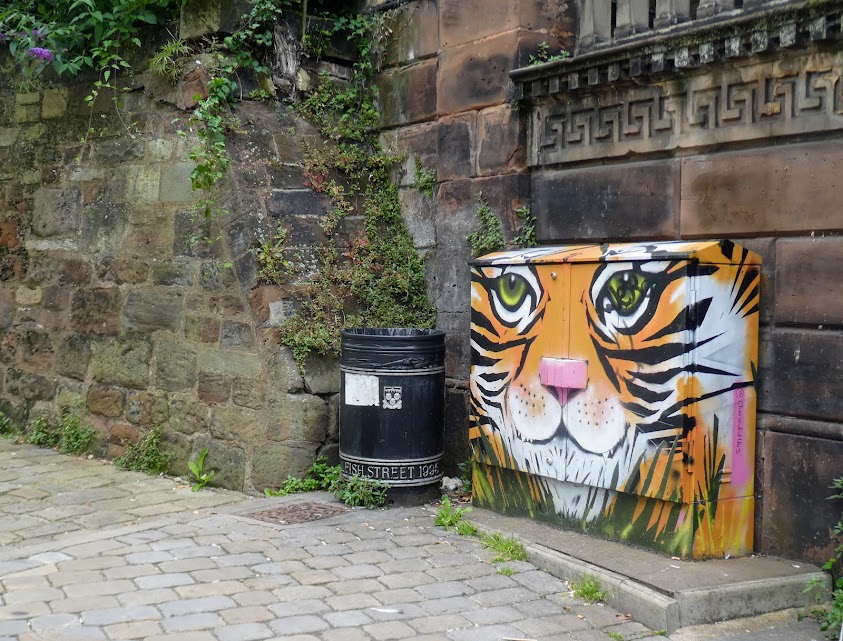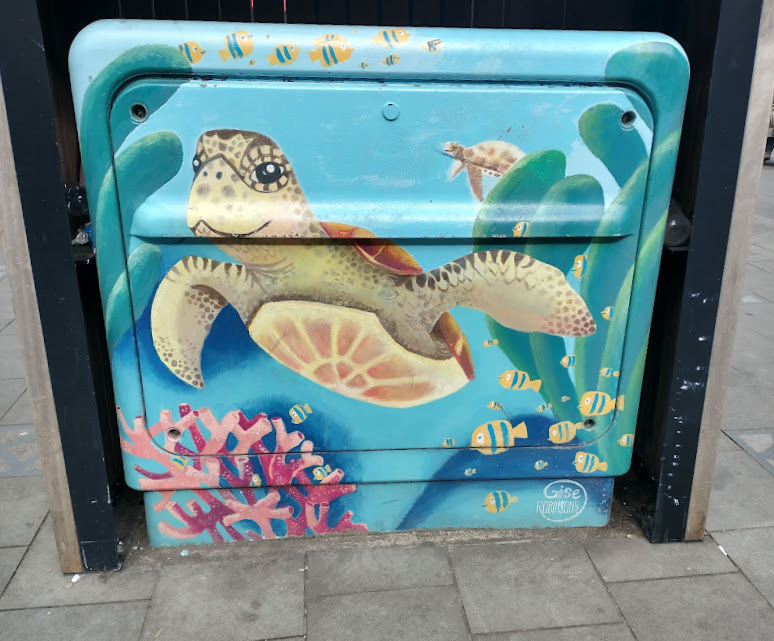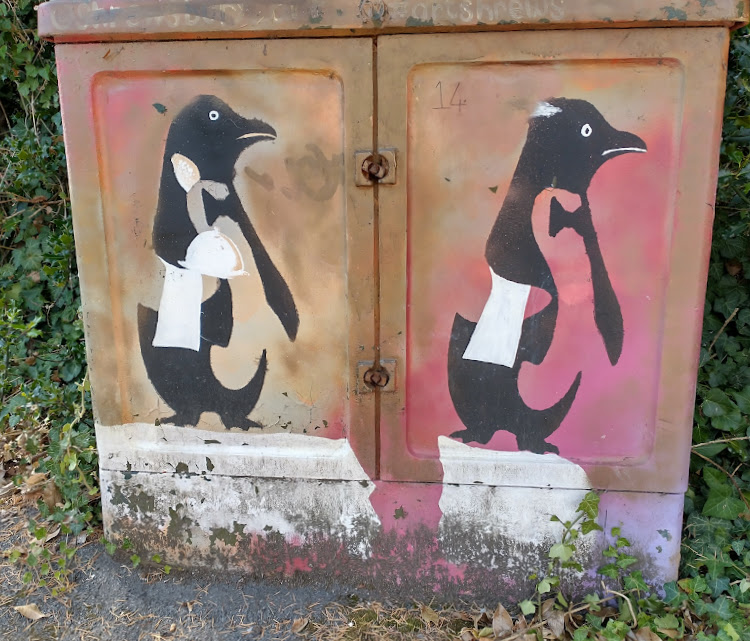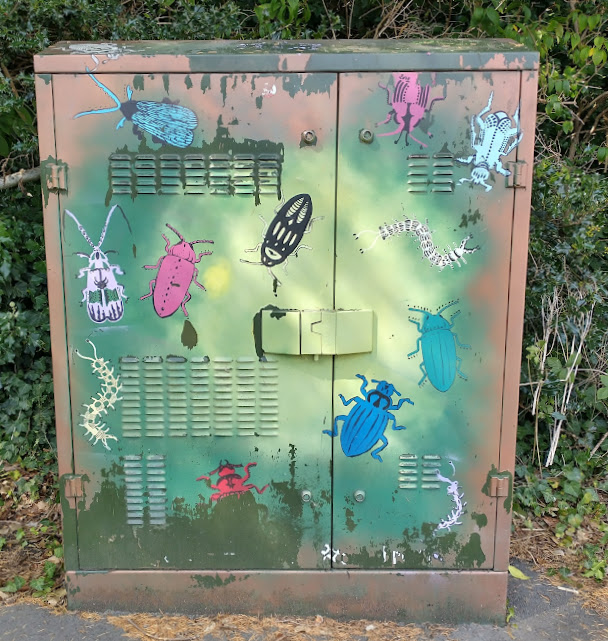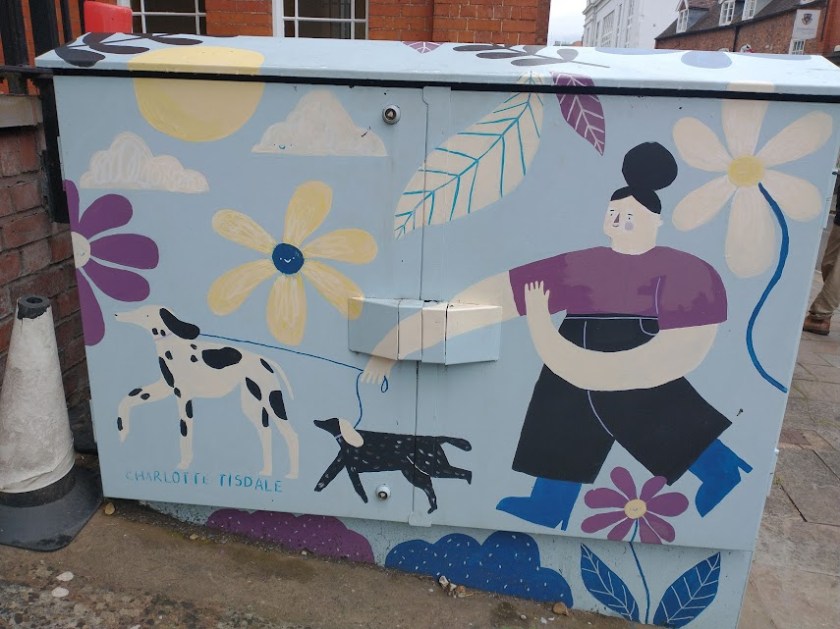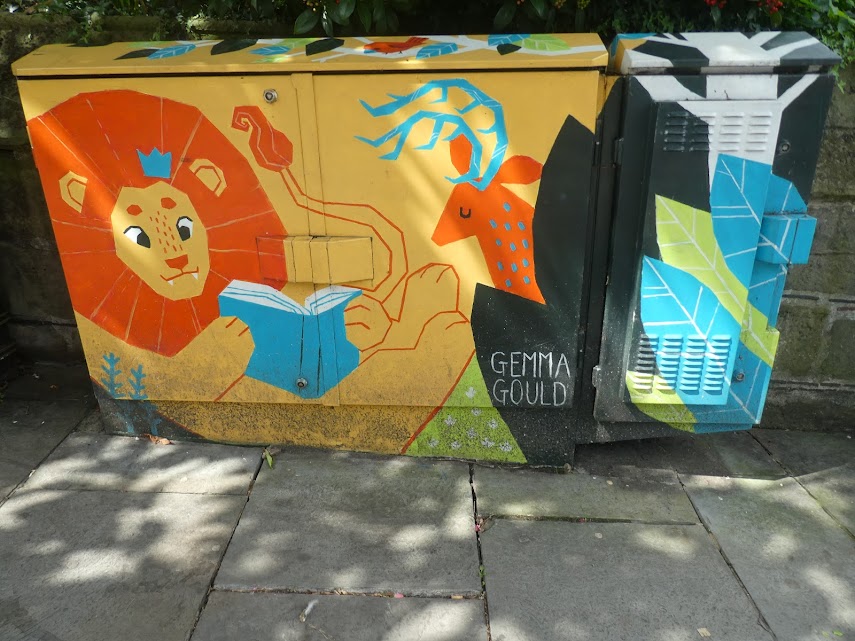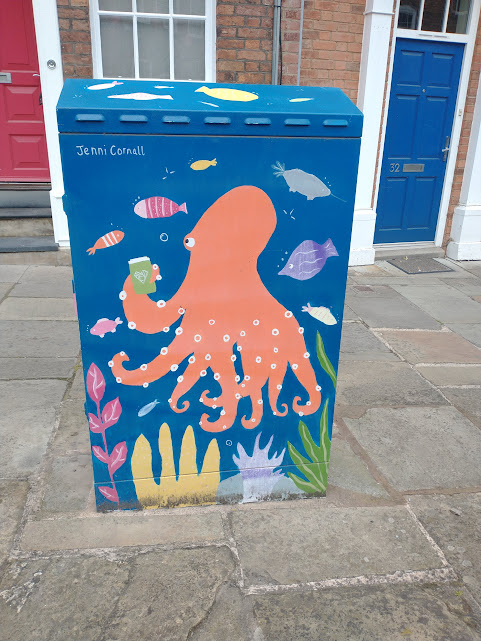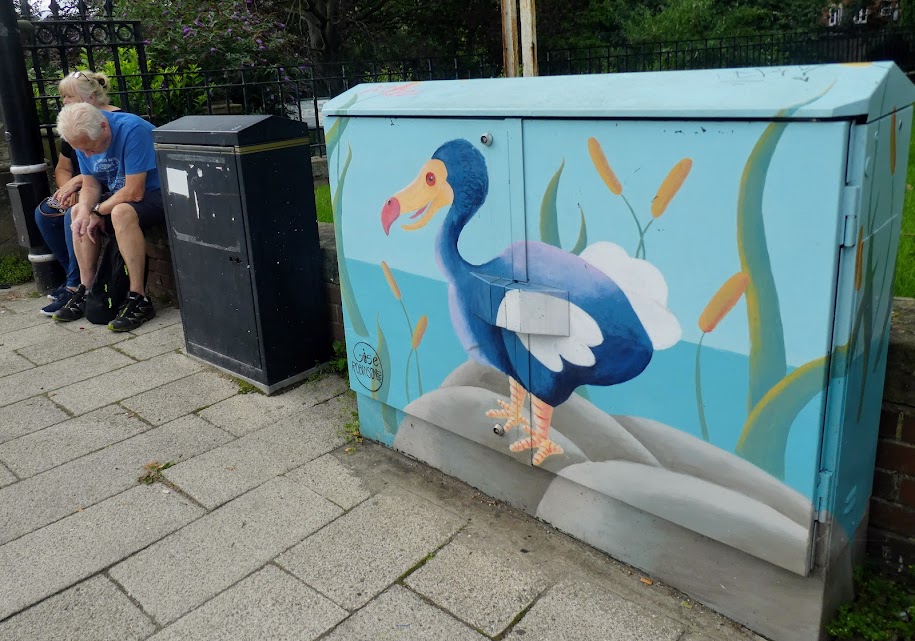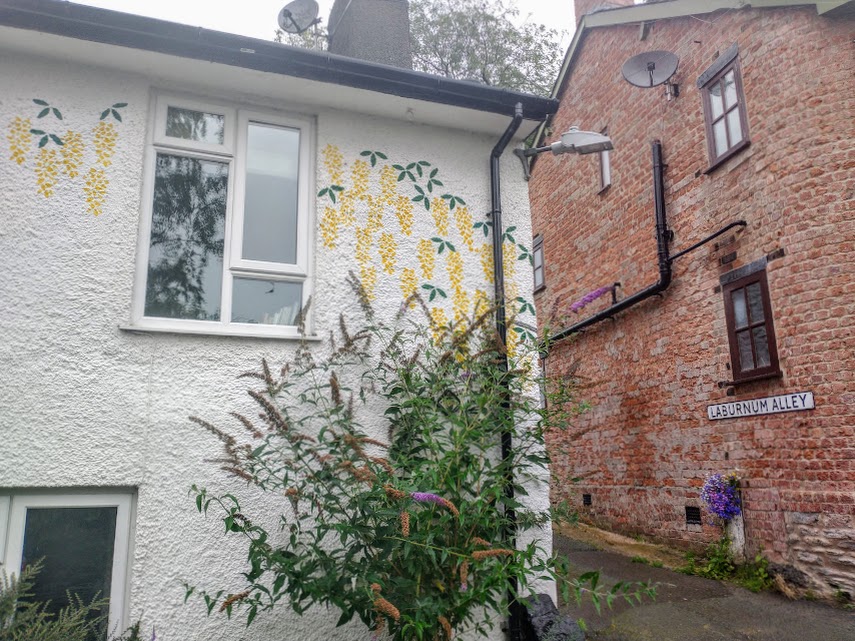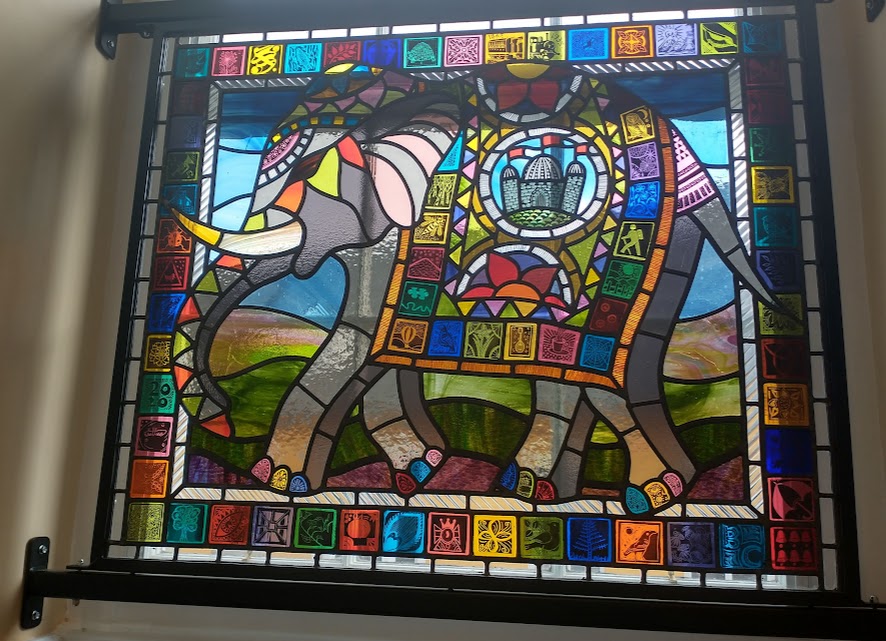
Most BT boxes fade anonymously into the townscape. Not here in Shrewsbury. Look.


For Natalie’s Photographing Public Art Challenge.
Most BT boxes fade anonymously into the townscape. Not here in Shrewsbury. Look.


For Natalie’s Photographing Public Art Challenge.
Not on the main road to anywhere much, Bishop’s Castle (nowadays it no longer has a castle) may be somewhere to settle if you’re something of a creative type: an artist, a musician, a writer or a craftsperson. It’s an interesting town for a day trip – in our case because we were going to meet fellow blogger Tish Farrell, whose blog Writer on the Edge is one I know many of you read (And if not, why not?). We both enjoyed a morning with Tish and her husband before they waved us off to discover the town under our own steam.
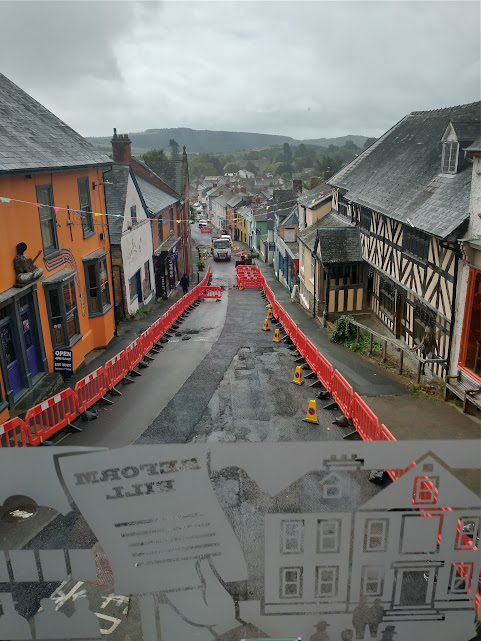
I’m settling for a few postcards. Here’s the view from the Town Hall down the main street. If only they hadn’t been digging the entire length of the High Street up! No fun at all.

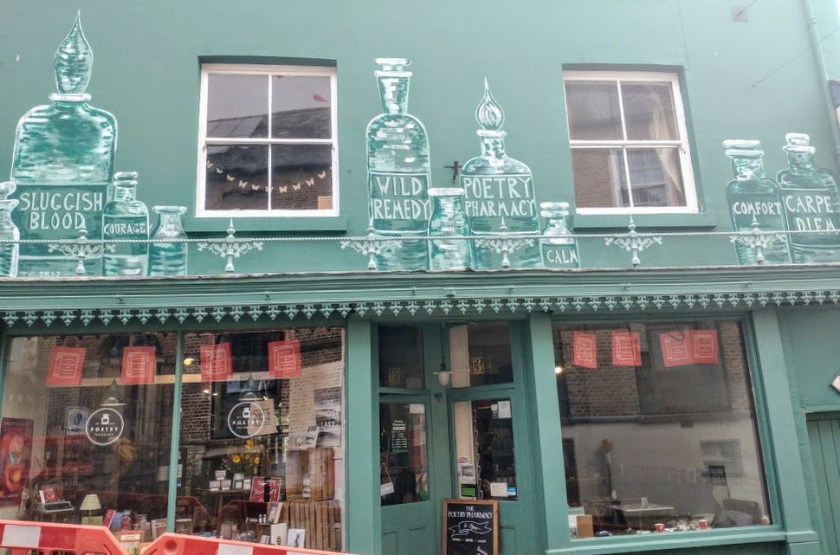
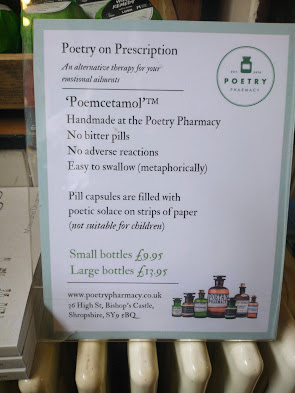
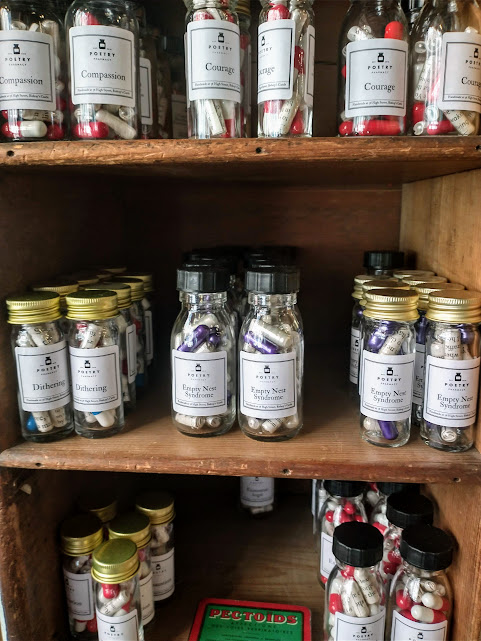
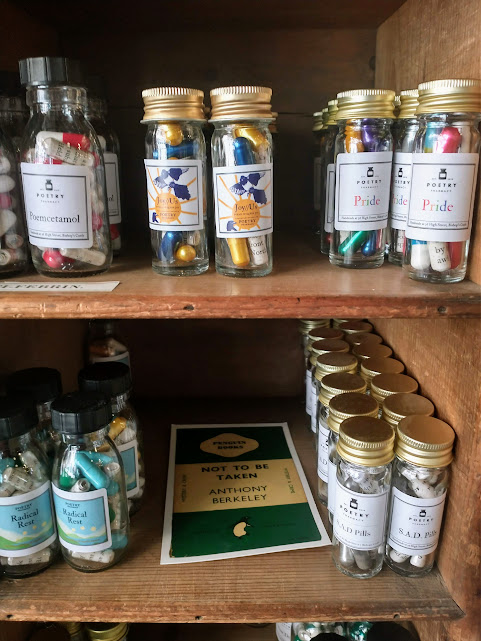
We pottered around quirky independent shops. Here’s our favourite – The Poetry Pharmacy.
The world’s first ever Poetry Pharmacy offering walk-in prescriptions, literary gifts, and books to address your every emotional ailment. Visit our beautiful Victorian shop in the small town of Bishop’s Castle, Shropshire, to browse the bookshop or pause in the Dispensary Café to be prescribed coffees, tisanes, sodas & sherbets to lift the spirits.


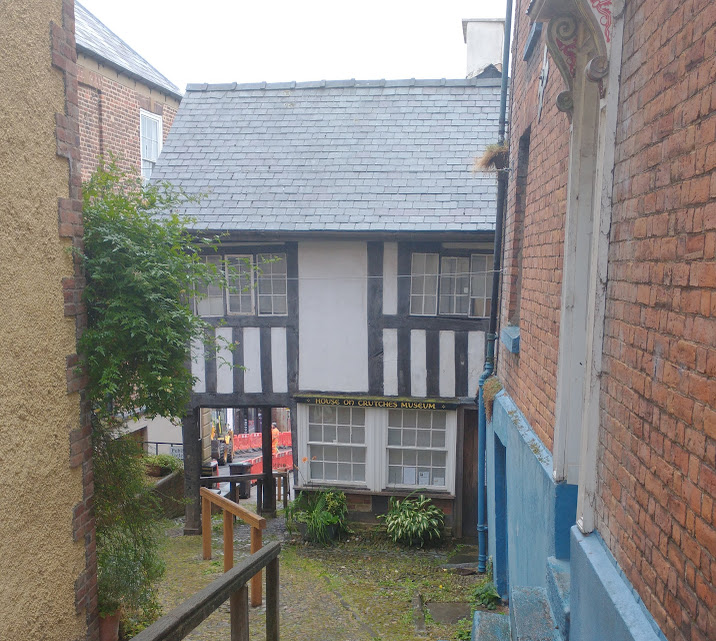
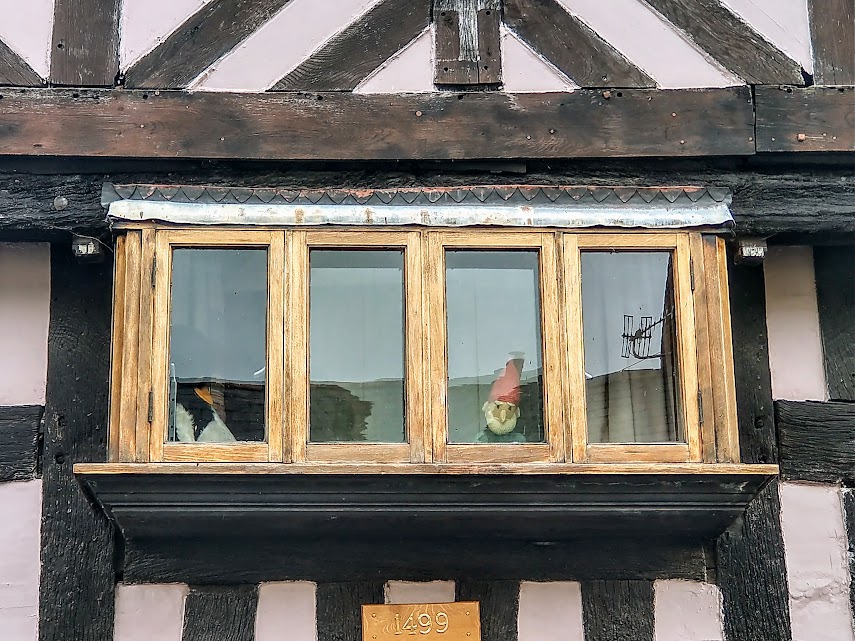
There was the House on Crutches Museum – sadly, closed that day: and so many charming buildings worth a second glance.


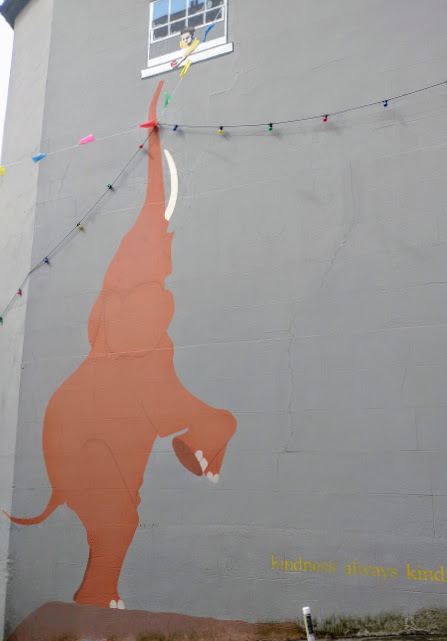
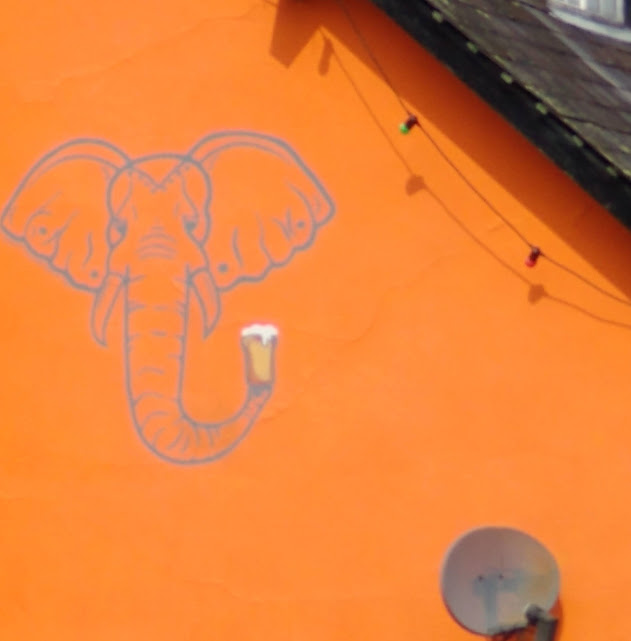
Or you could go looking for images of elephants, a reminder of two things. First, that Clive of India, whose family Coat of Arms included an elephant, once lived here. More memorably, during WWII, several circuses moved their animals out of the cities to Bishop’s Castle to avoid the air raids. A good few elephants were housed in local stables …


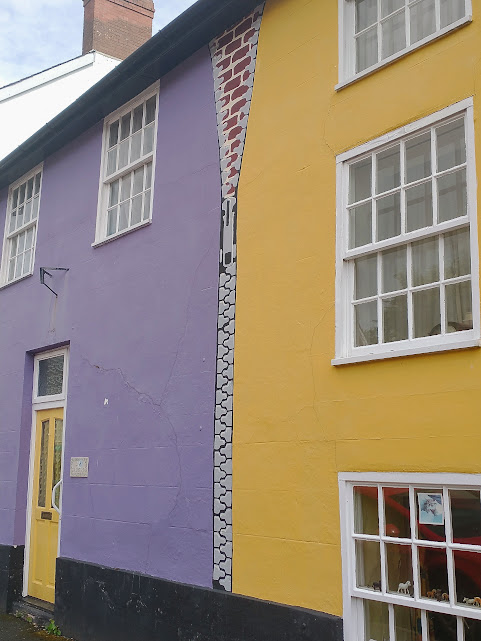
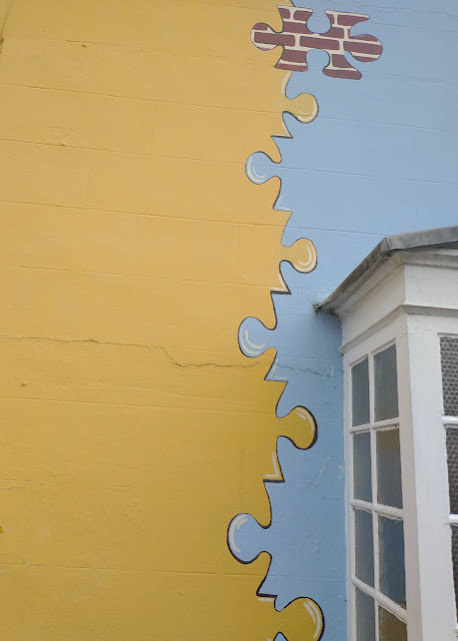
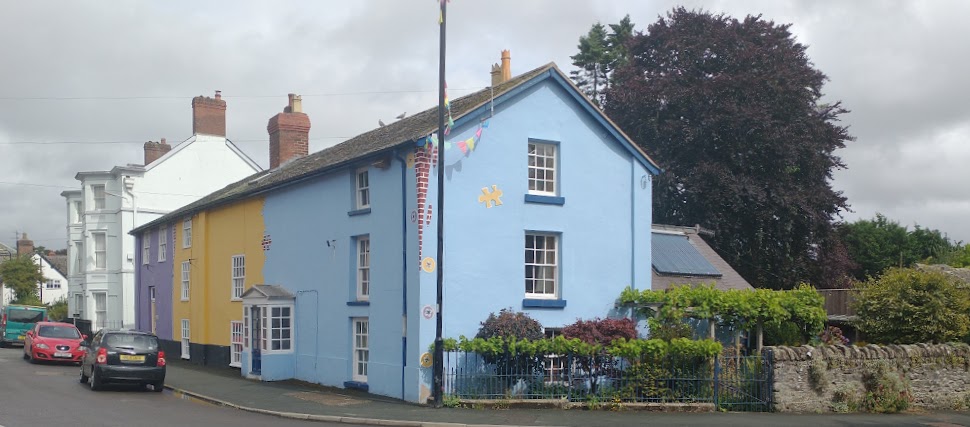
Perhaps my favourites were three houses at the bottom of the street. Terraced, and each painted a vibrant, different colour, the first was ‘zipped’ to the second, which was the ‘jigsawed’ to the third.


And that was pretty much it. A rewarding day that lived up to its promise. The featured photo shows almost the very first house we spotted on our way to find Tish. The first of many cheering sights.
A multi-tasking post.
For Natalie’s Photographing Public Art Challenge …
and Jo’s Monday Walk …
and Debbie’s Six Word Saturday.
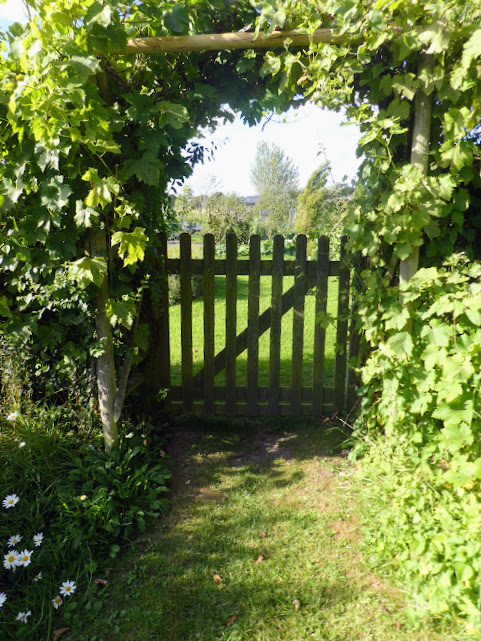
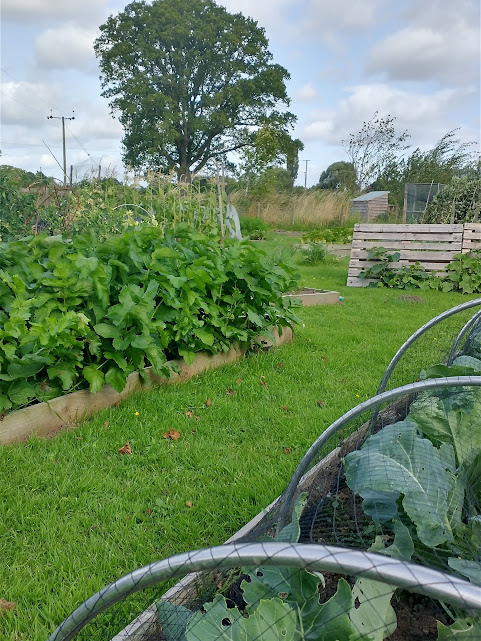
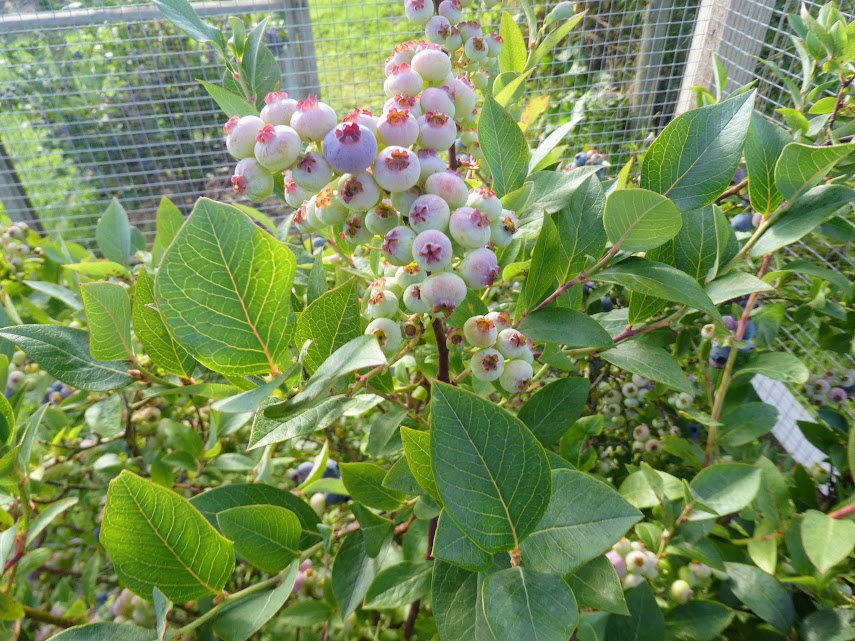
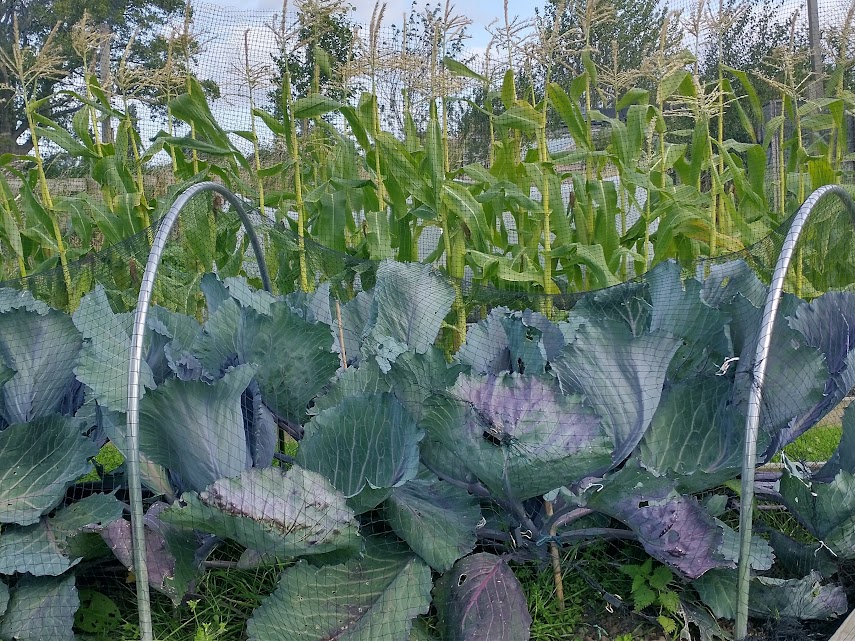
I thought it only right to send a postcard or two from the vegetable garden we’re tending in its owners’ absence, though very brisk winds make any photography difficult. Anyway, you’ve popped through the gate in the featured photo. Let the gathering, watering and weeding begin!


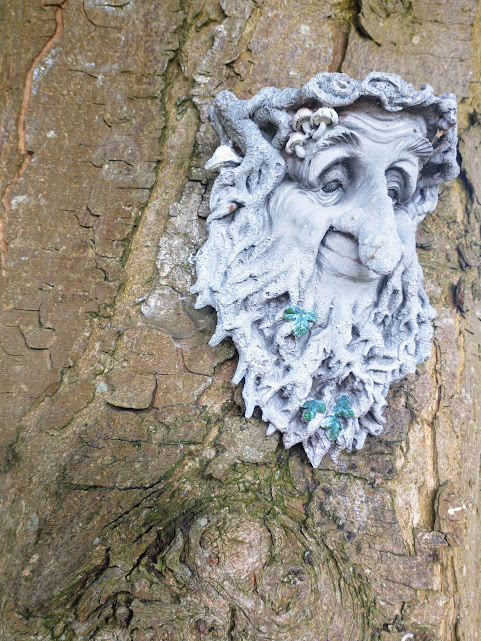
As you leave, this cheery chappie on a tree will thank you for your efforts.

Another Shropshire postcard.
An unexpected treat yesterday. We went to Wales, to Chirk Castle, and on the way, we saw two feats of engineering in one: Chirk Aqueduct and Viaduct. Each of them has one end in England, the other in Wales. And what a sight! Completed in 1801 by William Jessop and Thomas Telford, the aqueduct is 710 foot (220 m) long and carries the canal 70 feet above the beautiful River Ceiriog across 10 circular masonry arches.


Walking along the towpath, as I did, high above the bucolic valley beneath, you can see next to it the railway viaduct opened in 1848 and designed by Scottish engineer Henry Robertson. It quite made our morning. I ventured too into the aqueduct’s tunnel – one of the first designed to have a towpath. Barges used to be manned by several men, with a horse walking up ahead on the side of the canal, attached to the barge by a rope. When the boat came to a tunnel, the horse would climb the hill and the men would lie on their backs and ‘walk’ their feet along the roof and walls of the tunnel (‘Legging it’). How grateful those men must have been to find a towpath at the disposal of their horse!


Whether you get a postcard from Chirk Castle remains to be seen. So much to do, so little time …
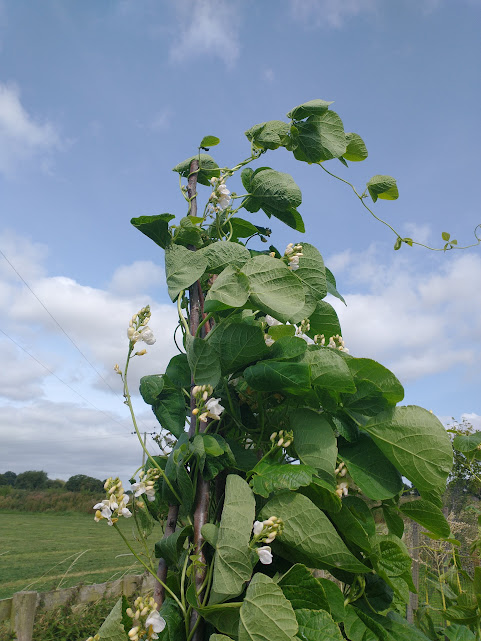
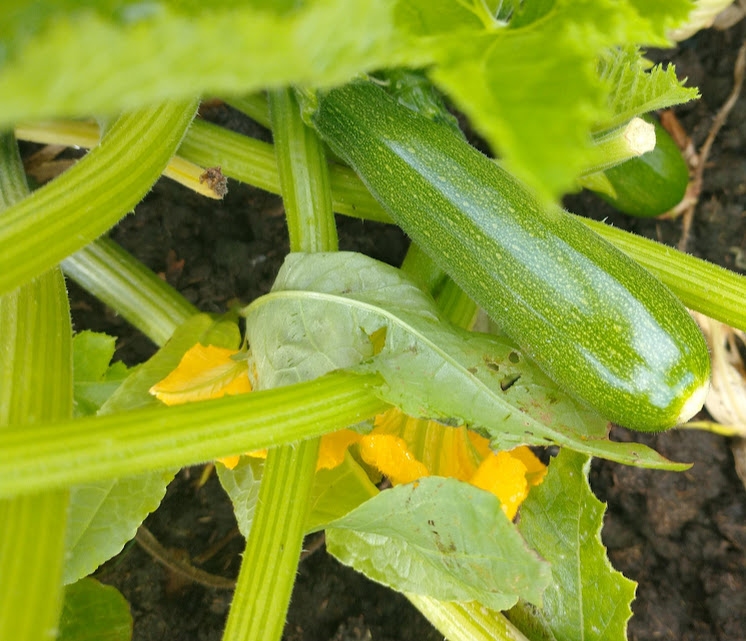
We’re staying near Shrewsbury just now, vegetable-garden-minding for friends. This mainly involves eating quantities of just-picked produce, to prevent the courgettes becoming marrows, the lettuces bolting, and the beans giving up bothering.
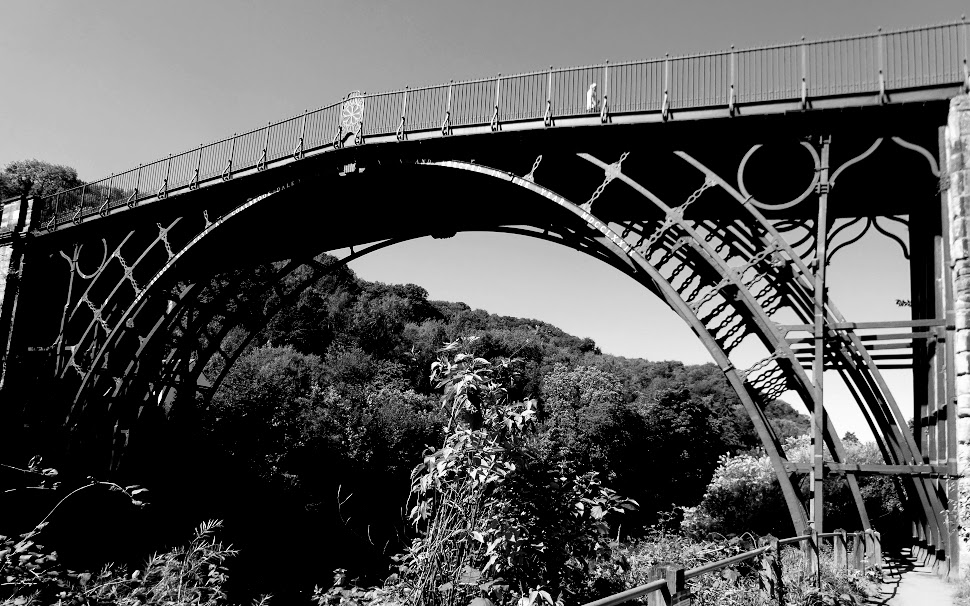
This is not however a full-time job, so I’ll be sending you postcards from time to time. The first is from Shrewsbury Flaxmill Maltings. This was built in 1797, the very first building in the world to use an entirely iron frame. And that made it fireproof. Mill buildings – full of dust, fluff, combustible fibres and fabrics – largely built round a wooden carcass, had a nasty habit of burning down. BUT an iron frame was fireproof. And then it offered another advantage. Buildings made this way turned out to be strong enough to support mulltiple storeys. The way was paved for the skyscaper to be developed.
And the long and varied story of this mill deserves to be told – another day.

Postcards from Shropshire (1)
Indeed they are – at Newbiggin-by-the-Sea, Northumberland. This ‘Couple’ by Sean Henry has been standing on a platform on a breakwater gazing out at sea since about 2008. At any moment of the day you’ll be able to spot passers-by gazing at them.


For Debbie’s Six Word Saturday.
Here’s a challenge and a half. Take five words, chosen monthly by Paula of Lost in Translation, and illustrate them. Here are the words: MONASTIC; ABANDONED; CRYSTAL; ECHOING; AFFABLE.
Monastic was easy. Of course I chose Fountains Abbey, a religious community from 1132 until Henry VIII caused it to be surrendered to the crown in 1539, under the Dissolution of the Monasteries. It’s where I have the privilege of volunteering, so it’s almost become my back yard. Here, in my featured photo, is the Abbey in autumn.
Abandoned? So much choice. I’ve picked a rather wrecked house in Seville.

Crystal was trickier. I don’t move in the right circles. But here is a crazed plate glass window on a ferry bound for Spain which has a slightly crystal-ish look.

You may not think my next photo illustrates ‘echoing‘. But trust me – it does. I was among the first passengers to arrive at London Bridge Underground Station just after 5.00 a.m one morning recently. There was not another soul on my platform. Only me. It echoed.

And we’ll stay in London for my last image, a cheery one. This affable chappie was snapped on a day out with Sarah of Travel with Me fame. He was part of a fun sculpture trail for children’s wheelchair charity Whizz Kidz.

So there you have it. Following the links to Paula’s and Sarah’s posts will show you very different interpretations, and perhaps you’ve seen others in blogs you follow too.
For this week’s Lens-Artists Challenge, Egidio asks us to consider compositions relying on two rectangles for their success. So I thought I’d offer a featured photo with lots of rectangles: the basic two, with sky at the top and earth at the bottom, and then, confusingly, a town square entirely tricked out in … squares. Emily and her Catalan family are looking out to sea.
I thought I’d include a couple more using this simplest of devices. The first from my beloved l’Albufera, which I’ve written about before – here (among several others).

And here’s another, from Lake Prespa in Greece, where the water reflects the sky above: the lower rectangle a pleasing echo of the upper.

And here’s one closer to home, in Whitby, a cormorant posing at the end of the pier.

Let’s stay beside the water: one a ferry across to Spain, spying on my fellow-passengers. At the Baltic Gateshead, spying on my fellow River Tyne enthusiasts, and in London, over looking the South Bank.


And finally we’ll whizz over to Barcelona, and wander round El Clot, and then Gràcia, where this view has two rectangles and includes any number of smaller ones, and the daily washing line.


This week, for the Lens-Artists Challenge, Donna asks us to look for the connections we make in our lives. I’m going short and fairly light-hearted by looking at some of our connections with animal life. That feature photo, for instance, shows two children delighted by their squirrel companion in Málaga, while he is equally pleased about the free sunflower seeds.
Less pleased are these birds: an Arctic tern and a greylag goose. Both are warning me – or any other pesky human in the area – to leave well alone as far as their young chicks or goslings are concerned.


All my other images come from Down at the Farm.
Here are three curious creatures – two pigs and a cow – wanting to know if those human have anything to offer …


… while this small boy is pleased that the cow is willing to accept a mouthful of hay from him.

We have sheep living next door. Unusually, they’re rather fond of human company, and canter across to the fence hopefully whenever they see me pass. It’s all Cupboard Love of course, but I’m daft enough to fall for it and try to have a few cabbage stalks or something about my person to give to them.

And here’s a young girl desperately trying to make a friend of a hen. Who isn’t quite so sure.

For my last image, we’ll leave the farmyard in favour of the deer park at Studley Royal. The deer are as likely to be watching us as we are them. You can never quite trust humans, they think.

My flight home from Barcelona the other day was remarkable for two reasons. For one, I had a window seat; and for two, the earth below was visible almost every mile of the way. Here’s the story of a journey.


Oh, and here’s an eleventh photo, from terra firma: alongside the (static) travelator at Manchester Airport.

You must be logged in to post a comment.