Above us only skylarks

Every Thursday, Anny leads us on a walk. We might go eastwards to the Aude, south towards the higher  Pyrénées….or indeed travel in any direction, certain of a wonderful day’s walking.

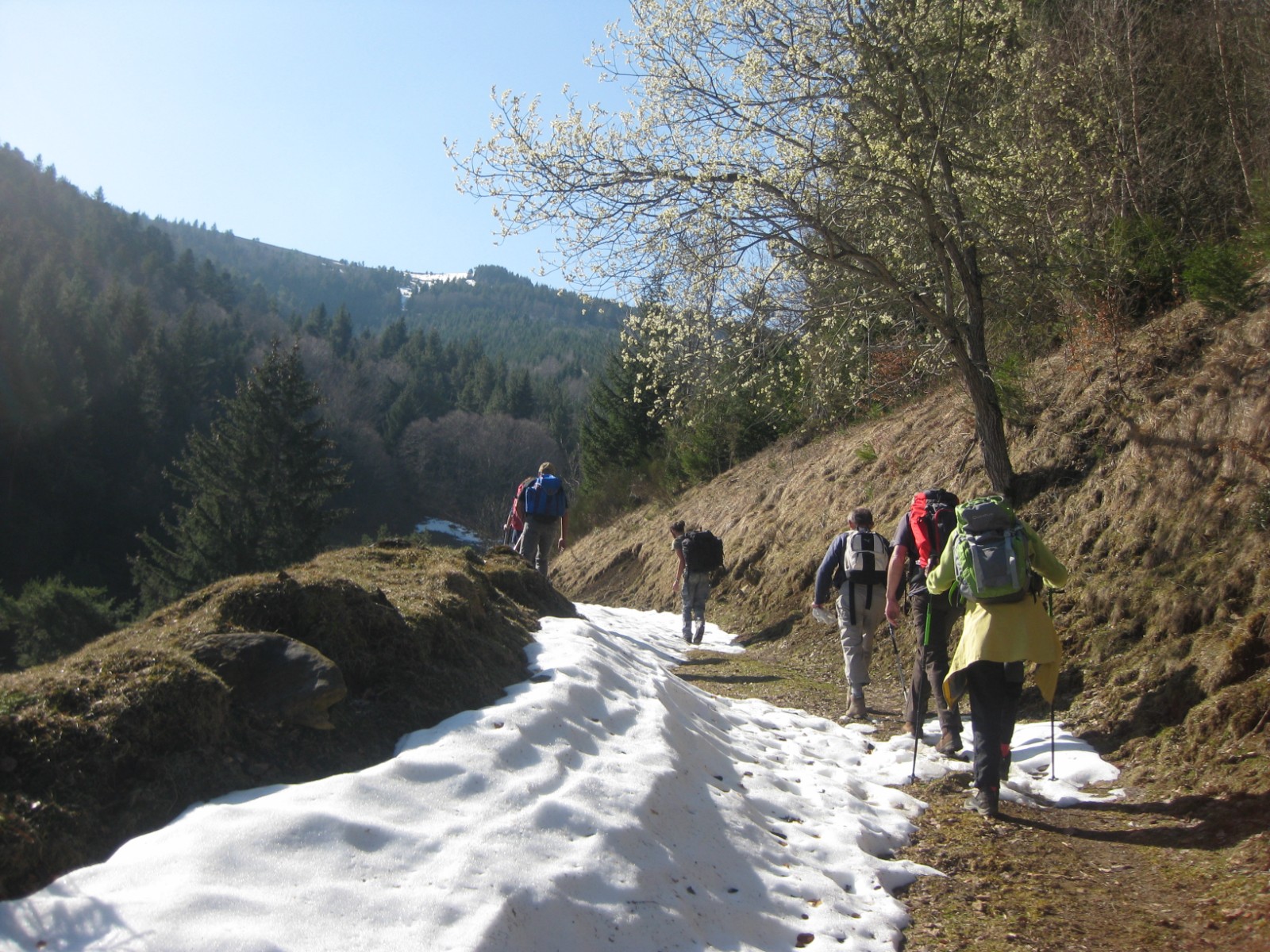
Today we met just beyond Foix, and still in our cars, climbed…and climbed…and climbed,  steadily for 9 miles.  And at the highest point of the Col d’Uscla (1260 metres), we parked. Then we laced up our walking boots, slipped on our rucksacks, and climbed…and climbed…. and climbed.

It was steady rather than challenging, and several times, Malcolm and I remarked that if it were not for the  Pyrénées beyond, we could have been on the North York Moors, with added altitude and sunshine.  Endless expanses of bilberry plants added to the illusion. Each hill we climbed promised to be the last: but as we reached each summit, another hillside appeared in view.

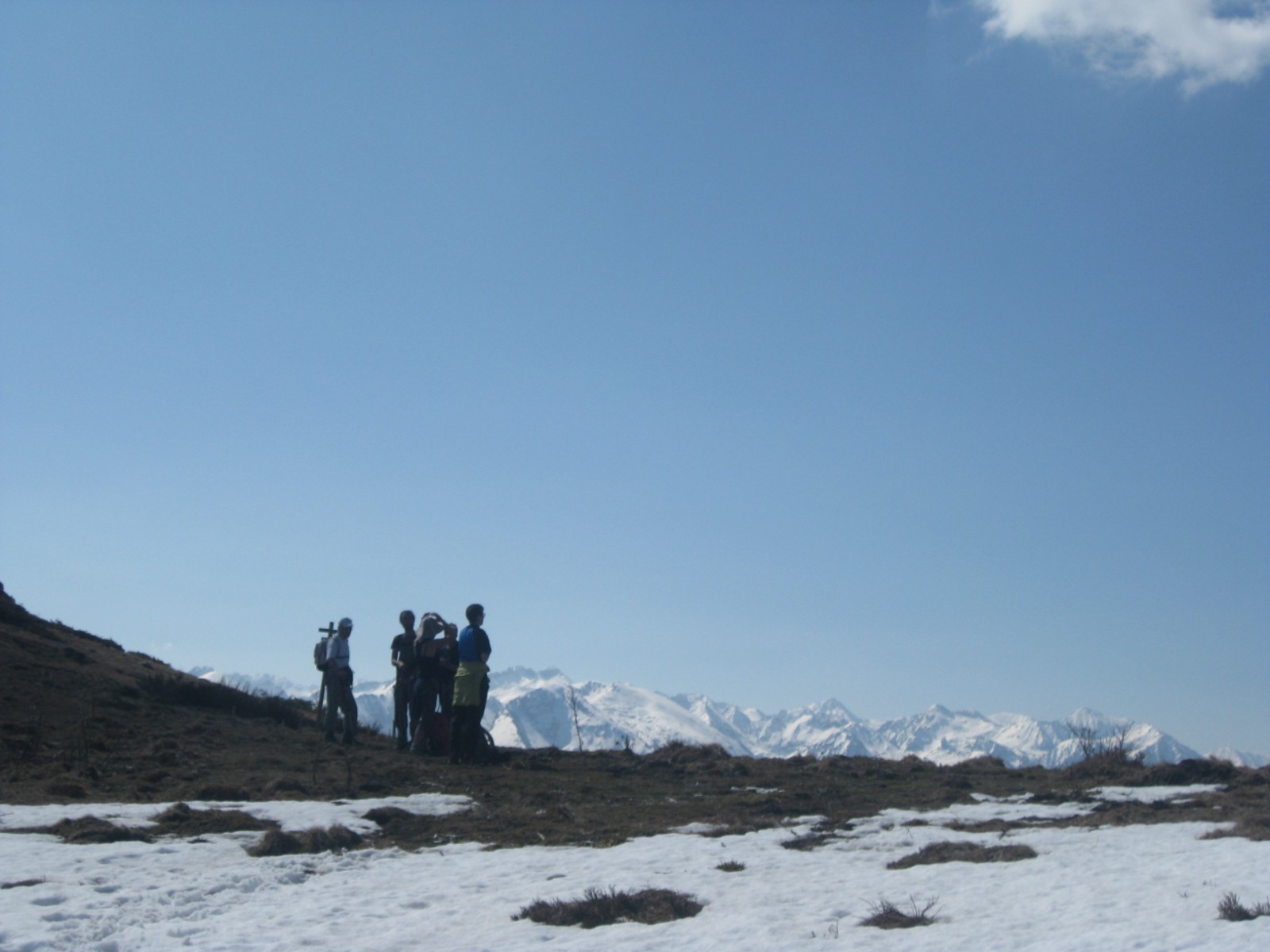
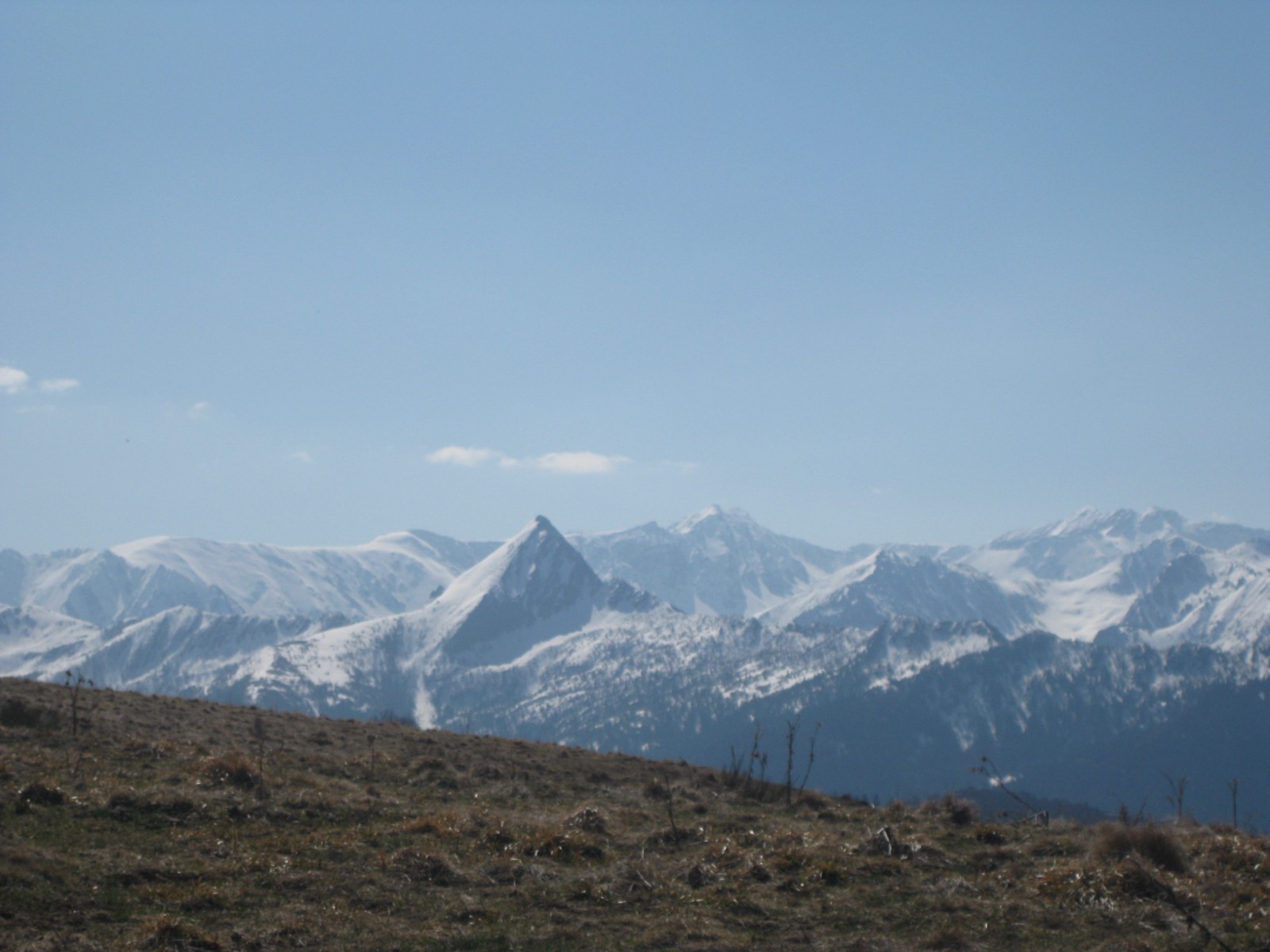
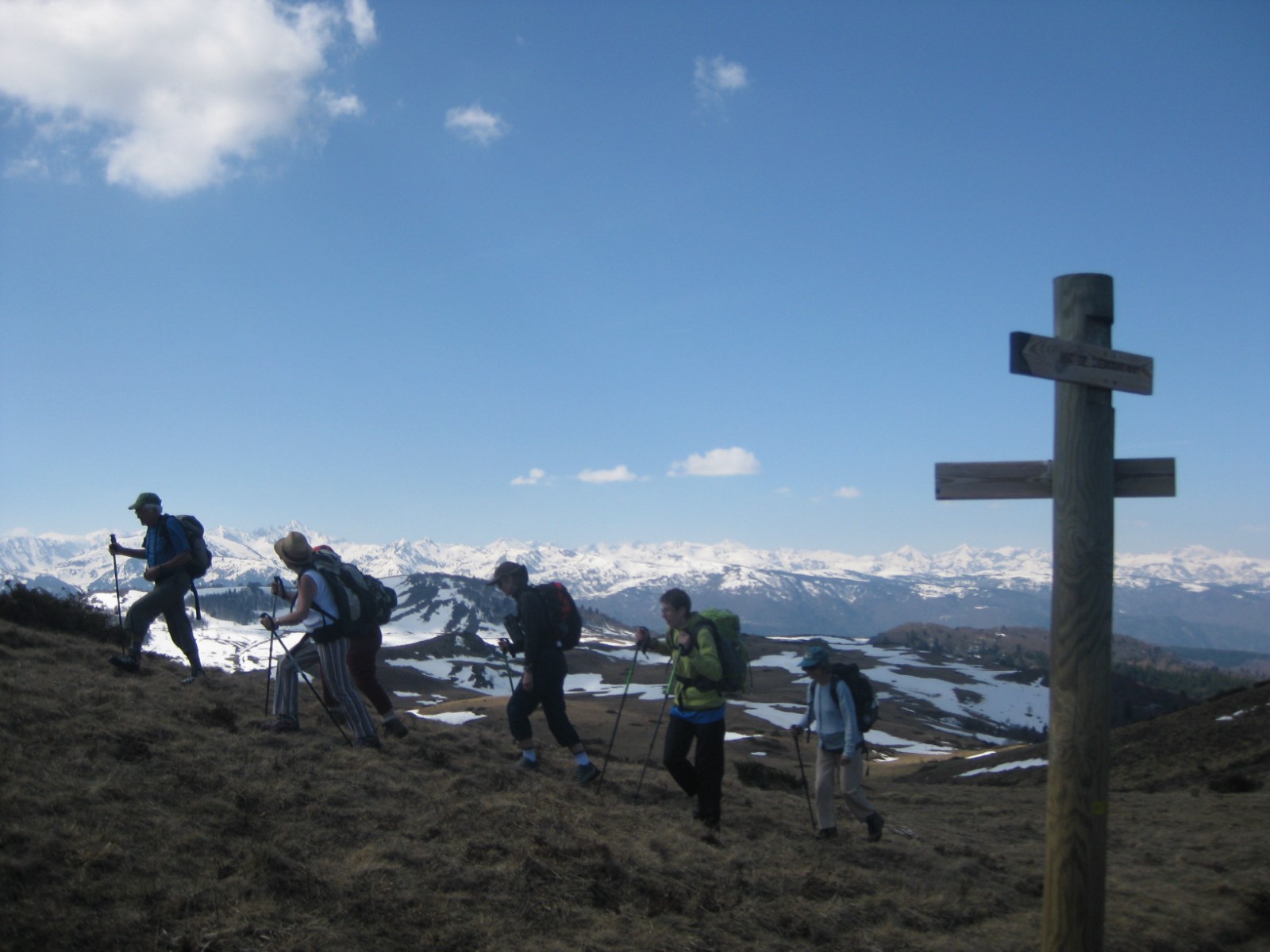
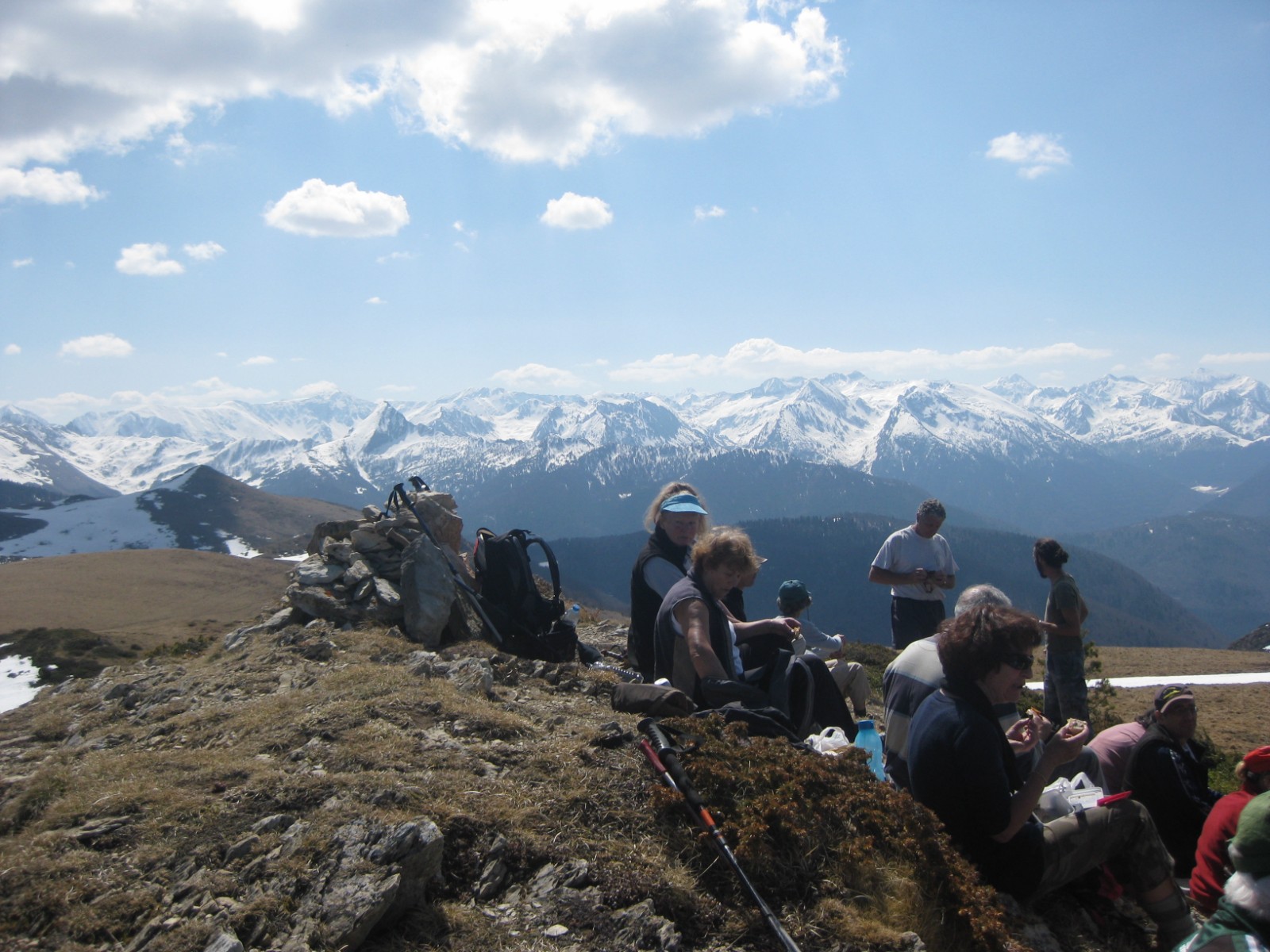
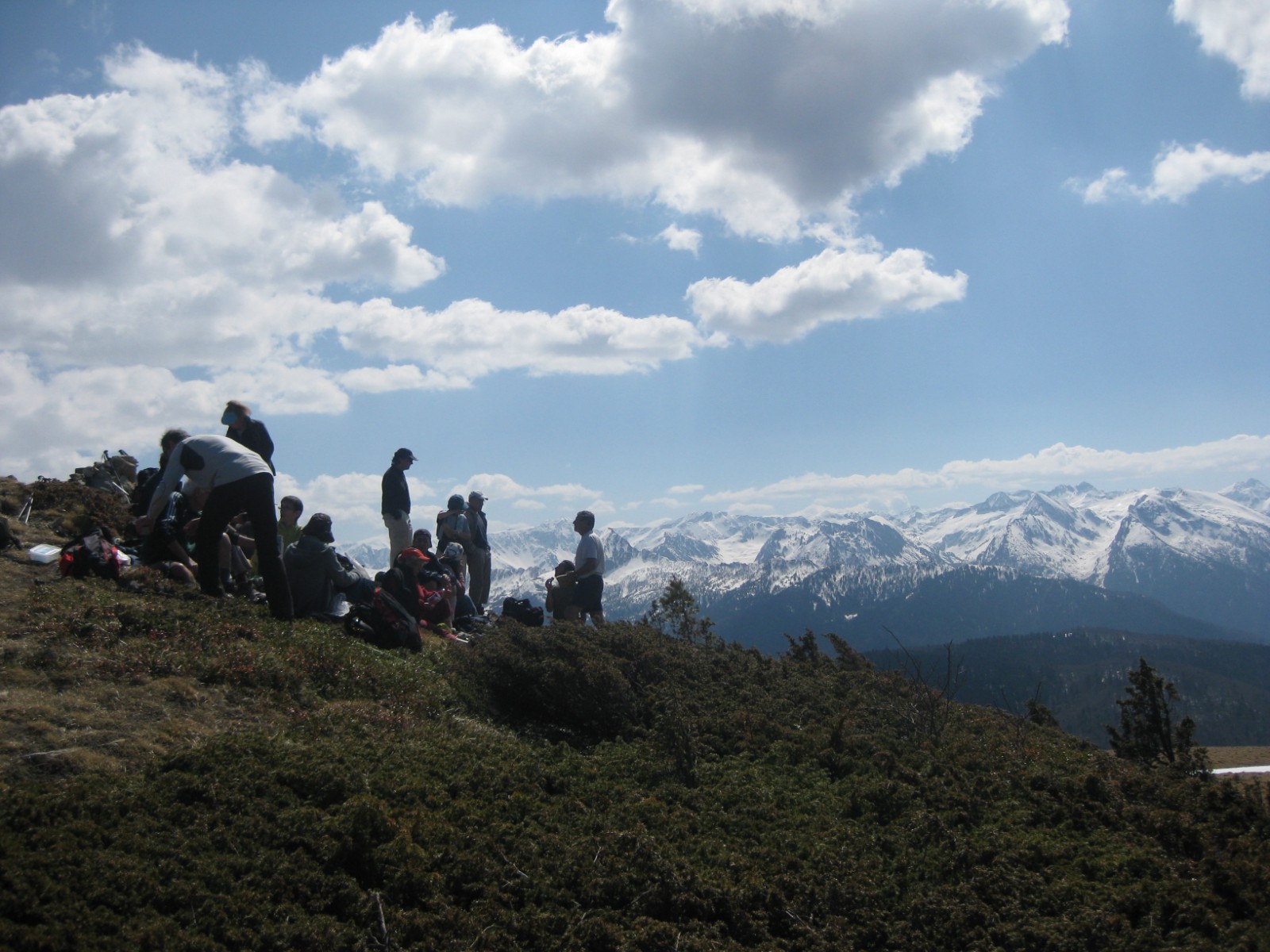
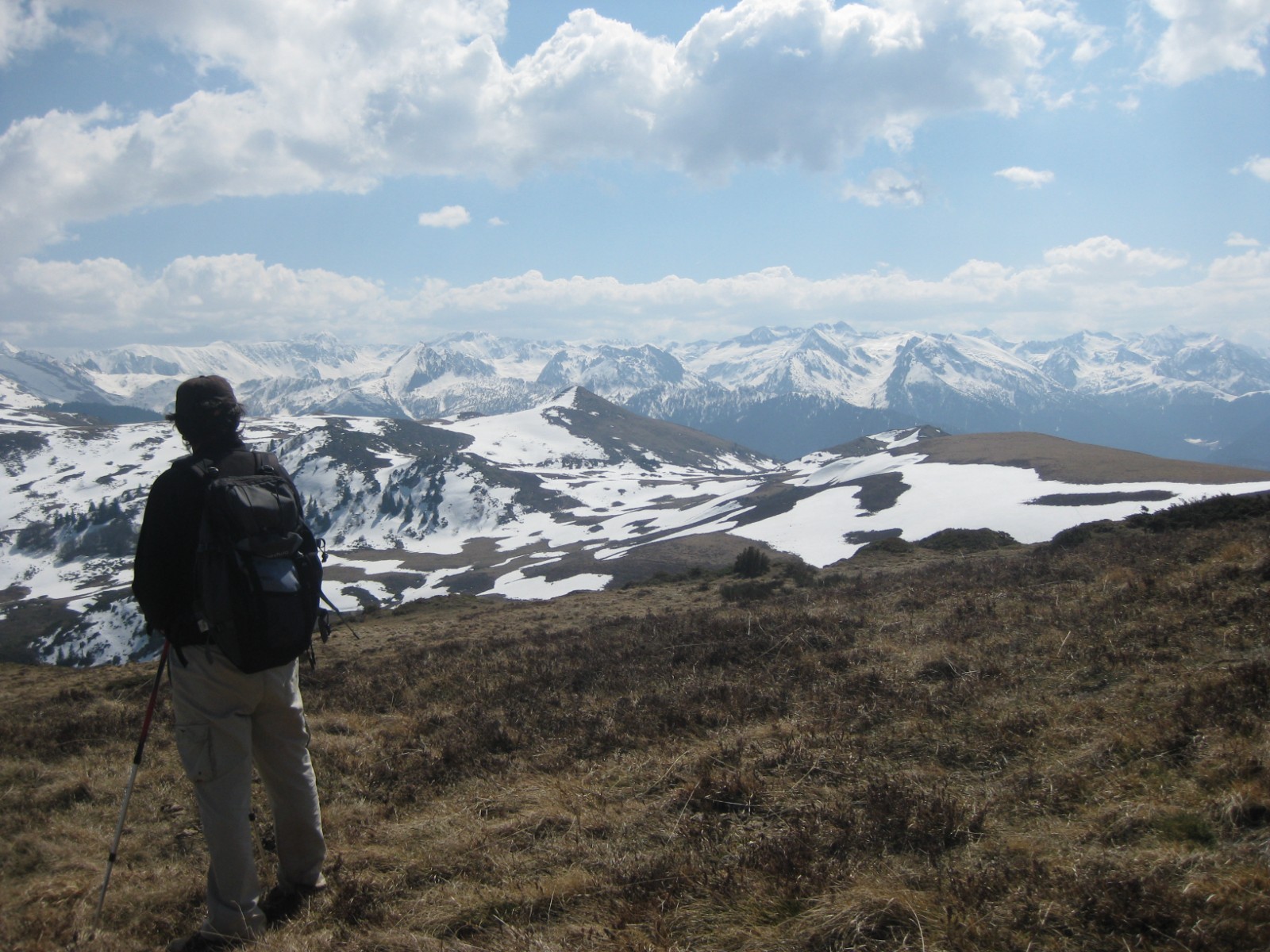
Our eventual reward was at the Cap-du-Carmil, at 1617 metres, with a 360 degree panorama of the  Pyrénées. It was quite, but not perfectly clear, yet we could probably see 50 miles or more in any direction. The only sounds were from the skylarks, joyfully singing way above our heads. I’ll let my pictures tell, slightly inadequately, the story.

Down through more wooded paths, there was the town of Massat below. Once the Ariège’s largest town, its isolated position and failing industrial life means it’s slightly forlorn now.  But not when you’re looking down on it, several hundred feet below.

A quick sortie to the Tour Lafont. This was built in the 1830’s, at a time when 12,000 French soldiers descended on the area to fight the ‘demoiselles’, local guerrillas disguised for some reason as women, determined to maintain their rights to collect wood for fuel, rather then allow it to be taken for the industrial economy slowly emerging throughout France. Despite their superior numbers, the soldiers lost the battles, and there are only odd reminders of their presence at the time in towers such as this one.

After lunch, on through the woods, until we rejoined once more our path with its open mountain views. Horses grazed the short grasses, and seemed only mildly curious about us.

And then it was over.  Boots and rucksacks off: cold juice, a moist and squidgy chocolate cake (thanks, Anny!), a final chat…. and back down that narrow uninhabited 9 mile road to civilisation , home and a cool shower.

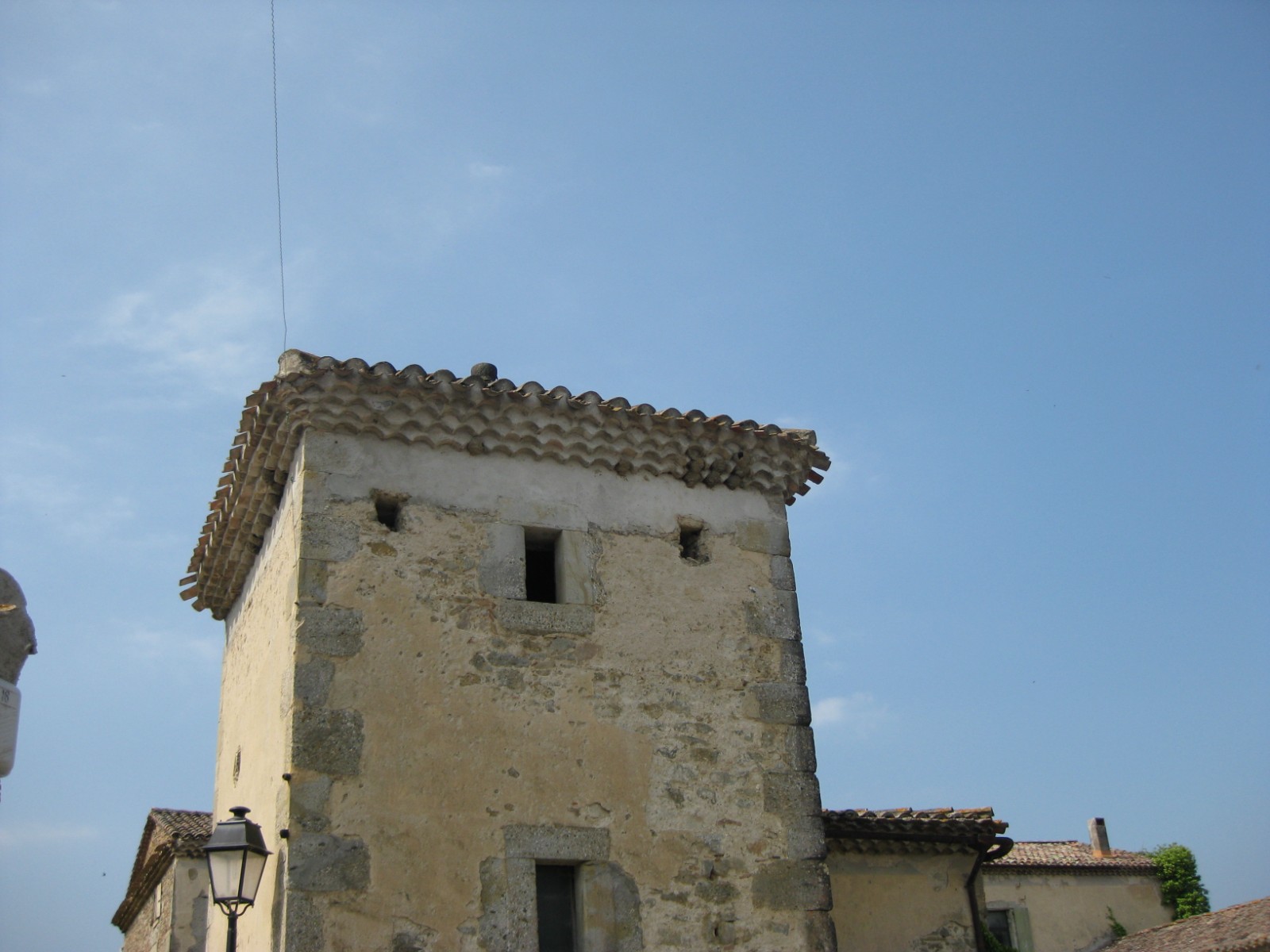
Our socially mobile terraced house: or ’génoises’ – a history

You might have thought we were pretty ordinary types living in an ordinary old terrace house – an ex-butcher’s shop for heaven’s sake – in a run-down ordinary little town.

Well, you’d be wrong.  This house, and the neighbouring ones, was built for minor nobility.  We haven’t scoured the archives or talked to the Oldest Inhabitant to find this out.  We just know.

And this is how we know.  Under the eaves of our houses are three rows of génoises, resembling a child’s drawing of ocean waves, but turned upside down.

Three rows of our génoises, underneath carefully picked out in terracotta paint to show them to full advantage

Back when our house was built, some time in the 18th century, the number of rows you were able to have denoted your social status. Artisans were permitted one row, shopkeepers two.  Minor nobility – ahem – three.  And if you were directly in the service of the king, then you could claim four rows.

You’ll see houses with génoises south of a line that runs pretty much from Bordeaux to Lyon.  It’s thought that the technique, which is Italian, was introduced firstly to Provence and then more widely, by artisans from Genoa round about the mid 17thcentury.

Here at Villar Saint Anselme in the Aude is a rare building with 4 rows of génoises. Look carefully: the swallows – no respecters of status – have built their nests on the undersides

By the nineteenth century, the social implication of the number of rows of génoiserie had pretty much disappeared: people contented themselves with one or two rows for decorative purposes.  We’ve seen our house on a late eighteenth century plan of Laroque, so we know the house, complete with génoises, must have been built by then.

And a family with pretensions to nobility lived in a tall, narrow terraced house?  Admittedly with some nice features, but still nothing fancy at all.  Well, inheritance laws in pre-Revolutionary France had estates divided up between all the heirs, so land and property became shared into decreasingly smaller parcels.  Families graced with extensive land and properties were few and far between.  This helps explain too why the agricultural revolution taking place in England from the 18th century took no hold in France.  Tiny farms resulted in small-scale farming and a near-impoverished peasantry.

And at some point, the house passed into the hands of the previous owners’ family and became a butcher’s shop.  Now it belongs to (almost) the only English in town.  Its noble origins are long forgotten.

Rencontre des chorales

Our Chorale at Laroque’s best friend is the Chorale at Mirepoix.  The Écoles de Musique in each town are best friends too, working together and running some joint classes and performances.

The chorales and other classes get together at least once every season to enjoy singing and playing for and with each other for an evening.  The public’s invited, and comes in encouragingly large numbers.

Those cannelés….

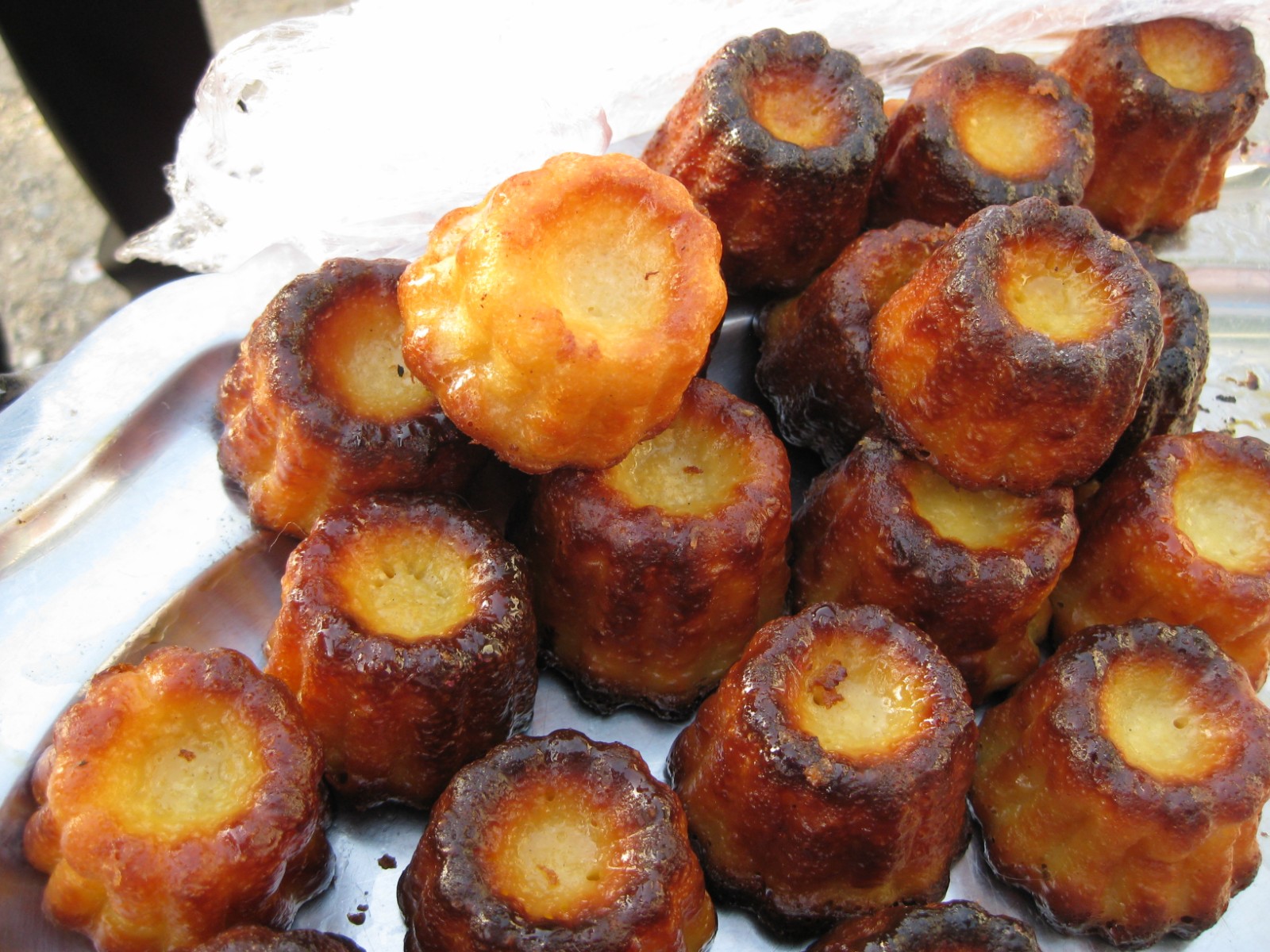
Last Friday, all the singers started wandering in shortly after 6, carrying carefully prepared dishes of buffet food.  The instructions were to bring no more than 6 portions, but nobody took any notice of that.  Robert from Laroque had made a pile of his deliciously chewy signature cannelés, Mirepoix’s William (yup, William’s a perfectly good French name) produced meringues, Mercedes’ plate was full of the cold meats and pâtés they make their charcuterie….and so on.

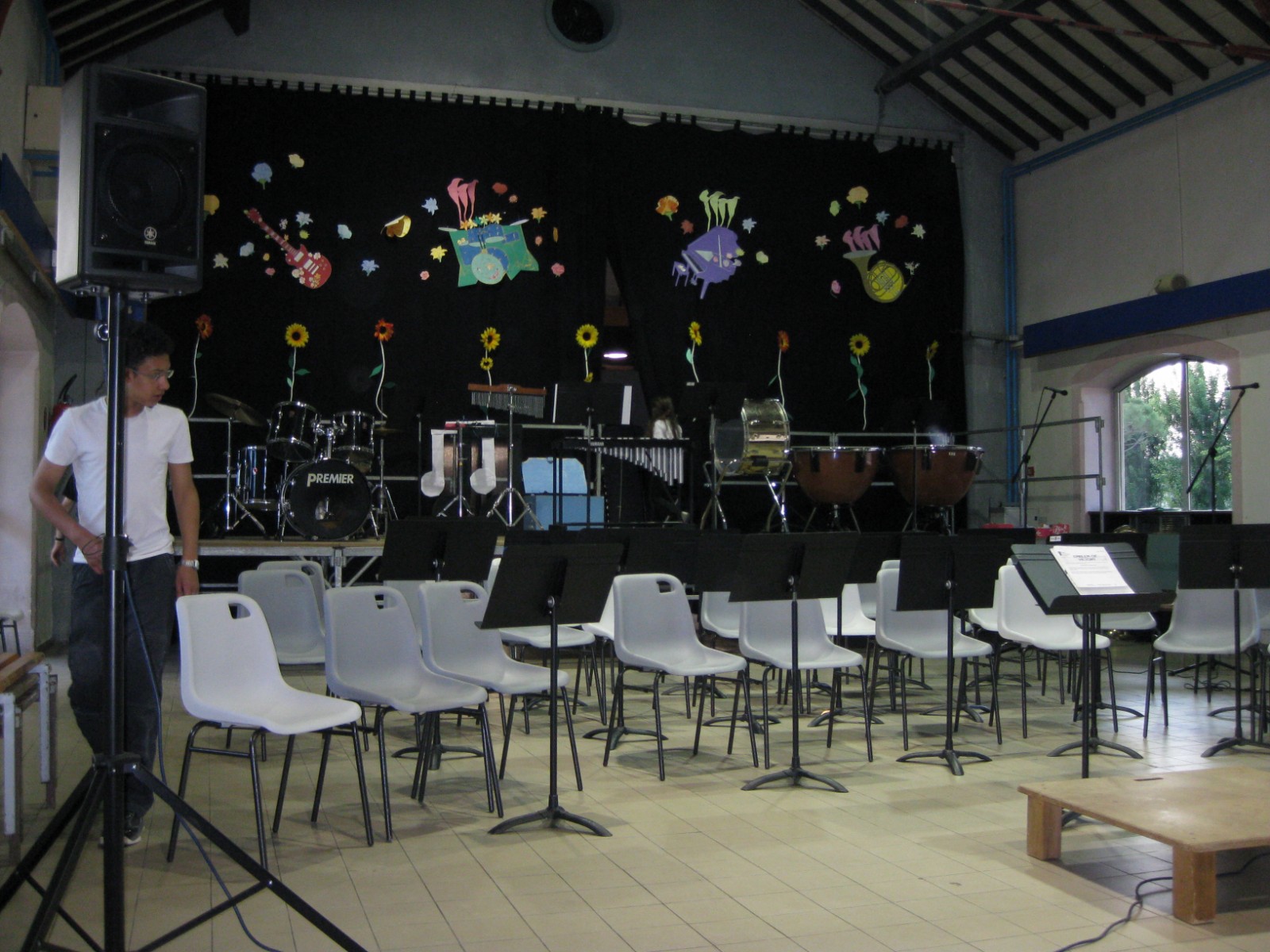
The rehearsal started, and was less a question of running through the songs than organising the logistics of moving around the dozens of us involved: Mirepoix’s orchestra, their children’s choir, the adult choirs from both towns.  It had to be done to a time-table, because nobody wanted to hurry over eating that buffet or sinking some wine.  ‘Don’t drink too much alcohol beforehand!’ urged Vanessa, our director ‘It’s bad for your singing voice’. I didn’t see anyone taking very much notice. ’Well really’, said Robert ‘How can you possibly eat cheese without a glass of wine to help it down?’

It had been more than 30 degrees for much of the day, so nobody wanted to come back indoors after the meal.  But we opened the windows, finished our preparations, and the audience drifted in for….oh, well before 9.10 for a 9.00 start.

Almost ready to start

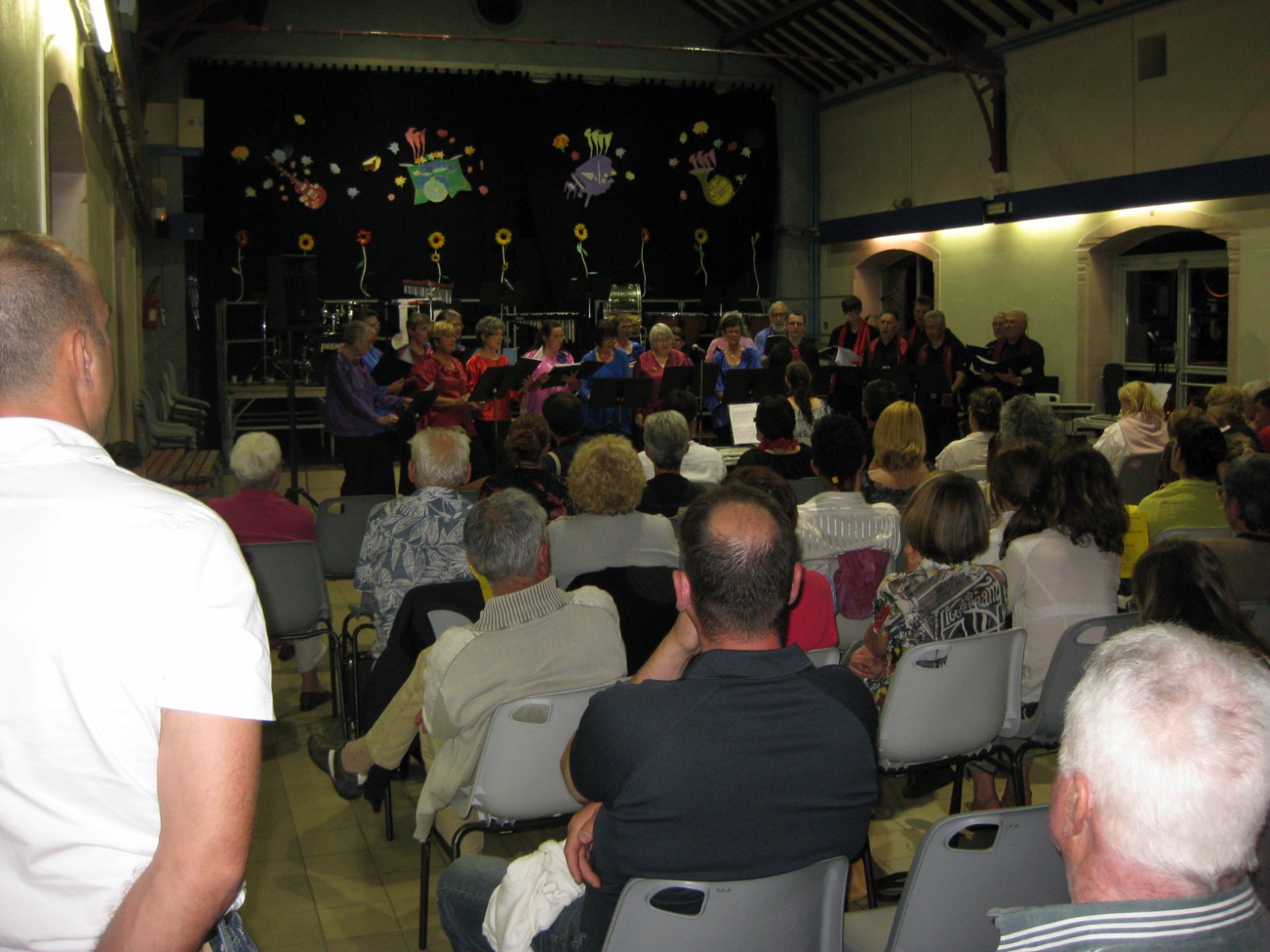
The orchestra started things off.  Lots of percussion. All good stuff. I’m always a soft touch for children singing: these were well-rehearsed and sang with verve and enthusiasm.  Joined by the Mirepoix adult choir, they belted out numbers that were old favourites to the French audience and unknown to Malcolm and me.

And then it was our turn.  Our repertoire is a catholic one.  We sang everything from Henry VIII’s Pastime with Good Company (en français bien sûr) and Moon River (en français bien sûr) to old favourites (if you’re French that is) like Mon Amant de Saint Jean.

The Chorale de Laroque d’Olmes takes the stage

Nearly the end. Time for all the singers to join together for two final numbers.  A few weeks ago, Mireille had spent half an afternoon explaining one of them, Mistral Gagnant, to me.  It features a man singing to his daughter and the allusions to a host of sweets that form no part of my own youth – carambars, minthos and the mistrals gagnants themselves, had left me totally baffled, though not the rest of the audience.

In true French tradition, we couldn’t leave without doing an encore or two.  In true French tradition, we couldn’t leave – nobody could – without sharing the pot d’amitié.  A glass of something, a chance to meet and talk to friends: the perfect way to end a busy evening

Four seasons for the price of one

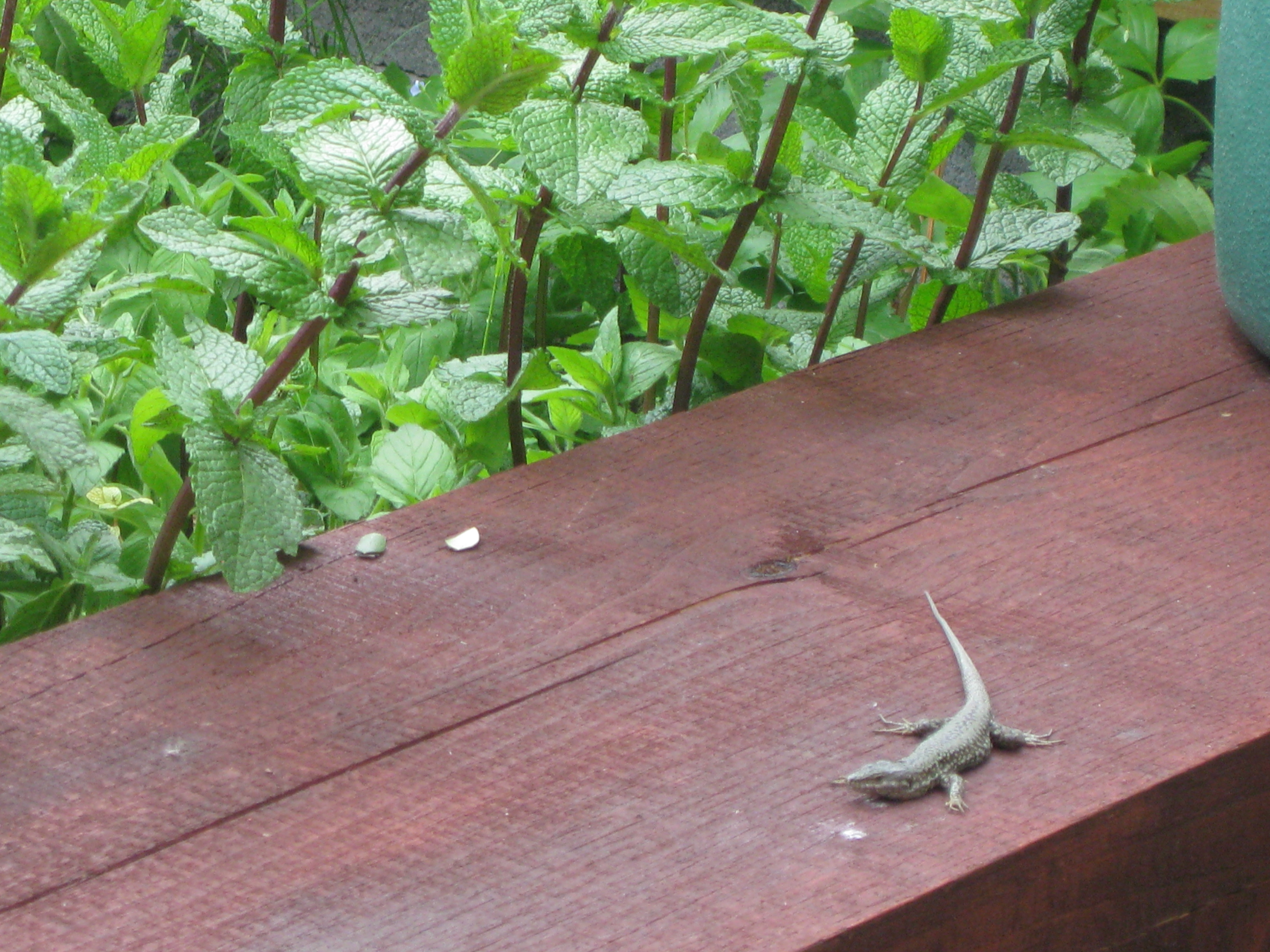
A lizard hopes summer’s on its way

I’m writing this in Laroque.  I have the feeling that whether you’re reading this in France, England, elsewhere in Europe or even in more far-flung places you’ll be sharing something of the same experience.

Get up in the morning and peek though the shutters.  Perhaps it’s raining.  Perhaps not.  But whatever: it won’t last.  We’re getting used to having all 4 seasons – several times – in the course of a single day.

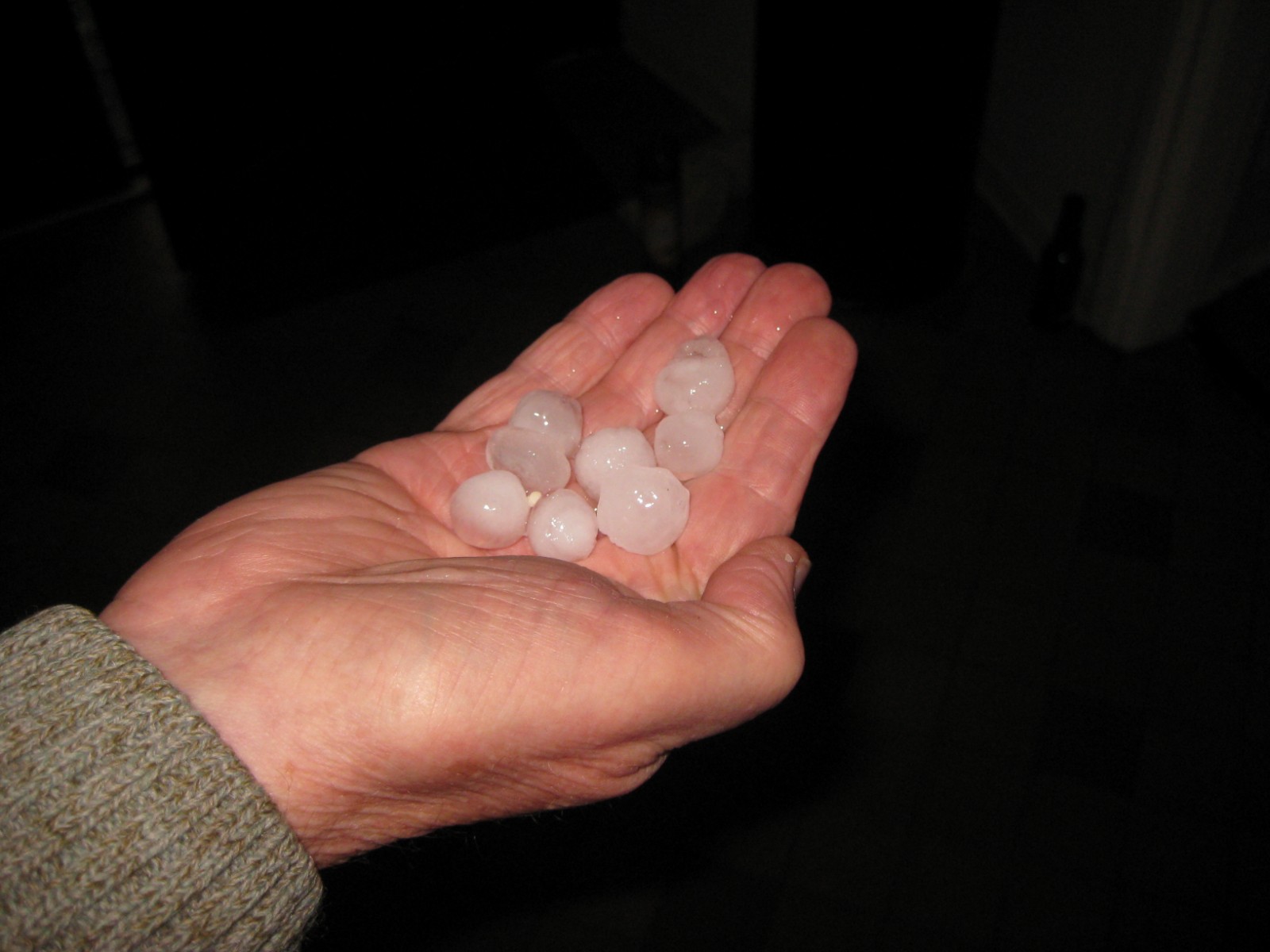
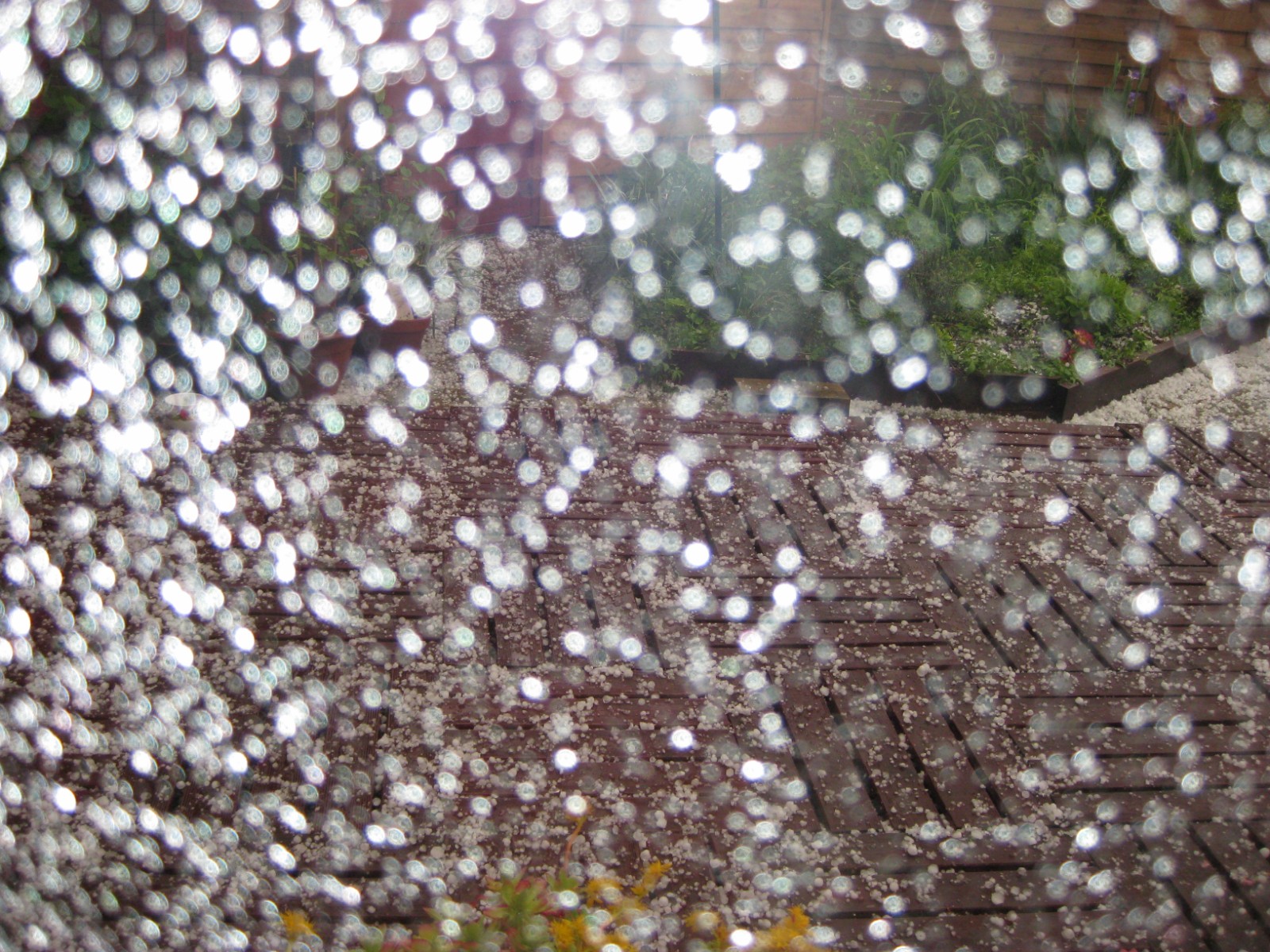
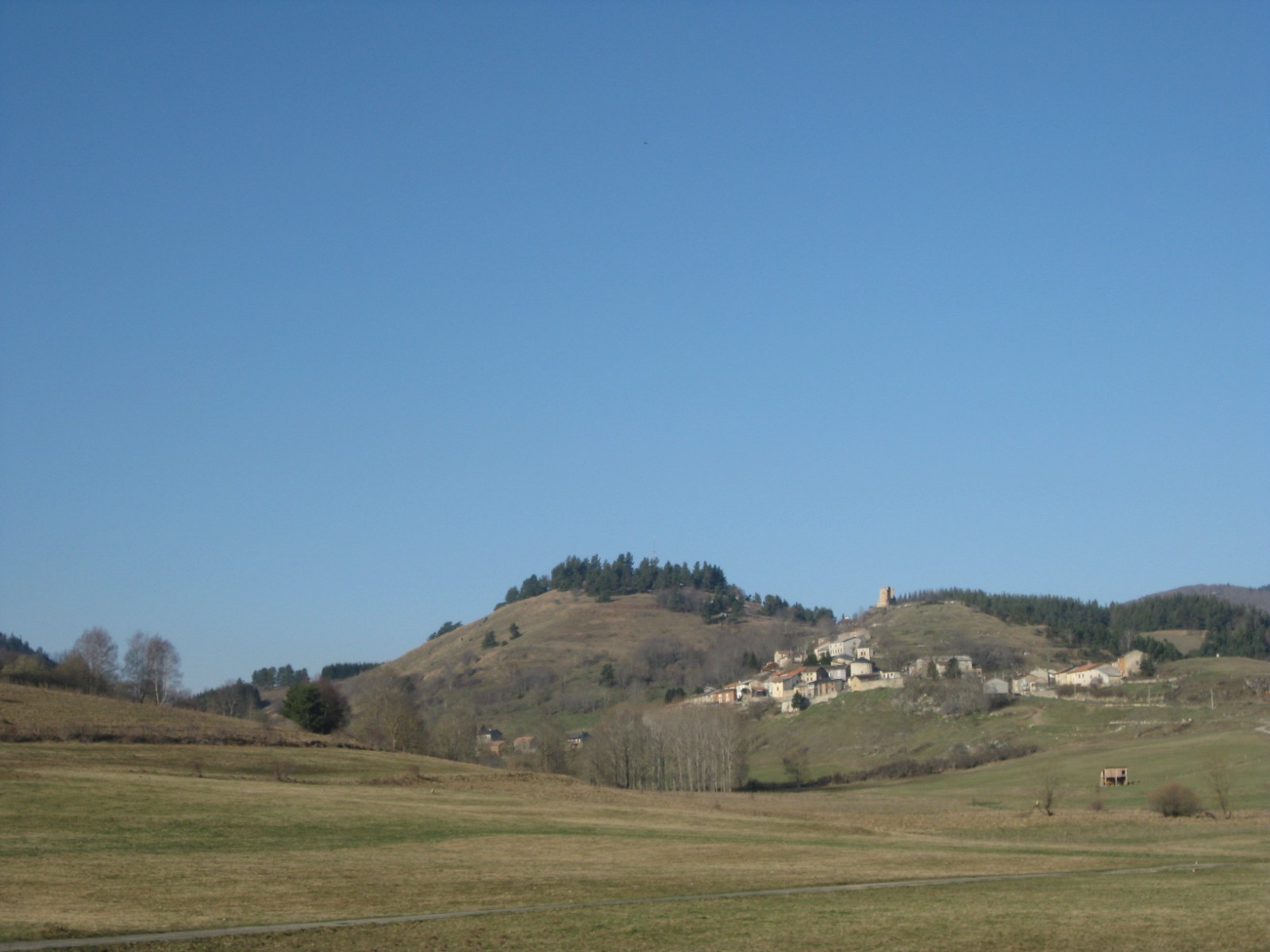
The other day, blazing sunshine and a brilliantly clear blue sky brought the lizards out and had us stripping down to our T shirts.  Minutes later we were reaching for fleece jackets and shortly after that we had to scurry indoors….a hail storm.  And what a storm! Hail stones as big as Maltesers flung themselves noisily against the shutters and scythed down young leaves and shoots in the garden.

May hailstorm

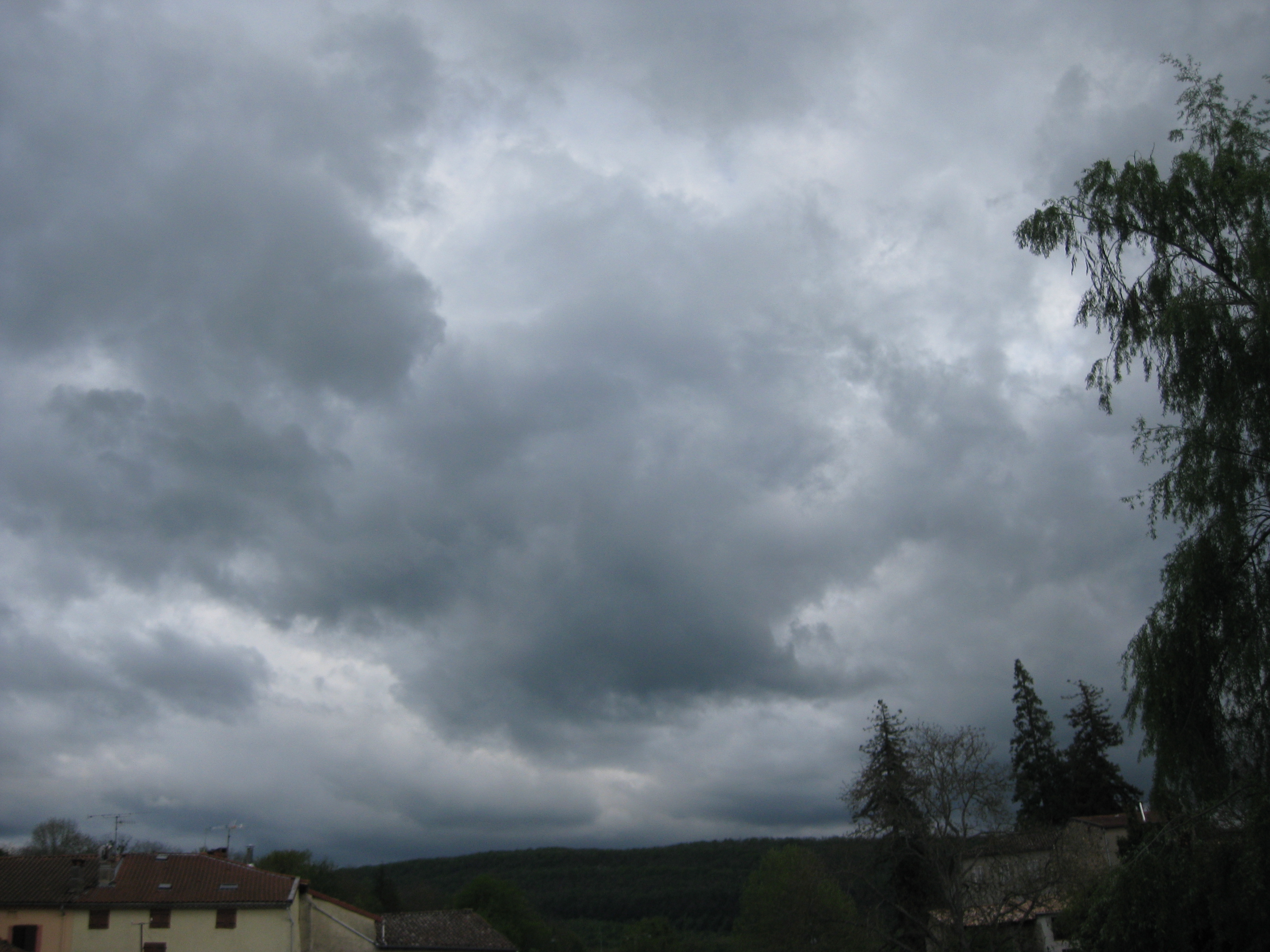
At other moments puffy white cumulus meandered across the sky and minutes later angry violent gusts of wind tugged sullen heavy grey clouds into view.  But this time two years ago, we had snow in May, lots of it.  Let’s hope summer will arrive soon, as it did that year.

Laroque cloudscape, looking southwards
Laroque cloudscape, looking northwards

On the path of Cathar shepherds

Montaillou

Yesterday we walked through Montaillou.  It might seem a tiny and unremarkable village now, but it’s the place that’s maybe done most to contribute to our understanding of turn-of-the-14th century village life in the Languedoc when religious strife between the Catholics and the Cathars was at its height.  This is a big subject: it deserves more than passing mention: a future blog maybe.

I’d read le Roy Ladurie’s book on Montaillou more than 30 years ago,and never dreamed that I might one day live in what the tourist offices are pleased to call ‘Cathar Country’.  So it was the shepherds of Montaillou I was thinking of as we began our Sunday walk.  They would come to the annual fair at Laroque d’Olmes, a good 40 km from where they lived.  They would drive their flocks long distances for good pasture, and as national boundaries meant little in these mountain zones, their fellow shepherds whom they met in their travels would sometimes be Spanish.

Blossom and snow

We too were climbing out of Montaillou.  The paths seemed unchanged through the centuries – short springy turf with early spring flowers pushing through. Pale pink and white blossoms busting open.  Narrow streams cutting deep channels through the turf.  Thick forest climbing the slopes.  Patches of snow made the going a bit tough from time to time.  It was warm and sunny, the slopes were steep and sometimes hard-going

Those peaks appear

Then suddenly…suddenly, and so unexpectedly, we reached the top of our first climb.  Around us, to east, south and west were the snow-covered peaks of the Pyrenees, glistening white against the blue sky.  Above us, skylarks called and swooped.  Later, Danielle remarked that she felt as if at that moment she’d received a special gift: that perfect view, the clean clear air, the singing birds which were the only sounds.  She voiced, I think, what we all felt.

A few of those unending peaks
We keep walking
More distant peaks

We hadn’t reached our highest point: we climbed onwards, always with those snow capped mountains at our side.  And then we were on top: handy rocks provided seats and shelves and we unwrapped and shared our lunches, lingering in the sun, drinking in the views for well over an hour.

Picnic spot

The afternoon walk begins

Soon after lunch, we turned our back on the snowy mountains.  As we faced the hotter, drier Pyrénées Orientales, the equally high peaks there weren’t covered in white.  Our path was downwards now, and soon we had to pass the ski station above Camurac.  Built long after those years when snow could be relied upon throughout the winter, it was an area of scalped earth, snow machines and all-but-redundant chair lifts.  My Montaillou shepherds certainly wouldn’t have recognised it.

The walk draws to a close

But then it was forested paths again, open pasture and spring flowers.  We finished the walk passing a collection of horses, Thelwell style ponies, and appropriately for Palm Sunday, a couple of friendly donkeys.  A good day.

Pilgrims for a day

Such crosses - nearly all different - marked our route

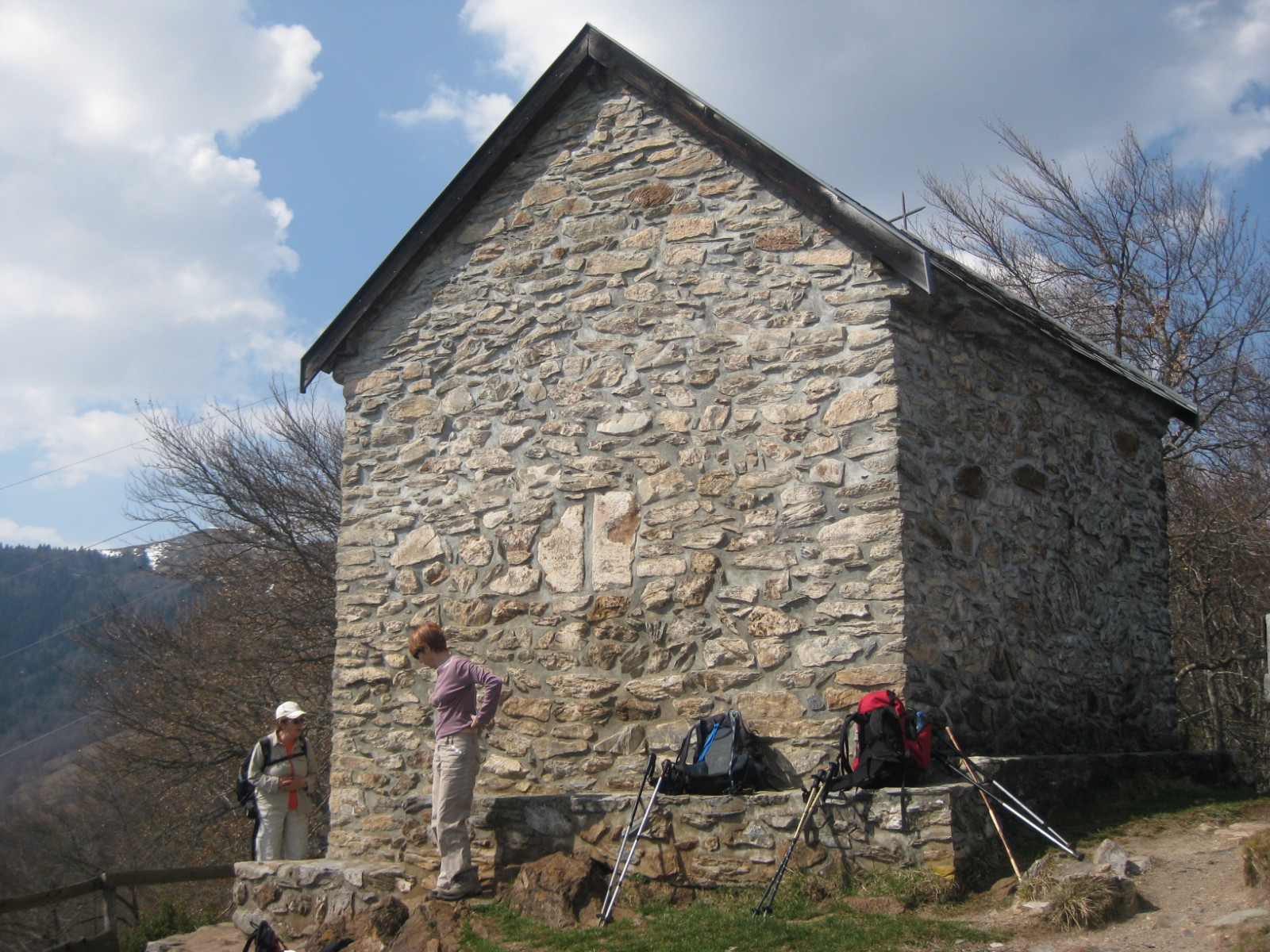
Our walk today was to the Chapelle de Saint Barthélemy, high in the Vallée d’Ax, beyond Tarascon.  We quickly realised we were on a pilgrimage route – our path was marked by decorative iron crosses.  But none of us knew why.  Now I know, and it’s a grisly story.

Back in 1854, cholera hit the area.  It’s hard to see how it spread in such a thinly populated region, where every settlement is surrounded by forest, fields and pasture.  Our drive up to the little village of Larnat, where we parked to begin our walk, was up and up a long single track road characterised by an unending series of hairpin bends – and no villages or farms on the way once we’d left the lower slopes.  The road to Larcat is up a similarly tortuous route. But despite this, cholera did arrive in the area, and when it struck, the people of Larcat didn’t hesitate to massacre the poor family responsible.  In time, the few survivors built a tiny chapel at the summit, dedicated to Saint Barthélemy, and promised an annual pilgrimage.  This chapel is a very simple windowless structure.  Some garden sheds are bigger.  It enjoys splendid views in every direction, and provided the perfect lunch-spot.
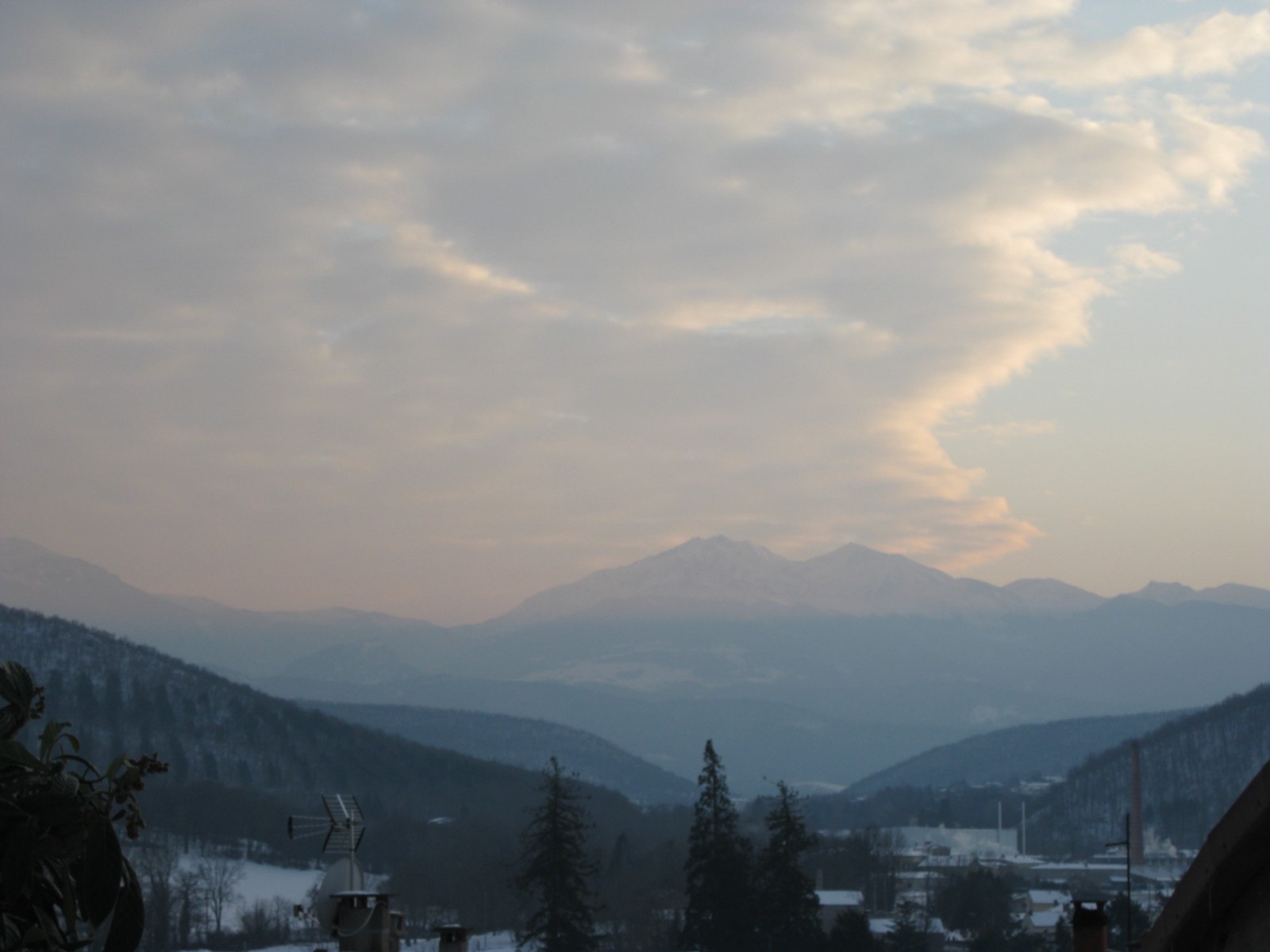
We arrive at the Chapelle de Saint Barthélemy
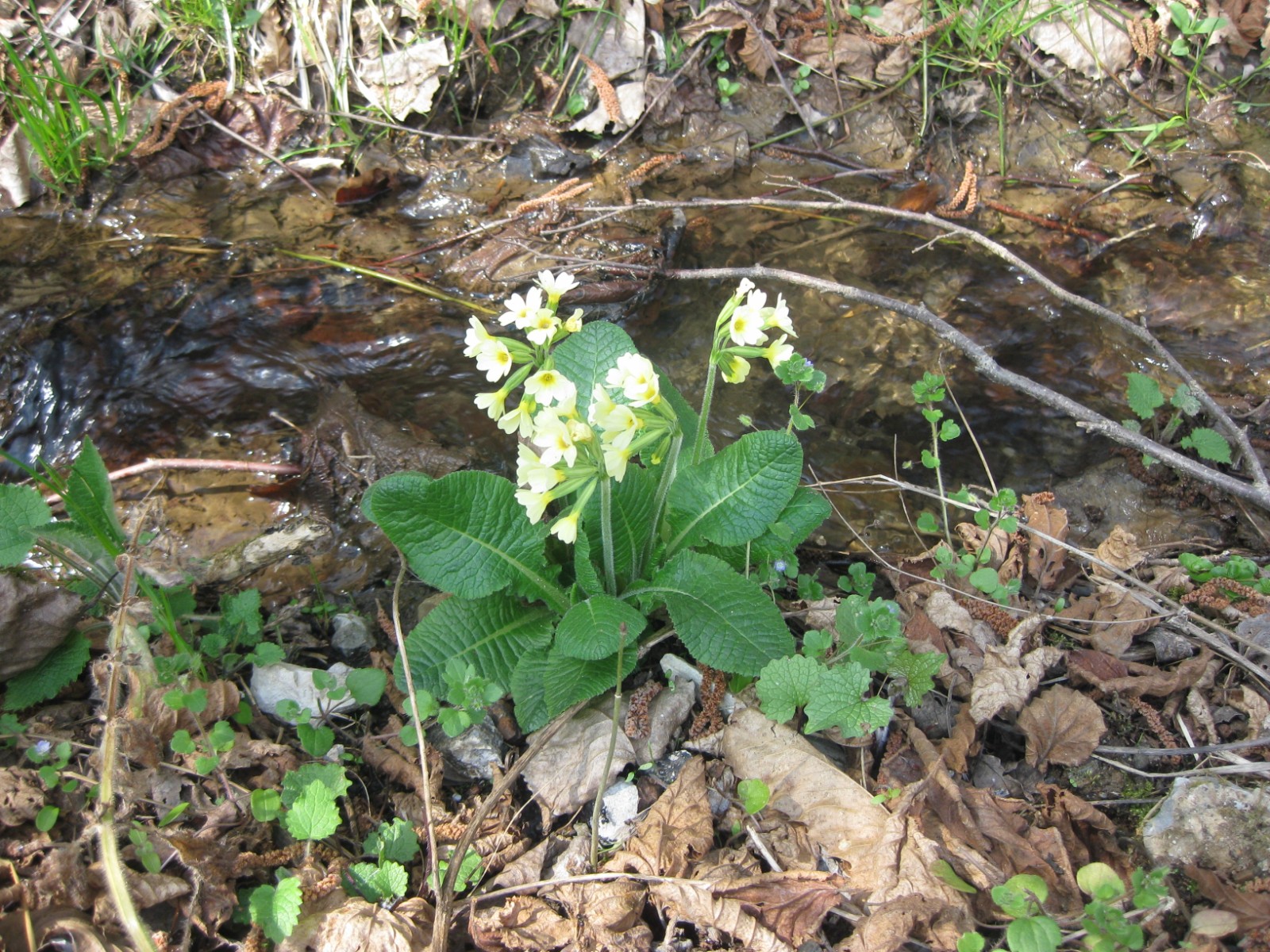
Cowslips en route

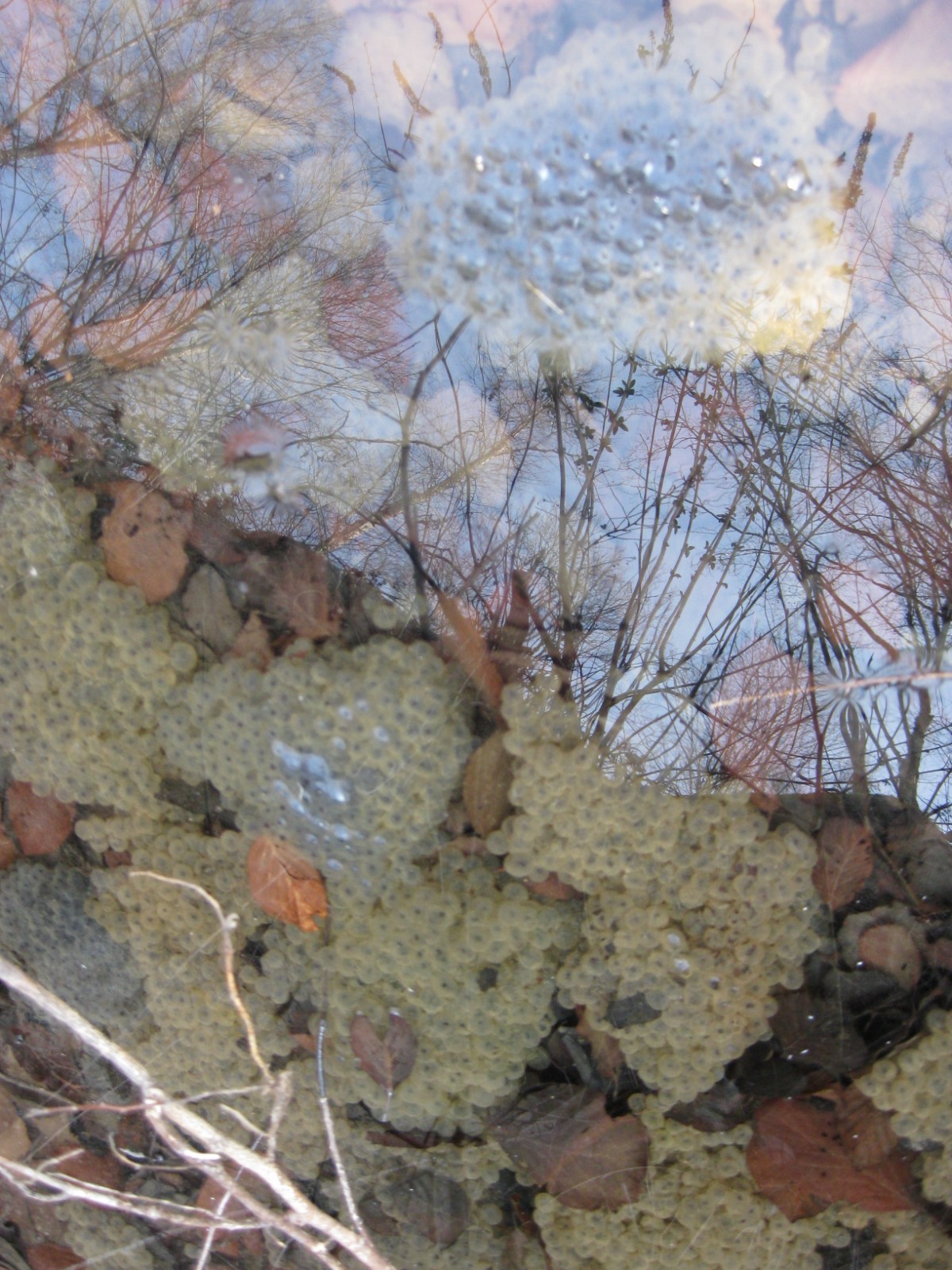
Ignorant of the bloody events that had caused the chapel to be built, we had a pretty easy feel-good walk.  The slope upwards was a gradual one, through forest tracks, emerging eventually onto an airy path commanding view of the mountains which surrounded us.  We had time to enjoy the emerging spring flowers –chiefly wood anemones and cowslips – and spotted several clumps of frogspawn.

Frogspawn en route

Did I know, Jean-Claude wondered, that when he was younger, it was quite common to see men staggering back from a country walk with hessian sacks stuffed not with the potatoes for which they were originally intended, but frogs destined for the market and then the dinner table?  I didn’t, and was glad to hear frogs are now protected and it’s illegal.  Apparently, though I’ve never seen them on the menu, frogs are still eaten.  Now however, they’re imported from China.

They certainly weren’t on offer today.  As usual, the day finished with tea and cake: much more welcome.

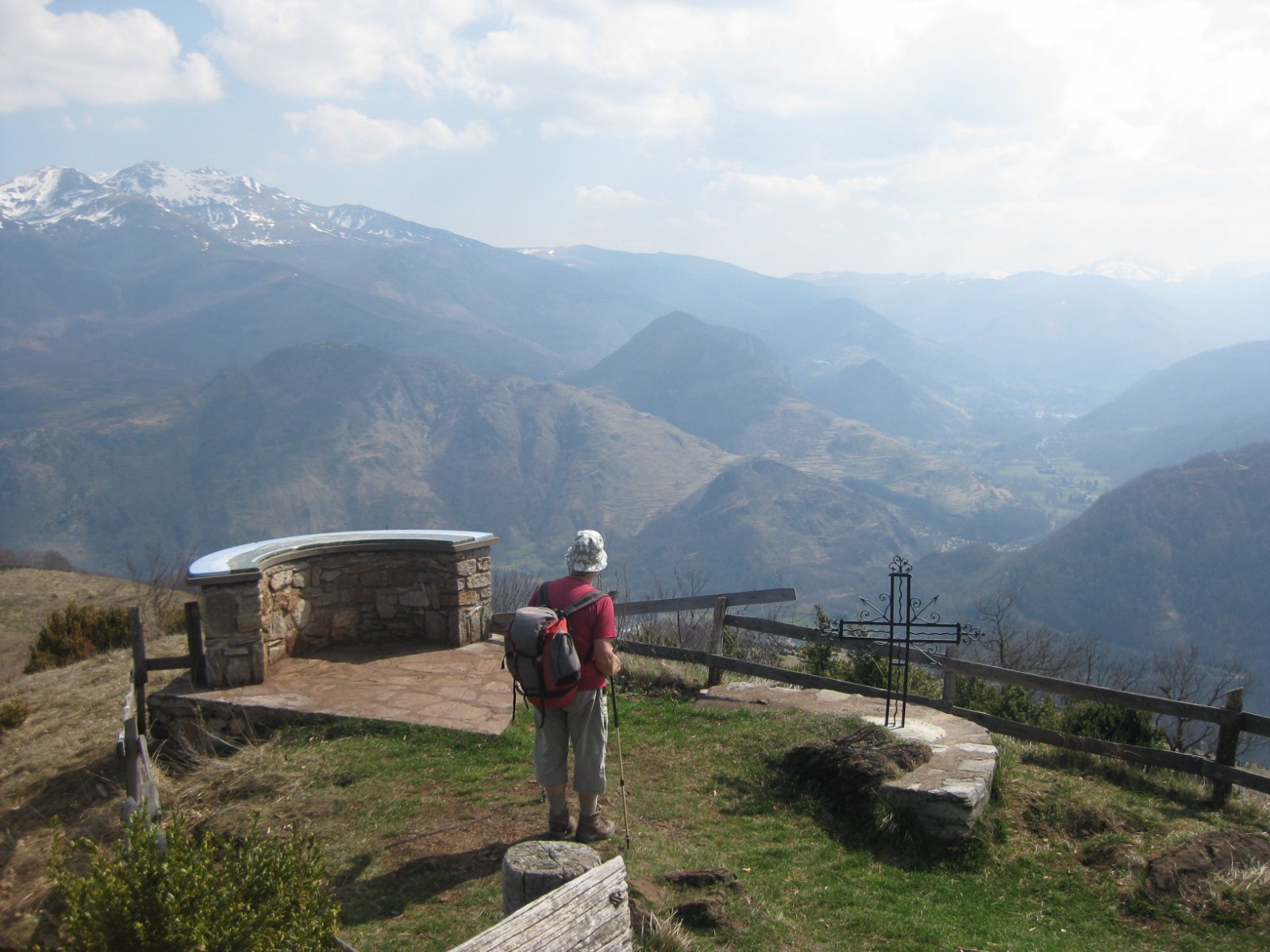
One of the views from the chapel

The Great French Bake Off

I’ve just had The Best afternoon.

Over at Découverte Terres Lointaines, we realised that Fun was sometimes in short supply.  Often busy getting the next event together, with deadlines to meet and crises to overcome, we weren’t getting together and having time sharing our skills for the simple pleasure that brings.

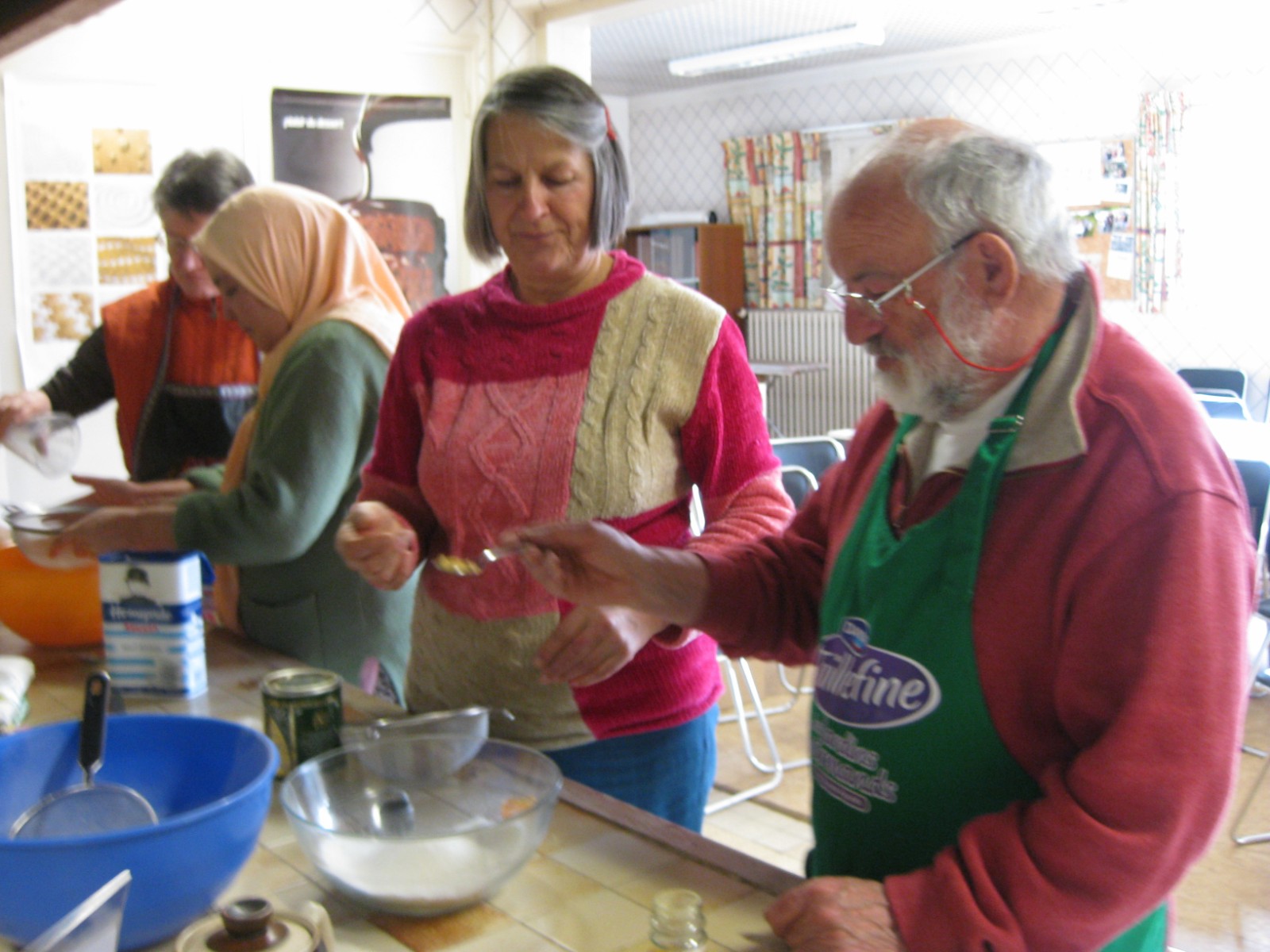
So this afternoon, we had our first atelier to do just that.  We did a little publicity and attracted five women and one brave man, who came along to the CAF (Social Services.  Sort of) with their pinnies to cook.

The work we’re doing this year is on England, Yorkshire in particular, so I was put in charge of the session: though Sylvia did the work of producing a recipe booklet for each participant. What to choose?  In the end I settled for scones, which are unknown here, and crunchy ginger nuts.  Both start with the same technique – rubbing flour and butter together- but end up quite different from each other.  Both are inexpensive and quick to prepare.

Getting stuck into ginger nuts
Everyone rolled up their sleeves, weighed, stirred, mixed, rolled out, organised what they’d made onto baking trays….and waited while the ovens did their work.

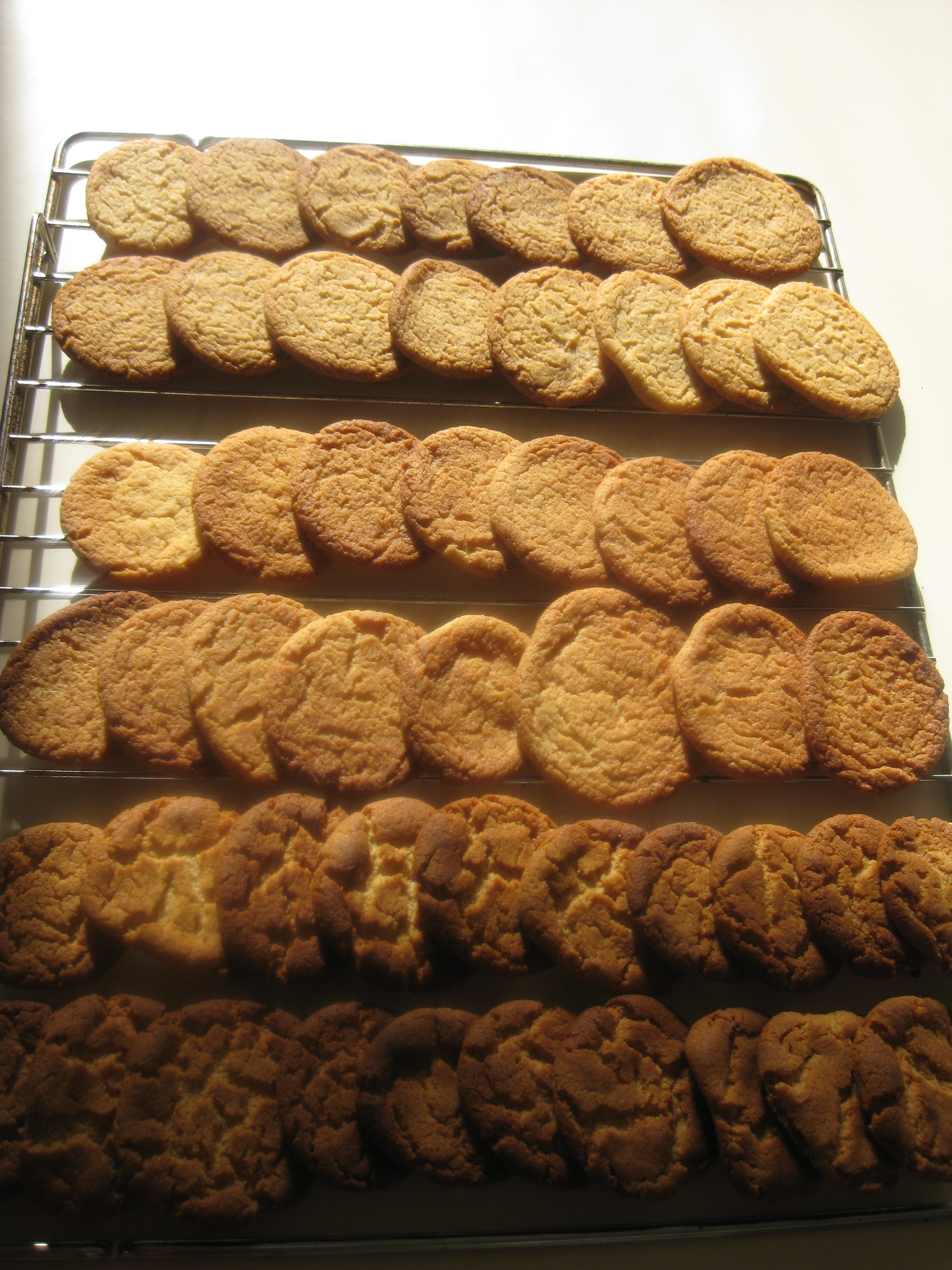
Astonishing to see how identical ingredients prepared identically by different hands, with different ovens varied so much.  Some ginger nuts had crunchy crackled crusts, others were smoother, crisper.  Some scones were domed, others, equally well-risen, were flatter on top.

3 cooking squads, 3 sets of biscuits

So we all had to try everybody else’s over – of course – a nice cup of tea. Lots of discussion and constructive criticism (‘Did you add salt to yours?  Which do you think is better?  With?  Without?’).  The scones were a hit, though not everyone chose to have either butter or jam.  The ginger nuts went down well too.

Everyone declared they’d had fun.  Plenty of time to cook, to share, to talk and laugh and eventually sit and eat what we’d made with new friends. We’ve all said we’d like to come and do it again.  Soon.

Puzzled by the title? It’s an allusion to a series which has apparently been popular back in the UK: The Great British Bake Off

Snow 3: The Market

We woke up to -11 degrees on Thursday (-13 for some on the outskirts). Market trader and greengrocer Patrice and his équipe, who live in Rouvenac, a fairly isolated village 18 miles from here, woke up to -14 degrees.  Thursday’s the day they come to sell in Laroque market. When it’s minus figures outside, who’d want to arrive before 8.00 a.m., set up a stall in an exposed market square, and stay there dispensing fruit, vegetables and bonhomie till about 12.30 p.m.?  Well, if that’s how you earn your livelihood, that’s what you do.  Your only other option is to stay at home and keep warm, earn no money, and watch your stock deteriorate.  Which is what about three quarters of the traders usually at Lavelanet market on Fridays unsurprisingly chose to do this week.

Market square closed for business

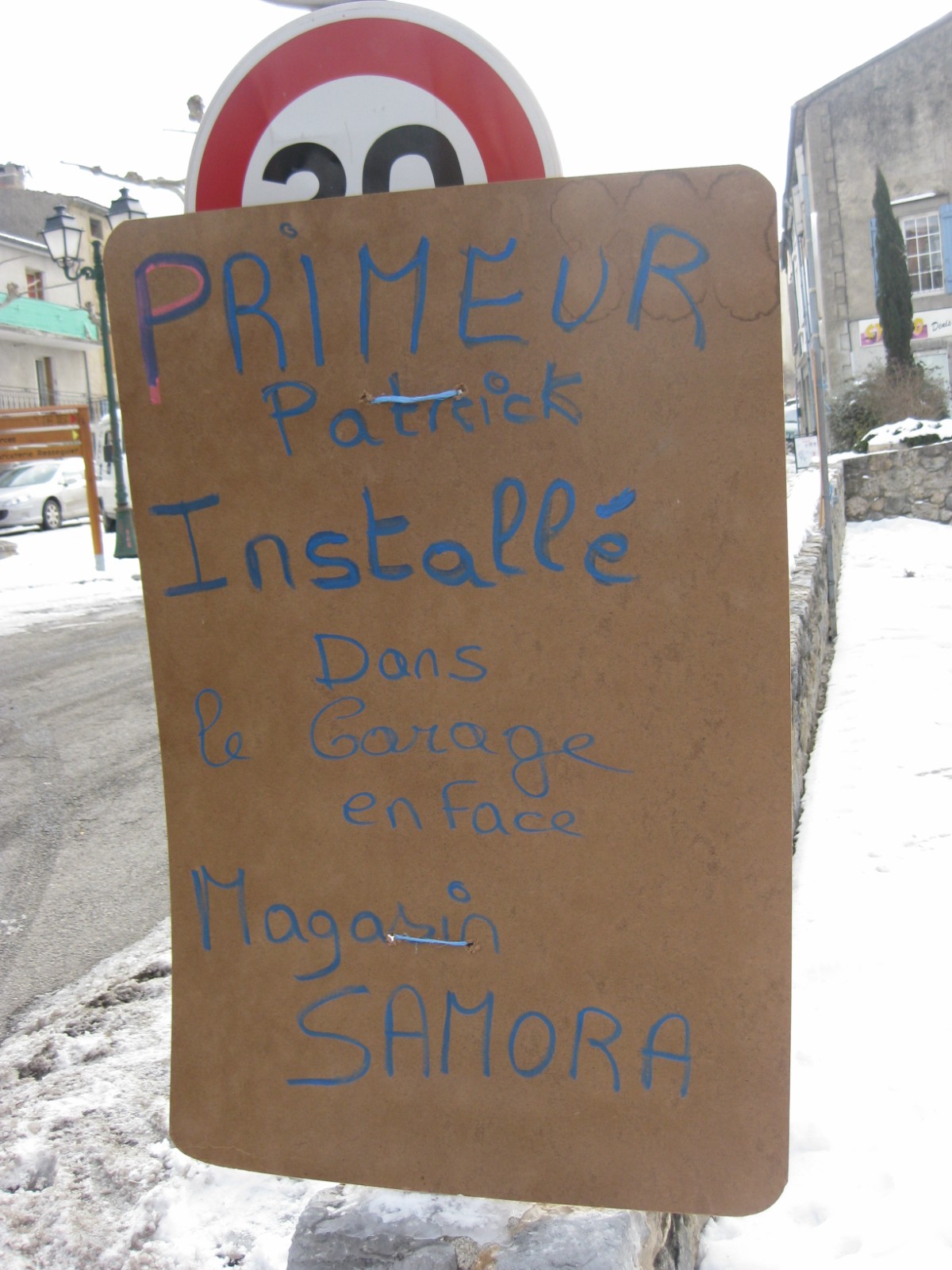
But Obé who runs the bar and restaurant up in Place de la Cabanette had other ideas.  He offered them his huge garage down in our street, big enough for 2 large vans and a car, and that became the market place for the day. It’s dark and perhaps a little cramped for several long runs of produce.  But we don’t get out much here in Laroque, especially in a week like this one, and we all found it quite exciting to crowd in together and do our shopping: it gave us something to talk about.  Patrice and co. took turns to warm their fingers at the rather antique heater Obé had dug out.  They needed to.  The temperature in that garage only just managed to crawl up to  -4.

On our way back home, we just had to stop and look at the river which normally tumbles and chatters busily on its way though town.  Here it is, almost frozen over.

An all-but frozen River Touyre


Snow 2

Mid morning sun near Laroque

We Brits are famous for complaining when the Wrong Kind of Snow snarls up the networks.  The trains don’t run, schools shut, and there’s a run on store-cupboard ingredients in the shops.  The Daily Mail or some other self-styled Voice of The People is sure to announce that ‘We’re the laughing stock of Europe and America’.

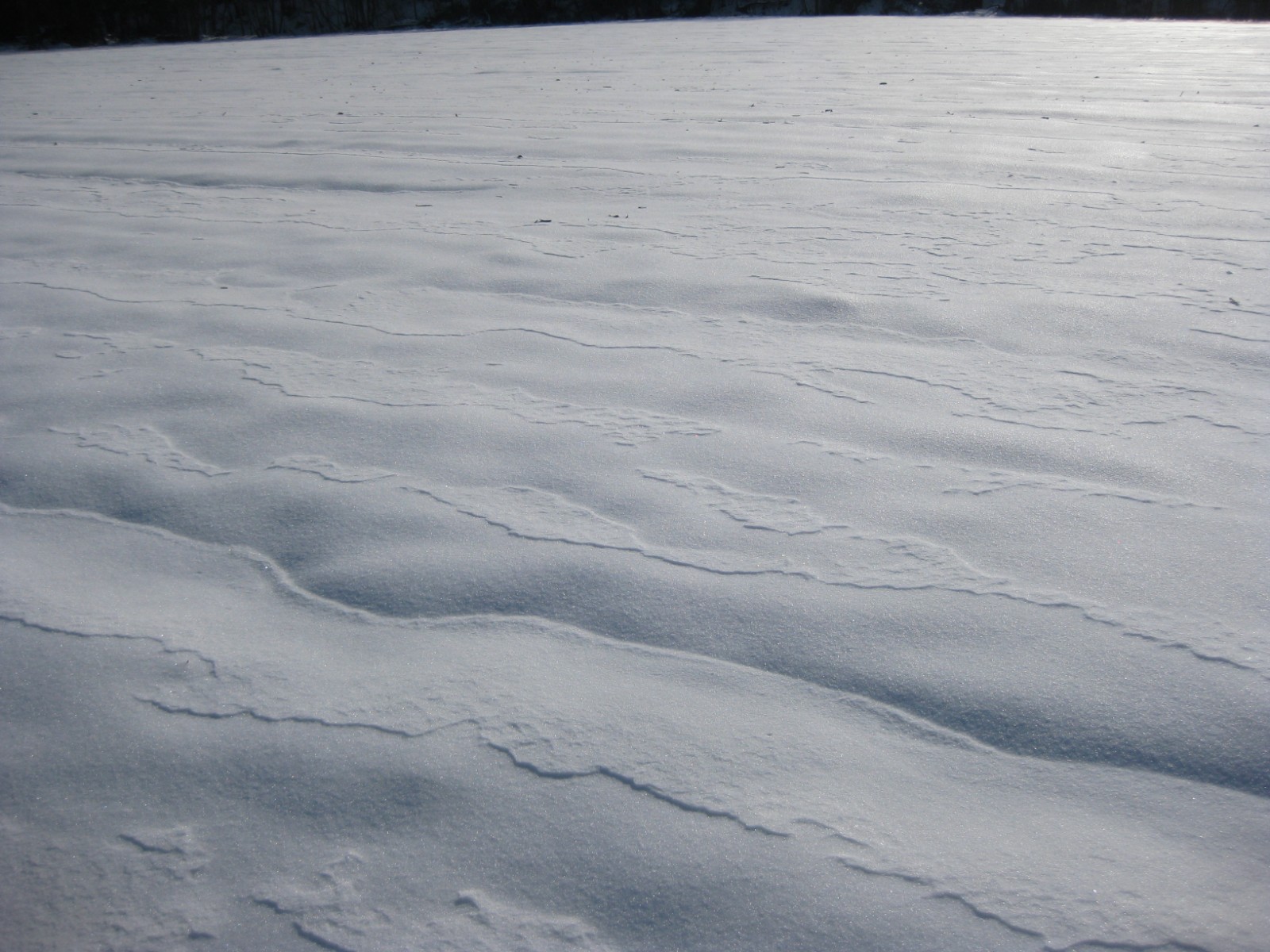
A deserted field

Well, actually, life grinds to a halt when it snows in some parts of Europe too. Here for instance.  There has been no schools’ transport all week: and with many children living out in the sticks, schools have been half empty.  Markets, where we go to shop, catch up with jobs in town and to meet everyone we know, have pretty much not functioned for 10 days or more.  Clubs and walking groups, concerts lectures and meetings: all have been cancelled or postponed.  We’ve all left our cars at home and confined ourselves to doing what we can on foot.

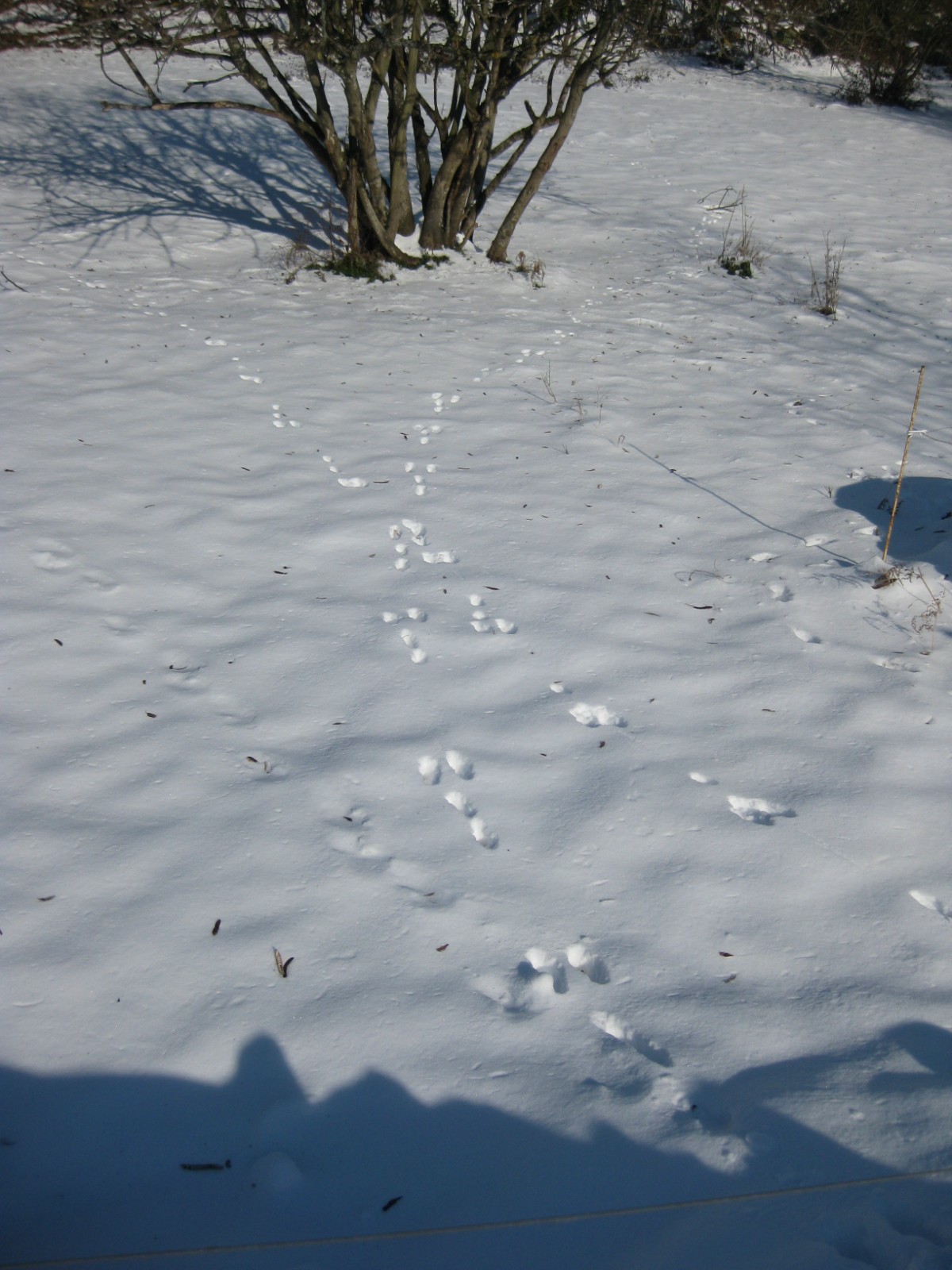
Rabbit cross roads

Don’t we have snow ploughs here?  Well, of course we do.  In big communes like ours (there are 2000 of us you know), council workers do the job.  In more rural spots, farmers may be pressed into service.  But either way, they’ve all been to the same training school.  After they’ve done their rounds, the ploughs leave an inch of hard-packed, glossily polished snow especially for drivers to enable their cars to take up skating.  Lethal stuff.

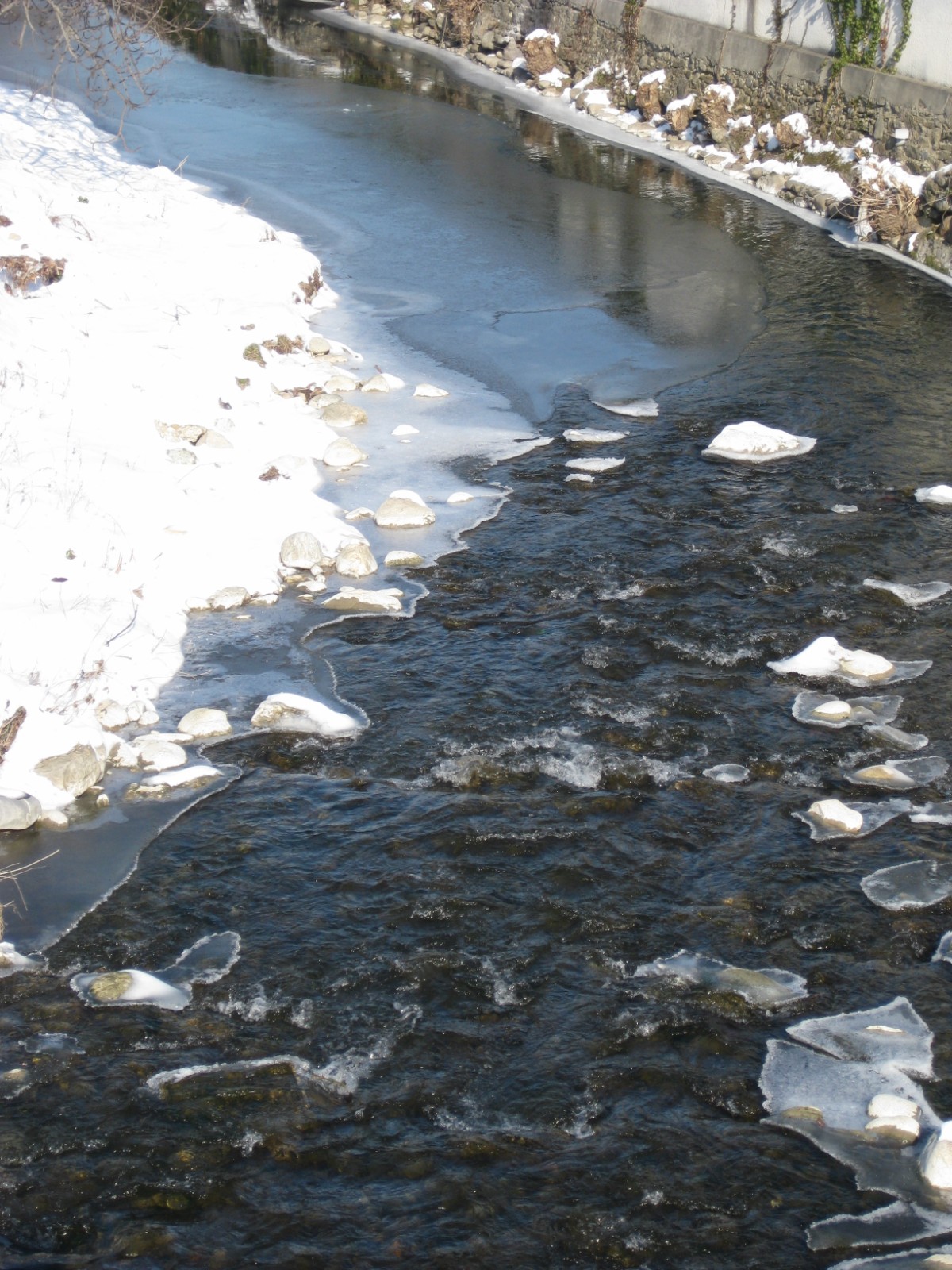
The fast-flowing River Touyre begins to freeze

We’d hoped to drive to Barcelona this weekend to see Emily.  Reading the local government website’s travel section soon changed our minds.  We were recommended to use snow chains on several of the roads on our route.  On others we’d be required to use them.  Conditions are described as ‘very snowy’, ‘difficult’, and everyone we know says ‘Don’t go’.  So we shan’t: not till the snow goes anyway.

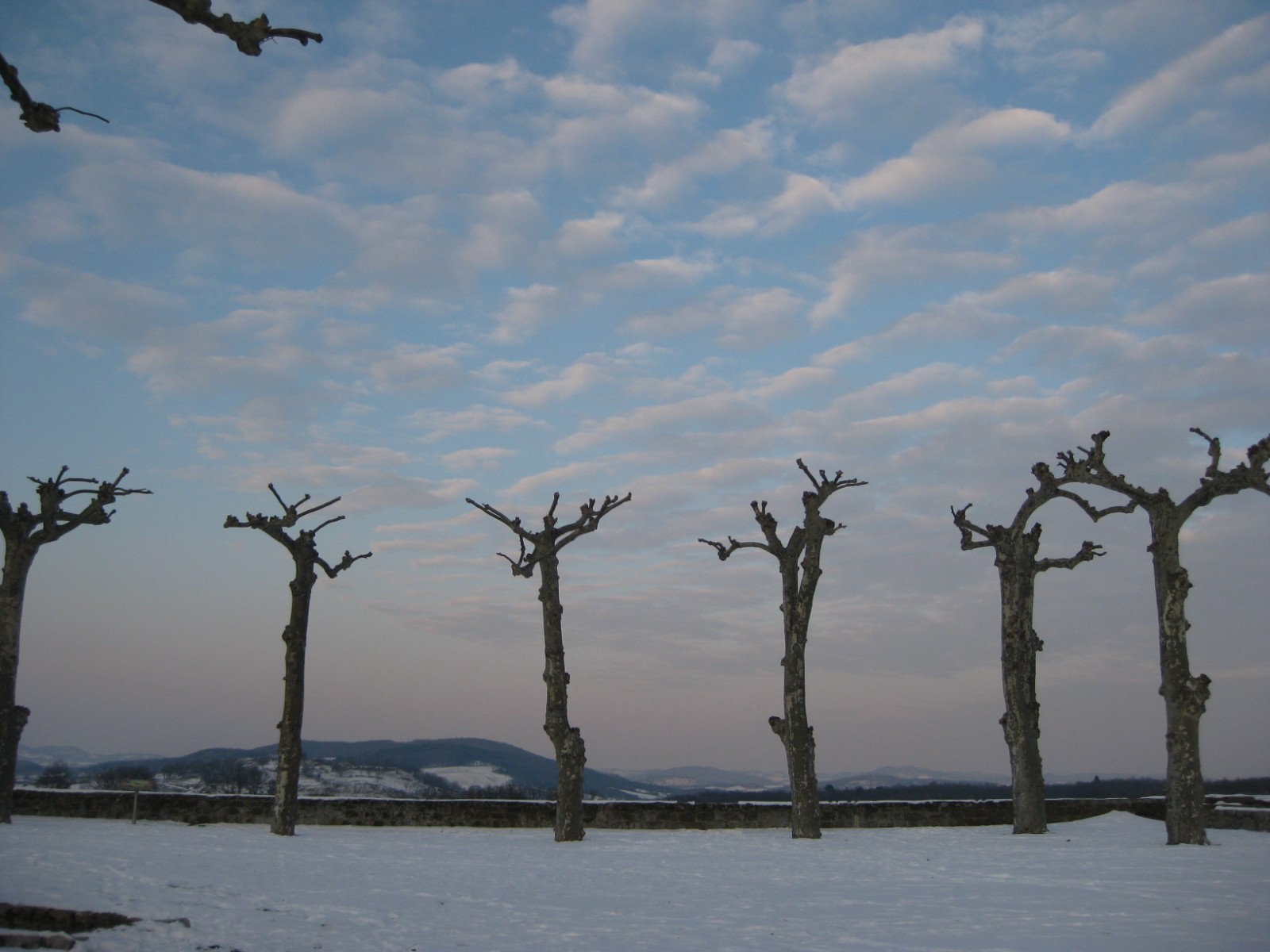
Pollarded plane trees by the church before sunset

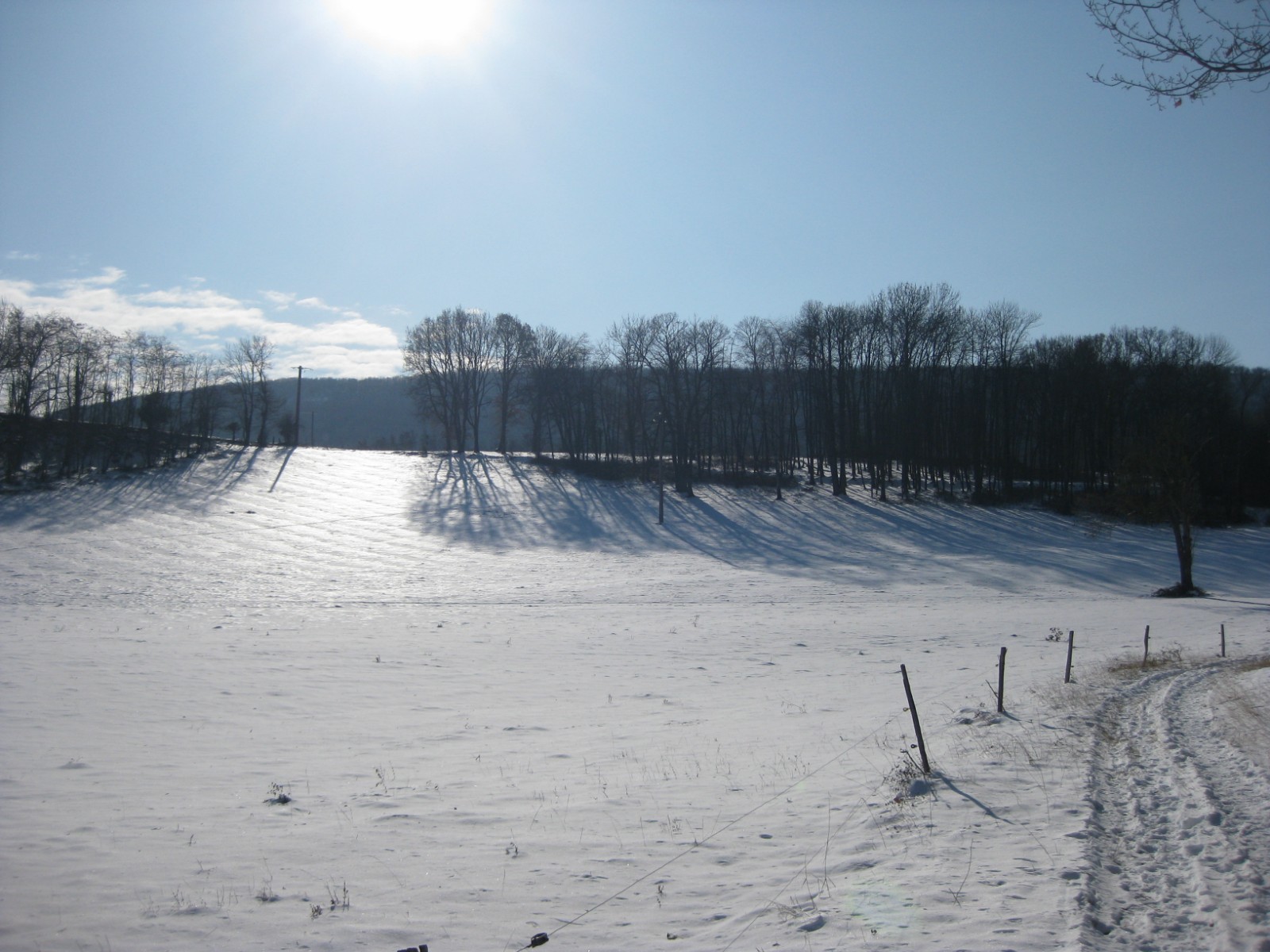
As in the UK, radio TV and the local papers are filled with stories of the Big Snow.  The empty roads, the jack-knifed lorries (actually though, HGVs are kept off many of the main arteries and have either to turn back or make use of temporary lorry depots opened up for their use), the utilities failures, the heart-warming human interest stories – they’re all there.  The snow stopped some days ago, but the sub-zero temperatures remain, and so the snow’s till here.  What is different from England though, is the sky.  Through the day, we’ve enjoyed a cloudless duck-egg blue sky.  And that’s something to be relished.

Sunset viewed from la Castella at Laroque