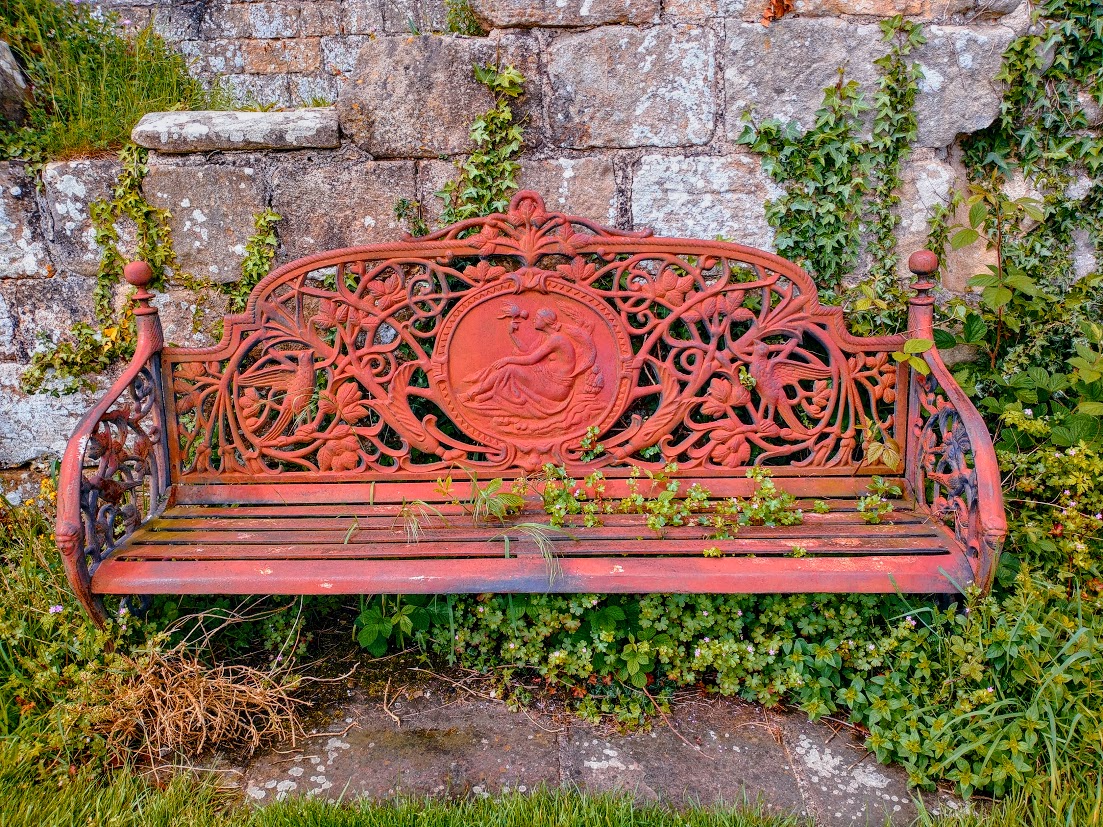
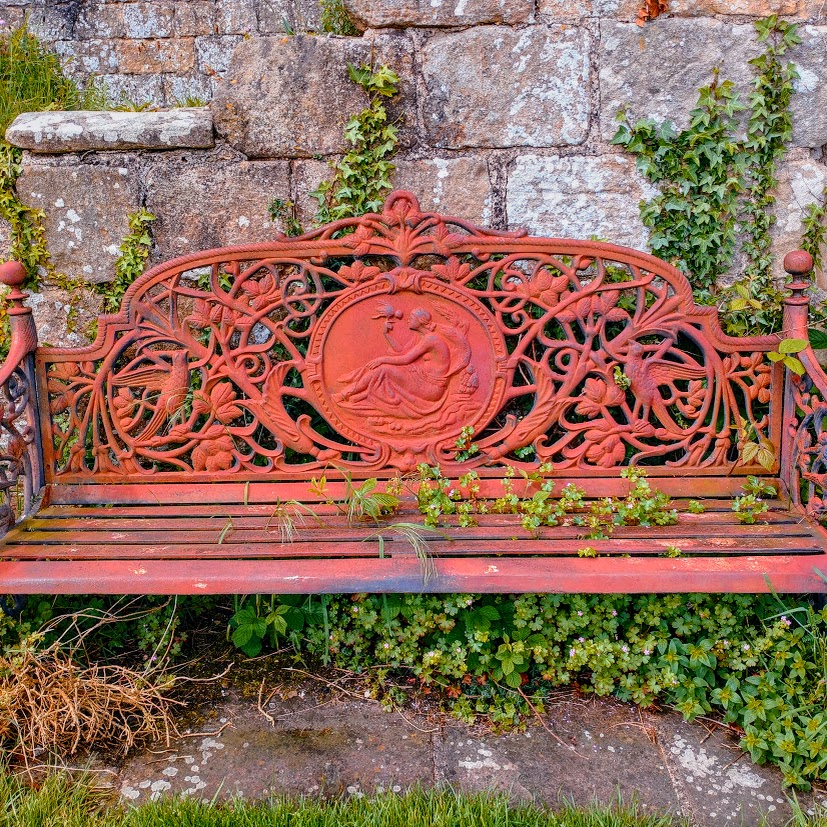
This rusting wreck is multi-tasking today. It’s lived a blameless and long life in the ruins of Jervaulx Abbey, offering views of the Dales and what’s left of the Abbey in the long years since Henry VIII had it made unfit for purpose during the Dissolution of the Monasteries.
Today though, it’s doing a tour of duty for Becky’s #Simply Red; for Jude’s Bench Challenge; and for Debbie’s One Word Sunday. It’s a little dishonest, as I’ve had to tinker a bit to make it Simply Red. Don’t tell the ghosts of those monks who once called this place home.
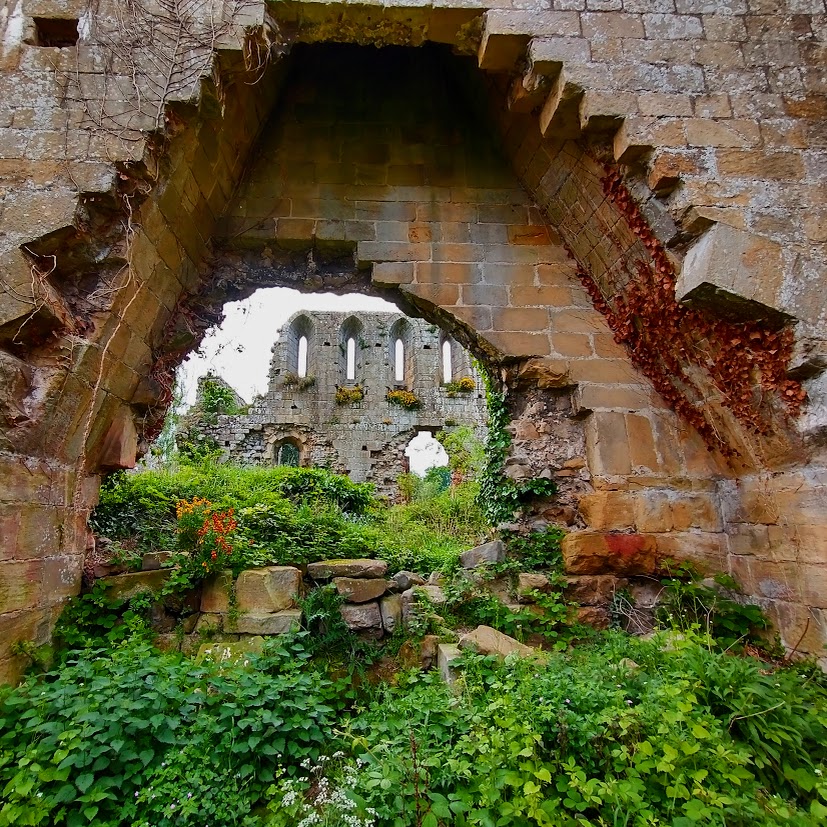
I’ve even managed a tweaked shot of part of the Abbey looking a little red too.
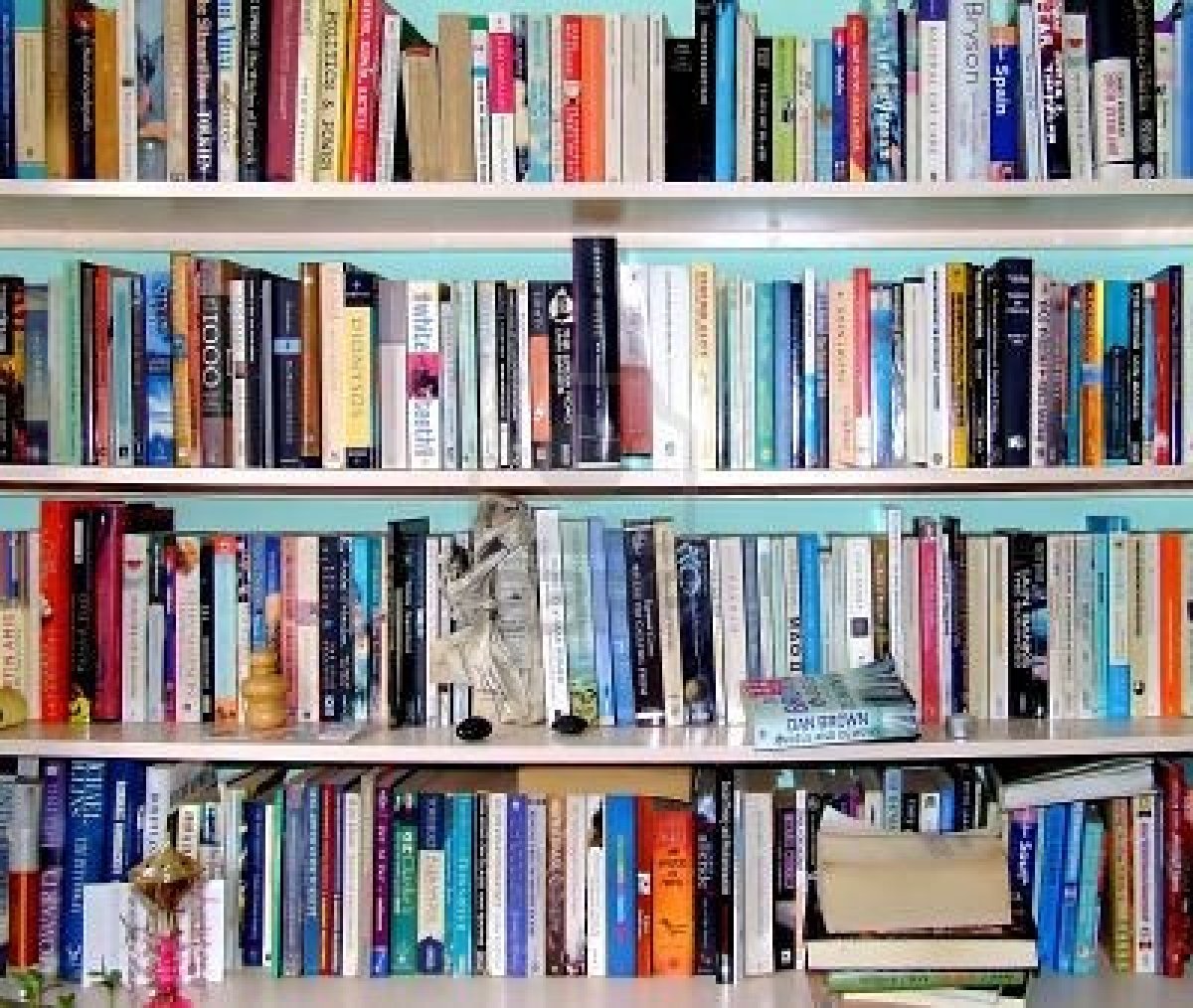
On the first Saturday of every month, a book is chosen as a starting point and linked to six other books to form a chain. Readers and bloggers are invited to join in by creating their own ‘chain’ leading from the selected book.
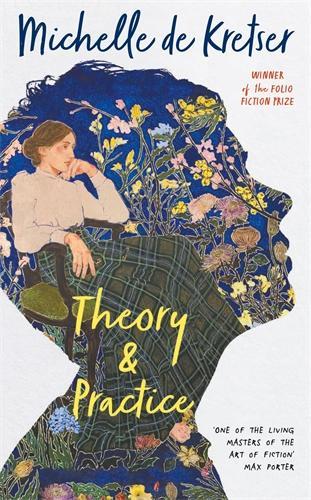
The starter book this month is Michelle de Kretser’s Theory and Practice. I haven’t yet read it, but here’s something from the Guardian review: ‘In Theory & Practice, De Kretser gradually, delicately, picks and plucks at the notion of “truth” in literature…’
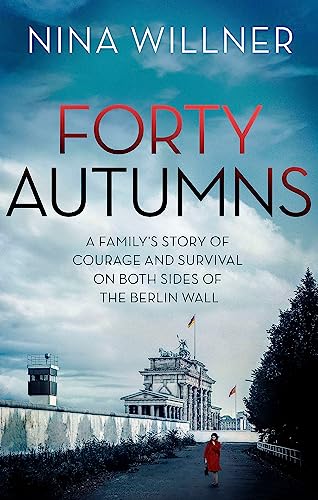
Well, here’s a book that looks at two kinds of truth, in Forty Autumns by Nina Willner. And it’s the story of her mother Hanna’s family she tells here. Her mother, aged 17, escaped from the newly-created and isolated East Germany, as Russia assumed responsibility for this area, while England, the US and France had West Germany. She did well, making a career, then marrying and moving to America. But her family was left behind, their lives increasingly constrained and isolated by the evermore authoritarian government there. She was able to have little contact with them, not even hearing when two brothers died. In the East, propaganda spoke of the degenerate and unsuccessful West, but prevented any contact. Her family – particularly her schoolteacher father – was under the government’s spotlight because they clearly were not uncritical party faithful. The fall of the Berlin Wall enabled them to reunite. The love remained, the contact blossomed, but the differences between their former lives cast a long shadow of bitterness and regret
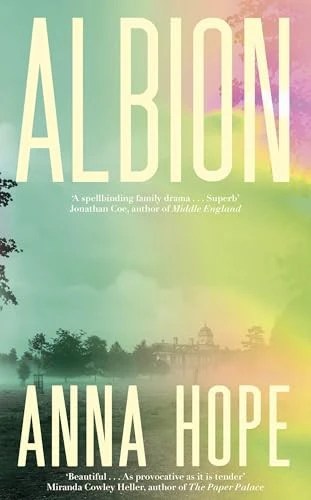
Here’s another family dealing with differences among them, although of course, not the same kind at all. Albion, by Anna Hope.There’s so much to like about this novel: an evocation of a family, fractured in many ways, but coming together because of the death of its oldest member: father, husband and lifelong liar, bully and philanderer,Philip. A picture of an English country house (complete with a Joshua Reynolds family portrait) and countryside: now in the process of being re-wilded by father and eldest daughter in a project named ‘Albion’, – but had he actually wanted to hand the baton over to his son to continue down a different path, for wealthy ageing hippies? A younger daughter, married to a good man, re-kindling adolescent friendships and more with estate workers … or not? A resident ageing hippy … All this is so well painted. Enter Clara, who might have been Philip’s illegitimate daughter and who fetches up for the funeral. What happens from now on – but no spoiler alerts here – when Clara makes a dramatic revelatory speech, which in truth shouldn’t have been such a total surprise, totally changes the tenor of the story. What should have been a fine book is spoilt by this rather facile, bland and unsatisfactory last part.
Family difference is the theme in Forbidden Notebook by Alba de Céspedes, translated by Ann Goldstein.In November 1950 forty–three-year-old Valeria Cossati purchases a black notebook from a tobacconist – a ‘forbidden’ item as only tobacco could be sold from there on Sundays. This transgression informs the whole book. Valeria writes in her notebook only in secret: a good Italian wife devotes herself to home and family, without help from her husband or her two older children, both students. But unusually, Valeria also has a job, an office job. Her notebook becomes the place where she records her life, and that of her family. She vacillates between being critical and judgemental, and admiring. Her daughter enjoys freedoms she cannot dream of and in her diary she explores her conflicted feelings about this. Her son is academically lazy. Her husband calls her ‘mamma’. Her boss clearly finds her attractive, and she is not indifferent to him. All her tumult of feelings tumble onto the page of the book she must at all costs hide, because what if it were discovered and read? It’s a fascinating discourse in which we her readers feel as frustrated with her apparent acceptance of the role society has put upon her, as by her tangled ambitions to break out from these expectations. Her dreams are humble: to have space in the house for herself, and just a little time.
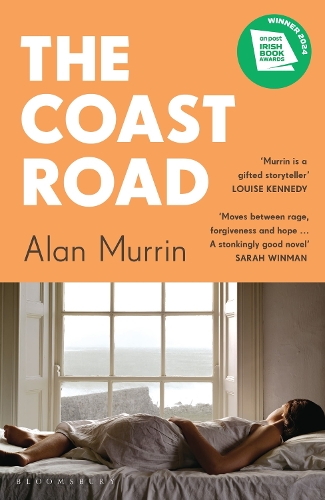
Another book about women and their families: The Coast Road by Alan Murrin. The novel, set in 1990s Ireland where divorce was still illegal, and revolves round three women (and Murrin is particularly skilled in bringing women to life) in different ways trapped by marriage, Colette – a bohemian poet – leaves her husband after her affair, and he won’t give her access to her youngest child. Dolores, married to a philanderer, is pregnant with her fourth child. Izzy has an ambitious and controlling politician as a husband.The lives of the three women become entwined as the plot develops, showing each of the men being unlikeable in different ways. Only Father Brian, the priest, comes out well. Here is a novel describing vulnerable, limited lives held in check by fear of scandal. Characters are all brought convincingly and sympathetically to life. Murrin seems to know well the world about which he writes, and even the ending, highly dramatic as it is, is believable and compelling.
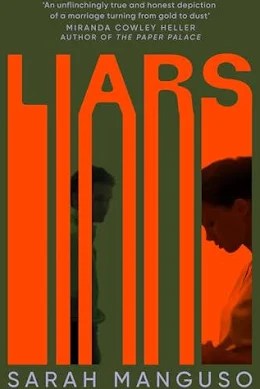
And here we are again. Difficult family life, inLiarsby Sarah Manguso. This is the story of Jane, writer and academic, who as a young woman meets John, a charismatic film-maker. They set out to construct a creative, equal marriage and apply together for artists’ fellowships, only for Jane to succeed and John to fail. At this early stage the warning signs are there. John fails and fails again, but they marry anyway. When they have a child together, Jane is doubly trapped. She and her (unnamed) son are dependent, because of the shrivelling of her career, on John’s income. The reiteration of a pattern, year after year after year is debilitating all round and exhausting to read about. Jane is increasingly a victim, increasingly two-dimensional. Finally – finally – John leaves them. A somewhat depressing book, in which the characters – there are only two really, as The Child only develops some kind of personality towards the end – deny the readers the possibility of liking them, or in my case, caring very much about them.
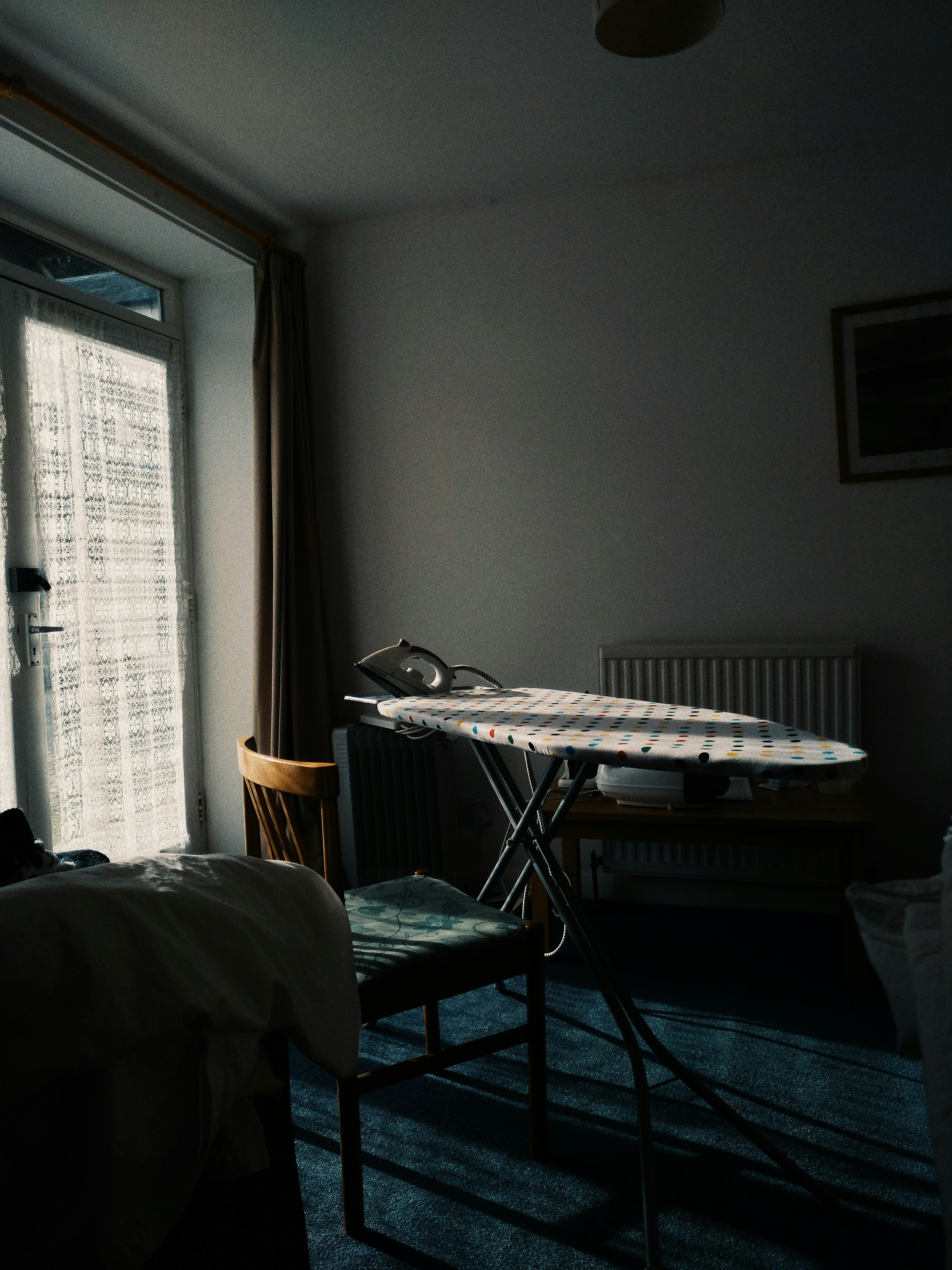
My last book, a series of short pieces, also often focuses on relationships: the mother and child. Jamaica Kincaid’s At the Bottom of the River,also writes about the natural world and achieving independence. The language is beautiful – often hauntingly so. There’s often wry humour: the first essay of all is a list – a long list – of how the daughter should behave in order not to become a slut. The entire piece is one sentence long… ‘This is how you iron your father’s khaki shirt so that it doesn’t have a crease; this is how you iron your father’s khaki pants so that they don’t have a crease; this is how you grow okra – far from the house, because okra tree harbours red ants ….‘This was perhaps my favourite piece. Kincaid is very good at lists, and this one is the first among several that contain them.
Nevertheless, I didn’t find this easy reading, and I often struggled to follow the drift. I hugely enjoyed Kincaid’s use of language, but remained puzzled by the book as a whole.
So there we are. A chain about relationships: which is the theme of most fiction, I guess. And next month’s starter book is The Safekeep by Yael Van Der Wouden.Kate’s review makes it sound an appetising read.
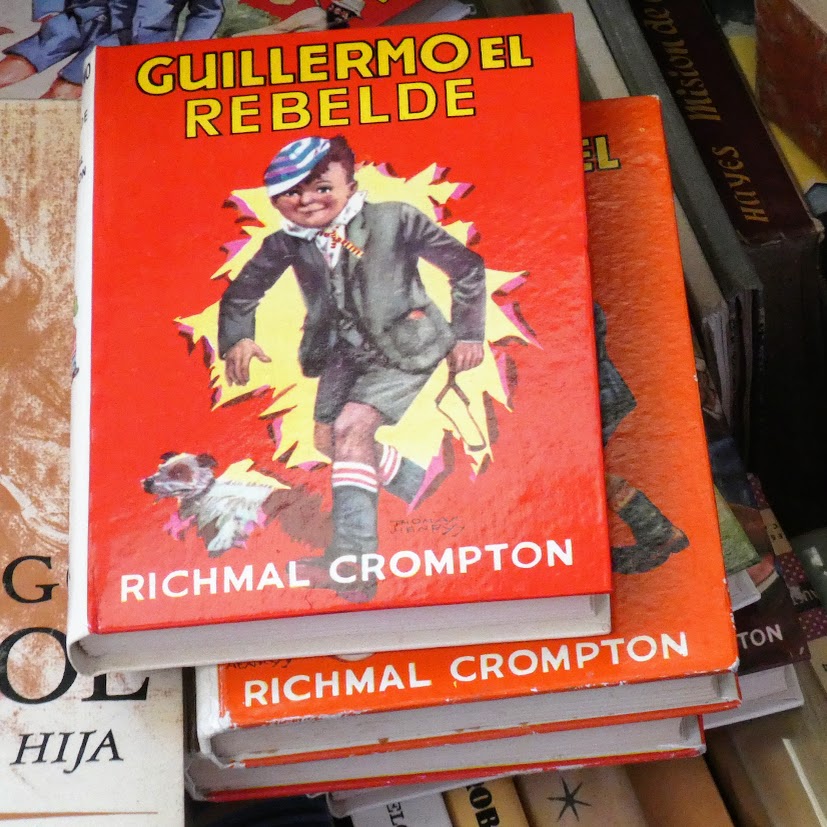
And here, nothing to do with this challenge, but everything to do with Becky’s Squares Challenge, #SimplyRed, is a surprise find in a flea market in Barcelona. Who knew that Just William was popular in Spain too?
Photo Credits:
Own photo
Own photo
Evgeny Matveev: Unsplash
Own photo
Siona das Olkhef: Unsplash
Segi Dolcet Escrig: Unsplash
My diary, revived from my trip to India back in 2007. This second part details my solo travels during the last three weeks or so.
I should explain. These next few entries cover the time when I stayed with a young American academic. I’d linked up with her through Couchsurfing, an organisation that enables travellers to stay with locals with a view to getting more of an insight into the local community than the average tourist does. Gwen was the only person who contacted me in Thanjavur, and I was a bit reluctant. An American in India? How wrong I was. As you’ll find out.
Hello Thanjavur!
Friday 23rd November.
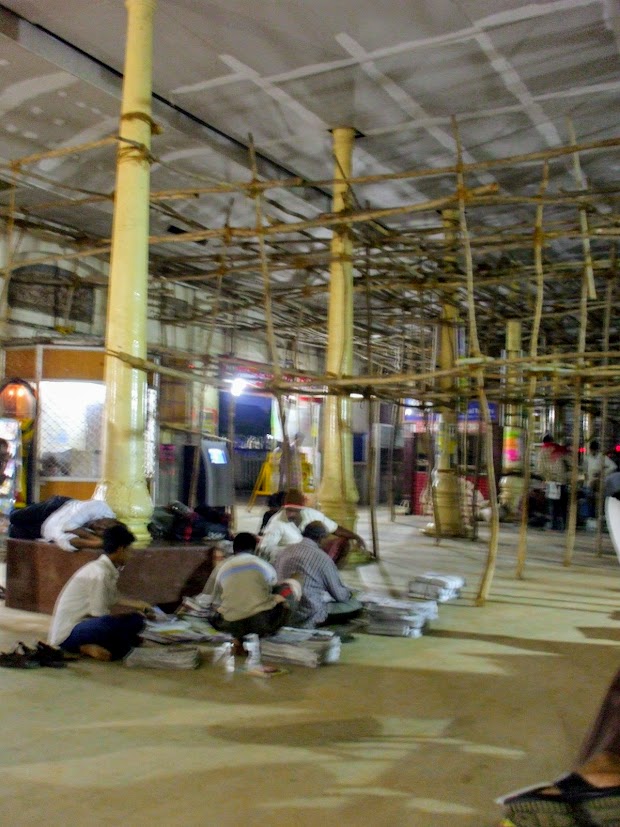
5.00 a.m. The station was heaving with life! Such a surprise. But it was a bit too dark and gloomy to read, so off to the booking hall. What a party! Well, no, not actually.- just a score or so of boys and men sitting in convivial groups on the ground collating the day’s newspapers. This took most of the time till 7.00 when Gwen arrived … on her motor scooter.
In fluent Tamil, she negotiated me a rickshaw and off we went. And at her flat, she gave me breakfast and the first decent cup of coffee of the holiday. I really like her. She’s lots of fun, and at the same time, very committed to her archaeological studies.
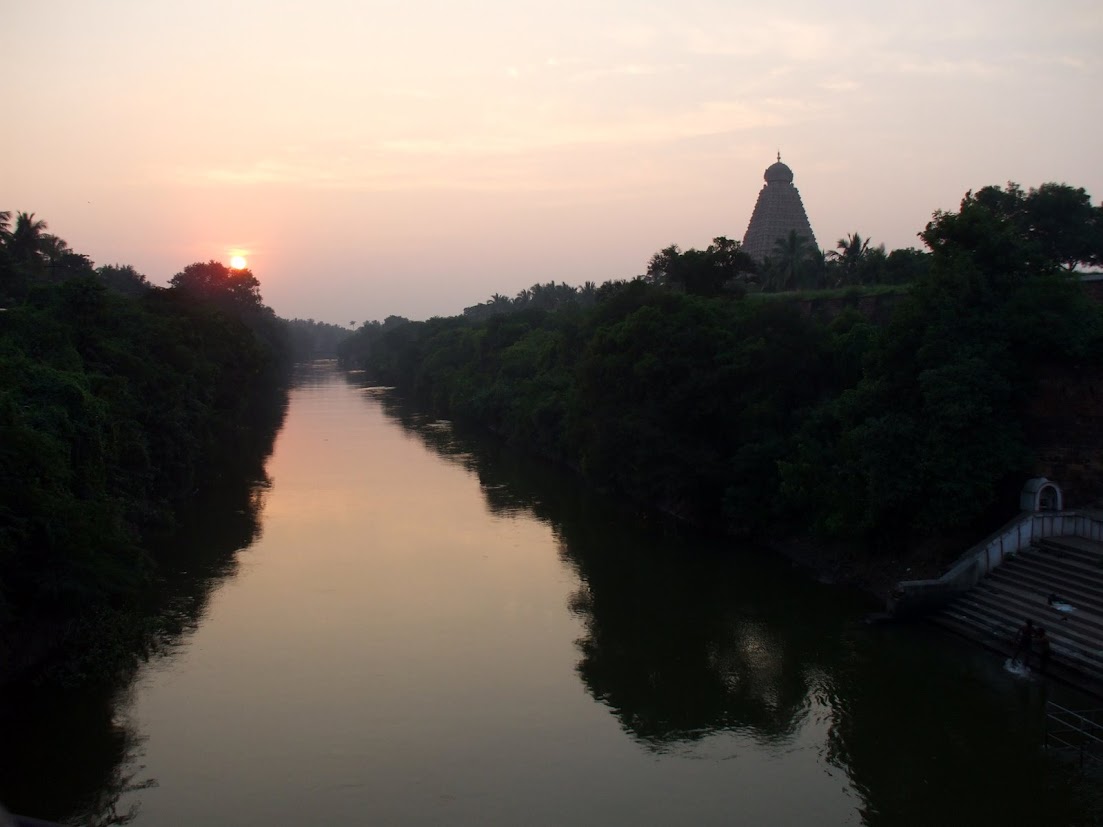
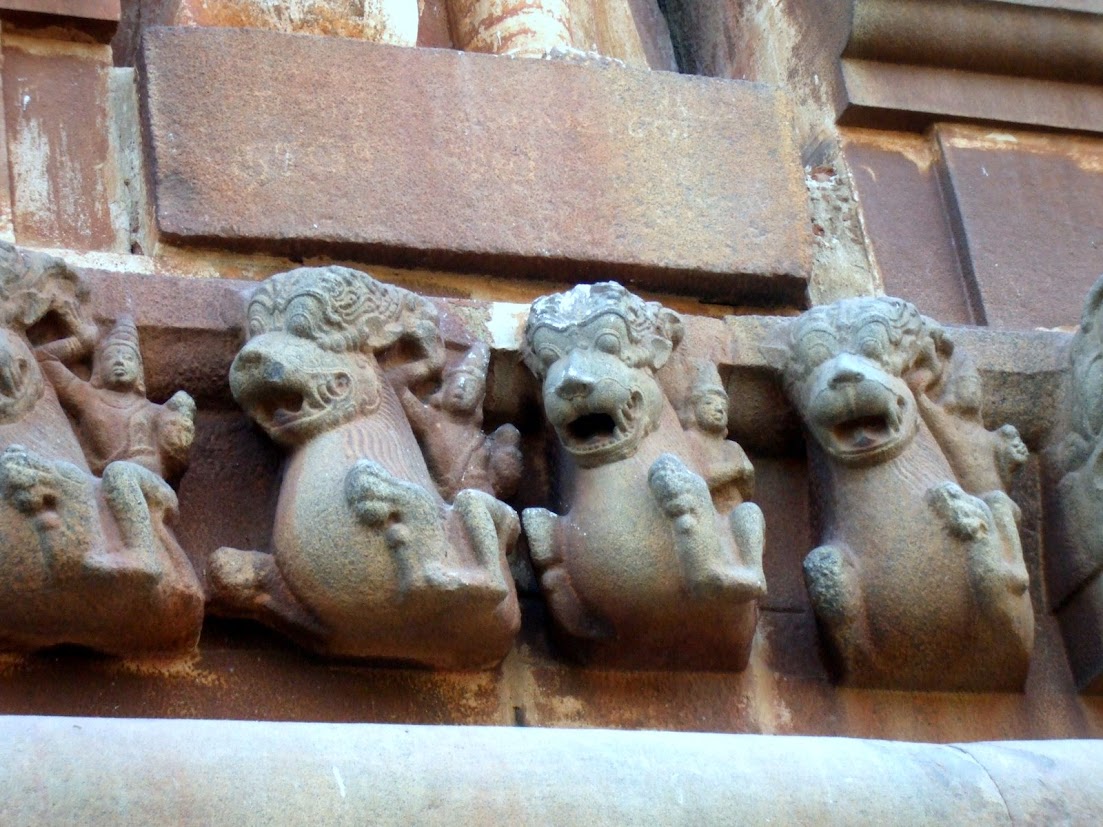
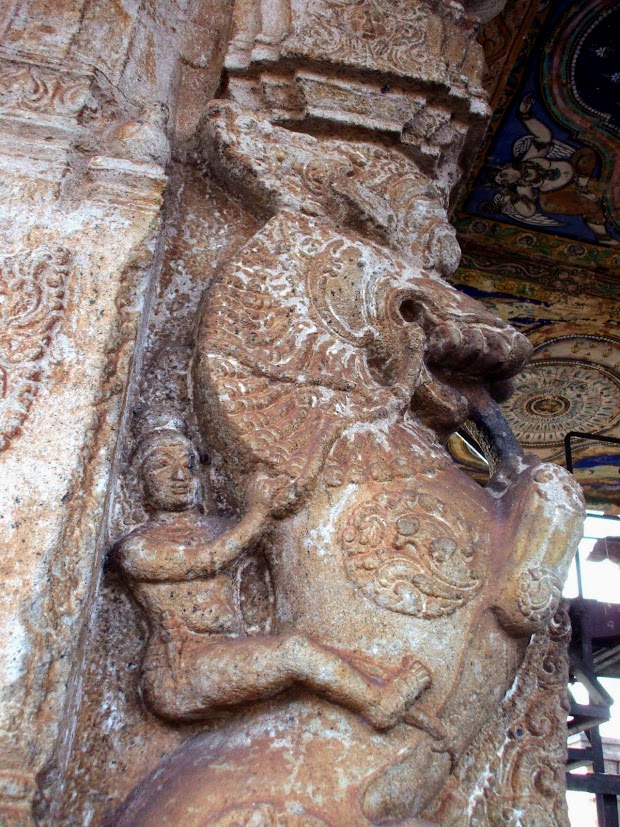
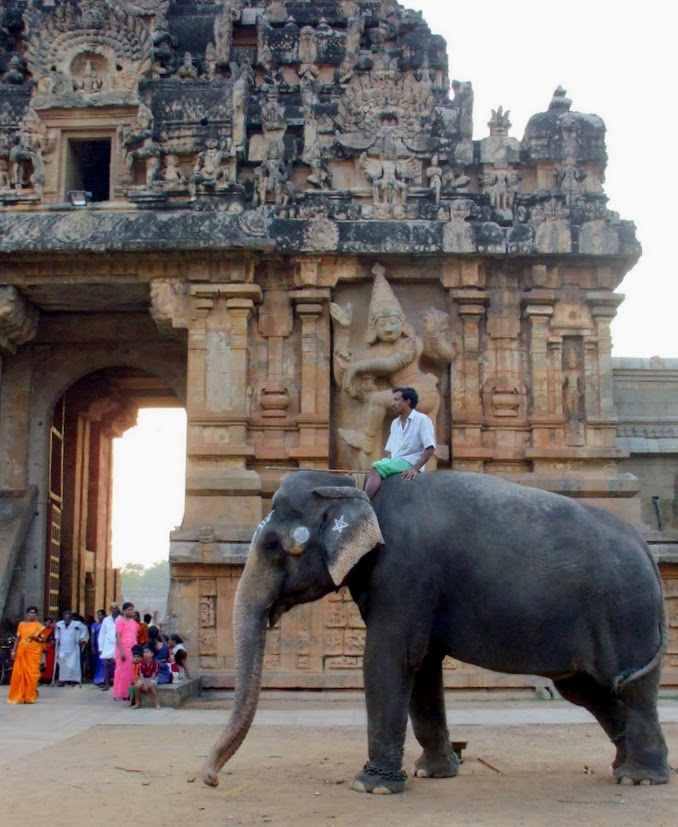
Towards 10.00, we hopped on her scooter and she gave me a lift into town, dropping me off at the Chola Temple. What a place! Magnificent multi-sculpted edifices – several separate temples all on the same site. I just explored for a long time. Then I mooched round town. I can cope with this one. It has a shape I can follow, though the streets are familiar now. Internet cafe, then a hunt for lunch. No language passed between us, but I got my rectangle of banana leaf, my choice of rice, and helping after helping of the various sauces dumped onto the rice. They went out and got me bottled water as I indicated I wouldn’t have that in the jug. All for about 10 bob (50 p in new money) and ½ of that was the water.
Eventually, I found a bank: a chaotic jumble of customers, with areas of desks all over the place behind which sat officials and their untidy piles of files. More dusty files in dusty metal cupboards, and for me, no sense at all of what happens where. I was shunted to three different places and told eventually to come back tomorrow.
Back to the temple and a rickshaw home. Gwen took me out to get a take-away – a ‘parcel meal’, which was indeed neatly parcelled with cotton and cost Rs.65. Lots of talking …and so to bed.
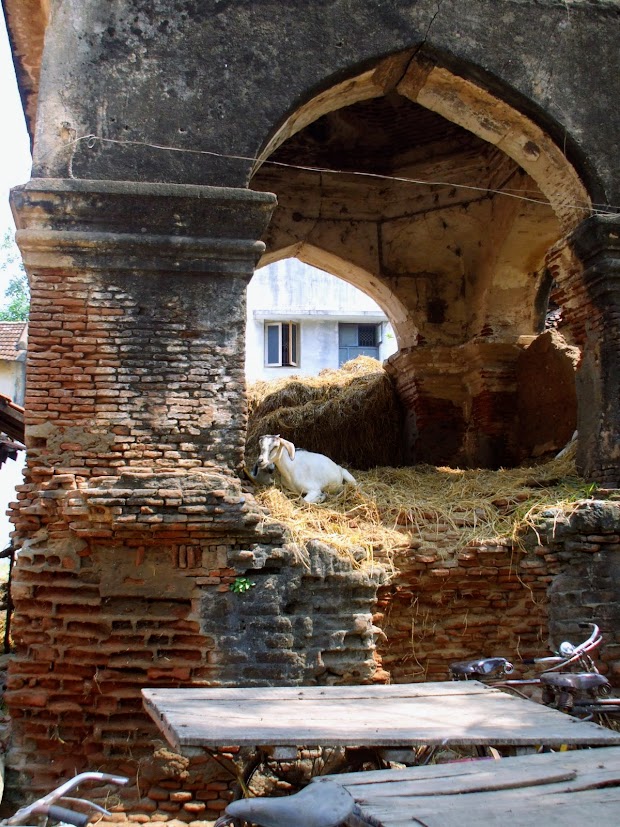
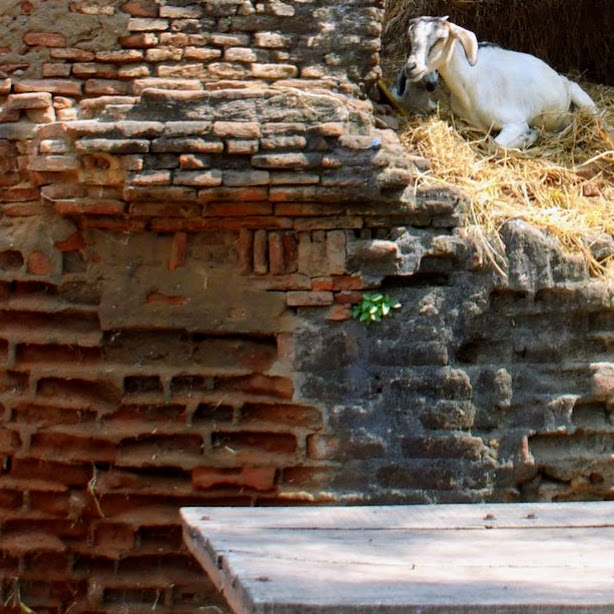
And so today’s Square for Becky’s #SimplyRed is clipped from the shot above, where goats were lounging in a disused brick-red building in the centre of Thanjavur. They seemed very content.
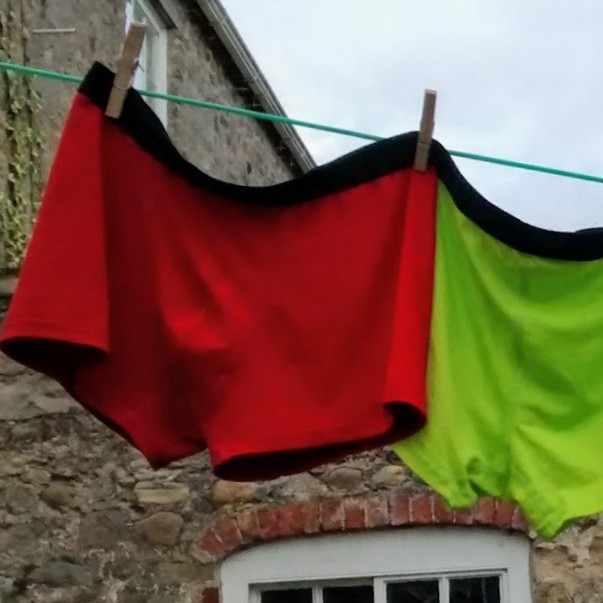
We had some friends staying a while back. The sort who don’t outstay their welcome because, even though they’re there long enough to need to run a few things through the washing machine, they muck in, do the shopping, cook a meal and generally become part of the family. Here’s part of the washing line during their stay …
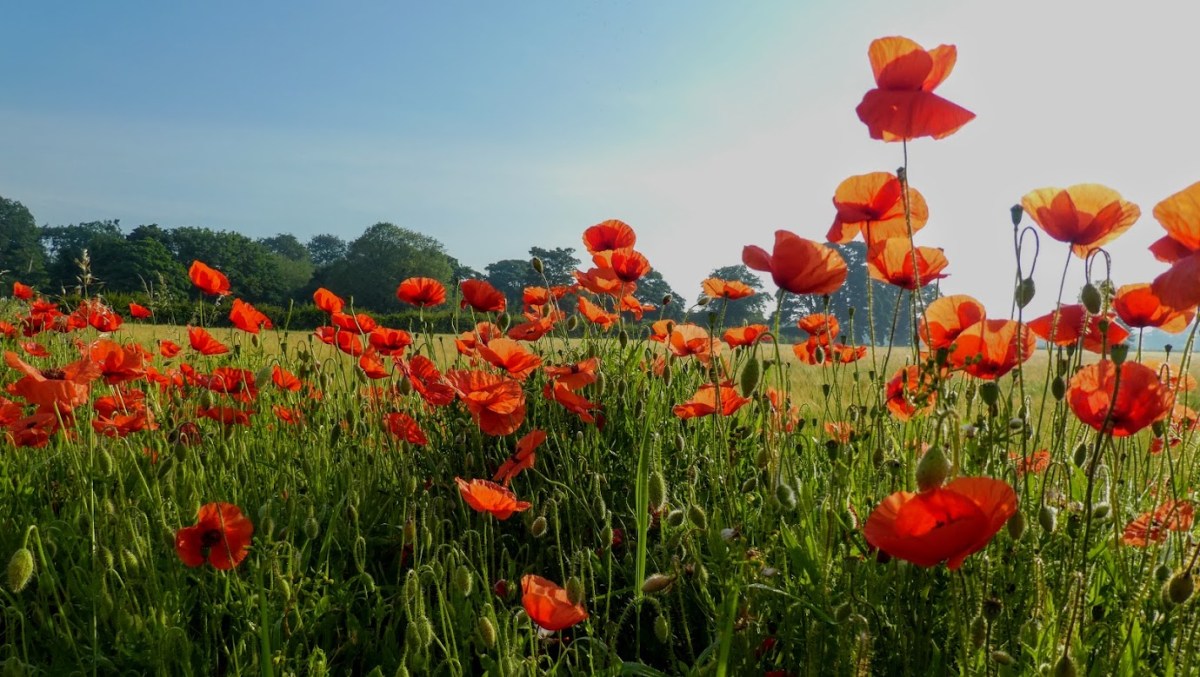
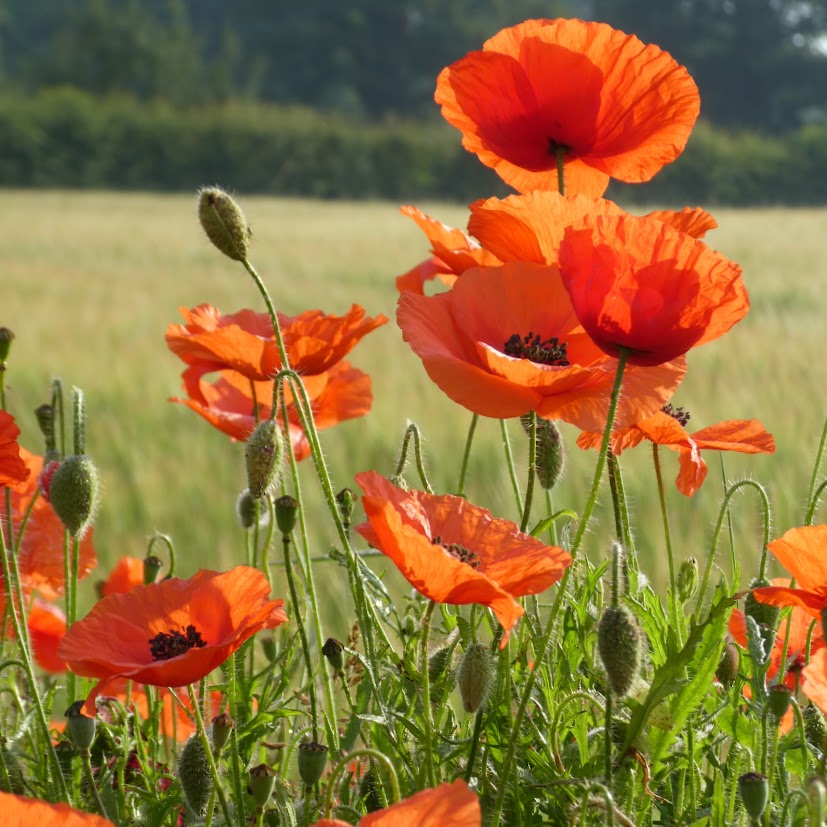
A month of Squares has arrived, a month that will be Simply Red. I’m joining in. The world is not a happy place at the moment, so I’m aiming to stay up-beat and optimistic. And for me that means starting with that most cheerful of flowers, the poppy – here only just past Peak Poppy, but still hanging on.
Thank you, Becky, for building this cheerful world-wide community of Squarers.
All over Europe, people are hot and bothered – not so much here up north, where it will only reach 25 degrees today. So my contribution to keeping you cool, if you’re affected by the heatwave, is to offer this refreshing sit down in our local wood.
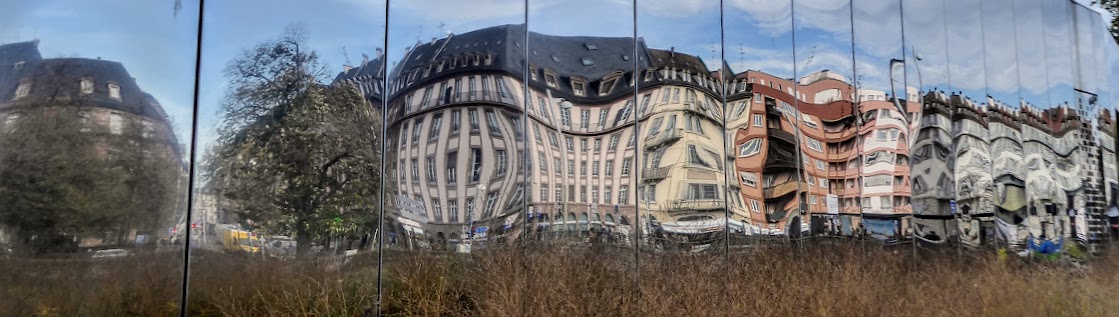
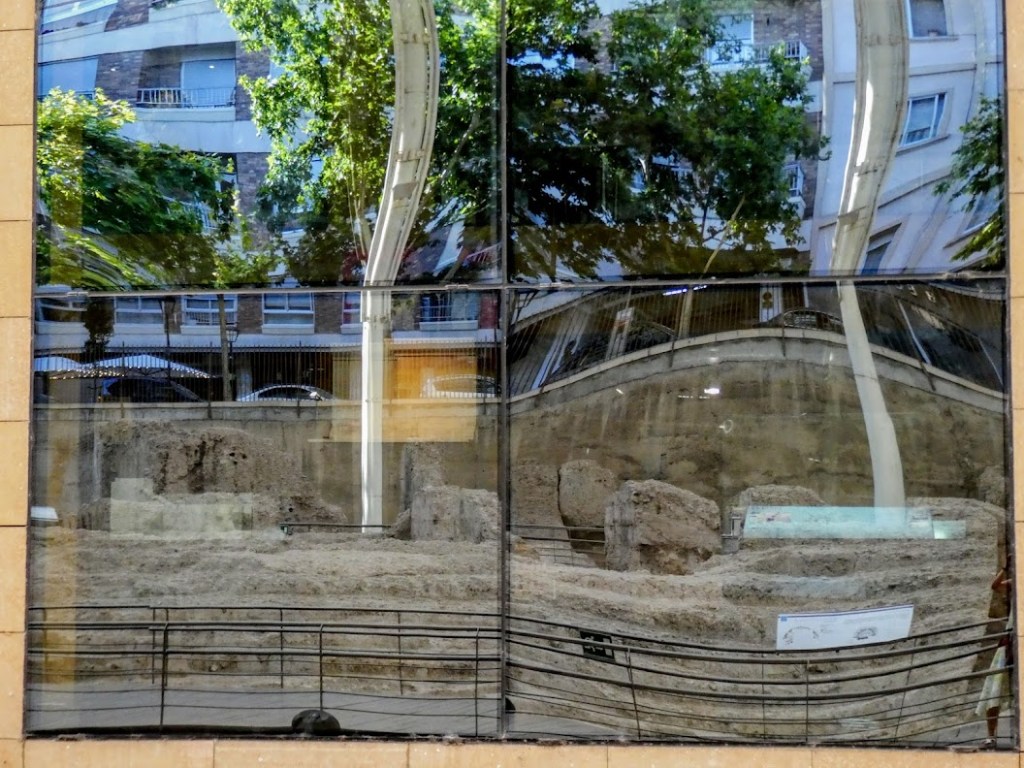
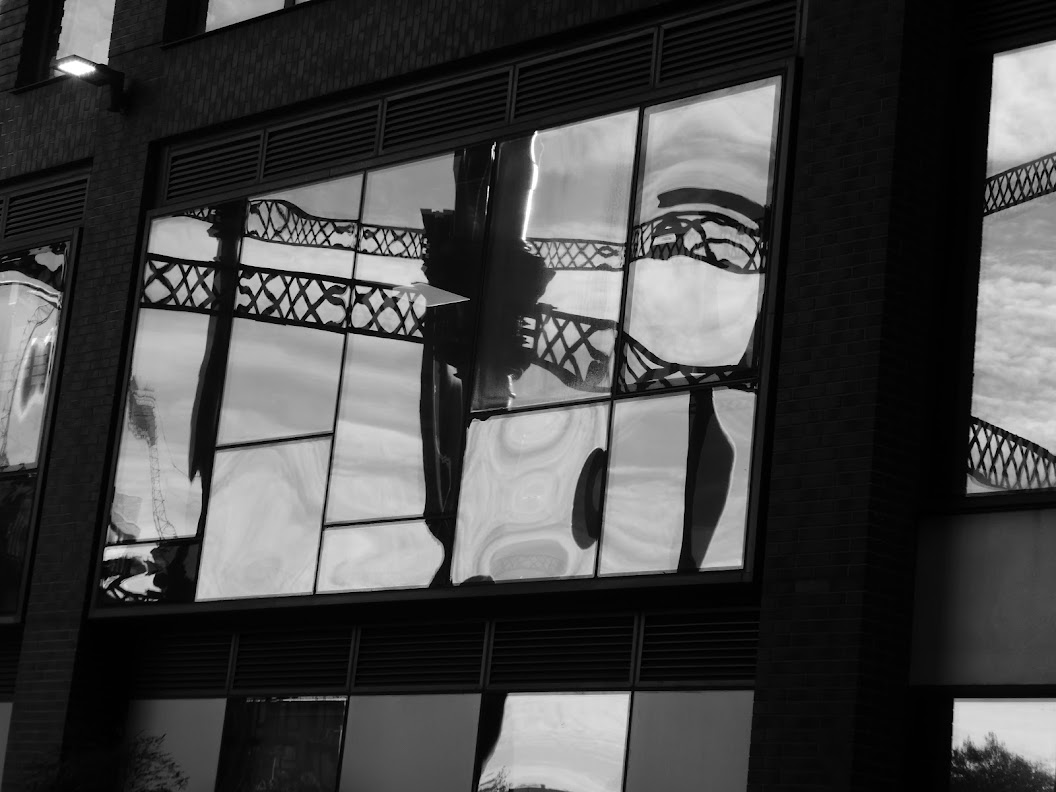
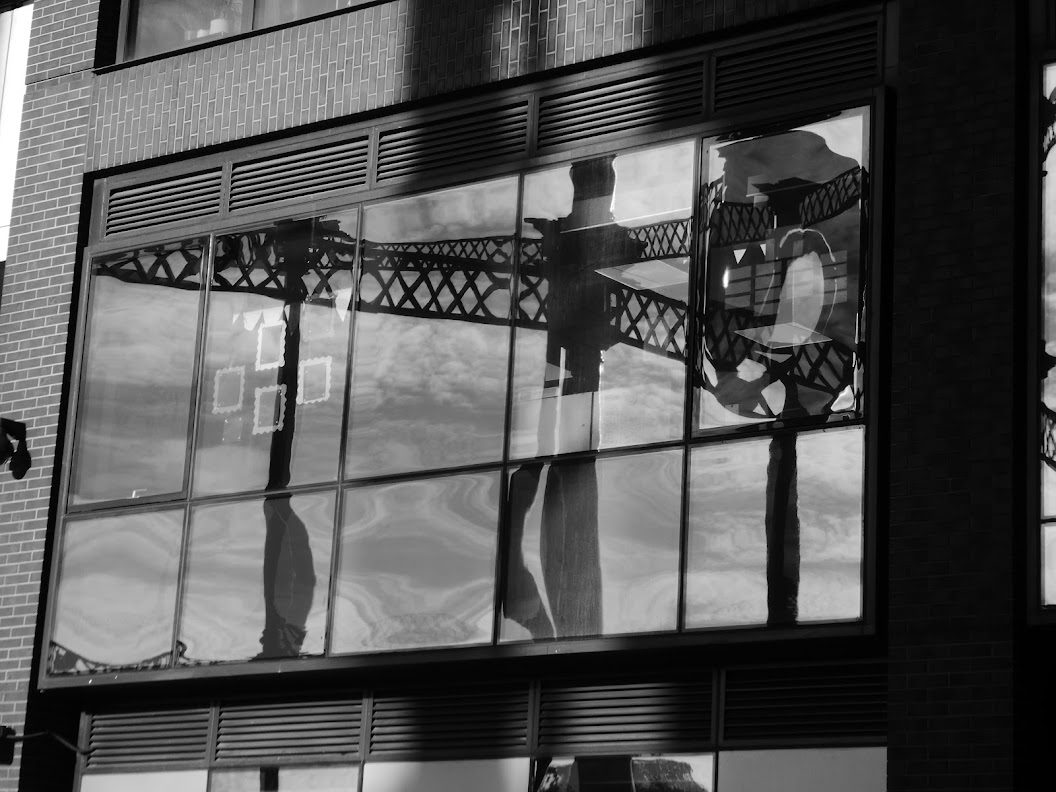
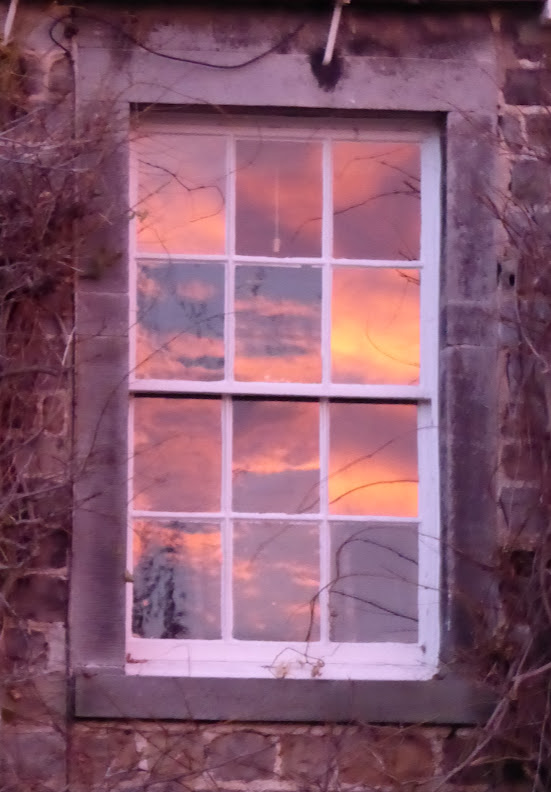
This week for the Lens-Artists Challenge, Anne invites us to focus on Reflections. She, and now many others, have shown us photos of astonishing beauty featuring the natural world. I thought I’d go down a different road, and look at distorted reflections.
I love the scene shown in the featured photo. It comes from Strasbourg, and features a mirror reflecting buildings from an unlovely part of town, then the home of lots of car parks and redevelopment.
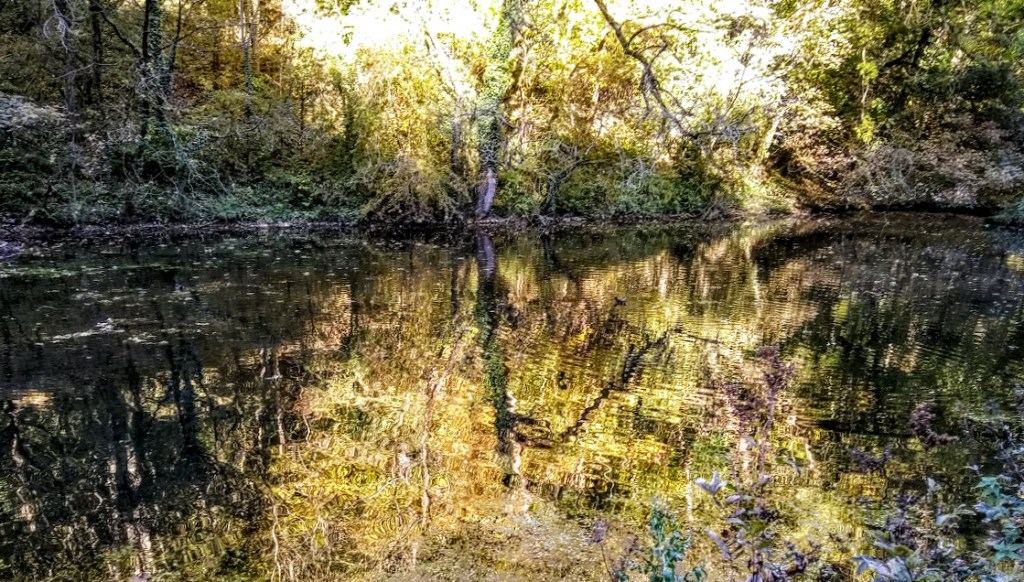
This next one isn’t distorted exactly. But it is hard to read. It’s a pond landscape which to me looks like an expressive painting of … who knows?
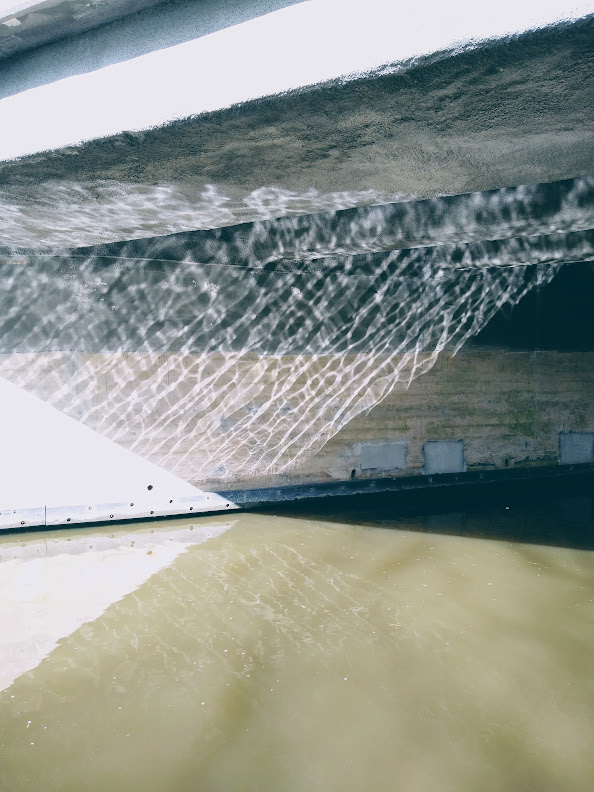
I’m beside water for my next one too. The Leeds-Liverpool Canal. What’s different about this one is that it’s the water that reflects on the concrete above, rather than the other way about.
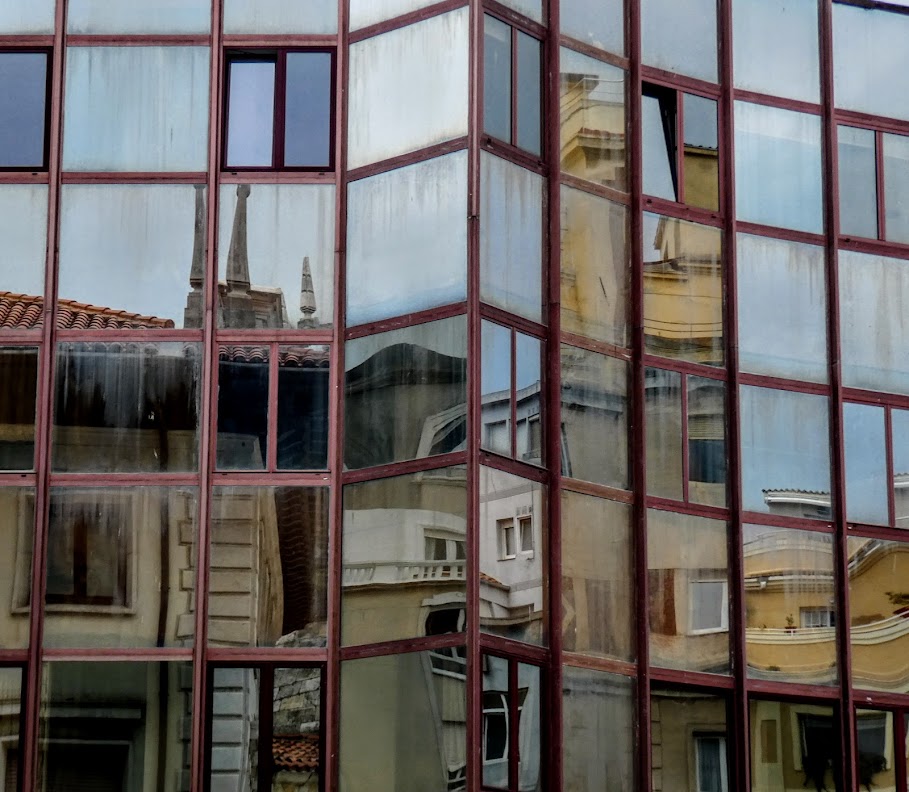
What next? A bit of a Rubik’s cube of images. I feel if you pushed these individual reflections-in-windows about, you might come up with complete pictures of the buildings reflected here.
And here we are in Zaragoza. Are we looking at the relics in the Roman Museum behind the glass, or the street outside’s buildings and trees?
And here’s a couple of images from London’s Gasholder estate.
And finally, an image from home that I’ve shown before, and will surely show again: I love it. Sunrise on Christmas Eve a few years ago.
My diary, revived from my trip to India back in 2007. This second part details my solo travels during the last three weeks or so.
A Long Train Journey
Thursday 22nd November
Last day in Mysore! I’m sitting at breakfast enjoying watching the hornbills in the trees. I think they’re the magpies of the area – never still, always flying around moving all the other birdlife on. The other treat is at nightfall when the enormous fruitbats come out. Wonder what they’ll have in Tamil Nadu?
Later ….
My train to Thanjavur
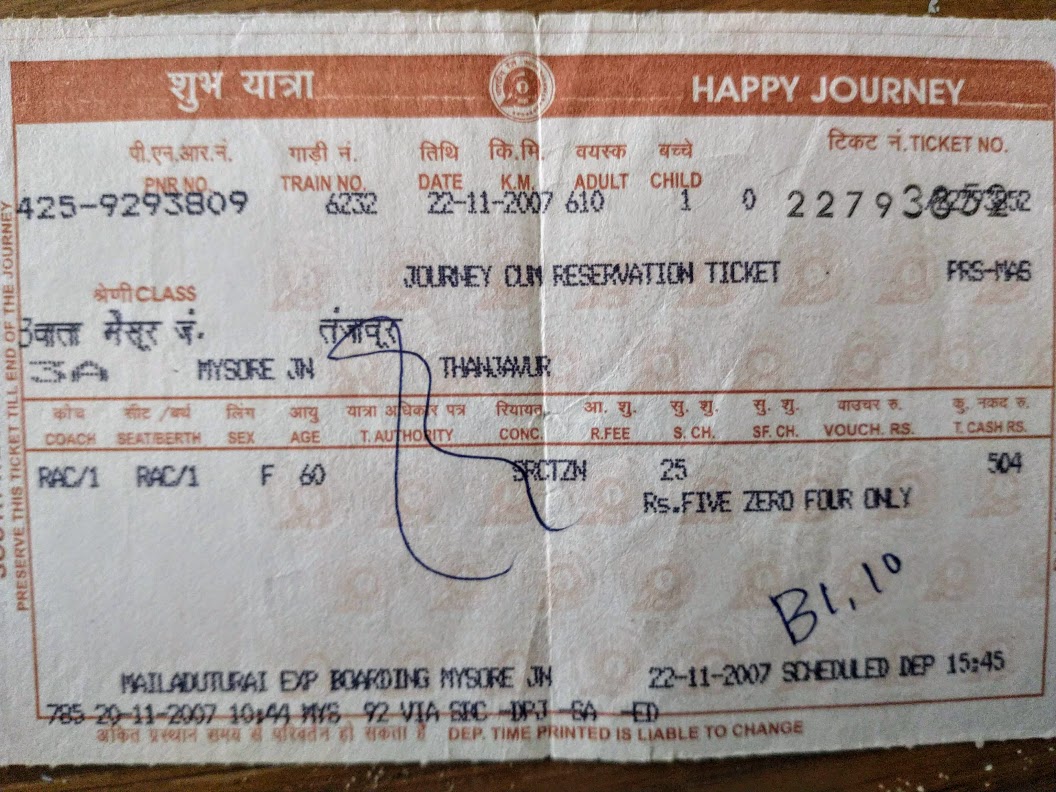
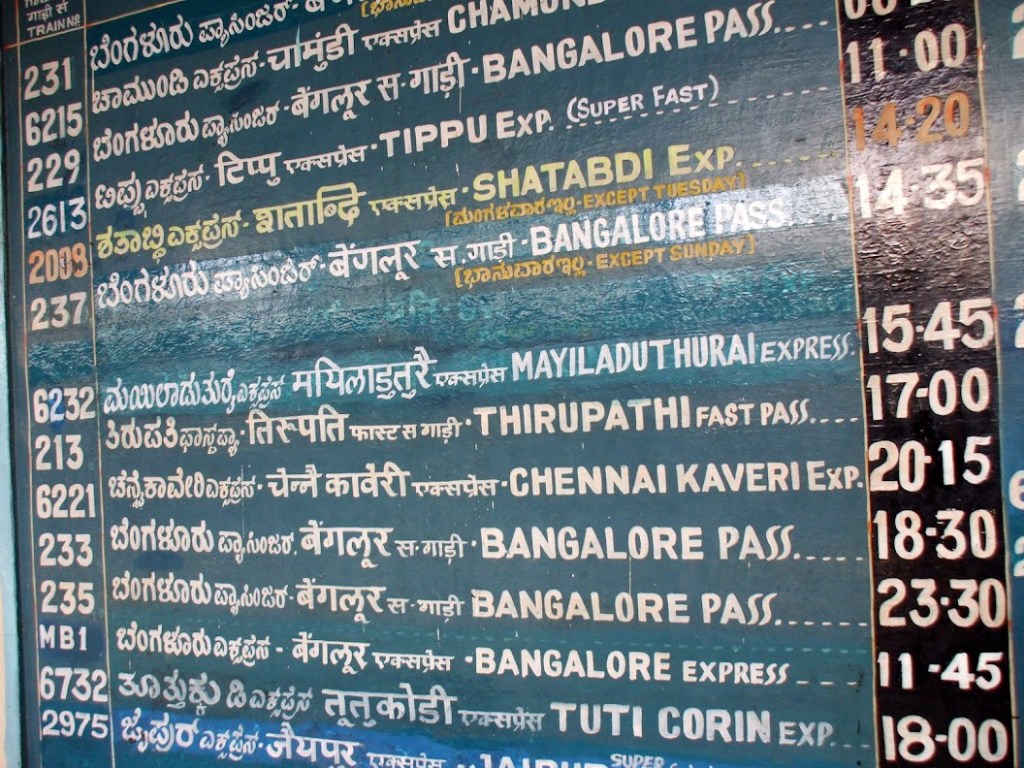
I’m now on the train which at 7.20 had just left Bangalore (Mysore 3.45). Fascinating stuff. The train gets in nearly an hour ahead of departure so we can all sort ourselves out. As I was clearly a Country Cousin (the only European on the train), a man at the station took me in hand. I hadn’t known I had to ‘check in’, in the manner of an airline passenger. Nor had I identified how to use my ticket to find my seat. So he helped me – for Rs. 20.
Meanwhile, on the station, everyone got on with life. A large family spread themselves out on the ground, got out metal plates and canisters of food, and got stuck in. Some women, like me, headed for the calm of the Ladies’ Waiting Room. I also made sure I had enough water – a constant feature of life here, buying water. Not a lifestyle choice, but a necessity, certainly in the towns. Rs. 10-ish in a bottle. This was all after I’d identified my seat. I wasn’t about to sit on a hot train unnecessarily for ¾ of an hour. The train was fairly empty – nobody in my bit of the compartment.
Mysore Station
Eventually though, I took my seat, and the train started, I enjoyed watching the world pass by, and occasionally chai and coffee boys would go by, though I haven’t succumbed yet. Interminable stops at non-official stations. And then, as darkness fell, I was struck by the low level of lighting in the streets: and then, as we pulled into Bangalore, by the almost nonexistent level of lighting on the station – a real surprise. Still, now we saw some action. More tea, coffee and waterboys. I got some nuts, fearing I would get nothing else, but then, just after that, along comes the offer of meals, veg or non-veg. So I got a veg. option for Rs. 20: rather better value than the Rs. 50 nuts! A foil-wrapped container was filled with fried rice and lots of vegetables – quite good actually – which of course I ate with my fingers – what I could manage. It was an enormous portion.
Now I’m sharing my compartment with a college lecturer, and a college librarian from Trichy (Tiruchirappalli – which I rather wish I’d visited). Their English is limited, so plenty of room for misunderstanding. By the way, lots of people assume I’m French. What’s that about?
8.30 p.m. At yet another station. Masala dosa and idli man doing his stuff – that sounds good!. Lots of people have made their beds up, but not us yet. One young woman got on at Bangalore having had her hands and wrists henna-ed on both sides. She’s been trying to manage her life handlessly. Difficult.
One family had produced a three course supper with several dishes on metal plates. It all looks very good, and now mum has gone to wash up …. Sadly, I can’t find my carefully-packed toothbrush.
At about 9.00 ish, we all got our beds ready: our compartment separates into 2 sets x 3 of beds, then by the windows, 1 x 2. Up we all jumped ito our bunks and slept, surprisingly. At 4.00, at Trichy, a lot of people got off, and naturally I slept no more, as I was off at 5.00 at Thanjavur.
The theme Dawn has chosen for this week’s Monochrome Madness is Transport. That’s a bit of a facer. I’m not the sort of person who ever thinks to take a shot of a car, or be part of a cluster round someone’s state-of-the-art motor bike. I only notice trains or buses if they’re late, and you’ll never catch me on a bicycle.
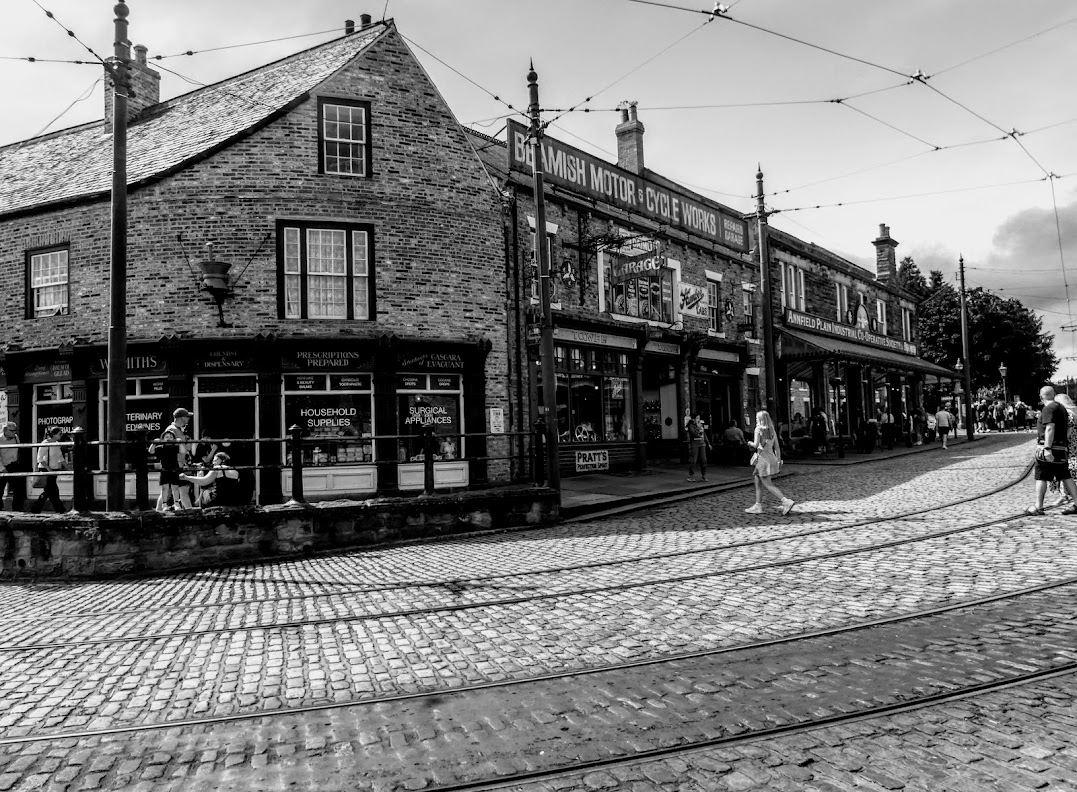
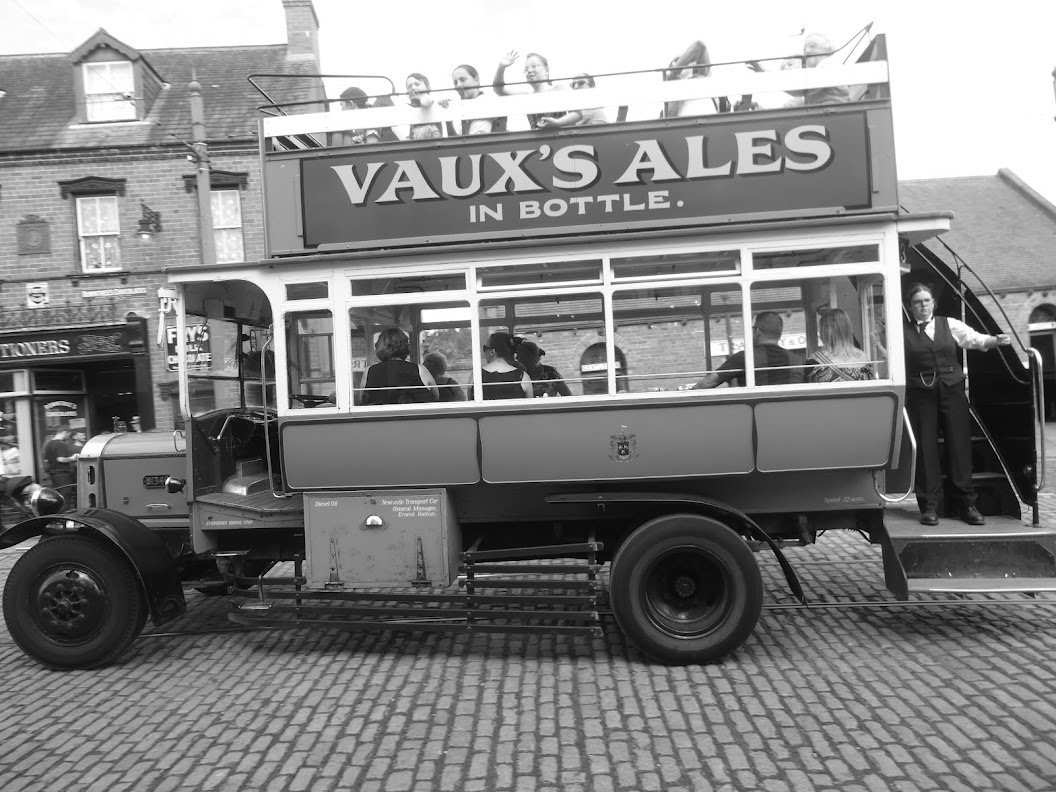
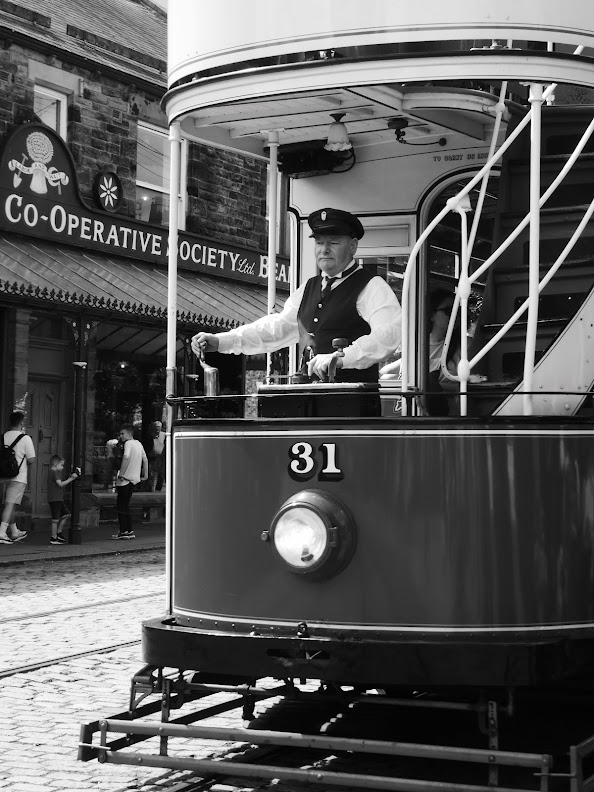
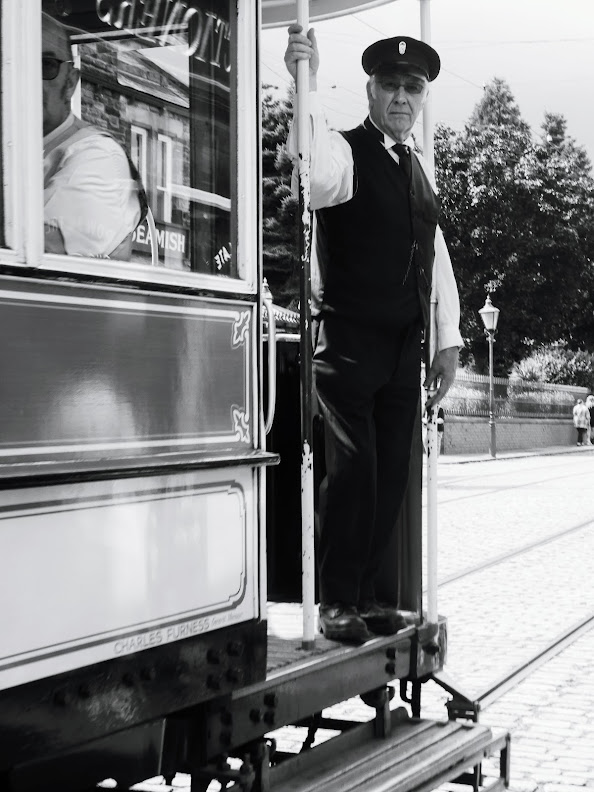
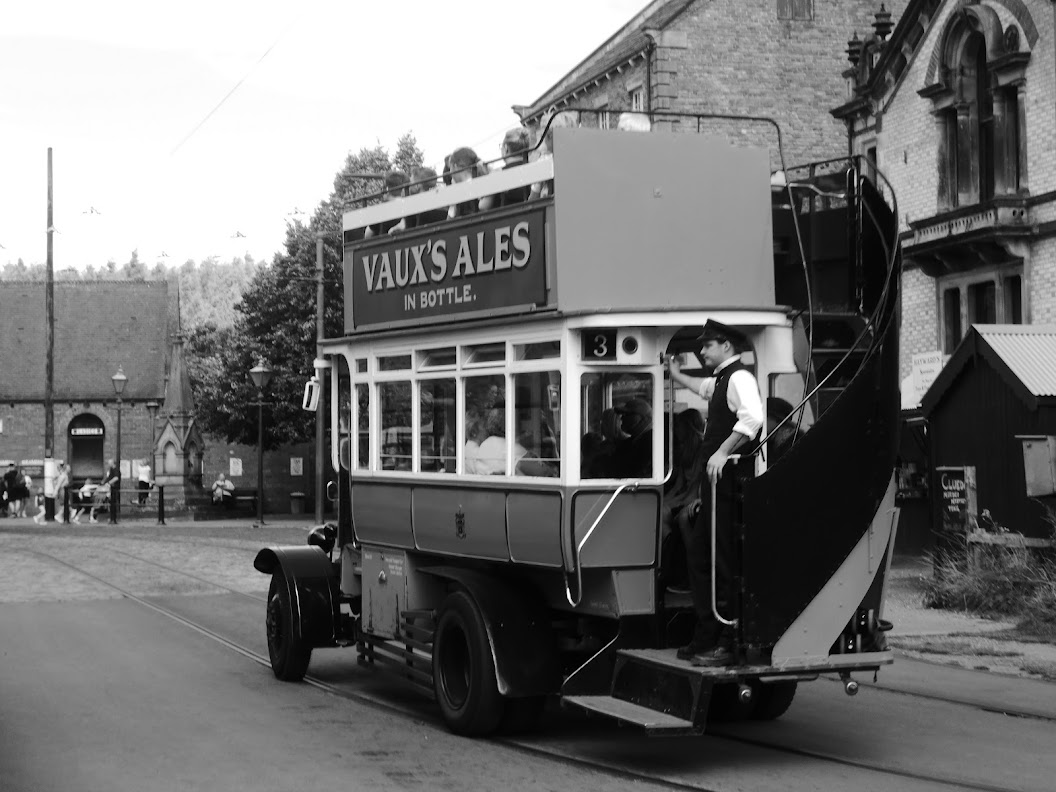
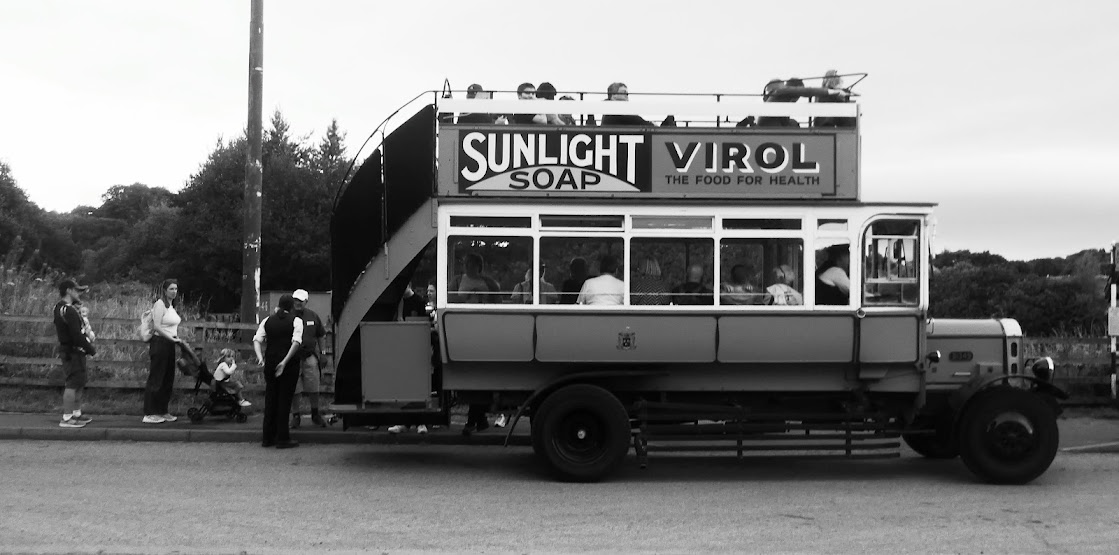
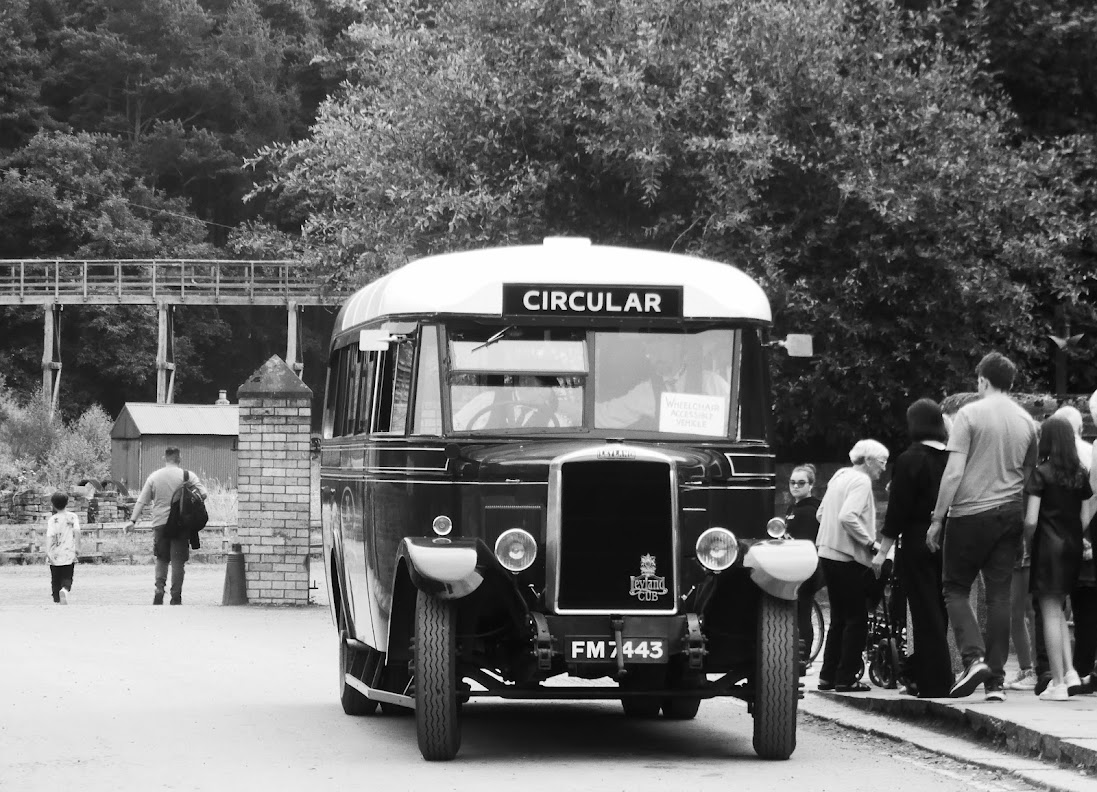
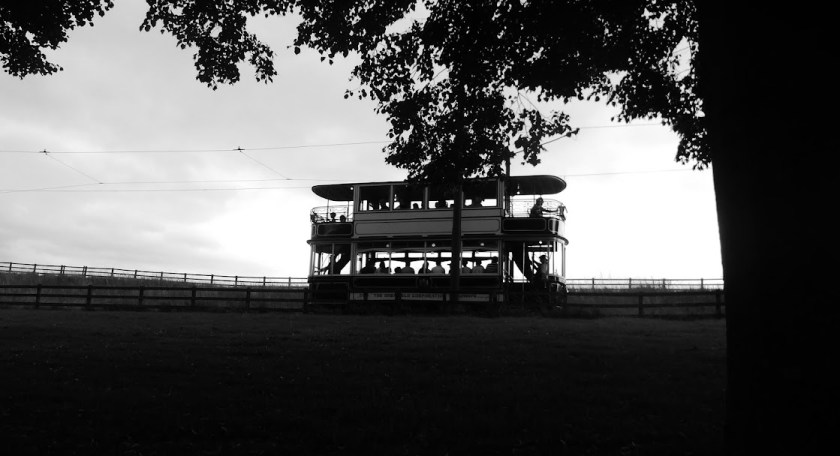
So my best bet seems to be a visit to the past, and a trip we took last year to Beamish, a wonderful open air museum, telling the story of life in North East England during the 1820s, 1900s, 1940s and 1950s.
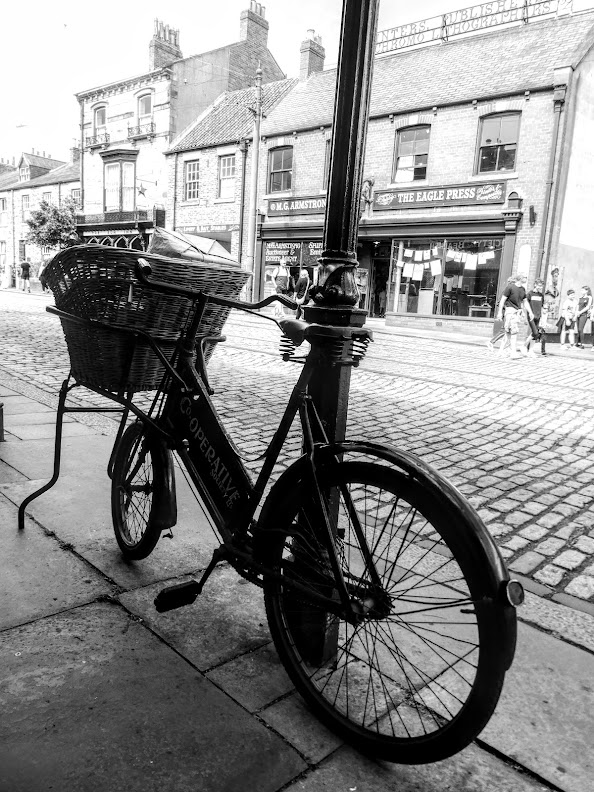
The site is huge, and public (well, public to those who’d paid to get in) transport a necessity. We had fun popping on and off trams, trolleybuses, and single decker buses, and inspecting the bicycles of delivery boys.
My feature photo shows no trams and bikes. There are tramlines, but what it illustrates is the most common form of transport there is, world-wide. Shanks’s pony. I’m not sure if this phrase has spread as a description of walking beyond the UK, nor am I sure of its origins. There ARE various theories on the internet: but I believe none of them.
Here’s a gallery of all the transport we used as we explored this site.
Trams …
… and buses …
… and bikes.
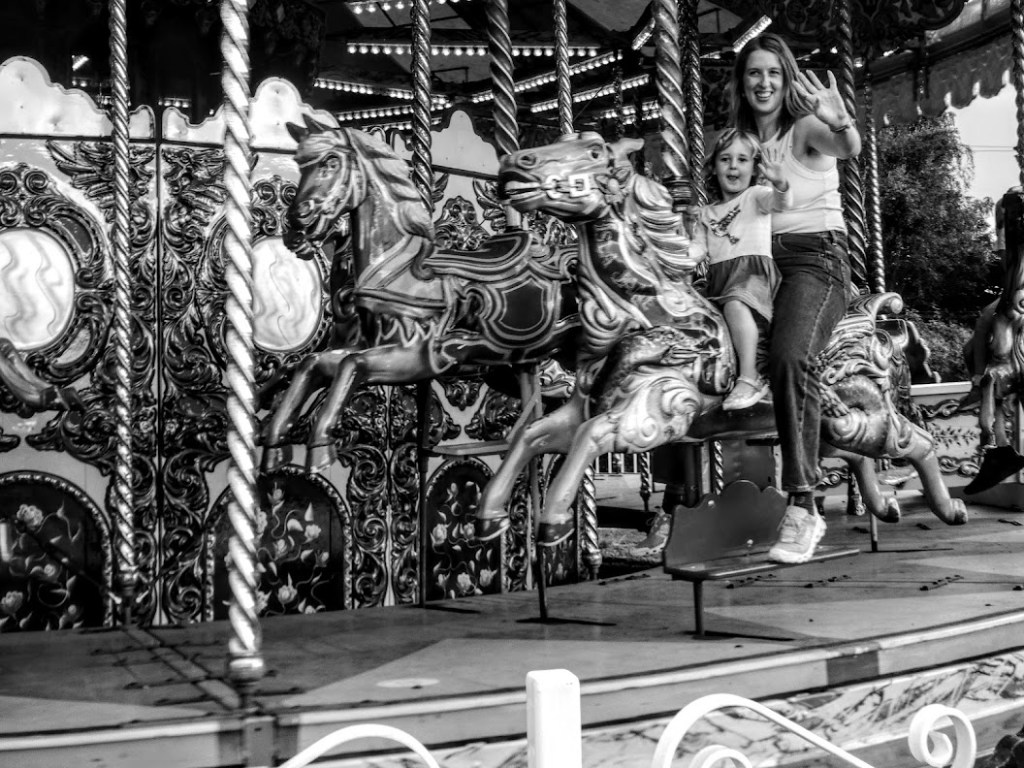
And does a merry-go-round horse count as transport? My granddaughter thought so.
And here’s a final photo, as evening drew in, and people hurried onto whatever form of transport they could find to take them towards the car park, and their journey home.












 From Pyrenees to Pennines
You must be logged in to post a comment.