
Benches found in Canet de Mar, with an image behind celebrating Empowerment, Sisterhood and Feminism.
Incidentally, how many benches can you spot? There are more than you might at first think.
For Jude’s Bench Challenge.
Benches found in Canet de Mar, with an image behind celebrating Empowerment, Sisterhood and Feminism.
Incidentally, how many benches can you spot? There are more than you might at first think.
For Jude’s Bench Challenge.
On the first Saturday of every month, a book is chosen as a starting point and linked to six other books to form a chain. Readers and bloggers are invited to join in by creating their own ‘chain’ leading from the selected book.
Kate: Books are my Favourite and Best
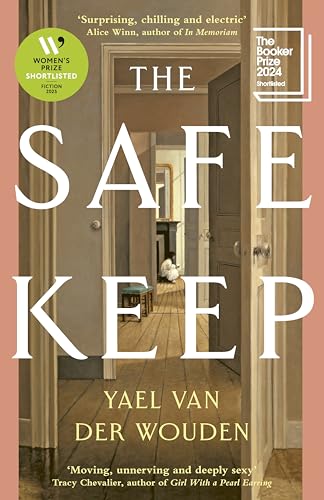
Thank you so much for putting Yael van der Wouden‘s The Safekeep on my reading list Kate. It’s a book which delivered so much, and also invites any number of ways the Six Degrees contributor could go.

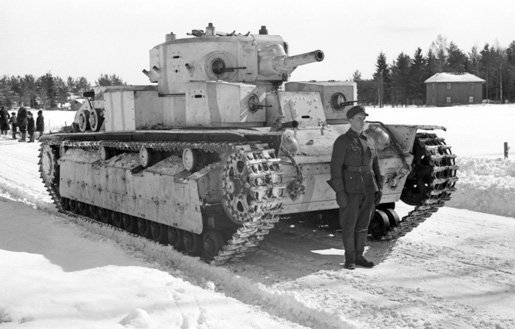
I settled for looking at those parts of WWII little known about here, as far as the German perspective goes. and begin with We Germans, by Alexander Storritt. ‘What did you do in the war?’ a young British man asks his German Grandad. And is told, in the form of a long letter found after his death. In 1944, Meissner, a German artillery soldier, had been fighting with his unit in Russia, in Ukraine. But in Poland, he and a few others somehow got separated when detailed to look for a rumoured food depot. They see Polish villagers hung by unidentified men from a single tree ‘in bunches, like swollen plums.’ They witness rape and crucifixion. They steal a tank and use it against the Russians. They squabble bitterly with each other. They kill enemy soldiers without compunction. This is a well-drawn book, a deft exploration of the moral contradictions inherent in saving one’s own life at the cost of the lives of others. Though fiction, it’s clearly deeply rooted in the reality of the helpless, pointess horror of the last period of the war for those often starving people, both army and hapless civilians who found themselves marooned on the Eastern Front.
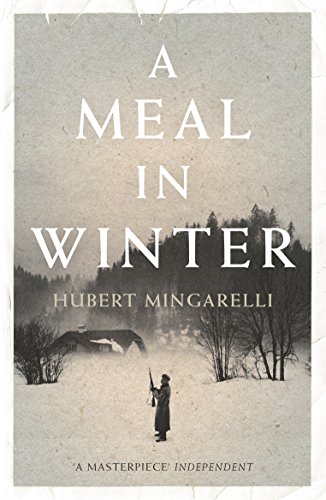
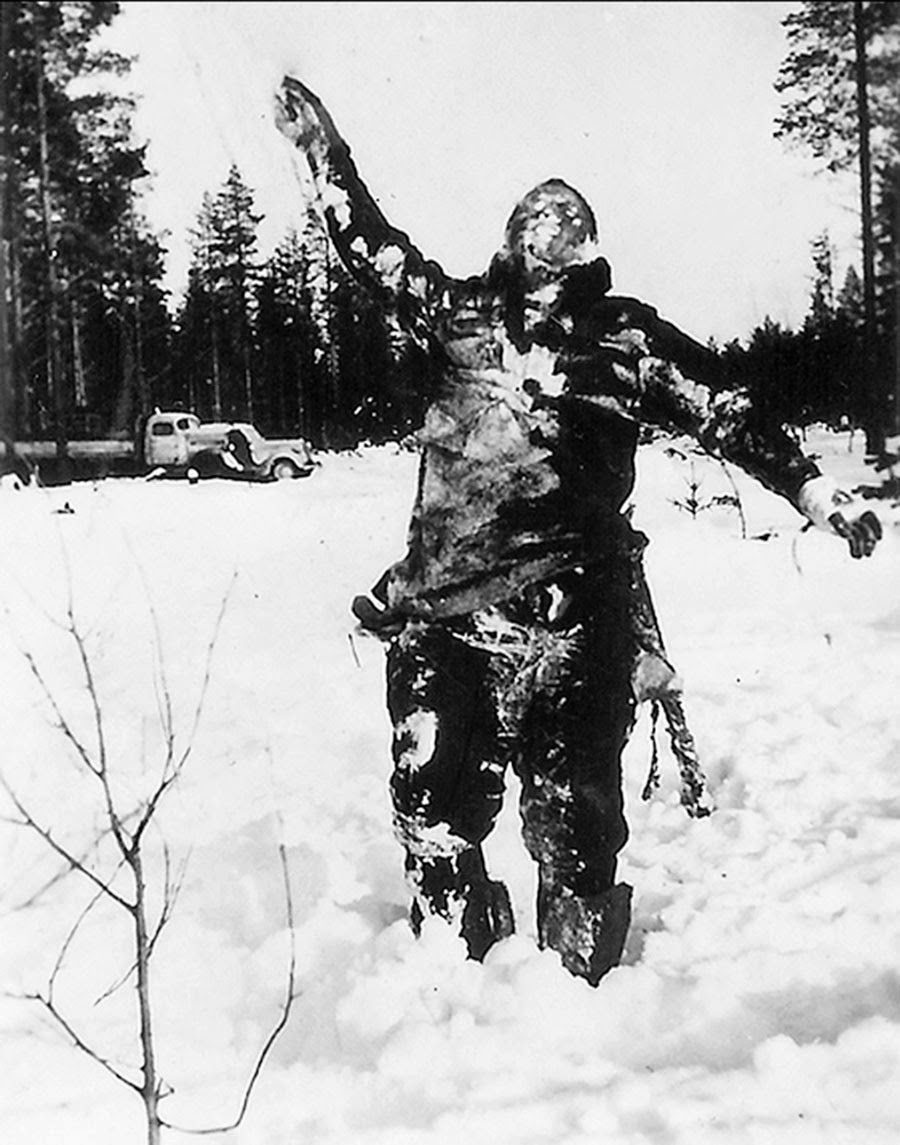
A book in a similar vein is Hubert Mingarelli‘s A Meal in Winter (translated by Sam Taylor). An account of three German soldiers whose task on a bitterly cold winter day is to hunt down Jews in hiding and bring them back to the Polish concentration camp where they are based, for an inevitable end. This unenviable task is better than the alternative: staying in camp to shoot those who were found the previous day. They talk – about the teenage son of one of them – and they find just one Jew. Is he their enemy, deserving his fate, or is he just like them, a young man doing his best to survive? What if they return to camp with nobody to show for their day’s hunting? As the men retreat to an abandoned cottage to prepare a meagre meal, their hatred and fear jostle with their well-submerged more humane feelings to provide the rest of the drama for this short, thought provoking book.
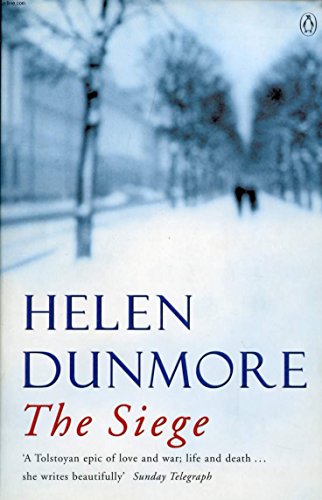
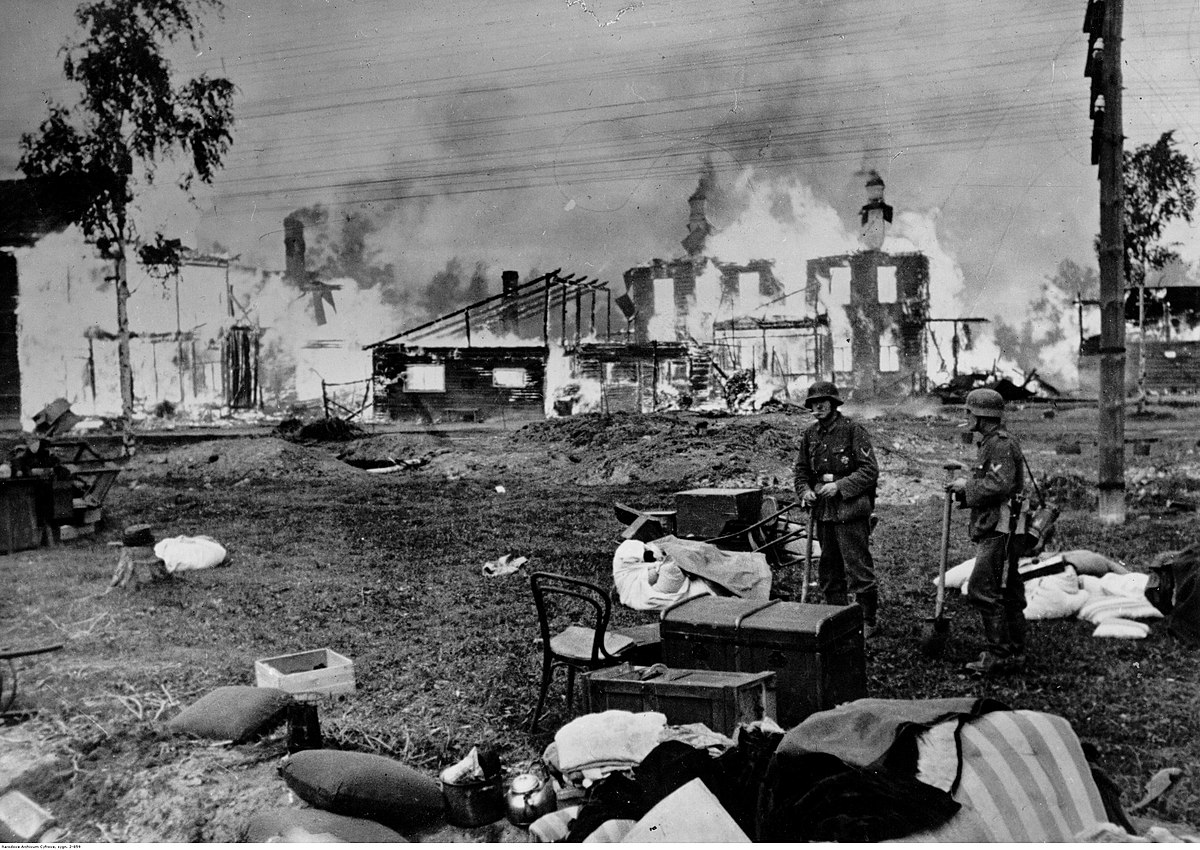
This reminds me of a book about the seige of Leningrad, which I read many years ago, but which made a lasting impression on me: Helen Dunmore‘s The Siege. The novel revolves around five interwoven lives during the war when Leningrad was completely surrounded by the Germans. Winter came and there was no food or coal, it was a brutal winter and one half of the population of the city perished. What energy the citizens had was devoted to the constant struggle to stay alive. Some of the strategies they employed will stay with me forever. Soaking leather bookmarks to get some nourishment from the resulting ‘stock’, for instance.
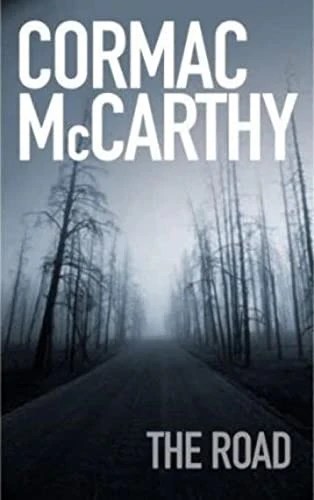
Let’s leave war behind, but looks at another struggle for survival in Cormac McCarthy‘s The Road: another book I read a long time ago. The tale of a father and son trudging through post-Apocalypse America. This is a land where nothing grows, no small animals are there for the hunting: where communities and dwellings are deserted and long-since looted for anything that might sustain life a few more days: where other humans might prove peaceable, but might instead be evil and dangerous. This book is bleakly, sparely written. Conversations between father and son are clipped, necessary. No speech marks. Sometimes little punctuation. Every ounce of energy is needed for the business of staying alive. This book, in which nobody lives happily-ever-after has stayed with me.
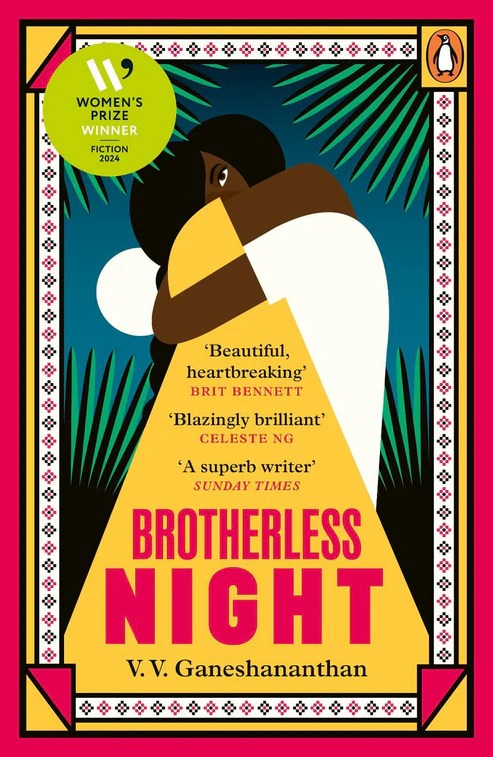
Oh dear, back to war, but staying with relationships within a family. V.V. Ganeshananthan‘s Brotherless Night. This book plunged me right into a war that had previously been an ongoing news item from somewhere very far away. The ethnic conflict in 1980s Sri Lanka between the Sinhalese dominant state and several separatist Tamil separatist groups is brought to life by the Tamil narator, Sashi. She’s 16 when we meet her, and an aspiring doctor. She has 4 brothers, 3 older, one younger. We follow the family’s fortunes as an ethic-inspired war breaks out, and daily life becomes more difficult, disrupting her education and resulting in her older brothers and their friend K joining the fray at the expense of their own education. Loyalty to a movement rather than family is alien to their parents. Tensions arise. Tragedy strikes. Normally conforming Sashi is moved to become a medic at a field hospital for the Tigers, because what is more important than relieving suffering, saving lives, whoever needs that help? As the war becomes ever more destructive, her personal conflicts and the family’s day to day arrangements become ever more complex. Years go by as the story unfolds. This story is impeccably and compassionately researched. It is urgent, intimate, written with striking imagery and immediacy. A distant conflict, several decades old is brought right into our homes and becomes alive once more.
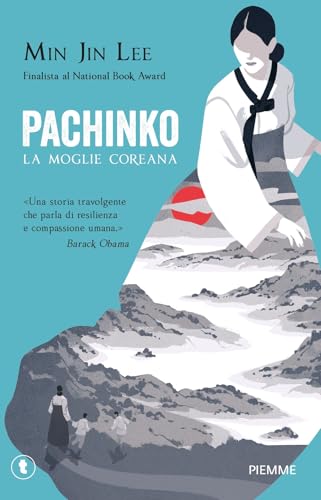

Another book I read ages ago is Min Jin Lee‘s Pachinko. This too is about not civil war, but about two nations – Korea and Japan -who historically have a less than happy relationship, and how this conflict plays out in the life of a single family, throughout the twentieth century. Some stayed in Korea (South Korea in due course), and others tried for a new life in Japan. None found it easy. This is a book about resilience and emotional conflict passing down through the generations. It’s about well-drawn characters making their way in the world, sometimes with great success, but rarely able to escape from the shadow of their past. It’s a real page turner, from which I learnt much about this period of Korea’s history. Highly recommended.
I seem to have wandered rather far from the intimately domestic scale of The Safekeep, and spent a lot of time dwelling on war. I wonder what my next chain will make of August’s book: Ghost Cities, by Siang Lu?
My diary, revived from my trip to India back in 2007. This second part details my solo travels during the last three weeks or so.
Monday 26th November
Rang Le Rêve Bleu and found they could take me tonight, but only in their more expensive suite. I said my ‘Goodbye and thank you’ to Gwen and took a rick to the New Bus Station. The loos there were – characterful – with no individual stalls at all. I was passed from pillar to post in search of a bus to Chidambaram, but finally established it was the oldest bus on the stand. With my luggage, I had to sit in the front seat: prime location for spotting all the near misses. It was all very slow – a 20 minute wait at Kumbakonam so it’s no wonder it took over 4 ½ hours. But still, only RS. 39. At Chidambaram I needed a pee and was a bit hungry (the railway cashews and some of the bunch of bananas I’d bought at the bus stand had been lunch). I went to a nearby cafe, and established , with no common language available, that sweet lime was made with tap water but orange was not, so I ordered orange. When it came, it tasted of orange, though it was very pale. But when the bill came … it was for sweet lime. Aaagh!
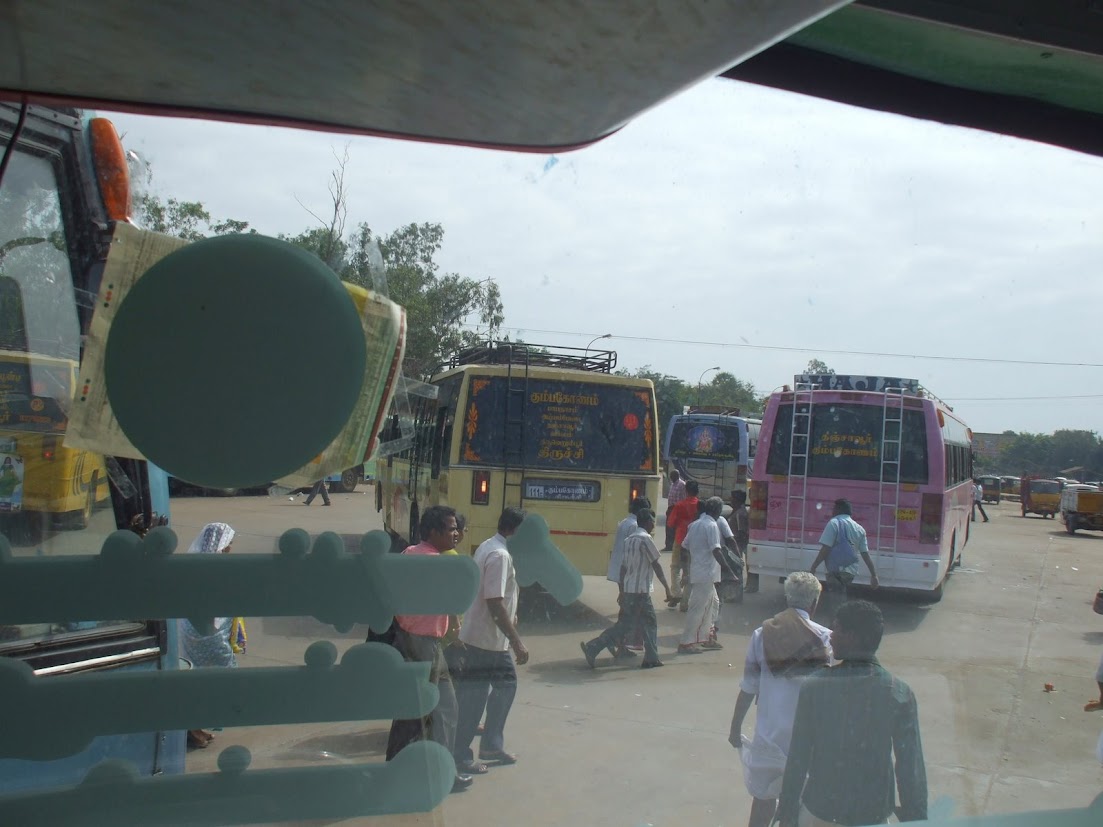
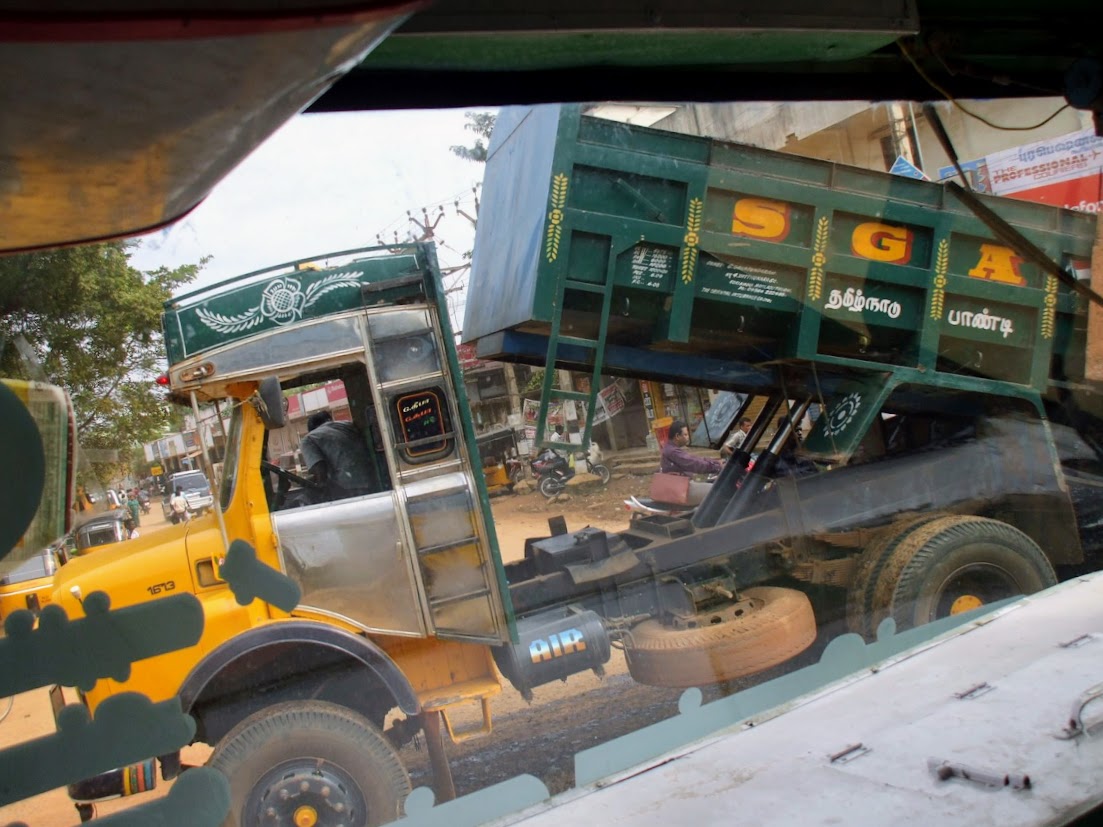
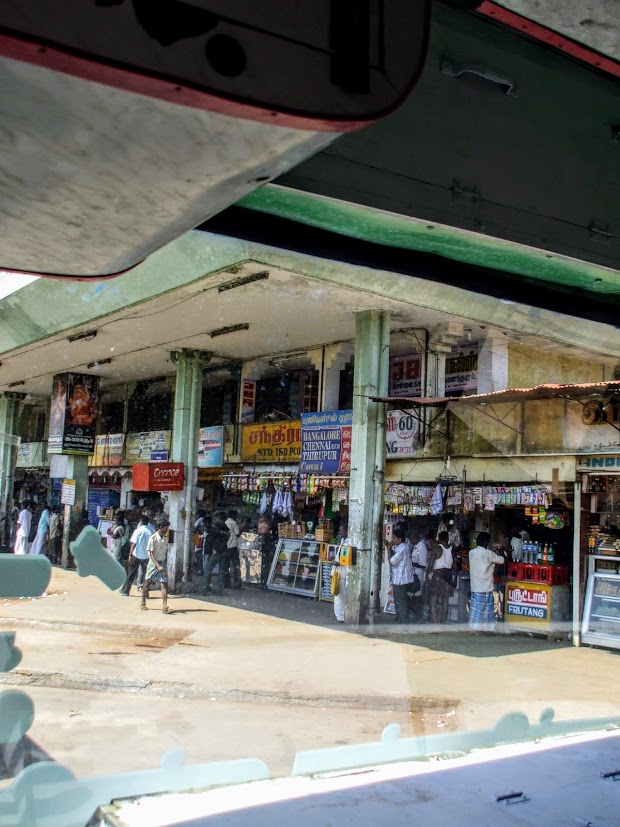
Views from the bus window en route
I had a really modern bus to Pondicherry, with Bollywood DVDs on constantly. But I had again to sit in the front, with my back against the front window, with the driver constantly shouting at me for obscuring his nearside window. It was hard not to.
The scenery became more and more what I imagined Kerala would be like on the coast. Very flat, lots of lagoons and lakes, palm trees, palm-thatched low cottages.

Anyway, we got there, and I got a rick to Le Rêve Bleu. I couldn’t negotiate the fare very well, as I had no idea how far it was, but I turned out to have been charged a Right Royal Rip Off (RS 75, so under £, so no moaning please!).
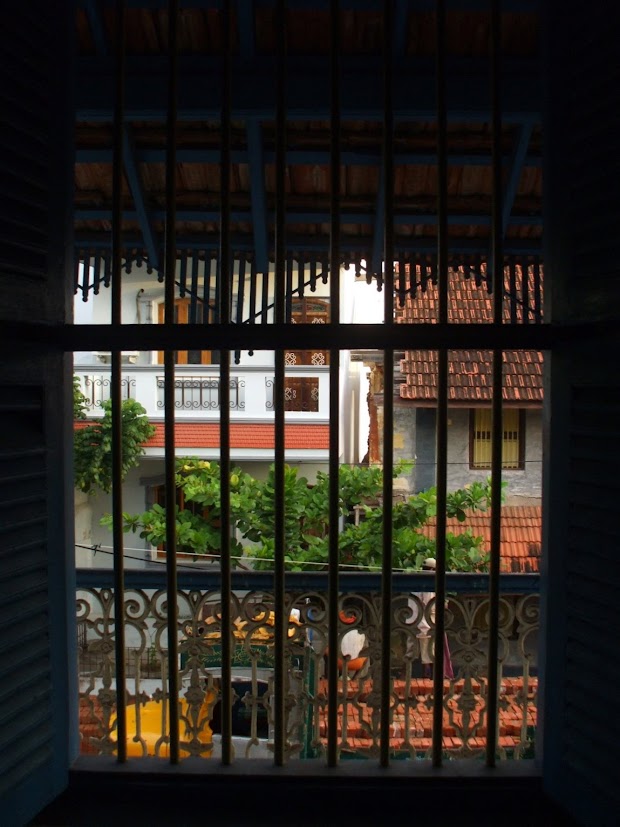
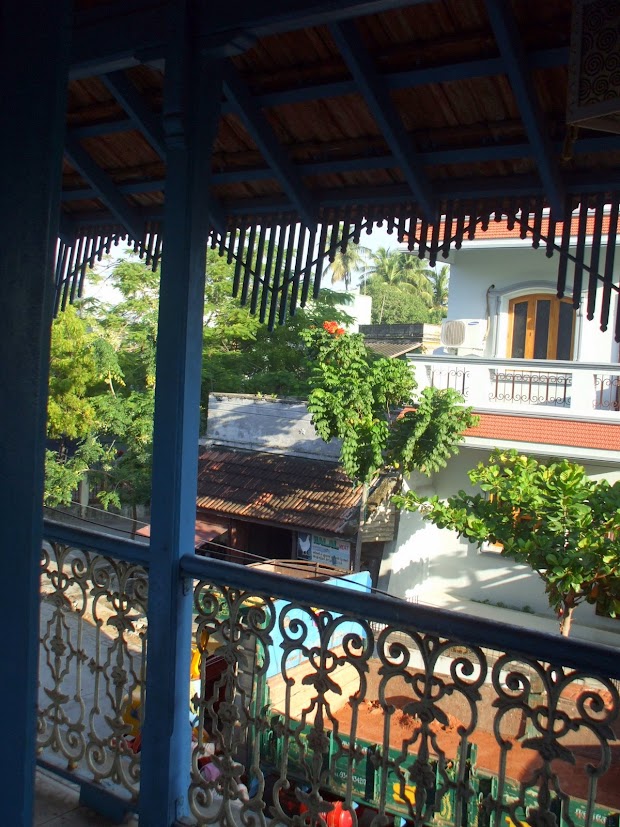
View from my widow in Le Rêve Bleu
Le Rêve Bleu is a lovely, slightly seedy but French colonial style house, where I was greeted by a French speaking Tamil, who rang the owner, Christelle, who insisted on speaking to me on my mobile to welcome me.
I had a trot round town and ended up at an Internet cafe where one could also eat: mushroom pasta, but quite nice actually. And so to bed.
In the night:


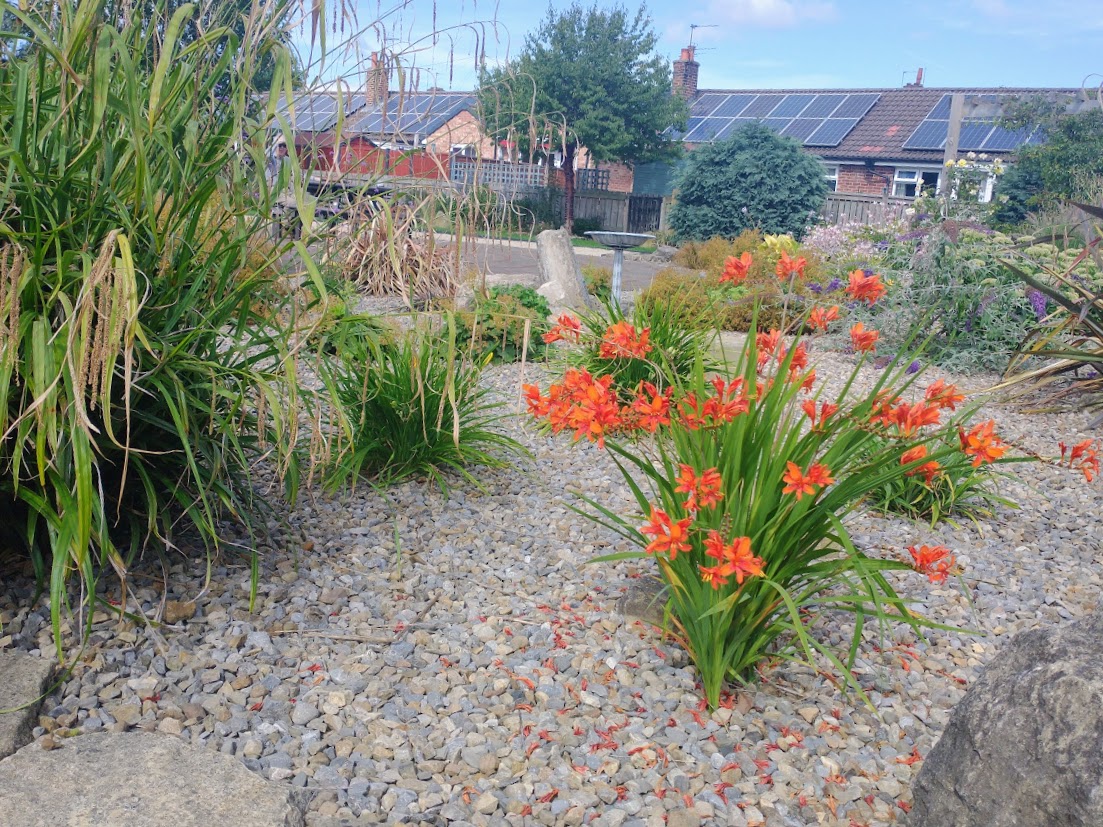
I had various Red Images jostling for position on this last day of #SimplyRed. But yesterday, enjoying a cup of coffee with friends in our village’s Community Garden, I realised that what I want to celebrate today is … Community. Specifically the one that Becky has built up, in which the Squarers in particular have the chance to visit old friends and make new ones, and just generally enjoy the world-wide connections that blogging brings to our lives. Thank you Becky. Here are some flowers from our Community Garden. Very few, unfortunately, are red. So I’ve squeezed a clump of pink ones in as well.
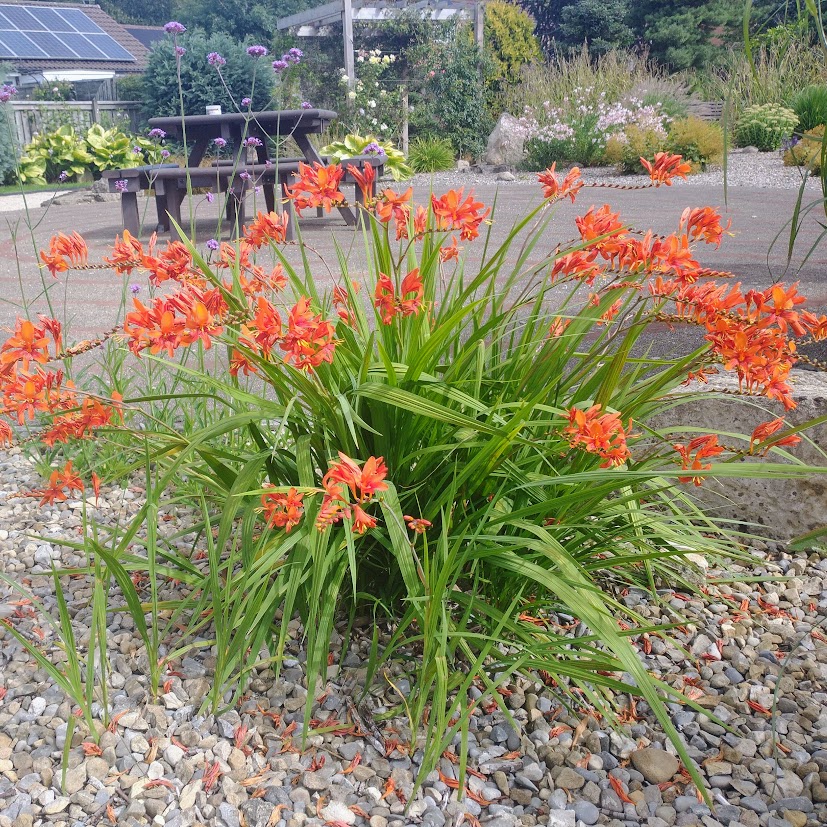
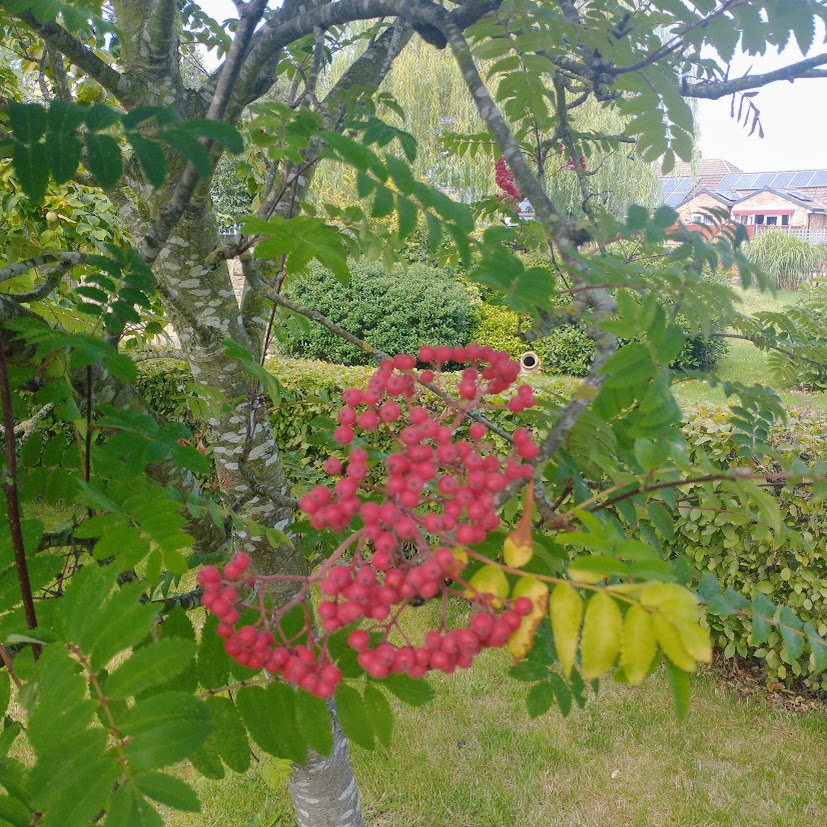
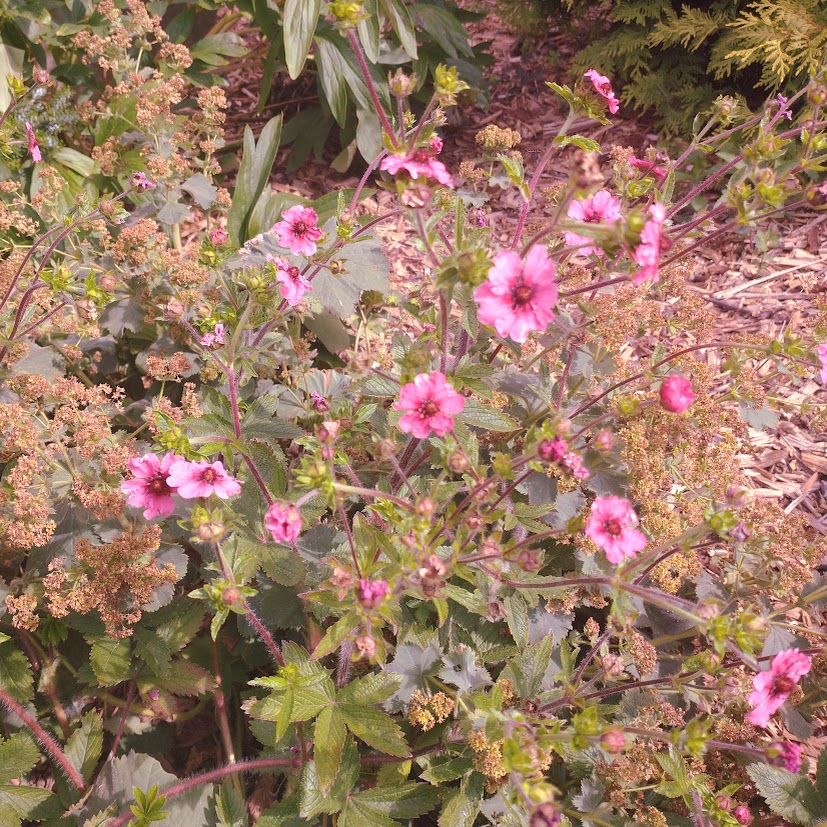
Also, probably the first entry of the end of the month for Brian’s Last on the Card.
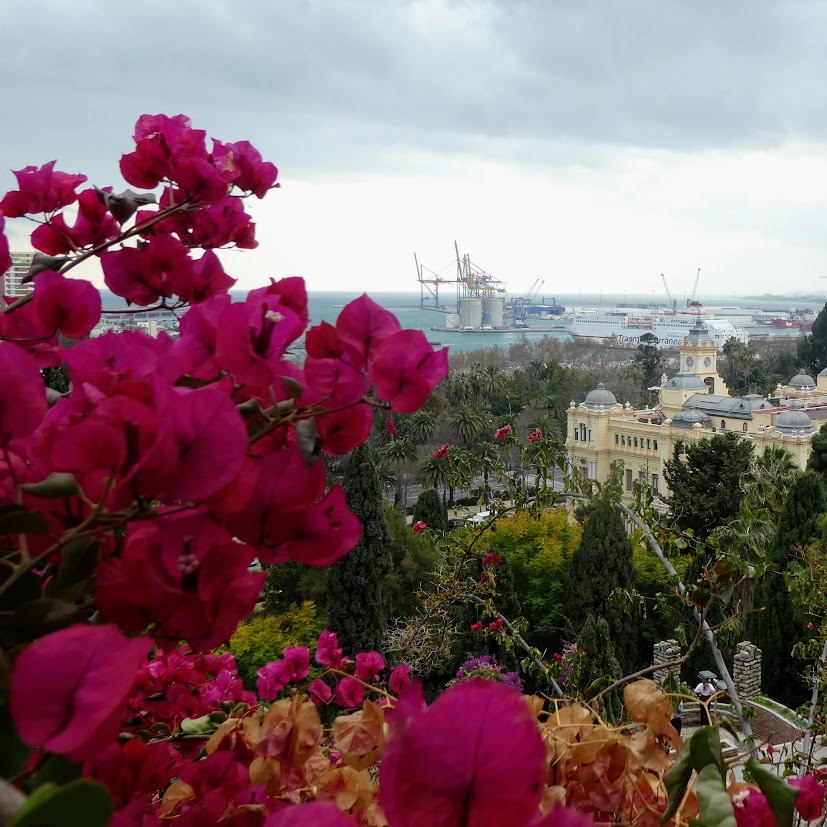
In my opinion, you can never have too much bougainvillea. It cheers up any town or village walk in Spain or southern France … or anywhere hot I guess.
My header shot was taken in Málaga, and the others too showcase bougainvillea in Spain.
And as there is, after today, only one more day of Becky’s #SimplyRed squares, we might all need a spot of cheering up.
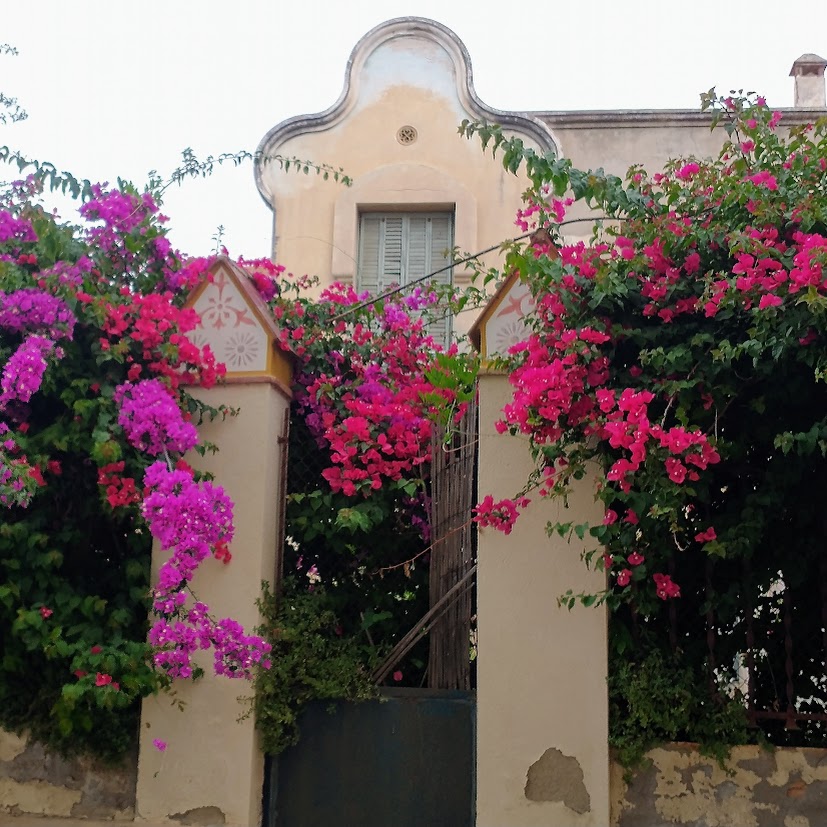
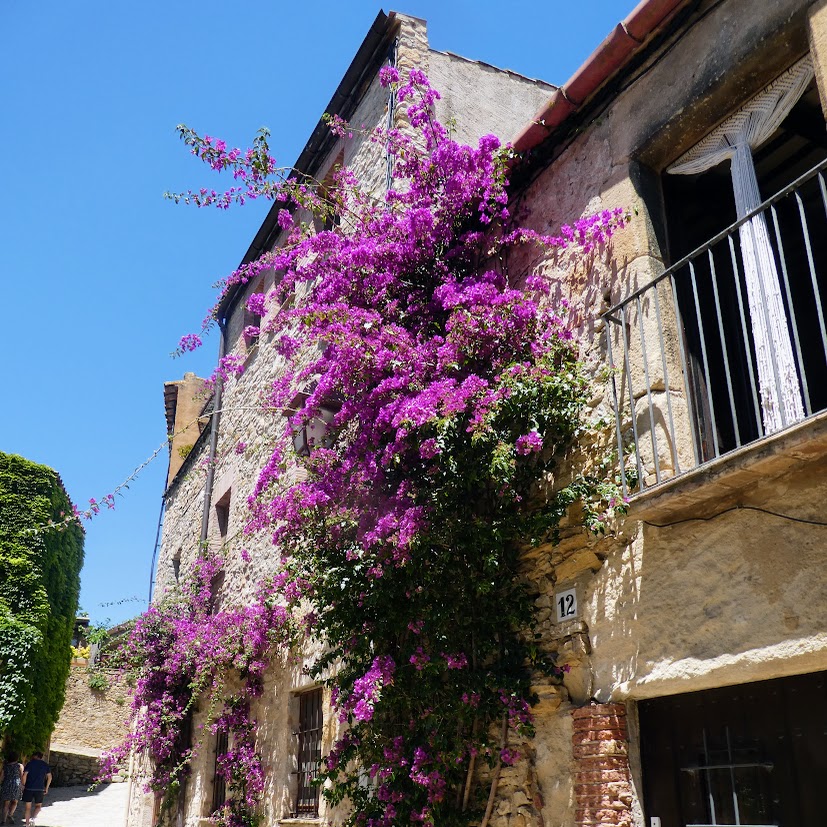
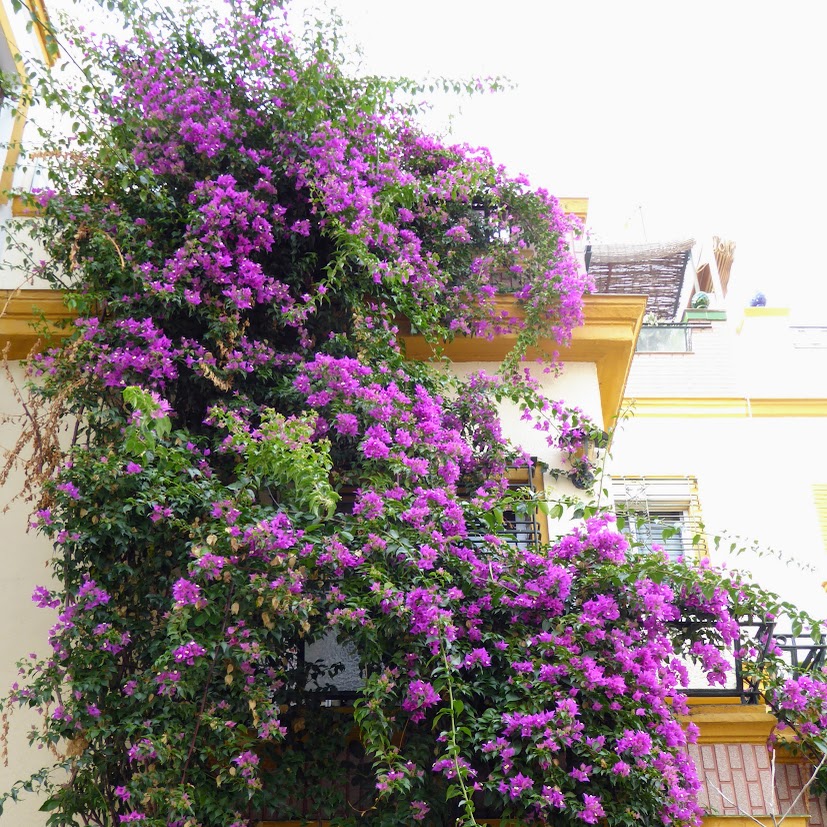
PS. These flowers are redder than they seem in a couple of these shots!
PPS. There’s a late addition to the clutch of stories addressing the issue of What if She says Yes? You can now read it at the end of Sunday’s post. And I recommend that you do!
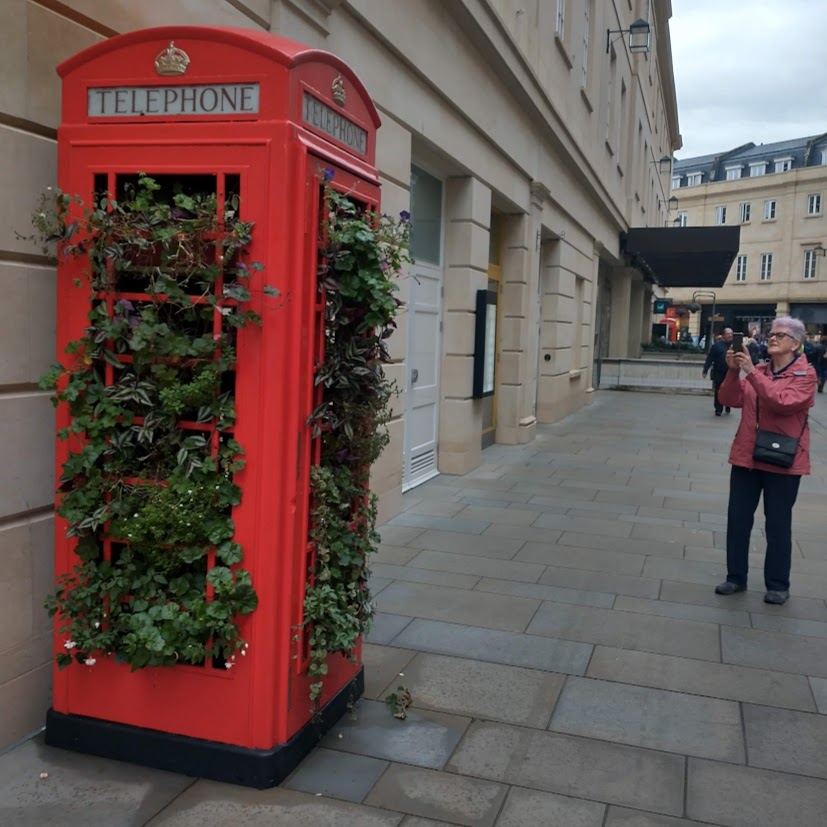
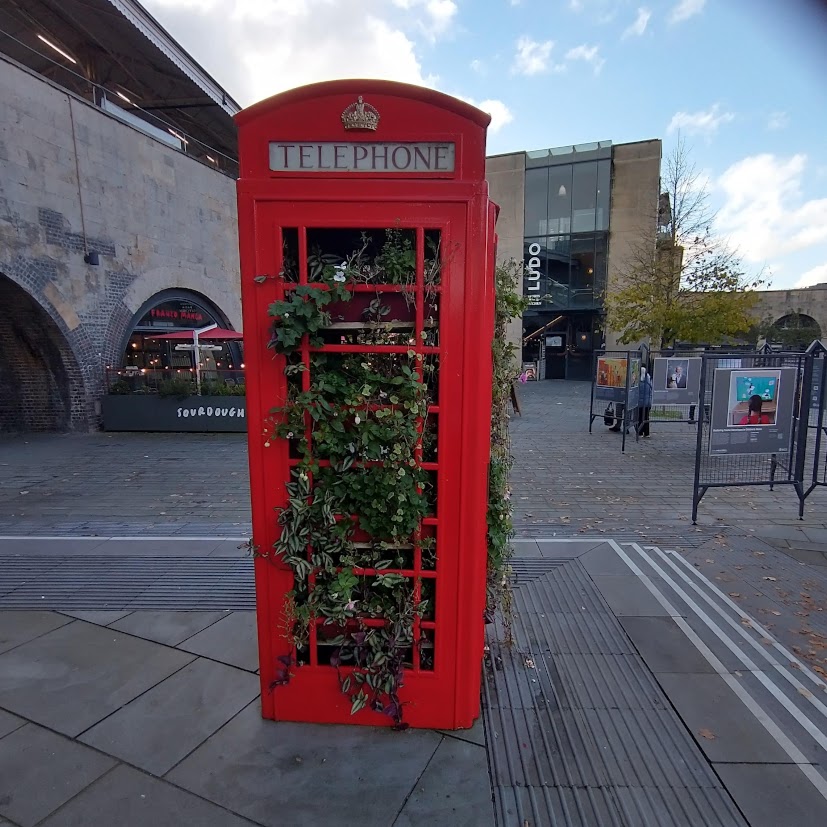
The plain truth is that these days, in the UK at least, a phone box rarely has a phone within. They have become so iconic that many remain in situ. They’re often re-purposed as community book exchanges (Grrr. No photo!), or as a community planters – spotted in Bath with Becky herself, and Anabel, aka The Glasgow Gallivanter, who wants her own photo of it.
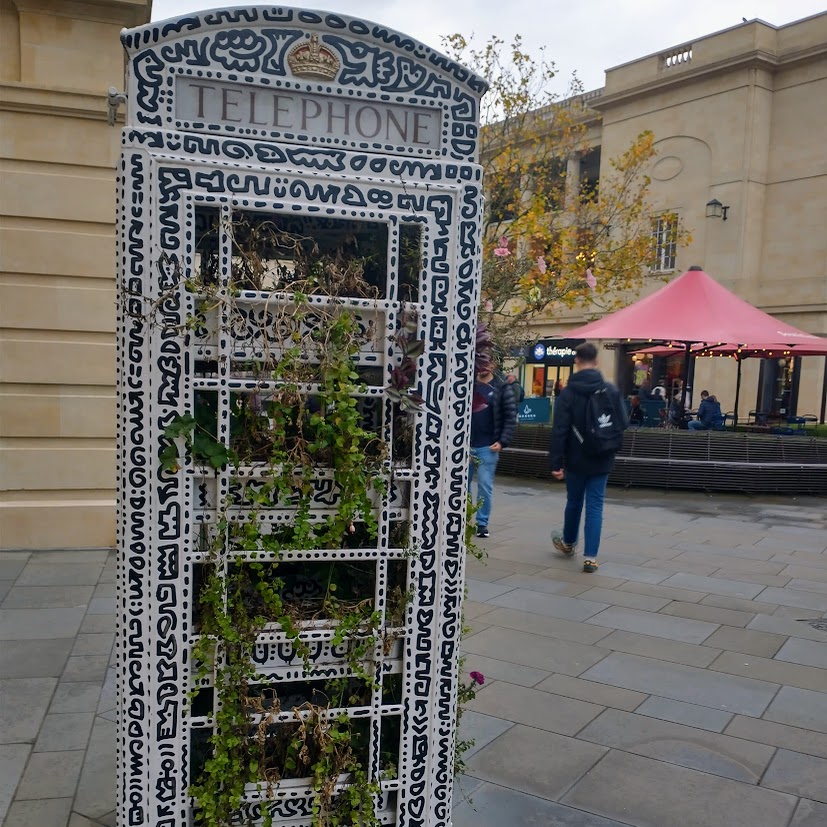
Also in Bath, transformed into a doodle-fest, courtesy of Sam Cox aka Mr. Doodle.
Here’s one in London that’s become a cash point.
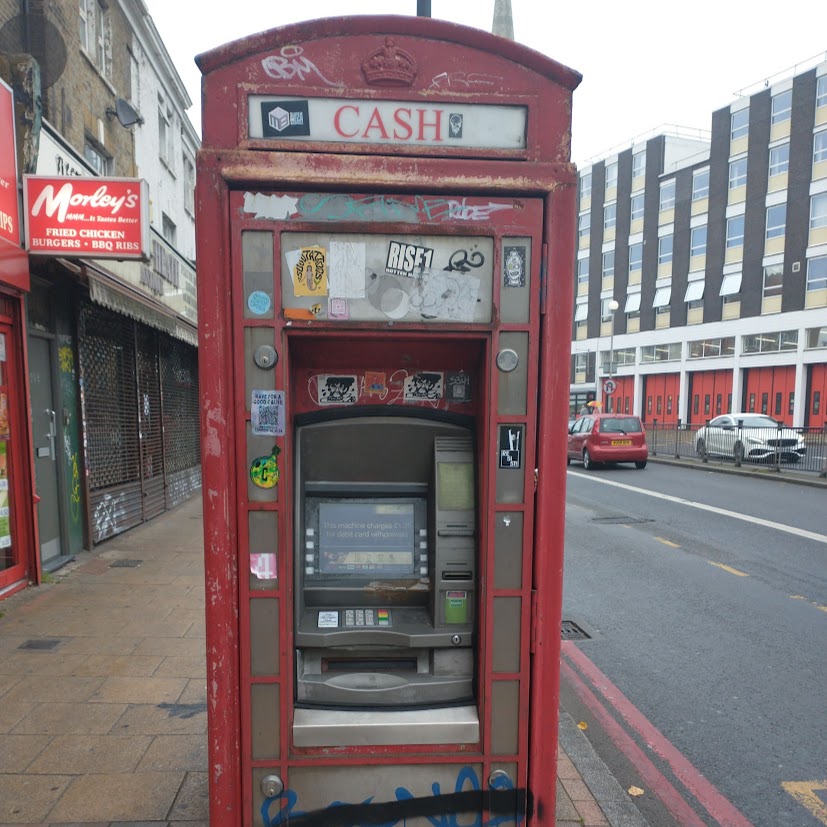
Or, saddest of all, an un-re-purposed box that seems to serve no purpose whatever, except as a recipient of graffiti and unwanted stickers.
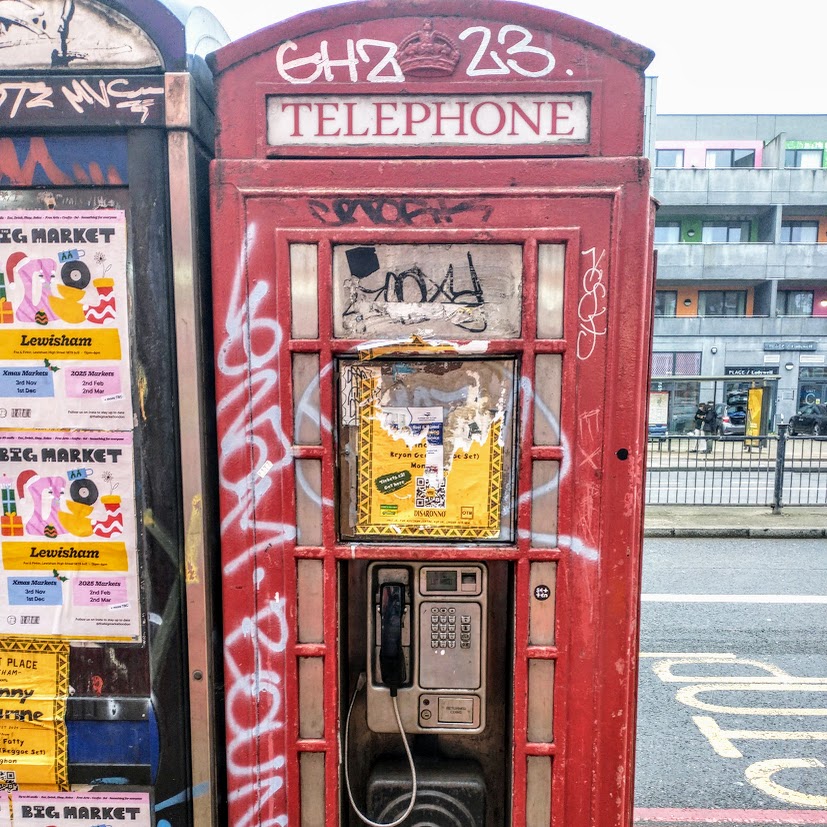
For Becky’s #SimplyRed.
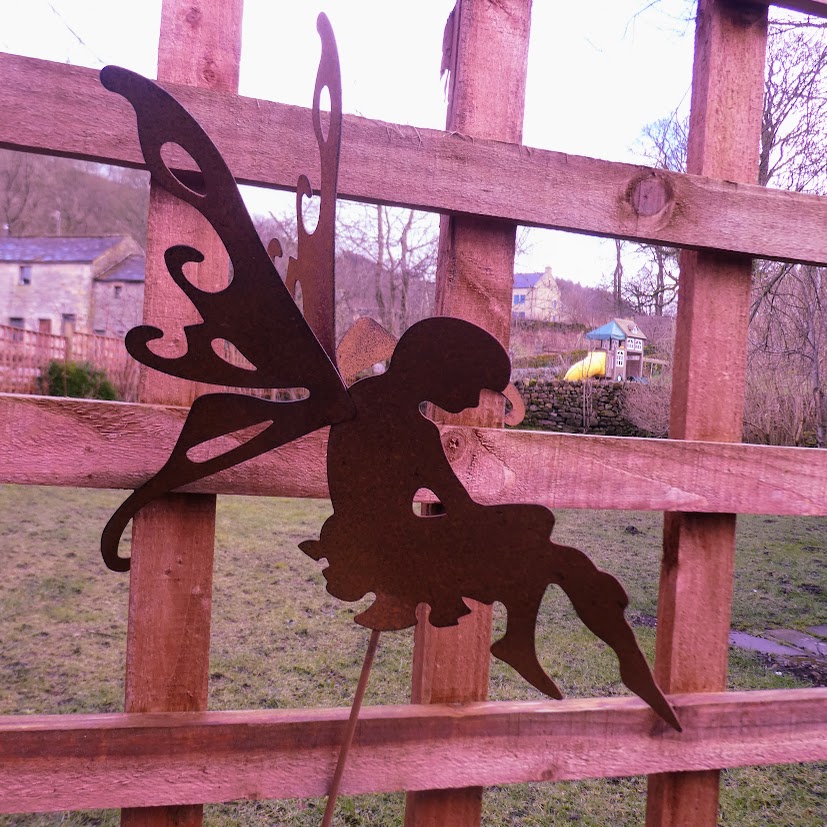
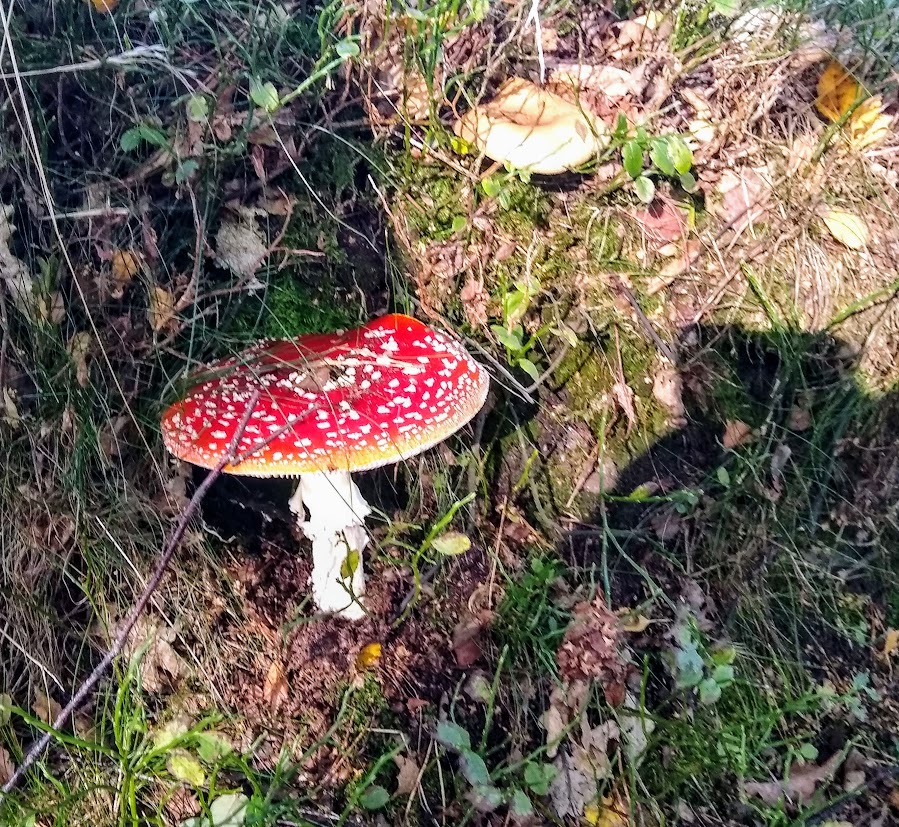
My featured photo is of the colourful (but poisonous) fly agaric. And as we all know, elves like to sit on them. I have no photos of elves, but I can do fairies.
I offer you a fairy collecting the secret wishes of children at Ripon Theatre Festival this year; another spotted on a fence; and a warning on a London front door.


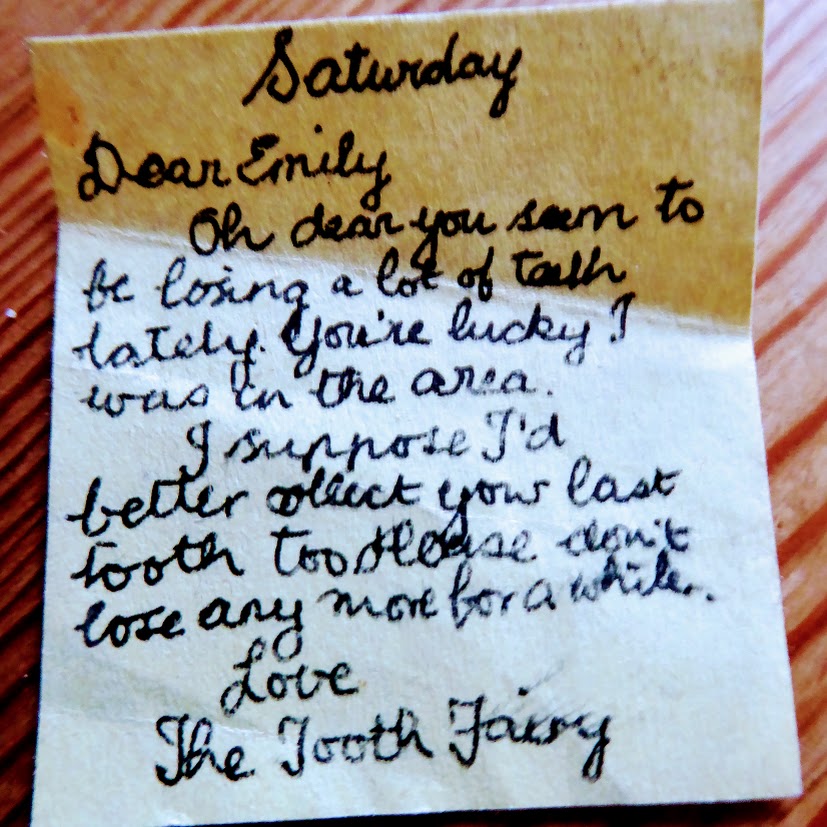
Finally, here’s a genuine letter written by the tooth fairy who visits the children in our family when they lose their baby teeth. She’s a grumpy soul. She writes messages on tiny pieces of paper the size of a postage stamp and tucks them under the pillow as she leaves her silver coin. A Red Letter Day for the lucky recipient.
For Becky’s #Simply Red.
Last Saturday, I threw down a challenge, because Jude, featured below, was one of those who suggested it: to write a story, up to 100 words long, that addressed the question posed here:
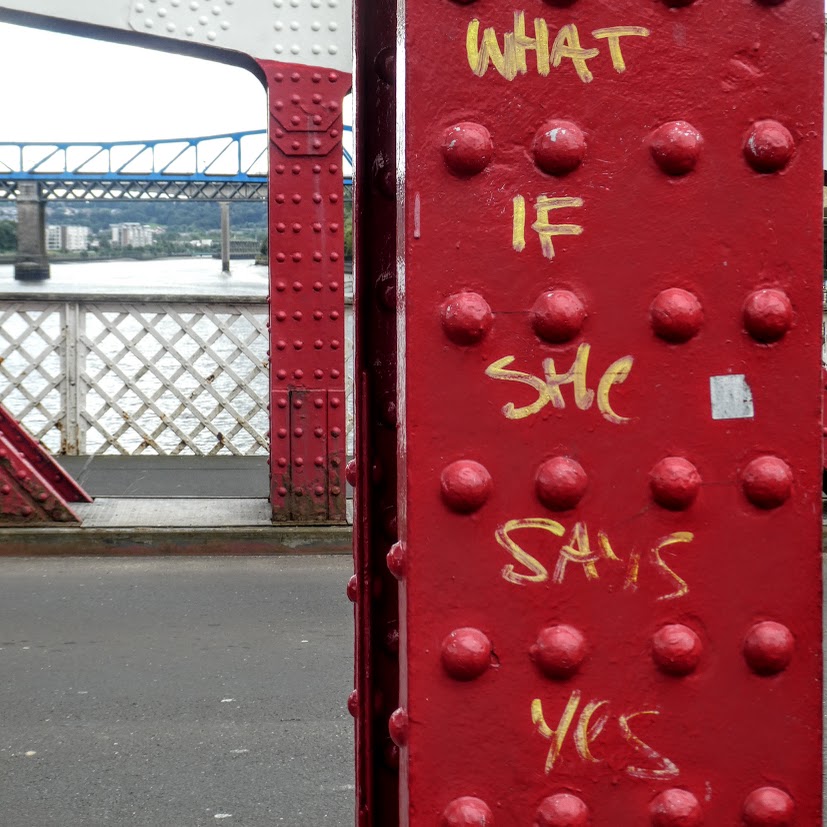
Unsurprisingly, there haven’t been many entries. But what I have read have been class acts. There’s Jude’s clever, and very different story: https://traveltalk.me.uk/2025/07/24/but-what-if-she-says-yes/
And Dawn addresses the age old problem of when, or even if to pop the question: https://lingeringvisions.wordpress.com/2025/07/23/what-if-she-says-yes/.
Here’s mine: But hang on. Before you read Jude’s, or Dawn’s, or mine, make yourself comfortable on this bench. It is after all Sunday, and the day for Jude’s Bench Challenge.

What if she said ‘yes’?
Nell sat slumped against the stairs, leaning into the comfort of her neighbour. ‘He always drank too much, your dad.’ Her father lay twisted at the bottom—eyes open, unmoving. The investigators stepped gently round the body and its ooze of blood. ‘He fell’, Nell said. Only she knew about the bruises beneath her sweater, her sore and aching thighs. Only she knew whether what had happened just an hour ago was an accident or an escape. Only she knew what she’d say when at last they ask her: ‘Or …did you push him?’ What if she says ‘yes’?
I wrote two others too, but the judge and jury (‘im indoors and me) chose this one. You can judge the other two if you want to: https://docs.google.com/document/d/1PS8t-YsNfiLTwE27WqY9UxVotxIbO1LO6CtHf3OaU40/edit?usp=sharing
PS. A late, great addition to the clutch of flash fiction, from Rebecca of Fake Flamenco:
What if She Says Yes?
When the wallpaper in the downstairs hall began to peel in the heat, I didn’t think it odd. Our house needs repair often after a century of Tiverstons. I bought a bottle of papering adhesive. As I sanded the wall before re-glueing, newsprint appeared in the lower corner. Using an exacto knife, I liberated the sheet. The headline about an Edna Swargle chilled my blood and I stopped breathing a moment. The woman in the photo looked just like mom as a teenager, but her name is Nancy. I walked upstairs where she was reading. “Mom, were you ever, Edna?”
The featured photo is not my own, but squared from an unattributed image found in Pexels, a great source of Royalty free images.
For Becky’s #SimplyRed.

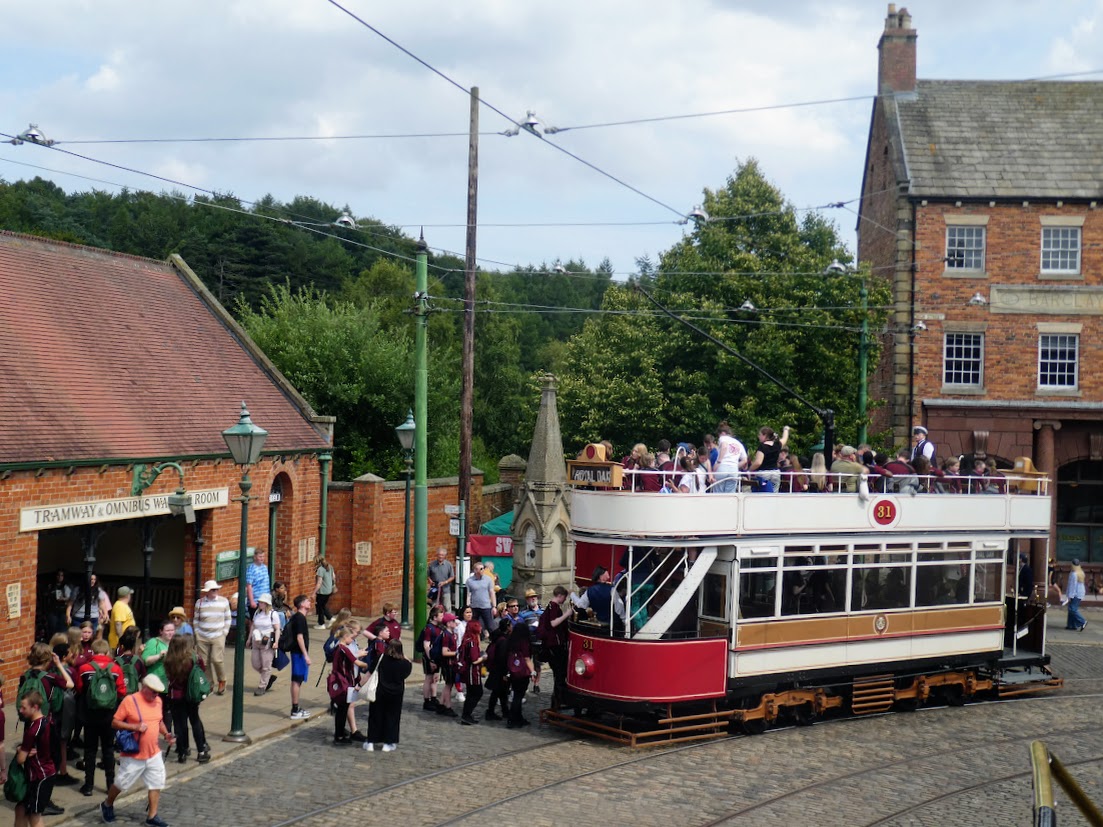
British readers will recognise the allusion to the Flanders and Swann ‘A Transport of Delight’, celebrating the good old London bus. These specimens aren’t from London, but to be found transporting visitors round the vast site which is the museum at Beamish. This is a marvellous place celebrating the day-to-day life of working men and women in the North East of England, mainly from 1900 to the 1950s, but with glances back to earlier times too.
By the way, this is the last day for sending your 100 word story: ‘But What if She Says Yes?’ suggested in my post last Saturday. Only two of you (well, three, counting me) have been brave enough so far.
For Becky’s #SimplyRed.
and Debbie’s Six Word Saturday.
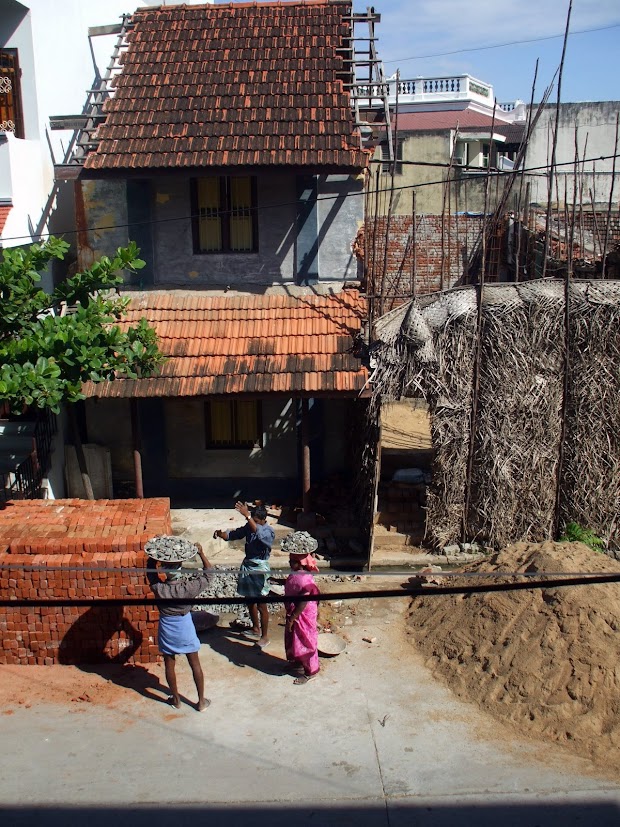
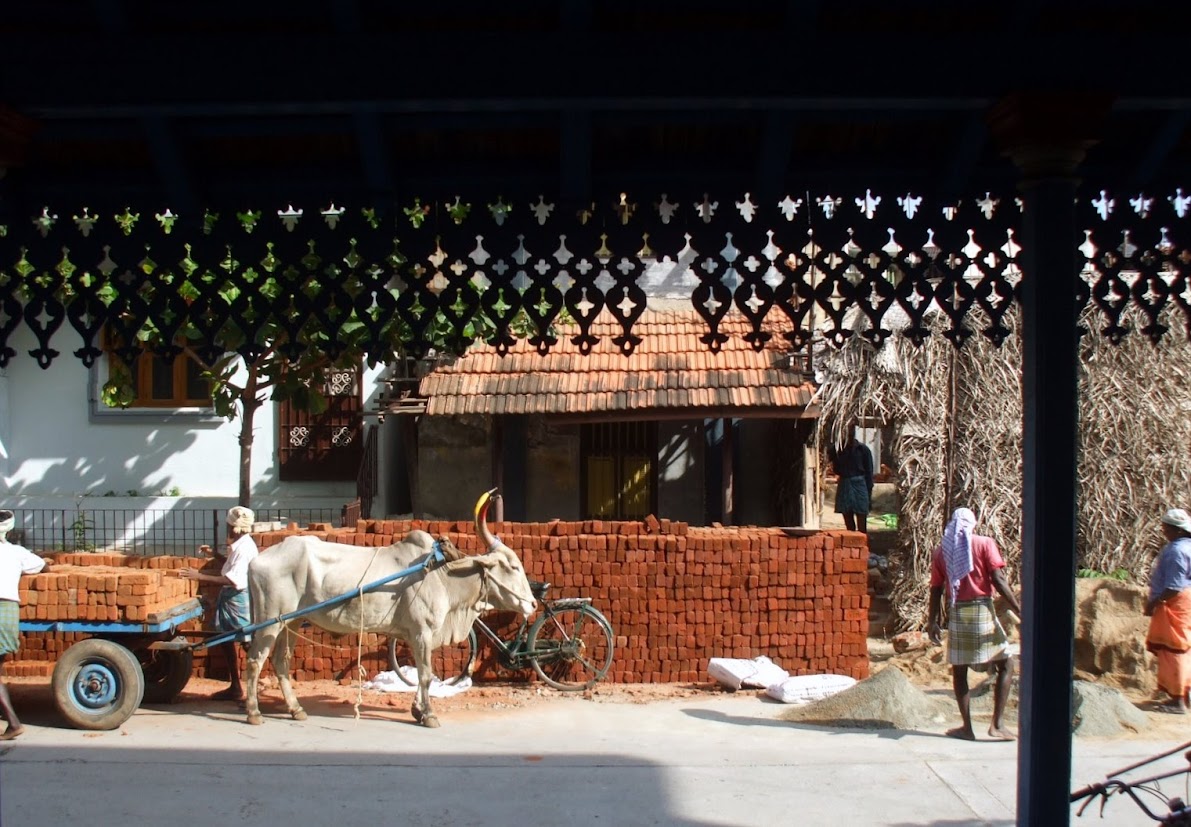
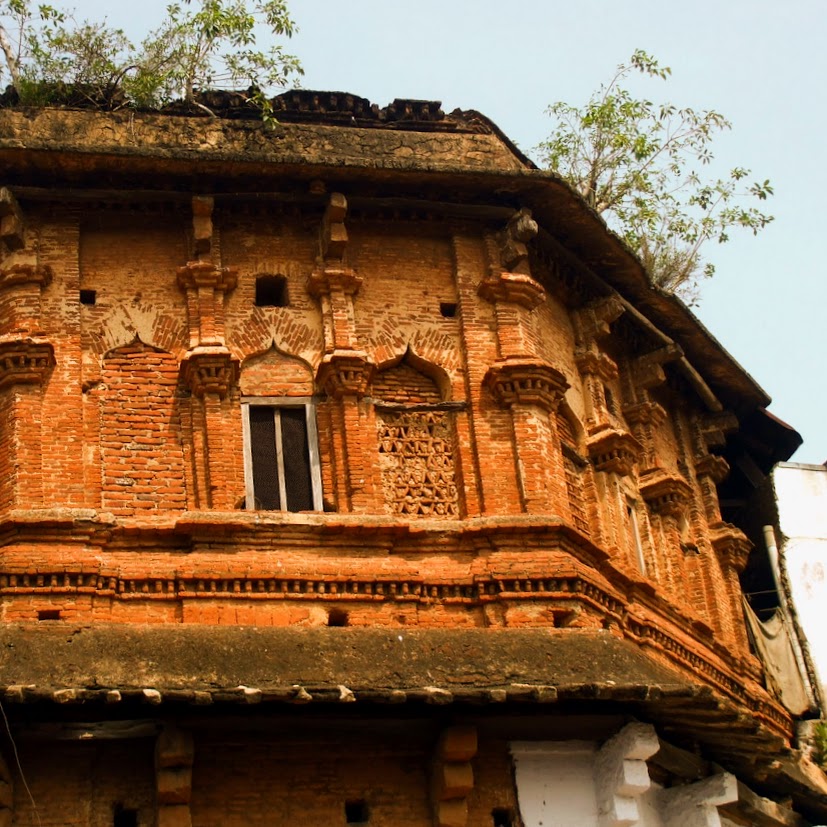
Today, for one week only, I am abandoning my diary in favour of a piece I wrote just after I had left Thanjavur. I do sound a bit smug, I know. But I stand by every word I wrote then. My time in Thanjavur still stands as one of the highlights of my Indian journey. I’ve nearly used up any appropriate Thanjavur photos though. So there is just one shot today of a building I forgot to label at the time, a sad ruin of what it must have been, But red enough for #SimplyRed.
The following is an unsolicited testimonial for CouchSurfing. No money has changed hands in the production of this advert!
In case you don’t CouchSurfing is an online community in which travellers offer hospitality, and make use of hospitality offered while on the road. It’s based on the premise that this makes travelling more affordable, but more importantly, gives travellers the opportunity to experience the community they’re visiting at first hand, rather than in the somewhat detached way hotels and so forth can offer
That was a bit of a long lead in ….
In Thanjavur I stayed with Gwen, an American doing post-graduate research at the University there. We’d exchanged emails over a month or two, so she didn’t feel like a stranger when I met her. She gave me a wonderful welcome and time with her, so I wanted to treat her on our last evening together. She asked to eat at the best hotel in town, as she’s heard the food was good, and as a student of modest means, it was she thought, beyond her reach. Good idea.
A we passed through reception, we might as well have shown our passports. Thanjavur disappeared from sight to be replaced by marble walls and floors, corporate decoration, and uniformed staff of the kind that usually frequent these places. Where were we? Birmingham? Milan? Dubai? Mumbai? Who knows? And so into the restaurant, where we pulled our dupattas tight round our shoulders to combat the cold of the air conditioning. Consulted the menu (Indian, Chinese and European) and ordered our meal. Got talking to the English couple next to us as they finished their chicken and chips. They turned out to be on an organised tour, and it looked as though their time was spoken for. They were enjoying it, but were scurrying along at the pace set by the demands of the tour, with no opportunity to go off on any tangents, and certainly no opportunity to meet local people on their own territory.
Compare my time in Thanjavur with theirs. Gwen’s American, certainly, but she’s made it her business to be part of the community she lives in. She’s learnt fluent Tamil, so has good relationships with her neighbours. So while there, I had the chance to mooch round and enjoy with her the rangoli decorations and lights put out at night for a Hindu Festival of Light (not Diwali, yet another one). I met the neighbours and was invited into their homes. Narrowly avoided a big faux pas in one. Invited to sit down, I nearly plonked myself in the nearest vacant place on a sofa. Recovered myself in time and did not sit there, next to the husband, but squeezed onto the other sofa, with the women. Gwen said it would have seemed very odd to them if I hadn’t remembered in time. Chatted to another neighbour, a Christian, who explained that she liked to keep the Hindu festivals too, and showed us her Hindu decorations taking their place alongside her pictures of the Pope.
I ran errands for Gwen, and in that way had several language-less conversations in the food market, where everyone was keen to shake my hand, because tourists in Thanjavur don’t generally go and buy half a kilo of carrots.
We zipped round on her scooter and bought takeaways. We caught local buses together and visited temples. We had meals in local cafés. I wandered round her neighbourhood when she wasn’t there, and saw a small community going about its day-to-day business.
I was woken in the morning to local sounds (actually I was invariably awake anyway, I don’t do sleep in India); the Muslim Call to Prayer transmitted by loud microphone at, erm, 5.30 a.m. The church bells ringing a few minutes after that (20 % Muslim and Christian communities here). The street hawkers who kick in at about 6.45. The day-today noise which seems to begin so early in Indian communities.
And of course it was interesting to talk to Gwen, who knew exactly what I would be finding difficult, and could guess what assumptions I might be making. Gave me a quick Tamil lesson, and more importantly a gesture one (‘Yes’ and ‘No’ aren’t the same here, I learned rather late in the day). She’s much the same age as Tom and Ellie, but that didn’t seem to matter – it didn’t to me, anyway.
And I saved money, though that wasn’t my motivation. I tried to make sure I didn’t cost Gwen anything. So what did our new English acquaintances gain from their corporate type hotel? A thicker mattress maybe. Constant hot water possibly (doesn’t really happen in India). I’m willing to bet I had loads more fun. Oh, and by the way, the meal wasn’t that good, and cost exactly 9 times as much as the meal we’d had at lunch time in a local cafe.



 From Pyrenees to Pennines
You must be logged in to post a comment.