
On the first Saturday of every month, a book is chosen as a starting point and linked to six other books to form a chain. Readers and bloggers are invited to join in by creating their own ‘chain’ leading from the selected book.
Kate: : Books are my Favourite and Best
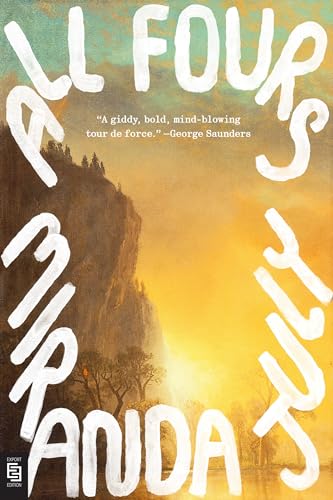
All Fours,by Miranda July and this month’s starter book, is narrated by a 46 year old woman, a wife, a mother, a bisexual, a mixed media artist. I haven’t read it yet, but I think it’s on my TBR list.
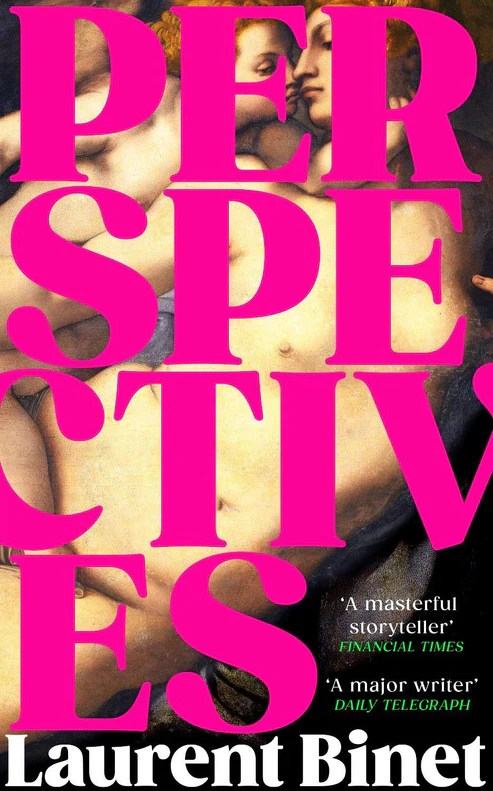
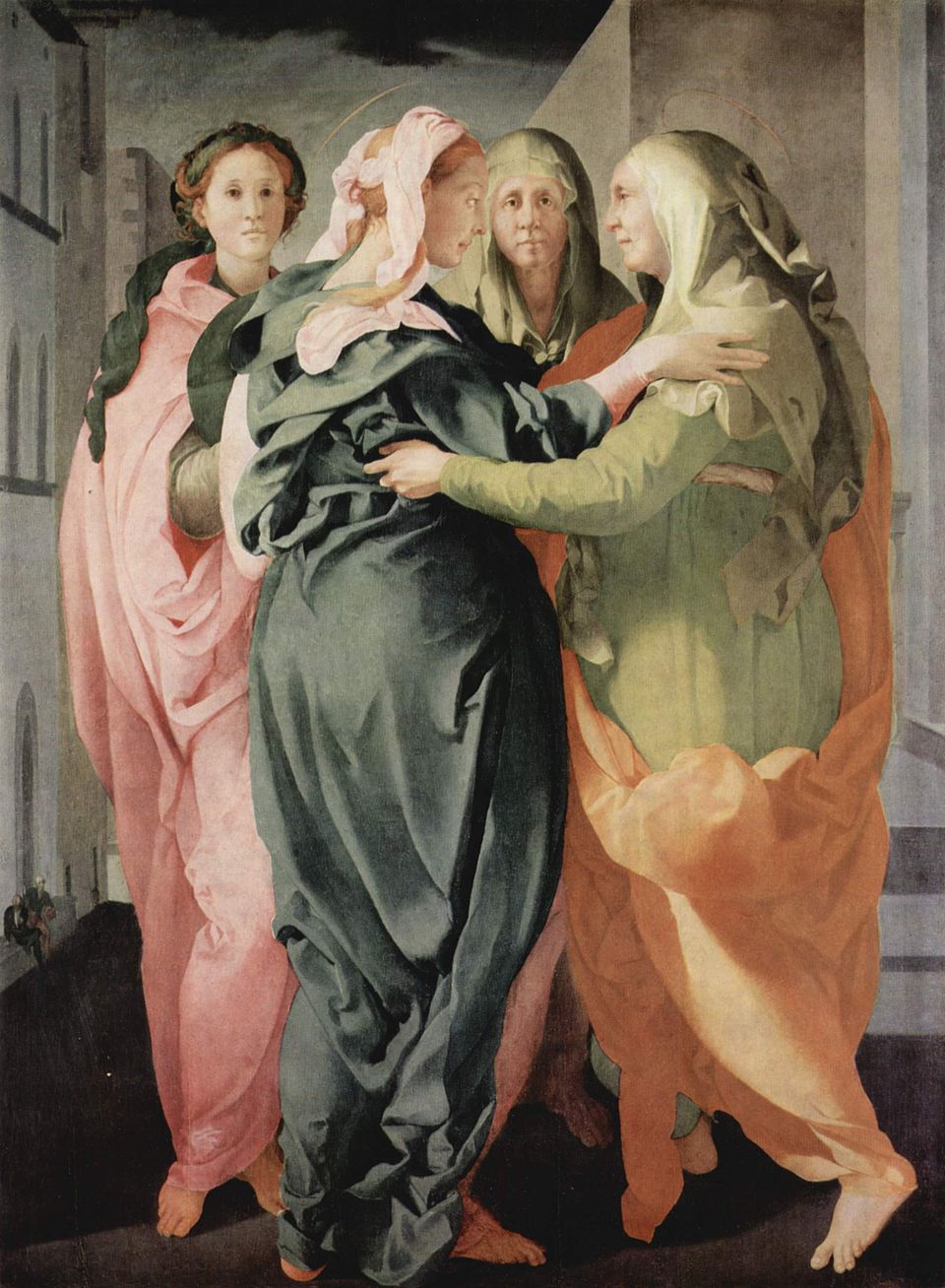
Well, I picked up on the word ‘artist’. Not a woman, not a family man, but a 16th century Florentine painter, probably homosexual: Jacopo Pontormo. He’s the sort-of-star of Laurent Binet’s Perspectives. This story relies on a clever conceit: that the author (who unlike the very much alive actual author) finds, towards the end of the 19th century an interesting packet of letters in a curio shop. His interest piqued, he buys, then translates them. And presents them to us here, in this book. We’re in 16th century Florence. The cast list can be found in any history book dealing with that period of political and art history. Cosimo de’ Medici; Catherine de’ Medici; Giorgio Vasari; Michelangelo; Bronzino; Cellini; Pontormo: the list goes on, but this story is entirely untrue. It revolves around the fact that Pontormo, painting a now-lost group of frescoes, is discovered dead at his work. Suicide? Or murder? And if the latter, who’s the murderer? A series of letters between groups of the characters involved, not all of whom know or have dealings with one another, picks over the evidence, relying on actual investigation – sometimes – but more often hunches, gossip and personal ‘intuition’. There are subplots: There’s for instance, Maria de’ Medici, Cosimo’s 17 year old daughter, who’s to be married against her will for reasons of political alliance. When guards search Pontormo’s quarters, they find an obscene painting of Venus and Cupid—with the face of Venus replaced by that of Maria. What a scandal! This is a cleverly accomplished story, and wonderfully translated. It’s a tight, fast paced whodunnit brimming with subplots, from an author who clearly knows his stuff about the history of the period.
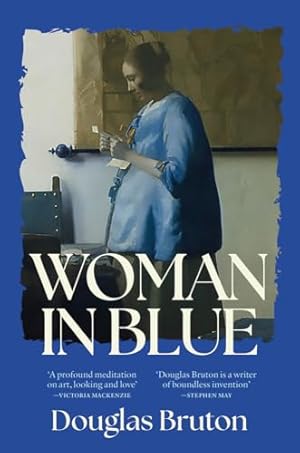

Let’s pass to another artist, Vermeer, in Douglas Bruton’s Woman in Blue. Douglas Bruton must have been fascinated by Vermeer’s Woman in Blue Reading a Letter, in the Rijksmuseum: he knows it so well. He gives this interest – or in this case near-obsession – to one of the two narrators of this book who take alternate chapters throughout. An unnamed man visits this picture every day, for several hours, knows it intimately, interrogates it for meaning. This does not go unnoticed by gallery staff, or by his wife, who does not know where it is her husband disappears to. The other narrator is the young woman in the picture, who describes how it is she comes to sit for this particular portrait, and her own feelings. She is sensitive to the thoughts and feelings of the man who is transfixed by her portrait, amused that he is as in thrall to her as Vermeer himself, though she’s unaware of this man’s musings on previous romantic entanglements and indeed his feelings about his wife.This book explores the boundaries between reality and illusion in art, inspecting the portrait and the two protagonists intimately. It’s a captivating novella, with a surprise ending, and beautifully expressed throughout.
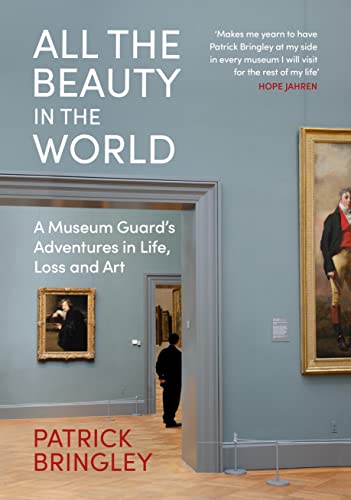
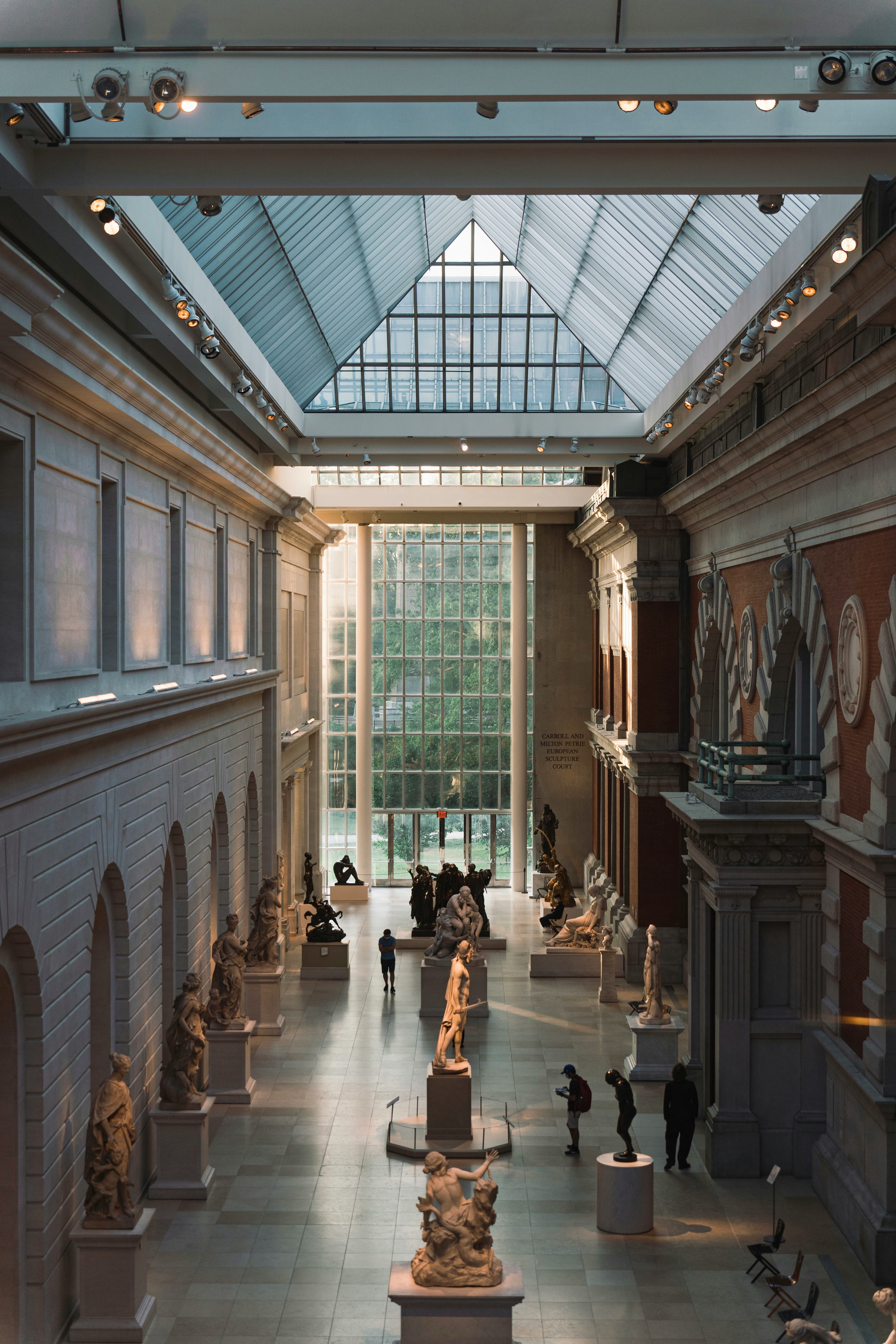
All the Beauty in the World by Patrick Bringley is a book I have only just started. Bringley was for a period of his life a museum attendant Here’s what Google Books has to say about his work: ‘A moving, revelatory portrait of one of the world’s great museums and its treasures by a writer who spent a decade as a museum guard. Millions of people climb the grand marble staircase to visit the Metropolitan Museum of Art every year. But only a select few have unrestricted access to every nook and cranny….’
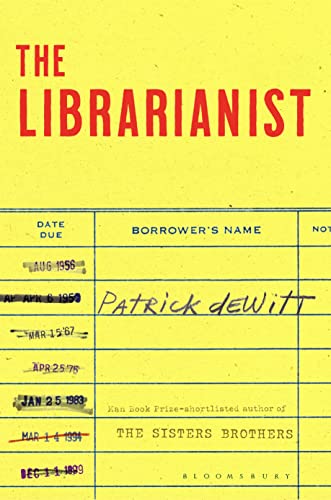
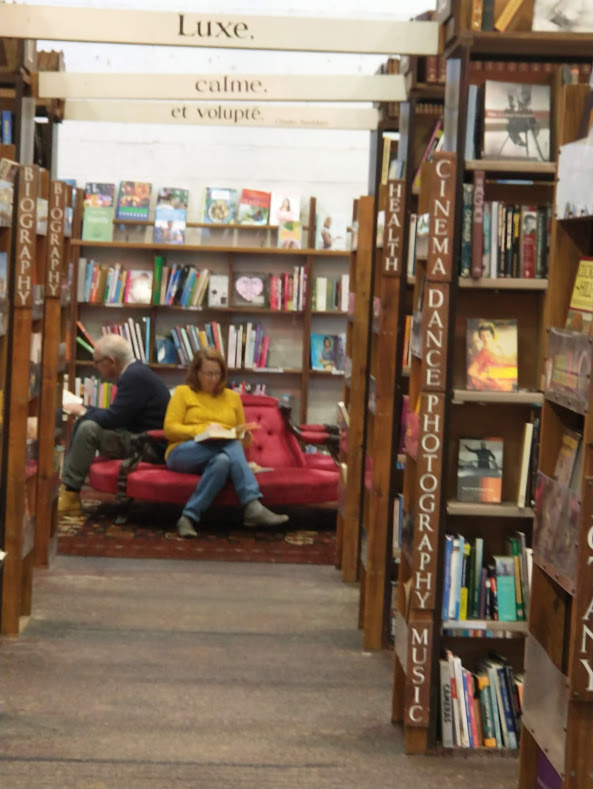
Museum Attendant? It’s not such a big leap from there to librarian perhaps. The Librarianist by Patrick de Witt. At first I was prepared to be charmed by this whimsical account of the life and times of Bob Comet. A misfit at school, he became a librarian – of course he did. Then he continued – quite contentedly – his largely friendless existence, living in the house where he’d been born, now his alone since his mother’s death. He meets a young woman – also a social misfit, completely under her father’s thumb – at the library. Reader, he marries her. At about this time, he also comes across the man who becomes his only male friend, and – no, spoiler alert. We are introduced to Bob at the point when he’s long been separated from his wife. And, so far so good. But we plunge back into his younger life and the book loses its way, especially when we spend far too long in the time when he ran away from home as an eleven year old. It’s not hugely relevant to the story or to the man he became. A bit of a curate’s egg of a book then. Good in parts. But I’m not encouraged to read more work by de Witt.


Another book about a misfit. Jenny Mustard’s What a Time to be Alive. Perhaps I’m too old. This book comes with glowing endorsements on the cover from a number of well-regarded authors. But I just can’t share their enthusiasm. Sickan, a 21 year old student at Stockholm University, comes from a small town where she was often lonely, and seemed a bit odd. She’s determined to reinvent herself but is socially awkward. She seems to make progress: finding a flatmate, beginning to join in normal student life, albeit always feeling something of an imposter. She even finds a boyfriend, who’s charming. It’s a story about loneliness, and the well-remembered awkwardness of becoming an adult and wondering which bits of your true self you wish to hang on to. But although it’s well written, I never really engaged with it. My loss, probably.
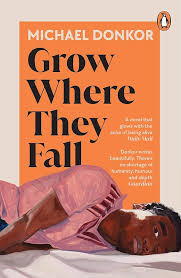

My last book is about a man who isn’t a misfit, because he tries so very hard not to be, in Michael Donkor’s Grow Where They Fall. Here is the story of Kwarme, son of Ghanaian immigrants and living in London. The book is told in alternating chapters: his 10 year old self who attends a multicultural primary school, and his 30 year old self, who teaches in a multicultural high school. Black and queer, Kwame is also a Durham graduate. His flat mate, an upper class white man writing about wine, is very different from his traditionally-minded working class Ghanaian family. Kwame fits in, though never without a conscious struggle. It’s what he always has to do. Conforming is something he’s used to, though his homosexuality is a real challenge to someone of his cultural background. He’s a popular teacher, well liked, but his uncertainties and feelings of being unmoored and a little out of his depth persist. Towards the end of the book, one event, small in itself, assumes huge proportions in his mind and forces him to finally make some big decisions. This is a novel about Kwame finding his place. Finding himself, in fact, and having the courage to live his life. It’s told in the context – often amusingly recounted – of a small boy’s day-to-day struggle to please, and an adult’s wish also to be liked and respected.
I seem to have done quite a bit of travelling this month’s choices (and in real life, as it happens). Next month, Kate starts with the 2025 Stella Prize winner, Michelle de Kretser’s work of autofiction, Theory & Practice. Where will that lead us all, I wonder?
Image Credits

Jacopo Pontormo:  Visitation of Carmagnano, Church of San Francesco e Michele (Wikimedia Commons)

Delft: Who's Denilo? (Unsplash)

Metropolitan Museum of Art: Yilei (Jerry) Bao (Unsplash)

Library image (Actually Barter Books in Alnwick): my own image.

Snow scene: my own image.

Ghanaian man: Kojo Kwarteng (Unsplash)

 From Pyrenees to Pennines
Well, this would have been a tbr expander for me had I not read four and already had the first on my list to which I’ll be adding the Donkor.
LikeLiked by 1 person
Since I take many of my must-reads from your reviews it’s hardly surprising that you’ve already read four. I think the Donkor has your name on it too.
LikeLiked by 1 person
There was a period of time recently where I read quite a few reviews of The Woman in Blue and I diligently added it to my wish list because of how positive and intriguing the reviews were. This was a nice reminder to come back to it. I have a beautiful print on my wall of one of Degas’s ballerinas. Its so well painted I often just spend a few moments admiring it, even after owning it for many years. There are just some art works that, for some reason not easy to articulate, just grab our attention.
LikeLiked by 1 person
I quite agree. And both Vermeer and Degas often meet that criterion. Maybe now you really will read The Woman in Blue. I hope you do enjoy it when you’re able to get round to it (so much to read ….)
LikeLike
I loved that Douglas Bruton book. Have you read Hope Never Knew Horizon by the same author? That’s brilliant too.
Enjoyed your chain!
LikeLiked by 1 person
Thank you. And yes, I too enjoyed Bruton’s Hope book. Though I preferred this one.
LikeLike
I enjoyed Woman in Blue – I loved what Bruton has to say about the relationship between painting and viewer. I haven’t read anything else from your chain, but Perspectives sounds like my sort of book!
LikeLike
I really like the sound of the Binet and the Woman in Blue (never heard of the first one, have heard lots about the second), so they are going on my TBR list. As for Jenny Mustard, I read a book by her Okay Days while I was waiting in the library for the estate agent to do some viewings of my house, and that one too made me feel very old and impatient.
LikeLiked by 1 person
Marina, you’ve cheered me up. I don’t like being alone as an Old and Impatient one.
LikeLiked by 1 person
I love De Witt, but agree that the runaway section in The Librarianist was like a novella inserted for no real purpose. His other novels are much tauter, French Exit was brilliant, as was The Sisters Brothers. I’ve not read any of your other choices, but like the way you branched into books on artists.
LikeLike
Thanks. Obviously I need to give De Witt another chance. I will.
LikeLike
I just returned from the Rijksmuseum and am surprised I did not find Woman in Blue on sale at the gift shop when I was trying to find something to read on the plane home (I did find a mystery set in Amsterdam the following day). I think I will buy this for my mother for her birthday to remind her of our trip, although she would also like Perspectives.
LikeLiked by 1 person
That would be an inspired choice for your mother. The Rijksmuseum really SHOULD have this book on sale, shouldn’t it?
LikeLike
A great cache of books, Margaret. Very interesting themes. I like the use of epistolary storytelling in Perspectives, sounds well done. I have wanted to give my dad the All the Beauty in the World book for a present. Looks intriguing.
LikeLike
From what you’ve shared about your dad, I think this is a book he’d enjoy. Good choice! Presents for his/my age group aren’t easy.
LikeLiked by 1 person
Yes, so glad he’s a book lover.
LikeLike
He’s your dad. You inherited your own love of tehm from SOMEONE!
LikeLiked by 1 person
Yes, so right Margaret, from both parents. They both are still in weekly book groups.
LikeLiked by 1 person
👍
LikeLiked by 1 person
So many interesting books in this chain! I loved The Librarianist and am going to seek out The Woman in Blue.
LikeLiked by 1 person
The Woman in Blue is a good read – in my opinion anyway!
LikeLiked by 1 person
Great chain, I really like the sound of Perspectives and also Grow Where They Fall, I’m going to add them to my TBR list.
LikeLiked by 1 person
Good hoices! I hope enjoy both of them.
LikeLiked by 1 person
I need to add Woman in Blue to my TBR list! I have read a couple of books where Vermeer makes an appearance.
LikeLiked by 1 person
Oh, great. Can you remember what? Girl with a Pearl Earring, for sure?
LikeLike
Why, oh why, do people think “misfit – would suit working in a library”? Infuriating!
LikeLiked by 1 person
ExACTly. We’re both living proof that it’s not so!
LikeLiked by 1 person
A very interesting chain Margaret and I’m immediately tempted to look up the Binnet–the moment the Medicis came into the picture, I knew I would be interested. The Bruton too looks wonderful–luckily it already is on my books of summer TBR!
LikeLiked by 1 person
A busy summer reading then!
LikeLike
I know almost nothing about art and artists, so I’ve learned a lot from your post. Thanks!
LikeLike
Reading these kind of stories is an easy way to absorb a lot of history.
LikeLike
As ever, a wonderful chain from you, Margaret. I leapt upon Woman in Blue, being a lover of all things Vermeer, but pretty much all of these are enticing.
LikeLiked by 1 person
Good oh! But don’t you just dislike people who routinely add to your TBR? I know I do! (But I also forgive them unreservedly 😉)
LikeLike
Dislike? Never! Slightly envious of their capacity to read so many books perhaps 😉
LikeLiked by 1 person
Fair point!
LikeLiked by 1 person
I love that you combined the covers with other pictures. Great idea.
Here is my list.
LikeLiked by 1 person
That’s my bit of fun that I quite enjoy. Thanks.
LikeLike
And such a great idea. It’s tough to do that on Blogpost, I usually make one big collage, so I only have the battle with one picture. LOL
LikeLiked by 1 person
Also a great idea!
LikeLike
The only solution for me.
LikeLiked by 1 person