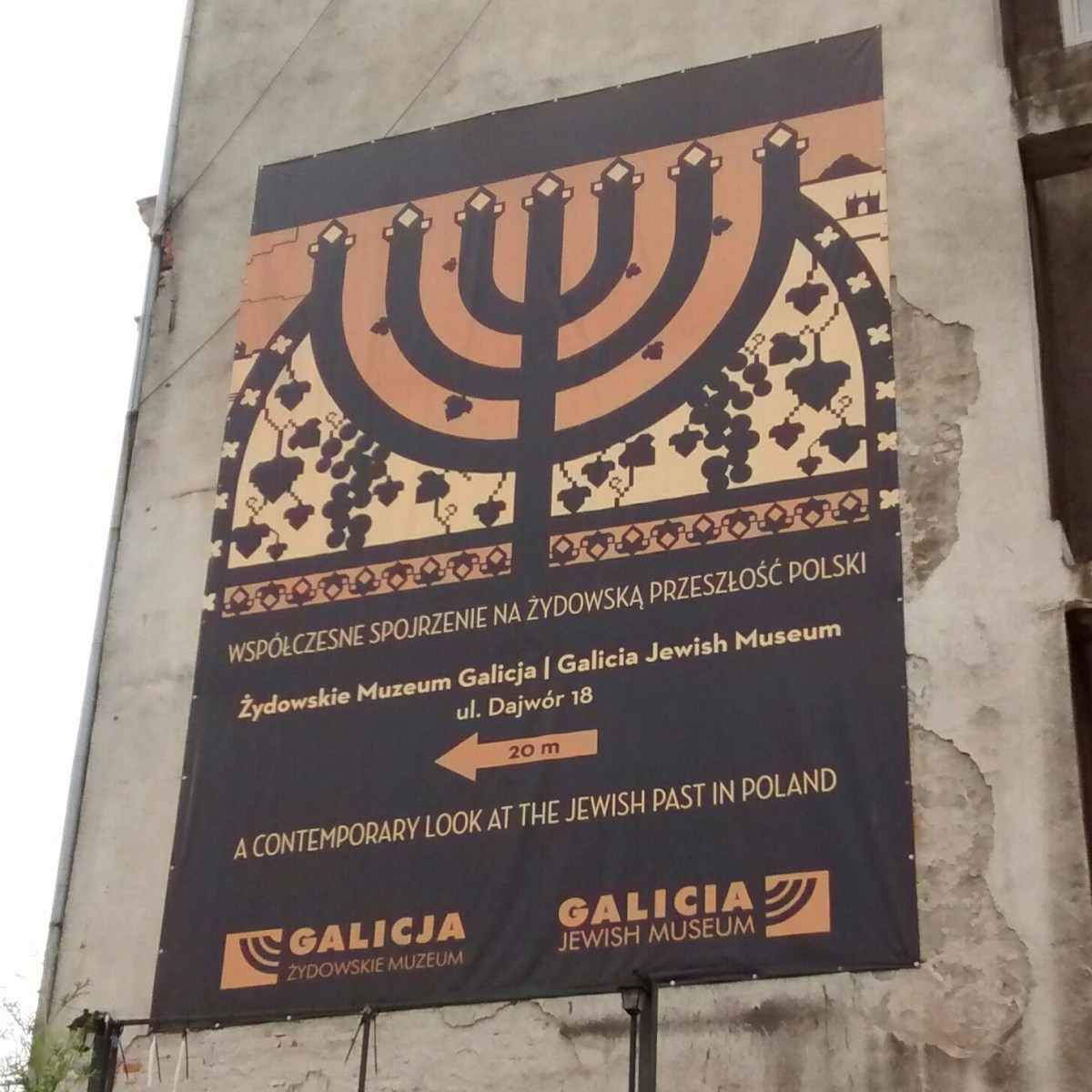
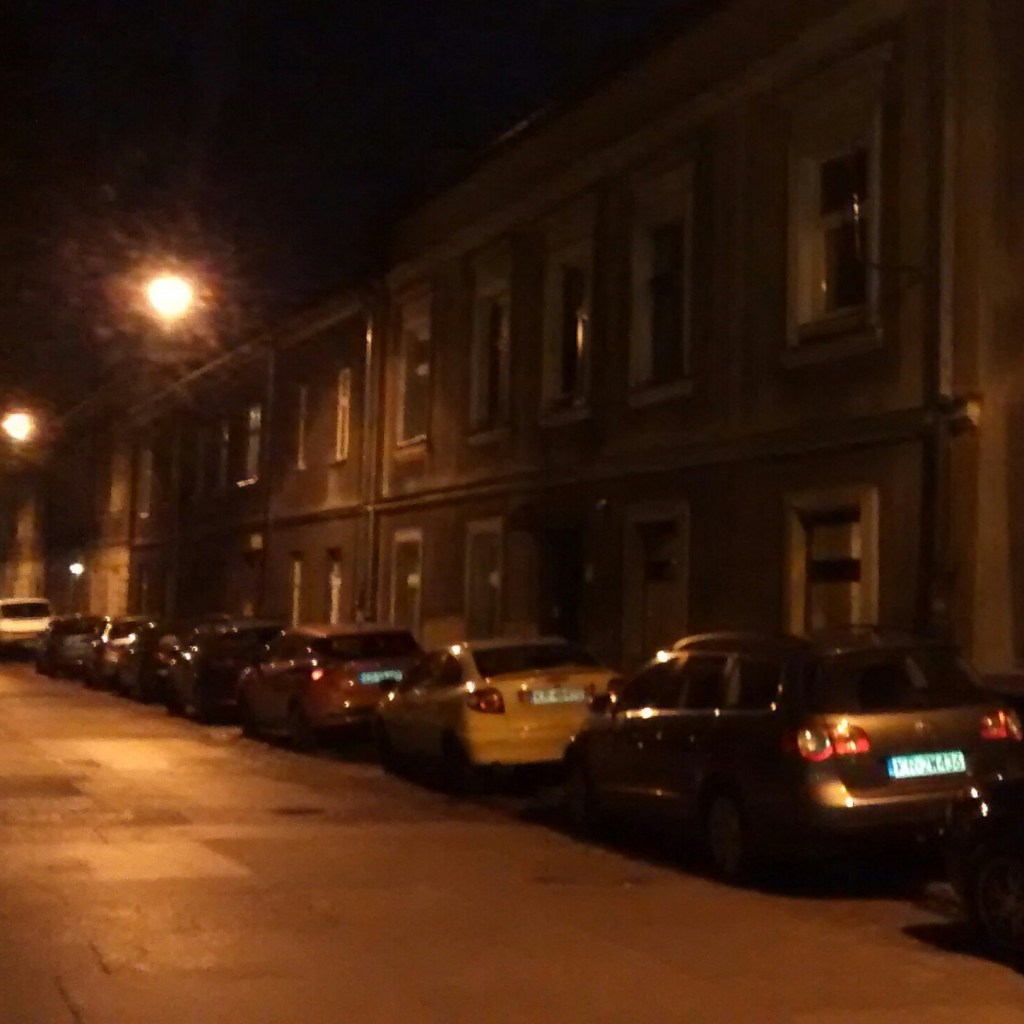
Exactly seven years ago today we were in Poland, the country of my father’s birth. And we’d fetched up in Krakow, where were were staying in the former Jewish quarter. The feature photo shows the view from our window. Yes, advertising the Jewish Museum was an image of the menorah, the seven headed candelabrum which has become the symbol of Judaism. Here’s the post I wrote on 16th September, 2017.
Jewish Krakow
Here we are in Krakow. And here we are, staying in the former Jewish quarter, Kazimierz, once a completely separate town.
How come there were so many Jews in Poland by the early 20th century? They formed, for instance, 20% of the population of Krakow by the beginning of WWII.
Blame the crusades. The Polish kings at the time declined to get involved. Jerusalem was so far away after all. So there were no crusaders from Poland in the routine persecution of Jews that took place in those so-called Holy Wars. And Poland became a place of sanctuary.
Along came the Black Death. Citizens from all over Europe looked for someone to blame. Jews, obviously. Jews needed somewhere to flee. Poland, obviously. Poland somehow escaped the Black Death, so didn’t need to persecute Jews at that time.
Over the centuries, Jews did well in Poland. Well educated by their rabbis at a time when education was far from universal, they prospered. They tended to live together, in harmony with their Christian neighbours.
Then Hitler came to power. As he occupied Poland, he began his all-too familiar persecution, then extermination of the Jews. But in Krakow, the factories were short-handed. and Jews were required as slave labour. 3000 Poles were forced to leave their homes in the Podgorze area, and 16,000 Jews moved in to the ghetto it became.
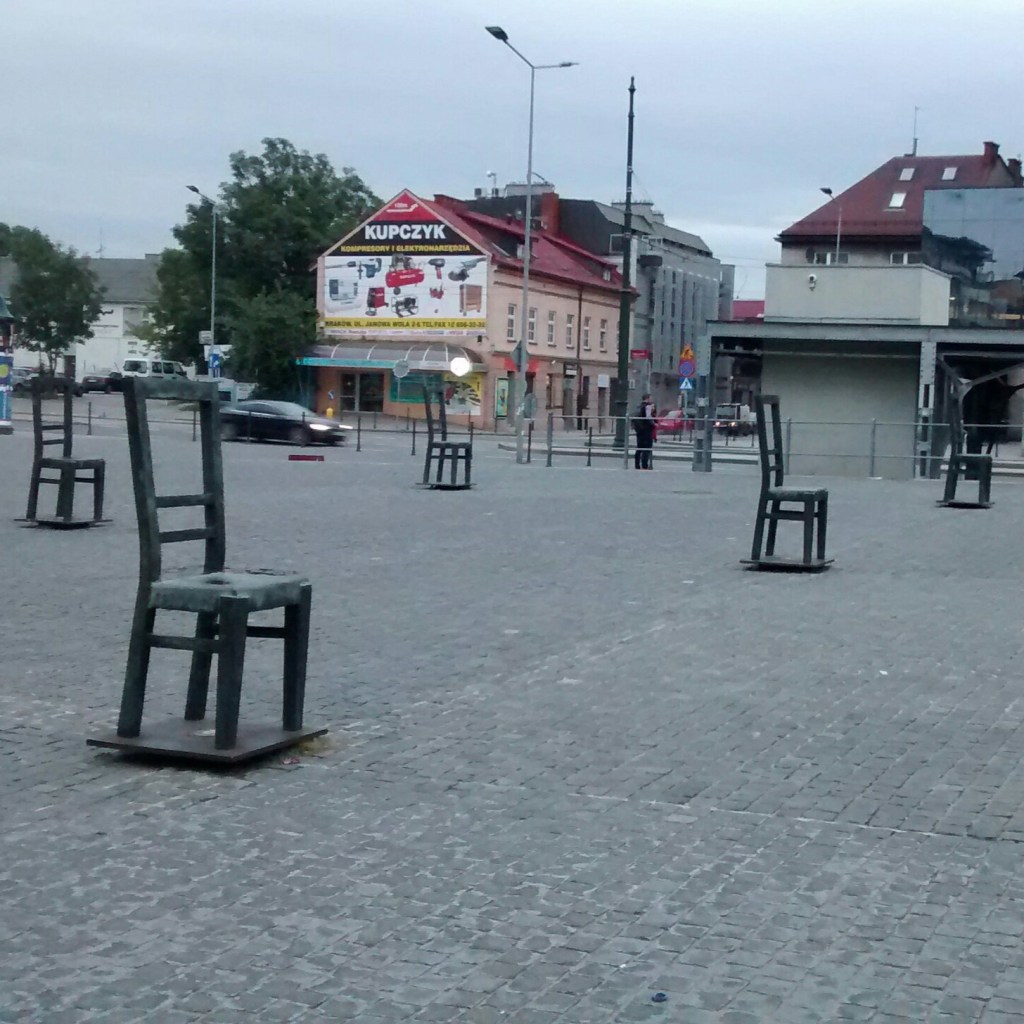
One of those factories was Otto Schindler’s. 1000 Jews who might otherwise have died lived because of his protection – he could have managed with 100 workers. This dark period is remembered in Plac Bohaterow Getta – Ghetto Heroes Square, where 70 chairs symbolise absence, departure. This Square was the place where Jews were executed, or sent to almost certain death in the local Concentration Camps. Another sobering day.
Other posts I wrote during our holiday mentioning the Jews in Poland include:
- https://margaret21.com/2017/09/15/museum-of-the-second-world-war-gdansk/
- https://margaret21.com/2017/09/22/krakow-1940/
- https://margaret21.com/2017/09/23/auschwitz-and-auschwitz-birkenau/
For Becky’s Seven for September.

 From Pyrenees to Pennines
Sobering but think reminders needed. Your point about how all lived in harmony makes me wonder how all that can go so wrong and the Nazi occupation. Just watched a film The Black Book about the Dutch Resistance and betrayal within. Such difficult times. B
LikeLiked by 1 person
I know. And since that post was written, harmony seems to be in ever-shorter supply. Worrying indeed.
LikeLiked by 2 people
There is so much divisive stuff going on. Yes, as with the riots we seem to have forgotten and then communities working together.
LikeLiked by 1 person
Yes. We need to remember the good among the bad.
LikeLiked by 1 person
I remember going to Kazimierz on our first visit to Krakow. We visited one of the most moving exhibitions I’ve seen: a collection of photographs recording absences, ruins of European synagogues or spaces where they should have been. All the more poignant for being in the Old Synagogue, descecrated by the Nazis.
LikeLiked by 1 person
Sadly, that exhibition was no longer there (or hadn’t arrived?). But the standard of the museums telling the WWII story was very high throughout Poland – or the bits we saw.
LikeLiked by 1 person
Thank you for revisiting this post Margaret, I found that history interesting, going back to the Polish kings. It’s sad that it could have been a refuge for so long, until someone seeking power through war and persecution comes along to disrupt ordinary life.
LikeLiked by 1 person
Power corrupts …
LikeLiked by 1 person
It’s difficult to muster a suitable response to this. I’m glad you have reposted it; it’s vital that we remember. Even if it seems that as a species we have learned little from such terrible times. Despite everything I hold on to hope. And huge respect for the grace and resilience of the Jewish people, both then and now.
LikeLiked by 4 people
Indeed. And those resistance fighters throughout Europe who risked their own lives, and those of their families, to help them.
LikeLiked by 1 person
made me nearly cry – to read of all those sad times, but also full of admiration for the strength and resilience. Not a lovely post, but an important one – maybe you should re-upload it again, from time to time. I find I know so little about history, not even enough of my own country‘s, so it‘s good to hear it, although it‘s a sobering read.
LikeLiked by 2 people
Yes. Difficult stuff. We mustn’t sleep walk into anything else like this in the near future.
LikeLiked by 1 person
sobering Margaret, but good to remind us all as the world is yet again heading down this scary path
LikeLiked by 1 person
I know. Things feel very different from 7 years ago.
LikeLike
find it scary how quickly things have turned back in come countries
LikeLike
I found Krakow moving and magical. Have you read the Krakow Ghetto Pharmacy? It’s not a fun read but it put a lot of it into perspective for me, and I bought it there. The Rynek Underground museum was amazing too, but like your husband in your other post, I didn’t want to go to Auschwitz-Birkenau either. For many reasons. Sorry, that’s all about me, I had forgotten about Krakow and your interesting post brought back memories!
LikeLike
I know the pharmacy, but no. We didn’t go to all the museums on offer – not the Ryneck certainly. But the whole holiday was in many ways overshadowed by all the horror we witnessed at second hand, despite our doing fun things too.
LikeLike
I know what you mean. I found it a really artistic place though, I guess people come to terms with their past through self expression.
LikeLiked by 1 person
Interesting. That didn’t come across to me. I was on a bit of a mission to try to recreate my father’s youth, which I know very little about.
LikeLike
It took me several visits to Krakow to visit Schindler’s museum and I found it incredibly moving. I had always refused to visit Auschwitz. Reading many novels set in the period was more than enough. My Dad was ‘lucky’ and I don’t think any of the immediate family were sent to the camps. For him the Russians were as culpable as the Nazis in disrupting his life.
LikeLiked by 2 people
I know nothing about my father’s family’s history, but I do know they got through the war intact, and had previously suffered more at the hands of the Germans. My father was a gifted linguist, but always refused to learn German.
LikeLiked by 2 people
I believe it’s important to visit these places when we get the opportunity, and share them with others who don’t have that chance. History has proven that remembering the past is no guarantee we won’t repeat it, but it’s got to help. And I think knowing the dreadful consequences of allowing them to happen, encourages us to speak up when we see the risk of doing so increasing.
LikeLiked by 1 person
When I went I hoped too that knowledge woud help us to avoid the same mistakes. Looking at how much worse the world is, 7 years on ,I’m no longer so sure.
LikeLiked by 1 person
But we have to try …
LikeLike
We do. All of us.
LikeLiked by 1 person
My grandfather immigrated to the U.S. from Poland, Warsaw, in 1913. He brought my grandmother while 7 months pregnant with my mom and two older children once he found work and an apartment. My mom was the first natural citizen of the U. S. He tried to get more of their families to join them, but they wouldn’t come. After the war, he couldn’t find any record of them. If not for his common sense, I wouldn’t be here.
LikeLiked by 1 person
My father’s history is a closed book. His father died when he was an only child, and his mother’s remarrying means his surname has disappeared from view. My father died many years ago, and his history died with him.
LikeLiked by 1 person
Sobering. And sad to feel that we have learned so little and the killing goes on.
LikeLiked by 1 person
It feels as though we’re heading for more as well
LikeLiked by 1 person
Unfortunately, yes.
LikeLiked by 1 person
We must remember, we must discuss, and we must condemn, but often it seems we have learned nothing!
LikeLiked by 1 person
I wish that weren’t true.
LikeLiked by 1 person
What a touching post! Thanks for sharing this piece of history.
LikeLiked by 1 person
It feels like one we shouldn’t forget.
LikeLike
And I agree with you 100%.
LikeLike
The menorah for a seven, of course. A most interesting post. I found Poland very interesting and visited a number of Ww2 museums. But I never went to Auschwitz, believing rightly or wrongly than it would be disrespectful to the dead to traipse around that camp,…I have read Elie Wiesel, Primo Levi et al…..
LikeLiked by 1 person
I absolutely understand and respect your reasons for not visiting Auschwitz. But I’d like to assure you that I went out of respect, and the tour guides were extraordinary. They were young in the main, and trained by Auschwitz survivors (this certainly can’t go on much longer, if at all) because those elderly people were passionate about their stories being told and understood. Tour guides there rarely stay in post longer than 6 months, as the emotional toll is great. The mood throughout was sombre, respectful and thoughtful. A holiday day out with added pathos it certainly wasn’t. It would be wrong to say I’m glad I went, but … well, yes I am. I’ll never forget it. Primo Levi et al are vivid and immersive, but don’t come anywhere near what I experienced that day. Particularly perhaps because the weather was abysmal.
LikeLiked by 1 person
What a moving visit. Thank you for this beautifully written post.
LikeLiked by 1 person
Thank you Davida. It was a thought-provoking holiday.
LikeLiked by 1 person
Although many of us remember and pay respects to those lost to war it seems as if we are, far too quickly, headed that way again. The world is in a terrible state of disrepair. Benrie
LikeLiked by 1 person
We do seem to be living in dark times with little hope for a peaceful future. It’s worrying to feel so powerless to change things.
LikeLiked by 1 person
The Ghetto Heros Square is very symbolic and thought provoking.
LikeLiked by 1 person
I was very moved by it. Less so by a group of tourists I saw there posing and laughing for jokey selfies.
LikeLike