Britain is one of the most nature-depleted countries on earth, according to the fourth State of Nature (SON) Report, the product of a collaboration of environmental NGOs, academic institutions and government agencies, including Natural England. Depressingly, England, Wales, Scotland and Northern Ireland are on the edge, as far as much of the natural world is concerned.
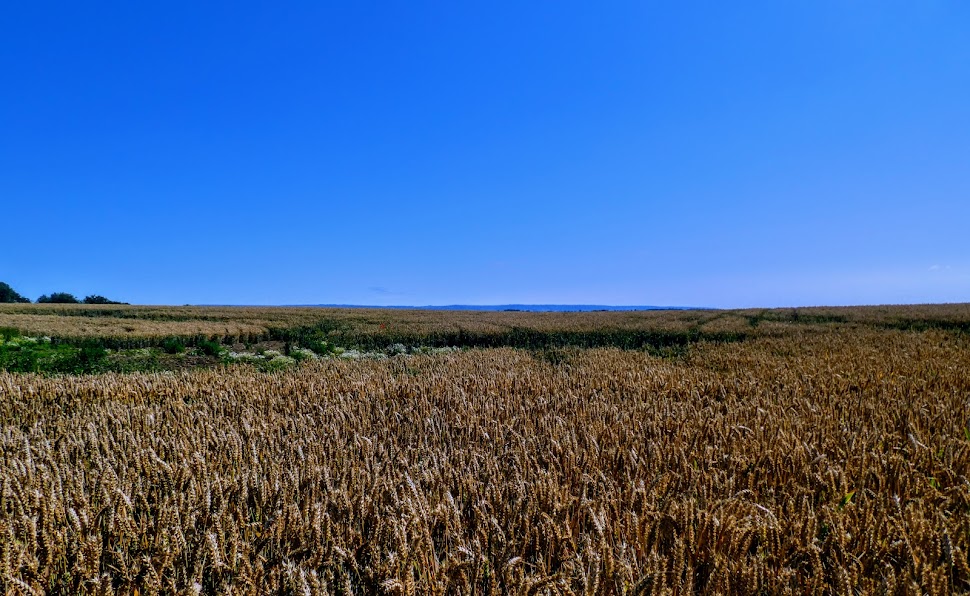
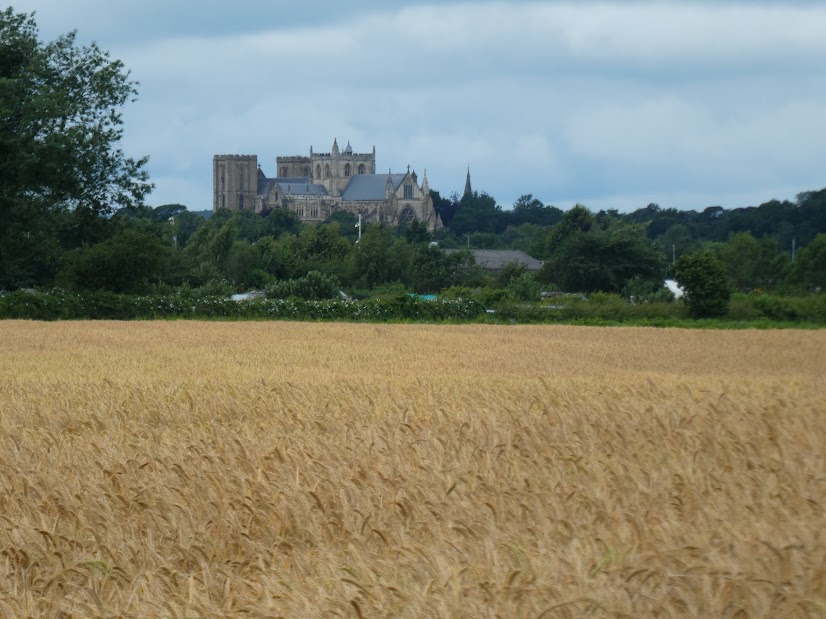
Look at the featured photo for instance, taken on one of those in-glorious-technicolor days of high summer, with an impossibly blue sky, and fields of golden wheat just waiting for harvest. It really shouldn’t be like that. There should be poppies, cornflowers, wild flowers in general poking their heads above the crop. There should be generous field margins and hedges, offering home, food and shelter to whole varieties of insects, small mammals and birds. Where can all this wildlife call home these days? Many of them are on the very edge of sustainability. Here’s another field, even nearer to home, equally mono-cultured.
These days grass grown for hay-making as winter feed is just that. Grass. Meadowland used to be so different, crammed with wildflowers that made much richer, more interesting fare for the cattle that rely on it as winter feed. And a mecca for insects : all-important bees among others – during its growing season. These days, it’s so rare that it’s not just meadowland, but a Site of Special Scientific Interest.
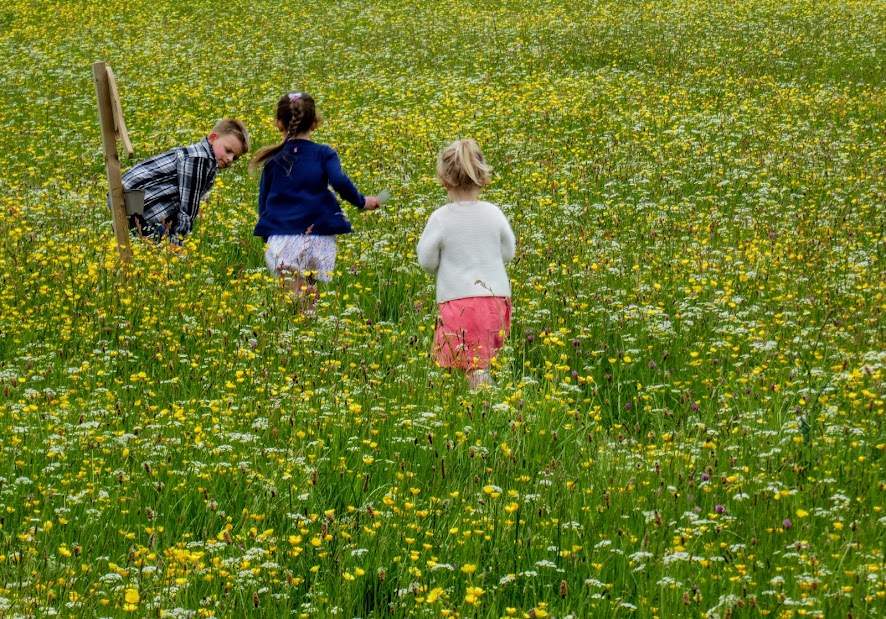
The farms nearer to our house have chosen to make do with narrow jumbles of poppies squeezed into narrow field margins, or at the edge of paths.

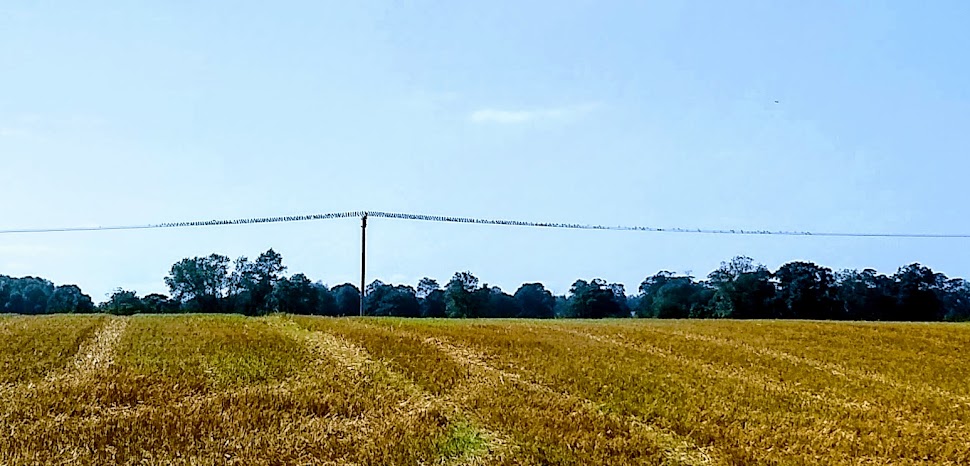
See these? These are swallows on a telegraph wire in mid-September one year recently, assembling prior to their big autumn migration. It didn’t happen this year. Swifts and swallows are on the edge of viability here, from habitat loss.
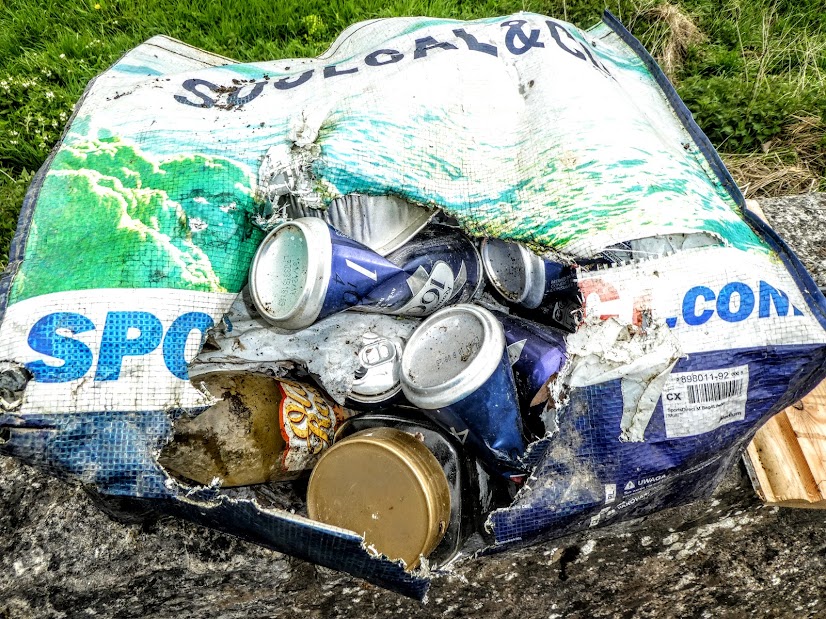
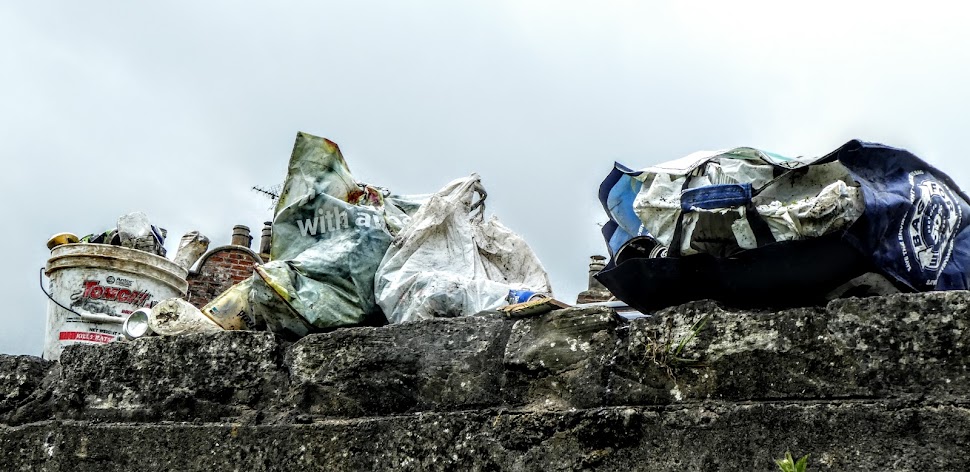
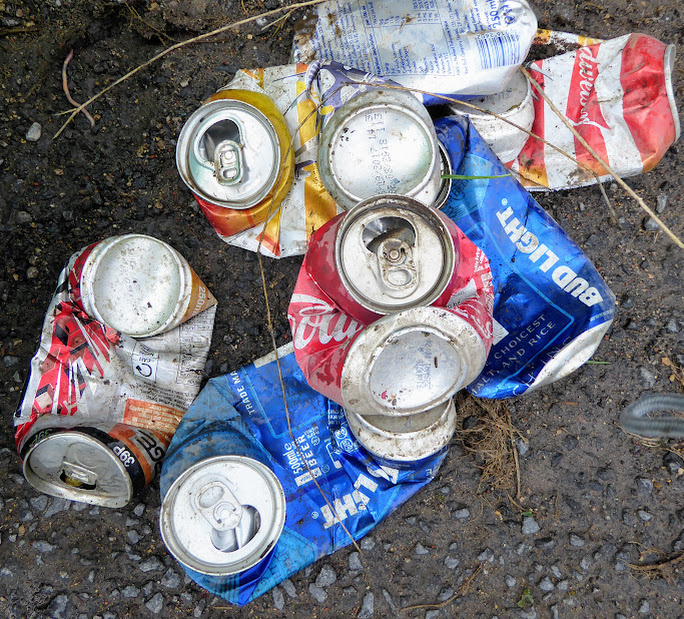
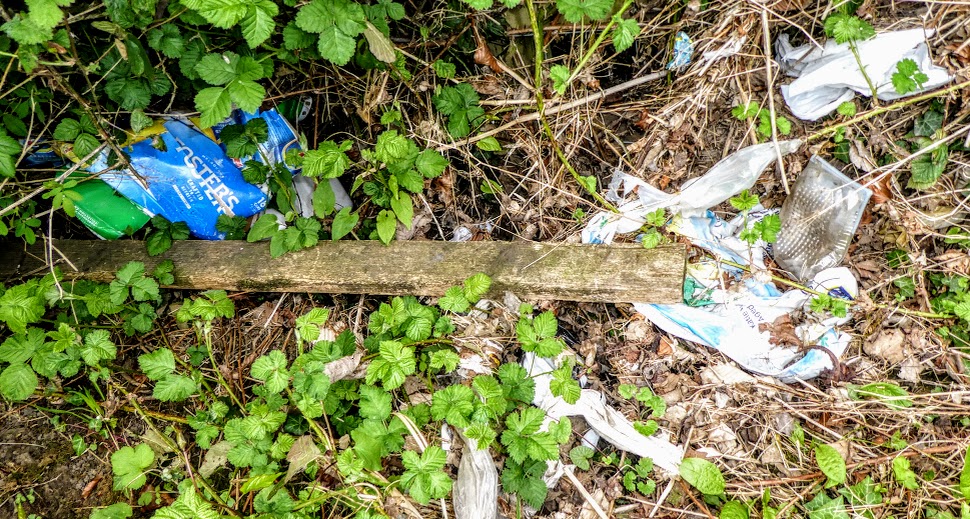
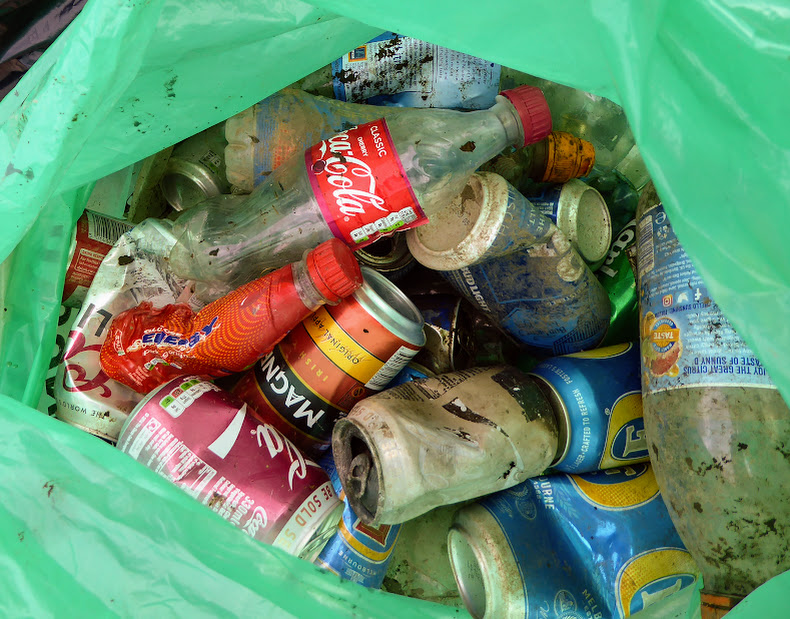
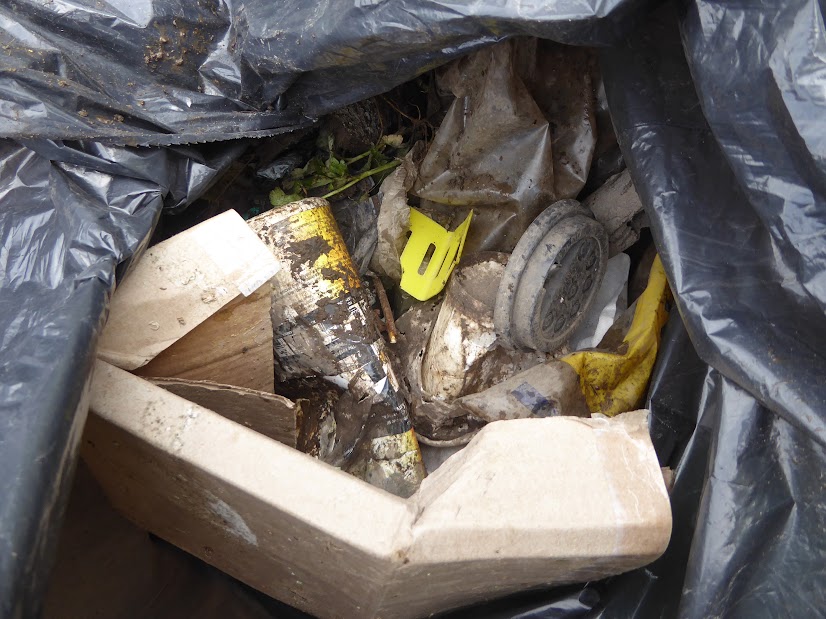
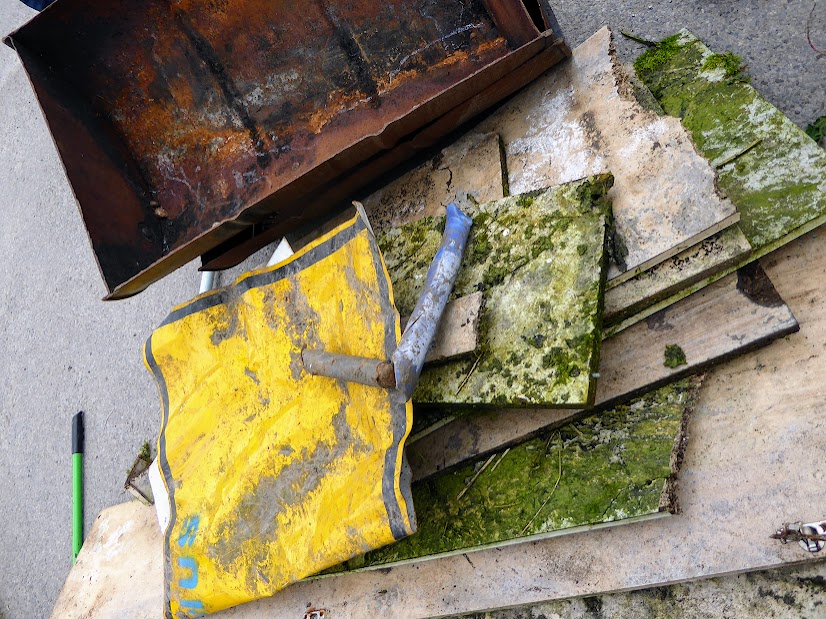
Let me show you something all-too common though, both in town and country. Litter. These images are hauls from litter-picks we’ve done not just in town centres, but down country lanes. Everything from a carelessly-tossed can to rather toxic rubble and waste illegally dumped in a hedge margin. Not just an eyesore, but habitat-damaging and a danger to the many small species that call such areas home.
This is meant to be a photo challenge, not a diatribe, so I’ll leave it there. There’s a lot more I could say, but I don’t have the images to support the argument. It’s for Patti’s Lens-Artists Challenge #269: On the edge. And it was inspired by Susan Rushton’s post for the same challenge. If you pop over and read it, you’ll see why.

 From Pyrenees to Pennines
Very well said, Margaret – it really shouldn’t be like that. There should indeed “be poppies, cornflowers, wild flowers in general poking their heads above the crop”. How much longer can we exist with litter and monoculture?
LikeLiked by 1 person
I dunno Sue. It’s the general state of play here in the UK.
LikeLiked by 1 person
Alas
LikeLiked by 1 person
It’s very depressing. I see some great examples, but it’s rare.
LikeLiked by 1 person
There are indeed some excellent and inspiring examples. But you have to go hunting.
LikeLike
Sadly, all too true. Litter in the hedges, tossed from passing cars, infuriates me. Generally not noticeable until the bleakest winter months when everything has died back or been flattened and a diaspora of cans, bottles and burger boxes is revealed. Yet we are miles from a fast food source. I find huge swathes of monocultured fields depressing too, *sigh* On an upnote, we have had the swallows with us for weeks longer than past years. They have gone now but stayed well into September. Ecologically I’m not sure what this means but I was very happy to have them.
LikeLiked by 1 person
Lucky you to have those swallows! Yes, our nearest McDonald’s is easily 7 miles away, but it’s their packaging on the roadsides near us. As well as all those bottles and cans. *sigh*.
LikeLiked by 1 person
It’s frightening things are the way they are here but even worse is people not caring. They just don’t care. Great post, Margaret.
LikeLiked by 1 person
Thanks Sofia. Perhaps we’ll arrive at a point when, like the unnamed person in the old nursery rhyme, ‘Don’t care was made to care’.
LikeLiked by 1 person
A point well made
LikeLiked by 1 person
Thanks Sheree.
LikeLiked by 1 person
It is a sad state we’re in and so much of the litter, etc, is long-lived before disappearing on its own. Sadly, despite folks’ best efforts it is difficult if not impossible to keep up and clean up. Aside from the mess people leave behind, some of our oldest natural places are being vandalized for sport. If the planet can think about such things I bet it would be thinking “when we these pests go away leave me alone”.
LikeLiked by 1 person
Ah yes, Sport. That’s another thing. You’d think they would be on the side of the angels, wouldn’t you?
LikeLike
I have been intentionally not reading this post. I suspected this was going to be the case and you have just mentioned a very small amount on the destruction of our planet. We call can do our bit it is always “act locally, think globally”
LikeLiked by 1 person
Indeed. But I rather think you are more than doing your bit. Keep up the good work.
LikeLiked by 1 person
The heavy littering is inexcusable, but I don’t think things are so bleak on the farming-land management front. The DEFRA Countryside Stewardship gives big incentives to farmers and foresters to improve biodiversity. The National Trust do a fantastic amount of similar work on their land and, after all, they do own a huge lot of our island.
https://defrafarming.blog.gov.uk/2023/04/12/countryside-stewardship-delivering-for-farmers-and-the-environment/
Just reading Cal Flyn’s Islands of Abandonment which pays tribute to the natural world’s seeming miraculous regenerative powers – including vast forest regrowth across Europe to the Baltic (post Iron Curtain). The humungous shale oil waste moutains near Edinburgh (Bings) which have sprouted whole new ecosystems including orchids and rare plant life. And then there’s Chernobyl with its remarkable natural regeneration.
LikeLiked by 1 person
How funny! Just before reading your comment, I sang the praises of Cal Flyn’s book to another commenter, Britta. I loved that book, and it is a message of some kind of hope too. And yes, DEFRA and the NT do their bit. But there’s such a long way to go, and our present government seems not to be on the side of the angels. Ah well. Plod on.
LikeLike
well said Margaret, well said. There is beauty where we look for it. We live in a world that is increasingly urban, because that’s where the jobs lie. I’ve spent most of my life in a city or a suburb, but the best days I have spent are in nature. Stay well and peace.
LikeLiked by 1 person
Even Nature doesn’t get it all her own way these days, thanks to intensive agriculture. But yes, wildness still exists.
LikeLike
This post really resonated with me. The litter leaves me speechless. It’s a big problem in Scotland, too, and contrary to common stereotype, it’s all kinds of people littering, not ‘just’ youngsters. Sometimes I think we really don’t deserve such a great planet. We can’t take care of it. We refuse to do the tiniest things. Luckily, nature often reclaims what we try to take away. Nature’s quite a stubborn lady. Thank goodness for that!
LikeLike
Nature IS stubborn. It may not be quite your thing, but I think you might enjoy Cal Flyn’s Islands of Abandonment. It’s about places, once occupied by man and now – yes- abandoned. And reclaimed by nature. Even chemical weapons manufacturing sites. Even Chernobyl. It’s so well written too. https://www.goodreads.com/book/show/41830657-islands-of-abandonment
LikeLiked by 1 person
Must look up that book. It sounds really interesting. I have seen a documentary about Chernobyl a while ago, and how nature is thriving where humans can’t. Nature, much sturdier than us humans!
LikeLiked by 1 person
It sure is. And while I recommended Flyn’s book to you, another commenter, Tish, recommended the same book to me!
LikeLiked by 1 person
Very thought provoking post, Margaret.
LikeLiked by 1 person
Thanks. The problem is, some of us probably try to think AND do. It’s all the others …
LikeLiked by 1 person
💯❗
LikeLiked by 1 person
No excuse at all for the litter, it’s something that really gets my goat. I wish the UK would adopt the deposit system, it does seem to spur people on to return cans, bottles and jars rather than abandon. It would be a start!
LikeLiked by 1 person
It would be an excellent start, and eminently feasible, as other countries can demonstrate.
LikeLiked by 1 person
And we tried to do just that in Scotland before being stopped by the UK govt! Useless prats (heavily moderated version of what I would really call them).
LikeLiked by 2 people
Don’t self-moderate on my account, Anabel!
LikeLike
I’m sure people on here think I’m terribly lady like (😉). I would hate to shatter illusions.
LikeLiked by 1 person
Sorry to disillusion you, but you don’t come across to me as ladylike. Just a thoroughly interesting woman with lots of worthwhile and absorbing ways of filling your week. That’s got to be a better image, surely?
LikeLike
Cut to the quick, I tell you! Until I read the second sentence. Most kind.
LikeLiked by 1 person
I can imagine the un-moderated version and agree!
LikeLiked by 1 person
So you can turn the air blue too then!
LikeLiked by 1 person
We can all get under the collar it seems. Sadly, it gets us nowhere.
LikeLiked by 1 person
Great photos and commentary. Too much trash!
LikeLiked by 1 person
Indeed 😦
LikeLiked by 1 person
Crop monoculture should be outlawed! Thanks for your clean up efforts.
LikeLiked by 1 person
It feels a losing battle. And i’s not just crop monoculture that should be banned, but farm animal too. The overwhelming majority of cattle – worldwide – are now Holstein Friesian. Many local breeds, adapted to their particular situation, are now extinct or endangered. And so it goes on …
LikeLiked by 1 person
So sad. Do you think people will begin to wake up and realize the problem? My family has been picking up litter on the side of roads during walks for decades. My mom and dad picked up litter on their road for years, until people started noticing these two old people picking up stuff and stopped throwing it out of their cars…when mom and dad died there was hardly any litter on their street. Neighbors are picking anything they see along the side of the road now. They tell us they are doing it in memory of my folks. Makes me cry.
LikeLiked by 1 person
What lovely people your parents must have been. And they made a difference! It’s amazing what just a few determined people can do. We need more of them!
LikeLiked by 1 person
They were very lovely and very involved in their community. They are missed by a lot of people.
LikeLiked by 1 person
You make such good points here, but the people who need to hear them I suspect aren’t listening – not just to you but to anyone. That litter is appalling. But I have heard a few positive noises of late about incentivising farmers to return to more diverse grazing lands and meadows, and leave room for wildlife. Or did I dream those? Or are they not working? As you know, I’m a town mouse, so I may have missed the point!
LikeLiked by 1 person
You’re right. There are new initiatives. It seems to many of us though that even the simpler-to-achieve goals seem to be taking an awful long time to bed down. And when our own Prime Minister starts to unroll policies which ‘back drivers’, and promises to build more roads … well, really, what’s the point?
LikeLiked by 1 person
Oh I know what you mean! So much watering-down of policies 😦
LikeLiked by 1 person
Littering and plastics is a world wide problem. We used to regularly participate in clean ups, but then you realise you’re going back to the same places over and over and you get a bit cross. Where is people’s pride in their surrounds? These days we only pick up on the beach and it’s good to see that most of them look great 🤗💙
LikeLiked by 1 person
That’s true, about clean beaches, although I once did a mini-pick-up on the beach at Sitges. There was no litter at all. But I had a huge haul of fragments of plastic, some not much bigger than a grain of sand …
LikeLike
🤗🩵
LikeLike
“Britain is one of the most nature-depleted countries on earth”. Sad record!
LikeLiked by 1 person
Not one to be remotely proud of.
LikeLike
Tragic and very sad.
LikeLiked by 1 person
It certainly is.
LikeLike
We saw very few Swifts this year, and no Swallows at all!
LikeLiked by 1 person
We had the opposite problem. And it is a problem.
LikeLiked by 1 person
Entirely agree, Margaret. It’s been going on for centuries (eg Scottish highlands should not be a wilderness, they are that way because they were cleared for sheep). It’s just that now we’ve got so dangerous we could end ourselves. It’s not the planet we need to save, it will probably be just fine without us. Oh dear, you’ve got me ranting now!
LikeLiked by 1 person
There’s plenty to rant about. There are far too many sheep to be useful on our island, and because of that, they’re changing the landscape. The Lake District shouldn’t be bald, any more than your Highlands should be a wilderness. Let’s not get started …
LikeLike
We just did!
LikeLiked by 1 person
Very well said and backed up by your photographs. Real concerns and certainly not a diatribe!
LikeLiked by 1 person
Ah thanks. Depressing stuff though.
LikeLiked by 1 person
I love wildflower and poppy fields, beautiful! It’s depressing and discouraging to see littering…
LikeLiked by 1 person
It sure is. A worldwide problem, sadly.
LikeLike
I saw and commented on Susan’s po st earlier in the week Margaret, and found the report fairly shocking and oh so sad. The comparison between your images of the grassy fields versus the poppies and then compared to the trash you found pretty much says it all. While it is oh so disturbing to see what we’ve done to our world, at least it was done in ignorance. Fortunately we at least now realize the situation and the next generation seems to care very much about it. We can only hope we’ve not gone so far that there is no return.
LikeLiked by 1 person
What a legacy we have left the young though. And we have to keep up the struggle this very moment … it’s not a very uplifting thought.
LikeLike
Great post Margaret, I think we’re living the early chapters of what is to become a horror novel.
LikeLiked by 1 person
Thank you. I so wish you weren’t right.
LikeLiked by 1 person
Well-said, Margaret. I’m ashamed of my generation and I feel terrible about the ones that follow us. We can’t claim ignorance any more. We know the price we pay for that type of carelessness. I once had a writing fellowship at Ragdale, which had a piece of unspoiled prairie in their backyard. I could not believe the variety of wildflowers, insects…there was a steady hum from the insects…no matter what the time of day. I think about that place often. What have we done to this wonderful home, the earth?
LikeLiked by 1 person
What indeed. It’s so depressing when you move in the sort of circles that does try to do its bit, and to realise how little that is, and how late.
LikeLiked by 1 person
So true.
LikeLiked by 1 person
Garden lawns are another example of mon culture, and round me far too many people are obsessed with them. Usually mine looks great as full of things other than grass but sadly this year I have had to keep much of it shorn for the house viewings.
LikeLiked by 1 person
*sigh*. Once you’ve sold you can move somewhere where you can do what you damn’ well please!
LikeLike
oh I can’t wait. It was one of the things that upset me most when the house sale fell through was having to weed the drive and mow the lawn again
LikeLiked by 1 person
I so understand that. Having to keep the house on in terms that don’t suit you is awful. Chin up. It’s a good house. It WILL sell.
LikeLiked by 1 person
Thanks Margaret ❤️
LikeLiked by 1 person
It’s so easy to read that we are one of the most nature depleted countries and feel the impulse to deny it. Weirdly I feel that too, even though I can walk around town and imagine the fields and the wildlife that were there in my younger days (or even two years ago). We have a lot of cheek lecturing other countries when we are doing so poorly ourselves. Although we do have sticking-plaster policies, I feel sure a word with any caring people struggling to implement them would be very instructive.
LikeLiked by 1 person
Indeed. And latest announcements from our government do nothing to inspire confidence in positive change.
LikeLike