On the first Saturday of every month, a book is chosen as a starting point and linked to six other books to form a chain. Readers and bloggers are invited to join in by creating their own ‘chain’ leading from the selected book.
Kate W. Books are my favourite and best
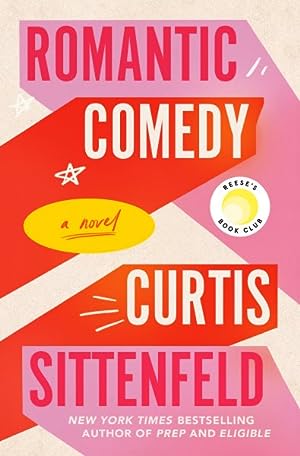
This month’s starter book is Curtis Sittenfeld‘s Romantic Comedy. Anything Sittenfeld writes is fine by me, but I haven’t managed to read this one yet. The Guardian has it as an ‘affable, intelligently crafted tale of work and love’, with a somewhat insecure heroine who can’t believe that true love has really come her way.


Let’s stay with complicated love, in The Rachel Incident by Caroline O’Donoghue. At first I thought I’d stumbled upon a Mills & Boon for Millennials. Then I thought I might not be all that interested as I’m scarcely the same generation as Rachel and her friends and colleagues, floundering through messy early adulthood. But almost against my will, I was drawn in to the convoluted affairs and working arrangements of Rachel, and her gay friend and flat mate James. We begin in 2009, and there’s a recession on, which colours everyone’s prospects, including Rachel’s middle class dentist parents. Rachel is at first finishing her English degree while also working in a bookshop. She fancies her professor. But he, it turns out, has begun an affair with James, although he’s married to the woman whom Rachel is in due course working for as an intern, and Rachel has fallen for someone who’s fallen for her too, but has a habit of disappearing … It’s all intriguingly complicated and believable. It’s gossipy, witty, wry and a real page turner. Recommended.

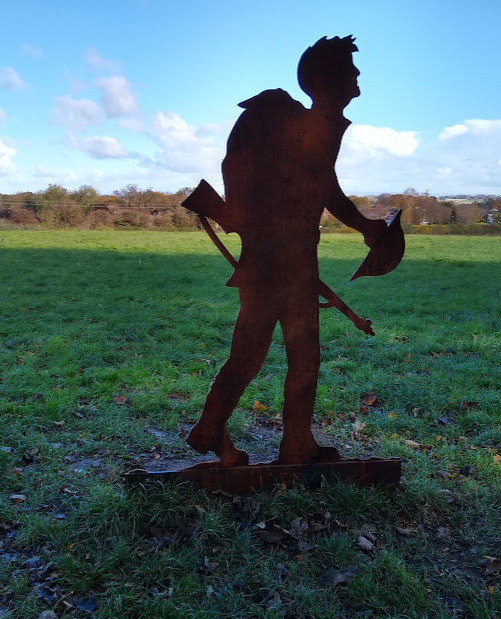
Love story involving gay men? We’ll go for a tremendous first novel from Alice Winn: In Memoriam. Here is a book which starts in an English public school, and moves quickly to WWI and the trenches. This is the journey of a varied cast of characters, chief among whom are Stanley Ellwood and Henry Gaunt, both of whom have been exploring their homosexuality whilst still at school. They exchange their privileged lives for the grim reality of battle, and Winn uses telling detail to underpin how truly frightening and beastly in every sense this is. Every few chapters the Preshute College magazine appears, and among the ever-longer lists of dead and wounded old boys are the names of characters we too have come to know. Ellwood and Gaunt, so very different, continue their relationship. Winn explores the strong bonds and unlikely alliances that war brings about, and continues this exploration to show its effects on the families whose sons have gone to fight, and its effects in the years after the war. A moving and deeply affecting book. I’m quite well-versed in WWI literature, but this has perhaps brought the full horror of that war, and its long-reaching effects before me in a way that few other books have done.
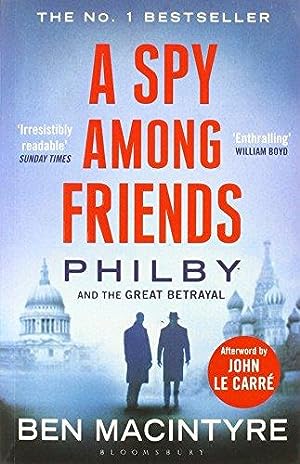
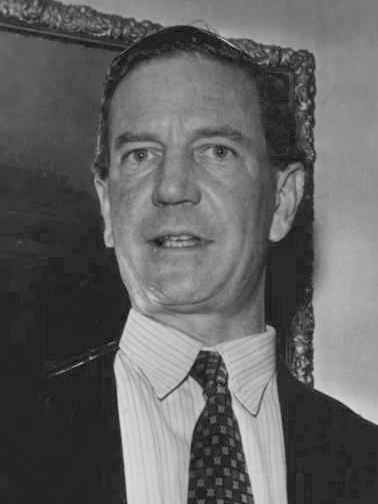
One of the consequences of war is that the world of spying evolves. This month I read Ben Macintyre‘s story of super-spy Kim Philby. As with in Memoriam, this book – A Spy among Friends – is peppered with ex-public school characters. Here is a graphic picture of a completely different world: a world in which who you know, and the school you’ve been to, rather than what you’ve achieved and the jobs you’ve held gets you into a career in espionage. A world in which secrecy was paramount, and – apparently – an ability to down prodigious quantities of alcohol. Ben Macintyre shows us this world, as it existed during WWII and the subsequent Cold War. He introduces us to the milieu of the agent – and the double agent. Specifically to Kim Philby who worked tirelessly not only for the British, but for the Russians, thereby sending colleagues and blameless citizens to untimely deaths. His life was a lie. Not his two closest friends, nor two of his wives or his family had the least idea of his machinations. He remained unsuspected by his M16 and American colleagues for many years. This is his story, pacily told, and offering a picture of this secretive world of postings and relationships all over Europe and the Middle East. In many ways, this isn’t my sort of book. But Macintyre is a reliably involving and good writer who draws you in. I’m glad to have read this book, and thoroughly relieved that neither I nor anyone I know is part of this duplicitous world. I don’t think…


Patrick Modiano‘s The Search Warrant also explores the consequences of war. Nearly 40 years ago, Modiano came across an ad in a 1941 edition of Paris Soir: by two Jewish parents seeking for their daughter who had run away from boarding school. His interest piqued, Modiano set forth on a ten year search to find out more about the life and possible death of the child, Dora Bruder. While he never forgot her, his search was intermittent. He looked at documents and newspapers. He trawled through the streets of the Paris Dora frequented, though many of them had changed almost beyond recognition. In this document of his search, he paints a picture of the Nazi occupation of Paris, of the lives of the Jewish citizenry – incomers from all over Europe – under Pétain’s regime. He connects and contrasts Dora’s adolescence to his own. This then is a personal story, as much about Modiano himself as about Dora Bruder. It is though a memorial to her, and to any and all of the Jews who lived and died in that particular and brutal period of French history.
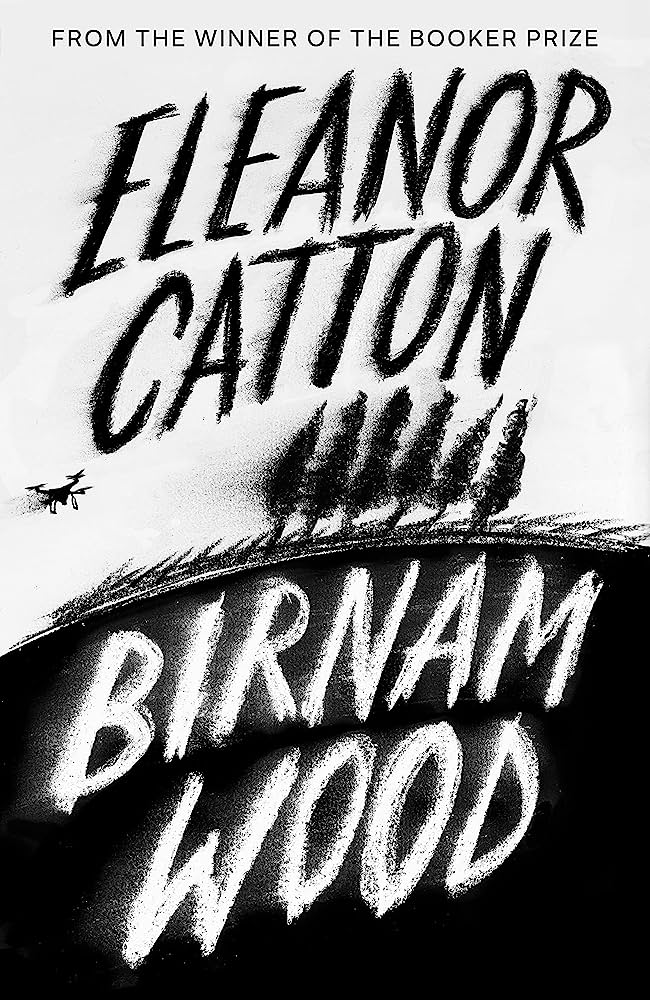

War of a different kind, with Eco-warriors centre stage is the subject of Eleanor Catton‘s Birnam Wood. Full disclosure. I borrowed this edition of the book from the library, then discovered that the BBC was currently serialising it, so – unusually for me – I ‘read’ it courtesy of BBC Sounds. And I didn’t enjoy it. Could this partly have been that the resident ‘baddie’, the American tech billionaire’s voice was so clearly that of a man dripping evil that any nuance the book might have had was lost? In the Good Guys’ (not Shining White Good Guys) corner were the members of a guerilla gardening group who want the land not as a bolt-hole or a secret mining project as American Lemoine does, but to pursue their aims. Lemoine’s drones and techie spyware sees all. Then there’s ex-guerilla Tony, and investigative reporter … and Owen, a self-made pest-control business man, whose wife actually owns the farm on which the land in question is sited, and who is willing to sell. All of these, with conflicting aims and ambitions were in the mix. The verbosity and proselytising of many of them lost me early on. The characters were thinly-sketched ciphers of Types, and I warmed to none of them. The ending was an excitingly gruesome one, but for me it was just a relief that it heralded the end of the story.


Another consequence of war. Refugees. Asylum seekers. These are the subject of Jenny Erpenbeck’s Go, Went, Gone. Richard is a widower, a retired professor of Classics in Berlin in the former East Germany. His life seems – to him as well – somewhat purposeless. One day he happens upon a demonstration in town by a group of refugees from various African nations who have camped out there. This is a world of which Richard knows nothing, but his interest is piqued, and gradually, reluctantly at first, but then with increasing passion, he comes to know them and something of their stories. Of their families, lost to them, or killed in frightening circumstances. His life acquires a purpose: helping the men fight their corners, seeking funding. He discovers his own country’s dark past, the prejudices still alive and powerful among politicians, many of the general population and his own friends. He finds a legal situation where each country with whom the asylum seekers have contact have a get-out clause enabling them to move these men on to somewhere else. This quietly, lyrically told told but urgent story is an indictment of that system. Absolutely nothing has got better since 2017, when this novel was published. Required reading for Suella Braverman and readers of the Daily Express.
Unusually, there is a further link between all these books. I’ve read them all in the last month, and with one exception, wholeheartedly recommend them: especially the Winn and the Erpenbeck.
Next month’s starter book is Anna Funder‘s Wifedom, which examines the life of George Orwell’s wife. It’s well reviewed here, and I’m looking forward to finding a copy.
And finally, those of you whose TBR pile totters and becomes more unstable by the day might enjoy the cartoon highlighted today in Brian D Butler’s Travel Between The Pages.

 From Pyrenees to Pennines
Did you see the TV series based on A Spy among Friends? Excellent! Great chain, and I’d love to read that Erpenbeck. I read her “Visitation” and was blown away!
LikeLiked by 1 person
I didn’t – I wonder if it’s on i-player? This was my first Erpenbeck, but it certainly won’t be my last. Just off to read your chain!
LikeLiked by 1 person
It’s currently on ITV and available on catch-up. It was very good. Great chain too!
LikeLiked by 2 people
Thank you on both counts.
LikeLike
I would read all of these except the Eco-warriors, Margaret. I know our times have their difficulties but we are so lucky not to have lived through those wars. I’ve read many harrowing accounts, and others with a more light hearted approach to a dark subject. I recently finished Strangers in Venice by A.W. Harton, which is a bit of a Da Vinci code ride. Not entirely convincing. I feel quite ashamed of myself because there’s been a book fair on the riverside here for the last week or so and I haven’t managed a proper browse and buy yet. It opens at 8.00 in the evening- too hot in the day- and I’m often elsewhere. I must catch it tonight. Happy weekend!
LikeLiked by 1 person
You too Jo – and I hope you catch that book fair! I’m not a Dan Brown fan so Strangers in Venice might not be my thing, unless this author can rival the fabulous Donna Leon’s evocation of that city, and her Commissario Brunetti, with whom I’m more than a little in love.
LikeLike
Me too 🤗🩵
LikeLiked by 1 person
Girls, girls….settle down now
LikeLiked by 1 person
😉
LikeLiked by 1 person
😂
LikeLike
Not sure I’d want to be the wife, Sue. He’s always home for lunch 😋 🩷
LikeLiked by 1 person
😄😄😄😂
LikeLiked by 1 person
Rubbish Jo! She loves her job at the university, she loves to cook. It’s a relaxing way to live. Well, cooking’s how I relax, anyway.
LikeLike
Not me, Margaret! Having dinner on the table every day is stressful. I’d get the spaghetti sauce wrong.
LikeLiked by 1 person
What a shame. It was how I liked to relax after a hard day at work. Less fun now, but still.. It’s just the luck of the draw. Son and one daughter love it too, and one is like you.
LikeLike
My son loves to cook, the daughter loves to make cakes.
LikeLiked by 1 person
What an interesting chain! I haven’t read any of these, but In Memoriam sounds like it could be my sort of book. I remember enjoying Eleanor Catton’s The Luminaries, but Birnam Wood hasn’t appealed to me at all. It sounds as if I’ve been right to avoid it.
LikeLike
Great chain, Margaret, particuarly that last sentence. I couldn’t agree more! Also pleased you enjoyed The Rachel Incident (I’d recomend Belinda McKeon’s Tender which has similar themes but is more sober) and thanks for the warning re the Catton.
LikeLike
Well, lots of people seem to be rating the Catton, so don’t necessarily believe me.
LikeLiked by 1 person
We seem to have broadly similar tastes so I’ve taken note!
LikeLiked by 1 person
I certainly always trust your reviews. You Know What I Like!
LikeLiked by 1 person
I always find at least one book that really appeals to me in these posts of yours; this time it’s In Memoriam which I’ll definitely seek out. Maybe A Spy Among Friends too – I watched the TV series but it might be interesting to read the book as so often they are more nuanced than TV is able to be.
LikeLiked by 1 person
As I said to Sue, In Memoriam is a book that will definitely stay with me, and it’s her first publication too. Extraordinary. I’m going to hunt out the TV programme about Philby too.
LikeLiked by 1 person
So many from your chain pique my interest this time–Go, Went, Gone as I have been reading a little about the predicaments of refugees and asylum seekers recently; also In Memoriam as my current read is around the Second World War (and Indians who served in it) as also Search Warrant. An interesting and very relevant chain!
LikeLiked by 1 person
It is a chain stuffed with books I really enjoyed and want everyone to have a chance to read. Your book about Indian soldiers in WWII sounds interesting.
LikeLiked by 1 person
It’s called Farthest Field and is sort of between nonfiction and fiction. The author starts of tracing the stories of his family–grandfather, grandmother’s brother, and grandmother’s brother in law, all three of whom served and through them of other soldiers. I hadn’t realised how close the war had come to the south of the country till I read this, though I was aware of some islands which the Japanese had taken over. I should be reviewing it in a day or two.
LikeLiked by 1 person
I’ll look out for it – thanks.
LikeLiked by 1 person
Another interesting selection…I am drawn to two…Spy among friends and In Memoriam which sounds ver interesting. Like you, I am quite well versed in WW1 literature, but am intrigued to see what this might add.
LikeLiked by 1 person
In Memoriam may end up as one of my books of the year. It’s extraordinarily well realised. I was absolutely there, in the battlefield. Not a great place to be of course, but I had the luxury of closing the book.
LikeLiked by 1 person
Well, I still haven’t finished Gabriel Chevallier’s Fear….can only manage bite sized bits at a time
LikeLiked by 1 person
Fair enough. Some books are harder than others to put down though.
LikeLiked by 1 person
Oh, it’s good, but harrowing
LikeLiked by 1 person
Several of my choices were this month.
LikeLiked by 1 person
Indeed
LikeLike
Interesting to hear your views on a couple of books on my radar. You might have provided the final straw to make me skip Birnam Wood – “characters were thinly-sketched ciphers of Types” is something I am not keen on. In Memoriam, on the other hand, has moved up a notch on my list.
LikeLiked by 1 person
I do hope so. I found it In Memoriam well written, well researched and thoughtful. I’m feeling guilty about Birnam Wood. It seems to have received plaudits, and I’ve roundly condemned it. Ah well!
LikeLiked by 1 person
I’d already seen other reviewers being disappointed with Birnam Wood, so don’t feel guilty!
LikeLiked by 1 person
Margaret, another great list of books I’d love to read, and I would if it weren’t for the books I already have! Loved the cartoon to put icing on the cake for your post! I laughed because it hits so close to home, have a wonderful weekend.
LikeLiked by 1 person
Thanks. You too. Soooo chilly though. It’s a fun cartoon, isn’t it?
LikeLike
A fascinating chain as always, Margaret. I have read none of them so far and probably won’t read the Catton one anyway. I struggled through The Luminaries; too involved with too many characters who had no appeal for me.
LikeLiked by 1 person
Ooops. My reply to you has done a runner. Nope, Catton isn’t someone I’ll be hunting for again. Too many books I really want to read out there!
LikeLiked by 1 person
Cool chain, and it’s neat that you managed to use books read so recently!
Nice to see Modiano here, though I’m ashamed to say I haven’t read this famous one!
I was very impressed by Erpenbeck (https://wordsandpeace.com/2015/03/28/iffp-2015-review-the-end-of-days/), and I really want to read this one
LikeLiked by 1 person
I don’t need asking twice to read more by Erpenbeck. I was so impressed. And Modiano? His turn will come!
LikeLiked by 1 person
Oh, I forgot to say. Your review of the Erpenbeck drew me in.
LikeLike
Strangely, that cartoon has been drawn to my attention before! I could read any of these except the Catton. I am still scarred by drawing the short straw and having to lead at book group on The Luminaries. Turned out that i was the only one to finish it, and that was only because I felt obliged.
LikeLiked by 1 person
I’m beginning to wonder why Catton has made a name for herself. Everyone who’s mentioned her work to me has done so negatively. I shan’t be reading anything more of hers any time soon.
LikeLiked by 1 person
The Butler’s done it again!
LikeLiked by 1 person
I’m sorry you hated Birnam Wood – it’s one of the books of the year for me. However, we agree about Ben MacIntyre! I thoroughly enjoyed that one and am just about to start reading his Operation Mincemeat.
LikeLiked by 1 person
I think some of my dislike came from the narration, but I had started reading it and wasn’t drawn in. You may have noticed other negative observations in the comments. Operation Mincemeat was my first Macintyre and I can highly recommend it.
LikeLiked by 1 person
I LOVE your Six Degrees of Separation posts, Margaret. An excellent collection. I’m back to my non-fiction with “the Collector of Lives: Giorgio Vasari and the Invention of Art by Ingrid Rowland and Noah Charney. I want to read Giorgio Vasari’s “Lives of the Artist” but thought I should have more background on the life of Giorgio Vasari. I find that there is a great deal of romance, comedy and mystery in this book. Always enjoy your books discussions!
P.S. I’m very interested in the story of Kim Philby because of the close connection to another super spy Sidney George Reilly!
LikeLiked by 1 person
Spies are a special breed whom its hard for mere ordinary mortals to understand – but they deliver a good story. The Invention of Art sounds intriguing. Off to follow that up …
LikeLiked by 1 person
I’m playing catch-up, so whipping through posts at speed. But had to pause here and applaud yet another great chain. I do love how you think, Margaret! In Memoriam has been on my radar. With your endorsement, I’m shuffling it up the list.
LikeLiked by 1 person
Do. I don’t think you’ll regret it. Thanks for visiting in your busy life!
LikeLiked by 1 person
You made me laugh out loud with your Birnam Wood review.
LikeLiked by 1 person
Result! Did you happen to hear it on the Beeb?
LikeLike