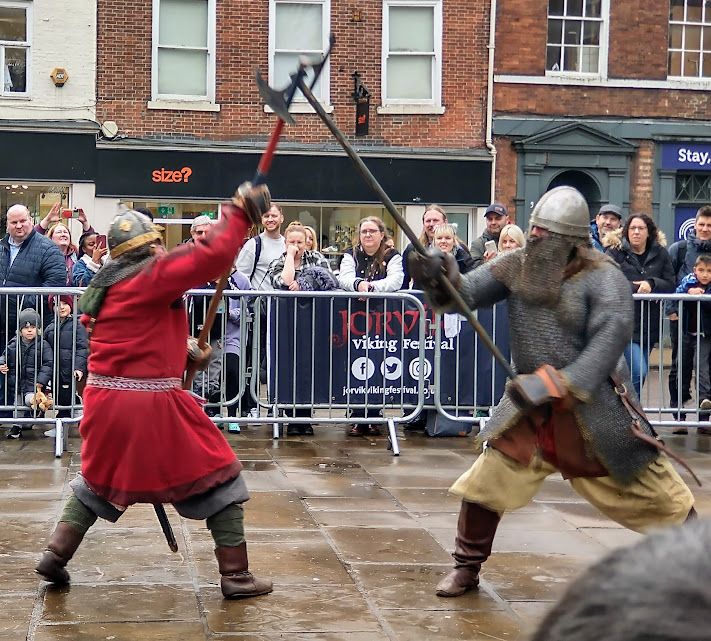
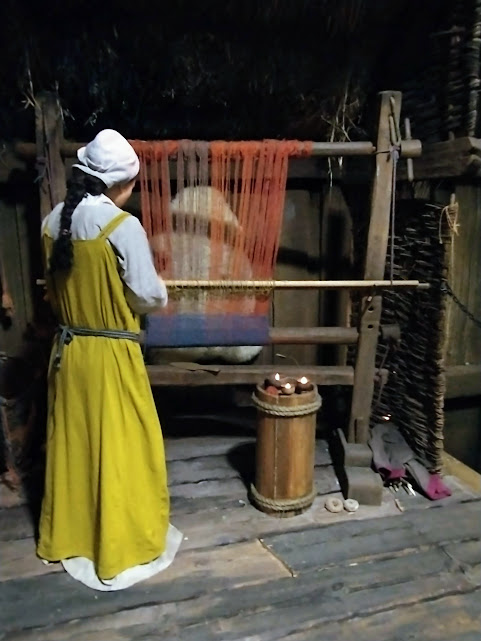
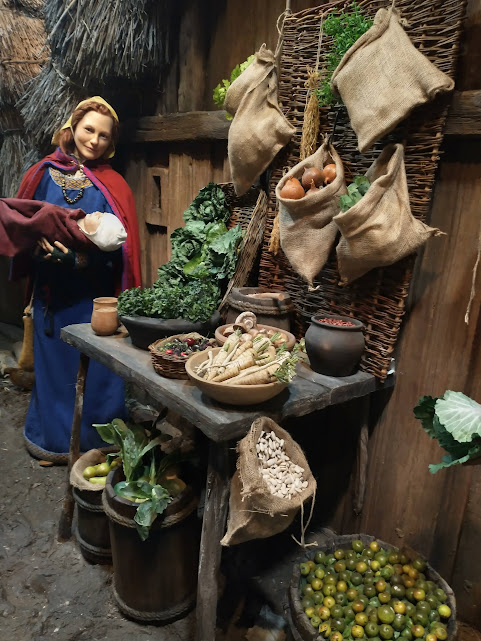
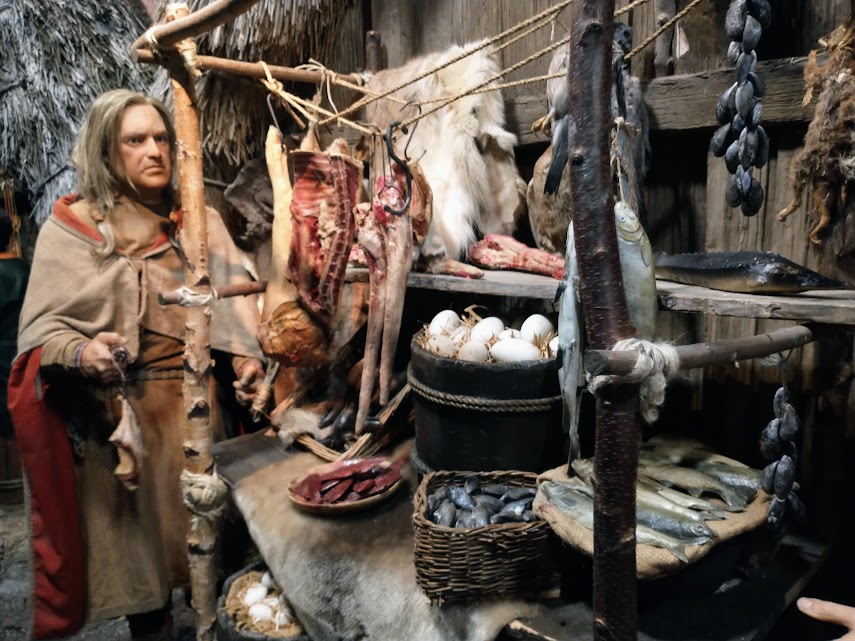
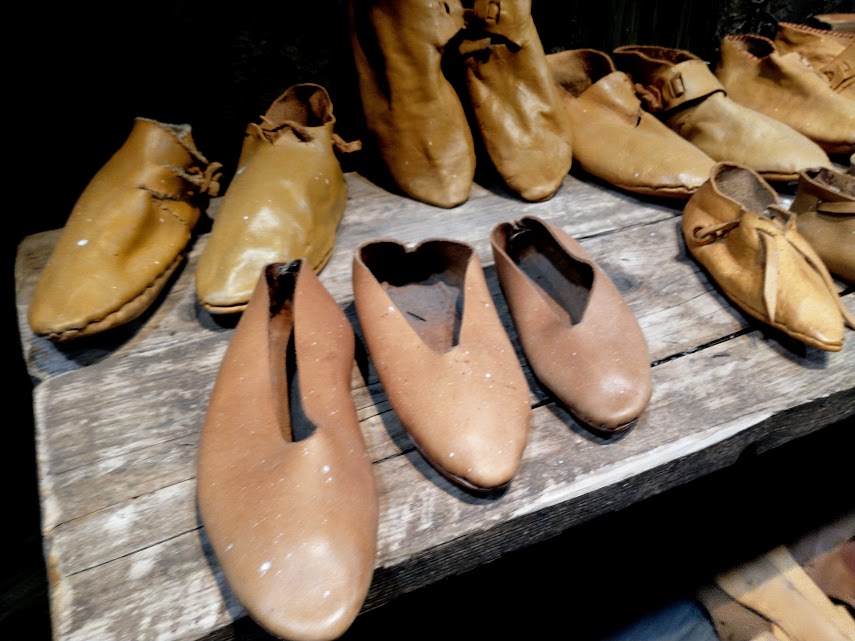
The featured photo shows the Vikings as we always seem to think of them: a bellicose lot of marauders and fighters. In fact they were much like the rest of us – seeking a simple life of home, work and family. A trip to York, the Jorvik Viking Centre and the Viking Festival showed us an everyday story of country folk.
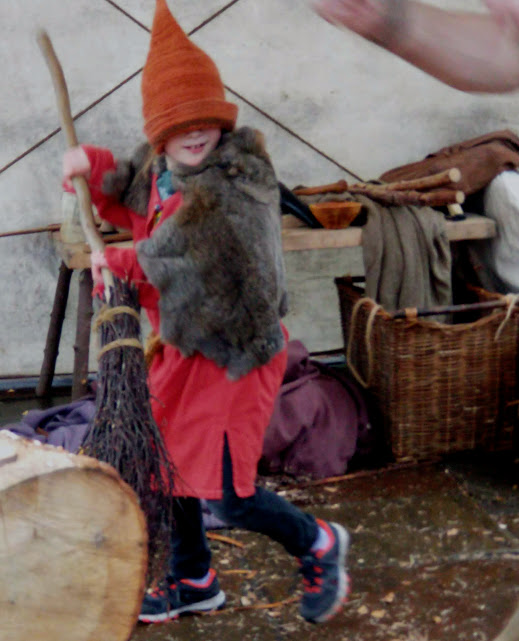
They must have been doing something right. They even had a willing slave in the form of my eight year old grandson cheerfully wielding his broom for his temporary Viking master.
I sent a postcard from Heysham in Lancashire on Monday (pronounced Heesham, by the way, not Haysham). And I found myself drawn to this spot time and again during our short stay.
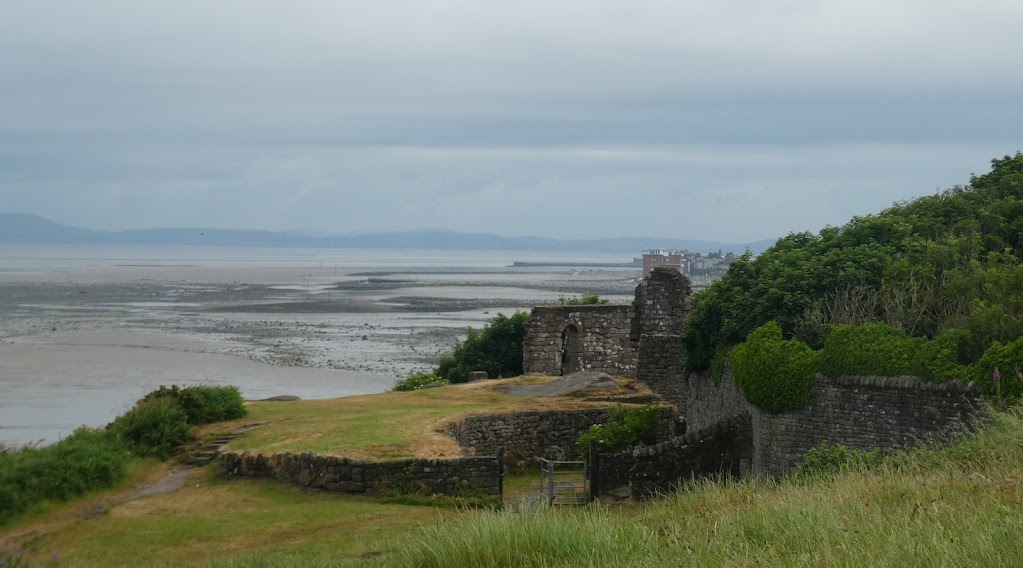
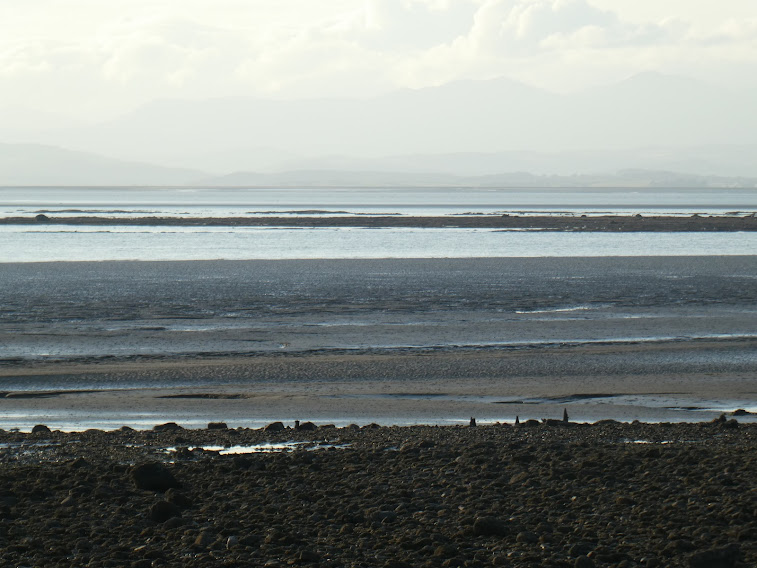
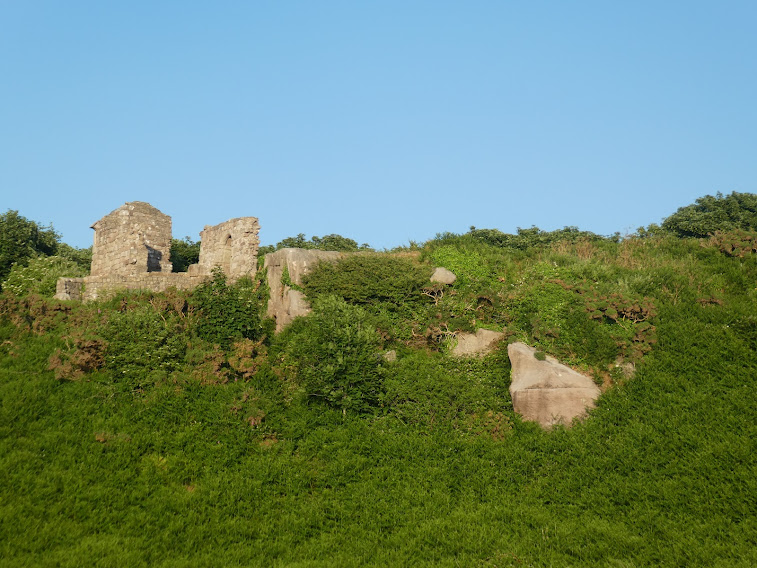
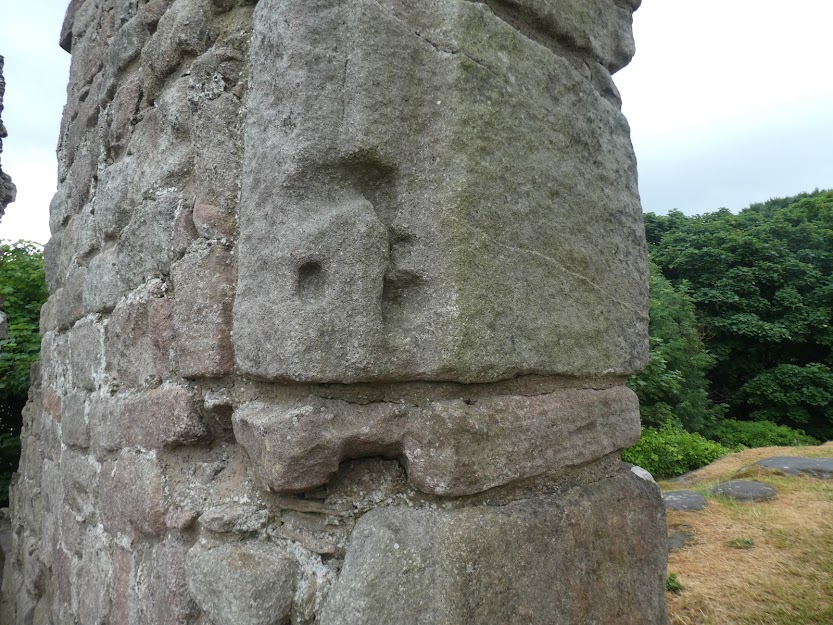
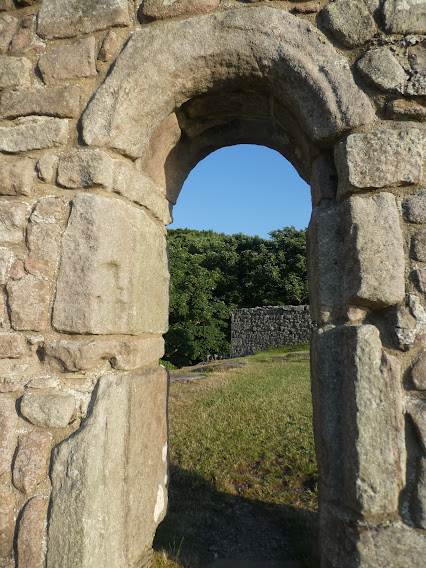
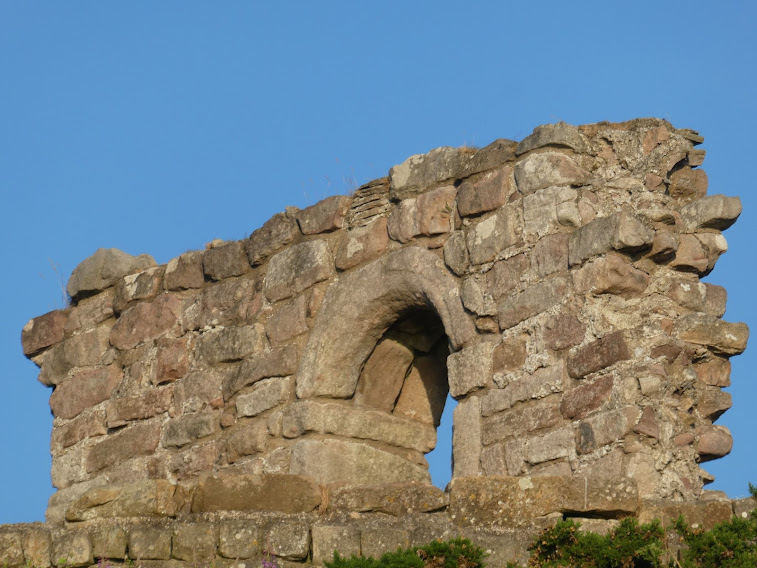
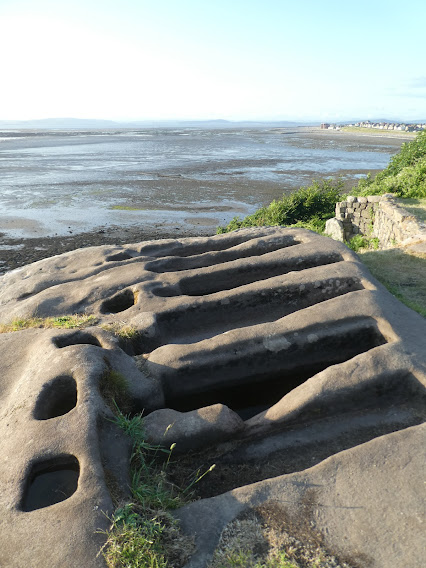
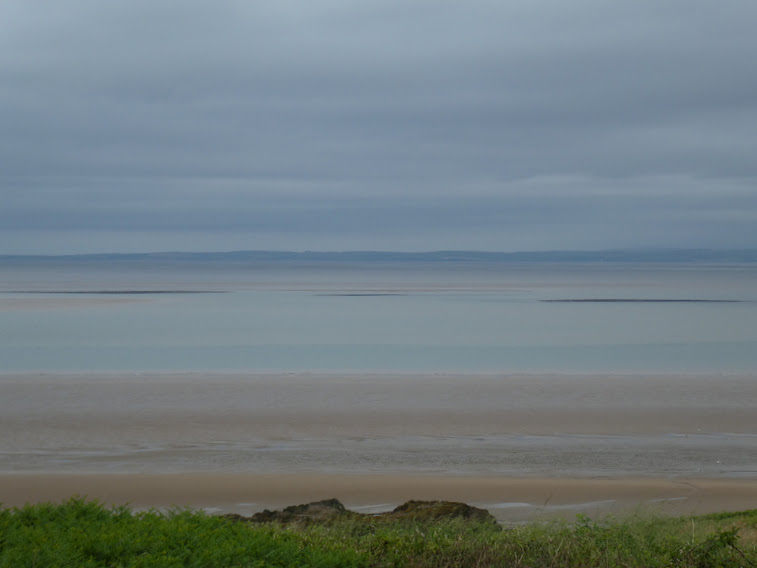
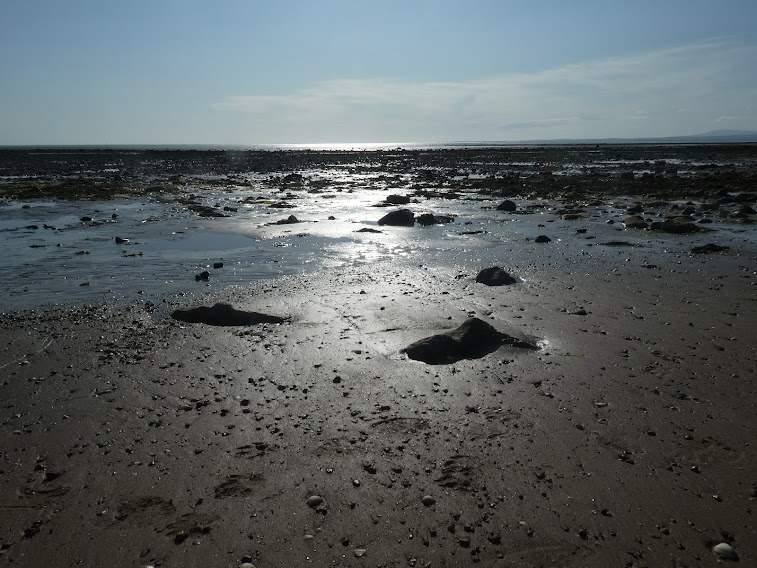
A scrub-tangled cliff-side looked across the stony, muddy shoreline of Morecambe Bay and to the mountains beyond. This was the view the Vikings had as they landed and began to make their homes here. This was the view the early English had as, in the eighth century, they built a chapel right here at the edge of the cliff, and dedicated in to Saint Patrick. Yes, THAT Saint Patrick, patron saint of Ireland. Born in Cumbria, he was captured and enslaved in Ireland. After six years, he escaped and fled on a ship bound for France. But the ship blew off course and wrecked on the English coast – here in Heysham . From here he went to France as planned to continue his religious education before returning to Ireland to convert the population there. The reason for the chapel was probably as a place of rest for those pilgrims who visited the rock-cut graves I showed you in my postcard – and now again, here. As the years went by, the chapel was enlarged and the ground around it became a burial place – over 80 bodies have been found.
And what about those rock-cut graves? Despite their human shapes, it’s thought the bones kept there were disarticulated, and may have been those of local saints and important Christians – even perhaps Saint Patrick himself? That’s why they became a place of pilgrimage. Once, they will have been topped off with heavy stone slabs, and those sockets at the head of the graves would each have held a cross
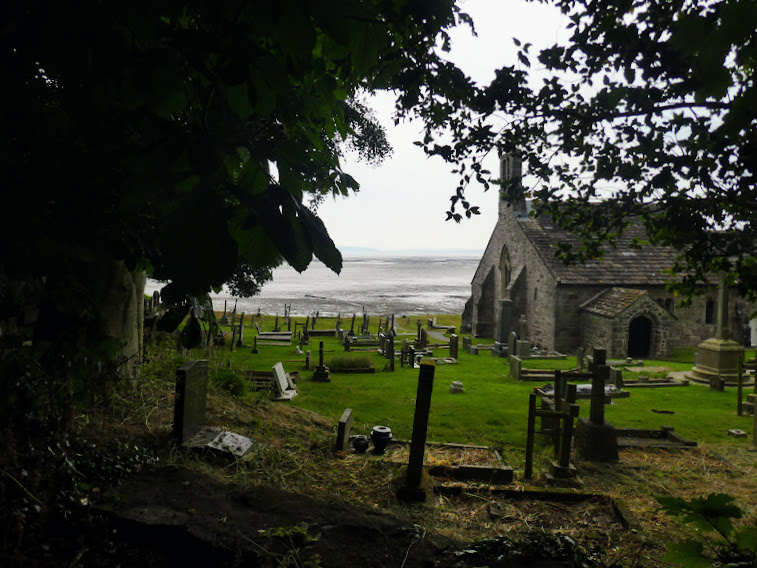
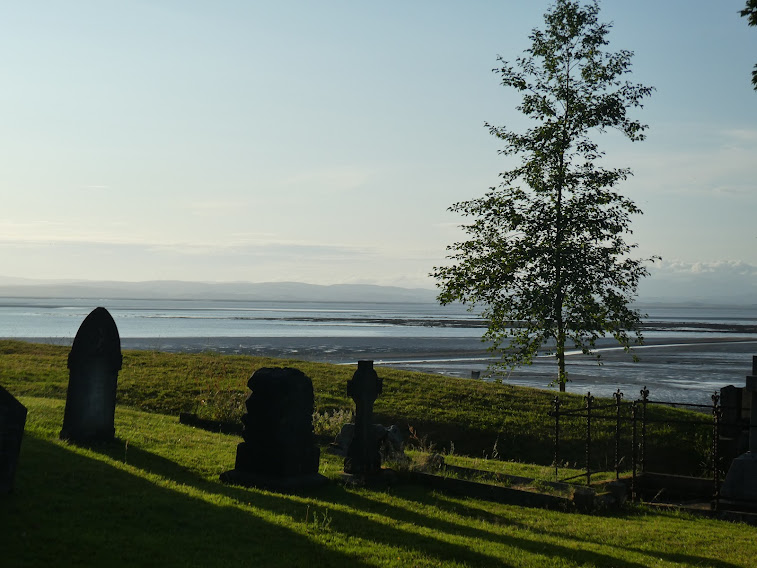
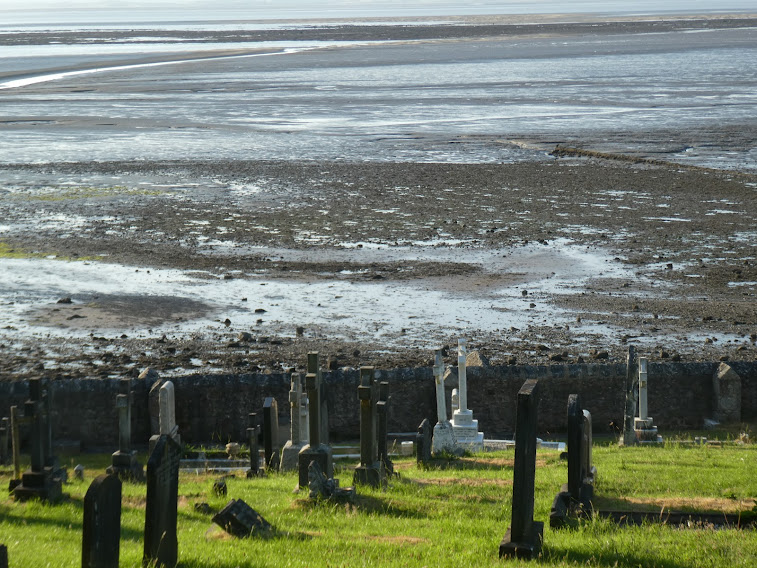
Almost next door is a church. This church, dedicated to Saint Peter also has 8th century origins. I wish we could have gone inside to explore, but we didn’t manage it. Now it’s the parish church, with a graveyard below sweeping down to the sea.
Something about the site ensnared me. Isolated, and with atmospheric light and views, it’s become my choice for Tina’s Lens-Artists Challenge #254 this week: Spiritual Sites.
Way back in what we no longer call the Dark Ages, this part of the world – north east England – was overrun by Vikings. They came, they saw, they settled. They left their mark on the language: villages such as Thirn, Thrintoft, Skeldale, Kirkby, Slingsby, Ainsty all betray their Norse ancestry. Vikings have a reputation for ravaging and plundering, but in fact many of them and their families made their lives here.
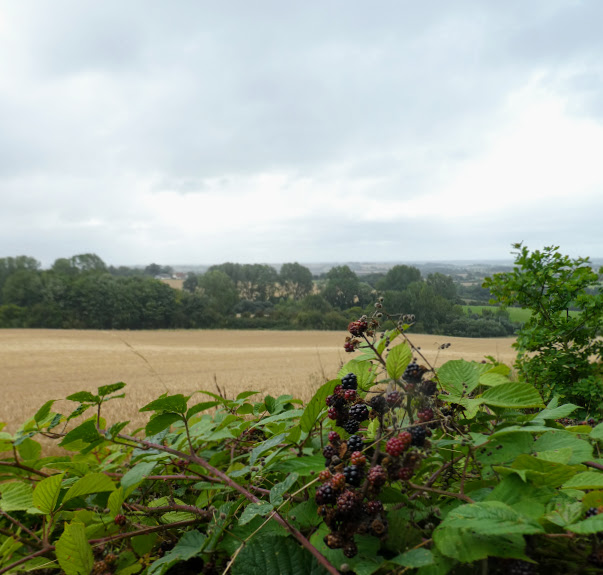
The scenery won’t have been so tidily organised back then.
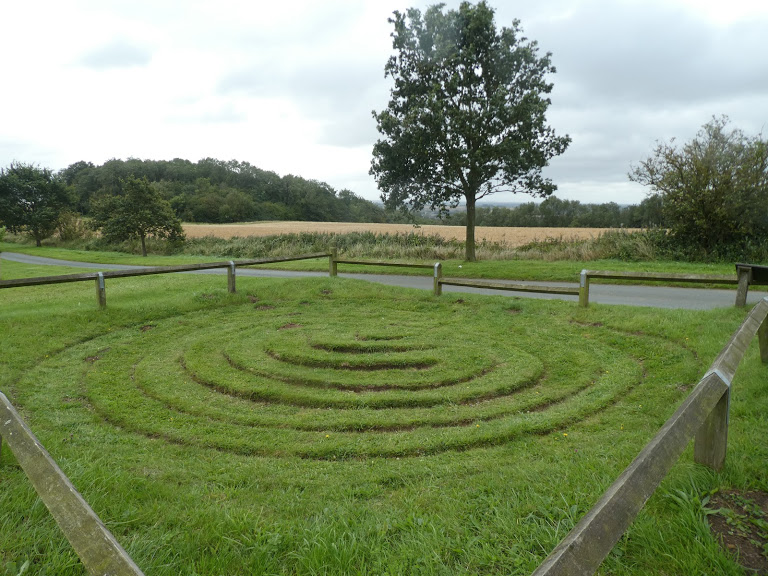
And settlers need some down-time in among the hard work of clearing and working the land and looking after stock: pursuits like this forerunner of the board game, which was played throughout what is now Scandinavia. We found one while walking the Howardian Hills last weekend. It looks like a maze, and it’s called City of Troy.
City of Troy, near Dalby, Sheriff Hutton.
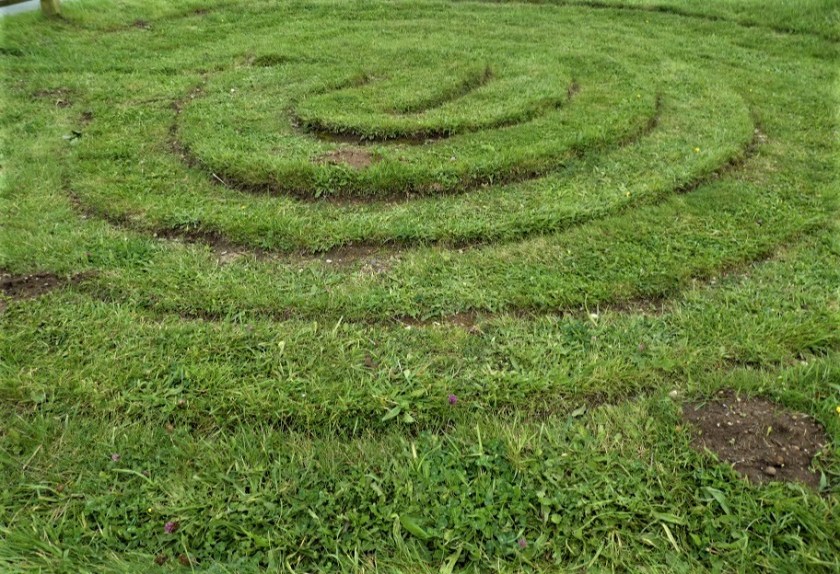
It’s one of only eight still left in England, and this one is the smallest- barely bigger than a large picnic blanket. There used to be one near Ripon apparently, but it was ploughed up in 1827. Nobody any longer knows how to play this game. Why City of Troy? Well, it’s thought that it refers to the walls of that city, which were apparently built in such a way as to prevent unwanted intruders finding their way out. I’m astonished by the idea that the average Norseman (or woman) was up to speed with Ancient Greek history and myth, but what do I know?
A close up view.
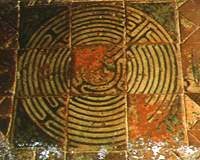
It’s related though to labyrinths found all over Europe. Every ancient culture: Greek, Roman, Egyptian, Indian, Native American – had their own take on this one-way-in and one-way-out puzzle. The labyrinth made its way into mediaeval churches. There was even one in the cathedral local to us in France, in Mirepoix.
The labyrinth in Mirepoix Cathedral.
To Christians of those days, it may have been a symbol of wholeness, and an aid to reflection and prayer. That spiral path within a circle may represent a meandering path, leading us to our very centre, then back out into the world.
The maze game probably doesn’t run so deep. But what its rules were, and when and how it was played, out on a hillside some distance from any known settlement is a mystery that will almost certainly never be solved.




 From Pyrenees to Pennines
You must be logged in to post a comment.