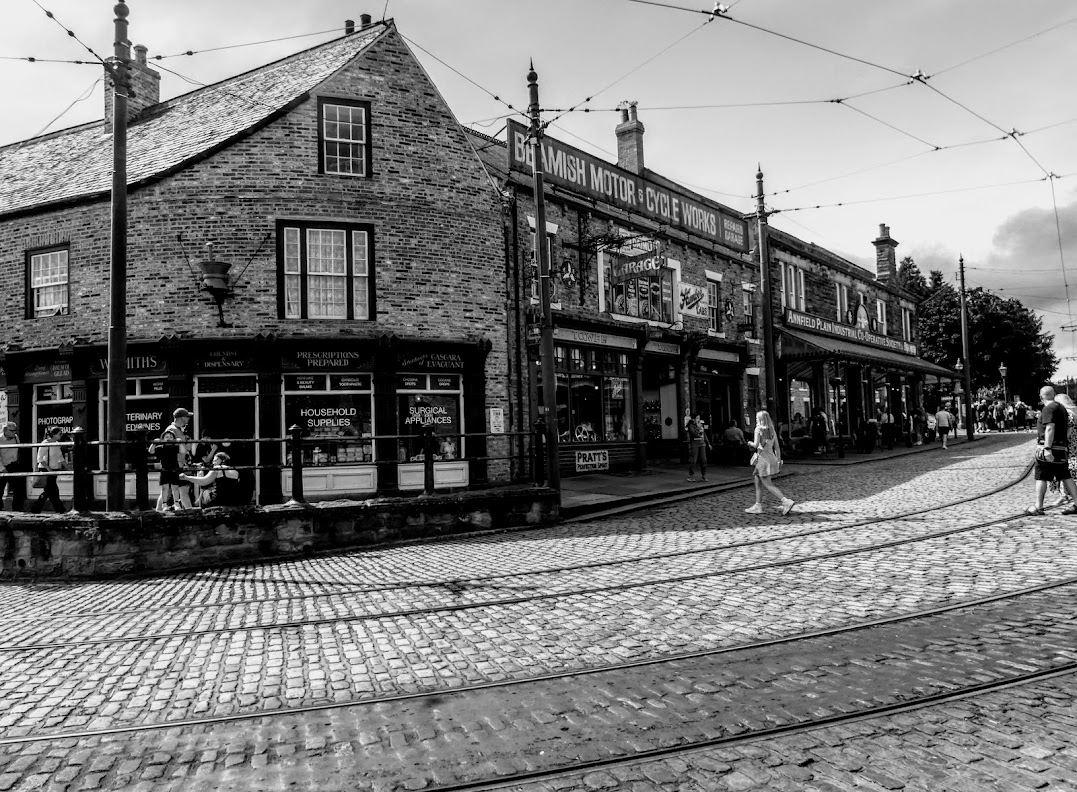
Getting round Beamish on Public Transport

The theme Dawn has chosen for this week’s Monochrome Madness is Transport. That’s a bit of a facer. I’m not the sort of person who ever thinks to take a shot of a car, or be part of a cluster round someone’s state-of-the-art motor bike. I only notice trains or buses if they’re late, and you’ll never catch me on a bicycle.

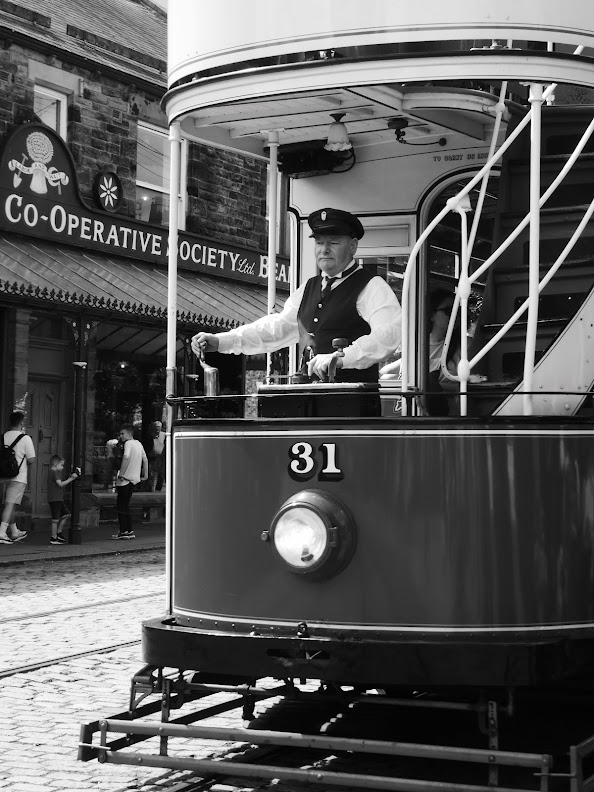
So my best bet seems to be a visit to the past, and a trip we took last year to Beamish, a wonderful open air museum,  telling the story of life in North East England during the 1820s, 1900s, 1940s and 1950s.

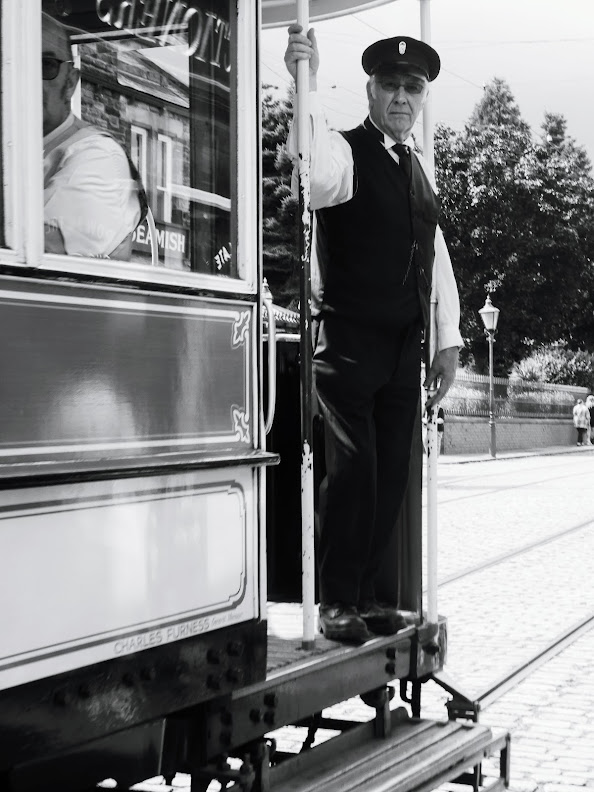
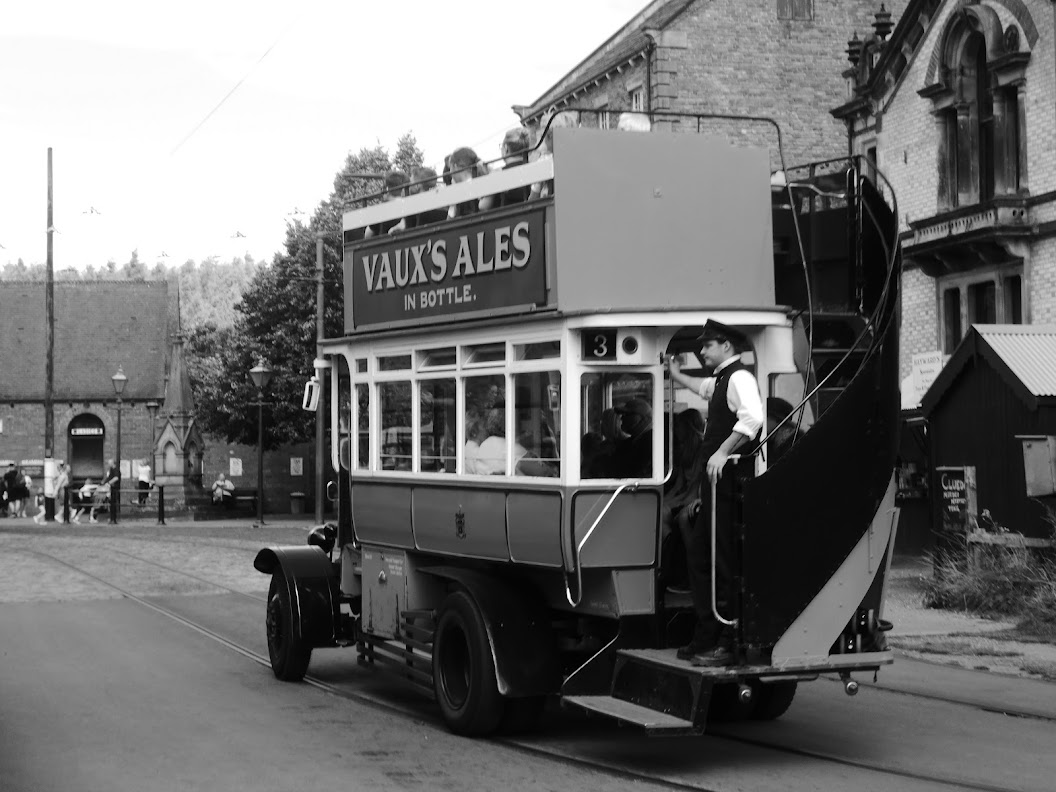
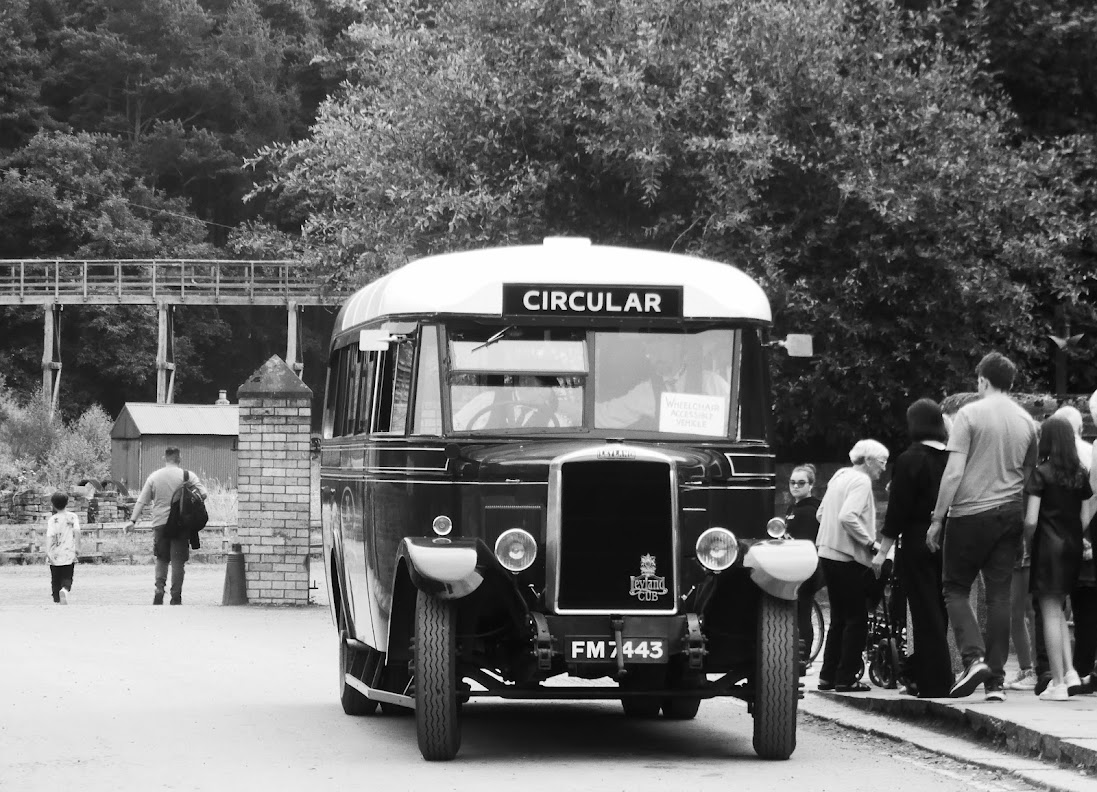
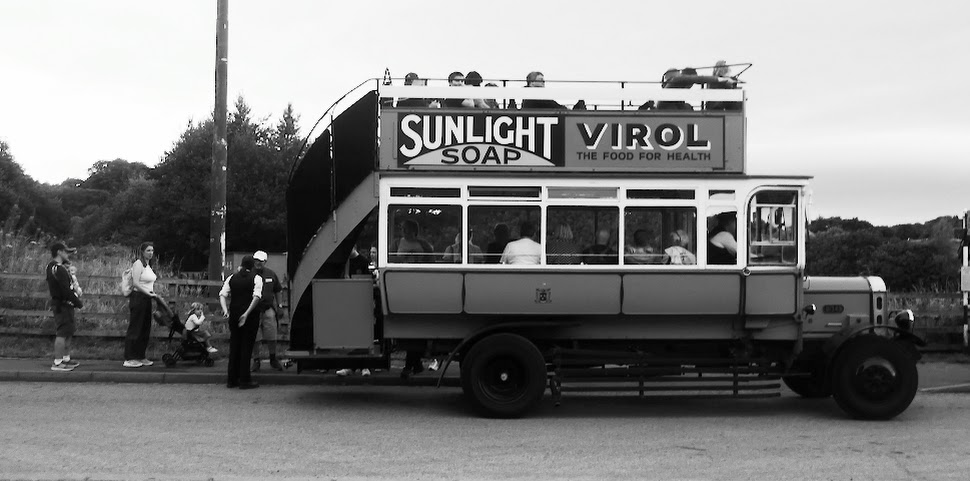
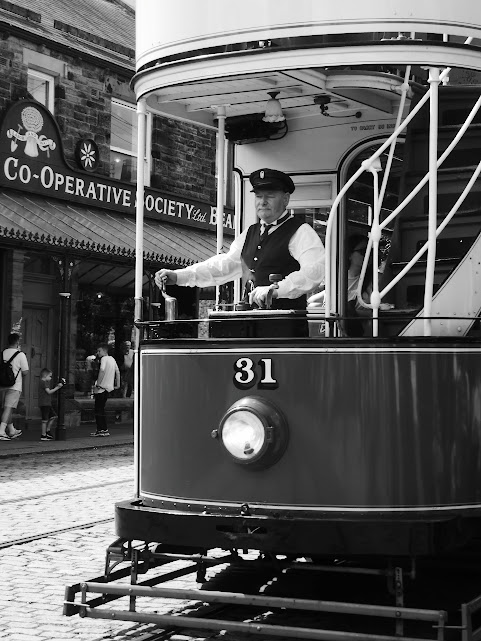
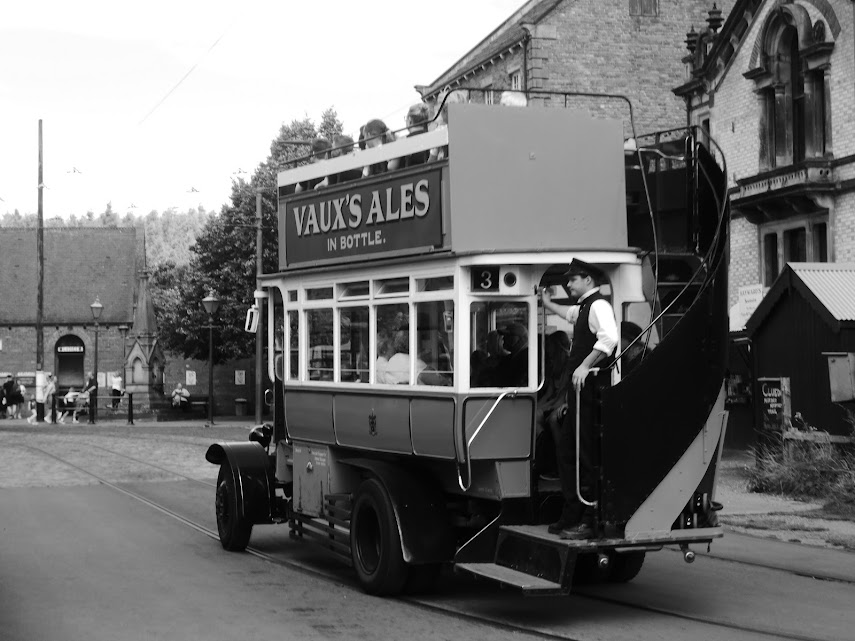
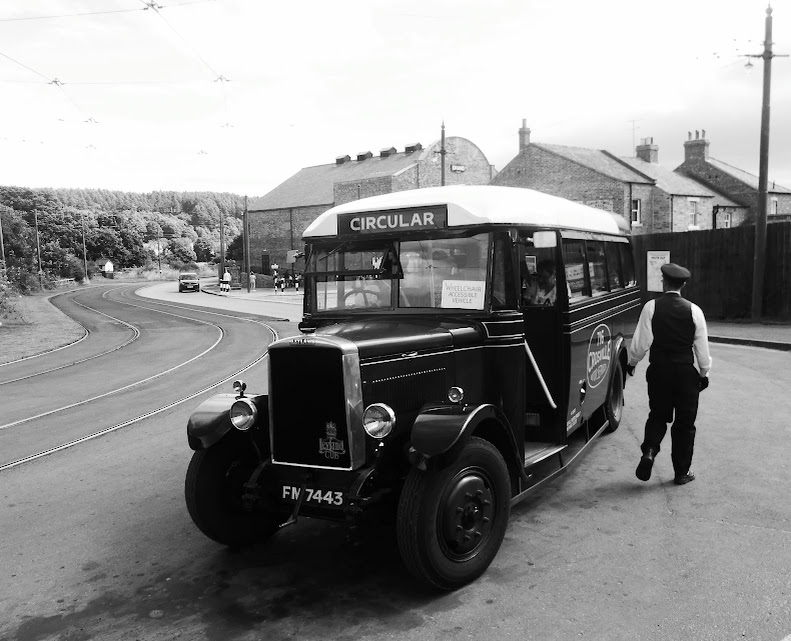
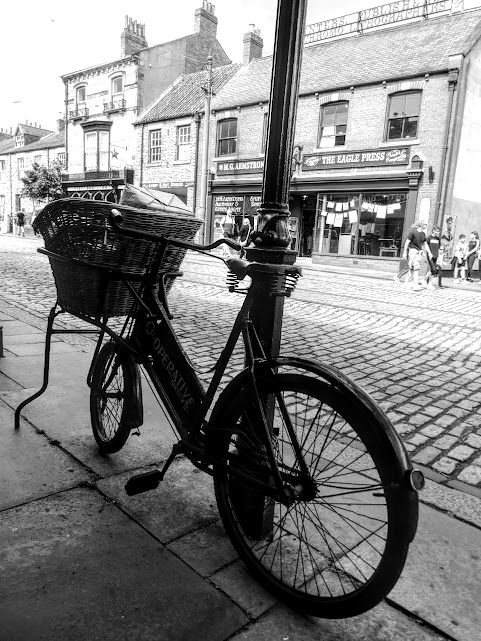
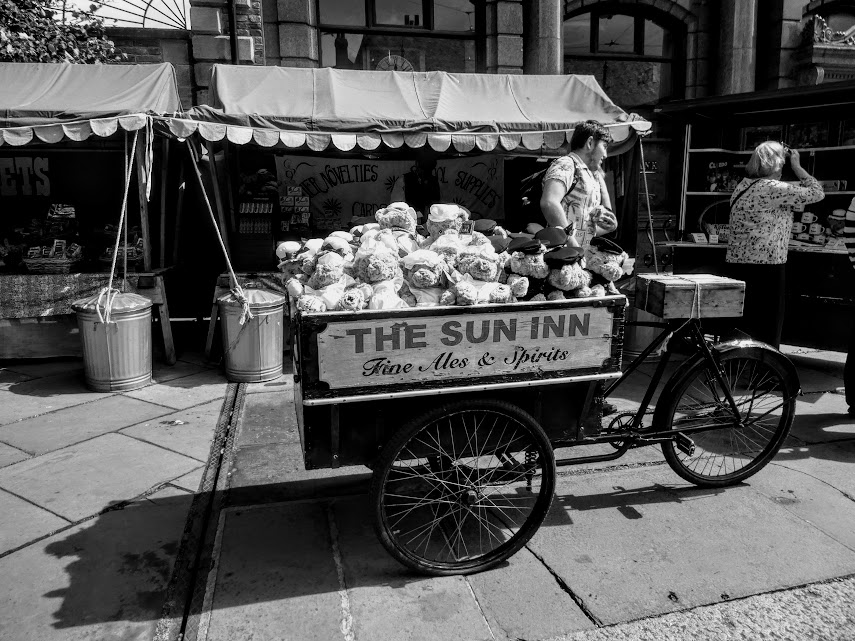
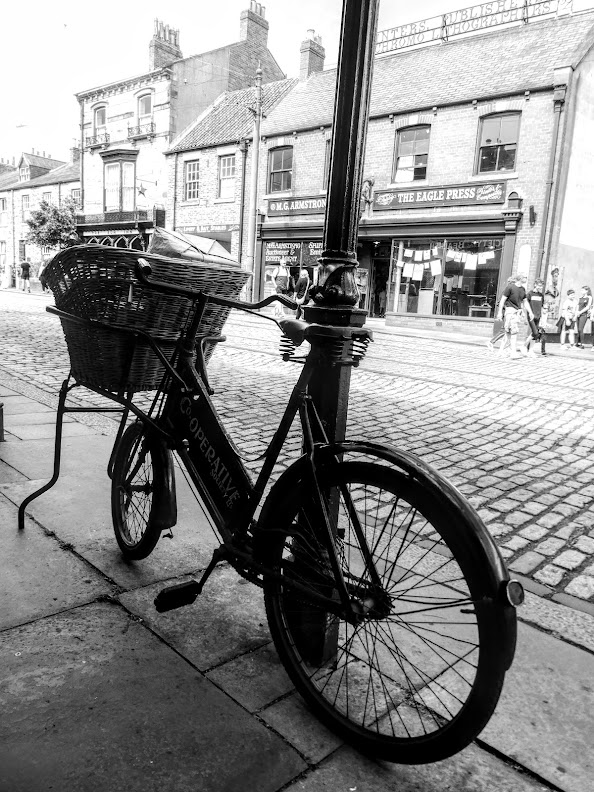
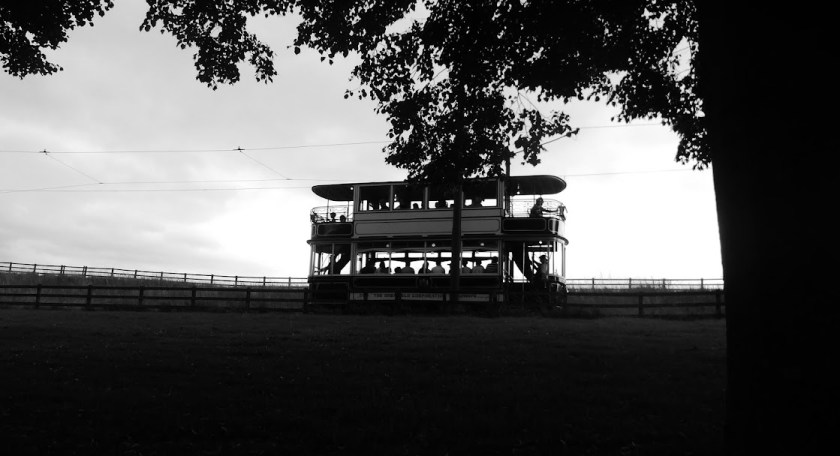
The site is huge, and public (well, public to those who’d paid to get in) transport a necessity. We had fun popping on and off trams, trolleybuses, and single decker buses, and inspecting the bicycles of delivery boys.

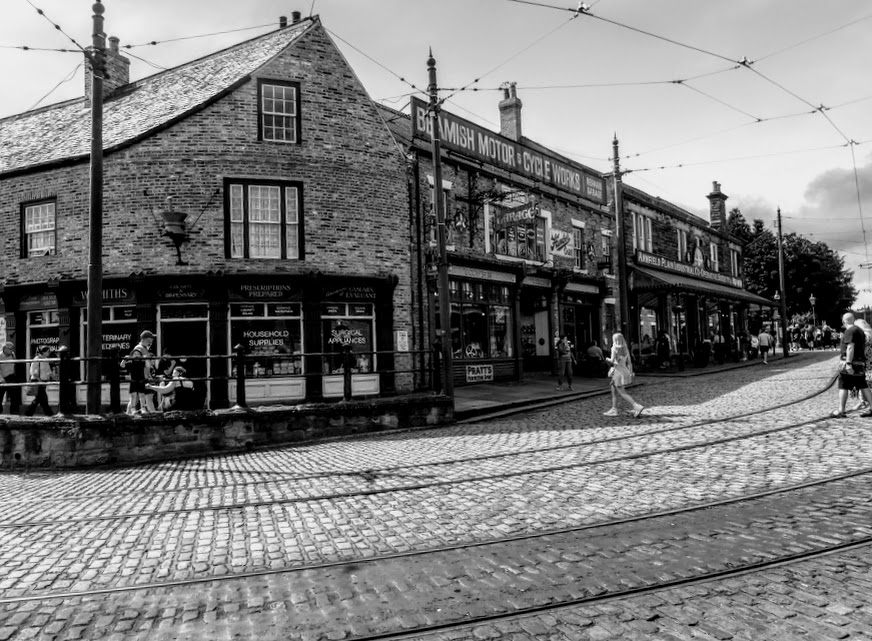
My feature photo shows no trams and bikes. There are tramlines, but what it illustrates is the most common form of transport there is, world-wide. Shanks’s pony. I’m not sure if this phrase has spread as a description of walking beyond the UK, nor am I sure of its origins. There ARE various theories on the internet: but I believe none of them.

Here’s a gallery of all the transport we used as we explored this site.

Trams …
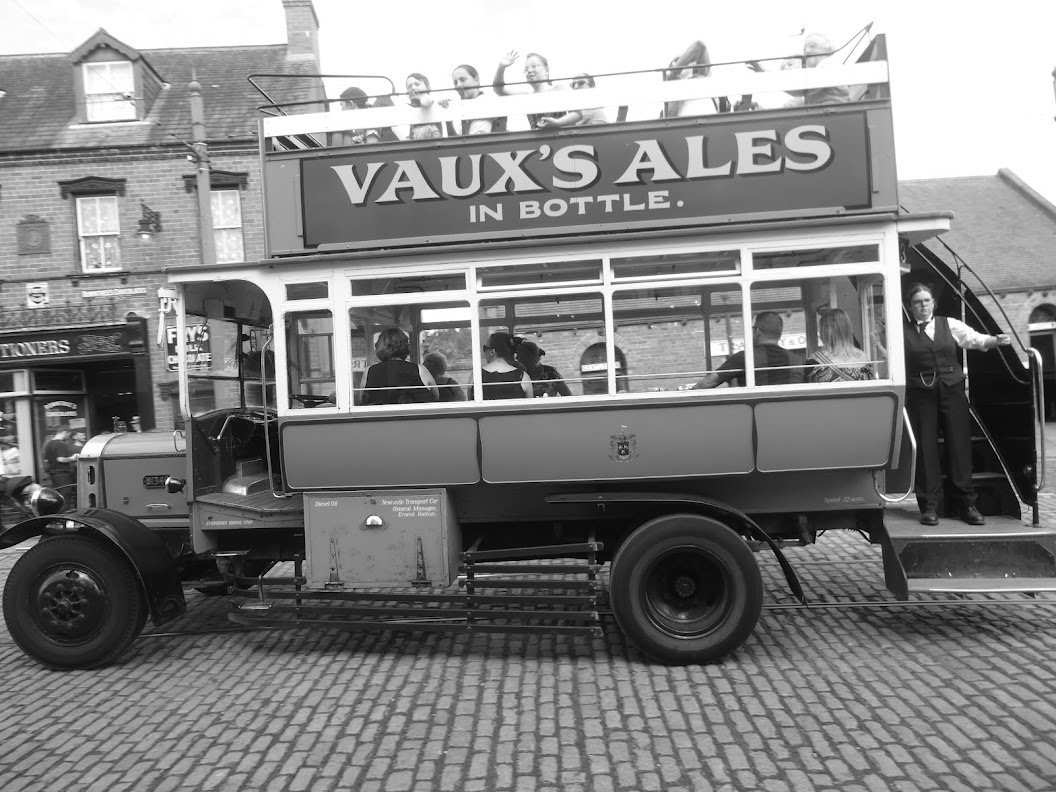
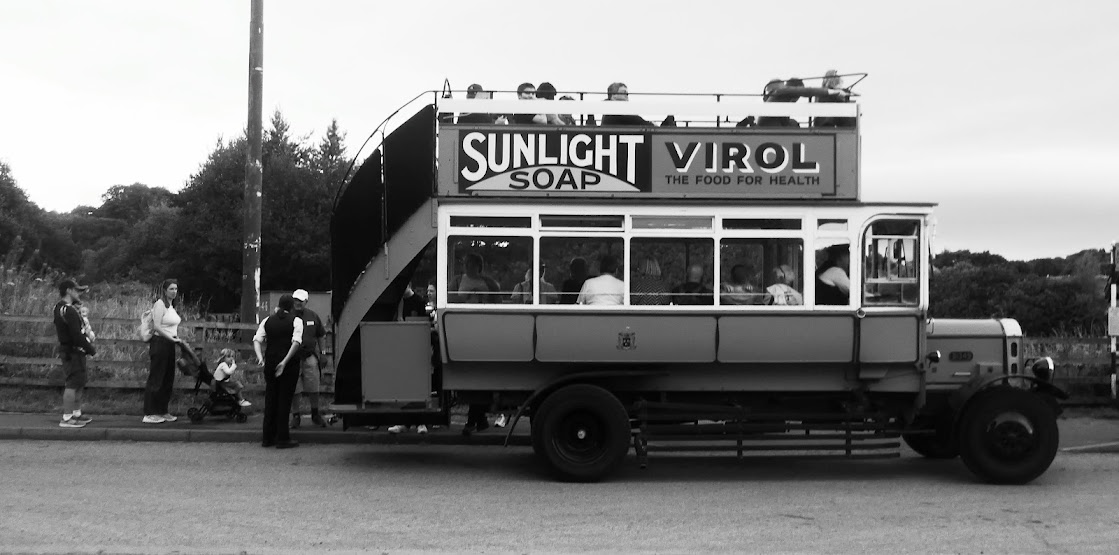
… and buses …

… and bikes.
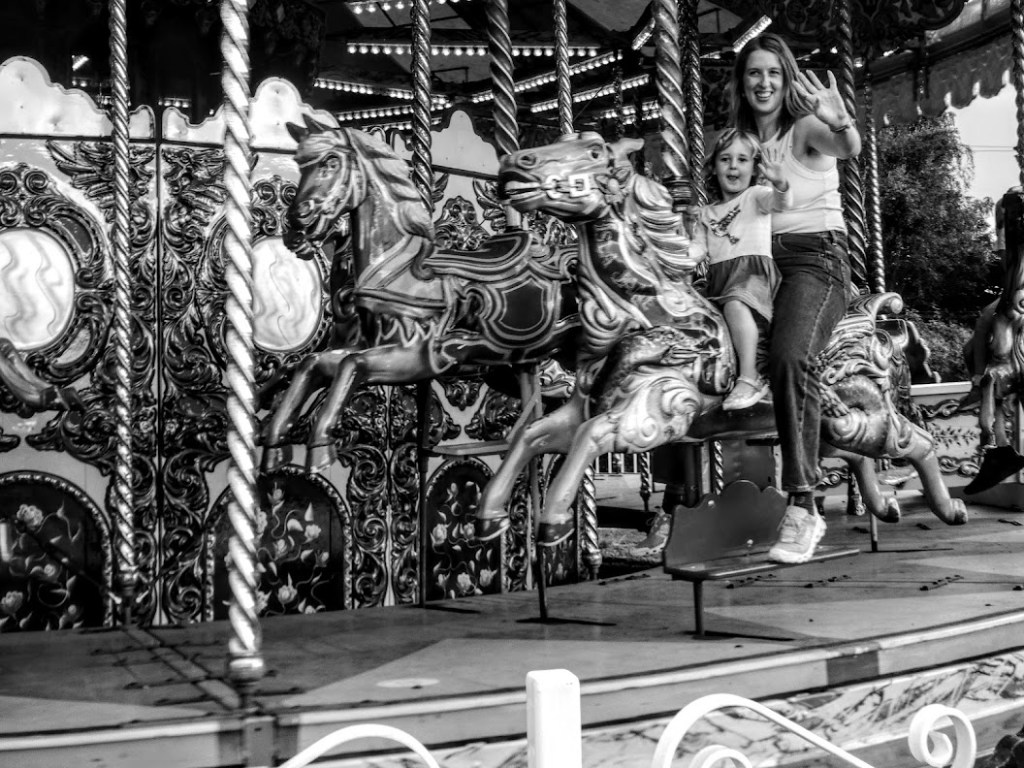
And does a merry-go-round horse count as transport? My granddaughter thought so.
And here’s a final photo, as evening drew in, and people hurried onto whatever form of transport they could find to take them towards the car park, and their journey home.
Time Travel

We went to Beamish the other day. The museum here is an open-air experience which brings the history of North East England from about the 1820s onwards to life. The shops, trades, homes from the different periods on show all open their doors to visitors. The longest queue was outside the sweet shop from the early days of the twentieth century … It seemed the perfect day out for the Spanish branch of the family. Life’s far too busy just now for an extensive post, but here are just a few modes of transport that we saw, and in some cases travelled on during the day. More in a later post, I’m sure.

Midweek Monochrome

Indian Journeys: The Bus to Chennai…..

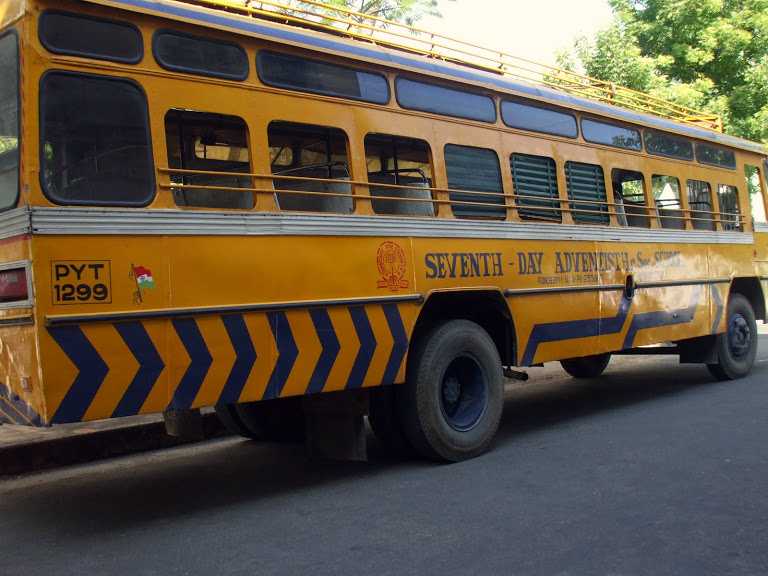
This was not my bus. It’s a school bus, and a smarter version. Sadly, I forgot to take a picture of the one I travelled in.

…. was the sort you see in all the pictures. Unglazed windows with bars across, and an engine that had probably been put together c.1953.  If this coach had been a human body, you’d probably have called it ‘lived in’.  As it was in fact a bus, I’d say it had had a long history of ‘near misses’.  Oh, and it may not have been cleaned since 1953 either.

But the big excitement was a motorway.  Well, perhaps not a motorway, but a toll road anyway, with dual carriageway, a hard shoulder and a central reservation.  The road surface was indifferent, but so superior to anything I had met previously  that I could understand why everyone described it as ‘the fast road to Chennai’.  Here’s what I found out:

Goats eat breakfast in Thanjavur. They’d have done better on the fast lane of the motorway.

  • 2 lanes doesn’t mean slow and fast. Everyone uses both lanes indiscriminately and over or undertakes at will.
  • Goats use the ‘fast’ lane.
  • Cows use the central reservation.
  • Bicycles going the opposite way to the prevailing traffic use the hard shoulder. As do pedestrians.
  • Men pushing handcarts use the main highway.
  • The hard shoulder is also for bus stops.
  • There are zebra crossings. God knows why, nobody ever uses them.
  • Pedestrians cross whenever they want to. Not at the zebra crossings, obviously.

Click on any image to view full size.