The Big Plastic Count

British readers! Did you take part in The Big Plastic Count last week? We did. It involved tallying together every single bit of single-use plastic that we bought that week. The yoghourt pot. And the plastic film that covered it beneath the lid if it was a a big pot. The plastic net bag that the satsumas were in. The cellophaney-plastic that the package of pasta/rice/dried fruit/coffee/tea/you name it was packaged in. The plastic disc wedged into the lid of the (plastic) pot of kimchi. The cling film parcelling up the cheese, bought loose from the cheese counter. And so on.
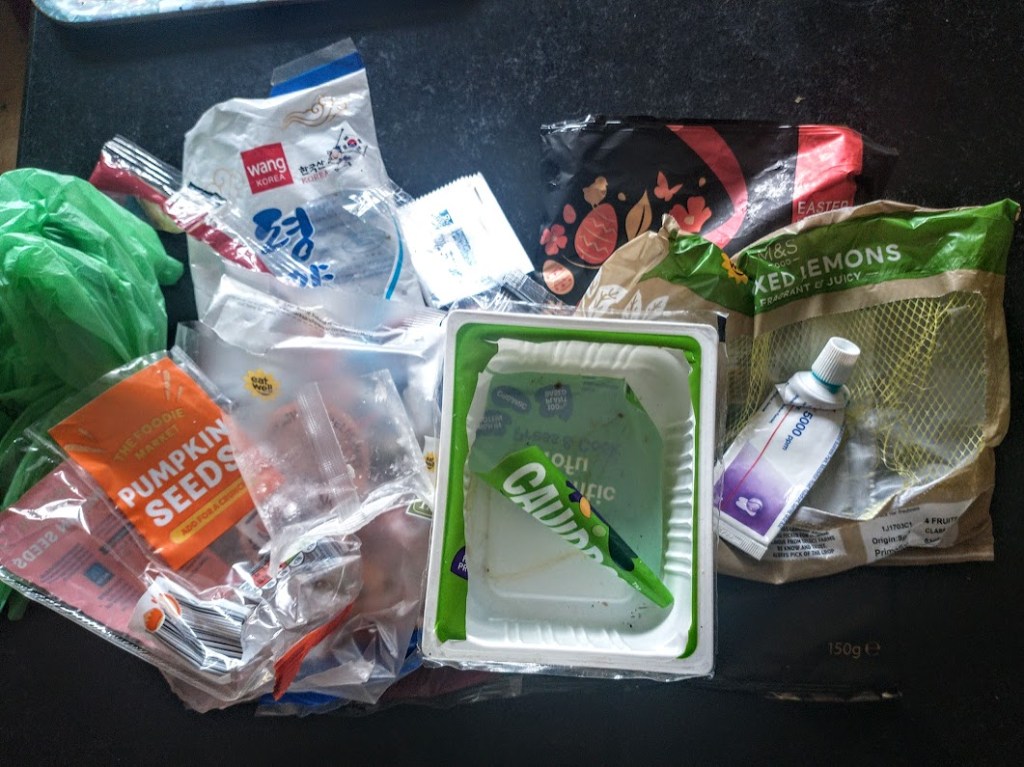
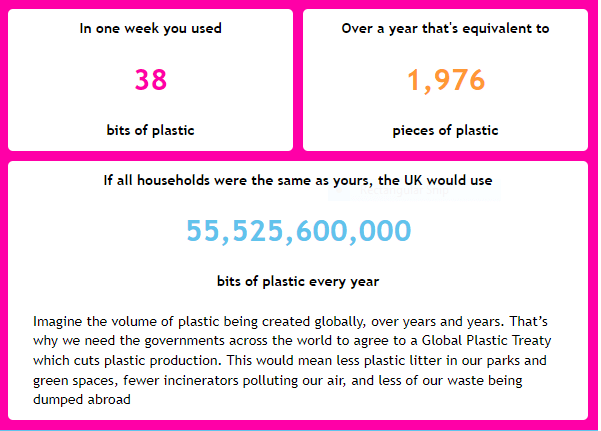
Our haul for the week

So why did we do it? Well. The Big Plastic Count is a Citizen Science project aimed at collecting evidence on household plastic waste to pressure government and supermarkets to take action. It challenges the idea that solving the crisis is purely a personal responsibility, arguing for systemic change to reduce plastic production.

So we and hundreds of like-minded individuals, school students, cubs, brownies, scouts, guides, U3A groups and so on tracked our plastic waste for one week to build a realistic picture of how much plastic is thrown away and what happens to it, highlighting that much less is recycled than widely believed.

Past results showed that only 12% of UK plastic waste is recycled, while 45% is incinerated, 25% is landfilled, and 17% is exported.

Honestly, we try to be plastic free. We buy unpackaged goods where we can, use our local refill shop, never use products like clingfilm. But still we assembled 18 pieces of plastic last week.

Litter is a whole other issue. Living in the country, as we do, albeit along a main road, the quantity of plastic bottles, crisp packets and other packaging that we see on any roadside stroll is truly shocking. The same applies to a beachside walk.
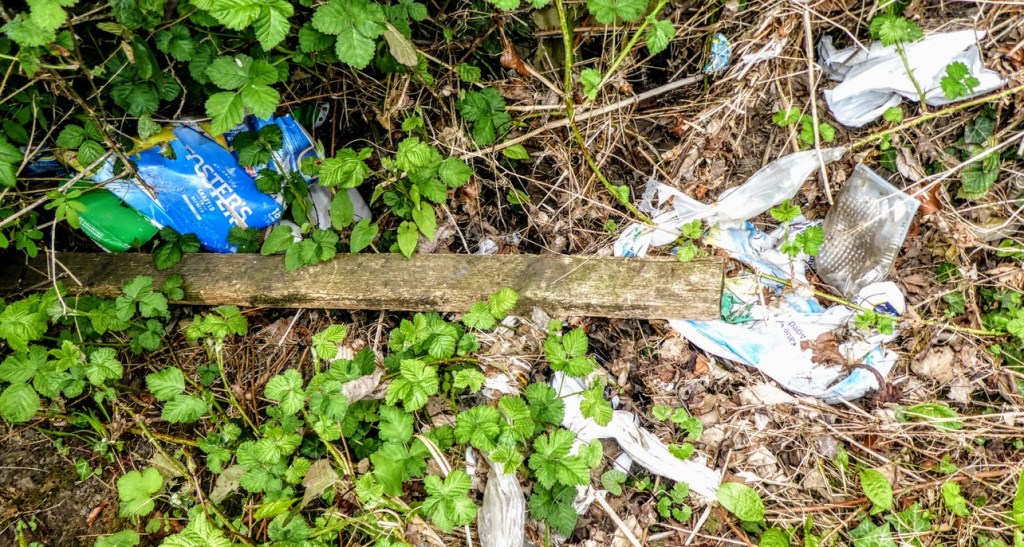
Local litter

On a personal level, this audit encouraged me to redouble our efforts to cut out single-use plastic. Whether our results, gathered countrywide, have any effect on either government or supermarkets remains to be seen. And whether the world will eventually be knee-deep in plastic waste, as we ingest a daily diet of micro-plastics also remains to be seen.
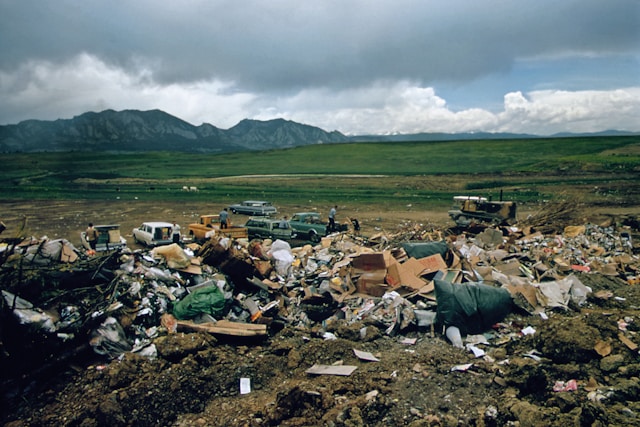
A scene in America; courtesy of Documerica, via Unsplash

The Big Plastic Count

Honestly, we do try. Our weekly vegetable shop is a seasonal organic veg. box from Riverford, which arrives in a re-useable cardboard box and nowt else. We supplement this with a trip to the market, taking our own packaging. Household and bathroom products such as washing up liquid and shampoo come from the refill station at our local GreenHouse. But still plastic packaging enters the house – every time we visit the supermarket actually. The cheese that’s packed in plastic: the odd box of blueberries: the package of pitta bread … and so on and so on.

This week The Big Plastic Count invited us to join in and count all our plastic waste for one week only. So we did. It was tricky, because the family from Spain was here, and spending our time with our three year old granddaughter and her two month old baby sister was the priority. But we bunged everything in a sack, and with the family now gone, made our inventory this morning.

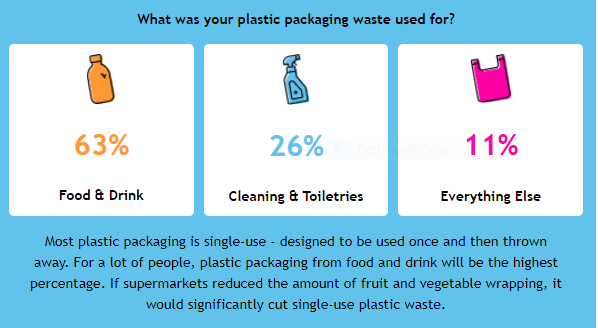
And it was shocking. The smoked mackerel we can’t buy loose; the toothbrush pack (I haven’t embraced the bamboo toothbrush); the pizza bases bought for an easy supper that three year old Anaïs could help create … and so on. Here’s what we learnt.

Like almost everyone who took part, I imagine, we do try to think about what we buy, and avoid packaging where we can. Yet our plastic footprint is huge – larger this week no doubt because of our visitors. What about those who because too busy or lacking motivation have an even larger footprint? Shops – especially supermarkets – and manufacturers don’t make it easy for us. Who, for instance, needs to have their bananas packaged in plastic? Why can’t supermarkets sell us the number of apples we actually want, rather than supplying them packaged in units of six or so?

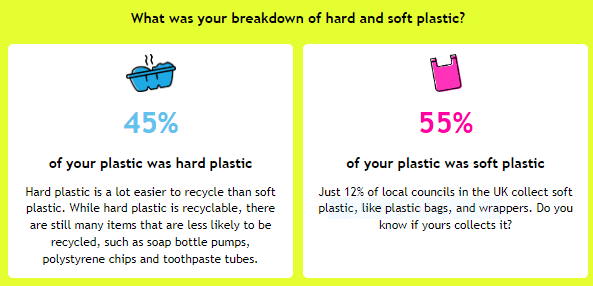
We take any plastic bags we do acquire to a supermarket recycling point, but that’s a faff too. It’s usually full to bursting point.

And here’s what happens to it.

But even that’s better than this horribly common sight, a tiny proportion of the result of an urban litter pick. …

The Big Plastic Count is being conducted among individuals like us, and in some schools as a project, as a means of raising awareness among children. And the results are being fed to the Government. Individuals and groups, however well meaning. really can’t effect much-needed change alone. And we have an election in the offing. I can’t imagine lobbying by The Big Plastic Count will make an impact on a dying-throes government chaotically falling apart. Another year of inaction. Another year wasted.