The Big Plastic Count

British readers! Did you take part in The Big Plastic Count last week? We did. It involved tallying together every single bit of single-use plastic that we bought that week. The yoghourt pot. And the plastic film that covered it beneath the lid if it was a a big pot. The plastic net bag that the satsumas were in. The cellophaney-plastic that the package of pasta/rice/dried fruit/coffee/tea/you name it was packaged in. The plastic disc wedged into the lid of the (plastic) pot of kimchi. The cling film parcelling up the cheese, bought loose from the cheese counter. And so on.
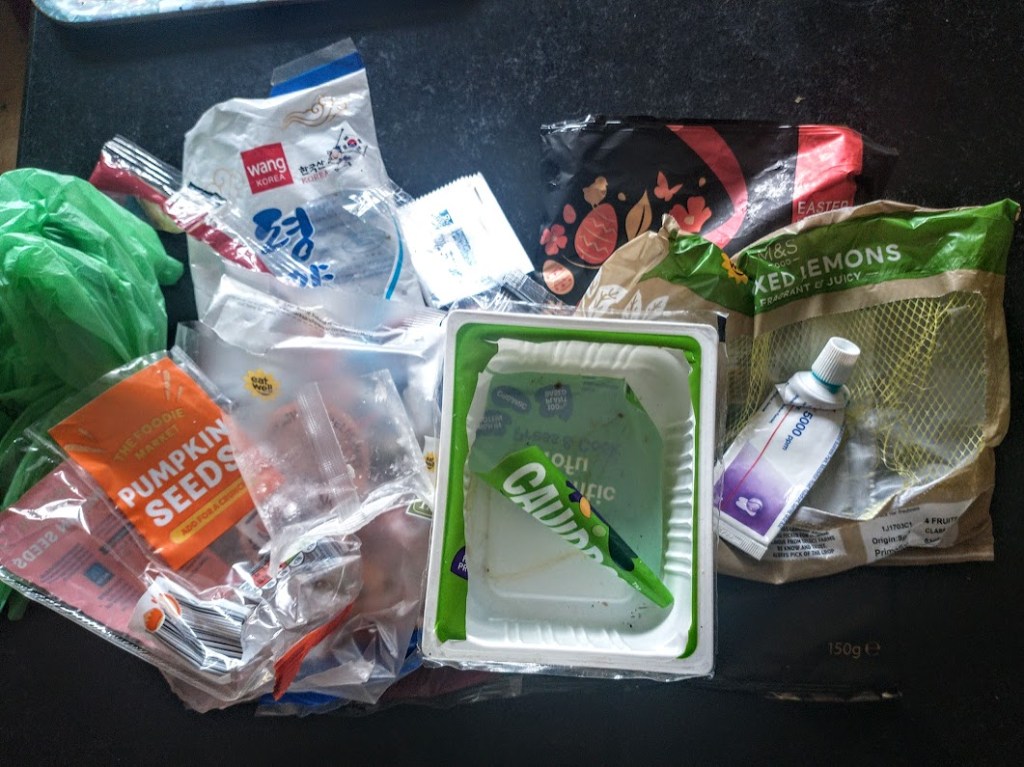
Our haul for the week

So why did we do it? Well. The Big Plastic Count is a Citizen Science project aimed at collecting evidence on household plastic waste to pressure government and supermarkets to take action. It challenges the idea that solving the crisis is purely a personal responsibility, arguing for systemic change to reduce plastic production.

So we and hundreds of like-minded individuals, school students, cubs, brownies, scouts, guides, U3A groups and so on tracked our plastic waste for one week to build a realistic picture of how much plastic is thrown away and what happens to it, highlighting that much less is recycled than widely believed.

Past results showed that only 12% of UK plastic waste is recycled, while 45% is incinerated, 25% is landfilled, and 17% is exported.

Honestly, we try to be plastic free. We buy unpackaged goods where we can, use our local refill shop, never use products like clingfilm. But still we assembled 18 pieces of plastic last week.

Litter is a whole other issue. Living in the country, as we do, albeit along a main road, the quantity of plastic bottles, crisp packets and other packaging that we see on any roadside stroll is truly shocking. The same applies to a beachside walk.
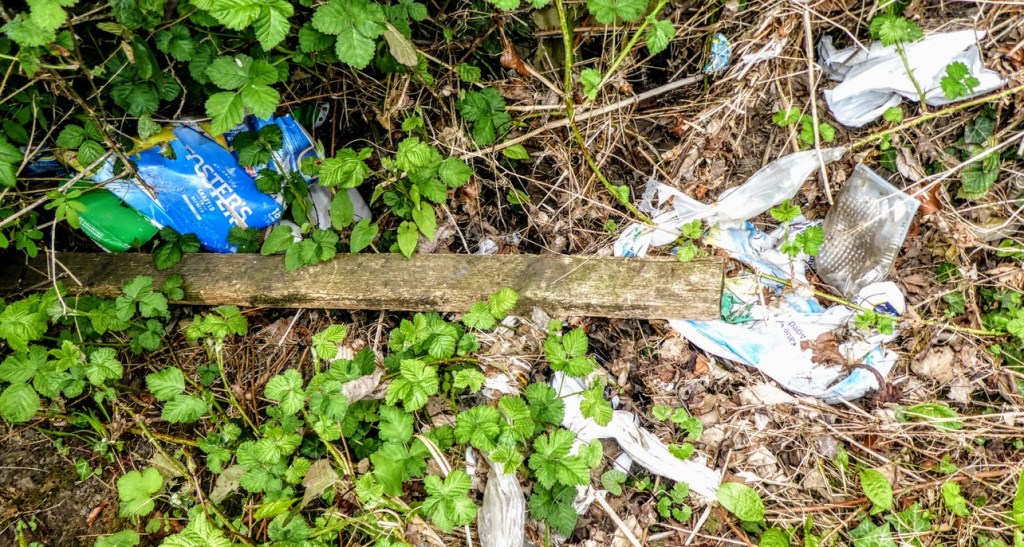
Local litter

On a personal level, this audit encouraged me to redouble our efforts to cut out single-use plastic. Whether our results, gathered countrywide, have any effect on either government or supermarkets remains to be seen. And whether the world will eventually be knee-deep in plastic waste, as we ingest a daily diet of micro-plastics also remains to be seen.
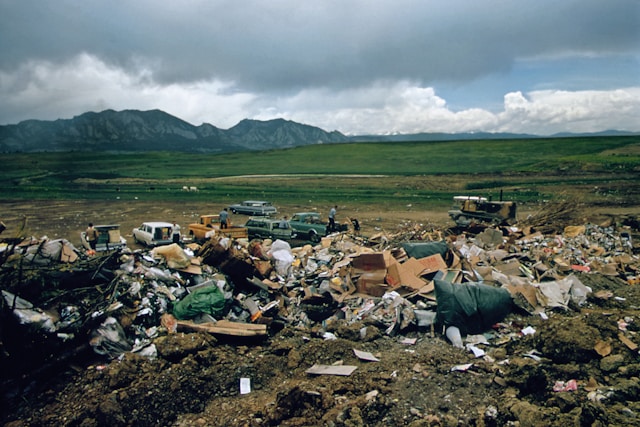
A scene in America; courtesy of Documerica, via Unsplash

Landfill – zero

A day trip to Leeds might involve mooching round the ornate Victorian shopping arcades, a visit to Leeds City Art Gallery, or to one of the theatres. It might involve some serious retail therapy.

What it wouldn’t normally involve is Cross Green, an unlovely sprawling industrial estate to the south east of the city centre.  Acres of modern rectangular industrial buildings surround large wholesale markets, and any housing squeezes up into the north of the patch.

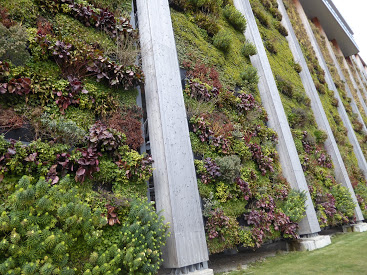
But Cross Green is home to one of Leeds’ most exciting new buildings.  Here, on its southern face is a striking living wall, one of the largest in Europe, providing biodiversity in an otherwise wholly man-made environment.

Leeds RERF’s Living Wall.

The building itself relies heavily on glass and elegant timber framing.  It’s something of an anachronism in a zone of modern concrete boxes.

This is Leeds Recycling and Energy Recovery Facility.  

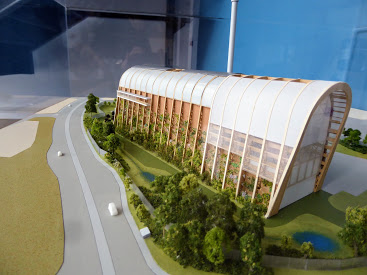
A scale model of Leeds RERF.

These days we’re all encouraged to recycle – glass, paper, tins, plastic, garden waste  – even, in some local authorities, food waste.  By rights, little should need to find its way into those black bags steadily filling every landfill site in the country.  But it does.

The advanced technology in this building aims to prevent that: and thanks to our friends Graham and Trish, we spent an afternoon finding out how.

We started out in one of the meeting rooms, looking through glass to watch a monstrous grab working with up to 6 tonnes per grab of shredded miscellaneous waste.  This was waste at the end of its journey, but still useful.


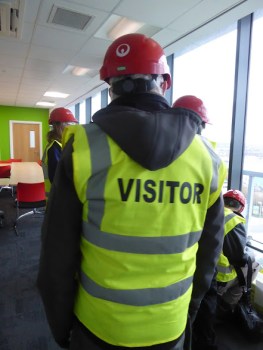
Come with us.  Put on the work boots they give you, the hi-viz jacket, the safety helmet and the goggles.  Come with us and we walk from point to point in this immense building.

Malcolm’s all togged up for the visit.

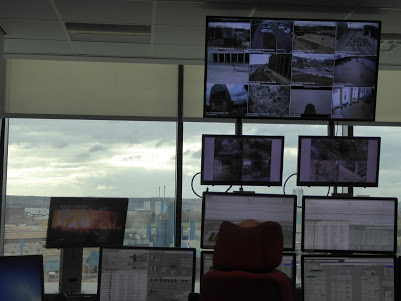
Here are the monitors which – er- monitor every part of the plant.  Look carefully and you’ll see flames on one of the screens.

Monitors at work.

This is an incinerator which burns the unrecoverable waste we had been looking at earlier, to produce heat.  The heat turns water into steam.  The steam powers a turbine.  The turbine generates about  13 MW of electricity – enough to supply the needs of 22,000 homes.  Emissions are carefully controlled, cleaned and captured, and the ash generated by this unimaginably hot bonfire is used as aggregate in road building.

Before that though, materials which could have been recycled earlier are extracted.  Paper and card are blown from the refuse.  Metals are fished out by magnets.  We couldn’t take pictures as we walked round the plant, so you’ll have to take my word for it.

There’s not really a market for the degraded paper which finds its way here.  But next time you take an egg from an egg box, or find yourself staring at a sick-bowl in hospital, or need to buy some paper-based animal bedding, you might be using something that started out in the RERF in Leeds.

I could blind you with facts and figures, but I think it’s enough to know that Leeds is helping to meet its ambitious zero-waste plans with projects such as this.  We, wherever we live, have an obligation to develop our own personal zero-waste strategies. Maybe you have a group you could join, like our own Plastic Free Ripon?  More of that in another post.

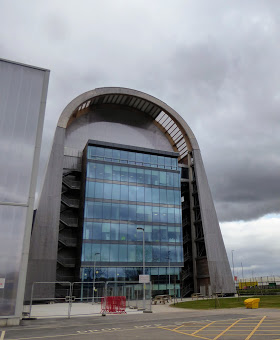
The entrance to Leeds RERF.

Click on any image to see it full size.