Nigel Slater arrives in France

He’s here now.  Not in person of course.  But his books, nearly all of them, arrived with the removal van that brought much of our stuff over from England.

I love Nigel Slater. As a cook, I mean.  He takes such pleasure in all the messier aspects of making and eating food, as I do. Greasy fingers from extracting those last little bits of chicken flesh from an already picked-clean carcass.  Sticky hands from rhythmically kneading and transforming dough from a tacky, gluey lump into barrel-shaped silken responsive mass.  Spoons and fingers to lick after a cake and biscuit-making session.  Weirdly, I even enjoy, if it’s not TOO bad, the burning eyes I get when I absent-mindedly rub them after I’ve been chopping chillies.

During this kind of cooking session, Malcolm and I look at each other with mutual incomprehension.  ‘Want to lick the bowl?’  I ask.  ‘Ergh, no. Shall I get you some rubber gloves so you can keep your hands clean?’  He thinks I’m facing up with commendable fortitude to jobs on a par with sorting out a couple of messy toddlers after a glue-and-paint session. I think he’s missing out.

In the end though, it’s Nigel’s recipes I come back to.  He rarely worries about precise quantities, tasting and adjusting as he goes till the dish seems right. But he does celebrate ingredients in their season.  Here’s what I made the other evening from the remnants of one of Is@’s chickens, and a bag full of the spinach included in our panier of vegetables:  I found the recipe in Tender: A Cook and his Vegetable Patch, Volume 1

Chicken Spinach and Pasta Pie.
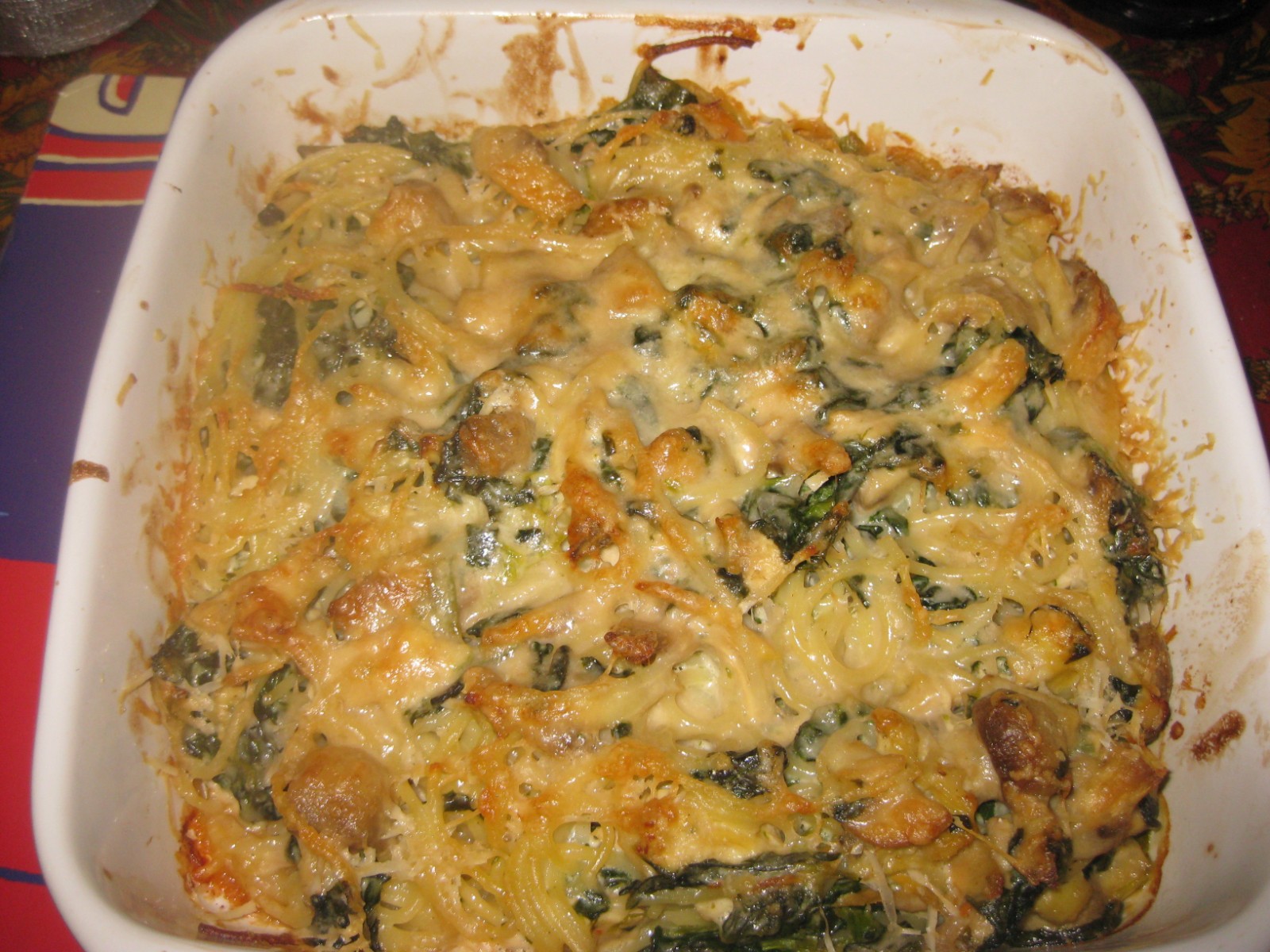
Nigel reckons it serves 4.  I reckon 6 wouldn’t go hungry if they sat down to this lot.

spaghetti – 350g
cooked chicken – 500g (boned weight), roughly shredded
mushrooms – 300g
butter – a thick slice
olive oil – 3 tbs
double cream – 450ml
white wine – 2 glasses
spinach – 200g
parmesan – 140g + 50g

Cook the spaghetti in deep, generously salted boiling water. Drain and set aside. (A little olive oil will stop it sticking together.) Set the oven at 180C/gas 4.

Cut the mushrooms into quarters. Warm the oil and butter in a deep pan and add the mushrooms, letting them colour nicely here and there. Add the cooked chicken meat and then pour in the wine.

Bring to the boil, scraping away at the sticky remains at the bottom of the pan: they will add much flavour to the sauce.

Pour the cream into the pan, bring back to the boil and turn off the heat. Wash the spinach and put it, still wet from rinsing, into a pan with a tight-fitting lid. Let the spinach cook for a minute or 2 in its own steam, then drain it, squeeze it to remove excess water and chop it roughly.

Fold the cooked spaghetti, mushroom and chicken sauce and spinach together then stir in two-thirds of the grated parmesan and tip into a large baking dish. Scatter the remaining cheese on top and bake for 35 minutes until the top is crisp and golden.
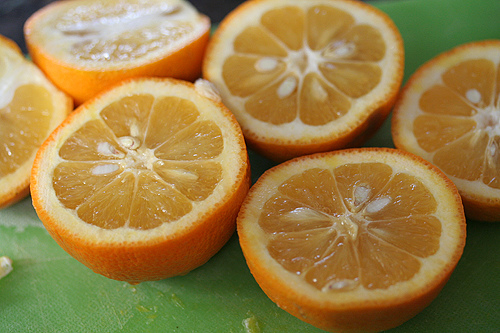
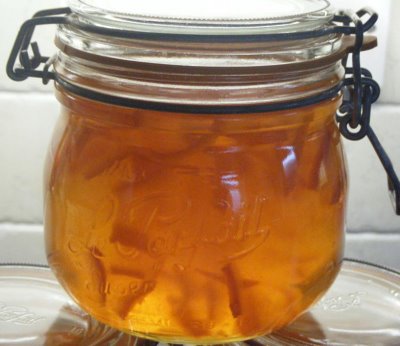
Marmalade: the bitter facts

Forget politics.  Here in the UK, the news story that really means something to any right-thinking English man and woman is that marmalade sales are falling.  The reason though, according to most commentators, is that many of us prefer to make our own.  I do.

Over the last few years, I’ve been so glad to have come across Jane Grigson’s recipe, which gets me out of the whole business of hacking mounds of tough raw orange peel into marmalade sized chunks.  It delivers a tasty sweet and bitter marmalade which beats anything you’ll meet on the grocer’s shelf

Our house, now a temple to magnolia paint and packing cases, is currently innocent of recipe books.  Somehow I contrived to find my preserving pan the other day, and make her marmalade, or something  jolly like it, from memory.  Impressive, huh?

I kg. seville oranges (about 10 fruits)

1 lemon

3.4 litres water

2 kg. granulated sugar, or half granulated, half light muscovado.

Scrub the seville oranges and the lemon, and place in a large pan with the water.  Bring to the boil and simmer till the fruit is soft – maybe an hour or so.  Allow to cool.  Cut the oranges in half, scoop out the flesh and pips and reserve in a large muslin square.  Chop the skin as thick or as thin as you chose – it’s so easy now the skin is soft.

Tie the muslin with its contents into a bag, and put it, with the orange peel, remaining water (about a third will have evaporated) and sugar, into a preserving pan.  Bring the mixture slowly to the boil, so that the sugar dissolves, then cook rapidly till setting point is reached (I can’t manage without my jam thermometer, but that’s pathetic.  Most people seem happy enough to test for the setting point by putting a spoonful of marmalade onto a cold saucer, and seeing if it crinkles as you push your finger through the cooled mixture).

Allow the mixture to sit for about 15 minutes before pouring into sterilised jam jars.  Makes 6-7 jars

Découverte Terres Lointaines

Nobody could call our nearest town, Lavelanet, a hub of multi-culturalism. But neither is it an Ariegeois ghetto. Of course, as in most French towns, there’s a big Maghrébin presence: inhabitants of the former French colonies of Tunisia, Morocco and Algeria. There are significant numbers of people of Spanish origin: their families probably came over in the Spanish Civil War. Dunno how so many Portuguese got here, but in addition there are Swiss, Belgians, Roumanians, Brazilians, Vietnamese, Chinese, Argentinians, Australians, Germans, Dutch…..ooh, and a few English of course.

Recently, I got to know two local women, Sylvia and Noëlle. Some time ago they, together with another friend Nadia, had come up with the idea of bringing together women from some of these countries to share their cultural heritage, particularly through the medium of cooking. The idea got bigger. Over the last 18 months or so, they’ve developed themselves as an official voluntary group, ‘Association “Découverte Terres Lointaines”‘.  They and their ‘benevoles’ (volunteers) have animated cookery workshops in schools, old people’s homes, youth clubs, centres for people with various disabilities. They’ve raised money for these activities by selling foods from all over the world, which they’ve prepared,   at local festivals.  But why stop at recipes?  We all have a culture to share – children’s stories to tell, songs to sing, our daily lives ‘back home’ to compare, and all this too is included in the mix.  Recently, I’ve joined in some of their activities.

It’s got a bit more formalized now. There’s a bit of a special focus now on a particular country in any one year. This year it was Quebec (OK, it’s a province, not a country.   But it DOES have a very distinctive voice within Canada), and next year it’ll be Algeria.

Nadia makes the dough for her Algerian sweetmeats

Last week was a first though. We were invited to provide an International Buffet at a multi-services training day being laid on by the Mairie. At various points in the days leading up to it, we got together in the kitchen of the Family Centre (CAF), and helped each other cook.

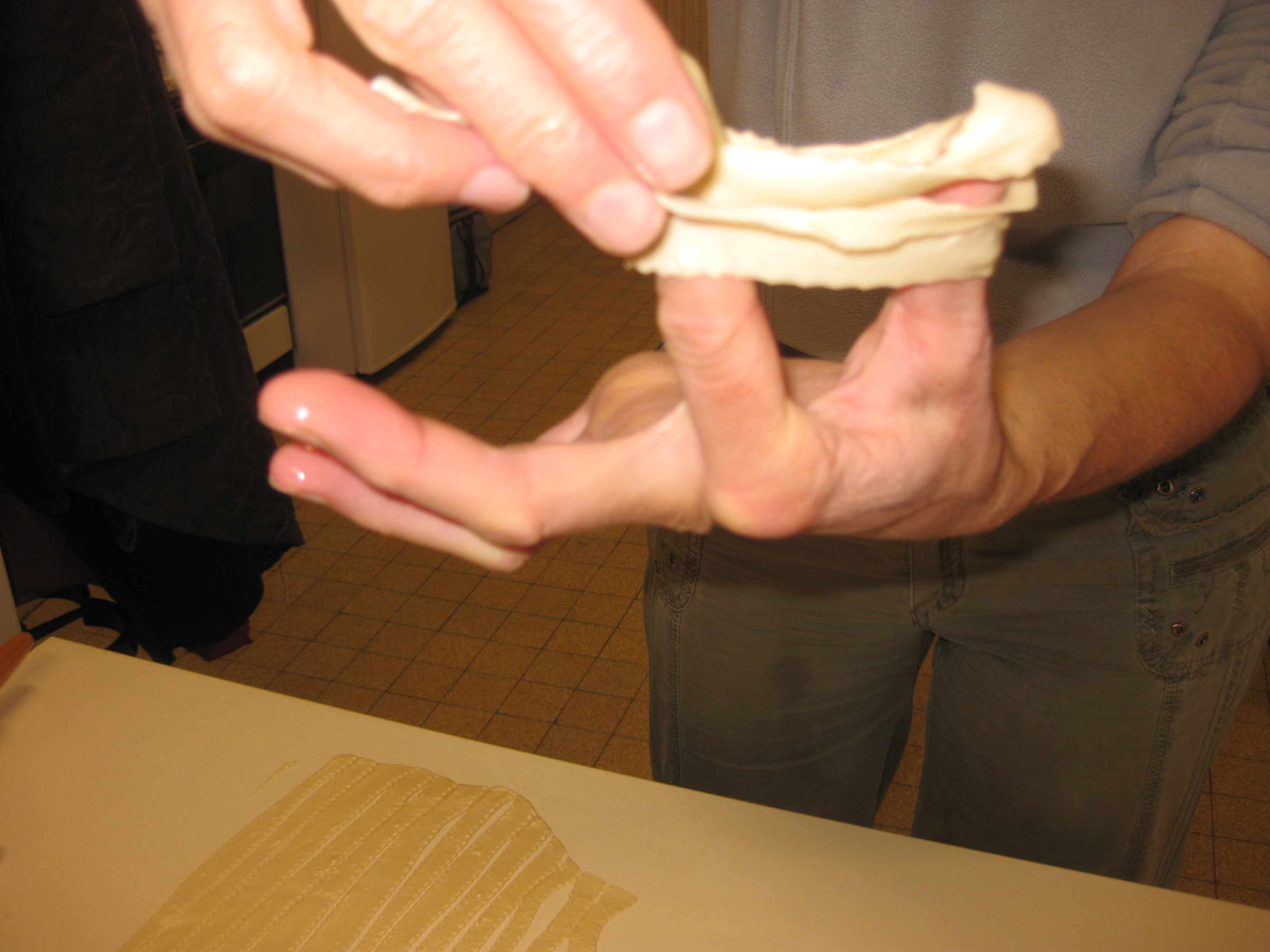
Then Sylvia winds the dough strips into little 'birds nests'....

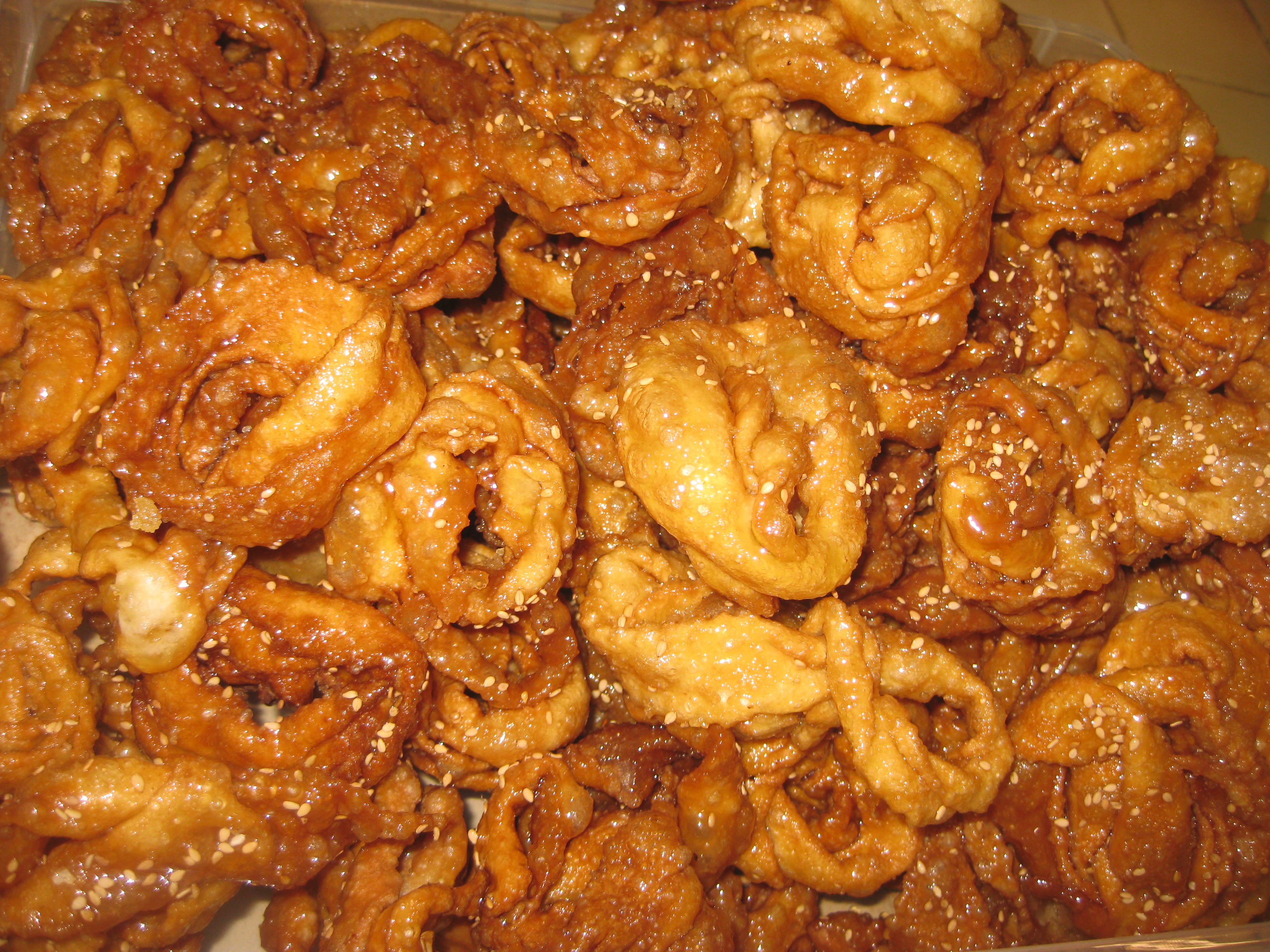
Nadia showed us how to prepare Algerian grivvech: thinly rolled dough cut into strips and wound into jumbled little nests before being deep fried and doused in honey and sesame seeds. There were Quebecois dishes, guacamole topped toasts, and treats from around the world.

...the deep fried, sticky, delicious result.

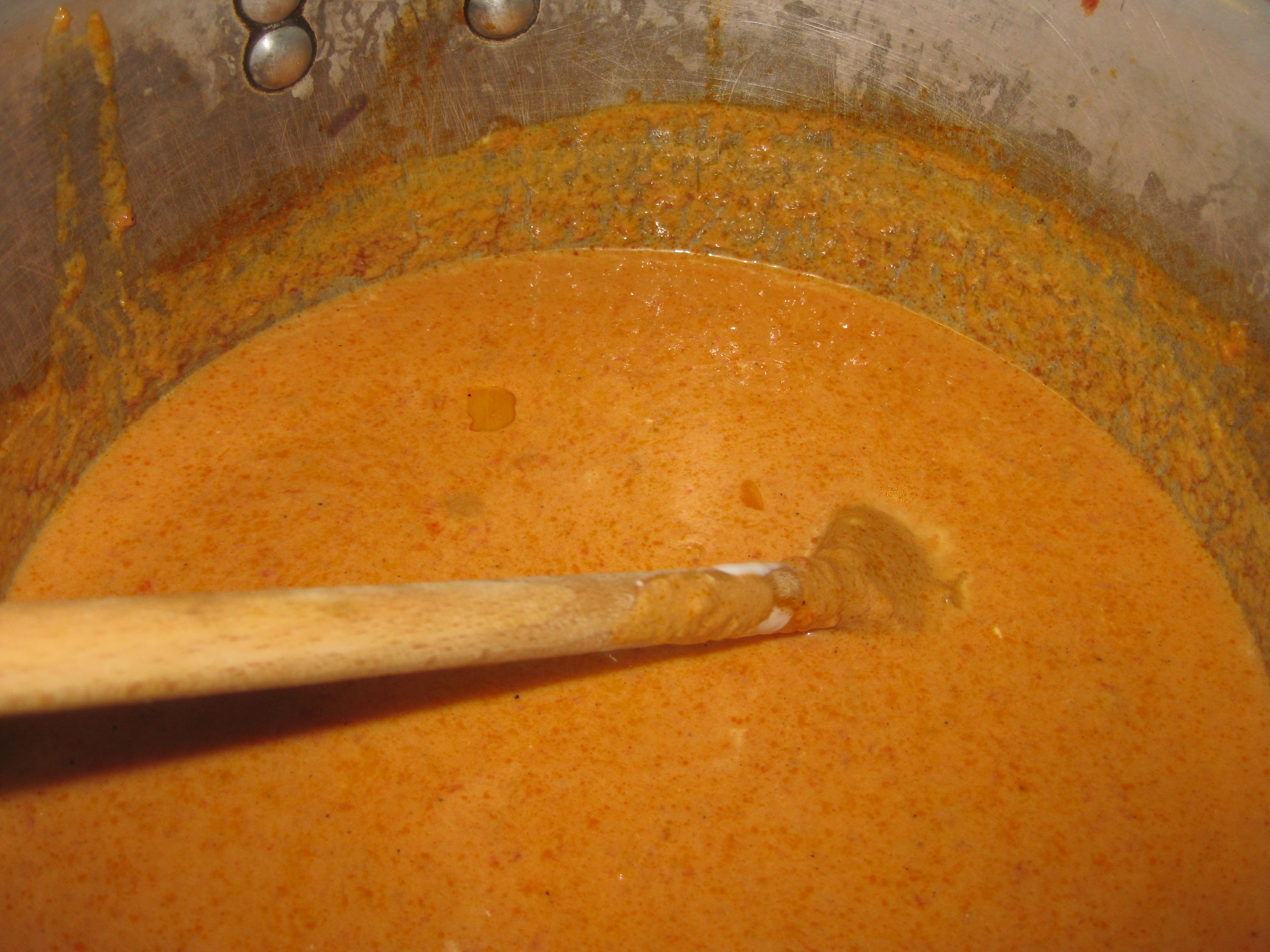
Best of all was the unlikely sounding tomato and banana soup from Brazil.  Do try it: recipe below.

What could I contribute as an English finger-food? I thought long about this, and came up with Scotch eggs (thanks, Kalba, again). You need to know that here in France, sticky tape, as in England, is known by a trade name. Not ‘Sellotape’, but ‘Scotch’. So Sylvia’s eyes darkened in puzzlement when I suggested these Scotch eggs. ‘Sellotape eggs? What on earth….?’

And what fun it all was.  I can and do open recipe books to try out dishes from any and every continent.  But it’s not half so exciting as working with women from Algeria, Brazil, Roumania, wherever, as they talk you through the techniques they’ve known for years and years, and stand over you and make you practice and redo things till you jolly well get it right.

I'm NEVER deep-frying 30 Scotch eggs again

Anyway, here are my photos of the preparations for a successful lunch. We could have taken any number of repeat bookings, but for the time being, the organisation will maintain its ‘benevole’ status, and not venture into the hard realities of developing a business.

Brazilian Tomato and banana soup

Soup just cooked and ready to go

Ingredients

I onion

I tbspn rapeseed oil

Large bottle of passata

5 ripe bananas

1.5 l. bouillon

Small carton cream

3 tsp. curry powder

1 tsp. cayenne

Gently cook the onion in the oil.  Meanwhile, remove the black central thread which you may never previously have noticed and any seeds from within the peeled bananas, and mash thoroughly.  Add the passata to the onion, together with the spices and cook gently .  Add the mashed banana and continue cooking.  Add cream, reheat gently, and serve

Something delicious, down in the woods

A friend brought us some mushrooms yesterday.  I’m not going to tell you which friend.  And I shan’t tell you where he found them either.  He was ranging about in the woods, snaffling mushrooms.  If the forest ranger or a landowner had caught him because he’d strayed onto private land, they could have fined him.  150 Euros.  And the friend who was with him, another 150 euros. It’s a lot to pay for half a pound of mushrooms, but everyone does it.

Nobody however, wants to kill the goose that lays the golden egg, and most people, like our friend, pick carefully and respectfully so that mushrooms will still be growing there tomorrow, and the next day, and for as many years as there are people wanting to eat them.

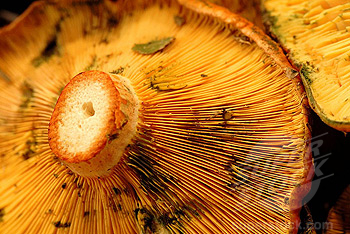
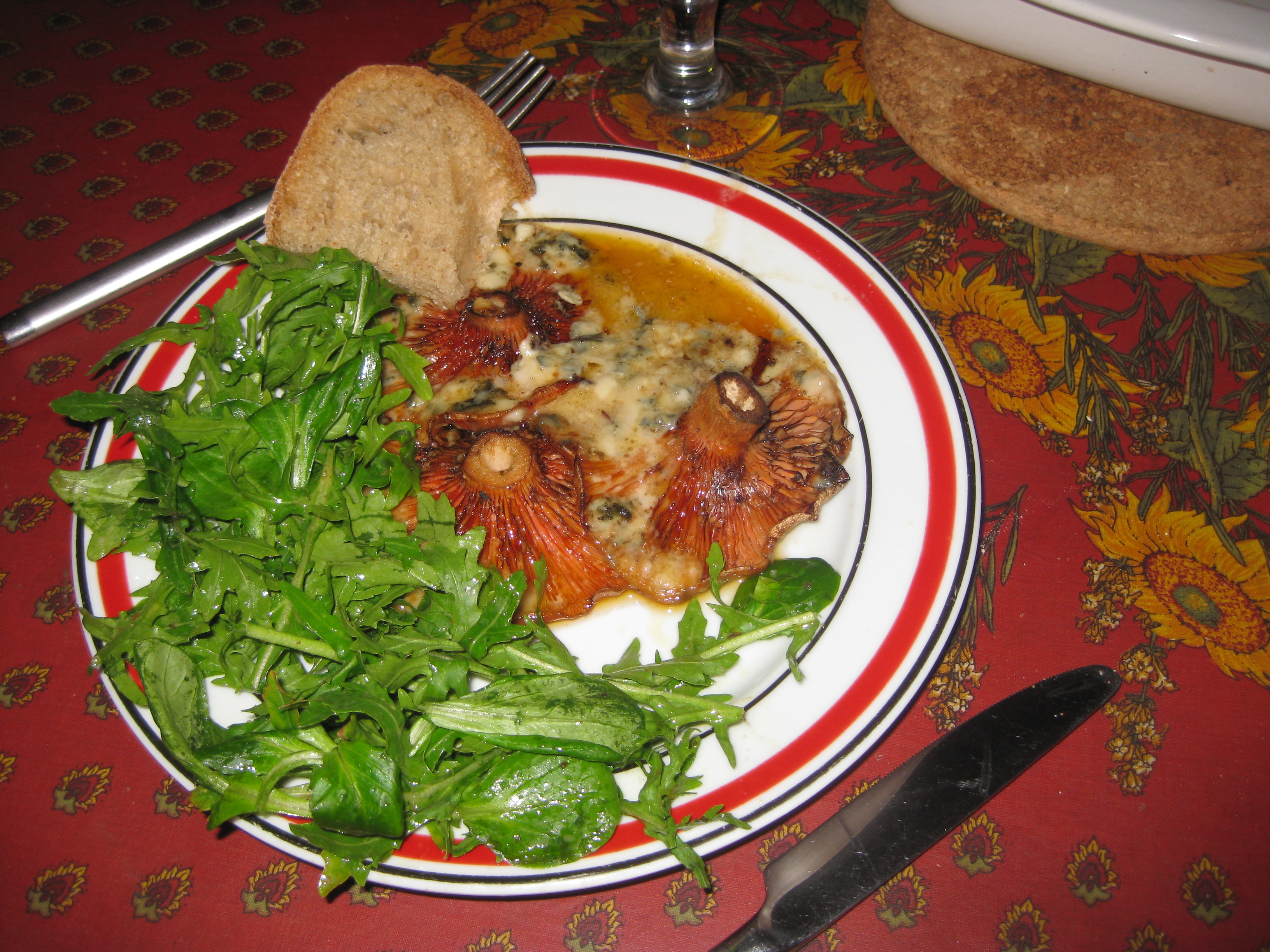
The ones he brought us are lactaire delicieux – saffron milk caps. I know they exist in England, because Googling produces a score of recipes from the UK, but I’ve never seen them there.

In fact they’re native to this part of the world, both in France and Spain, and live in the acidic soil under Mediterranean pine trees.  They’re yellowy orange, and exude orangey milk when broken or cooked.  Roughly handled, they develop a scary green stain.  But that doesn’t mean they’re poisonous. Anything but.

Here’s what he suggested we do with them.

You’ll need at least 2 or 3 large ones each.  They’re often small though, so you may need more. Clean them by brushing them gently and lay them cap side down in a shallow buttered oven dish.  Cover generously with knobs of butter and Roquefort cheese – 4 parts cheese to one part butter.  Grill till the cheese is melted and the mushrooms cooked.  Serve with lots of crusty bread to mop up the juices, and a green salad.

If he brings any more, or if we’re lucky enough to find some ourselves, I’ll be Googling again, because there are any number of simple ideas, just waiting to be tried and enjoyed.

Cook’s Corner

Back in England last week, I picked up the latest Waitrose magazine, always good for a few recipes.  And here’s something I found….

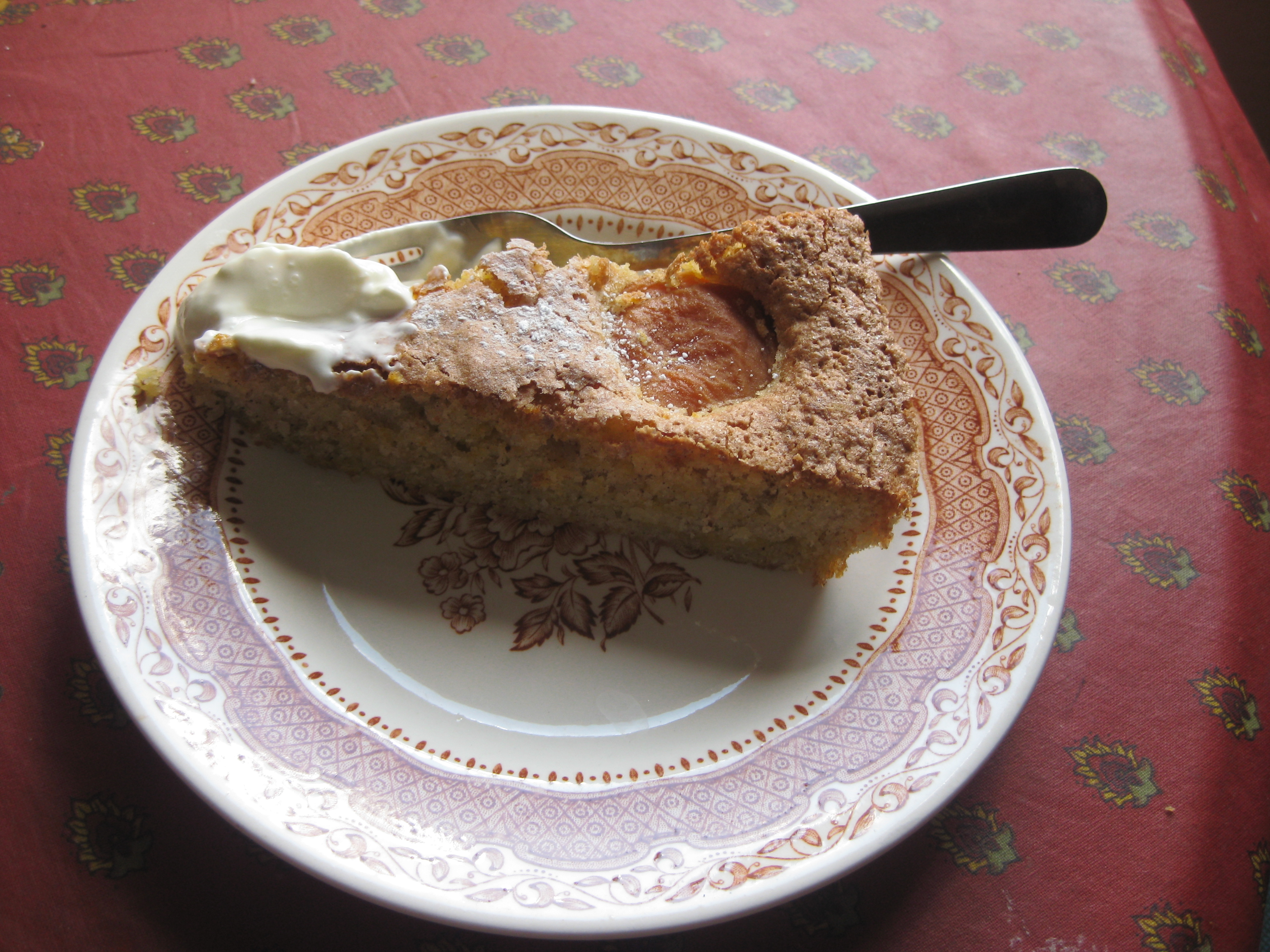
Sunken Apricot and Almond Cake

3 medium free-range eggs

180 g. caster sugar

200g. butternut squash, peeled and finely grated.

1 tsp. almond essence (I used a slonk of amaretto instead)

60g.white rice flour

200 g. ground almonds

2 tsp. mixed spice

2 tsp. baking powder

¼ tsp. salt

240g. canned apricot halves, drained, or if you’re lucky enough to have home bottled apricots, as I have, use those.

Icing sugar for dusting.

1. Preheat the oven to 180degrees C/gas mark 4

2. Lightly grease ten 8cm. x 5cm. deep loose-bottomed tart tins with oil.  I didn’t have enough, so I made just one 28cm. tart.

3. Whisk the eggs and sugar for 4 minutes till pale and fluffy.  Add the butternut squash and almond essence, and whisk briefly to combine.

4. Add the ground almonds, spice, baking powder and salt, mixing until well combined.

5. Pour the mixture into the tin(s) and either place 2 apricot halves in each, or arrange the apricots onto the top of the large tart.  Bake in the centre of the oven for 35 minutes, or till cooked.

6. Remove from the oven and gently ease the cake(s) away from the sides of the tin.  Allow to stand a few minutes before dusting with icing sugar.

Eat warm, cold, with or without cream, crème fraîche……

Do try it.  It might not be the cheapest cake in the world, but it’s certainly good, whether you choose to serve it as a pudding or a tea-time treat.

Well, we DID have it as a tea time treat, so by the time it came to the evening meal, we needed simpler fare.

I don’t know where I first heard this recipe, but I remembered it yesterday because we’d spent an hour or so sorting and shelling our haul of walnuts from all the trees nearby that are shedding nuts faster than anyone can gather them.

A Very Un-Italian Pesto

A handful of walnuts, crushed

A handful of parsley, finely chopped

A cob of parmesan, grated

A clove or so of garlic, crushed

A big glug of olive oil.

Combine the ingredients to a coarse paste, and add to a dish of pasta

A Very English Pudding

The other day, we had French friends to dinner.  They bravely agreed to curry.  I thought I ought to check beforehand: the French – round here anyway – are curiously resistant to the fiery charms of the chilli plant, and hot spices generally.  They shouldn’t have worried, and neither should we.  They cleaned their plates and came back for more.

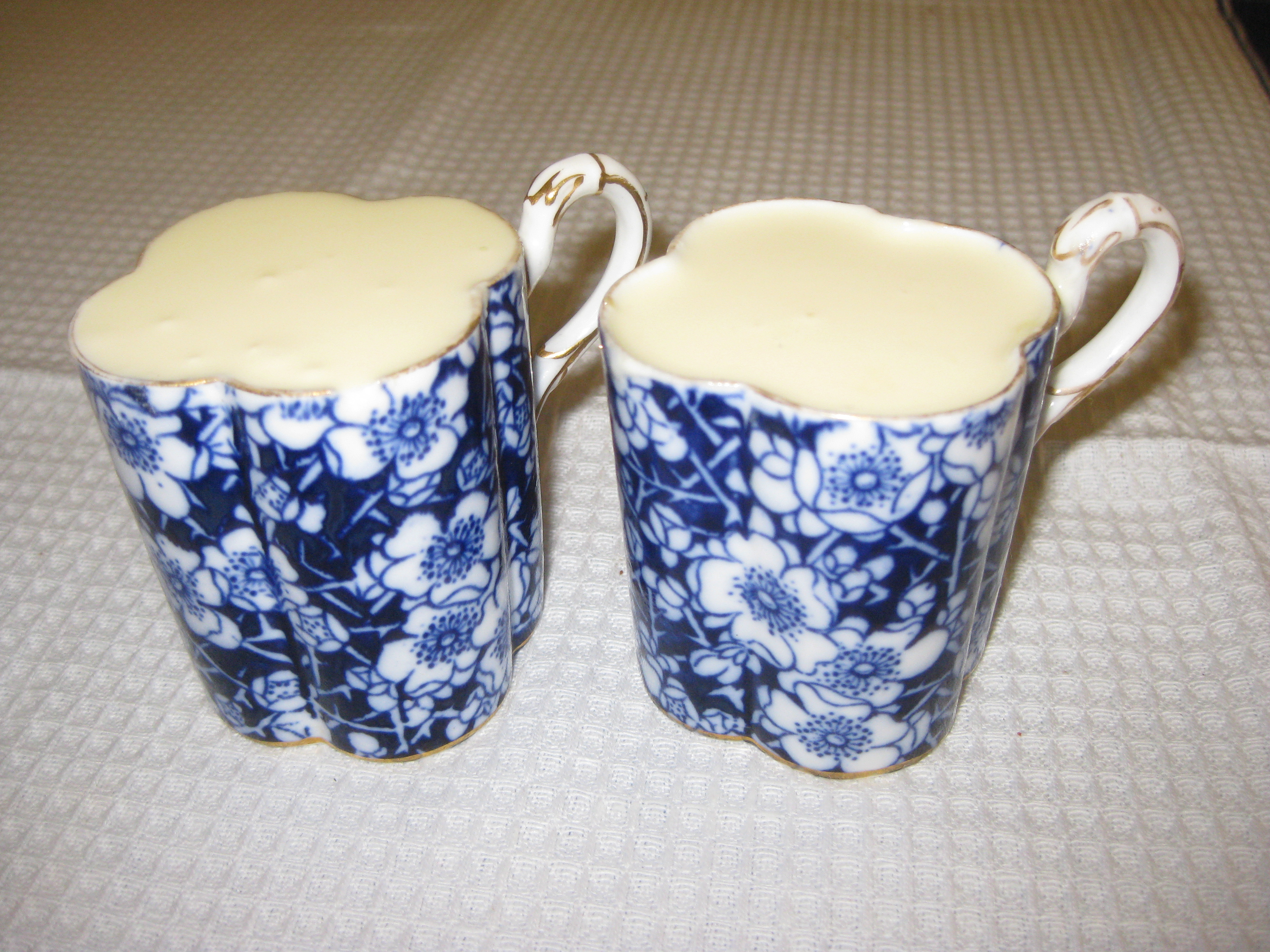
Having assaulted their palates with unfamiliar flavours, I wanted to make something rich and soothing to round off the meal.  And I remembered that, back in England, my friend Barbara had recently treated us to lemon posset.  It’s been around a few centuries, and was by no means a new recipe when Samuel Pepys had it for supper back in the 17th century.

At once palate-cleansing and luxurious, it’s so simple to make.  And when your guests ask for the recipe, you know you’ve struck gold.  Here it is:

Lemon Posset

Serves 4

500 – 600 ml. double or whipping cream (crème fleurette).  The quantities aren’t crucial.  Use a couple of pots of what’s available.

Up to150g. caster sugar
Juice of 3-4 medium lemons

Pour cream and sugar into a small saucepan. Slowly bring to the boil, stirring constantly to dissolve the sugar. Once boiling cook for a further three minutes, still stirring constantly.

Remove from the heat and pour in half the lemon juice whilst stirring the mixture thoroughly. It should start to thicken instantly. Taste the mixture and if its not quite tart enough for your tastes then put a little more juice in. It should be tangy but still very rich.

Allow the posset to cool for approximately five minutes and then pour into 4 glasses, coffee cups, or any small, pretty containers. The posset will start to visibly thicken as it hits the cool glass or porcelain. Cover and chill in the fridge for at least 3 hours. The posset should be quite firmly set.

Serve with lemon shortbread or other biscuits of your choice, or a fruit coulis.

SOS Courgette Alert!

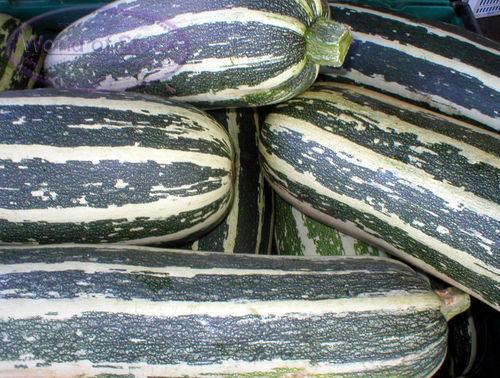
Just now, as September begins, the vegetable patch is at its most productive.  The beans, the cabbages, the tomatoes, the new potatoes……  It’s all so very satisfying…apart from one thing.  Courgettes.  They never give up.

It’s a far cry from a few weeks ago, when the flamboyant yellow flowers first announced the appearance of just a few of those tiny delicately flavoured green fingers, waiting to be celebrated as the centrepiece of a light summer meal.  Exciting times.

Now they’ve become something of a trial.  Day after day we courgette-farmers haul dozens of the things back to the kitchen. We comb recipe books and scour the net, seeking yet more inspiration.  I think we have to support each other.  It’s time for every blogger with a veg. patch or allotment to offer inspiration to us all.  Even if you normally write about politics, music or the vagaries of the fashion industry, you and your ideas are needed as a service to the whole courgette-growing-community.

Here’s a recipe to start things off.  This dish is good as part of an Indian-style meal, or as a complement to, say, simply grilled meat.

Courgettes cooked in pickling spices: a recipe from Hyderabad.

2 tablespoons oil or ghee

I tablespoon pickling spices

½ tablespoon ground turmeric

½ tablespoon chilli powder

½ tablespoon ground coriander

2 large tomatoes, skinned and chopped

450 g. courgettes, diced

Salt

Chunk of fresh ginger, grated

2 green chillies, finely chopped

½ tablespoon Kashmiri masala

I tablespoon fresh coriander

Heat the oil in a deep pan and temper with the pickling spices.  Reduce the heat and add the turmeric, chilli and ground coriander.  Sauté for one minute and add the tomatoes. When the mixture has thickened, add the courgettes and season to taste.  Cook till the courgettes are soft. Just before the end of cooking time, add the ginger, chillies and Kashmiri masala.  Garnish with fresh coriander and serve.

Both the pickling spices and Kashmiri masala can be made in batches and used as required.  They’re useful additions to the store cupboard if you enjoy Indian food.

Pickling spices:

1 tablespoon cumin seeds

1 tablespoon black cumin seeds

1 tablespoon kalonji

½ tablespoon mustard seeds

Kashmiri masala

2 tablespoons fennel seeds

1 tablespoon cardamom seeds

6 bay leaves

2 tablespoons mace

Grind to a powder and keep in an airtight container

Actually, though, we’ve just come back from a week in Italy. That’s far more exciting, so…….to be continued in our next

Summer Fruit

With a house to sell in England, we’re still here in the UK.  So let’s make the most of  it, particularly at mealtimes.  Here’s how.

Apples:

With any luck, Discovery, the very first apples of the season will appear any day now.  I love their bright red skin, their crisp white crunchy flesh.  They’re hopeless keepers, but for just a very few weeks, their bright fresh flavour presents a real contrast to the departing soft summer fruits.

And when they’re over?  Well, there are James Grieves, Laxton Supreme, Laxton Superb, Worcester Pearmain, Lord Lambourne, Cox’s Orange Pippin and so many others to look forward to…if you can find them.  And of course Bramley Seedlings too, so wonderful to cook with.

I was brought up to anticipate and celebrate the heady variety of taste, texture and appearance of all our English apples.  These days I mourn the uniformity of the standard few varieties that stock the supermarket shelves, year in, year out.  Often as not, they’re imported from New Zealand, South Africa, the USA, and France, while our own traditional varieties have become heritage items whose very existence is protected by Reading University’s National Fruit Collection at Brogdale

Blackcurrants:

I KNOW they’re available in France, but when we got back this time, we discovered a small blackcurrant bush had been secretly prospering in a forgotten corner of the garden.  And there it was, laden with big dark purple berries, over a kilo of them, just asking to picked and enjoyed

Gooseberries:

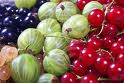
Gooseberries, white, red and blackcurrants

Hardly seen in France, I love their crisp sour flesh, and eat them any way I can. Gooseberry fool is best of all: gently stewed fruit folded in with equal portions of good custard and double cream.

Raspberries:

They DO exist in France, but can’t compete with the big, juicy, tasty berries we have here: the best ones come from the garden of our friends Richard and Jonet here in Harrogate (and the best jam too).  The rest come from Scotland.

Repeated pleasures:

Back in southern France, broad beans are long over.  Here they’re at their best, so I’ve had two goes this year at my almost-favourite vegetable.  OK, not a fruit. But very good anyway.

Summer pudding:

Surely the quintessential English pud?  Gently cooked quantities of soft summer fruits, spooned into a basin that’s been lined with pappy English sliced bread, left for the flavours to mingle before turning out and serving with cream doesn’t sound too exciting maybe.  But it is.  Summer in England really isn’t summer until you’ve had your first helping. And as many helpings as you can manage before the season’s over

Summer Pudding

Ingredients

  • 1kg (2lb) mixed berries (use a combination
  • of raspberries, blackberries, blueberries, redcurrants or blackcurrants)
  • 160g (5½oz) caster sugar
  • 10 thin slices stale white bread, crusts removed

Method

  • Place the berries, sugar and 60ml (2fl oz) of water in a saucepan. Bring to a gentle simmer on a low heat and cook, stirring to dissolve the sugar, for 3-4 minutes, or until the fruit has softened and produced lots of juice. Set aside to cool.
  • Pour the juice into a flat dish, reserving the fruit.
  • Cut one slice of bread into a circle small enough to fit the base of a 1.5l (48 fl oz) pudding basin, and another large enough to fit the top. Cut the remaining slices into triangles. Dip both sides of the smaller circle of bread quickly into the juice and place it in the bottom of the pudding basin. Dip both sides of each triangle of bread into the juice, then line the inside of the basin with the juice-soaked bread, overlapping them slightly to make sure there are no gaps.
  • Fill the bread-lined basin with berries, drizzle with any remaining juice and top with the larger circle of bread, trimming it to fit if necessary.
  • Cover the top of the pudding with clingfilm, then place a saucer or small plate that just fits inside the rim of the basin on top. Press the plate in, then weigh it down with a heavy can or two. Place the basin in a shallow dish to catch any juice that might overflow, and refrigerate for at least 12 hours.
  • To serve, run a thin knife around the inside of the basin and invert the pudding on to a serving plate. Cut into wedges and serve accompanied with plenty of thick cream.

Chicken Tonight

Chicken is a bit of an occasional treat for us, but first….. source your hen.

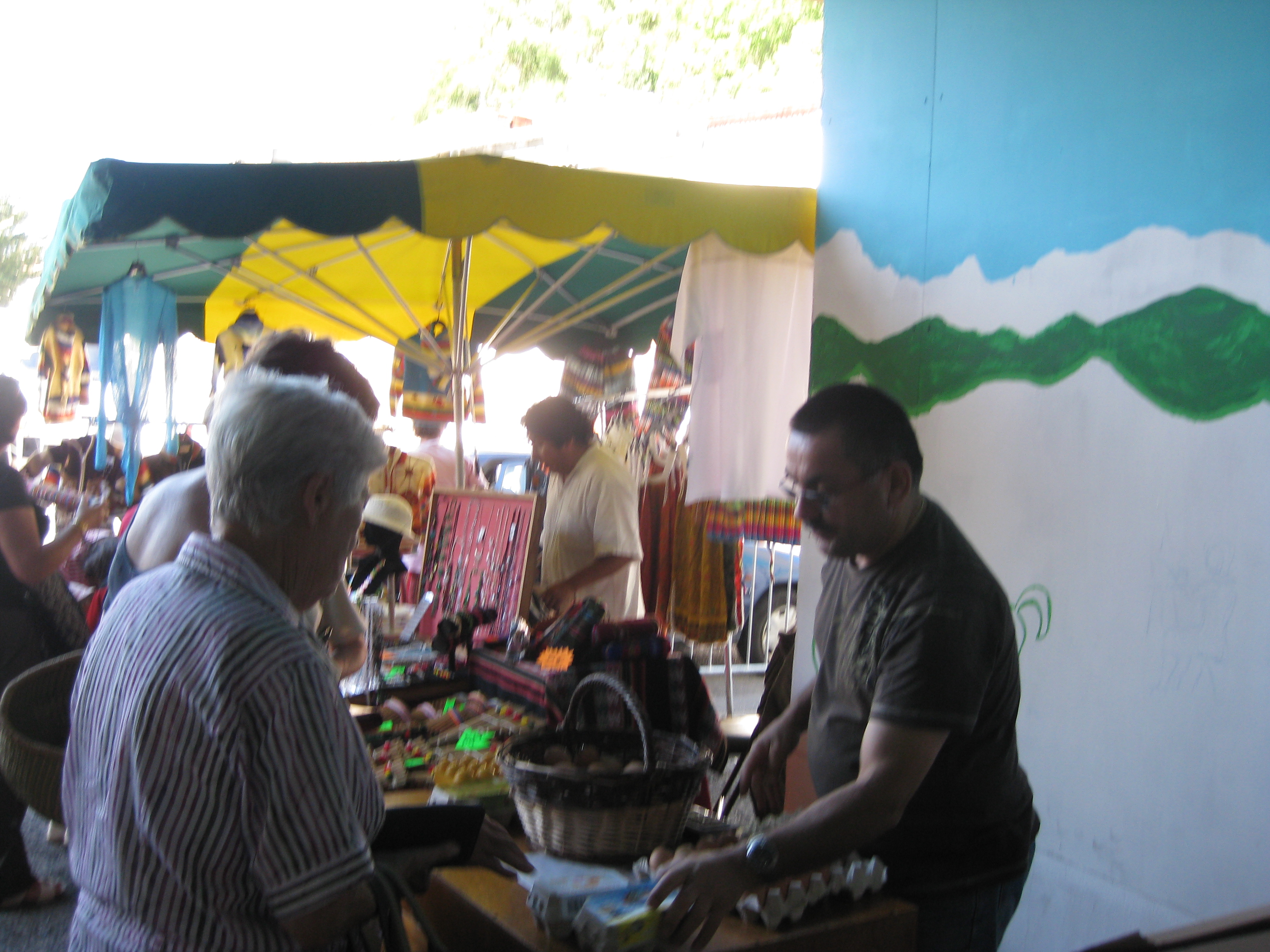
Buying eggs - perhaps a chicken - at Lavelanet marketWe buy our eggs from a man with a stall in Lavelanet market. He’s a rather dour chap with a tendency to tell you off if you forget to bring an egg box for your purchases.  But our friend Mireille has seen all his chickens pottering about in their huge field in the countryside south of Toulouse.  She assures us they lead a thoroughly idyllic, bucolic existence, with nothing to do but feed, fossick for grubs and lay eggs for all the customers, until one fine day….  it’s all over, for one of them.  Killed, plucked, gutted, packed up, and brought into market for someone like me.  They’re only killed to order.  On one Friday, you’ll tell him what you’d like to have, and the following week, he brings it to market for you.

And the 11 euros or so we pay is such good value. His birds are so tasty, a little goes a long way: and once we’ve picked every scrap of flesh off, there’s all that wonderfully rich stock from the bones.

This is one of our very favourite recipes: and it’s easy too.  Good hot or cold, summer or winter

Moroccan Chicken with Preserved  Lemons and Olives

Serves 4

Ingredients

1.5kg Free-range chicken
1 Large onion, finely chopped in a food processor
4 Garlic cloves, crushed
100g Butter
1 tbsp Ground ginger
1 Cinnamon stick
¾ tsp Turmeric
¾ tsp Saffron strands
3 tbsp Lemon juice
100g Kalamata olives
100g Small preserved lemons, halved, flesh discarded
50g Chicken liver, chopped
10g Coriander, chopped
10g Flat-leaf parsley leaves, chopped.

Method

  1. Put the chicken into a flameproof casserole, tagine or saucepan in which it will fit snugly. Add the onion, garlic, butter, ginger, cinnamon stick, turmeric and saffron; season. Pour in 700ml water, cover and bring to the boil over a medium-to-high heat. Reduce the heat and leave to simmer, spooning the sauce over the chicken and turning it over now and then until it is just cooked through – about 40 minutes. Lift the chicken onto a plate and cover with foil.
  2. Add the lemon juice to the casserole, increase the heat once more and simmer the sauce rapidly until reduced by about two-thirds. Return the chicken to the casserole with the olives and pieces of preserved lemon, cover with a well-fitting lid and simmer for a further 20–25 minutes until the chicken is tender. Lift the chicken onto a large, warmed platter.
  3. Add the chicken liver to the sauce and simmer for 5 minutes. Add the herbs and adjust the seasoning if necessary. Spoon the sauce over the chicken and serve.

    Happy Hen?

Christmas Hooch

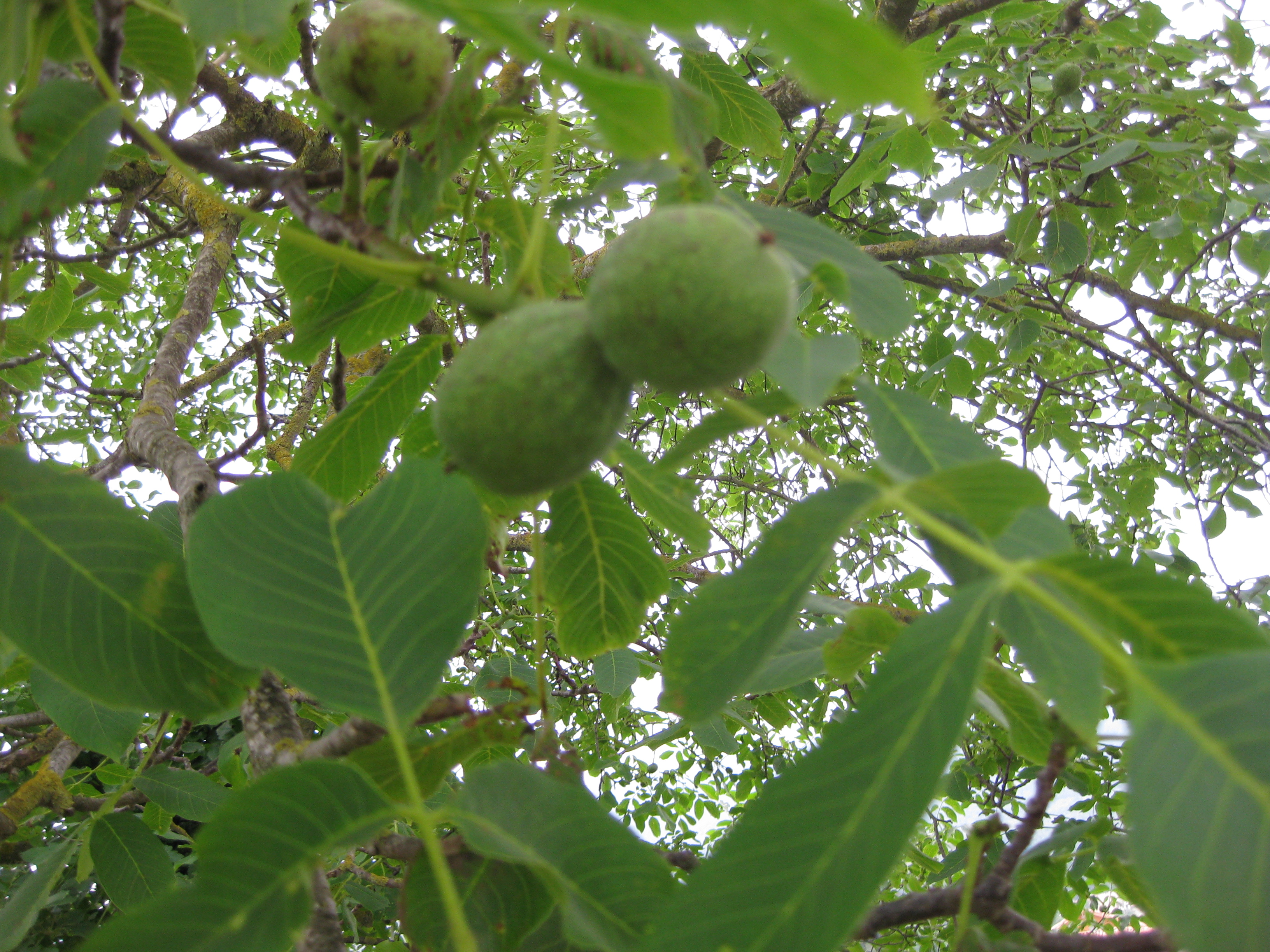
Young walnuts on the tree

Léonce has a walnut tree outside her house.  On the 24th June, she picked just 40 baby walnuts.

Why 24th June?  Well, it’s traditionally Midsummer Day, celebrated here by huge pagan bonfires, but named for John the Baptist whose birthday it’s said to be (le Feu de la St. Jean).  On this day, summer fruits are at their most perfect, and just asking to be picked.  So they say.

And why pick the nuts when they’re still green, the fruit within unformed? It’s to make a Christmas treat – vin de noix.  This year, Léonce asked me to come and be part of her select manufacturing team of two.

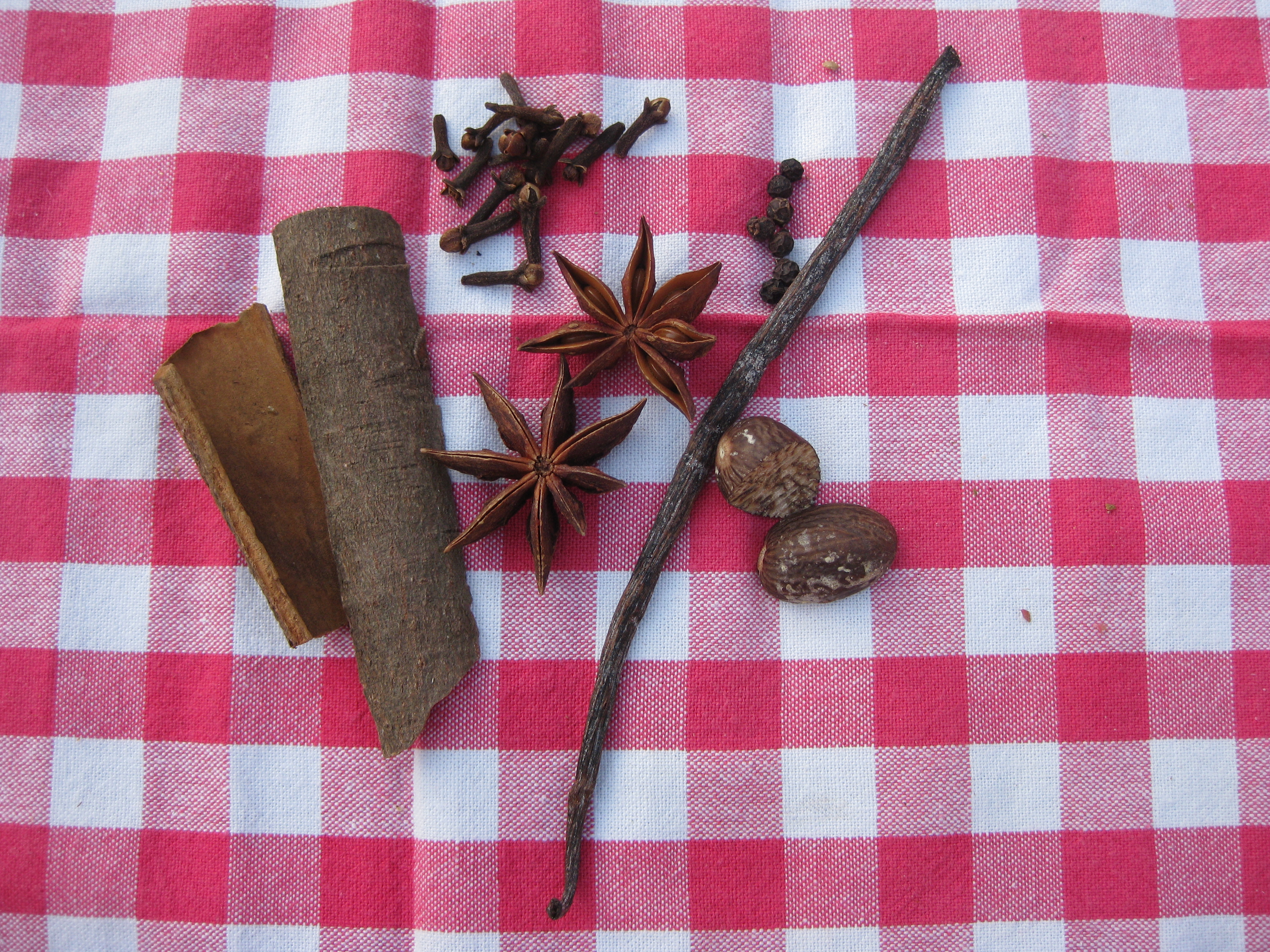
Spices at the ready

When I arrived at her house, with my demijohn (or bonbonne), red wine and eau de vie, her kitchen table was already crowded with all the other ingredients we needed:

Brown sugar cubes – Oranges – Star Anise – Vanilla – Cinnamon sticks

Cloves – Nutmeg – Peppercorns.

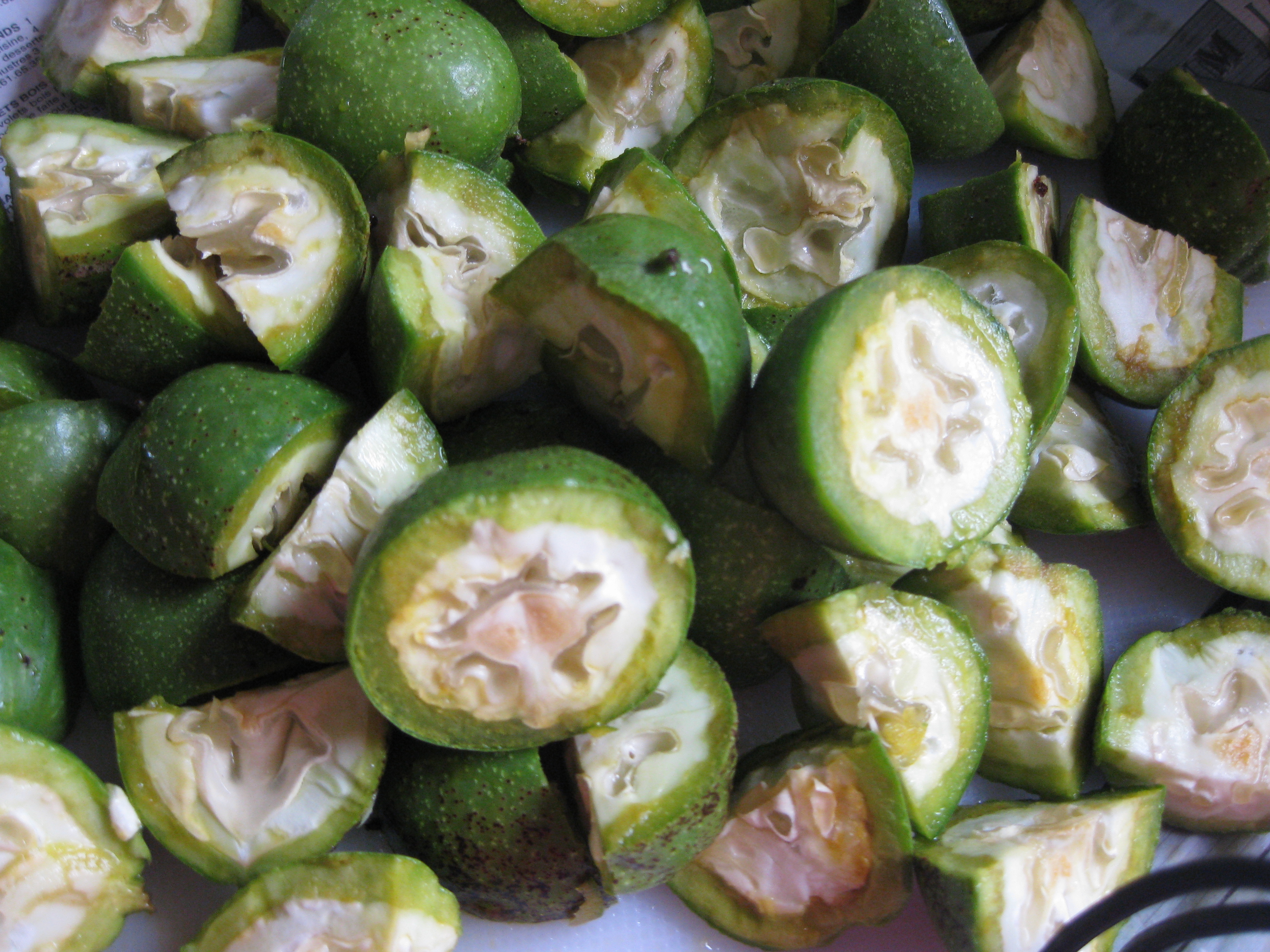
They don't look much like walnuts, do they?

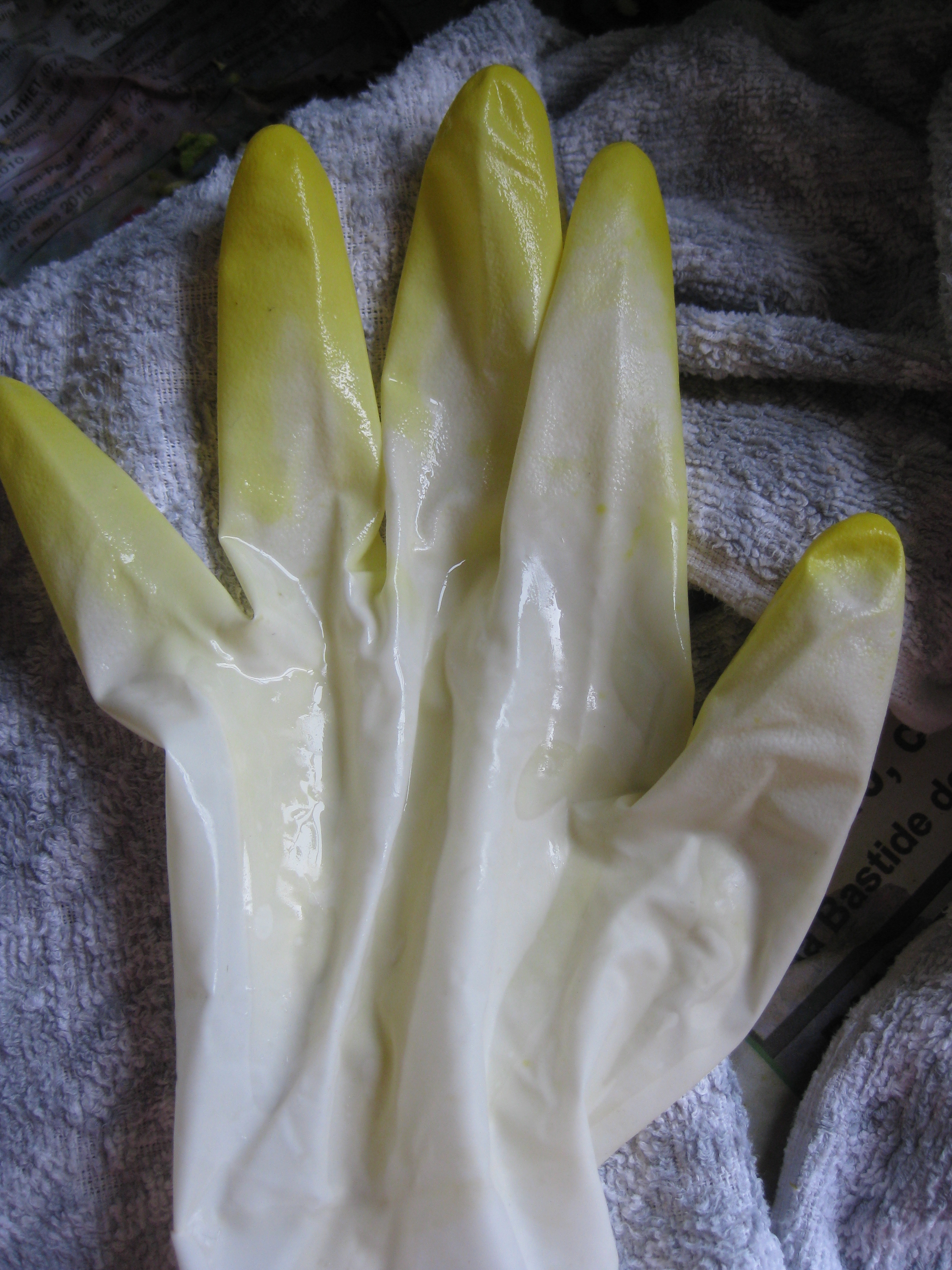
I got the job of cutting the walnuts into four.  You need rubber gloves for this.  Without them, your fingers would be stained a vivid orangey yellow, like those of a lifelong heavy smoker.

These are the hands that cut the nuts.....

Meanwhile, Léonce sliced oranges, measured and crushed spices, and opened bottles of wine – we needed 4 litres each, and one litre of eau de vie.

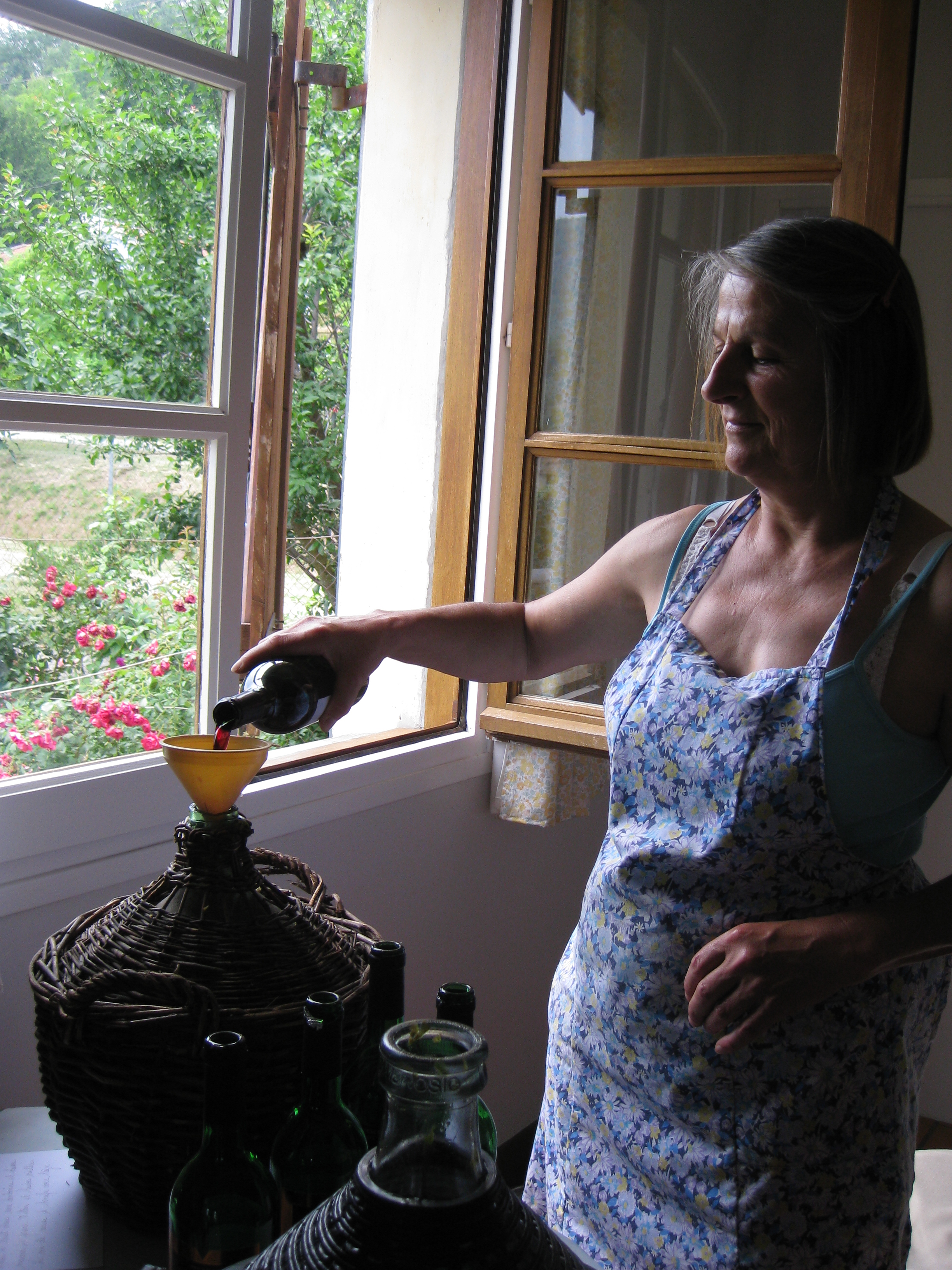
Finally we were ready.  We pushed the walnut segments into our large jars, followed by chunks of orange, the sugar cubes, and then the spices.  All those bottles of wine, all that eau de vie glugged down to mix with everything else, and then all we had to do was cork our bonbonnes, and lug them to a dark cool storage room.

in goes the wine....

We’ll leave them there for 6 weeks for the flavours to blend and develop, then we’ll strain and bottle our concoctions, and leave them again to mature as long as possible.  Don’t do as I do.  Every time I pass, I uncork the bonbonne and have another quick sniff.  Quite wonderful.

You’re not expecting vin de noix from me in your Christmas stocking this year are you?  Oh no, sorry, that’s far too soon.  It’ll be Christmas 2011 at the earliest.  It takes a long time to produce a decent vin de noix.

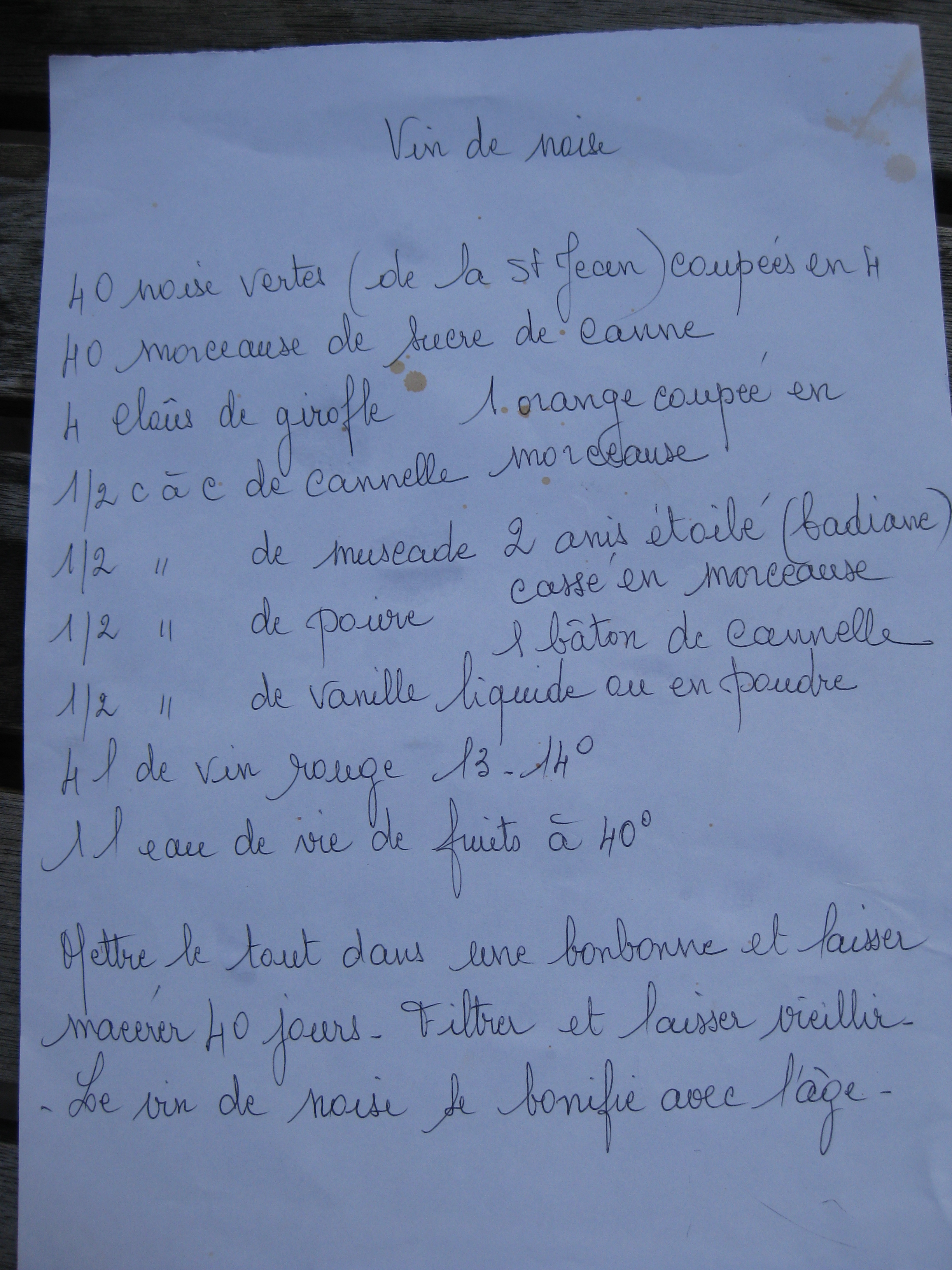
So here’s the recipe…

Vin de noix

The recipe: french version

40 green walnuts, each chopped into 4

40 brown sugar cubes

1 orange, chopped into chunks, peel and all

4 cloves

1 cinnamon stick

½ tsp. grated nutmeg

½ tsp. black pepper

½ tsp. vanilla essence, or a small vanilla pod

2 star anise, crushed

4 litres of red wine (13 – 14%)

1 litre eau de vie de fruits (40%)

Put the lots into a demi-john and leave for 40 days.  Filter and bottle and leave to mature for at least a year.  The older the better.

A table full of good things and ready for action