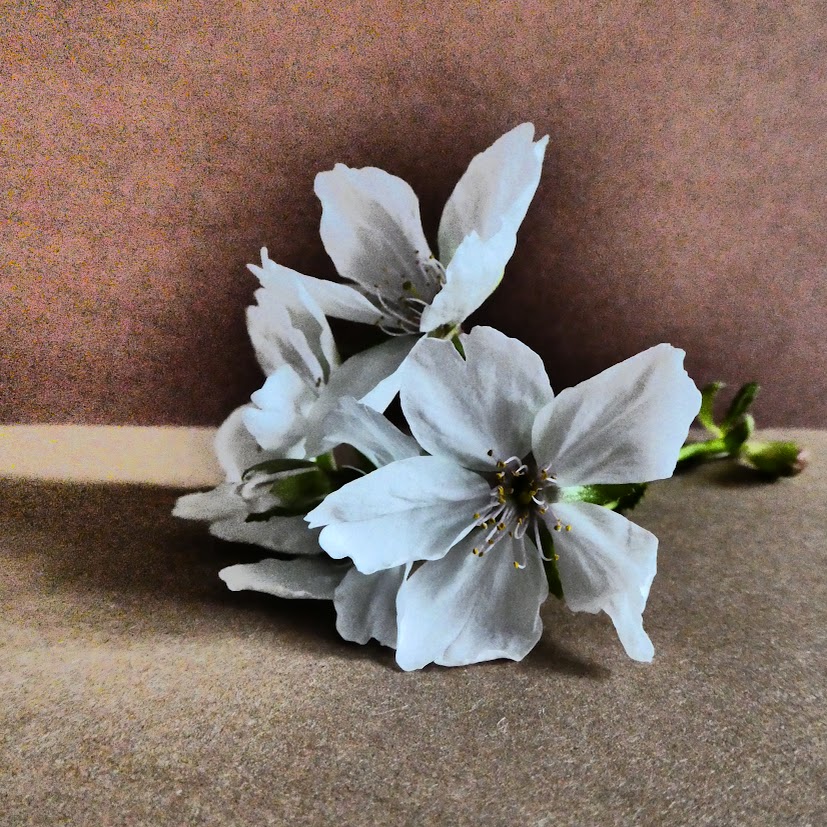
Parts of the blogsphere have turned into a bouquet this week. A bouquet for Cee, blogging supremo, who loved to share her photos (often, though by no means exclusively, of flowers), her tips, her knowledge of blogging and of camera lore. She died earlier this year, and yesterday would have been her 65th birthday. So that’s why bloggers in every continent have sent flowers for her. Here’s mine.
This bouquet has been orchestrated by Dan and Marsha. Thank you – such a good idea, to bring the blogging community together in this way, to celebrate Cee’s’ life.
And you can read a message here from Chris, Cee’s wife of 35 years.
For Becky’s NovemberShadows, as Becky was a good friend to Cee and Chris, and was able to visit her during her final weeks.
On our recent trip, mainly to Alsace, but with sorties to Germany and the Netherlands, we came across several stories from the past which we’d known nothing about, but found engrossing. For the next few Fridays, I’ll share these stories with you.
Unterlinden, Colmar
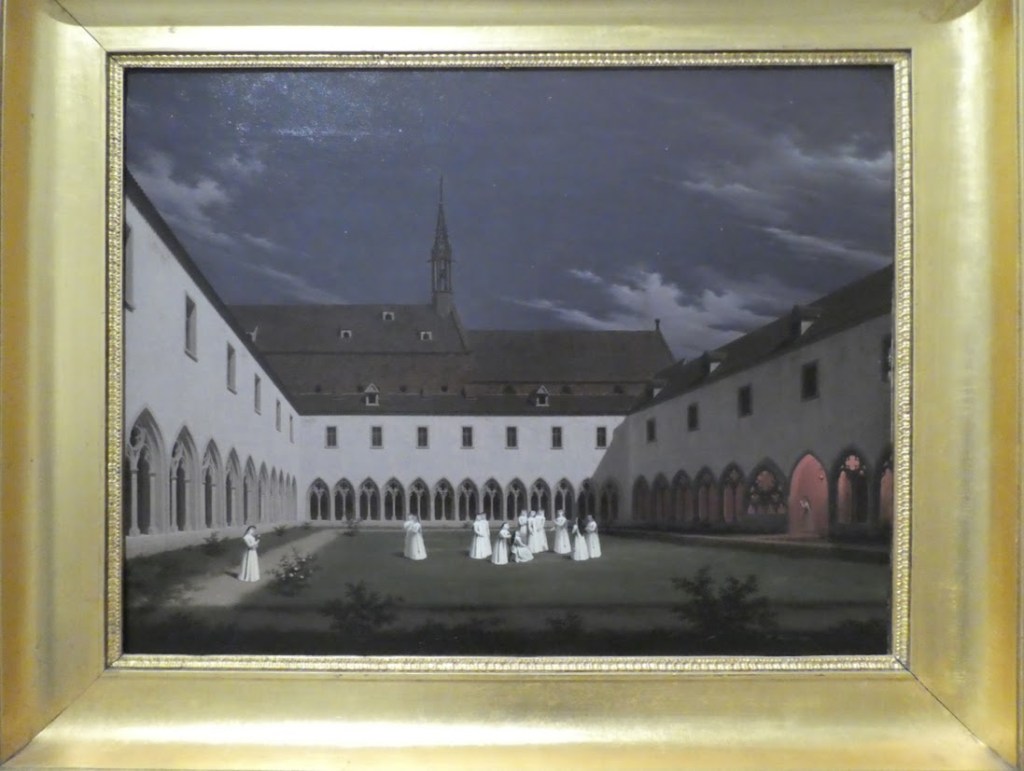
Maybe this post will be a bit History-lite, but it’s still a story worth telling. Back in 13th century Alsace, the Dominican order founded a convent, Unterlinden, in the then outskirts of Colmar. The nuns from this contemplative order were woven into the life of the city until the French Revolution, when in 1793 the convent was confiscated. First abandoned, it then became a military barracks.
Henri Lebert Thann 1794-1862 imagined life in the convent in this oil painting.
In 1846, something rather extraordinary happened. Louis Hugot, the archivist-librarian of the City of Colmar set about bringing together fellow intellectuals and enthusiasts with the aim of setting up a print collection and drawing school. They called themselves Societé Schongauer afer an Alsatian engraver and painter, an important influence on Albrecht Dürer. The following year, they bought the now-abandoned convent and bequeathed it to the city.
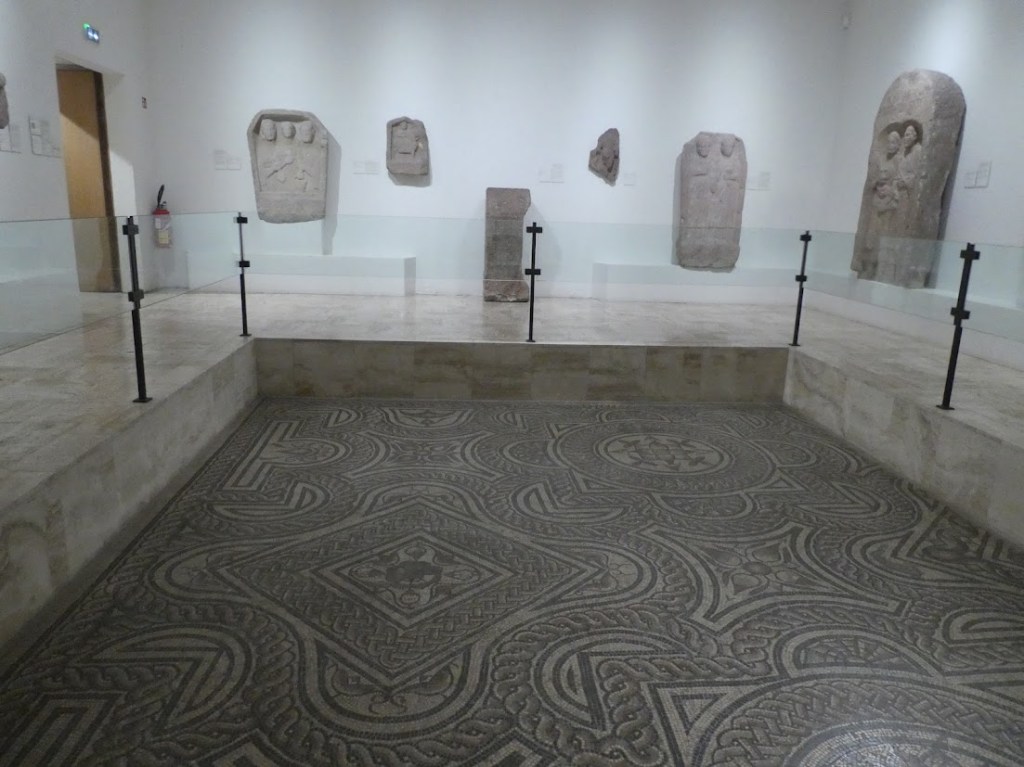
Its earliest display is still here: a locally-discovered Roman mosaic. Here it is.
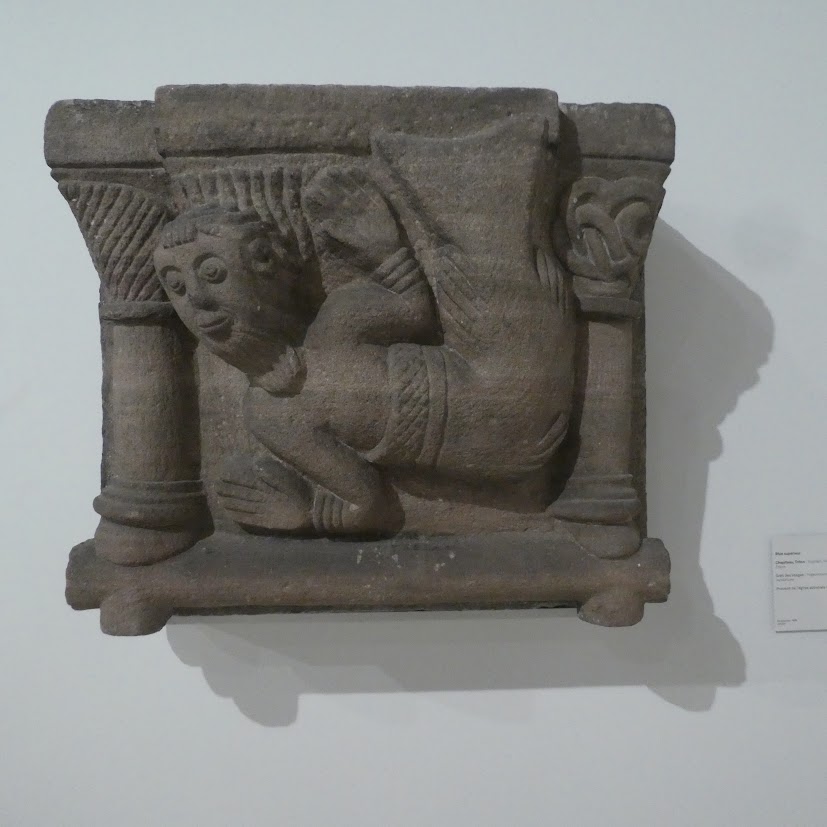
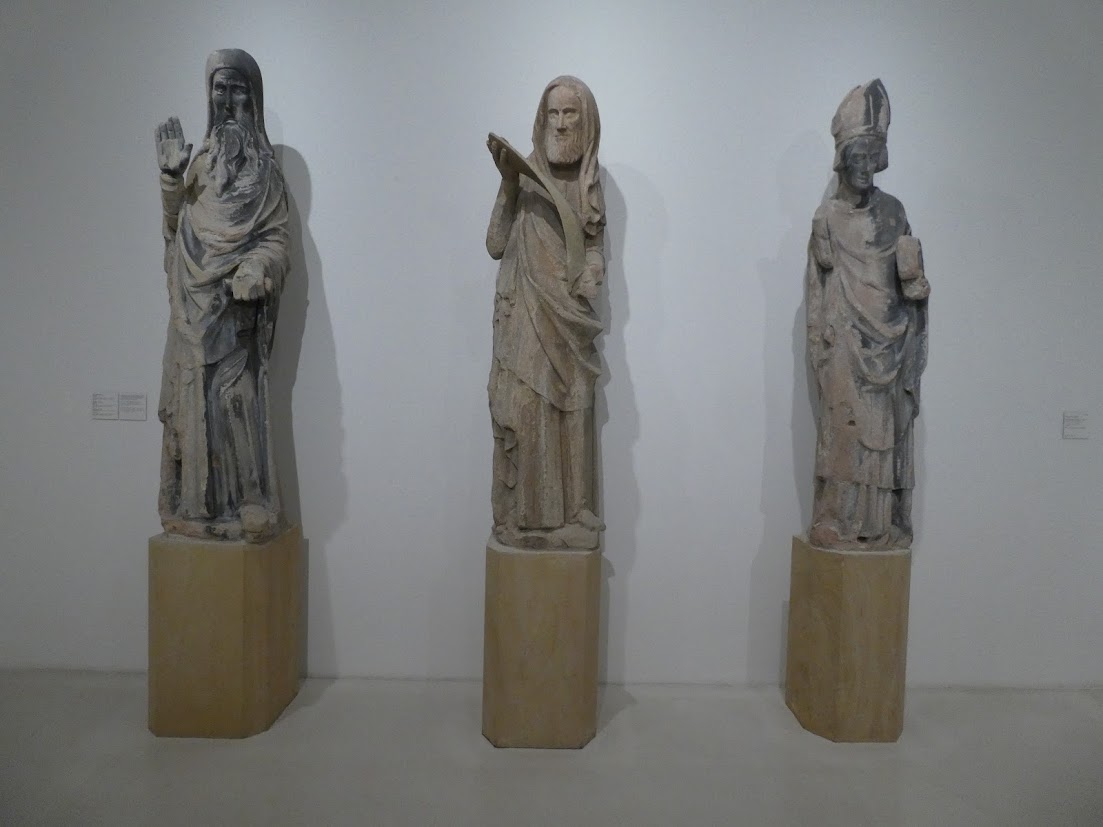
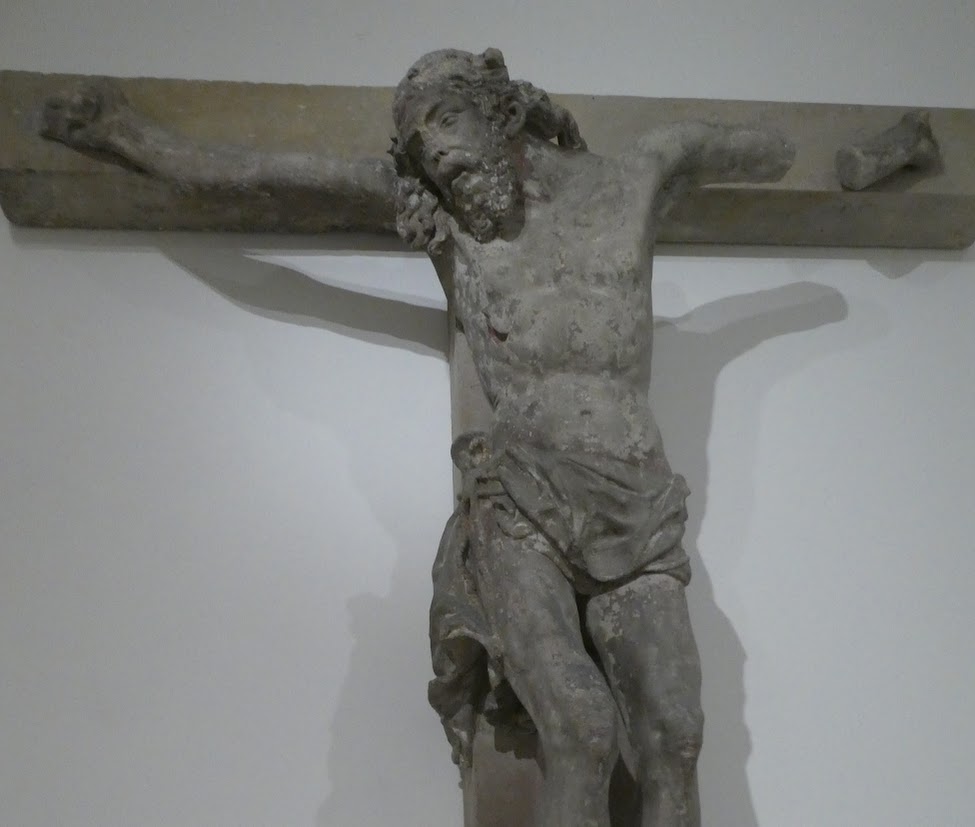
Then, the museum made do with plaster casts loaned from the Louvre. Now, it has an impressive collection of sculpture and altarpieces from a variety of churches in the area.
I was quietly impressed by these displays. Simply presented against white-painted walls, these pieces spoke of their spiritual intent, and I spent a long time in their presence, for the most part alone.
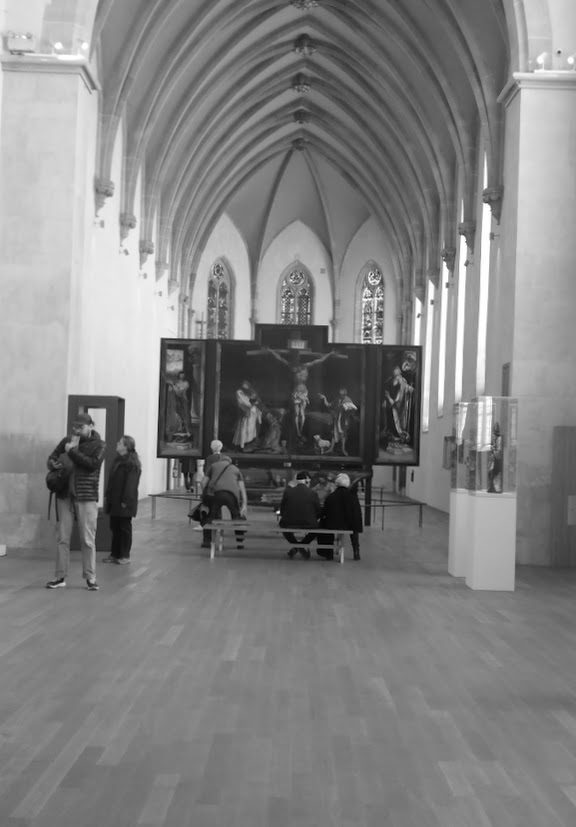
These pieces were all acquired in the early 1850s. But the star of the show, then and now, and the reason why most people visit this gallery is to spend time with Matthias Grünewald’s Isenheim altarpiece. As I did. But partly because I have no good images of it, and partly because it deserves a long appreciation, I won’t discuss it here. This is a good article from the Guardian –here.
Matthias Grünewald’s Isenheim altarpiece.
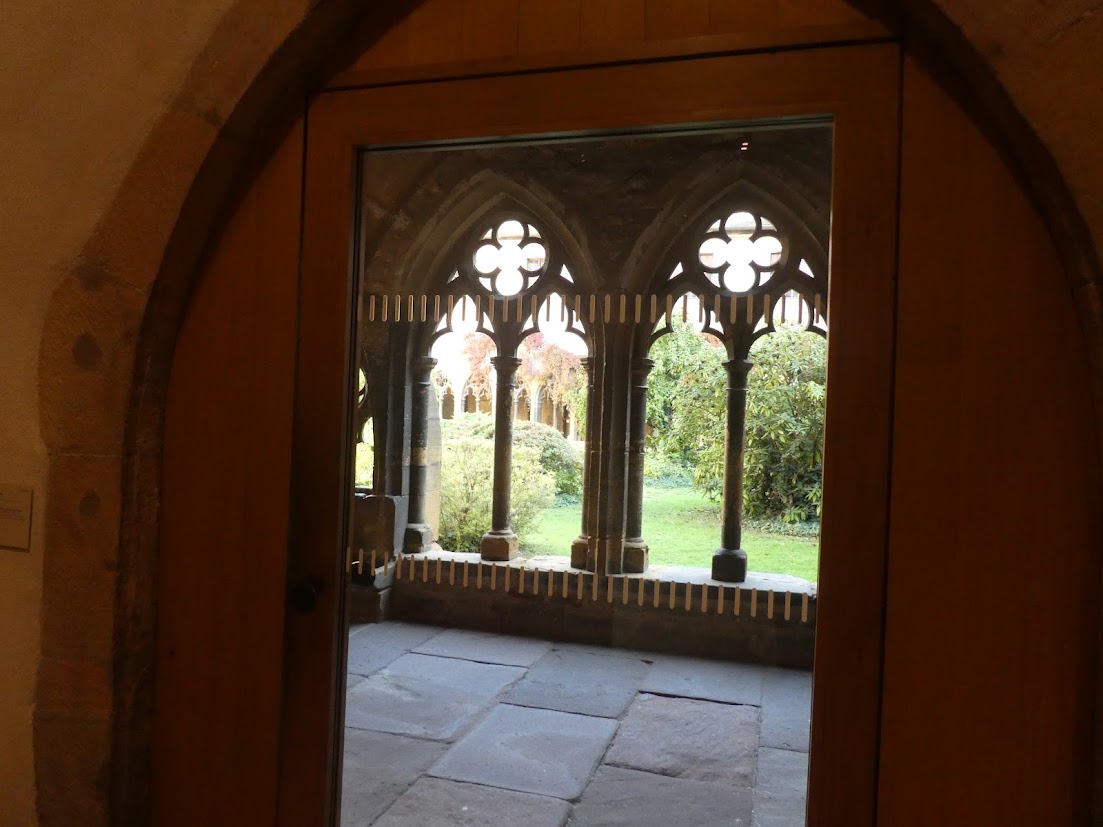
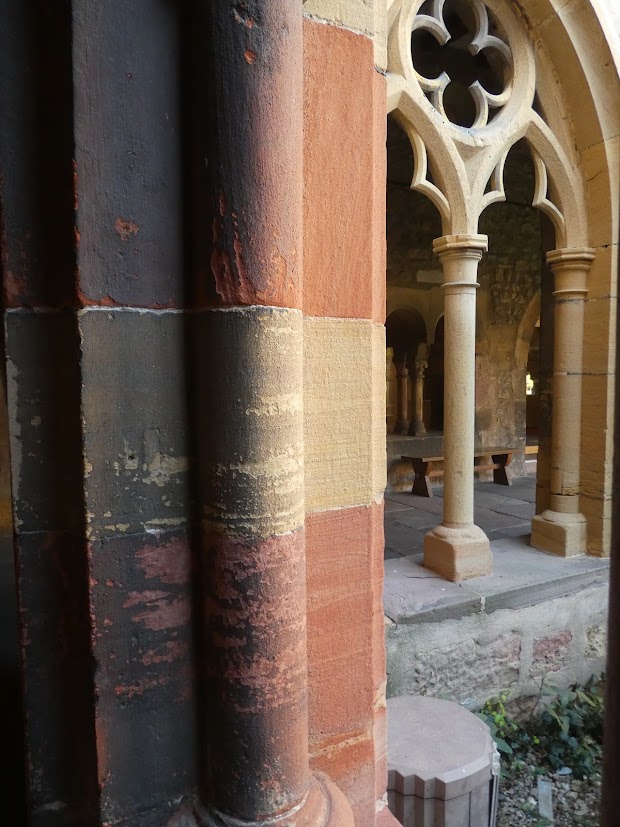
Then there are the cloisters: just the place for more religious statuary.
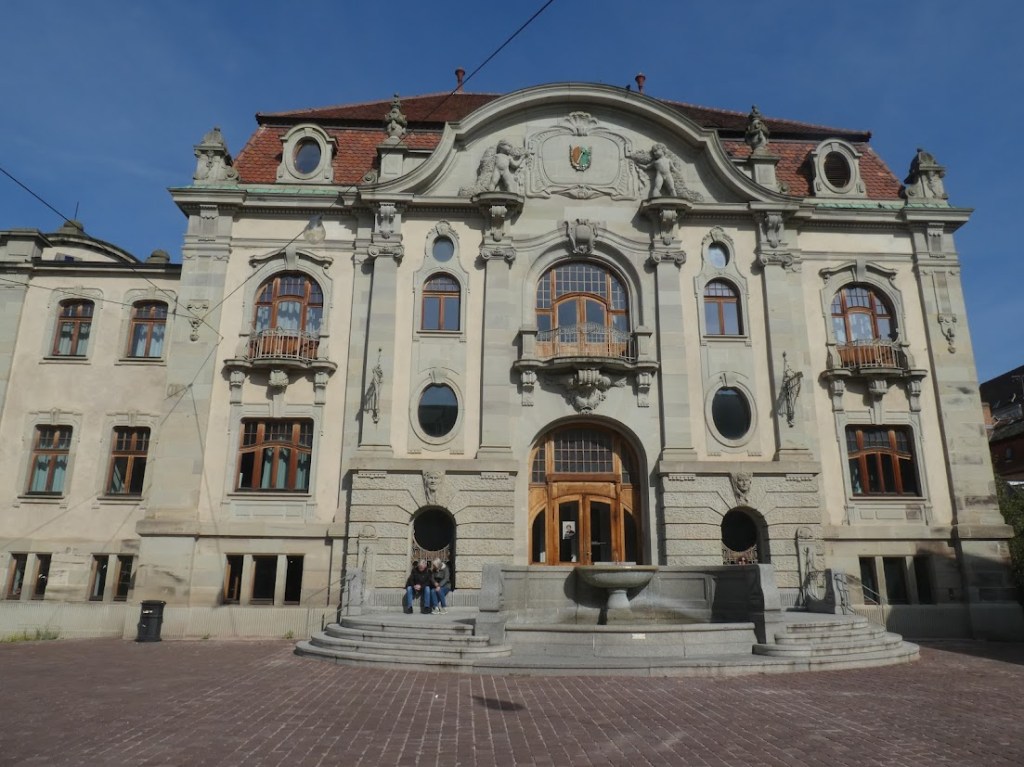
By the early 21st century the museum was running out of space. It was making contemporary acquisitions. It needed a refreshment area. Basel architects Herzog & de Meuron thought outside the box. The 1912 Public Baths on the other side of the road were no longer in use.
The 1912 former baths
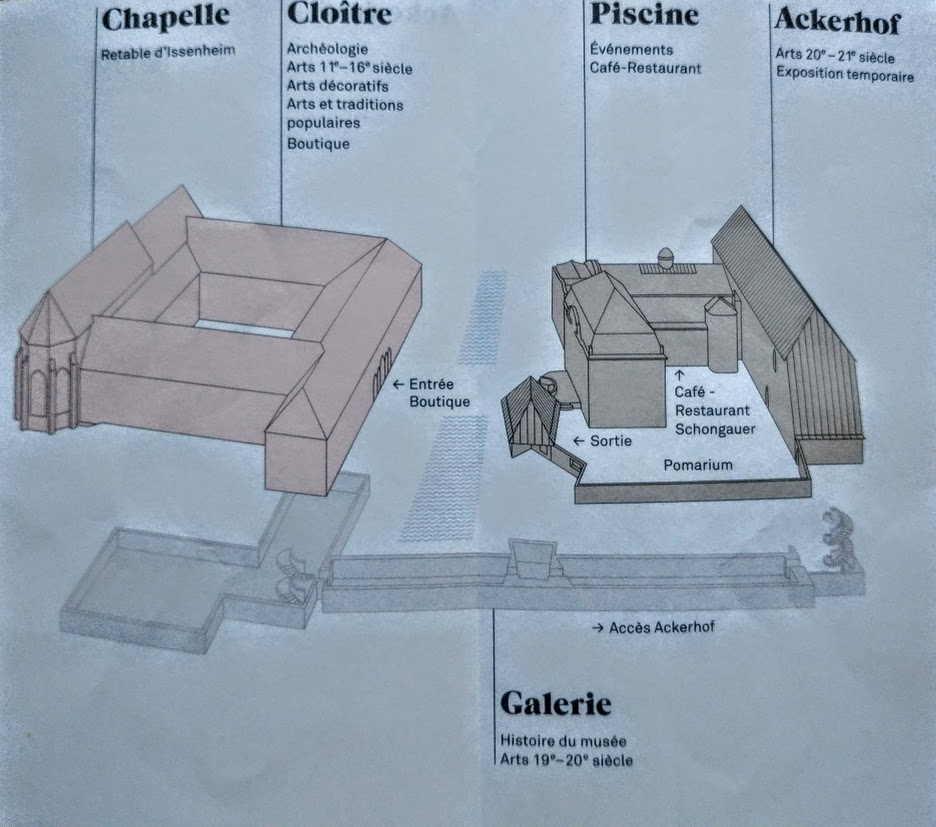
Why not connect the two buldings with an underpass which could also be a display area?
This is the result.
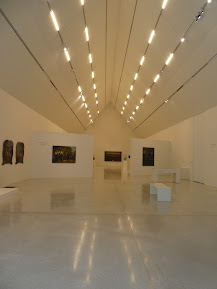
The result is a gallery where the works on display can breathe. Where the newer parts complement the old and reflect its religious past. It’s an exciting as well as a contemplatve space, and I put this gallery down as possibly among the best viewing spaces that I have ever visited.
A new gallery.
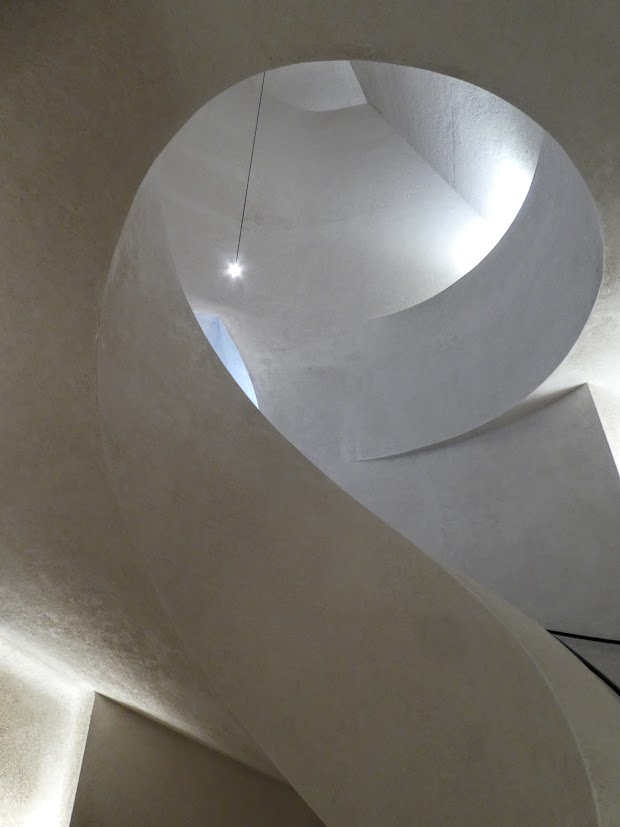
A staircase.
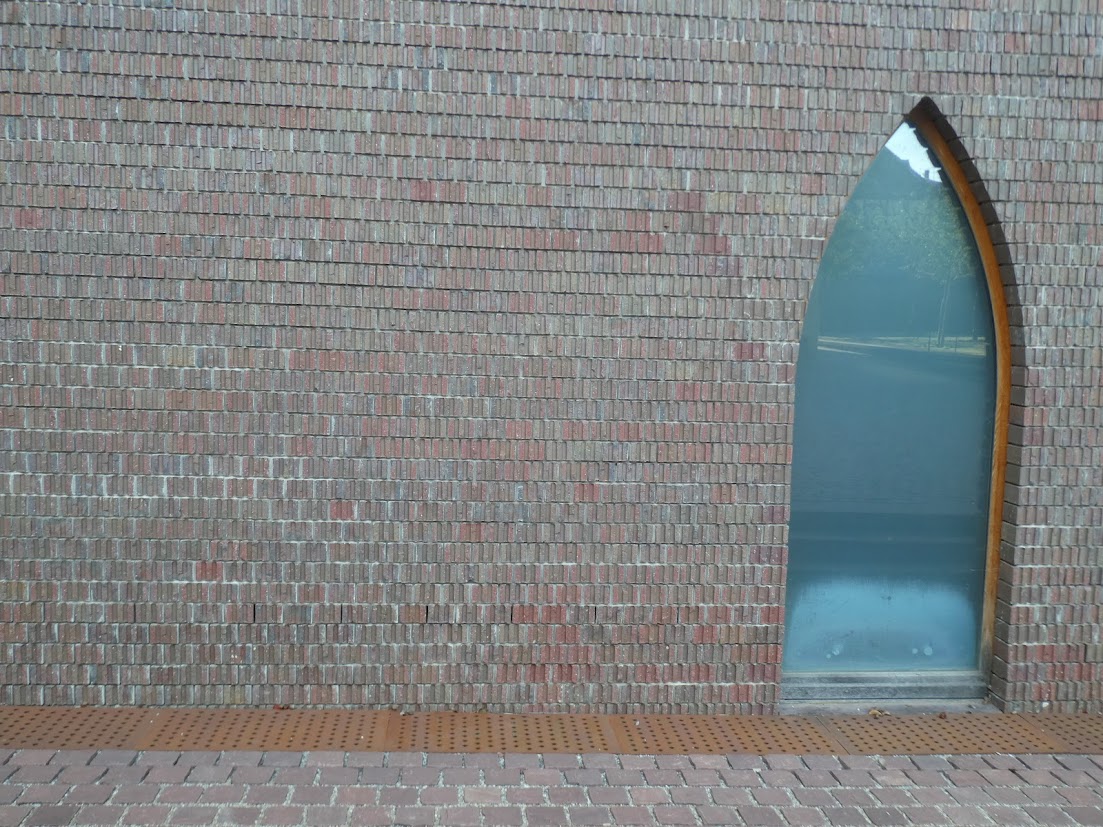
An outside space.
I’ll finish by showcasing two or three of the works which appealed to me.
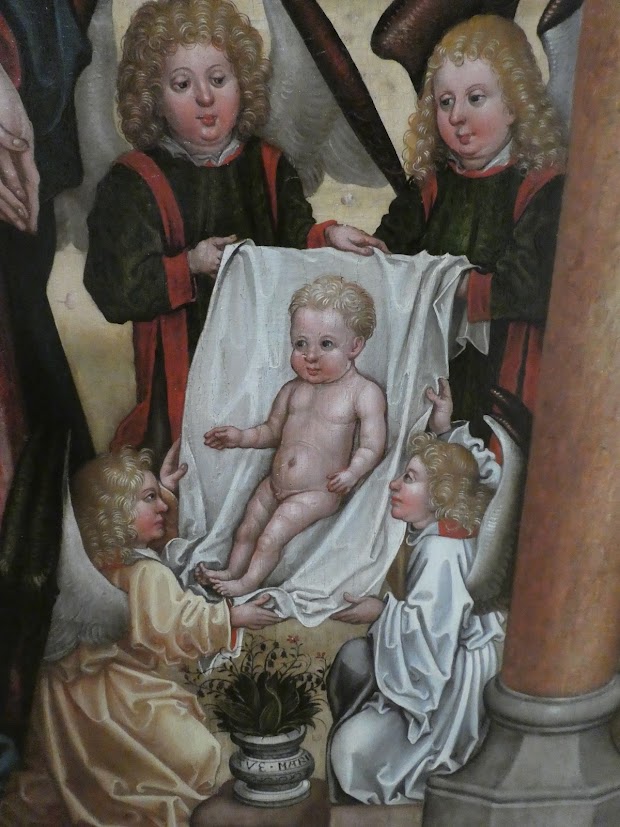
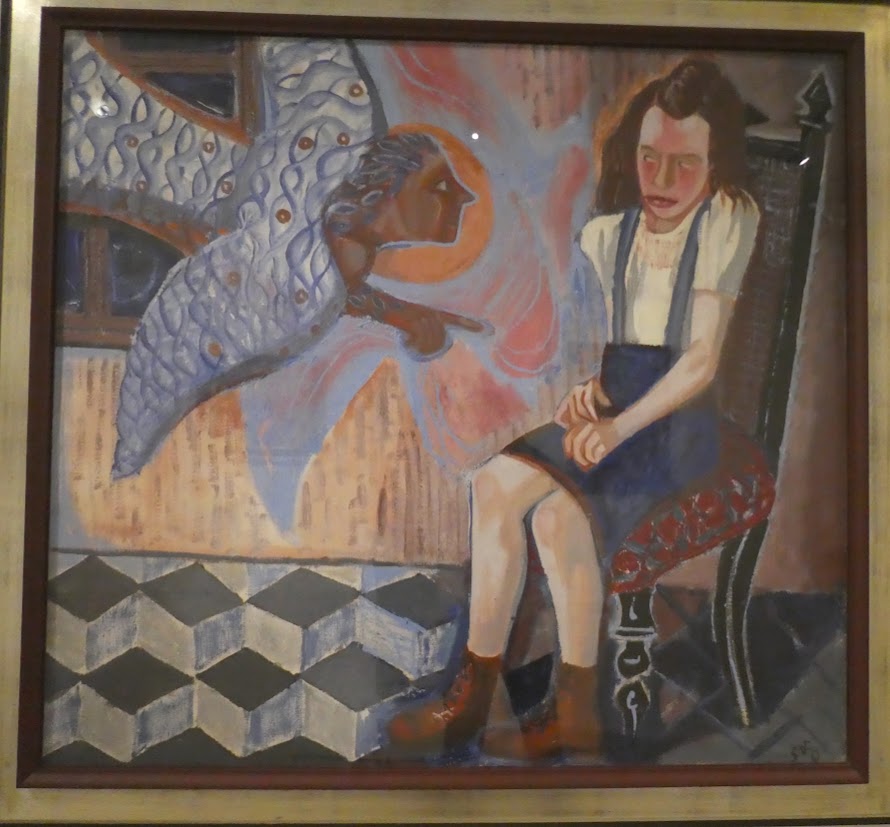
A detail from a 1480 Nativity recovered from an old Franciscan church in Colmar. The infant Jesus is the only one not old beyond his years.A 1950 Annunciation by Otto Dix. Surely, if there was an Annunciation as described in the Bible, Mary might have been caught not at all in her Sunday best, and just plain embarrassed by the whole thing. What me? Sex before marriage? My mum’d kill me. Me? An unmarried mother? I don’t think so. What would Joseph say?Paul Rebeyrolle, La Souche (the Stump) 2005. A composite of various organic and inorganic materials: wood, vines, straw, vegetable and animal fibres, wire, expanded polyurethane foam, resin, mortar, adhesive, paints.
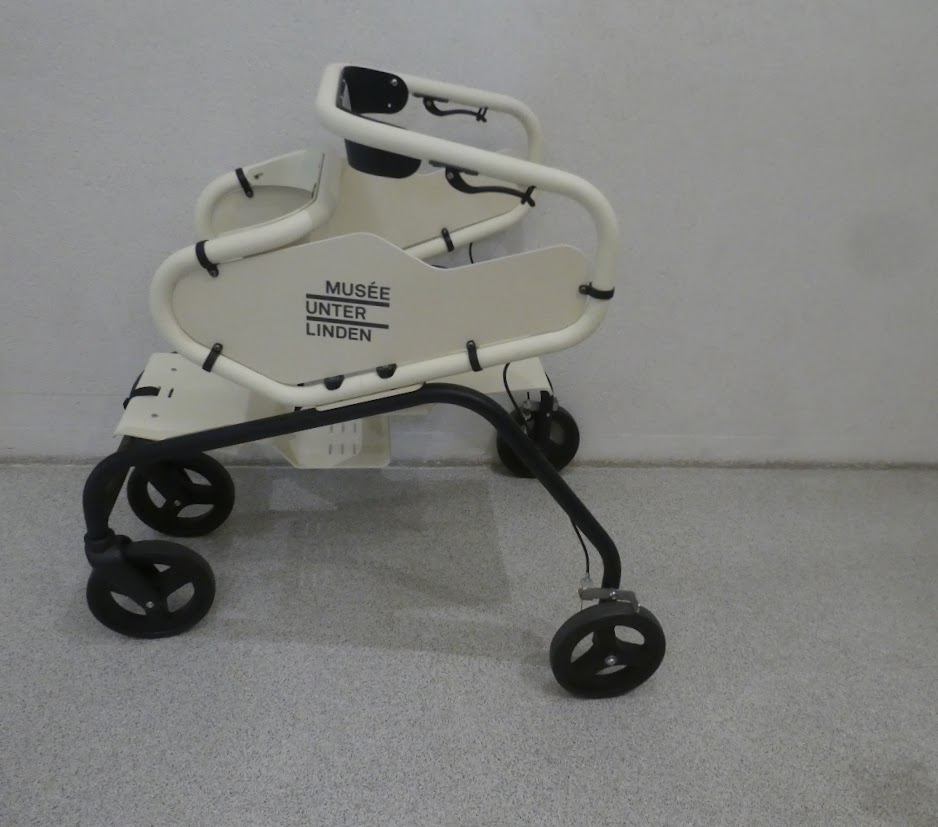
Just a postscript. Malcolm didn’t come with me. He thought he was too tired to be able to spend a few hours standing before a succession of art works. If only we’d realised. He could have made use, for free, of one of these flâneuses, or leisurely strollers. What a brilliant idea!
Borrow a flâneuse! It’s free!
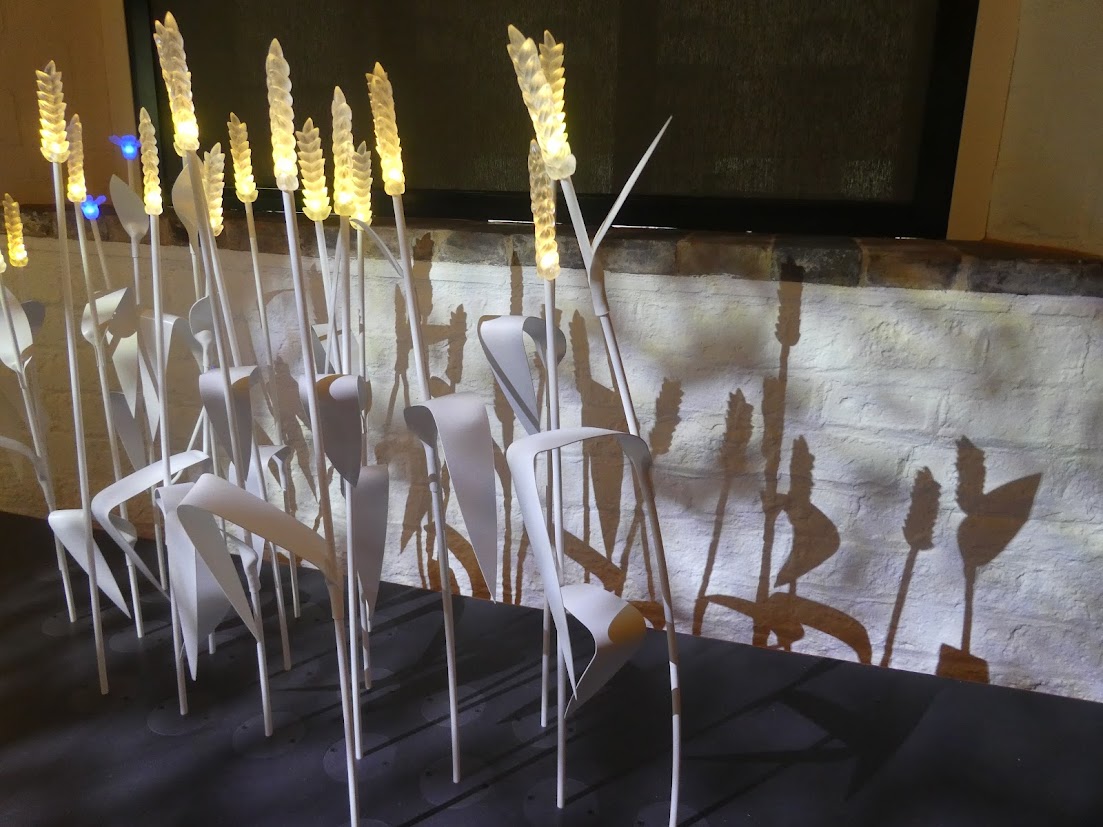
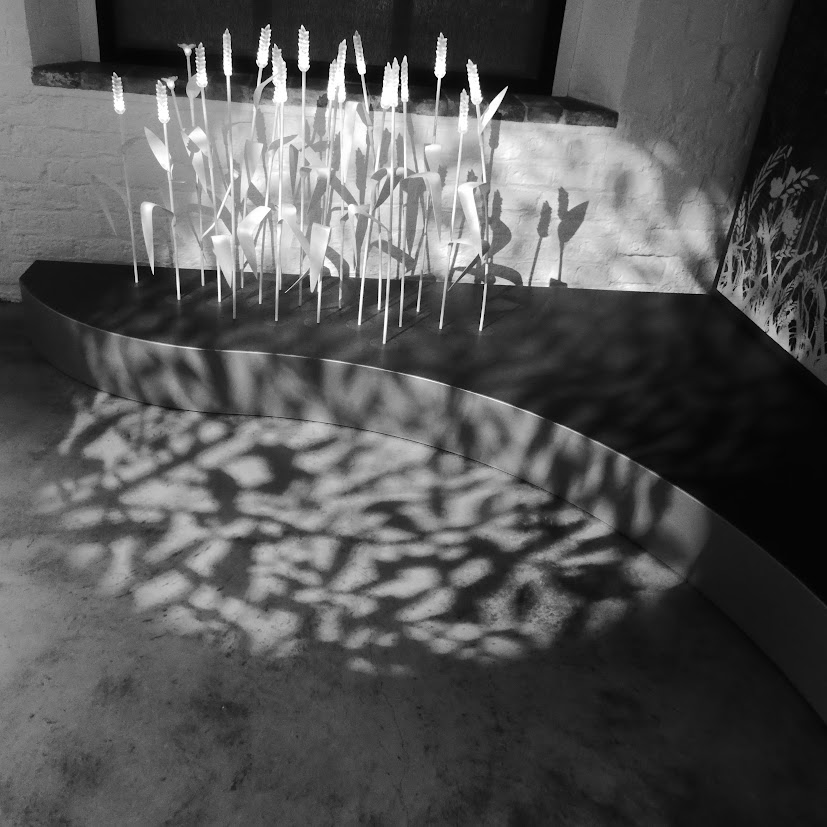
Becky, can you find the image + shadow for NovemberShadows? I hope so.
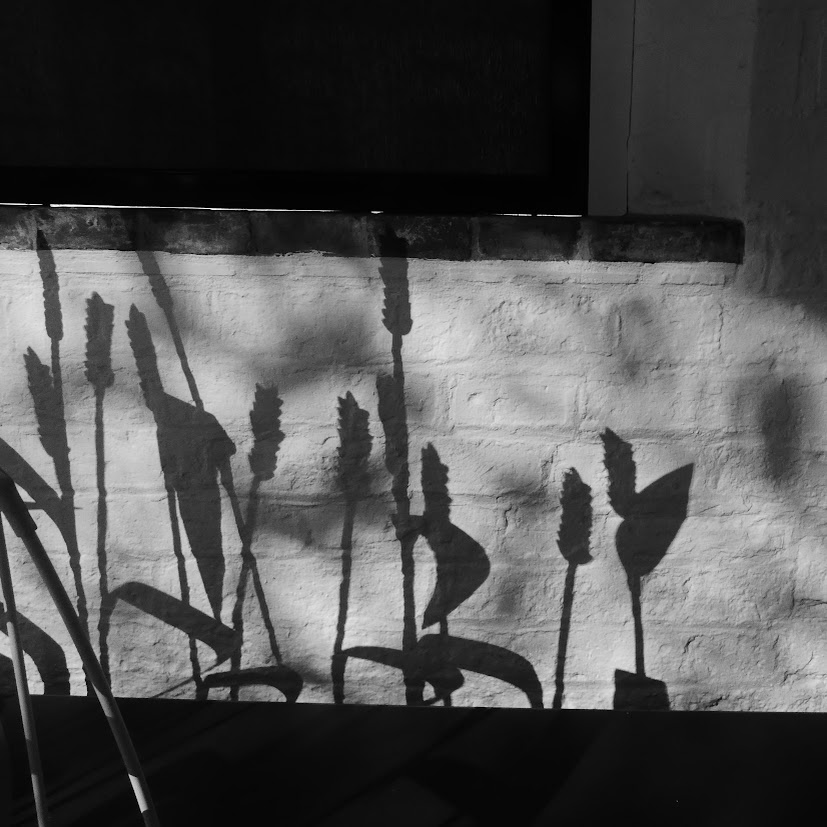
In August last year we were in Shrewsbury. One of the places we enjoyed visiting was Shrewsbury Flaxmill Maltings (it did exactly what it said, once upon a time). I wrote about it here. But I didn’t show you some of the very fine shadows we found. Here they are now:
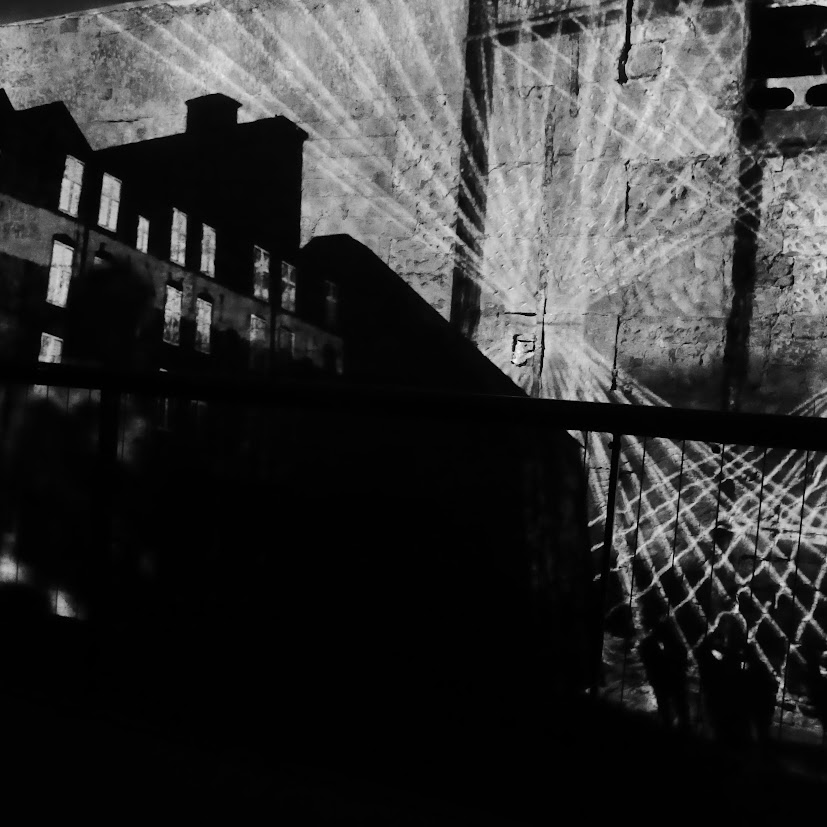
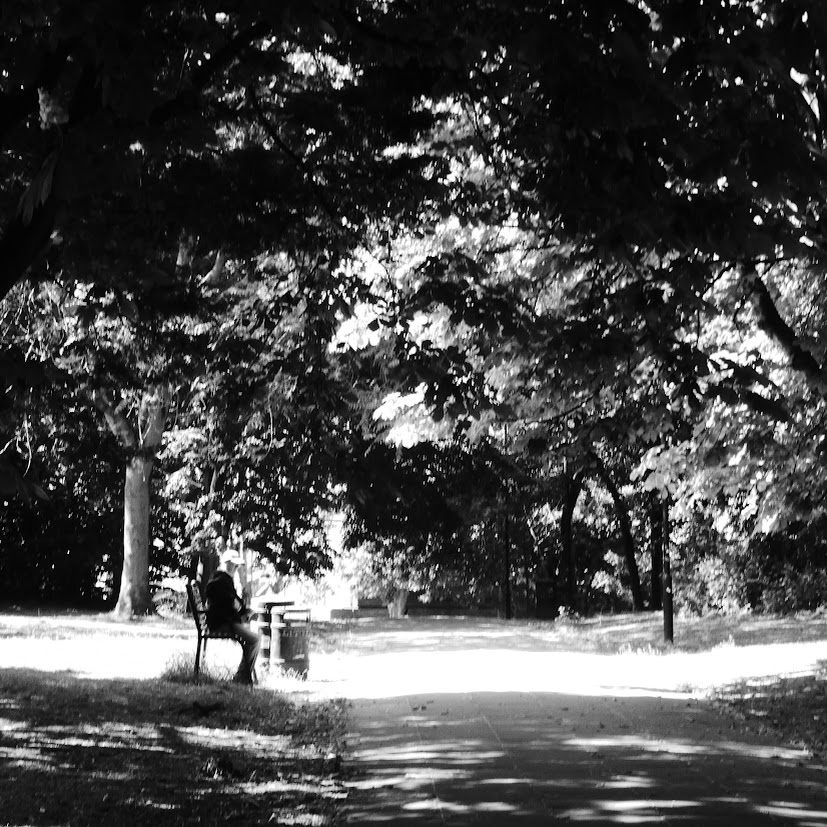
We’re off to London today, to catch some shadows in its grittier streets, to satisfy both Becky’s NovemberShadows, and Leanne’s Monochrome Madness. But first, we could relax for a few moments in a park near Canary Wharf, as shown in the header photograph.
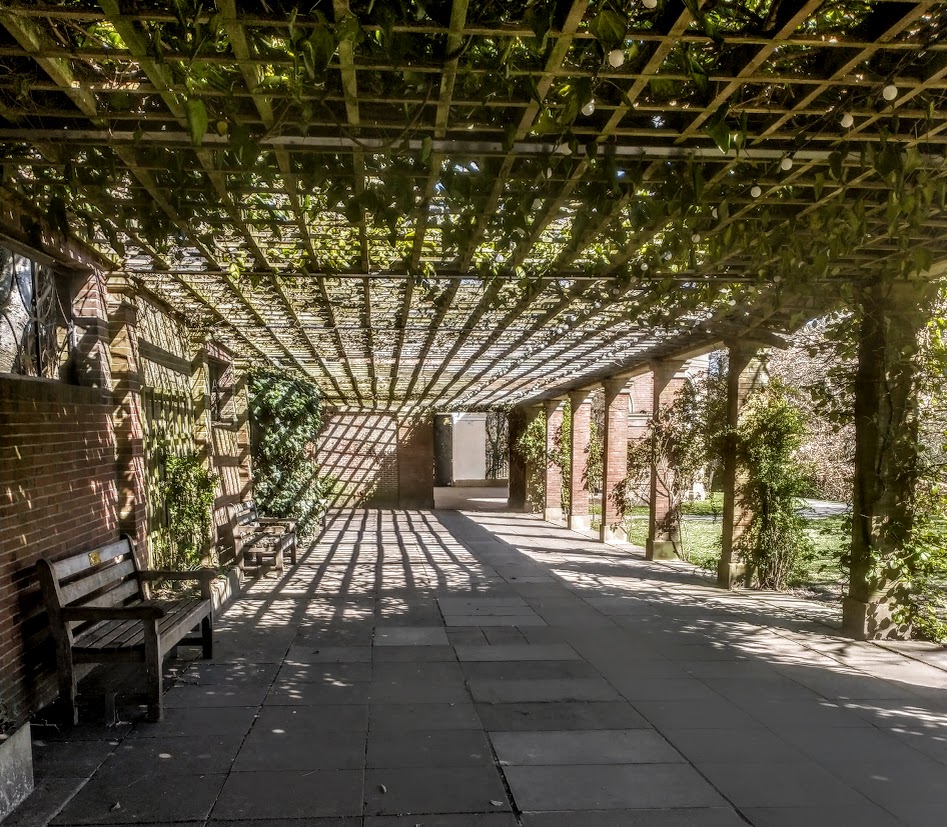
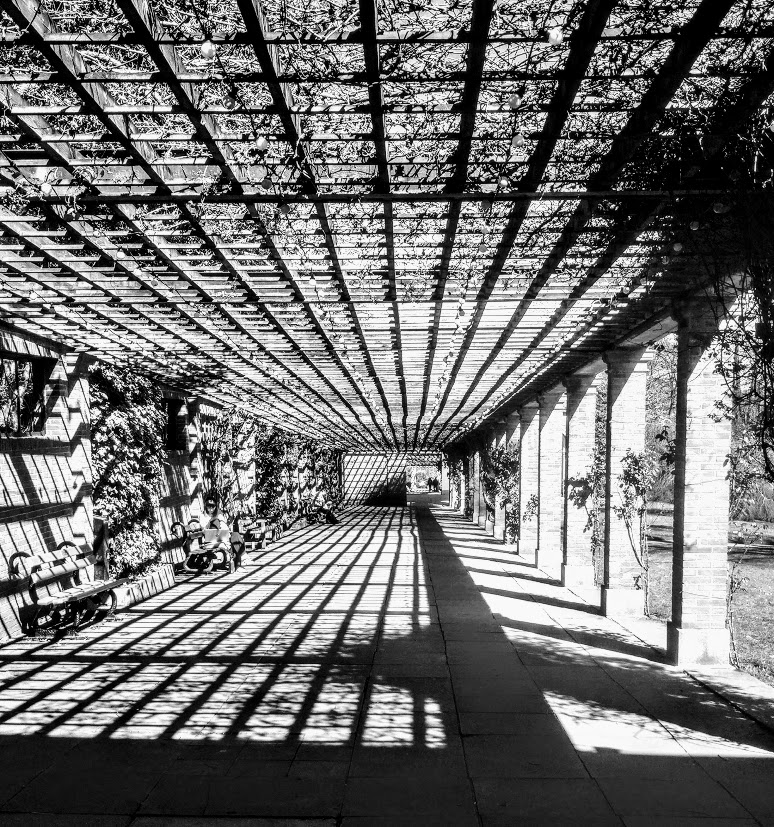
This relaxing spot in the Valley Gardens in Harrogate is one I’ve shared before. But the shadows are so very distinctive, they deserve another outing for NovemberShadows, I think.
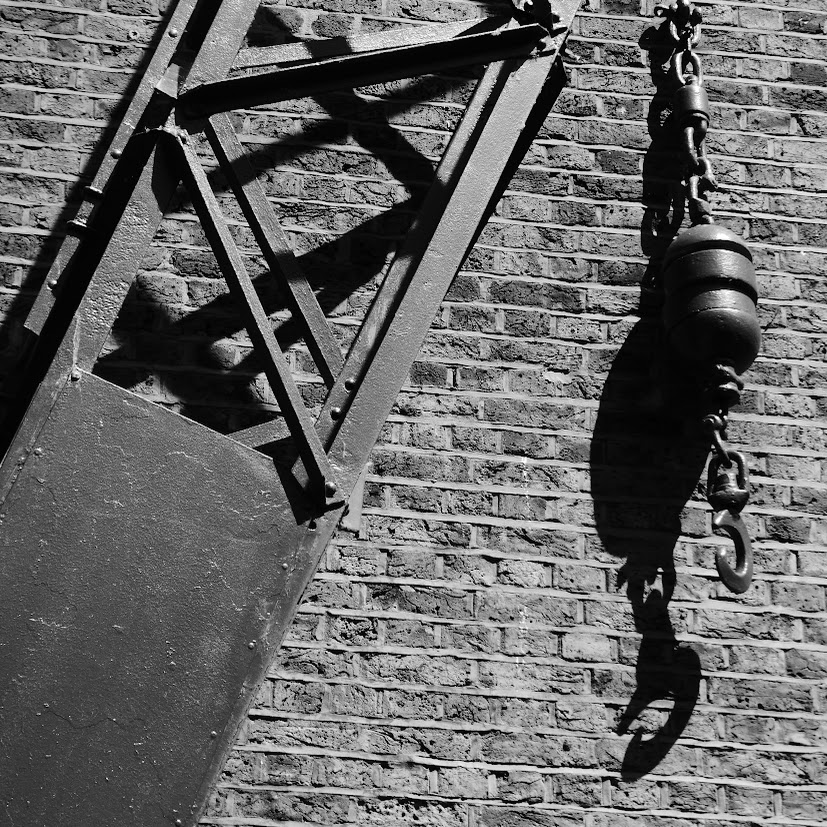
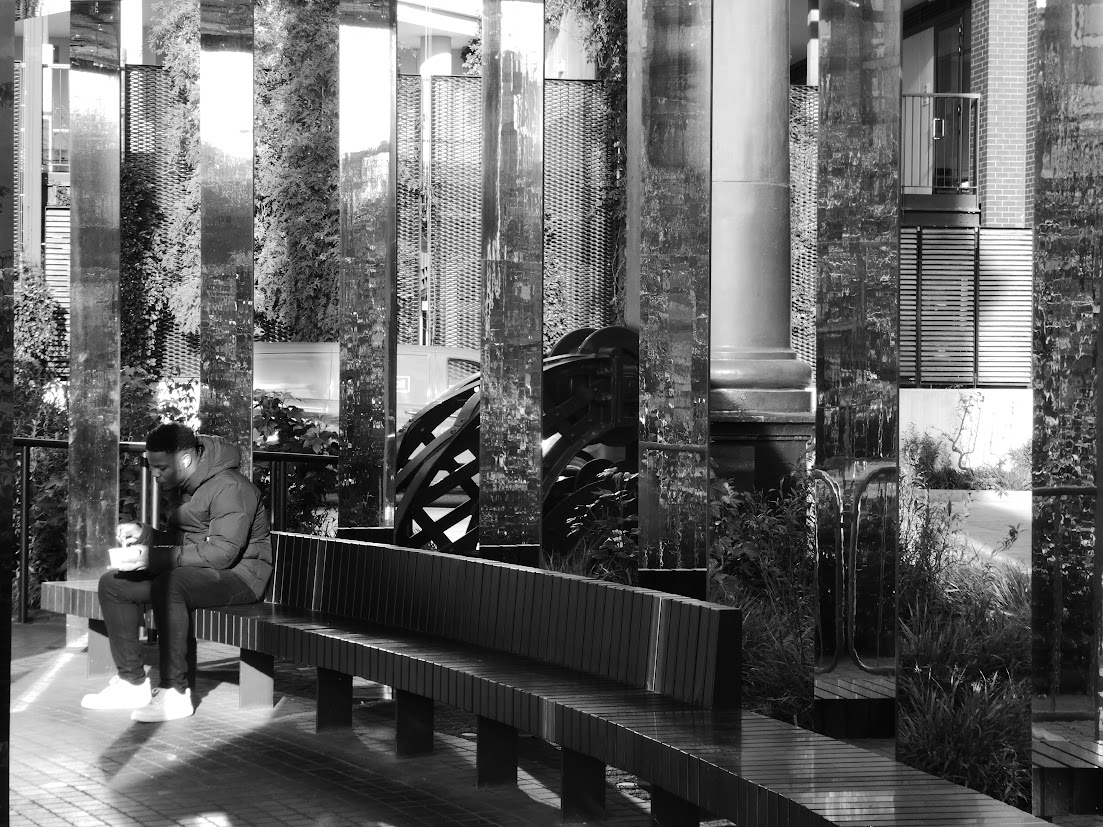
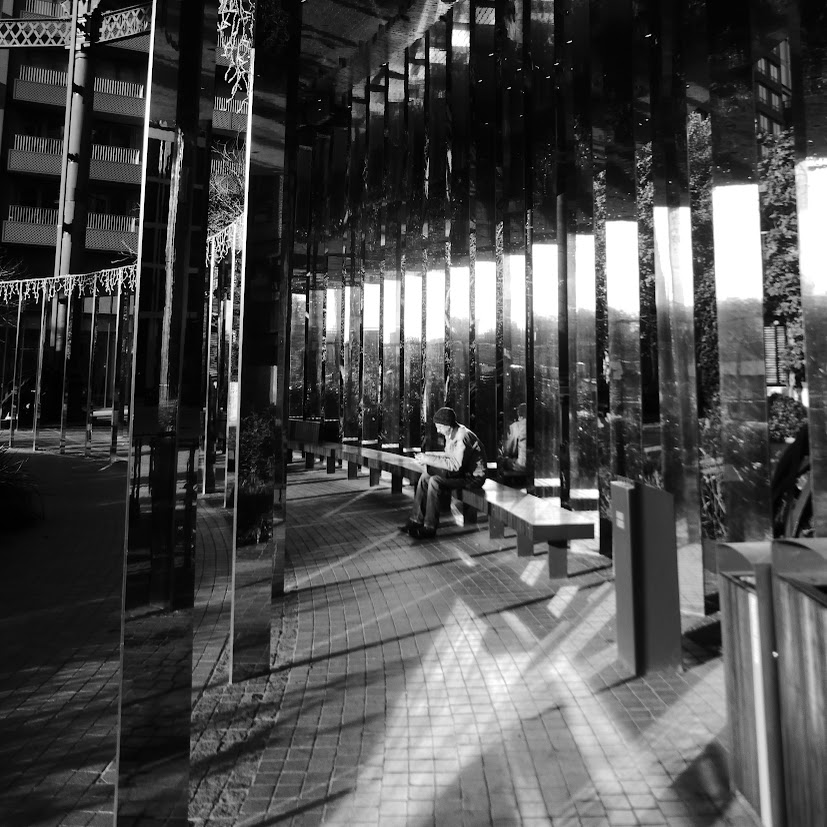
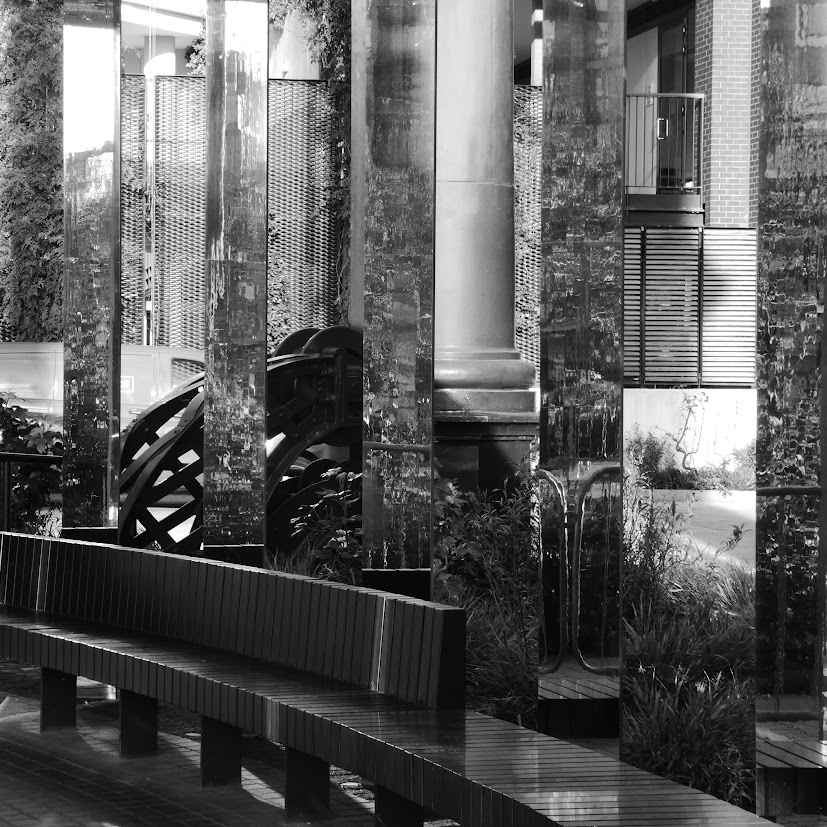
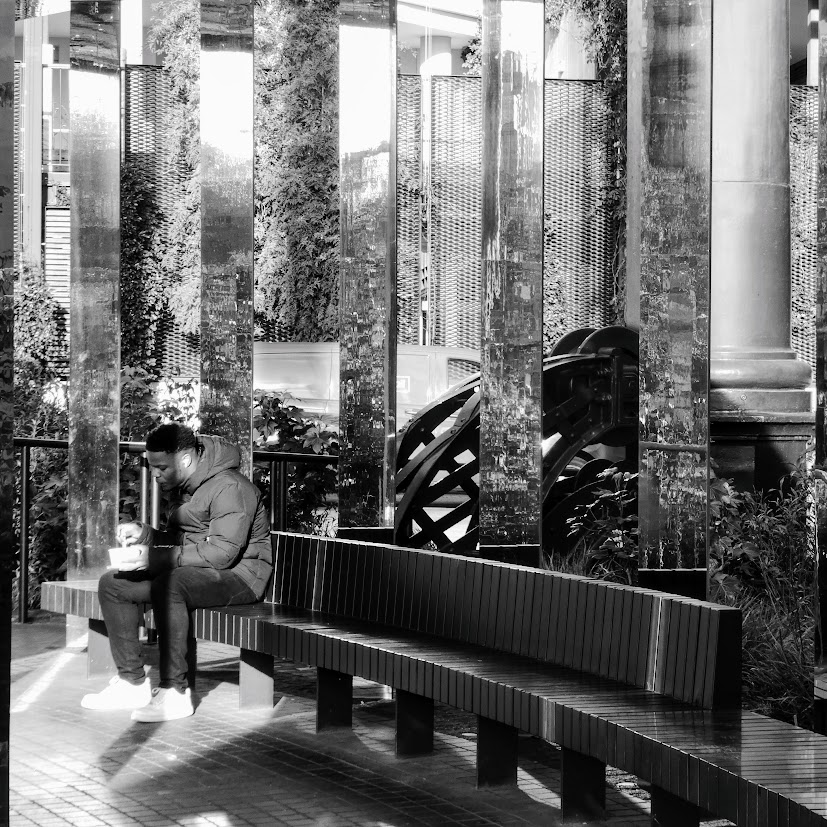
A mooch round a sheltered area of London’s Gasholder development revealed plenty to deceive and intrigue the eye for Becky’s NovemberShadows, and Jude’s Bench Challenge.
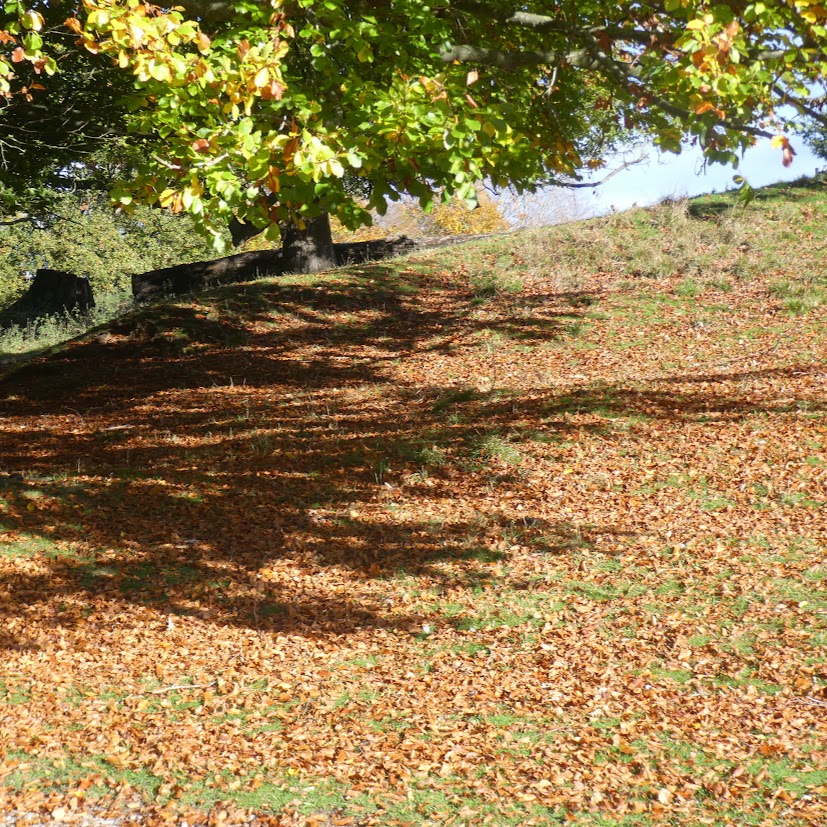
Shadows fall below this venerable sweet chestnut tree.
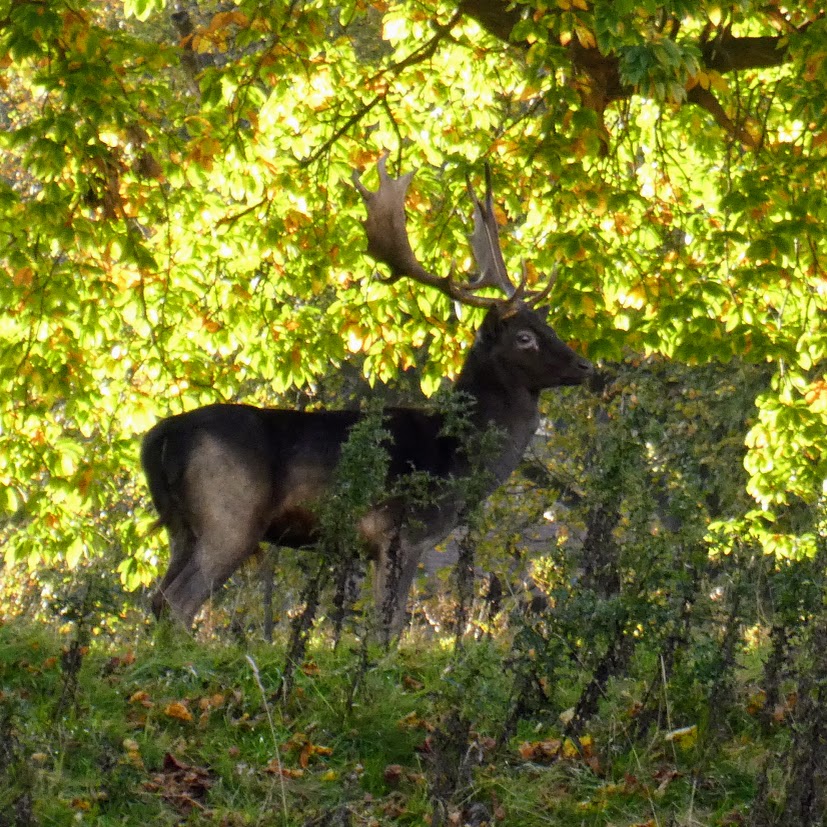
To begin a month of Shadows for Becky’s Month of Squares, I bring you a photo from Studley Royal, where the rutting stags vie for attention with the autumn colours.
Probably too young to join in the rut, this stag poses against dappled shadow.
Thank Becky, for being Queen of Squares once more.







 From Pyrenees to Pennines
You must be logged in to post a comment.