Our starting point for this month’s Six Degrees of Separation Challenge is The Turn of the Screw by Henry James. Our job as participants is to show how one book leads to another, each link taking us further and further from the original (maybe).
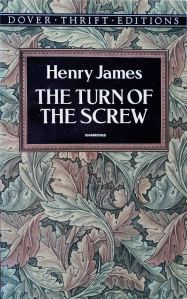
I’m linking Turn of the Screw with a detective story set in present-day Venice. Bear with me. I’m a big fan of Commissario Brunetti who lives there with his family. Enjoying the moments that Brunetti spends at home or ranging round the city he loves for all its faults are a real reason for reading Donna Leon’s books. Brunetti’s wife Paola teaches at the university, and she’s a big fan of Henry James’ writing. I’ll put Trace Elements into the mix, as it’s the last Donna Leon I read.
I like Leon’s writing because she summons up Venice and day-to-day life there so vividly. Graham Hurley has a similar talent. His detective, Joe Faraday, lives in Portsmouth, as I once did. Faraday’s life is one of juggling crime, endless paperwork, a bitty personal life, and birdwatching. It feels very real. Turnstone is the first, but by no means the only one of his books that I’ve read.
Birdwatching had me remembering A Shadow Above. The author, Joe Shute loves ravens. Part natural history; part history; part an exploration of the many legends that this bird has fostered; part investigative journalism; part personal history, this is an engaging, immersive read that goes a long way towards explaining why ravens have a special place in our history.

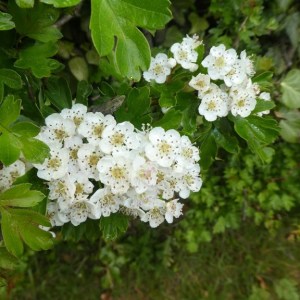
And so to another author who’s immersed in the natural world – Melissa Harrison. The first book of hers that I read was a novel: At Hawthorn Time. Even more than the involving story following the lives of a couple with a dissolving marriage newly arrived at the village; a near-vagrant and a disaffected young man, I relished her descriptions of the countryside, whether observations of plant and bird life or a litter strewn roadside edge. Her characters rang true, as well as her clear-eyed descriptions of village life.
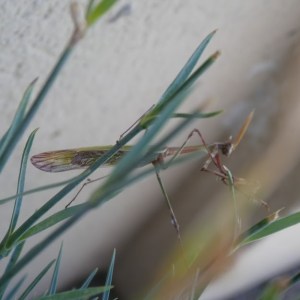
This reminded me of a non-fiction book, a real good read: A Buzz in the Meadow: the Natural History of a French Farm, by Dave Goulson. This is a delight. The catalyst for writing it is his home in the Charente, bought so he could provide home, in the form of an extensive meadow, to a huge variety of wildlife, specifically insects. This is no Aga-saga of a Brit in France, but a mixture of reminiscence, hard scientific fact, vivid stories of his own experiments and research, and the work of others. It’s a page turner and a tale well told with humour, and an eye for the telling detail. I’m no scientist, but I was absorbed from start to finish.
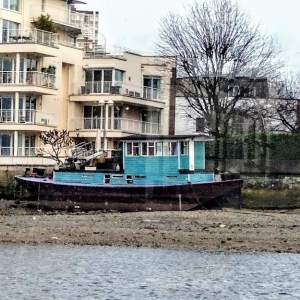
Goulson knows his home patch intimately. Lara Maiklem knows the London Thames intimately. She’s a mudlarker, who scours the banks of the river looking for its hidden history whenever she can. World War weaponry, Victorian toys, Georgian clay pipes, Tudor buttons, Roman pottery, even Neolithic flints are all there, waiting to be found. In Mudlarking, Maiklem writes an entertaining account of her finds and adventures, stitching them into a readable history of London itself: the growth of the city and its changing fortunes.
So there we have it. Six books following no kind of theme. But they’re the kinds of book I’ve liked and have enjoyed over the last year or so.


October Squares: #Kinda Square

.


 From Pyrenees to Pennines
You must be logged in to post a comment.