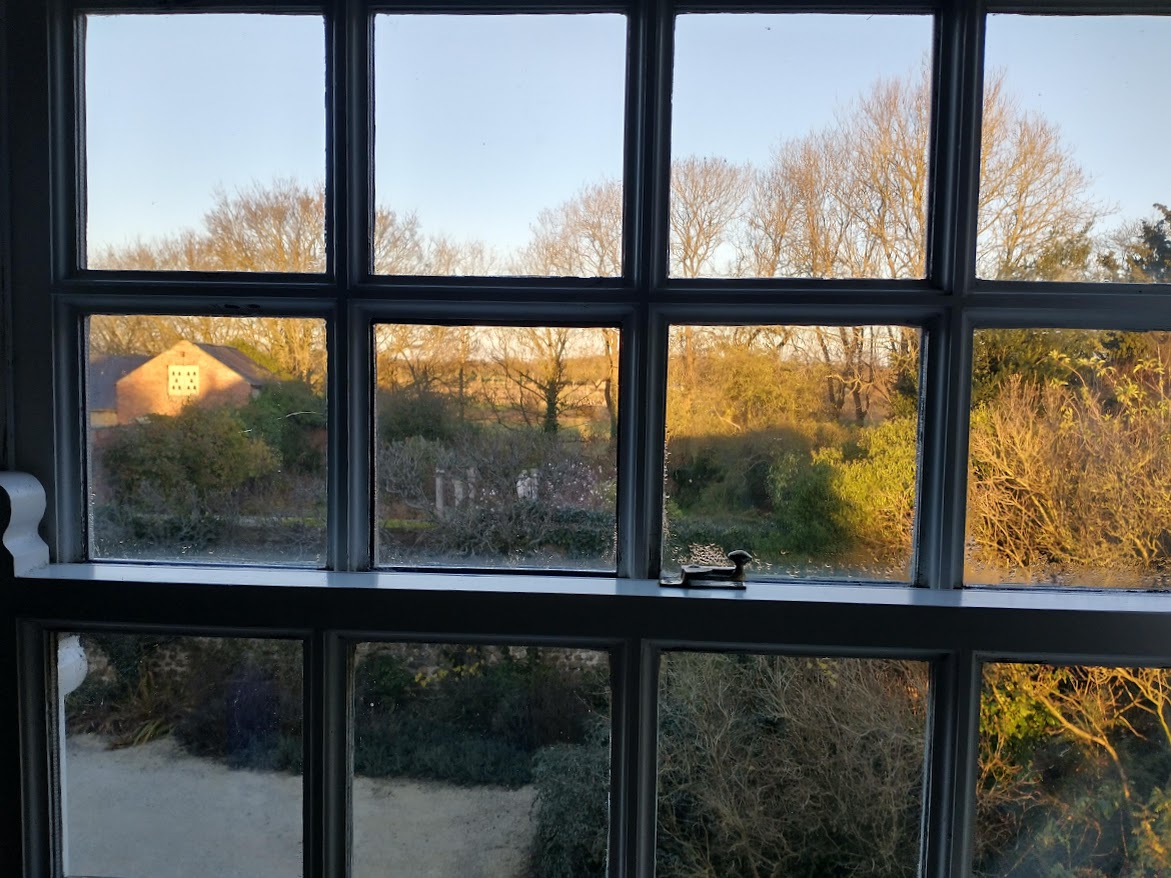
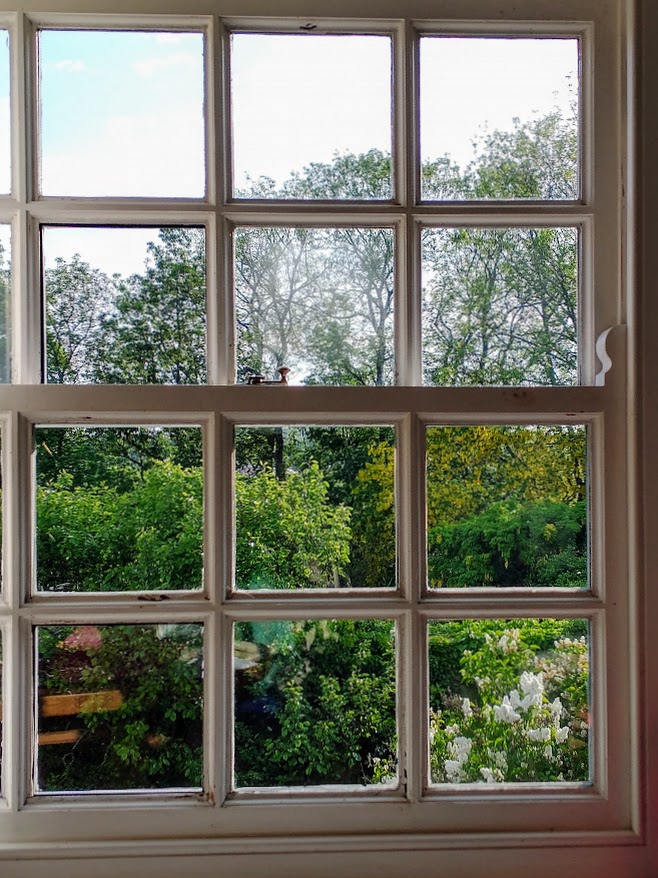
I am sitting at the kitchen table and looking out of the window. This is where I measure the changes of season; decide on what the day’s weather will bring; enjoy the fuchsia, pink and grey tones of the winter sunrise and examine the spiders’ webs that lace our small window panes at this time of year.
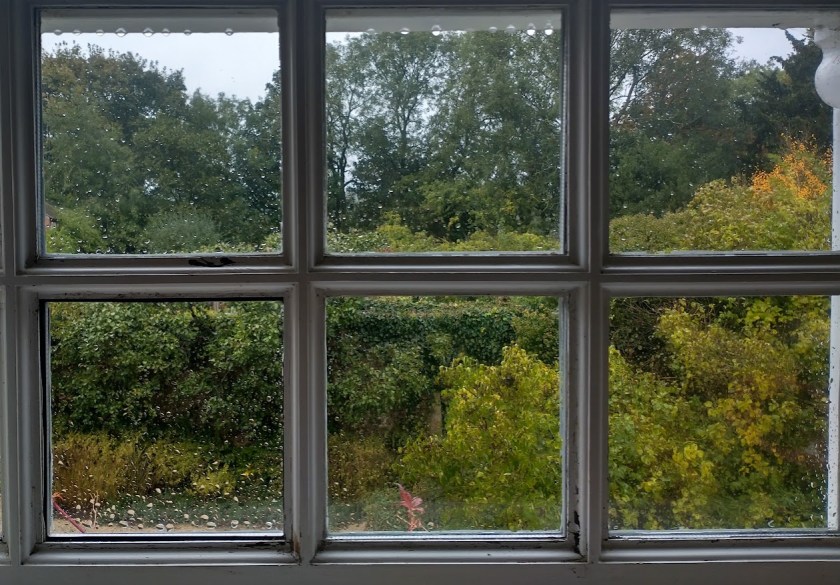
In the middle distance is a line of trees. Now they’re newly stark for winter. A few weeks ago we observed them daily as the leaves turned first yellow, then tawny, chestnut and rust. Slowly the leaves started to fall. Then as November raged in, the wind snatched at them until finally last week, a storm bad-temperedly tore at the final tatters and flung them to the ground.

In Spring, it will all be reversed. At first, perhaps in earliest April, a citric haze on the trees will tell us that the buds are bursting, and will change daily, as the once-visible twigs and branches gradually leaf up, and disappear from view.
During that time though, while the branches are still visible, there’s plenty of action. Birds are home-hunting, prospecting for that perfect spot for a nest. Then there’s frenetic activity in the still-bareish trees as crows and wood pigeons flap back and forth, bringing twigs, feathers, moss, constructing untidy structures that despite their appearance are obviously sturdy enough – they’re still there now, high in the top branches. The smaller birds are more discreet, and though they build in the bushes and foliage nearer the house, we rarely see their nests. No, not even those of the sparrows, who cheep frenetically in the ivy below the window from the first moment they choose a site there, until the last fledgling has flown the nest.
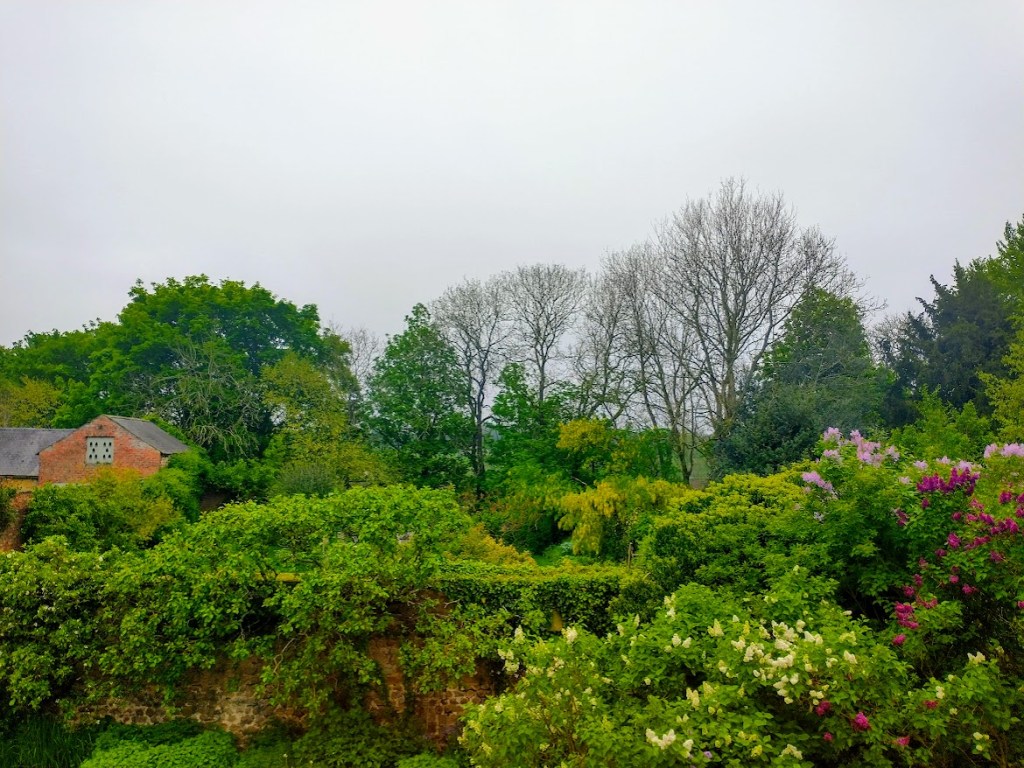
Nearer is the brick wall of our landlord’s walled garden. This is where a line of pear trees grows, with, in early summer, pink clematis scrambling through.
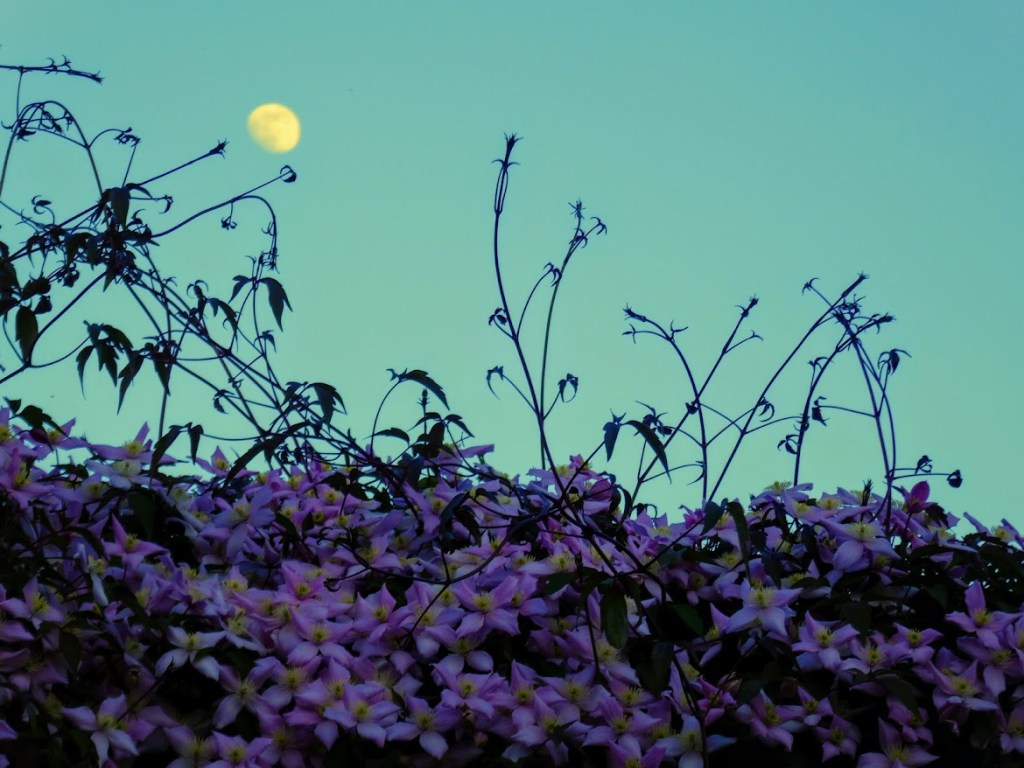
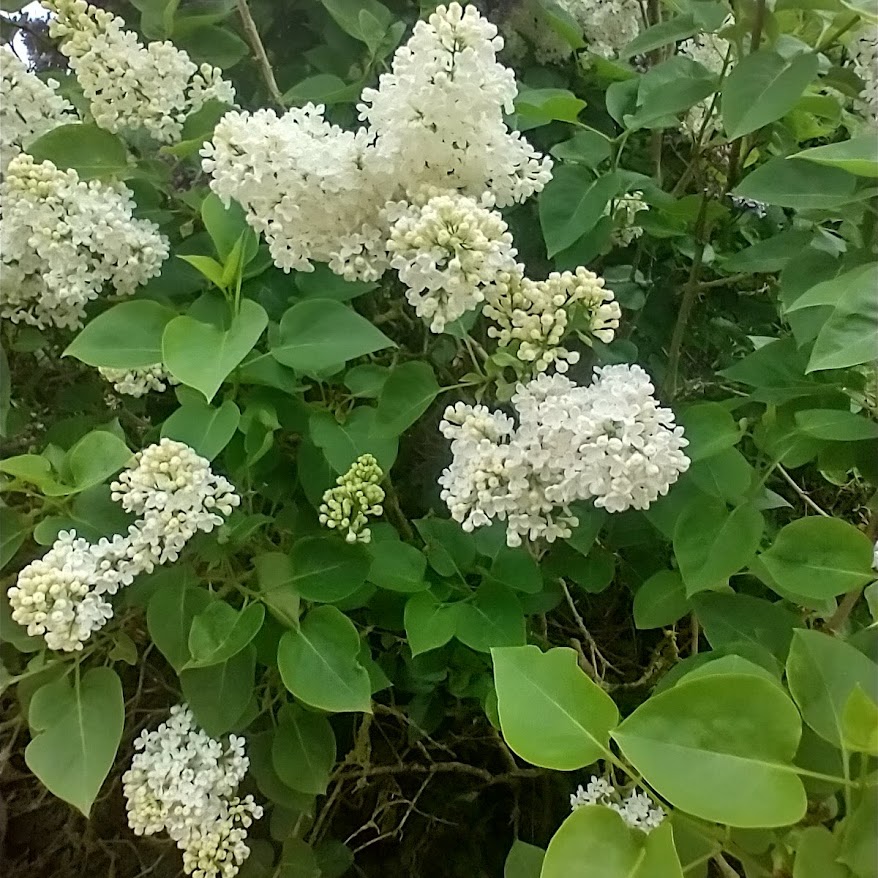
Next to them are three lilac trees. One is purple, one mauve, and the third one white. For two weeks only – in May – they flower, riotously, casting bloom after scented bloom skywards. After that they die sulkily, and look quite ugly for weeks. It doesn’t pay to be away in May and return in June.

Glancing upwards, there are often skeins of geese on flying missions between one neighbourhood lake and another, or in the summer (though less and less frequently these days), swooping and shrieking patrols of swifts.

So many sights and sounds to enjoy, so much action in the scenes just beyond our window panes. Never a week goes by without one of us saying to the other ‘Aren’t we lucky to be here? How could we ever move away?’
For Tina’s Lens-Artists Challenge #325: Gratitude
And Georgina’s Nature Writing for November: Looking through a window.
 From Pyrenees to Pennines
You must be logged in to post a comment.