On the first Saturday of every month, a book is chosen as a starting point and linked to six other books to form a chain. Readers and bloggers are invited to join in by creating their own ‘chain’ leading from the selected book.
Kate: Six Degrees of Separation
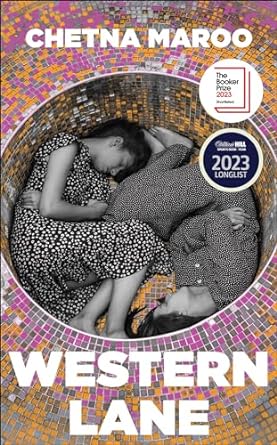
This month’s starter book by Chetna Maroo, Western Lane has only just been acquired by our library, so I haven’t had a chance to read it yet. I understand though that it’s about eleven year old Gopi whose mother dies. Her father enlists her in a quietly brutal training regimen in squash, and the game becomes her world. Slowly, she grows apart from her sisters.
This took me off at a slight tangent, something to do perhaps with ‘quietly brutal’. I remembered reading Cormac McCarthy’s The Road: the tale of a father and son trudging through post-Apocalypse America. This is a land where nothing grows, no small animals are there for the hunting: where communities and dwellings are deserted and long-since looted for anything that might sustain life a few more days: where other humans might prove peaceable, but might instead be evil and dangerous. This book is bleakly, sparely written. Conversations between father and son are clipped, necessary. No speech marks. Sometimes little punctuation. Every ounce of energy is needed for the business of staying alive. This book, in which nobody lives happily-ever-after will stay with me for a long time.


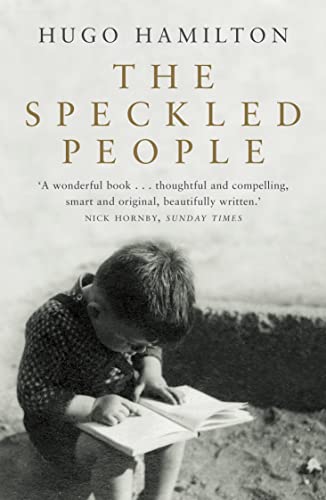
This linked for me with another book where a father is centre stage: The Speckled People by Hugo Hamilton. As someone of dual heritage myself (half English, half Polish), born in the same period as Hamilton I was interested to read this account from a man with a German mother and Irish father. His story is told in a series of vignettes, which gradually provide a coherent picture of the family’s day-to-day life over the years of Hamilton’s childhood. His mother brings with her memories of her family’s anti-Nazi stance – yet in Ireland she and her family are called Nazi. His father insists on the family’s Irishness – which meant denying everything English in their lives. Both these threads isolate them all from their peers. They’re rather poor, though Hamilton’s father has all kinds of unusual and ultimately unsuccessful business ideas. This is an account of a young boy’s growth into adolescence and adulthood, trying to find a path towards the adult he thought he wanted to be. A sensitive and restrained and thought-provoking narrative.
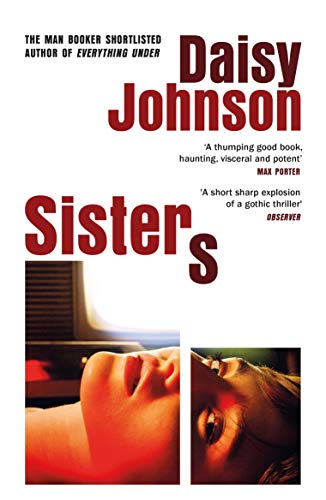
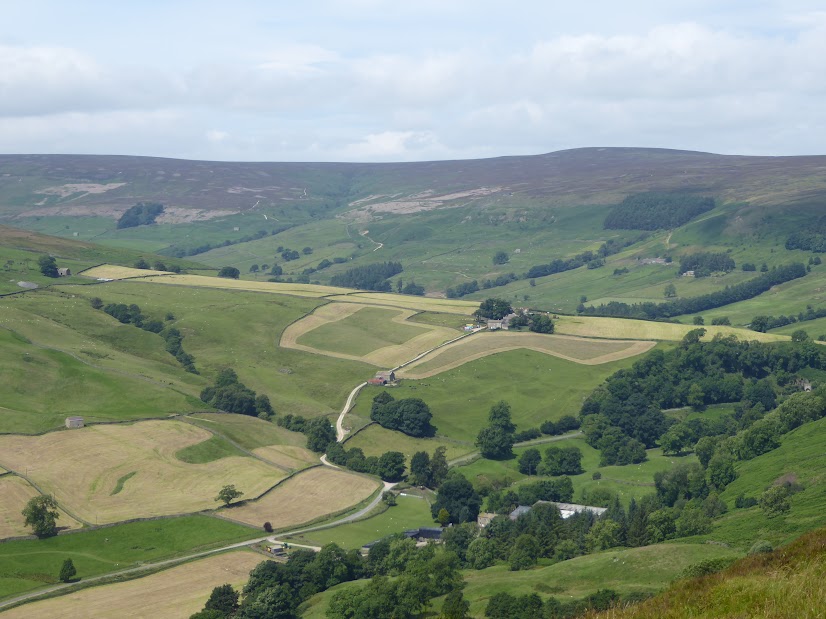
Let’s move to a book with no father figure at all: Sisters by Daisy Johnson. July is utterly dependent on her damaged, controlling older sister September, to whom she is very close in age (the clue is in their names). Following some bullying of July in their Oxfordshire school, they move with their mother to the house in North Yorkshire that had once been the father’s family home. Sheela, the mother is also unstable – withdrawn and neglectful. The girls are widely considered ‘isolated, uninterested, conjoined, young for their age, sometimes moved to great cruelty’. Their behaviour is unsettling, often shocking, and makes reading the story a tense and unsettling experience. It leads towards a denouement that is both shocking and yet satisfactory, leaving the reader with a hope for better things.
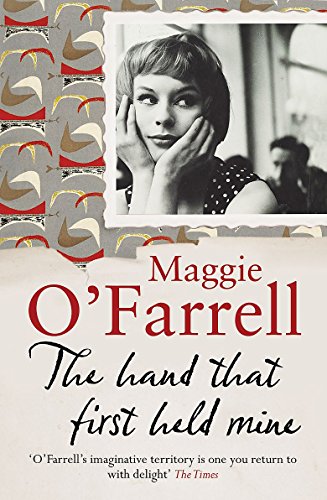
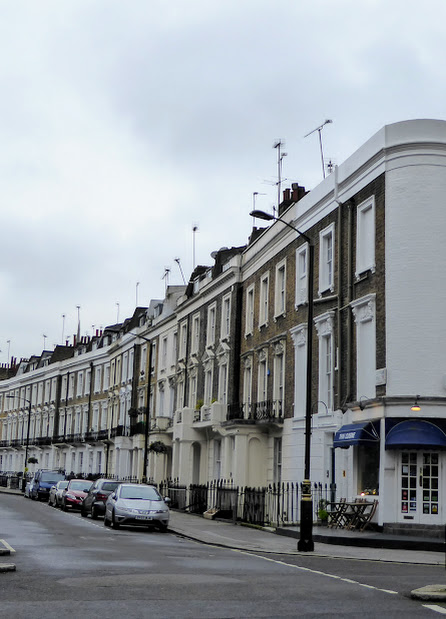
Another book with families and relationships at the heart: The Hand That First Held Mine by Maggie O’Farrell. Here are two stories: that of Lexie, 1950s university drop-out, who meets Innes, and leaves rural Devon and her family, to live the full bohemian London experience. And that of Elina and Ted, new (present-day) parents who after a horrible, dangerous birth, are struggling to adjust to their new very-far-from normal. Their exhaustion, Ted’s curious moments of disorientation, their differing expectations seem likely to destabilise their relationship. How do these two worlds collide and make a story? They don’t, not in the first half. Then hints get dropped, about the house and neighbourhood where all these characters lived. And despite the drip-feed of clues, the end, when it comes, is shocking , unexpected and entirely believable. I was involved from the first to last page.
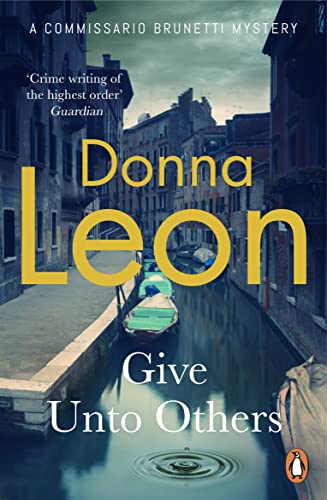
This is getting a bit heavy. I’ll do what I so often do after a dose of mood-lowering reading and rush over to Venice to read a Brunetti mystery by Donna Leon. The plot hardly matters. It’s a few hours in the company of Commissario Brunetti and his entirely satisfactory family life that I’m after. Give unto Others is Leon’s latest book. And this post-pandemic tale is as usual a good one. It involves a former neighbour who comes and talks – unofficially – about some concerns she has about the business in which her husband and son-in-law have been involved. As ever, layers unpeel to reveal dark secrets and shenanigans. Tricky moral questions arise for Brunetti to wrestle with. How involved should he be? If you’re a Leon fan, you won’t need any encouragement to find out.

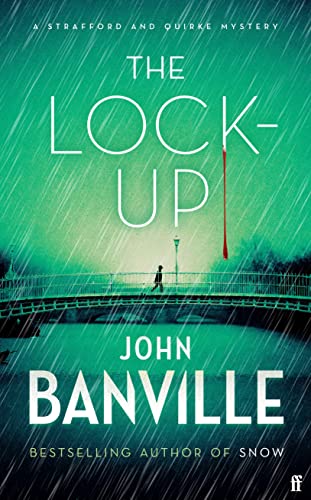
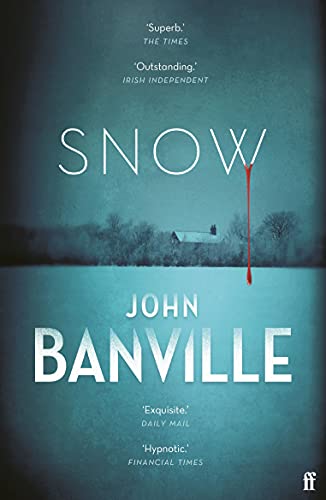
For my last book, I’ll choose to link with Brunetti by choosing another crime novel where the personalities are of just as much interest as the crime, and where human relationships are what count the most, The Lock-up by John Banville. We’re in 1950s Dublin, some six months after Banville’s April in Spain took place. A young woman has apparently asphyxiated herself in her car in a lock-up garage. It becomes apparent it’s a murder. As ever, though the whole of the book is on the surface an account of the efforts to solve the crime and find the perpetrator, actually, that’s not the reason to read it. Instead, it’s about the more-than-prickly relationship between DI Strafford and police pathologist Dr. Quirke, about the complicated love affairs both men have in 1950s Dublin, still under the somewhat puritanical stranglehold of the Catholic church. And this extends to its influence over police investigations as well as moral arbitration. It’s about the weather, the greyness of Dublin. And it’s about simply enjoying Banville’s luscious writing. So many reasons to read and appreciate this book.

So: families and relationships form the link between all my choices this month. Next month, perhaps it will be food, as the starter book is the culinary classic, Anthony Bourdain‘s Kitchen Confidential.
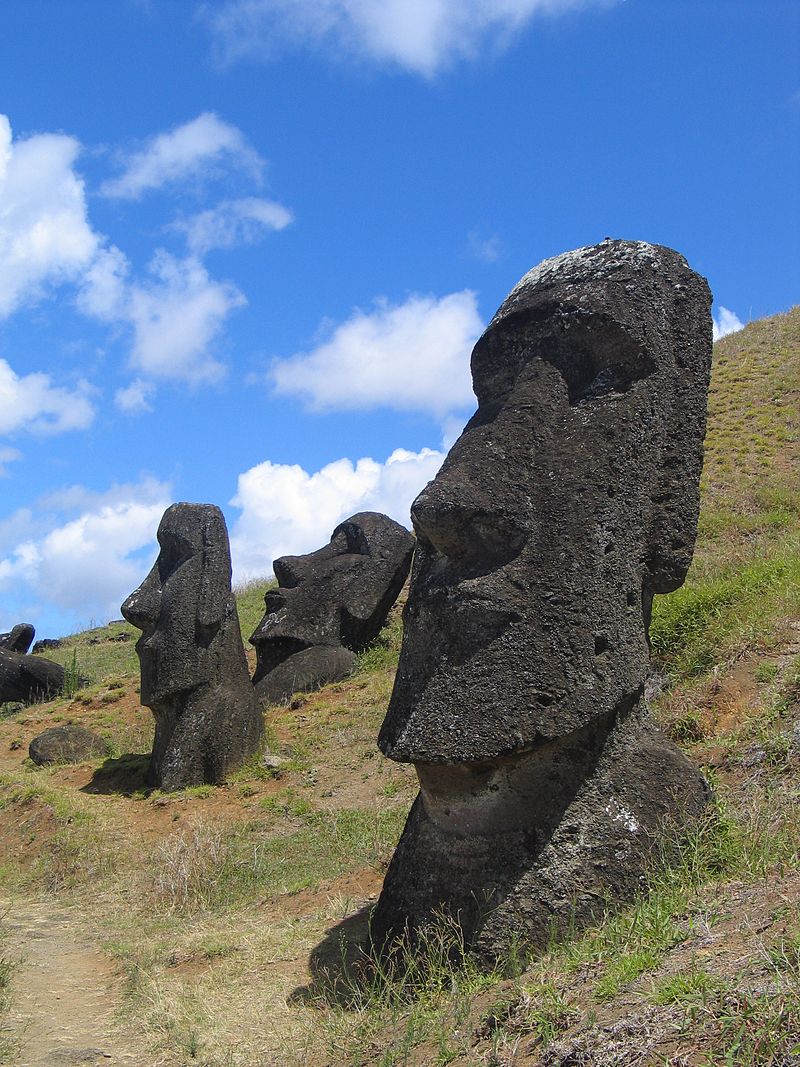
Three of my images this month come courtesy of photographers catalogued in Pexels. Tirichard Kuntanon illustrated the Cormac McCarthy, Dids the Donna Leon, Mike Bird the John Banville. The image for the Hugo Hamilton was from Wikimedia Commons.





 From Pyrenees to Pennines
You must be logged in to post a comment.