The Peasants of Silicon Valley

Over the past months you may have sighed indulgently – or with irritation – as I’ve described our attempts to get to grips with our peasant lifestyle.  I’ve smugly talked about our efforts to get a 52 weeks a year veg. patch going, about going equipped on every walk, prepared to carry loot home: a bagful of walnuts, chestnuts to roast, windfall apples and pears, a log or two for the fire.  We enjoy what we do and it matters to us, but frankly, if we don’t get these things right….well, there’s always the market, or someone around who can sell us what we need.

Until now.  Now we’re in crisis.  We’ve no firewood for the wood-burning stove.  Well, not much anyway.  A friend’s cousin was supposed to supply us with our wood for the winter, and he did.  But it won’t do for this winter, and probably not next either.  We need wood that’s had all its natural moisture weathered out of it, leaving it dry and combustible.  What we got was freshly-hewn logs.  They sit in the grate and spit and sulk. We’ve been busily lugging them to the open first floor of our atelier, and stacking them where the air will get at them and dry them out.
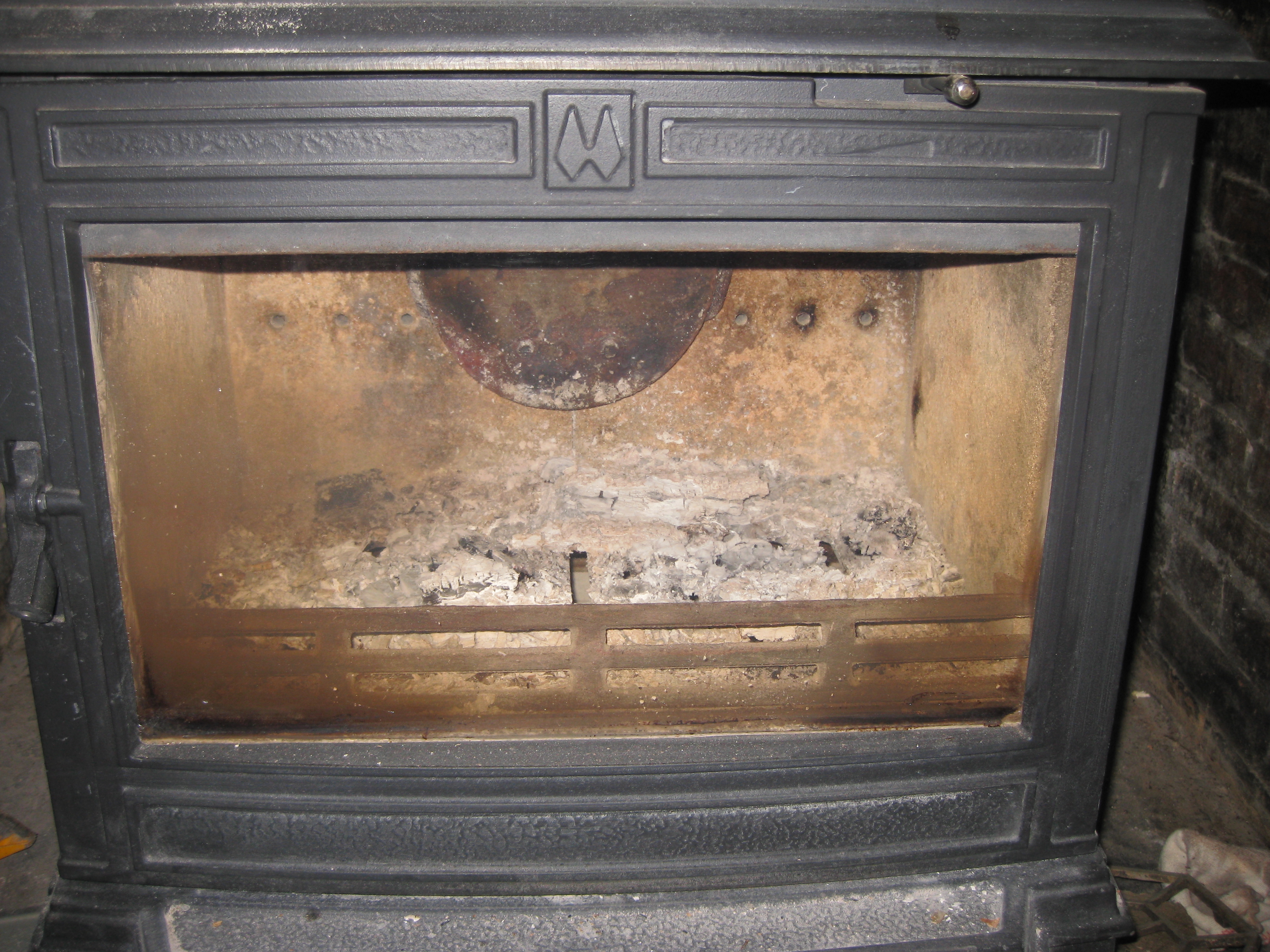
Wood for the stove....going....gone

So now, half way through November, we’re asking anyone who’ll listen where we can buy seasoned wood.  And the answer is, we can’t, it’s too late. It’s all sold.  Like real peasants, we face the prospect of a winter without our beloved wood-burning stove.  Unlike those peasants, we do have a few radiators, but they don’t glow cheerily at us after a chilly day playing at being self-sufficient in the great outdoors.

And unlike those peasants, we’ve had another, peculiarly 21st century crisis. Our computer became terminally ill.  Its death in the night seemed certain.  We were distraught.  How to keep in contact with friend in 3 continents?  How to pay bills, organise our banking, buy tickets to England for Christmas?  Hearing of our distress, friends and family phoned, diagnosed, offered treatments, and somewhere in among all this, a remedy appeared.  It might turn out to be merely patching the wound, but it’s working so far.  It’s reminded us though that we’re not quite the horny-handed sons-and-daughters-of-toil that we like to see ourselves as.  We have some way to go before we achieve The Good Life

A rural scene a few miles from our house. This farm's ready for winter

Something delicious, down in the woods

A friend brought us some mushrooms yesterday.  I’m not going to tell you which friend.  And I shan’t tell you where he found them either.  He was ranging about in the woods, snaffling mushrooms.  If the forest ranger or a landowner had caught him because he’d strayed onto private land, they could have fined him.  150 Euros.  And the friend who was with him, another 150 euros. It’s a lot to pay for half a pound of mushrooms, but everyone does it.

Nobody however, wants to kill the goose that lays the golden egg, and most people, like our friend, pick carefully and respectfully so that mushrooms will still be growing there tomorrow, and the next day, and for as many years as there are people wanting to eat them.

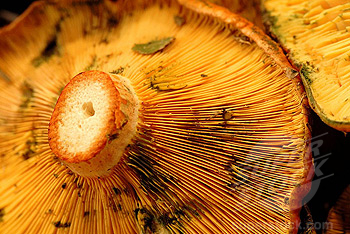
The ones he brought us are lactaire delicieux – saffron milk caps. I know they exist in England, because Googling produces a score of recipes from the UK, but I’ve never seen them there.

In fact they’re native to this part of the world, both in France and Spain, and live in the acidic soil under Mediterranean pine trees.  They’re yellowy orange, and exude orangey milk when broken or cooked.  Roughly handled, they develop a scary green stain.  But that doesn’t mean they’re poisonous. Anything but.

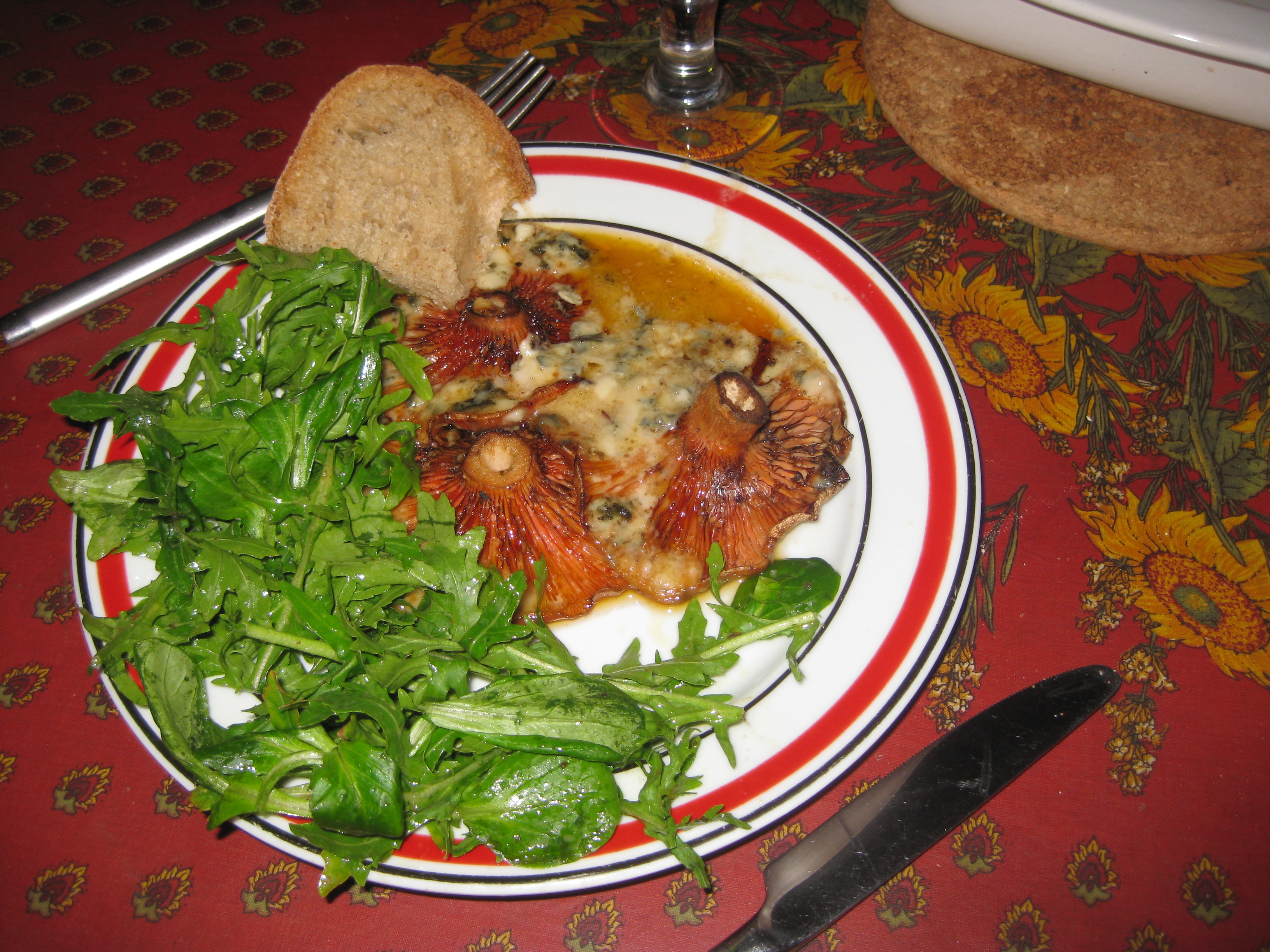
Here’s what he suggested we do with them.

You’ll need at least 2 or 3 large ones each.  They’re often small though, so you may need more. Clean them by brushing them gently and lay them cap side down in a shallow buttered oven dish.  Cover generously with knobs of butter and Roquefort cheese – 4 parts cheese to one part butter.  Grill till the cheese is melted and the mushrooms cooked.  Serve with lots of crusty bread to mop up the juices, and a green salad.

If he brings any more, or if we’re lucky enough to find some ourselves, I’ll be Googling again, because there are any number of simple ideas, just waiting to be tried and enjoyed.

Cook’s Corner

Back in England last week, I picked up the latest Waitrose magazine, always good for a few recipes.  And here’s something I found….

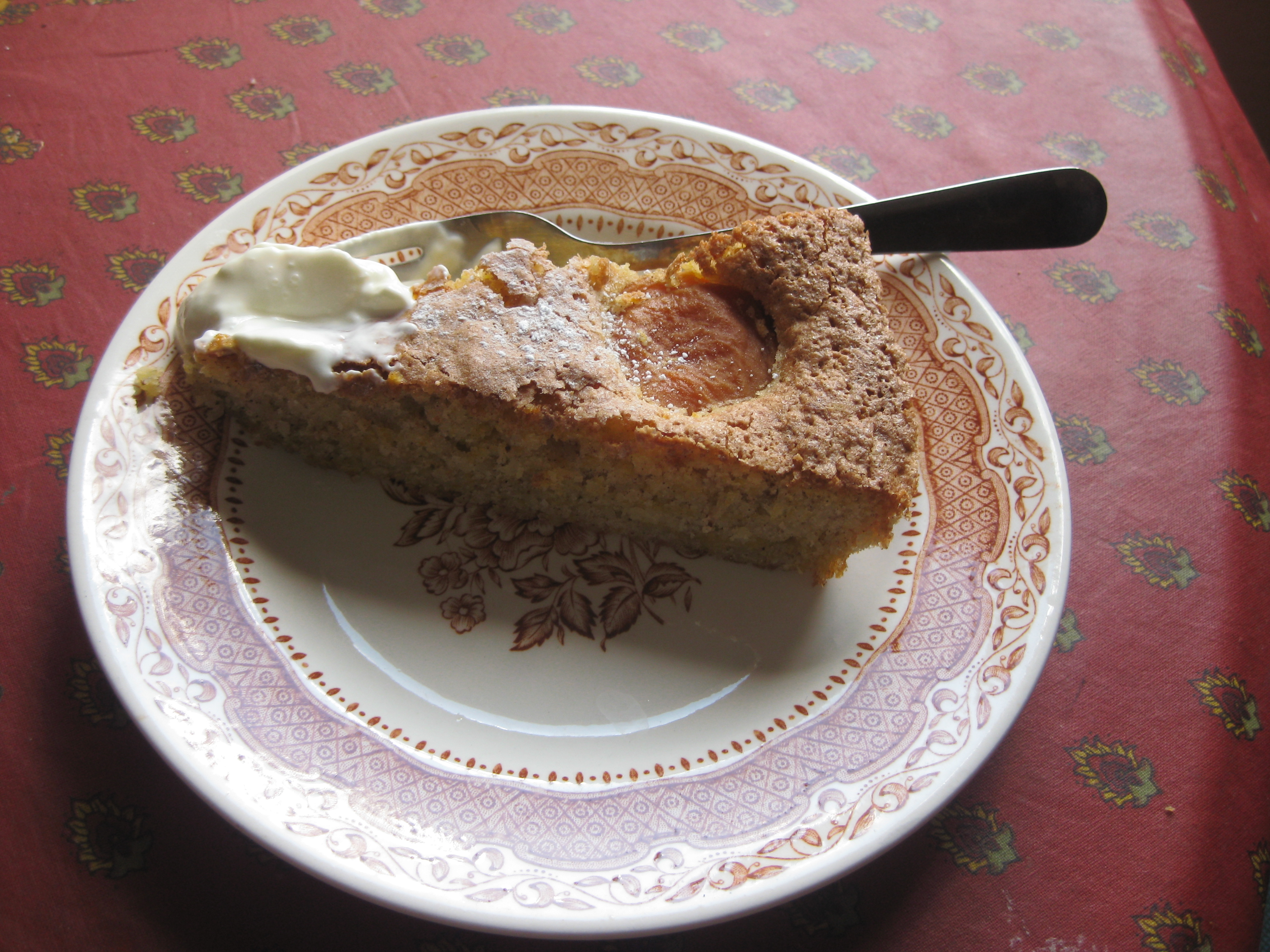
Sunken Apricot and Almond Cake

3 medium free-range eggs

180 g. caster sugar

200g. butternut squash, peeled and finely grated.

1 tsp. almond essence (I used a slonk of amaretto instead)

60g.white rice flour

200 g. ground almonds

2 tsp. mixed spice

2 tsp. baking powder

¼ tsp. salt

240g. canned apricot halves, drained, or if you’re lucky enough to have home bottled apricots, as I have, use those.

Icing sugar for dusting.

1. Preheat the oven to 180degrees C/gas mark 4

2. Lightly grease ten 8cm. x 5cm. deep loose-bottomed tart tins with oil.  I didn’t have enough, so I made just one 28cm. tart.

3. Whisk the eggs and sugar for 4 minutes till pale and fluffy.  Add the butternut squash and almond essence, and whisk briefly to combine.

4. Add the ground almonds, spice, baking powder and salt, mixing until well combined.

5. Pour the mixture into the tin(s) and either place 2 apricot halves in each, or arrange the apricots onto the top of the large tart.  Bake in the centre of the oven for 35 minutes, or till cooked.

6. Remove from the oven and gently ease the cake(s) away from the sides of the tin.  Allow to stand a few minutes before dusting with icing sugar.

Eat warm, cold, with or without cream, crème fraîche……

Do try it.  It might not be the cheapest cake in the world, but it’s certainly good, whether you choose to serve it as a pudding or a tea-time treat.

Well, we DID have it as a tea time treat, so by the time it came to the evening meal, we needed simpler fare.

I don’t know where I first heard this recipe, but I remembered it yesterday because we’d spent an hour or so sorting and shelling our haul of walnuts from all the trees nearby that are shedding nuts faster than anyone can gather them.

A Very Un-Italian Pesto

A handful of walnuts, crushed

A handful of parsley, finely chopped

A cob of parmesan, grated

A clove or so of garlic, crushed

A big glug of olive oil.

Combine the ingredients to a coarse paste, and add to a dish of pasta

Christmas Hooch

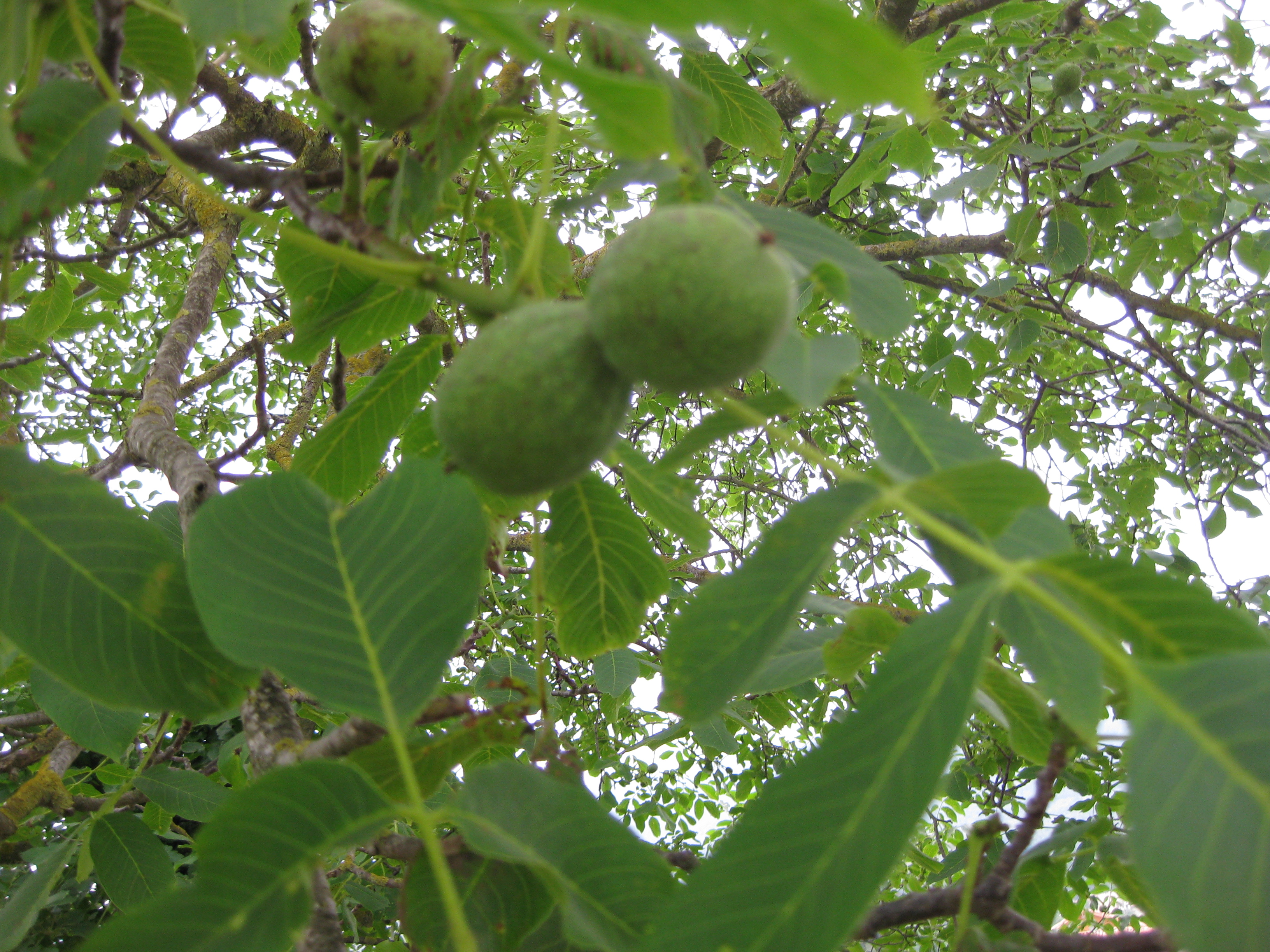
Young walnuts on the tree

Léonce has a walnut tree outside her house.  On the 24th June, she picked just 40 baby walnuts.

Why 24th June?  Well, it’s traditionally Midsummer Day, celebrated here by huge pagan bonfires, but named for John the Baptist whose birthday it’s said to be (le Feu de la St. Jean).  On this day, summer fruits are at their most perfect, and just asking to be picked.  So they say.

And why pick the nuts when they’re still green, the fruit within unformed? It’s to make a Christmas treat – vin de noix.  This year, Léonce asked me to come and be part of her select manufacturing team of two.

Spices at the ready

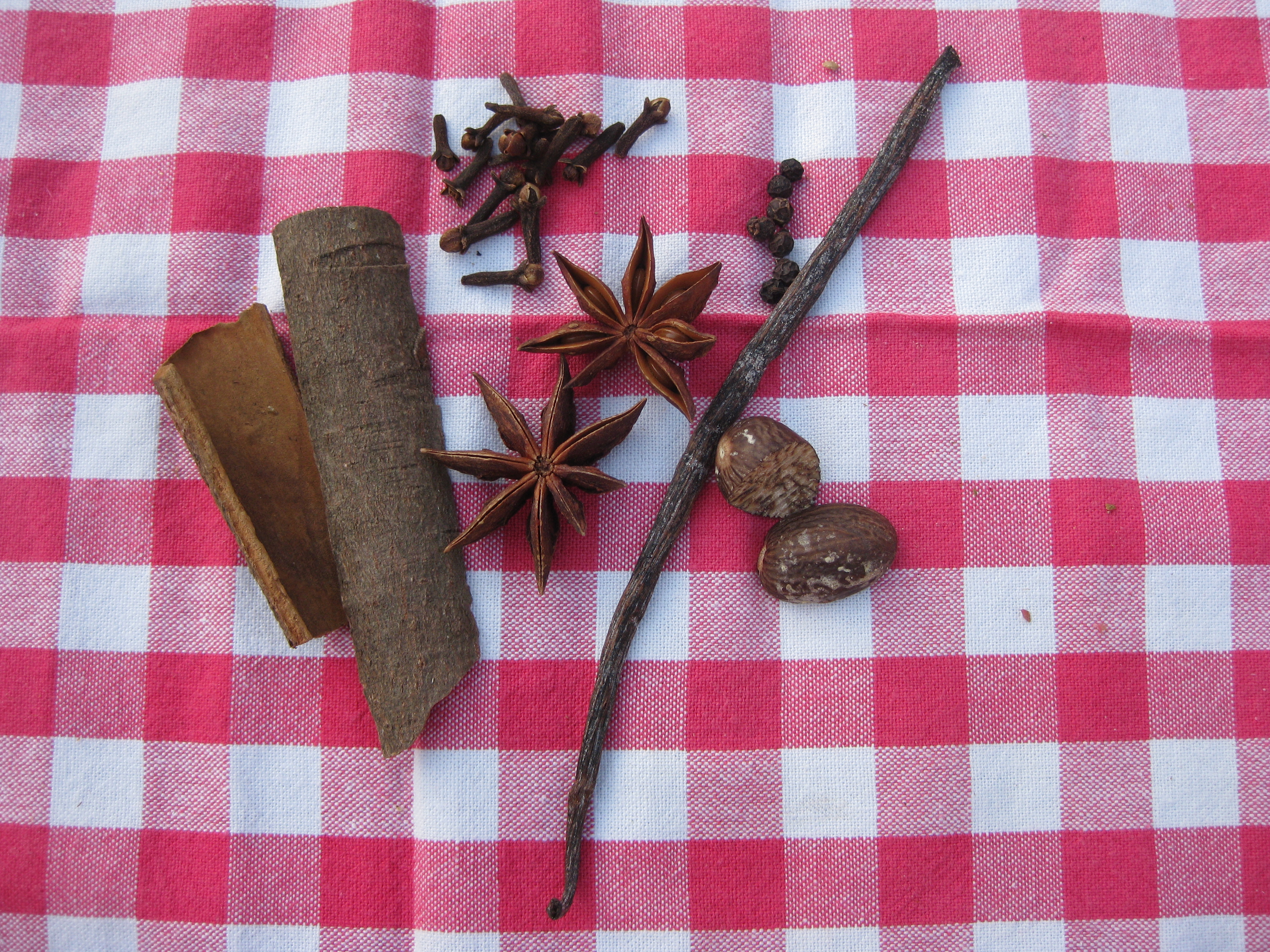
When I arrived at her house, with my demijohn (or bonbonne), red wine and eau de vie, her kitchen table was already crowded with all the other ingredients we needed:

Brown sugar cubes – Oranges – Star Anise – Vanilla – Cinnamon sticks

Cloves – Nutmeg – Peppercorns.

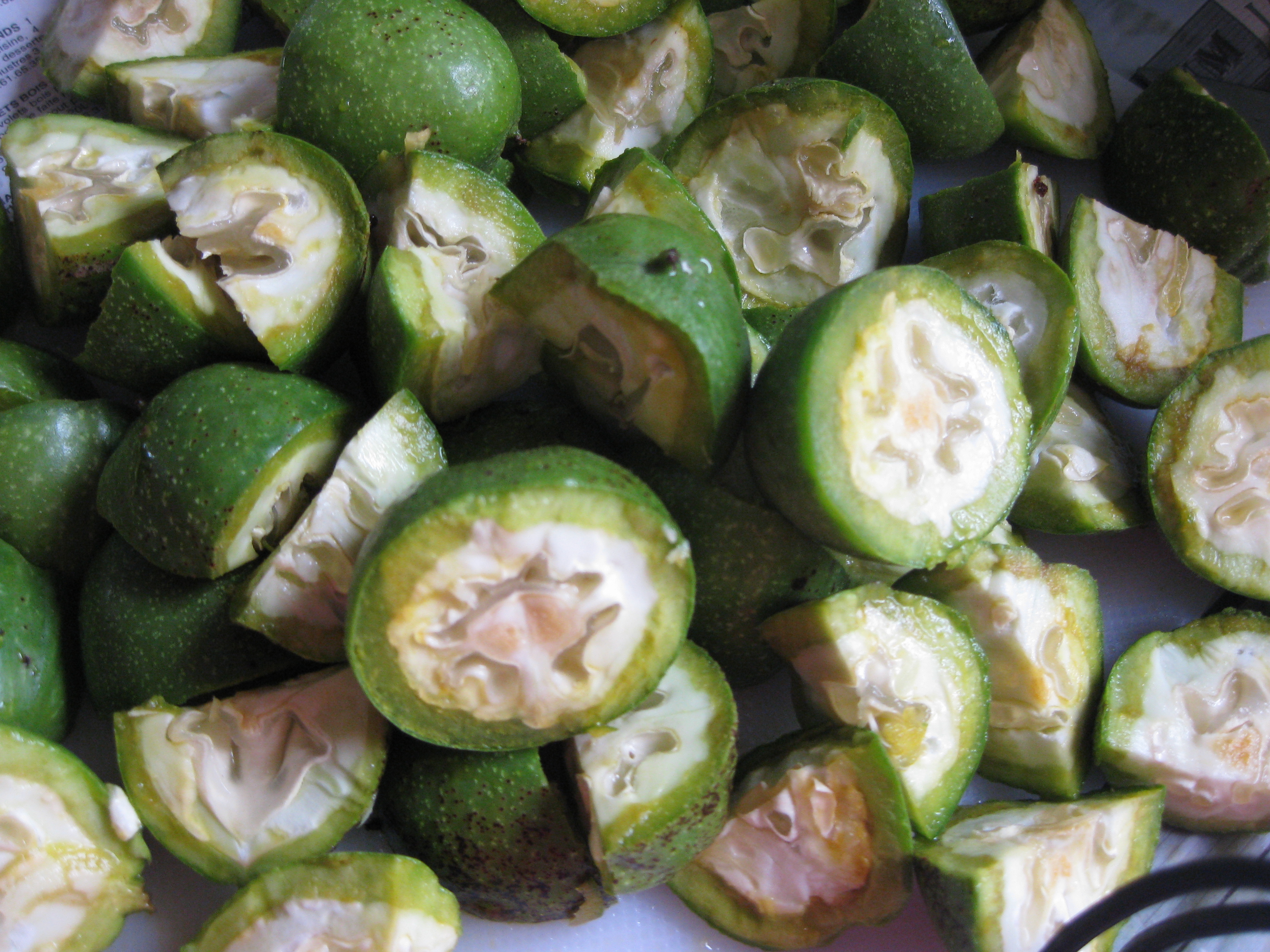
They don't look much like walnuts, do they?

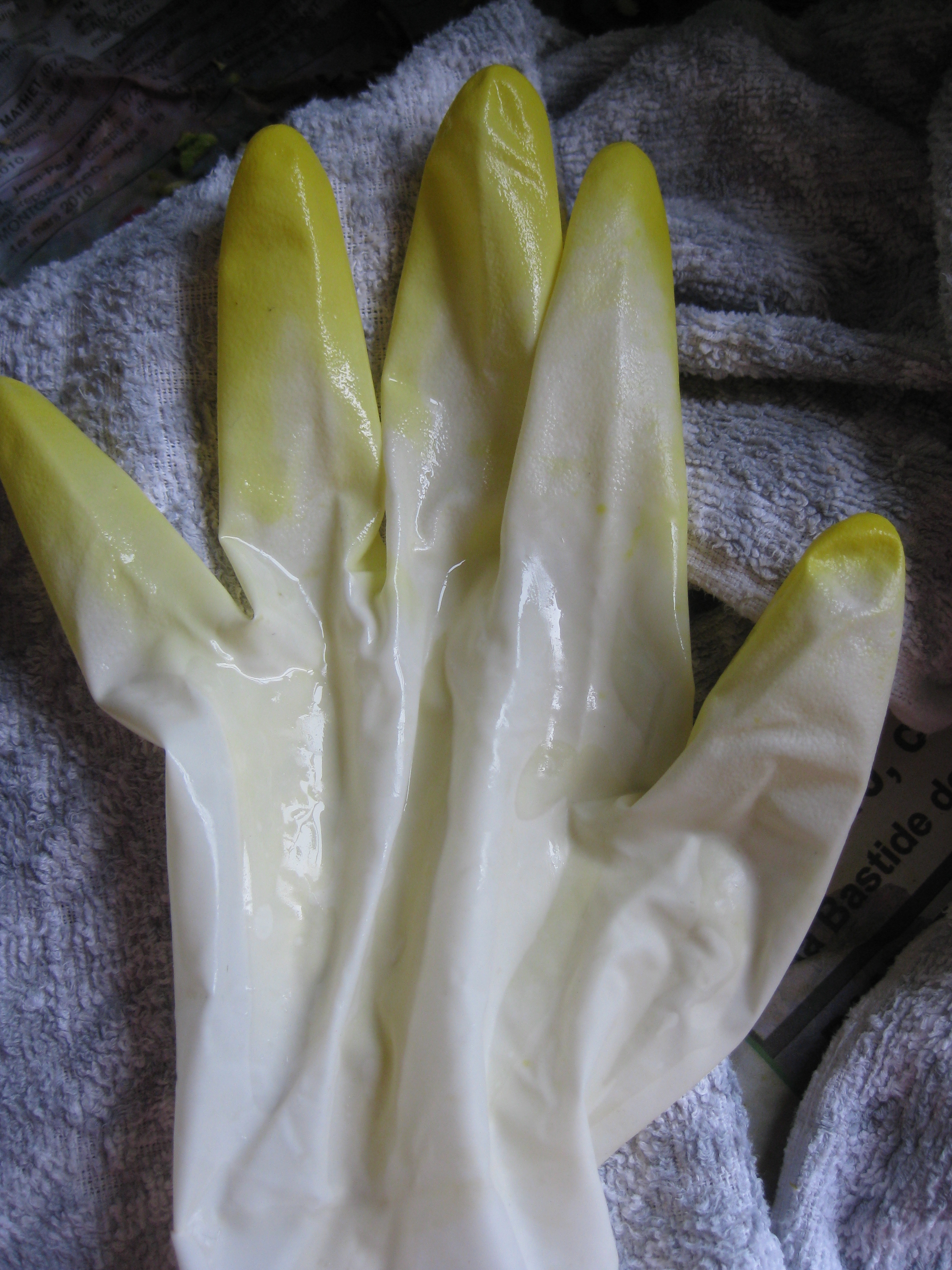
I got the job of cutting the walnuts into four.  You need rubber gloves for this.  Without them, your fingers would be stained a vivid orangey yellow, like those of a lifelong heavy smoker.

These are the hands that cut the nuts.....

Meanwhile, Léonce sliced oranges, measured and crushed spices, and opened bottles of wine – we needed 4 litres each, and one litre of eau de vie.

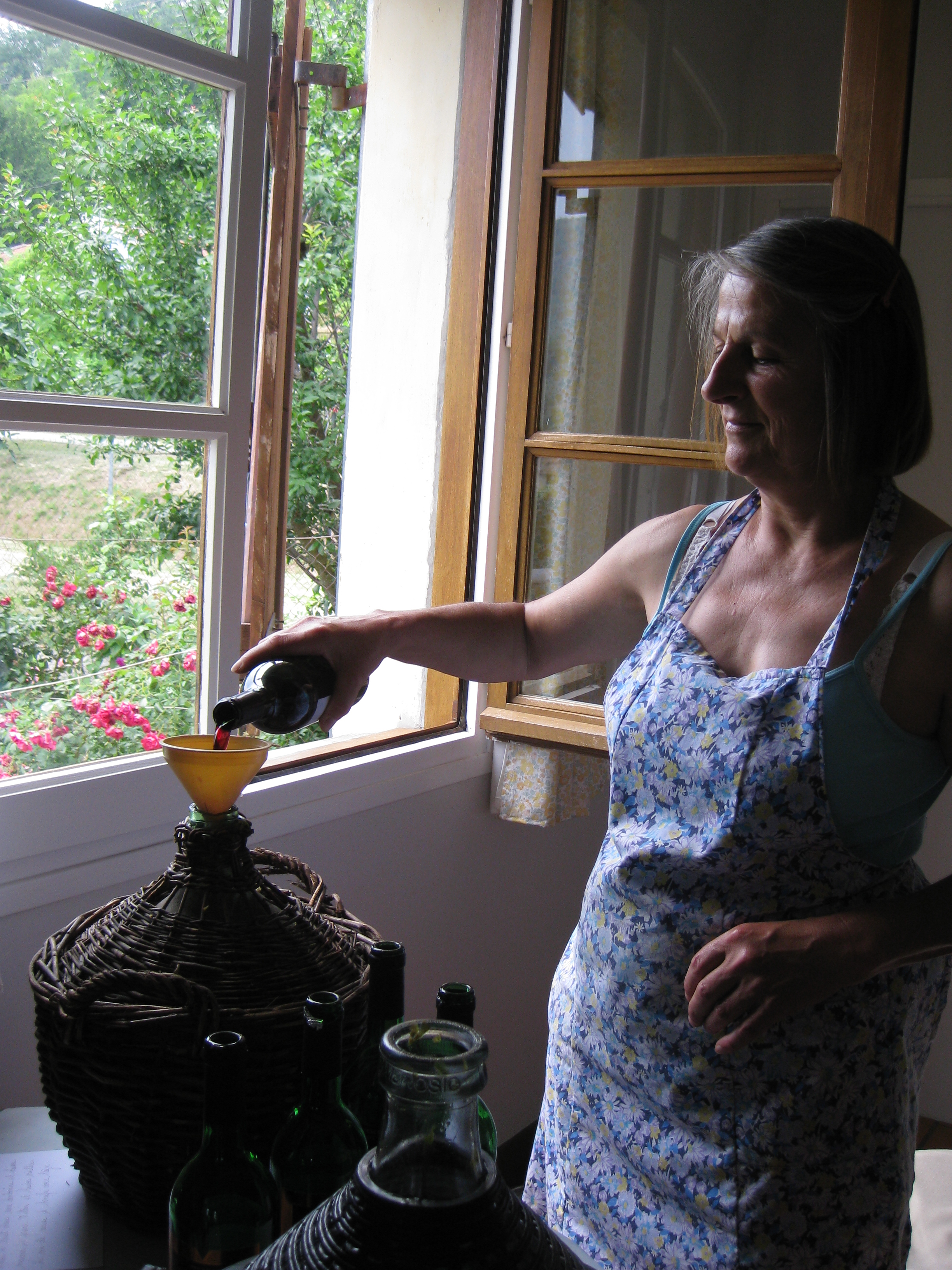
Finally we were ready.  We pushed the walnut segments into our large jars, followed by chunks of orange, the sugar cubes, and then the spices.  All those bottles of wine, all that eau de vie glugged down to mix with everything else, and then all we had to do was cork our bonbonnes, and lug them to a dark cool storage room.

in goes the wine....

We’ll leave them there for 6 weeks for the flavours to blend and develop, then we’ll strain and bottle our concoctions, and leave them again to mature as long as possible.  Don’t do as I do.  Every time I pass, I uncork the bonbonne and have another quick sniff.  Quite wonderful.

You’re not expecting vin de noix from me in your Christmas stocking this year are you?  Oh no, sorry, that’s far too soon.  It’ll be Christmas 2011 at the earliest.  It takes a long time to produce a decent vin de noix.

So here’s the recipe…

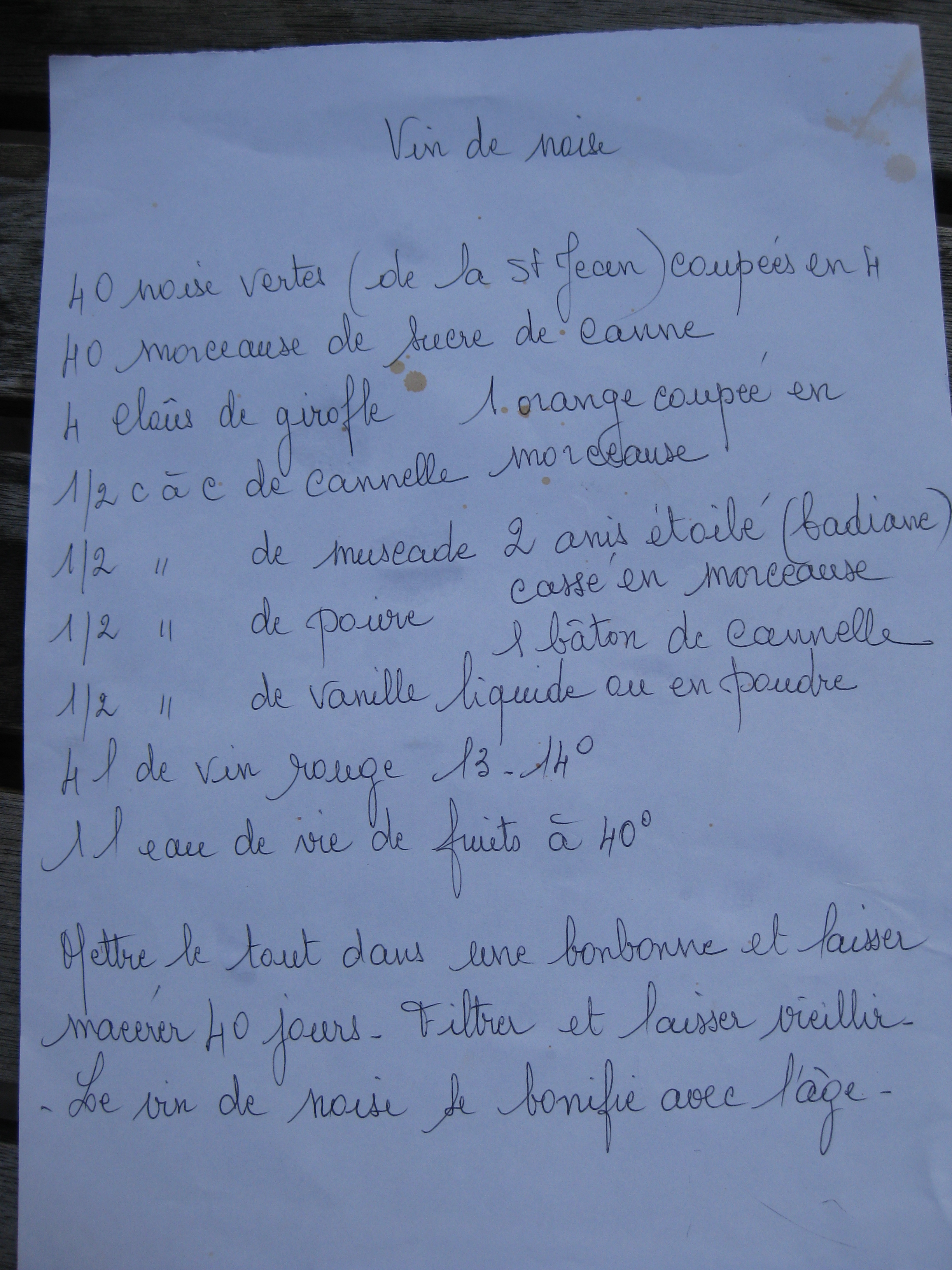
Vin de noix

The recipe: french version

40 green walnuts, each chopped into 4

40 brown sugar cubes

1 orange, chopped into chunks, peel and all

4 cloves

1 cinnamon stick

½ tsp. grated nutmeg

½ tsp. black pepper

½ tsp. vanilla essence, or a small vanilla pod

2 star anise, crushed

4 litres of red wine (13 – 14%)

1 litre eau de vie de fruits (40%)

Put the lots into a demi-john and leave for 40 days.  Filter and bottle and leave to mature for at least a year.  The older the better.

A table full of good things and ready for action

Foraging: a Mushroom Hunt

Yesterday, members of Atout Fruit went mushrooming.  ‘ You couldn’t have!’, I hear you cry, as several people I mentioned it to did, ‘Autumn’s mushrooming time.  On the whole’.  Well, yes, up to a point.  But our guide Francis, an organic farmer near Chalabre, keeps his family in mushrooms every single week of the year.  He knows where to look.

The hunters set forth

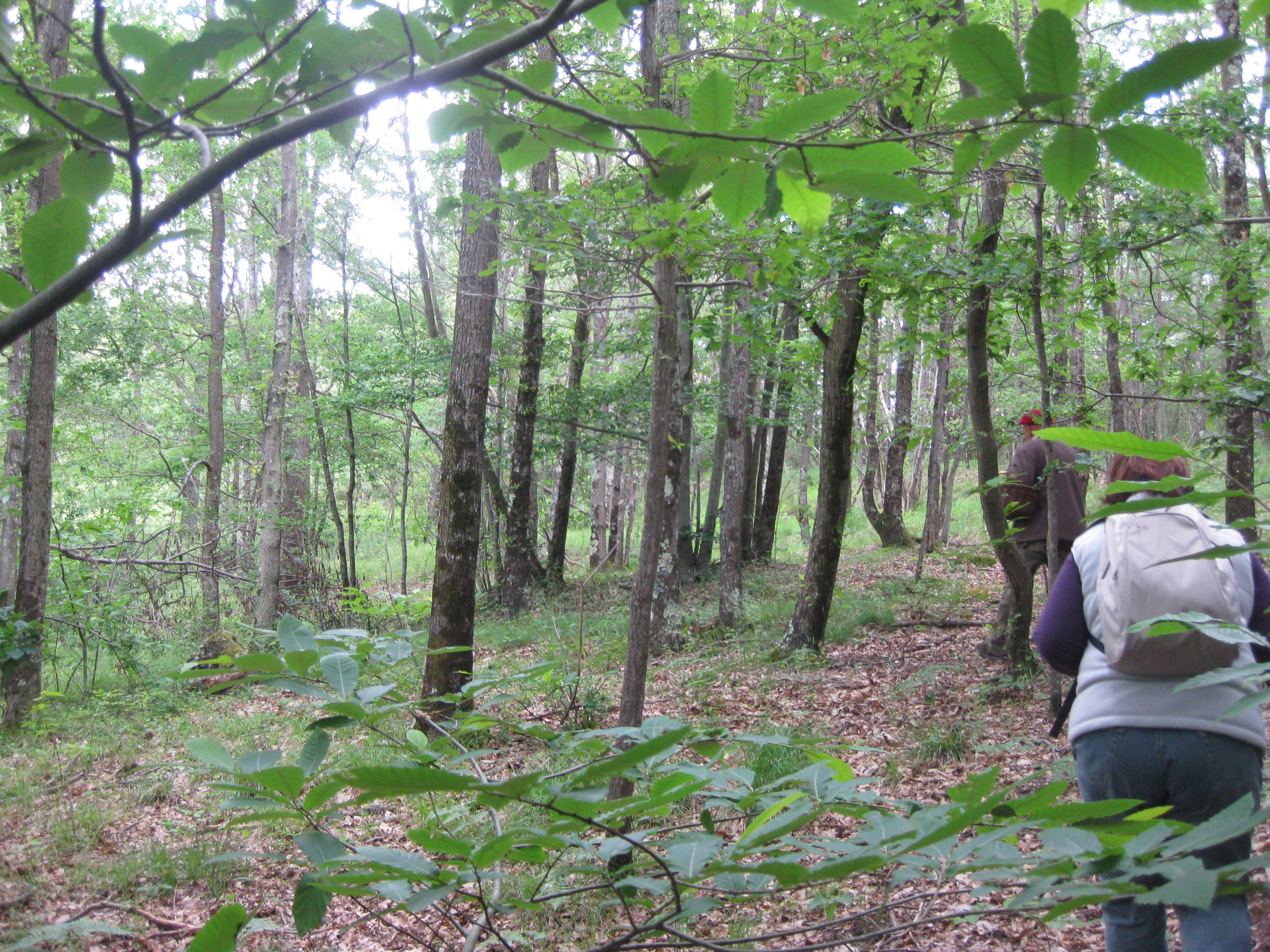
And so he took a group of about 10 of us to the woods.  Where?  I’m not going to tell you that silly.  Somewhere near Lavelanet.  That’s all you need to know.

He told us some of the lore and laws surrounding mushrooming.  That you can gather 5 kilos per person per day in the Aude, but only 3 kilos here in the Ariège .  I wish.  I’m ecstatic generally if I find as many as three mushrooms.  That about 85% of land is in private ownership.  That you may have the right to gather in the Fôret Communale of certain communes if you are resident there. That you must have written permission if a landowner gives you permission to go mushrooming on his land in case the police stop you as you carry your haul home.  Theoretically, you could be stopped as you return from the shops with an extra-big bag of them.

An inedible amonite

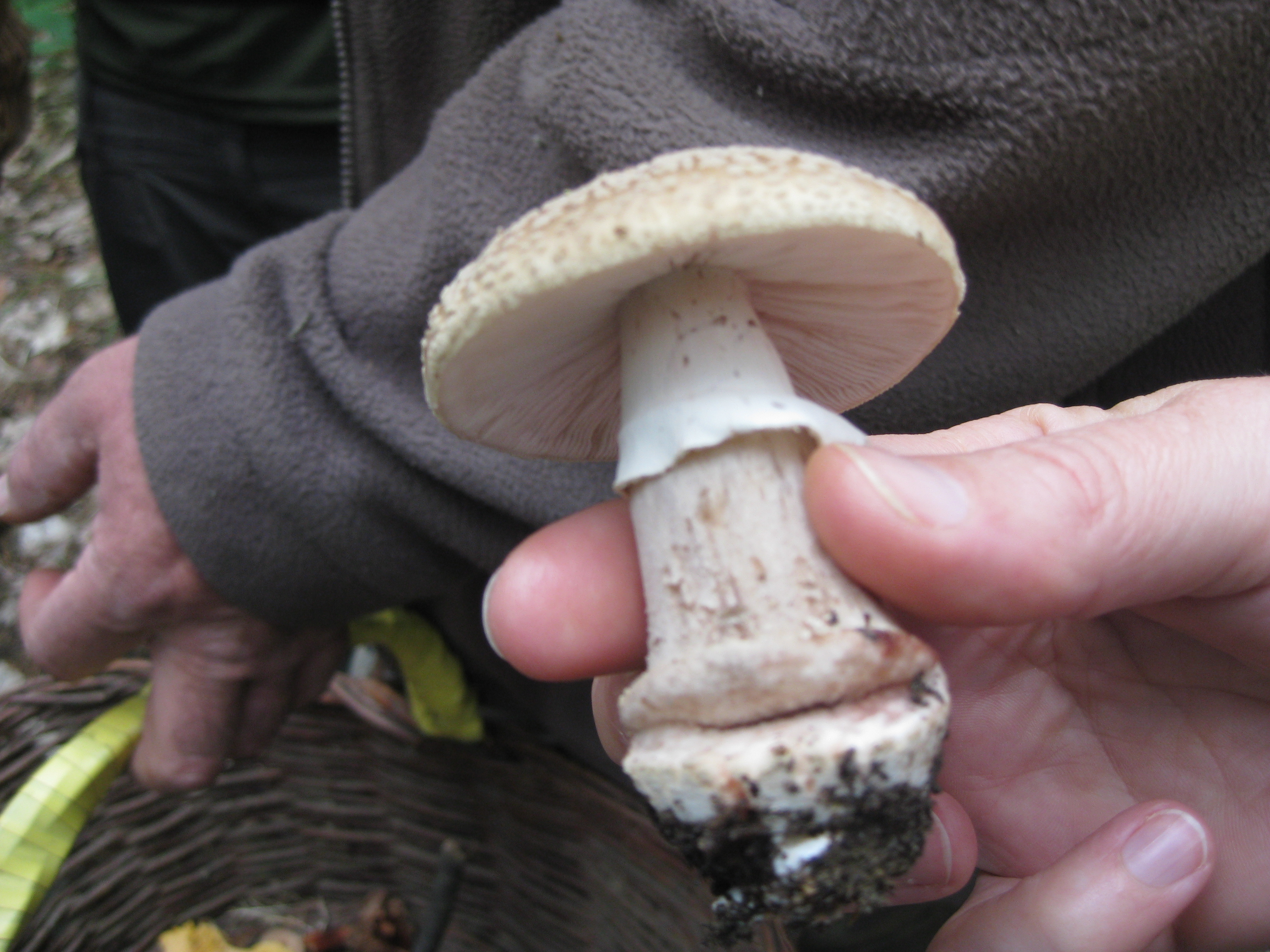
Mushrooms in the woods, pushing steadily through the thick thatch of decaying leaves, are surprisingly hard to spot, clinging to the base of tree trunks, bulging through the crust of impacted dry foliage.  We quickly divided into a hit squad of those who seemed to have an eye for it, and others, who like me, were destined to remain in the B team.  Francis showed us edible girolles, gariguettes and russules, and warned against the attractive-but-not-to-be-eaten family of amanites.

Look at the whole thing to identify it correctly

We’d trot over to him with our finds, to be disappointed when he warned us against putting them in the pot, triumphant on those occasions when he said they were ‘delicieux’.  We could guess after a while which ones were delicieux.  The slugs and worms had got there first and eaten little circles out of them.  No matter.  Plenty left for us.

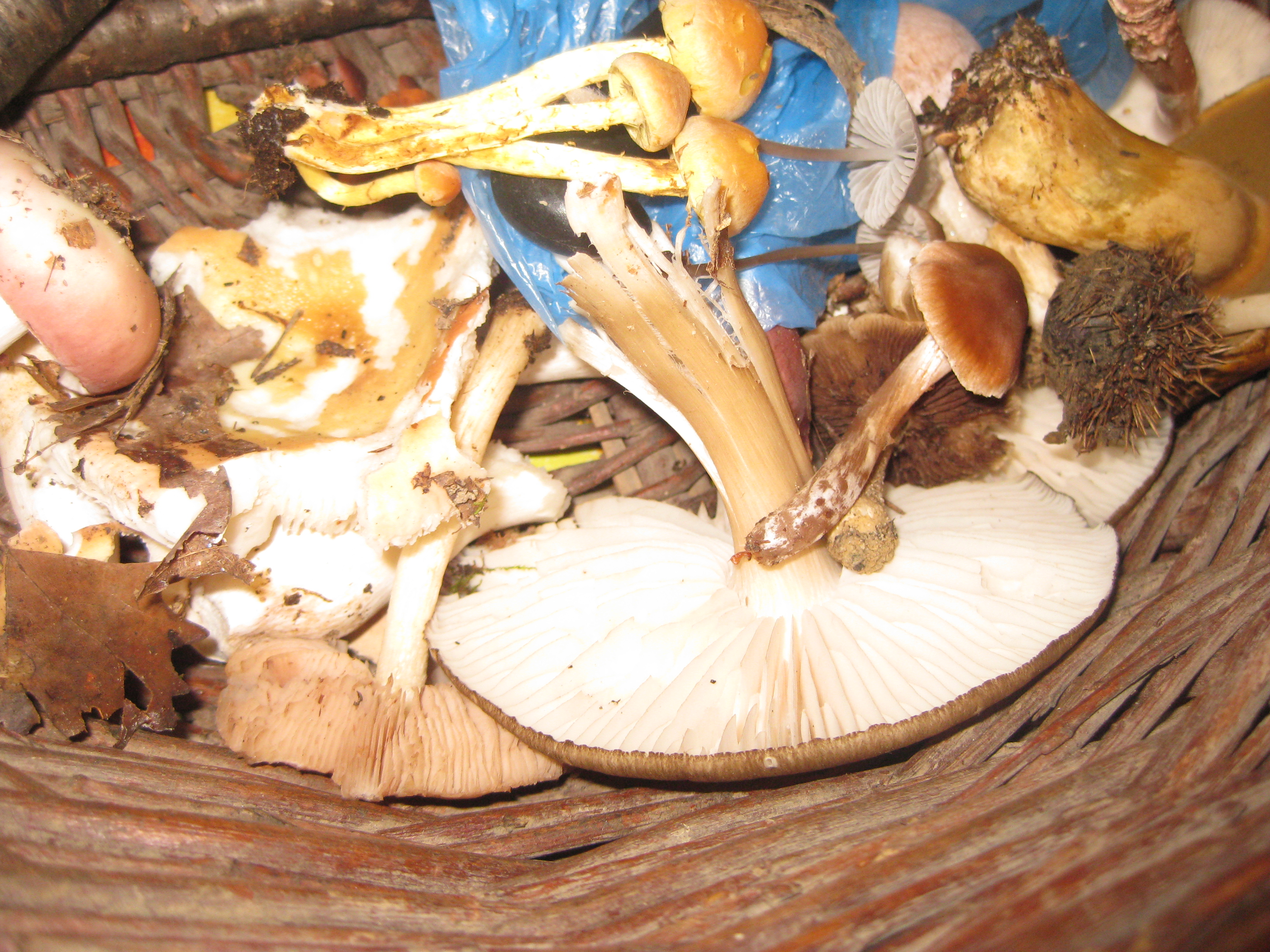
After a couple of hours, we wandered back to his mum’s kitchen (she’d lent her house for the afternoon), got out the textbooks, and discussed our finds.  Not many mushrooms are dangerous, but unfortunately, they do tend to look rather like their edible cousins, and it only takes one……

Some of our haul

The family takes its mushrooms seriously.  The ones they can’t immediately eat are preserved in oil, or dried, and the surplus sold to discerning customers.  We spend a happy time exchanging our favourite ways of preserving, drying and bottling all the fruits of the seasons – this sharing is always my favourite part of an Atout Fruit gathering.

Together, we disposed of a big pot of sautéed mushrooms, the juices sopped up with bread, and helped down with a glass of wine, before reluctantly setting off home, our baskets more or less filled with our afternoon finds.  When I got home, Malcolm and Henri were drinking coffee.  ‘Whaddya mean, you’re not telling where you got those mushrooms?’ Henri grumbled. ‘You’re a right proper Ariègoise you are’.

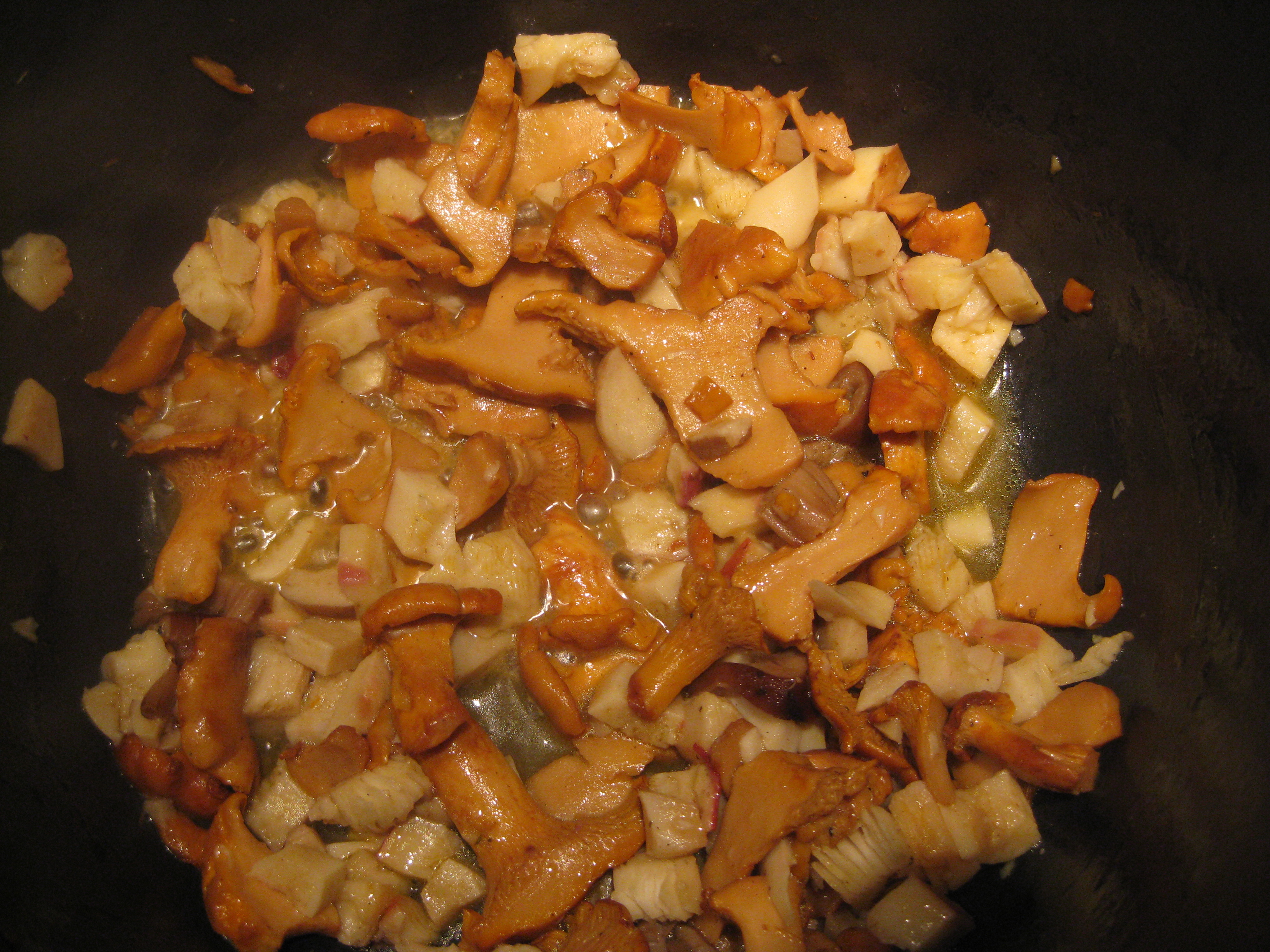
A mushroomy supper cooking on the stove

If you go down to the woods today……

Deep in the forest, somewhere near here, vanloads of dastardly Italians are despoiling the woodland floor of every single mushroom.  Some hours later, they’ve driven back across the border to sell their countless kilos of plunder on some Italian market stall.

This tale is a variation of the Great Doryphore Scandal.  Elsewhere in France, doryphores are Colorado beetles.  Here in the Ariège, Doryphores are Toulousains, who used to leave the city at dead of night to strip our fields and woodlands of anything edible, returning home before dawn to stock their own larders – or their market places.

It was our friend and near neighbour M. Baby who told me the tale of those Italians.  We have a great deal of affection and respect for M. and Mme Baby: they’re an elderly couple, very old school, and we’ll never be other than ‘Monsieur’ and ‘Madame’ to them, but they’ve always been very kind to us. Yesterday he reminisced about the secret field where, every year, he used to pick quantities of ceps.  He shook his head regretfully. ‘But I’m too old now.  I can’t get there any more’.  Was he going to tell me, his good neighbour, where to find them?  Not a chance.  His secret will go with him to his grave.

It’s all part of the great Mushroom Mystique here in France.  At this time of year, mushrooms are a hot topic.  The weather’s too dry, too wet, too hot, too cold…. It’s a poor year.  But someone’s always found some somewhere.  And they won’t tell you where. ’Ooh, over near Campredon somewhere’ is as good as it gets.

Notices appear in the papers forbidding the collection of more than 2 kilos on any one day (2 kilos?  I’d be glad of a small basketful).  Landowners have permanent notices forbidding the gathering of mushrooms on their land.

Until now, we’ve had to be content with collecting a few field mushrooms from a rough field just outside Laroque.  Yesterday morning though, Henri arrived.  ‘Get Malcolm.  He’s got to come now.  We’re going mushrooming.’  Malcolm was painting the study – he’d just got stuck in really.  But invitations like this don’t come twice, so he changed into boots and trousers that were even grottier than those he wears for painting, and off they went, baskets and mushroom knives in hand. 

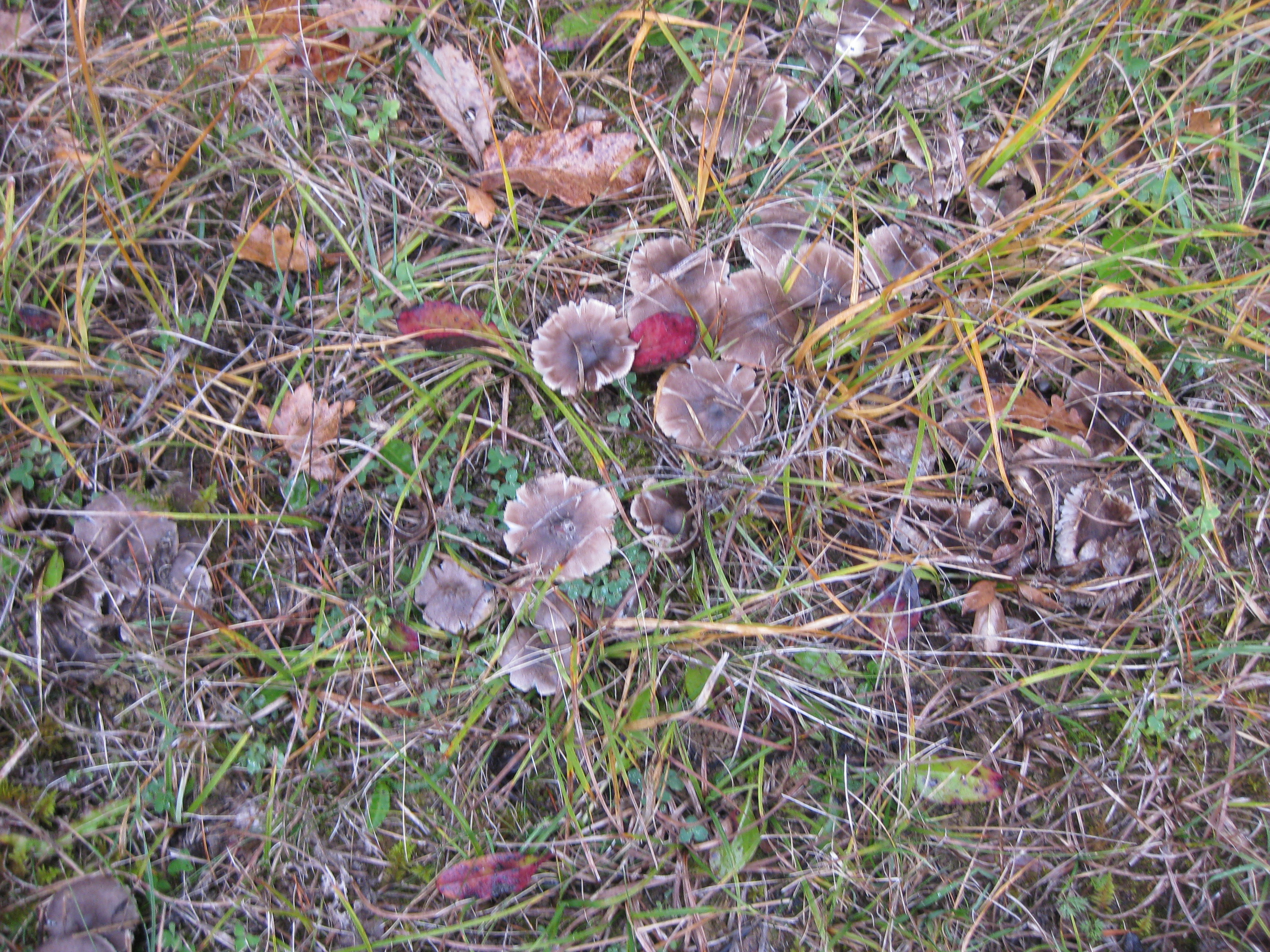
Waiting to be gathered....

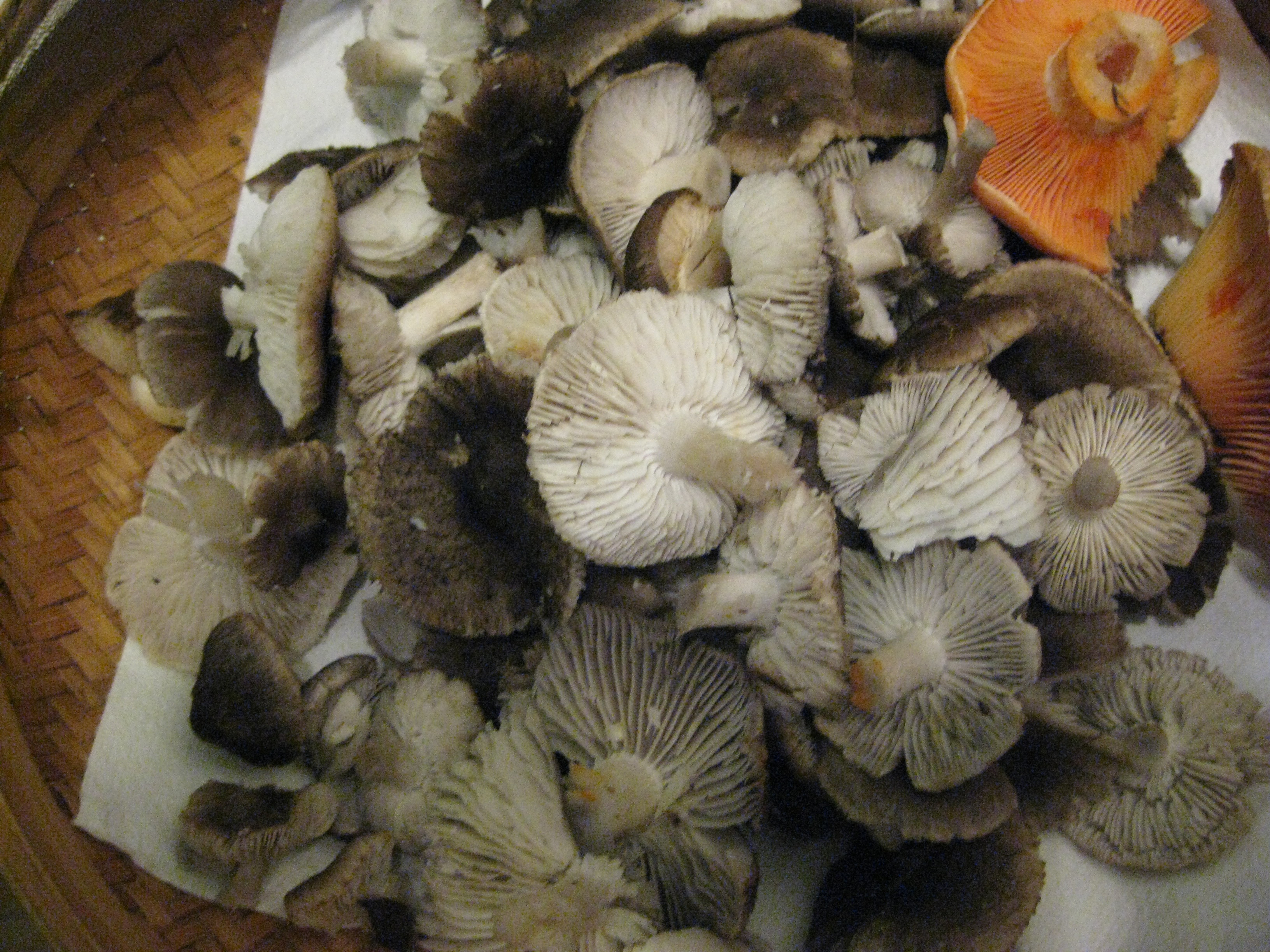
They returned, nearly 2 hours later, with a large bag of delicate ‘gris’, so fragile that they crumbled delicately as I excitedly unpacked them.  So many!  Thank goodness I remembered  Kalba’s posting on her wonderful blog  Slow Living in the French Pyrénées .  She’d had a mushroom glut too, and wrote about duxelle, made by cooking down slowly a mixture of chopped mushrooms, shallots and herbs until there’s a small amount of a sort of paste that is quite simply, essence of mushroom.  Slow cooking, but worth it.

Waiting for the pot.....

And Henri was prepared to share with Malcolm where he’d found those mushrooms?  We MUST have arrived.