Six Degrees of Separation: From Friendaholic to Best of Friends

On the first Saturday of every month, a book is chosen as a starting point and linked to six other books to form a chain. Readers and bloggers are invited to join in by creating their own ‘chain’ leading from the selected book.

Kate W: Books are my Favourite and Best

This month’s starter book is Elizabeth Day‘s Friendaholic. I haven’t read it, but apparently the clue is in the title: it’s an exploration of friendship.

I’ll start then with a book I’m just reading now. It’s Small Worlds, by Caleb Azumah Nelson. At its foundation are two things: the narrator’s strong friendships, deeply rooted in his wider family, and his love – their love- of music, which underpins all their moments of togetherness and happiness.


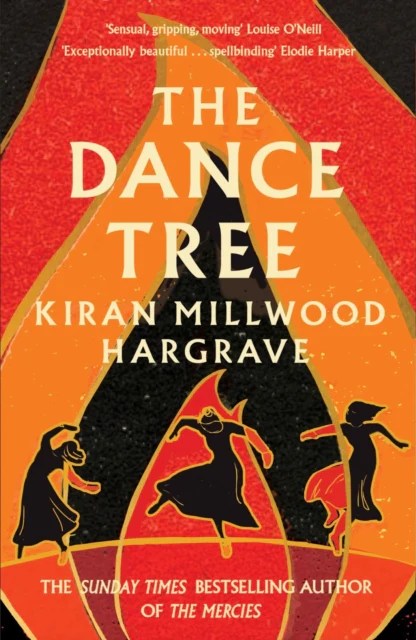
There’s a lot of dancing in Nelson’s book. So let’s go to Strasbourg in 1518, to a story based on a historically documented ‘plague’ of hysterical dancing: The Dance Tree, by Kiran Millwood Hargrave, set in a time of famine, superstition, religious and moral outrage. This is largely the story of Lisbet, pregnant again having already lost nine babies in very early infancy, and beekeeper extraordinaire. Why has her sister-in-law Nethe been required to do penance in a religious community for seven years? Why have hundreds of women been dancing in a frenzy, for hour after hour, day after day? Why do yet more and more people join them? Here are family secrets, forbidden love, frightened and powerless women examined in a story rich in feeling and entirely readable.
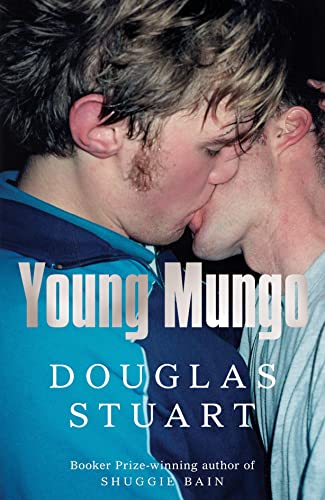
I’ll take you to Glasgow now, to the recent past, to a city which seems to have had parallels with the Strasbourg depicted in the last book. Young Mungo, by Douglas Stuart. Mungo grows up on a down-trodden Glasgow housing estate, immediately post-Thatcher: fatherless, with an increasingly absent and alcoholic mother whom he adores, a clever older sister who looks out for him, and a violent, lawless older brother. Why, at the beginning of the story, does his mother send him away on a fishing weekend with two fellow alcoholics whom she hardly knows? We return throughout the narrative to find out more. Mainly, we are in the poverty-stricken community Mungo calls home. And it’s here he meets James, and discovers his sexuality. That’s bad enough, but in sectarian Glasgow, Mungo is Protestant, James Catholic … This is a story with a deeply rooted sense of place, illuminating and pacy dialogue, with sectarianism, violence, fear and deprivation at its heart, examining what it means to be male in such a society, and the risks attendant on being gay.
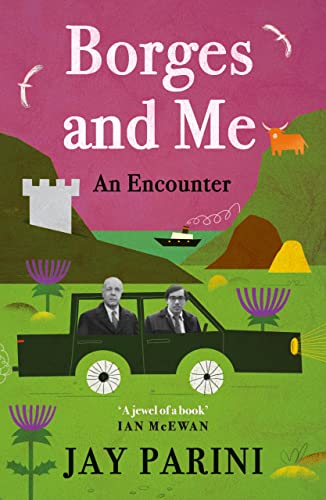
We’ll stay in Scotland, but lighten the mood, by picking up a copy of Borges and me: an encounter by Jay Parini. A romp of a read – a lightly fictionalised account of Parini’s encounter with Borges: a writer whose work I, like Parini, have never (so far) read. Jay Parini, an American, was a post-graduate student at St. Andrew’s University, dodging the draft to the Vietnam War. He’s going through young-man-angst about the subject for his thesis (his supervisor doesn’t seem keen on Parini’s choice of poet Mackay Brown), his draft-dodging and his (lack of) love life. When a friend of his, Alistair, is called out of town on a family emergency, Parini is called in to house-sit Alistair’s guest, the blind and elderly post-modernist writer Borges. Almost immediately, at Borges’ request, they embark on a road trip round Scotland for which Parini is expected to be Borges’ ‘eyes’. Shambolic and unpredictable, Borges is also a fount of dizzying literary talk. This is a trip to savour. A book which is a funny and wry account of an unlikely and thoroughly Quixotic journey: indeed Borges names Parini’s ancient Morris Minor after Quixote’s horse Rocinante. And it’s persuaded me too, that it’s about time I read some of Borges’ writing.
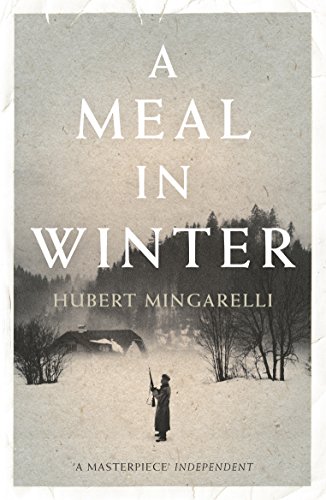
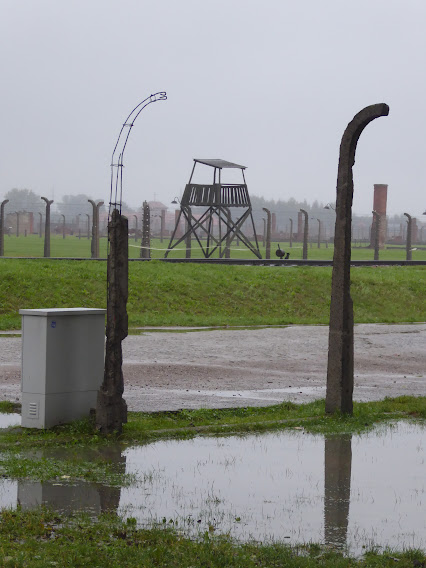
More men thrown together almost by happenstance: this is very much not a romp of a read. A Meal in Winter by Hubert Mingarelli. An account of three German soldiers whose task on a bitterly cold winter day during WWII is to hunt down Jews in hiding and bring them back to the Polish concentration camp where they are based, for an inevitable end. This unenviable task is better than the alternative: staying in camp to shoot those who were found the previous day. They’re friends simply through circumstance, so they talk about family – about the teenage son of one of them – and they find just one Jew. Is he their enemy, deserving his fate, or is he just like them, a young man doing his best to survive? What if they return to camp with nobody to show for their day’s hunting? As the men retreat to an abandoned cottage to prepare a meagre meal, their hatred and fear jostle with their well-submerged more humane feelings to provide the rest of the drama for this short, thought provoking book.
Let’s complete the circle by turning to another book whose protagonists’ family history lies elsewhere, as was the case with Small Worlds (Ghana) but whose home is now London. Kamila Shamsie‘s Best of Friends. This is a book of two halves. The first takes us to 1980s Karachi, and to the lives of two 14 year old schoolgirls. Zahra’s exceptionally bright and will do well. She’s less privileged than Maryam, who expects to inherit her grandfather’s successful leather business. An event takes place which comes in many ways to define their futures. Fast forward 40 years. The girls, now women are living in London, are successful and content. In many ways they are ciphers representing on the one hand liberal and inclusive politics, on the other successful entrepreneurship. Their strong friendship endures. Until the event from their teenage years comes back to haunt them. I didn’t quite believe in this and though the ending is intriguing, I was a little disappointed in this latest book from Shamsie.

So there we have it: a chain that explores friendship in its many guises. Next month? The chain-starter is the winner of the International Booker Prize: Time Shelter by Georgi Gospodinov and translated by Angela Rodel.

Six Degrees of Separation in April

It’s time to play Six Degrees of Separation again. Those of us who join this challenge start with the book for the month, and see what books suggest themselves to us as links in a chain leading away from the original. You can bet that not one single participant will have made the same choices as you. That’s what makes it so interesting.

The starting point this month is Douglas Stuart’s Shuggie Bain. This compelling and uncomfortable book, set in a Glasgow brought low by Thatcherism in the 1980s is the story of a single family.  More particularly it’s the story of Agnes Bain and one of her sons Shuggie.  It’s the story of living in inferior housing, surrounded by inadequate or non-existent facilities and schooling. It’s the story of one woman’s descent into alcoholism, and the profound effects this has on her own life and that of her family.  I was fully involved in this book, unable to leave it unread.  At the same time, it left me feeling depressed and impotent, and I think it’s a testimony to the quality of the writing that it involved and affected me so deeply.

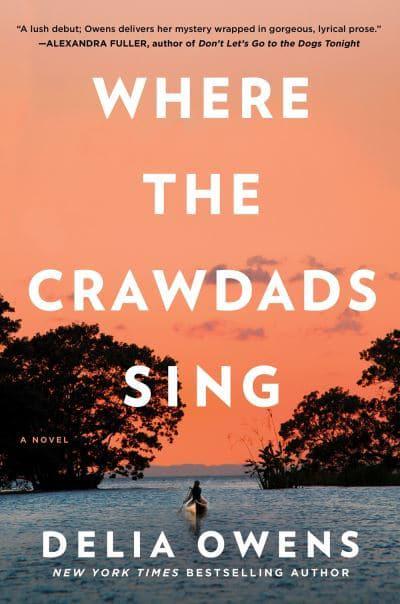
Delia OwensWhere the Crawdads Sing is about another young inadequately parented loner. The perfect novel? Perhaps. It’s got something for everyone: a coming-of-age story about a young friendless girl, Kya, abandoned by her family and siblings, who has to make her own way in the world as ‘Marsh girl’, living in a shack on the shoreline. It’s a mystery story. Though this element unfolds slowly, once it developed, it had me gripped until the very last page. It’s beautifully evocative nature writing too, informed yet lyrical, capturing the soul of a North Carolina marshland shoreline rich in bird and other wildlife.

Carolina coastline: Omar Roque, Unsplash

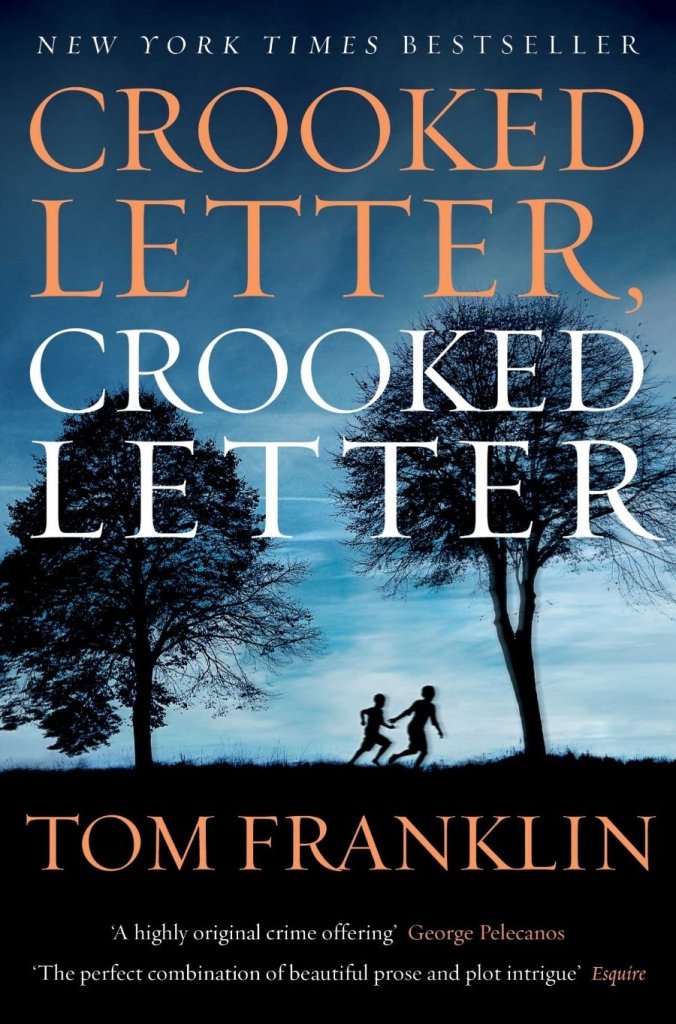
Another loner. Crooked Letter, Crooked Letter by Tom Franklin is set in small town Mississippi. Larry, who’s white, and Silas, who’s black become friends against the odds in a community where such relationships are not so much frowned upon as simply not even thought of. The relationship sours, the boys become teenagers, and misfit Larry, again against the odds, gets a date. He takes the girl out, and she is never seen again. Nothing is ever proved against Larry, but from this moment, this loner becomes quite simply ostracised, and lives a life of complete solitude, taking comfort from his compulsive reading habit. Silas becomes a police officer, and the years pass. What happens next? You’ll have to read it to find out.  This is a convincing read, and one with an unerring ear for dialogue.  I loved it.

Eagle Lake, Mississippi: Justin Wilkens, Unplash

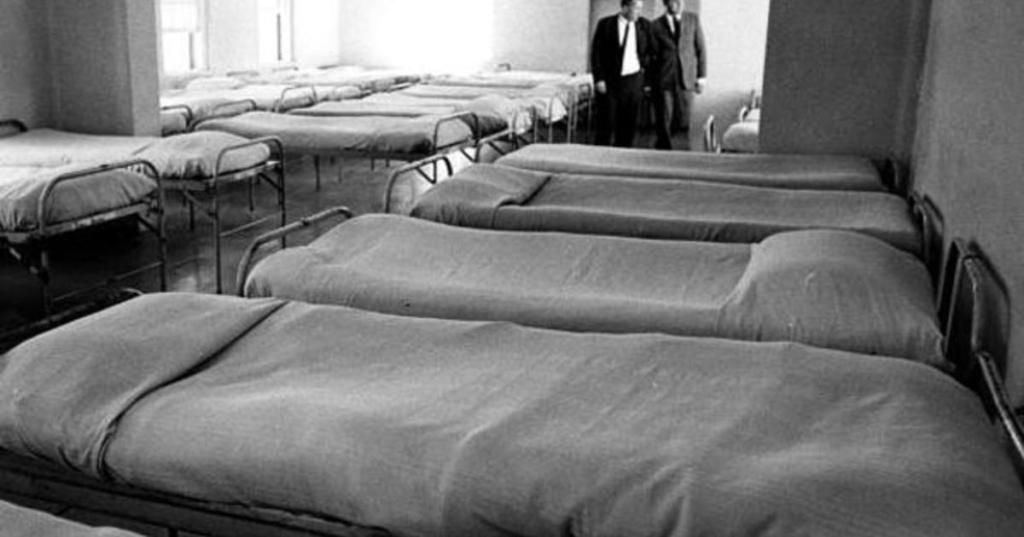
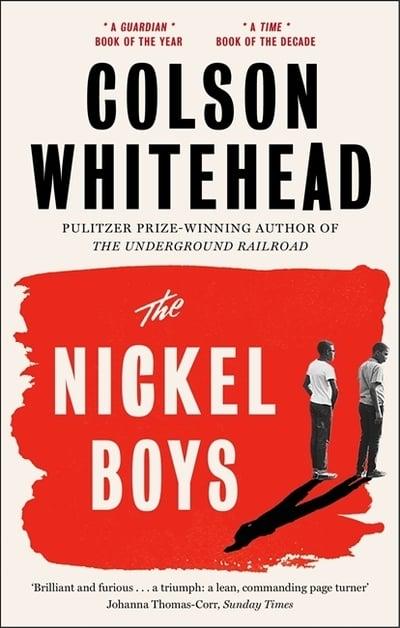
Living a life under suspicion leads me to The Nickel Boys, by Colson Whitehead, a tautly-written account of one black boy’s experience of reform school in segregated 1960s America. Bright, studious Elwood Curtis finds himself there, having been in the wrong place at the wrong time. Its cruelties and injustices, the differences between the experiences of black boys and white boys incarcerated at the Nickel Academy are always understated, never dwelt on. A few characters apart from Elwood’s are developed, but the strength of the story derives from its understating the horrors of the system it describes. The central premise is that racism was so endemic it wasn’t even recognised as such. It’s all very well resolving to be good, keep your head down and play the system, but nobody can work out how to do this.  A thoughtful book, with an impact that remains long after the last page has been turned. 

Dormitory at the Dozier School, on which the Nickel Academy was based: Photo courtesy of CBS News

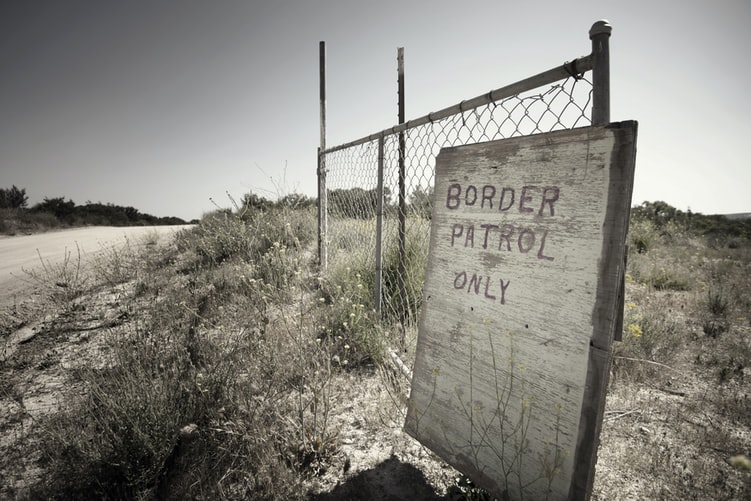
There’s law enforcement of a different kind in The Line Becomes a River. Francisco Cantú was a U.S. Border Patrol agent in Arizona and Texas for four years. He stalked, captured and processed those Mexican citizens seeking a new life in the US.  A few were criminal.  Most weren’t.  Cantú was good at his job, but it stressed him beyond measure. Eventually he quit to return to an academic life. It was then, funding himself by his job as a barista that he met an illegal immigrant, José Martínez, a diligent, God-fearing family man who had been with his family in the US for decades:. This man returned to Mexico to see his dying mother. And could not get back. Cantú and many others fought unceasingly to have him released to his family in America. For Cantú the battle was a way of seeking absolution, as he now saw it, for his four year career in inhumanity. Stuck in Mexico, unable to see or communicate with his wife and three sons, Martinez tries repeatedly to cross the border in attempts which he knows may result in his losing his life. By the end of the book, he has not succeeded.

Border fence: Greg Bulla, Unsplash

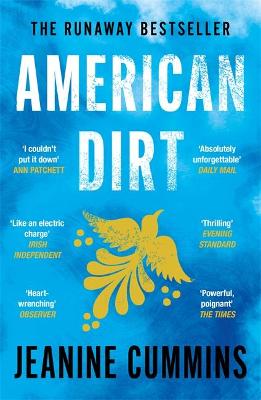
It’s an obvious leap from Cantú’s book to American Dirt, by Jeanine Cummins.  This is a compellingly readable account of how even a comfortably middle-class family from Acapulco – journalist husband, bookshop-owning wife Lydia, eight year old Luca – can have their lives thrown into complete disarray. Lydia and Luca become migrants seeking safety in the United States after their entire extended family is murdered. And in their flight, they discover that their education, their money brings no extra privileges. Their day to day struggles to reach el norte are as real as those of the least privileged migrant. I understand that the book has raised controversy in the Latino community: that many feel the characters are stereotypes, the plot little better than disaster porn. I’m not qualified to judge. But it did open my eyes to the difficulties faced by those who make the dangerous journey despite the odds stacked against them, and this vividly told story has engaged my interest in a way that more serious and informed journalism might not have done. I’m more likely now to want to know more.

Acapulco – Four Loco, Unsplash

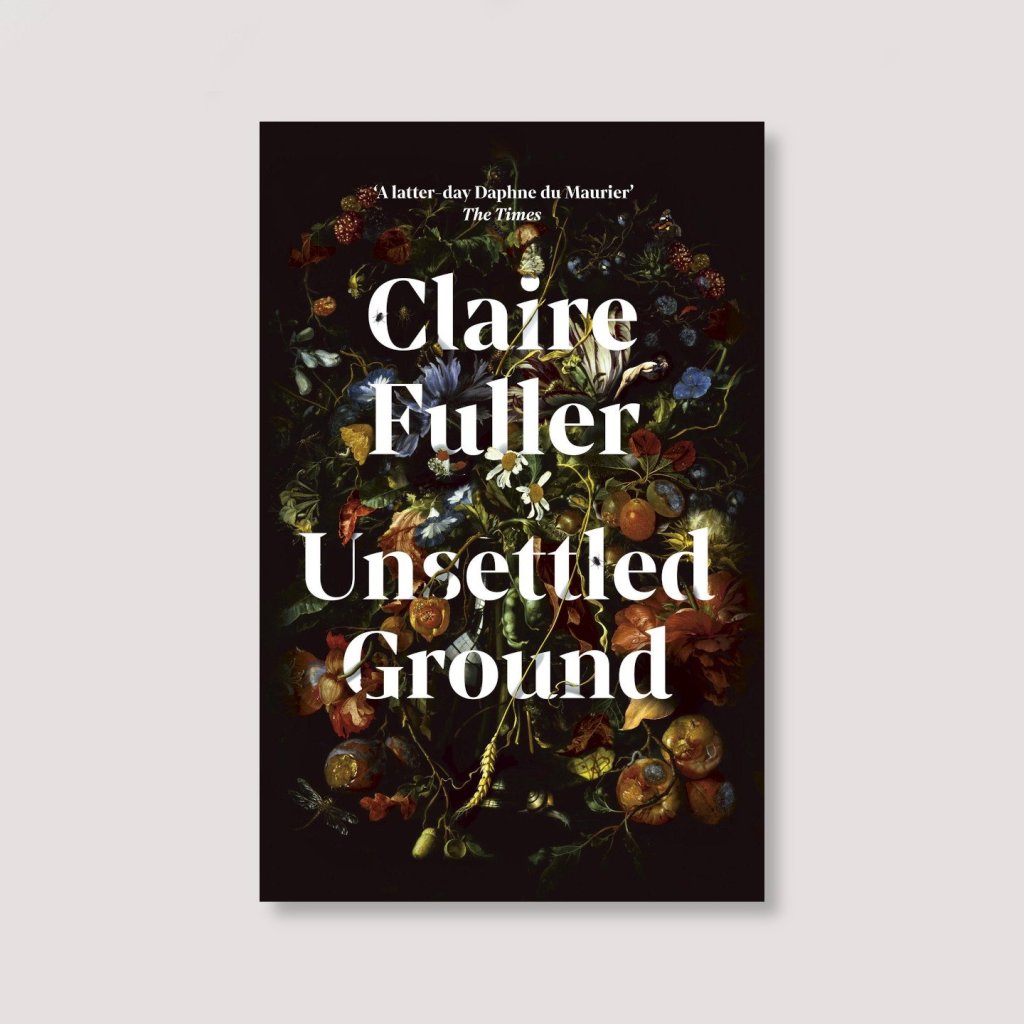
Let’s finish with a book I’ve just this week finished, as it too deals with a pair at real risk of being dispossessed of what they thought they had:  Claire Fuller‘s Unsettled Ground.  51 year old twins Jennie and Julius Seeder have always lived with their mother, largely self-sufficient and in some seclusion at the edge of a village. Then their mother dies, and their lives slowly fall apart. Their poverty, their unworldliness and reluctance to fit in with an ordinary 21st century existence leaves them exposed to the fragility of their way of life. Only their talent for, and love of music links them to moments of being carefree, and to a wider world.  Here is a book about family secrets, about threats which seem overwhelming to such an unworldly pair; about poverty so constricting that impossible choices have to be made at the village shop; about friendships old and new and about the limitations imposed by lack of education and unworldliness. An involving and satisfying narrative.

Markus Spiske, Unsplash

I don’t seem to have made a cheerful chain for this Easter weekend. Every one of these books is well-worth reading. Just … not one after the other.

Six Degrees of Separation