Six Degrees of Separation: from Time Shelter to The Last Man in Europe

On the first Saturday of every month, a book is chosen as a starting point and linked to six other books to form a chain. Readers and bloggers are invited to join in by creating their own ‘chain’ leading from the selected book.

Kate W: Books are my favourite and best

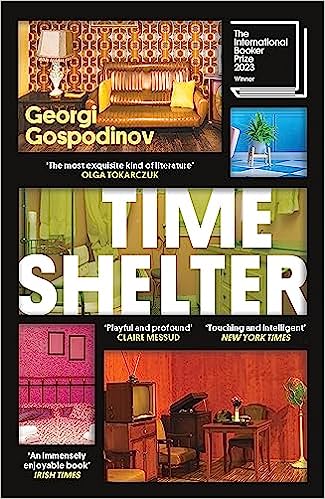
I reserved this month’s starter book, Time Shelter, by Georgi Gospodinov from the library, but it’s only just come in, so I have yet to read it.  However, I gather that an enigmatic flaneur named Gaustine opens a ‘clinic for the past’ that offers a promising treatment for Alzheimer’s sufferers: each floor reproduces a decade in minute detail, transporting patients back in time.
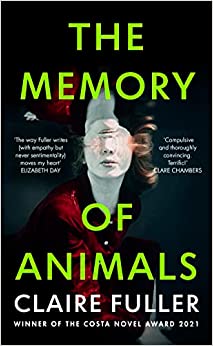
This immediately reminded me of Claire Fuller’s The Memory of Animals, which also opens a window on the past.  This is a  novel no doubt inspired by Lockdown, in which our young heroine is incarcerated in a hospital as part of a drugs trial which isn’t completed because the world at large goes into melt-down as a result of an untreatable variant of the virus rampaging round the world. Whilst there, another participant introduces her to the Revisitor, a device which allows her to re-experience her past life, which has been full of drama and error. It’s all a bit odd as a device for flashback. As are her letters to H, the revealing of whose identity would be a spoiler alert. Unsatisfactory, uninvolving, with too many plot-lurches, this is far from Fuller at her finest.
We travel to the past in my next book: Sheila Armstrong’s Falling Animals.When Oona spots a man apparently resting on the beach in a small Irish seaside town, it’s not immediately that she realises he’s dead. Who is he? How has he died? These questions remain unanswered by Police, the pathologist, and he is finally buried, unknown. But it’s not the end of the story. Each chapter of this lyrically written book introduces us to someone else who may have had a connection with the deceased – often very many years ago. We travel to other countries, to ships at sea: and connections with the man, and with this small town weave themselves into the story from distant lands and cultures. It’s deftly, often poetically done, and the book ends a year after the body was first discovered. Is the man finally identified? You’ll have to read the book to find out, and I highly recommend you do so.

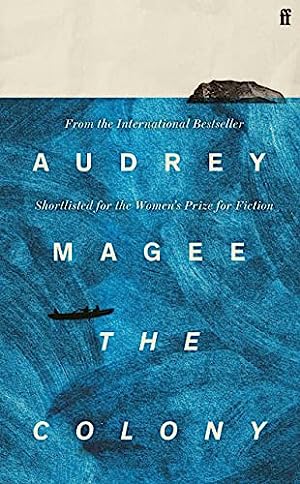
Looking to the past informs my next choice: The Colony, by Audrey Magee. We’re in Ireland in 1979, on a small, sparsely populated and isolated island, whose inhabitants have only recently started to learn and use English. Two visitors come to spend their summers there. Mr. Lloyd is a painter who wants to explore the landscape. He’s rude and entitled, but interesting to young islander James who has ambitions to go to art school. Masson, known as JP, is a French academic, keen to preserve and promote the Irish language, whether the inhabitants want it or not. Each chapter is interspersed with a terse newspaper-like account of a sectarian murder on the mainland, whether of a Catholic or a Protestant. At first these almost seem an irrelevance. Gradually, the penny drops that these incidents are deeply rooted in the history of the English towards their Irish ‘colony’, and do much to explain the largely hostile feelings both of the islanders and its two visitors. The book paints a picture of an island in many ways left behind, whose characters still struggle to find their place in the world, as indeed do the two visitors. A book to provoke thought long after the last page has been turned.
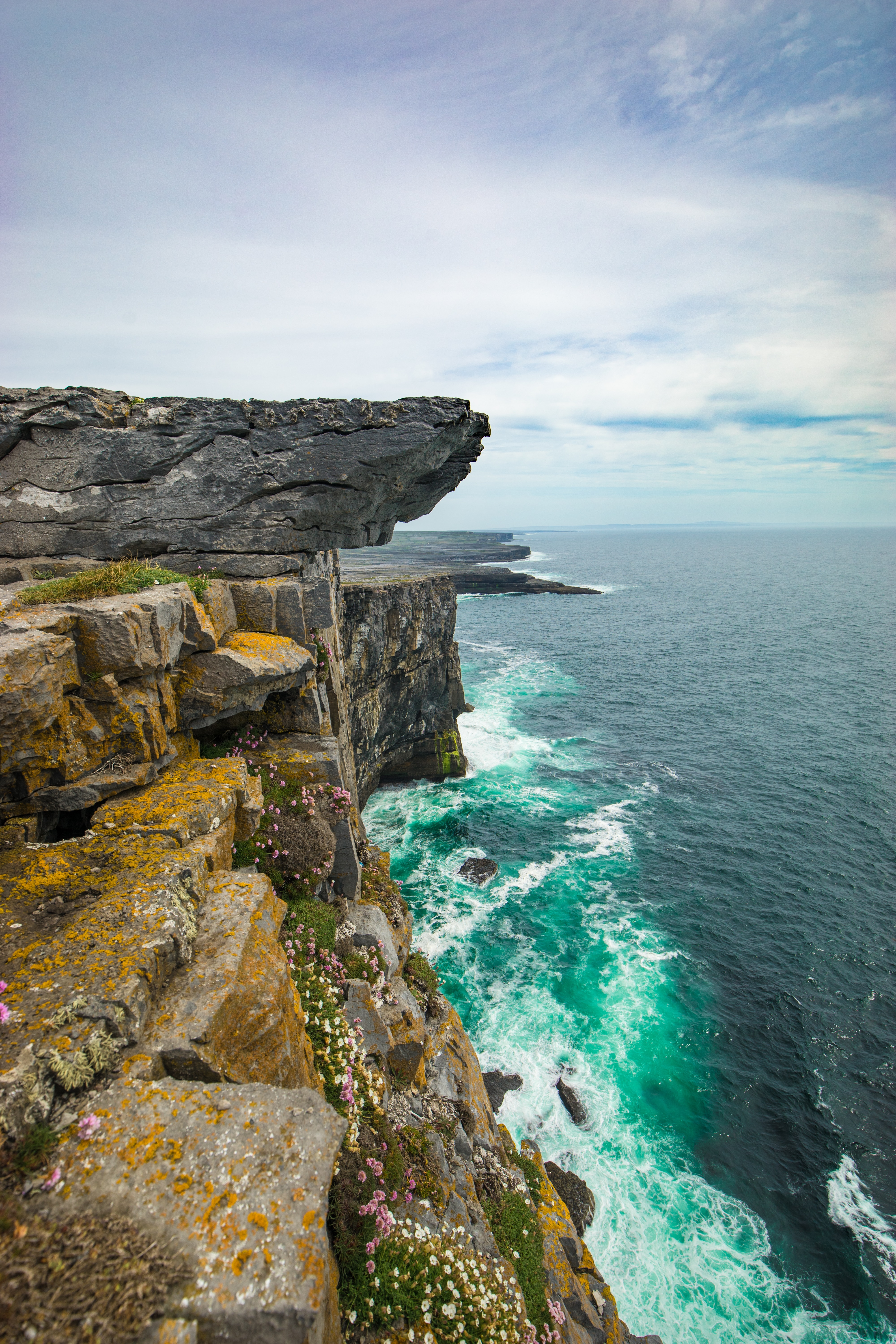
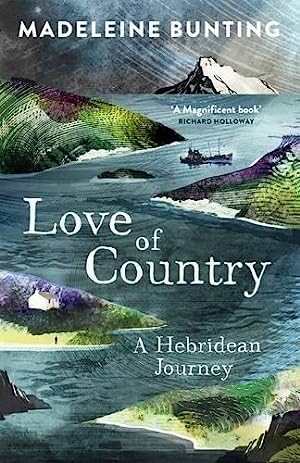
Let’s stay in Gaelic territory, but shift to Scotland. Love of Country by Madeleine Bunting. I’ve never been to the Hebrides, nor even really thought of going. This has changed, thanks to this book. Bunting makes a journey through the wild and remote islands of the Hebrides, focusing on seven in particular. This book recounts her explorations. Everything is potential material. The wild and severe beauty of the place touches her soul, and she writes poetically and personally about this. She explores geology, natural history, bird life, literature, and above all the sad and often wretched history of the people of these isolated places, and the people who sought to dominate or exterminate them. I found this a moving and fascinating book, and I’ll return to read other work by Bunting.
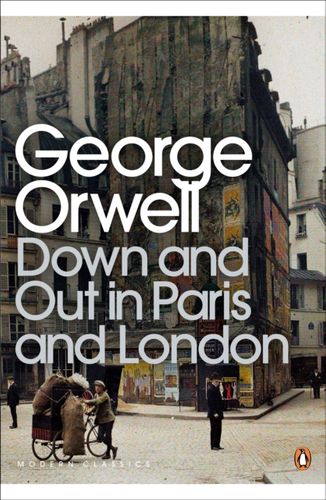
Poverty is what defines my next book:  Down and Out in Paris and London, by George Orwell, set in Paris and London in the late 1920s.  In one sense an easy read, in that the narrative sweeps the reader along: in another, difficult, because the story, describing conditions of brutal poverty as a ‘plongeur’ in a Paris hotel kitchen, then as an English tramp in southern England is unappetising in the extreme. The diary-like narrative is interspersed with anecdotes from the lives of other characters, such as his Russian friend Boris, and with more political reflections to make a striking and unforgettable short book. His characterisations of the men that he meets – and they’re nearly always men – are lively, and rounded, and put us in touch with the reality of existing on a meagre diet lacking substance and nourishment, of always being hungry, of either being unrelentingly overworked (Paris) or unrelentingly under occupied and bored (London) . The spikes may have changed, but is the reality of existence for the homeless really so very different now?

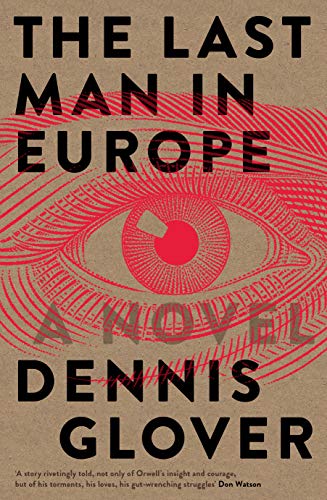
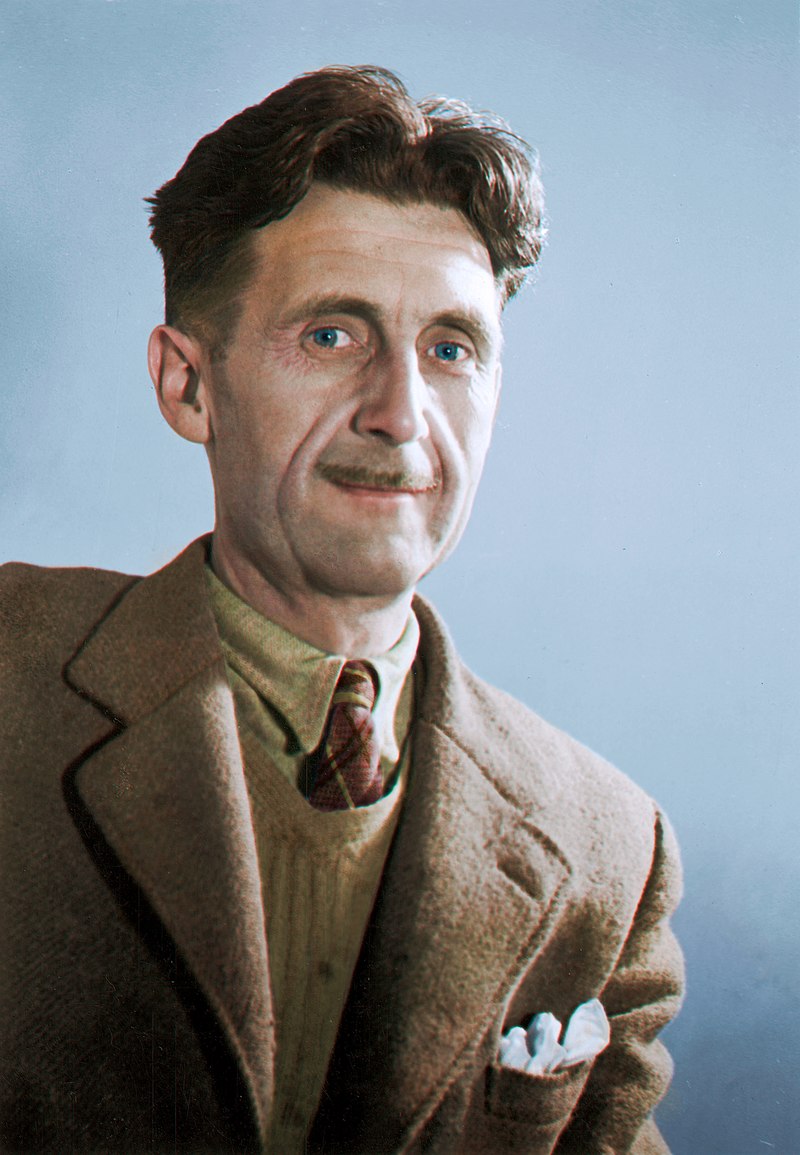
My last choice links with Orwell, with a Gaelic location and not much else.  It’s The Last Man in Europe, by Dennis Glover.  Focusing on the last years of his rather brief life, while occasionally diving back to earlier times – Orwell’s part in the Spanish Civil War for instance – this fictional-though-based-on-fact account mainly has as its subject Orwell’s last years on the Scottish island of Jura. This is a bleak and wholly unsuitable place for a man already dying from tuberculosis. Orwell was there to write his last novel, at first called The Last Man in Europe. We know it by the title he soon gave it – Nineteen Eighty Four. The book is assured in painting a picture of Orwell’s life in shabby-genteel poverty, of his somewhat cavalier attitude towards his colleagues and the women he bedded, and his wives, and most particularly of his changing political thought processes which would come to fruition in his last and probably greatest book. Now I need to go back and read the lot again, and not just Down and Out ….
This month’s chain barely ventured beyond the British Isles and Ireland, but next month we begin in America, with Curtis Sittenfeld‘s Romantic Comedy.
Six Degrees of Separation in April

It’s time to play Six Degrees of Separation again. Those of us who join this challenge start with the book for the month, and see what books suggest themselves to us as links in a chain leading away from the original. You can bet that not one single participant will have made the same choices as you. That’s what makes it so interesting.

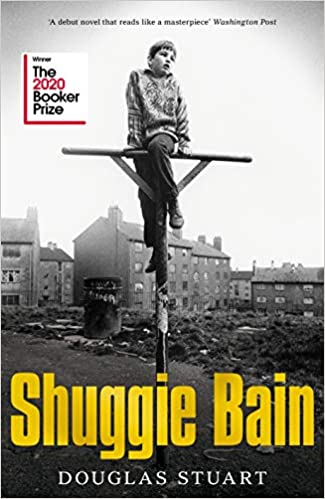
The starting point this month is Douglas Stuart’s Shuggie Bain. This compelling and uncomfortable book, set in a Glasgow brought low by Thatcherism in the 1980s is the story of a single family.  More particularly it’s the story of Agnes Bain and one of her sons Shuggie.  It’s the story of living in inferior housing, surrounded by inadequate or non-existent facilities and schooling. It’s the story of one woman’s descent into alcoholism, and the profound effects this has on her own life and that of her family.  I was fully involved in this book, unable to leave it unread.  At the same time, it left me feeling depressed and impotent, and I think it’s a testimony to the quality of the writing that it involved and affected me so deeply.

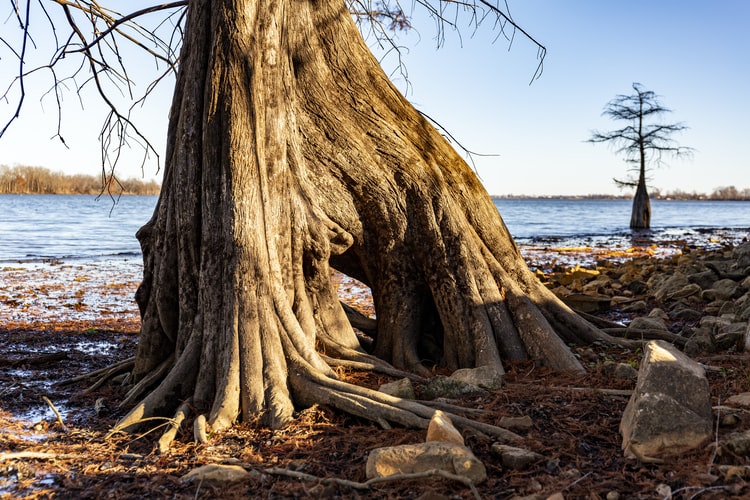
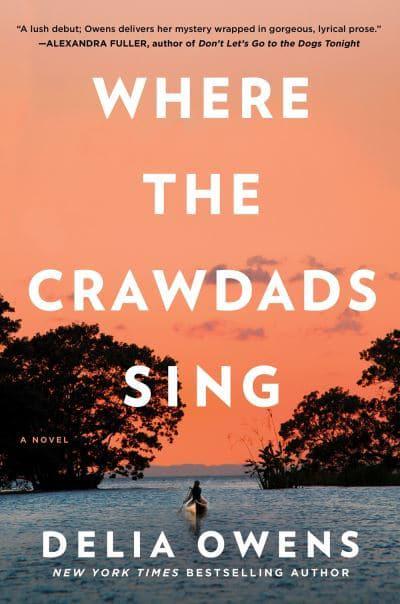
Delia OwensWhere the Crawdads Sing is about another young inadequately parented loner. The perfect novel? Perhaps. It’s got something for everyone: a coming-of-age story about a young friendless girl, Kya, abandoned by her family and siblings, who has to make her own way in the world as ‘Marsh girl’, living in a shack on the shoreline. It’s a mystery story. Though this element unfolds slowly, once it developed, it had me gripped until the very last page. It’s beautifully evocative nature writing too, informed yet lyrical, capturing the soul of a North Carolina marshland shoreline rich in bird and other wildlife.

Carolina coastline: Omar Roque, Unsplash

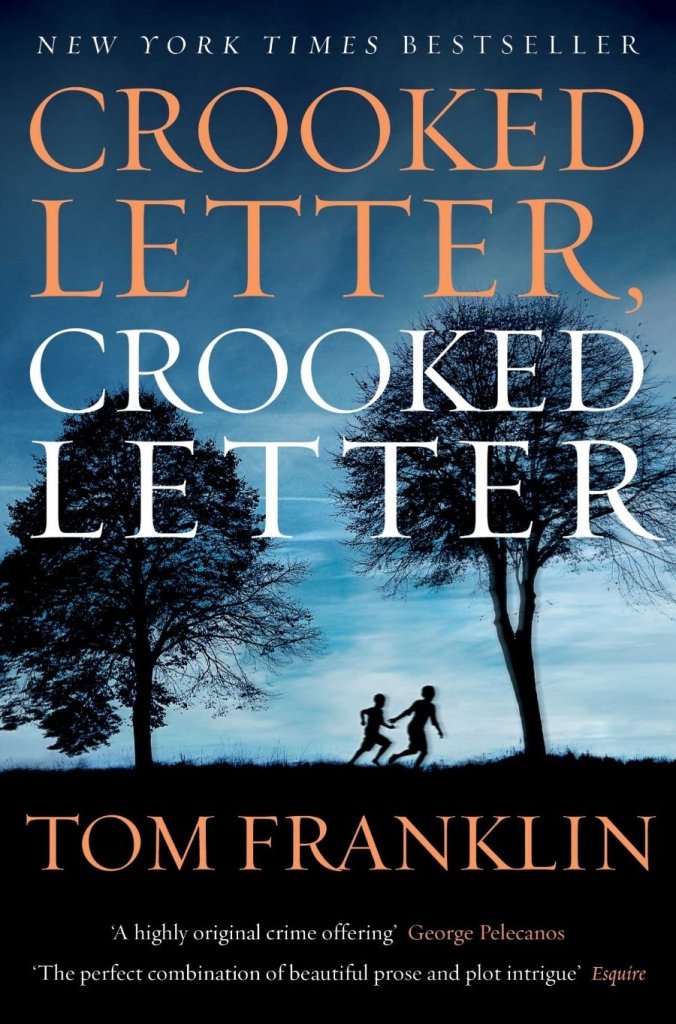
Another loner. Crooked Letter, Crooked Letter by Tom Franklin is set in small town Mississippi. Larry, who’s white, and Silas, who’s black become friends against the odds in a community where such relationships are not so much frowned upon as simply not even thought of. The relationship sours, the boys become teenagers, and misfit Larry, again against the odds, gets a date. He takes the girl out, and she is never seen again. Nothing is ever proved against Larry, but from this moment, this loner becomes quite simply ostracised, and lives a life of complete solitude, taking comfort from his compulsive reading habit. Silas becomes a police officer, and the years pass. What happens next? You’ll have to read it to find out.  This is a convincing read, and one with an unerring ear for dialogue.  I loved it.

Eagle Lake, Mississippi: Justin Wilkens, Unplash

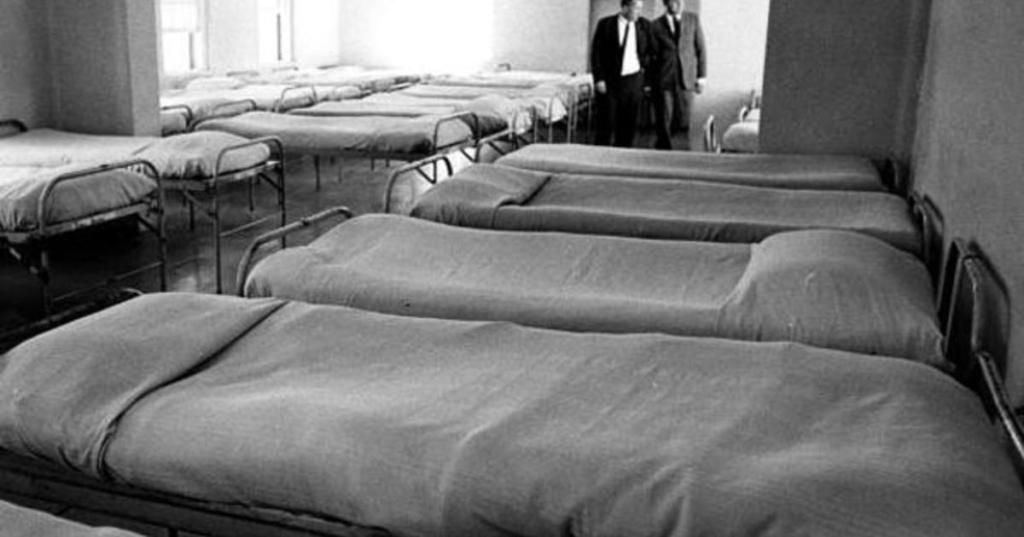
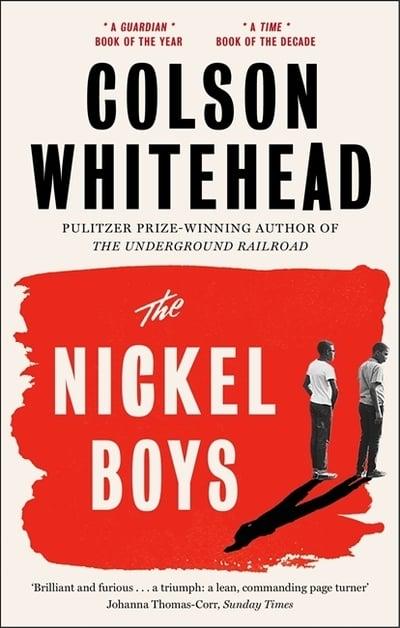
Living a life under suspicion leads me to The Nickel Boys, by Colson Whitehead, a tautly-written account of one black boy’s experience of reform school in segregated 1960s America. Bright, studious Elwood Curtis finds himself there, having been in the wrong place at the wrong time. Its cruelties and injustices, the differences between the experiences of black boys and white boys incarcerated at the Nickel Academy are always understated, never dwelt on. A few characters apart from Elwood’s are developed, but the strength of the story derives from its understating the horrors of the system it describes. The central premise is that racism was so endemic it wasn’t even recognised as such. It’s all very well resolving to be good, keep your head down and play the system, but nobody can work out how to do this.  A thoughtful book, with an impact that remains long after the last page has been turned. 

Dormitory at the Dozier School, on which the Nickel Academy was based: Photo courtesy of CBS News

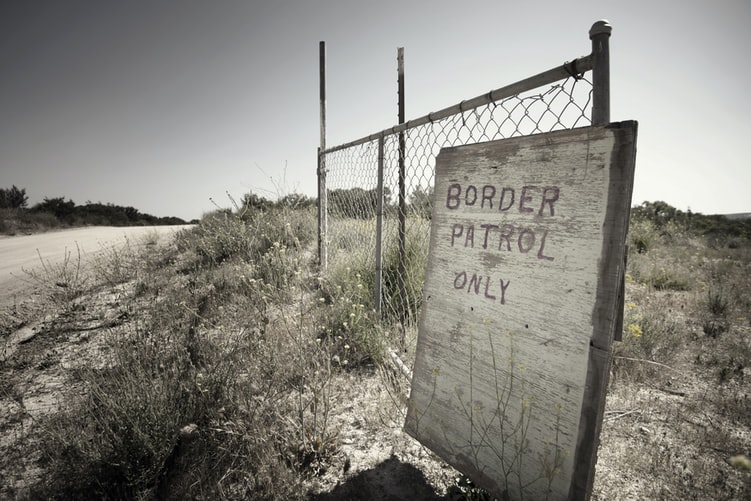
There’s law enforcement of a different kind in The Line Becomes a River. Francisco Cantú was a U.S. Border Patrol agent in Arizona and Texas for four years. He stalked, captured and processed those Mexican citizens seeking a new life in the US.  A few were criminal.  Most weren’t.  Cantú was good at his job, but it stressed him beyond measure. Eventually he quit to return to an academic life. It was then, funding himself by his job as a barista that he met an illegal immigrant, José Martínez, a diligent, God-fearing family man who had been with his family in the US for decades:. This man returned to Mexico to see his dying mother. And could not get back. Cantú and many others fought unceasingly to have him released to his family in America. For Cantú the battle was a way of seeking absolution, as he now saw it, for his four year career in inhumanity. Stuck in Mexico, unable to see or communicate with his wife and three sons, Martinez tries repeatedly to cross the border in attempts which he knows may result in his losing his life. By the end of the book, he has not succeeded.

Border fence: Greg Bulla, Unsplash

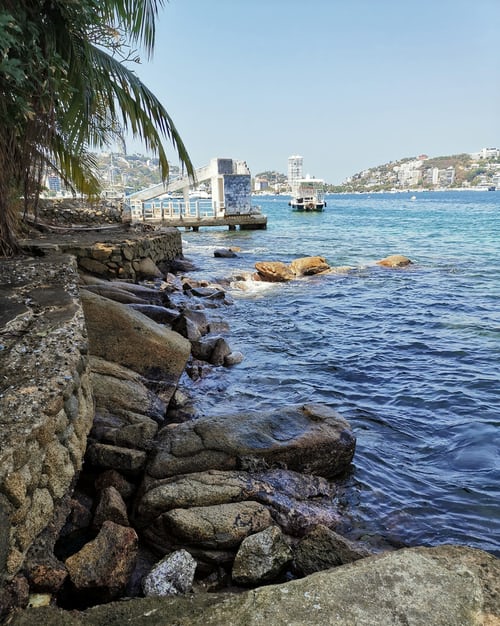
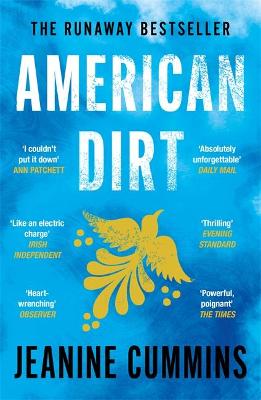
It’s an obvious leap from Cantú’s book to American Dirt, by Jeanine Cummins.  This is a compellingly readable account of how even a comfortably middle-class family from Acapulco – journalist husband, bookshop-owning wife Lydia, eight year old Luca – can have their lives thrown into complete disarray. Lydia and Luca become migrants seeking safety in the United States after their entire extended family is murdered. And in their flight, they discover that their education, their money brings no extra privileges. Their day to day struggles to reach el norte are as real as those of the least privileged migrant. I understand that the book has raised controversy in the Latino community: that many feel the characters are stereotypes, the plot little better than disaster porn. I’m not qualified to judge. But it did open my eyes to the difficulties faced by those who make the dangerous journey despite the odds stacked against them, and this vividly told story has engaged my interest in a way that more serious and informed journalism might not have done. I’m more likely now to want to know more.

Acapulco – Four Loco, Unsplash

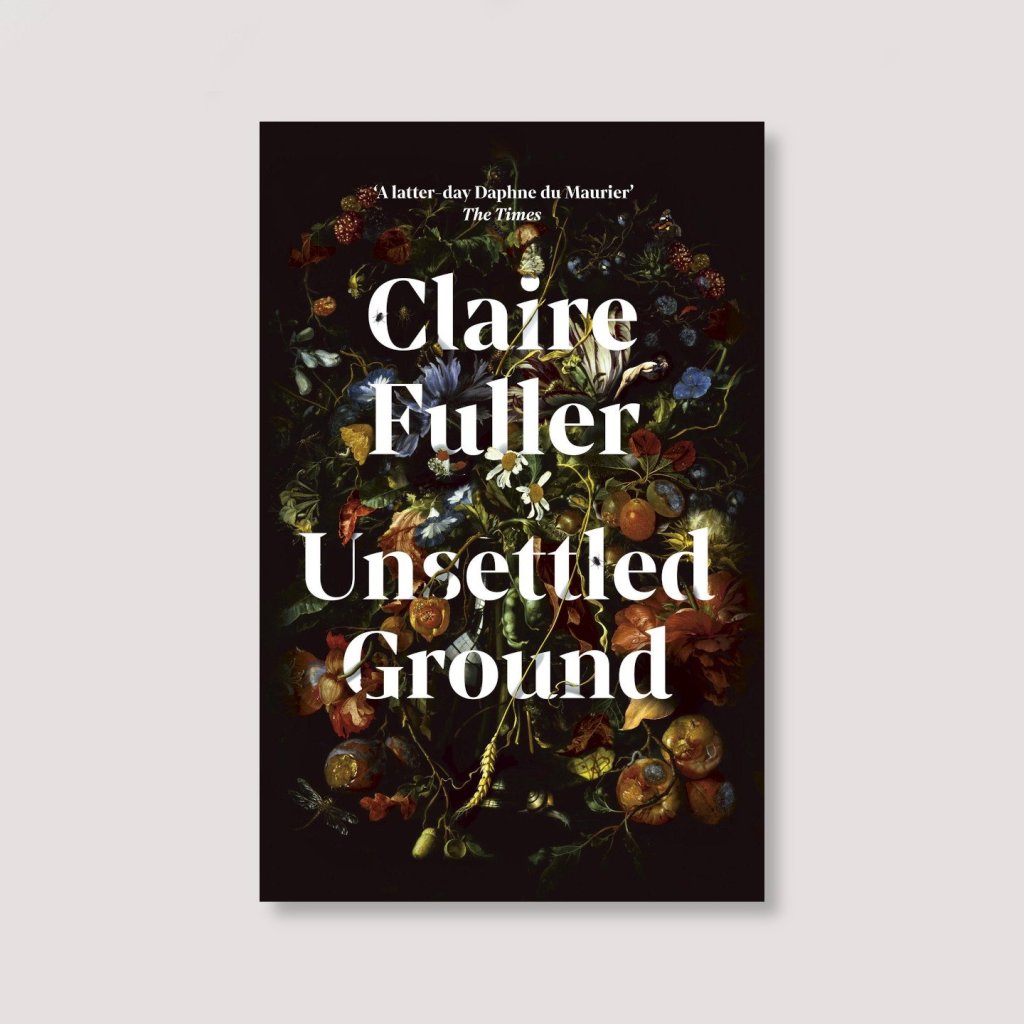
Let’s finish with a book I’ve just this week finished, as it too deals with a pair at real risk of being dispossessed of what they thought they had:  Claire Fuller‘s Unsettled Ground.  51 year old twins Jennie and Julius Seeder have always lived with their mother, largely self-sufficient and in some seclusion at the edge of a village. Then their mother dies, and their lives slowly fall apart. Their poverty, their unworldliness and reluctance to fit in with an ordinary 21st century existence leaves them exposed to the fragility of their way of life. Only their talent for, and love of music links them to moments of being carefree, and to a wider world.  Here is a book about family secrets, about threats which seem overwhelming to such an unworldly pair; about poverty so constricting that impossible choices have to be made at the village shop; about friendships old and new and about the limitations imposed by lack of education and unworldliness. An involving and satisfying narrative.

Markus Spiske, Unsplash

I don’t seem to have made a cheerful chain for this Easter weekend. Every one of these books is well-worth reading. Just … not one after the other.

Six Degrees of Separation