
On the first Saturday of every month, a book is chosen as a starting point and linked to six other books to form a chain. Readers and bloggers are invited to join in by creating their own ‘chain’ leading from the selected book.
Kate: Books are my Favourite and Best
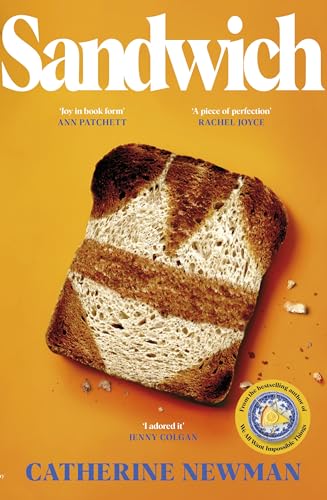
This month begins with Catherine Newman‘s Sandwich. It’s a book I enjoyed – with reservations – but let’s concentrate on the basics. This is a smartly delivered story told through the voice of menopausal Rocky as she goes with her husband; her two grown up children; and for part of their week there, her elderly parents to the same -faintly decrepid – house in Cape Cod that they’ve rented every summer for years and years. This gives me my premise for my Six Degrees this month. All my choices will have a marriage embedded in the story – to a greater or lesser degree.


Here’s another American marriage, in Ron Rash‘s The Caretaker. Jacob is called up to fight in the Korean war, and has to leave his pregnant wife Naomi behind. He is from a privileged background, and Naomi most definitely is not. His parents disapprove of the match so much that they set up a subterfuge to ensure that the couple will never see one another again once Jacob returns. Only one person, Jacob’s childhood friend has an idea that something very wrong is taking place. The book quietly presents a story that slowly unfolds when Jacob comes home, invalided out of the war, and believing himself a widower, with a child who never saw life. A cleverly devised plot, which for all its lack of high drama, is suspenseful to the end. My first Ron Rash. But definitely not my last.

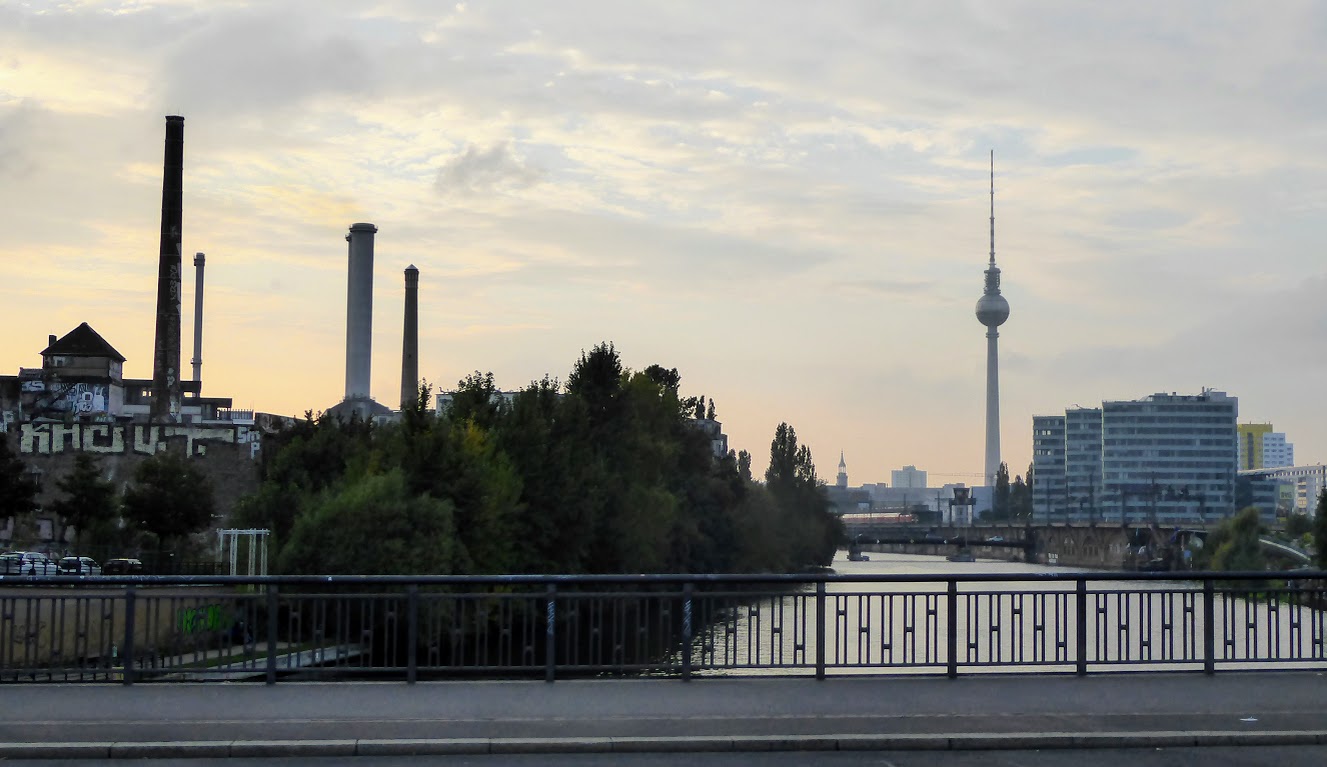
Naomi doesn’t feature directly in Rash’s story. The wife in my next choice doesn’t either: Bernhard Schlink‘s The Granddaughter. 1964. A young West Berliner spending time in East Berlin meets a young woman and falls in love. He contrives her escape, marries her. But they do not live happily ever after. She only half heartedly returns his love, is constantly searching for she knows not quite what, and eventually dies in a drunken stupor. Only then does her husband, a bookseller, discover that she’d had a baby whom she’d abandoned before marrying him. The book describes his search for this woman, who must now be well into her 40s, and it results in his taking the woman’s own daughter under his wing and having her visit him for weeks at a time. A tale of complex feelings: getting to understand that the East was not in fact necessarly grateful to be ‘liberated’: that anger, bitterness, political feelings that resulted in the rise of the Far Right in Germany is one of the consequences of the fall of the Berlin Wall. His granddaughter’s father has passed all this anger onto his child, and this plays out in the latter part of this book. A moving and illuminating account of the feelings informing modern German politics.
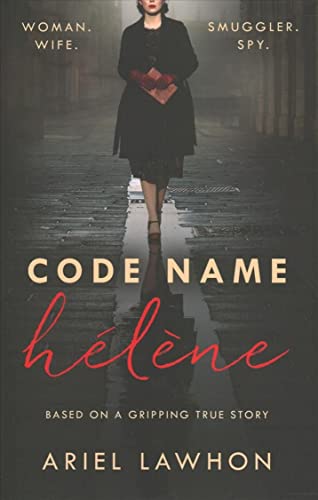

The division of Germany into East and West was a consequence of World War II, so let’s go to wartime France. Code Name Hélène by Ariel Lawhon. A real fast-moving page-turner, detailing the war time adventures of the real-life Nancy Wake. An Australian, Nancy lived and worked in Europe as a reporter in the years before the war. By 1939, she was in Marseille, and it’s here that her story begins – as far as the book is concerned. The plot however, weaves between her four incarnations as, initially an ambulance driver and people-smuggler for the French resistance: and increasingly, under different guises, as a fully fledged member – and commander even – of the guerilla military arm, in her case in the Auvergne. We are also witness, in Marseille, to the slow-burning yet passionate love affair between herself and Henri which results in their marriage. Her war work drives them physically apart, but does not diminish their love for one another. This work cannot be described as a biography. Lawhon has admitted to some characters being composite, some incidents elided or transposed for the sake of the story. And certainly there are scenes here whose veracity could never be proved: though I am sure the general ‘flavour’ remains accurate. Nancy was unusual in being a female commander in a male world, which brought its own difficulties, and also meant she probably had to be larger-than-life. Henri has his own role in the story. But not until towards the end. Because I already am familiar with much of the history of the French resistance, I found this a fascinating and involving story, and I fairly raced through its (almost) 450 pages.


Let’s stay in France and look at Boxes by Pascal Garnier. I simply don’t know what to make of this. Brice’s wife Emma has disappeared, leaving him to manage alone the move into the countryside which she had wished for. In this book, we witness Brice’s descent into depression and madness. We see his developing odd friendship with his neighbour Blanche. Various intriguing hints are dropped, but never ultimately satisfied. For instance, why does Brice so strongly resemble Blanche’s father? The house, the surrounding countryside are described in unsettling ways. Everything is alien. Brice’s past life. His present life. His career, which he abandons, apparently on a whim. Everything’s on a whim: from his shopping choices to the hole he stoves into the kitchen/dining room wall. It was all a bit like watching a certain kind of French film, and I was bemused, rather than enthusiastic about this book.


Now for another book where it’s a woman who’s centre stage: Water, by John Boyne. We meet a woman in middle years who has just fled to live in a fairly remote Irish island, changed her name and as far as possible her appearance. Why? Only slowly do we find out. Her husband’s crimes reflect on her: the world assumes she had enabled them – and, she believes, one even greater tragedy. She has done her best to vanish. She meets a few characters who are also uncomfortable with their lives, making relationships with some. Slowly she regains the strength of character necessary to reject her husband and to renew her relationship with her daughter. This book deftly charts her slow, but steady steps to recovery.
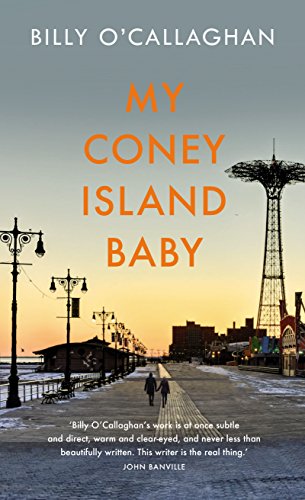

And for our last book, we’ll return to America, though to (like Boyne) an Irish writer, in Billy O’Callaghan‘s My Coney Island Baby. Michael and Caitlin have been meeting as lovers for one day a month, for a quarter of a century. They are married, but unhappily, to other people. The book explores their time together, on a single day. The day when Michael reveals that his wife has been diagnosed with terminal cancer. And Caitlin will reveal that her husband is likely to be promoted, and will require them both to move to Illinois, almost 1000 miles away. Yet despite their marriages’ fading passion, duty and the constraints of middle age will probably keep them tied to their respective spouses. The book swings between the hotel bedroom where the couple meet, and their past lives which have brought them to where they are now, disappointed by the choices they have made. An achingly poignant exploration of an intense and long-held love, drowned out as darkness falls and duty calls.
So that’s it for this month. A selection of marriages and stories, and ending where we began, in America. Next month we leave earth all together, and read Booker Prize-winning Orbital, by Samantha Harvey.







 From Pyrenees to Pennines
You must be logged in to post a comment.