Six Degrees of Separation from Romantic Comedy to Go, Went, Gone

On the first Saturday of every month, a book is chosen as a starting point and linked to six other books to form a chain. Readers and bloggers are invited to join in by creating their own ‘chain’ leading from the selected book.

Kate W. Books are my favourite and best
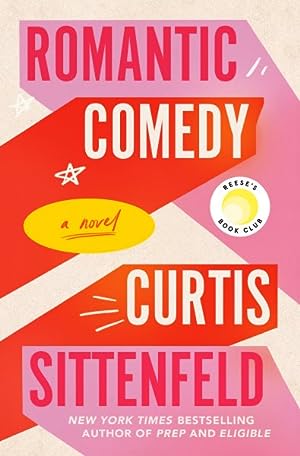
This month’s starter book is Curtis Sittenfeld‘s Romantic Comedy. Anything Sittenfeld writes is fine by me, but I haven’t managed to read this one yet. The Guardian has it as an ‘affable, intelligently crafted tale of work and love’, with a somewhat insecure heroine who can’t believe that true love has really come her way.


Let’s stay with complicated love, in The Rachel Incident by Caroline O’Donoghue. At first I thought I’d stumbled upon a Mills & Boon for Millennials. Then I thought I might not be all that interested as I’m scarcely the same generation as Rachel and her friends and colleagues, floundering through messy early adulthood. But almost against my will, I was drawn in to the convoluted affairs and working arrangements of Rachel, and her gay friend and flat mate James. We begin in 2009, and there’s a recession on, which colours everyone’s prospects, including Rachel’s middle class dentist parents. Rachel is at first finishing her English degree while also working in a bookshop. She fancies her professor. But he, it turns out, has begun an affair with James, although he’s married to the woman whom Rachel is in due course working for as an intern, and Rachel has fallen for someone who’s fallen for her too, but has a habit of disappearing … It’s all intriguingly complicated and believable. It’s gossipy, witty, wry and a real page turner. Recommended.

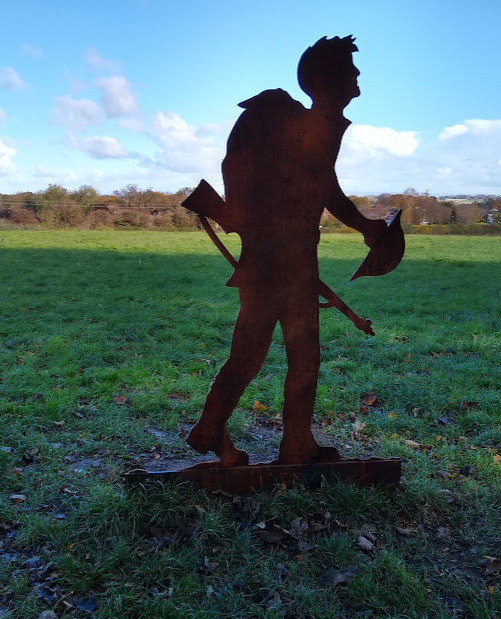
Love story involving gay men? We’ll go for a tremendous first novel from Alice Winn: In Memoriam. Here is a book which starts in an English public school, and moves quickly to WWI and the trenches. This is the journey of a varied cast of characters, chief among whom are Stanley Ellwood and Henry Gaunt, both of whom have been exploring their homosexuality whilst still at school. They exchange their privileged lives for the grim reality of battle, and Winn uses telling detail to underpin how truly frightening and beastly in every sense this is. Every few chapters the Preshute College magazine appears, and among the ever-longer lists of dead and wounded old boys are the names of characters we too have come to know. Ellwood and Gaunt, so very different, continue their relationship. Winn explores the strong bonds and unlikely alliances that war brings about, and continues this exploration to show its effects on the families whose sons have gone to fight, and its effects in the years after the war. A moving and deeply affecting book. I’m quite well-versed in WWI literature, but this has perhaps brought the full horror of that war, and its long-reaching effects before me in a way that few other books have done.
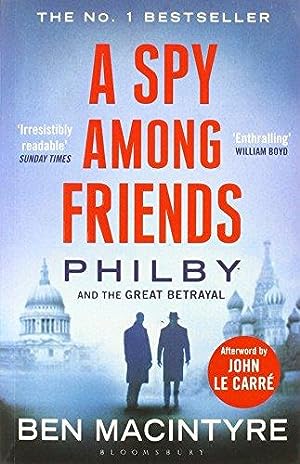
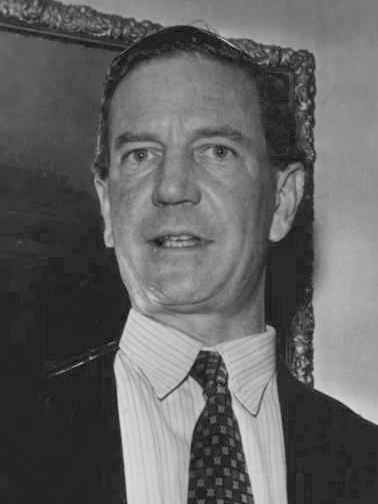
One of the consequences of war is that the world of spying evolves. This month I read Ben Macintyre‘s story of super-spy Kim Philby. As with in Memoriam, this book – A Spy among Friends – is peppered with ex-public school characters. Here is a graphic picture of a completely different world: a world in which who you know, and the school you’ve been to, rather than what you’ve achieved and the jobs you’ve held gets you into a career in espionage. A world in which secrecy was paramount, and – apparently – an ability to down prodigious quantities of alcohol. Ben Macintyre shows us this world, as it existed during WWII and the subsequent Cold War. He introduces us to the milieu of the agent – and the double agent. Specifically to Kim Philby who worked tirelessly not only for the British, but for the Russians, thereby sending colleagues and blameless citizens to untimely deaths. His life was a lie. Not his two closest friends, nor two of his wives or his family had the least idea of his machinations. He remained unsuspected by his M16 and American colleagues for many years. This is his story, pacily told, and offering a picture of this secretive world of postings and relationships all over Europe and the Middle East. In many ways, this isn’t my sort of book. But Macintyre is a reliably involving and good writer who draws you in. I’m glad to have read this book, and thoroughly relieved that neither I nor anyone I know is part of this duplicitous world. I don’t think…


Patrick Modiano‘s The Search Warrant also explores the consequences of war. Nearly 40 years ago, Modiano came across an ad in a 1941 edition of Paris Soir: by two Jewish parents seeking for their daughter who had run away from boarding school. His interest piqued, Modiano set forth on a ten year search to find out more about the life and possible death of the child, Dora Bruder. While he never forgot her, his search was intermittent. He looked at documents and newspapers. He trawled through the streets of the Paris Dora frequented, though many of them had changed almost beyond recognition. In this document of his search, he paints a picture of the Nazi occupation of Paris, of the lives of the Jewish citizenry – incomers from all over Europe – under Pétain’s regime. He connects and contrasts Dora’s adolescence to his own. This then is a personal story, as much about Modiano himself as about Dora Bruder. It is though a memorial to her, and to any and all of the Jews who lived and died in that particular and brutal period of French history.
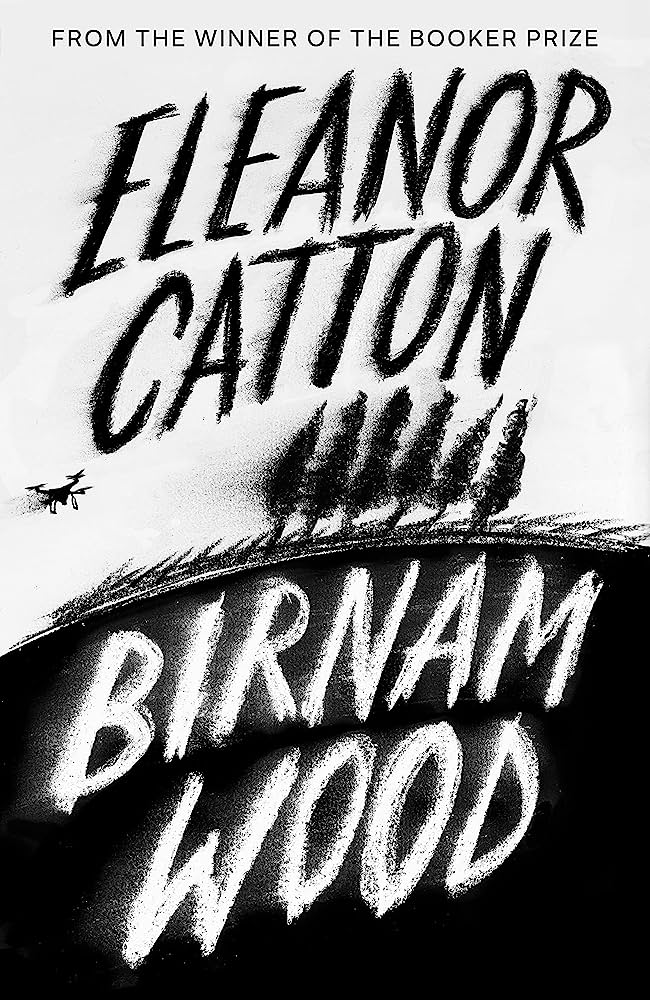
War of a different kind, with Eco-warriors centre stage is the subject of Eleanor Catton‘s Birnam Wood. Full disclosure. I borrowed this edition of the book from the library, then discovered that the BBC was currently serialising it, so – unusually for me – I ‘read’ it courtesy of BBC Sounds. And I didn’t enjoy it. Could this partly have been that the resident ‘baddie’, the American tech billionaire’s voice was so clearly that of a man dripping evil that any nuance the book might have had was lost? In the Good Guys’ (not Shining White Good Guys) corner were the members of a guerilla gardening group who want the land not as a bolt-hole or a secret mining project as American Lemoine does, but to pursue their aims. Lemoine’s drones and techie spyware sees all. Then there’s ex-guerilla Tony, and investigative reporter … and Owen, a self-made pest-control business man, whose wife actually owns the farm on which the land in question is sited, and who is willing to sell. All of these, with conflicting aims and ambitions were in the mix. The verbosity and proselytising of many of them lost me early on. The characters were thinly-sketched ciphers of Types, and I warmed to none of them. The ending was an excitingly gruesome one, but for me it was just a relief that it heralded the end of the story.

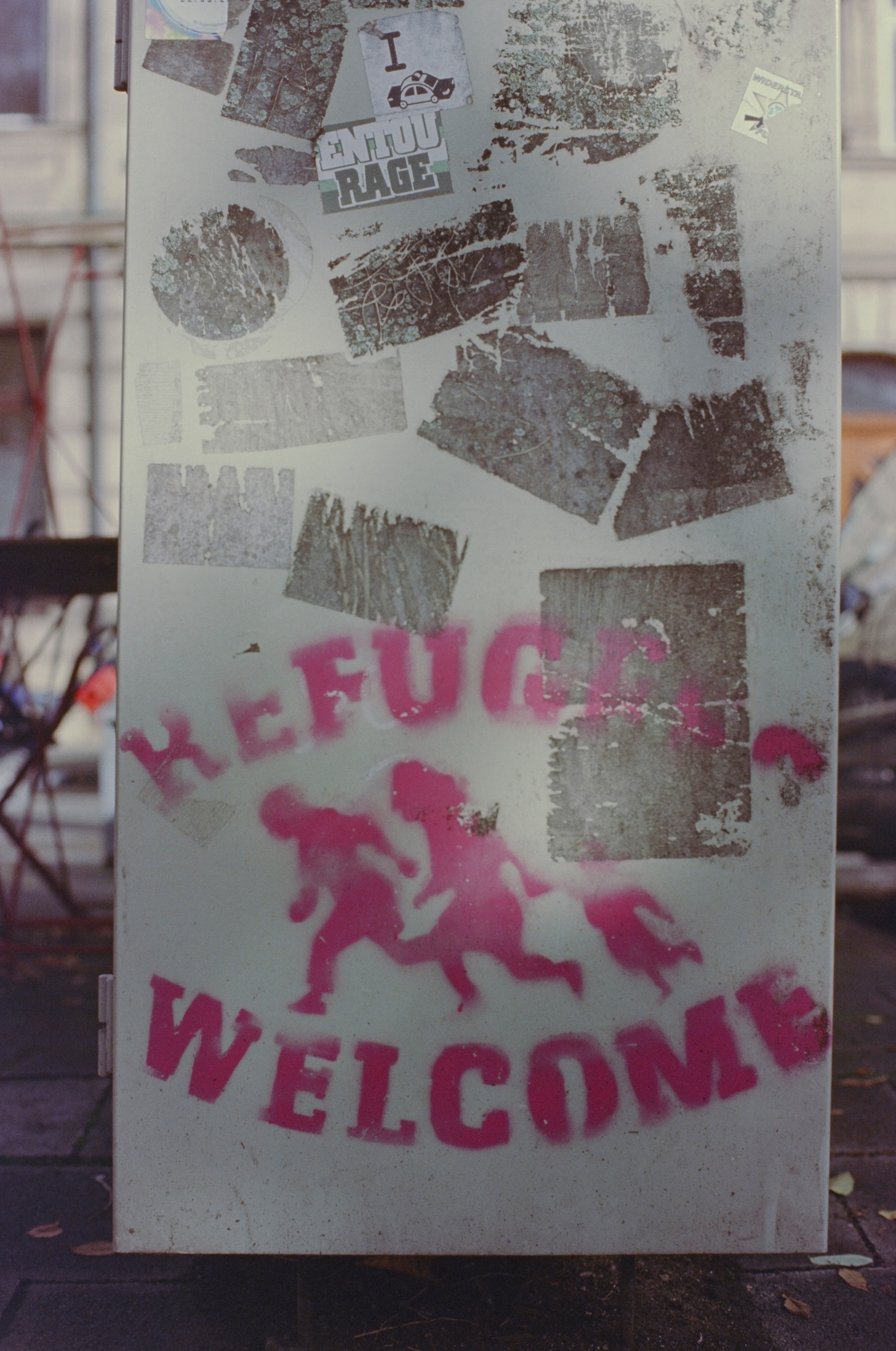
Another consequence of war. Refugees. Asylum seekers. These are the subject of Jenny Erpenbeck’s Go, Went, Gone. Richard is a widower, a retired professor of Classics in Berlin in the former East Germany. His life seems – to him as well – somewhat purposeless. One day he happens upon a demonstration in town by a group of refugees from various African nations who have camped out there. This is a world of which Richard knows nothing, but his interest is piqued, and gradually, reluctantly at first, but then with increasing passion, he comes to know them and something of their stories. Of their families, lost to them, or killed in frightening circumstances. His life acquires a purpose: helping the men fight their corners, seeking funding. He discovers his own country’s dark past, the prejudices still alive and powerful among politicians, many of the general population and his own friends. He finds a legal situation where each country with whom the asylum seekers have contact have a get-out clause enabling them to move these men on to somewhere else. This quietly, lyrically told told but urgent story is an indictment of that system. Absolutely nothing has got better since 2017, when this novel was published. Required reading for Suella Braverman and readers of the Daily Express.

Unusually, there is a further link between all these books. I’ve read them all in the last month, and with one exception, wholeheartedly recommend them: especially the Winn and the Erpenbeck.

Next month’s starter book is Anna Funder‘s Wifedom, which examines the life of George Orwell’s wife. It’s well reviewed here, and I’m looking forward to finding a copy.

And finally, those of you whose TBR pile totters and becomes more unstable by the day might enjoy the cartoon highlighted today in Brian D Butler’s Travel Between The Pages.
Six Degrees of Separation: from Mason to MacIntyre

On the first Saturday of every month, a book is chosen as a starting point and linked to six other books to form a chain. Readers and bloggers are invited to join in by creating their own ‘chain’ leading from the selected book.

Six Degrees of Separation: Kate

Regular readers know that I’ve spent the last month in the Balkans and Barcelona, where copies of this month’s starter book, Meg Mason‘s Sorrow and Bliss weren’t readily available. So I haven’t read it. But I will.

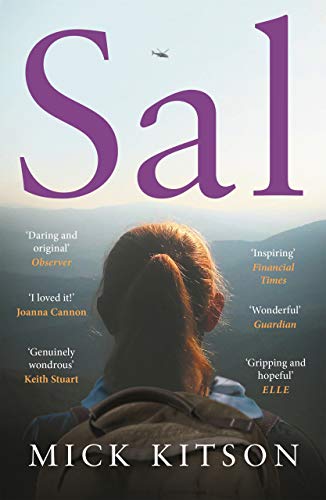
It appears to be about a woman struggling with mental illness. So I’ll go for my first link to the struggles of a teenage girl, Sal, by Mick Kitson. This is the story of Sal and her half sister Peppa’s escape from life with their alcoholic mother and abusive step-father. Thirteen year old Sal, who narrates the story, has long planned this escape, making use of carefully learnt bush skills to live rough in Galloway Forest Park Scotland. Circumstances have made her wise beyond her years, though failing at school. It’s an incredible, yet credible story of the consequences of one man’s unremitting abuse, and of a mother totally unable to protect her daughters. An involving read both for an adult and YA audience.

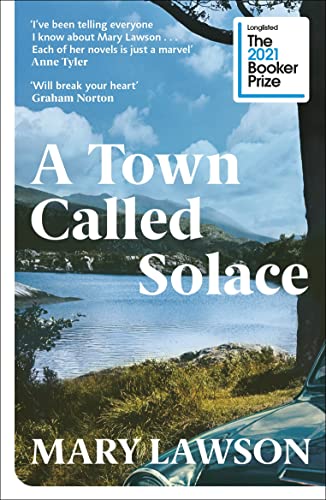
I’ll link this to Mary Lawson‘s A Town called Solace. This is a small, fictional town in Northern Ontario, where it’s easy to imagine that life is simple, perhaps a little dull. But 7 year old Clara’s rebellious but much-loved older sister has run away – disappeared completely. Clara’s responsible for feeding her elderly neighbour Elizabeth’s cat during a hospital stay. And during this time, an unknown man, who turns out to be called Liam, seems to be moving into Elizabeth’s home. Clara, Elizabeth and Liam each have a story which develops told from their own perspective. It’s multi-layered: in their own ways these characters are dealing with grief, bewilderment and remorse. They have secrets they’re reluctant to share, and have lost faith in at least some of their fellows. They’re richly developed as complex, satisfyingly likeable characters. This is a book to savour.

The next character has a simple and apparently dull life too, just like Solace. She appears in Convenience Store Woman by Sakaya Murata.  Our heroine, Keiko, despite her university education, has contentedly spent her whole 18 year career working in a convenience store. She lives for her work there, striving to be a dependable employee. No husband, boyfriend, or child: she doesn’t feel the lack of these, though her family worries. She’s a misfit, a cog, but a contented one. And then …. A quick and quirky read, though one which poses questions to ponder after the last page has been turned.

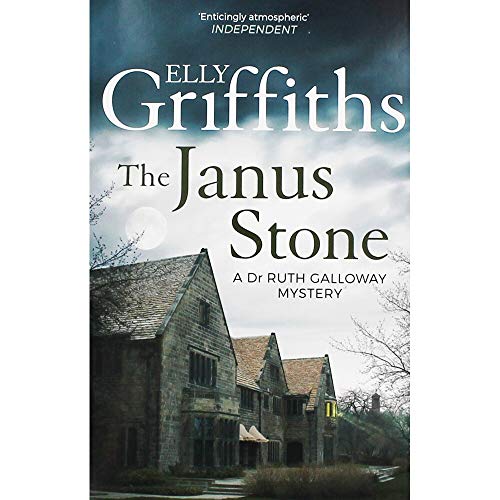
Another loner is the hero of The Janus Stone, by Elly Griffiths. The second book in the series featuring forensic archaeologist Ruth Galloway lives up to the promise of the first. The character of Ruth herself, and the detective with whom she works on this case continues to develop in an interesting way. The plot, involving the discovery of the bones of a child on a site currently being redeveloped is intricate enough to be intriguing, without being over-complicated. I took this book with me on holiday. Ideal reading in the circumstances.

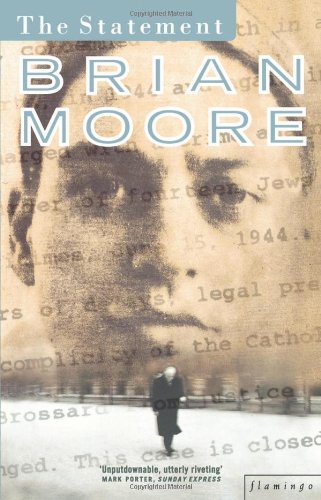
A long-ago crime brings me to my next link. The Statement by Brian Moore. My recent life in France had made me familiar with tales of the Resistance in WWII France, as well as knowing something of the unpalatable doings of the Vichy Government and their unpleasant foot soldiers, the Milice. So I was eager to read this story, based on a true one, of one man’s unsavoury war time crimes and of his post-war protection by the Catholic church. Will he escape justice in the end? This is a clever, complex thriller leaving us in little doubt as to Moore’s feelings about the Catholic hierarchy. There are twists till the very last page. To be read perhaps more than once for full impact.

Although we’ll stay with WWII, we’ll lighten the mood. Operation Mincemeat by Ben MacIntyre. A really absorbing and interesting read. This book tells the story of an ultimately successful attempt by the British to deceive the Nazis about their plans to invade in Southern Europe. Such an attempt is bound to be complex, involving political acumen, spying know-how, involvement of those in high places and yet secrecy at every level. Ben Macintyre handles his material and the wealth of characters skillfully, and turns out a rollicking tale. Yet he does not ignore the pathos surrounding the life of the almost unknown Welshman who is at the centre of this story: you’ll have to read the book to find out what I mean.

Next month’s starting book is one that formed part of the very first Six Degrees chain that I ever joined in on. It’s Katherine May‘s Wintering. And very appropriate for the less than sunny British summer we’re currently experiencing here.

Finally, an apology. Last month, hardly any of you who commented on my post received replies. I’m so sorry. I planned to write these on my return from Europe, but WordPress decided otherwise and firmly closed comments, despite my best efforts to open them again.

Six Degrees of Separation: from No One is Talking About This to The Liar’s Dictionary

‘On the first Saturday of every month, a book is chosen as a starting point and linked to six other books to form a chain. Readers and bloggers are invited to join in by creating their own ‘chain’ leading from the selected book.

Six Degrees of Separation: Kate W

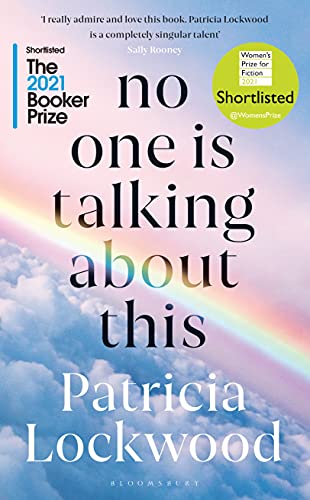
I didn’t get on with this month’s starting book for the chain: No One is Talking About This, by Patricia Lockwood.  In fact I got nowhere near finishing it, so my chain will go off immediately at a wrong tangent, as I understand the second half is very different from the first.  I thought one reason I failed to engage with this book is that its protagonist is an extreme consumer of social media.  And I don’t ‘do’ social media.

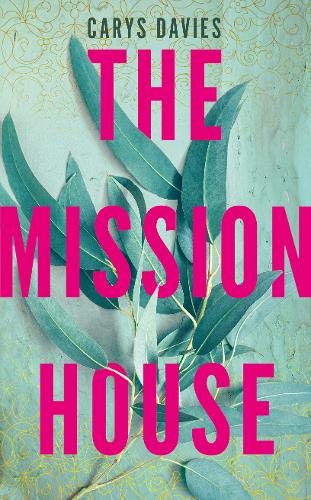
I decided, therefore that I would choose a hero who hasn’t even heard of social media, Hilary Byrd, of Carys DaviesMission House. Byrd, a slightly washed out, failed Englishman of middle years, is in India trying to escape from his pale and disappointing life. He finds himself in a town which is clearly Ooty, that haven for the English in Time of Empire. And it’s here that he meets The Padre, who offers him accommodation: and Jamshed, who becomes his driver. And Priscilla, the Padre’s adopted daughter. And Ravi, would be Country and Western singer, Jamshed’s nephew. This is the story of how their lives – all disappointing lives in many ways – come to intertwine. Beautifully written in short, sometimes apparently unrelated chapters, this is a book which had me immersed in the life and times of every character. 

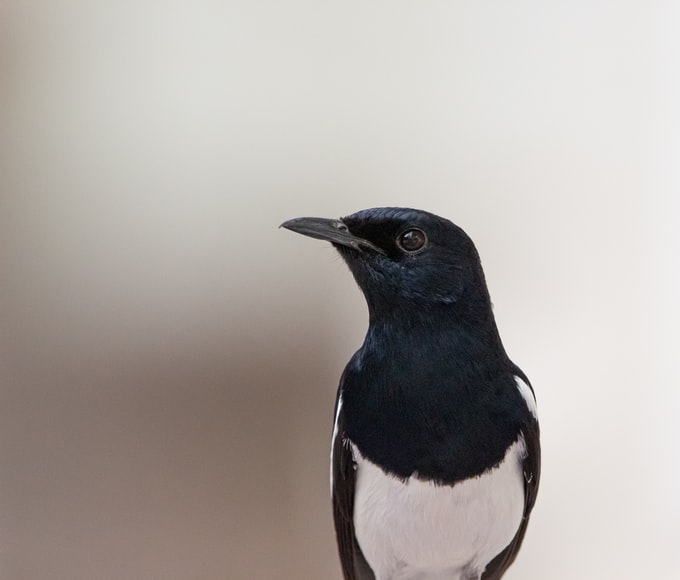
Byrd is not exactly a mainstream character.  Neither is Charlie Gilmour, who tells his own story in Featherhood.  This is an astonishingly readable book, which combines a tale of caring and raising a magpie fallen from its nest with a parallel account of Gilmour’s absent father. He too once raised a corvid, a jackdaw, but he was a far less reliable and responsible carer for his son – and several other children whom he fathered, while taking on few of the responsibilities of fatherhood. Charlie’s father, Heathcote suffered debilitating mental breakdowns and it becomes apparent to Charlie himself that he risks following the same trajectory: his late adolescence and early adulthood is peppered with difficulties which involve a spell in prison. This potentially weighty tale is leavened by accounts of the joy and mayhem which Benzene the magpie introduces to the lives of his whole family. As Charlie himself points out, Do Not Try This at Home. But his having done so has produced a delight of a book with a serious undertone.

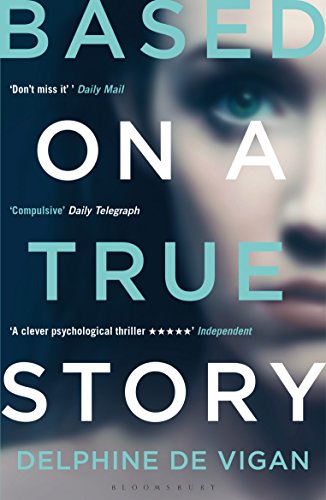
The next book is fiction, told as autobiography, and it’s another chronicle of a life in crisis.  Delphine de Vigan’s Based on a True Story.  This is not a bed time story. Instead, it is a slow burn, of the kind the French seem so good at. Written in the first person, the narrator is a successful and respected author. She’s suffering from burnout, and this is the moment in which she makes a new friend – a friend who makes herself indispensable: a friend who begins to make her doubt herself: a friend who takes away any kind of belief in herself, slowly, skilfully and insidiously. It’s a deliberately uncomfortable read, and maybe perhaps just a little too long. On balance though, it was tautly constructed and I’ll read more from Delphine de Vigan.

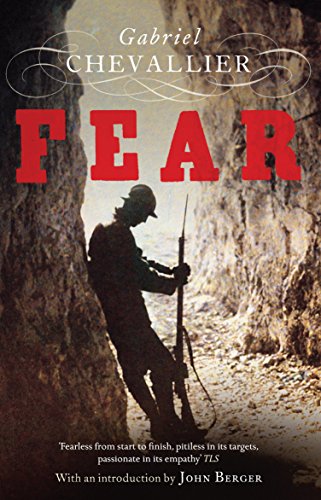
We’ll stay in France, and meet a character who has difficulties of a completely different kind.  It feels like an autobiography, and I sense that in large part, it may be.  Fear, by Gabriel Chevallier.  Over the years, I’ve read a lot of accounts of the common soldiers’ lot in WWI, and been both horrified and angry at the suffering and the waste endured. But this novel of French poilu Jean Dartemond is perhaps the most shocking I have read, and would have seemed especially so when it was published in 1930, when memories of those surviving, and their relatives, were still relatively fresh. No wonder publication was suspended during WWII. The day to day suffering, boredom and indignities, the all-too frequent horrors of witnessing disembowelled bodies, skin, bloated cadavers are described with a freshness that makes the horror very present. Towards the end, he describes how, when officers weren’t around, some German and French troops made tentative sallies of friendship across the divide, as they recognised how much more they had in common with each other than with their commanding officers, often remote and somewhat protected. This book, as so many others of its kind, is a true indictment of the horror and futility of war.  

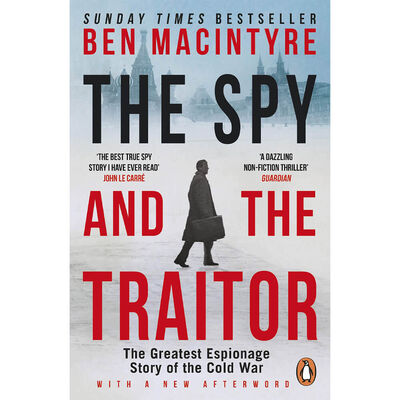
From WWII  to the Cold War and its aftermath.  The Spy and the Traitor by Ben MacIntyre. This is a thoroughly gripping and shocking book: the story of Oleg Gordievsky, KGB agent turned British spy. The picture painted of Russian society in pre-Gorbachev days, and of the day to day life of a spy, whose life must necessarily be cloaked in such secrecy that not even those you love the most – your wife, your parents – can in any way be privy to your true beliefs and loyalties is a deeply unsettling one. This is a fine and edge-of-seat story. Only it’s not a story. The life of a spy, the machinations of MI6 and the KGB among others, the story of the Cold War and the period after are all true, all recent history, and Ben MacIntyre explains it all well, and places it all in context. I was exhausted after finishing this book. But greatly illuminated by what I’d learnt too.

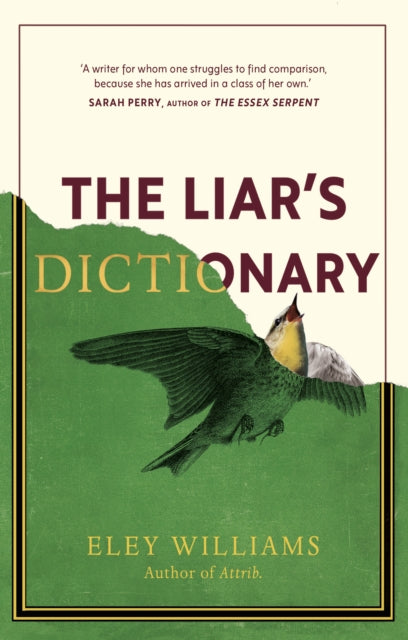
The life of a spy is, of necessity, the life of a liar.  So let’s come full circle, and mention the Liar’s Dictionary by Eley  Williams.  Dictionaries are scarcely social media, but even now, they enjoy a long reach.  I thought this book would be a sure-fire hit with me, as I’m an inveterate dictionary bowser. I tried this book once, and abandoned it after twenty pages. I tried it again, and grudgingly admired Williams’ pure enjoyment of, and fun with words, but on the whole it left me cold. This is the story of a dictionary, long in the making: and, in alternating chapters, the personal struggles of 19th century Winceworth, and 20th century Mallorie’s and their tussles with mountweazels – fake entries planted in works of reference to identify plagiarists.  For a fuller account and more positive review, read here.

The book to start next month’s chain will be Graham Greene’s The End of the Affair. I haven’t read that in years. I’d better find a copy.