The other day, while still with my daughter and family, I went to hang the washing out. And returned with Wildlife attached to my person. Its body, not counting legs, was some 7 centimetres long. I took him/ her outside. Was it a giant grasshopper? Should it have been about in January? Answers gratefully received.
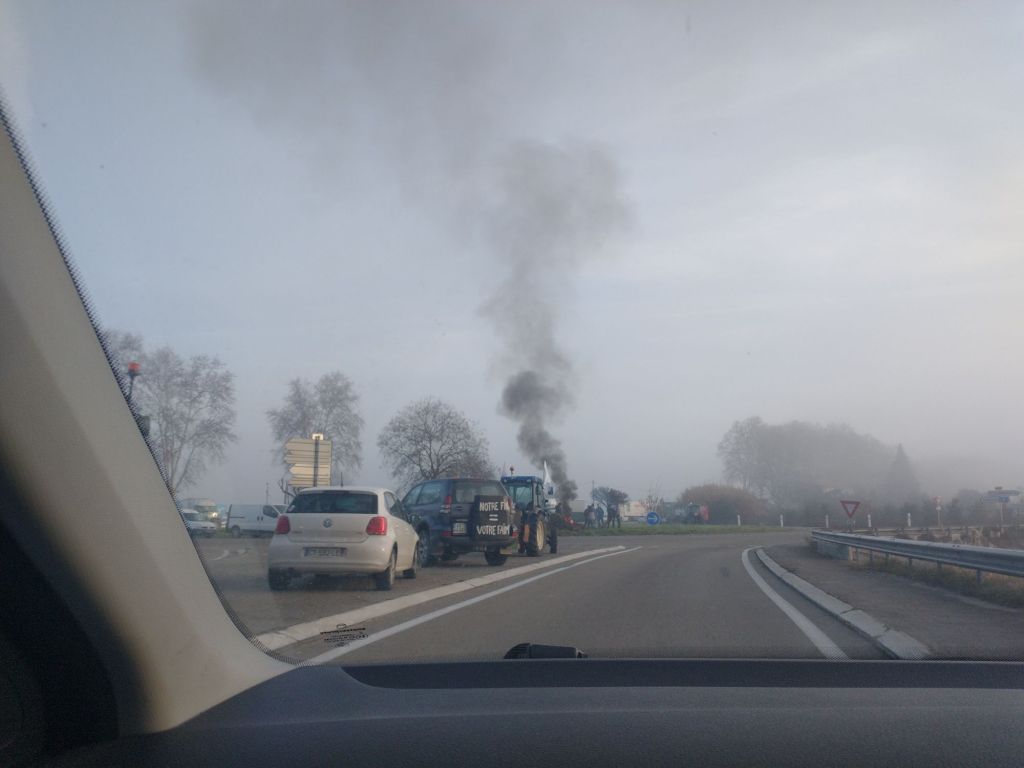
Incidentally, our route home is proving unexpectedly challenging. French farmers are blockading much of our proposed route, as they have been for some days…. It’s just taken us two hours to drive 16 km. ducking and diving. And it’s now 7.40 a m. …
‘Notre fin, votre faim’
I then pressed ‘publish’, and have just discovered nothing happened. Typical for a very difficult day, though it did eventually get somewhat better
Many of us – in the UK at least -have seen the video of the hard-working, meticulous mouse who has every night been busily tidying up the workbench in a garden shed. Being Country Mice ourselves, we get field mice here in the house from time to time. Not one of them has ever offered to tidy up. Where have we gone wrong?
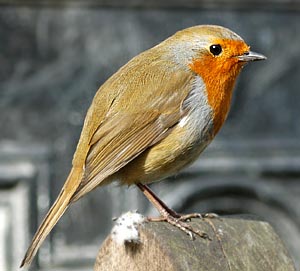
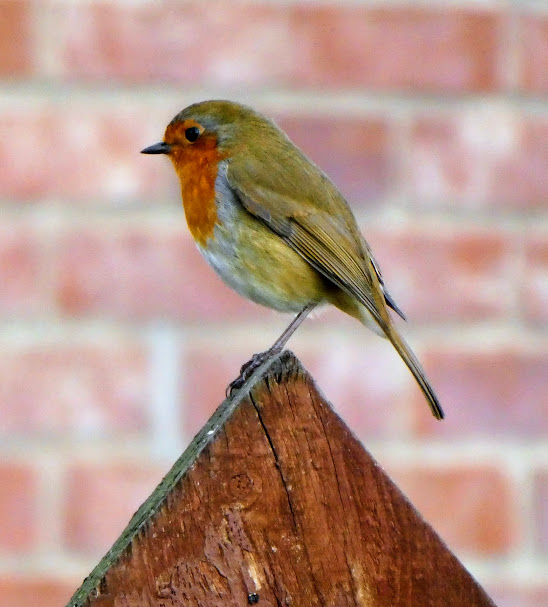
We all need a bit of feel-good in January. So here he (she?) is:
I’m going to be an intermittent presence on the blogosphere for the rest of the month, both in the posting and the reading of the posts of others. We’re off to Spain to meet our latest granddaughter.
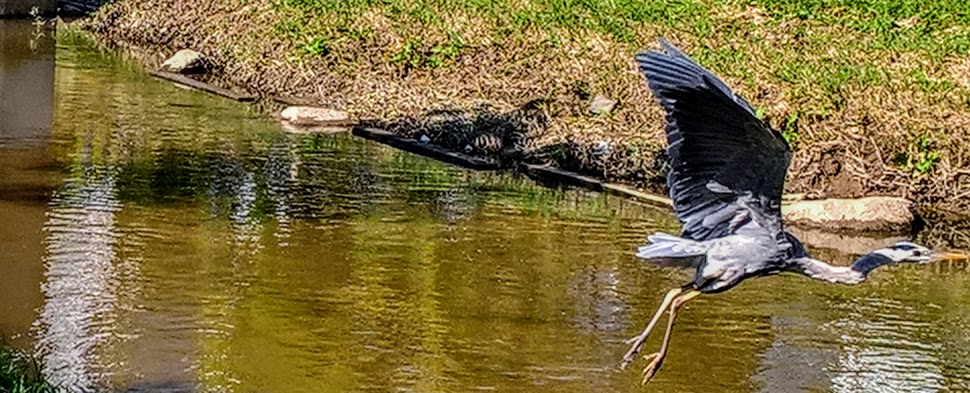
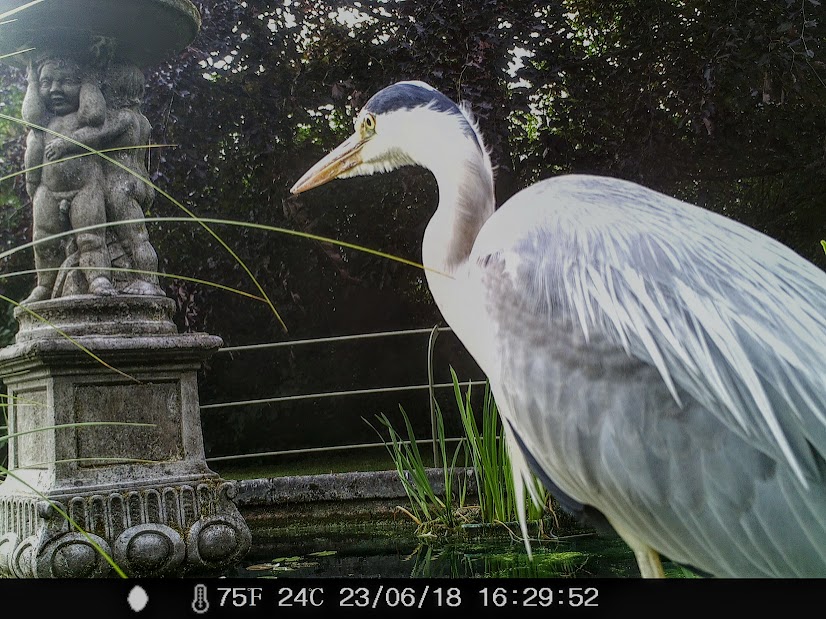
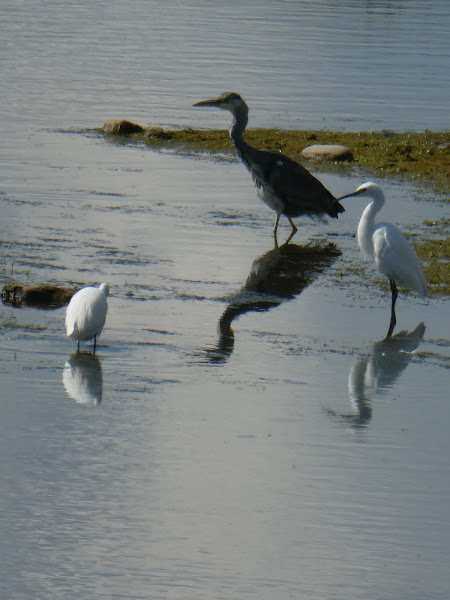
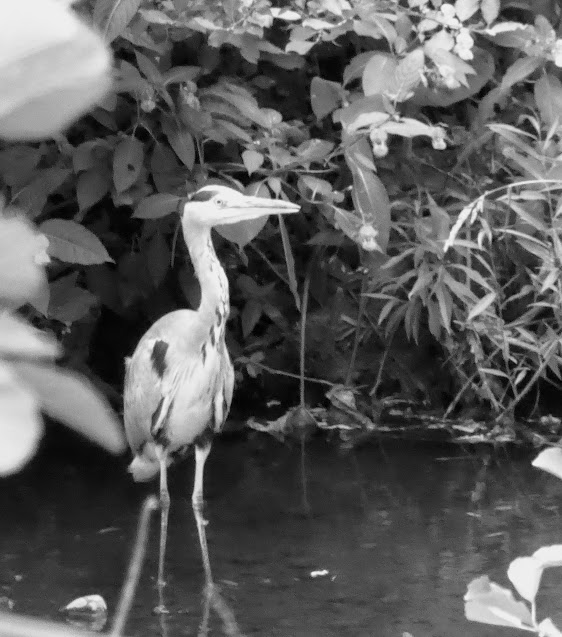
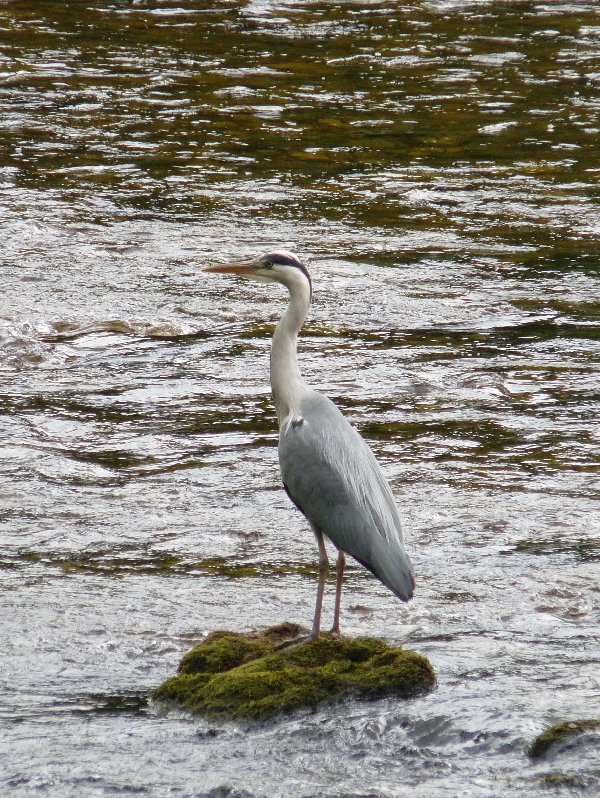
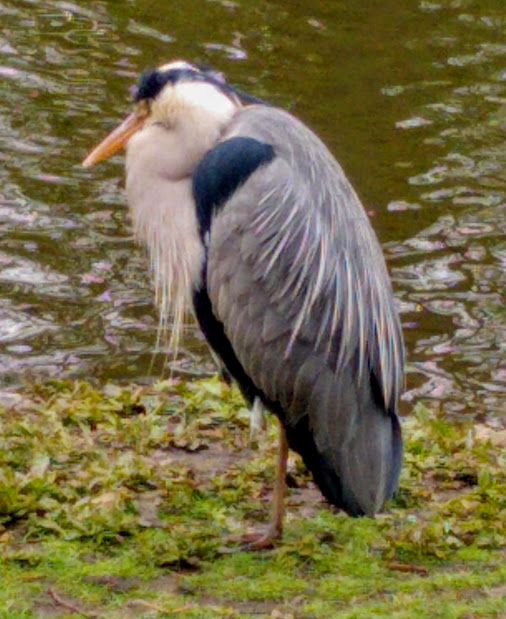
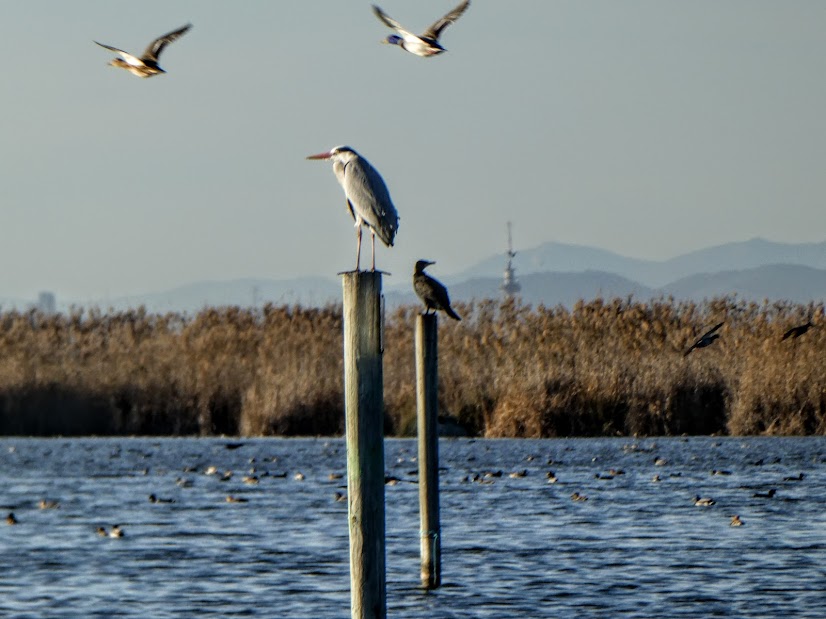
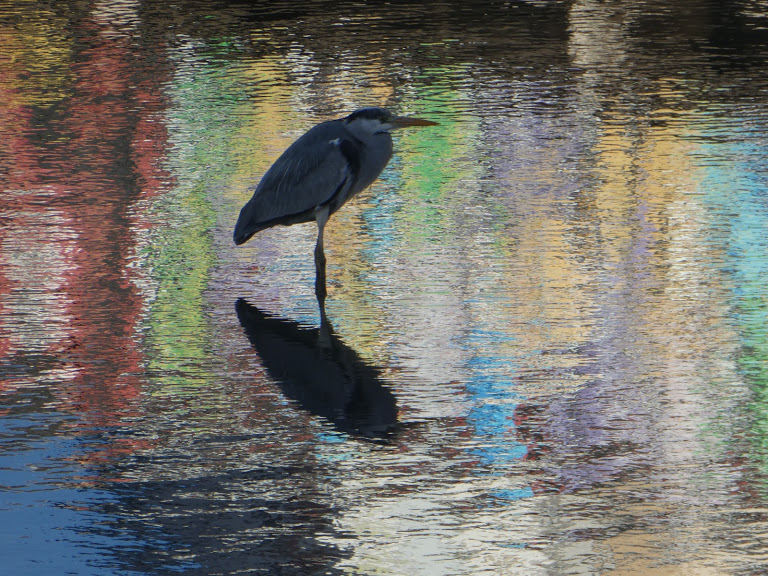
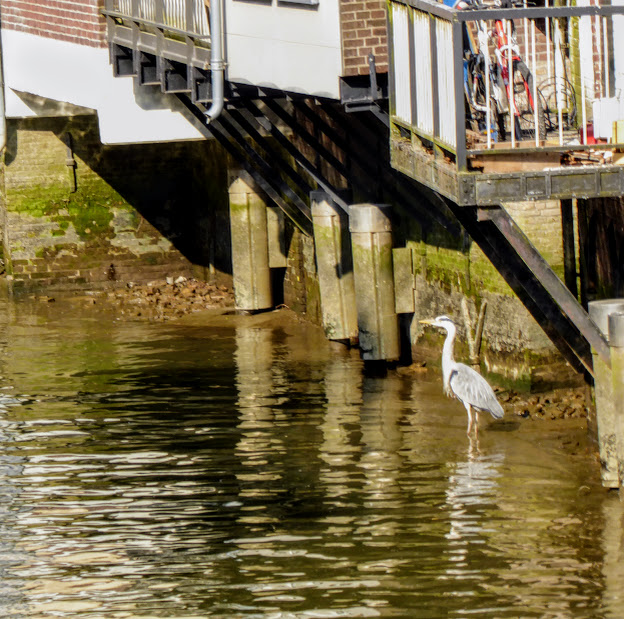
Over at Don’t hold your Breath, IJ Khanewala features an Indian Pond Heron as his Bird of the Week. I remarked to him that herons get everywhere. And here’s the proof. I can’t claim to show examples from anything like every continent, much less every country where you’ll find herons, but here are just a few.
This one was after an easy catch in our landlord’s garden and noticed by our trail camera.
These are all from England: click on an image to find out where.
These two come from Spain, from l’Albufera near Valencia, and from Córdoba.
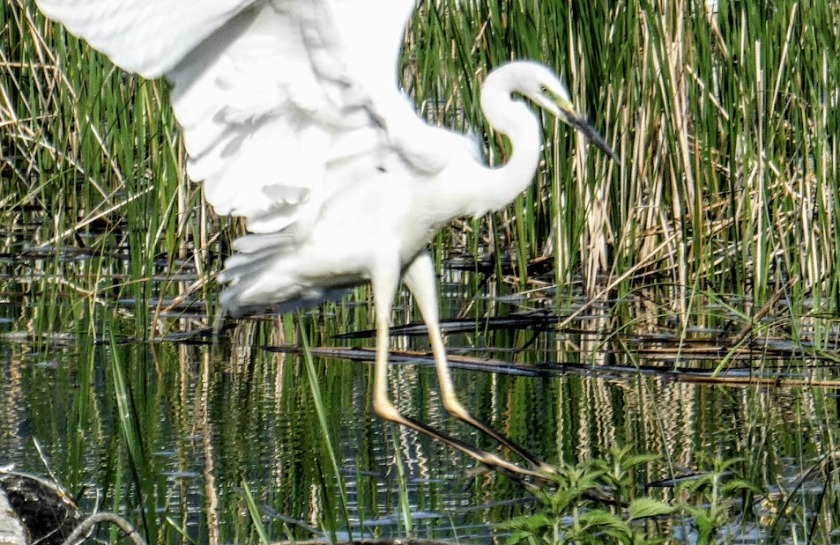
Dordrecht in the NetherlandsLake Prespa in Greece (but it’s an egret?)
And the featured image comes from Busan in South Korea.
Not exactly a world-wide survey. But I go a small way towards proving my point.
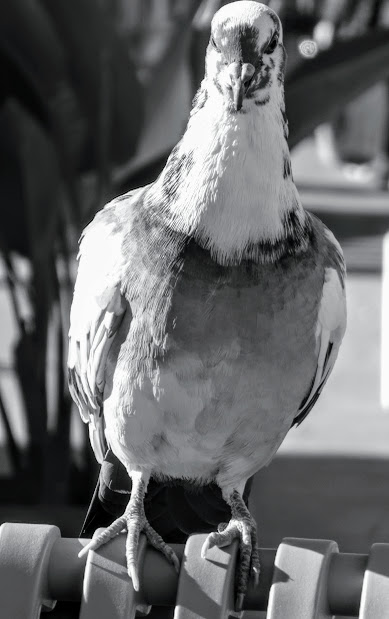
Pigeons of different varieties are apparently found on every continent on earth except Antarctica. I’m not surprised. I’ve yet to visit a country where I’ve seen none. This particular specimen was opportunistically hanging round the outside tables of a a café down at the port in Premià de Mar on Thursday. There were croissant crumbs to be had …
The last two weeks’ Lens Artist Challenge had us focussing on all the eye could see in a single glance: seeking the symmetrical and the asymmetrical. This week we’re homing in on detail for Anne of Slow Shutter Speed.
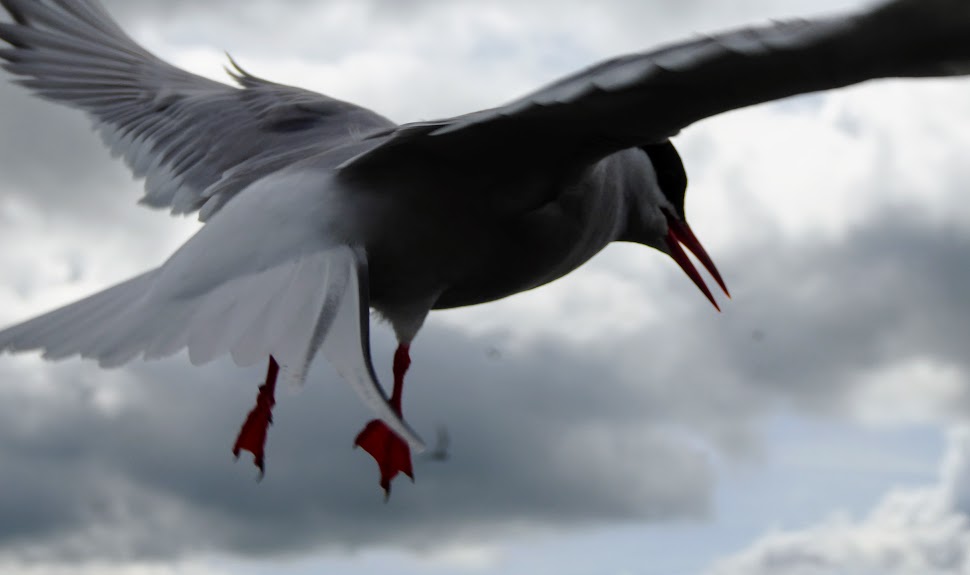
In my last post I stayed pretty rural, and I’m doing that again, though beginning at the seaside. I think that Arctic tern in the featured photo is homing in on something: maybe something that’s bothering his newly-hatched youngsters.
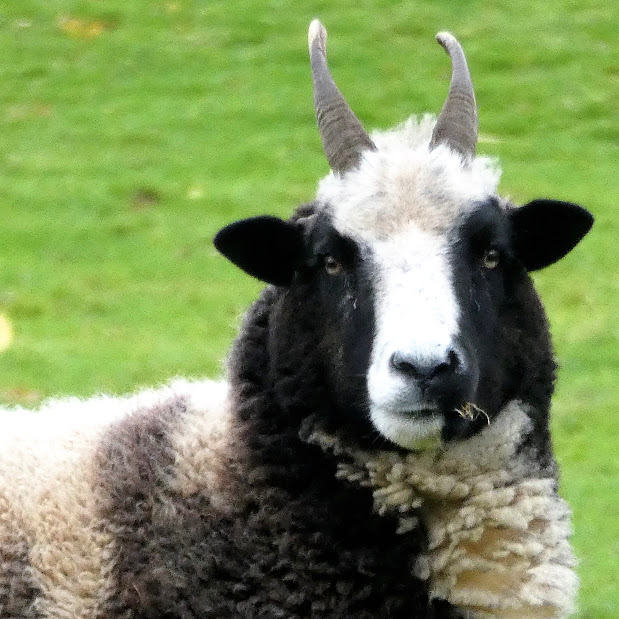
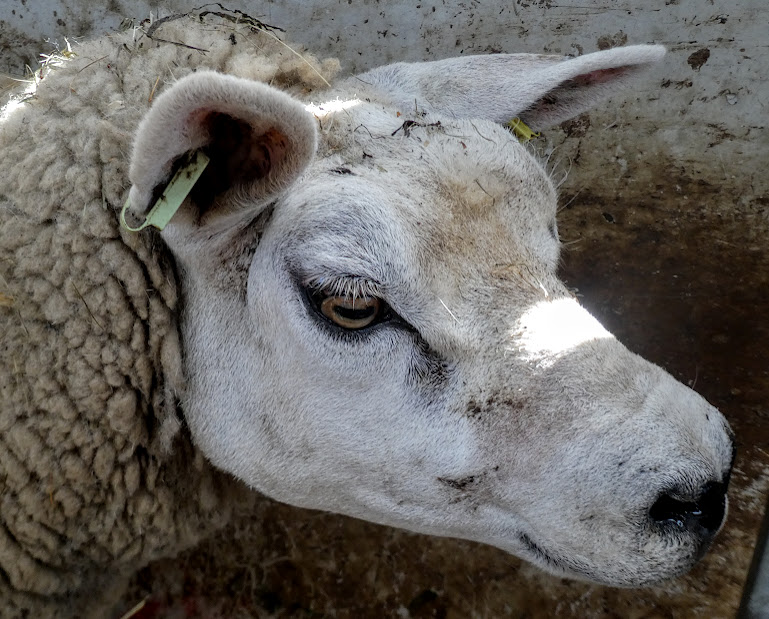
Let’s go to a farm. Here are two sheep.
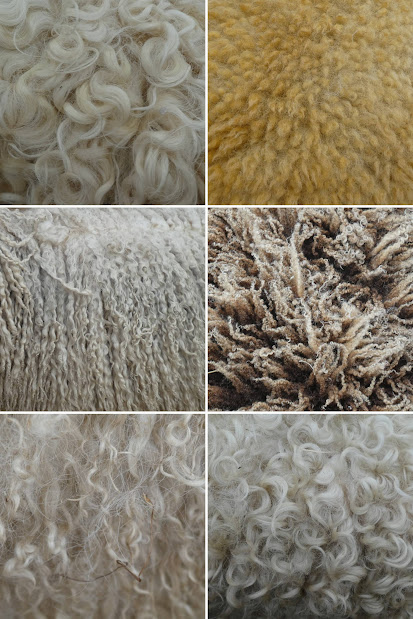
Did you think that a-sheep-is-a-sheep-is-a-sheep? Not at all. I’ve focussed on just six sheepy fleeces, filling the frame with six different styles of wool – I could have picked dozens more.
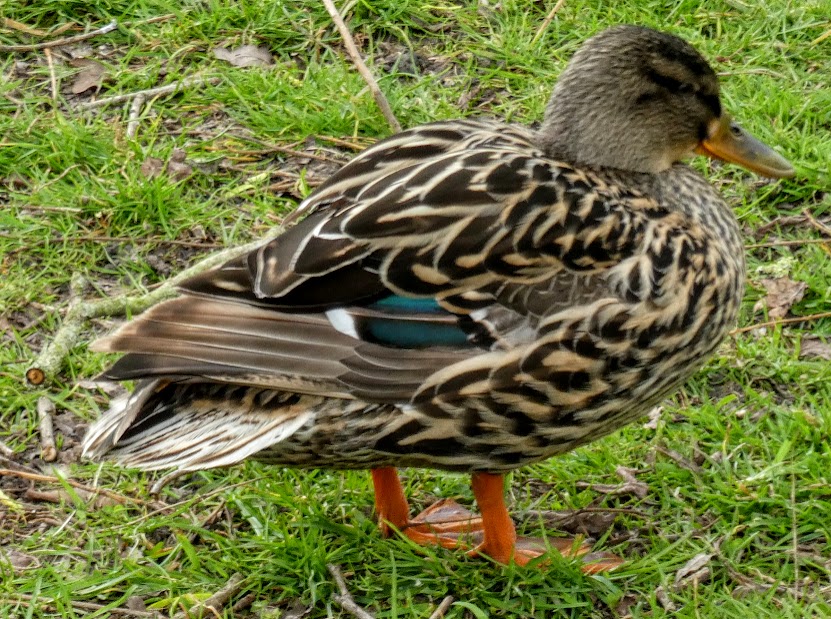
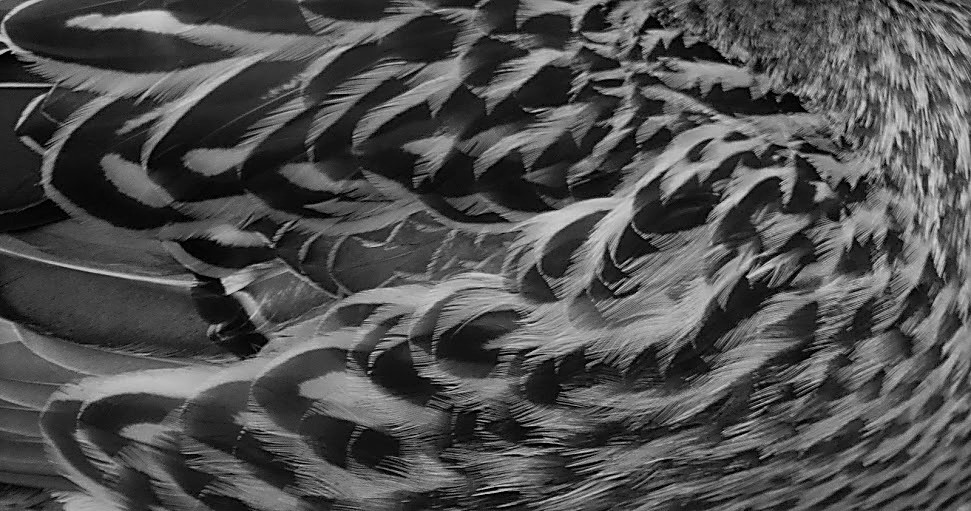
We’ll pop down to the duckpond. I’ve filled the frame with a female mallard. But let’s home in more closely:
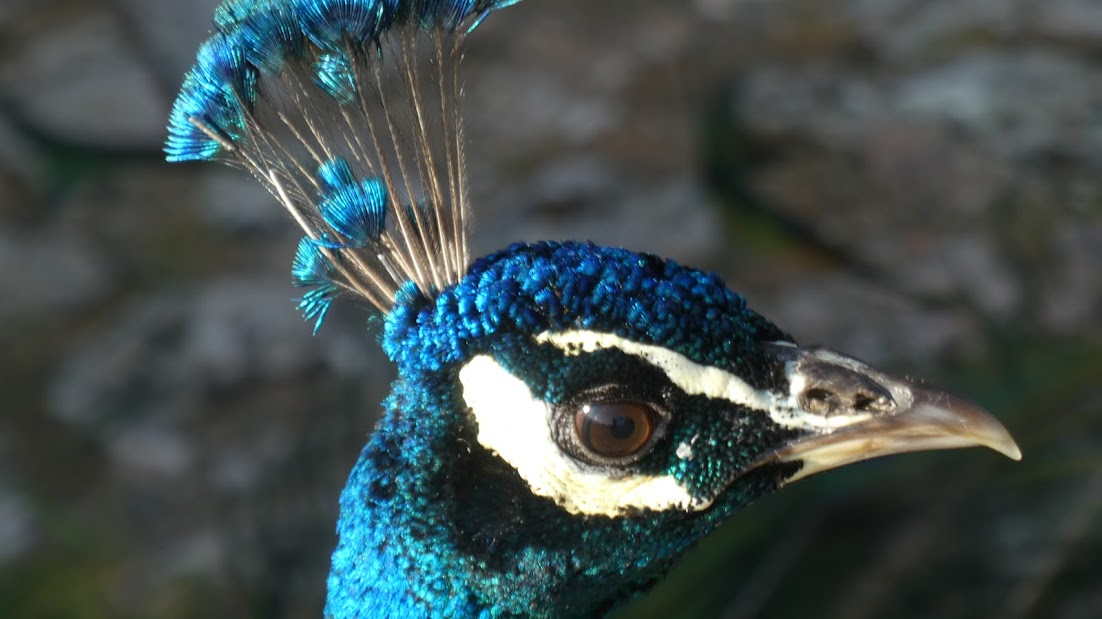
We’ll get a touch exotic, and feature a peacock: yes, there are one or two farms round here that have peacocks on parade.
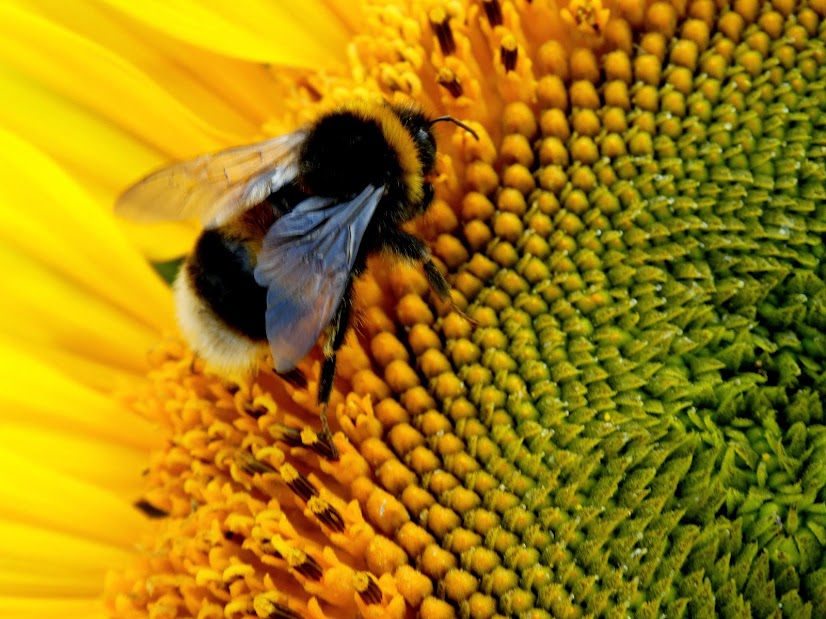
Sunflowers were exotic once in the UK. No longer. They’ve started to become a regular crop for some. And the bees are very pleased to have them.
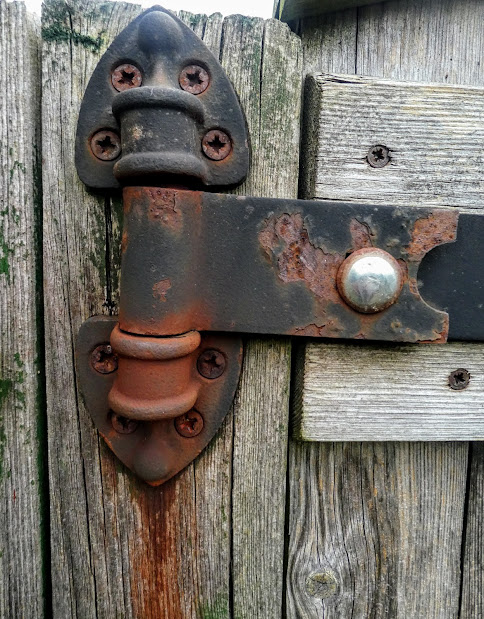
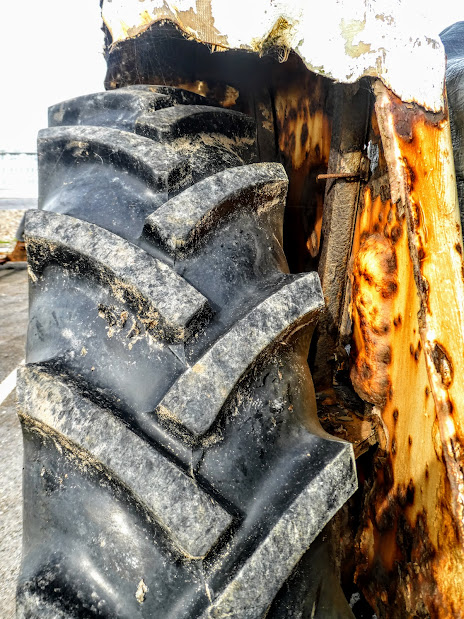
Farmyards aren’t just about pretty things. There are gates and barns to be locked, and tractors to use and maintain – maybe not well enough, in this case..
So there we have it: getting up close to our findings down on the farm. I’m on my travels this week, and may not respond very promptly to comments. But I will get back to you – eventually.
In case you’re interested, reading from left to right from the top the wools represented are: Wensleydale; Cheviot; Leicester Longwool; Shetland; also Shetland; and … er … don’t know.
Britain is one of the most nature-depleted countries on earth, according to the fourth State of Nature (SON) Report, the product of a collaboration of environmental NGOs, academic institutions and government agencies, including Natural England. Depressingly, England, Wales, Scotland and Northern Ireland are on the edge, as far as much of the natural world is concerned.
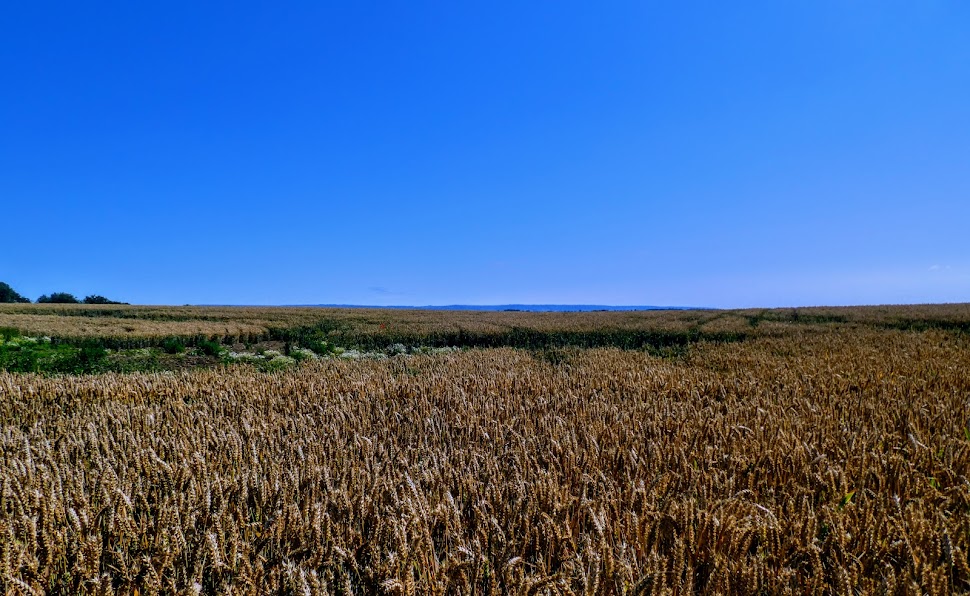
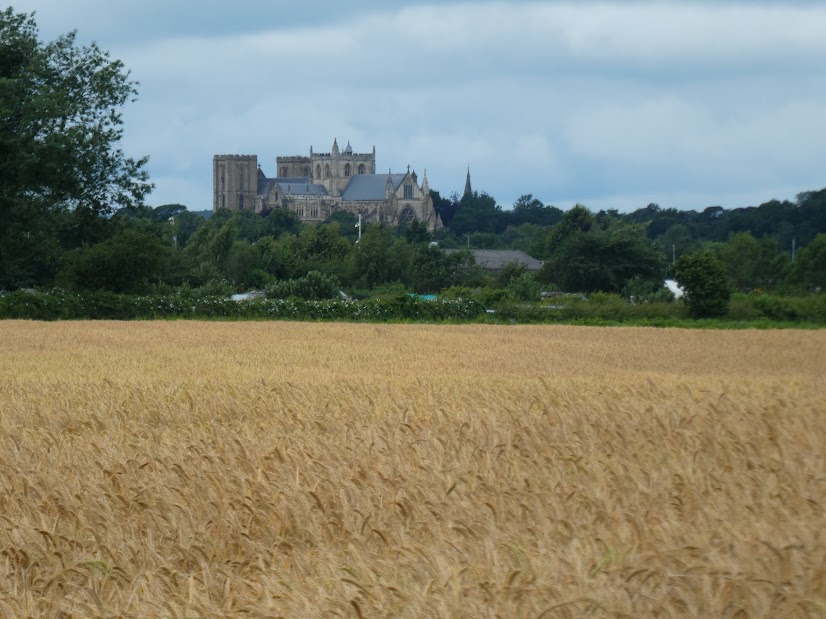
Look at the featured photo for instance, taken on one of those in-glorious-technicolor days of high summer, with an impossibly blue sky, and fields of golden wheat just waiting for harvest. It really shouldn’t be like that. There should be poppies, cornflowers, wild flowers in general poking their heads above the crop. There should be generous field margins and hedges, offering home, food and shelter to whole varieties of insects, small mammals and birds. Where can all this wildlife call home these days? Many of them are on the very edge of sustainability. Here’s another field, even nearer to home, equally mono-cultured.
Part of the Sanctuary Way path skirting the edges of Ripon.
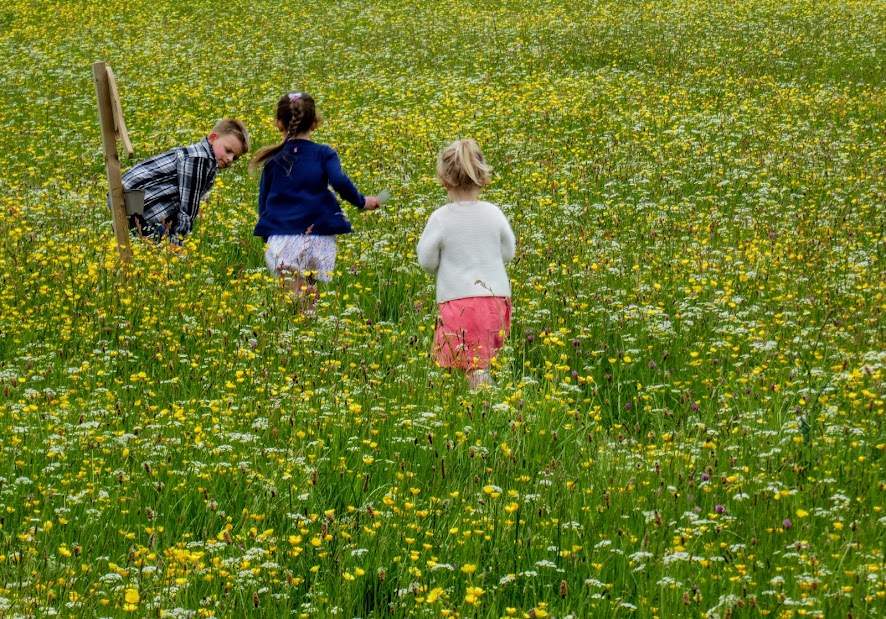
These days grass grown for hay-making as winter feed is just that. Grass. Meadowland used to be so different, crammed with wildflowers that made much richer, more interesting fare for the cattle that rely on it as winter feed. And a mecca for insects : all-important bees among others – during its growing season. These days, it’s so rare that it’s not just meadowland, but a Site of Special Scientific Interest.
Rock House Farm, Lower Wensleydale, and one of its SSSI meadows.
The farms nearer to our house have chosen to make do with narrow jumbles of poppies squeezed into narrow field margins, or at the edge of paths.
Poppies find a quiet corner along a field in West Tanfield.
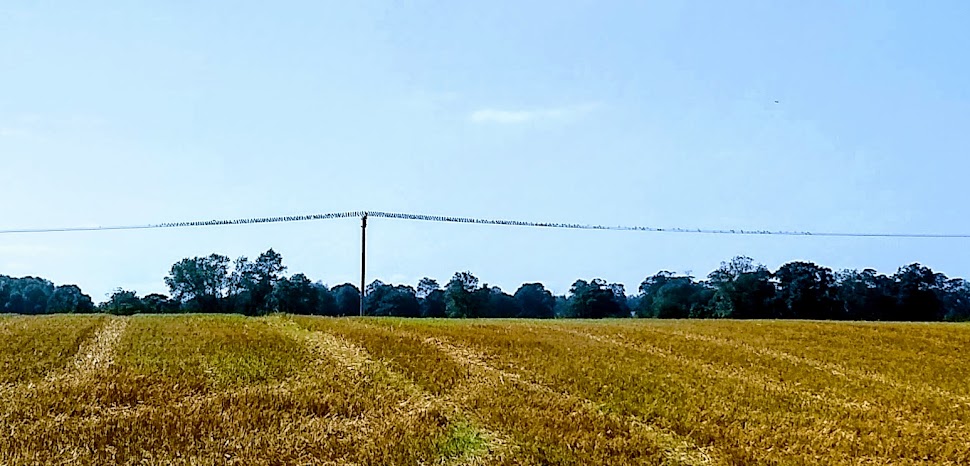
See these? These are swallows on a telegraph wire in mid-September one year recently, assembling prior to their big autumn migration. It didn’t happen this year. Swifts and swallows are on the edge of viability here, from habitat loss.
Waiting to depart on that journey to Africa
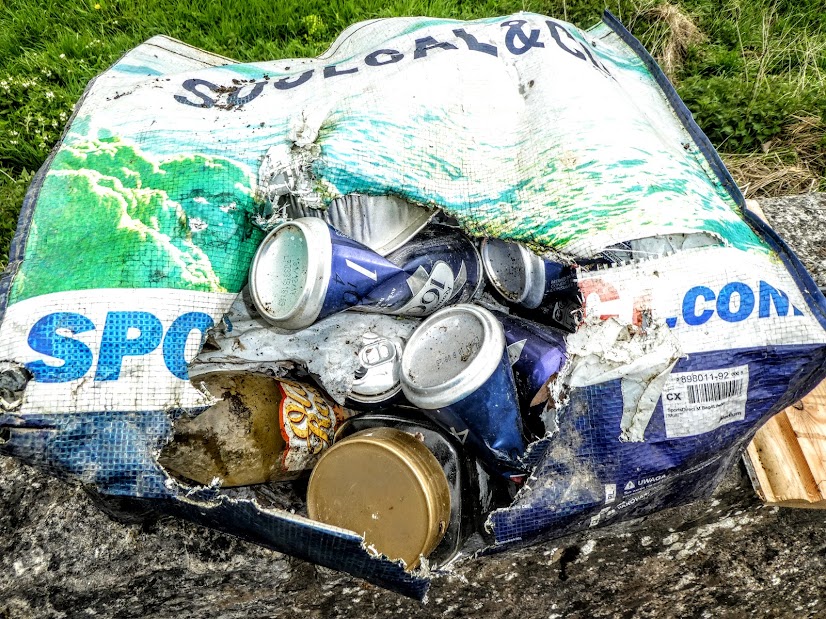
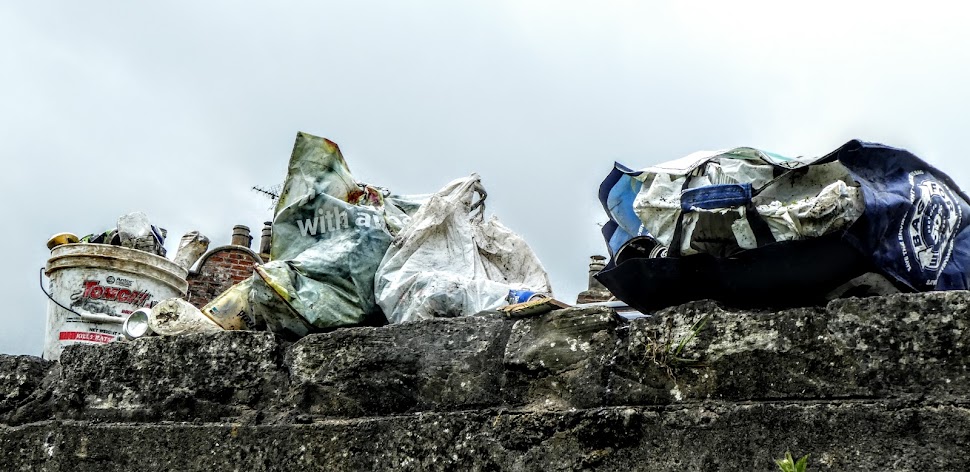
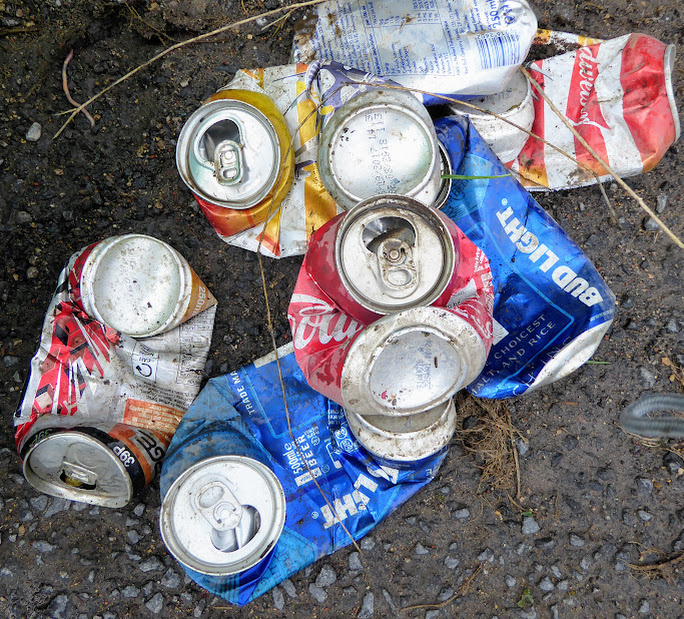
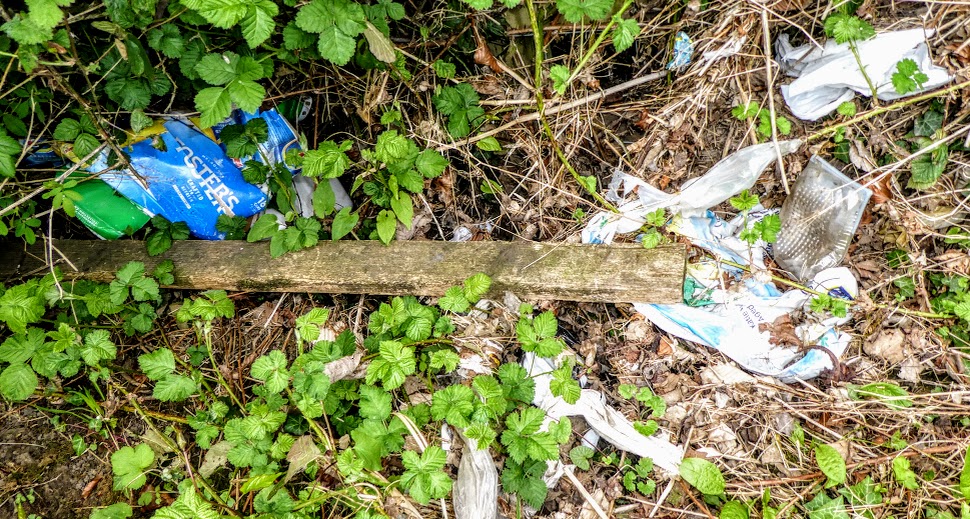
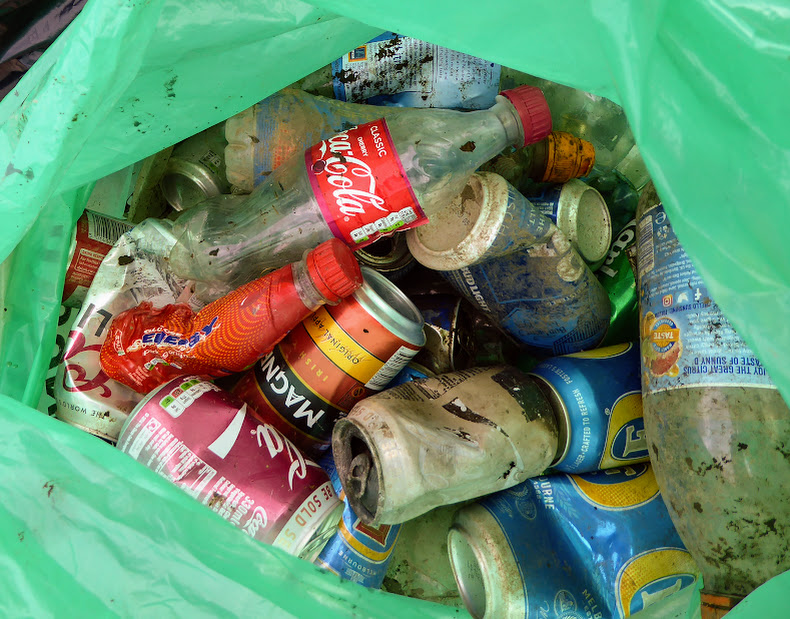
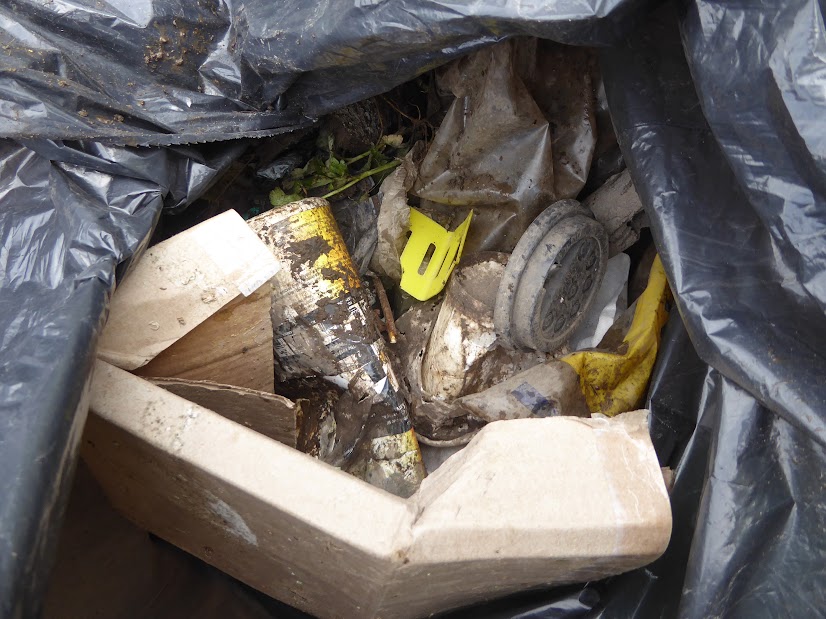
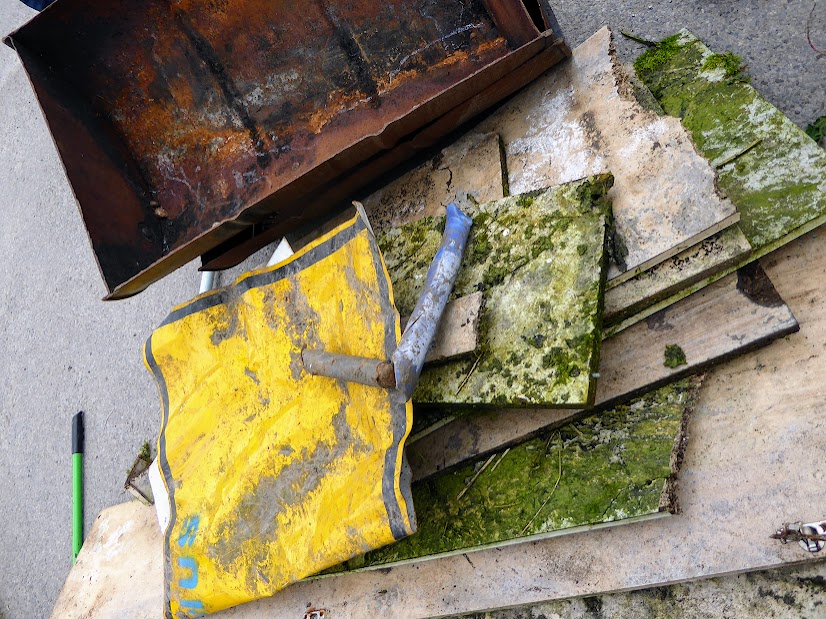
Let me show you something all-too common though, both in town and country. Litter. These images are hauls from litter-picks we’ve done not just in town centres, but down country lanes. Everything from a carelessly-tossed can to rather toxic rubble and waste illegally dumped in a hedge margin. Not just an eyesore, but habitat-damaging and a danger to the many small species that call such areas home.
This is meant to be a photo challenge, not a diatribe, so I’ll leave it there. There’s a lot more I could say, but I don’t have the images to support the argument. It’s for Patti’s Lens-Artists Challenge #269: On the edge. And it was inspired by Susan Rushton’s post for the same challenge. If you pop over and read it, you’ll see why.
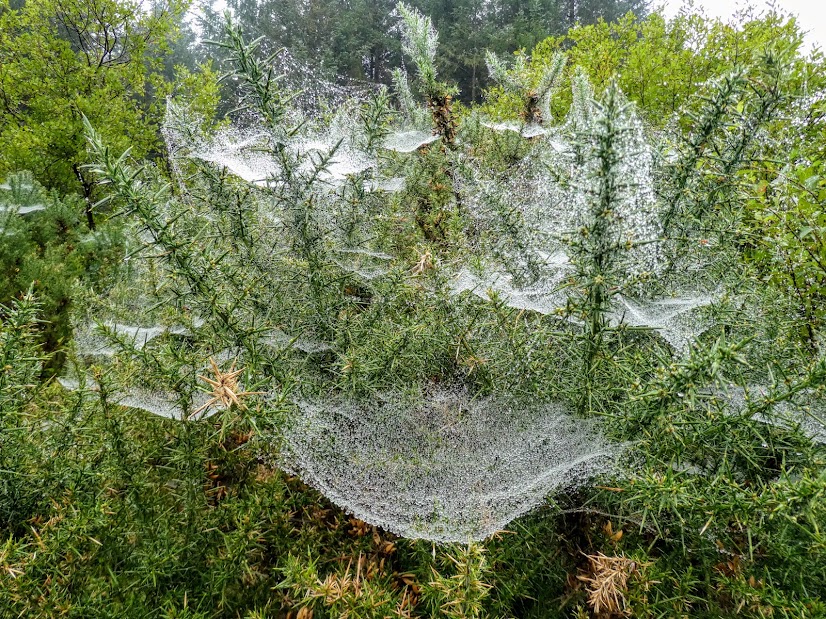
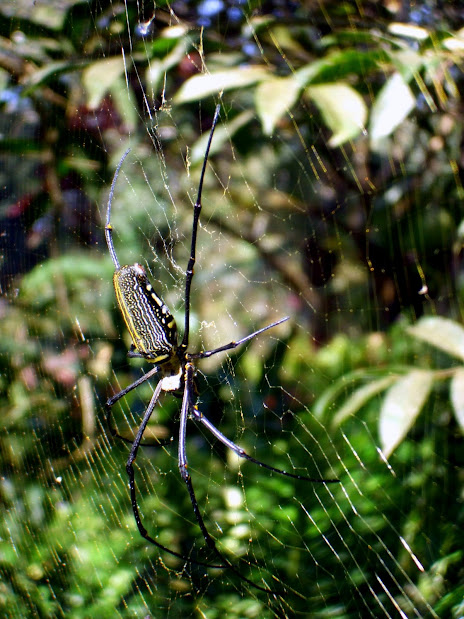
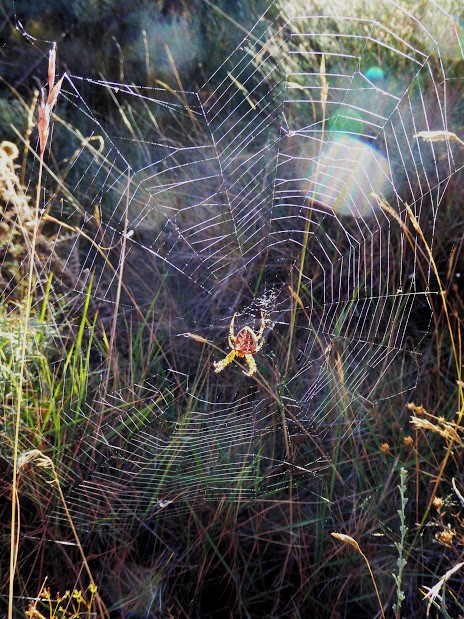
Denzil, in this week’s Nature Photo Challenge, asks us to hunt for spiders and their webs – something that it’s easy to do at this time of year in Britain. Only yesterday, a huge specimen was standing guard over the shoe-rack. But by the time I’d got my camera, he’d vanished. These then, are all archive photos, and unidentified. Helpful suggestions welcomed.
The first one is from India. Perhaps I J Khanewala can help? And the second is also not from England, but from La Rioja in Spain.
The third is from Masham Parish Church, and it’s dead. Is it even a spider?
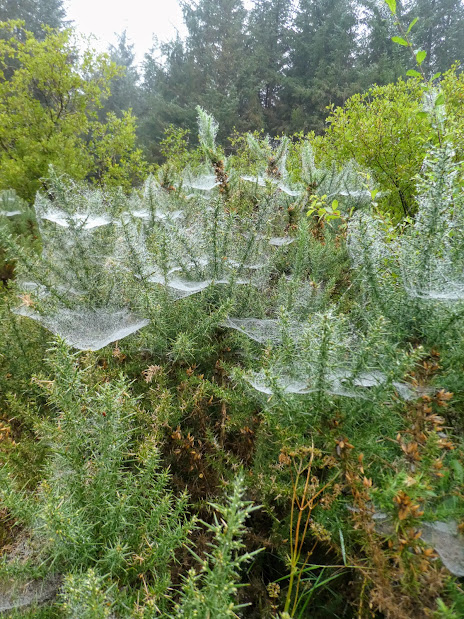
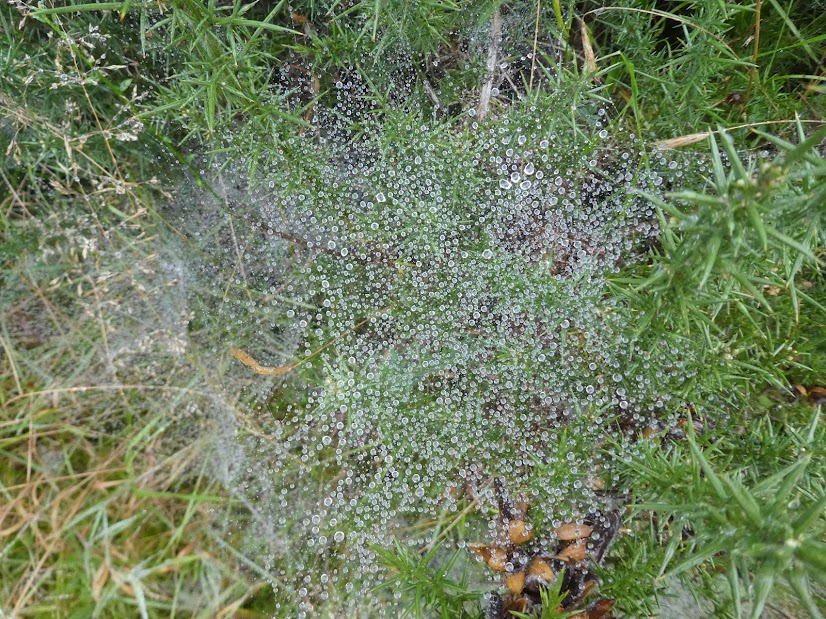
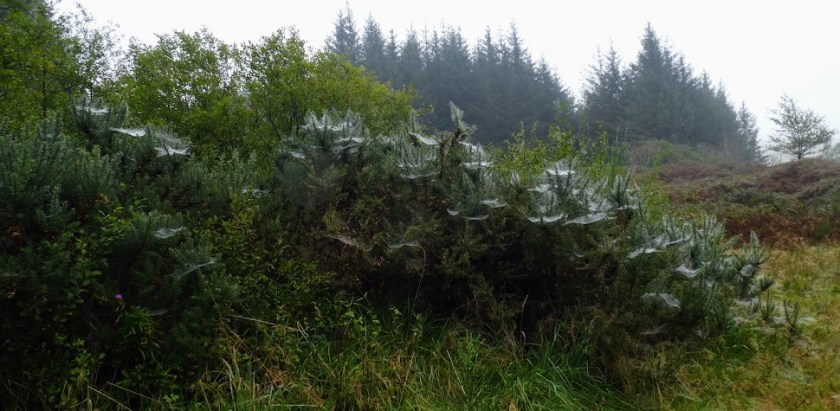
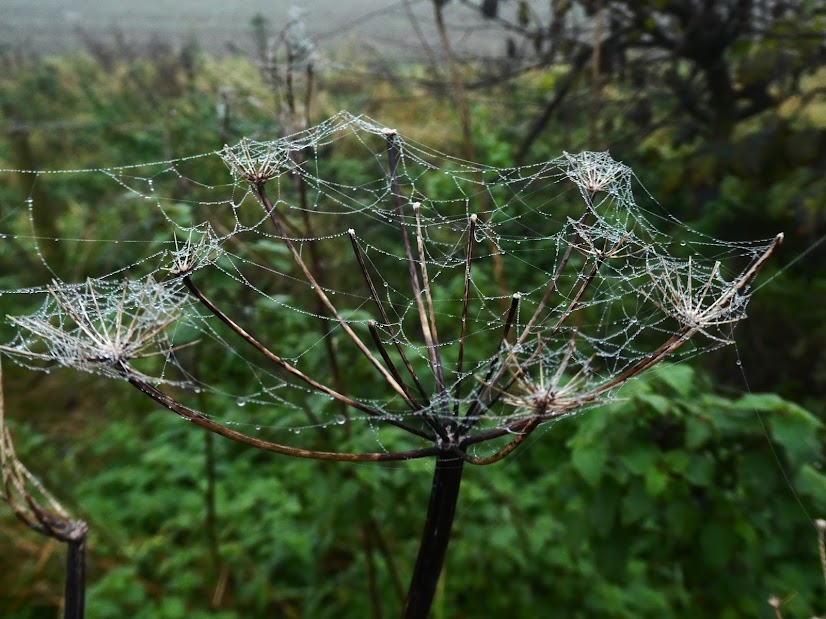
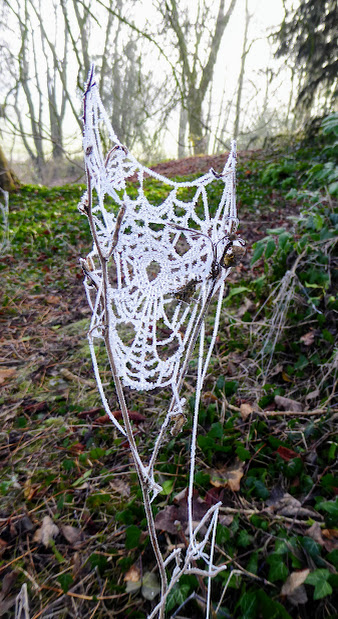
For the rest, I offer a gallery of webs, mainly taken on misty moisty mornings, or in fog, lending them a mysterious and often ethereal quality.
These were taken in Dumfries and Galloway, in Cairnsmore of Fleet National Nature Reserve. As is the header photo.
The next group come from just down the road, near Sleningford Hall.
And lastly, we return to India, where a tunnel spider has made his complex lure.
This week, Denzil, in his Nature Photo Challenge, is eager to see what shots of wild animals we can come up with. Let’s see what I can find round here in the UK.
Squirrels, for sure. Grey squirrels certainly. They were first introduced to England from America in 1876 as an ornament to the gardens of stately homes, and by 1930, had largely eliminated our native red squirrels: though I have seen them, rarely, in parts of the Lake District and in Scotland. I have to admit this red squirrel was spotted in Spain.
Grey squirrel in a very bad mood.Red squirrel enjoying a snack..
What else?
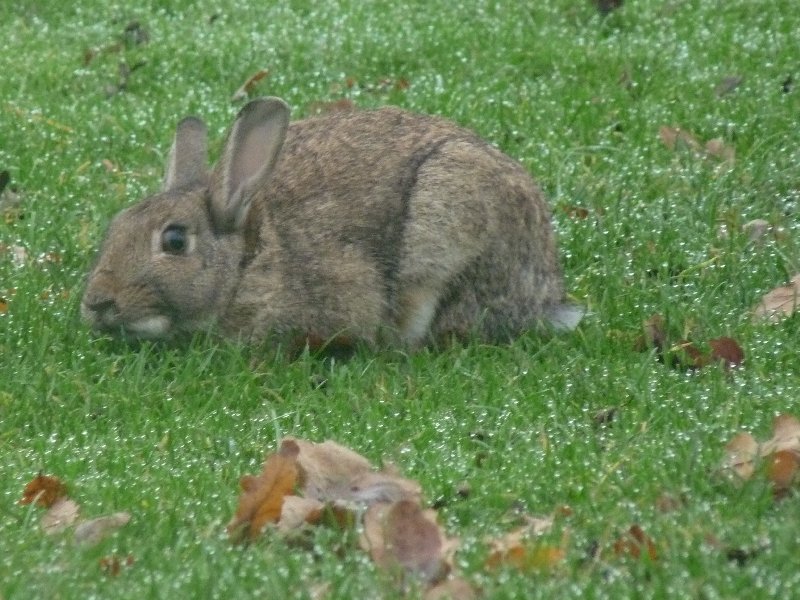
Rabbits by the score emerge at dusk to start nibbling.
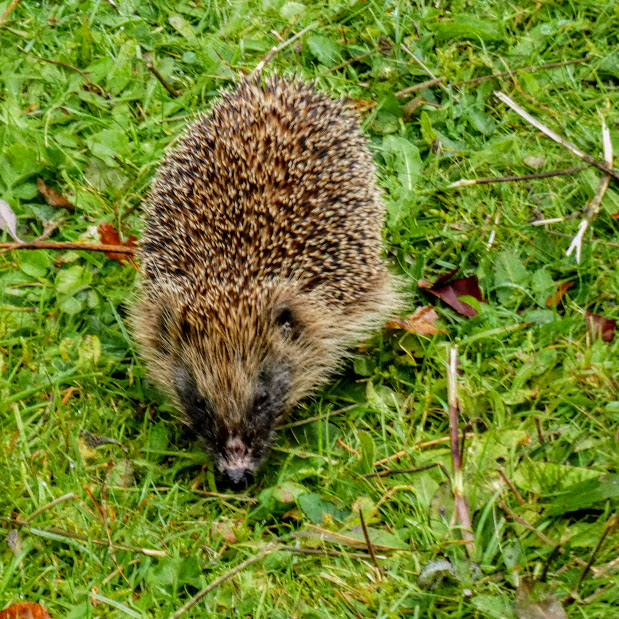
Hedgehogs have become depressingly rare. This photo is older than I’d like it to be.
I came upon this toad on a riverside walk near home.
One photo is very close to home. Field mice start to move into our kitchen as autumn arrives. This fellow is in a humane trap before being moved on and out. We don’t kid ourselves that this is super-humane. Dumping the poor creature in nearby but unfamiliar countryside is not likely to end well. But what to do?
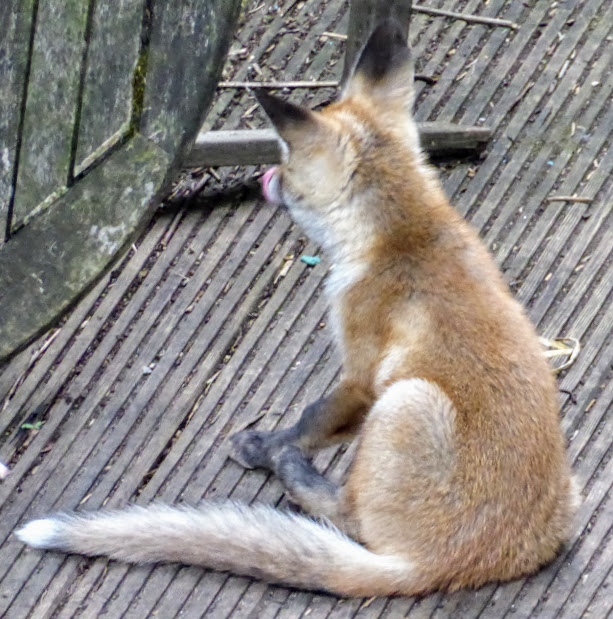
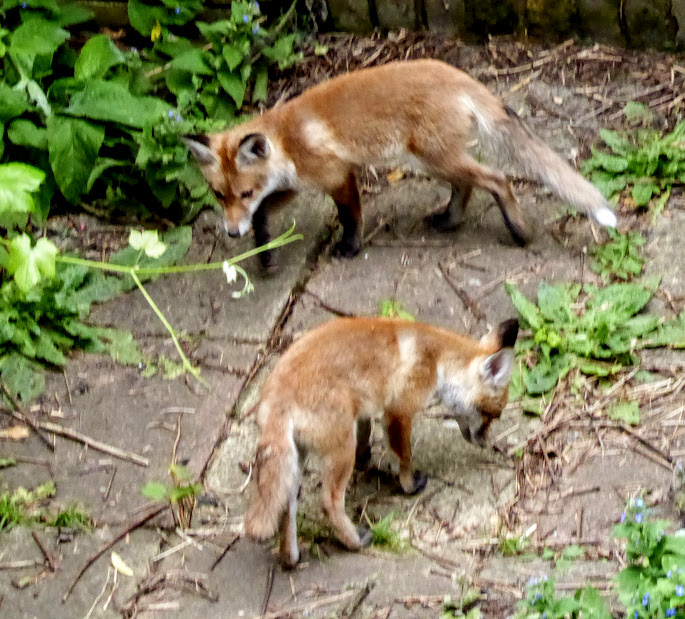
I’m going to visit my son and family in London for the next two shots, because I see far more foxes there than here in the countryside. Recently, the house next door to them remained empty for a few summer weeks. A fox family took advantage.
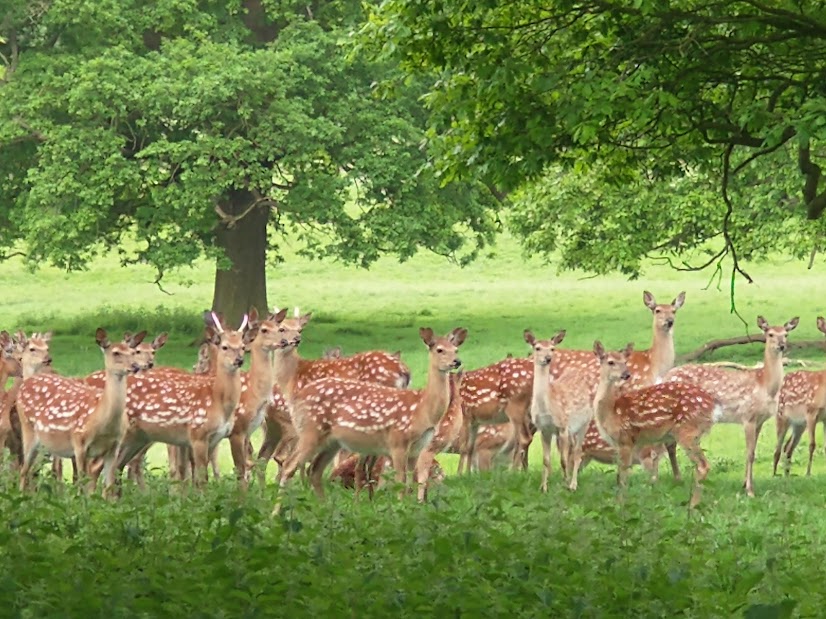
The deer in nearby Studley Royal Deer Park are not exactly wild – but they’re not tame either- they’re never handled by humans: and some stags escape into the wild for their holidays before returning in time for the rut. Truly wild deer are common here, but not keen on photo opportunities: so here are two groups from the Deer Park: fallow deer in the shot below, and red deer stags in the featured photo.
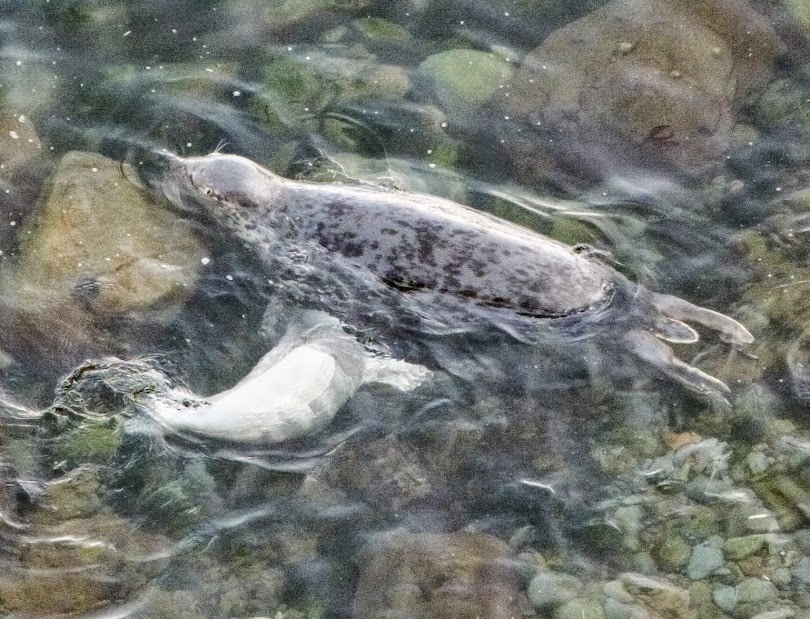
We shouldn’t end though without a trip to the seaside. Let’s go to the Farne Islands and then to Pembrokeshire to do a spot of seal-spotting.
I’ve found that visiting posts from fellow-bloggers in far-flung parts of the globe has produced sights of -to me- very exotic creatures. I hope at least some of these shots will seem different to them.
Oh, I almost forgot. I seem to have given myself a task: collective nouns for the animals and creatures I feature. Here goes.
Squirrels: a scurry, a dray, a colony, and a squad.
Rabbits:  colony, nest, down, warren, bury, kindle, leash, trace, trip, drove, herd, fluffle, flick, husk, and wrack.
Hedgehogs: a prickle, array.
Toads: a knot,  lump, a nest, a knab, a knob, a squiggle.
Mice: horde, mischief, nest.
Fox: earth, leash, skulk.
Deer: herd, bunch, mob, rangale, bevy, parcel.
Seals: bob, pod, herd, harem, colony, rookery, plump, spring, crash.
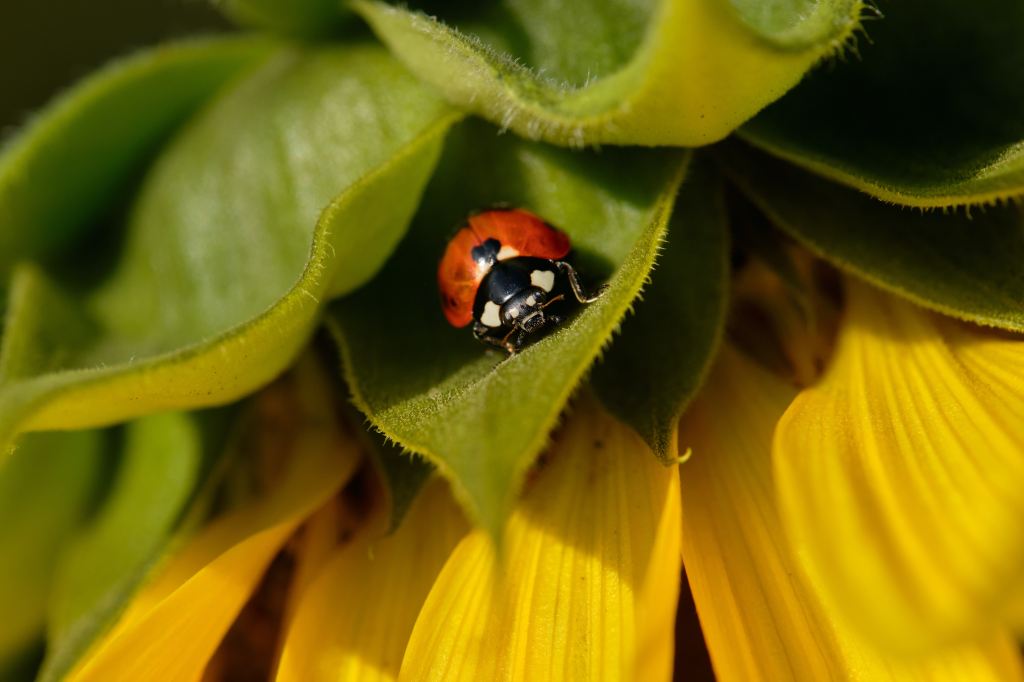
Every winter without fail, ladybirds – any number from about fifteen to forty – come to hibernate in our bedroom in the recess above the bedroom window. I have never taken a photo of them. And since Denzil issued his Nature Photo Challenge #27- Ladybirds – this week, I haven’t seen a single one out and about, so I am resorting to pillaging photos from Unsplash once more.
But Denzil himself suggested that since I’m fond of collective nouns, I should instead share the one for this charming insect. Ladies and gentlemen, I offer you – a loveliness of ladybirds. Isn’t that quite – er – lovely?
The featured photo is from Kandis in Glasgow, and the above image is by Malcolm Lightbody. Both can be found on Unsplash.











 From Pyrenees to Pennines
You must be logged in to post a comment.