We spent last week in Italy, Lago di Garda to be exact. We joined daughter No. 1, her husband and twin boys for a camping holiday. It was all we hoped for: time simply to enjoy being together; breakfast, lunch and dinner all eaten outside; the easy transitory friendships of campsite life; splashing in the pool with the boys; rowing or swimming – rather badly – in the lake; and the pleasures of small-town Italy – people-watching as we sat at some street side bar or restaurant with an ice cream, beer, or plate of pasta, and exploring charming back streets or ancient churches.
Malcolm and I had it best though. Not for us the tedious wait in crowded airport departure lounges for the journeys there and back. We drove through France and Northern Italy, and had a taste of regions we didn’t know, but plan to know better. Here’s a slide show of some of the places we saw: the Alpes de Haute Provence, little known gems such as Cremona, where Stradivarius came from, the Mercantour and Luberon National Parks. Best of all was a day spent in Mantova (Mantua). Unlike Florence or Rome, it’s on few tourist itineraries, so it’s unspoilt, uncluttered.
It’s a town whose prosperous Medieval, Renaissance and Baroque mercantile past is told in every street in the city centre, as piazzas, churches and fortified buildings crowd together demanding attention. The old city is surrounded by waterways which once were swampy rivers, were then extended and widened for defence, and are now pleasant open spaces for pleasure boats, wildlife, fishermen, and people who like us, simply wanted a cool walk at the water’s edge. Go there if you ever have the chance.
Just in case you think we had a totally idyllic week, you might like to know that on the way home, Saturday night in our particular bit of northern Italy proved to be a hotel-free zone. The nearest we came to finding a bed was when I went to check out a faintly unpromising looking albergo in some very untouristy town. I scuttled away when I realised it was certainly the local brothel. We slept in the car.
We carelessly missed the local excitement of the Tour this year, by having to leave for England the very day it passed within 4 km. of our house. But we didn’t miss it ALL. Speeding northwards through the outskirts of Pamiers, a ville d’étape this year, we met these front-runners, all made from flowers, on a roundabout. So if you’re having Tour withdrawal symptoms, now it’s been over for a fortnight or more, here’s a small souvenir.
We’ve just had a wonderful weekend at Lanoux. Well on the way to Andorra and Spain, the reservoir at Lanoux is high up (7261 feet) in the Pyrénées Orientales. It’s a natural lake, enlarged by the creation of an immense barrage that enables it to produce quantities of electricity for the area and for industry in the Ariège. Building this barrage must have been quite an undertaking – it took 20 years from 1940-1960: up there, it’s a good 2 ½ hour walk down to the nearest road (though they did have a cable car, since removed), and the winter months are given over to deep snow. And of course there was a world war on in the 1940’s. We stayed in the refuge used by the construction workers at the time, a simple structure with a dormitory of three storey bunk beds, a large kitchen-living room, two hole-in-the-floor toilets, and … one washbasin just inside the entrance. Everything we ate, everything we needed, we had to carry up – and bring any rubbish down again. But our two days there were memorable. Why?
Was it the landscape? Our walk from the valley floor began with wooded green meadows, and as we climbed, we saw lakes, crossed 20 or more streams, and followed the course of a dozen others. Higher, the landscape became starker with slatey outcrops that reminded us of the Lake District or North Wales, though on a much bigger scale. Even though it’s June and the weather was warm, we soon reached what was left of the snowfields. We were surrounded by peaks higher still than we were, such as le Carlit, over 9 ½ thousand feet high
The flowers? Early June is a wonderful time to do this walk. The azaleas aren’t quite out, but we saw Alpine & spring gentians, both a brilliant royal blue, orchids, sempervivum (joubarbe), vividly yellow gorse, creamy rock roses and saxifrage, tiny pink and white moss campion, delicate mauve violets, bilberry flowers, even a few late daffodils
The animals? Lower down, we spotted a herd of isards (Pyrenéan chamois) bounding across a meadow where semi-wild black Merens horses grazed. Near our refuge, there were chestnut horses too, with their leggy young foals. We spotted distant mouflons, and on the way down from Lanoux, marmots chasing and playing on the rocky grass.
The water? The lake itself is sternly beautiful, set among the slatey mountains of le Carlit, and the area is criss-crossed by deltas of streams and rivers, with splashing cascades as the water tumbles down the mountain sides. There are ponds and lakes at every turn, and in every distant view.
Friendship? Weekends like this are the chance to nourish existing relationships, as this weekend with our Laroquais friends showed. Up at the refuge though, we were joined by a group from Toulouse, who’d come, like us, to enjoy the empty countryside and to spend time together. They all knew each other very well, and could have resented our intrusion: but instead, we shared some very special moments. We pooled our food and drink, ate their homemade pâtés, and drank their homemade apéros. We talked, laughed, played silly card games, and the next morning, went walking together. So now we have some new friends too.
When we first understood that Laroque is twinned with Melgven in Brittany, we were nonplussed. Surely twinning arrangements are with England, Germany, Spain – or anywhere abroad. What’s the point in twinning with a town in your own country?
Well, quite a lot as it turns out. As part of the twinning arrangements, citizens from Melgven come for a long weekend here in Laroque , while Laroquais have the chance of a few days’ stay there in May. This year, we signed up for the 10 hour mini-bus trip to Finistère
Straight away, we began to see the differences. As we arrived, we were welcomed to enjoy poking round their fundraising ‘Troc et puces’ fair in the Sports hall. The Bretons are a Celtic race, and it shows in their physical appearance. Meanwhile, down here, there’s a long tradition of Spanish immigration, most recently in the Spanish Civil War, and the Second World War, so many locals here are olive-skinned and not very tall. A tannoyed announcement for M. Garcia and M. Sanchez to report to the desk in a public hall somewhere near here would have nearly half the room scurrying to reception.
And then there’s the food. Brittany, like Britain, favours butter, and unlike the rest of France, the salted variety. Out to a meal on Saturday, the lunchtime bread came with pats of butter, something that never happens down south. In the Ariège, cooking’s done in duck fat, and more recently, olive oil. No part of Finistère is very far from the sea, so fish and seafood are an important part of the diet. Down here, duck in all forms is king. But pork, lamb, game, beef are all welcome on the dinner plate. If it moves, eat it.
When we looked round a market in Concarneau on Saturday, we were struck that there was little charcuterie or cheese on sale, and what there was came from elsewhere. It seems as if every other stall in our local Ariègois markets is one selling cheese and charcuterie, much of it from just a few miles away.
Brittany – cider and beer. Southern France – wine. As part of our welcome apéro, we were served kir made with cassis and cider. After sipping it suspiciously, we accepted refills with enthusiasm.
So…what were the highlights?
The welcome. Of course. Some Laroquais have been going on these exchanges for several years, and the warmth of the relationships forged is clear to see.
A change of scene: the countryside. Our host, Albert, took us on several walks, and we were struck with how very British this part of Brittany looks: softly rolling hillsides, woodland and meadows. We traded orchid spotting in the Ariège for enjoying the swathes of bluebell glades in the woods.
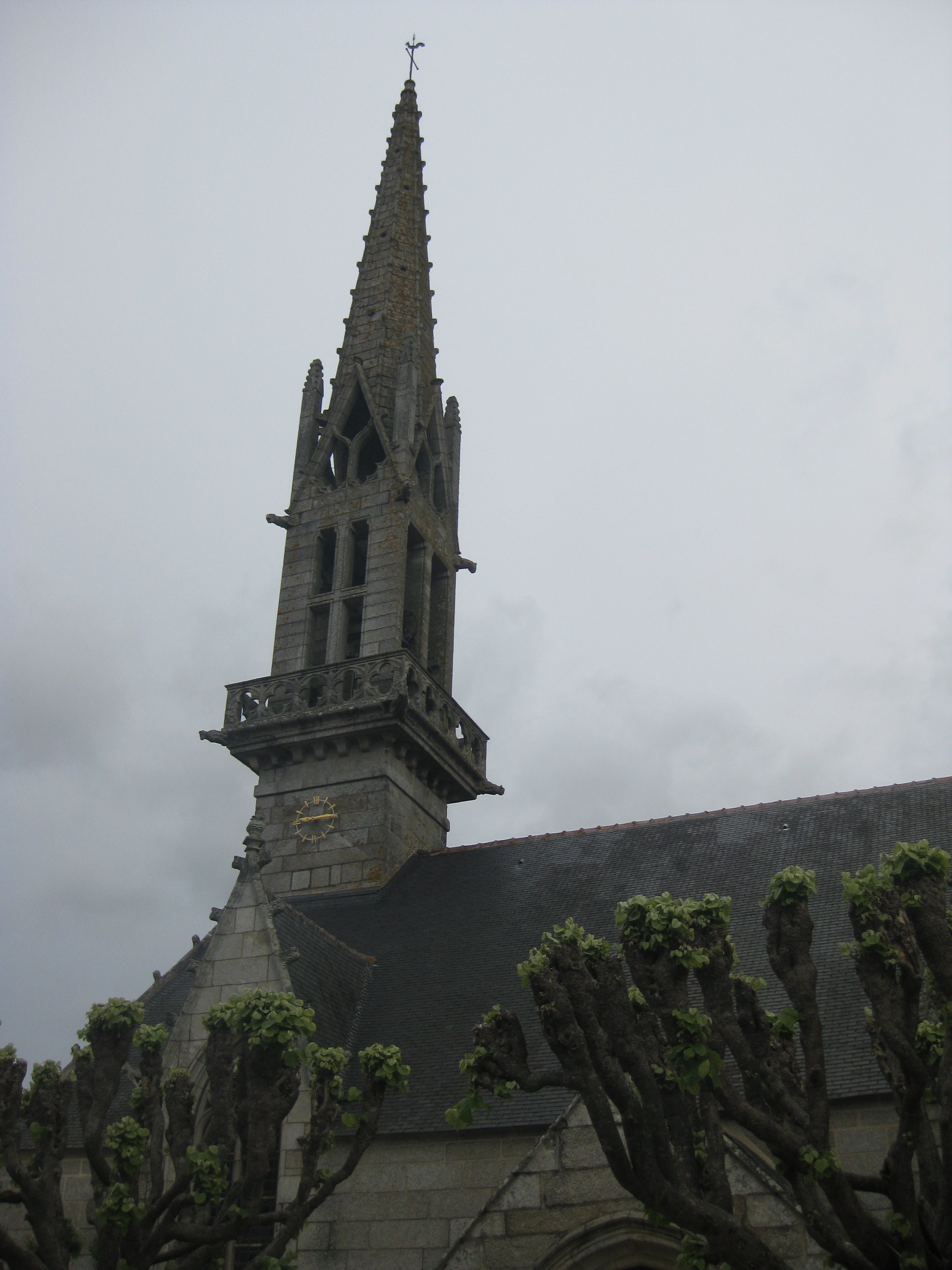
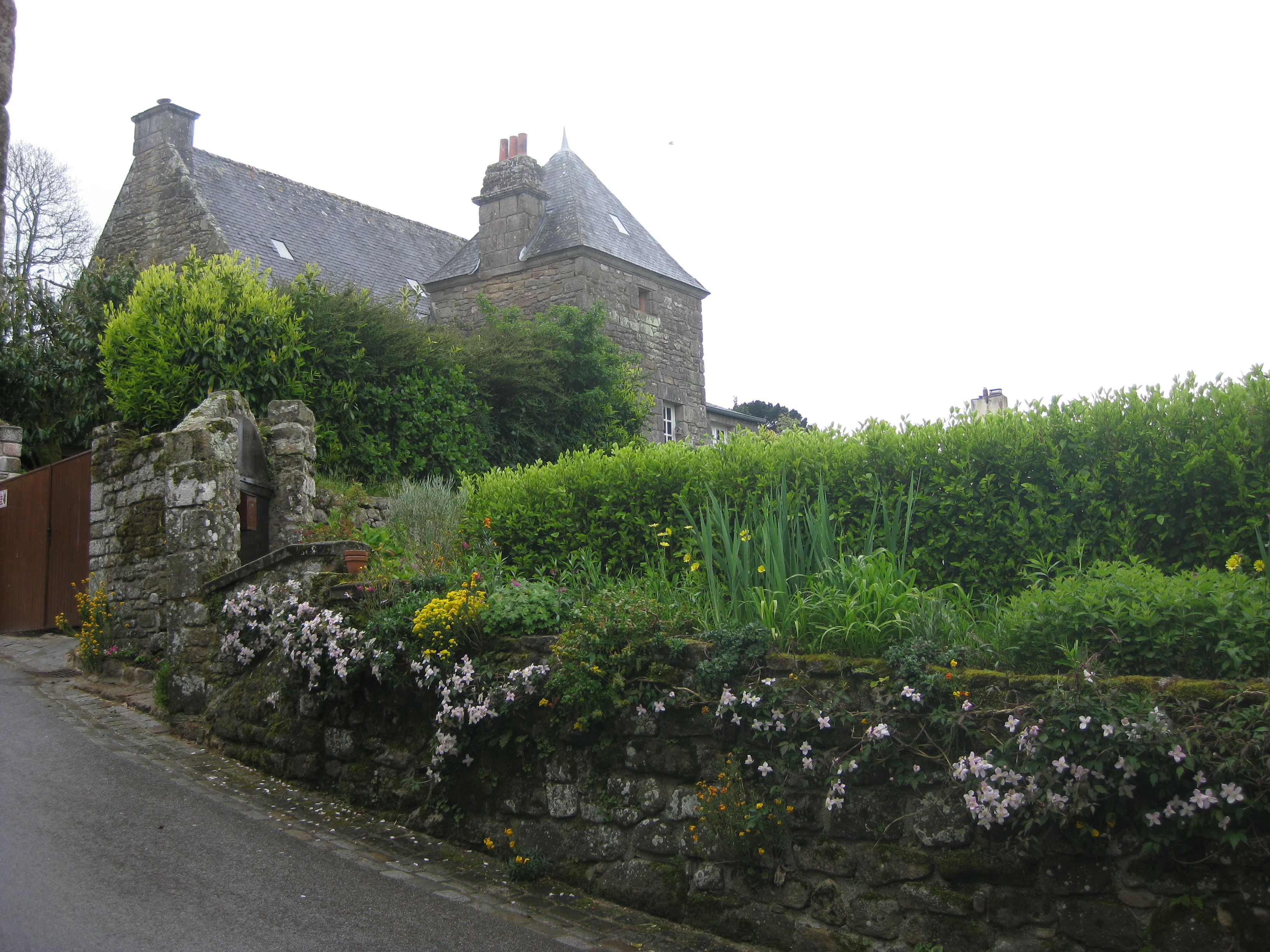
A change of scene: the town. We exchanged the shallow-roofed, unpainted or pastel coloured houses of the south for the tall white narrow pitched roofs of Brittany. Down here, we’re used to our towns and villages being shabby. Brittany’s are clean, sparklingly so, with flower boxes, neat gardens, and a general air of pride in the community. And then there are the churches. No clochers-murs in Brittany, but rather complicated steeples instead.
The seaside. Concarneau was at its sparkling best, with breezes tugging at the flags, clouds pluming across the sky, an early pre-season freshness to the narrow streets of the historic quarter. Their fishing museum there shows all too graphically just how very tough the life of the fisherman was – and is. But it’s a picturesque sight for the tourist
Sightseeing: Our first treat was to visit Locronan, a beautifully preserved granite built 16th & 17th century village, with a mighty central church, and a small chapel at the end of a charming walk.
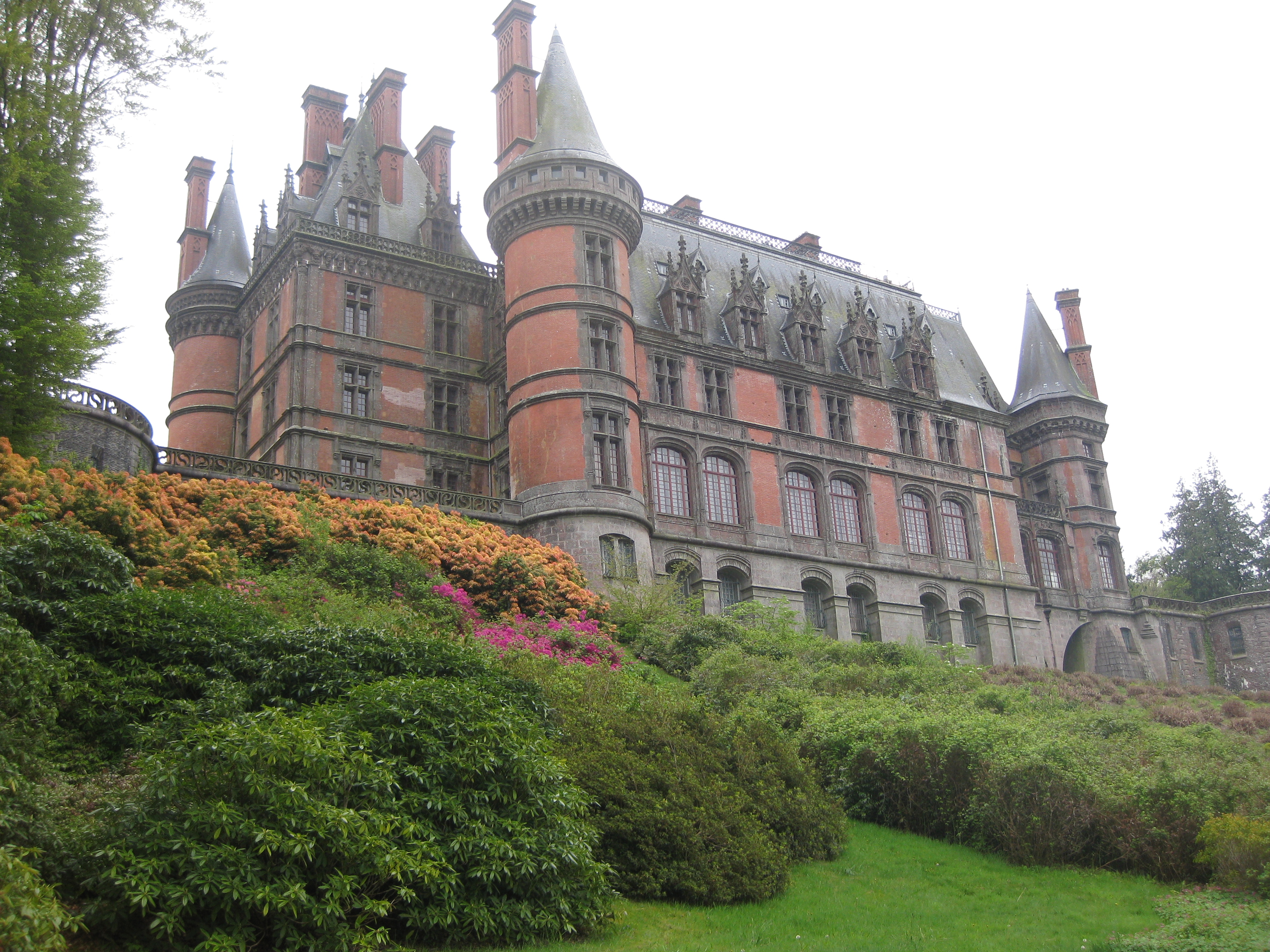
Next was Trévarez, a chateau that might look Gothic, but is in fact a 19th and 20th century construction. Its brickwork gives it the name “château rose”. We spent more time in the gardens though. Apart from a formal area near the house itself, the garden is informal in the style we’re so used to from English stately homes, and glorious at the moment with azaleas and rhododendrons
Celtic music: Friday night was concert night: the chance to listen to an hour or two of traditional Breton music. Malcolm and I particularly enjoyed hearing those favourite Welsh hymns – Land of my Fathers, Cwm Rhondda in Breton– they sounded very different, but just as good
Story telling: Such a treat. Michel Sevellec enchants audiences in Finistère and beyond with his tales drawn from many traditions. On Saturday, as part of a local festival, we joined local children to hear his interpretation of Native American and other stories. Can’t wait for him to come to Laroque in a fortnight!
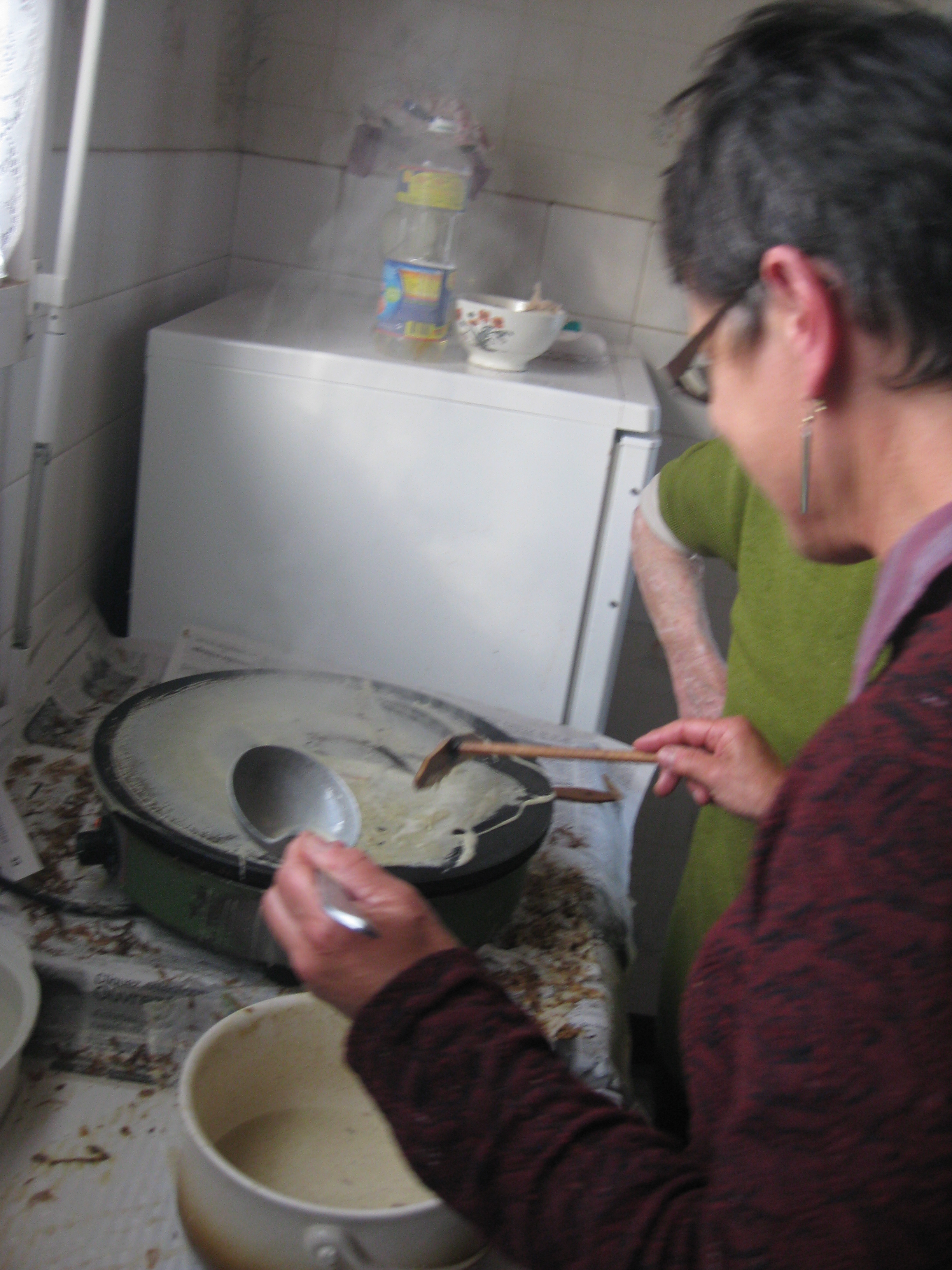
Crêpes:Everyone knows they make crêpes in Brittany. Lots of us have watched them being turned out on those special round hotplates. I always assumed it was easy-peasy. Until we went to eat crêpes at Albert’s mum’s house and she let me have a go. First, carefully pour the batter with your left hand while equally carefully drawing the batter round the plate with a special wooden spatula – not too fast & not too slow, not too thin & not too thick.
Expert at work
Then flip the delicate creation, so thin you could read a newspaper through it, over onto its other side to finish cooking. It was lucky there were hungry dogs to eat all my cast-offs. Lucky for us too perhaps: we’d still be eating them now. Malcolm and I thought 6 crêpes each ought to have been enough for anybody. Our hostess disagreed.
So….we discovered in Brittany an area very different from our own in languages, customs and appearance, and had a chance to be more than simply tourists. We now have new friends in Melgven but also in Laroque as a direct result of this weekend. A good experience.
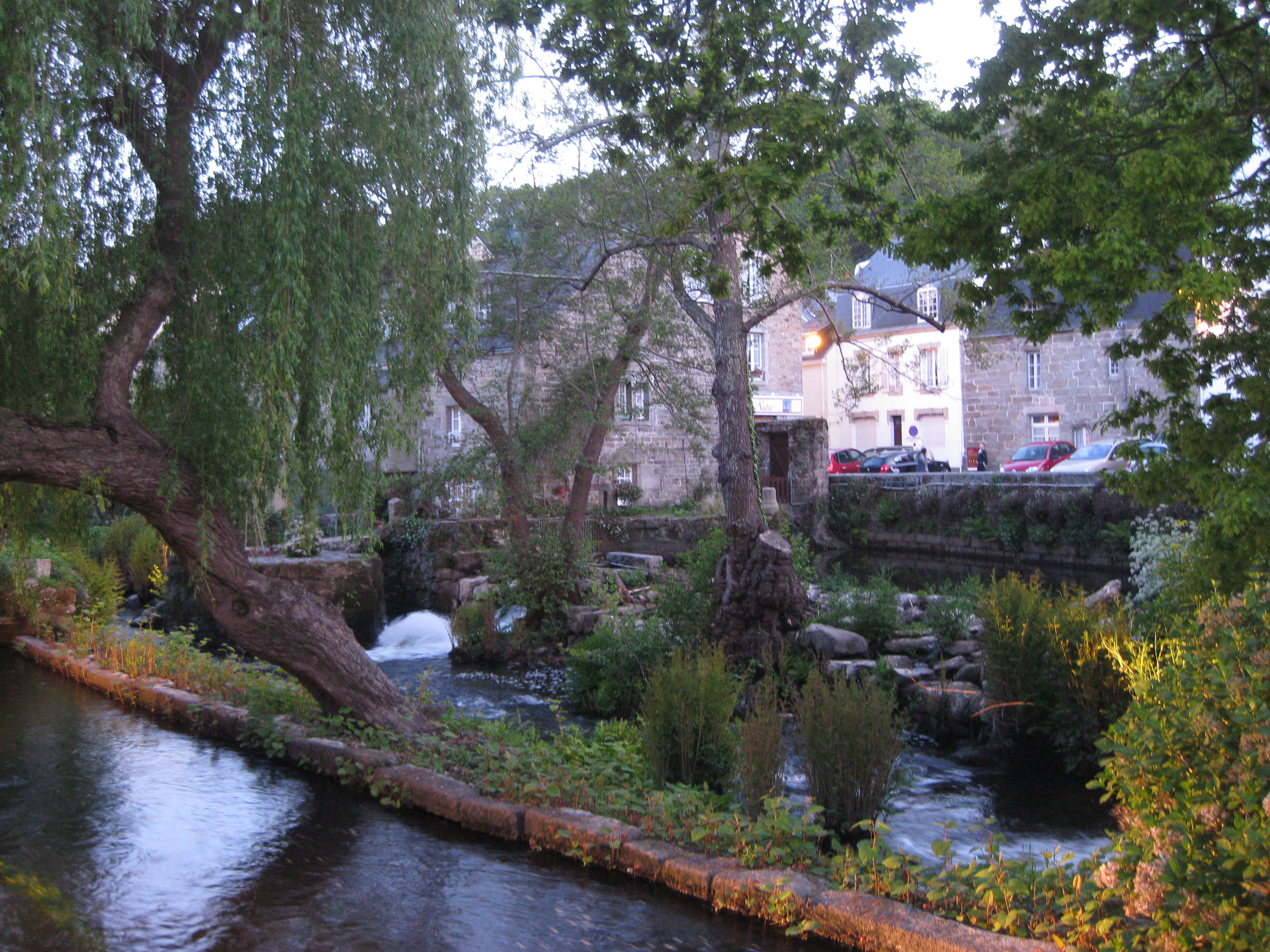
Pont Aven: I didn’t even mention this lovely little town, did I?
Shot on location in the Ariège by Jacques, Malcolm & Margaret.
A Lawrenson-Hamilton-Clift Production MMX
‘Curiously, I had no feelings of fear or apprehension, perhaps because of what our friends had told us about Jacques, the pilot, and his machine – it’s his pride and joy, and he takes great care of it.
There was a sharp feeling of exposure after take-off – we were not in a cabin, there was no protection from wind, we were just vulnerable beings in a powered shell under a giant wing – it reminded me of riding pillion on a motorbike, but this was in the air.
The various destinations came up quickly – not like travelling on the ground, even though our speed was only about 80-85 kph.
Over the mountain peaks, it was very cold – temperature had fallen from 13 or so on take-off to minus 1 over the snowfields and the flat white surfaces of isolated frozen lakes were still clearly to be seen. And suddenly, directly underneath, a herd of Pyrenean chamois, running and leaping, disturbed by the engine’s sudden sound in their snow-quiet world
A few minutes more and we were at 2600 metres, when the mountains seemed so empty and cold, even in the lovely morning sunlight. We could see long distances in the clear air at this altitude – 200 km away, we could see the Pic du Midi
The warmth after we left the mountains behind and lost altitude was welcome, and I could concentrate on the views of walks we had previously done, and which had sometimes seemed long and meandering, but were now clearly visible with their beginnings and ends.
Then back to the field and the short grass runway. As we flew over, I could see Margaret far below, waving. Then it was down, very smoothly, and a turn, and back to rest. What an experience! And how kind of my family to make this possible.’
Waking up to birdsong outside our window, it was tempting to enjoy the serenity of Le Mas des Anges: but it was Montauban we’d come to see. And what a town it is. Here’s our day in the town, in a slide show.
Montauban’s got something of a Protestant history, and has had its share of bloody times, even having almost 10 years of English rule in the middle ages. Now, however, life is more tranquil, with traffic-free streets. There’s time to enjoy the ancient rose-brick streets and mediaeval squares; the secret courtyards; the slow progress of the Tarn with its central island which is a giant housing estate for egrets and herons; the gardens and open spaces. For us, there were restaurants to choose between, and later, idiosyncratic tea rooms with calorie-laden cakes, and all sorts of non-chain-shops we’d have liked to explore…. We’ll be back. We finished the day, tired but content, picnicking above the vineyard at le Mas des Anges, and later, talking with our hosts. We’ll be back there too
‘We worked on the house in England. We’ve slaved on the house in France. Enough! We’re going to have a break’. This was me, stamping my foot, and determined to get my own way, last weekend. And eventually, Malcolm gave in, reluctantly put down his saw, his chisel, his boxes of screws, and we settled on Montauban, a city often overlooked in favour of Toulouse.
It was an inspired choice. Getting there took most of the day, because we meandered along miles of country roads, bright with the sharp fresh greens of newly sprouting crops and creamy apple, cherry, almond and hawthorn blossom.
Castelnau de Montmiral
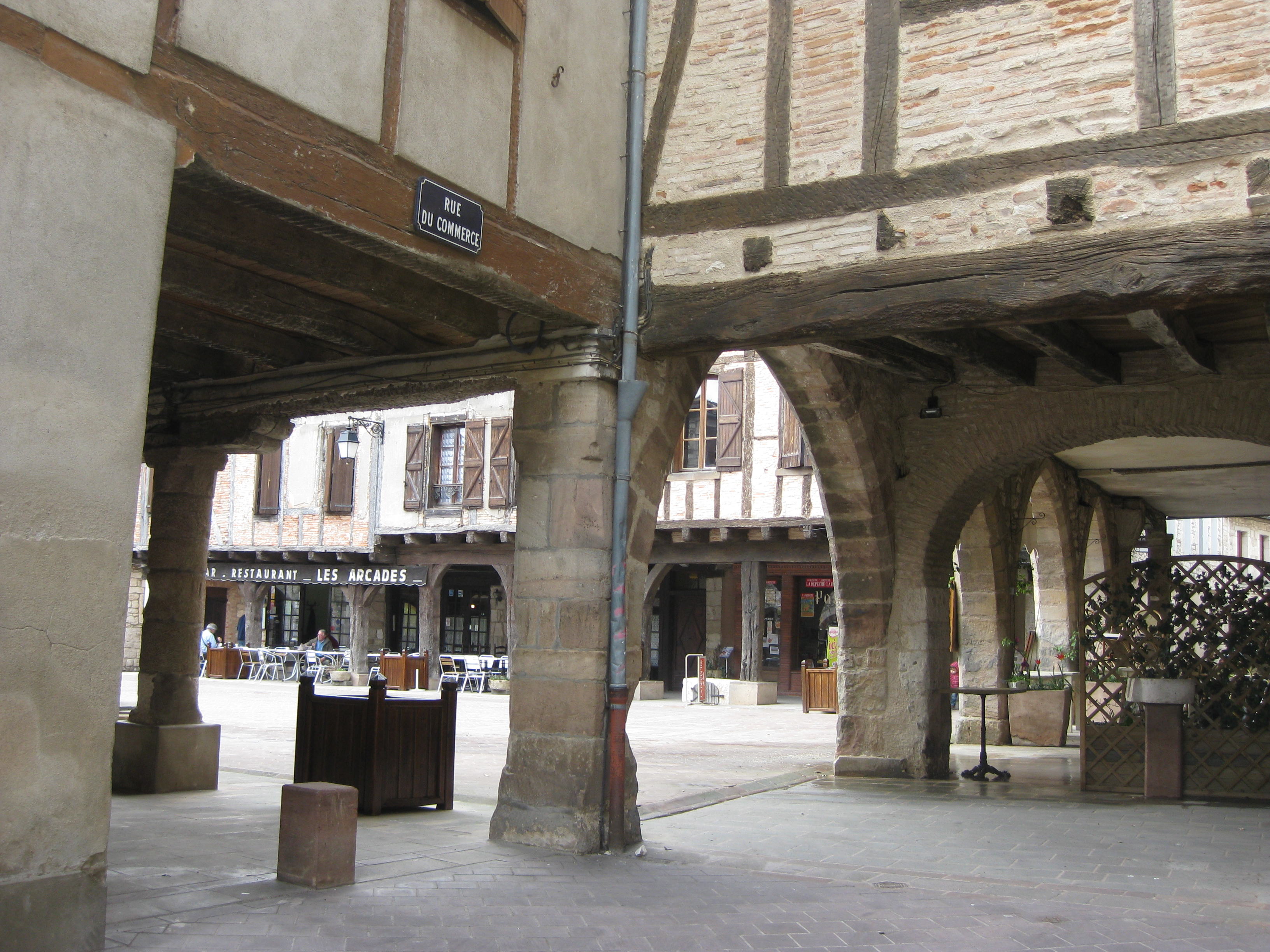
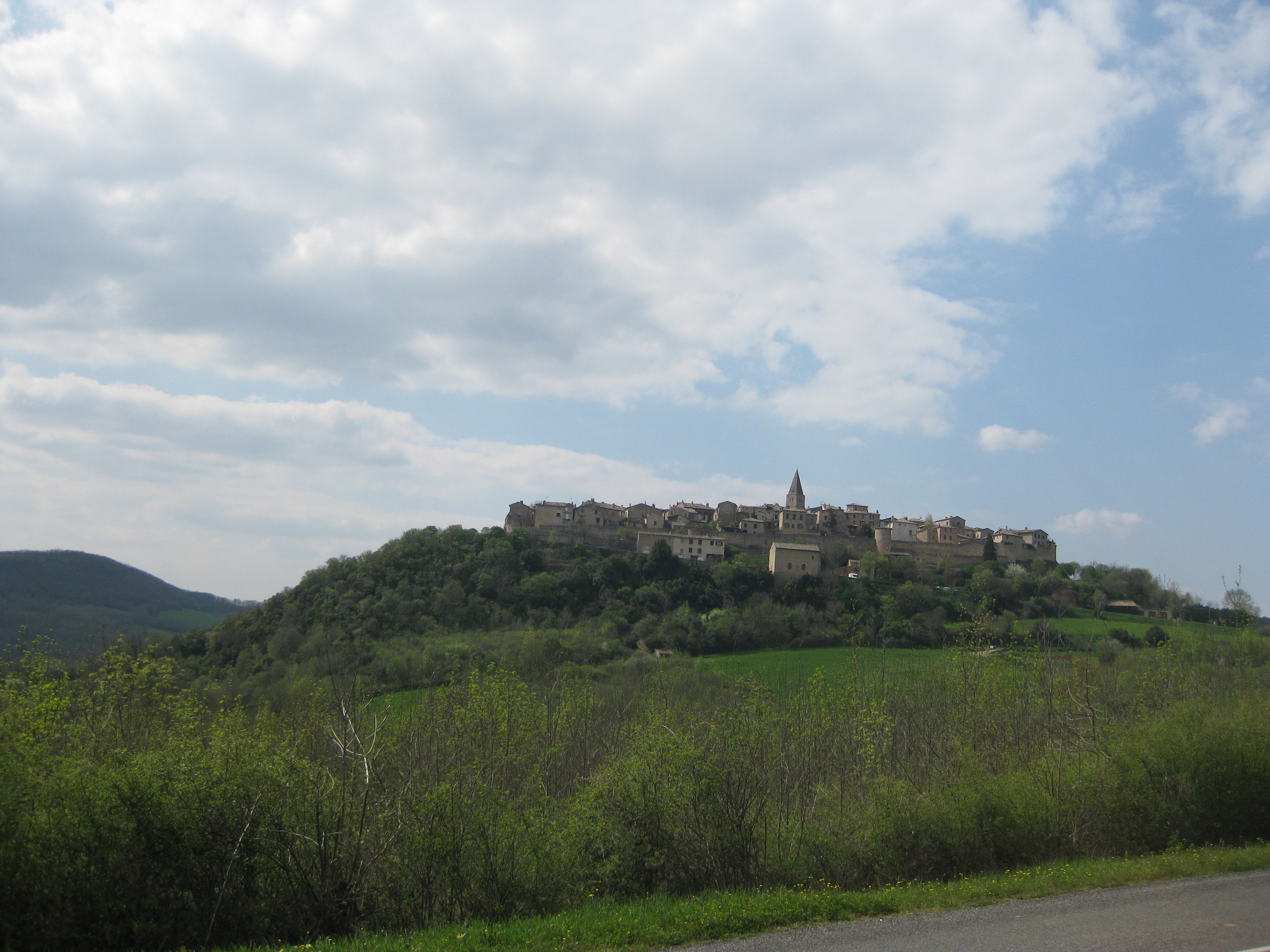
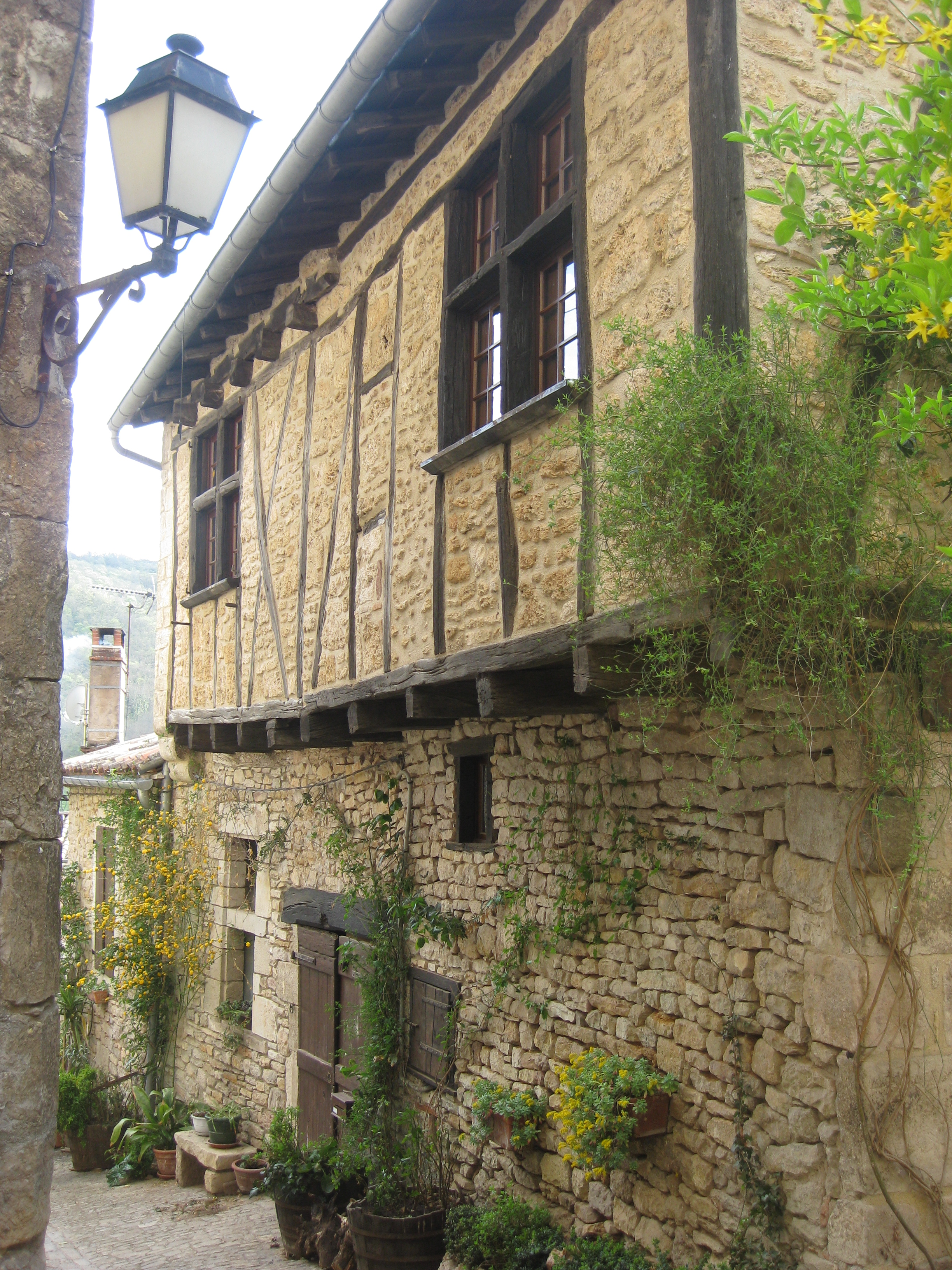
After lunch, we were in wine-growing country – Gaillac – and it was then that we started to hit a succession of picture-postcard-pretty villages: three of them in fact qualify for the title ‘Un des plus beaux villages de France’: Castelnau de Montmiral, Puycelsi, Bruniquel. We enjoyed mooching round all of them. Each was different, but they all had charming mediaeval buildings and alleyways, pots of flowers and shrubs at doorways and windows, and lovely views over rather Shropshire-ish countryside.
Puycelsi
Not for one second did we hanker after living there. No community notices about Loto evenings, vide greniers, concerts in the church. No people, actually. In fact many of the houses were shut up (second homes?), and none of them looked as if they belonged to horny-handed-sons-of-toil. Commercial activity, where it existed, belonged to the artisan potters, jewellery and textile makers. But I’m glad they were there for us to while away an afternoon exploring.
Bruniquel
The day ended well, too. Le Mas des Anges, about 5 miles from Montauban, turned out to be a big part of the inspired choice. It’s where, after our first night there, we decided to stay another.
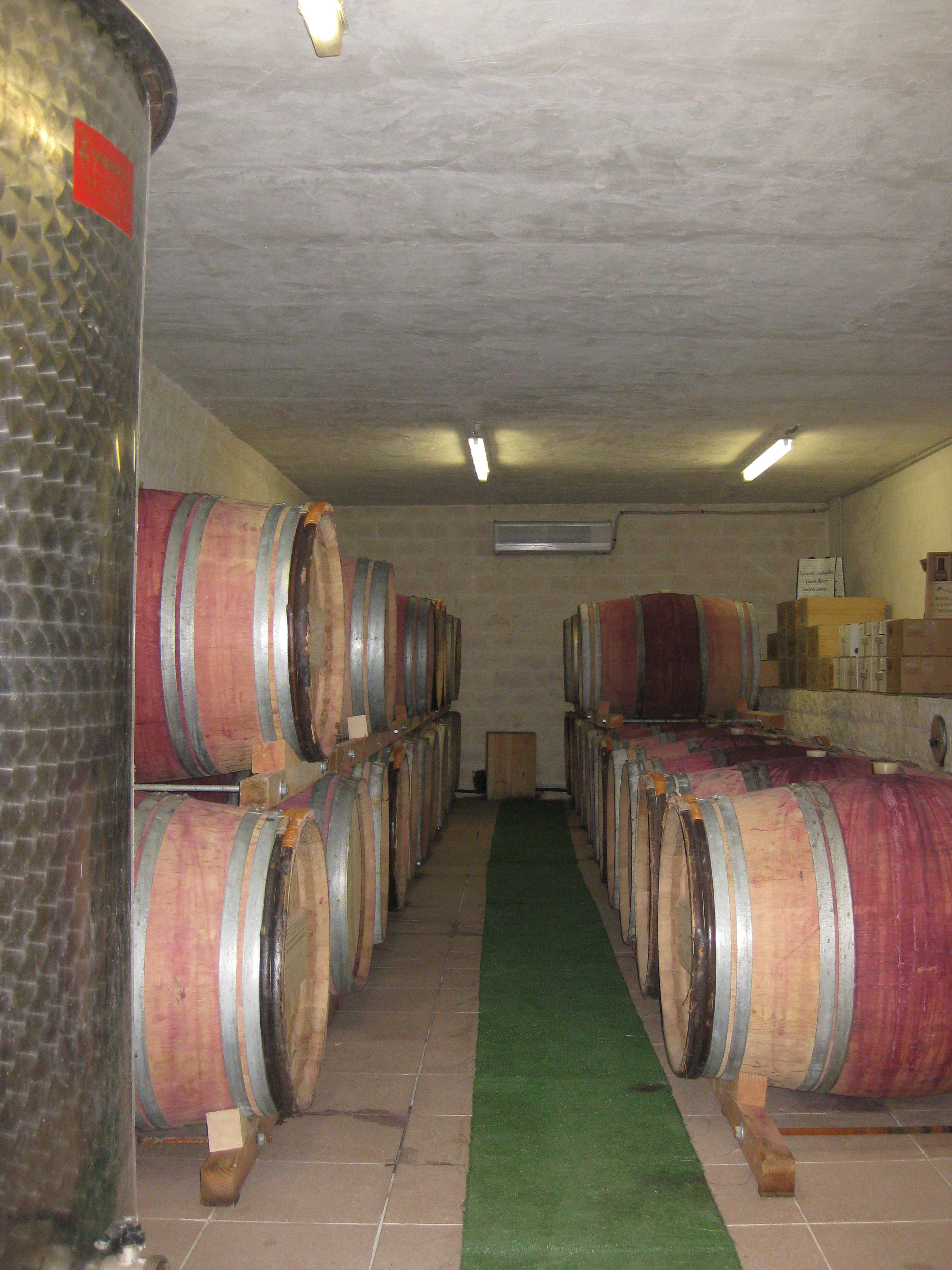
Juan and Sophie, our hosts, absorbed us, apparently effortlessly, into their enthusiasm for their life there. ‘Passionate about…’ is a slightly hackneyed phrase these days, but Juan IS passionate about the wine he produces, and we had a great time looking at his equipment and cellars, before settling down to taste what he had to offer. Sophie has a great talent for making the guest accommodation charming and welcoming, and the breakfasts….yum!






 From Pyrenees to Pennines
You must be logged in to post a comment.