This week, Anne-Christine invites us to share Magical Moments from for the Lens-Artist Challenge. I’m choosing a magical few days spent four years ago in Cádiz, Andalucía.
Cádiz isn’t a city with world-beating museums or inspirational churches. But it’s the oldest city in Western Europe, founded by the Phoenicians. Greeks and Romans peopled the area, and from the 8th century, the city was a Muslim stronghold for 700 years. Christopher Columbus sailed from here three times on his voyages of discovery to the New World, and in 1812 the first Spanish Constitution, making a unified nation of the peninsula’s disparate kingdoms. All this is reflected in today’s city.
For us though, this was a seaside city of characterful streets. It had once-upon-a time fishing quarters now re-purposed for locals and tourists alike as the place to relax at an outdoor table over a leisurely meal (this was January).
It was the city where we could find delightful old bars selling local sherries to savour and compare. And above all, it was the city of sunsets. Every evening it seemed, everybody came to the seashore to simply stand and watch, and witness the magic of the sun dipping down over the sea and beyond the horizon. These photos have not been edited or retouched – except to correct the odd wonky horizon.
Even one of its museums, the Puppet Museum, Museo del Titere, had moments of magic. How about these rather witchy women?
Or the magical and gigantic baobab tree?
Two months later, as we looked back on this special holiday, it seemed even more magical. We hadn’t known as we wandered its streets that this would be our last bit of freedom to travel for a very long time. In March 2020, the world locked down.
Samuel Johnson famously said in 1777 ‘When a man is tired of London, he is tired of life‘. The same could easily be said of Barcelona. And yet, although you might not be tired of this city, you might need a break from its unrelenting busyness. I have a suggestion. Go to a RENFE station in the city – maybe Sants, or Plaça de Catalunya, and simply get a train going northwards up the Maresme coast. You’ll enjoy the journey.
Back in the 1840s, when the trainline was constructed, it was as a goods line. It had therefore to be built next to the sea and the various ports along the way, with a road running alongside the tracks. So you, having picked a seat on the right hand side of the carriage, will travel alongside the seashore for your entire journey. Spare a thought for all those communities now divorced from the sea which gave them their reason for being. Although it’s easy enough really to pop through a pedestrian underpass and join the beach path which extends all the way from Barcelona, the whole way up the coast.
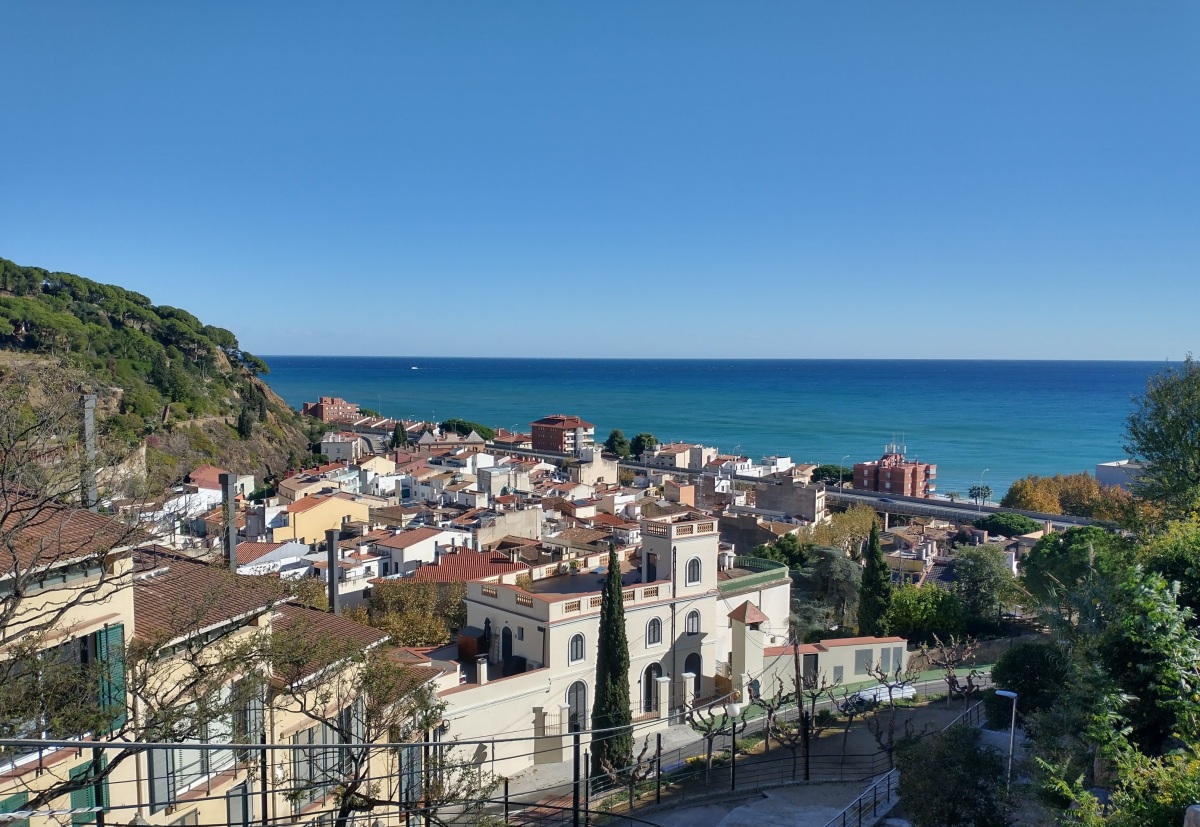
Where will you stop off? Maybe Badalona? if you want to meet me, I’ll join you at Emily and family’s home town, Premià de Mar. We could stop at charming Vilassar de Mar. We could stay in the only big town in the area, Mataró, which is well worth a day of your time, and I’ll take you to all of these places eventually, so we’ll go two stops further and get off at Caldes d’Estac. This was – and to some extent still is – a spa town. Its glory days in the late nineteenth and early twentieth centuries are over, but the town centre and beach-side villas still have a certain charm and sense of style from those days. Away from the immediate centre it’s been spoilt by ripping down older properties in favour of tall apartment blocks, and a busy highway has been constructed above this hilly town. Luckily, enough is left. And in any case, we’re staying in the centre to visit its Picasso museum, Fundació Palau i Fabre.
Yes, this small town has a museum dedicated to Picasso, with works too by the likes of Tàpies and Miró. And that’s because the renowned Catalan poet Josep Palau i Fabre (no I hadn’t heard of him either) was a friend of Picasso, who gave him several of his works: others he bought. By 1987, Palau had decided that, with no descendants of his own, he wanted to form the ‘Palau Foundation’ to house and display these works. But where? He hunted throughout Catalonia; he went to Andorra, to Menorca, to Ibiza. All the would-be deals he thought he had came to nothing.
And then, in Caldes d’Estrac, one of the spa town’s thermal centres was put out to tender. Nobody wanted it. The town’s mayor saw an opportunity: an opportunity to bring a first class cultural asset to the community. In 2003, the Fundació Palau opened its doors. It houses a permanent collection, temporary exhibitions, archives and a library. I think it’s a national treasure. But the day I visited, I shared the exhibition spaces with no more than half a dozen other visitors – mind you, it was November.
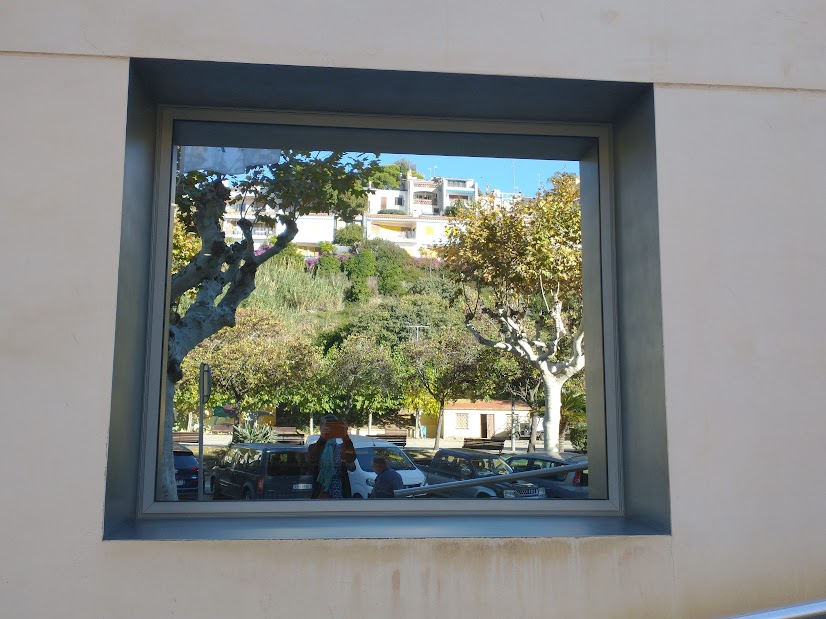
Anyway, in I went, having first taken a snapshot of the town reflected in an outside window of the gallery.
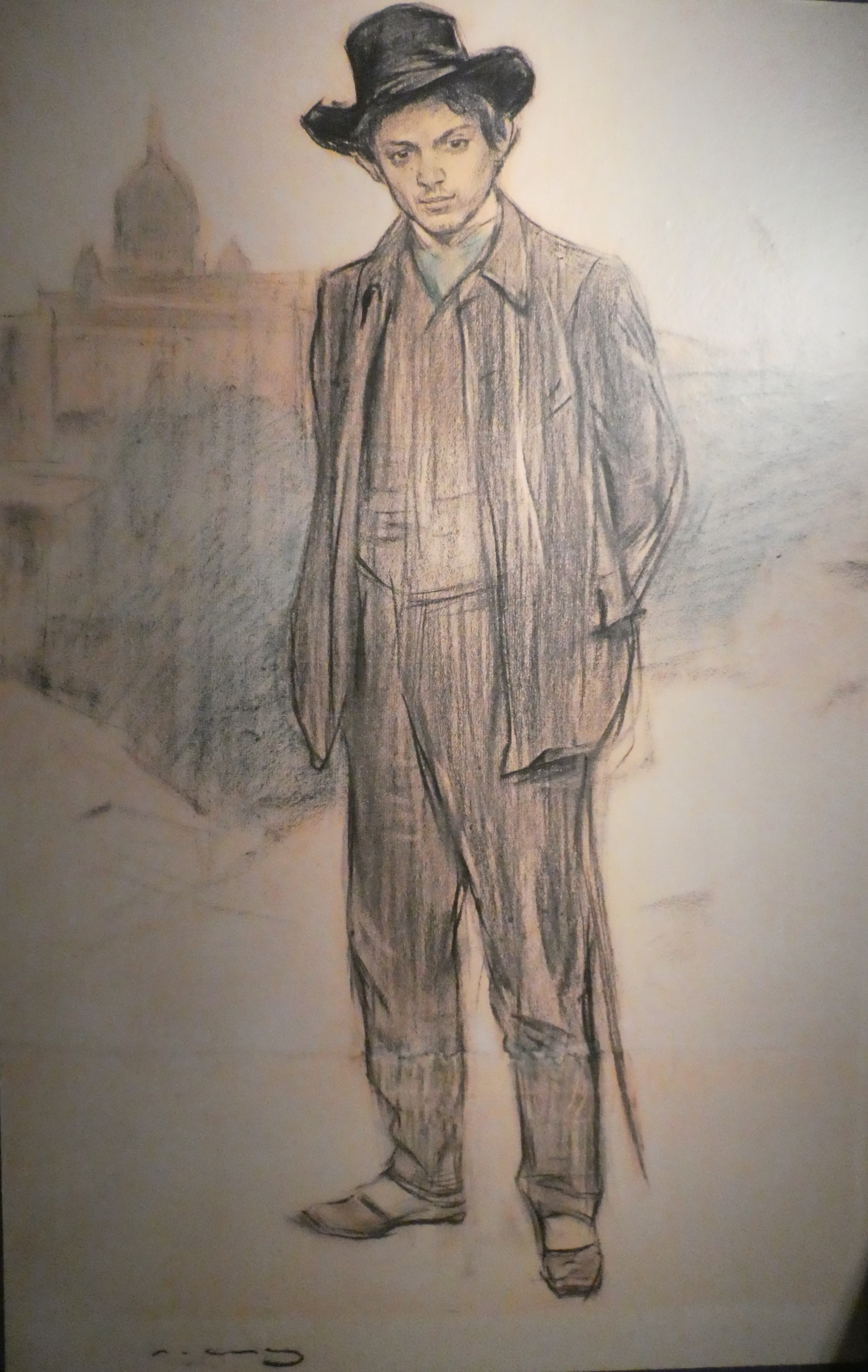
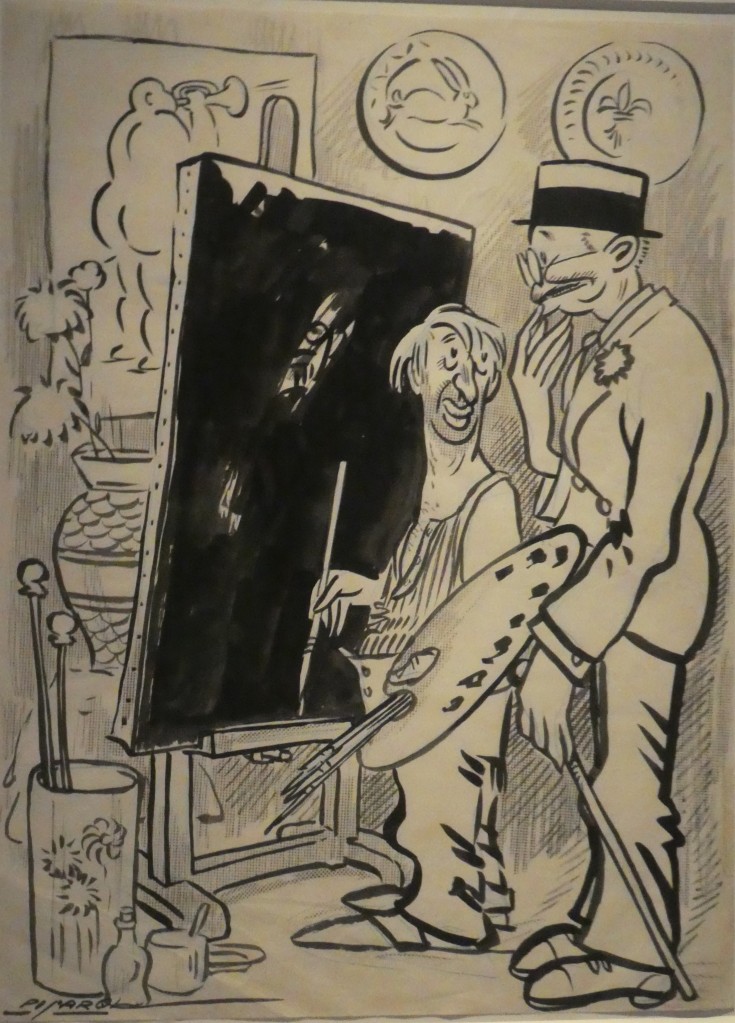
I was greeted by a temporary exhibition, which l loved. Here was the young Picasso, surrounded by his artsy friends, all sketching one another, doodling, cartooning, finding their artistic feet. Only Picasso from this period ever made it big-time, but I still found them to be a talented and engaging bunch. Here are three examples.
Josep Costa Ferrer: Caricature of Picasso with a client.
Then it was off to the collection of poetry by Palau and friends. Though it was often visually interesting, I struggled with this. I don’t pretend to speak Catalan, though I can read it adequately. You might want to have a go yourself if you speak French, Spanish or Italian. Just click here for an example of Josep Palau’s poetry.
Finally, it was upstairs to see what I could see. I knew not to expect to see the equivalent of, say, Les Demoiselles d’Avignon, or Guernica. I was quite prepared to be interested in a collection mainly of sketches and drawings by Picasso, and a few works by his friends and contemporaries.
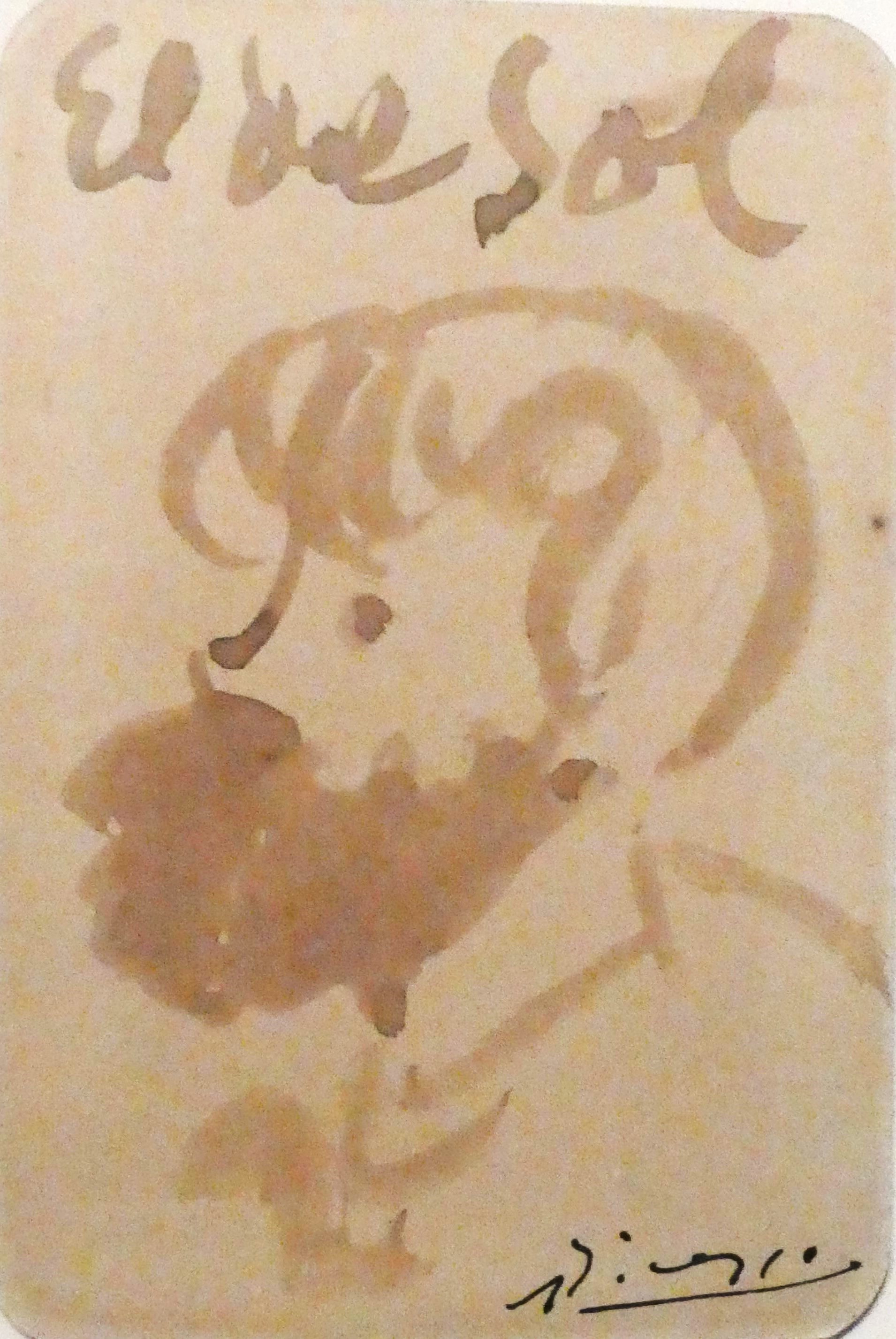
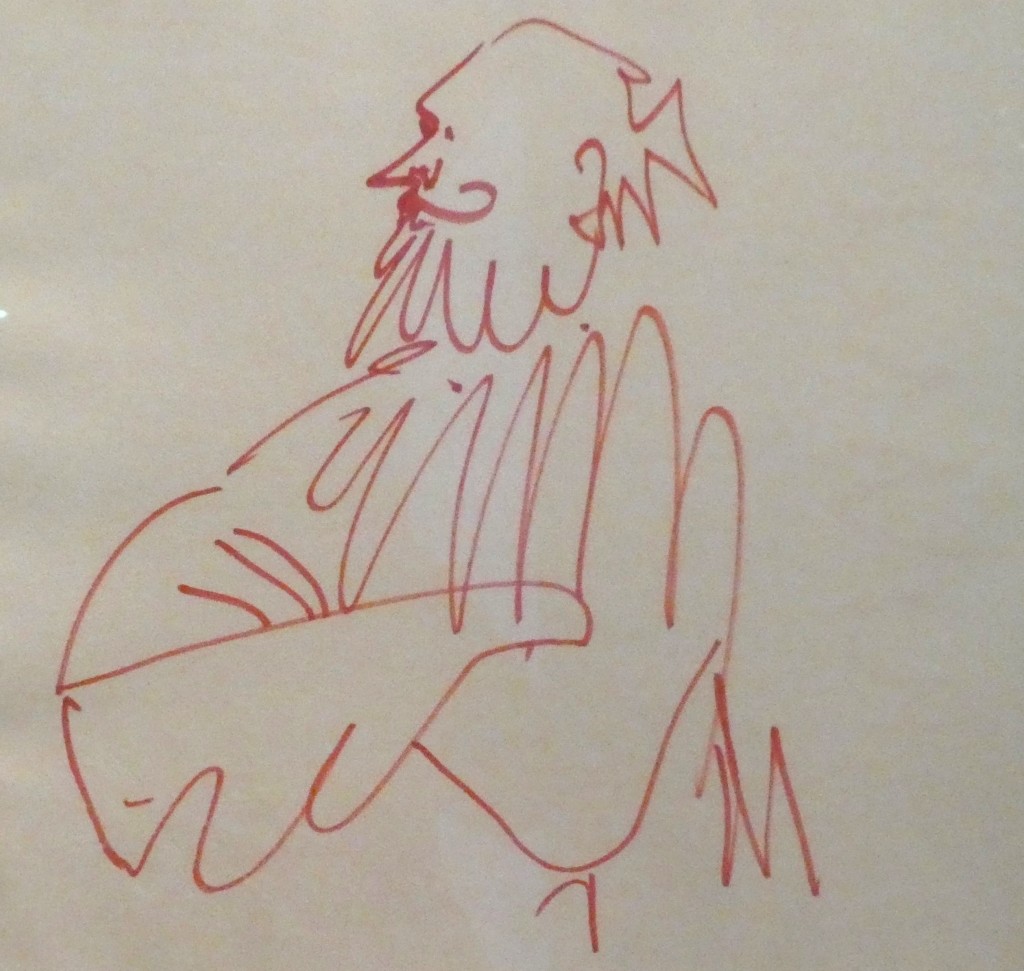
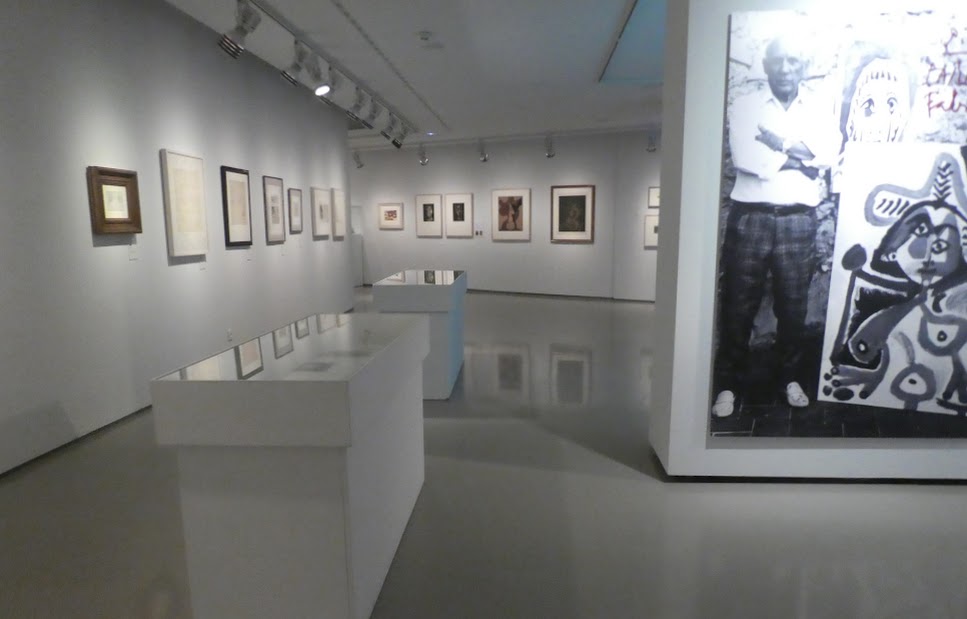
It was sympathetically displayed: though I’ve decided my own attempts to photograph them were unsympathetic, and – apart from showing you one late sketch by Picasso, showing himself as a faun – I’ll instead give you an impression of one of the display rooms.
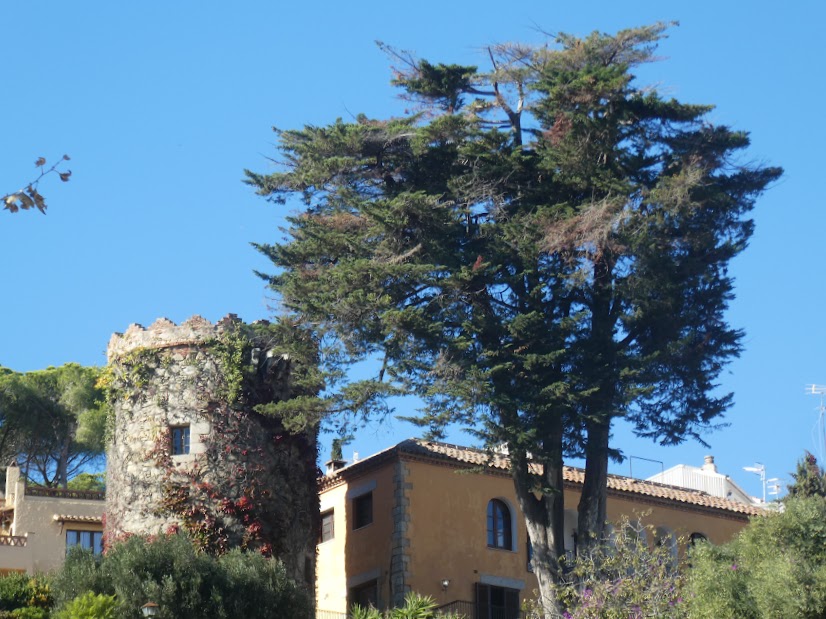
Then I had a stroll round the old town. The feature photo shows one of the 16th century towers built when the town was suffering from the depredations of Turkish pirates. And the picture below shows the building which was once the British Embassy. Yes, during the Spanish Civil War of 1936 – 1939 many embassies moved themselves out of the main firing lines and Caldes d’Estac was the choice of quite a few. The Argentinian Embassy is a few doors down.
The former British Embassy.
A good day out. And the museum makes a great (and very much cheaper) complement to Barcelona’s Museu Picasso.
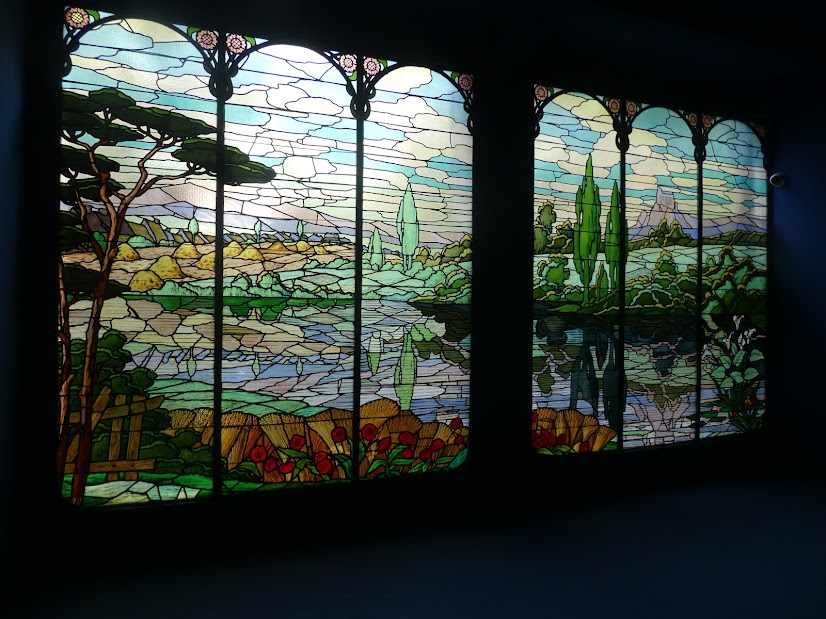
I first took you to Caldes d’Estrac back in November, when I showed you a very fine door. Now I want to show you a very fine window, from the same corner of town.
This is by way of being a preview to my next post, when I’ll be telling you why you should consider putting this little town on your visiting list if you have time during a break in Barcelona. To be continued …
For Ludwig’s Monday Window, after a very long time-out.
Nobody could accuse Barcelona of being a spot of ‘rus in urbe‘. Oh, it’s tremendously good at public open space to relax in and at tree lined streets. But shady expanses of groves and avenues of trees, of busy little streams and placid ponds? Not so much.
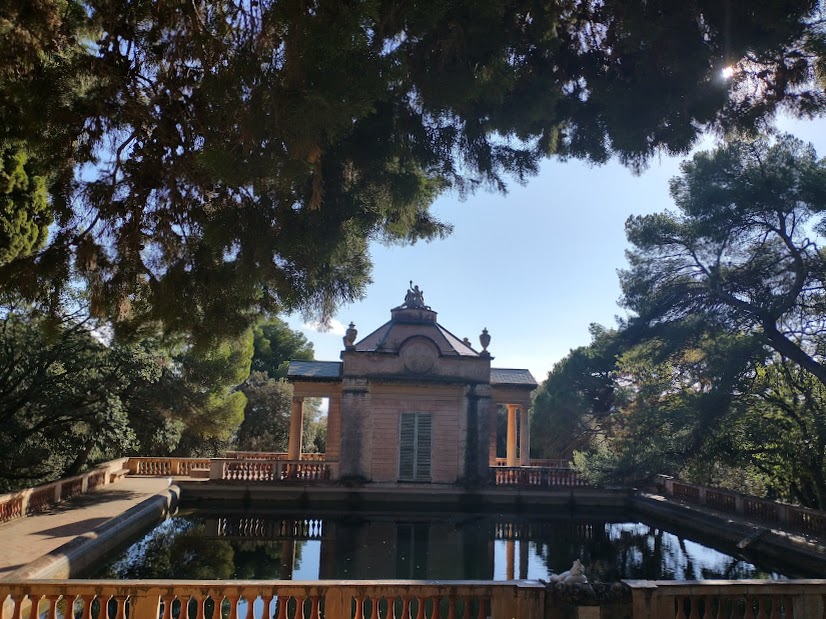
Except for one place, quite unique in the city. The Parc del Laberint d’Horta (Labyrinth Park of Horta) has been here since 1791, when the Desvalls family had it built as a Neoclassical park, and one featuring a maze – hence the park’s name – and any number of classical statues of Greek deities. In the mid 19th century a more free-flowing Romantic woodland park was added. And in the 1960s it became a public park, hidden from the view of many of the city’s inhabitants, let alone tourists. It costs the very odd sum of 2.23 Euros to get in, except on Wednesdays and Sundays when it’s free: or if your an old fogey like me, it’s always free.
Come with me for a stroll. When we feel up to it, we’ll attempt the maze. They say it’s harder than it looks.
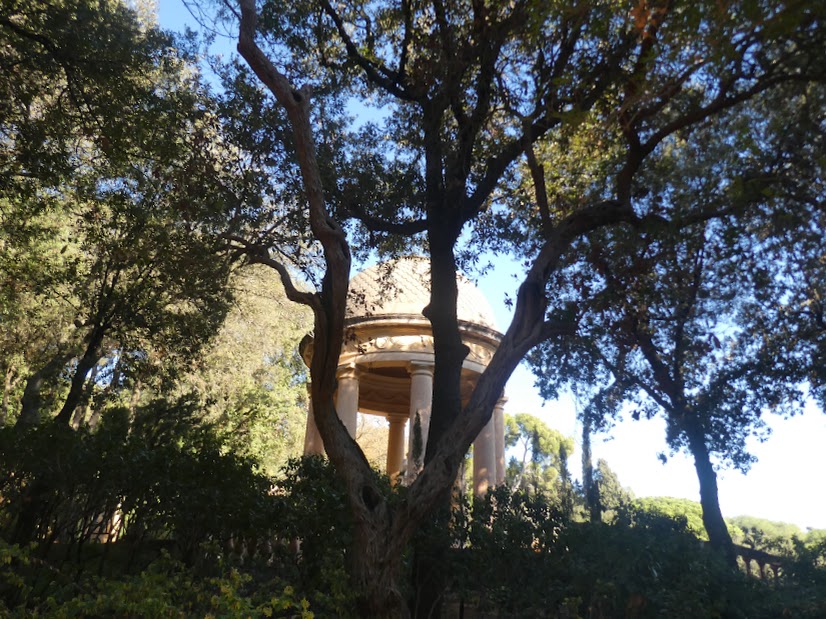
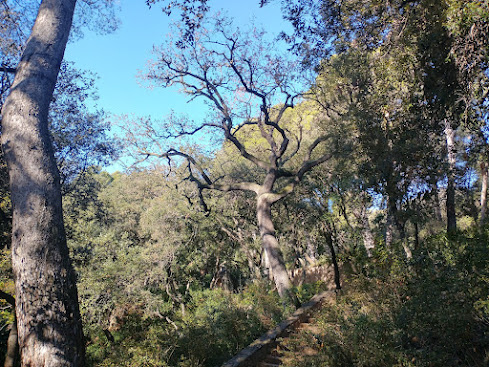
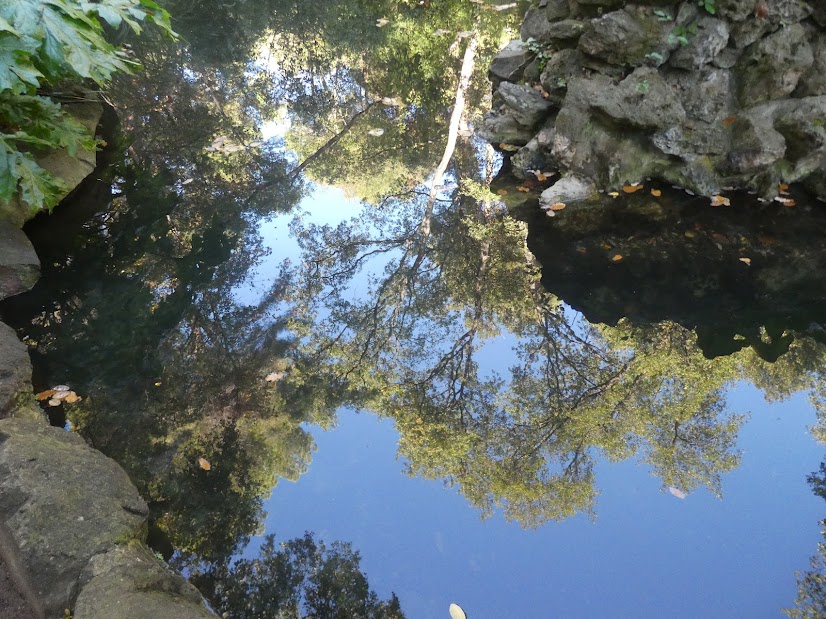
We’ll begin with a rather hearty climb among woodland glades interspersed with pretty reflective pools.
Soon, we realise we must have skirted the very heart of the garden, now lying below us.
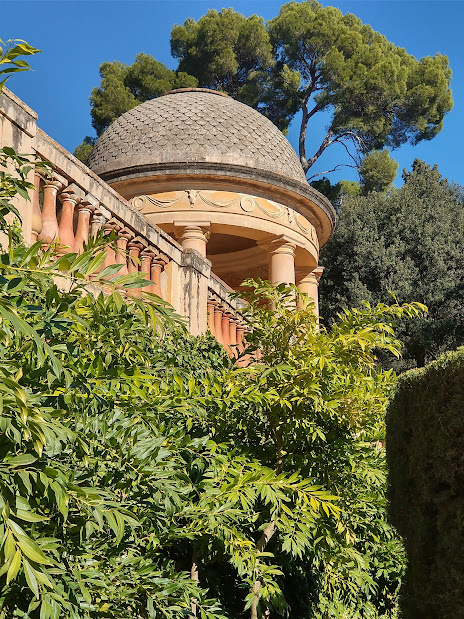
Oh look. There are balustrades, and statuary, and pavilions and … that must be the maze in the centre? Let’s go along and look.
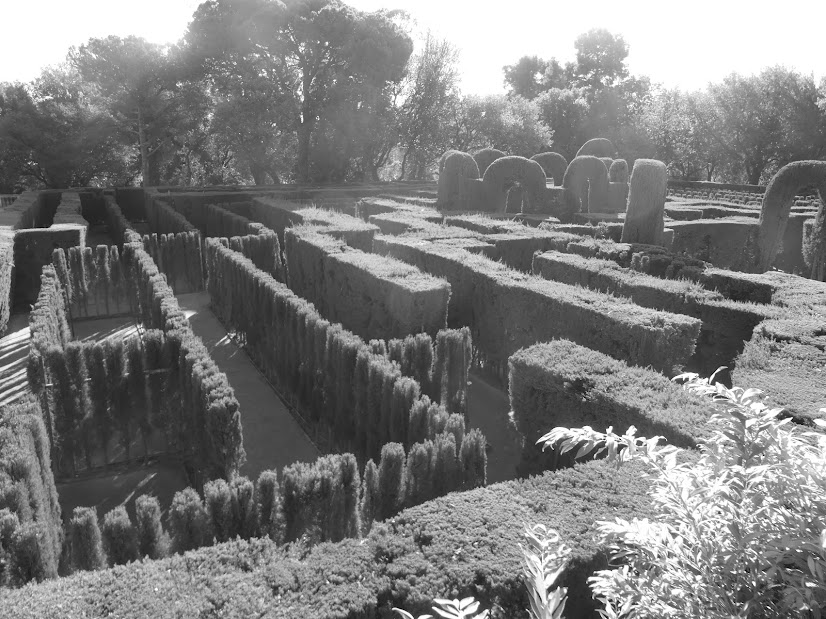
A final look at the maze from above, before we plunge in. Black and white white might make it easier to sort out. You’d sooner not try it? Your choice.
Oh, this won’t take long. Look, I can see through the branches easily. In fact I can see the centre from here …
Oh hang on. I want to go left, and I can’t. OK, right, left and left again. Hmm. I seem to be near the beginning again. Right, let’s take this slowly …
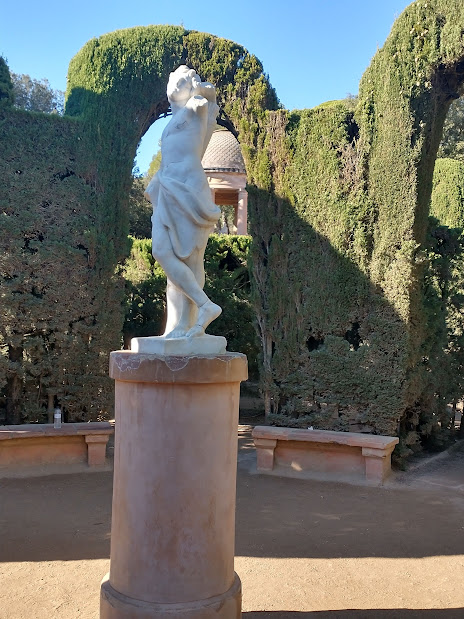
And I did. Eventually, I met Eros in the centre and sat with him for a while.
Getting out was worse than getting in. I kept on fetching up with Eros again, or finding myself up yet another blind alley. But I made it out eventually, and decided that I really would have liked your company as I thrashed helplessly around.
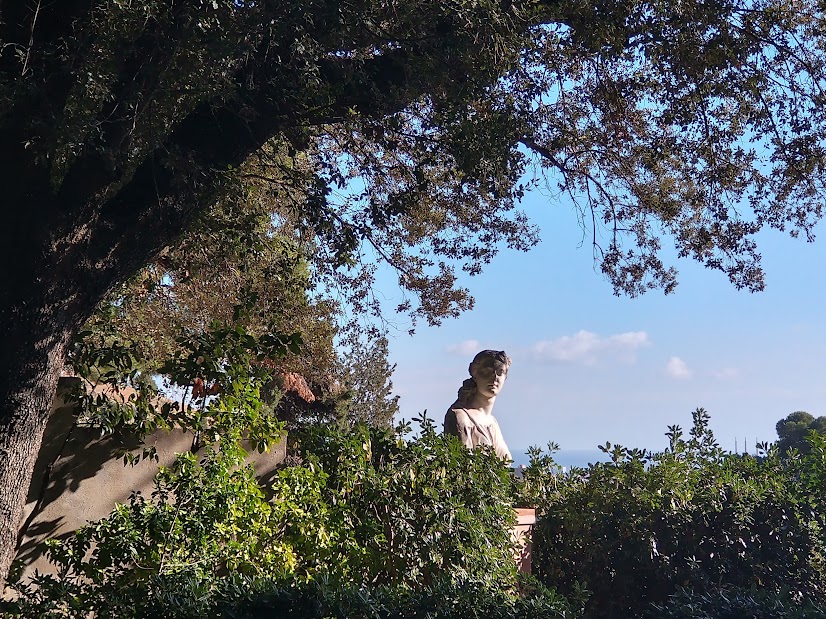
I’d nearly explored the whole site, but went for a final stroll, encountering various characters, identity unsolved, on the way.
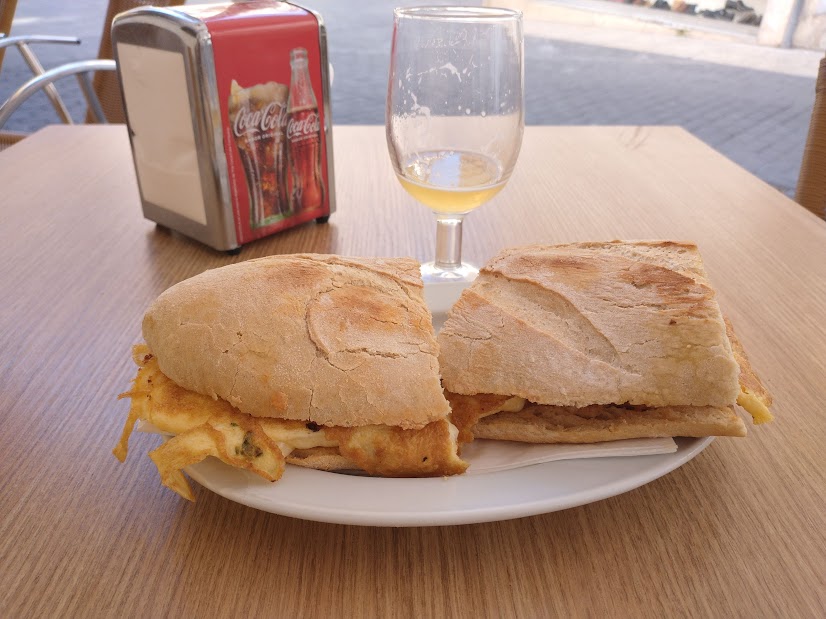
At this point, I could have gone home. Instead, I walked into the Horta district, roughly a kilometre away: a well-established community where ordinary citizens live and work, and where there is no possible reason for a tourist to venture. Except I’d had a tip-off. I should have my lunch at Quimet d’Horta. This unique bar has been serving the locals its signature dish for almost 100 years. An omelette sandwich. A bit weird? I thought so. But I was wrong. A cheesy, herby omelette enveloped into half a crisp-crusted baguette, and helped down by a clara turned out to be just the thing I needed. And as I was eating at the ridiculously early hour of 1 o’clock, I had the place almost to myself.
This is a multi-tasking post. First of all, it’s part of my Barcelona series. Then it’s for Amy’s Lens-Artist Challenge #288: Unique. And then, despite the fact that no cake was consumed in the expedition, it’s for Jo’s Monday Walk.
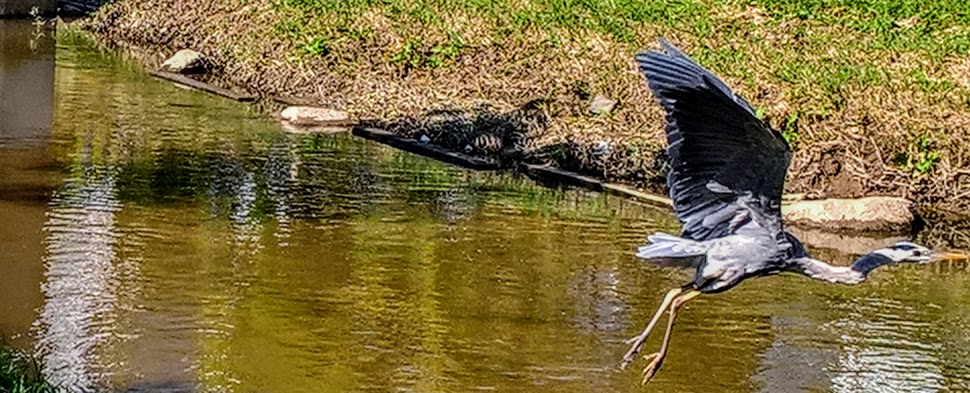
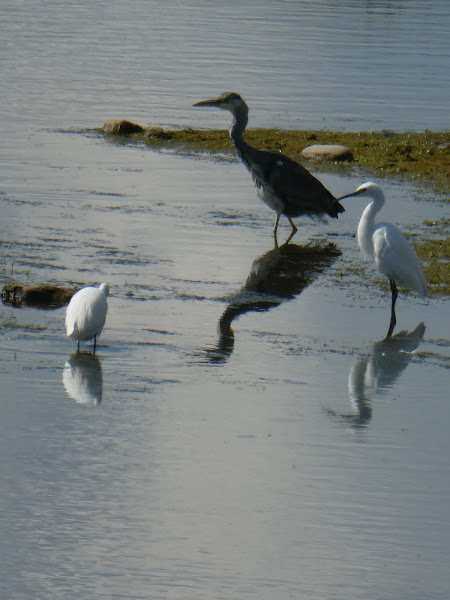
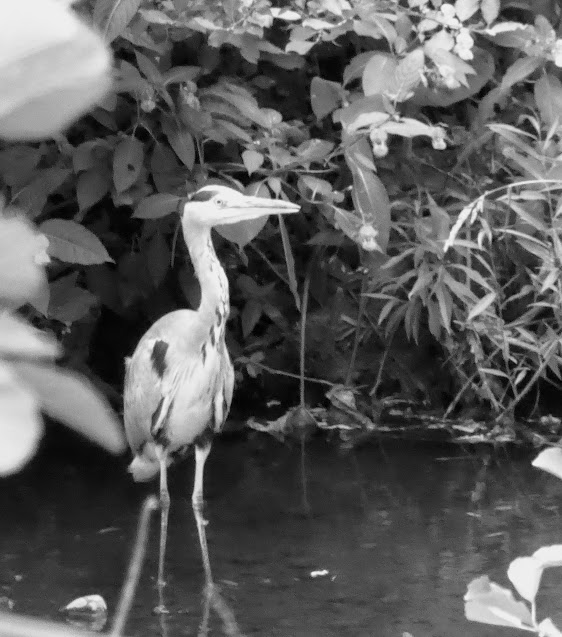
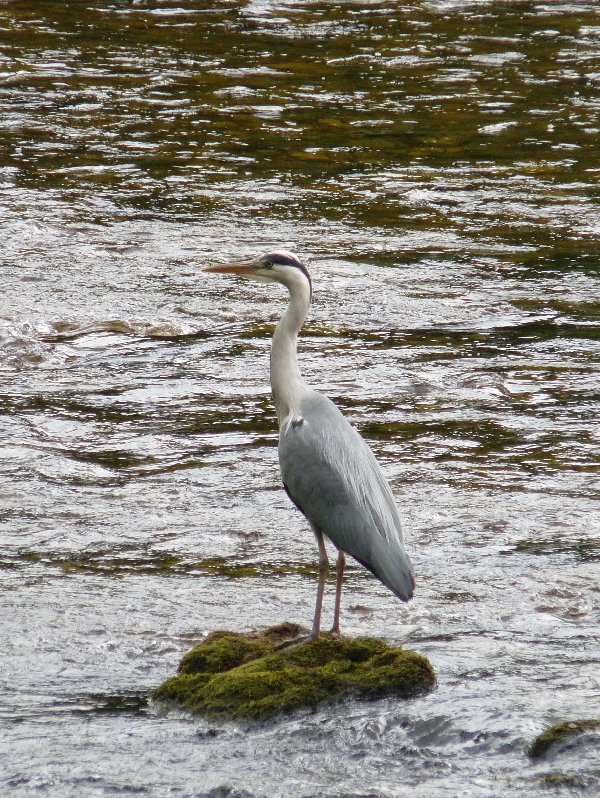
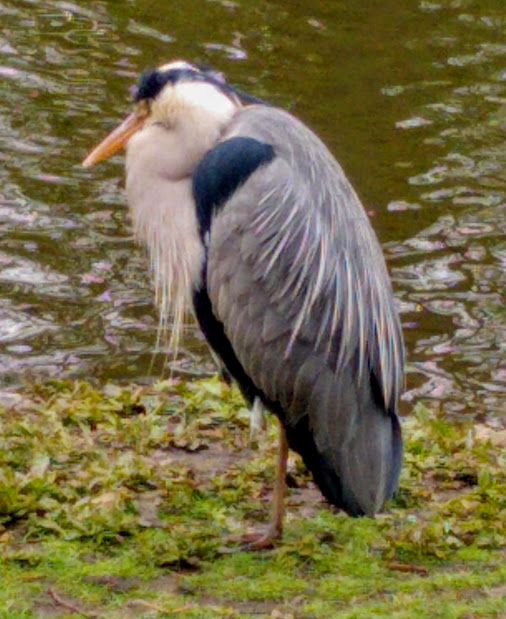
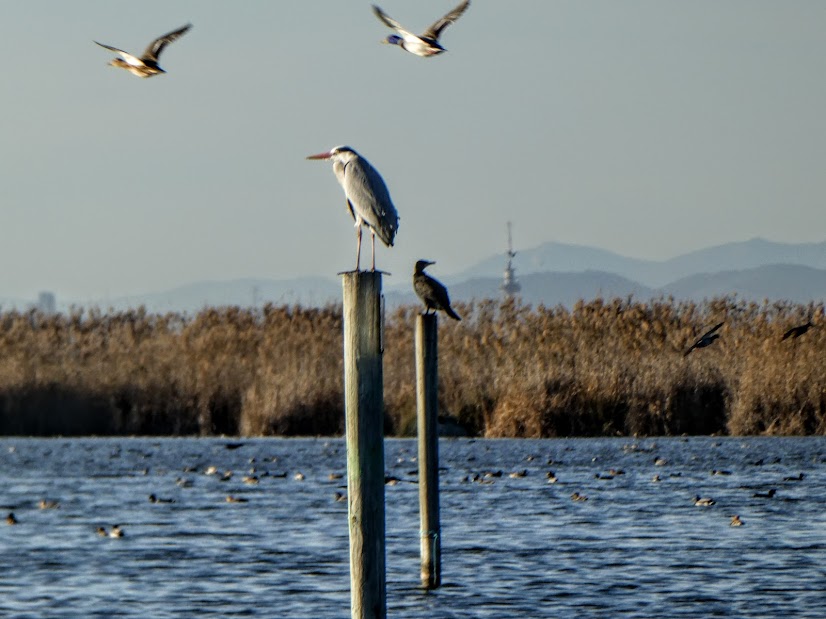
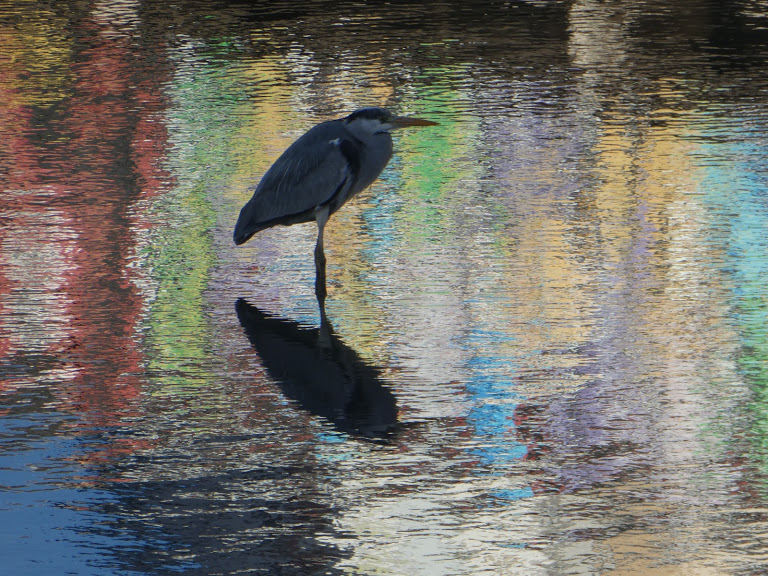
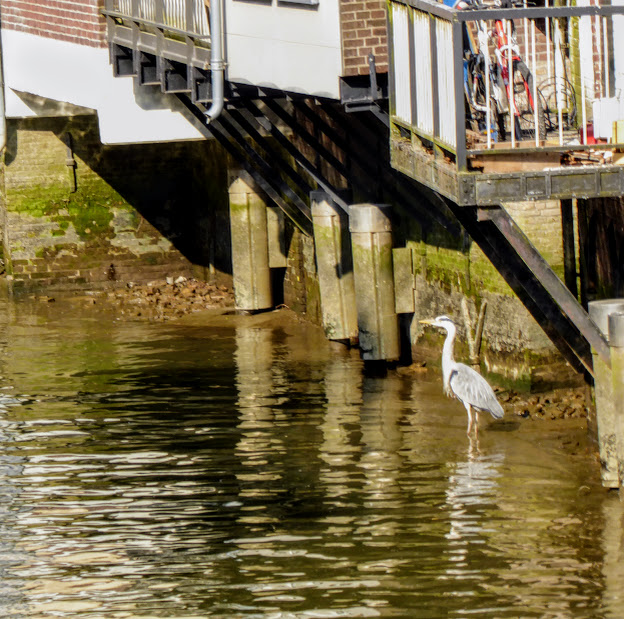
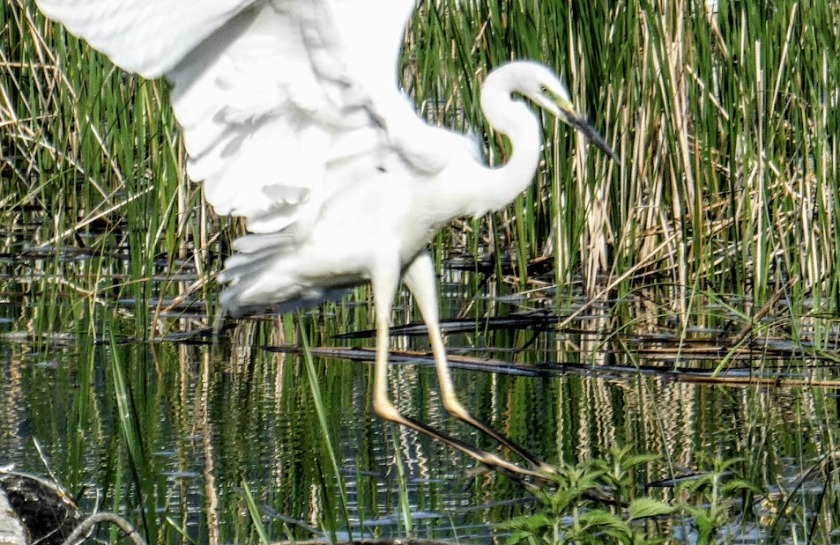
Over at Don’t hold your Breath, IJ Khanewala features an Indian Pond Heron as his Bird of the Week. I remarked to him that herons get everywhere. And here’s the proof. I can’t claim to show examples from anything like every continent, much less every country where you’ll find herons, but here are just a few.
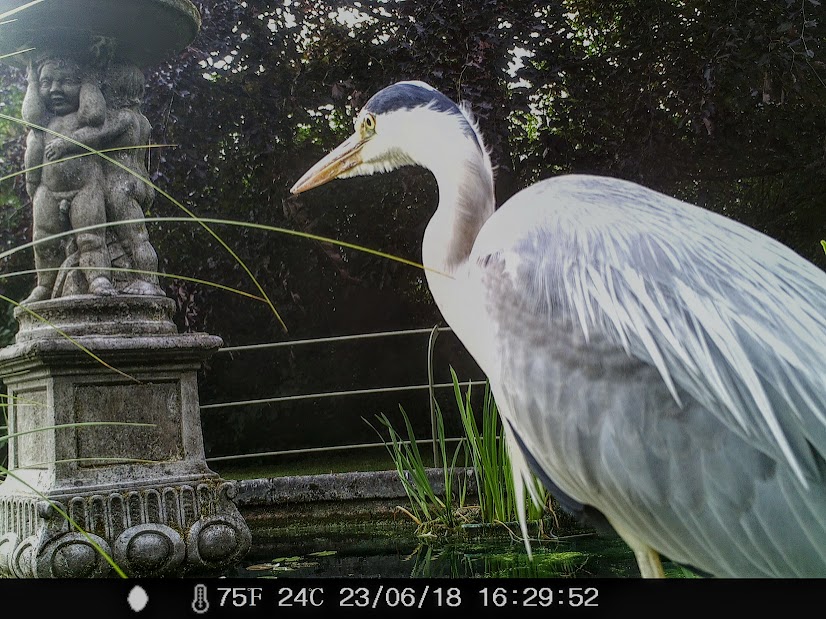
This one was after an easy catch in our landlord’s garden and noticed by our trail camera.
These are all from England: click on an image to find out where.
These two come from Spain, from l’Albufera near Valencia, and from Córdoba.
Dordrecht in the NetherlandsLake Prespa in Greece (but it’s an egret?)
And the featured image comes from Busan in South Korea.
Not exactly a world-wide survey. But I go a small way towards proving my point.
Here you are in Barcelona. You’ve strolled down Las Ramblas, and fought your way through the scrum in La Boqueria market. You’ve queued to get round La Sagrada Familia: and in fact visited every other creation you can think of by Antoni Gaudí . At my insistence, you’ve visited the Hospital de Sant Pau (here and here). You’ve got a bad case of Museum Foot, and you’re fed up with the crowds.
Perhaps I could make a few suggestions? One’s yet another museum, but it’s only been opened a for a short while and you may have the place almost to yourself. It’s the Museu de l’Art Prohibit. Here’s the story:
During the ARCO 2018 edition, collector Tatxo Benet acquired an artwork by artist Santiago Sierra, titled Presos Políticos en la España Contemporánea (Political Prisoners in Contemporary Spain). Shortly thereafter … the gallery that sold the piece removed it from its stand. The mere labelling of ‘political prisoners’ triggered its CENSORSHIP…
This incident laid the groundwork for conceiving a distinctive collection. Five years later, the accumulation of works subjected to CENSORSHIP, CANCELLATION or DIVERSE FORMS OF ATTACK has given rise to the Museu de l’Art Prohibit.
The Manifesto: Museu de l’Art Prohibit
Here, you’ll find work by the likes of Goya , Picasso, Banksy, as well as names less familiar to me like Amina Benbouchta and Charro Corrales. The works shown here have fallen foul of political, religious or sexual censors. It’s powerful stuff and I urge you to go and make your own mind up.
It’s not just repressive or totalitarian regimes that practice censorship. It’s not just the Catholic church or hardline Muslims who do so either. I was quite surprised to find that I too was practising self-censorship when deciding which images to share on a public platform. In the end, I went with these.
This MacDonald’s refuser really liked this one:
Yoshua Okon, 2014: Freedom Fries, Naturaleza Morta. A London gallery refused to accept this work in an exhibition of Mexican art, because of its ‘political nature’.
There was this:
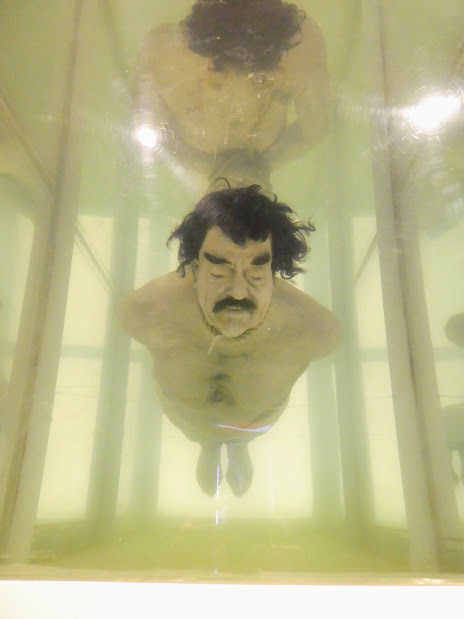
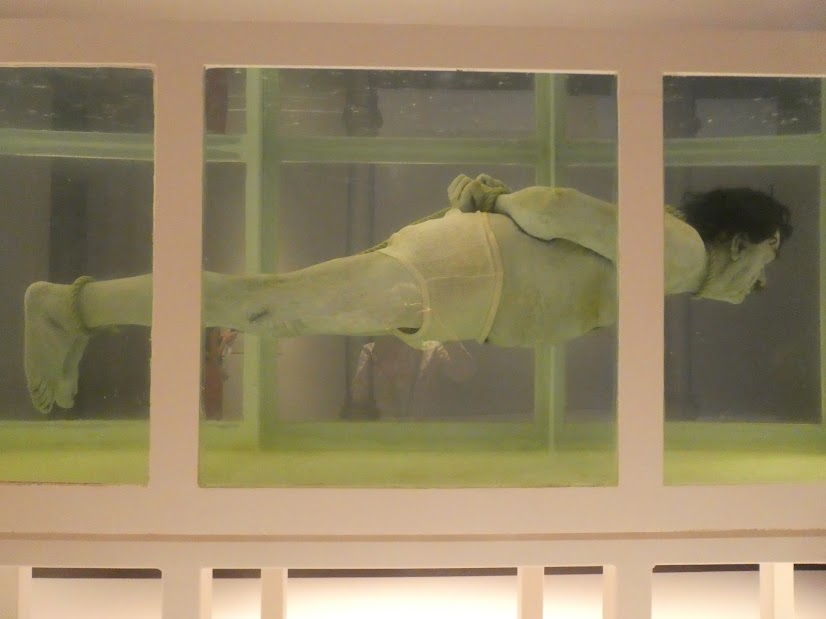
David Cerny 2006: Shark. Saddam Hussein in a shark tank 2005. A Belgian town demanded its removal as being offensive to Muslims and off-putting to tourists.
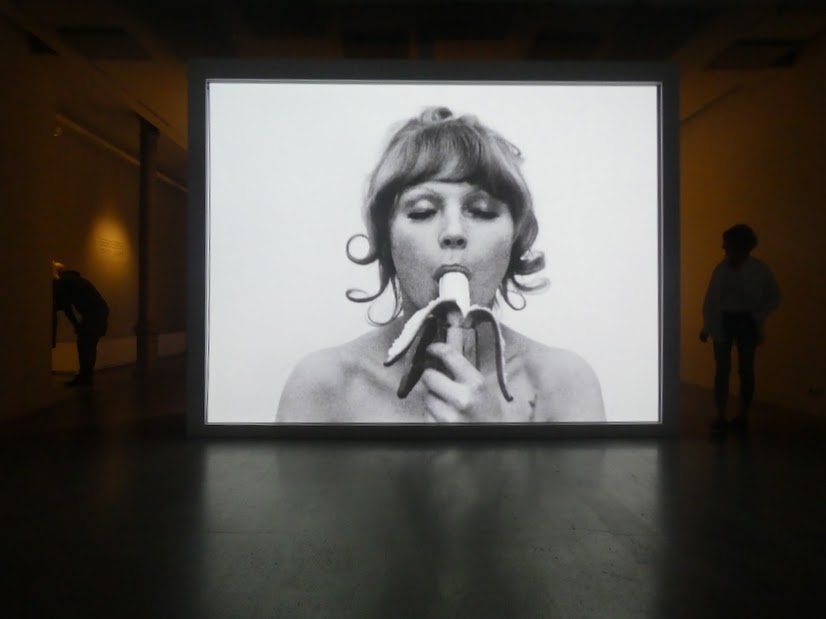
Natalia LL: Consumer Art 1972-75. Following Natalia’s first works in this series, Poles posted posters of themselves eating bananas as a protest against government censorship. One of a large series .
It’s housed in an elegant Modernist building, the Casa Garriga Nogués. These windows give you a taste of it.
These windows are the work of Antoni Rigalt, who was also the creator of the windows at the Palacio de la Música Catalana.
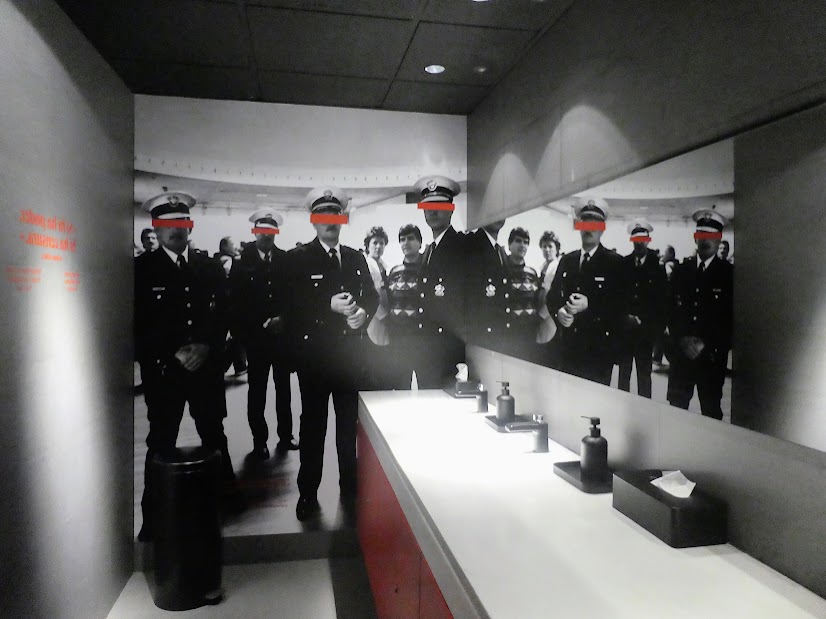
I found the whole thing thought-provoking and was glad to have spent a couple of hours there. I wondered whether I’d been wise to go to the women’s toilets though. The featured photo shows what confronted me as I walked in.
Next week we’ll stay in Barcelona, but I’ll take you somewhere restful and restorative: that’s so long as you don’t get lost. And you will…
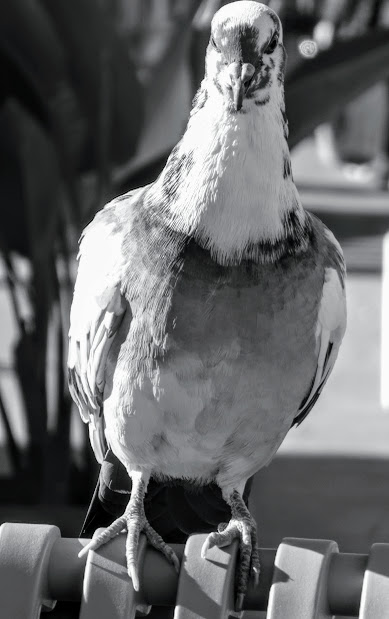
Pigeons of different varieties are apparently found on every continent on earth except Antarctica. I’m not surprised. I’ve yet to visit a country where I’ve seen none. This particular specimen was opportunistically hanging round the outside tables of a a café down at the port in Premià de Mar on Thursday. There were croissant crumbs to be had …
I had only one reason to visit Caldes d’Estrac. Not because back in the late 19th and early 20th centuries it was noted for its thermal baths. Those glory days are largely gone: and in any case I live near the spa town of Harrogate. I went because of its art gallery, Fundacio Palau Fabre, largely dedicated to Picasso. More about that another day.
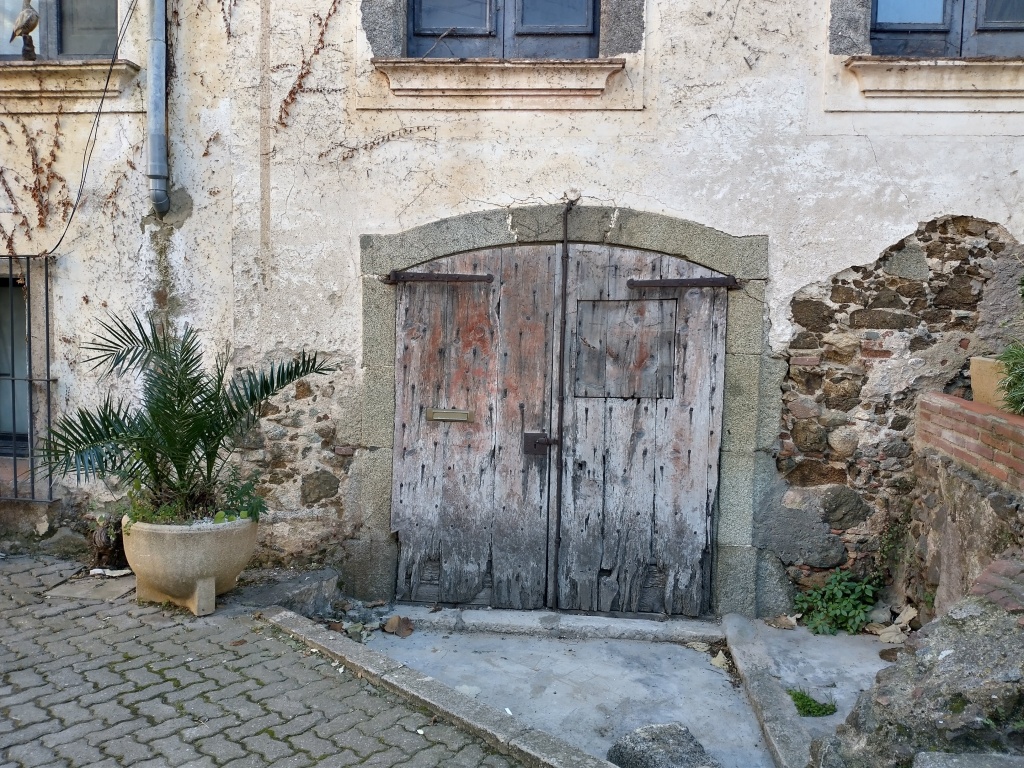
This is a small town with big hills. I toiled up, then skittered down slope after slope as I explored. But it had doors to pause by. Most of my shots are in my camera, and not to be seen till I go home. (Tomorrow. How shall I survive? It’s 14 whole degrees colder back in England) So here’s just one that took my fancy.
This is my first offering to Dan’s Thursday Doors for a very long time. But I thought this distressed door deserved its fifteen minutes of fame. Or 5 anyway.
La Sardana is the traditional dance of Catalonia. It’s been around in one way or another since the 1600s, but really came into its own in the 19th century. Back in the fascist era, Franco did his best to ban it, as he tried to ban all forms of regionalism, or worse, independence. He suppressed the distinct languages within Spain: Catalan, Basque, Galician, with the result that they have now sprung back stronger than before.
Anyway, la Sardana. It’s a circle dance, with men and women, neighbours, friends, strangers joining hands, moving slowly in a circle following the fairly complex foot moves of the leader. When the circle starts getting too big, a second circle starts, then a third ..
On Sunday morning, we took ourselves down into town to watch the mini-Sardana festival. We immediately noticed that I fitted the age-profile the best. Every single dancer was over 60. Anaïs’ friend’s granny immediately wanted to put that right, and appointed herself Anaïs’ personal Dance Mistress. With not much success.
A few younger citizens took themselves off to practice in a quiet corner …
And after a slow start, the event got going. Not having a single dance gene in my body, I wasn’t tempted to get involved, despite being The Right Age. But it’s rather sad that this seems to be the general view among the young. Would Franco get his wish after all, and see the Sardana vanish a hundred years after he tried to banish it?


















 From Pyrenees to Pennines
You must be logged in to post a comment.