School Dinners: a Labour of Love

I was casting around wondering what to post for this week’s Lens-Artists Challenge, Labour of Love.  And I remembered a wonderful experience I had when I lived in France, when I was part of a small team invited to cook an English school dinner for a local primary school.  Truly, the experience was a Labour of Love, as it was for the charismatic school cook, each and every day. My memories of this special day are entirely positive and happy.

September 26th 2012

‘School dinners, school dinners….


‘School dinners, school dinners.

Iron beans, iron beans.

Sloppy semolina, sloppy semolina –

I feel sick, get a bowl quick.’*

Do you remember this cheery ditty from your days eating school dinners?  Only if you’re British, I suppose.  And most right-thinking French men women and children would be quite prepared to believe that all English food is just like that.

Not the mayor of Villeneuve d’Olmes, where Découverte de Terres Lointaines has taken its Yorkshire exhibition this week.  Back at the planning stage, he’d told us about their school caterer, M. Feliu, who uses almost entirely organic or local ingredients, and who likes to introduce the children to the cooking of other countries every time the excuse arises.

We met M. Feliu at La Freychède.  We worked together to produce a menu (Cheap. Tempting to the young French palate. Three courses that work with the kitchen facilities to hand.  Conforming to nutritional standards).
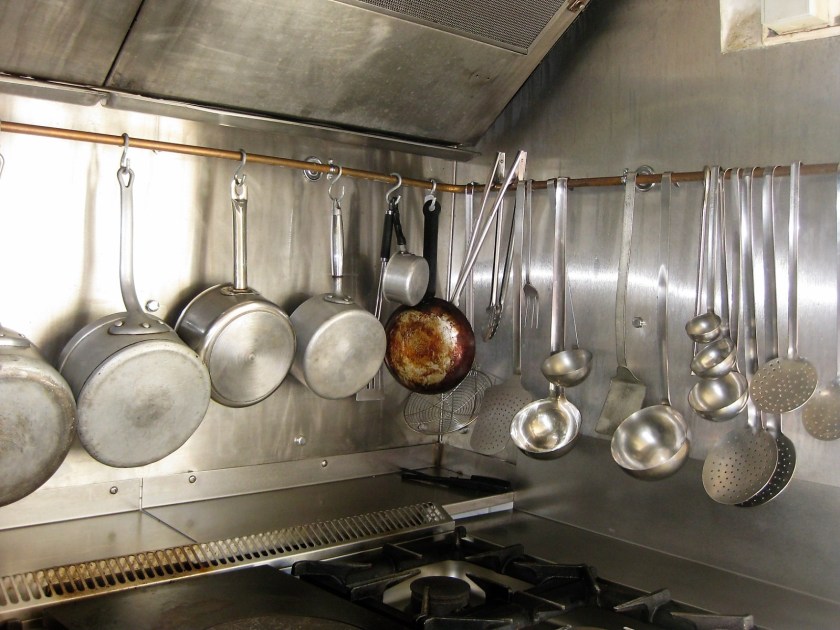
The school kitchen.

This is what we came up with:

Crudités with beetroot chutney 

Macaroni cheese with green salad

Blackberry and apple Betty with custard.

Yesterday was the day.  I turned up at 10.00 with my English friend and colleague Susie to find the work almost done.  All we had left was to churn out batons of carrot, black radish and cucumber for the first course, which was not, let’s face it, Awfully British.  But it had to fit in with other considerations as above.

11.00: The prepared and cooked food was heaved into insulated containers, and transported by van to one of the local schools.

11.30. Ditto with van number 2.  This batch was sent off to Villeneuve d’Olmes, with me following.

12.00. Children arrived at the canteen.  One of the helpers, Pascale, spoke good English.  ‘What’s your name?’ she’d say to each child in English.  When she had her reply, they could go in, and sit down at one of the circular tables, tinies in one room, and juniors in another.  I joined a table of lively 7 year olds.

One of the staff told me the rules that the children expect to follow:

  • Take turns to serve the dishes of food to everyone at table.
  • Wait till everyone’s served before beginning to eat.
  • Try everything.
  • You can have the portion size you choose.  Once it’s on your plate though, you have to eat it.

Everyone accepts this and we all sat together, eating and chatting.  The children chomped their way through all the crudités, they even enjoyed the chutney, whose sweet and sour taste is not an automatic choice round here.

Once cleared away, bread appeared on the table – this is France after all.

Two more children served the macaroni cheese and the salad.  Most of us came back for seconds.

We sang ‘Happy Birthday’ – in English – to a birthday girl.

I gave an impromptu talk on the food on offer.

The blackberry and apple Betty was served.  Yum! How could it fail?  Gently cooked fruit with a crunchy crust of soft breadcrumbs crisped in golden syrup and butter, with obligatory custard, of course.

Then the children cleared their tables, stacking dirty plates and glasses neatly for washing up, before going off to play.

I was so impressed.  The children here learn that the midday meal is so much more than a pit-stop.  The expectations, reinforced daily, are that this is a moment to spend with friends, a time to share, to think about the needs of others, and to appreciate the food on offer.  The occasion lasted well over an hour.

The view from the kitchen door.
Another view from Villeneuve.

* To the tune of Frère Jacques

Lens-Artists Photo Challenge #113: A Labour of Love

Red Hot Chilli Peppers

It’s got to the point where we could almost put chilli on our breakfast cereal. Jalapeño, Scotch bonnet, bird’s eye, habanero, chipotle, cayenne: all have become everyday objects in our home.

Our love affair with the chilli began in France. This is odd, because the French, on the whole, do not do spicy foods. ‘Are you trying to kill me?’ Henri howled, clutching his throat, when we put before him one day the mildest of all mild kormas.

But on a smallholding near us, a chilli enthusiast, Jean-Phillipe Turpin was busy. He grew mild chillies, medium-hot chillies, and chillies so hot they were off the Scoville scale. We came to call him ‘Mr. Chilli’.

Mr. Chilli at Mirepoix market.

He came to sell his wares every week in summer and autumn at two local markets. Fresh chillies, strings of dried chillies, powdered chillies, chilli plants. We became regular customers, as did other English, from far and wide. The French? Not so much.

Back in England, we still buy different chillies, every week. The dozens of varieties purveyed by Mr. Chilli rarely come our way. The ones we do have are everyday objects in our house. As are jars of spicy pastes and potions.

Lens-Artists Photo Challenge #111: Everyday Objects

A Foodie Childhood?

When I was a small girl in London food was a big part of my life.  I don’t mean eating, but shopping for food and cooking it – I’d made my first Christmas cake when I was four after all.  It’s possible I had some help.  And I certainly licked the bowl.

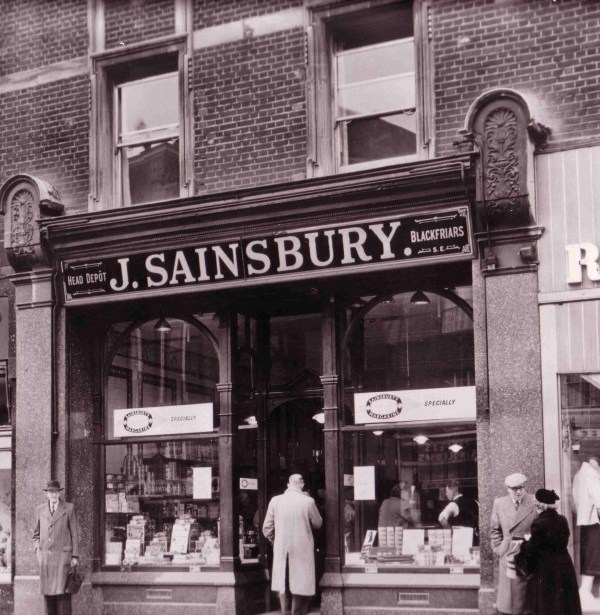
This Sainsbury in 1950’s Streatham is a close cousin of the one we visited in Victoria (sainsburyarchive.org.uk)

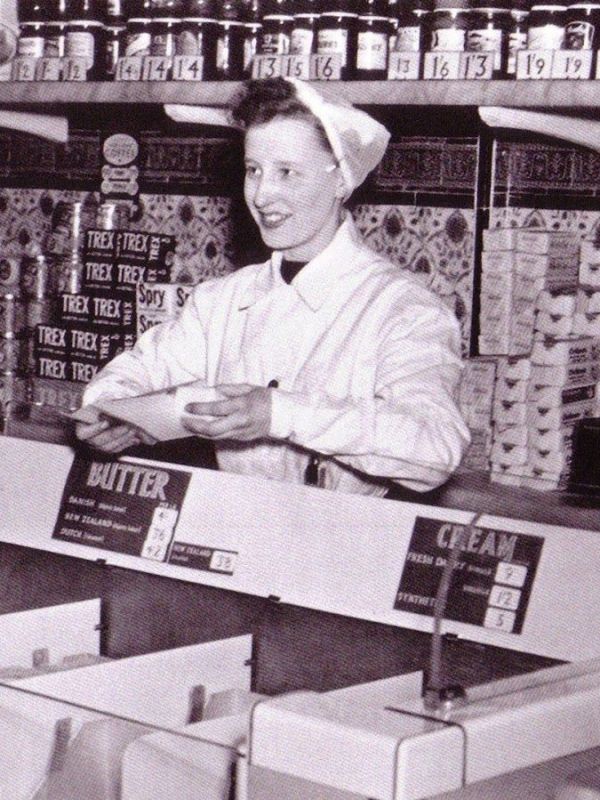
Because my mother taught all week, weekends meant a Saturday morning trip to Sainsbury’s in Victoria. I would watch as the shop girls reduced large yellow slabs of butter to half pound blocks using large wooden butter paddles – look, we still have some domestic-sized ones –

while others weighed sugar into dark blue paper bags. I looked on impressed as the man on the bacon counter turned the whining, shining wheel of his slicing machine – ‘Thick or thin madam?’.   After she’d bought all we needed, my mother joined the queue for the cashier’s window and fumbled in her purse to find the right change.

This is the kind of sight that greeted us as we shopped for groceries – counter service only (sainsburyarchive.org.uk)

It was the greengrocer’s stall on the market next.  I liked collecting the decorated tissue squares that oranges and tangerines were wrapped in.

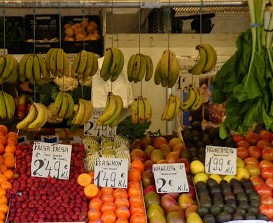
This is a market stall in Cádiz 2020, not London in 1950-something. But you get the idea.

 I liked helping to choose the weekly vegetables, and learnt when to expect the different apples coming into season.  Discoveries came first, even before the autumn term started. Then James Grieve, Worcester Pearmain, Laxtons (Supreme and Superb), and round about Bonfire Night, the brown-skinned Russett.  Oranges and tangerines were for Christmas time.  I always hoped that there might be enough money left to buy a seasonal treat – perhaps a single peach.

Best of all  was the delicatessen.  This shop wasn’t at all the preserve of the moneyed middle classes, reviving holiday memories by buying exotic food stuffs.  Instead it was a refuge for the stateless, rather rudderless foreign populations of shabby 1950s Britain.  There were huge numbers of Poles who’d served out the war in the UK  –  my father was one; Italian ex POWs;  Hungarian Jews –  all the flotsam of Europe.

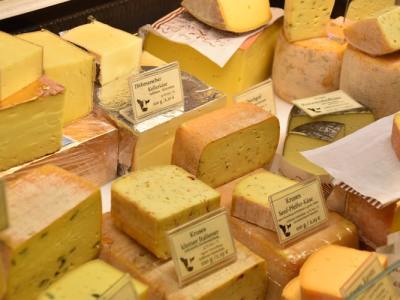
A cheese counter, probably in present-day Germany. (Waldemar Brandt Unsplash)

Here we’d buy Polish boiling ring, cooked simply in water and eaten with buttery mashed potatoes and sauerkraut or cabbage. I loved the wizened dried sticks of kabanos, a thin sausage that my school friends assured me was made from donkey meat.  There was Polish rye bread, speckled with caraway.  It was at the delicatessen that my mother learnt about pasta. We started eating spaghetti bolognese in about 1954, long before it became a British standard.  We bought Samsoe from Denmark which makes the best toasted cheese in the whole world. My school friends found our food odd.  That was alright.  I found theirs odd too.

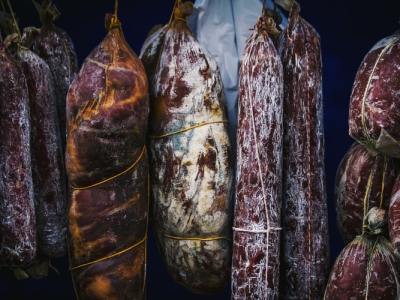
A selection of sausage, quite possibly from Argentina (Edi Libedinski, Unsplash)

Very occasionally on Saturday afternoon  we would catch the tube all the way to Trafalgar Square and walk into Soho and the Italian store there.  Those impossibly long packets of spaghetti!  Those solid piles of Italian sausage:  pink fat-studded mortadella; Neapolitan salamis the colour of dried blood!  A great wheel of parmesan from which some cheery Italian with lots of smiles but little English would hack crumbly fragrant slices with a seriously stout and heavy knife! Aromatic roasted coffee beans clattered into special scales used for nothing but weighing coffee! And Italian voices, laughing, chatting, shouting and thoroughly at home. I don’t think we ever bought a great deal here.  We were there for a spot of sensory overload, and a few small treats.

Impossibly exotic in the 1950s: pasta neither hoop-shaped nor in a tin with tomato gloop (Markus Spiske, Unsplash)

Many of my childhood memories centre around preparing the food that we bought.  But that’s a story for another day.

Top Scran

I had a friend once, boarding school educated (I thinks that’s relevant) who used to describe a good meal as ‘top scran’.

Definition from Dictionary.com

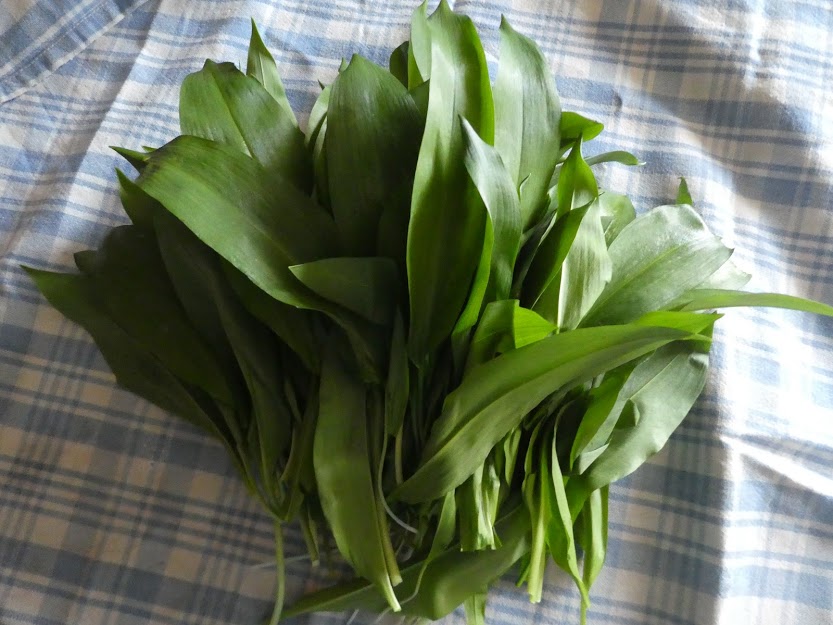
This is top scran.  It tastes good, and it’s mainly free. I foraged this wild garlic found alongside yesterday’s Top Dog.

Here’s a recipe: Simi’s Wild Garlic and Potato Curry.

An entry for April Squares #Top


A Nice Cup of Tea … or Coffee

Oh, I’m so glad you’re here – welcome to my little party.  Look, I’ve made coffee already, but if you’d prefer tea, I’ll pop the kettle on.  Darjeeling?  Ceylon?  Do you prefer milk or lemon?

I was hoping you’d come along, so I’ve baked a cake.  I thought carrot cake would kid us into believing we were having one of our five a day, and this recipe from the Guardian looked good .  But I’ve got biscuits too: I made these with teff flour in case anyone’s gluten-free, but I love the slightly malty taste.

I hope Su will come along.  These virtual tea parties were her idea.  Is my carrot cake like yours, Su? And Jo.  Jo always appreciates a slice of cake, though usually at the end of one of her Monday Walks.  Which aren’t happening anywhere just now. Kiki wangled an early invitation, so … come on in! We don’t have to practice social isolation on line.  Let’s have a good time!


Inspired by Zimmerbitch’s Invitation to Tea.

And – oh look!  I have a six word post title.  Do you think I could persuade Debbie to come along for Six Word Saturday?

Pay-As-You-Feel, Eat a Good Meal

Let’s begin at the beginning.  A couple of years ago, Alison and her husband were in Saltaire, looking for a late lunch.  They found it at the Saltaire Canteen, and soon realised it was no ordinary café.  Here, the ingredients used were all past their sell-by dates, and had been intercepted from landfill.  They’d been transformed into appetising meals, mainly by volunteers, and customers were encouraged to pay what they thought was fair, or what they could afford.

‘We could do that in Ripon’, thought Alison.

Actually, that’s not the beginning of the story.  We need to go back to December 2013, when The Real Junk Food Project opened its doors in Armley, Leeds,  as a café offering meals made from food destined for the tip.  People ‘paid’ for their meals with money, by offering skills or even food.

It was the brainchild of Adam Smith, who had a Road to Damascus moment on a pig farm in Australia, where the pigs were eating discarded food he’d have been happy to put on his plate.  Back in England,  The Real Junk Food Project was born, firstly as a café: then as an ever-expanding movement helping others develop their own models; as a Sharehouse sourcing and distributing waste food for those cafes; pay-as-you-feel supermarkets of discarded food; Freegan boxes of intercepted food designed for families; for distribution in a school setting (breakfast clubs, or for families in need for instance); even outside catering.  I’d like to get married all over again for the pleasure of having a Junk Food catering team deliver the party!  You can see why Alison needed to talk to Adam.

She found a co-conspirator in her friend Janet, and between them they located premises at Community House, equipment, cookware, crockery, cutlery, napkins… everything you need to feed the masses.  I’ve dismissed that task in a sentence, but I don’t underestimate the achievement.  They found volunteers too.  I wasn’t in at the beginning, but I’m part of the team now, and I wouldn’t miss my stints for anything.

A year ago, the café opened.  It’s on Thursdays, Ripon’s Market Day.  People start to drop in from 11 o’clock for a coffee, maybe a cake.  From 11.30 they’re eager for lunch.  Seating is at refectory-style tables, so whether you come with a friend, family, or on your own, you’ll be sitting with others and soon be talking to those around you.

Look!  Here are a few sample menus.

The cooks for the day will have been to Wetherby the day before to collect supplies, considered the random collection of ingredients and devised and cooked a varied and tasty menu to suit everyone: there are always vegetarian and vegan choices.  There’s nearly always a soup or two, and good old fashioned nursery puddings are hugely in demand.

The volunteers have been in since 10 o’clock, setting tables, chalking up the menu, getting everything ready.  At 11.30, they become waitresses and waiters: taking orders, collecting and serving the food to the diners, taking turns to wash up, and finding time to chat and be welcoming.  Newcomers become regulars: regulars become friends. We have office workers; young families; elderly people who welcome a hot meal in friendly company; visitors to the city …

At the end, people put what they feel in a box by the door.  The point is to save food from landfill, not to make money, so those who can’t pay don’t need to feel embarrassed.  Some offer services instead – there were some electricians in one week ….  There are costs of course – notably the rent: so far donations have kept us in the clear.  Any profits are re-invested in improved services.

Then, for the volunteers, it’s time to wash up, tidy up, put things away, swab the kitchen floor, pack away the tables and chairs, vacuum … and finally go home for a rest and a nice cup of tea.

Wholemeal has become a real asset to Ripon community life. And look at the food that’s been intercepted from landfill!  Win-win.  Thank you, Alison.  Thank you, Janet, thank you Adam … and everyone else who’s made it possible.

Radio York transmitted its whole morning show from Wholemeal last Thursday.  Anyone who’s super-interested can listen here, on BBC Sounds.

Light-headed? Blame the Gin….

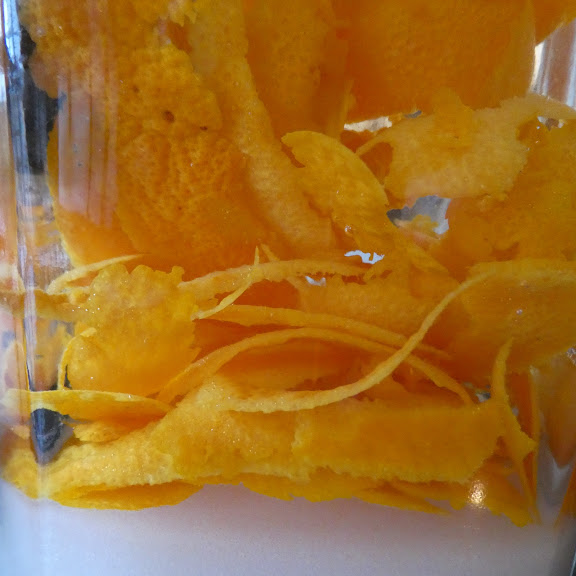
… because it’s Seville orange season, and time to make next Christmas’s supply of Seville Orange Gin, that perfect winter warmer after a day walking in the bright frosty air.

January Squares, # January Light

PS.  Several of you have asked for a recipe.  There are any number on the internet, but they are all similar to this one from The Cottage Smallholder.  I saw a different recipe that suggested cardamom, so I have used this instead of cloves.  And I only used 150 g. sugar.  Also.  Three years?  Not a chance.  We’ll be drinking ours at Christmas.

Nostalgia is a Freshly-Baked Loaf

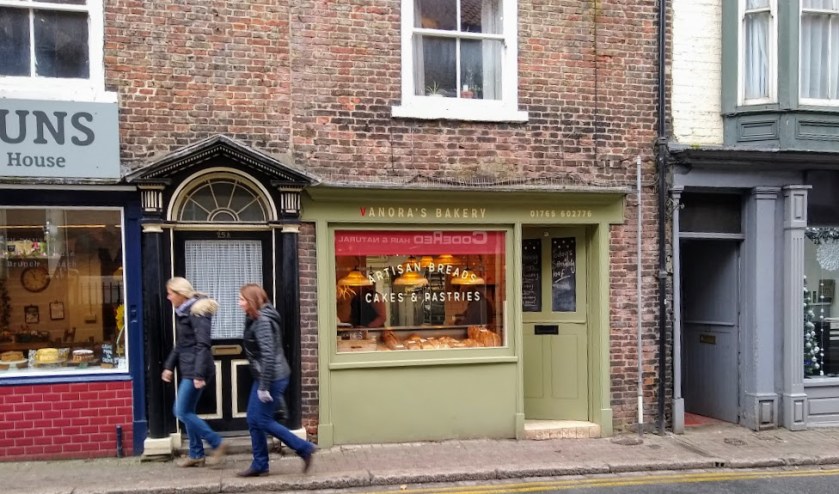
The queue’s gone down outside Vanora’s now. You could pop in for a loaf.

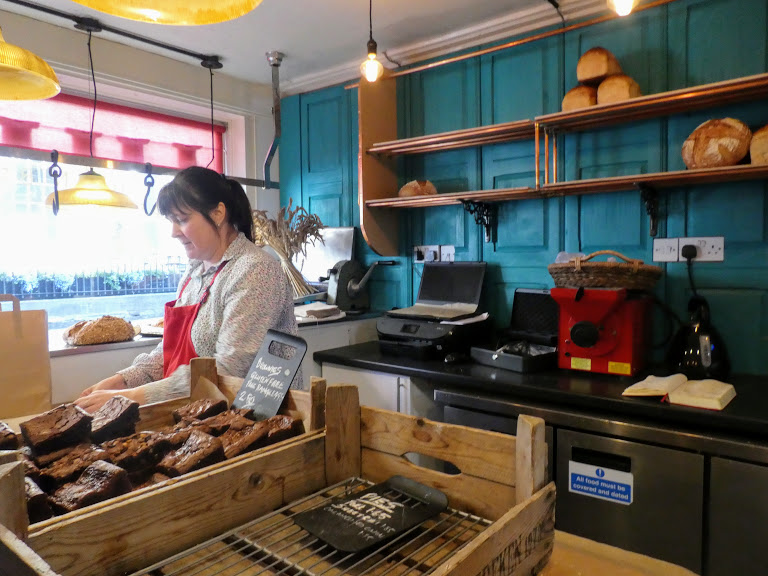
A couple of months ago, a new baker’s opened in Ripon.  Goodness, it was welcome.  A baker’s shop as a baker’s shop ought to be.

Vanora and Andrew get up in the small hours, when all the world’s abed, to fashion and bake their loaves.  The great pails of dough will already by then have been slowly proving and rising over a period of hours.  This is sourdough, fermented from  the natural yeasts present in the air we breathe, rather than using the commercially-available yeast usual in British breadmaking.

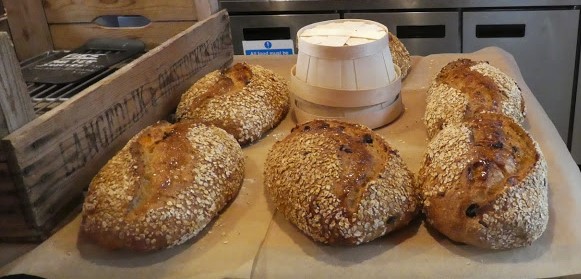
And oh – the bread it produces!  A wonderfully chewy crust, and a loaf with a slightly sour, characterful taste.  Riponians have taken this extra-special bread to their hearts, and ahead of opening time (only Thursdays, Fridays and Saturdays at present) an eager queue forms outside the door.

How this reminds me of our years in France.  The first job of our day was to queue outside the baker’s for our morning bread, croissants or pains au chocolat.  It was an unhurried task.  We’d all stand cheerfully in line, catching up with neighbourhood gossip, swapping recipes: generally having a sociable time.  And so it is outside Vanora’s.  We meet old friends, make new ones, and once inside, are greeted by name by Vanora and Andrew as we take the time to chat to them too.  This, we all agree, is shopping as it ought to be.  Oh, and on Saturdays, Vanora makes croissants too.  Don’t tell anyone in France, but …. these are the best croissants we’ve ever tasted. You could stock up on brownies, focaccia, sausage rolls and pork pies too.  These last two aren’t our thing, but I’m told they’re far and way the best in town. (Please note:  I am not being paid by V&A for this shameless piece of advertising.)

Vanora serves a customer….
… perhaps with one of these loaves.

This isn’t the only reason for my feelings of nostalgia though. Brought up in London as an Anglo-Polish girl, east-European-style sourdough loaves were as much a part of my life as baps, cottage loaves and wholemeal tins.  Good memories.

This is an entry for Lens-Artists Challenge #75 – Nostalgic, despite the fact that I was limited to using my non-smart-smartphone to take my snapshots.


Cabbage glut? Be Korean – make kimchi!

Kimchi jars outside a house in Seoul.

If Korean, serve at every meal.

Fermented cabbage: sour, pungent and addictive.

To prepare … set aside whole day …

Ever since our holiday in Korea, I’ve wanted to make kimchi.  Every house had its earthenware kimchi jar, or jars, with various kinds of pickled vegetables fermenting happily away within.

This week I had a cabbage mountain, and two days ago, had the perfect excuse to get started, even though, strictly, it wasn’t the right sort of cabbage.  I watched this YouTube video by Maangchi, who’s the Korean cook to watch if you want to acquire a bit of know-how.  You can watch it too, but if you don’t feel like it, here’s my summary underneath.

Between soaking chopped cabbage, salting it for long hours; cooking and cooling a sauce base; preparing and processing onions, garlic, ginger; chopping piles of vegetables finely and adding Korean chilli flakes; mixing the lot together; packing it into an airtight container – you won’t be doing much else between breakfast and a very late lunch.

Now … now it’s beginning to ferment.  Sour already, it’ll become more pungent as the days and weeks go by.  Try a bit? If it’s your first time you may not like it.  But you may come to love it: fermented, sour, spicy, soft yet crunchy, it’s a meal in its own right or a fine addition to a simple plate of rice or noodles.  Just as well I made a lot.  It was a bit of a palaver.

Making kimchi takes a long time.

It’s worth it – don’t you think?

An offering for Six Word Saturday.


(Almost) all is safely gathered in…

Regular readers will know I’ve got into the habit, once a month or so, of revisiting an old post. And I’m reminded of what October used to mean in France. Blackberrying’s over now in England (the devil spits on the fruit as soon as October kicks in, didn’t you know?), but my inner-Frenchwoman has been squirreling away scavenged apples, pears, mushrooms – even a few unimpressive walnuts. It all reminds me of France, where foraging is a way of life…

October 25th, 2012

‘All is safely gathered in, ere the winter storms begin’ *

Autumn colours mean it’s harvest time for foragers.

I’ve written before about the ‘au cas où’ bag: the carrier you always have with you on a walk, ‘just in case’ something tasty turns up and demands to be taken home and eaten.

Well, at this time of year, it isn’t really a case of ‘au cas où’ .  You’re bound to find something.  A fortnight ago, for instance, Mal and I went on a country stroll from Lieurac to Neylis.  We had with us a rucksack and two large bags, and we came home with just under 5 kilos of walnuts, scavenged from beneath the walnut trees along the path.  A walk through the hamlet of Bourlat just above Laroque produced a tidy haul of chestnuts too.

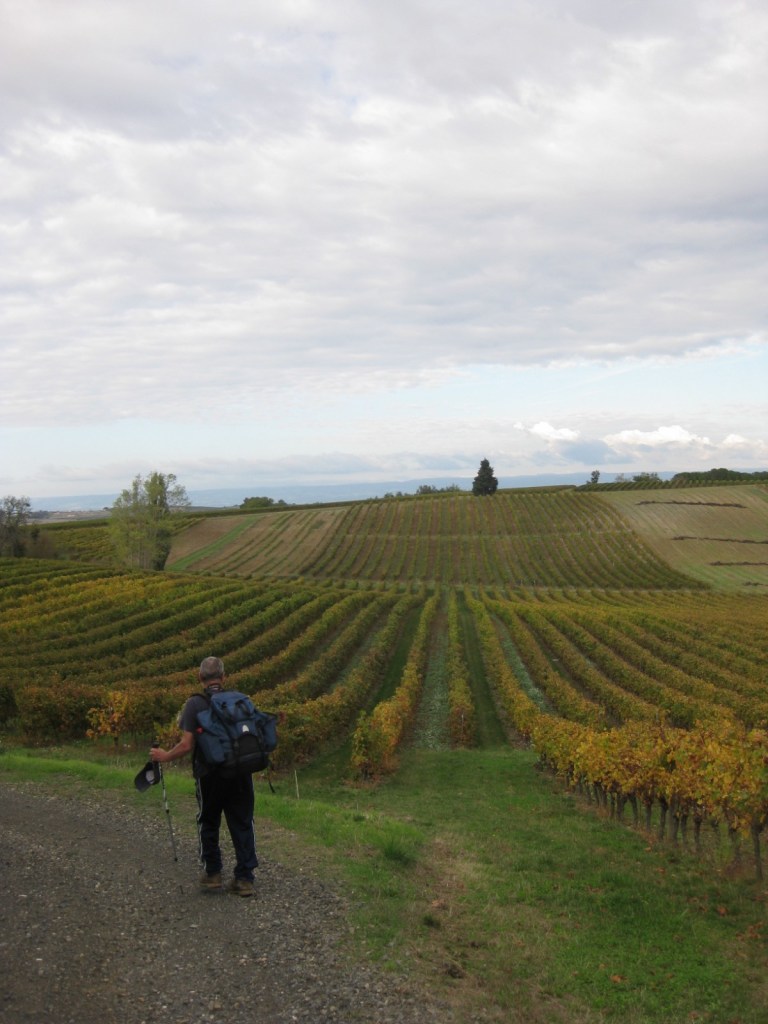
Yesterday, we Laroque walkers were among the vineyards of Belvèze-du-Razès.  The grapes had all been harvested in the weeks before, but luckily for us, some bunches remained on the endless rows of vines which lined the paths we walked along.  We felt no guilt as we gorged on this fruit all through the morning.  The grapes had either been missed at harvest-time, or hadn’t been sufficiently ripe.  They were unwanted – but not by us.

The walnuts we’re used to in the Ariège are replaced by almonds over in the Aude.  You have to be careful: non-grafted trees produce bitter almonds, not the sweet ones we wanted to find.  But most of us returned with a fine haul to inspect later.  Some of us found field mushrooms too.

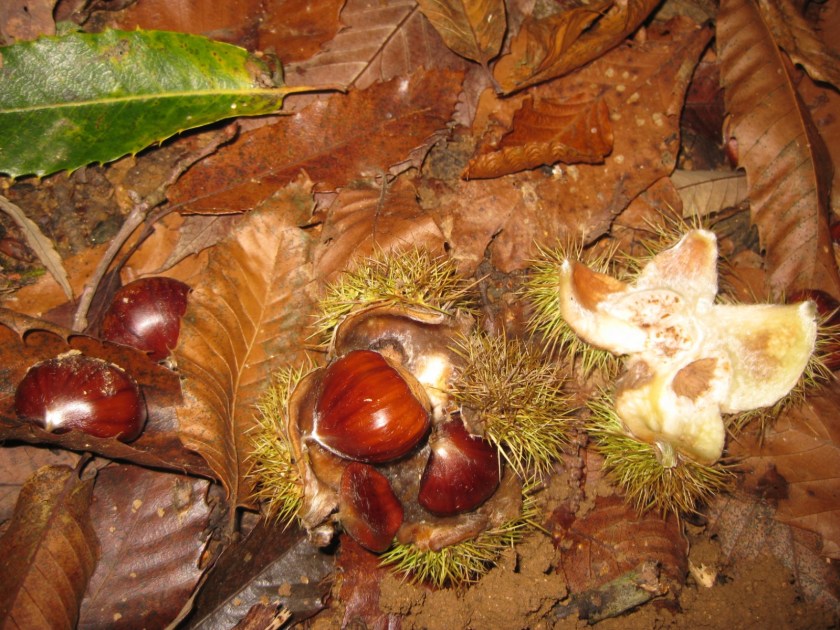
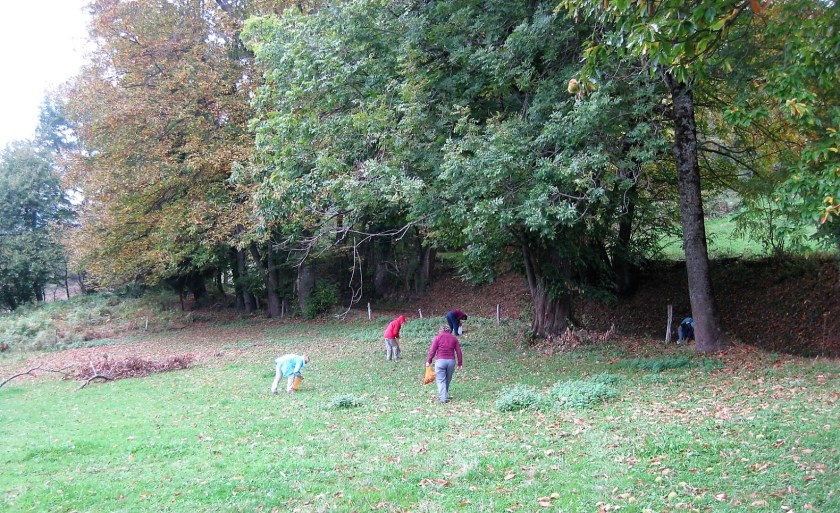
Today, the destination of the Thursday walking group was the gently rising forested and pastoral country outside Foix known as la Barguillère.  It’s also known locally as an area richly provided with chestnut trees.  Any wild boar with any sense really ought to arrange to spend the autumn there, snuffling and truffling for the rich pickings.  We walked for 9 km or so, trying to resist the temptation to stop and gather under every tree we saw.  The ground beneath our feet felt nubbly and uneven as we trod our way over thousands of chestnuts, and the trees above threw further fruits down at us, popping and exploding as their prickly casings burst on the downward journey.

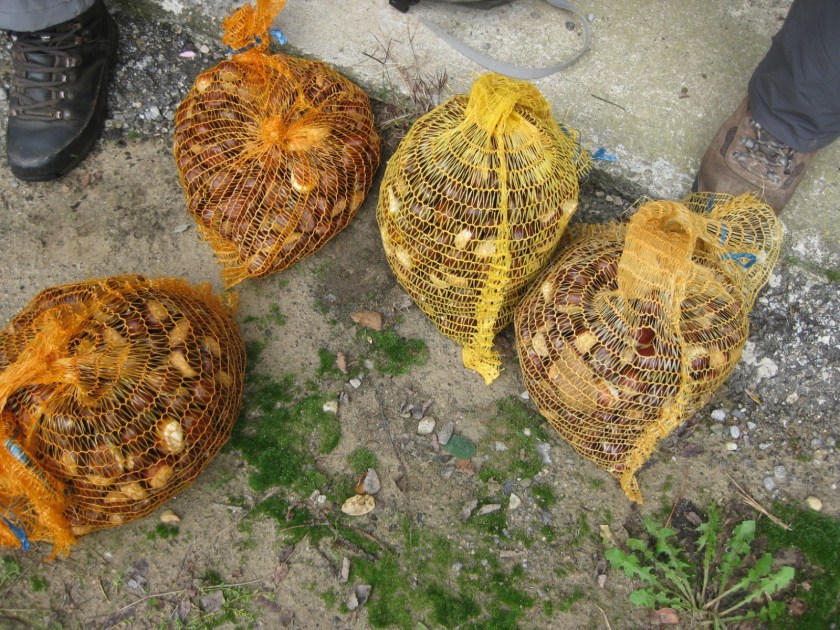
As our hike drew to an end, so did our supply of will-power.  We took our bags from our rucksacks and got stuck in.  So plentiful are the chestnuts here that you can be as picky as you like.  Only the very largest and choicest specimens needed to make it through our rigorous quality control.  I was restrained.  I gathered a mere 4 kilos.  Jacqueline and Martine probably each collected 3 times as much.  Some we’ll use, some we’ll give to lucky friends.

Serious business, this scavenging.

Now I’d better settle myself down with a dish of roasted chestnuts at my side, and browse through my collections of recipes to find uses for all this ‘Food for Free’.

Jacqueline, Martine and Maguy’s chestnut haul.

* Two lines from an English hymn sung at Harvest Festival season: Come, ye thankful people, come’

A contribution to Six Word Saturday, and Jo’s Monday Walk: it’s more than one walk Jo.  Extra value?  Or disqualified?