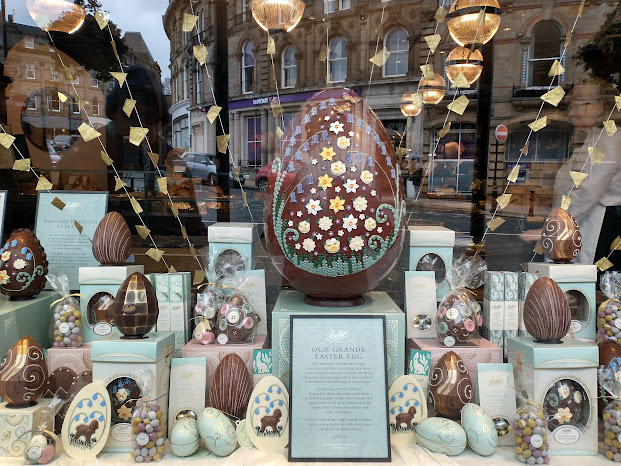
Almost anyone who visits Harrogate considers that taking morning coffee or afternoon tea at Betty’s is part of the deal. This iconic part of the town has been here since 1919, and has the reputation of being thoroughly civilised, with the highest standards. Whatever you choose to eat or drink will be delicious, and elegantly served. But it’ll cost you.
Something else that could cost you is the egg that forms a traditional part of its display every Easter. It weighs in at over 5 kg. but could be yours for £375. You can read all about it here.
On the first Saturday of every month, a book is chosen as a starting point and linked to six other books to form a chain. Readers and bloggers are invited to join in by creating their own ‘chain’ leading from the selected book.
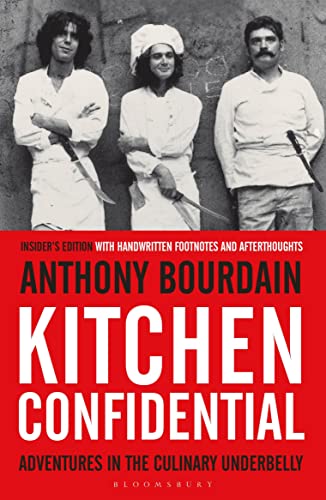
I read Anthony Bourdain‘s Kitchen Confidential quite a long time ago, and seem to remember not liking it – or indeed him – very much. But it’s given me my chain for the month. You’re not getting a single novel from me this time, not one. Simply a run-down of a few cookery books.
To ease you in gently, I will start with a book that – though full of recipes – is also meant to be read from cover to cover; the 1950s classic by Patience Gray: Honey from a Weed. I’ve only just got it out of the library, so I can’t really comment on it. The inside cover says that it’s a ‘passionate autobiographical cookery book; Mediterranean through and through, and as compelling as a first class novel.‘
Which leads me to one of the first cookery books I owned, one which was my cookery bible when I was a student in the late 60s and early 70s: Elizabeth David‘s A book of Mediterranean food. She wrote very readably and enticingly about ingredients which I was able to source on a student budget in multi-cultural Manchester, and cemented the love of cooking fostered by my mother when I was growing up. All the same, my only memory from that time of using one of her recipes was when I cooked an indifferent moussaka for a lecturer whom my then boyfriend and I were trying to impress. I’ve never really liked moussaka since.
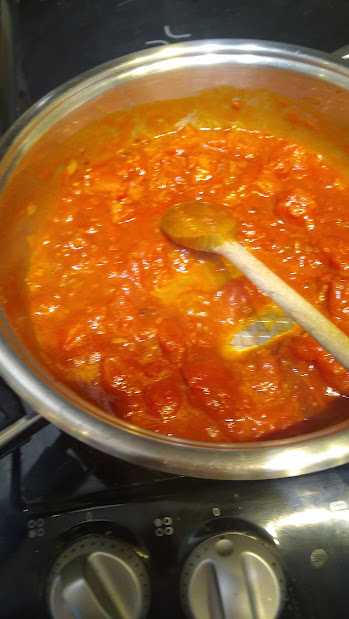
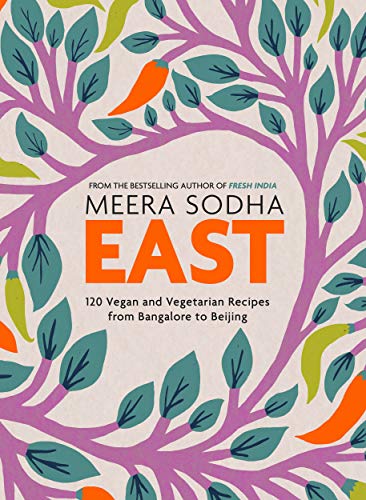
Now I have different cooking bibles. Unsurprisingly, some are written by the cooks who contribute to the Guardian’s food supplement on Saturdays. I went through a phase of perpetually using Meera Sodha‘s East: ‘vegan and vegetarian recipes from Bangalore to Beijing‘. Try this one: Leek and Chard Martabak.
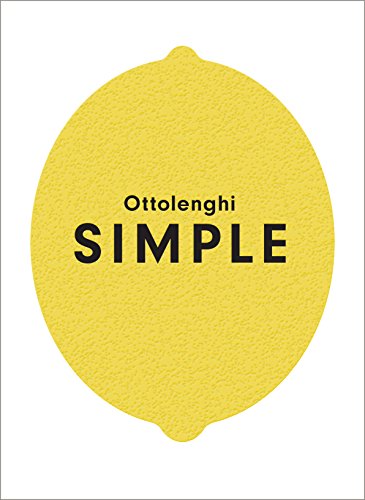
Yotam Ottolenghi came my way via the Guardian: Rick Stein via his television series. I recently found his India in a charity shop, and it seduced me because of its glorious pictures of food and street life . The recipes are pretty good too. How about Aloo dum: potato and pea curry with tomato and coriander?
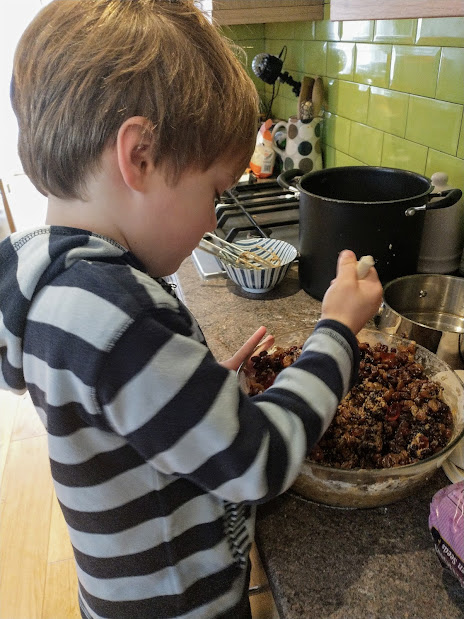
But for my last book, I’ll choose another cookery book which can be read from cover to cover. And I’ll make it seasonal: Nigel Slater‘s The Christmas Chronicles. Nigel Slater is my sort of cook, in that he doesn’t go in for careful measuring. If you haven’t got this, use that. He’s keen to tell you what he doesn’t bother with. And licking the bowl out is part of the joy. Recipes here are interspersed with stories of his Christmases, and his greedily-anticipated preparations for them. I hope you made your Christmas cake at the end of October. But if you didn’t, here’s his.
So that’s my chain. one in which most of the books I’ve chosen are capable of being linked with each other. It’ll be business as usual next month, with books where you can start at the beginning, and read until the end. Our starter book will be Gabrielle Zevin‘s Tomorrow and Tomorrow and Tomorrow. I happen to know our daughter’s read this, and I shall be able to snaffle it from her bookshelves when we go to visit the Spanish branch of the family early next month. Not in time for the next Six Degrees, but still …
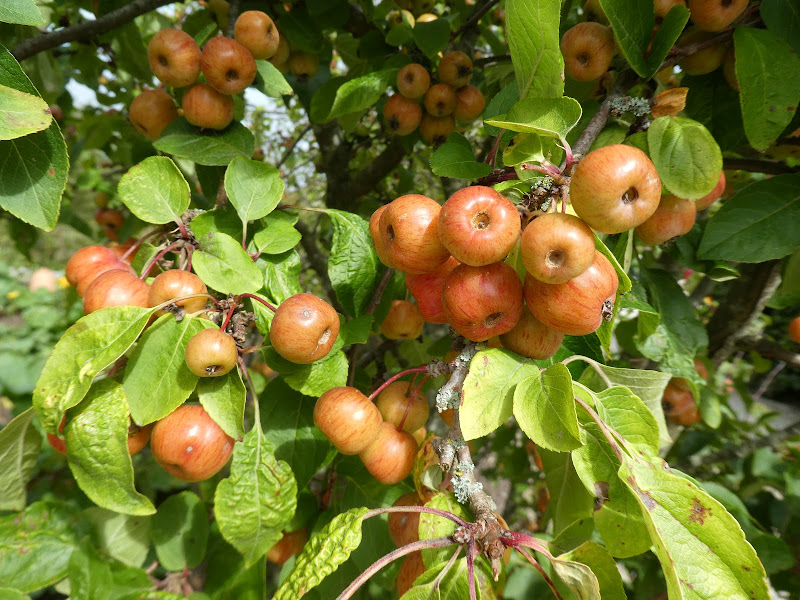
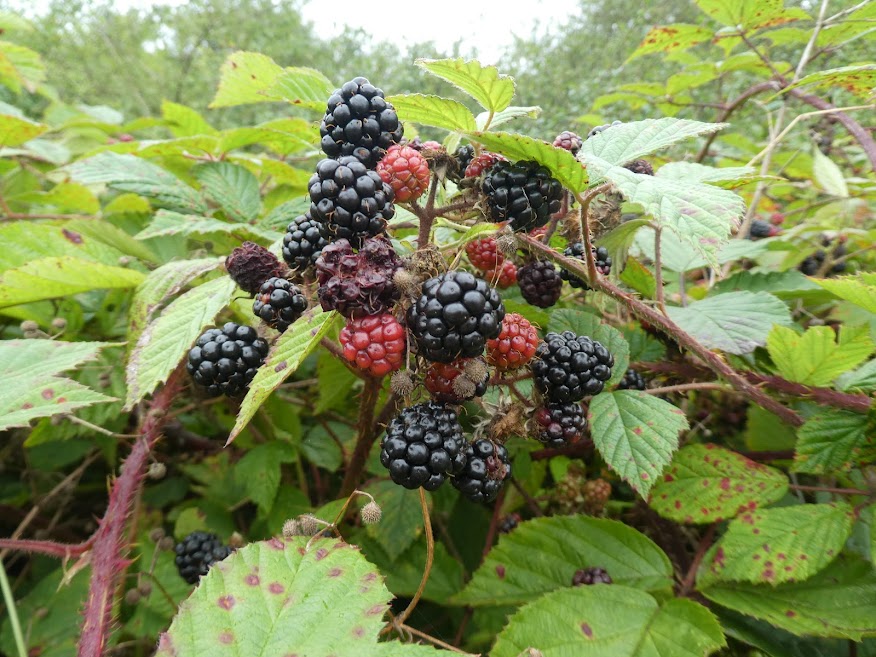
As regular readers know already, I’m a huge fan of Food for Free. Especially at this time of year, I never leave the house without a useful ‘au cas où’ bag stuffed in my pocket . This is a bag that any rural French person will have about their person always – just in case they find something useful – a few nuts, berries, fungi or leaves to add interest to the store cupboard. At the moment, this is all about the apples, blackberries, bullace and mirabelle plums all growing wild locally. At other times it might be young nettles, wild garlic or other leaves. Soon it will be puffballs. I’m not especially knowledgeable, but I do my best.Yesterday’s haul? Windfall apples (simple stewed apple) mirabelles (frangipane and jam) and bullaces (crumble and bullace cheese – think a plum version of membrillo – very labour intensive).
Although I was brought up foraging, my commitment to it was sealed when we lived in France. Here’s a post I wrote in October 2012.
‘All is safely gathered in, ere the winter storms begin’*
October 25th, 2012
Well, at this time of year, it isn’t really a case of ‘au cas où’ . You’re bound to find something. A fortnight ago, for instance, Malcolm and I went on a country stroll from Lieurac to Neylis. We had with us a rucksack and two large bags, and we came home with just under 5 kilos of walnuts, scavenged from beneath the walnut trees along the path. A walk through the hamlet of Bourlat just above Laroque produced a tidy haul of chestnuts too.
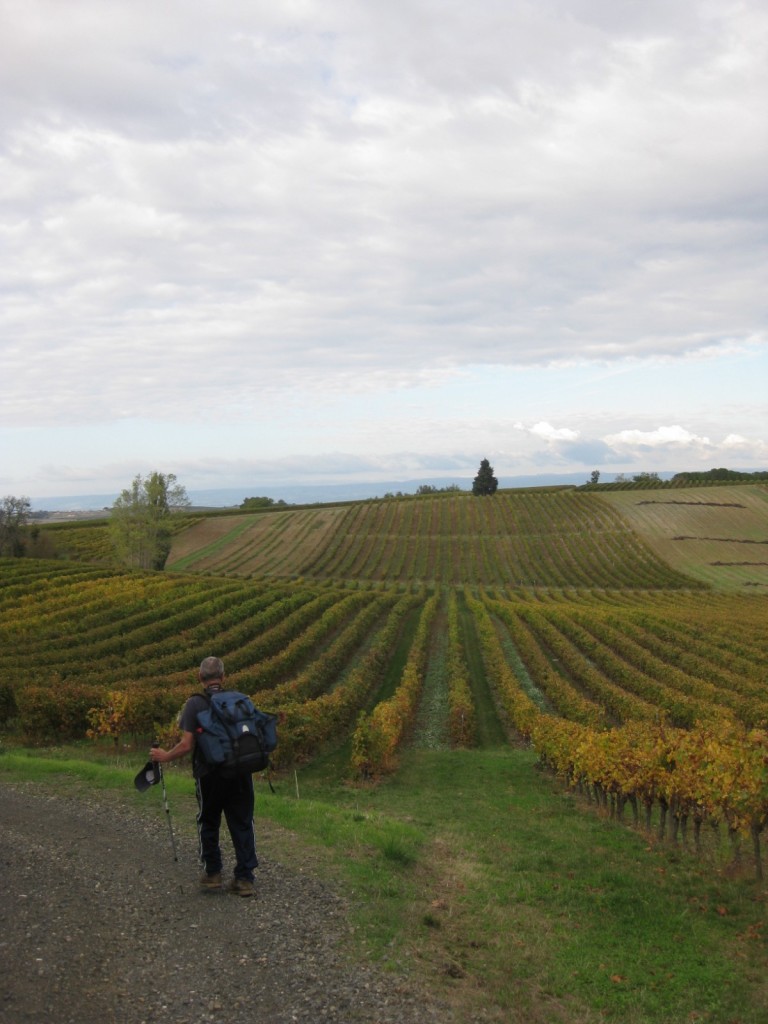
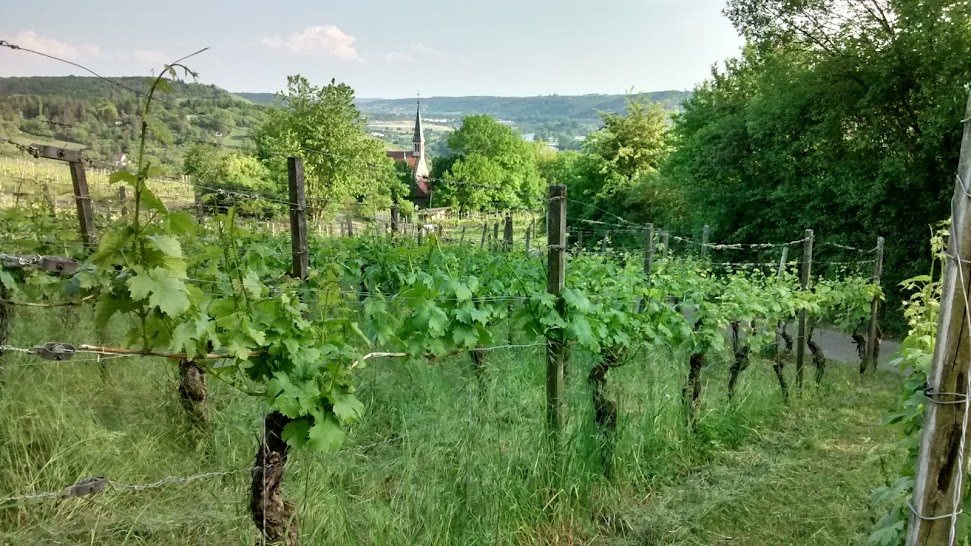
Yesterday, we Laroque walkers were among the vineyards of Belvèze-du-Razès. The grapes had all been harvested in the weeks before, but luckily for us, some bunches remained on the endless rows of vines which lined the paths we walked along. We felt no guilt as we gorged on this fruit all through the morning. The grapes had either been missed at harvest-time, or hadn’t been sufficiently ripe. They were unwanted – but not by us.
So many vines: there’ll be unharvested grapes there somewhere.
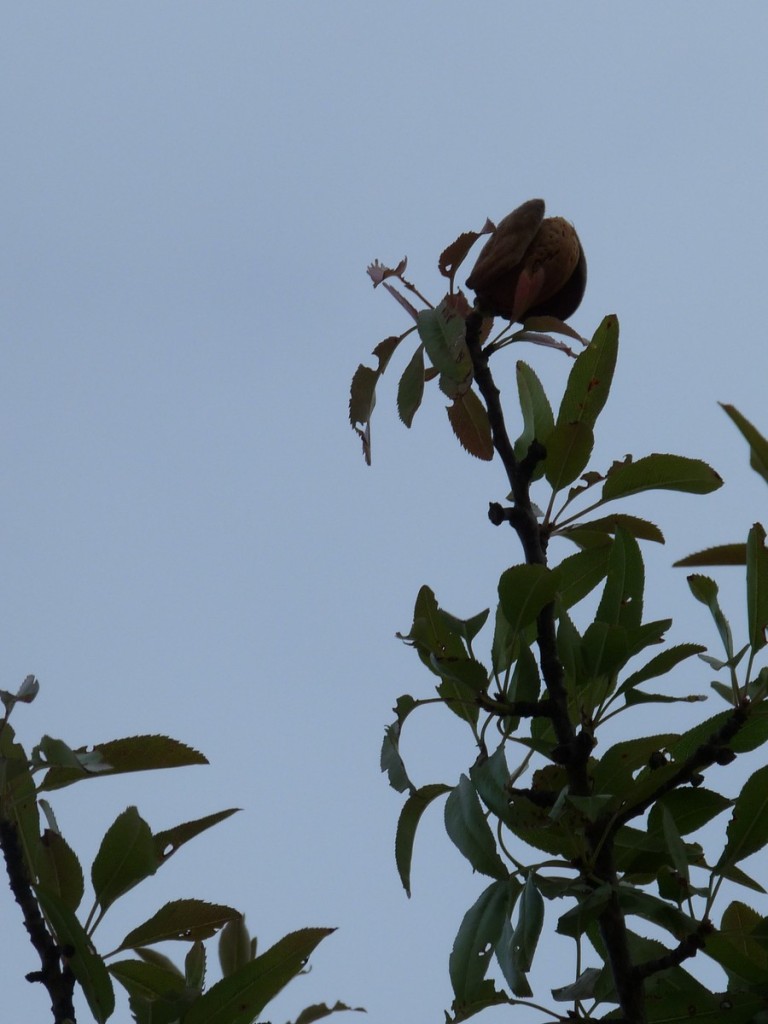
The walnuts we’re used to in the Ariège are replaced by almonds over in the Aude. You have to be careful: non-grafted trees produce bitter almonds, not the sweet ones we wanted to find. But most of us returned with a fine haul to inspect later. Some of us found field mushrooms too.
A solitary almond
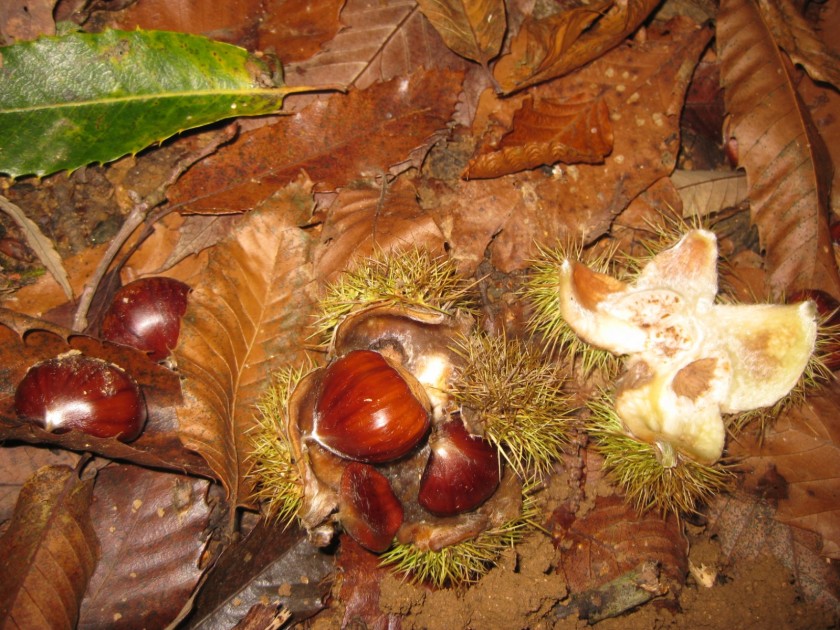
Today, the destination of the Thursday walking group was the gently rising forested and pastoral country outside Foix known as la Barguillère. It’s also known locally as an area richly provided with chestnut trees. Any wild boar with any sense really ought to arrange to spend the autumn there, snuffling and truffling for the rich pickings. We walked for 9 km or so, trying to resist the temptation to stop and gather under every tree we saw. The ground beneath our feet felt nubbly and uneven as we trod our way over thousands of chestnuts, and the trees above threw further fruits down at us, popping and exploding as their prickly casings burst on the downward journey.
Just picture whole paths, thickly covered with chestnuts like this for dozens of yards at a time.
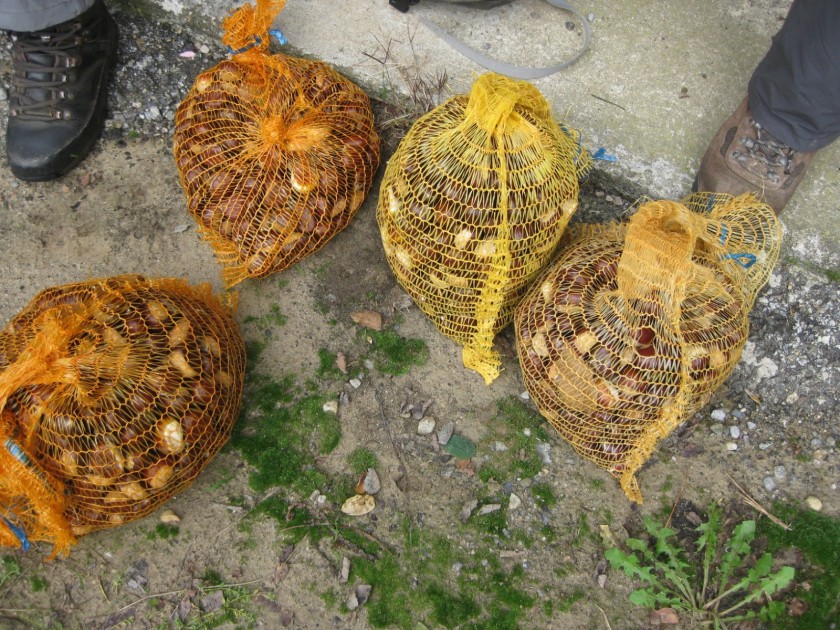
As our hike drew to an end, so did our supply of will-power. We took our bags from our rucksacks and got stuck in. So plentiful are the chestnuts here that you can be as picky as you like. Only the very largest and choicest specimens needed to make it through our rigorous quality control. I was restrained. I gathered a mere four kilos. Jacqueline and Martine probably each collected three times as much. Some we’ll use, some we’ll give to lucky friends.
I think these chestnuts represent Jacqueline, Martine and Maguy’s harvest.
Now I’d better settle myself down with a dish of roasted chestnuts at my side, and browse through my collections of recipes to find uses for all this ‘Food for Free’.
*From the words of an English hymn sung during Harvest Festival.
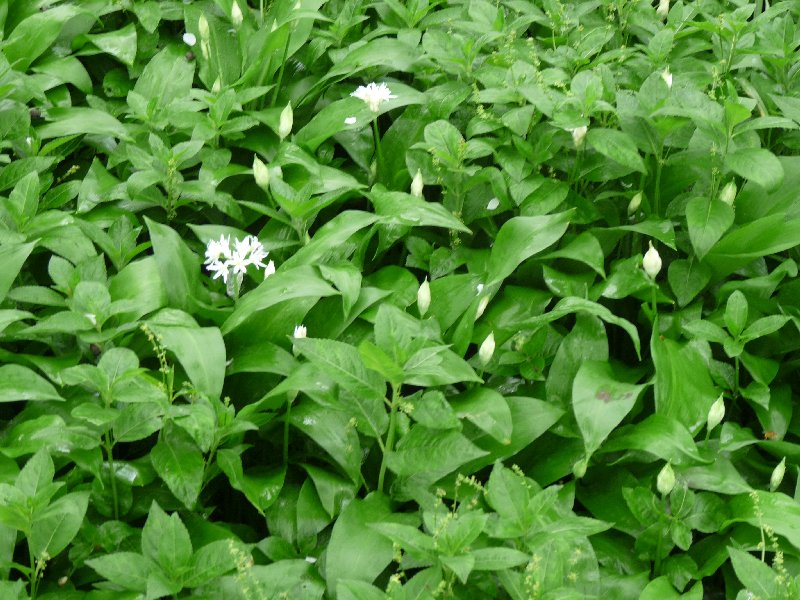
It’s spring. It must be. Wild garlic has – almost overnight – started rampaging through the woodlands near our house. A light tang of garlic pervades the air. And I go foraging. This is the season for:
Wild garlic and potato soup

Wild garlic pesto

Shredded fine and tossed at the last moment into scrambled egg.

Shredded and tossed into risotto at the last moment
Have you any favourite recipes?
And have you got a secret piece of ancient woodland where ransoms – the other name for wild garlic – flourish? If so, you’re probably as lucky as me, because wild garlic is often quickly followed by bluebells.
I took my feature photo yesterday, so it qualifies for Brian’s Last on the Card. Accompanying text is rather frowned upon. Tough. This is my post, and I’ll write if I want to.
I have just finished reading Eating to Extinction, by Dan Saladino. It’s an ambitious, immersive and important book. Saladino has made a tour of the world’s vanishing foods – its animals, vegetables, crops, and shown us why retaining diversity in the food chain matters so much.
This engaging and readable book takes us with Dan Saladino as he visits Hadza hunter-gatherers in Tanzania in quest of wild honeys – they’re the very last people to be constantly on the move, with no settled place to call home – they have lived successfully with no possessions, no money and no leaders. In Australia, he’s shown murnong, a radish like root once prized by the aboriginal people, and all but obliterated by introduced over-grazing sheep. Bere is an ancient barley adapted to the harsh conditions in Orkneyn Orkney. There are Swabian lentil growers; apple growers in Kazakhstan; Skerpikjøt, the wind-dried mutton of the Faroes …. and so many more. Each adventure, to areas where local custom and traditional ways of life remain strong is full of interest, and leaves me with a desire to try the foods and drink he sampled. It also leaves me with a determination to do what I can to support the remaining foods being saved by passionate and committed producers.
Disease can rampage through a single variety at horrifying speed, and if that variety is all we have, the consequences are obvious. Too many of our foodstuffs are in too few hands. The cultures that are injected into our cheeses worldwide to make them what they are are in the hands of some 5 suppliers. The cattle we breed are – worldwide – largely a single breed. Seeds in every continent are in the hands of just four corporations,. Thousands upon thousands of local varieties, bred over the centuries to suit local conditions have been lost forever. So many of the foods we rely on – animal and vegetable – once developed to suit particular soils and climate have been wiped out or, if lucky, painstakingly recovered from a vanishingly small stock pile by some single-minded enthusiast. Now, most foods are grown as a one-size-fits-all.
Whereas foodstuffs used to be so different and varied from one country and region to the next, now the entire world derives 50 % of its calorie-intake from just three foods: wheat, corn and rice. The fast-food burger is becoming a world-wide phenomenon. Saladino shows us that besides this being so dangerous – an epidemic could wipe away a foodstuff completely – it’s also impoverishing our diets, and the rich variety of local foods. He discusses globalisation, the crippling effects of war and climate change. The good news is: with a lot of hard work and good will, it’s not quite too late to stop the rot.
The most important book I’ll read this year. And one of the most interesting.
I often used to make our own bread. These days, with the cost of fuel, and because we have a fabulous two-person-band bakery in town, not so much. And back when we lived in France, we certainly never bothered. Here’s a post from our days when we lived there which may explain why.
Give us this day our daily bread
February 25th 2010
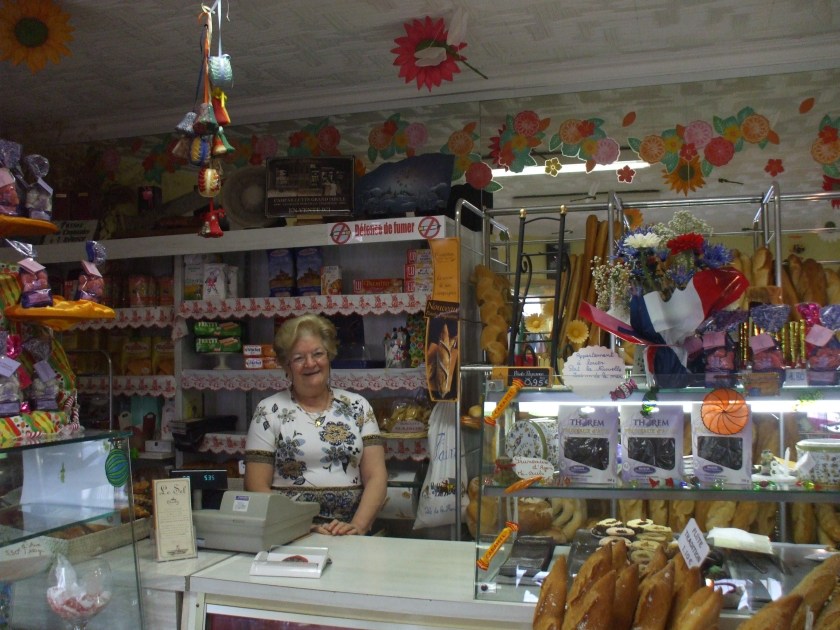
Mme. Fonquernie, Mater Familias
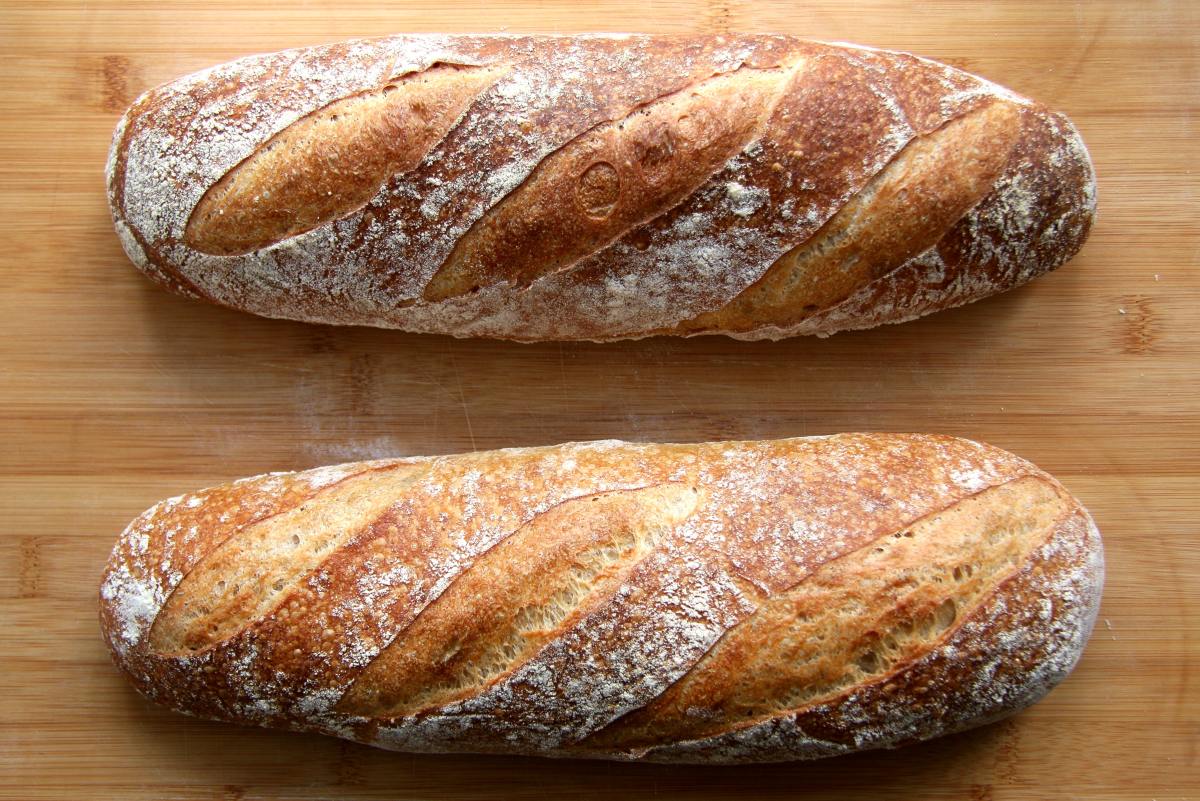
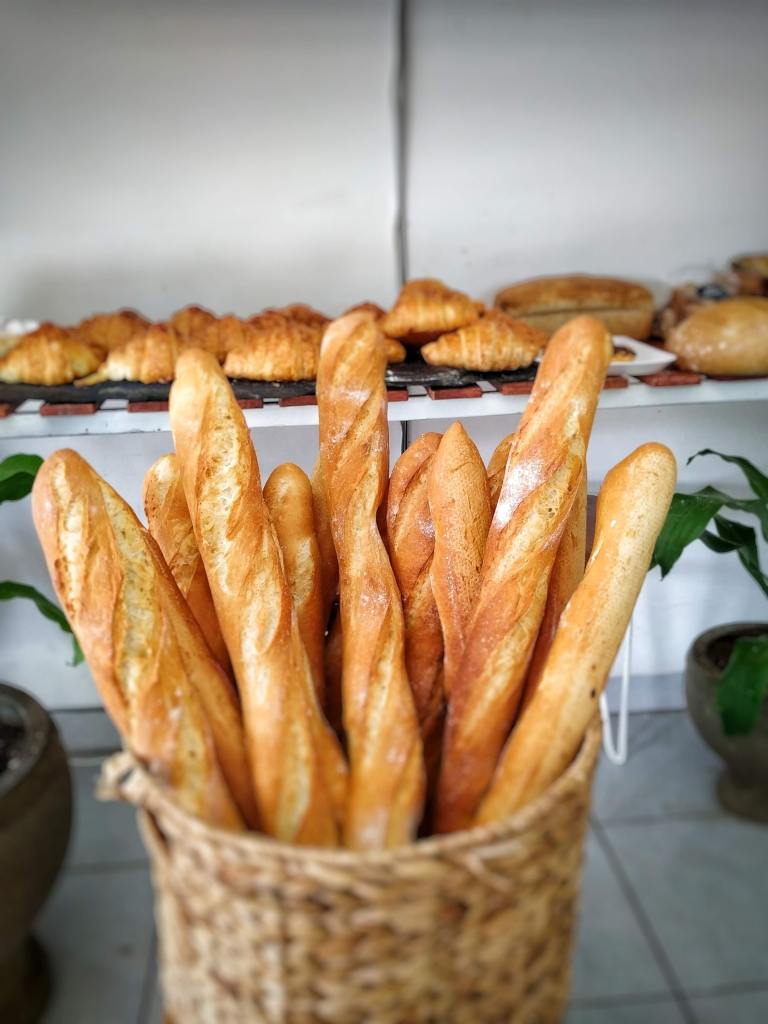
How could they? I mean, what ARE they playing at? All last week, and most of this, the baker’s shop down the road has been closed. Instead of rising at 2.00 a.m. to get busy making baguettes, flutes, ficelles, baguettes a l’ancienne, flutes tradition, pain noir, chocolatines, croissants and so on and so on, our bakers have chosen to lie in till – ooh, 7 o’clock perhaps – and then spend the day catching up with their families – the children are on half term.
It’s a family business, our baker’s shop. M & Mme Fonquernie owned it, and now, although officially they’ve retired, they help out all the time .M. Fonquernie is the one who drives his little white van round the local villages which have no shops, selling bread. Their two sons have now taken over the day-to-day baking. One is responsible for all those loaves, while the other specialises in patisserie. Their wives divide the work of running the shop between them with Mme Fonquernie Senior’s help.
So our morning routine has been disrupted. First thing each day, one of us usually walks down the road to get our favourite pain noir, hot and crisp still from the oven. The other day, the baker forgot the salt. The bread wasn’t half so nice, but I rather liked this very human error. It proved that our loaves are still ‘artisanale’, rather than being churned out by some computer-assisted machine. There’s usually someone in the shop to chat to, or to walk back along the street with, and so neither of us looks on getting the bread in as a chore.
We’re lucky, I suppose, that there are three bakers in town. Last week, we went to the shops at Castellanes to the baker there. No pain noir at this shop, so we chose their unbleached white. The small one’s a slender baguette shape – an Ariegeoise – but buy the larger butch version, and you must ask for an Ariegeois.
But then what happened? A notice appeared in the shop: from Sunday, they too would be closed for a holiday. So for a few days this week, we have to patronise shop number three. Everybody moans ‘C’est pain industriel ça’. It’s true. It comes all the way from Lavelanet, from a bakery which has three shops. That’s mass production, and it shows. Roll on Thursday, when the Fonquernie family re-opens its shop doors.
Sergio Arze, Unsplash. The featured photo is also courtesy of Unsplash, Tomasso Urli
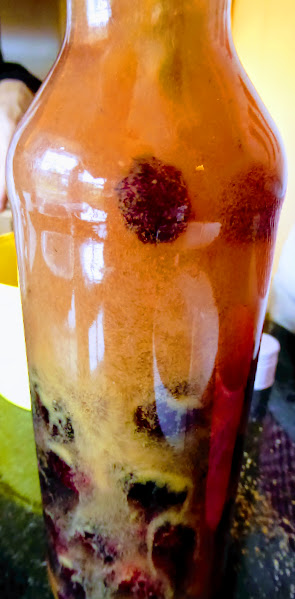
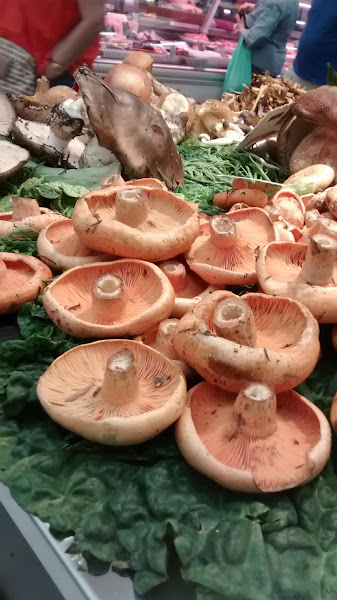
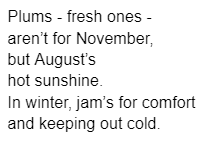
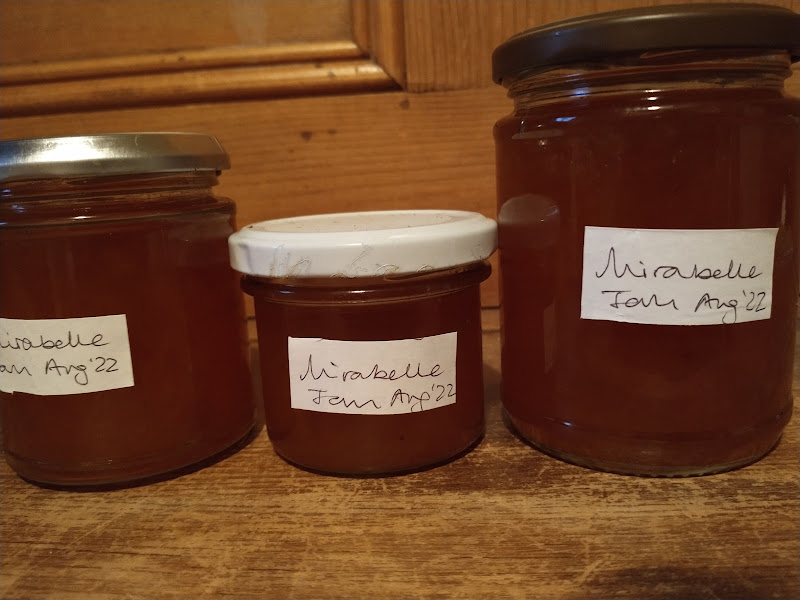
As a young child, I was sometimes woken up when it was barely light, to go off with my mother mushrooming on the decommissioned RAF airfield near our house. Blackberrying was for late summer, always, and rosehips for autumn, when the entire village school would spend afternoons gathering rosehips for Delrosa to turn into rosehip syrup (‘Whaddya mean, slave labour? The best pickers got a tin badge to keep!’). Later, in France, we added wild asparagus, wild cherries, mushrooms, walnuts, chestnuts and sloes to our Free Food bonanza. It’s made me a seasonal eater. I love it when the seasons announce that we have a different food to add to our diet, for a few weeks only. Fresh peas straight from the pod! The newest and smallest potatoes! Discovery apples in August! And in winter, these same foods, bottled and preserved give us a different pleasure – a memory of summer, but presented in a comforting, warming way: plum jam to spread on toast after a brisk winter walk; walnuts stirred into the soon-to-be steamed Christmas pudding; a nip of sloe gin on the coldest of days.
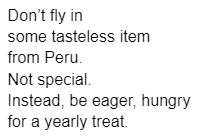
Nature’s had a habit of giving us the right foods for the right season. It’s a modern idea to expect strawberries in November. asparagus in September. All that anticipation, all that enjoyment of a food made special, distinctive by its very limited season has gone. If we listen, we can hear Nature telling us to get back in touch with the way things always used to be. Then we can get rid of all those unnecessary Air Miles too.
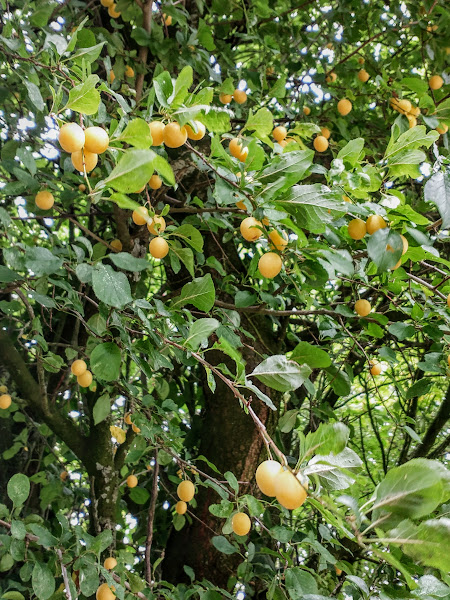
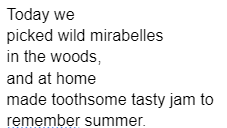
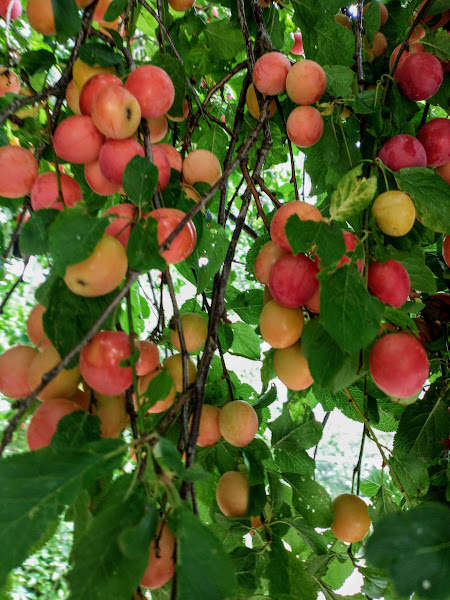
This week’s Tanka Tuesday asks us to write on the theme of Lessons from Nature. I’ve chosen the Shadorma form to illustrate what I’ve just been talking about. Mirabelles by the way are rarely seen in the shops. They’re small plums, yellow or rosy pink.
Here’s ablast from the past: from November 2012 in fact, when we were hunkering down for winter in France. It was round about now that The Orange Man arrived …
THE ORANGE MAN
Winter has arrived. How do I know? Although the nights are cold, the afternoons are still for going walking or tidying up the garden wearing a tee-shirt, beneath a duck-egg blue sky. So until the other day, I thought we were clinging on to autumn.
But on Thursday, the Orange Man arrived. This is exciting enough news for it to be worth phoning a friend. Every year, once winter kicks in and the orange harvest is well under way in southern Spain, a huge container lorry arrives in Lavelanet. It parks up at a disused petrol station on the main road into town and becomes an impromptu shop.
The man with the lorry, the Orange Man, speaks only Spanish, and sells only oranges. Not singly or by the half-dozen, but in large 10 kilo boxes. 10 kilos, 10 euros. What a bargain. These oranges, though sometimes a little knobbly and in irregular sizes, are the juiciest and tastiest you’ll ever eat, and it’s no wonder that whenever you pass, you’ll see someone pulling up their car and opening the boot for a case or two. Our Spanish friend won’t have to stay long. In a few days the entire container-load will be sold, he’ll return to Spain …. only to return when he’s loaded up again.
When he departs for the last time at the end of the season, we’ll know for sure that spring has arrived.
I blame the Church of England. Tomorrow is Stir Up Sunday, the day when all right-thinking people in Britain will dig out their dried fruits and candied peels, their sticky, treacly dark sugars, eggs, butter, spices, zesty lemons, brandy, weigh them out and mix them all together. They’ll bring the family into the kitchen, get everyone to stir the mixture, making a wish as they do so.
And why? Because as they kneel at their devotions in church at Morning Service, those Good Ladies of the Parish will hear the priest intone the Collect for the Sunday Next Before Advent ….
Stir up, we beseech thee, OLord, the wills of thy faithful people….
‘Stir up? Stir up? I haven’t made the pudding yet! Best go home and make the Christmas pudding’
You might not be a Good Lady of the Parish. You might not even be a Good Lady. But you’d better get on with making that pudding tomorrow. I’m telling you today so you can nip out and buy anything you might not have to hand. Go to. Stir Up Sunday is the day. Your Christmas depends on it.
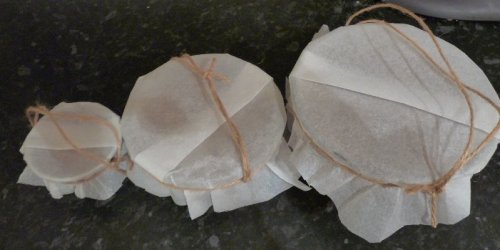
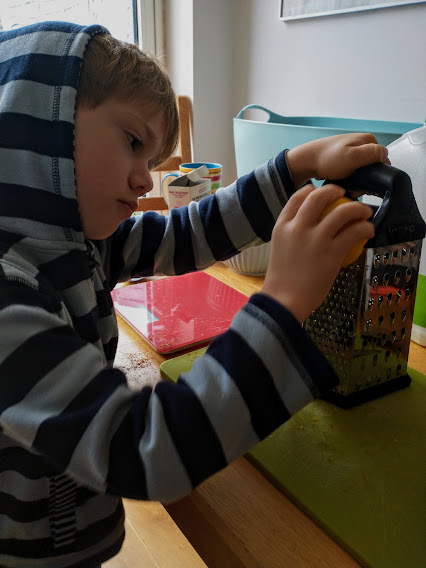
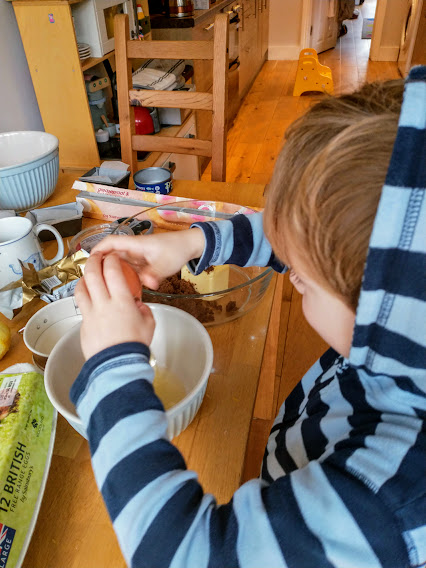
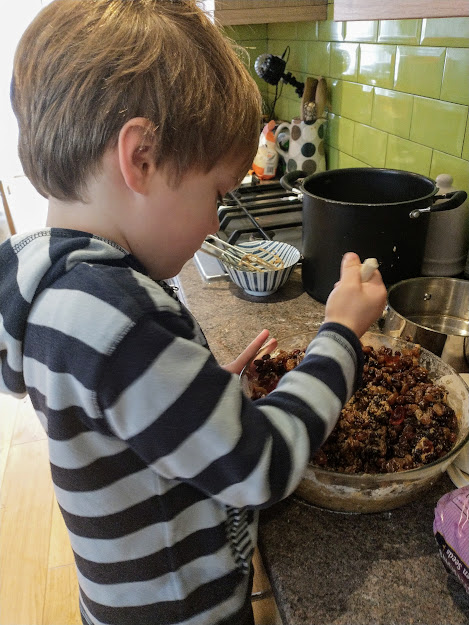
William’s actually making this year’s Christmas cake. But the ingredients for both cake and pudding are virtually identical,














 From Pyrenees to Pennines
You must be logged in to post a comment.