“Vaut mieux le vin d’ici que l’eau de là”

It was a walking day again yesterday – Malcolm too this time – this time with the new hiking group at Laroque.  The walk, again amongst vines, but in the more Spanish style garrigue around Esperaza, was relaxing and fun, but the highlight of the day was lunch.  We sat by a vineyard, either in the sun, or shaded by a shapely and statuesque holm oak tree, and unpacked our rucksacks.
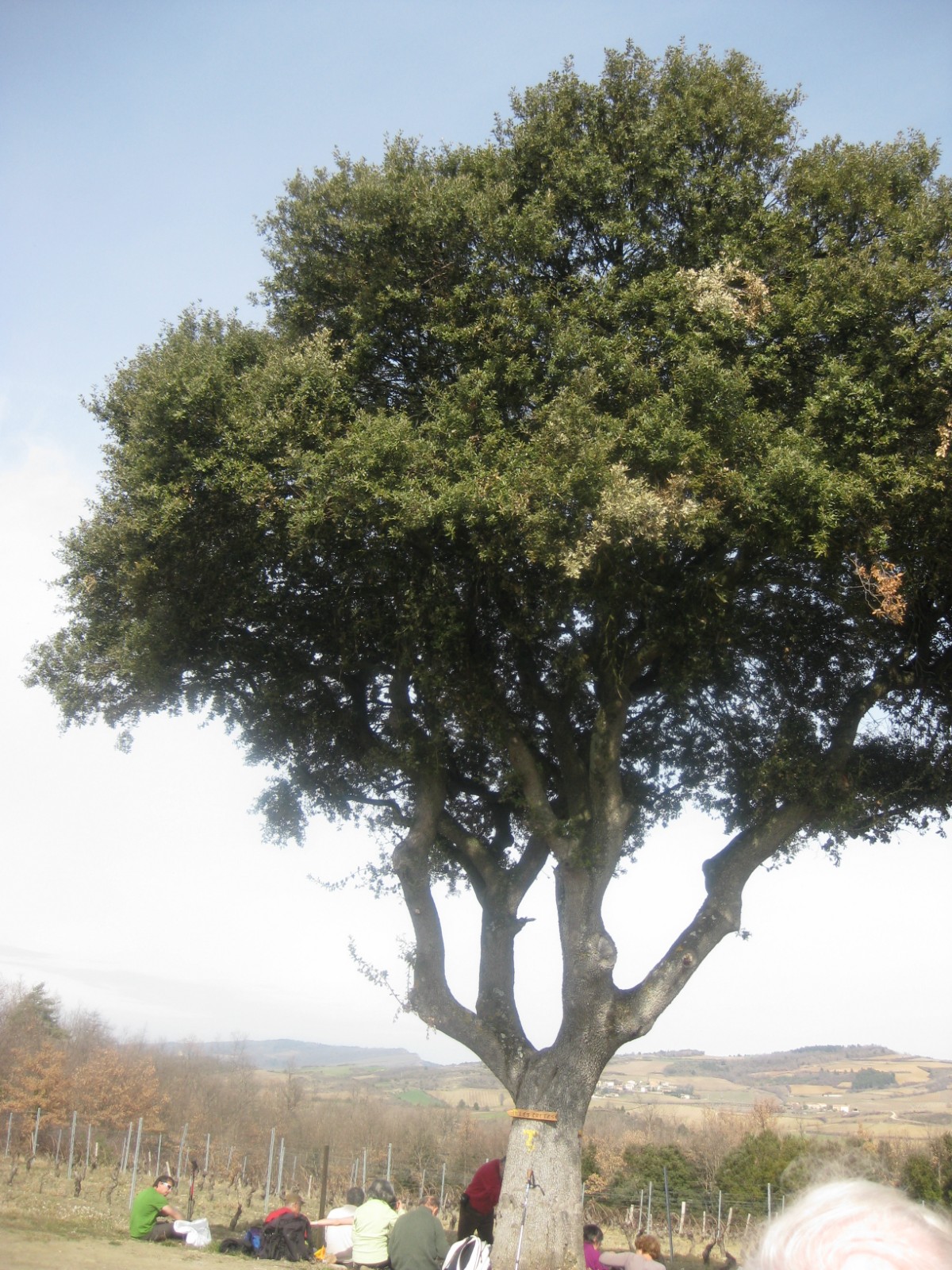
Under the spreading holm oak tree we laid our picnics out.

For a picnic on a walk, most people put together a chunk or two of cheese and sausage, a bit of fruit, and stop at the boulangerie on the way to pick up some bread.  We all did that….but…. there was food to share too.

Phillippe, Sylvie and Jean-Charles opened wine.

Jean-Charles offered peanuts.

Michel produced home made charcuterie (dry cured sausage).

So did Phillippe and Sylvie (boudin blanc) – theirs was home made too.

They brought some of their daughter’s home made goats’ and sheeps’ milk cheese.

I made a drenched lemon cake.

Yvette made crisp chocolate biscuits.

Jean Charles brought an ‘artisanale’ fruit cake.

Then he came round with coffee.

And finally, Yvette offered plum eau de vie made by her grandfather in 1985. A little dripped onto a sugar lump and scrunched is the perfect end to a perfect picnic.

Then we all lay around in the sun for half an hour while we digested that little lot.

That’s the way to do it, eh?  And as everyone said, as we finally decided we ought to have a go at walking off all those calories, “Vaut mieux le vin d’ici que l’eau de là” : it’s better to have a drink among friends than to be no more for this world.

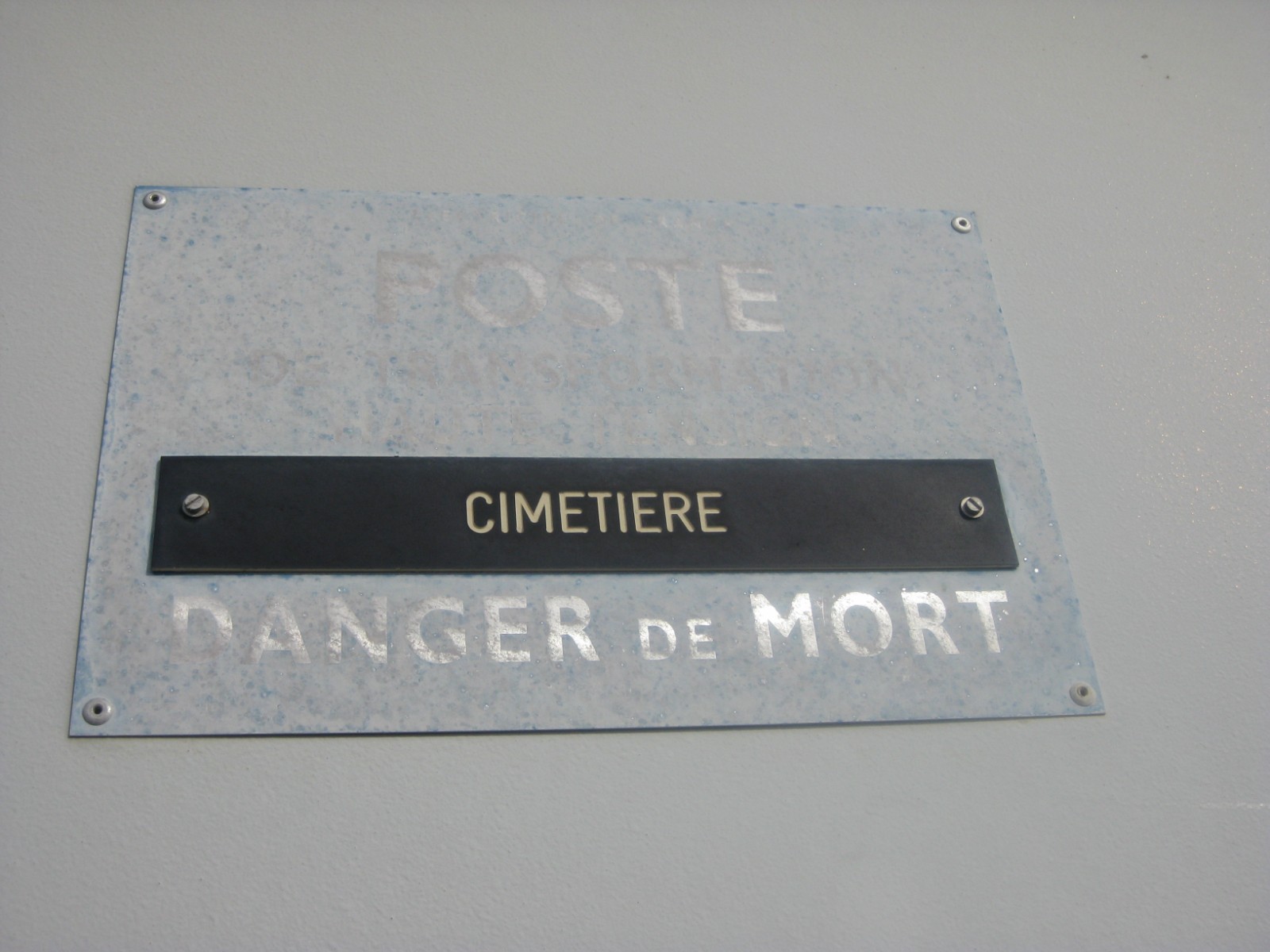
As we ended our walk, we found an electricity substation, handy for the graveyard, that reminded us that death is an ever-present threat.  Definitely a good thing to have shared that food and wine at lunchtime.
A walk from Cépie

Thursdays, I walk.  I do these days anyway.  A few weeks ago I was invited to join a small informal group from round these parts, went once, and had a great time.  Then The Great Snows came, and that was that for a while.
Yesterday, though, we went to Cépie, near Limoux.  Cépie is a village that Malcolm and I happened to be driving through several years ago in high summer, and where we spotted a fruit producer, selling peaches and nectarines.  Those peaches we saw that day have become the standard against which all others are measured.  Dripping with perfumed sweet juices, the tray we bought scented the car with its decadent fragrance, and all but intoxicated us as we drove home. So I was keen to go again, lack of peaches notwithstanding.

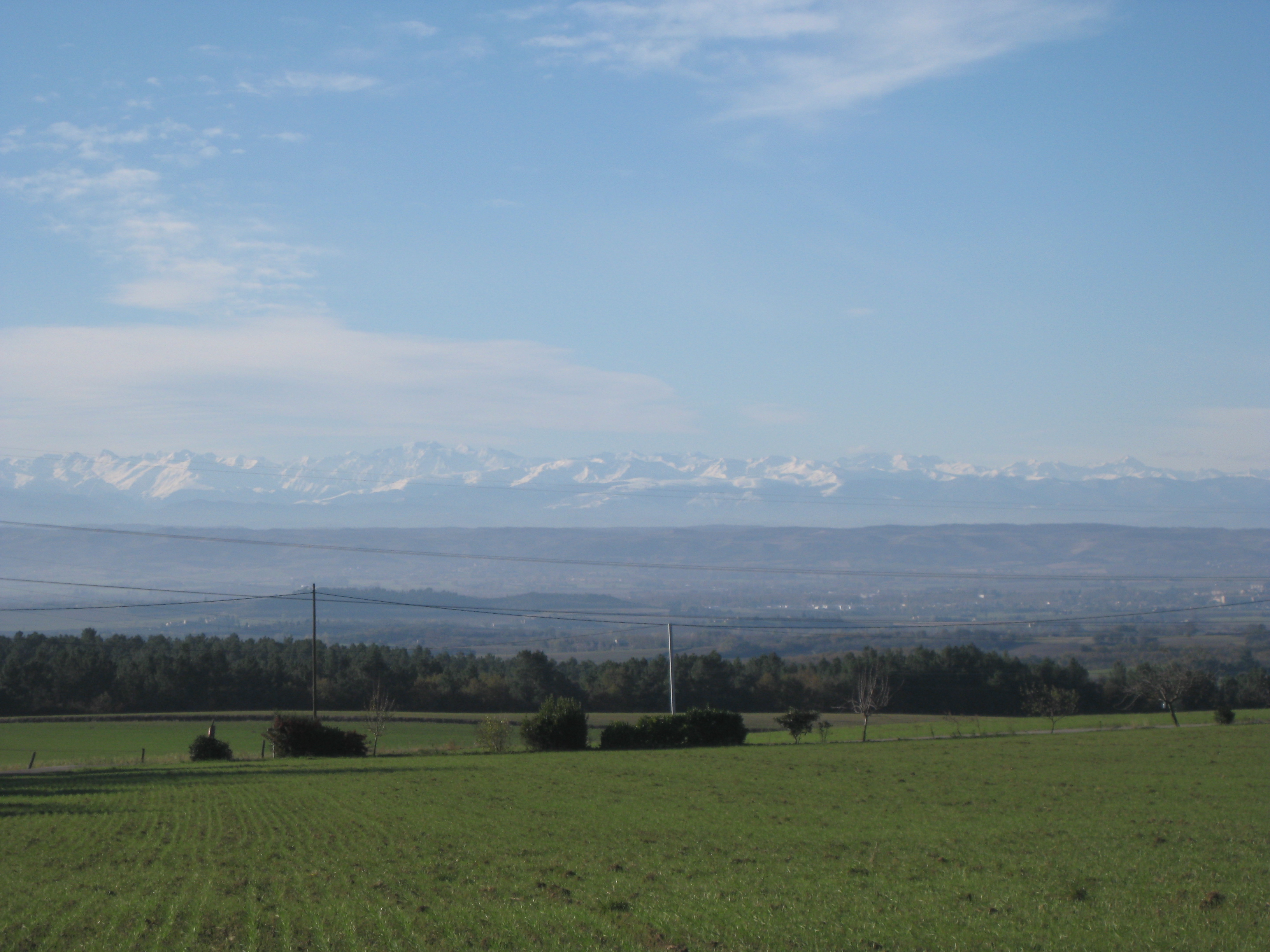
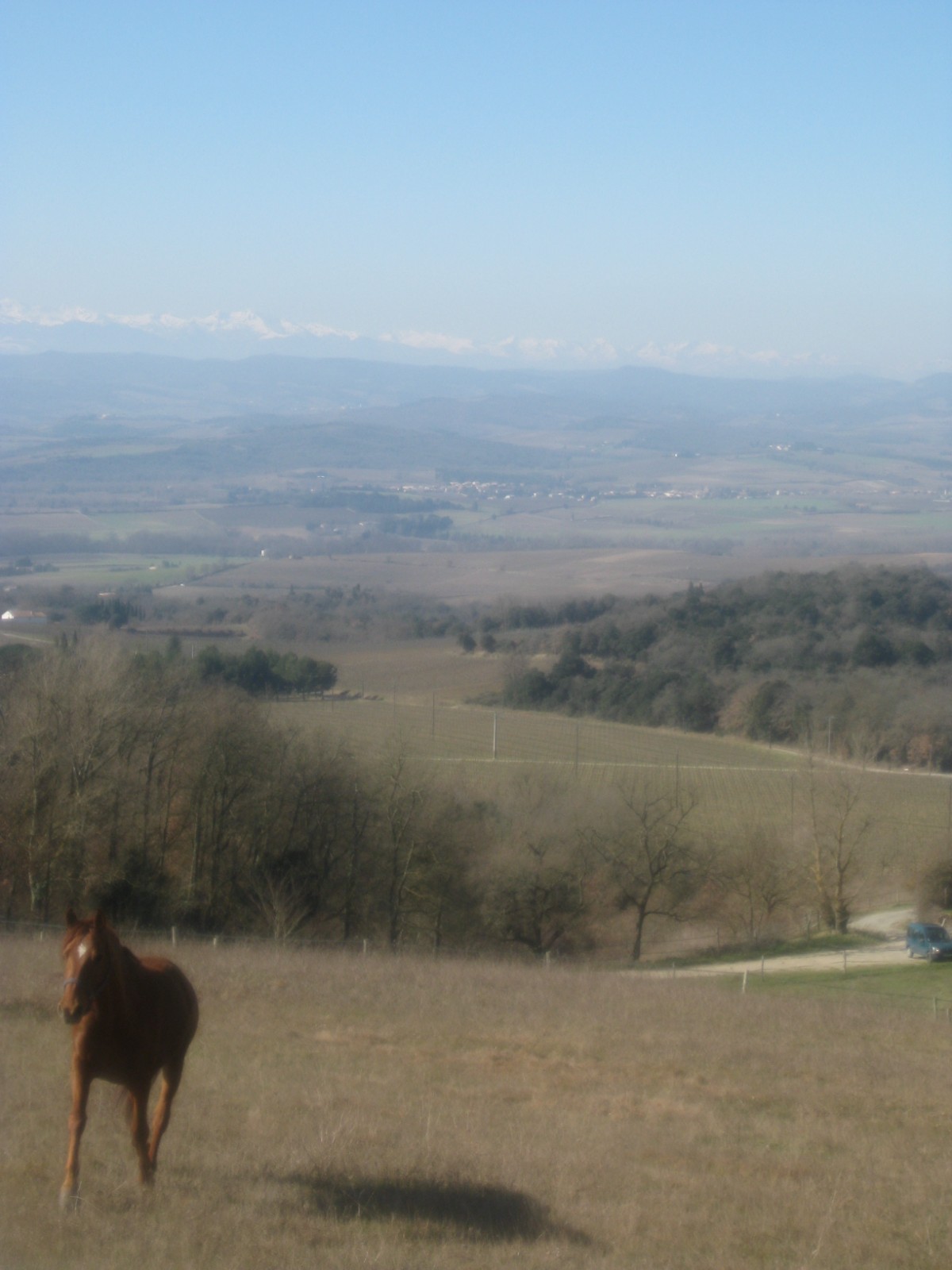
You'll struggle to see the snowy Pyrenees as the backdrop to this picture. They are there. Keep looking

Instead of peaches, there were views.  The Pyrenees are more distant here, but that means we got horizon-filling views of the gleaming snowy mountains as they rise and sink in a line of angular peaks, marching right across the skyline from east to west.  Because of the haziness of the day, the photos give no idea of the panoramas which we quite simply had to stop and gaze at, time after time.
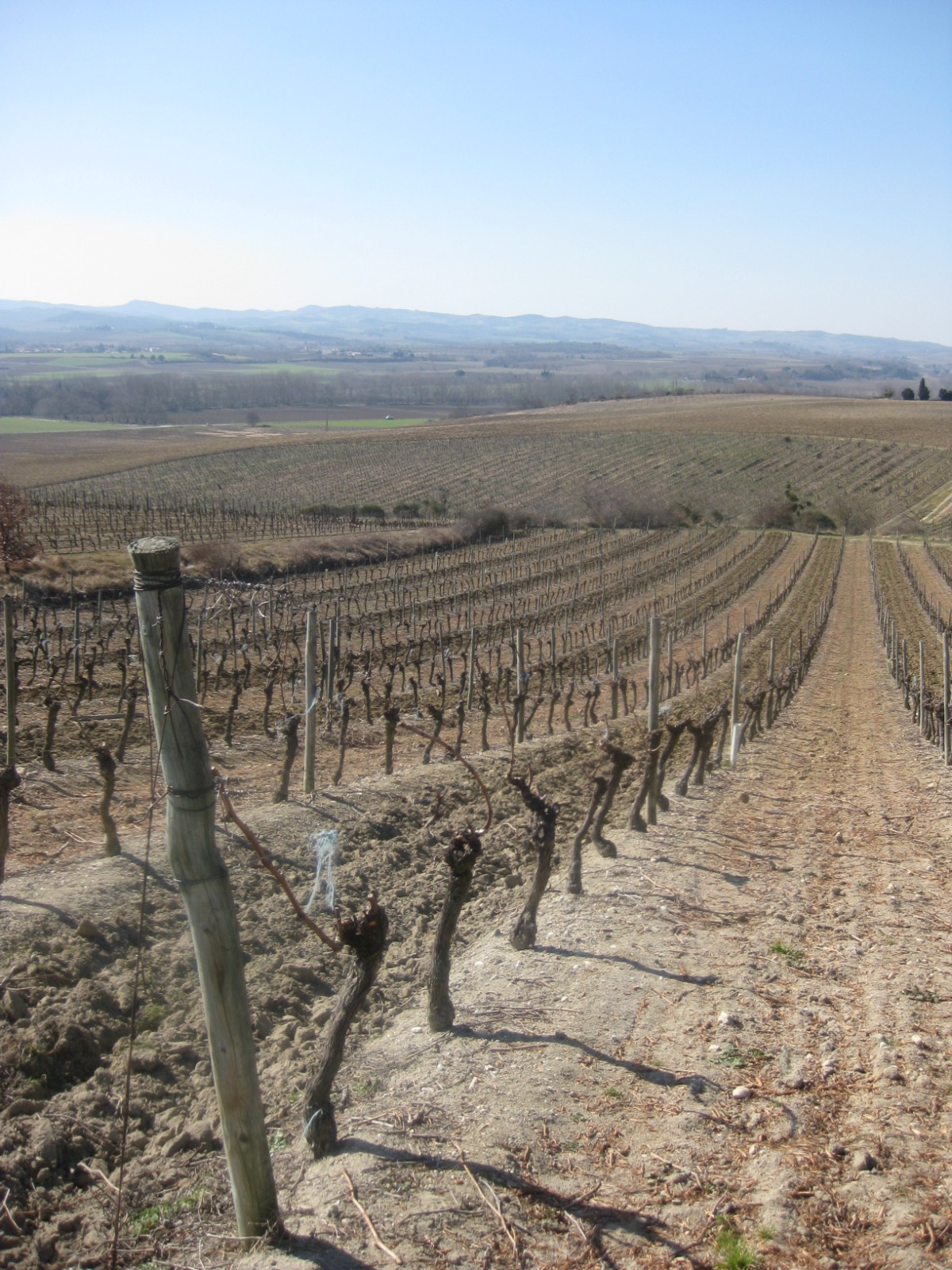
This area is Tuscan style Aude – rolling hills with distant domains and lines of cypresses, covered for acre after acre with mathematically precise lines of vines.  I used to find these vineyards rather dull in winter.

Notre Dame du Razès, protégez nous et protégez nos récoltes

Now, as the workers get busy in the fields, pruning away all the growth from the previous year to leave little more than a two or three foot high trunk, I enjoy the way these organised lines echo and follow the contours of the landscape.

Vineyards march across the landscape

Our walk took us in a figure of eight through sandy, stony wooded paths, passing near domaines and hamlets whose reason for being is those vineyards.  Towards the end, we paused in the tiny village of Saint Martin de Villereglan and enjoyed looking at the school-cum-town hall, the views down to the church, and generally pausing for breath before the final yomp up, then down the hill that divided us from Cépie.

A nice touch with these walks is that every week, one member of the group makes a special cake to share at the end of the day.  A lovely moment of sharing (in this case with a couple of passing villagers who got chatting), it gives a much needed calorie rush.  We’d only done about 16 km, but the local temperatures rose to more than 23 degrees, and we felt we deserved our gâteau aux noix.

The homeward stretch

SOS Air Ambulance

Poor Micheline.  Her pain, her distress was our Sunday Soap Opera.

We’d gone walking with our Rando del’Aubo friends, near Nébias again.  We’d yomped up a mountainside, 2 hours of it, and were looking forward to lunch in – oooh, maybe 10 minutes.  That’s when Micheline fell over a tree root.

It was bad.  Very bad. Broken ankle?  Knee? We still don’t know.  Anny, who has GPS, ran off to find some kind of reception for her mobile, so she could ring emergency services, and give them our exact reference.

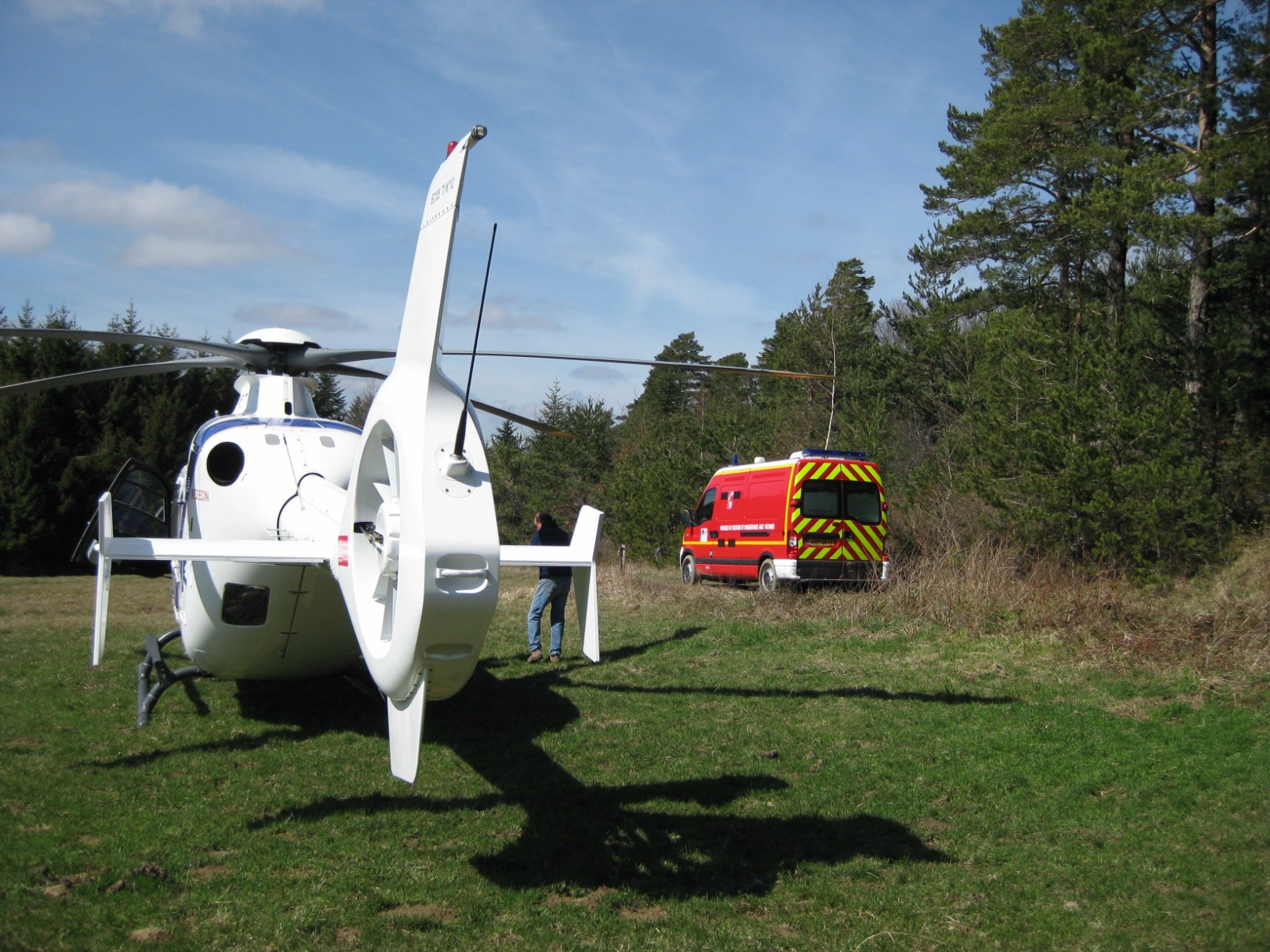
Pretty quickly, it became exciting.  We were fairly inaccessible, though not as badly so as we might have been, considering we were almost at the top of a (smallish) mountain, because there was, for the first time that morning, open land nearby.  A bright red ambulance service 4×4 came into view, then an ambulance, tossing about on the rutted track.  The sapeurs pompiers had to walk down into the woods, carrying all their equipment and a stretcher, to see Micheline, who was now in quite a lot of pain.  Then – wow!  A helicopter air ambulance hovered overhead, looking for a landing spot.

The pictures show the efficient and organised crew (11 of them, sapeurs pompiers, nurses, pilot) doing what they had to do in muddy, dirty conditions to get Micheline sedated and sorted and ready to be air-lifted to Carcassonne Hospital.  They don’t show the 4×4 being ignominiously towed out of the mud by a local farmer.

Despite our compassion for Micheline and the acute pain and discomfort she was in, we were quietly excited to be part of such a drama, the first apparently, in Rando del’Aubo’s long history of weekend walks.  No news from Micheline yet:  but she won’t be at work tomorrow.

The Principality of the Brothers Grimm. And Stone Soup.

Sunday. We went to Nébias in the Aude. Just outside the village, you’ll find The Labyrinthe Verte, a natural maze, with winding pathways through a forest, where rocks and plants have created a bewildering array of natural passageways which are both beautiful and fun to explore. These paths are cut deep through limestone, often shoulder height.  Somehow, we’ve never visited.  But today, thanks to the Rando del’Aubo, our walking group, we did.

It’s been a lovely bright spring day today, but the forested labyrinth is never really sunny.  Trees, their trunks and branches bearded with feathery fronds of moss and lichen, crowd the limestone crags and fissured passageways.  Deprived of light and space, they assume crippled and fanciful shapes, or else aim straight for the sun, their thin trunks competing with each other for a place to establish their roots.  It’s not eerie however.  On this warm March day, we wouldn’t have been surprised to meet an ethereal band of fairies whirling through the dampened glades: on a bad night in November, perhaps a gnarled and wicked hag from the tales of the Brothers Grimm.

Every time of year has its own magic apparently.  On the coldest days of winter, the mosses and lichens are white and crisp with frost, making the forest fit for a Snow Queen

At lunch time, since we were in France and eating’s important, the darkened passages unexpectedly cleared.  Suddenly, beneath blue skies and bright sunshine there was a fissured limestone pavement, providing surfaces and seating for our lunchtime picnic.  Which Malcolm didn’t have with him.  The members of the group magicked their very own version of Stone Soup for him.  A mustardy ham baguette, some home cured sausage, a chunk of bread, a chocolate pudding, and apple….within half a minute, Malcolm had more food then the rest of the group put together.

The afternoon was different.  Walking away from the enchanting and enchanted labyrinth, we came to more open country, where we passed first farmland, then the edges of forest with tracks showing where wildboar and deer had recently passed.  Finally, we climbed, and had views across to the mountains and the walks we’ve enjoyed there on other Sunday rambles, finishing up listening to the lively splashing of a waterfall.

This slideshow requires JavaScript.

No snow yesterday: mountain views and a Benedictine abbey

Distant Pyrénées. Not my photo, not the view we saw. But you get the idea

I gather that the last thing anyone in England needs right now is someone chirruping about how beautiful the snow is.  Well, here in the foothills of the Pyrénées, we’ve been almost alone in France in being a snow-free zone.  But please note: ‘the foothills’. The mountain tops have been covered for some weeks, and over the last week, the snow levels have crept down..and down…and ever nearer. And it’s quite simply beautiful.

Distant Pyrénées

Yesterday we went walking in the Lauragais.  That’s a gentle, verdant region north of here on the edge of la Montagne Noir.  Perhaps the most wonderful thing about the walk we had here, through sandy woodland paths, crunchy with fallen leaves, were the views across to the Pyrénées: mile after mile of distant peaks blanketed in blue-white snow beneath a bluer sky.  If only my camera began to do justice to this impressive sight.

A misericord to support a monkish bottom
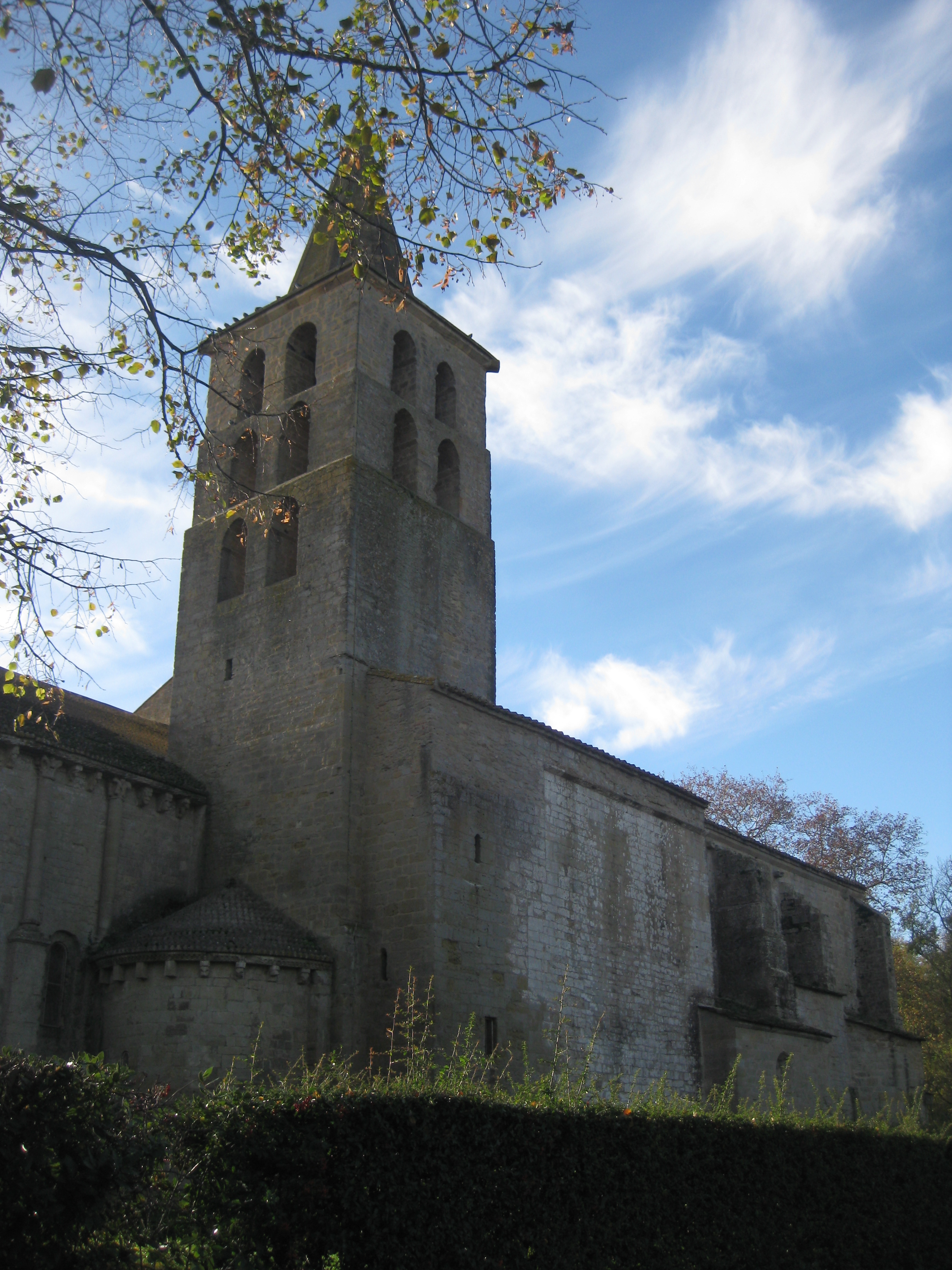
Abbaye de Saint Papoul

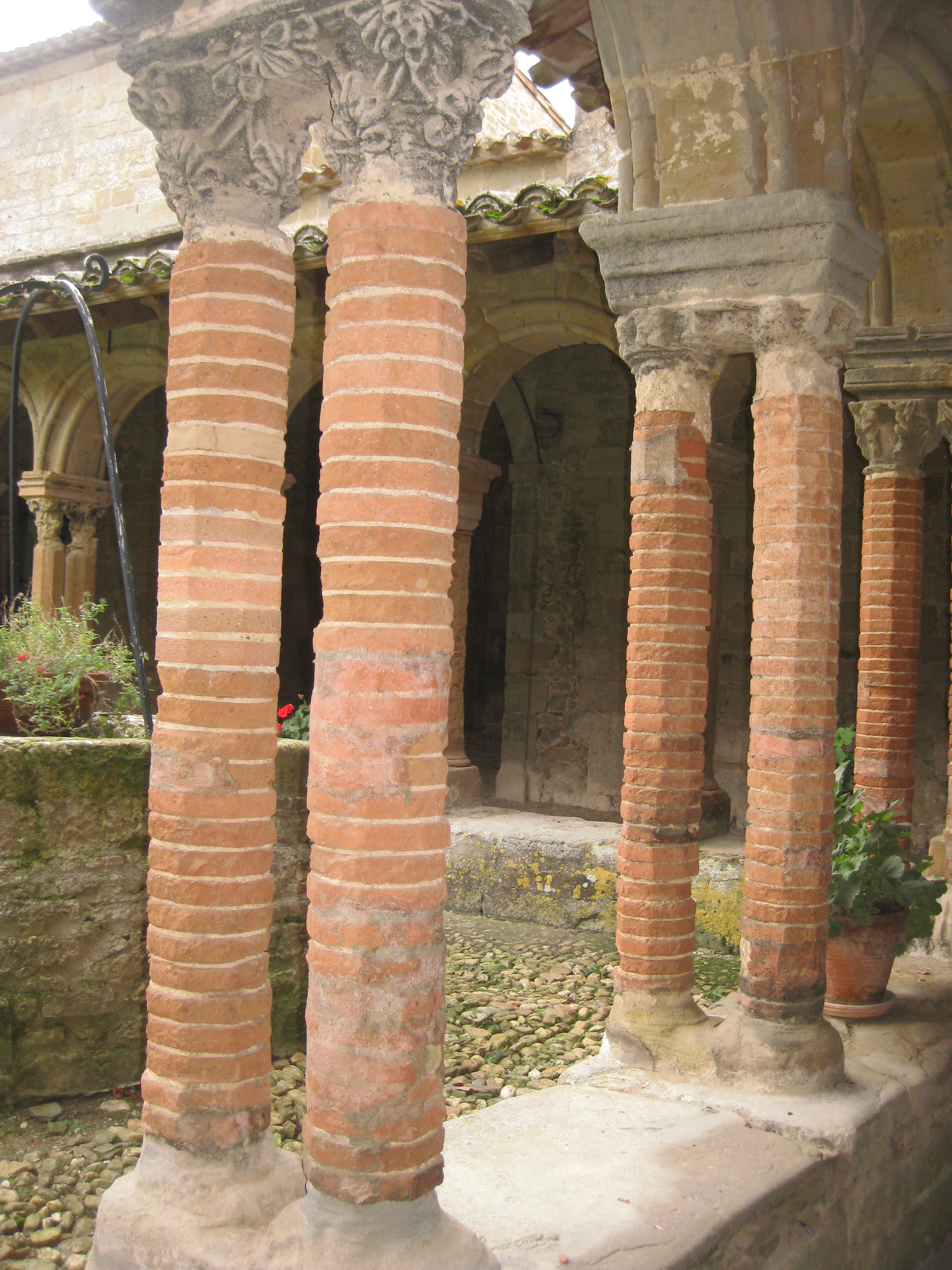
Healthily exercised, we came down to the village of Saint Papoul, and looked round the Benedictine Abbey of the same name.  I found myself lingering in the 14th century cloisters and in the abbey itself, inspecting the misericords, the small decorated wooden shelves hidden under the seats to provide a bit of support for the poor monks as they stood for long hours during their religious devotions.
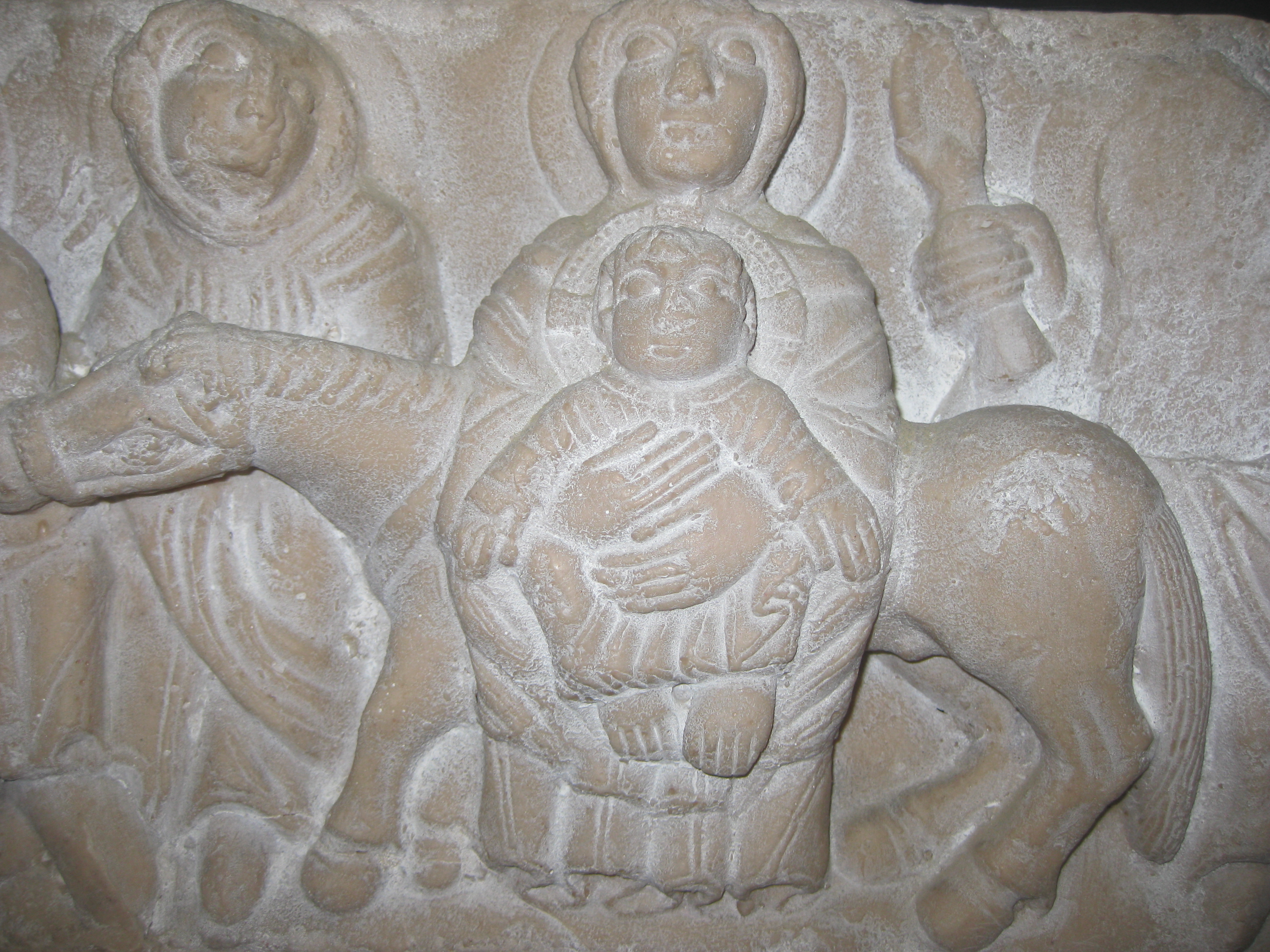
The Flight into Egypt

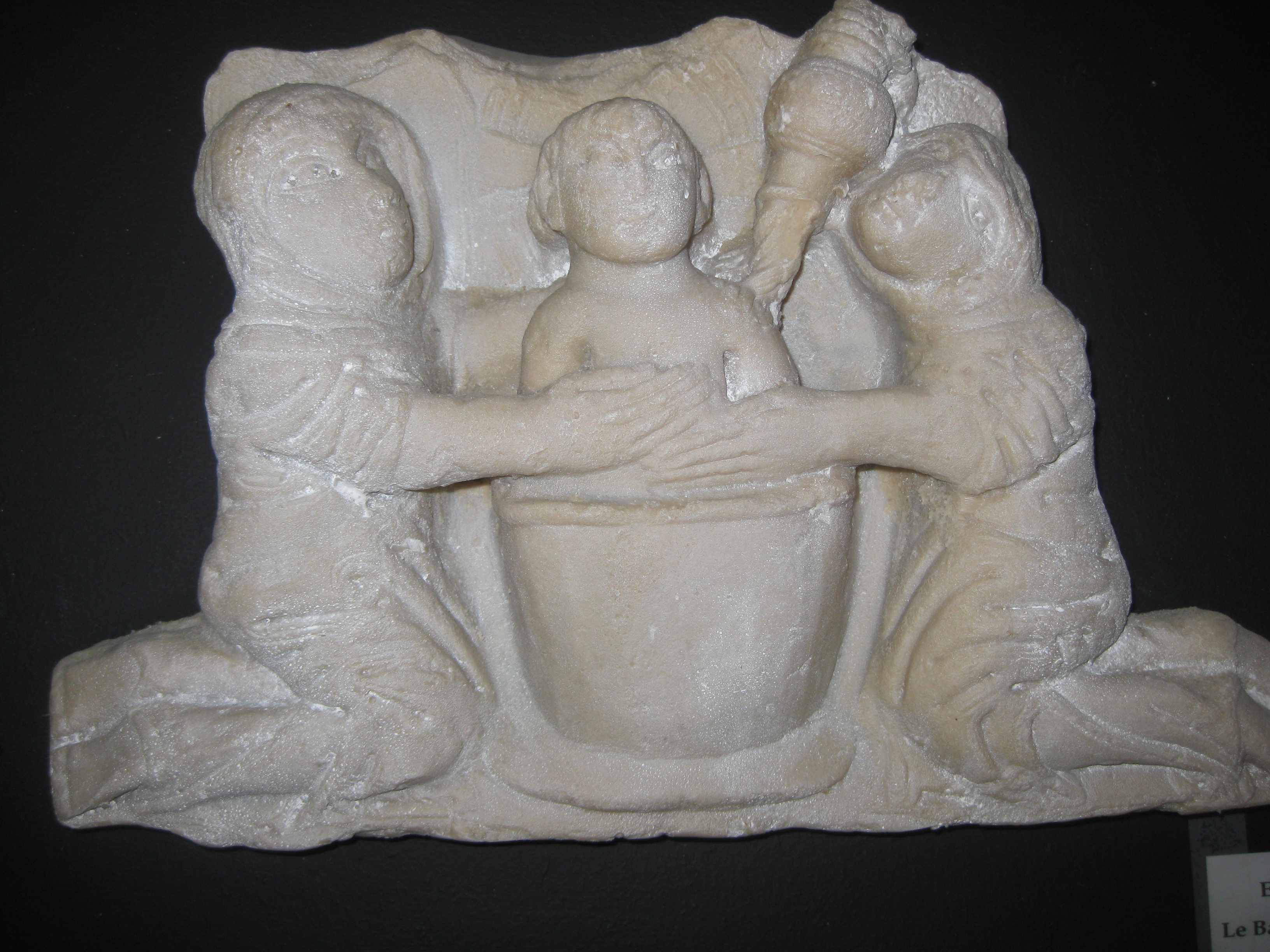
Perhaps the most enjoyable bit of our visit was a chance to look at the special exhibition devoted to le Maître de Cabestany, a Romanesque sculptor who seems to have left his mark on many of the pilgrimage churches on the route from Rome to Compostella.

The infant Jesus takes a bath

His figures, despite their realism, their chunky hands and elongated eyes, seem to have a slightly supernatural feel to them and they were fun to explore and enjoy.

It was cold though.  Snow threatened, but didn’t fall in the end.  We decided against a mooch round the village: probably something to do in the future, and scurried back home to toast our toes and fingers

The weathered pillars of the cloisters, and their equally weathered capitals

Espezel, Potatoes and the Plateau de Sault

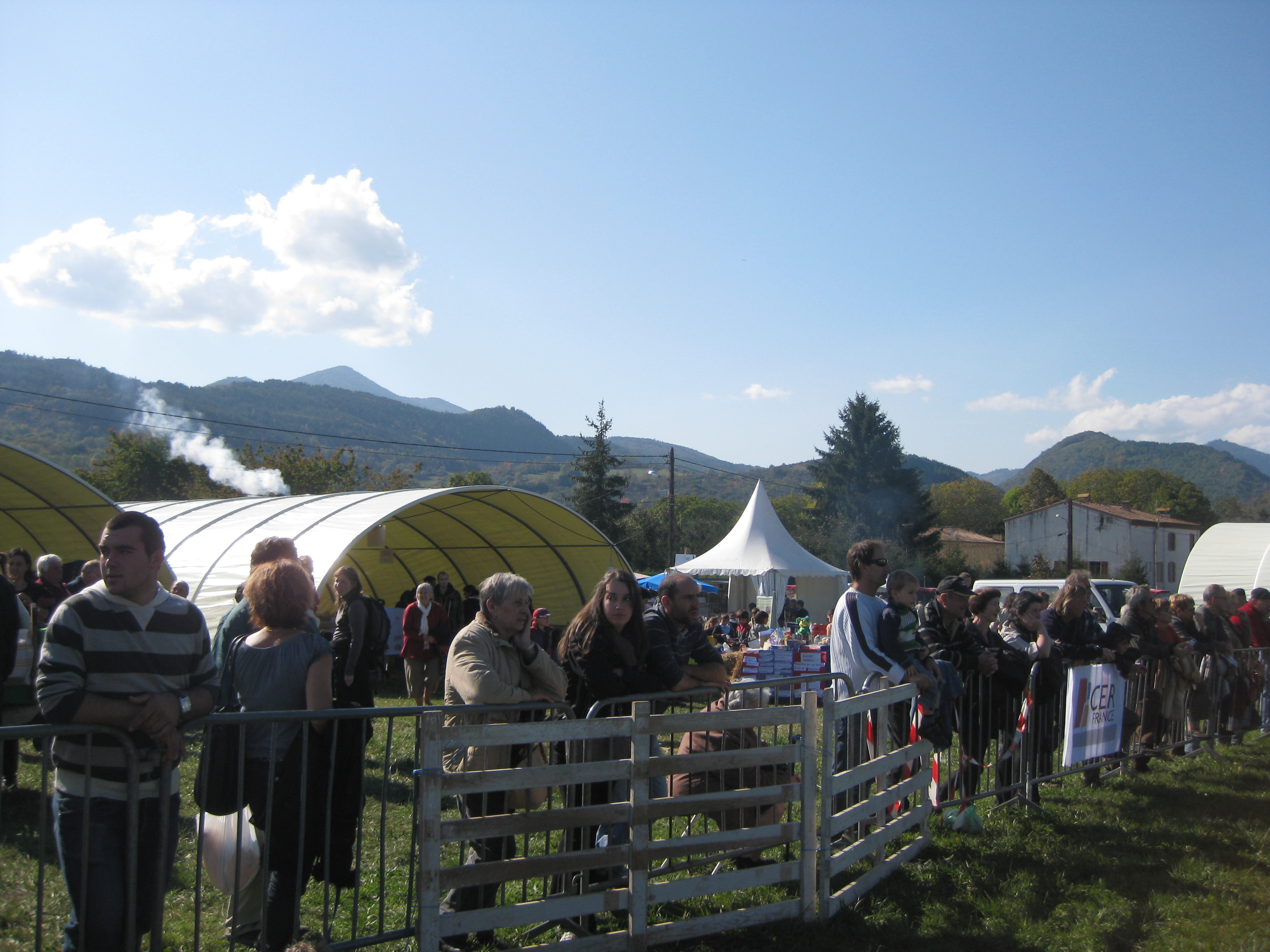
Waiting for horses to enter the ring. The fair at Espezel gets under way

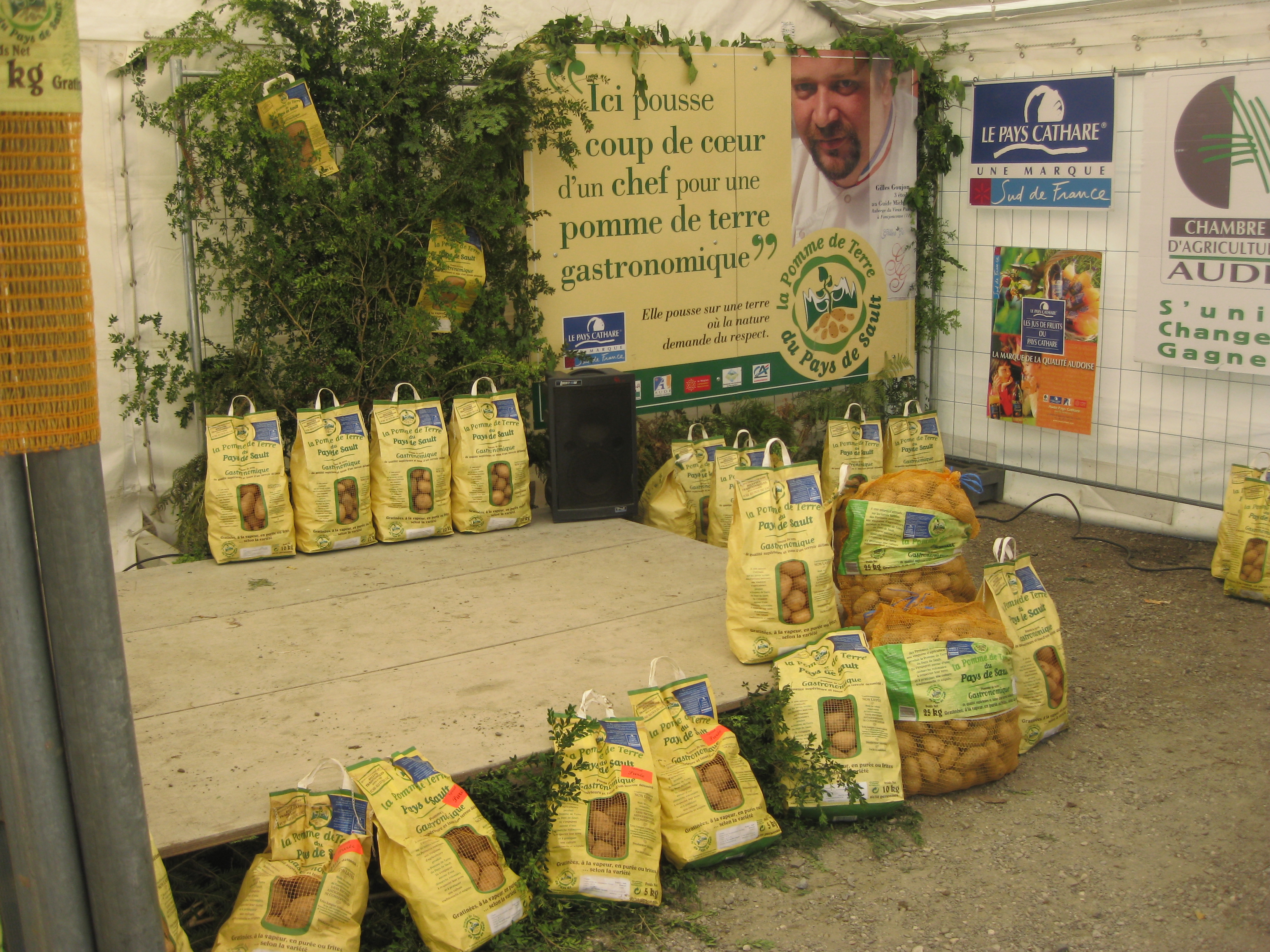
If you live round here, you’ll know about the Plateau de Sault.  It’s where the potatoes come from.

Plateau de Sault potatoes. Plenty more where they came from.

They’re very proud of their potatoes.  They’re also proud of their country fair, la Foire Départementale de l’Elevage, held at Espezel.  Though this fair, held in October each year, is less about potatoes, and more about animals, as the name suggests.

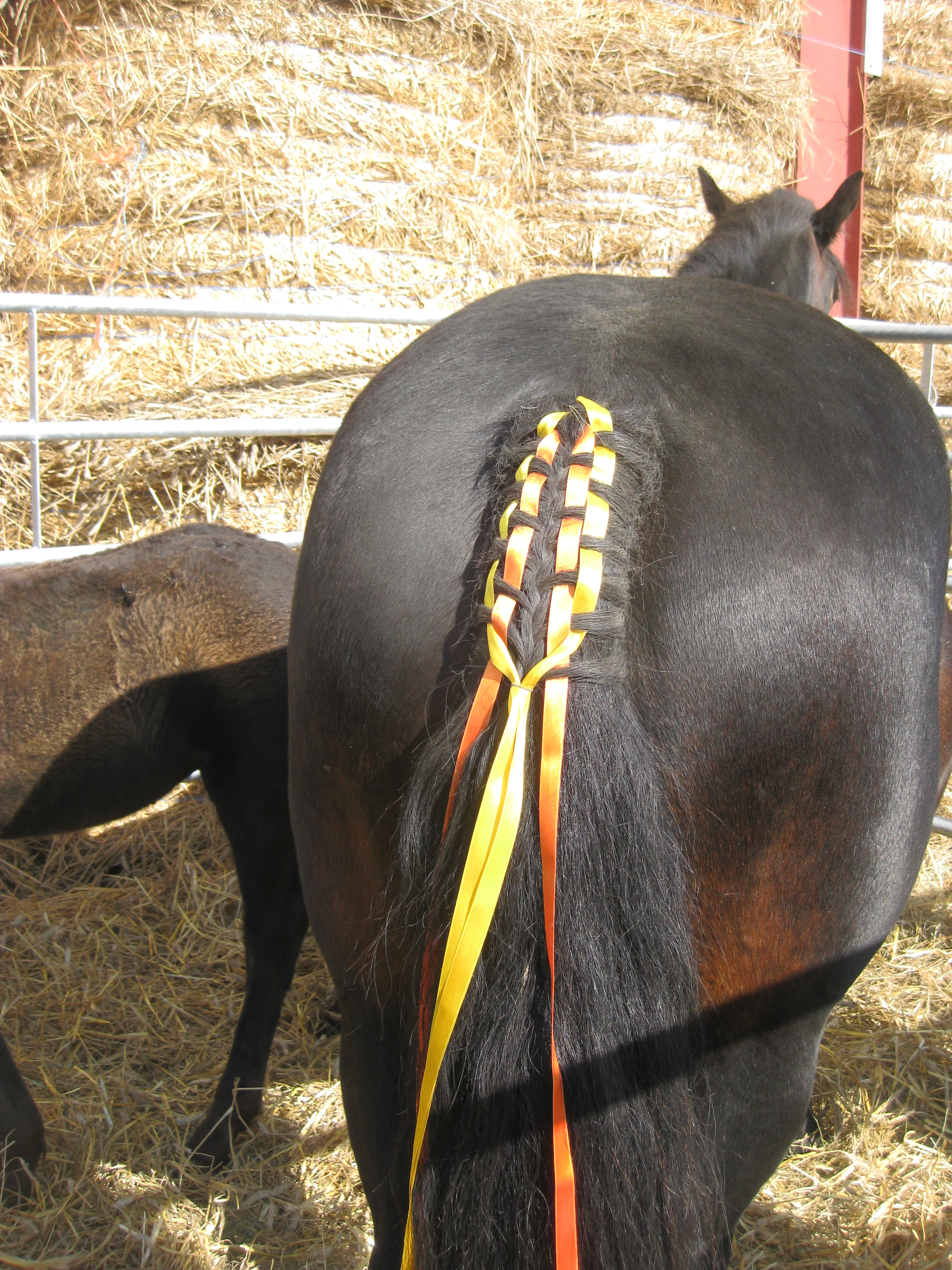
A show tail for a show horse

Working horses, bulls with a reputation, Jack-of-all-trades Tarascon sheep, sheepdogs, pigs, rabbits and chickens were all there, together with state of the art tractors and farm machinery.

We could have bought this fellow: but we couldn’t raise the money

There were food stalls, clothing stalls, catch-penny stalls: plenty to keep us busy. Gill and David, our guests from England, who are County Fair Connoisseurs and stalwarts of shows all over Yorkshire, spent their time eyeing up horses – particularly the heavy, working Castillon horses, while we enjoyed the working sheepdogs.

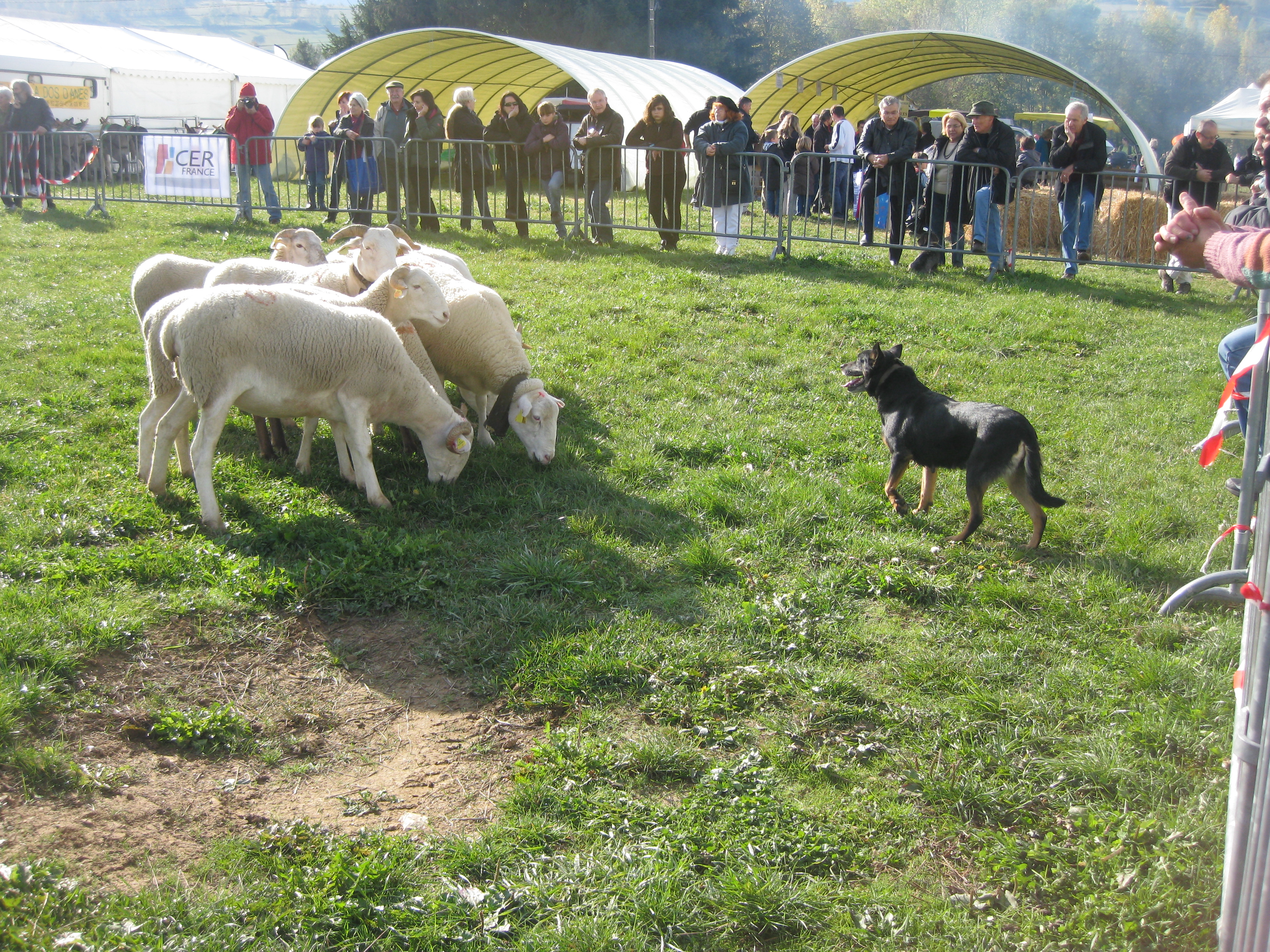
The Australian sheep dog rounds up his sheep

As in England, most sheepdogs are border collies, but some are Australian sheepdogs, crossed with dingos.  They might look fierce – the sheep certainly think so – but they’re gentle and tractable, and do the business.

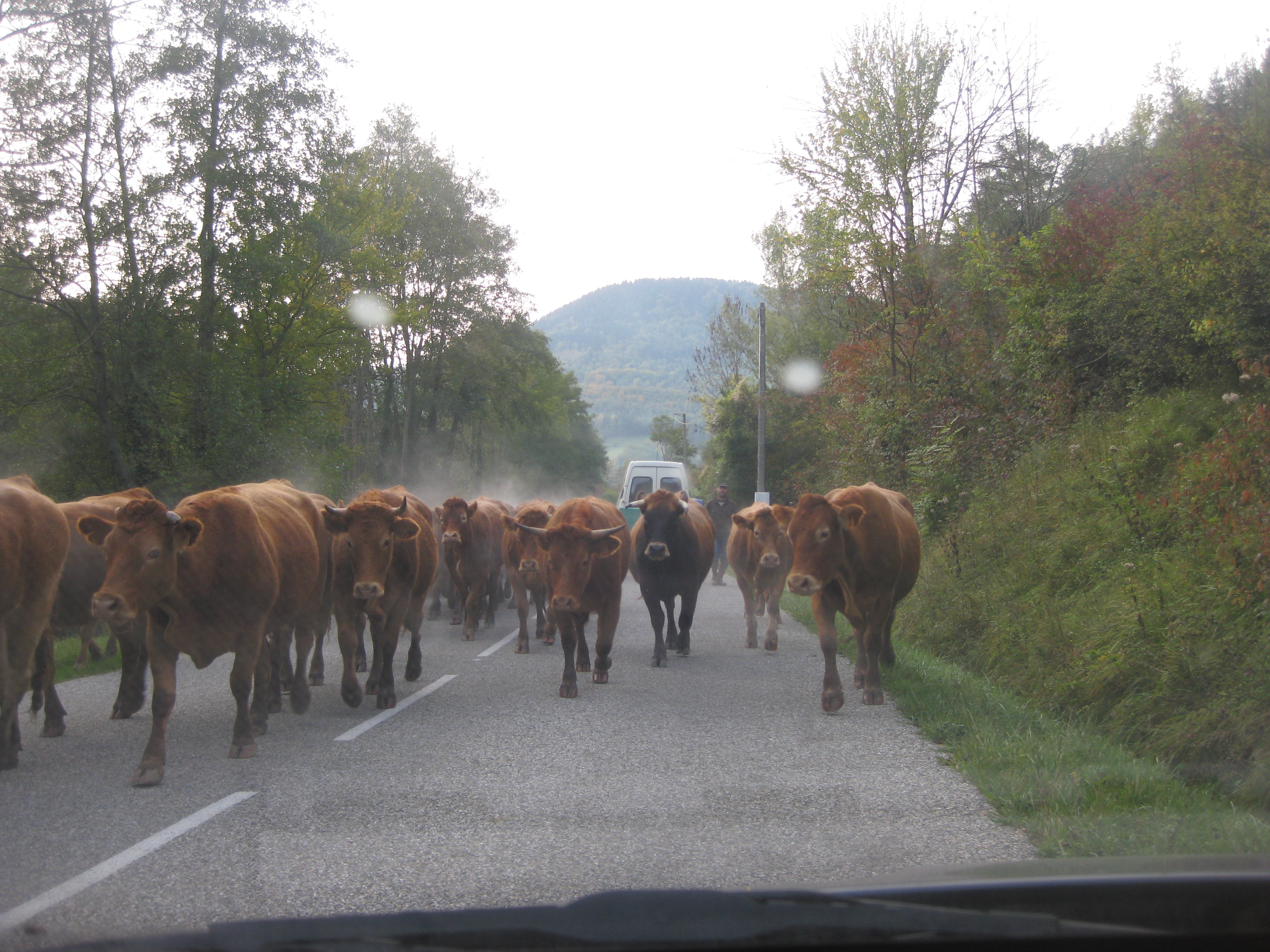
Oh, and on the way there, we had a piece of luck.  We got held up, and it was a traffic jam we really didn’t mind.  On the road to L’Aiguillon, a slow moving car with a sign reading ‘Transhumance’ flagged us down. Dozens of cows were being brought down to their lowland home from their summer pasture, and a score of cowherds and hangers on accompanied them on their long walk from Comus on the Plateau de Sault, to Mirepoix.  That’s a 50 km. journey, but they probably didn’t walk it all.  They’d have hitched a lift in a cattle transporter for at least part of the way, more than likely.  We however, saw the picturesque procession, and it began our day on a suitably bucolic note.

Cows plodding off to their winter quarters

Terre Rouge – Ciel Bleu

Whenever we think we’re beginning to know the areas near home quite well, something comes along to surprise us.

Take Couiza, for instance, a town in the Aude that has been the centre point for quite a few of our walks.  It can offer, within easy reach of the town, a typical Audois landscape which is almost Tuscan, with rolling hills vineyards and cypresses. Or craggy, scrubby garrigue, almost Spanish looking. Or there’s le Domaine de l’Eau Salee, which I blogged about previously, where the streams are pink with salt washed from the earth, and have been exploited by man for centuries.

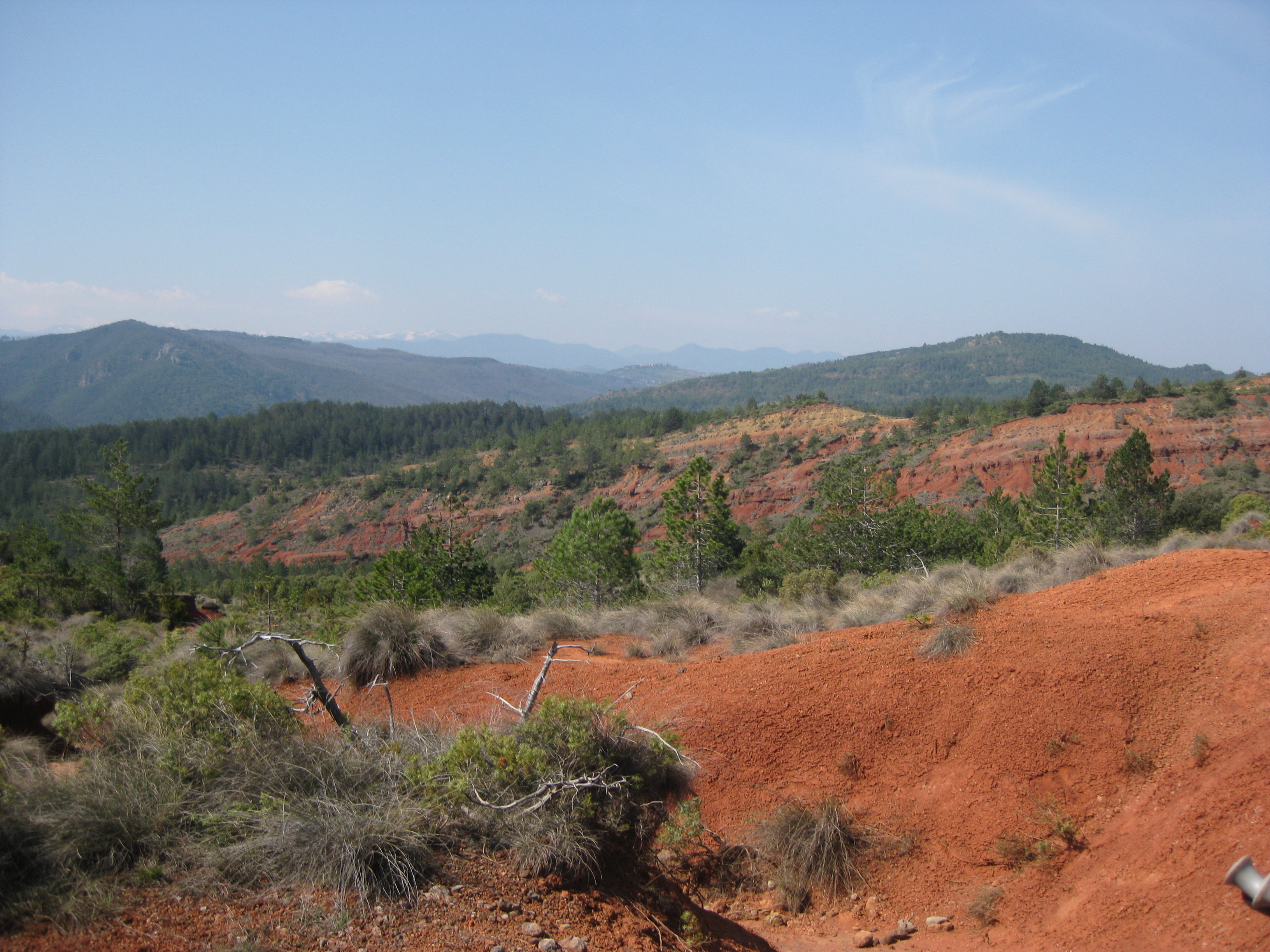
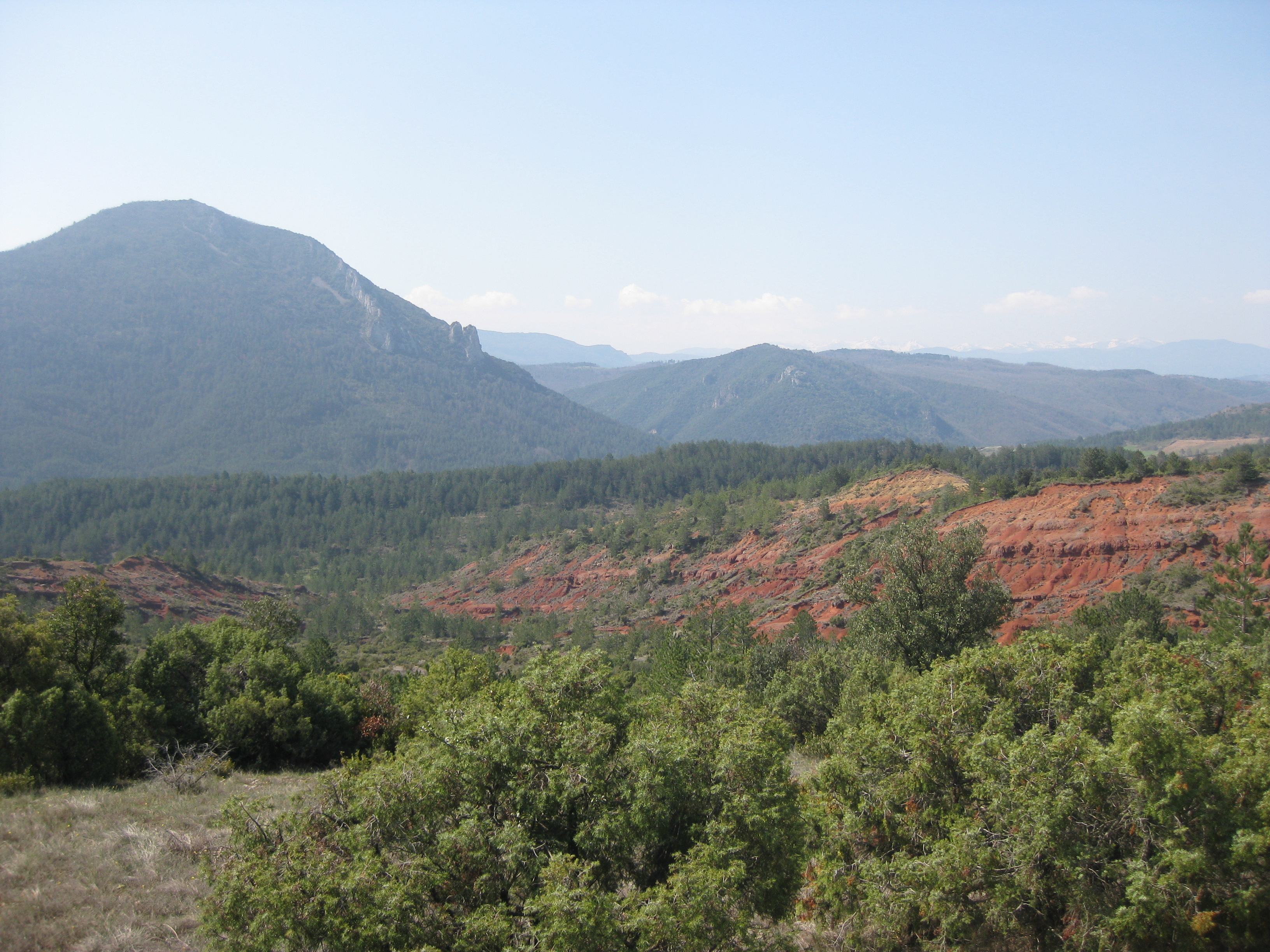
Yesterday, however, we went with le Rando del’Aubo to Terre Rouge, an area near Couiza which astonished us with the rich red colour of the earth which dominated the landscape.

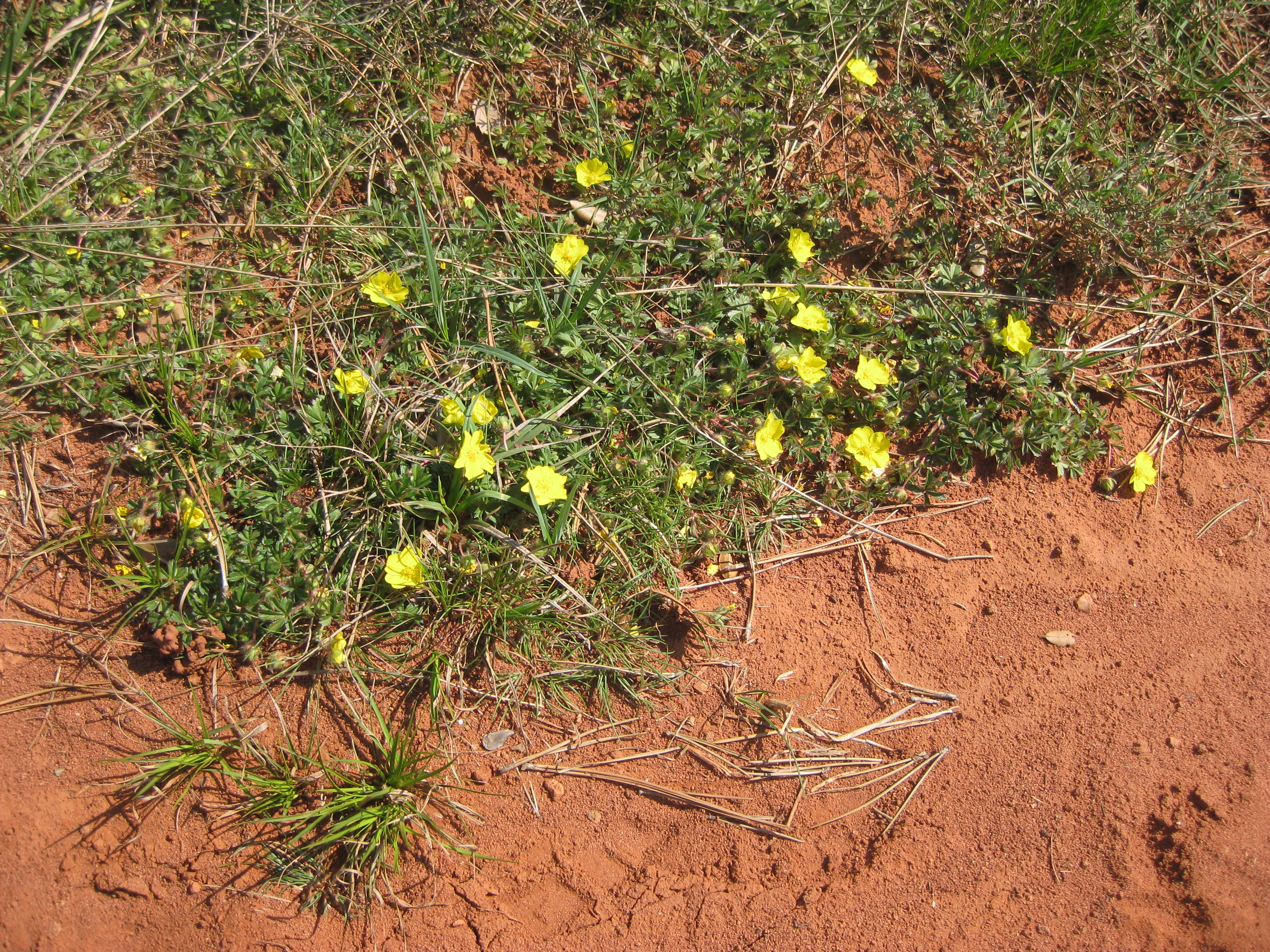
It supports a rich variety of plant life which is just springing into flower: Tiny daffodils, less than 3 inches high, bright yellow potentilla, grape hyacinths.  Bluish grasses bind the dry and sometimes sandy earth, and the air is rich with the strong scent of various wild thymes and lavender.

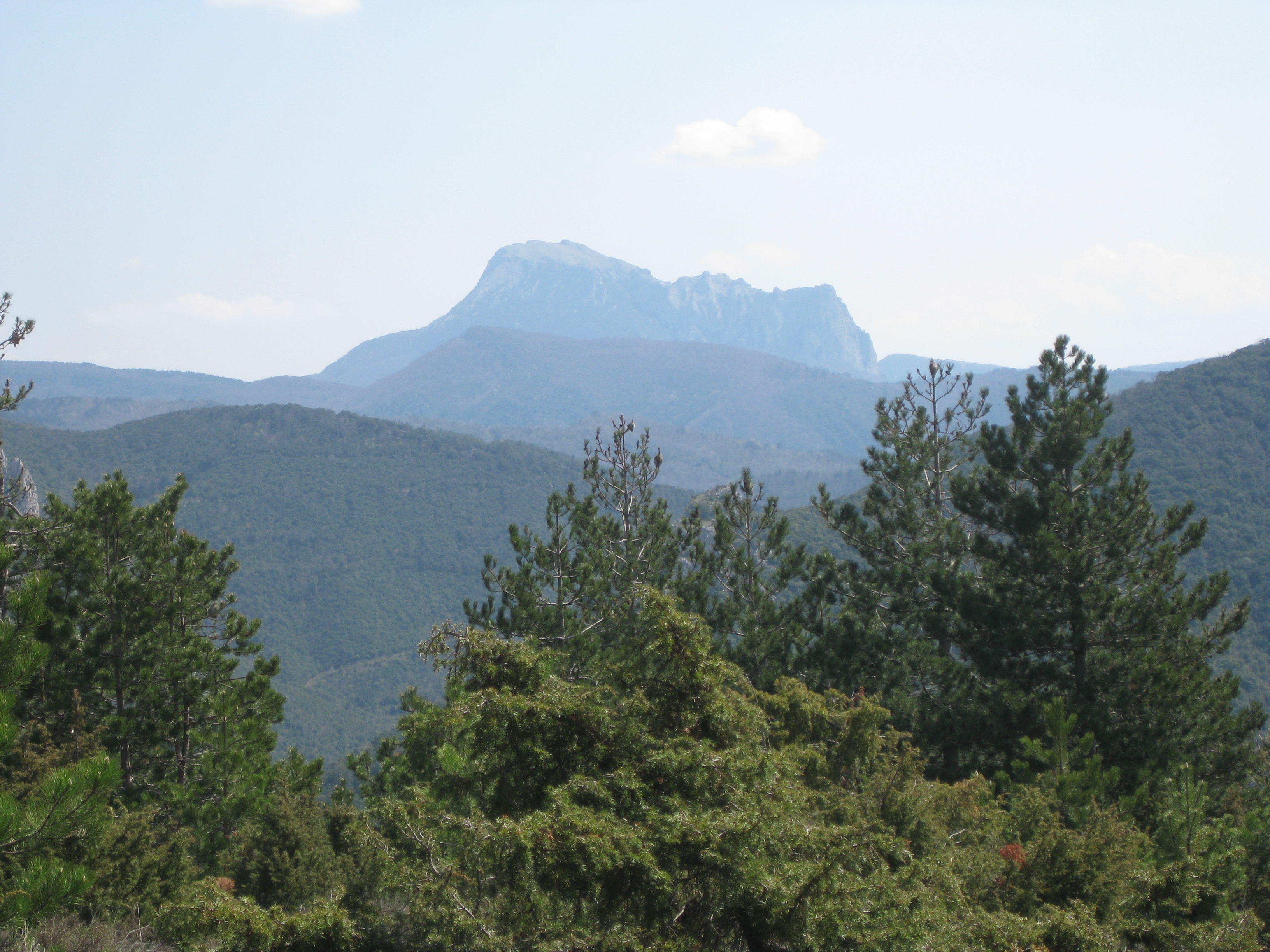
Bugarach

This red earth is all-encompassing.  And then suddenly, it stops. And we’re back again among more pallid yellowish soils, enjoying views of the distant Pyrenees, and the mountain which dominates this part of the world, Bugarach.

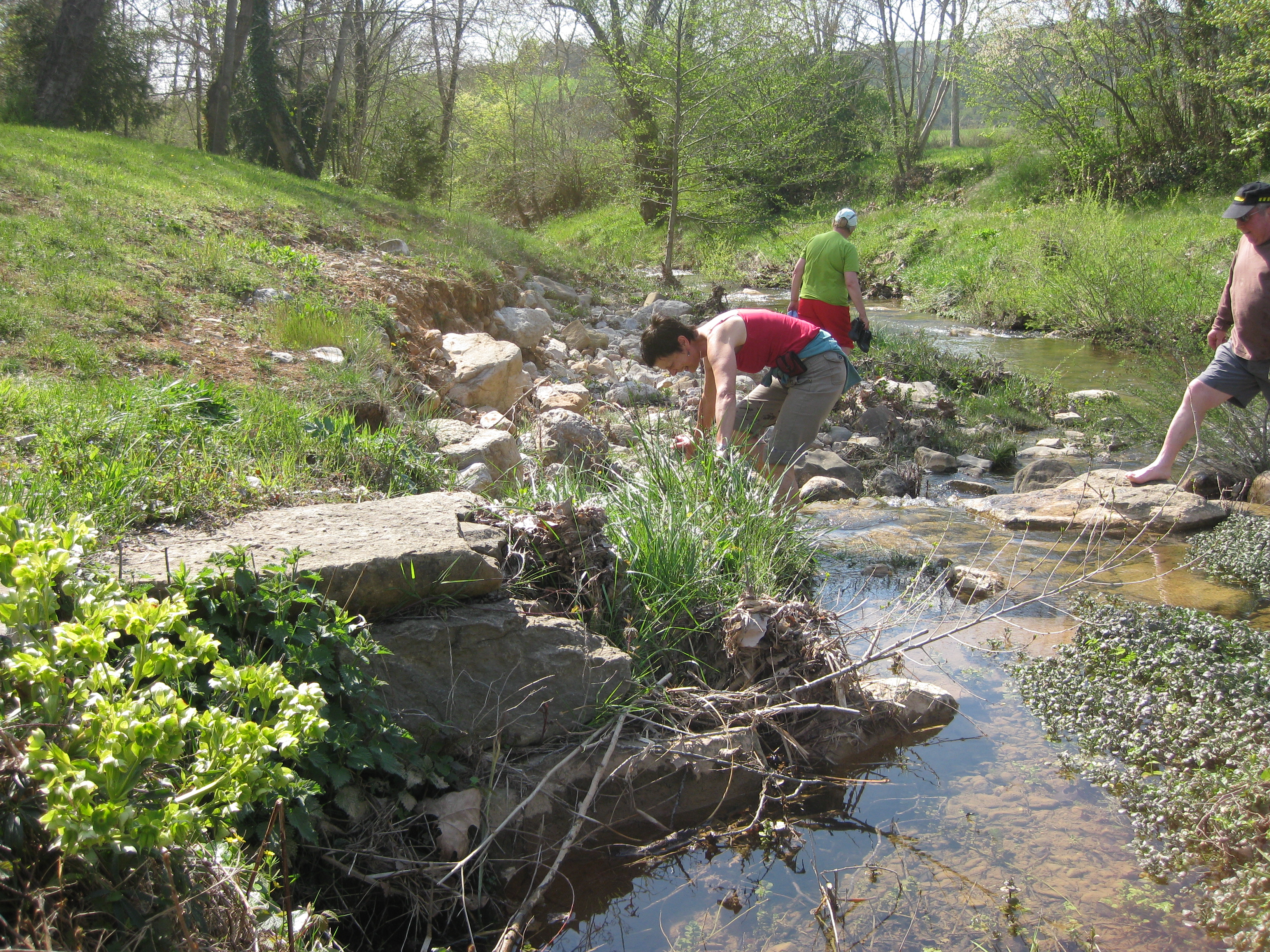
The walk was on the hottest day of the year so far, with clear, vivid blue sky.  We shed jumpers, long trousers, and our pasty winter skin turned the colour of that red earth. There was a wide shallow stream at the village where our walk began and ended, and a few of us enjoyed a paddle.  I greatly contributed to the end-of-day bonhomie by falling in…….

Just before the splash....

Omelette de Pâques

Come to the Ariège on Easter Monday, and you won’t be too far from a community omelette. Communes and clubs all over the department seek out their biggest frying pan, get hold of dozens of eggs, sugar and rum, to make this sweet confection to round off, with any luck, the first barbecue of the season. Why? Nobody in our walking group could tell me, and Google wasn’t much help, but it does seem to be an ancient tradition dating back to….ooh, 1973 at least.

Anyway, the Rando del’Aubo have made this an annual event for some years now. For the last couple, it’s been rainy and cold. Not this year though. Down at the bottom of the page, you’ll find a few pictures of our walk between La Pène, an Audois hamlet on a delightful small lake, and Monthaut, which is a hill….higher up. It was a great way to work up an appetite.

Because the weather was warm, sunny and spring-like, we relaxed at the lakeside after our walk, chatting and enjoying those woodsmokey smells of a barbecue coming to life. Apéros first: Muscat, suze, pernod, whisky…all the usual French tipples, with nibbles to stem our hunger. Then grilled pork, grilled Toulouse sausage, bread (and wine of course), Coulommiers cheese, vanilla or chocolate pudding. And then we still had to find room for the all-important omelette.

Since the beginning of time, it’s been Marie-Therèse’s ‘job’ (good French word, that) to make the omelette, and of course it all ended in noisy recriminations because there were too many cooks all muscling in, breaking eggs, beating eggs, heating the pan, greasing the pan, measuring the rum. Half the raw egg mixture tipped out onto the grass, and Etienne and Danielle dashed off to every farm they could find to buy another….. 4 dozen.

Finally, it was done. Really, this omelette is scrambled egg with lots of sugar chucked in at the end, and flambéed with rum. Once a year is quite enough.

It wasn’t the end of the party though. Oh no. We couldn’t go before downing glasses of Blanquette de Limoux, an Alpine eau-de-vie, then cups of coffee (with madeleines, in case we were still hungry). And as a final touch, Easter eggs.

We came away suntanned and rather full, at the end of an Easter Monday that was one of the first really hot and sunny days of the year. A taste of things to come?


The Big Snow: Chapter 3

Extraordinary.

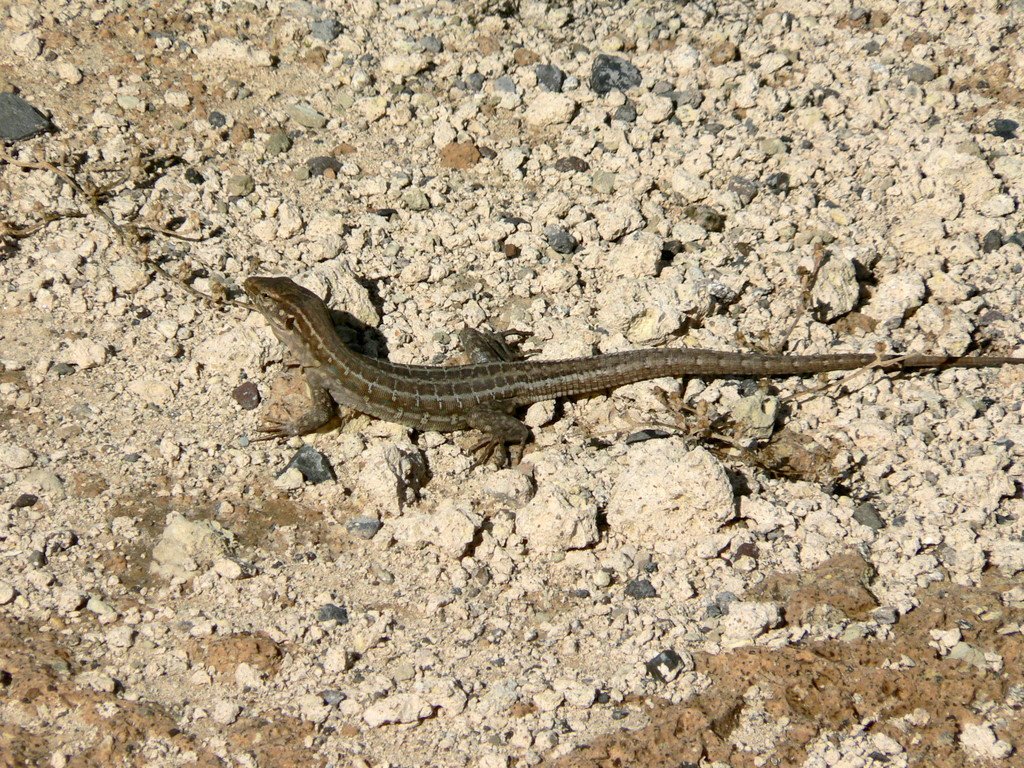
Sunday, March 7th. Malcolm and I go for a walk in the Aude, near Limoux.  The day is full of the promise of spring, bright and sunny.  The almond blossom is out.  We spot baby lizards darting along stone walls, and enjoy watching more lizards sunning themselves on the rocky ledge where we have our midday picnic.

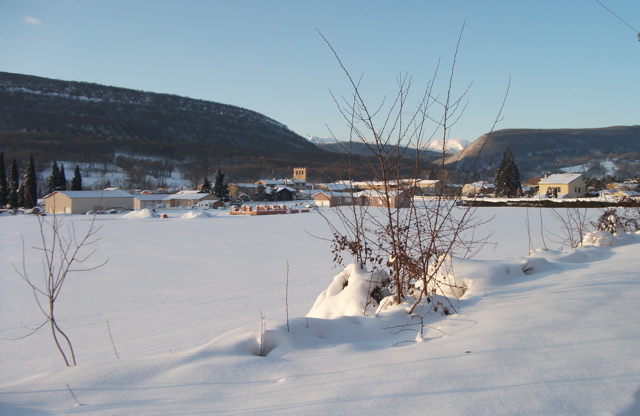
Monday, March 8th. We wake up to snow.  And more snow.  It was snowing as we got up, and it continues to snow, hour after hour.  We watch the flowerpots in the yard as their hats of snow become taller and taller.  By mid-afternoon, they’re 24 cm. high, and by 7 o’clock, as it begins to get dark, they’re about 28 cm. high. Up on the roof, the icicles become stouter and as long as the snow is deep. The trees stand stiff and silent under their heavy bonnets of snow.  The snow continues to fall as we close the shutters at nightfall. TV news reminds us that we’ve has it easy – look at the deep drifts, and hundreds of stranded lorries backed up in the Pyrénées Orientales!

Today, Tuesday March 9th – no more snow falling- but it’s not ready to melt either.  The wind snatches the snow from the trees, and when we leave the house, slaps our faces with flurries of flakes whipped from the rooftops.  The birds are constantly busy at our ‘Resto du Coeur’, and we replenish their feeders several times.  Gym?  Cancelled.  Choir?  Cancelled

As I still haven’t got my camera, the snowy photos on this blog come to you courtesy of my friend Marianne, who’s been busy with her camera as she and Réglisse, her dog, slip and skate round the chilly streets of le Peyrat, just down the road from Laroque.  Thanks, Marianne!

Suddenly, earlier today, I remembered this ditty the children and I used to chant when they were small:

Whether the weather be cold,

Or whether the weather be hot

We’ll weather the weather

Whatever the weather

Whether we like it or not

A walk in the Aude

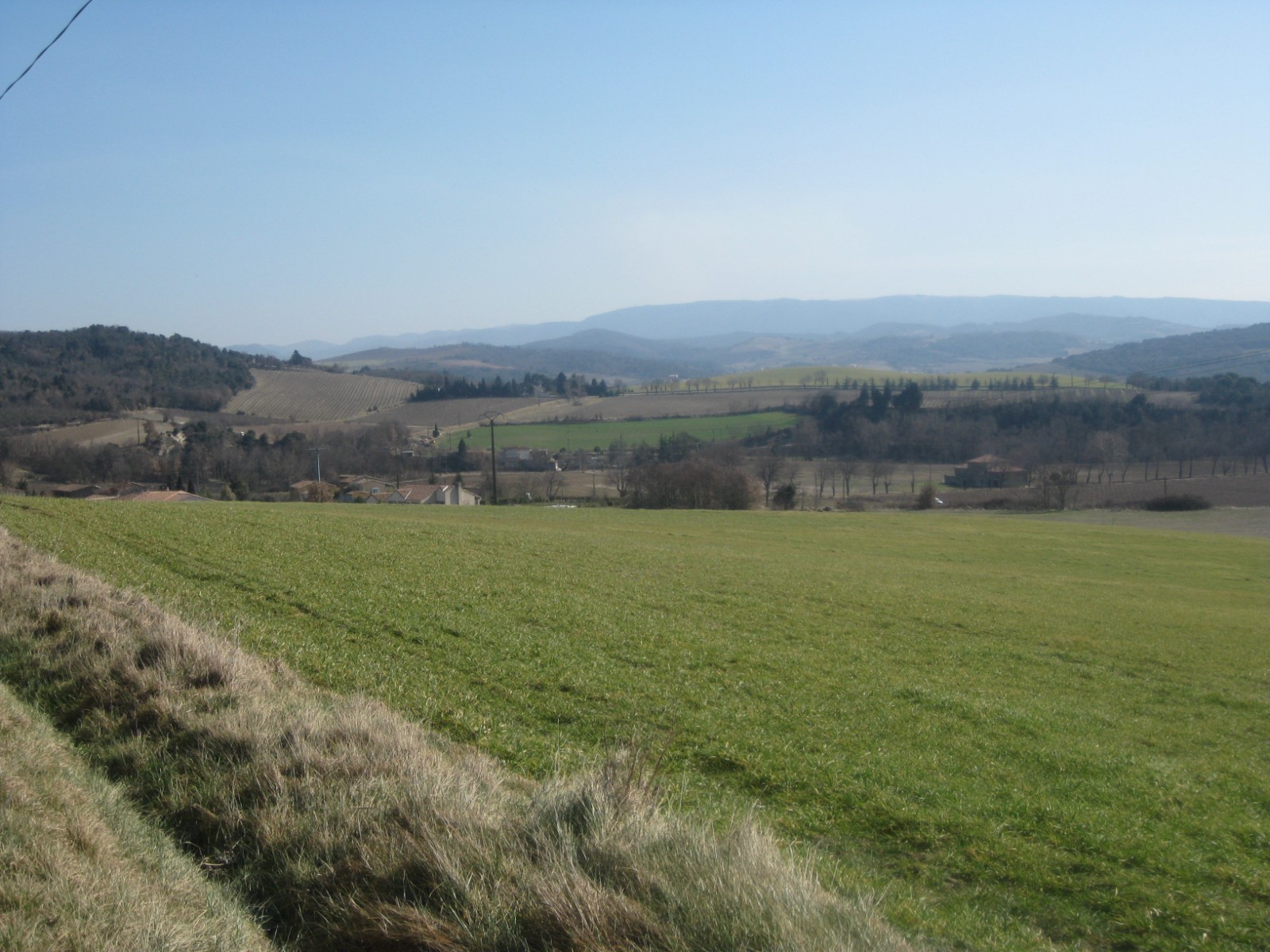
Last Sunday, we went off as usual with our walking group, Rando de l’Aubo.  We went a mere 20 km eastwards into the neighbouring Aude.  What a difference a few miles makes.  The rugged forests, with hillside pasture for cattle and sheep, fields of maize and feed crops in our own department are exchanged for an almost Tuscan landscape, with little hillside towns overlooking ranks and ranks of vineyards delineating the contours.  Both departments are lovely, but we hicks from the Ariège tend to prefer our less manicured and somewhat wilder countryside.

Still, Sunday’s walk was quite a sentimental journey for Malcolm and for me, because we walked through the village, Ferran, that was our first introduction to this part of the world.

A few years ago, an old friend of Malcolm’s sent him an email.  In his letter, he said that it was February, and he’d been sitting outside in his shirtsleeves, gazing out at his perennial view of the distant Pyrenees, at that time covered with bluish-white snow.  Did we fancy a visit to him in Ferran?  We did.  We were of course seduced by those hillside towns, those vineyards, and especially by those views of the Pyrenees.  Not too long after, we came over again, to house hunt, and of course didn’t find that elusive, perfect spot.  Only after we’d returned home did our friend’s wife, who’s an estate agent, spot the possibility that we just might like the butcher’s house in Laroque where we now live.

It was crazy really. We bought it without really knowing the first thing about the area.  But we’ve never regretted it.  We’ll never finish exploring the hillside pathways, always deeply mulched with fallen oak and beech leaves, or the craggier routes up mountainsides, or the gently undulating lower paths through meadowlands, bright with orchids and other flowers, as well as butterflies, throughout the spring and summer.

Ferran

But that’s the Ariège.  Ferran and the other villages we skirted last Sunday are typical of the Aude.  Colour washed houses and farms in shades of barley, corn and almond perch high on the hillside, looking down over their vineyards, and beyond – one way to the Montagne Noire, the other to the Pyrenees.  The hills roll away into the distance, not so blanketed by forest as our hills are, but at this time of year, green and lush. Though we only walked about 13 km, by the end we were exhausted, because throughout the day we’d been buffeted by the winds for which the Aude is known. But how lucky we are to have two such very different kinds of countryside within such easy reach of our homes.

St. Barthelemy seen from near Ferran

As I’m still camera-less, thanks to Jean-Noël, Michel and Anny for letting me use their photos from this walk, and a recent one near Donazac, also in the Aude